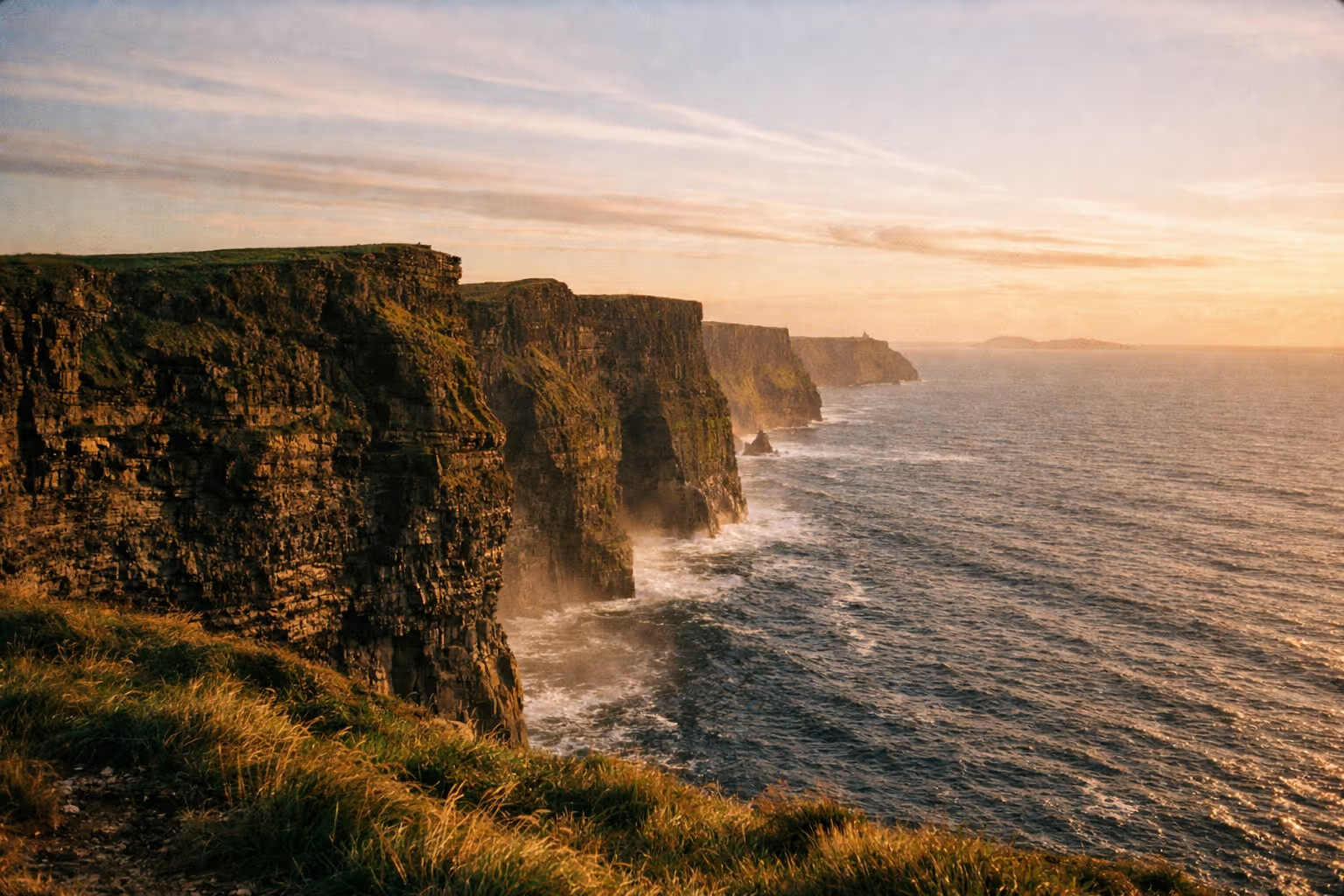
The Cliffs of Moher plunge 214 metres (702 feet) straight into the Atlantic and attract about 1.5 million visitors every year, making them Ireland’s second most-visited paid attraction after the Guinness Storehouse(7). That popularity means you need to plan your visit more carefully than you might have five years ago. Crowds are back near pre-COVID levels, Clare County Council raised ticket prices by 25% starting in 2025, and new shuttle and trail arrangements are still being finalized (4)(6). This guide lays out what your ticket covers, what you can access for free, the best times to go, and how to get there from Dublin, Galway, or Cork without losing half your day on the road.
✓ Pros
- Genuinely dramatic scale - 214 m cliffs, 14 km of coastline, Atlantic views to the Aran Islands
- Ticketed visitor centre is well-run (96.5% satisfaction rating); facilities are solid
- Multiple access modes: ticketed centre, free coastal trail, boat cruise from Doolin
- Shoulder-season visits (April-June, September-October) offer manageable crowds
- Combines naturally with Galway, the Burren, and Doolin on a west-coast route
✗ Cons
- 1.5 million+ visitors/year; peak summer days are genuinely congested
- 25% ticket price hike from 2025 makes it one of Ireland's pricier natural attractions
- Atlantic weather is unpredictable - fog can erase the view entirely
- Traffic and parking in North Clare is a documented problem; no easy fix yet (shuttle planned but not fully operational)
- Coastal Walk sections are not suitable for everyone - uneven terrain, exposure, mud
What the Cliffs of Moher Actually Are (and Why the Numbers Matter)
The Cliffs of Moher are sea cliffs on Ireland’s west coast, located in County Clare between Liscannor and Doolin along the Wild Atlantic Way. They rise to 214 metres (702 feet) at their highest point near O’Brien’s Tower. The main cliffs section runs approximately 8 km, with Hag’s Head marking the southern end and the visitor centre area to the north - though the broader coastal stretch including surrounding headlands is sometimes quoted at longer distances in promotional material. Most visitors combine the cliffs with stops in Galway, the Burren, and the ferry to the Aran Islands from Doolin.
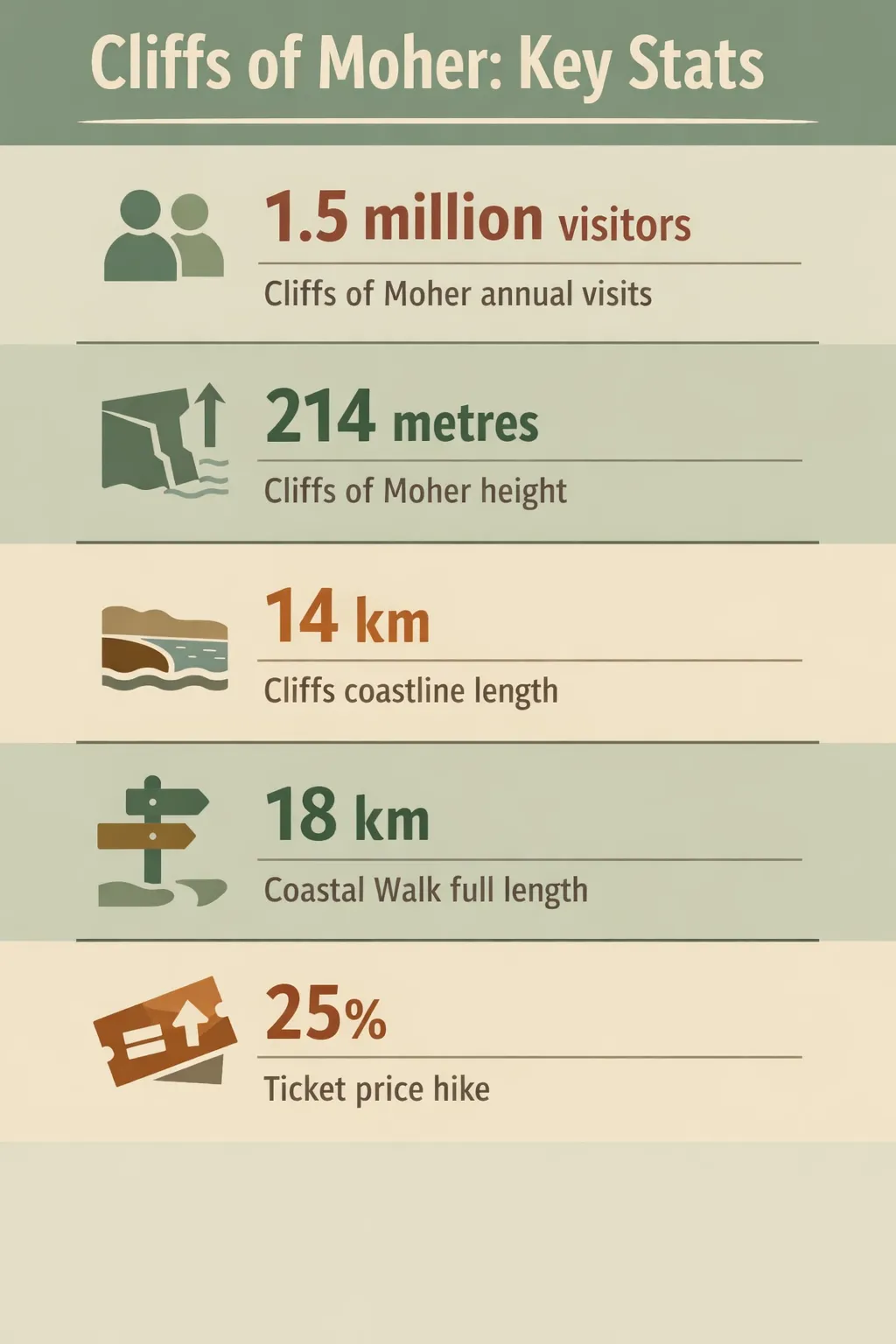 Cliffs of Moher stats: 214 metres high, 14 km coastline, about 1.5 million visitors per year, and a 25% ticket price hike since 2025.
The visitor numbers explain a lot about the crowds you’ll face. The cliffs draw around 1.5 million visits a year, making them Ireland’s second most-visited paid attraction after the Guinness Storehouse. After dipping to roughly 1.1 million in 2022, visits rebounded sharply - 1.3 million in 2023, a 14% increase year on year (7)(10). In 2024, the Clare Champion reported nearly 1.5 million visitors, nearly matching the 2019 pre-pandemic record of 1.6 million (4). Numbers nudged over 1.5 million again in 2025 (9).
Most visitors are international. A LinkedIn update from the Cliffs of Moher Experience noted that 90% of 2024 visitors were from outside Ireland, with roughly 41 to 50% from the United States. That international mix concentrates pressure in the summer months, which explains why arriving at midday in July feels like a different experience than showing up at 9 a.m. in May.
One other important detail: the cliffs are a Special Protection Area (SPA) for seabirds, including breeding puffins in late spring and early summer. This protected status means staying on marked paths isn’t just a suggestion - it’s essential for safety and conservation.
Tickets, Costs, and What the Cliffs of Moher Experience Includes
The ticketed “Cliffs of Moher Experience” covers entry to the visitor centre and its Atlantic Edge exhibition, access to the main paved cliff-top paths, and the viewing area at O’Brien’s Tower. It also includes on-site toilets, a café, and parking. This package is what most coach tours and independent drivers use.
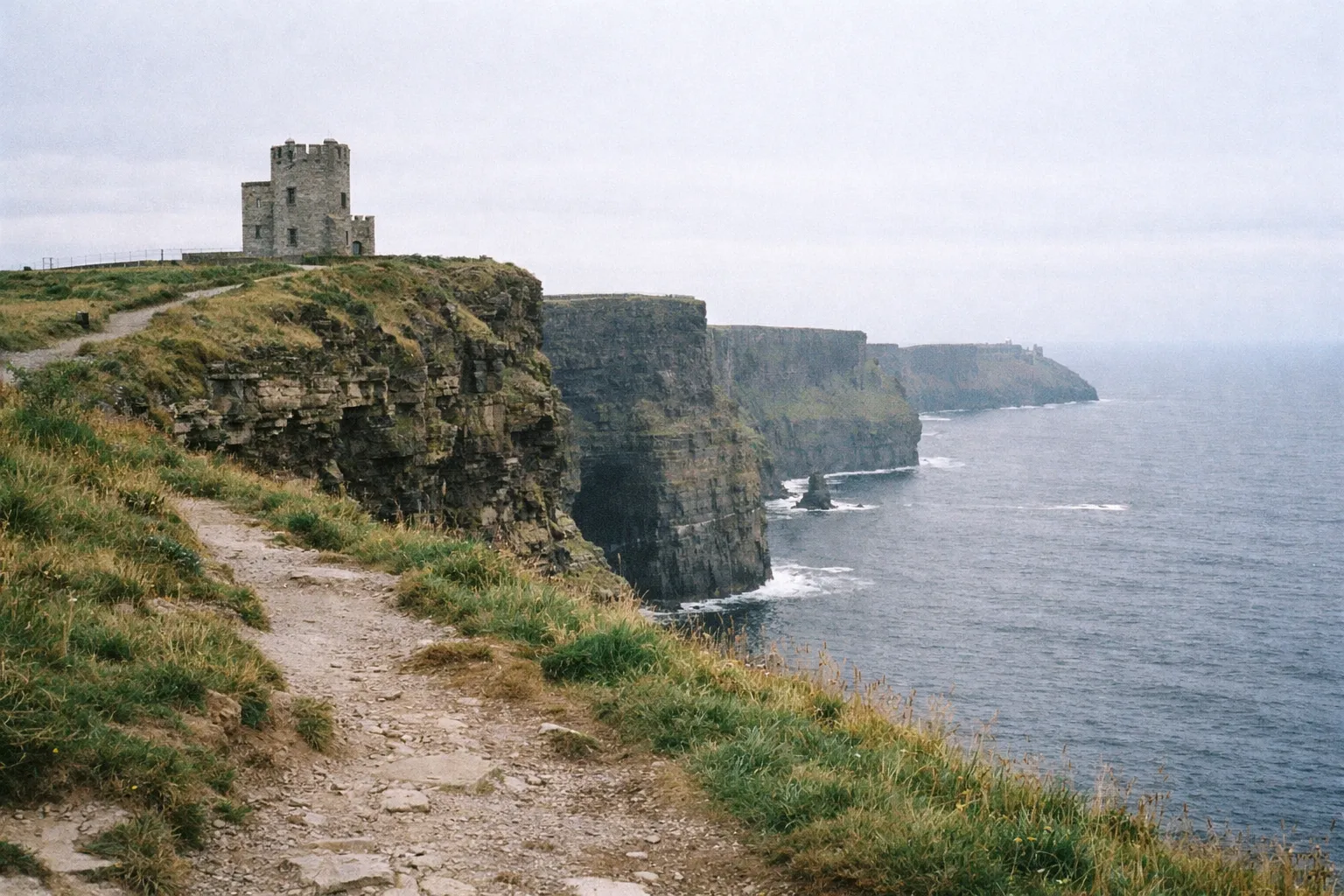
Starting in 2025, Clare County Council raised ticket prices by 25%, pushing the attraction into a higher price bracket among Ireland’s natural sites (4). Prices vary by season and age group, so check the official site for current rates before you go rather than relying on any single number. For context, a 2026 Dublin day-trip guide mentioned typical walk-up rates in the mid-teens euro range for adults, lower for students and seniors, and a family ticket option; children under 12 often enter free. Booking online in advance tends to be cheaper, especially outside peak hours. Treat these figures as a guide, not gospel.
What the ticket does not cover: the wider Coastal Walk beyond the main site, trailheads at Doolin or Hag’s Head, or the boat cruises from Doolin harbour. Those are separate and, in the case of the trail, free.
Pre-booking is strongly recommended for July and August. Walk-up tickets are unreliable on busy days, and a timed entry helps you avoid the busiest periods. The site’s 96.5% satisfaction rating and a CIE Tours award show the ticketed experience delivers - as long as you come with realistic expectations and don’t expect the platforms to yourself.
Is the visitor centre worth the price?
If you’re travelling with family, have limited mobility, or are short on time, yes. The Atlantic Edge exhibition is genuinely informative, and the paved paths provide safe, easy access to the best-known viewpoints without any scrambling. On the other hand, if you’re fit, travelling independently, and have a full day with decent gear, the free Coastal Walk offers more distance, fewer crowds, and viewpoints that the paved section can’t reach. The right choice depends on your schedule and mobility.
Three Ways to Experience the Cliffs of Moher
| Most Popular Ticketed Visitor Centre | Coastal Walk (Doolin/Hag's Head trailheads) | Boat Cruise from Doolin | |
|---|---|---|---|
| Cost | Paid (price hike from 2025) | Free | Paid (separate booking) |
| Facilities | Full - café, toilets, exhibition, paved paths | Minimal - no facilities on trail | Boat facilities only |
| Crowd Level | Highest - peak coach traffic 11:00-16:00 | Lower - especially from Hag's Head | Moderate - weather-dependent |
| Best For | Families, limited mobility, time-poor visitors | Hikers, photographers, budget travelers | Marine perspective seekers; complements cliff-top visit |
Free Access: The Coastal Walk Along the Cliffs of Moher
The Coastal Walk follows open cliff-top trails and doesn’t require a ticket. The main trailheads at Doolin (north end) and Hag’s Head (south end) bypass the visitor centre altogether. According to Your Irish Adventure, the full trail from Doolin to Hag’s Head is about 18 km end to end. The Doolin-to-visitor-centre section is roughly 8 km one way, and the Hag’s Head-to-O’Brien’s Tower section about 6 km. Most people don’t want to hike the full 18 km and then double back, so planning your segment matters.
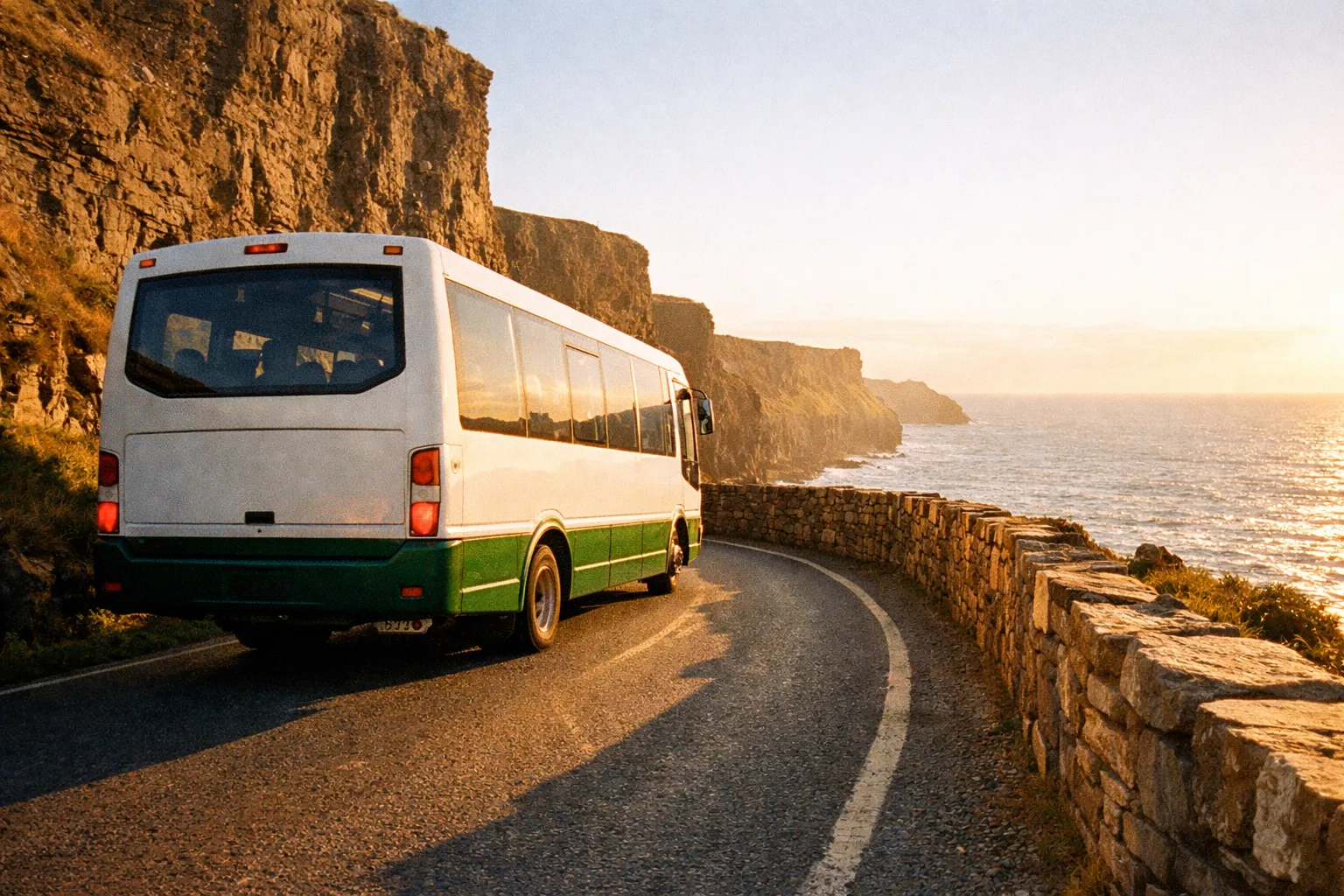
Boundless Roads describes the Doolin Cliff Walk as a well-marked 8 km route to the visitor centre, typically taking 2.5 to 3 hours one way. A shuttle bus runs the return journey, making a one-way hike plus shuttle the most sensible option. Your Irish Adventure makes the same recommendation given the total distance.
Don’t mistake this for a paved stroll. Just Chasing Sunsets describes the trail as unpaved, uneven, muddy in wet weather, and fully exposed to Atlantic winds. Sturdy footwear and waterproof clothing aren’t optional - wrong gear can make the walk miserable or unsafe. A new Coastal Walk management strategy was expected “imminently” in 2025, with local officials reviewing trail conditions (5). Check the current status before committing to a multi-hour hike.
Safety is a serious concern. Walkers sometimes leave marked paths to get closer to the cliff edges. The National Parks and Wildlife Service, cited by Travel Pander, warns that the cliffs are a protected natural area and that the edges are eroded and slippery. Going beyond fences is dangerous, not just forbidden.
Doolin as a base for the trail
Doolin is a small village with accommodation options, traditional music pubs, and the ferry to the Aran Islands. Staying here gives you early access to the trail before the coach-tour crowds hit the main site - the best way to avoid congestion without needing a 5 a.m. start. Doolin is also where the boat cruises beneath the cliffs depart, offering a vantage point no cliff-top path can match. If your visit revolves around hiking or the boat trip rather than the visitor centre, Doolin is the logical base.
Best Time to Visit the Cliffs of Moher: Season, Hour, and Weather
The best time to visit is during shoulder seasons - April to June and September to early October. Most guides focus on avoiding crowds, which is right, but the thing they consistently get wrong is treating July and August as merely “busy” rather than genuinely limiting: on a peak summer afternoon, the main platform is so congested that you spend more time managing the crowd than looking at the cliffs. Shoulder season isn’t just quieter - it’s a qualitatively different visit. These months offer long daylight hours, reasonable weather, and much lighter crowds than July and August. It’s the sweet spot for balancing daylight and visitor volume.
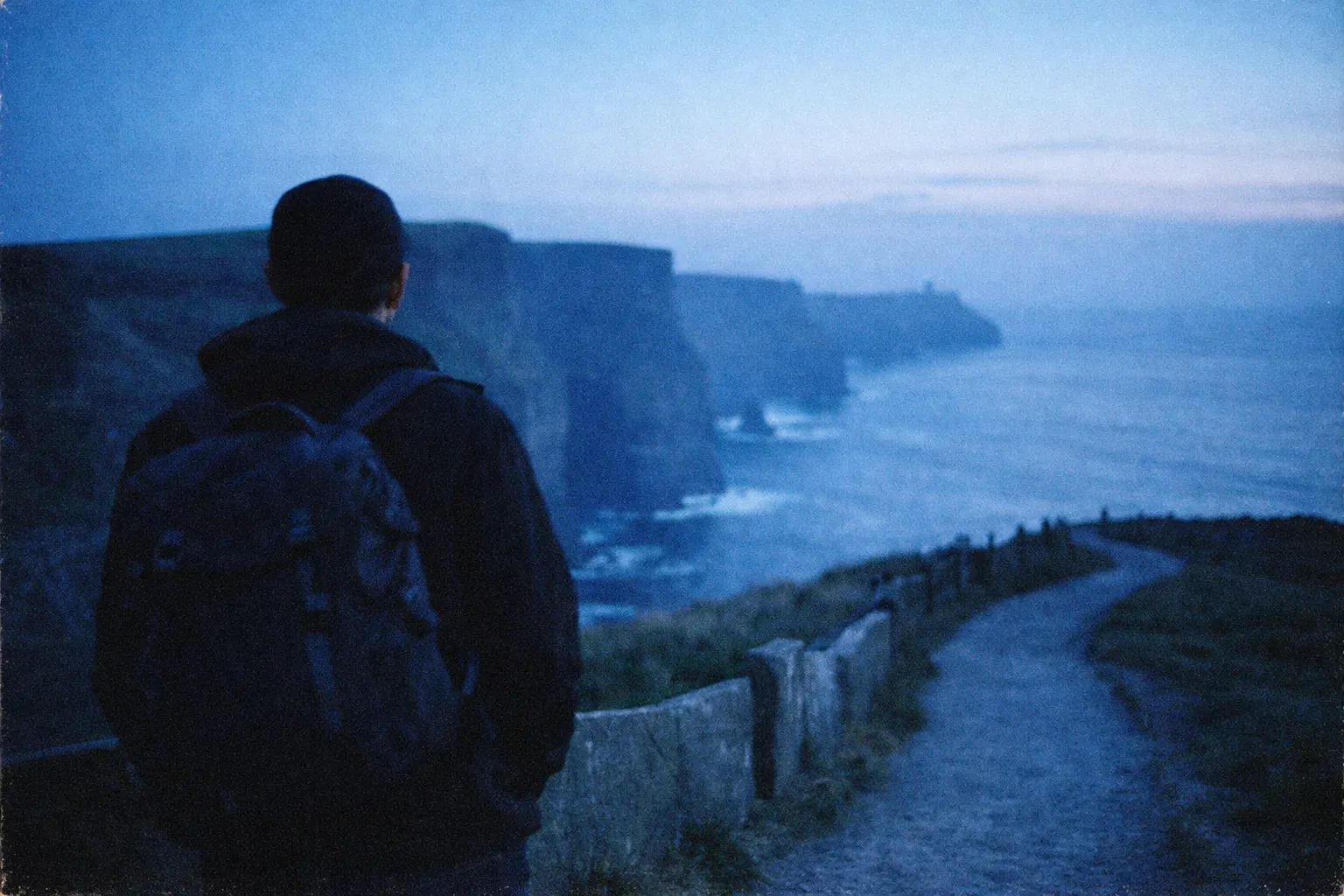
Timing within the day matters just as much as the month. Finding the Universe identifies peak hours as roughly 11:00 to 16:00 and recommends arriving at opening or after 16:00 to avoid the busiest crowds - and sometimes to save on ticket prices when booking online. Coaches cluster midday, so arriving early or late thins out the crowds. A Dublin tourism guide suggests 9 to 10 a.m. for the quietest conditions and the best east-facing light for photos.
Opening hours vary widely by season, which catches people off guard. Finding the Universe lists them as roughly 9:00 to 17:00 from November through February, 8:00 to 19:00 in March, April, September, and October, and 8:00 to 21:00 from May through August - but hours shift seasonally and can change year to year, so verify current times on the official Cliffs of Moher site before you travel. December and January have short daylight hours, so arriving late in winter often leaves little time before closing - plus fog is more common then, increasing the risk of an obscured view after a long drive.
Weather is the wildcard. Atlantic conditions bring strong winds (often 30 to 40 km/h), heavy showers, and fog even in summer. Fog can completely erase the view - checking live webcams and the local forecast the morning you visit is practical, not paranoid. I’ve stood at the main platform in June with visibility under 50 metres; it cleared within the hour, but many coach groups left disappointed.
For birdwatchers, puffin season adds another reason to visit in spring or early summer. The cliffs are a designated SPA, and puffins are commonly spotted from April through July, overlapping neatly with the shoulder seasons.
What to wear and pack
Bring a proper waterproof shell - not just a light rain jacket - plus a wind-resistant mid-layer and sturdy footwear with grip. This isn’t a beach stroll. Even in June, the cliff edge can be cold and gusty while inland temperatures are comfortable. Atlantic showers arrive fast and without warning. Pack these essentials no matter what the morning forecast says; the weather at your hotel and on the exposed cliffs can be very different.
How Much Time You Need at the Cliffs of Moher
Most visitors spend between 90 minutes and 3 hours at the cliffs, depending on how they arrive and what they want to do.
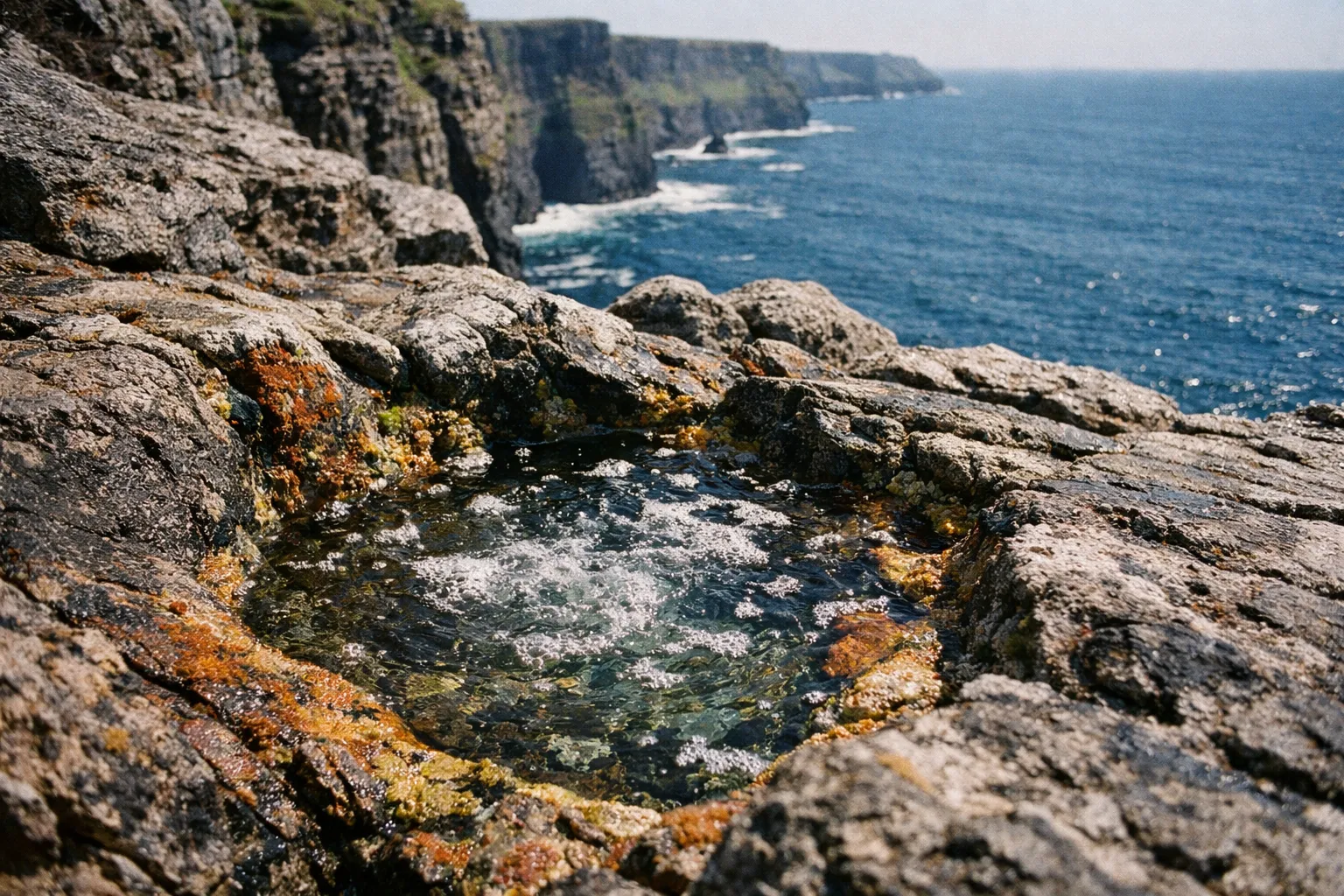
A coach-tour stop usually allows 90 minutes to 2 hours. Your Irish Adventure notes large bus tours from Dublin often give about 90 minutes at the cliffs within a 10+ hour day. Finding the Universe puts most day tours at 1.5 to 2 hours. That’s enough time to walk part of the cliff path, visit viewpoints near the visitor centre, and glance inside - but not enough for O’Brien’s Tower or the exhibition.
An independent car visit needs 2 to 3 hours to cover parking, main paved paths, O’Brien’s Tower, and the Atlantic Edge exhibition at a comfortable pace, with room to linger when the light’s good.
A Coastal Walk segment is a bigger commitment. Boundless Roads estimates 2.5 to 3 hours one way for the 8 km Doolin route, so a return walk plus time at the cliffs fills a full day once you add photo stops and weather breaks. Your Irish Adventure treats the full 18 km Doolin-to-Hag’s Head trail as a half- or full-day activity, not a quick detour.
Photography benefits from the edges of the day - early morning for east-facing light on the cliffs, late afternoon for richer sea colours and fewer crowds. Winter sunsets come early and fast, so check closing times against sunset before planning a golden-hour shoot.
The reality: most visitors underestimate how long they’ll want to stay and overestimate how much ground they’ll cover in wind and rain. Build in a buffer.
Getting to the Cliffs of Moher from Dublin, Galway, and Cork
The cliffs are about 250 to 270 km from Dublin, 65 to 70 km from Galway, and a longer drive from Cork. Driving times are roughly 2.5 to 3 hours from Dublin, 1 to 1.5 hours from Galway, and 2.5 to 3 hours from Cork. Your options range from guided tours to train-and-bus combos, depending on whether you want flexibility or a hands-off day.
By car from Dublin: Travel Pander’s 2025 update puts the drive at 2.5 to 4 hours depending on traffic, mainly via the M7 and regional roads. It’s doable as a day trip but a long one. Self-driving offers flexibility to add the Burren and Doolin to your itinerary. The downside is parking - traffic in North Clare is a known headache, and a planned 2025 shuttle from nearby villages may help eventually (5). Arrive early to avoid the worst congestion.
By guided day tour from Dublin: The most popular choice if you don’t have a car. Your Irish Adventure notes the cliffs are about 3.5 hours each way by bus, so tours run 10+ hours total, often including stops in the Burren and Galway. Entrance is usually included. You trade time at the cliffs (about 90 minutes) for zero logistical hassle. If you’re planning things to do in Dublin Ireland around a longer stay, a guided tour to the cliffs fits naturally into a multi-day itinerary.
From Galway: The shortest drive at 65 to 70 km, about 1 to 1.5 hours. Day tours from Galway last 6 to 8 hours. The return trip fits well into a west-coast loop. Exploring Galway as a base makes particular sense if you want to combine the cliffs with Connemara and the Aran Islands ferry in the same trip.
From Cork: About 2.5 to 3 hours by car. Less common as a day trip; most Cork visitors include the cliffs in a longer Wild Atlantic Way route rather than a quick return.
Train and bus combination: For budget travelers without a car, take the train from Dublin Heuston to Ennis, then Bus Éireann route 350 to the cliffs. Your Irish Adventure calls this the cheapest but slowest option. Moovit shows buses to the cliffs at fixed times (e.g., 08:12, 10:05, 12:05, 15:05, 17:05). The total journey takes 4.5 to 5.5 hours, so plan your return carefully.
2025 shuttle bus: Officials have mentioned a planned shuttle from surrounding villages to the site (5). If operational when you visit, this could change parking and access logistics - check ahead.
How to Plan a Day Trip to the Cliffs of Moher from Dublin
Up to 12 hoursStep-by-step planning for transport, tickets, timing, and packing
- 1
Choose your transport mode
Decide between guided tour (easy, less flexible), self-drive (flexible, parking needed), or train + bus (cheapest, time-constrained).
- 2
Book tickets in advance
Check current ticket prices and secure online bookings, especially for July-August to avoid sold-out days.
- 3
Check weather and webcams
On the day of your visit, verify local weather and live webcams to avoid fog and poor visibility.
- 4
Time your arrival
Aim to arrive at opening or after 16:00 to avoid peak coach-tour crowds between 11:00 and 16:00.
- 5
Pack appropriate gear
Bring waterproofs and sturdy footwear regardless of forecast; Atlantic weather changes quickly.
- 6
Plan your route
If combining with Galway or the Burren, visit the Cliffs first in the morning and Galway last for best timing.
Can you do the Cliffs of Moher as a day trip from Dublin?
Yes, but it’s a long day. Driving takes 2.5 to 3 hours each way. Guided tours handle logistics but only give you 90 minutes to 2 hours at the cliffs. If you want more time on the platforms or to try the Coastal Walk, staying overnight in Doolin, Lahinch, or Galway is a better choice. As a quick sprint, it works; as a relaxed visit, it doesn’t.
Is it worth the trip from Dublin?
For most people, yes. The cliffs’ scale is real, and the 96.5% satisfaction rating reflects a well-run attraction. The main risks are weather - fog can obscure the view - crowd timing, and the 2025 price hike. If you’re driving yourself, the Burren and Doolin add enough to the day that even a foggy cliff view won’t ruin the trip. Check the webcam before you head out to improve your chances.
Visiting Strategies for Different Types of Travelers
Families and those with limited mobility: Stick to the ticketed visitor centre. The paved paths and indoor facilities - café, toilets, exhibition - suit prams and mobility needs. The Coastal Walk isn’t suitable. Book tickets ahead and aim for opening or late afternoon to avoid coach crowds.
Active and hiking visitors: Use the Doolin or Hag’s Head trailheads. The 8 km Doolin-to-visitor-centre or 6 km Hag’s Head-to-tower sections are best walked one way, with a bus or shuttle back. Plan a full day, check trail status, bring navigation tools and proper gear, and consider staying in Doolin for an early start. Walkers who enjoy this kind of rugged terrain often extend their trip into Connemara Ireland, where similar wild landscapes and hiking routes await just north of Galway.
Day-trippers on guided tours: Accept the 90-minute window and focus on the main viewing platforms and O’Brien’s Tower. The Atlantic Edge exhibition is better for independent visitors with more time.
Photography visitors: Target early morning for east-facing light or late afternoon for richer sea colours and fewer crowds. Summer opening hours to 21:00 help with golden-hour shoots. Winter sunsets come early, so check closing times against sunset.
Budget-conscious visitors: The Coastal Walk is free, with no facilities on the trail. Combine it with free stops in the Burren and Doolin village. Your main costs will be transport and the visitor centre ticket if you choose to use it. Large-group bus tours tend to be cheaper than small-group tours, but prices vary widely depending on operator and season, per Your Irish Adventure.
Common Mistakes That Cut Visits Short
-
Arriving midday in July or August without pre-booked tickets. Peak hours run from 11:00 to 16:00, with coach clusters causing long queues. Booking online in advance secures entry and can reduce costs.
-
Showing up without waterproof gear. Atlantic showers come quickly, and a light hoodie won’t cut it. Improper footwear and lack of waterproofs turn the walk miserable or unsafe.
-
Assuming the Coastal Walk is a paved stroll. It involves uneven ground, mud, steep sections, and full wind exposure. Wrong footwear makes it dangerous.
-
Driving in peak season without a parking plan. Traffic on North Clare roads is a known issue (5). Arriving early or using the Doolin or Hag’s Head trailheads helps avoid the worst.
-
Turning up in winter near closing time. November to February hours close around 17:00. Arriving at 15:00 in winter often leaves little time before last entry, especially once you factor in parking and access.
-
Walking beyond fences and official paths. The cliff edges are eroded and slippery. This isn’t just a rule - it’s a safety issue flagged repeatedly by local authorities.
Frequently Asked Questions
- Can you do the Cliffs of Moher as a day trip from Dublin?
- Yes - it's about 254 km and 2.5-3 hours each way by car. Guided tours run 10-12 hours total with about 90 minutes at the cliffs.
- Is it worth going to the Cliffs of Moher from Dublin?
- For most visitors, yes. The cliffs' scale is real, but fog is a risk. Check webcams before committing. The ticket price increase that took effect in 2025 makes it one of Ireland's pricier natural attractions, so factor that into your budget.
- How do you get from Dublin to the Cliffs of Moher?
- Drive (about 3 hours), guided tour, train to Ennis plus Bus Éireann 350 (about 4.5-5.5 hours), or private transfer. Train+bus is cheapest but limits site time.
- How much time do you need at the Cliffs of Moher?
- Coach tours allow 1.5-2.5 hours; independent visits need 2-3 hours; Coastal Walk from Doolin takes 3-4 hours one way.
- Is the Cliffs of Moher Coastal Walk free?
- Yes. The trail from Doolin or Hag's Head is free but rough and exposed. Suitable for fit, well-equipped visitors seeking fewer crowds.
- What is the best time of year to visit the Cliffs of Moher?
- April-June and September-early October offer long daylight, manageable crowds, and reasonable weather. July-August is busiest; winter is higher risk.
- Can you see puffins at the Cliffs of Moher?
- Yes, from April through July. The cliffs are a Special Protection Area for seabirds. Binoculars improve chances; sightings are likelier along cliff paths.
Planning Notes That Actually Determine Your Visit
Three factors shape the quality of your trip. When to go: shoulder seasons (April to June or September to early October) avoid the summer crush while keeping long daylight. How to access: the ticketed centre suits families, limited mobility, or tight schedules; the free Coastal Walk fits fit travellers with full days and good gear. How to get there: guided tours are easiest for no-fuss trips; self-driving offers flexibility to add the Burren and Doolin.
Book tickets ahead for July and August, pack a proper waterproof and sturdy footwear regardless of forecast, and aim to arrive at opening or after 16:00 to dodge the coach window. The one factor no one controls is fog, which can wipe out the view after a long drive. Checking live webcams and the local forecast the morning of your visit is the most useful step you can take - a short wait for fog to lift beats staring at a 214-metre cliff edge into grey nothingness.