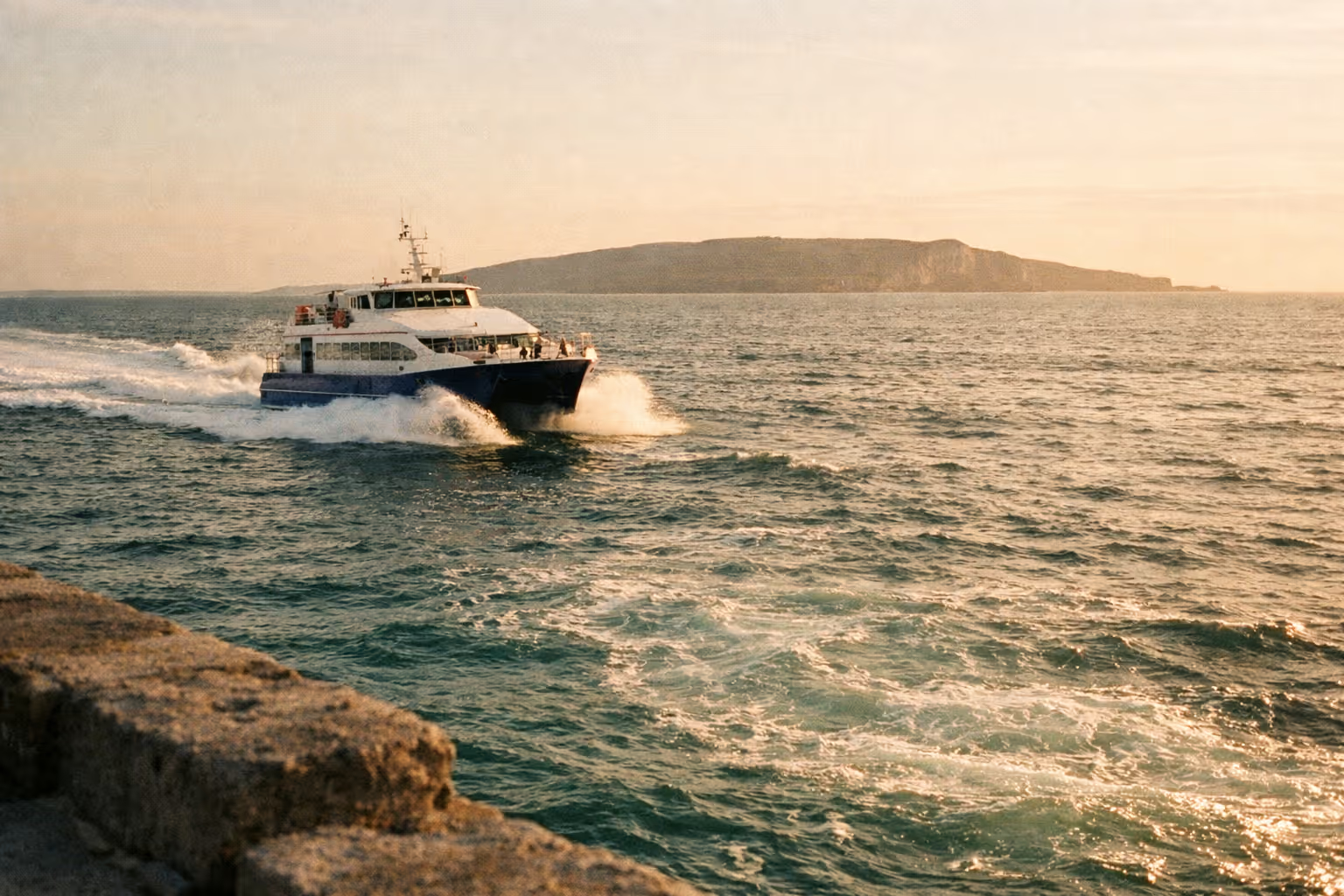
The crossing from Doolin to Inis Mór takes 35 minutes on express ferries, not 90, not the open-Atlantic slog that older guides still warn about. The Aran Islands sit at the mouth of Galway Bay, roughly 8 km off Doolin Pier in County Clare. Thanks to the fast ferries now running the route, what used to be a serious commitment has become a manageable day trip. Three islands, one prehistoric cliff-top fort, and one practical question most visitors trip over: how do you get there without wasting half a day at the wrong port?
This guide clears up the ferry confusion, points you to the island worth prioritizing, and sets expectations for Dún Aonghasa - including the unguarded cliff edge. Most people should focus on Inis Mór and its fort; that’s the smart call for a first visit. The other two islands come into play only if you have more time.
The best months to visit are April-May and September-October, when the weather is still reasonable but the crowds and accommodation pressure drop significantly.
✓ Pros
- Truly car-free islands - no traffic jams, no parking headaches, no engine noise drowning out the wind
- Dún Aonghasa stands as one of Ireland's most striking prehistoric sites, and the drama is real
- Fast crossings (35 minutes from Doolin) make a day trip doable
- Shoulder seasons (April-May, September-October) offer the sites without the mid-day tour crush
- Irish is a living, everyday language here, not just a tourist showpiece
✗ Cons
- Ferries depend on weather; Atlantic swells can cancel sailings with little notice
- Peak summer (June-August) ferries book up quickly - no walk-up guarantee
- Dún Aonghasa requires a steep, uneven uphill walk and has a completely unguarded cliff edge
- There are no car ferries - you leave your car on the mainland and rent a bike or join a tour on the island (1)
- Inis Mór can feel crowded mid-day in July and August
What the Aran Islands Actually Are (and Which One to Visit)
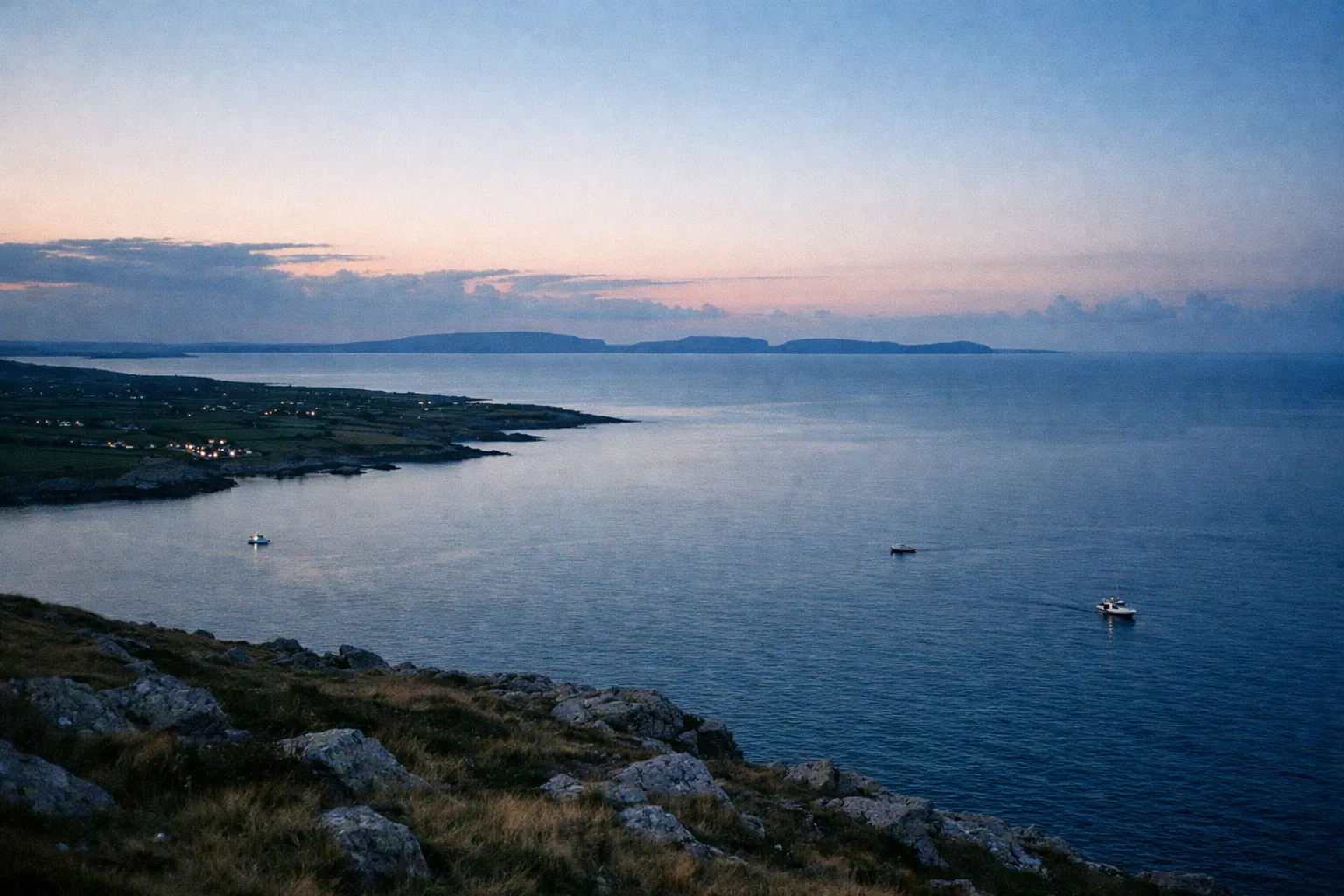
The Aran Islands are three inhabited islands - Inis Mór (Inishmore), Inis Meáin, and Inis Oírr - spread across the mouth of Galway Bay, about 48 km from Galway City and 8 km from Doolin Pier. All three are Gaeltacht communities where Irish is the working language, not a tourist novelty. Galway Tourism lists ferry connections to all three from Rossaveal and Doolin.
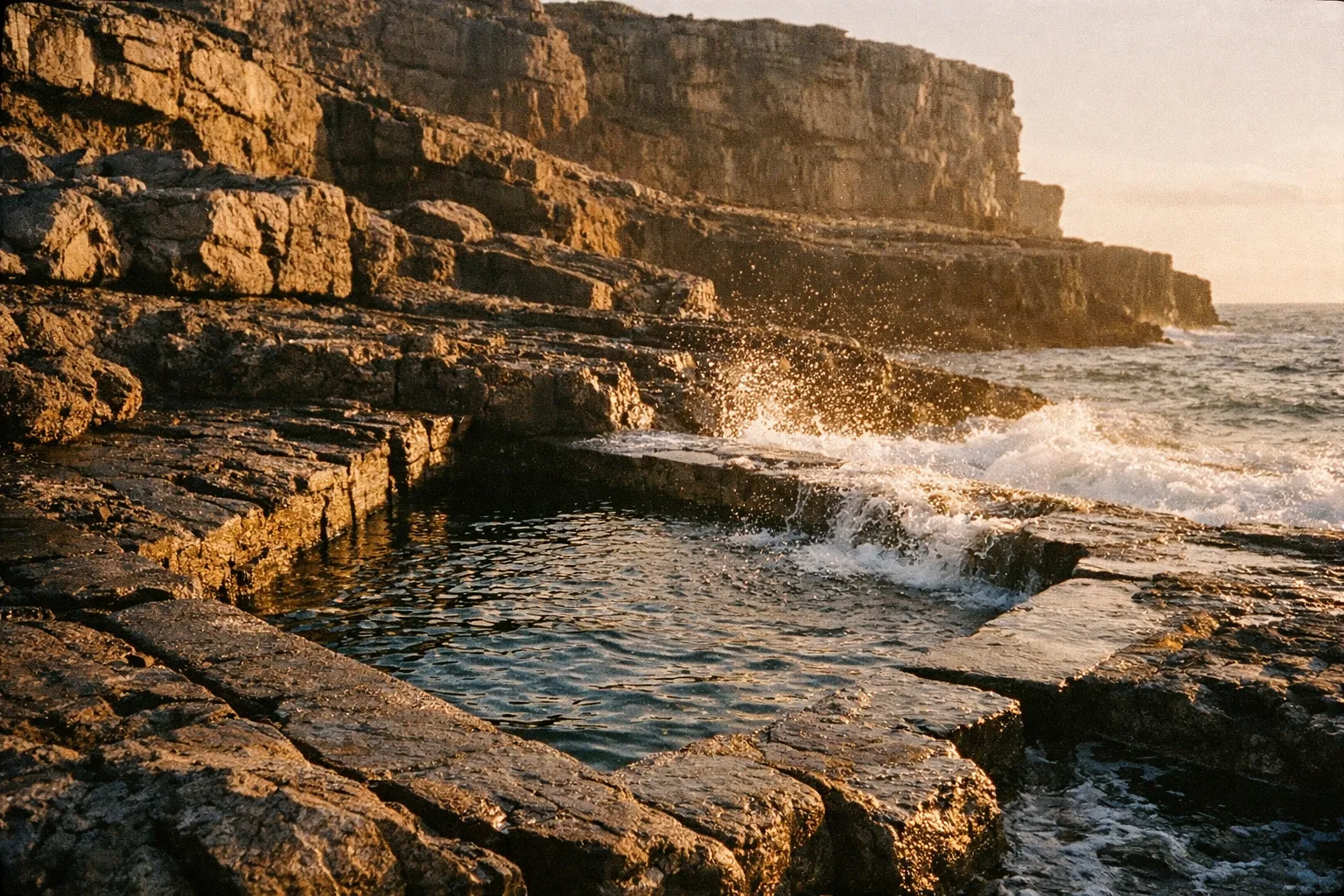
If you have only one visit, the choice is clear: head to Inis Mór. It has the fort, the beach, the best infrastructure, and the most frequent sailings. The other two islands suit travelers planning two- or three-day multi-island trips.
Inis Mór (Inishmore): the main event
Inis Mór is the largest island and the tourist hub, though it never feels like a theme park. Ferries dock at Kilronan pier, where you’ll find bike rentals, minibus tours, cafés, and the road leading to the key sights. The highlight is Dún Aonghasa. Beyond that, Kilmurvey Beach is a short ride away, the Wormhole (Poll na bPéist) is a natural rectangular rock pool on the south coast, and the Black Fort (Dún Dúchathair) is an older, quieter stone fort that most day-trippers skip - which makes it worth the detour if you have the afternoon.
Inis Oírr and Inis Meáin: worth the detour?
Inis Oírr is the smallest island and the closest to Doolin, just 8 km out, with a crossing of 15 to 25 minutes depending on the operator. That short hop makes it a good choice for a half-day or for travelers wanting a quick island taste without committing to the full Inis Mór loop. Doolin Ferry Co. prices Inis Oírr lower than the other two - ticket prices range from €13 to €25 one-way/inter-island and €18 to €35 return per adult to Inis Oírr, per Doolin Ferry Co., versus €23 to €45 for Inis Mór or Inis Meáin (9).
Inis Meáin, the middle island, is the least visited. It doesn’t have a single blockbuster site drawing crowds, which is exactly its appeal - it’s better for a slower, multi-island itinerary. If you must pick between the two smaller islands and have limited time, Inis Oírr wins on access, and Inis Meáin wins on quiet.
Getting to the Aran Islands: Ferry Routes and Access Points Compared
You have four ways to reach the Aran Islands: passenger ferry from Doolin (County Clare), passenger ferry from Rossaveal (County Galway), a seasonal sailing from Galway City Docks, or a short flight from Connemara Airport near Inverin. Which one works depends entirely on your starting point.
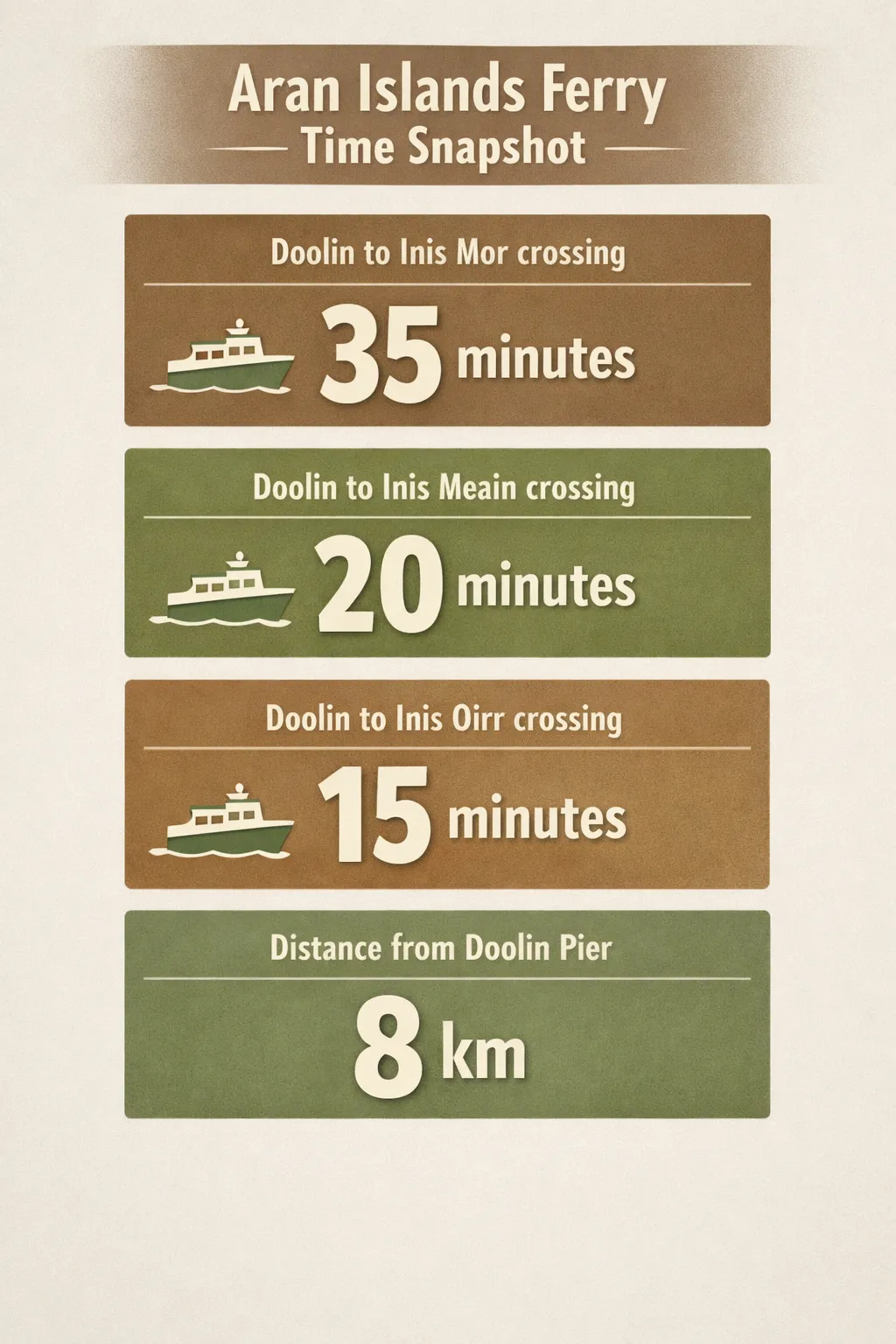 Doolin to Inis Mor: 35 minutes; Doolin to Inis Meain: 20 minutes; Doolin to Inis Oirr: 15 minutes; distance from Doolin Pier: 8 km.
Here’s how the routes stack up:
Ferry Route Comparison
| Doolin → Inis Mór | Rossaveal → Inis Mór | Galway City → Inis Mór | Doolin → Inis Oírr | Doolin → Inis Meáin | Connemara Airport → Inis Mór | |
|---|---|---|---|---|---|---|
| Route | Doolin → Inis Mór | Rossaveal → Inis Mór | Galway City → Inis Mór | Doolin → Inis Oírr | Doolin → Inis Meáin | Connemara Airport → Inis Mór |
| Departure Point | Doolin Pier, Co. Clare | Rossaveal, Co. Galway | Galway City Docks | Doolin Pier, Co. Clare | Doolin Pier, Co. Clare | Inverin (near Galway) |
| Crossing Time | 35 min | about 40 min | Varies | 15-25 min | about 20 min | about 10 min |
| Season | March-November | Year-round | Seasonal | March-November | March-November | Seasonal |
| Best For | Cliffs of Moher combo; Clare-based travellers | Galway-based travellers; flexible multi-day trips | Sightseeing cruise style; city-centre convenience | Shortest crossing; quickest island visit | Multi-island itineraries | Maximum speed; time-constrained travellers |
One thing to remember: older sources still cite 90-minute crossings from Doolin. That’s outdated. Doolin Ferry Co.’s fast boats now do Inis Mór in 35 minutes (9). Planning around the old timing throws off your whole day.
Doolin to Aran Islands: timetables and what to expect
Doolin Ferry Co. runs the Doolin to Aran Islands route March through November, seven days a week. Crossings take 35 minutes to Inis Mór, 20 minutes to Inis Meáin, and 15 minutes to Inis Oírr (9). The 2026 Inis Mór timetable shows departures from Doolin at 09:00, 11:00, and 15:00 between April 4 and August 30, dropping to 11:00 and 15:00 only in the shoulder seasons (February 28 to April 3 and August 31 to November 1). Return sailings from Inis Mór run at 09:50, 12:00, and 16:15 in peak months (1).
Doolin Pier has parking, which matters since you’re leaving your car behind. Arrive 20 to 30 minutes before your sailing. The boats are exposed to Atlantic conditions - on a lively day, expect a bouncy crossing. If you’re prone to seasickness, take something before boarding rather than mid-channel.
Rossaveal vs Doolin: which port works for your trip
Rossaveal is the natural choice if you’re based in Galway. Frommer’s notes that Aran Island Ferries sail from Rossaveal, 37 km west of Galway City, with about 40-minute crossings to Inis Mór and multiple daily sailings. Rossaveal runs a more stable year-round schedule, which Doolin doesn’t - handy for shoulder and off-season trips.
The catch is one many travelers miss: Rossaveal is not Galway City Docks. The two ports are 37 km apart. Aran Island Ferries flags this clearly - you need about 40 minutes by road (plus a shuttle if you don’t drive) to get from Galway to Rossaveal. Book a Rossaveal ferry while staying in central Galway without planning that transfer, and you’ll miss the boat.
So the short version: if you’re in Doolin or touring County Clare, take the Doolin ferry and pair it with the Cliffs of Moher. Based in Galway, use Rossaveal. Reserve Galway City Docks only if the sightseeing cruise itself is your goal.
Flying to Inis Mór: when the 10-minute flight makes sense
Aer Arann Islands flies from Connemara Regional Airport at Inverin to Inis Mór in under 10 minutes, according to Galway Tourism - by far the fastest way onto the island. It costs more than the ferry and depends on the same weather, but when time is tight - a short day trip, a poor sailing forecast, or a low tolerance for boat swell - the flight justifies the premium. It’s a niche option, not the default.
Ferry Prices: What You’ll Pay in 2026
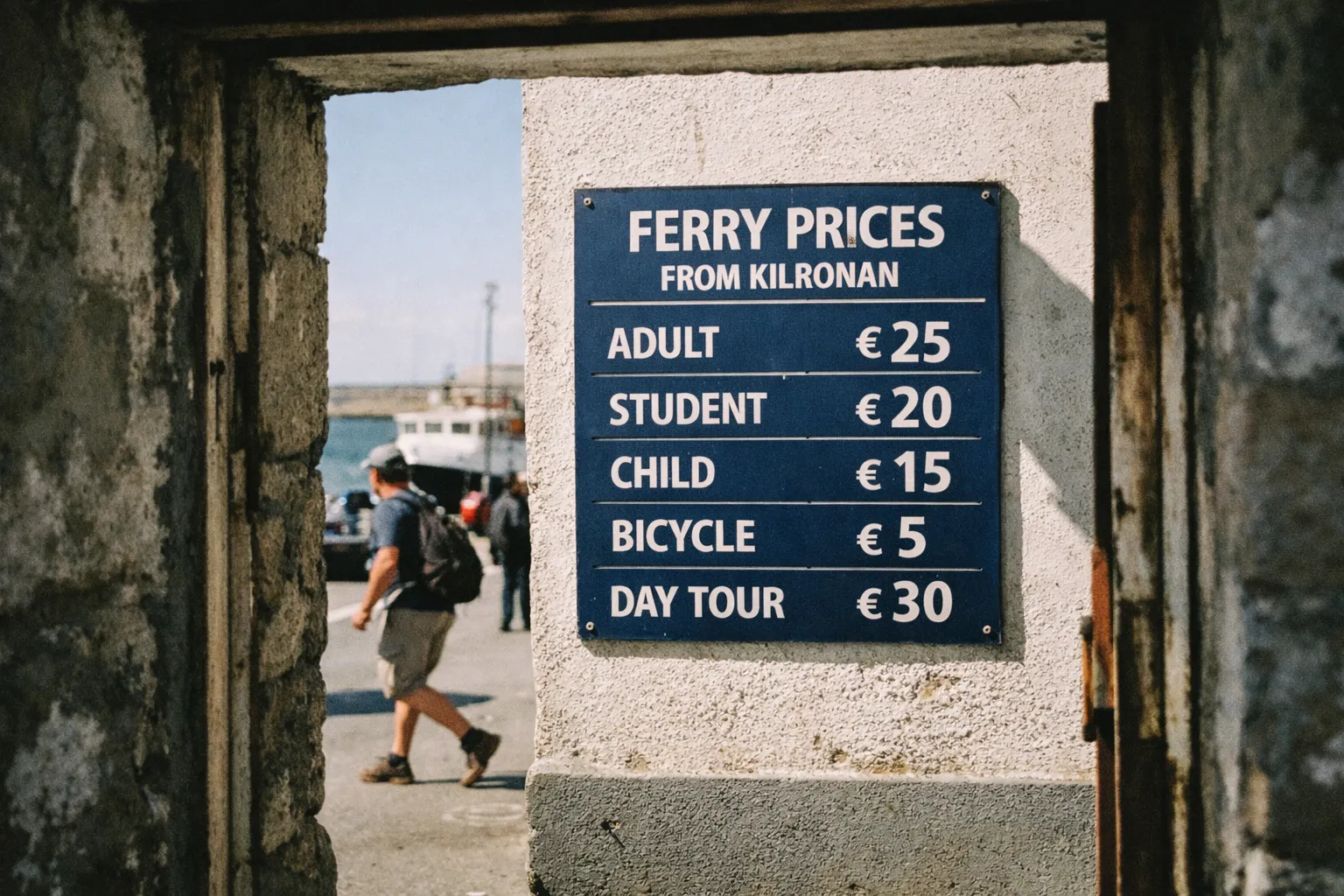
A standard adult return from Doolin to Inis Mór runs roughly €39 to €45 depending on operator and season, with family tickets starting around €105. Here’s a quick breakdown.
Ferry Pricing Overview
| Adult (return) | Student/Senior (return) | Child 5+ (return) | Under 4 (return) | Family 2+2 (return) | Family 2+3 (return) | Family 2+4 (return) | |
|---|---|---|---|---|---|---|---|
| Ticket Type | Adult (return) | Student/Senior (return) | Child 5+ (return) | Under 4 (return) | Family 2+2 (return) | Family 2+3 (return) | Family 2+4 (return) |
| Doolin → Inis Mór (aranislands.ie) | €39 | €36 | €20 | Free | €105 | €120 | €140 |
| Doolin → Inis Mór (doolinferry.com range) | €23-€45 | €43 (fast ferry) | €23 (fast ferry) | - | - | - | - |
| Rossaveal → Inis Mór | about €30 | about €25 | about €15 | - | - | - | - |
Prices sourced from aranislands.ie (2026) and doolinferry.com (Feb 2026). Confirm current fares directly with operators before booking.
Doolin Ferry Co. lists a slightly different scale: adult returns to Inis Mór and Inis Meáin range from €23 to €45 depending on season and ticket type, one-way and inter-island tickets from €15 to €30, and Inis Oírr returns start lower, around €18 (per Doolin Ferry Co.). Galway Tourism cites average Doolin return prices at €44 for adults and €22 for children aged 5 to 15.
From Rossaveal, Frommer’s notes round-trip fares of about €25 for adults, €20 for seniors and students, and €13 for children, with an extra €7 adult round-trip fee for the Galway City shuttle bus (Frommer’s). An October 2024 example fare put the Rossaveal adult return at around €30.
Prices shift by season and operator, so always check current fares before booking. And June through August, booking ahead isn’t optional - it’s the difference between boarding and watching the ferry pull away.
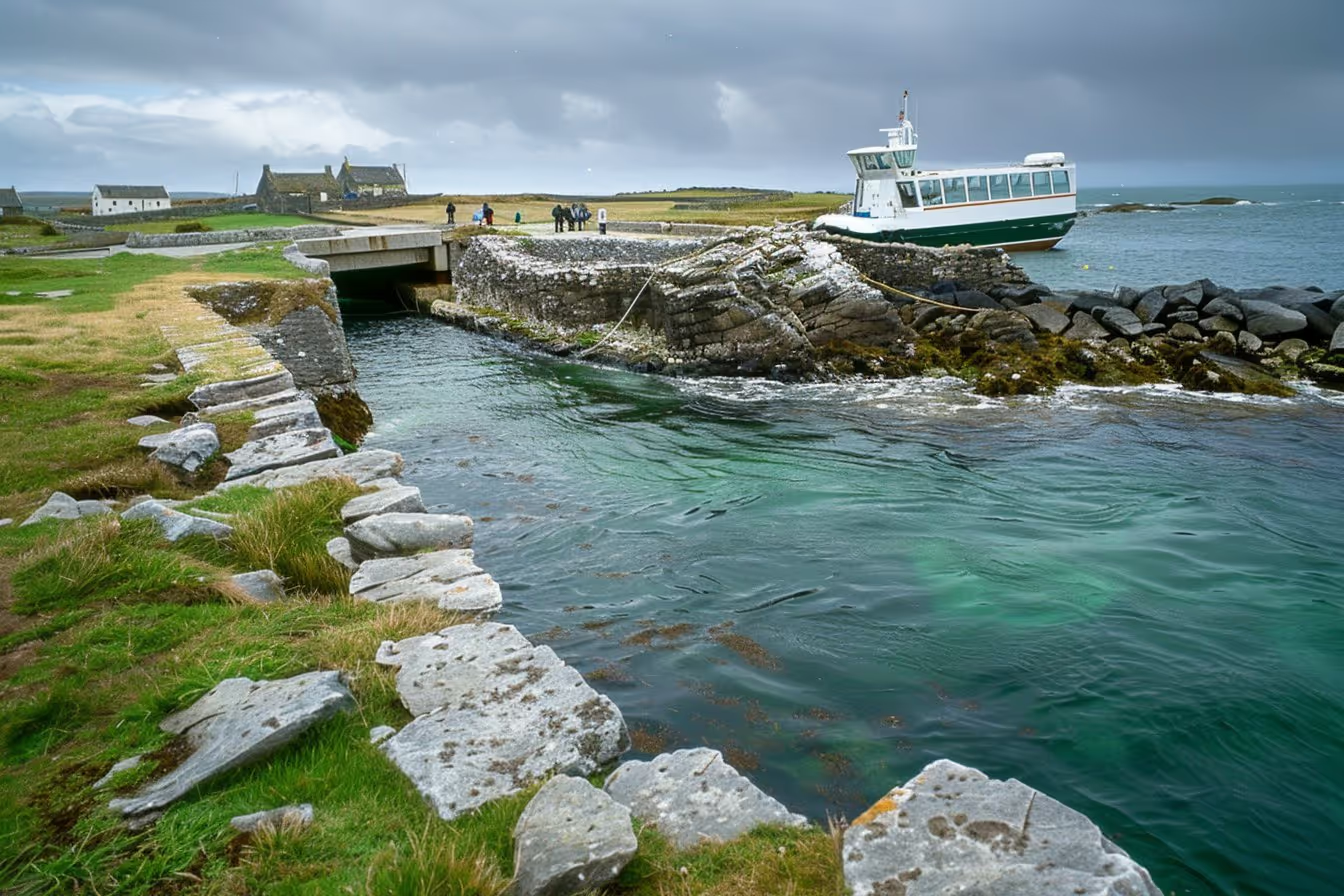
Rossaveel, Galway: Ferry Transfer to Inis Mór (Aran Islands)
The Rossaveal crossing to Inis Mór, booked ahead. The sailing itself, not a packaged day tour.
Check availabilityDún Aonghasa: What to Expect at the Cliff-Top Fort
Dún Aonghasa is a prehistoric stone fort dating to around 1100 BC, perched on sea cliffs over 100 metres above the Atlantic on Inis Mór’s west coast. Heritage Ireland manages the site, which includes a visitor centre at Cill Mhuirbhigh (Kilmurvey). It’s one of Ireland’s most significant archaeological sites, and the setting - concentric stone walls ending abruptly at a sheer, unguarded drop - is what makes it stick in your mind.
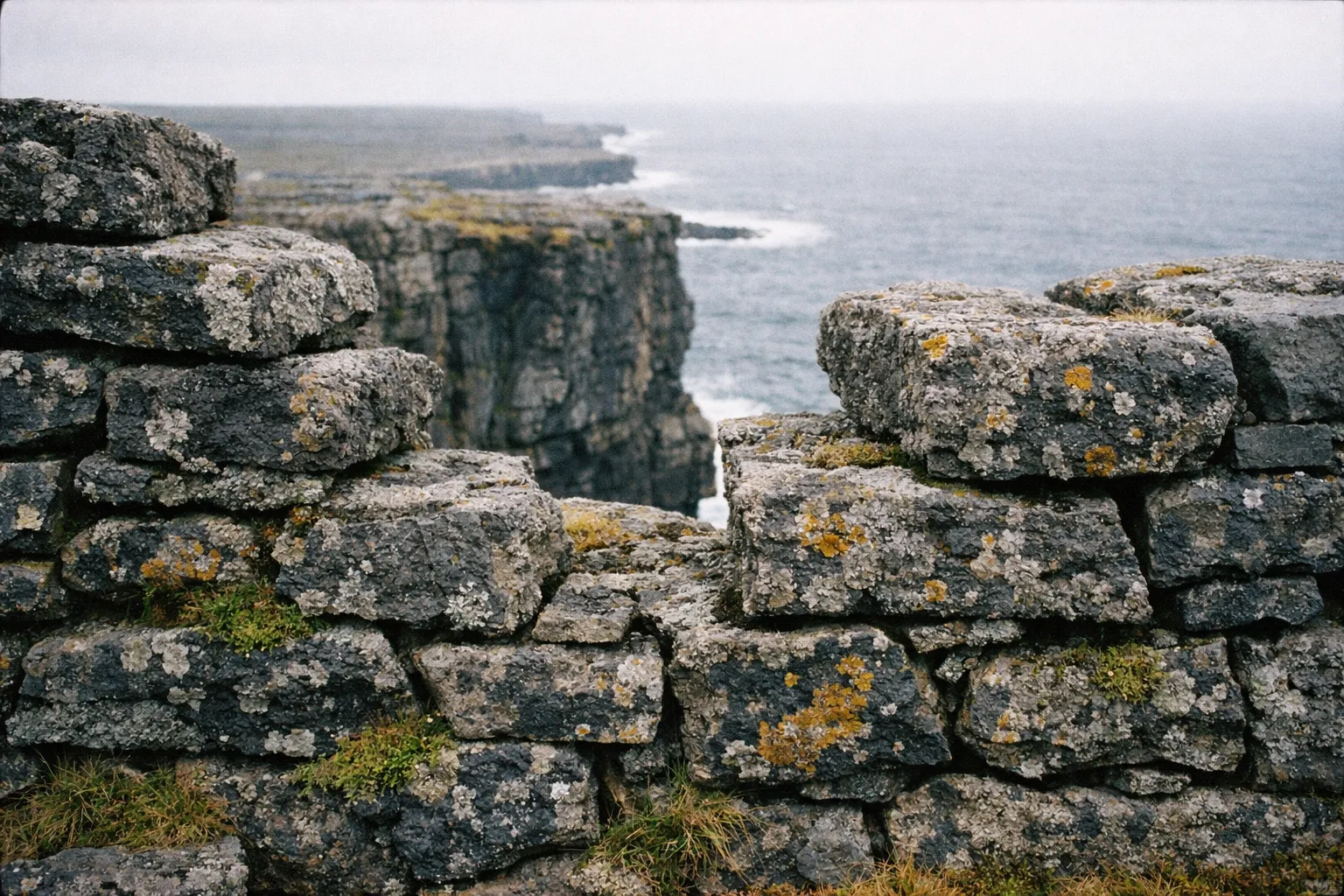
The visitor centre is open 09:30 to 18:00 April through October, and 09:30 to 16:00 November through March, closed December 24-30 (8). Access depends on weather; Heritage Ireland lists a local number (099 61008) for day-of queries when conditions look iffy.
The walk up: distance, terrain, and what to wear
From the bike and car park at Kilmurvey, it’s roughly 1 km uphill to the fort on a rocky, uneven stone path - about 15 to 20 minutes each way (3). This is not a casual stroll. The stone is worn and often wet, even in dry weather, and there are no handrails. Sturdy shoes with good grip are essential. Trainers with smooth soles will leave you gingerly picking your way down - most slips happen on the descent.
The path isn’t wheelchair accessible and challenges anyone with significant mobility issues. Reasonable fitness handles it fine; just don’t underestimate it because it’s “only 1 km.”
At the cliff edge: safety and what the view actually looks like
The cliff edge at Dún Aonghasa is completely unguarded, with a drop exceeding 100 metres straight to the Atlantic (3). This surprises visitors daily. There’s no fence, railing, or barrier - the grass just ends. On a calm day, the view is striking. In wind, it’s dangerous, and Atlantic gusts arrive without warning.
Stay well back from the edge, especially if it’s gusty. Keep children close. The view stretches wide-open ocean in three directions from the top of a sheer face - the kind of view that makes you stop walking - but you can take it all in safely a metre or two back. No photo is worth leaning over the edge.
Timing your visit to avoid the crowds
Tour groups tend to cluster mid-day, so aim for late morning (before 11:00) or late afternoon. The first Doolin ferry puts you at the fort comfortably before 11:00, when it’s quieter and the light is better for photos than the flat mid-day glare. Heritage Ireland accepts advance bookings for guided group visits by phone at +353 91 539 220. Kilmurvey Beach is a short detour from the same car park, so plan to visit it on the same loop.
Getting Around Inis Mór: Bikes, Minibuses, and Your Feet
You don’t need a car on the Aran Islands - and you can’t bring one, since no car ferries serve any island. You park on the mainland at Doolin Pier or Rossaveal and get around by bike, minibus tour, or on foot (1). That’s the system, and it works.
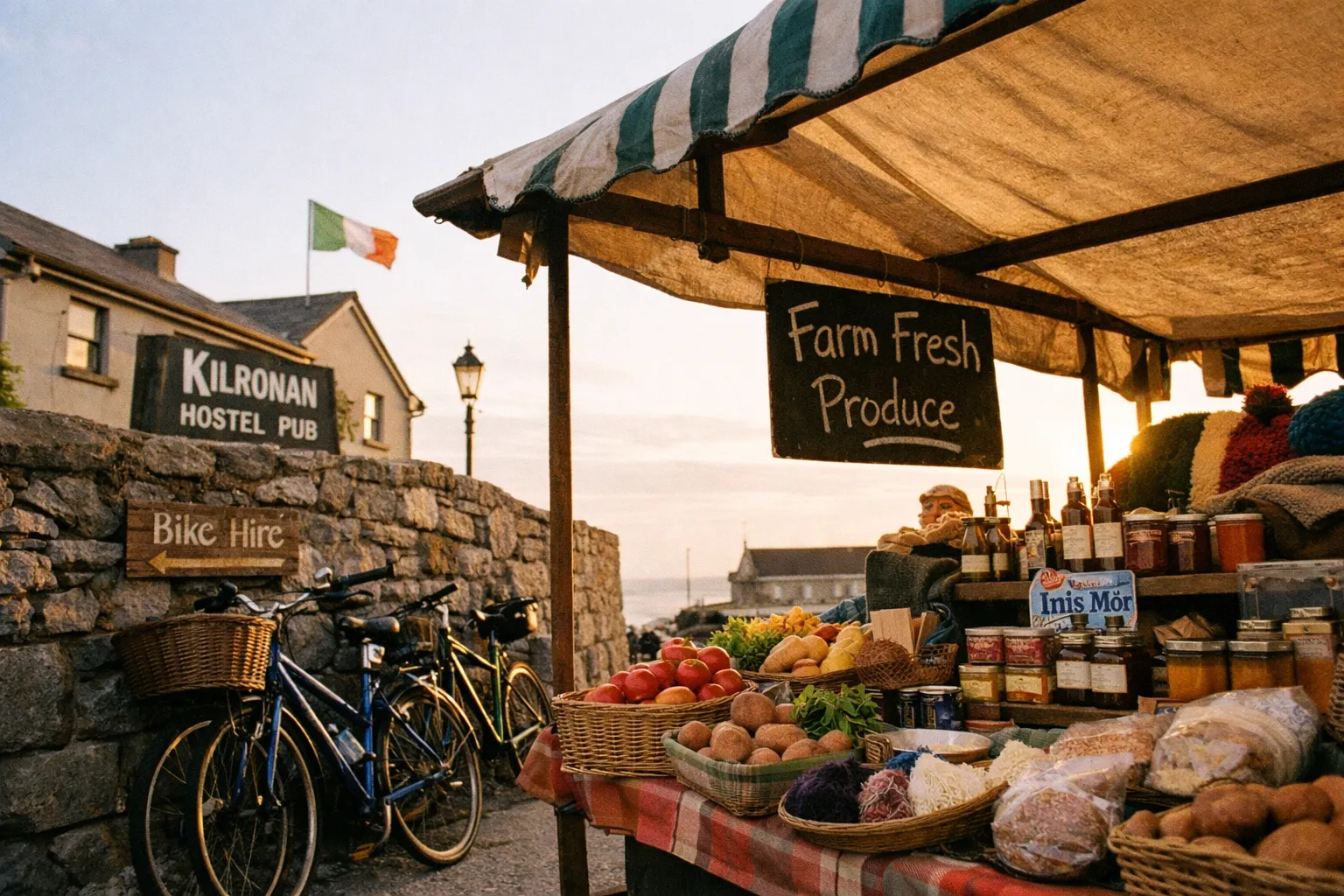
Three options, ranked by popularity:
- Bicycle rental. The default and best choice for most. Bikes are available right at Kilronan pier. The standard loop covering Dún Aonghasa and Kilmurvey Beach is about 10 to 15 km on quiet, mostly flat roads - manageable for casual cyclists. This is how the island is meant to be seen.
- Minibus tours. Local guides run minibus tours from the pier, ideal if you don’t want to cycle, have limited time, or travel with someone who can’t manage the bike loop. The guides add context the bike-it-yourself approach misses.
- Walking. Feasible near Kilronan for short trips, but the full Dún Aonghasa loop on foot is a long day and cuts into your limited time. Fine as a supplement, not your main transport.
A practical tip: bikes and minibus spots off the first ferry fill fast. Arrive on the earliest sailing and secure your transport before the queue builds.
Planning a Day Trip to Inis Mór: A Realistic Timeline
A day trip to Inis Mór from Doolin takes about 8 to 9 hours door to door, including the 35-minute crossing each way, bike pickup, sightseeing, and breaks. Taking the first ferry out and the last back gives you 6.5 to 7 hours on the island - enough for the fort, the beach, and a decent lunch without rushing (1).
Sample day-trip sequence from Doolin
How to Plan a Day Trip to Inis Mór from Doolin
9 hoursA step-by-step timeline for a full day trip including ferry, bike rental, and sightseeing
- 1
Book the earliest ferry
Reserve the 09:00 departure from Doolin online in advance, mandatory in June-August.
- 2
Arrive early at Doolin Pier
Get there 20 to 30 minutes before departure; parking is available on site.
- 3
Collect your bike or join a minibus tour
On arrival at Kilronan, secure your transport immediately as spots fill fast.
- 4
Ride to Kilmurvey Beach and Dún Aonghasa
Cycle roughly 8 km; aim to reach the fort before 11:00 to avoid crowds.
- 5
Walk the uphill path to Dún Aonghasa
Allow 15-20 minutes each way; wear sturdy shoes for the rocky terrain.
- 6
Lunch and afternoon sightseeing
Return to Kilronan for lunch; visit the Wormhole or Black Fort if time allows.
- 7
Return bike and catch the last ferry
Board the 16:15 sailing back to Doolin; confirm return time when booking.
Weather and flexibility: why you shouldn’t lock in tight connections
Sailings depend on Atlantic conditions. Doolin Ferry Co. advises checking updates on travel day. Wind and swell can cancel boats at short notice. Build flexibility into your schedule and avoid booking tight onward connections - trains, flights, or non-refundable hotels - for the same evening you return. The Doolin to Aran Islands route pairs naturally with the Cliffs of Moher, both in County Clare, making an easy backup if a sailing gets cancelled.
Handing the logistics to an operator removes the connection risk entirely: the coach, the crossing and the cliff cruise are sold as one day, and they rebook you when the Atlantic decides otherwise:
From Galway: Aran Islands and Cliffs of Moher Tour & Cruise
Galway to Inis Mor and back, with the Cliffs of Moher seen from the water rather than the clifftop, in one booking for the whole day.
Check availabilityVisiting All Three Islands: Multi-Island Ferry Strategy
Doolin Ferry Co. runs ferries to all three Aran Islands - Inis Mór, Inis Meáin, and Inis Oírr - between March and November, including inter-island connections that let you chain islands in one itinerary (9). For anyone wanting more than Inis Mór, this is the framework.
The efficient route follows geography. Start on Inis Oírr, the closest island to Doolin (15 to 25 minutes). Then move to Inis Meáin (about 20 minutes inter-island), and finish on Inis Mór - a sequence that fits typical mid-day inter-island connections. This way, you avoid doubling back.
For overnight stays, Inis Mór has the most accommodation - guesthouses, B&Bs, and small hotels around Kilronan. Most multi-island travelers base themselves here. Inis Meáin and Inis Oírr are quieter with limited but characterful places to stay; book those well ahead.
Shoulder season (April-May, September-October) is ideal for multi-island trips. Fewer crowds, less pressure on accommodation, and easier ferry movement without competing for space. One warning: inter-island timetables don’t always line up neatly with mainland departures, so check connections carefully. Missing a two-boat-a-day leg can cost you half a day.
When to Go and What to Watch Out For
June through August is high season, with the most departures and fastest boats - but Dún Aonghasa gets crowded mid-day and same-day ferry tickets can be unavailable. Galway Tourism warns peak-season sailings often sell out without pre-booking. If you travel in summer, book the ferry and any guided fort visit well in advance. Don’t count on walk-up tickets.
The shoulder months - April-May and September-October - are smarter if your dates are flexible. Galway Tourism recommends this window for quieter sites, lower accommodation pressure, and still-reasonable weather. Departures are fewer, so check the timetable, but you trade some frequency for far less crowding. Doolin Ferry Co. runs March through November, with reduced service outside summer.
Common mistakes that trip people up, in order of frequency:
- Arriving without reservations in peak summer and finding ferries full. Mid-morning sailings go first.
- Confusing Galway City Docks with Rossaveal. They’re 37 km apart - a serious transfer if you show up at the wrong one.
- Assuming the old 90-minute crossing time. It’s 35 minutes now from Doolin. Planning for 90 messes up your timing.
- Underestimating the Dún Aonghasa walk and cliff exposure. It’s a real 1 km uphill on rock, and the cliff edge is genuinely unguarded.
- Expecting to bring a car. You can’t. Park on the mainland and cycle.
Heritage Ireland stresses that access to Dún Aonghasa depends on weather - strong winds affect both the rocky approach and the exposed cliff-top. Watch the forecast, and pack for wind and rain even on a promising morning. Atlantic weather changes fast.
Frequently Asked Questions
- Which ferry is best for the Aran Islands?
- It depends on where you're based. Doolin Ferry Co. offers the fastest 35-minute crossing from Doolin, ideal for Clare visitors; Rossaveal serves Galway with more frequent sailings.
- Is going to the Aran Islands worth it?
- Yes, for authentic Atlantic edge, prehistoric sites, and Irish language immersion. Shoulder season visits avoid crowds that peak in mid-summer.
- How much does it cost to take a ferry to the Aran Islands?
- Adult round-trip fares from Doolin to Inis Mór range €39-€45; family tickets start near €105. Rossaveal fares are typically lower, around €25-€30.
- Do you need a car on the Aran Islands?
- No. Cars cannot be brought to the islands. Visitors use bikes, minibuses, or walk. Bikes are the most practical for Inis Mór's main loop.
- Can I visit the Aran Islands as a day trip?
- Yes. From Doolin or Rossaveal, a day trip including ferry, bike rental, and sightseeing is feasible with 8-9 hours total.
- When is the best time to visit the Aran Islands?
- Shoulder seasons April-May and September-October offer quieter sites and better accommodation availability than peak summer.
- Do I need to pre-book the ferry?
- Yes, in peak summer (June-August) pre-booking is mandatory to secure a spot, especially for mid-morning sailings.
- Is Dún Aonghasa suitable for all fitness levels?
- The 1 km uphill rocky path is manageable for most with reasonable mobility but not wheelchair accessible. The cliff edge is unguarded.
The Bottom Line
The decision tree is simple. If you’re in Doolin or County Clare, the Doolin ferry is your best bet - 35 minutes across, and you can add the Cliffs of Moher on the same trip. If you’re based in Galway, Rossaveal is your port, not the city docks. Either way: book the earliest ferry, grab a bike at Kilronan as soon as you dock, ride to Dún Aonghasa before 11:00 to avoid tour groups, and stay for the last sailing back.
What catches most visitors off guard isn’t the crossing or the climb - it’s the cliff edge itself. Completely unguarded, over 100 metres above the Atlantic, and arriving without warning. Wear shoes with grip, keep well back in wind, hold kids close, and the island takes care of the rest. If your schedule allows, go in shoulder season - you’ll get the fort, the ocean, and the quiet as they were meant to be.