Connemara Ireland does not hand you one headline sight; it hands you a landscape, the Twelve Bens, bogs and lakes, an Atlantic edge, stitched together by living Gaelic culture. Plan it as a driving region, because the buses barely run and the scenic loop takes six or seven hours with stops. Climb Diamond Hill for the wide view, base in Clifden for pony treks and dinner, and take home the green marble quarried nowhere else. Give it two or three days and it stops being a Galway day trip.
What Connemara, Ireland Is Known For
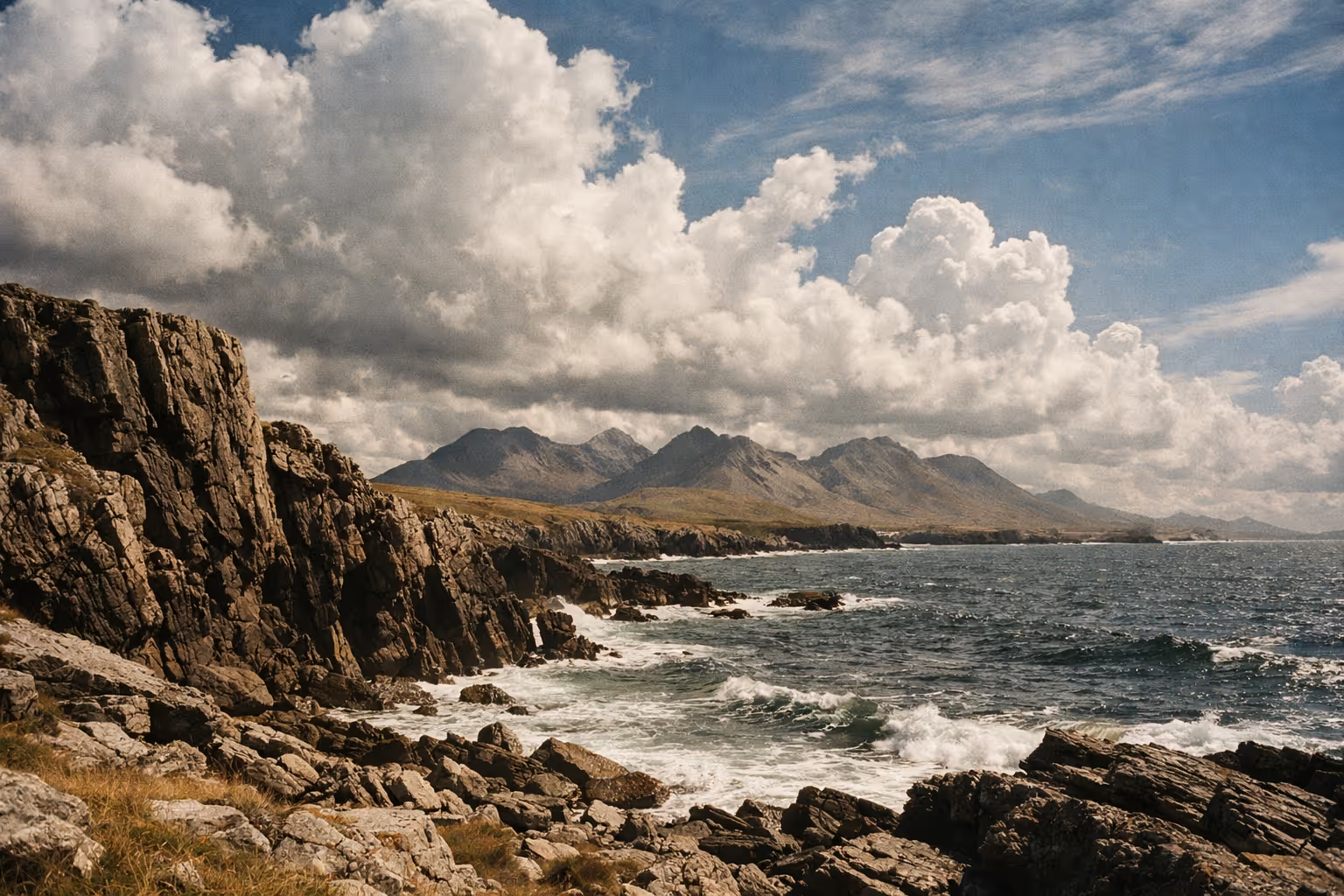
Connemara Ireland is a region that doesn’t lean on a single headline attraction. Instead, it’s a mix of rugged coastline, bogs, lakes, and the Twelve Bens mountain range, all threaded through with a living Gaelic culture (4). People come here mainly for four things: Kylemore Abbey, the trails in Connemara National Park, the sturdy Connemara pony, and the green marble you won’t find anywhere else.
If you’re weighing whether to visit, it helps to know what draws others here. Kylemore Abbey alone welcomed 573,000 visitors from 82 countries in 2024, supporting 1,850 jobs in Galway and Mayo and generating €91.5 million in annual spending, according to the abbey’s 2024 Economic and Social Impact Report (8). North American Airbnb bookings in Connemara rose 18% in 2023, reflecting a broader move away from cities toward rural stays (9). This isn’t a side trip - it’s a destination in its own right.
Getting to Connemara from Galway
Most visitors set up base in Galway city and head west. The drive from Galway to Connemara covers about 64 km, roughly 55 minutes to reach the heart of the region (5). You could do Connemara as a day trip, but two or three days lets you breathe in the place properly.
The classic scenic loop runs Galway → Clifden → Sky Road → Kylemore Abbey → Killary Harbour → back to Galway. Budget 6-7 hours including stops for the full circuit. Fuel for a compact rental over 120-150 km will cost around €20-€30 (USD $22-$33).
A few things to keep in mind:
- Public transport is sparse. Buses out here are infrequent compared to Galway city. Renting a car or joining a day tour (about €50-€80 / USD $55-$88) is almost essential if you want to see everything efficiently.
- Don’t cram too much in. Trying to squeeze Galway-Connemara-Dublin into a single day means over 10 hours behind the wheel. Better to stay overnight in Galway or Clifden.
- Accommodation covers the spectrum. Budget B&Bs and guesthouses start at €35-€60 (USD $38-$66) per night; mid-range hotels typically run €90-€150 (USD $99-$165).
For a mid-range day trip, expect to spend around €65-€100 (USD $71-$110) per person: split car rental at €30-€40, Kylemore Abbey entry at €18 (11), and lunch in Clifden for €15-€25.
Discovering Connemara’s natural side
Connemara’s landscape is a patchwork of wild, open spaces that can catch even seasoned travelers off guard. From the moment you arrive in this corner of County Galway, you’re surrounded by rugged mountains, quiet lakes, and windswept coastlines that shift character depending on the light and the weather.
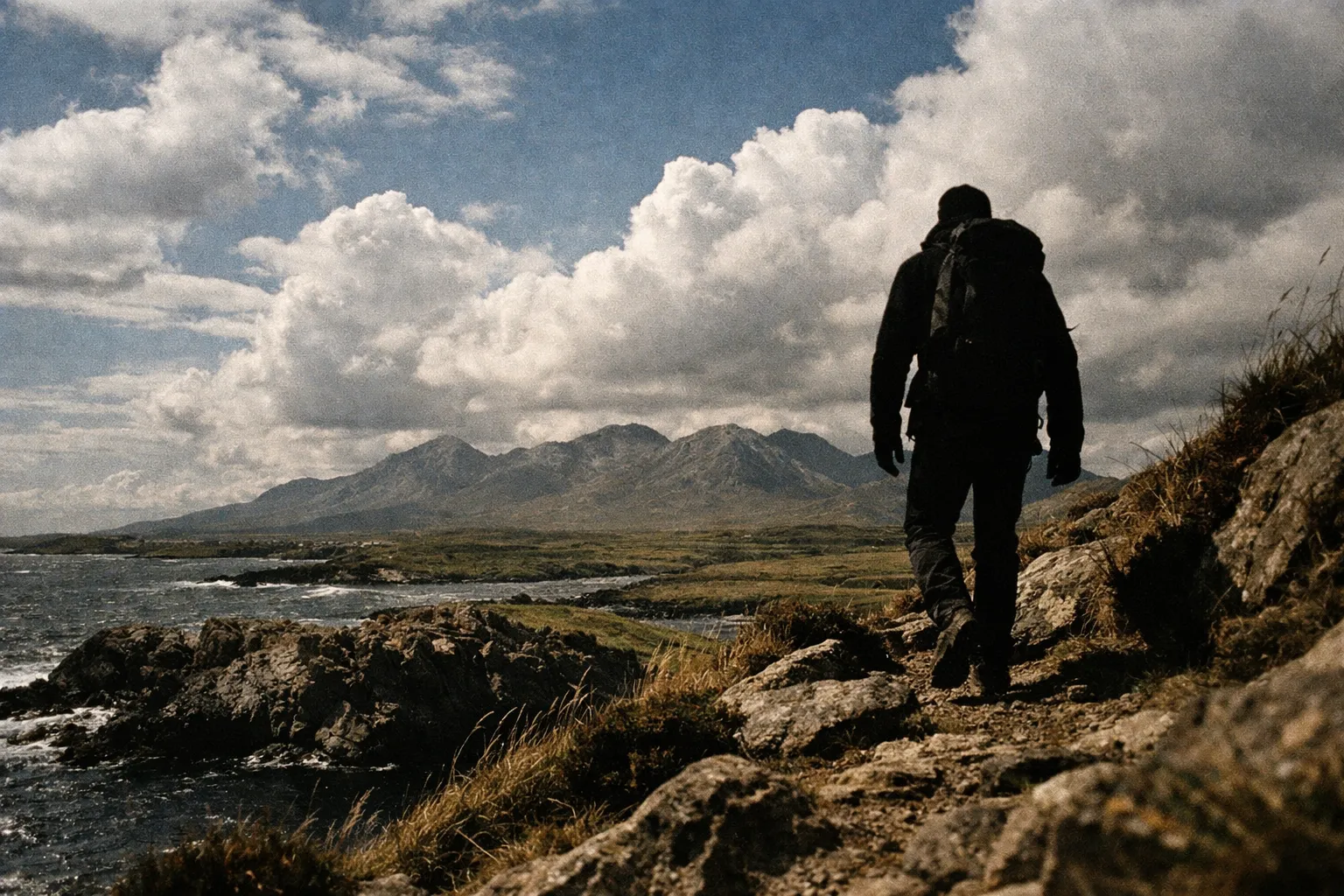
At the heart of it all is Connemara National Park, covering roughly 2,000 hectares of blanket bog, heath, grassland, and woodland around Letterfrack. As someone who hikes whenever I can, I couldn’t skip its well-marked trails. The standout is Diamond Hill - it’s a tough climb, but the 360-degree views from the upper ridge take in the Twelve Bens, the Atlantic coastline, and Kylemore Abbey below, and make every step worth it.
But the scenery doesn’t stop at the mountains. Some of Ireland’s most striking beaches are here too. I spent a quiet afternoon at Dog’s Bay, a horseshoe-shaped beach with white sand that wouldn’t feel out of place in the Caribbean. The water is cold - don’t expect to swim - but it’s perfect for bracing walks and photos. Nearby Gurteen Bay shares the same tombolo and is usually even quieter.
If you want something different, head to Killary Harbour. This fjord-like inlet stretches 16 kilometers between Galway and Mayo and is one of only three glacial fjords in Ireland. I took a boat tour here and caught glimpses of seals, and with luck, dolphins. The harbour also supports mussel farming, and you’ll spot the long lines of buoys from the road above.
Here’s a quick list of natural highlights:
- Twelve Bens mountain range
- Roundstone Bog
- Ballynahinch Lake
- Clifden Sky Road
- Mannin Bay
Hiking the Connemara National Park trails
The Connemara National Park hiking trails are free, well marked, and offer something for everyone - from easy strolls to challenging climbs. The visitor center near Letterfrack is where you’ll find trailheads and parking, and entry to the park itself costs nothing; budget around €4-€6 (USD $4-$7) for the car park on busy summer days.
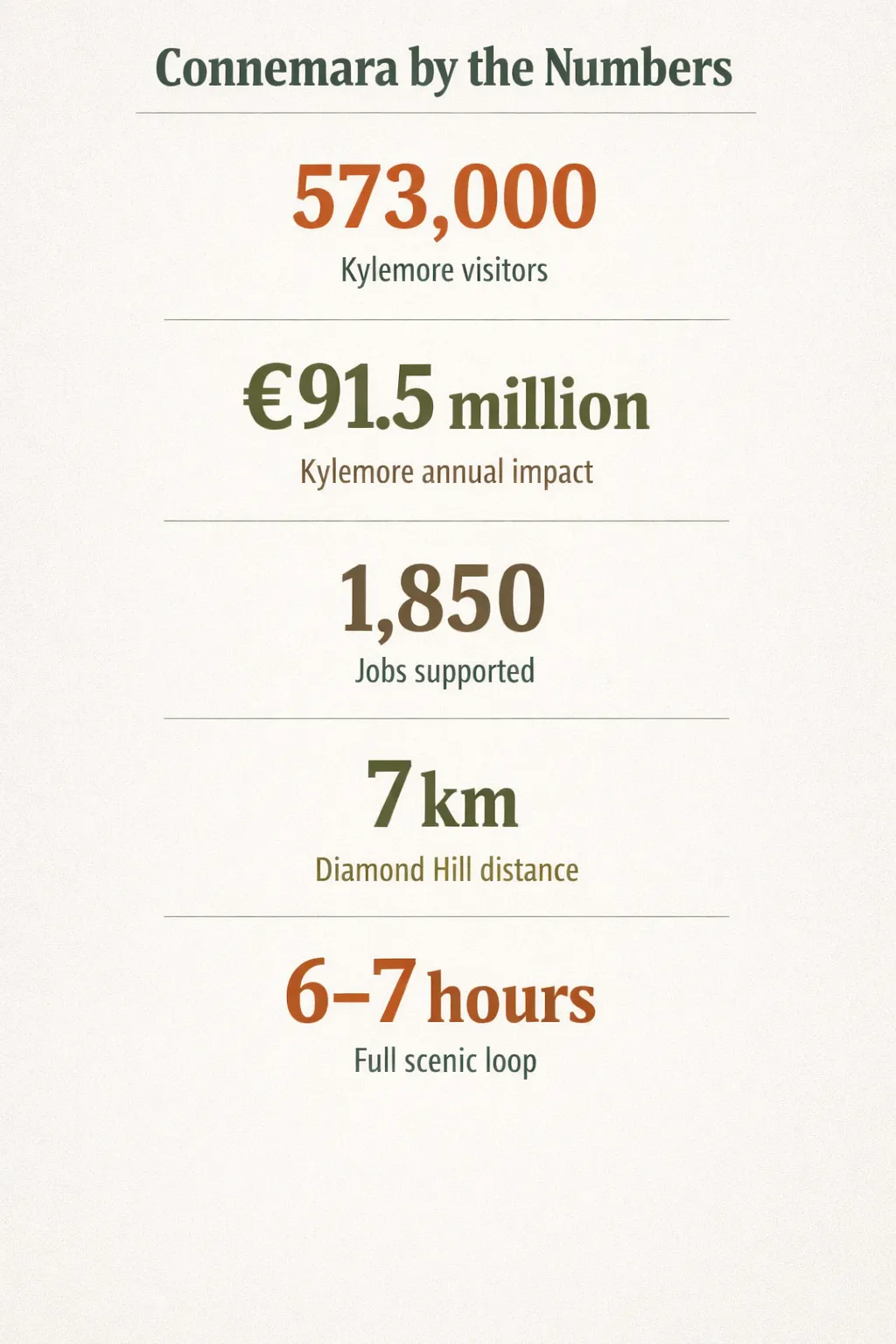 Kylemore Abbey drew 573,000 visitors in 2024, €91.5 million in spending, and 1,850 jobs; Diamond Hill is a 7 km trail with 500 m ascent, and the full scenic loop takes 6–7 hours.
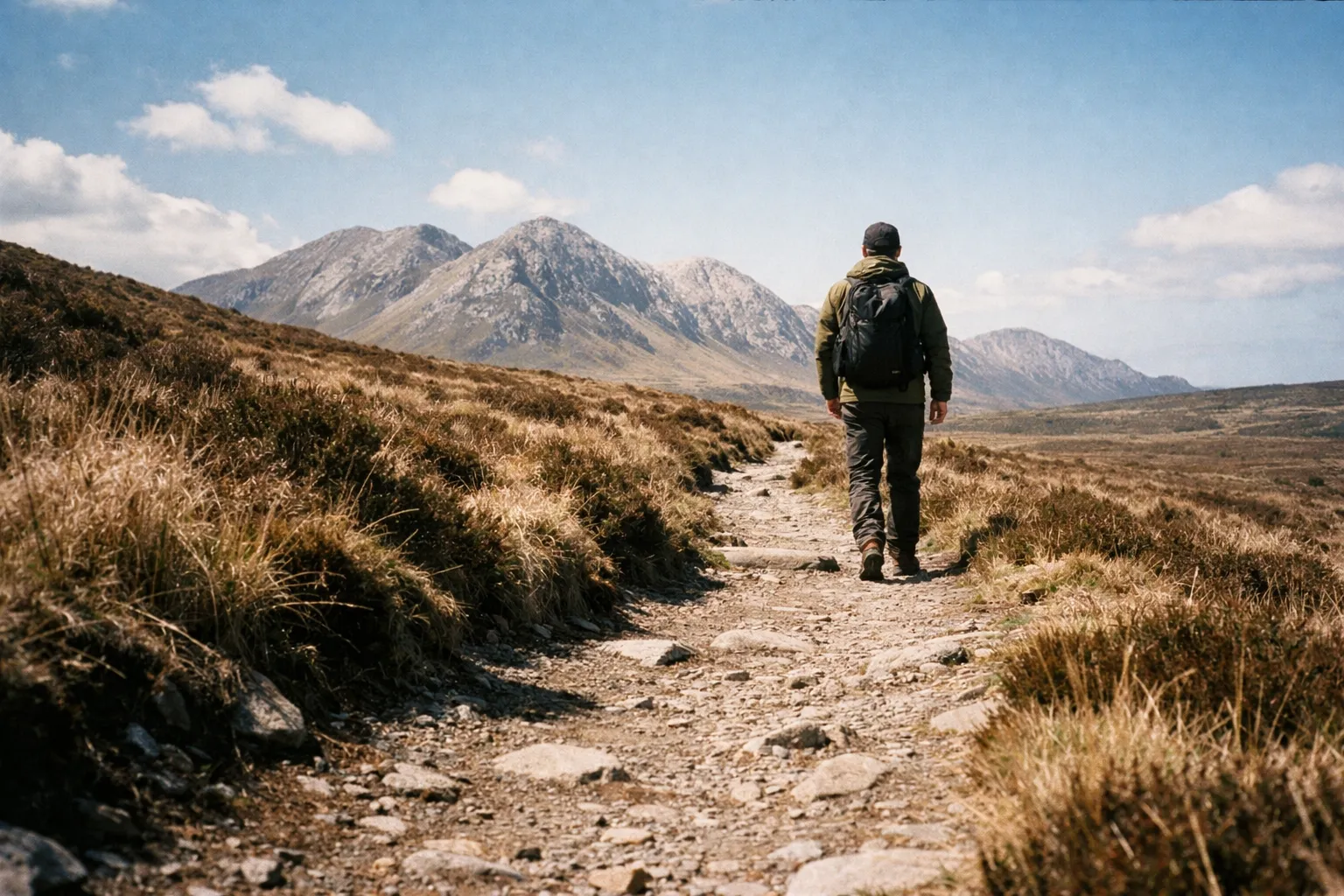
The headline walk is Diamond Hill. It’s about 7 km with 500 m of elevation gain, taking between 1 and 3 hours depending on your pace and how often you stop for photos. The upper part is exposed and can be windy - the boardwalk and steps help, but good footwear with traction is a must. Plan 3-4 hours if you want to linger at the summit and soak in views of the Twelve Bens, the coast, and Kylemore. The trail splits into a lower loop (easier, mostly flat) and an upper loop that takes you to the true summit at 445 m; the upper loop is the one worth doing.
If that feels like too much, try the Sruffaunboy loop instead. It’s an easy 2.2 km loop, about 38 minutes, and popular with families - one platform recorded almost 3,000 hikers (3). The path winds through blanket bog and heath, with good signage throughout. My tip: don’t try to do both Diamond Hill and Sruffaunboy plus the coast all in one afternoon. Do Sruffaunboy first to warm up, then tackle Diamond Hill with fresh legs.
The weather here can turn quickly. I’ve seen bright sun shift to sideways rain in under half an hour, even in July. Always pack a waterproof layer and don’t start Diamond Hill in just a T-shirt and trainers. The visitor center staff post daily trail conditions on a board by the entrance - worth a glance before you set off.
Kylemore Abbey: castle, chapel, and gardens
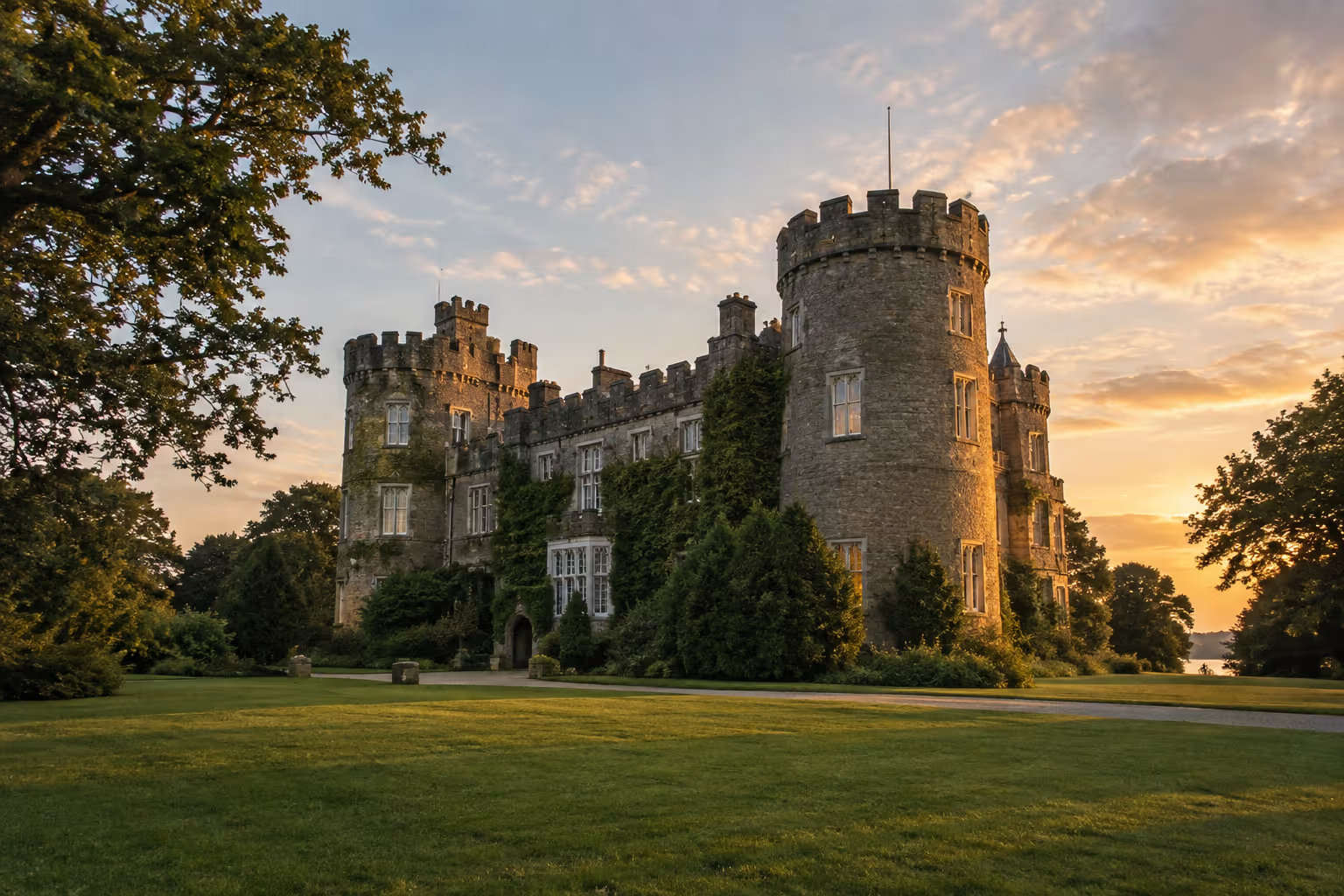
Kylemore Abbey Connemara tops the list of visitor attractions, and it’s easy to see why. This 19th-century castle-turned-abbey sits reflected in its own lake beneath a wooded hill. It’s photogenic enough before you even step inside. The Benedictine nuns have lived here for over 100 years, and the estate includes the main house, a neo-Gothic church, and a restored Victorian Walled Garden.
Give yourself 2-3 hours to explore properly - the buildings and gardens are spread out, connected by a shuttle or a pleasant walk along the lake. With over half a million visitors in 2024 (8), expect company, especially in high season.
Kylemore Abbey ticket prices (booking page, October 2026):
- Adult (18 to 64): €18
- Student or senior (65+): €15.50
- Junior student (13 to 16): €10
- Child (12 and under): free
- Family (2 adults and 2 to 6 children under 16): €45 (11)
Two practical tips: book tickets ahead in summer to avoid sold-out slots and long lines. Arrive for the 10:00 opening or in the late afternoon (last admission is 17:00, or 16:00 from 26 October) to dodge the coach-tour crowds (12) - same ticket price, better photos, and a quieter garden (2).
Clifden and the Towns Worth Stopping In
While the landscape often steals the spotlight, the towns in Connemara offer their own appeal. If you want to settle into local life, these spots make great bases.
Clifden, Connemara, Ireland, often called the region’s capital, lives up to the name. Its colorful streets are packed with artisan shops, pubs, and seafood restaurants. I spent an evening at E.J. Kings, a historic pub, nursing a pint of Guinness and chatting with locals about the area’s past. Clifden also anchors the Sky Road, a coastal drive with a 4.7/5 rating from over 2,000 reviews, and it’s the best place to book pony treks.
For something quieter, head to Roundstone. This fishing village attracts artists and photographers. I wandered its narrow streets, admired brightly painted houses, and watched fishermen haul in their catch. Don’t miss Roundstone Music and Crafts, where you can see traditional Irish instruments like the bodhrán, the frame drum, being hand-made.
Letterfrack is small but culturally rich. It houses the Connemara National Park visitor center and a furniture college. I caught a student exhibition inspired by the surrounding landscape.
Worth your time in Connemara’s towns:
- Lowry’s Bar in Clifden for traditional music sessions
- O’Dowd’s Seafood Bar in Roundstone for fresh catch
- Avoca Handweavers in Letterfrack for Irish crafts
- Walsh’s Bakery in Clifden for soda bread and coffee
- The Connemara Smokehouse in Ballyconneely for smoked salmon tastings
Connemara’s cultural threads
Connemara isn’t just about the scenery - it’s a place with deep Irish traditions and stories. I found the real culture here in the Gaeltacht (Irish-speaking) areas, where Irish is still the everyday language. I caught a traditional music session in a Clifden pub. The fiddle and the bodhrán’s pulse felt like stepping back in time.
Traditional crafts are alive too. I visited a wool mill and watched sheep’s wool being turned into the famous Connemara sweaters. The patterns are intricate and the sweaters warm - good souvenirs if you want something lasting.
Etiquette note: In pubs, music sessions aren’t performances but musicians playing for each other. Keep your voice down during tunes, don’t ask for songs, and if you want to buy a musician a drink, wait until between sets and do it quietly. Tipping isn’t expected in Irish pubs; rounding up or leaving small change at bars or restaurants is okay but not required.
Here’s a quick cultural attractions table:
Connemara Cultural Attractions
| Kylemore Abbey | Cnoc Suain | Dan O'Hara's Homestead | Connemara Heritage Center | |
|---|---|---|---|---|
| Location | Connemara | Spiddal | Clifden | Letterfrack |
| Description | 19th-century castle and gardens | Cultural retreat center | 19th-century farm experience | Museum of local history |
The Connemara pony: Ireland’s native breed
The Connemara pony is a symbol of the region - a tough, dependable breed shaped by the harsh Atlantic environment over centuries of working boggy, rocky terrain. Adults stand between 128-148 cm (12.2-14.2 hands), compact and known for their good temperament (7). About 2,000 foals are born in Ireland each year, and the breed is now recognized in 17 countries worldwide. The Connemara Pony Breeders’ Society, founded in 1923 and based in Clifden, maintains the studbook and runs the annual Connemara Pony Show each August - one of the oldest livestock shows in Ireland.
If you want to meet one, pony treks near Clifden and Ballyconneely offer rides lasting 1-3 hours for around €40-€70 (USD $44-$77). The ponies are gentle, suitable for adults and kids alike, and some Clifden centers rate 4.9/5. Book early in summer - August slots in particular fill weeks ahead.
For enthusiasts, the official Connemara pony sales are worth timing your trip for; top ponies can fetch serious prices - one 3-year-old sold for €14,000 (about USD $15,000) in 2021 (7). Even if you’re not buying, the show grounds outside Clifden on the third Thursday of August draw breeders from across Europe and are worth an afternoon.
Connemara marble: Ireland’s unique gemstone
If you’re wondering what gemstone you’ll find only in Ireland, it’s Connemara marble - a green, banded stone quarried exclusively here and marketed as Ireland’s national gemstone (4). Its swirling green patterns come from minerals laid down over hundreds of millions of years, and no other place has this stone.
You’ll see it in jewelry and decorative items in workshops and shops around the region. Prices usually range from €30-€200 (USD $33-$220) for jewelry, with larger decor pieces costing more. Don’t mistake it for cheap souvenir jewelry - genuine, certified pieces command higher prices. When shopping, look closely at the banding pattern; it’s what makes each piece unique.
Is Connemara worth visiting?
Yes - but only if you come for the right reasons. Connemara rewards those who want scenery, hiking, and heritage rather than a single blockbuster attraction. The numbers back it up: Kylemore Abbey alone brings in €91.5 million annually and attracts over half a million visitors a year (8)(10). Rural tourism is growing across Ireland as travelers look beyond the cities (9). If you’re planning a broader trip, discover Mayo, which borders Connemara to the north and shares much of the same wild Atlantic character.
What trips often get wrong is trying to do too much. Attempting Sky Road, three beaches, Kylemore, and Diamond Hill all in one day turns every stop into a rushed 30-45 minutes, and the place feels underwhelming. Take two or three days, pick a couple of highlights each day, and it delivers.
Frequently asked questions
Frequently Asked Questions
- What is the best time of year to visit Connemara for hiking?
- Late spring to early autumn offers milder weather and longer daylight, ideal for hiking Connemara's trails.
- Are there guided tours available for Connemara National Park?
- Yes, local operators offer guided hikes and nature tours, which provide insights into the park's ecology and history.
- Can I visit Connemara without renting a car?
- Public transport is limited; renting a car or joining a day tour is recommended to access remote sites efficiently.
- Is it possible to buy authentic Connemara marble jewelry locally?
- Yes, workshops and shops in Clifden and Roundstone sell certified Connemara marble jewelry with unique banding.
- What should I wear for a pony trek in Connemara?
- Wear sturdy shoes and weather-appropriate clothing; ponies are gentle but terrain can be uneven and weather changeable.
- Are there any cultural etiquette tips for visiting Irish pubs in Connemara?
- Keep voices low during music sessions, don't request songs, and tip is not expected but small change is appreciated.
Planning your Connemara trip
If you have just one day, base yourself in Galway and drive the Clifden-Sky Road-Kylemore-Killary loop. Choose one anchor stop - either Kylemore Abbey or Diamond Hill - but not both. Book Kylemore ahead in summer and start early to avoid coach crowds.
With two or three days, stay in Clifden. Spread out your walks (Sruffaunboy one day, Diamond Hill the next), fit in a pony trek near Ballyconneely, visit a Connemara marble workshop, and leave time for Roundstone and the beaches. Pack waterproof gear no matter the forecast, keep your tank topped up since rural transport is thin, and don’t try to add Dublin on the same day. Do all that, and Connemara delivers on what western Ireland promises.