Costa Rica wildlife rewards planning far more than luck. Sloths and monkeys turn up on almost any forest walk, but the animals people fly here for run on a calendar: land mammals in the dry months, frogs through the green season, turtles and whales from July. The single biggest rookie mistake is trying to bag the Caribbean and Pacific in one week, which burns a whole day just crossing between them. Pick two or three regions, go deep, and let the timing do the rest.
Costa Rica Wildlife: What You’ll Actually Find Here
Costa Rica wildlife is renowned for its incredible biodiversity. Protected areas cover more than 25% of the national territory, and that habitat supports a species count wildly out of proportion to the country’s size (4). Here’s the breakdown that matters for planning:
- Birds: 900-plus recorded species - a count that rivals or exceeds many countries several times Costa Rica’s size, and represents roughly 10% of all bird species on Earth (5)(6).
- Mammals: over 230 species, including 4 monkeys, 2 sloths, 6 wild cats, Baird’s tapir, and roughly 110 bats (1)(3).
- Amphibians: around 175 species, about 85% of them frogs - red-eyed tree frogs and poison dart frogs among them (4).
- Reptiles: roughly 225 species, from green iguanas and basilisks to crocodiles and five sea turtle species (4)(5).
- Insects and invertebrates: more than 300,000 insect species, including about 1,251 butterflies and over 8,000 moths (4)(5).
- Marine life: humpback whales, dolphins, rays, and nesting sea turtles on both coasts (1)(6).
You won’t see all of this on one trip. What follows sorts it into the categories worth planning around.
✓ Pros
- Exceptional species density in a compact area
- Protected areas cover over 25% of the country
- Diverse habitats from rainforests to marine environments
✗ Cons
- Some key species like jaguars are very elusive
- Travel between biomes can be time-consuming
- Peak seasons vary widely by species group
Top 10 animals in Costa Rica (and where to find them)
These are the species most travelers come for, ranked roughly by how likely you are to see them and how much they anchor a trip. The likely ones are worth building a full day around. The elusive ones are a bonus, not a guarantee.
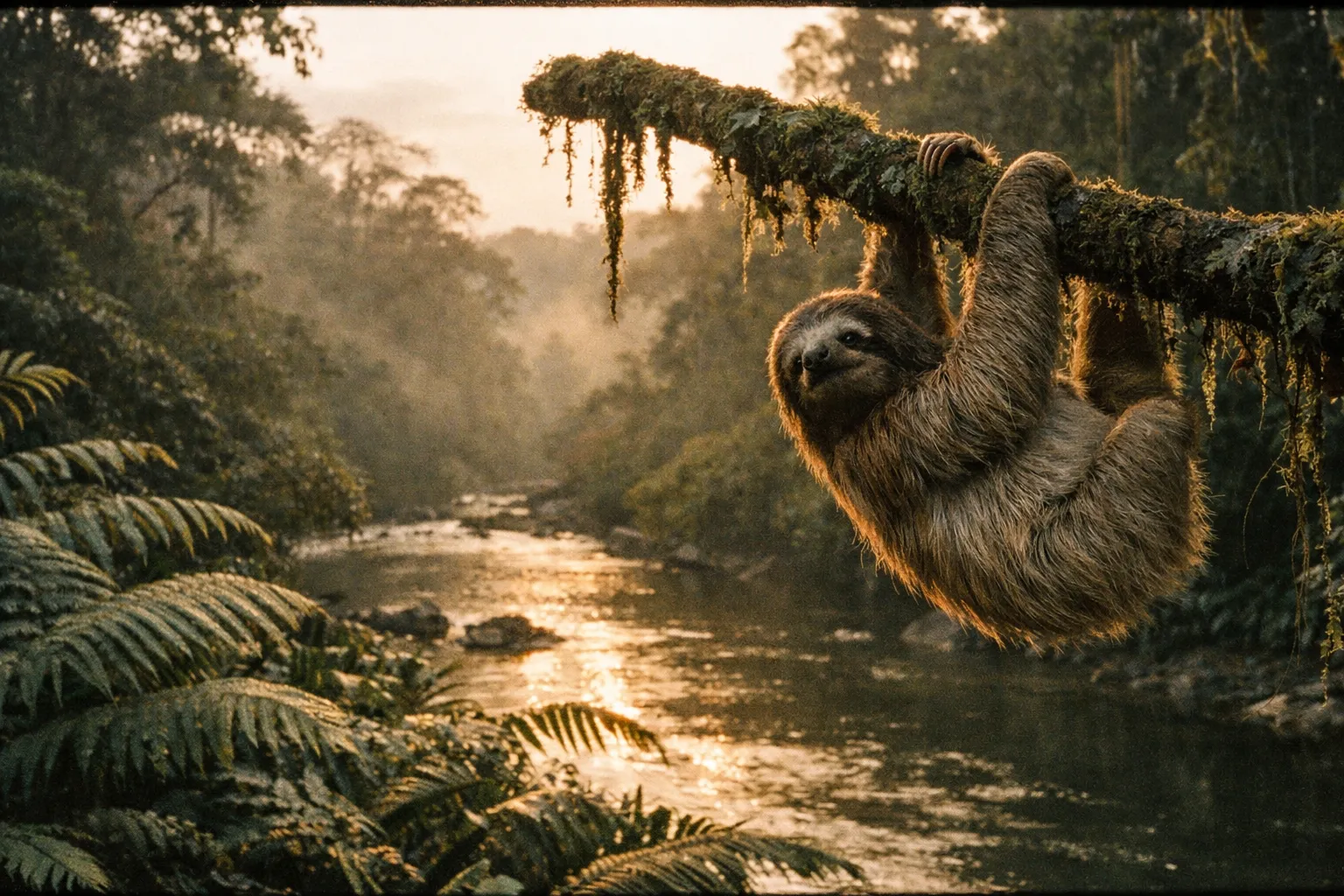
- Sloths - Two species (two-toed and three-toed). The easiest signature animal to find. Scan cecropia trees along road edges and forest margins in Manuel Antonio, La Fortuna/Arenal, Monteverde, and the Southern Caribbean (Puerto Viejo/Cahuita) (1). Present year-round; easiest to spot in dry season when foliage thins.
- Monkeys - Four species: white-faced capuchin, mantled howler, squirrel, and spider monkey. All four live on the Osa Peninsula; capuchins and howlers are common in Manuel Antonio and Tortuguero.
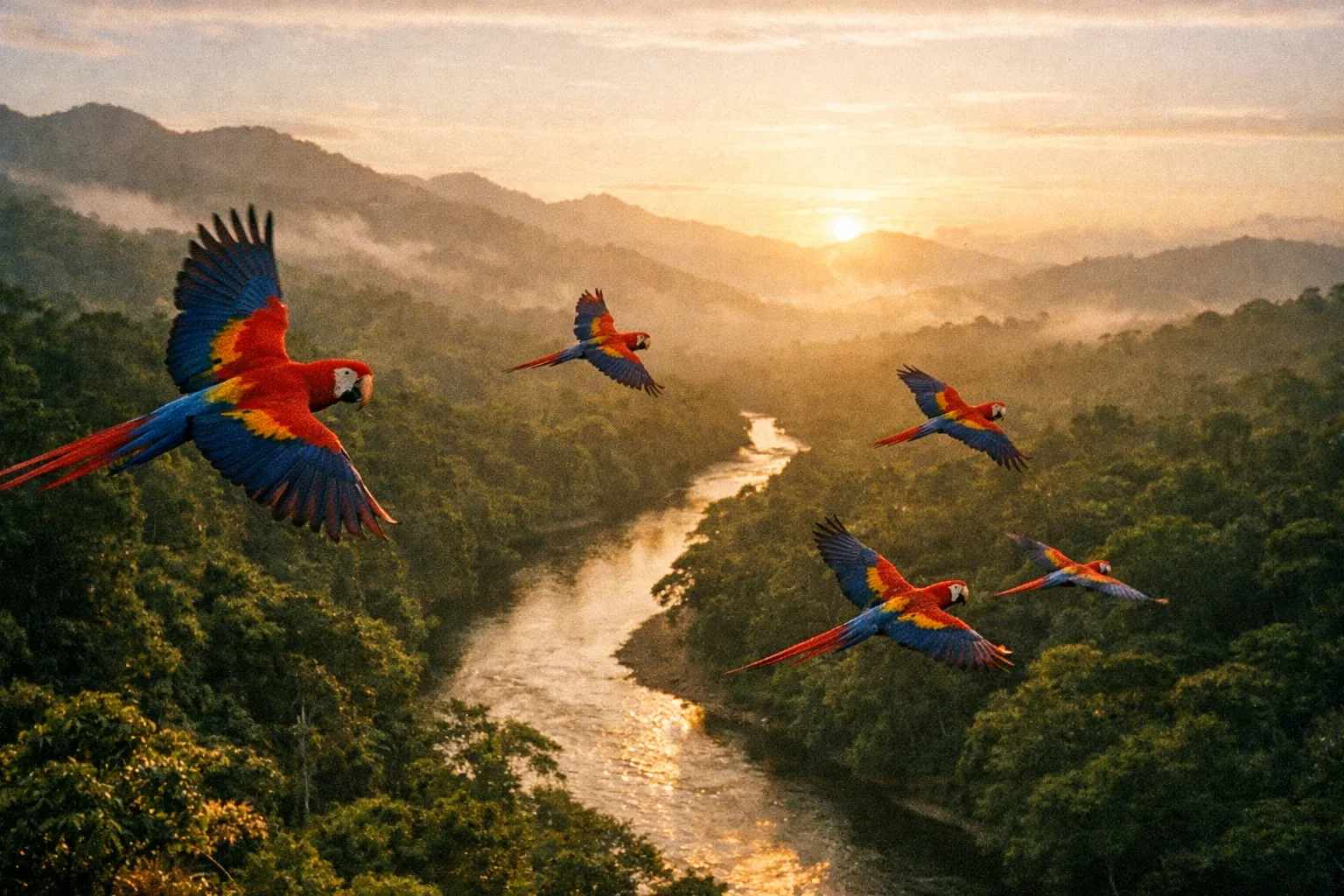
- Scarlet macaw - Loud, red, and recovering well thanks to anti-trafficking measures. Strongholds are the Osa Peninsula, Carara National Park, and the Central Pacific (1).
- Sea turtles - Five of the world’s seven species nest here. Green and leatherback on the Caribbean at Tortuguero, leatherbacks at Las Baulas on the Pacific (6).
- Humpback whales - Costa Rica claims the longest whale-watching season on Earth, with sightings across much of the year on the Pacific, especially Marino Ballena and the Osa Peninsula (1).
- Red-eyed tree frog - The poster animal of wildlife in Costa Rica rainforest. Found on night walks in the Caribbean lowlands and around Arenal and Monteverde (1).
- Resplendent quetzal - A high-value birding target. Core areas are Monteverde Cloud Forest and the Talamanca highlands like San Gerardo de Dota.
- Toucans - Keel-billed and chestnut-mandibled, widespread across lowland and mid-elevation forest. Often the first big bird new visitors photograph.
- Baird’s tapir - Central America’s largest land mammal. Elusive; your best odds are Corcovado National Park and Tortuguero’s back-country.
- Jaguar - The apex predator and the hardest to see (more below). Primary rainforest only, mainly Corcovado and remote Caribbean reserves (1).
Birds: 900-plus species and where to find them
Costa Rica’s bird list tops 900 species - exceeding the combined count of the United States and Canada despite the country’s small footprint (5)(6). For dedicated birding, the habitat you choose matters more than the calendar.
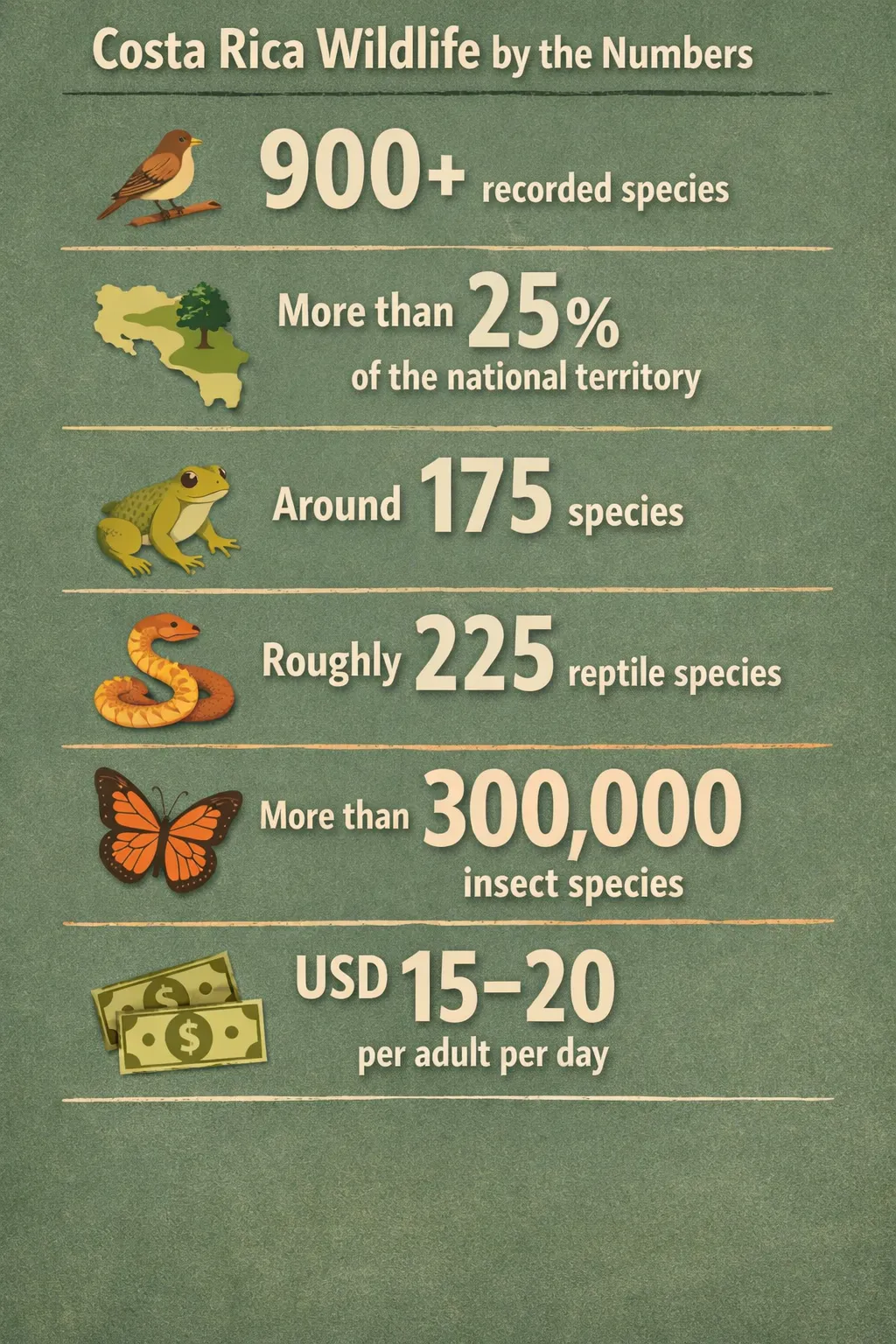 Costa Rica wildlife by the numbers: 900-plus birds, 25% protected land, 175 amphibians, 225 reptiles, 300,000+ insects, and park fees around USD 15-20 per adult per day.
- Cloud forest and highlands - Monteverde and San Gerardo de Dota / Talamanca for resplendent quetzals, best at dawn near current nesting trees.
- Lowland Caribbean - Sarapiquí, Tortuguero, and Caño Negro for toucans, herons, kingfishers, and aracaris.
- Pacific and Osa - Carara and the Osa Peninsula for scarlet macaws and mixed flocks.
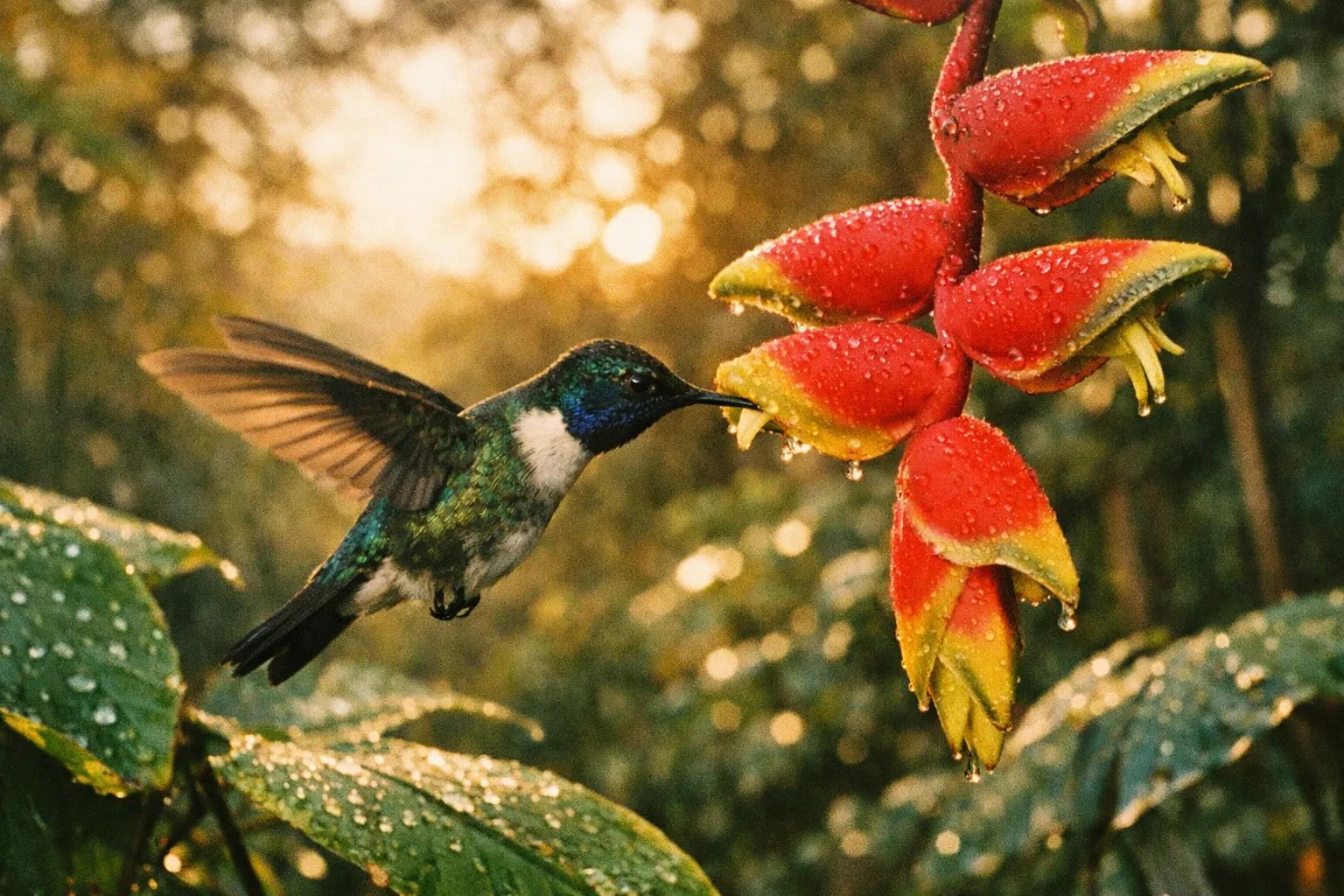
Costa Rica has about 50 of the world’s 338 hummingbird species, and cloud-forest feeders make them one of the easiest groups to photograph (3). Bring 8x or 10x binoculars and plan your hardest birding for the first two hours after sunrise. Activity drops sharply by mid-morning - that window is not flexible.
Mammals: sloths, monkeys, cats, and tapirs
Costa Rica’s 230-plus mammals run from the easily seen to the nearly invisible (1). Sloths and monkeys you can reasonably expect on any decent forest walk. The six wild cat species - jaguar, puma, ocelot, margay, jaguarundi, and oncilla - you mostly won’t, no matter how much you pay for a guide.
The Osa Peninsula and Corcovado hold the densest mammal populations in the country, including tapirs, peccaries, coatis, and all four monkey species. Tortuguero, reachable only by boat or small plane, adds river-edge sightings from a canoe. For families or travelers short on time, the flat trails of Manuel Antonio deliver sloths, capuchins, and coatis with minimal effort.
A realistic expectation: monkeys and sloths almost every day, coatis and agoutis often, tapirs occasionally in Corcovado, and cats almost never. I spent four days in Corcovado last dry season and logged tapir tracks daily but saw the animal only once, at dusk near the Sirena station.
What is the top predator in Costa Rica?
The jaguar is Costa Rica’s top predator and the largest cat in the Americas. It sits at the apex of the rainforest food web, hunting peccaries, deer, and even sea turtles on remote nesting beaches. Population strongholds are Corcovado National Park, La Amistad International Park, and remote lowland Caribbean reserves (1).
Set your expectations accordingly. Jaguars are solitary, nocturnal, and range across enormous territories. Even researchers running camera traps in Corcovado go months without a direct sighting. If a tour promises a jaguar, treat it as marketing.
The honest version: you go to Corcovado for the chance, and you celebrate the tracks.
Amphibians: frogs in the green season
About 175 amphibian species live here, and roughly 85% are frogs (4). This is the group that rewards the rainy season most. From May through November, frog activity surges, and night walks during light rain in the Caribbean lowlands turn the forest into a chorus.
Targets include the red-eyed tree frog, several poison dart frog species, glass frogs, and the smoky jungle frog. The best conditions are warm, wet nights - exactly the weather most travelers try to avoid. A good headlamp is non-negotiable; many of these species are thumbnail-sized and active only after dark. Tour operators commonly cite 150-plus frog and toad species as a planning hook for amphibian-focused trips (2).
Reptiles: iguanas, basilisks, crocodiles, and snakes
Costa Rica’s roughly 225 reptile species are easier to see than the amphibians because many are active by day. Green iguanas bask along rivers and roadsides and have rebounded under stronger protection. Basilisks - the “Jesus Christ lizard” that sprints across water - line riverbanks in Tortuguero and Cahuita.
American crocodiles gather below the Tárcoles River bridge near Carara, where you can see large adults from the road without paying a single entry fee. Caimans patrol the canals of Tortuguero. Snakes are abundant but cryptic; a guide who knows where the eyelash vipers coil on heliconia stems will find you far more than you’ll find yourself. Combine Tortuguero, Cahuita, and Sarapiquí river trips for the broadest reptile haul.
Best places to see wildlife
The best places to see wildlife in Costa Rica cover distinct biomes, and the right mix depends entirely on what you’re after. Don’t try to hit all of them in a week - the geography won’t allow it.
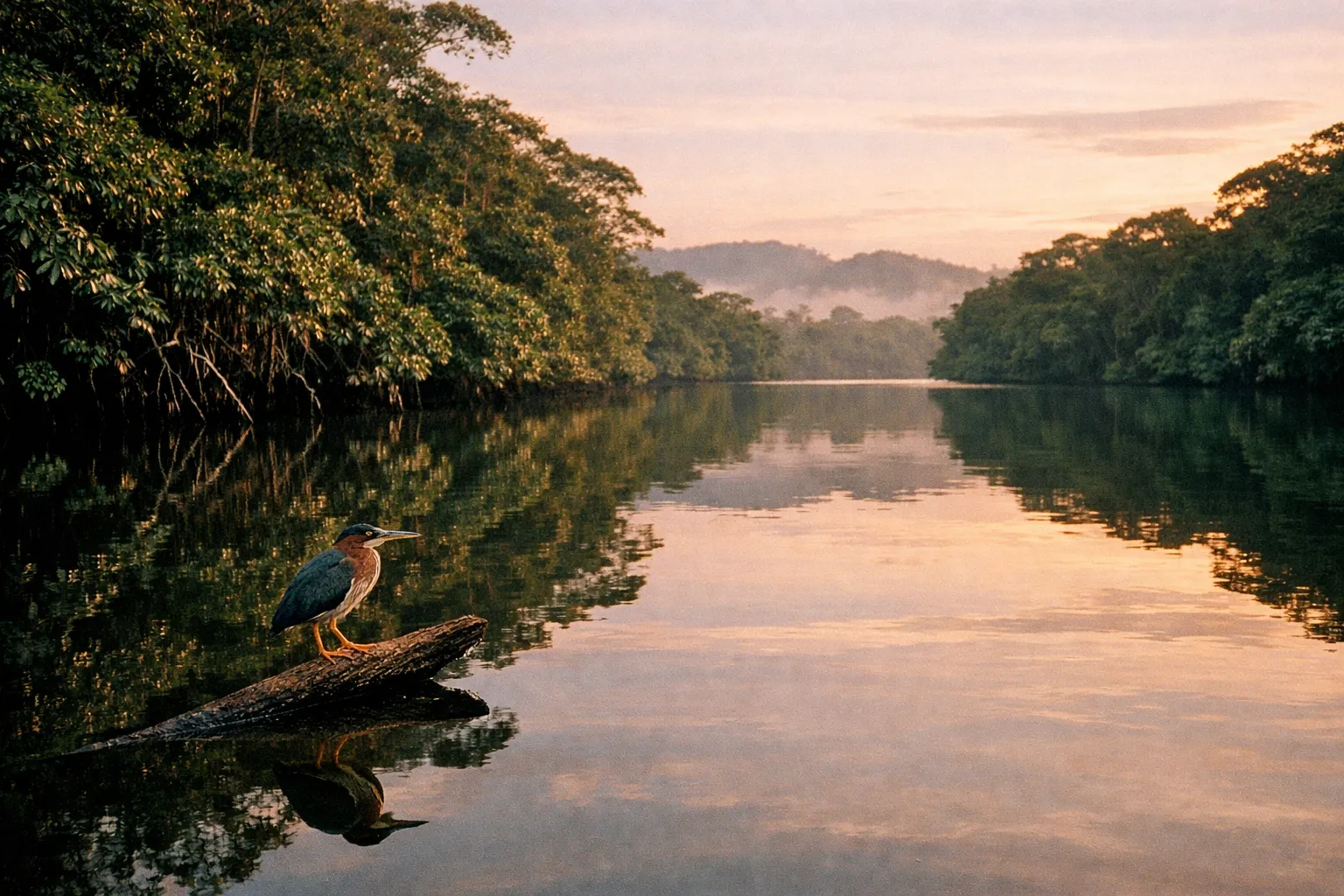
- Corcovado / Osa Peninsula - The richest rainforest wildlife in the country: all four monkeys, tapirs, scarlet macaws, and the best (still slim) jaguar odds. Remote and effortful to reach.
- Tortuguero - Caribbean canals navigable only by boat; turtles, caimans, river otters, and herons. Sea turtle nesting runs July through October (2).
- Monteverde - Cloud forest for quetzals, hummingbirds, and bellbirds; hanging bridges suit families.
- Arenal / La Fortuna - Easy access, sloths along the roads, night walks for frogs, and volcano-flank trails.
- Manuel Antonio - The low-effort option: short flat trails, sloths, monkeys, and a beach.
- Marino Ballena / Uvita - Base for humpback whale watching and dolphins on the Pacific (1).
A solid first-timer wildlife circuit runs 10 to 14 days and combines Arenal, Monteverde, and either Manuel Antonio or the Osa Peninsula, with Tortuguero added if you want the Caribbean turtle and canal experience.
What most guides get wrong: they cram Caribbean and Pacific biomes into seven days. Crossing from Tortuguero to the Osa Peninsula eats a full day of boats and roads. Pick two or three regions and go deep rather than skimming five.
Best time of year for wildlife watching
Best single month: November. Trails are drying out, green turtle hatchlings are still active on the Caribbean, humpback whales are finishing their southern migration window, and lodge rates drop sharply from peak-season highs. If your schedule is fixed, November threads more wildlife windows than any other month.
The best time to visit Costa Rica for wildlife depends on your target, and the dry-season-only mindset costs people the country’s best amphibian and nesting spectacles.
- Land wildlife (sloths, monkeys, coatis, toucans): dry season December through April, when thinner foliage and drier trails make spotting easier (2).
- Amphibians and frogs: rainy “green season” May through November, peak activity and forest sound (2).
- Green turtles (Caribbean): nest July through October, hatchlings September through November (2).
- Leatherback turtles: nest February through June, hatchlings May through August (2).
- Humpback whales (Pacific): July through October and December through March, with an Isla del Caño window of July through November (2).
The green season trades crowds and high prices for lush forest and genuinely active amphibians. If your trip is flexible, late November and early December often hit the sweet spot - drying trails, lower rates, and the tail end of turtle hatchlings.
Witnessing marine majesty: whale watching and sea turtles
Costa Rica’s Pacific coast is built for marine life. On a boat tour out of Uvita, I watched humpbacks breach and tail-slap in Marino Ballena - the country claims the longest whale-watching season on Earth, and the calendar backs it up with two long migration windows (1). Plan for July through October or December through March for the strongest odds.
On the Caribbean side, the sea turtle nesting ritual at Tortuguero is its own event. Watching green turtles haul up the beach to lay eggs at night is worth the trip on its own. These tours run night only, about two hours, and you must go with a licensed guide - turtle tours are tightly regulated to limit light and disturbance. Las Baulas National Marine Park protects leatherback nesting on the Pacific side from February through June.
Booking note: Tortuguero turtle tours fill up fast in peak season (August through October). Book at least two to three weeks ahead if you’re visiting then, and confirm your guide is licensed through SINAC - unlicensed operators still run tours and the difference in beach protocol is significant.
Getting there and what it costs
How to get there: Most international flights land at Juan Santamaría International Airport (SJO) near San José. Direct routes operate from major US hubs including Miami, Houston, New York, and Los Angeles; flight times run 3 to 6 hours depending on origin. A second international airport, Daniel Oduber (LIR) in Liberia, serves the Guanacaste and Pacific northwest and cuts drive time to Arenal or Monteverde significantly. From San José, shared shuttles reach La Fortuna in about 3.5 hours ($50-$70 per person), Monteverde in about 4 hours ($35-$55), and Manuel Antonio in about 3 hours ($40-$60). The Osa Peninsula requires a domestic flight to Puerto Jiménez (30 minutes, $90-$130 one-way on Sansa or Green Airways) or a 6-plus-hour drive on roads that turn rough in the rainy season.
Total trip cost range: Budget roughly $1,200-$1,800 per person for 10 days on a mid-range itinerary (ecolodge accommodation, shared shuttles, 3-4 guided tours). A higher-end version with private guides, luxury lodges, and domestic flights runs $3,000-$5,000 per person for the same duration. Budget travelers on buses and dorms can do 10 days for $700-$1,000.
Costa Rica wildlife tours: what they cost
Most Costa Rica wildlife tours are priced in USD and bookable a day or two ahead in low season, but turtle tours and Corcovado day trips fill up - reserve those further out, especially in peak months. Park entry typically runs USD $15-$20 per adult per day; confirm on each park’s official site, since fees change.
Typical price bands:
- Guided wildlife walk (Manuel Antonio, Monteverde, Arenal), 2-3 hours: $30-$60 per person.
- Rainforest night walk (half-day, guide + transport): $40-$65 per person.
- Tortuguero turtle nesting tour, 2 hours, night only: $25-$45 per person.
- Full-day Corcovado hike with boat transfer from Drake Bay: $110-$180 per person.
- Whale watching (Marino Ballena / Osa), 3-4 hours: $75-$130 per person.
Daily budgets shake out roughly like this: budget travelers on buses and shared tours, $60-$100/day; mid-range with ecolodges and private shuttles, $150-$250/day; high-end with luxury lodges and private guides, $400-$800+ per couple per day.
One thing worth knowing: independent travelers spot common animals - monkeys, sloths, iguanas - fine on popular trails. But expert guides dramatically raise your odds for birds, frogs, snakes, and cats because they know the calls and microhabitats. According to operators in Corcovado and Monteverde, a licensed naturalist guide typically triples the species count on a standard 3-hour walk compared to self-guided visitors on the same trail. For wildlife-dense stops, keep groups to 8-10 people so the guide can actually help you spot and frame shots rather than managing a crowd.
Gear that earns its place in the pack
A short list separates a good wildlife trip from a frustrating one:
- 8x or 10x binoculars - the single most useful item for birds and distant mammals.
- Headlamp - essential for amphibian and night walks; many target species are nocturnal.
- Closed hiking shoes and lightweight long sleeves - for trails and insects.
- Dry bags - for boat and river transfers to Tortuguero and Drake Bay.
- A telephoto (70-300 mm) plus a macro option - Costa Rica’s photogenic species split between distant (toucans, sloths) and tiny (frogs, lizards), so one lens won’t cover both.
Traveling responsibly: tips for conscious exploration
Costa Rica adopted strong wildlife welfare rules that ban direct contact and commercial exploitation of wild animals - holding sloths, feeding monkeys, or posing with captive wildlife violates these protections. Those same measures have helped scarlet macaws, capuchins, and green iguanas recover in protected areas. Travel here is an exercise in restraint as much as enthusiasm.
- Keep your distance from animals and stay on marked trails to limit your impact.
- Skip any operator that promises handling or guaranteed sightings - both are red flags.
- Choose lodges with private reserves or adjacent forest in Arenal, Monteverde, or Osa, so you can watch wildlife at dawn from the property and rely less on paid tours.
- Support locally owned businesses so tourism revenue reaches the communities doing the conservation work.
Frequently Asked Questions
- What is the 183-day rule in Costa Rica?
- The 183-day rule relates to tax residency, not wildlife or tourism. Spending 183 days or more in Costa Rica in a year may make you a tax resident. This mostly affects long-stay expats and remote workers, not typical wildlife travelers.
- What is $1 US worth in Costa Rica?
- 1 US dollar typically exchanges for about 500-550 Costa Rican colones (CRC), but rates fluctuate daily. USD cash and credit cards are widely accepted in tourist areas, though rural reserves often prefer colones, so carry some local cash.
- Do I need a guide to see wildlife in Costa Rica?
- For common species like monkeys, sloths, and iguanas, a guide isn't necessary. However, licensed guides greatly improve chances of spotting birds, frogs, snakes, and cats by knowing calls and microhabitats. Licensed guides are mandatory for turtle nesting tours.
- Are jaguar sightings common on tours?
- No. Jaguars are solitary and nocturnal with large territories. Even researchers rarely see them directly. Tours promising jaguar sightings should be treated with skepticism.
- Can I visit both Caribbean and Pacific wildlife areas in one week?
- It's not recommended. Traveling between Caribbean and Pacific biomes consumes a full day due to boat and road transfers. Focus on two or three regions and explore them deeply instead of skimming many.
- When should I book turtle nesting tours?
- Turtle tours, especially in Tortuguero during peak season (August-October), fill up fast. Book at least two to three weeks in advance and confirm your guide is licensed through SINAC.