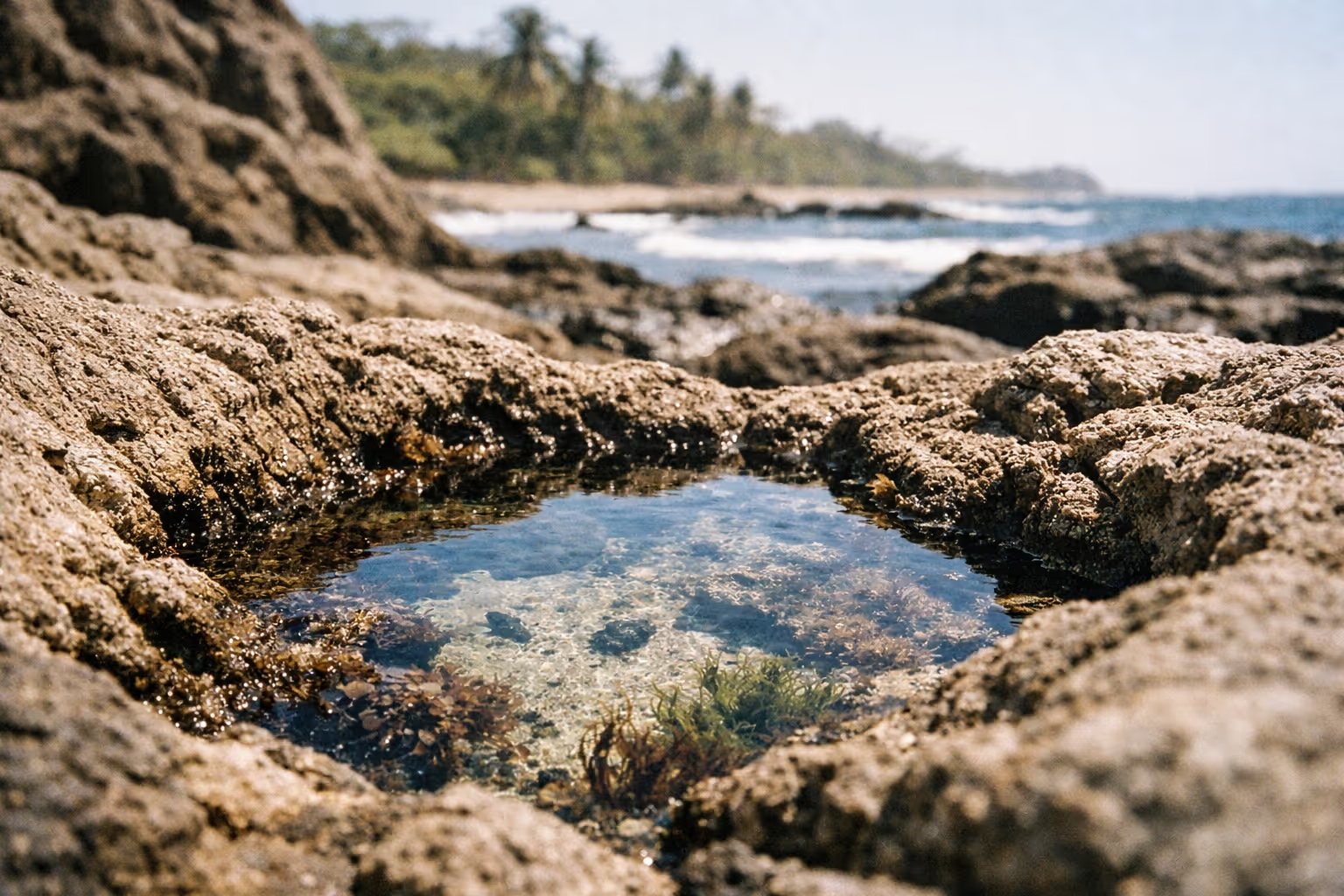
Playa Guiones in Nosara Costa Rica delivers about 330 surfable days each year, making it one of the most consistent beach breaks in the Americas. That’s the upside. The downside: Nosara, Costa Rica is quieter, pricier, and tougher to reach than nearly every other surf town in the country. This small community of roughly 6,000 people on the Nicoya Peninsula is known for three beaches - Guiones, Pelada, and the Nosara/Ostional corridor - a well-established yoga scene, and roads rough enough to keep the crowds down. Here’s what you really need to know before you book.
What Nosara, Costa Rica Actually Is (and Isn’t)
Nosara is a low-rise surf-and-yoga town in Guanacaste province, perched on the Pacific coast of the Nicoya Peninsula about 130 km south of Liberia airport. That distance matters - this isn’t a quick stopover you tack onto a Guanacaste beach-hop. Getting there requires a deliberate transfer.
The town’s roughly 6,000 residents spread across three zones. Playa Guiones is the surf hub and where most visitors stay. Playa Pelada, a few kilometers north, offers a quieter cove. Then there’s the inland pueblo, home to locals and where you’ll find sodas, a supermarket, and the bank. These spots sit 2 to 7 km apart on unpaved roads, so where you choose to sleep shapes the whole trip.
What Nosara is: eco-minded, early-to-bed, built around dawn surf sessions and morning yoga. Over 260 places to stay dot the area, but there’s no real town center and no nightlife to speak of.
What it isn’t: Tamarindo’s party scene, Jacó’s easy weekend accessibility, or a budget destination. Nosara sits inside the Nicoya Peninsula Blue Zone - one of five global regions with notably high life expectancy. That’s the real reason the wellness culture runs deep here. The longevity focus draws serious practitioners, not just weekend retreaters. One budgeting caution: the Costa Rican colón gained strength in 2025, averaging about 1 CRC to $0.001985 USD, so older price quotes in colones need updating before you rely on them.
The honest trade-off
Nosara’s higher prices and rough access aren’t flaws - they’re filters. The crowd self-selects: people who want consistent waves at a slow pace and are willing to pay and drive for it.
✓ Pros
- About 330 rideable surf days a year - one of the most consistent beach breaks in the Americas
- A dense, established yoga and wellness scene dating back to 1994, not a passing trend
- Eco-conscious, low-rise development keeps it less crowded than other Guanacaste surf towns
- Blue Zone lifestyle culture - organic food, genuine wellness programming, a community living the pace
- Shoulder seasons offer solid surf with fewer people and better rates
- 2025's softer tourism means more promotions and flexible bookings
✗ Cons
- Premium pricing: wellness retreats run $275-$450 a night; mid-range stays cost more than comparable Costa Rica spots
- Unpaved roads - dusty in dry season, muddy and potholed in the rains - make a 4x4 or ATV effectively mandatory
- No central town; amenities are spread out, so lodging choice matters a lot
- Limited nightlife and late-night dining options
- Currency appreciation makes older USD quotes misleading
- Medical access is limited; travel insurance covering surf injuries and remote evacuation is essential
The Three Beaches: Guiones, Pelada, and the Ostional Corridor
Nosara’s three beaches serve different types of visitors. Picking the right one before you arrive is key - it’s tough to fix a bad location choice once you’re there. According to Matador Network, Playa Guiones is the main surf beach, Playa Pelada is quieter with tide pools and calmer swimming, and Playa Nosara lies closer to the wildlife corridor with a more remote feel.
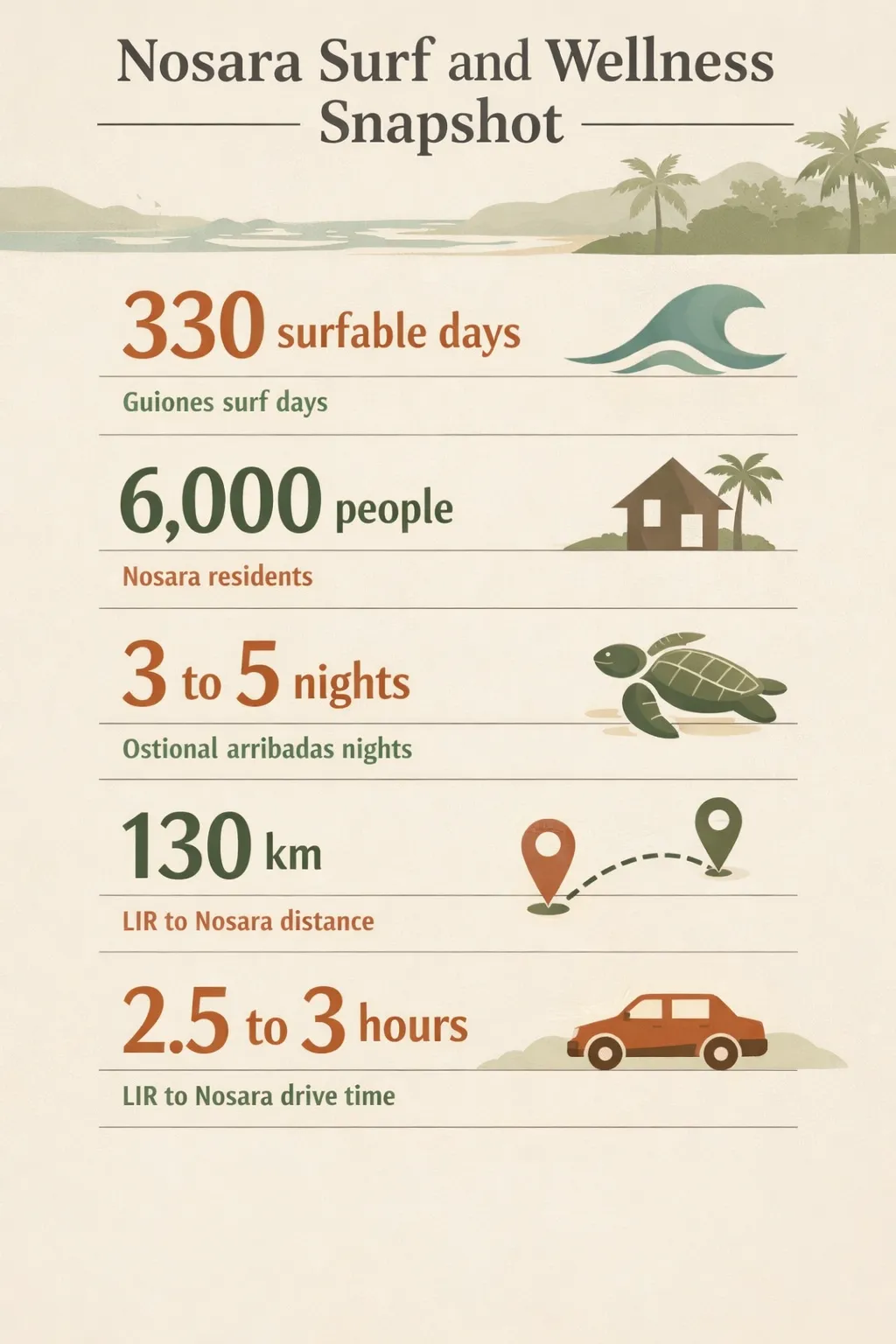 Nosara’s Guiones delivers 330 surfable days; Nosara is a town of about 6,000 residents; Ostional turtle arribadas occur 3-5 nights each month.
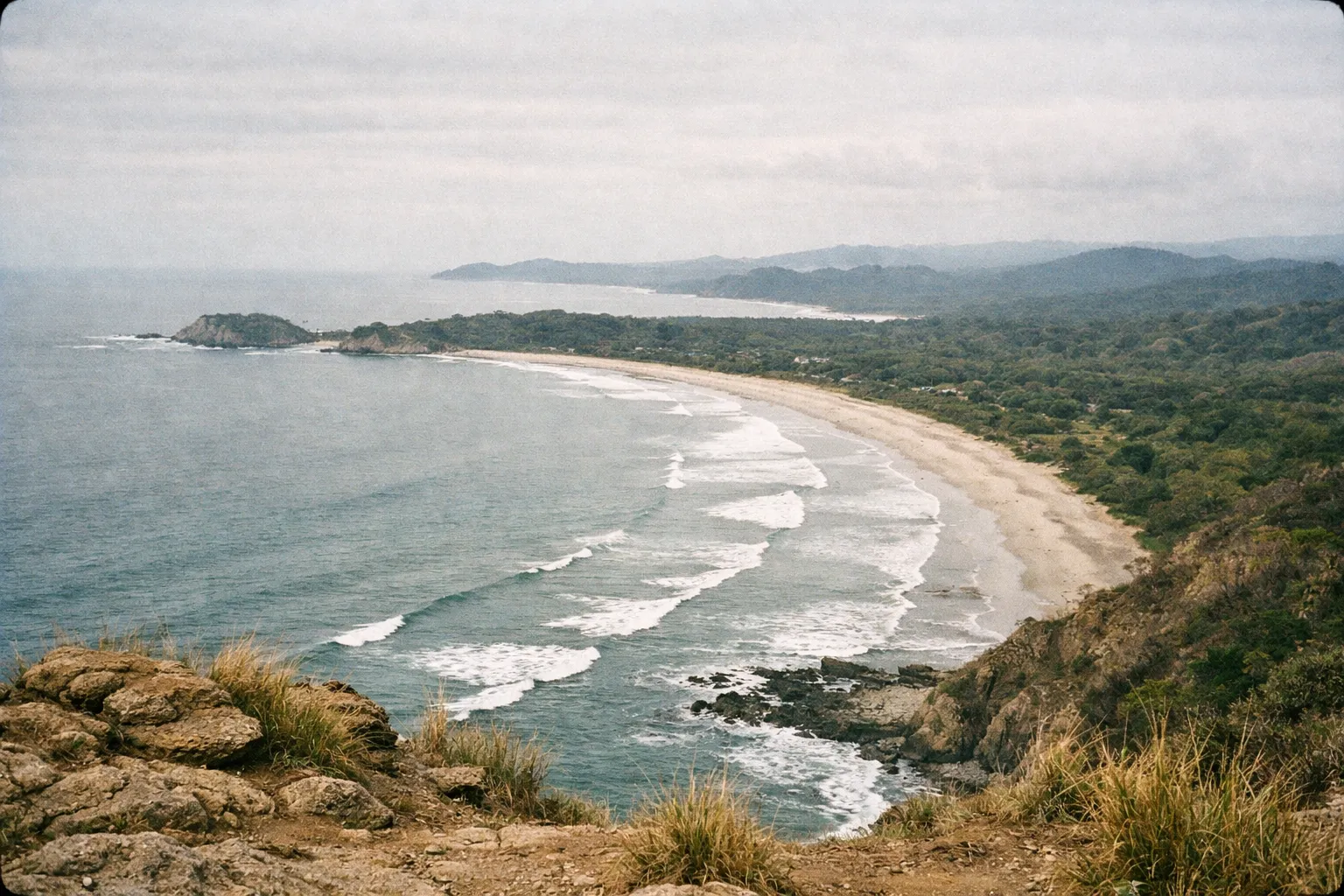
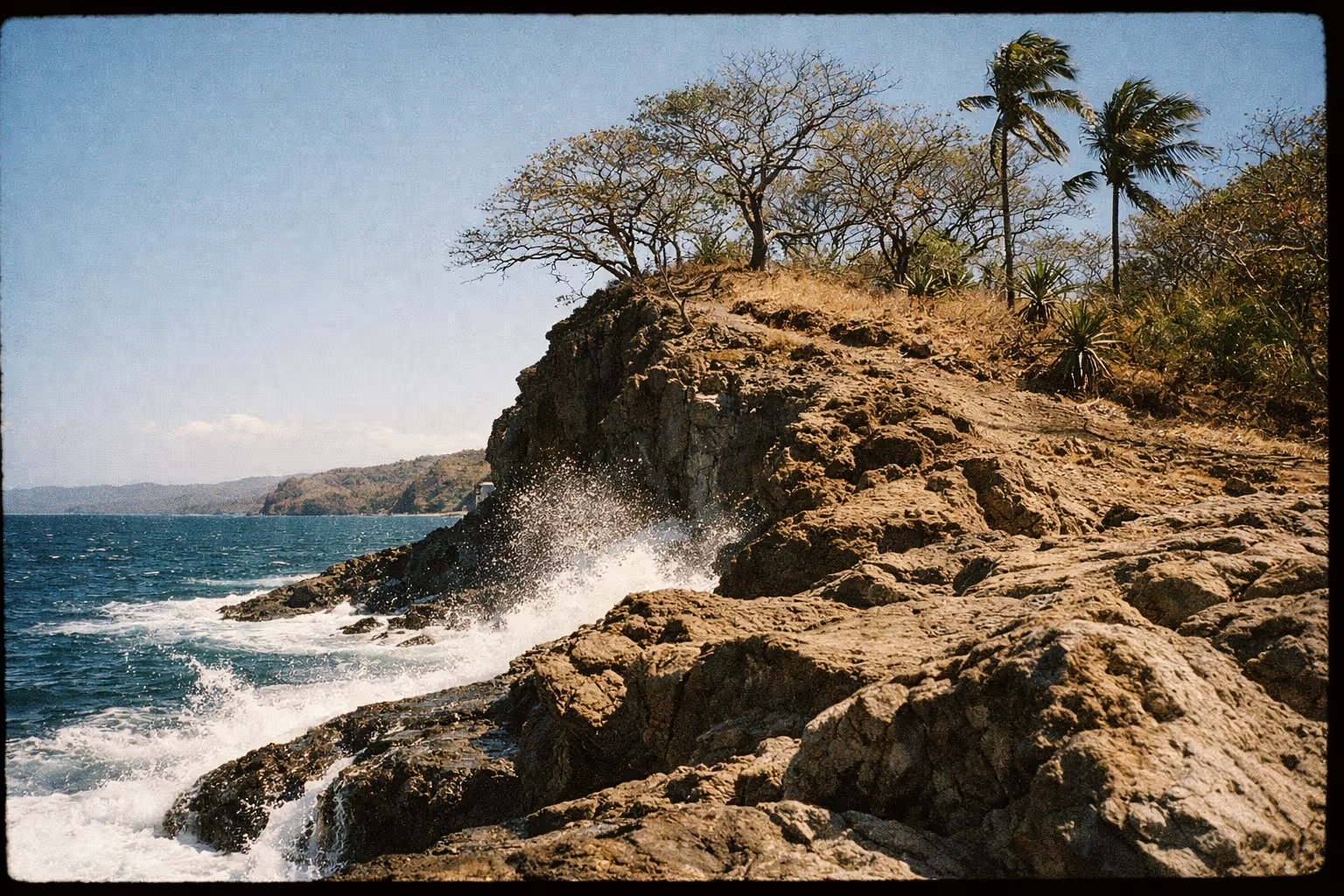
Playa Guiones is the main draw: a long, open beach break over sand, working almost every day (9). It suits beginners through intermediates. On big swell days, strong rips develop, so check currents, not just wave height. Staying in North Guiones puts you a 5 to 7-minute walk from the main breaks - the biggest quality-of-life factor if you’re surfing daily.
Playa Pelada, about 3 to 4 km north, is a sheltered cove with tidal pools at low tide and calm water for swimming. It’s the rest-day beach - better for non-surfers, families, or anyone who wants ocean time without worrying about rips.
Playa Nosara and the Ostional corridor stretch north toward the river mouth, roughly 7 km from Guiones. Waves here are stronger and crowds thinner - intermediate and advanced surfers’ territory. This area borders the Ostional Wildlife Refuge, so casual swimming isn’t the focus; it’s about surf and turtles.
Walking between Guiones and Pelada takes 25 to 35 minutes. Most visitors use ATVs, scooters, or 4x4s to cover the gaps.
Ostional Wildlife Refuge and Turtle Arribadas
The Ostional Wildlife Refuge is the main wildlife day trip from Nosara, known for olive ridley sea turtle nesting. Mass arrivals - arribadas - occur mostly during rainy season, with frequency varying widely from month to month; tours run early morning or after dark when activity peaks. The refuge sits 20 to 30 minutes north by road; Shambhala Costa Rica’s Playa Ostional property is 7 km from Nosara, giving a sense of the distance. Base yourself in Nosara and plan this as a day trip rather than staying out there.
Comparison of Nosara's Three Beaches
| Playa Guiones | Playa Pelada | Playa Nosara / Ostional | |
|---|---|---|---|
| Surf Level | Beginner-Intermediate | Not a surf beach | Intermediate-Advanced |
| Swimming | Moderate (rip risk on big days) | Calm, sheltered | Not recommended for casual swimming |
| Crowds | Busiest | Quiet | Least crowded |
| Best For | Surf lessons, daily sessions | Tidal pools, rest days, families | Experienced surfers, turtle tours |
| Distance from Guiones | - | about 3-4 km | about 7 km north |
Surfing Guiones: Conditions, Schools, and What to Expect by Skill Level
Playa Guiones is a sand-bottom beach break that works almost year-round. That’s why it’s reliable for learners - but conditions vary seasonally, and picking the wrong time wastes your week.
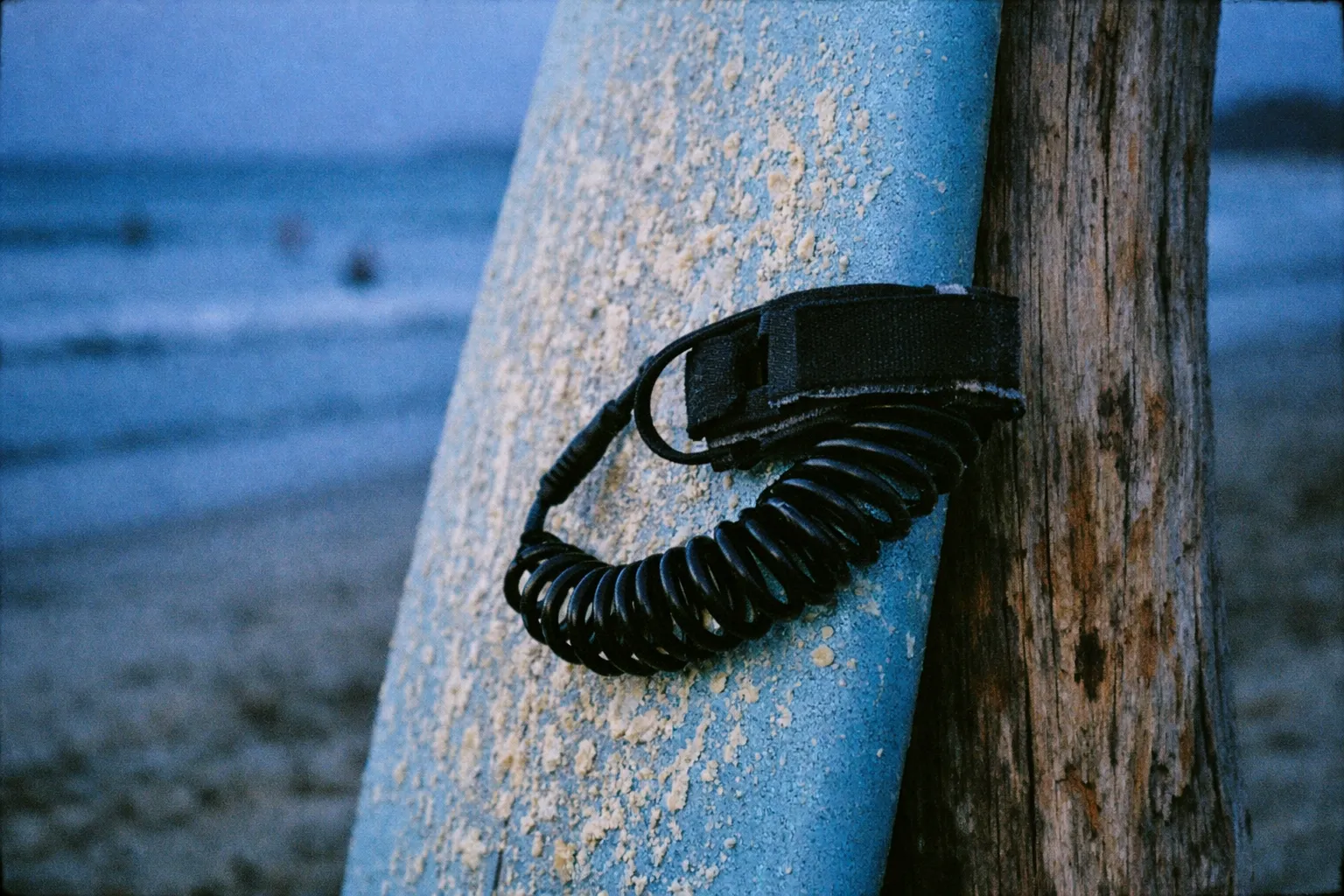
Dry season (December to April) brings smaller, cleaner, more forgiving waves - better for beginners. Green season (May to November) delivers bigger, more powerful swells - better for intermediates and advanced surfers chasing shoulder- to head-high sets. Water temperature stays 80-84°F (27-29°C) year-round, so a rashguard is all you need.
Beginners should look for soft-top boards, small group ratios, and structured progression. Programs like Surf Simply run week-long courses with video analysis rather than ad-hoc lessons, with sessions lasting 1.5 to 2 hours including warm-up and theory. Group lessons across Costa Rica typically run $40-$65 and private lessons $70-$120. Playa Guiones lessons are widely available near the main beach.
Intermediate and advanced surfers should target green-season swells and catch early morning or sunset sessions. Head north to Playa Nosara and the Ostional stretch for stronger waves and fewer people.
Board rental runs $10-$20 per day (2), though most camps and schools include boards in their packages - no need to fly with your own.
Safety first: learn to spot rips as darker, flatter water moving seaward, and be honest about your swimming. You should be able to swim 100 to 200 meters unaided in open water before paddling out. Confirm your travel insurance explicitly covers surfing - Nosara’s remote medical access makes this essential, not optional.
Surf Camps and Week-Long Programs
Most surf camps run 7-day programs with 5 to 6 surf sessions, daily yoga, and workshops. Operators have published 2025-2026 cohort dates, including November and December 2025 and February and March 2026, so check availability before booking. The structured progression and video review turn lessons into actual improvement.
Sample pricing: Shambhala Costa Rica’s 7-day all-inclusive surf and yoga programs (excluding airfare and transfers) start at $1,533 for a simple private room without AC near the center, up to $2,088 for a private room at Turtle Lodge, and $2,533 for an ocean-view private cabina, solo. For two sharing, expect $3,300 for a Turtle Lodge private room or $3,900 for an ocean-view cabina. Shared double rooms come in around $1,688 per program.
How to Choose the Right Surf Program
How to Choose the Right Surf Program
10 minutesChecklist for selecting a surf program that fits your skill and safety needs.
- 1
Confirm your swimming ability
You must be able to swim 100 to 200 meters unaided in open water before enrolling.
- 2
Check board type
Ensure the program offers soft-top boards if you are a beginner for safer learning.
- 3
Verify group ratio
Look for programs with six or fewer students per instructor for personalized feedback.
- 4
Ask about video analysis
Programs including video review provide better progression than ad-hoc lessons.
- 5
Confirm travel insurance coverage
Make sure your insurance explicitly covers surfing and related injuries before booking.
Yoga, Wellness Retreats, and the Blue Zone Effect
Nosara’s yoga scene isn’t new - it’s been growing for 30 years, which explains the density of studios and teacher trainings here, outpacing most of Costa Rica. The Nosara Yoga Institute, founded in 1994 by Don and Amba Stapleton, started it all. According to Voz de Guanacaste, their 4.5-acre campus has graduated more than 3,500 teacher-training participants and hosts around 6,000 people annually in public programs.
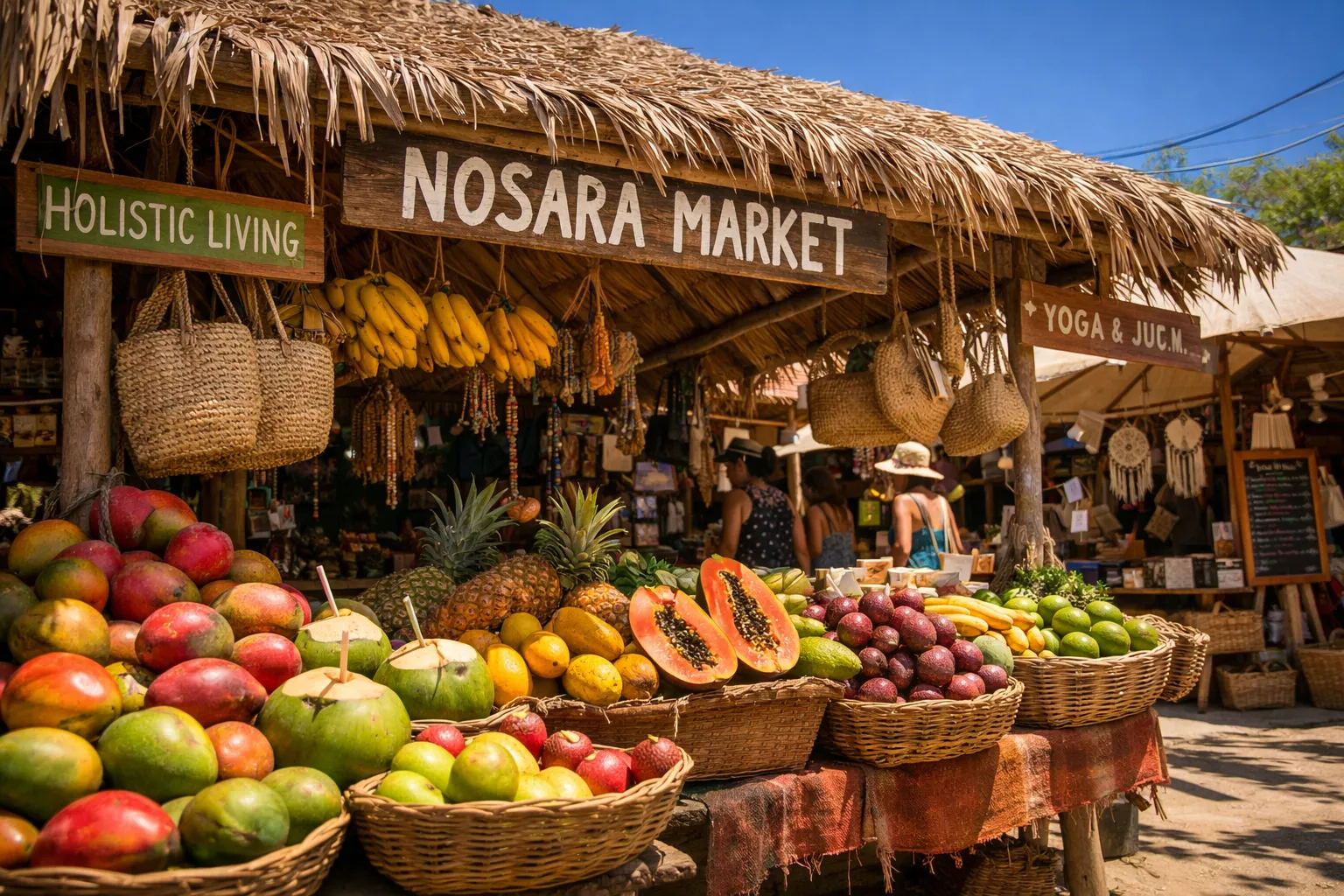
Key venues each have their own vibe. Bodhi Tree Yoga Resort, opened in 2014, is the resort-scale option. Harmony Hotel offers a boutique-hotel feel. Norte Nosara leans more retreat-center. Independent studios across Guiones handle drop-in classes if you don’t want a package.
Retreats usually run 5 to 8 days with 2 to 3 daily classes, wellness talks, and some meals included. “All-levels” retreats accept complete beginners - no prior practice needed.
Pricing: wellness retreats typically run $275-$450 per night, including accommodation, classes, and some meals. Norte Nosara’s early-bird multi-day package was 2,700 CAD per person double occupancy and 3,700 CAD single. Week-long surf-and-yoga wellness packages including meals, classes, and excursions run roughly $1,925-$2,450 per person, with Nosara representing the high end.
The green season discount is real: retreats lower prices May through November to boost occupancy - often delivering better swell quality at the same time. Better waves, lower prices.
The Blue Zone angle is context, not marketing. Nosara sits in one of five global longevity zones, and the wellness scene attracts serious practitioners, not Instagram retreaters. This infrastructure has been building steadily since 1994.
Surf-and-Yoga Hybrid Programs
Multi-activity retreats often combine surf, yoga, and breathwork, sometimes including a weekly massage and curated group excursions. This can add value beyond buying classes separately. One caution: don’t stack two surf sessions plus multiple yoga classes daily in a 7-day trip. That pace leads to fatigue and real injury risk. Build in rest.
Getting to Nosara: Airport, Shuttle, and Rental Car Tradeoffs
Liberia International Airport (LIR) is your gateway, about 130 km (81 miles) from Nosara, a 3 to 3.5-hour drive in good conditions - budget closer to 4 hours in rainy season when river crossings slow you down. San José (SJO) is farther and adds significant time, so fly into Liberia if you can. I drove this route in October 2024 and the last 30 km of unpaved road added nearly an hour after an afternoon downpour - arriving before 4 PM is not just a suggestion.
You have four main options:
Shared shuttle costs $50-$65 per person one-way (1) and takes 2.5 to 3 hours. Drivers handle the rough roads, making this the low-stress choice for solo travelers and first-timers.
Private shuttle runs about $230 per vehicle for up to 4 to 6 passengers, also about 2.5 hours (4). This suits families, groups, or anyone hauling boards and heavy gear.
Rental car (4x4) gives you freedom on the peninsula but requires you to handle the road conditions. A 4x4 isn’t optional - roads around Guiones and Pelada are unpaved, dusty in dry season, muddy and potholed in rains. Best for multi-week stays and exploring beyond Nosara.
Public bus costs under $10 but takes 5 to 7 hours door-to-door with connections (3). Viable for budget travelers with flexible schedules, but a poor fit if your time is tight.
One timing warning: arriving after dark in rainy season, when potholes and river crossings are harder to judge, can push travel time beyond 3 hours and raises accident risk. Aim to arrive before 4 PM. Shuttle operators run daily from 6:00 AM to 9:00 PM, service confirmed through at least February 2026, so early long-haul arrivals can still reach Nosara before dark.
Getting to Nosara from Liberia International Airport (LIR)
| Shared shuttle | Private shuttle | Rental car (4x4) | Public bus | |
|---|---|---|---|---|
| Cost (one-way) | $50-$65/person | about $230 (up to 4 pax) | $60-$90/day + insurance | Under $10 |
| Time | 2.5-3 hrs | 2.5-3 hrs | 2.5-3 hrs | 5-7 hrs |
| Road Risk | Low (driver handles it) | Low | Moderate-High (your responsibility) | Low |
| Best For | Solo travelers, first-timers | Groups, families, heavy gear | Multi-week stays, exploring peninsula | Budget travelers with flexible schedules |
Getting Around Nosara: ATVs, 4x4s, and Why Lodging Location Matters
Nosara has no central town - Guiones, Pelada, and the inland pueblo are spread 2 to 7 km apart on unpaved roads. Where you stay determines how much time and money you spend getting around - a detail most guides underplay.
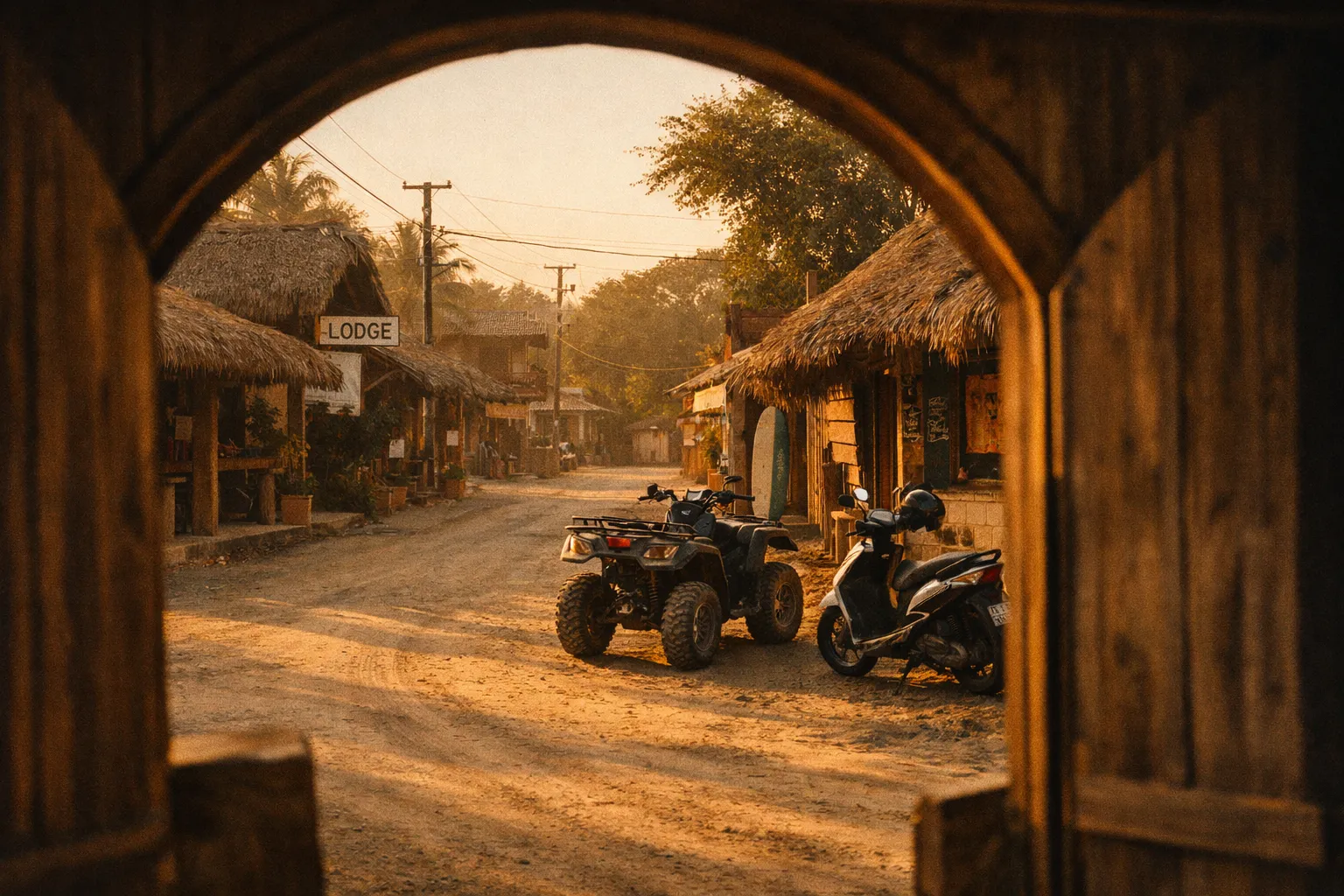
If you’re surfing daily, stay within a 10 to 15-minute walk of Playa Guiones. North Guiones lodging can put you 5 to 7 minutes on foot from the breaks, cutting out the need for an ATV and maximizing your dawn and dusk water time. Lower-end accommodations start around $50 a night, while surf camps run higher - the transport savings add up fast.
ATV and scooter rentals are common and practical for hopping between beaches. Local 4x4 rentals are available, and taxi and shuttle services like Nosara Transfers run daily, covering airport transfers and beach runs. Surfboard rentals go for $10-$20 a day locally, though most schools include boards in their packages - no need to travel with your own.
For remote workers: broadband and 4G cover the main beach zones, but storms can cause outages. If you plan to work, pick lodging with documented Wi-Fi speeds or use coworking-friendly cafés.
When to Go: Dry Season, Green Season, and the Shoulder Sweet Spots
Choosing when to visit Nosara depends on whether you want forgiving beginner waves and sun or bigger swells and lower prices. Shoulder months split the difference.
Dry season (December to April) offers 25-33°C, sun, and low humidity, but also peak tourism. Waves are smaller and cleaner, better for beginners. Accommodation prices rise and availability tightens - booking months ahead is essential from December through March among the 260-plus options.
Green season (May to November) brings 26-32°C, daily afternoon rains, lush landscapes, bigger swells for intermediates and advanced surfers, significant discounts, and fewer people.
Shoulder seasons - late November to mid-December and April to early June - balance good surf, lower occupancy, and moderate prices. This window is the insider move.
Two notes for planning: nationally, tourism softened into 2025 - February recorded 270,810 international arrivals, down 7% year over year and the sixth straight month of decline. That means more promotions and flexible bookings. Also, the colón’s 2025 strength means older blog prices are misleadingly low - budget with current figures.
What It Costs to Stay in Nosara: Budget Ranges and What You Actually Get
Nosara covers a range, but it’s premium at every level - even budget stays cost more than comparable Costa Rica beach towns.
Budget tier: Inland guesthouses and cabinas away from Guiones start around $50-$77 a night (3). Eating at sodas keeps food costs low, and you’ll rely on public buses with occasional shuttles. My Latin Life estimates monthly costs for a single person at $1,270-$2,400 - rent $700-$1,400, groceries $180-$280, restaurants $160-$260, transport $80-$150 (9).
Mid-range tier: Small boutique hotels and apartments near Guiones or Pelada, shared shuttles, a mix of local and international restaurants, and 2 to 3 paid activities a week. Expect to pay more than for similar places in Tamarindo or Sámara.
High-end tier: Wellness resorts and all-inclusive surf-and-yoga packages run $275-$450 a night. Private airport transfers, daily spa treatments, and private coaching add to the cost. Shambhala’s 7-day all-inclusive packages range from $1,533 (simple private room) to $3,900 (ocean-view cabina for two).
Digital nomads should plan for one-month minimum rentals and budget $1,270-$2,400 a month excluding flights. Coworking-friendly cafés exist, but documented Wi-Fi speeds are worth confirming before committing.
One practical warning: the colón’s appreciation means older USD prices are understated. Always verify current rates directly with properties.
Wildlife, Day Trips, and What Else Is Worth Your Time
Nosara works for travelers beyond surf and yoga types. Wildlife and day trips fill gaps between water sessions without demanding full-day excursions.
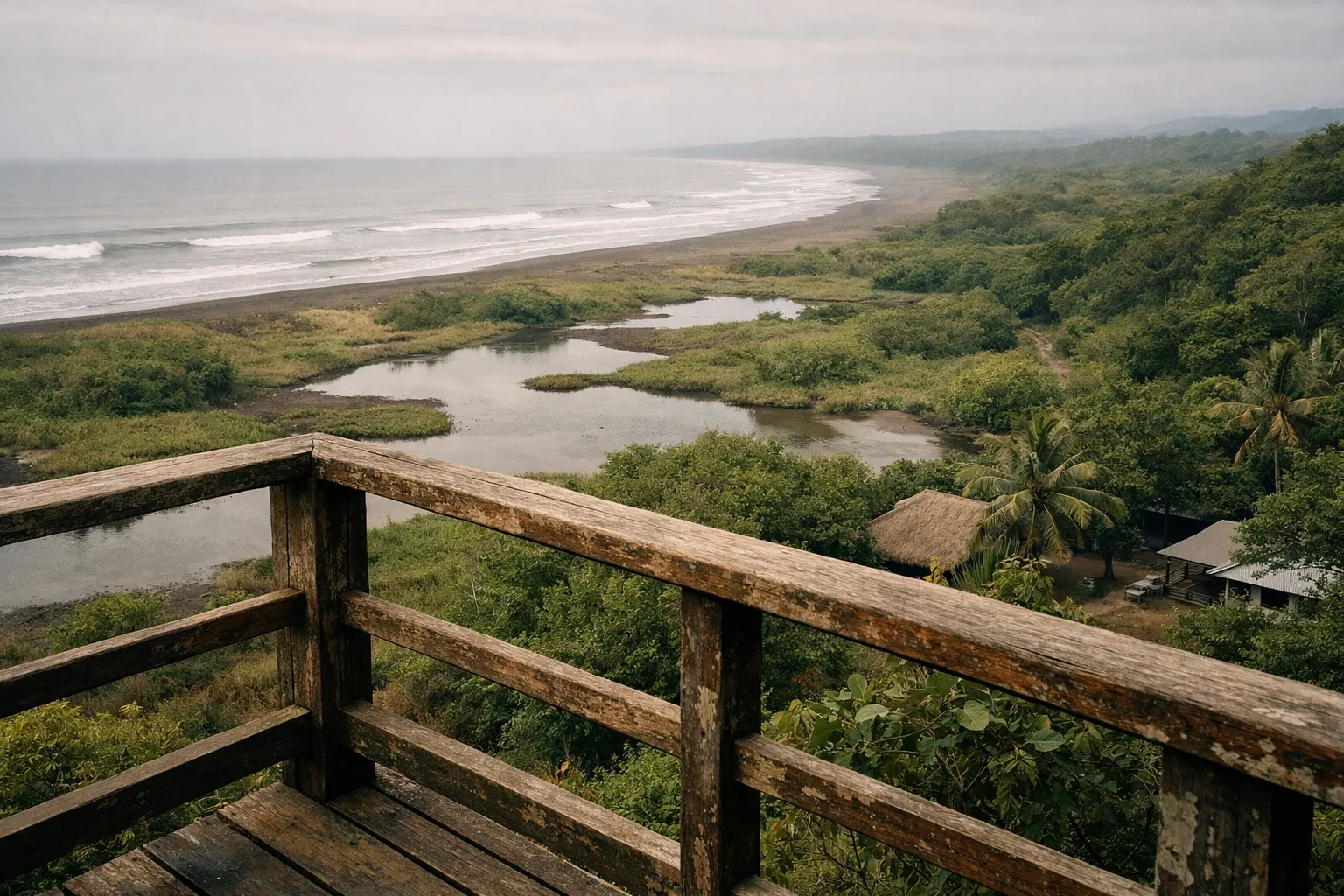
Ostional Wildlife Refuge is the top day trip: olive ridley arribadas occur mostly in rainy season, but frequency varies widely - some months see multiple events, others very few - so don’t plan your whole trip around a guaranteed sighting. Tours run early morning or after dark. It’s 20 to 30 minutes north by road, so base yourself in Nosara and plan this as a half-day outing.
Wildlife in town is real, not just a tour add-on. Nosara’s eco-conscious development means howler monkeys near your lodging are a normal morning, and birds are everywhere. On the Nicoya Peninsula, wildlife and wellness blend rather than stand apart. For a broader look at the best beaches in Costa Rica for wildlife, the Osa Peninsula and Caribbean coast round out the picture beyond Guanacaste.
Families can combine beginner surf lessons at Guiones, tide-pooling at Pelada, wildlife tours, and short day trips - activity variety without full-day exhaustion.
Sámara, 27 to 35 km south, offers a calmer bay for non-surfers. Getting there is tricky: Route 160 is a coastal shortcut but requires a real 4x4 and a river crossing, often impassable in rainy season. The Nicoya loop takes 2 to 2.5 hours, mostly paved and doable in any car. In rains, take the loop. If you’re weighing the two towns, things to do in Samara Costa Rica covers the calmer bay experience in detail.
One recurring mistake: over-scheduling. Two surf sessions plus multiple yoga classes daily in a 7-day trip leads to fatigue and injury risk. Build rest days from the start.
Practical Tips Before You Book
A few key decisions shape your Nosara trip more than anything else. Get these right:
- Travel insurance must explicitly cover surfing and adventure sports. Remote medical access means this isn’t optional.
- Book early for peak dry season. December through March fills fast across 260+ options, especially near Guiones and yoga resorts. Green season offers more flexibility and better deals.
- Prioritize lodging location over amenities or views if surfing is your focus. A 10 to 15-minute walk to Guiones - ideally 5 to 7 minutes in North Guiones - is the biggest quality-of-life factor.
- Check currents, not just wave height. Guiones has strong rips on big swell days; beginners should surf with instructors then.
- Avoid arriving after dark in rainy season. Potholes and river crossings get tricky and accident risk rises. Plan to land before 4 PM.
- Don’t expect nightlife. If that matters, look to Tamarindo. Setting expectations upfront avoids disappointment.
Frequently Asked Questions
- Is Nosara safe for solo female travelers?
- Nosara is generally safe with a close-knit community and early-to-bed rhythm. Risks include petty theft and night driving on unpaved roads; use daytime transfers.
- Are there ATMs and can I pay with USD in Nosara?
- ATMs are in the inland pueblo but may run dry on busy weekends. USD is accepted widely, but colónes offer better value for small vendors.
- How many days should I spend in Nosara?
- Plan at least a full week for surf or yoga to include rest days. Add 3 more days for wildlife trips or Sámara. Less than 4 days isn't worth the transfer.
- Do I need to know how to surf before booking a camp?
- No prior surf skill is needed, but you must be comfortable swimming 100-200 meters unaided. Camps use soft-top boards and structured progressions.
- Is Nosara or Tamarindo better for a first trip?
- Tamarindo is easier, cheaper, and livelier. Nosara is quieter, pricier, and focused on consistent surf and wellness. Choose based on your priorities.
- Can I visit Ostional to see turtles any time of year?
- Arribadas occur mainly July-November but frequency varies widely - there is no fixed monthly schedule. Tours run early morning or after dark; book through licensed operators in Nosara.
The Bottom Line
Nosara earns its premium reputation honestly. You pay more, drive farther, and arrive somewhere with no nightlife - but in return, you get one of the Americas’ most consistent surf breaks and a wellness scene that’s been building since 1994. That trade-off is the point, and it’s why the crowd self-selects for people who want the slow pace.
Two factors affect your trip most: timing and lodging location. Pick the right season for your skill level and aim for shoulder months if you can. Stay within walking distance of Guiones if surfing is your priority. Everything else follows.
Before booking, do three things: confirm your travel insurance covers surfing, pick lodging near Playa Guiones if you’re there to surf, and check retreat cohort dates - November and December 2025 and February and March 2026 are published now. Nail those, and Nosara delivers exactly what it promises.