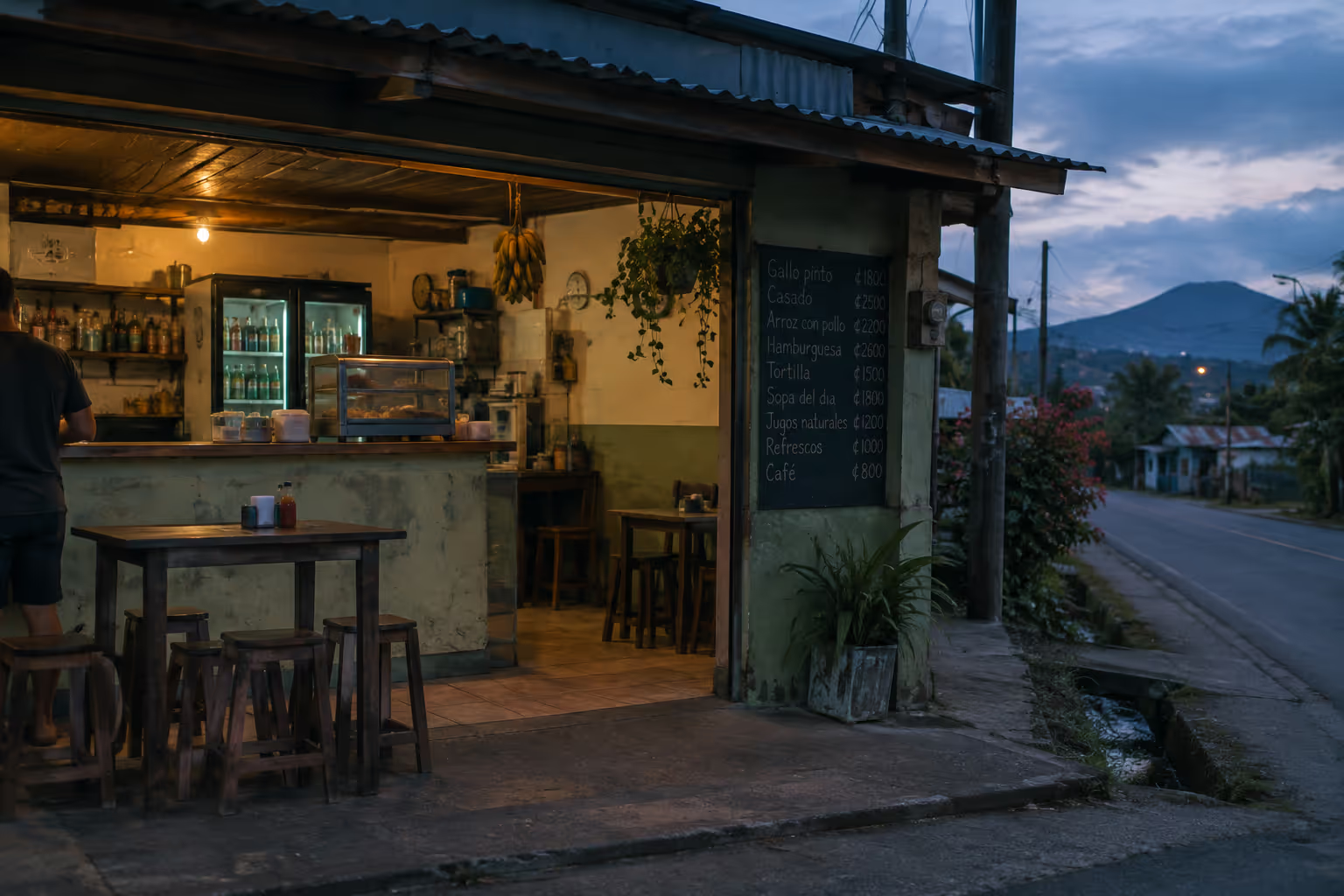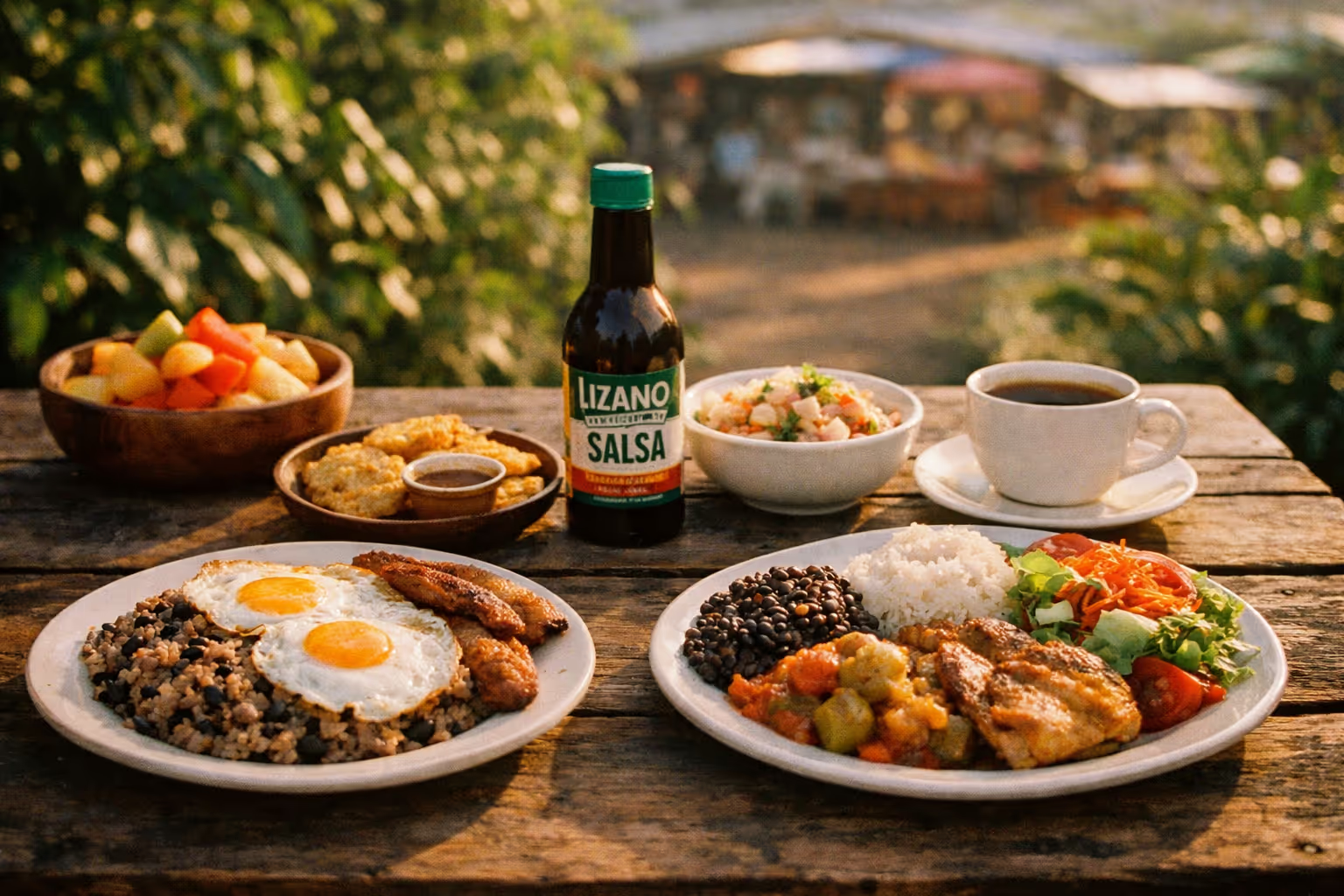
Traditional Costa Rican food is cheaper and better two streets back from the tourist strip, where a soda plates the same casado for $5 that the beachfront charges $18. The staples are gallo pinto, the rice-and-beans breakfast built on Salsa Lizano, and the casado plate. Expect it mild and herb-forward, leaning on sweet pepper and cilantro, with heat left to the diner. And treat the Caribbean coast as its own cuisine: coconut-milk rice and beans, rondon stew, not a footnote to the Central Valley.
Getting there and when to go
How to get there. Most international flights land at Juan Santamaría International Airport (SJO) in San José. Direct routes operate from Miami (2.5 hrs), New York (5 hrs), Los Angeles (6 hrs), and Toronto (6 hrs) on American, United, Delta, and Air Canada. One-way fares run $180-400 USD from the US East Coast, $300-500 from the West Coast. From San José, the Caribbean coast (Puerto Viejo) is a 4-hour bus ride via Caribe shuttle ($10-15 USD) or a 3-hour drive on Route 32. The Pacific coast (Tamarindo, Manuel Antonio) is 3-5 hours by bus or shuttle ($20-40 USD). Domestic flights on Sansa Air connect San José to Liberia, Quepos, and Palmar Sur for $80-150 USD one-way - worth it if you’re short on time.
Best month to visit. December through April is the dry season across most of the country - roads are passable, beach days are reliable, and the Central Valley is at its clearest. For food travel specifically, February and March are the sweet spot: dry enough to move between regions without road delays, and you’ll catch the tail end of coffee harvest season in Tarrazú, when plantation tours are running at full capacity. Avoid late September and October if you’re planning to drive the Caribbean route - Route 32 through Braulio Carrillo can close after heavy rain, and the Rio Reventazón crossings get unpredictable.
Booking mechanics. If your itinerary includes a coffee plantation tour in Tarrazú or Heredia, book at least two weeks out in high season (December-April) - the better farms cap group sizes at 10-12 people. The Caribe shuttle from San José to Puerto Viejo runs twice daily (6 am and noon departures from Terminal del Caribe); reserve online 48 hours ahead in peak season. Mercado Central in San José is open Monday-Saturday, 6 am to 6 pm - it’s closed Sundays.
The history behind traditional Costa Rican food
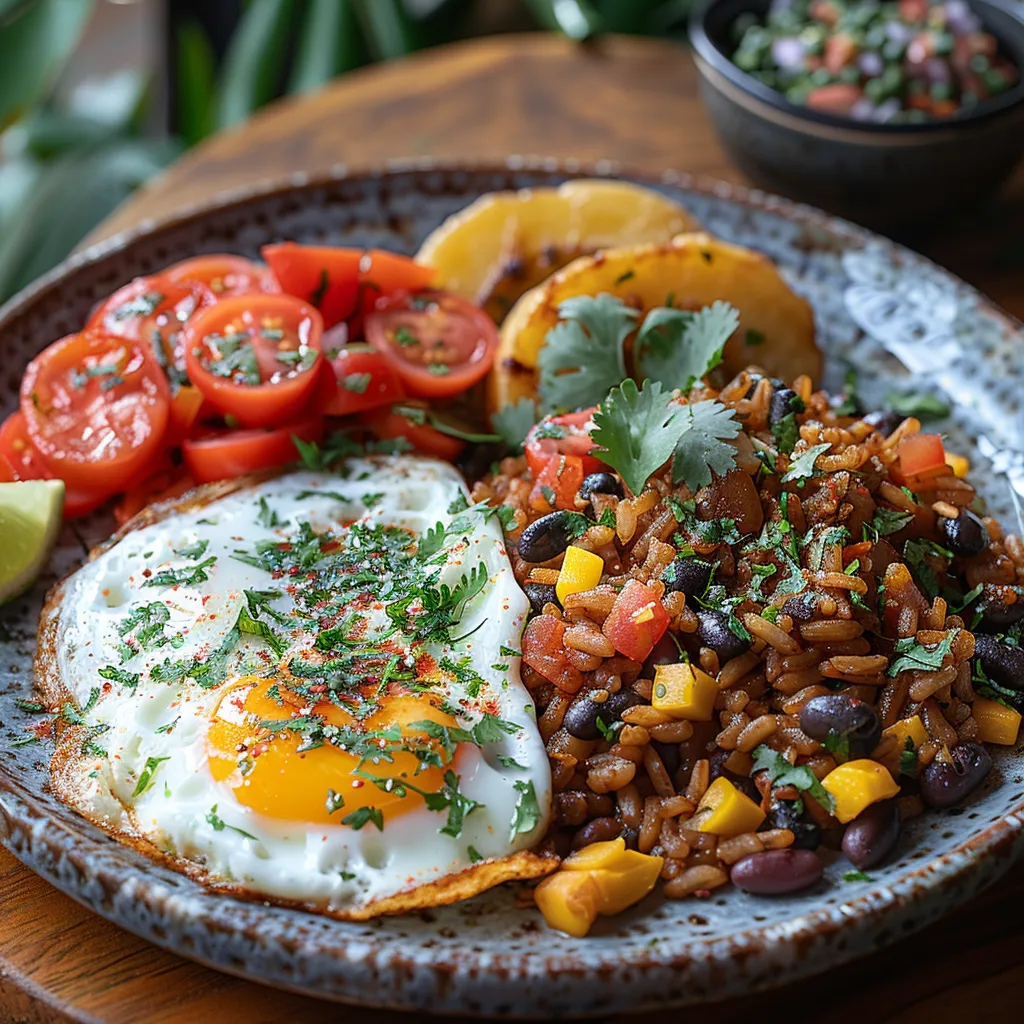
The base layer is indigenous: corn, beans, and squash, still anchoring most plates today. Spanish colonization added rice, beef, citrus, and pork - which is why rice and beans appear at every meal rather than just corn tortillas as in much of Mesoamerica. The Afro-Caribbean influence on the Limón coast came later, in the late 19th century, with Jamaican workers brought in for the railroad and banana industries. They brought coconut milk, allspice, scotch bonnet peppers, and the technique of simmering rice in coconut - which is why Caribbean-side “rice and beans” tastes nothing like the Central Valley’s gallo pinto (4).
Since 2011, the Costa Rican Tourism Board, Ministry of Culture, and National Learning Institute have run a program to recover traditional recipes and push restaurants to feature them more prominently (8). You’ll notice the result in tourist towns: most menus now have a “comida típica” section alongside the burgers and pizza.
What to eat in Costa Rica: gallo pinto and casado
The shortest answer: gallo pinto for breakfast, casado for lunch. If you only eat two things in Costa Rica, eat those.
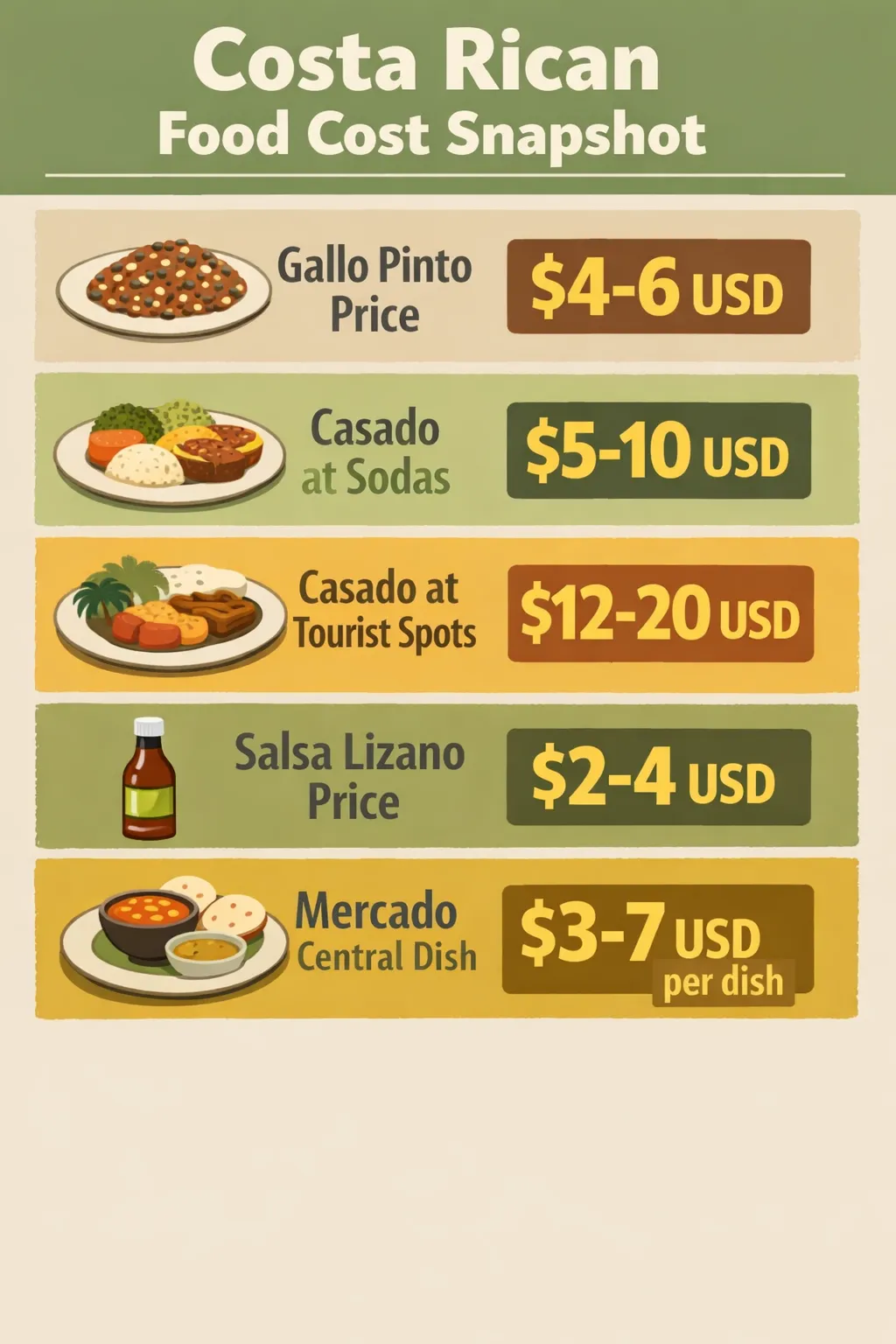 Prices of iconic dishes and condiments at local sodas and markets: gallo pinto $4-6, casado $5-10 at sodas and $12-20 at tourist spots, Salsa Lizano $2-4, Mercado Central dishes $3-7.
Gallo pinto is rice and black beans (or red beans on the Caribbean side) sautéed with onion, sweet pepper, and cilantro, seasoned with Salsa Lizano - a tangy, slightly sweet brown sauce that’s basically the national condiment (1)(2). Served at breakfast with scrambled eggs, fried sweet plantain (plátano maduro), a piece of fresh cheese, and sometimes sour cream or a corn tortilla. Cost at a soda: $4-6 USD. It’s widely cited as Costa Rica’s national dish (1)(6)(7), and after eating it at a half-dozen sodas across the country, I’d say the reputation is earned - when the Salsa Lizano ratio is right, it’s genuinely good.
Casado isn’t a recipe - it’s a plate format. You’ll get rice, beans, a protein (chicken, beef, pork, or fish), a cabbage-and-tomato salad, fried sweet plantains, and often a small picadillo or pasta side (3)(6). The word means “married,” supposedly because the components are joined on one plate. Casados run $5-10 USD at sodas and $12-20 USD in tourist restaurants for nearly identical food.
Beyond those two, the rotation of Costa Rican dishes worth seeking out:
- Olla de carne - beef stew with yucca, potatoes, corn, carrots, and plantains. Weekend dish, hearty, best in rainy season (2).
- Arroz con pollo - chicken rice, often served at family gatherings and listed among the country’s most recognized dishes (3).
- Ceviche costarricense - fresh white fish (usually corvina or tilapia) “cooked” in lime juice with onion, cilantro, sweet pepper, and a touch of chili. Served cold with saltine crackers or tortilla chips (2)(7).
- Chifrijo - layered rice, beans, chicharrón (fried pork belly), pico de gallo, and avocado. Bar food, eaten with tortilla chips and a cold Imperial (2).
- Tamal costarricense - corn masa filled with seasoned pork, rice, and vegetables, wrapped in plantain leaves. Christmas dish; families make them by the dozen (3).
- Patacones - twice-fried green plantain rounds. Side or appetizer with refried beans or guacamole.
- Picadillos - finely diced vegetable sautés with ground meat. The arracache (a starchy root) version is the most distinctive.
- Sopa negra - black bean soup with a poached egg.
On the Caribbean coast, swap that list partly: rice and beans cooked in coconut milk, rondón (a seafood-coconut stew), patí (spicy meat-filled pastries), and jerk chicken with a Costa Rican accent (4).
What is Costa Rica famous for in food?
Four things, if you’re surveying the country quickly:
- Rice and beans, eaten three times a day. Gallo pinto for breakfast, casado for lunch, often a simpler rice-and-beans plate for dinner. Not a stereotype - genuinely the foundation.
- High-altitude Arabica coffee. The Tarrazú, Central Valley, and Tres Ríos regions produce beans that rank with the best in Latin America (4)(5). The volcanic soil and 1,200-1,900m elevation are the reason.
- Tropical fruit. Pineapple (Costa Rica is one of the world’s largest exporters), papaya, mango, banana, plantain, jocote, anona, water apple, and pejibaye - a starchy peach palm fruit eaten boiled with mayonnaise (5).
- Salsa Lizano. A 1920s invention that became the country’s flavor signature. Buy a 500ml bottle at any supermarket for $2-4 USD - gift shops charge triple.
What Costa Rica is not famous for, despite what some travel articles claim: spicy food. Traditional cuisine is mild, herb-forward, and built on sweet peppers and cilantro rather than chilies (1). If you want heat, you add it yourself with hot sauce.
Costa Rican drinks: coffee, guaro, and batidos
Costa Rican drinks split neatly into three categories.
Coffee. Café chorreado is the traditional preparation - ground coffee in a cloth sock (the chorreador) suspended over a cup, hot water poured through slowly. The result is cleaner than a French press and stronger than a paper filter drip. Most sodas serve it. I had my first chorreado at a roadside soda outside Tarrazú and ordered a second before finishing the first. Plantation tours around San José, Heredia, and Tarrazú run $30-60 USD and typically include cupping, a farm walk, and a small bag of beans to take home.
Beer and guaro. Imperial (with the black eagle label) and Pilsen are the national lagers (5). Both are light, sub-5% ABV, and built for the climate. Guaro is the local sugarcane spirit, sold most famously under the Cacique label. The signature shot is chiliguaro - guaro mixed with tomato juice, lime, hot sauce, and salt, served cold. One round will cost you $3-5 USD at most bars.
Non-alcoholic. Batidos are fresh fruit smoothies, blended with either water (en agua) or milk (en leche). Order them en agua for the cleaner flavor. Agua de sapo is a ginger-and-lime drink with raw cane sugar, common in Limón province. Resbaladera is a chilled rice-and-cinnamon drink, more Guanacaste than national. A batido at a soda runs $2-4 USD; a fresh coconut from a roadside stand is $1-2.
Where to eat with the locals
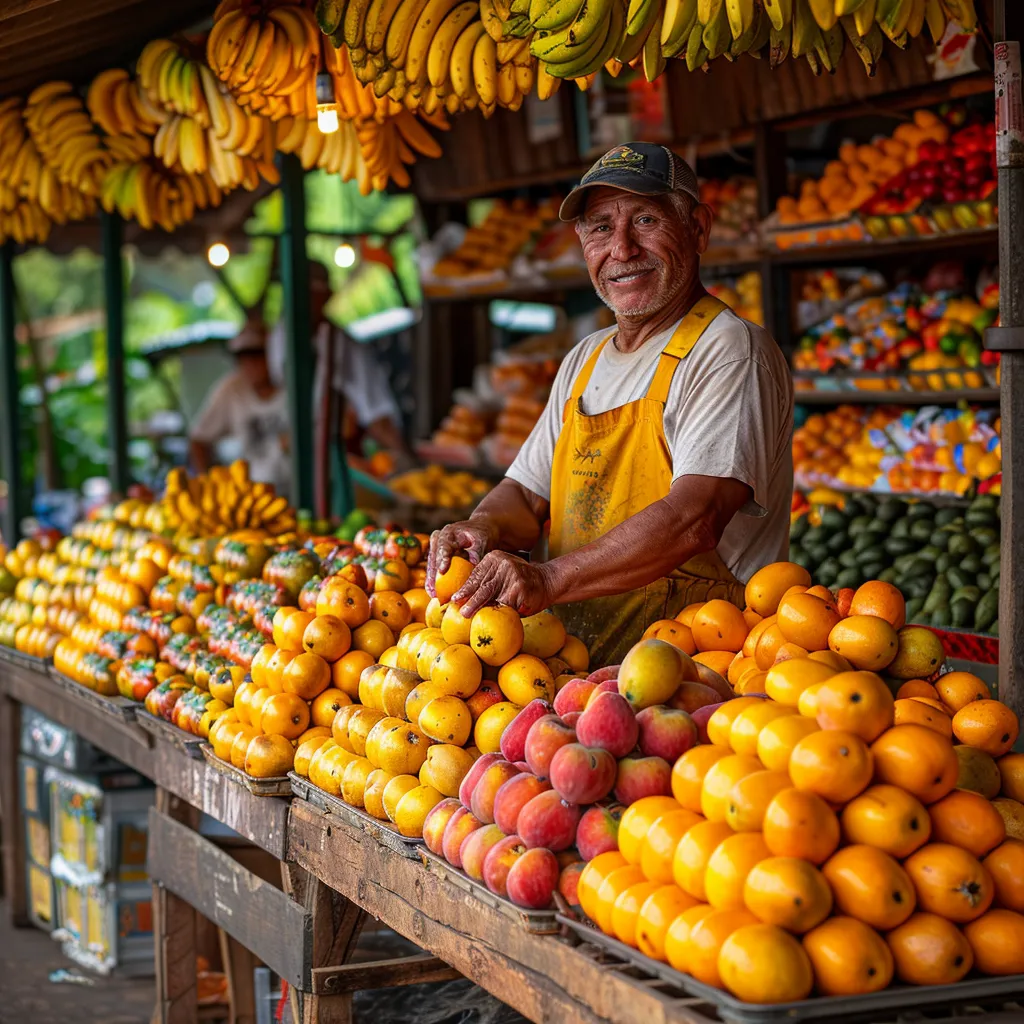
The single best move for both budget and authenticity is eating at sodas - small, family-run lunch counters that serve traditional plates at local prices (7). They’re everywhere: side streets in San José, gas station corners, beach town backstreets one block off the main strip. Look for handwritten chalkboards listing the day’s casado options.
A few soda mechanics worth knowing:
- The “casado del día” or “plato del día” is usually $1-2 cheaper than the menu options and often includes a drink. Always ask.
- Most sodas close by 3-4 pm. Lunch is the main service.
- Cash is preferred, though more sodas accept cards each year. Carry colones for anything outside major tourist towns.
- The busiest soda on the block is almost always the best - locals don’t tolerate bad gallo pinto.
Mercado Central in San José is the other obvious move: a covered market with dozens of food stalls serving casados, ceviche, fresh juices, and pastries for $3-7 USD per dish. It’s also where you can buy Salsa Lizano, coffee, and spices cheaper than anywhere else.
Regionally:
- Pacific coast (Guanacaste, Tamarindo, Manuel Antonio, Puntarenas) - best for seafood. Order whole grilled fish (pescado entero) with garlic, or ceviche from a stand at the beach. Arroz con camarones (shrimp rice) is a staple here.
- Caribbean coast (Puerto Viejo, Cahuita, Limón) - go for rice and beans in coconut milk, rondón, and patí. Flavors are sharper, often spicier (4).
- Central Valley and mountains - best for olla de carne, sopa negra, picadillos, and the widest range of comida típica.
- Puntarenas - for the Churchill, a shaved-ice dessert with kola syrup, condensed milk, powdered milk, ice cream, and fruit (2). Strange, sweet, worth trying once.
Is $20 a lot in Costa Rica?
It depends entirely on where you’re standing.
At a soda or local market, $20 buys two full casado lunches with drinks, or breakfast for two plus coffees, or three street ceviches with beers. A generous meal-and-a-half for two people.
At a tourist restaurant in Tamarindo, La Fortuna, Manuel Antonio, or San José’s hotel zones, $20 buys roughly one main course - maybe a main plus a beer if you skip the appetizer. Mid-range mains run $12-20 USD; seafood plates hit $20-25 USD.
At a high-end restaurant in Escazú or a beach resort, $20 doesn’t cover an entrée.
For daily food budgeting:
- $15-25/day - sodas only, three meals plus a snack and drink.
- $30-50/day - mix sodas with one tourist restaurant meal.
- $60+/day - restaurants throughout, occasional tasting menus.
So no, $20 isn’t a lot if you’re eating where tourists eat. It’s a meaningful amount if you’re eating where ticos eat. That gap between the two prices is the single biggest budget lever you have on this trip.
What to be cautious of with food and drink
Costa Rica is one of the safer countries in Latin America for eating, but a few specifics are worth flagging.
Water. Tap water is safe in most of the country, including San José, the Central Valley, and most major tourist towns. In rural areas, on the Caribbean coast after heavy rain, and in some Nicoya Peninsula towns, stick to bottled or filtered water. If your stomach is sensitive, default to bottled the first few days.
Street ceviche. Fresh ceviche from a busy market stall is fine. Ceviche sitting in a warm cooler at a slow stand is not. The “cooking” from lime juice is real but limited - the fish still needs to have been kept cold. Buy from places with turnover.
The mandatory 10% service charge. Restaurants are legally required to add 10% servicio to your bill, plus 13% IVA (tax). Both are usually itemized at the bottom. An additional 5-10% tip is appreciated but not expected - don’t tip 20% on top of the 10% already included unless service genuinely warranted it.
Tourist-zone pricing. A casado in Tamarindo that costs $18 USD costs $7 USD at the soda two streets back from the beach. This isn’t a scam - it’s a tourist economy. Walk inland a block before sitting down.
Portion size. A casado plate is enormous: roughly a cup of rice, a cup of beans, a substantial protein, salad, and plantains. Don’t order appetizers. One casado feeds one normal appetite completely.
Alcohol and altitude. Guaro is stronger than it tastes. The mixers hide it. Pace yourself, especially if you’ve been hiking at elevation or are headed for an early surf lesson.
Allergies and dietary restrictions. Sodas often don’t list ingredients, and cross-contamination awareness varies. If you have a serious allergy, learn the Spanish phrase for it and write it on a card. For gluten-free, rice and corn tortillas help - but check sauces and soups for flour thickeners.
Vegetarian, vegan, and ordering phrases
Costa Rica is easier for vegetarians than most of Central America because beans, rice, and plantains anchor every meal. Most sodas will make a casado vegetariano - same plate, just swap the meat for an extra portion of beans, an egg, or fried cheese - for roughly the same price as the meat version.
Vegan is harder. Cheese and egg appear by default, and “vegano” isn’t universally understood outside tourist zones. Be specific: ask for no cheese (sin queso), no egg (sin huevo), no milk (sin leche).
Useful phrases:
- “Un casado con pollo / carne / pescado / cerdo, por favor” - A casado with chicken / beef / fish / pork, please.
- “¿Tienen casado vegetariano?” - Do you have a vegetarian casado?
- “Desayuno típico con gallo pinto” - Traditional breakfast with gallo pinto.
- “Sin carne, sin queso, sin huevo” - Without meat, without cheese, without egg.
- “¿Cuál es el plato del día?” - What’s the daily special?
- “La cuenta, por favor” - The check, please.
Menus in tourist towns are usually bilingual. Rural sodas are Spanish-only, but pointing at what someone else is eating works fine.
Desserts and sweets worth ordering
Dessert isn’t the strongest part of Costa Rican cuisine, but a few things are worth your stomach space:
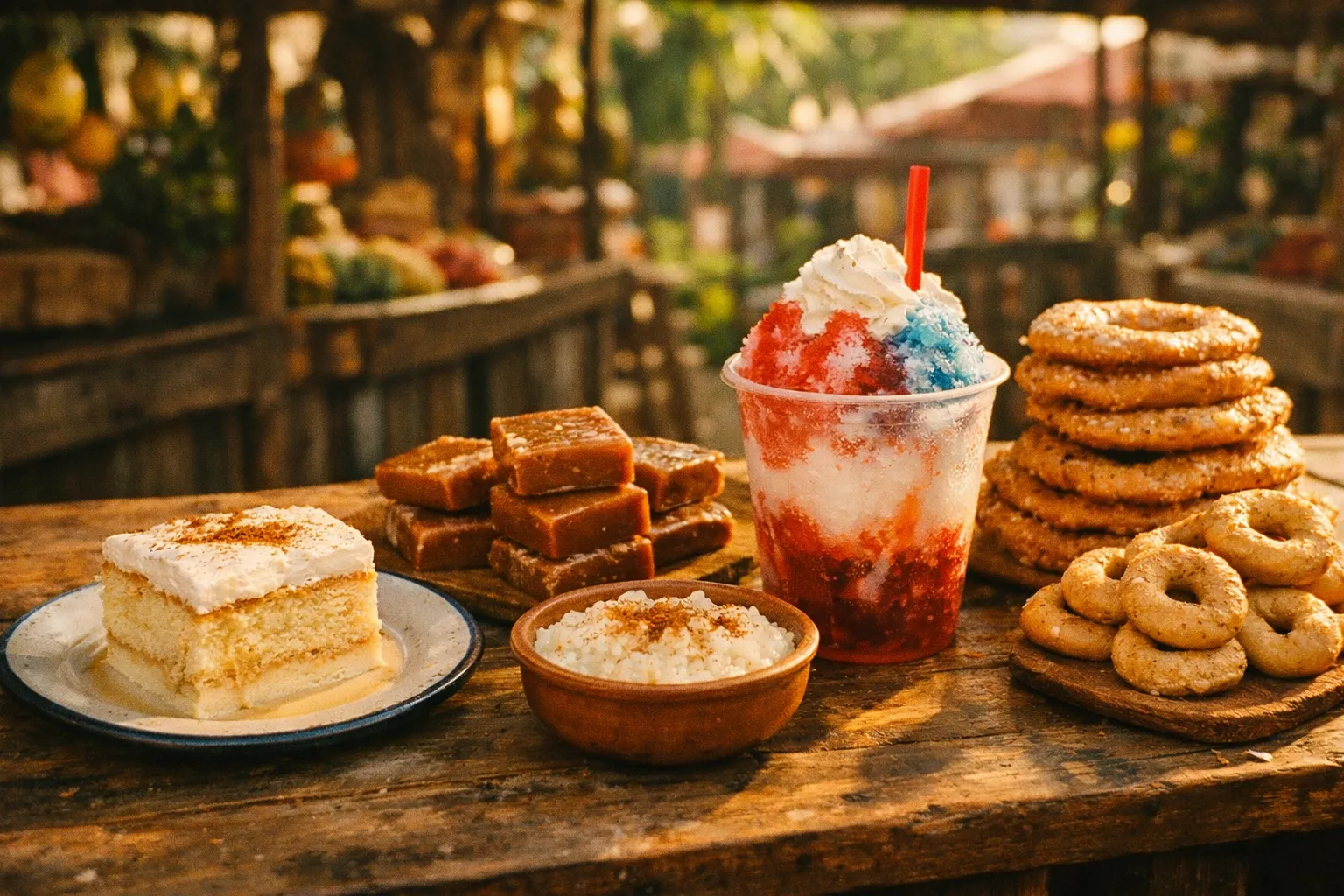
- Tres leches - sponge cake soaked in three milks. The version here is lighter than the Nicaraguan original (5).
- Arroz con leche - rice pudding with cinnamon and raisins. Comfort food.
- Cajeta - condensed-milk caramel, sometimes flavored with coconut. Sold in small squares.
- Churchill - the Puntarenas shaved-ice with kola syrup, condensed milk, powdered milk, ice cream, and fruit. A novelty more than a delicacy.
- Prestiños and rosquillas - fried dough and cornmeal rings, sold at bakeries and festivals for under $1.
Bakeries (panaderías) are an underrated budget move: pastries and empanadas for $0.50-2.00 USD, paired with a $1-2 coffee, for a light meal under $3.
A one-week eating plan
Duration: 7 days. Food budget: roughly $30/day per person, ~$210 total.
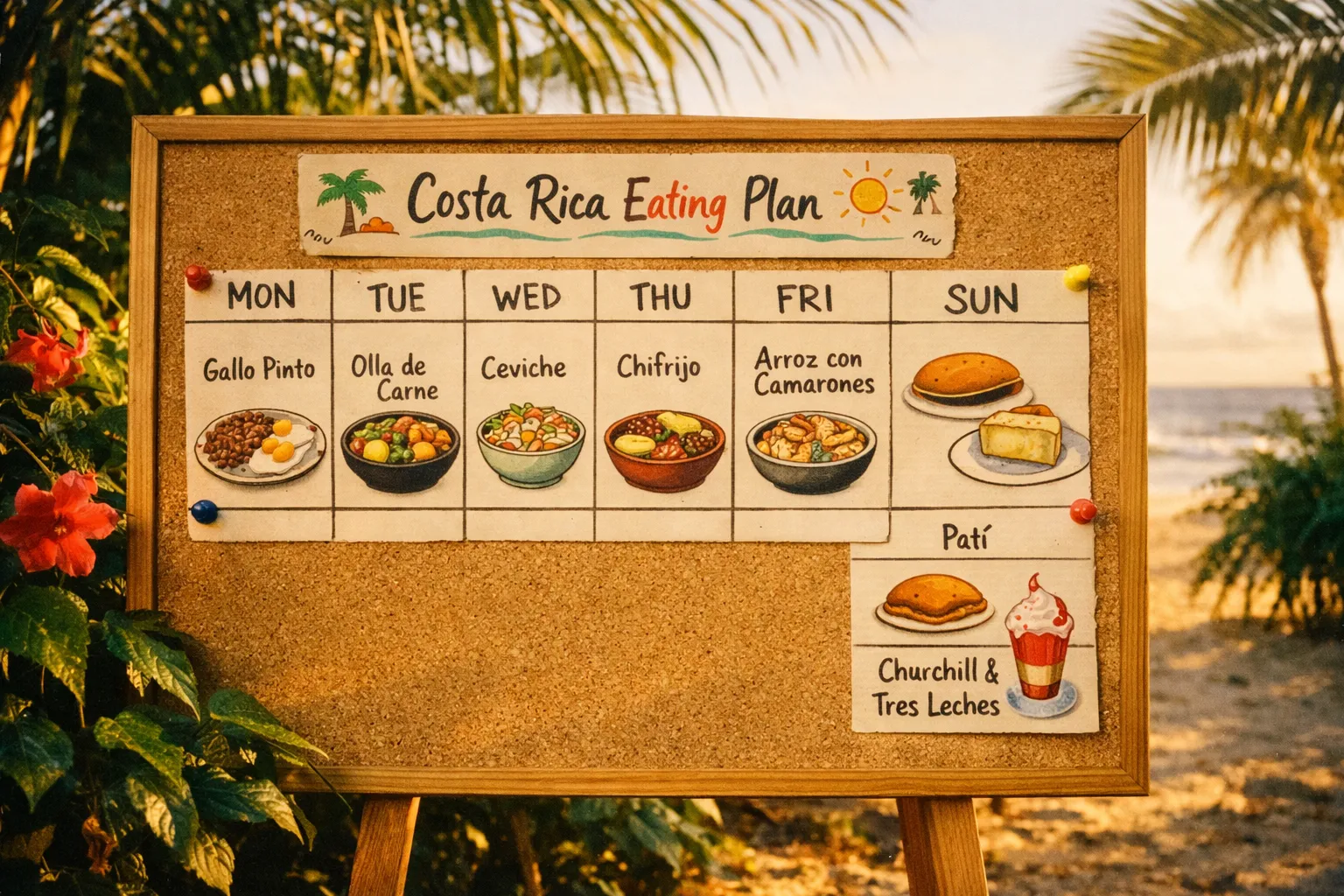
If you want a concrete framework, here’s how I’d structure a week’s eating to hit the major dishes without overspending or repeating yourself.
One-Week Eating Plan in Costa Rica
7 daysA daily breakdown to sample key dishes across regions within a reasonable budget.
- 1
Day 1 (San José)
Mercado Central for casado lunch and fresh juice. Soda dinner near the hotel - gallo pinto, eggs, plantains.
- 2
Day 2 (Central Valley)
Coffee plantation tour with cupping. Olla de carne at a country soda for lunch.
- 3
Day 3 (La Fortuna or Monteverde)
Casado lunch at a soda off the main strip. Chifrijo and an Imperial at a bar in the evening.
- 4
Day 4 (Pacific coast)
Ceviche at the beach. Whole grilled fish with patacones for dinner.
- 5
Day 5 (Pacific coast)
Arroz con camarones for lunch. Batido stop mid-afternoon.
- 6
Day 6 (transit to Caribbean)
Rondón or rice and beans in coconut milk for dinner - your first taste of the other Costa Rica.
- 7
Day 7 (Caribbean coast)
Patí for breakfast, jerk chicken with coconut rice for lunch, Churchill or tres leches as a sweet finish.
That covers gallo pinto, casado, ceviche, olla de carne, chifrijo, arroz con camarones, rondón, Caribbean rice and beans, patí, and tres leches in a week - most of the menu, for under $250 in food per person.
What most guides get wrong about Costa Rican food
Two things, mostly.
First, they list 15-20 dishes as if they’re all equally common. They’re not. Gallo pinto and casado are what locals actually eat daily. Olla de carne is a weekend meal. Tamales are seasonal. Chifrijo is bar food. Treating them as a flat list misleads you on what to expect at a random Tuesday lunch.
Second, they undersell the regional split. The Caribbean coast genuinely tastes like a different country - coconut, allspice, scotch bonnet, the rhythm of the food slower and richer (4). If you only eat in the Central Valley and on the Pacific, you’ve missed half of Costa Rican cuisine. Even a single overnight in Puerto Viejo or Cahuita is worth the detour.
The food here isn’t going to hit you on the first bite. It grows on you over a week as you realize how good a properly made gallo pinto tastes when you’re sitting at a plastic table at 7 am, the rain just starting, with $4 worth of coffee and rice in front of you. That’s the cuisine working as intended.
Frequently Asked Questions
- Is it safe to drink tap water everywhere in Costa Rica?
- Tap water is generally safe in major towns and tourist areas, but in rural zones and after heavy rain on the Caribbean coast, bottled or filtered water is safer.
- Can I find spicy food easily in Costa Rica?
- Traditional Costa Rican cuisine is mild; if you want heat, you usually add hot sauce yourself. The Caribbean coast offers slightly spicier dishes but nothing overwhelmingly hot.
- Are sodas cash-only, and do they accept cards?
- Most sodas prefer cash and may not accept cards, especially outside tourist areas. Carry local currency (colones) for convenience.
- How do I communicate dietary restrictions in rural sodas?
- Learn key Spanish phrases for allergies or dietary needs and carry a written card. Vegan options are limited; be specific about no cheese, egg, or milk.
- Is tipping mandatory in Costa Rican restaurants?
- A 10% service charge is legally included in bills. Additional tipping of 5-10% is appreciated but not required.
- Where can I buy authentic Salsa Lizano at a good price?
- Buy it at supermarkets or Mercado Central in San José for $2-4 USD. Gift shops and tourist stores charge significantly more.
- What is the best way to experience Costa Rican coffee?
- Visit coffee plantations in Tarrazú or Central Valley for tours costing $30-60 USD, including cupping sessions and farm walks.