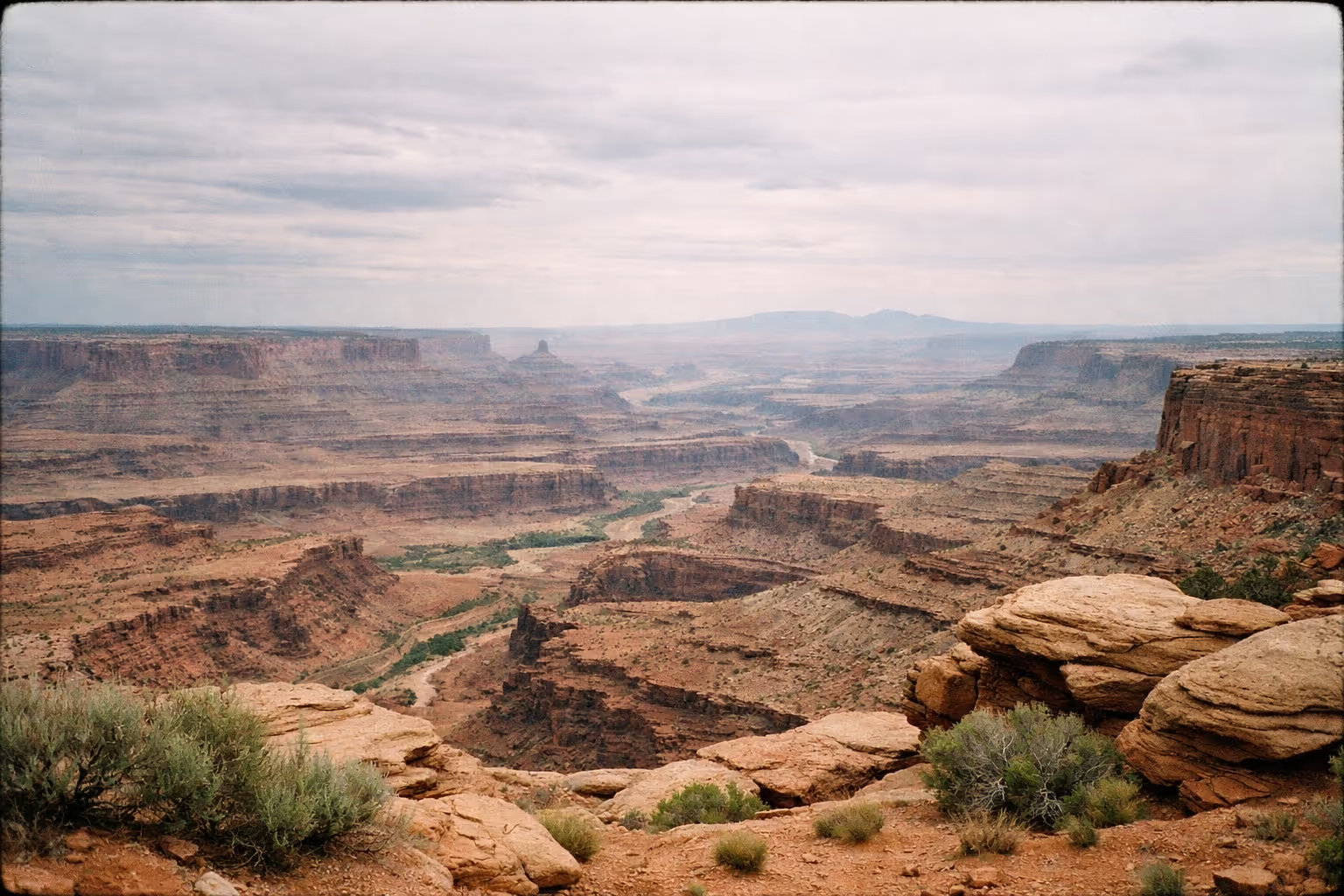
One national park drew 11.5 million visitors in 2025 - more than the next two most-visited parks combined. That park is Great Smoky Mountains. Yet most people planning their first trip to the best national parks in the USA don’t stop to ask whether they’re heading to the right park at the right time of year. That single question - iconic versus overcrowded, famous versus actually good for your dates - often decides whether a trip works or falls apart. This guide skips a ranked list of all 63 parks and instead organizes them by region and season, because that’s the decision you’re really making.
The “Big 3” - Yellowstone, Yosemite, and the Grand Canyon - are real and worth the hype. But knowing they’re great doesn’t tell you when to go, what it costs to get there, or which lesser-known park delivers 90% of the experience with a fraction of the crowds. That’s exactly what the regional and seasonal framework below is designed to solve.
✓ Pros
- Unmatched scenery variety across 63 parks from deserts to Arctic tundra
- Well-developed infrastructure at major parks including roads and lodging
- Regional clustering enables efficient multi-park road trips, especially Southwest
- Shoulder seasons offer near-peak experience with far fewer visitors
✗ Cons
- Top 10 parks draw 3-11 million visits annually, causing crowd and reservation issues
- High-elevation parks have seasonal closures, some roads open only late June
- Remote Alaska parks require expedition-level planning and budget
- Overpacking itineraries is the most common mistake ruining trips
Best National Parks in the USA: What Makes a National Park “Best” - and Why Region and Season Change Everything
The U.S. has 63 designated national parks, so “best” depends on when you travel and where you’re starting from, not just the park name (1). A park that’s stunning in May can turn into a parking lot nightmare by July. The more useful question isn’t “which park is best?” - it’s “which park is best for my dates, budget, and skill level?”
Two different rankings drive this home. By 2025 visitation, the top five were Great Smoky Mountains (11,527,939 visits), Zion (4,984,525), Yellowstone (4,762,988), Grand Canyon (4,430,653), and Yosemite (4,278,413) (6). But by popularity score, according to Nature’s Finest: America’s Top-Rated National Parks in 2025, the top five were Arches (82.65/100), Yosemite (79.58), Bryce Canyon (79.55), Theodore Roosevelt (77.38), and Hawaiʻi Volcanoes (71.83) (5). Only Yosemite appears on both lists. That gap is where smart planning lives.
This guide breaks the country into four regional clusters - East, Southwest, West/Rockies, and Alaska/Remote - because season and access vary dramatically across them. On top of that, it applies four seasonal windows.
The Big 3 - Yellowstone, Yosemite, and the Grand Canyon
Yellowstone, Yosemite, and the Grand Canyon defined the national park concept, and they remain the default first-trip choices. In 2025, Yellowstone had 4.76 million visits, the Grand Canyon 4.43 million, and Yosemite 4.28 million, ranking 3rd, 4th, and 5th nationally (6). Yellowstone is the geothermal showpiece - Old Faithful, Grand Prismatic Spring, and wildlife corridors. Yosemite is granite cliffs and waterfalls. The Grand Canyon is scale you can’t photograph honestly.
All three are in the highest-traffic tier, where every top-ten park had more than 3 million visits in 2025 (6). Plan on 3 to 5 days each and make advance reservations during peak season. They’re worth it - just don’t wing it.
Top 5 Most Visited vs. Top 5 Most Rated - What the Gap Tells You
The gap between visitation and rating is the most actionable insight here. Theodore Roosevelt ranked 4th by popularity score (77.38/100) but had only 729,893 visits - a top-rated park without top-tier crowds. Hawaiʻi Volcanoes scored 71.83/100 with 1,877,854 visits, showing strong quality without the crush. North Cascades had just 16,485 visits in 2024 (1), offering serious wilderness backpacking just a few hours from Seattle. More visitors don’t mean a better park - usually it means easier access and bigger parking headaches.
Regional Quick-Reference: Season, Crowds, and Days Needed
Here’s a planning shortcut: this table maps region, anchor parks, best season, crowd level, logistics tier, and days needed - the fastest way to match a park to your travel window. Crowd levels are based on NPS 2025 visitation data (6), not gut feeling.
2025 visitation counts for five top parks: Great Smoky Mountains 11,527,939; Zion 4,984,525; Yellowstone 4,762,988; Grand Canyon 4,430,653; Yosemite 4,278,413.
Best National Parks in the USA - Regional Quick-Reference
| East | Southwest | West / Rockies | Alaska / Remote | |
|---|---|---|---|---|
| Region | East | Southwest | West / Rockies | Alaska / Remote |
| Anchor Parks | Great Smoky Mountains, Acadia, Shenandoah, Everglades | Arches, Zion, Bryce Canyon, Canyonlands, Grand Canyon | Yosemite, Yellowstone, Grand Teton, Glacier, Rocky Mountain, Olympic | Gates of the Arctic, Kobuk Valley, Lake Clark, Katmai, Wrangell-St. Elias |
| Best Season | Fall (Smokies/Shenandoah), Winter (Everglades), Summer (Acadia) | Spring & Fall | Summer (high elevation), Spring/Fall (Yosemite) | Summer (Jun-Aug only) |
| Crowd Level | High (Smokies), Medium (Acadia) | High (Zion, Grand Canyon), Medium (Bryce, Arches) | High across all | Very Low |
| Logistics Tier | Drive-to | Drive-to / Fly into SLC or LAS | Fly-in or long drive | Bush plane / boat |
| Days Needed | 2-4 per park | 1-3 per park | 3-5 per park | 4-7+ |
The single most important takeaway: the Southwest clusters five top-rated parks within one driveable loop from Salt Lake City or Las Vegas. No other region packs that density of highly rated parks so close together. If you have one week and want maximum scenery per mile, the Southwest is your best bet.
Eastern Parks - Where to Go and When the Crowds Actually Thin
Eastern parks are drive-to, which keeps costs down, but the region’s flagship park is also the most crowded in the country. Great Smoky Mountains recorded 11,527,939 visits in 2025 - more than double the #2 park (6). It’s free to enter - one of the few major parks without an entrance fee - which explains a good chunk of that volume. Acadia had 4,079,318 visits, Shenandoah 1,682,152, and Everglades 1,264,759. The alternatives are quieter and sometimes better for a specific season.

Great Smoky Mountains - the Crowd Reality and How to Work Around It
The Smokies pull 11.53 million visits a year, clustered heavily in late October during peak foliage. If you’re going in peak season, timing is everything. Arrive at Cades Cove before 8:00 a.m., aim for weekdays, and consider entering from the Asheville side rather than battling Gatlinburg traffic. The park’s gateway towns back up badly on October Saturdays.
The best foliage-plus-fewer-people window is late April through early June - wildflowers, cooler air, and lighter crowds. Kuwohi (formerly Clingmans Dome), the park’s highest point at 6,643 feet (2,025 m), is a half-mile paved climb with about 330 feet (100 m) of elevation gain. October delivers the clearest long-range views, but fog is common, so check the forecast before you drive up.
Acadia, Shenandoah, and Everglades - the Eastern Alternatives Worth the Detour
Acadia on the Maine coast peaks in July and August. The marquee experience is sunrise from Cadillac Mountain. Timed vehicle reservations are required for the summit road in peak season, so book early. September offers the same coastline with fewer people, plus the carriage roads make Acadia one of the better cycling parks in the East.
Shenandoah is straightforward - reached via Skyline Drive, a direct route from the DC corridor. Fall foliage rivals the Smokies but with far fewer visitors, and the hiking infrastructure suits beginners. Old Rag is the standout climb, though it now requires a day-use permit, so check before you go.
Everglades is a winter park, full stop. The dry season runs roughly December through March, when wildlife concentrates around shrinking water and the heat, humidity, and mosquitoes are tolerable. Summer here is genuinely unpleasant. The Anhinga Trail is the best single wildlife walk in the eastern U.S. - wading birds and alligators at close range on a short, flat loop.
Southwest Parks - The Best Circuit in American Road-Tripping
The Southwest loop - Arches, Canyonlands, Bryce Canyon, Zion, and the Grand Canyon - connects five of the country’s top-seven parks by popularity score in a single driveable circuit from Salt Lake City or Las Vegas. Arches scored 82.65/100, Bryce 79.55, Zion 71.17, and Grand Canyon 70.66 (5). Zion alone drew 4,984,525 visits in 2025, second most in the country, while the Grand Canyon had 4,430,653 (6). This is the densest high-quality road-trip region in the U.S., and the data backs the itinerary.
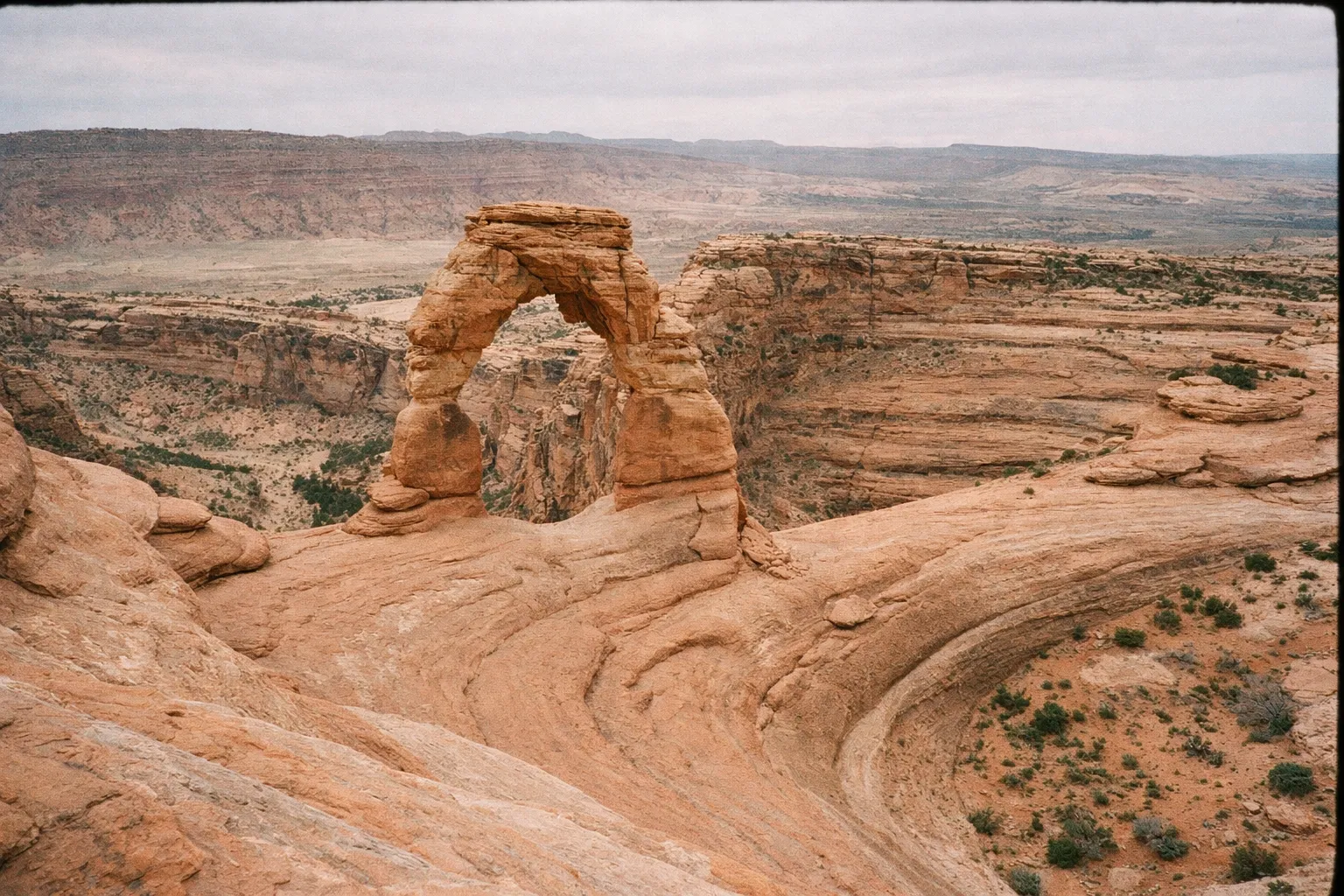
Spring (March through May) is the optimal window: moderate temperatures, snow-free canyon trails at most elevations, and wildflowers in canyon country. Summer heat in canyon bottoms - the Zion Narrows, the Grand Canyon inner gorge - can be dangerous, not just uncomfortable.
Here’s how the anchor parks break down:
- Arches (UT) holds the highest popularity score in the country at 82.65/100 (5). Delicate Arch is the signature hike - about 3 miles (4.8 km) roundtrip with 480 feet (146 m) of gain. As of October 2026, Arches does not require timed entry reservations this year, though vehicles may be diverted from the entrance when the park gets too congested, and Devils Garden Campground and Fiery Furnace hikes still require reservations (7)(8). One to two days is enough.
- Zion (UT) runs a mandatory shuttle in the main canyon. Angels Landing requires a permit through a lottery, and The Narrows - wading up the Virgin River through a slot canyon - is the other signature experience. Give it 2 to 3 days.
- Bryce Canyon (UT) scored 79.55/100 (5). The hoodoos are the draw, and rim-to-floor trails are steep but short. Best light comes at sunrise from Bryce Point or Inspiration Point. One to two days.
- Grand Canyon (AZ) works best from the South Rim, which is open year-round. As of October 2026, the North Rim is open through November 30 or until the first major snowstorm, but there is no overnight lodging inside the park this season, since the 2025 Dragon Bravo Fire destroyed the Grand Canyon Lodge (9). Inner-canyon backpacking on Bright Angel or South Kaibab requires corridor permits booked months ahead. Budget 2 to 3 days minimum for the South Rim.
- Canyonlands (UT) is less visited than its neighbors despite being geologically spectacular. The Island in the Sky district is drive-to and accessible; the Maze district is backcountry-only and one of the most remote destinations in the lower 48.
Spring vs. Fall in the Southwest - Which Shoulder Season Wins
Both shoulder seasons work but solve different problems. Spring (March through May) brings wildflowers and cooler temperatures, though some higher-elevation or rim-to-river routes can still hold snow or ice in early March, depending on the park and elevation. Fall (September through October) brings relief after brutal summer heat, slightly lower crowds than peak spring, and exceptional light quality for photography. If you want reliable trail access at all elevations, lean toward May or late September.
Permit and Reservation Systems You Need to Know Before You Go
Four systems will shape your trip. Arches dropped timed entry for 2026, but Fiery Furnace hikes and Devils Garden Campground still run on reservations (7)(8). Zion’s Angels Landing runs a permit lottery. The Grand Canyon requires backcountry permits for corridor routes like Bright Angel and South Kaibab. Yosemite’s Half Dome cables also run on a permit lottery - worth flagging here because the pattern is the same. The rule across all of them: book 3 to 6 months out for peak dates, or accept the lottery odds. Discovering a permit requirement after you’ve booked flights is the most common avoidable disappointment in Southwest planning.
Rocky Mountain and Pacific West Parks - High-Elevation Timing Is Everything
The West is where timing trips people up. High-elevation parks have hard seasonal closures, and travelers who plan May trips often find the main scenic corridors still buried in snow. In 2025, Yellowstone drew 4,762,988 visits, Yosemite 4,278,413, Rocky Mountain 4,171,431, Grand Teton 3,800,648, Olympic 3,584,187, and Glacier 3,136,557 (6) - all firmly in the high-traffic tier and all requiring advance planning in summer.
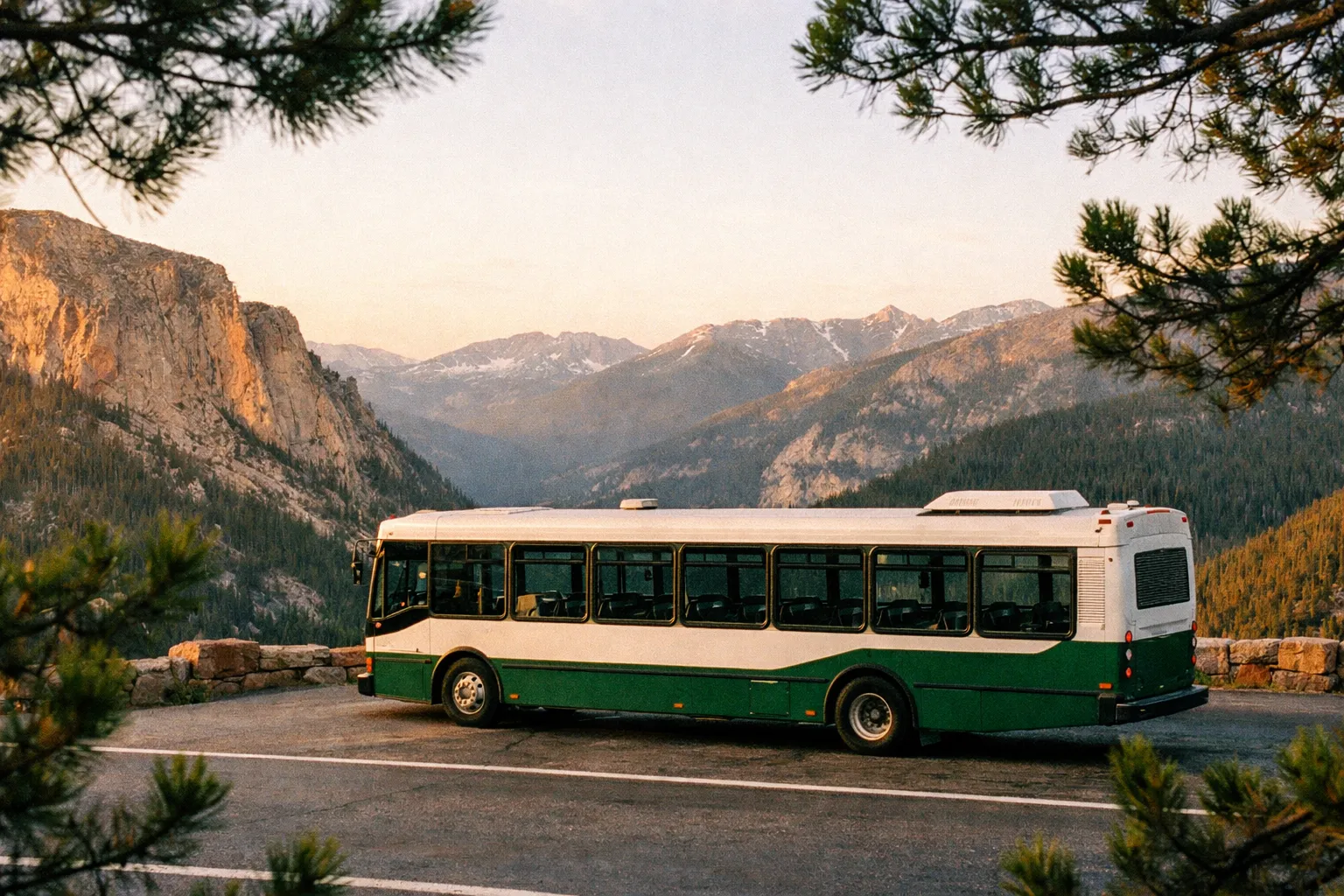
Rocky Mountain’s Trail Ridge Road is the highest continuous paved road in the U.S., and it closes seasonally. Glacier’s Going-to-the-Sun Road typically doesn’t fully open until late June or early July. Plan a May trip to either without checking road status and you’ll spend it staring at a closure gate.
Yellowstone’s geothermal features are accessible year-round, but most roads close November through April. Early June and September are the shoulder-season sweet spots, and wildlife viewing is best at dawn and dusk. Olympic packs three distinct ecosystems - rainforest, alpine, and coast - into one park, with the Hoh Rain Forest getting more than 140 inches (3,556 mm) of rain a year. Summer is the reliable window, but shoulder seasons buy you solitude.
Yellowstone and Grand Teton - the Northern Rockies Circuit
Yellowstone and Grand Teton share a border, making them the classic paired itinerary. Yellowstone (4,762,988 visits in 2025) needs 3 to 4 days minimum to cover the major geyser basins and wildlife corridors; Grand Teton (3,800,648 visits) adds another 2. Combined, that’s a 5 to 7 day trip over a roughly 435 to 620 mile (700 to 1,000 km) driving loop.
The Tetons are, frankly, more photogenic than Yellowstone’s interior - Snake River Overlook is the classic Ansel Adams shot. Grand Teton’s fall is defined by the September and October elk rut and golden aspen, keeping it strong long after summer crowds thin.
Glacier - Why the Access Window Matters More Here Than Anywhere Else
Glacier is the park where “summer” really means July and August. Going-to-the-Sun Road, one of North America’s great scenic drives, often doesn’t fully open until late June or early July, and vehicle reservations are required in peak season. There are also vehicle-length restrictions on the road, so RV and large-truck drivers need to check limits in advance.
If you arrive before the road opens, you’re not stuck - Lake McDonald and the lower valley hikes are accessible. But the high-country payoff, Logan Pass and the Highline Trail, depends entirely on that road being clear. Glacier’s 3,136,557 visits in 2025 (6) make access management central to any trip plan here.
Yosemite - the Reservation Reality for the Most Popular Park in the West
Yosemite scored 79.58/100 on the 2025 popularity list, second only to Arches, with 4,278,413 visits (5)(6). It’s also the most reservation-sensitive park in the West. The valley floor stays accessible year-round, but Tioga Road into the High Sierra closes in winter. Spring (April and May) brings peak waterfall flow from snowmelt - the strongest single reason to visit.
As of October 2026, Yosemite does not use a timed entry reservation system this year, and the park manages peak-day congestion with real-time traffic monitoring instead (10). The Half Dome cables still run on a permit lottery, and advance lodging reservations are essential - book 6+ months out for summer. The contrarian play: visit in April for the waterfalls or November for solitude.
Alaska and Remote Parks - Solitude at a Real Cost
Alaska’s parks are extraordinary and expensive, and visitation numbers tell the story better than words. Gates of the Arctic recorded 11,907 visits in 2024 - among the least visited parks in the entire system (1). Kobuk Valley had just 7,786 in 2025 (6). Compare that to the Smokies’ 11.5 million, and the reason is access: charter flights, guided services, and remote logistics put these parks roughly a thousand times below the crowd level of the busiest drive-to parks.
Anchor parks:
- Gates of the Arctic (AK) has no roads, no trails, and no facilities. Access is by bush plane from Fairbanks or Coldfoot, and you need navigation skills, bear awareness, and full self-sufficiency. Plan 4 to 7 days minimum because weather grounds flights.
- Kobuk Valley (AK) is even quieter (7,786 visits in 2025). The Great Kobuk Sand Dunes - active dunes above the Arctic Circle - are genuinely surreal. Access runs through Kotzebue.
- Lake Clark (AK) recorded 18,505 visits in 2024 (1). Coastal brown-bear viewing during the sockeye run is world-class; fly in from Anchorage, and guided trips are the practical option for most.
- Katmai (AK) is the Brooks Falls park - brown bears catching salmon mid-leap. Timed viewing platforms require advance reservations, and you fly in from King Salmon. More accessible than Gates of the Arctic, but still a planned trip.
- Wrangell-St. Elias (AK) is the largest national park in the country, bigger than Switzerland. Two unpaved roads offer limited vehicle access, with Kennecott Mines as the main visitor destination. Beyond that, expedition-level preparation is required.
Summer (June through August) is the only practical window, and even then, weather can ground flights for days.
Who Alaska’s National Parks Are Actually For
This isn’t discouragement - it’s calibration. Alaska’s parks are fly-in or boat-access only, with no road convenience. They suit experienced backcountry travelers, wildlife photographers, and anyone chasing extreme solitude. First-time national park visitors should build skills and confidence at drive-to parks first. Alaska rewards preparation and punishes improvisation harder than anywhere else on this list.
North Cascades - the Remote Park That Isn’t in Alaska
If you want Alaska-grade solitude without the charter-flight budget, North Cascades is the answer. It recorded just 16,485 visits in 2024 (1) despite sitting a few hours from Seattle. There’s no entrance station and limited facilities, and the experience skews wilderness-oriented. For experienced hikers, it offers backpacking comparable to some Alaska parks with a drive-to profile. It’s the clearest example in the lower 48 of a high-quality park that stays empty because it demands effort.
Seasonal Planning - Which Time of Year Works for Each Region
Season is the first filter, not an afterthought. Here’s how the four windows map onto the regions.
Spring (March-May) is best for Southwest desert parks - Arches, Zion, Bryce, Canyonlands - with moderate temperatures, wildflowers, and snow-free canyon trails. It’s also peak waterfall season for Yosemite in April and May. Avoid the high-elevation Rockies before late May or early June; the roads aren’t open.
Summer (June-August) is the only window for the high-elevation Rockies (Glacier, Rocky Mountain, Grand Teton) and Alaska. It’s also peak crowds everywhere - Great Smoky Mountains, Zion, Yellowstone, and Yosemite all hit their annual visitor peaks. Starting before 7:00 a.m. and visiting on weekdays make a measurable difference.
Fall (September-October) is the best overall shoulder season. Smokies foliage peaks in late October, Grand Teton’s elk rut runs through September, and Glacier and Rocky Mountain shed their summer crowds while keeping trail access through mid-October. Southwest parks cool back into a comfortable range.
Winter (December-February) is underrated for desert parks - Death Valley, Big Bend, and Everglades are genuinely better then. Most high-elevation parks have significant road and trail closures. Yellowstone’s interior is accessible only by snowcoach or snowmobile, which is a legitimate, crowd-free experience if you’re up for it.
The Shoulder Season Case - Why Late April and September Beat July Almost Everywhere
The biggest-name parks cluster visitation in the warm months (1), making shoulder season the more efficient choice for most travelers. Show up in late April/May or September and you get most of the same scenery with far less congestion than July and early August. The trade-off is access: some high-elevation trails and roads may still be snowy or closed in late April. For most parks, though, those two windows are the strategic sweet spots.
How to Pick the Right Park for Your Trip
About 30 minutesA 4-step decision framework to match your travel window, logistics, skill level, and reservation needs.
- 1
Fix your travel window first - season determines region
Start with when you can travel. Your dates eliminate roughly half the options immediately. High-elevation Rockies in May? Likely still closed. Southwest in August? Hot. Alaska in October? Season's over.
- 2
Assess your logistics tier
Drive-to parks offer flexibility and lower cost. Fly-in parks need airport and rental car planning. Bush plane or guided expeditions require dedicated planning and budget.
- 3
Match your skill and comfort level to the park's infrastructure
Beginners do well at parks with paved access and visitor centers. Intermediate hikers can handle more demanding terrain. Advanced backcountry travelers need navigation and bear-awareness skills.
- 4
Check reservation and permit requirements before booking anything else
Many popular parks require timed entry or activity permits. Book 3-6 months ahead for peak dates or prepare for lotteries. Assume advance booking if visits exceed 3 million annually.
Common Planning Mistakes - and How to Avoid Them
I’ve made most of these, or watched travelers at trailheads at 11:00 a.m. wondering why there’s no parking left. Here’s what to sidestep.
Underestimating crowds. Arriving at Zion, Yellowstone, or Yosemite in July without reservations or an early start is the single most common mistake. These parks draw 4 to 5 million visits a year (6) - treat them like a popular restaurant, not a wilderness escape.
Misjudging seasonal closures. Going-to-the-Sun Road in Glacier, Trail Ridge Road in Rocky Mountain, and Tioga Road in Yosemite all close in winter and often don’t fully reopen until late June. Plenty of travelers plan May trips assuming summer access and lose half their itinerary to a gate.
Overpacking the itinerary. Trying to hit Zion, Bryce, Arches, and Grand Canyon in 3 to 4 days ignores driving distances and the fact that each park deserves 1-3 full days. The Southwest circuit is a 10 to 14 day trip, not a long weekend. Cramming it means you’ll see parking lots and interstates.
Treating remote parks as add-ons. Gates of the Arctic and Kobuk Valley are not side trips - they’re the entire trip. Sub-20,000 annual visits (6) reflect that these parks demand dedicated expedition planning, not a spontaneous detour off a road that doesn’t exist.
Skipping the permit research. Angels Landing, Half Dome, Grand Canyon corridor backpacking, and Arches’ Fiery Furnace hikes (8) all run on permit or reservation systems. Finding that out after booking flights is common, avoidable, and genuinely deflating.
Frequently Asked Questions
- What are the top 5 national parks in the USA?
- By 2025 visitation, the top five were Great Smoky Mountains (11.5M), Zion (4.9M), Yellowstone (4.7M), Grand Canyon (4.4M), and Yosemite (4.2M). Popularity scores differ, showing 'most visited' and 'most loved' vary.
- What are the Big 3 national parks?
- Yellowstone, Yosemite, and the Grand Canyon are the iconic Big 3. Each draws roughly 4.3 to 4.8 million visits annually and requires 3-5 days with advance reservations in peak season.
- What are the 11 most popular U.S. national parks?
- Top 11 by visitation include Great Smoky Mountains, Zion, Yellowstone, Grand Canyon, Yosemite, Rocky Mountain, Acadia, Grand Teton, Olympic, Glacier, and Joshua Tree. All require advance summer planning.
- What are the top 5 visited national parks?
- Great Smoky Mountains leads with 11.5 million visits in 2025, followed by Zion, Yellowstone, Grand Canyon, and Yosemite. Smokies' free entry and drive-to access boost its volume.
- When is the best time to visit national parks to avoid crowds?
- Shoulder seasons - late April to early June and September to mid-October - offer access with manageable crowds. High-elevation parks need July-August for full trail access.
- Do you need reservations to visit national parks?
- Many popular parks require permits or timed entries: Zion, Yosemite, Grand Canyon, Rocky Mountain, and Glacier. Arches and Yosemite dropped timed entry for 2026, but Fiery Furnace hikes and the Half Dome cables still need a permit. Check NPS sites before booking travel.
- Is it cheaper to visit eastern or western national parks?
- Eastern and Southwest drive-to parks are generally cheaper due to no airfare or rental car. Great Smoky Mountains has no entrance fee. Alaska's remote parks are significantly more expensive.
Your travel window is the first decision, not the park name. The best national park for a family driving from Atlanta in October isn’t the same as the best park for a solo backpacker flying into Seattle in July - which is why a single “best park” ranking is useless without your context. Use the regional table above to match your dates and starting point, check the NPS website for current reservation and permit requirements, and book your lodging before you finalize the park - not after. That order of operations is what separates a good national park trip from a frustrating one.