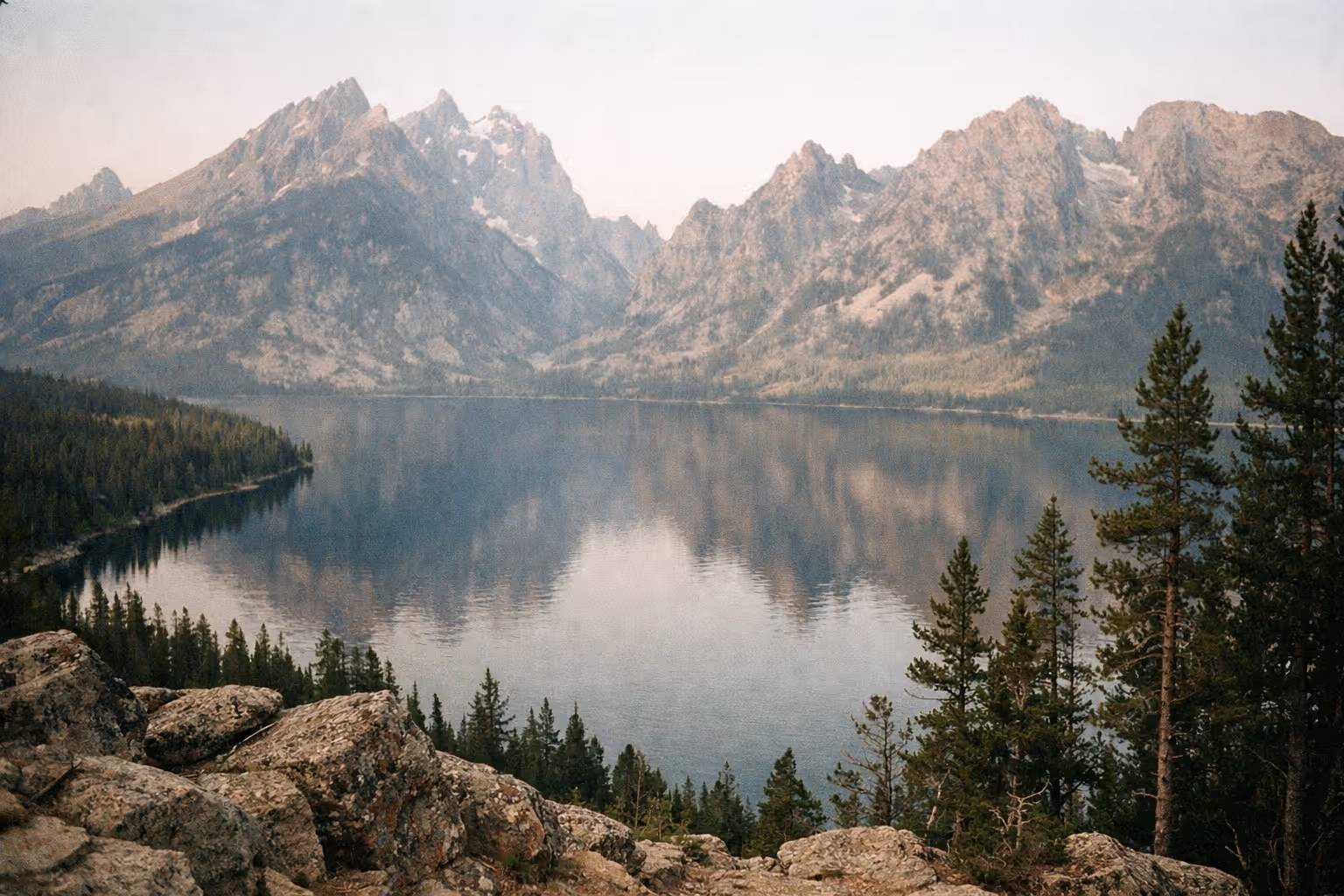
The parking lot at Jenny Lake is often full before 9:00 a.m. in July, and that single fact tells you most of what you need to know about the best things to do in Grand Teton: timing beats everything. This is the 9th most visited national park in the country, which drew 3,628,222 recreation visits in 2024, its second busiest year on record (2). The three areas below - Jenny Lake, Cascade Canyon, and Mormon Row - cover the full range, from a 30-minute lakeshore walk to a 13-mile canyon day. What follows is what each one actually involves, how long it takes, and the mistakes that turn a good day into a frustrating one.
How to Get to Grand Teton National Park
Grand Teton is accessible by car via US Highway 191/287, which runs north-south through the park. The nearest major airport is Jackson Hole Airport (JAC), about 15 miles south of the park entrance, with seasonal direct flights from several US hubs. Renting a car is essential for flexibility, especially to reach sites like Mormon Row and Cascade Canyon. Public transportation options are limited, so plan accordingly.
✓ Pros
- Three distinct experiences packed into a compact geographic area
- An activity spectrum from 30-minute walks to 13-mile canyon days
- Mormon Row's sunrise requires almost no hiking
- The Jenny Lake shuttle boat makes Hidden Falls accessible to most fitness levels
- Wildlife (pronghorn, elk, bears) visible without any backcountry access
✗ Cons
- All three have parking pressure by mid-morning in peak season
- Cascade Canyon is a full-day commitment that's easy to underestimate
- Altitude between 6,800 and 7,800+ ft (2,073-2,377 m) catches many visitors off guard
- July crowds are significant; timing your day around them isn't optional
- Afternoon thunderstorms can cut long hikes short without an early start
What Grand Teton Actually Involves Before You Go
Grand Teton is a high-altitude, high-traffic park where timing your arrival matters more than any single attraction you pick. In 2024 the park recorded 3,628,222 recreation visits, its second-busiest year ever after 2021 (2). The NPS’s own summer figures indicate high daily visitation, contributing to popular lots filling early and trail junctions feeling congested by mid-morning.
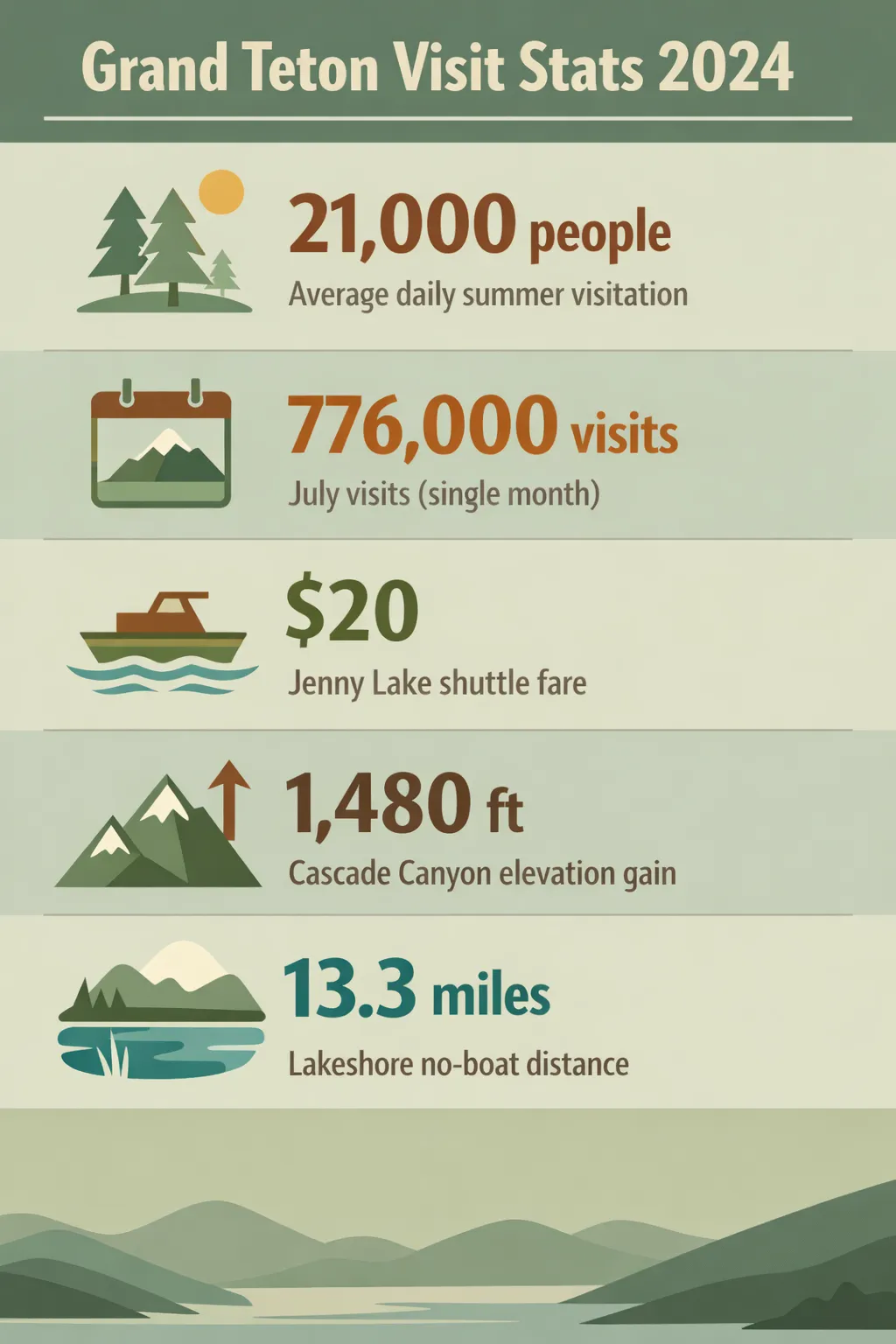 Key Grand Teton figures: 21,000 daily summer visitors, 776,000 July visits, $20 shuttle fare, 1,480 ft gain, 13.3 miles no-boat hike.
That crowding has a simple fix. The NPS explicitly recommends arriving before 9 a.m. or after 4 p.m. to avoid parking shortages, warning that midday spots are “difficult to find during peak hours.” Treat that as the backbone of your plan, not a nice-to-have.
Altitude is the other thing guides quote in numbers but rarely translate. The areas covered here sit between roughly 6,800 and 7,840 ft (2,073-2,390 m). If you’re coming from sea level, expect to fatigue faster and dehydrate quicker than the same distance would cause at home. Plan for a pace 20-30% slower than usual on the longer hikes, carry more water than feels necessary, and eat before you think you’re hungry. This isn’t dramatic - it’s physics, and it’s the single most common reason flatlanders describe Cascade Canyon as “harder than expected.”
Best month to visit: The NPS lists May through September as the most popular months, with all roads and facilities open in summer. July is the peak - one visitor guide reports over 776,000 visits in that single month alone. June is a lighter-crowd option with most facilities open. September is the strongest overall compromise: crowds thin noticeably after Labor Day, the elk rut brings active wildlife, weather stays stable, and the high trails remain snow-free. May and October are increasingly viable shoulder options as trail use has climbed roughly 16% over the past decade, though the crowd pressure stays concentrated in July.
How many days do you need? One day is enough to do one area properly - realistically Jenny Lake plus Cascade Canyon, with Mormon Row as a pre-dawn add-on. Two days lets you spread that out and add a scenic drive or a different trail without rushing. More on both frameworks later.
One logistics note: no special permit is needed for any of the day hikes here. If you want to camp overnight in the backcountry at Lake Solitude or beyond, you’ll need an NPS backcountry permit booked through Recreation.gov. Day hikers walk in freely on a standard park entrance pass.
Jenny Lake: Three Ways to Experience It
Jenny Lake is the park’s highest-demand single location, and the boat-versus-hike decision is the key logistical choice that shapes your whole day. The parking lot fills before 9:00 a.m. in peak season, so arrive early regardless of which route you pick. From there, the lake works at three different effort levels.
Easy - lakeshore strolls (1-3 miles / 1.6-4.8 km round trip). Flat, minimal elevation, well-suited to families and less-mobile visitors. You get the water and mountain backdrop without committing to a full loop. The water is a clear alpine blue, and the peaks rise almost straight off the far shore.
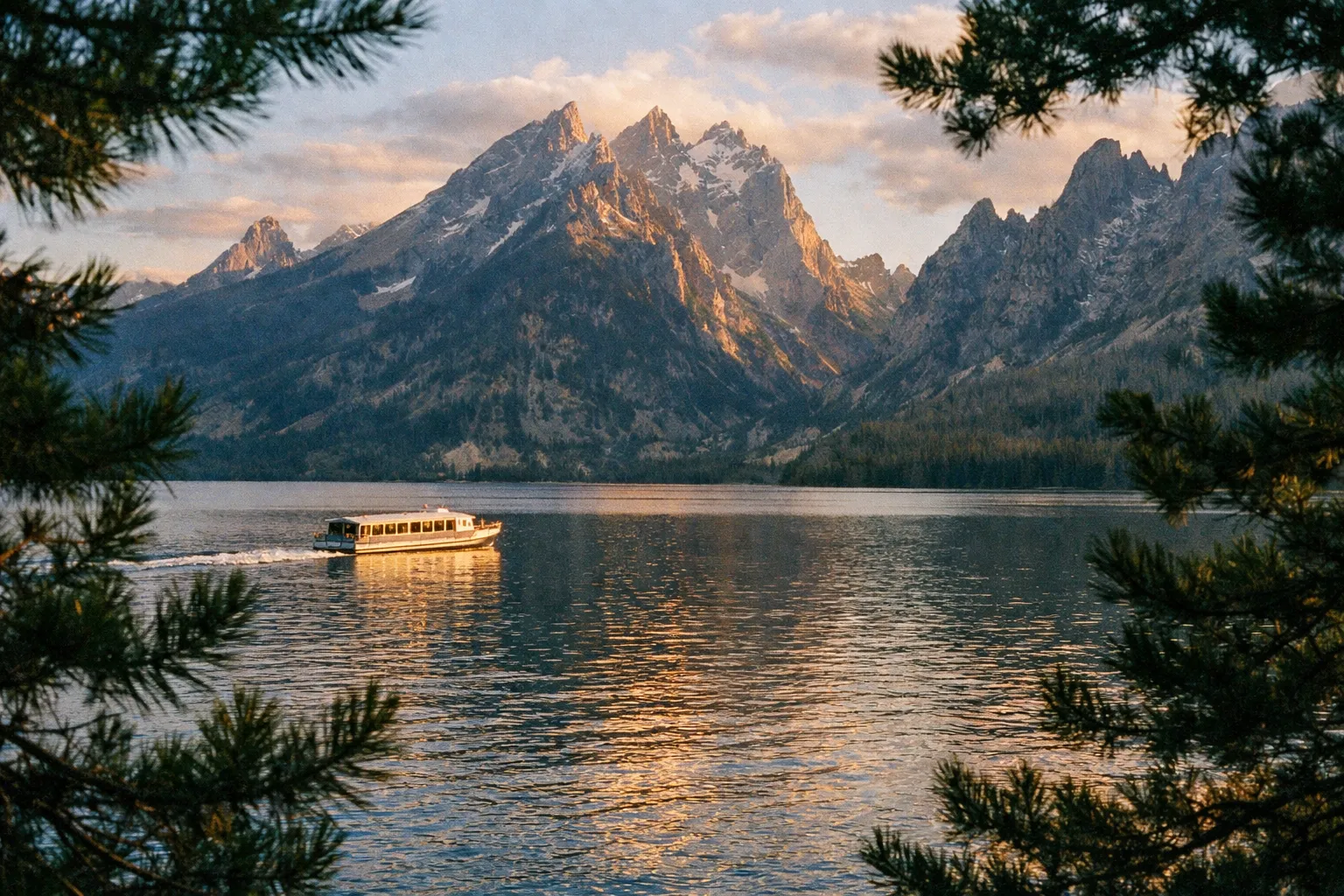
Moderate - Hidden Falls and Inspiration Point via the shuttle boat (roughly 3-5 miles / 4.8-8 km total). The boat drops you on the west shore, cutting out about 2 miles of lakeshore walking each way. The only real climb is the steep 0.5-mile (0.8 km) push to Inspiration Point. Trekking poles earn their keep on the descent here.
Longer - the full Jenny Lake loop (7.5 miles / 12 km, 3-4 hours). Suits active beginners and connects directly to Cascade Canyon for those who want more.
Jenny Lake Route Options at a Glance
| Lakeshore stroll (partial) | Hidden Falls + Inspiration Point (boat-assist) | Full Jenny Lake loop | |
|---|---|---|---|
| Distance | 1-3 mi (1.6-4.8 km) | 3-5 mi (4.8-8 km) | 7.5 mi (12 km) |
| Elevation Gain | Minimal | about 400 ft (122 m) | Rolling |
| Time | 30 min-1.5 hr | 2-4 hr | 3-4 hr |
| Difficulty | Easy | Moderate | Moderate |
| Best For | Families, low mobility, short on time | Most fitness levels wanting the payoff | Stronger hikers, canyon connection |
The smartest move is taking the boat one way and hiking the lakeshore the other. It distributes crowds, varies the scenery, and yields a 9-10 mile (14-16 km) day if you extend into the canyon. Adult round-trip shuttle fares run $20, one-way $12, with children and seniors discounted and kids under 2 riding free, per the U.S. National Park Service (Jenny Lake West Shore Boat Dock page). The boat operates only in the main summer season, so June through September is your practical window for the boat-assist routes.
One warning that trips up people every week: missing the last boat back forces an extra 2-4 miles (3.2-6.4 km) along the lakeshore. Check the schedule at the dock before you head up the canyon.
Hidden Falls and Inspiration Point: What to Expect on the Trail
From the west-shore boat landing, it’s a short, mostly flat approach to Hidden Falls - a genuinely easy stretch that anyone off the boat can handle. Then the trail pitches up for the 0.5-mile (0.8 km) climb to Inspiration Point. This is where most casual hikers turn around, and it’s also where Cascade Canyon properly begins.
The view from Inspiration Point looks back over the lake and out toward Jackson Hole - the kind of view that makes you stop walking. Bring trekking poles for the descent; the rocky steps are hard on knees. And carry bear spray. This is active bear country, and Jenny Lake is no exception.
The insider move: push at least 1 mile (1.6 km) past Inspiration Point into Cascade Canyon. It’s 25-30 minutes on a gentle grade, and it delivers dramatically closer Teton peak views for relatively little extra effort. If you have the legs, don’t skip it.
Cascade Canyon: Distance, Difficulty, and Where to Turn Around
The standard boat-assist hike to the Forks of Cascade Canyon runs 9.4 miles (15.1 km) round trip with 1,480 ft (450 m) of elevation gain, rated moderately strenuous and taking 5-9 hours depending on pace. This is a full day, not a half-day, and underestimating it is the most common mistake people make here.
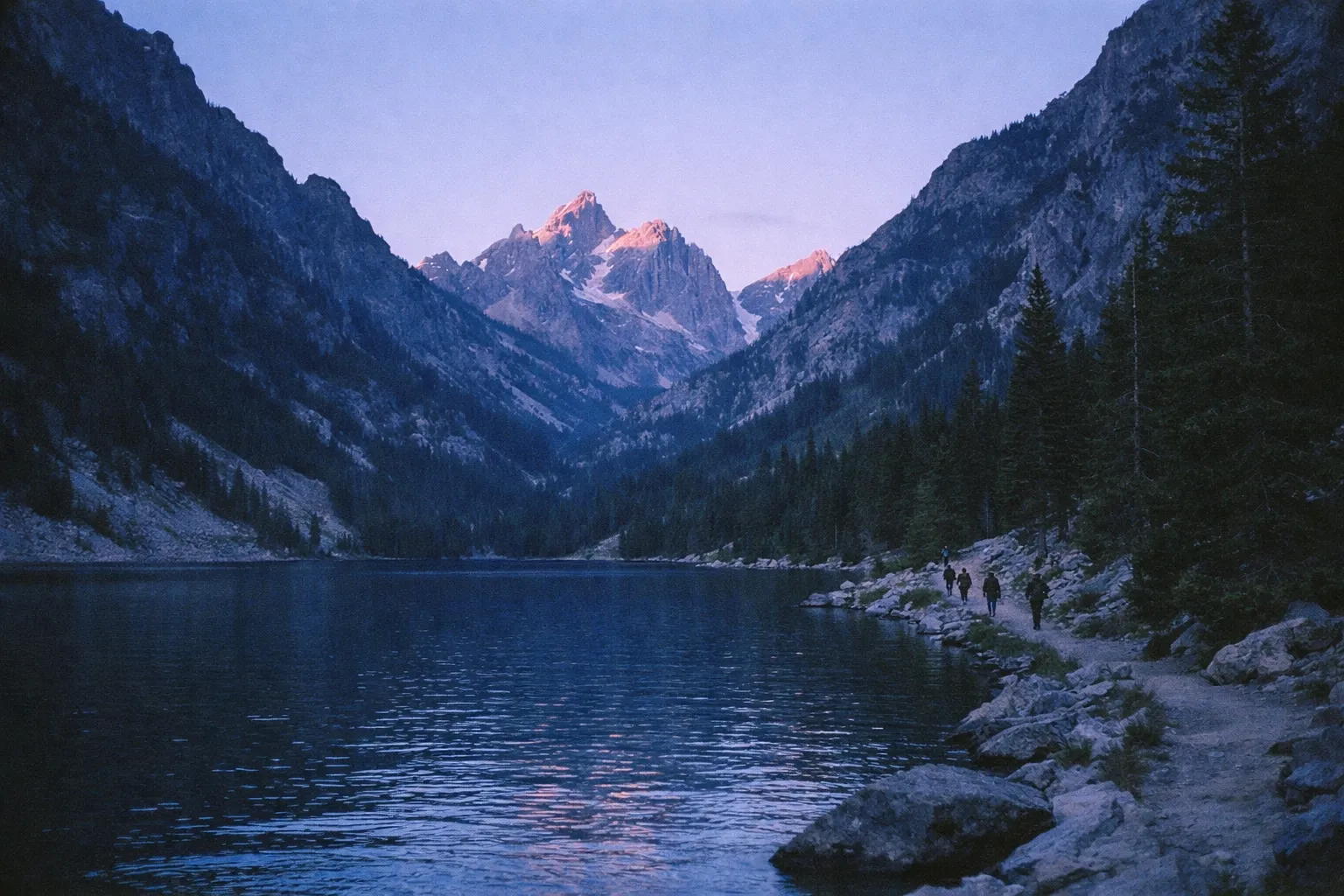
The trail climbs from about 6,800 ft (2,073 m) at the lake to roughly 7,840 ft (2,390 m) at the Forks. If you’re from sea level, you’ll feel it - plan for that slower pace and drink more water than you think you need. Visitor reports consistently describe the 10-mile version as “doable but very tiring,” especially for those who start late and walk back in the afternoon sun.
If the boat is full or you’d rather skip it, the no-boat option via the lakeshore is 13.3 miles (21.4 km) round trip with 1,720 ft (520 m) of gain, rated strenuous. Worth knowing about, but it adds significant time and effort - only take it deliberately.
Two extensions exist for strong hikers with an early start:
- Lake Solitude adds about 2.7 miles (4.3 km) and 1,000+ ft (305+ m) above the Forks, reaching 9,024 ft (2,750 m).
- Hurricane Pass is a 20-mile (32 km) round trip with 4,120 ft (1,256 m) of gain - expert-level, a full committed day.
Afternoon thunderstorms build fast in the Tetons. For a route that takes 5-9 hours, starting before 8:00 a.m. isn’t a crowd tip - it’s how you avoid being above treeline when the weather turns. No permit is required for day use in Cascade Canyon; only overnight backcountry camping needs one via Recreation.gov.
Pack accordingly: more water than you think, food, layers, a rain shell even on a clear morning, bear spray, and a map. Trekking poles help on the steep Inspiration Point section in both directions.
The Boat-Assist Route Step by Step
The Boat-Assist Route Step by Step
5-9 hoursFollow these steps to complete the standard Cascade Canyon hike with boat shuttle assistance.
- 1
Arrive early
Arrive at Jenny Lake parking before 8:00 a.m. to secure a spot and beat the crowds.
- 2
Take the shuttle boat
Take the shuttle boat across to the west shore.
- 3
Walk to Hidden Falls
Walk the flat approach to Hidden Falls (about 0.5 miles / 0.8 km).
- 4
Climb to Inspiration Point
Climb to Inspiration Point (about 0.5 miles / 0.8 km, steep).
- 5
Enter Cascade Canyon
Enter Cascade Canyon proper - the trail levels out significantly here.
- 6
Continue to the Forks
Continue to the Forks (about 4 miles / 6.4 km from the lake).
- 7
Assess your energy
Check the time and honestly assess your energy before deciding on any extension.
- 8
Return
Return via the lakeshore trail or catch the return boat - confirm the last departure time before you commit.
How Far Should You Actually Go?
Pick your turnaround before you start, not when you’re tired. Here’s the honest breakdown:
- Hidden Falls only: short and easy. Fine if you have kids or limited time.
- Inspiration Point: moderate, one steep climb, a strong payoff for the effort.
- 1 mile into the canyon: 25-30 extra minutes, much closer peak views, still manageable for most. This is the sweet spot.
- The Forks: full commitment, a 9-10 mile day, a real hike.
I’ve watched people make the decision at Inspiration Point with tired legs and two hours of canyon still ahead of them - it doesn’t end well. Decide before you leave the trailhead.
Lake Solitude and Hurricane Pass belong to experienced hikers who started early and packed properly. Name them, note the numbers, be realistic about whether that’s you today. There’s no shame in turning around a mile into the canyon with a great view and a comfortable walk back.
Mormon Row: Barns, Pronghorn, and the Best Sunrise in the Park
Mormon Row is a cluster of historic homesteads and barns from the late 1890s and early 1900s, now a protected historic district inside Grand Teton with the Teton Range as its backdrop. The John Moulton Barn and TA Moulton Barn are the most photographed structures in the park. According to the National Park Service, the district was added to the National Register of Historic Places in 1997, which makes it a protected cultural landscape, not just a scenic pullout.
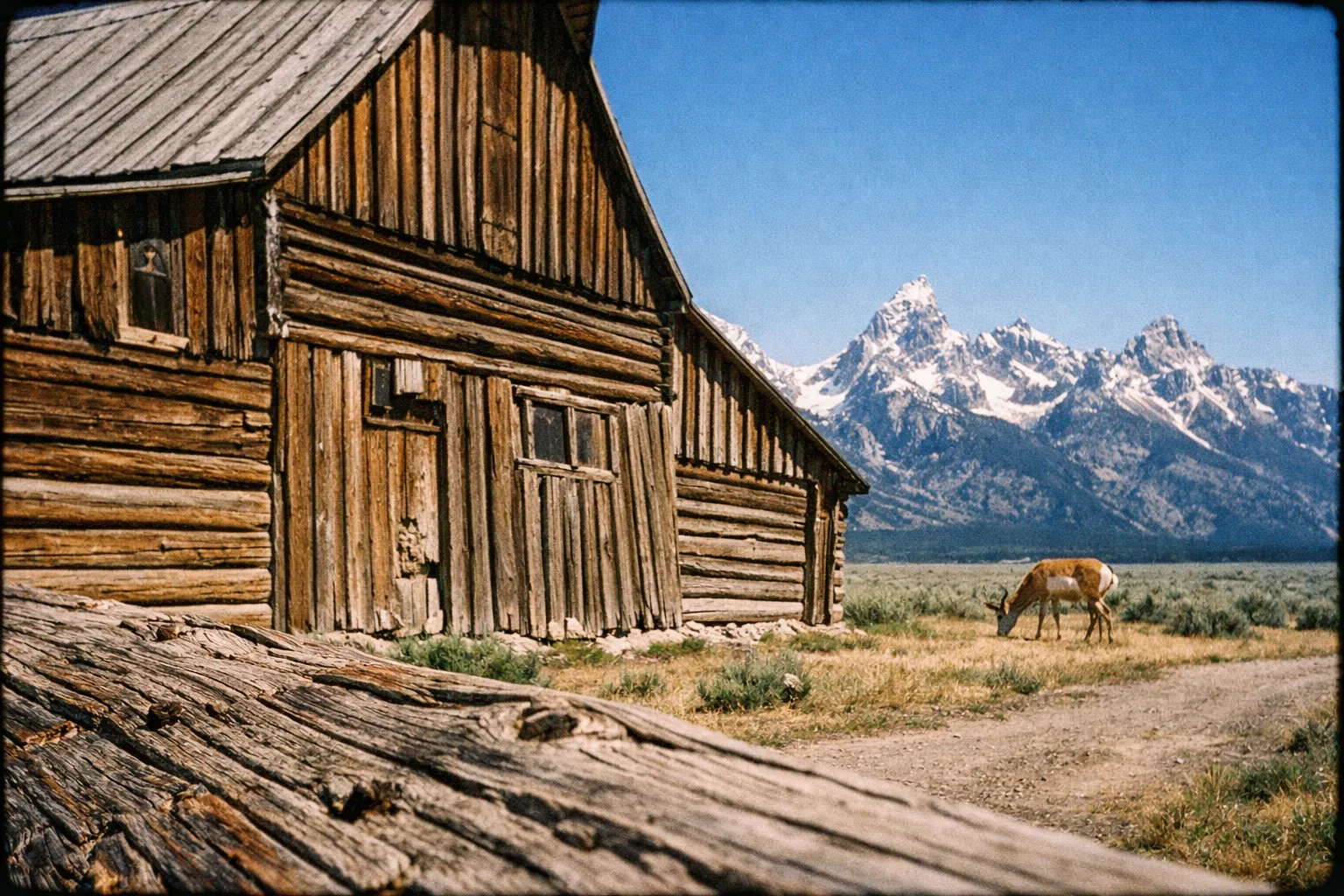
Sunrise is when this place earns its reputation. Plan for the window from civil twilight to about an hour after sunrise. That’s when alpenglow hits the peaks, traffic is minimal, and the limited parking hasn’t yet filled. Photographers routinely arrive pre-dawn, and the window closes fast once vehicles start rolling in.
The open sagebrush flats also make Mormon Row one of the better spots in the park for wildlife. Pronghorn are common, along with elk and the occasional bison at dawn and dusk, all within a short walk of the parking area. Bring a long lens and keep your distance.
One rule that carries real consequences: climbing on, entering, or moving props around the historic structures is prohibited, and the NPS will cite you for damaging or disturbing them. Photograph from the road and designated areas, and treat the barns as the fragile artifacts they are.
Logistically, Mormon Row sits off a side road from the main park highway with limited parking. Arrive early or accept a longer walk from overflow. The visit itself is short - 30 to 60 minutes covers it for most people - which makes it a natural pairing with an early Cascade Canyon start or a scenic drive.
Planning Your Days Around Things to Do in Grand Teton
Building a good day in Grand Teton comes down to sequencing three time-sensitive things: the Mormon Row sunrise, the Jenny Lake parking crunch, and the Cascade Canyon storm window. Get the order right and everything else falls into place.
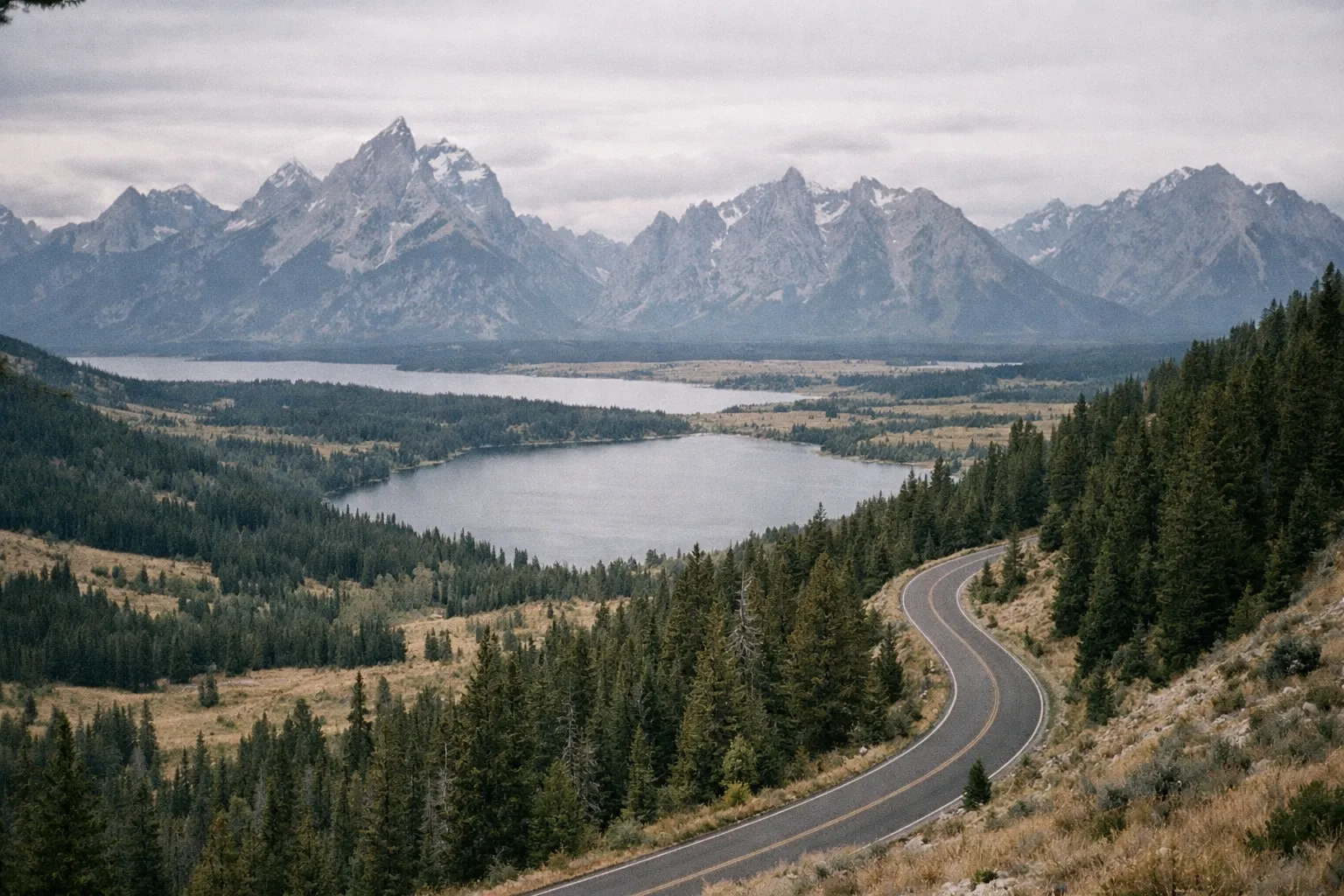
The 1-day framework. Jenny Lake plus Cascade Canyon to the Forks is a full day on its own. Start before 8:00 a.m., take the boat one way, hike the canyon, and return via the lakeshore. Mormon Row slots in perfectly as a pre-dawn add-on before you drive to Jenny Lake - it’s a short detour and the timing aligns with the sunrise light anyway.
The 2-day framework. Day one is pre-dawn Mormon Row, then either the Jenny Lake loop or Cascade Canyon. Day two is slower: a relaxed Jenny Lake exploration, the 42-mile scenic loop drive, or a different trail like Taggart Lake or String Lake for variety and a different angle on the range.
Parking strategy. The Jenny Lake lot fills before 9:00 a.m. in July and August; Mormon Row saturates by mid-morning too. The NPS advice to arrive before 9 a.m. or after 4 p.m. is the whole game. Arrive early or use overflow and walk in.
Shoulder season. September weekdays and early October offer meaningfully lighter crowds while the high trails stay accessible, which makes a two-day plan far more comfortable than the same itinerary attempted in July.
What to skip if you’re short on time. The no-boat lakeshore approach to Cascade Canyon adds 4 miles (6.4 km) round trip. Fine if you specifically want the mileage, unnecessary if the clock is tight. Take the boat and save your legs for the canyon.
A Practical 1-Day Sequence
- 5:30-6:00 a.m. - Mormon Row for sunrise and pronghorn
- 7:30-8:00 a.m. - Jenny Lake parking (arrive before the lot fills)
- 8:00 a.m. - First boat across; Hidden Falls, Inspiration Point, into the canyon
- Midday - Forks of Cascade Canyon, or turn around at your chosen point
- Afternoon - Return boat or lakeshore trail; note the last boat time
- Evening - Scenic drive or rest in Jackson
A Practical 2-Day Sequence
- Day 1 - Mormon Row pre-dawn, then Jenny Lake and Cascade Canyon to the Forks (a full day)
- Day 2 - Slower Jenny Lake loop or a String Lake paddle, the scenic drive, and an optional Taggart Lake hike for a different Teton perspective
Gear, Safety, and Common Mistakes Worth Avoiding
Most bad days in Grand Teton trace back to five avoidable errors: no bear spray, ignoring altitude, ignoring the afternoon storm pattern, missing the last boat, and underestimating Cascade Canyon.
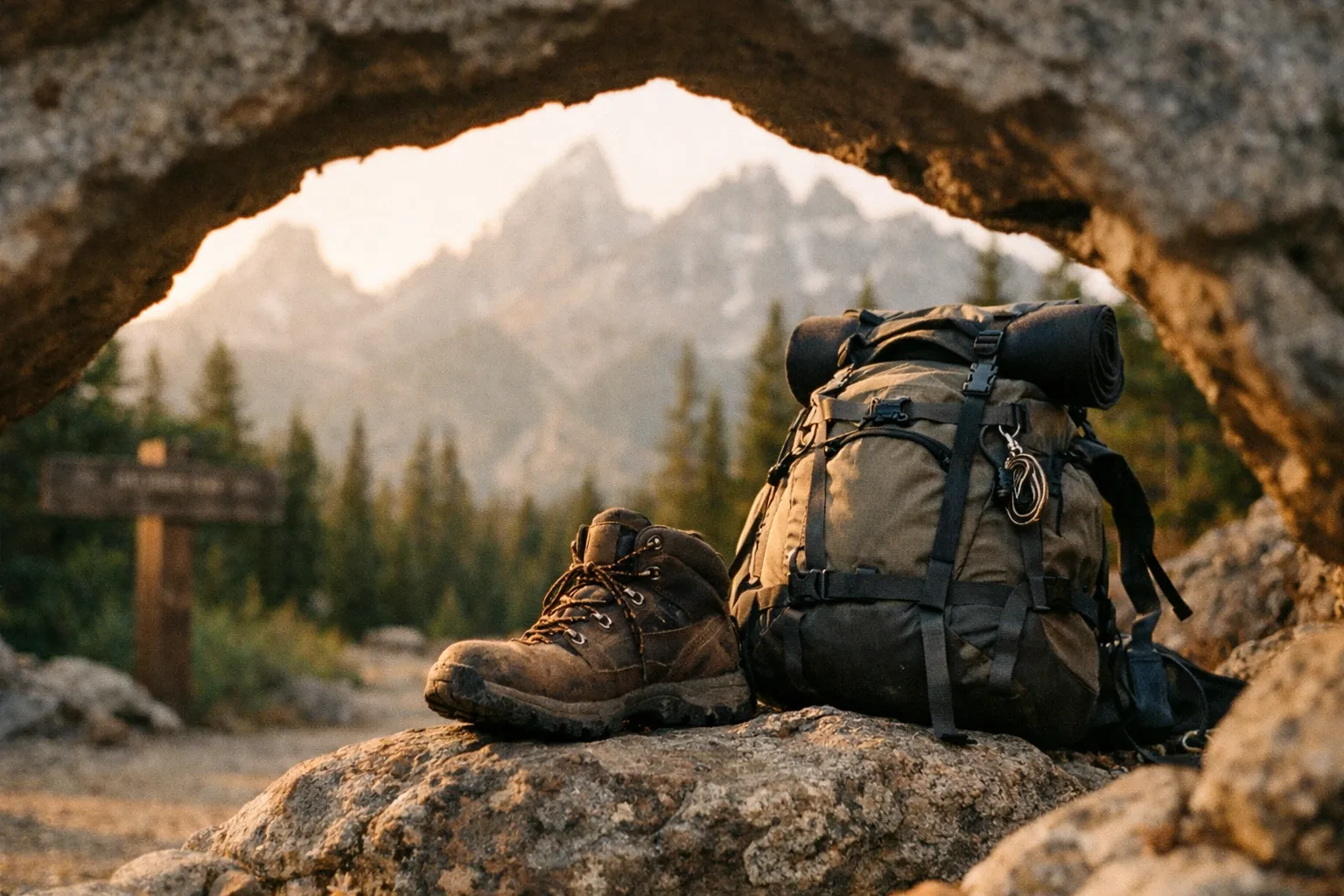
Bear spray. Carry it and know how to use it. Cascade Canyon and Jenny Lake are active bear country. The NPS requires staying at least 100 yards (91 m) from bears and wolves and 25 yards (23 m) from other wildlife - about eight bus lengths and two bus lengths respectively. These are minimums, not suggestions.
Altitude and pacing. At 6,800-7,840 ft (2,073-2,390 m), you’ll tire and dehydrate faster than the same distance at sea level. Plan a slower pace, more water, and more food than you’d normally pack. This single adjustment prevents most “harder than expected” complaints.
Afternoon thunderstorms. The Tetons build storms fast. For any route taking 5+ hours, an early start is a safety margin, not just a crowd-beating trick. Carry a rain shell even under a clear morning sky.
The boat schedule. Missing the last shuttle back to the east shore adds 2-4 miles (3.2-6.4 km) of lakeshore walking at the end of a long day. Check the departure time at the dock before you head into the canyon.
Underestimating Cascade Canyon. Plenty of visitors assume the canyon is similar to the Hidden Falls and Inspiration Point section. It adds 4.5 miles (7.2 km) of trail beyond Inspiration Point, and the full route runs 9-13 miles (14-21 km) depending on your approach. Know which version you’re doing before you start.
Mormon Row structure rules. Don’t climb on or enter the historic barns. Citations are issued. Shoot from the road and designated areas.
One more note on the “no permit” trap: because day hiking in Cascade Canyon requires no permit, some visitors treat it as a casual, low-risk stroll and skip the bear spray or proper layers. That assumption is exactly backwards. No permit means no gatekeeping, not low risk.
Frequently Asked Questions
- How much does the Jenny Lake shuttle boat cost?
- Adult round-trip shuttle fare is $20, and one-way is $12, with discounts for children and seniors and free rides for kids under 2, per the U.S. National Park Service (Jenny Lake West Shore Boat Dock page).
- Can you hike Cascade Canyon without taking the boat?
- Yes, but the no-boat route is 13.3 miles round trip with 1,720 ft gain, adding significant time and effort compared to the boat-assisted hike.
- Are trekking poles necessary for these hikes?
- Trekking poles are recommended for the steep Inspiration Point descent and can help reduce knee strain on rocky steps.
- Is it possible to see wildlife without backcountry camping?
- Yes, pronghorn, elk, and bears can be seen near Jenny Lake, Cascade Canyon, and Mormon Row without backcountry access.
- What happens if you miss the last boat back at Jenny Lake?
- Missing the last boat adds 2-4 miles of lakeshore walking, which can be exhausting after a long day of hiking.
- When is the best time to photograph Mormon Row?
- Civil twilight to about an hour after sunrise offers the best light and minimal traffic for photographing Mormon Row barns.
What Actually Determines Whether the Day Goes Well
Timing and an honest read on your own fitness decide almost everything here. Arrive at Mormon Row before sunrise and Jenny Lake before 8:00 a.m. Pick your Cascade Canyon turnaround before you start walking, and if you have the legs, don’t skip that first mile past Inspiration Point - it’s the best view-per-effort trade in the park. Carry bear spray, more water than feels necessary, and a rain shell regardless of the morning sky.
If you have any flexibility on when to come: September quietly solves most of the logistical problems in this guide at once - lighter crowds, stable weather, active wildlife, and fully open trails.