Going-to-the-Sun Road crosses the Continental Divide at Logan Pass, and most first-timers don’t realize how much planning Glacier National Park demands before they even get near it. The best things to do in Glacier National Park - driving the road, hiking the Highline, reaching Grinnell Glacier - each turn on a different constraint, and the constraints changed this year. Vehicle reservations are gone; a 3-hour parking cap at Logan Pass and a ticketed shuttle took their place. Most guides still describe the old system. Here’s what the park really involves, and how to organize your time so you’re not circling a full parking lot or scrambling for a shuttle ticket that sold out the night before.
✓ Pros
- One of North America's most dramatic alpine drives, accessible by car or a $1 ticketed shuttle
- Trails range from an easy 1-mile cedar boardwalk to an exposed 11.8-mile ridge traverse
- Wildlife like mountain goats, bighorn sheep, bears, and moose are often visible without a backcountry permit
- No vehicle reservation needed at any entrance in 2026 - you just show up with an entrance pass
- Many Glacier offers some of the best glacier and lake scenery in the lower 48 states
✗ Cons
- Logan Pass parking is capped at 3 hours from July 1, which rules out most real hikes unless you take the shuttle
- Many Glacier's expanded parking still fills fast on peak days, and NPS may temporarily divert vehicles once the valley reaches capacity
- High-elevation trails like Highline and Grinnell stay snow-covered well into July
- Logan Pass parking fills up by 7-8 a.m. on busy summer days
- The Logan Pass shuttle is now ticketed ($1, Recreation.gov only) and can sell out, so it needs booking rather than showing up
Getting to Glacier National Park
Most visitors fly into Glacier Park International Airport (FCA) in Kalispell, about 30 miles from the West Glacier entrance - the closest commercial airport to the park. Missoula (MSO) is roughly 150 miles south and a common alternative with more flight options. From Kalispell, take U.S. Highway 2 east to West Glacier; from Missoula, U.S. 93 north to Highway 2 east. If you’re driving from Seattle, budget about 7-8 hours; from Salt Lake City, closer to 9-10 hours. Amtrak’s Empire Builder stops at West Glacier and East Glacier Park stations seasonally, which is a legitimate option if you’re not renting a car and plan to rely on park shuttles. There is no public transit from Kalispell to the park entrance - a rental car or shuttle transfer is required.
What You Need to Know Before You Arrive
Every visitor needs a park entrance pass, and for 2026 that is the only thing standing between you and the road: no vehicle reservations are required anywhere in the park. The National Park Service doesn’t publish a single flat fee covering all pass types, so check the current entrance fee on the NPS Glacier website before budgeting.
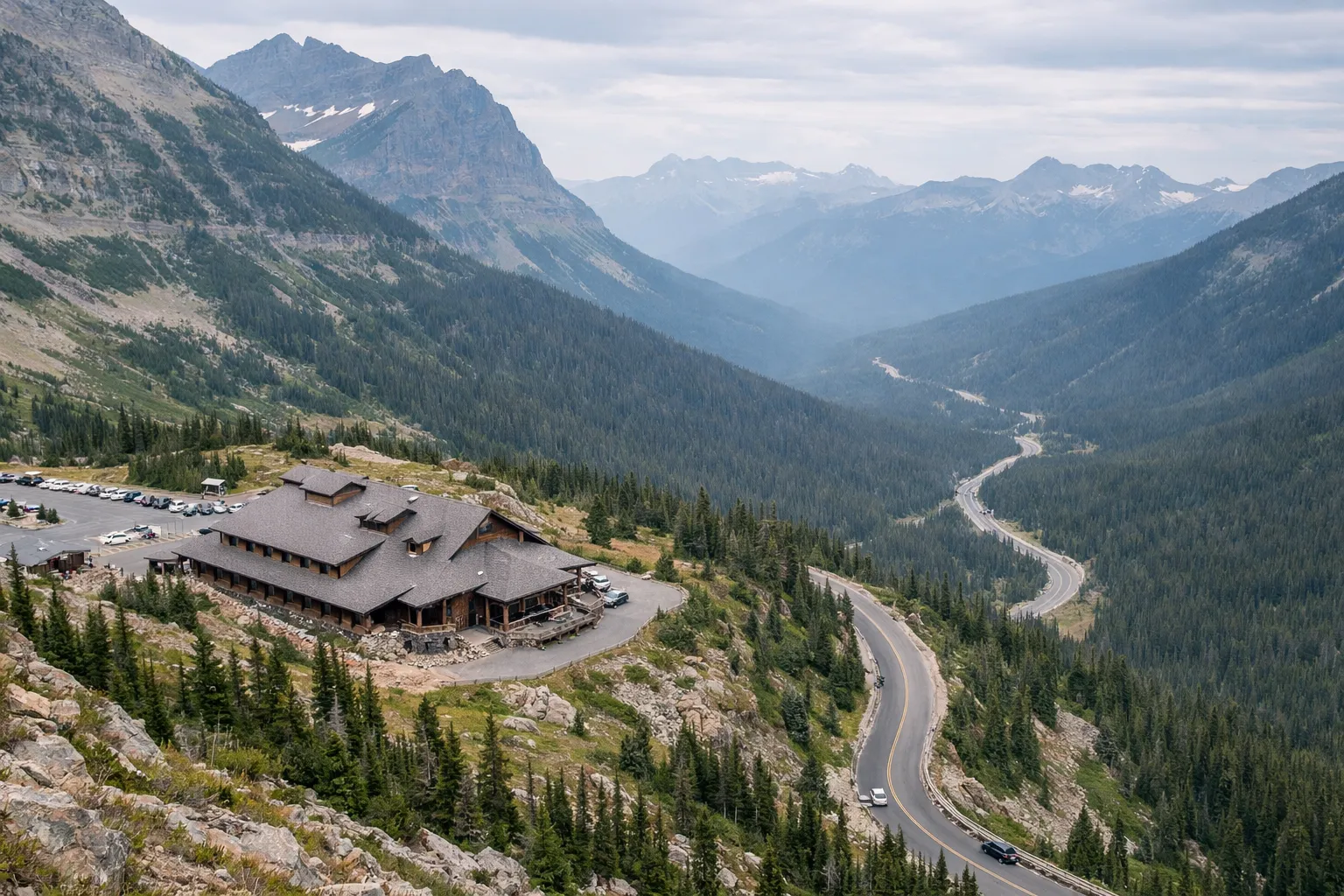
This is where most guides will steer you wrong, because most of them still describe the old system. Through 2025, Glacier ran a timed-entry vehicle reservation pilot: one reservation per vehicle to pass the Apgar Village checkpoint between 7 a.m. and 3 p.m. on the west side, June 13 to September 28 (1). Planning advice built around booking a Recreation.gov slot, entering before 7 a.m. to dodge the checkpoint, or using St. Mary as a “loophole” entrance all comes from that era.
That pilot is over. For 2026 the park dropped vehicle reservations entirely, at every entrance, and manages congestion differently: at Logan Pass with a three-hour parking limit and a ticketed shuttle, and in Many Glacier, Two Medicine and the North Fork by temporarily diverting vehicles when a valley or its parking fills. You no longer book anything to drive in - you just arrive early enough that the lot has room.
One more hard limit: between Avalanche Creek and Rising Sun, vehicles can’t exceed 21 feet long, 8 feet wide, or 10 feet tall. RVs and vehicles towing trailers are banned on that stretch. The lanes are narrow and the drop-offs are real. This is not a suggestion.
Seasonally, Going-to-the-Sun Road usually fully opens in late June and stays open to mid-October. In 2025, it opened June 16 but had temporary closures around June 20-23 due to rain, snow, and mudslide risk. Plan for mid-June through mid-September, with July and August as peak crowd months. Always check current NPS road status before leaving your hotel.
How Logan Pass Access Works Now
The constraint moved from the entrance gate to the parking lot. Starting July 1, weather permitting, parking at Logan Pass is capped at three hours. That is enough for the visitor center, the Hidden Lake Overlook boardwalk, and a long look at the Continental Divide. It is not enough for the Highline, Hidden Lake to the shore, or any hike you’d call a day out.
For anything longer, take the shuttle. The free hop-on service is gone: the Logan Pass shuttle now runs as a ticketed express service at $1 per person (ages 2 and up - the dollar covers the processing fee), July 1 through September 7, 2026. Tickets sell on Recreation.gov only, with a portion released 60 days out from May 2 at 8 a.m. MDT on a rolling basis and the remainder at 7 p.m. MDT the night before, from June 30. No on-site sales.
The practical read: if your Logan Pass plan fits in three hours, drive and park early. If it doesn’t, the $1 ticket is the difference between finishing your hike and jogging back to move your car.
Things to Do in Glacier National Park: Driving Going-to-the-Sun Road
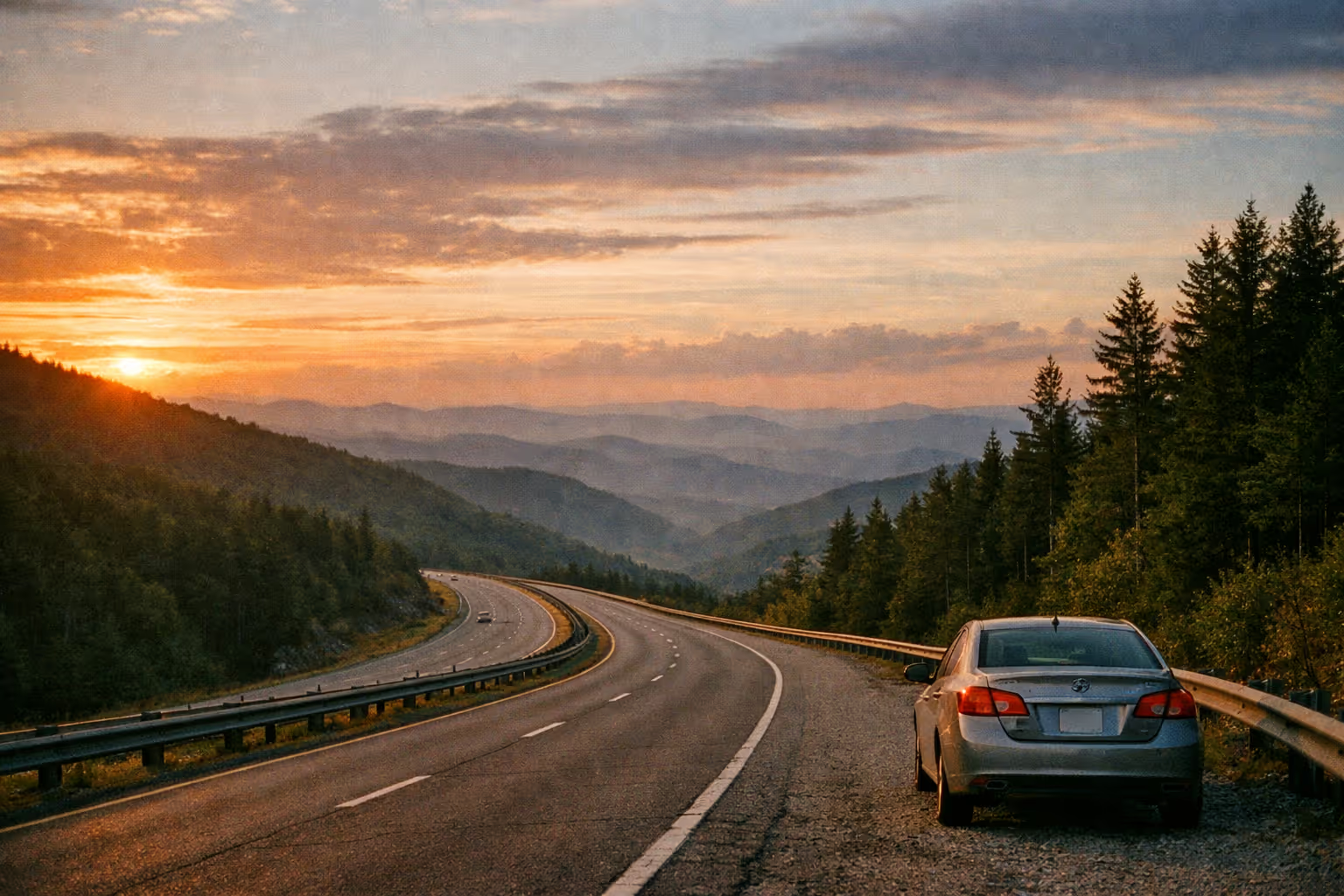
Going-to-the-Sun Road runs about 50 miles from West Glacier to St. Mary, crossing the Continental Divide at Logan Pass at roughly 6,646 feet - one of the highest paved roads in the region. Of all the things to do in Glacier National Park, this drive is nearly everyone’s reason to visit, and it can easily eat your whole day if you don’t plan carefully.
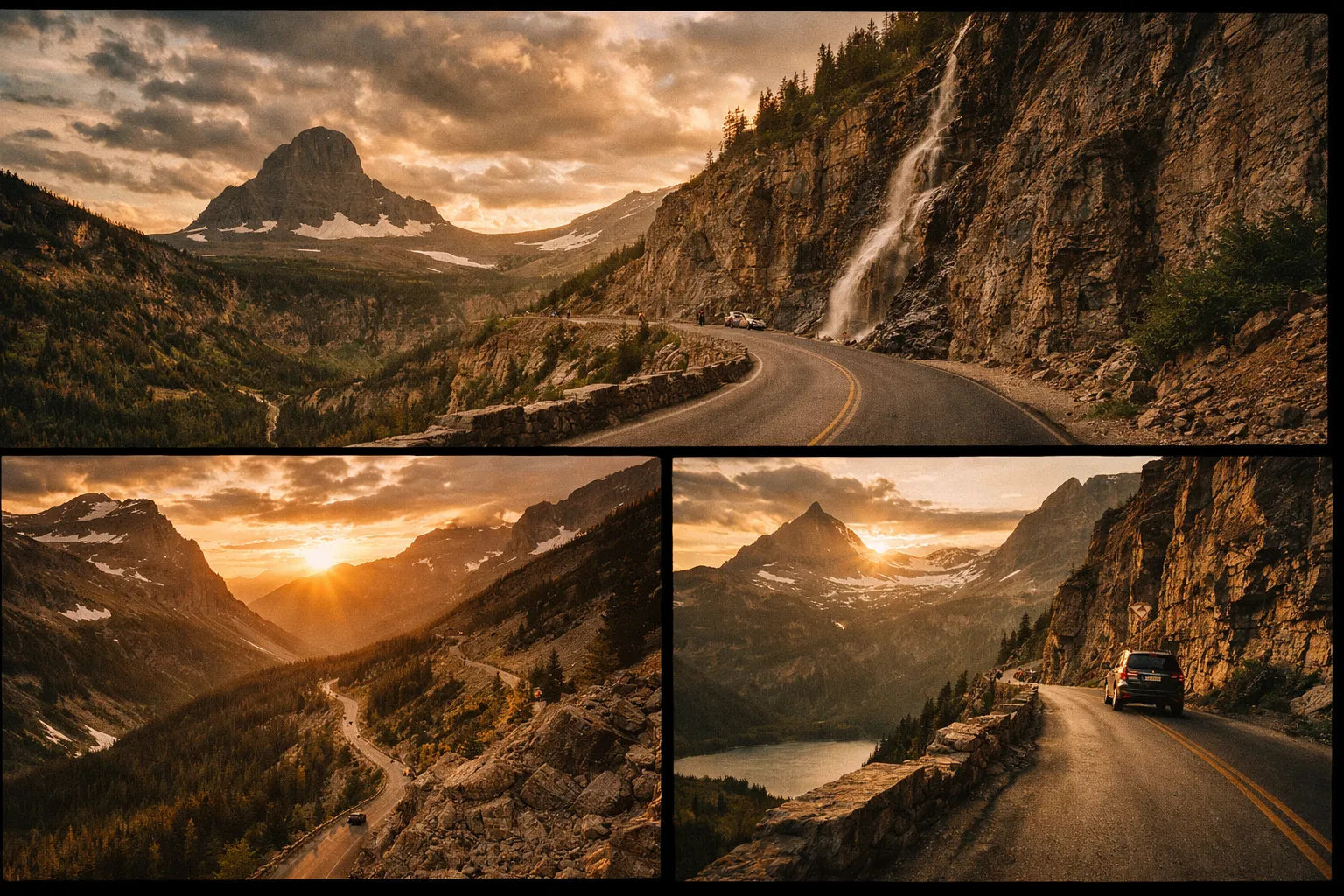
Speed limits are 40 mph on lower sections and 25 mph in alpine stretches. But posted limits aren’t your real travel time. The park suggests at least 2-3 hours one-way, which is optimistic once you factor in traffic, wildlife jams, and construction delays in July and August. Add short walks at Logan Pass, Trail of the Cedars, and a few pullouts, and you’re looking at 4-6 hours end to end. Don’t try to stack a long hike on the same half-day you drive the road - pick one or the other.
Photographers should aim for the edges of the day. Sunrise along Lake McDonald and at Logan Pass delivers the best light and the fewest crowds. Mid-day light is harsher but better for spotting the road’s steep edges. Entering West Glacier before 7 a.m. gives you light traffic, good light, and a parking spot while there are still parking spots.
If you shuttle the full road out and back, budget around 7 hours including transfers. The park calls that a full-day commitment, not an add-on.
Key Stops Along the Route
Ranked by whether they’re worth the detour:
- Lake McDonald - worth prioritizing. The park’s largest lake at about 10 miles long and up to 464 feet deep, with a colorful cobble shoreline near Apgar. Dawn reflections are the reward; short walks leave from the lodge area.
- Logan Pass - the anchor of the whole drive. Continental Divide crossing, visitor center, Hidden Lake Overlook boardwalk, and the Highline trailhead. Parking fills by 7-8 a.m. in peak season, so this stop dictates your morning.
- Avalanche Creek / Trail of the Cedars - worth the stop, roughly 16 miles from West Glacier. It doubles as the Avalanche Lake trailhead, so you get an easy walk or a moderate hike from the same lot.
- Jackson Glacier Overlook - worth it and easy. One of the few places to see an active glacier from the road without hiking, and it’s a roadside pullout rather than a trailhead, so it costs you nothing but the stop.
- St. Mary Lake - worth it for afternoon light. Goose Island is the classic foreground shot postcards use.
- The Loop - more functional than scenic. A hairpin turn and the lower Highline trailhead; mostly a shuttle stop unless you’re hiking.
Choosing Your Entrance
With reservations gone, the entrance you pick is about traffic and driving time, not permission. West Glacier is the busiest and the closest to Kalispell; St. Mary, on the east, is quieter and puts you on the dramatic half of the road first. Two Medicine and Many Glacier are separate valleys with their own spur roads, not stops along Going-to-the-Sun.
The one thing that still rewards planning is the clock. Enter West Glacier before 7 a.m. and you get light traffic, the best light, and a real chance at a Logan Pass spot. Arrive mid-morning in July and you’re queueing behind everyone who read the same advice and ignored it.
Beginner-Friendly Hikes and Easy Walks
If your time is limited or you’re hiking with kids, Trail of the Cedars paired with Avalanche Lake is the strongest starting point. These trails offer alpine and forest scenery without demanding a full day, and they pair naturally with a drive on Going-to-the-Sun Road.
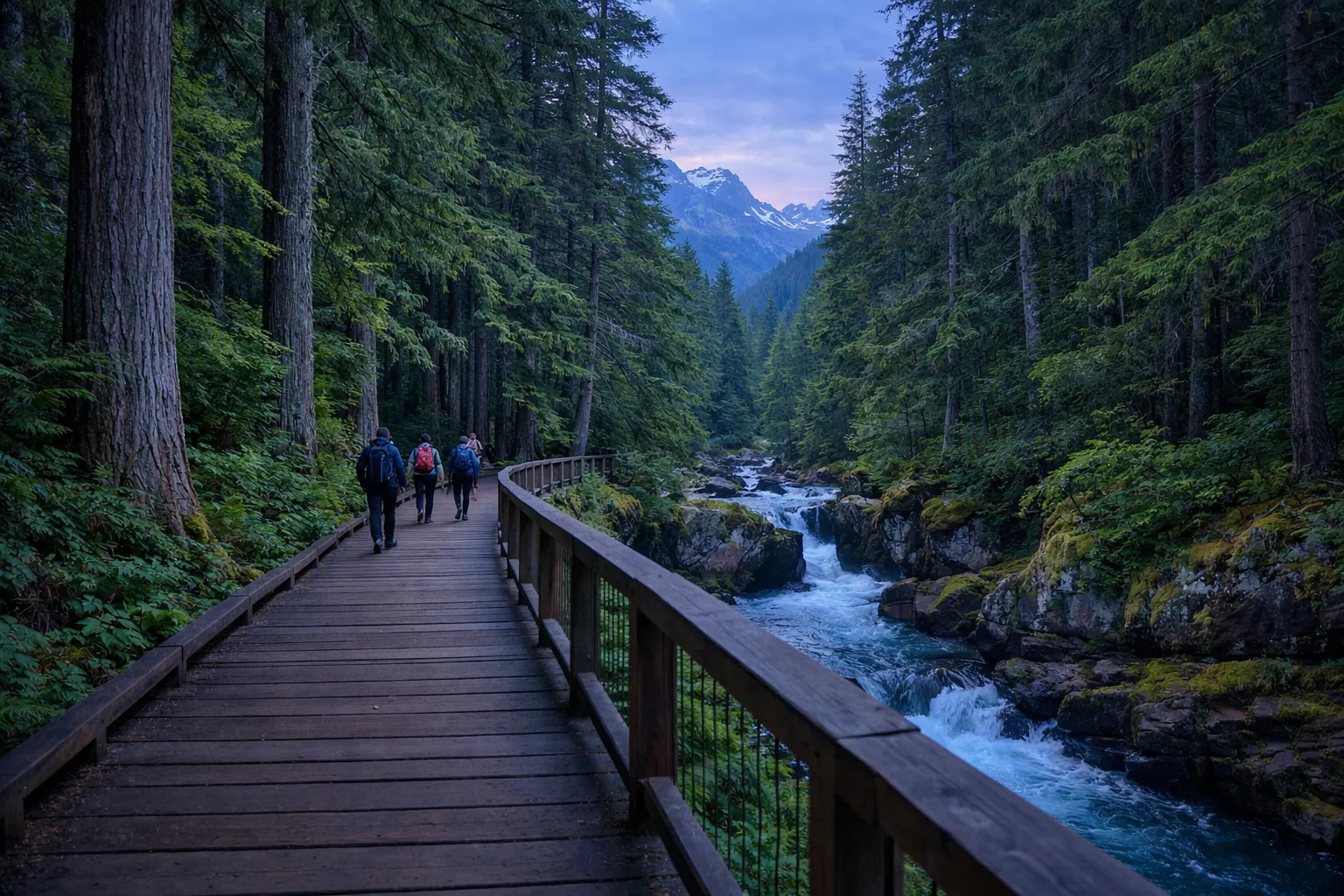
- Trail of the Cedars - about a 0.9-1.0-mile loop through old-growth cedar and hemlock near Avalanche Creek. It’s flat, mostly boardwalk-surfaced, and wheelchair accessible in sections. One of Glacier’s most family-friendly walks.
- Avalanche Lake - roughly 4.5 miles round trip from the Trail of the Cedars trailhead, with about 500 feet of elevation gain. Rated moderate by NPS, it ends at a cirque lake fed by several waterfalls and is one of the park’s most rewarding short hikes.
- Hidden Lake Overlook - about 2.7 miles round trip from Logan Pass Visitor Center with roughly 460 feet of gain. Mountain goats and bighorn sheep are regularly seen near the pass. Snow can linger into July.
- Logan Pass boardwalk area - even 20-30 minutes on the paved paths near the visitor center offers alpine meadow views and regular wildlife sightings. Worth it even if you don’t hike further.
Trail of the Cedars + Avalanche Lake
The trailhead sits at Avalanche Creek, accessible from the west side of Going-to-the-Sun Road. The Cedars loop alone is flat, shaded, and fine for all fitness levels. The Avalanche Lake extension adds roughly 3.5 miles and 500 feet of gain, following Avalanche Creek through forest to a lake ringed by cliffs and waterfalls.
Go early. The Avalanche parking lot fills fast in summer. I’ve seen the lot turn cars away well before 9 a.m. on a July weekday.
Hidden Lake Overlook from Logan Pass
You start high here - Logan Pass Visitor Center sits at 6,646 feet, so you skip the climb and go straight to the good part. The trail runs on boardwalk before moving to rockier tread, about 2.7 miles round trip with 460 feet of gain to the overlook. Note the overlook is the destination, not the lake itself; descending to the lake adds significant distance and elevation.
Mountain goats and bighorn sheep are common in the meadows here. The upper section can hold snow into July, so check NPS trail status before you go and bring footwear with grip.
The Highline Trail: Glacier’s Signature Ridge Walk
The Highline Trail runs about 11.8 miles one-way from Logan Pass to The Loop, with a net descent of roughly 2,500-2,800 feet. The NPS rates it as a strenuous full-day hike. This is the hike most visitors want and the one most likely to go wrong without planning - it’s an exposed ridge traverse with sustained views across the park’s alpine core.
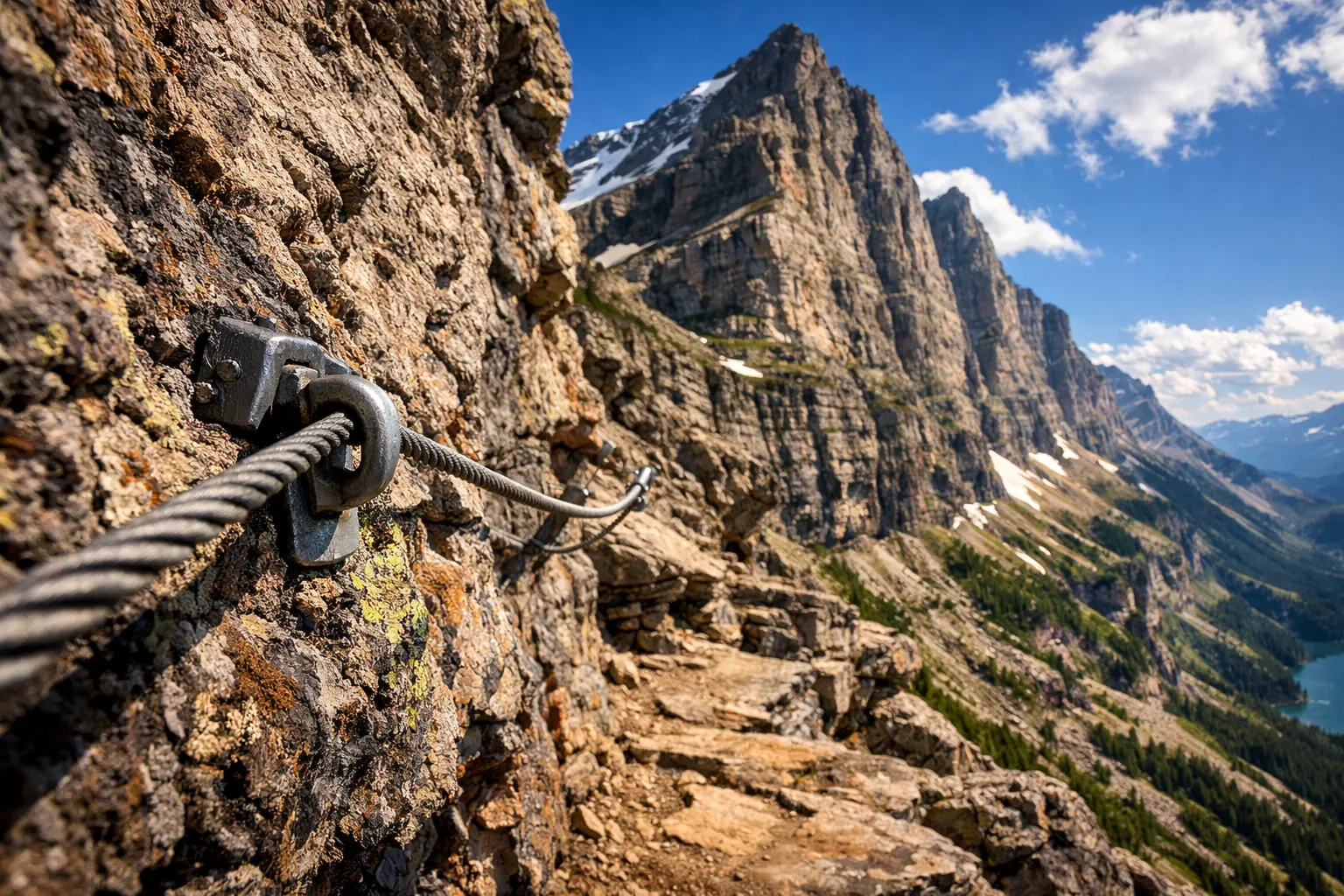
The first section is what people ask about. Within the first mile from Logan Pass, the trail follows a narrow ledge above Going-to-the-Sun Road with a fixed cable handline. It’s not technical, but the exposure is real, and the NPS warns it’s not recommended for anyone with a severe fear of heights.
Early season is another trap. Glacier’s trail reports stress the Highline often stays snow-covered and closed for days or weeks after the road opens, especially in June and early July. Check daily trail status and carry traction devices if conditions warrant.
Mountain goats, bighorn sheep, and grizzly bears are regularly seen along this route. Carry bear spray and know how to use it. On any Glacier trail, that’s non-negotiable - and the Highline is no exception.
Logistics for Hiking Highline One-Way
The classic route starts at Logan Pass and ends at The Loop, the lower trailhead on Going-to-the-Sun Road. Because it’s point-to-point, you need a way back to your car: a two-car shuttle, a ride, or the NPS shuttle.
For the 2026 season, the free hop-on shuttle is gone: the Logan Pass shuttle is ticketed, reservation-only through Recreation.gov, and runs July 1 through September 7, 2026, so coordinate your ticket timing before you start. Per the NPS 2026 shuttle schedule, the last westbound shuttle leaves Logan Pass at 7:30 p.m. (stopping at The Loop, Lake McDonald Lodge, and Apgar) and the last eastbound at 8:00 p.m. (stopping at Rising Sun and St. Mary). There is no other transportation back to your car if you miss it, so don’t plan around the final departure.
Plan 6-8 hours for the full traverse. Start early to beat afternoon thunderstorms and make sure you catch the last shuttle. Missing it at The Loop means a very long, steep walk back up.
Shortening the Hike
You don’t have to do all 11.8 miles to get the payoff. Turning around at Haystack Butte gives you about a 5-mile round trip from Logan Pass with the best ridge views. Granite Park Chalet, about 7.6 miles from Logan Pass, is a natural turnaround for a longer out-and-back without committing to the full traverse.
Granite Park Chalet offers basic meals and overnight stays, but reservations fill up well in advance. Don’t count on walking up.
Many Glacier: Best Hikes and How to Get There in 2026
Many Glacier is the northeastern section of the park, reached via a spur road from Babb, Montana off U.S. Highway 89. It has no direct road connection to Going-to-the-Sun Road, so it’s a separate drive you have to plan for. This is where Grinnell Glacier and Iceberg Lake live, along with the highest chances of seeing grizzlies and moose. It was also the hardest part of the park to access during the 2025 construction season.
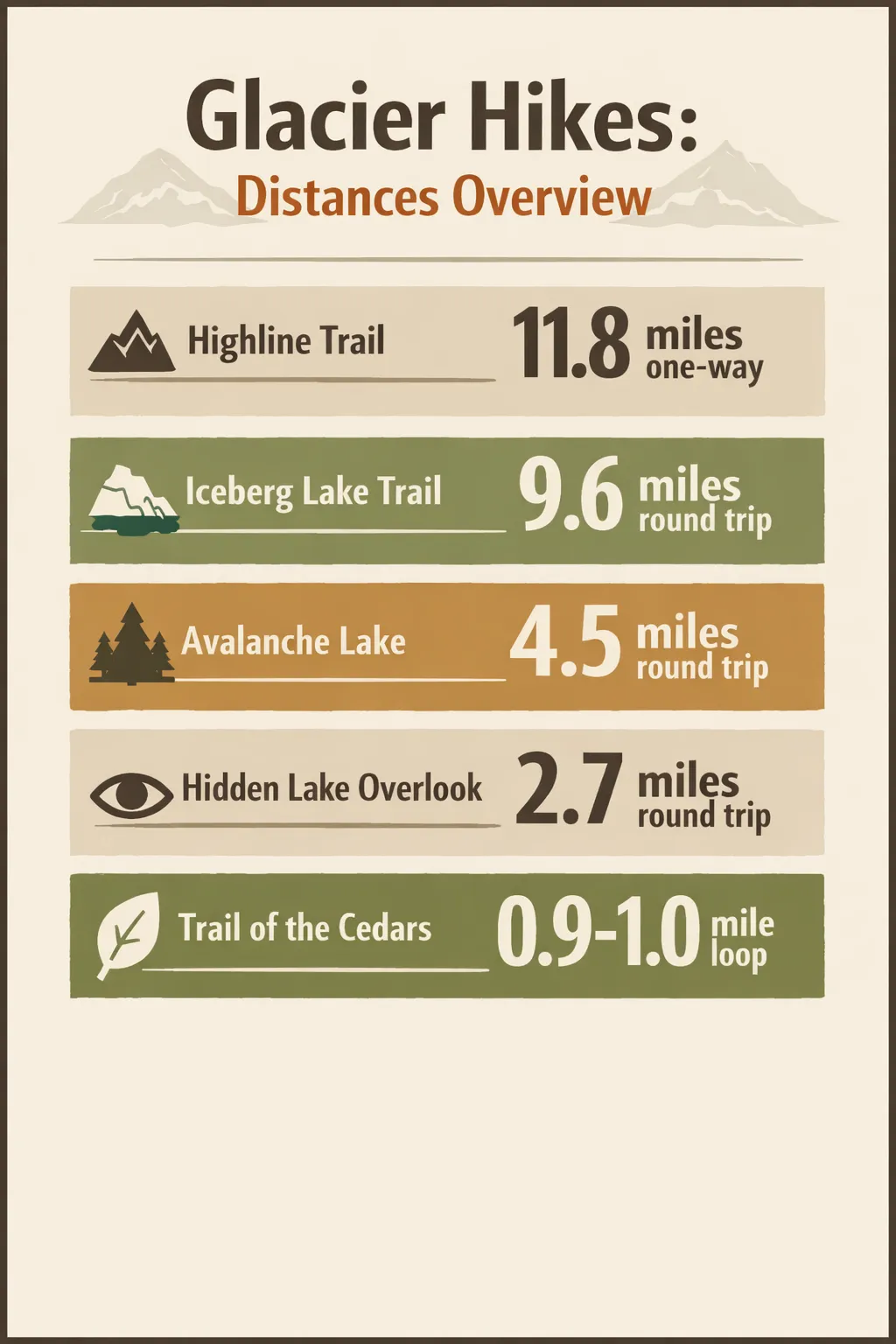 Distances shown for five Glacier National Park hikes: Highline Trail 11.8 miles one-way; Iceberg Lake Trail 9.6 miles round trip; Avalanche Lake 4.5 miles round trip; Hidden Lake Overlook 2.7 miles round trip; Trail of the Cedars 0.9-1.0-mile loop.
That was the story through 2025. A January 30, 2025 report in the Bonners Ferry Herald, summarizing NPS info, described construction that severely restricted access to Many Glacier Valley that summer: a temporary hiker shuttle with tickets sold exclusively via Recreation.gov, and general vehicle access limited to those with qualifying reservations or permits. Between July 1 and September 21, 2025, you couldn’t drive in without a Day Hiker Shuttle ticket, a wilderness permit, a commercial activity reservation, or a lodging reservation at Many Glacier Hotel or Swiftcurrent Motor Inn.
That system is gone for 2026. The Swiftcurrent water-system project that drove the closures finished on schedule, and Many Glacier is back to standard vehicle access with just an entrance pass - no ticket, permit, or reservation required to drive in. Parking in the Swiftcurrent area also grew to 339 spaces, up from 168.
The trade-off: NPS manages congestion with temporary closures instead of advance reservations. If Many Glacier or its parking lots hit capacity, rangers divert incoming vehicles until traffic clears. An early start still pays off - arrive before the lots fill and you skip the diversion entirely.
One safety note: NPS flags heavy grizzly activity and regular moose sightings here. Carry bear spray, hike in groups, and keep at least 100 yards from bears and 25 yards from other large mammals.
Grinnell Glacier Trail
About 7.5-11 miles round trip depending on whether you use the boat assist across Swiftcurrent Lake and Lake Josephine, which cuts about 3 miles each way. Elevation gain is roughly 1,600-2,000 feet - a full-day commitment either way. The trail passes turquoise, glacier-fed Grinnell Lake before climbing to the glacier itself, one of the few accessible glaciers remaining in the park. Best mid-July through September once snow clears. Boat tours run through the Many Glacier Hotel concessioner and book up in advance.
Iceberg Lake Trail
About 9.6 miles round trip with 1,200-1,500 feet of gain - slightly easier than Grinnell but still a solid full day. It ends at a cirque lake that holds floating ice well into August, so the name fits. The trail crosses open meadows with good wildlife visibility, meaning bear activity is common. It starts from the Swiftcurrent Motor Inn trailhead and, like the rest of Many Glacier, is back to standard access for 2026 after the 2025 construction closures.
Planning Your Many Glacier Day
Arrive early regardless of what you’re hiking - parking fills by mid-morning in peak season, and NPS can temporarily divert incoming vehicles once the valley or its lots hit capacity. Booking a night at Many Glacier Hotel or Swiftcurrent Motor Inn is still the most reliable way to guarantee you’re inside before the crowds build.
Build your hiking plans around an early arrival, not the other way around. Deciding to hike Grinnell and then showing up at noon is backwards - by then the lots are full and you’re waiting for a spot to open.
Major Glacier Hikes at a Glance
| Highline Trail | Grinnell Glacier Trail | Iceberg Lake Trail | Avalanche Lake (via Trail of the Cedars) | Hidden Lake Overlook | |
|---|---|---|---|---|---|
| Distance | 11.8 miles one-way | 7.5-11 miles round trip | 9.6 miles round trip | 4.5 miles round trip | 2.7 miles round trip |
| Elevation Gain | about 2,500-2,800 ft net descent | 1,600-2,000 ft | 1,200-1,500 ft | about 500 ft | about 460 ft |
| Difficulty | Strenuous | Strenuous | Strenuous but steady | Moderate | Easy to moderate |
| Trailhead Location | Logan Pass | Many Glacier | Swiftcurrent Motor Inn, Many Glacier | Avalanche Creek (west side) | Logan Pass Visitor Center |
| Best Season | Mid-July through September | Mid-July through September | Mid-July through September | Late spring once lower road opens | July through September |
| Key Consideration | Exposed cable ledge near start; shuttle needed for return | Optional boat assist; standard access since 2026 | High bear activity; standard access since 2026 | Parking fills early | Snow lingers into July on upper section |
Wildlife Viewing, Scenic Overlooks, and Non-Hiking Activities
Not everyone comes to hike ten miles. Glacier offers plenty for visitors who want to watch, ride, or paddle instead.
Wildlife viewing near Logan Pass is the easiest high-value experience - mountain goats and bighorn sheep are commonly seen in the meadows and along the road, often visible from the parking area or short boardwalks, especially at dawn and dusk. Many Glacier is the place for grizzlies and moose. Wherever you go, keep your distance and carry bear spray.
Boat tours are the strongest low-effort option. Glacier National Park Lodges, the official concessioner, runs tours on Lake McDonald, Swiftcurrent Lake, and Lake Josephine, usually multiple times daily in summer, booked through the concessioner. They work well for families and anyone with limited mobility. The Swiftcurrent and Josephine tours also serve as the Grinnell Glacier boat assist.
Red Bus tours are the convenience play. The historic 1930s open-top “jammer” buses run guided, narrated trips along Going-to-the-Sun Road, letting you take in the drive without dealing with parking or mountain driving. For first-timers who want context and zero logistics stress, they’re hard to beat.
Stargazing is genuinely good here. Glacier sits in a region with very low light pollution. The NPS points to St. Mary and Two Medicine as among the better spots for night-sky viewing - no permit needed, just clear skies and timing.
Lake McDonald rewards visitors who never lace up boots. The colorful cobble shoreline near Apgar and Lake McDonald Lodge is a draw on its own, and you can rent canoes or kayaks locally. Swimming is possible if you don’t mind cold water.
For families, combining Trail of the Cedars, Hidden Lake Overlook, a boat tour, and a Red Bus tour covers a full trip without a single long hike. Add wildlife viewing from the Many Glacier Hotel area - low effort, high reward - and kids stay engaged.
Practical Tips for Timing Your Visit
July and August deliver the best trail conditions and full road access, but you pay for it in crowds. Logan Pass parking fills by 7-8 a.m., Avalanche Creek congests by mid-morning, and shuttle tickets go fastest. If you visit in peak season, an early start is not optional.
June is a gamble on the high country. Going-to-the-Sun Road may not fully open to Logan Pass until mid-to-late month, and Highline and Grinnell often stay snow-covered or closed. Lower trails like Trail of the Cedars and Avalanche Lake open earlier, and wildflowers start late June. Plan around lower elevations.
May is not the trip described here. Going-to-the-Sun Road is closed above Avalanche Creek, and most alpine experiences aren’t accessible. If your goal is the road and high hikes, skip May.
September is the quiet winner. Crowds thin noticeably after Labor Day, trail conditions are often ideal, and fall color begins. The trade-off is reduced shuttle frequency and some facilities starting to close.
The single best tip: enter before 7 a.m. That one move gets you a Logan Pass parking spot, the best light, coolest temperatures, and the emptiest trails all at once. Nothing else comes close.
Afternoon thunderstorms are common at elevation in July and August, so start hikes early and carry a waterproof layer. Logan Pass can be cold and windy even when West Glacier is warm. I’ve stood at Logan Pass in a fleece and wind shell in August while the valley below was in shirtsleeves.
What Most Guides Get Wrong About Glacier
The standard advice is to drive Going-to-the-Sun Road and hike the Highline. That’s not wrong, but it creates a blind spot: most guides treat the road and the trails as interchangeable, as if opening day for one means opening day for the other. It doesn’t. The road can be fully open to Logan Pass while the Highline is still buried under several feet of snow and closed by NPS trail crews. Checking road status and assuming trail status is the single most common planning error, and it’s the one most likely to strand you at a trailhead with no backup plan. The other thing guides underplay is the east side. St. Mary, Two Medicine, and Many Glacier offer scenery and solitude that the west-side crowds never see - and St. Mary puts you on the most dramatic stretch of the road within minutes of entering.
Common Mistakes That Derail Glacier Trips
The park punishes assumptions. These are the pitfalls that turn a planned trip into a scramble:
- Parking at Logan Pass and starting a long hike. From July 1 the lot is capped at 3 hours, so the Highline or a full Hidden Lake descent means a shuttle ticket, not a parking spot. This is the constraint that replaced the old reservation system, and it catches people who prepared for the wrong one.
- Assuming Many Glacier still needs a 2025-style shuttle ticket or permit. That system is gone for 2026 - but arrive early anyway, since NPS can temporarily divert vehicles once the valley or its parking lots reach capacity.
- Trying to drive a large RV or trailer between Avalanche Creek and Rising Sun. Vehicles over 21 feet long, 8 feet wide, or 10 feet tall are prohibited on that stretch. It’s illegal and genuinely hazardous on the tight curves and cliff edges.
- Stacking multiple long hikes onto one day. Highline plus Grinnell in a single day isn’t realistic for most visitors, and underestimating Going-to-the-Sun Road drive time makes it worse. Pick one big thing per day.
- Expecting alpine trails to be clear just because the road is open. The Highline can stay snow-covered and closed for weeks after the road opens. Road and trail status are not the same.
- Not checking NPS conditions the morning of. Road and trail status change daily for weather, rockfall, bear activity, and fire. Check the night before and again the morning of - not a week-old blog post.
- Treating the 2026 Logan Pass shuttle as free hop-on. That specific route is ticketed only, with no on-site sales. Other park shuttles remain free, but the Logan Pass run requires a Recreation.gov ticket. Assuming otherwise leaves you driving and racing a 3-hour parking clock.
Frequently Asked Questions
- Do I need a reservation to drive Going-to-the-Sun Road in 2026?
- No. Glacier dropped vehicle reservations park-wide for 2026 - an entrance pass is all you need at any entrance. The timed-entry pilot that older guides describe ran through the 2025 season only. What replaced it is a 3-hour parking cap at Logan Pass from July 1, plus temporary vehicle diversions when a valley fills.
- How long does it take to drive Going-to-the-Sun Road?
- The road is about 50 miles one-way. Budget 2-3 hours minimum with photo stops; 4-6 hours if adding short walks. Full out-and-back shuttle trip takes around 7 hours.
- What's the best hike in Glacier National Park for first-timers?
- Trail of the Cedars plus Avalanche Lake (about 4.5 miles, about 500 ft gain) is the top first-timer hike. Hidden Lake Overlook (about 2.7 miles) from Logan Pass is also excellent and easier.
- Do I need a reservation or permit to visit Many Glacier in 2026?
- No. The 2025 construction-era shuttle ticket and permit system ended when the Swiftcurrent water-system project finished on schedule. Many Glacier is back to standard vehicle access with just an entrance pass, though NPS may temporarily divert vehicles if the valley reaches capacity.
- When does Going-to-the-Sun Road open each year?
- Typically late June to early July depending on snowpack. In 2025 it opened June 16. Heavy snow years can delay opening until mid-July. Lower sections open earlier.
- Is the Highline Trail suitable for beginners?
- No. It has exposed ridge sections and a fixed-cable ledge near the start. Not recommended for those with severe fear of heights. The first mile offers dramatic views and can be a turnaround.
- What are bicycle restrictions on Going-to-the-Sun Road?
- From June 13 to September 28, bicycles are prohibited eastbound Apgar to Logan Pass 12 p.m.-6 p.m., and westbound Logan Pass to Apgar 3 p.m.-6 p.m. Ride outside these windows.
The One Thing to Do Before Anything Else
Glacier in 2026 still has a lot of moving parts: the 3-hour parking cap at Logan Pass, shuttle ticket releases at 8 a.m. and 7 p.m., Many Glacier’s capacity-based vehicle diversions, and trail conditions that shift week to week regardless of whether the road is open. The visitors who have the best trips aren’t the ones with loose plans - they’re the ones who check NPS road and trail status the morning of, enter before 7 a.m. whenever possible, and build their hiking plans around their access method instead of assuming everything will be open.
Before you book flights or lock in a hotel, do three things: bookmark the NPS Glacier road and trail conditions page, set a Recreation.gov alert for your Logan Pass shuttle dates, and treat the parking cap as part of your plan rather than something to sort out on arrival. Match your arrival time - and whether you hold a shuttle ticket - to the hikes you actually want to do. Get that right and the rest of the park takes care of itself.