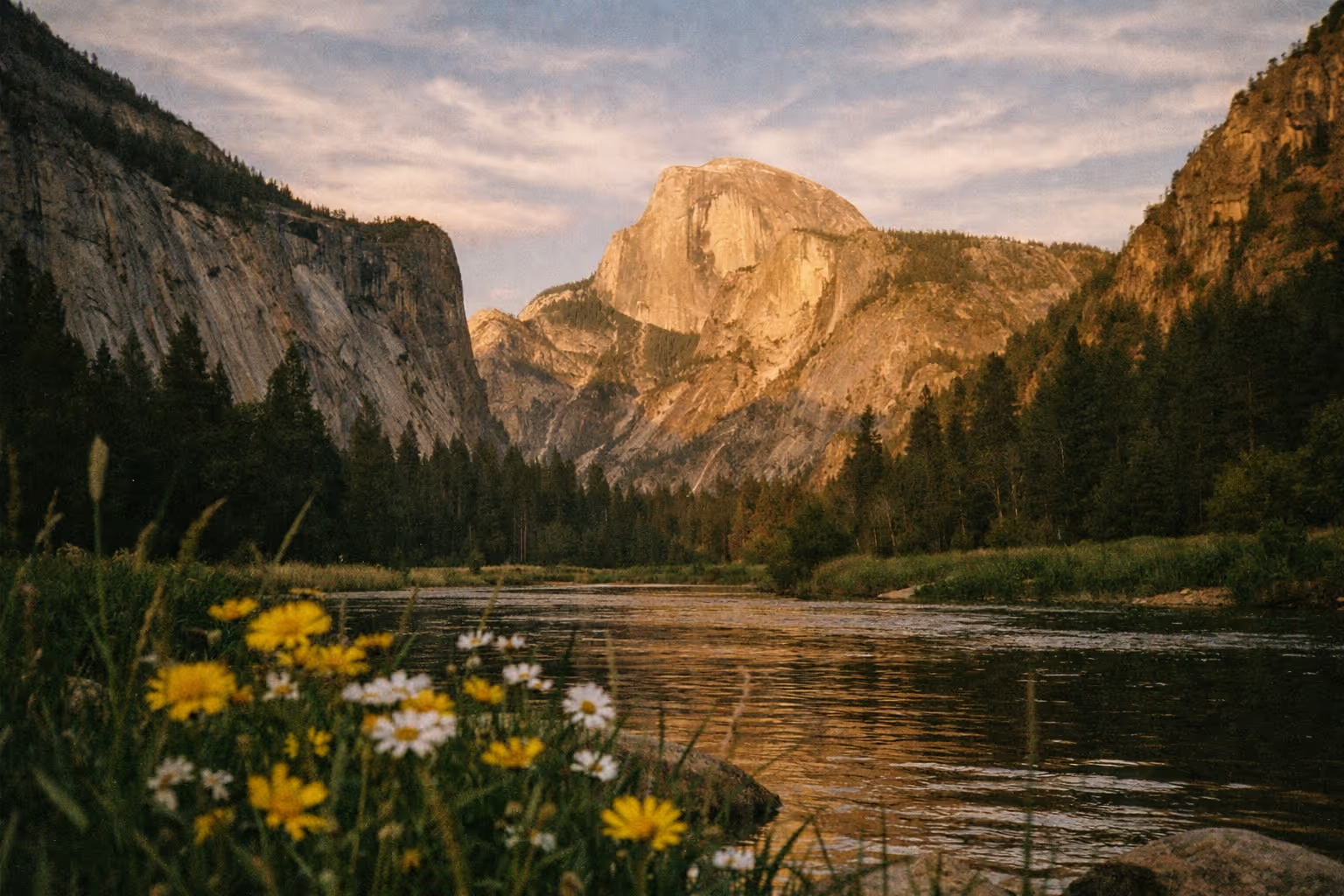
Yosemite National Park pulls in 3.5 to 4 million visitors a year (1), and most of them are eager to explore the top things to do in Yosemite: Half Dome, Glacier Point, and Yosemite Falls. Here’s what trips people up when they start planning their visit: those three experiences share almost nothing logistically. One requires a lottery permit months out. One depends on whether a seasonal road is buried in snow. One can be a 30-minute stroll or an eight-hour grind depending on which trailhead you pick. Get the sequence wrong and you’ll waste a day standing at a checkpoint being turned around.
This guide handles the planning layer most articles skip - the entrance fees, the permit mechanics, the seasonal windows - so you can slot the scenery into a trip that actually works.
Here’s the honest trade-off before you commit. On the plus side: three genuinely world-class experiences fit inside a 2 to 3 day visit, Glacier Point is drivable again after years of construction closures, Yosemite Falls scales from a wheelchair-accessible loop to a full strenuous climb, and real alternatives exist if you strike out on a Half Dome permit. On the minus side: Half Dome permits are genuinely hard to win (sub-20% success on popular summer dates), peak-season crowds are real, Yosemite Falls can run dry by late summer, Glacier Point Road closes in winter, and people badly underestimate the physical demand of Half Dome. Plan around those realities and the trip is straightforward.
✓ Pros
- Three world-class experiences (Half Dome, Glacier Point, Yosemite Falls) accessible within a 2-3 day visit
- Glacier Point is now fully accessible by car again after multi-year construction - one of the best drive-up viewpoints in any U.S. national park
- Yosemite Falls offers options for every fitness level, from a 30-minute accessible loop to a full strenuous day hike
- Backpacking option for Half Dome reduces summit-day difficulty significantly
- Strong alternatives exist if you miss a Half Dome permit (Clouds Rest, Four-Mile Trail, Panorama Trail)
✗ Cons
- Half Dome permits are genuinely hard to get - sub-20% success rates on popular summer dates; requires advance planning months out
- Peak-season crowds are significant; timed-entry reservations add another planning layer
- Yosemite Falls can be dry or minimal by late summer - timing matters
- Glacier Point Road closes in winter and early spring - not accessible year-round by car
- Half Dome is a serious physical undertaking; underestimating it is one of the most common mistakes in the park
Getting Into the Park: Fees, Timed Entry, and What to Book First
Yosemite’s standard entrance fee is $35 per private vehicle, $30 per motorcycle, or $20 per person on foot or bicycle - every pass valid for seven consecutive days (as of 2026, per the National Park Service). That seven-day window matters more than people realize: one payment covers a 2 to 3 day itinerary without repaying at the gate.
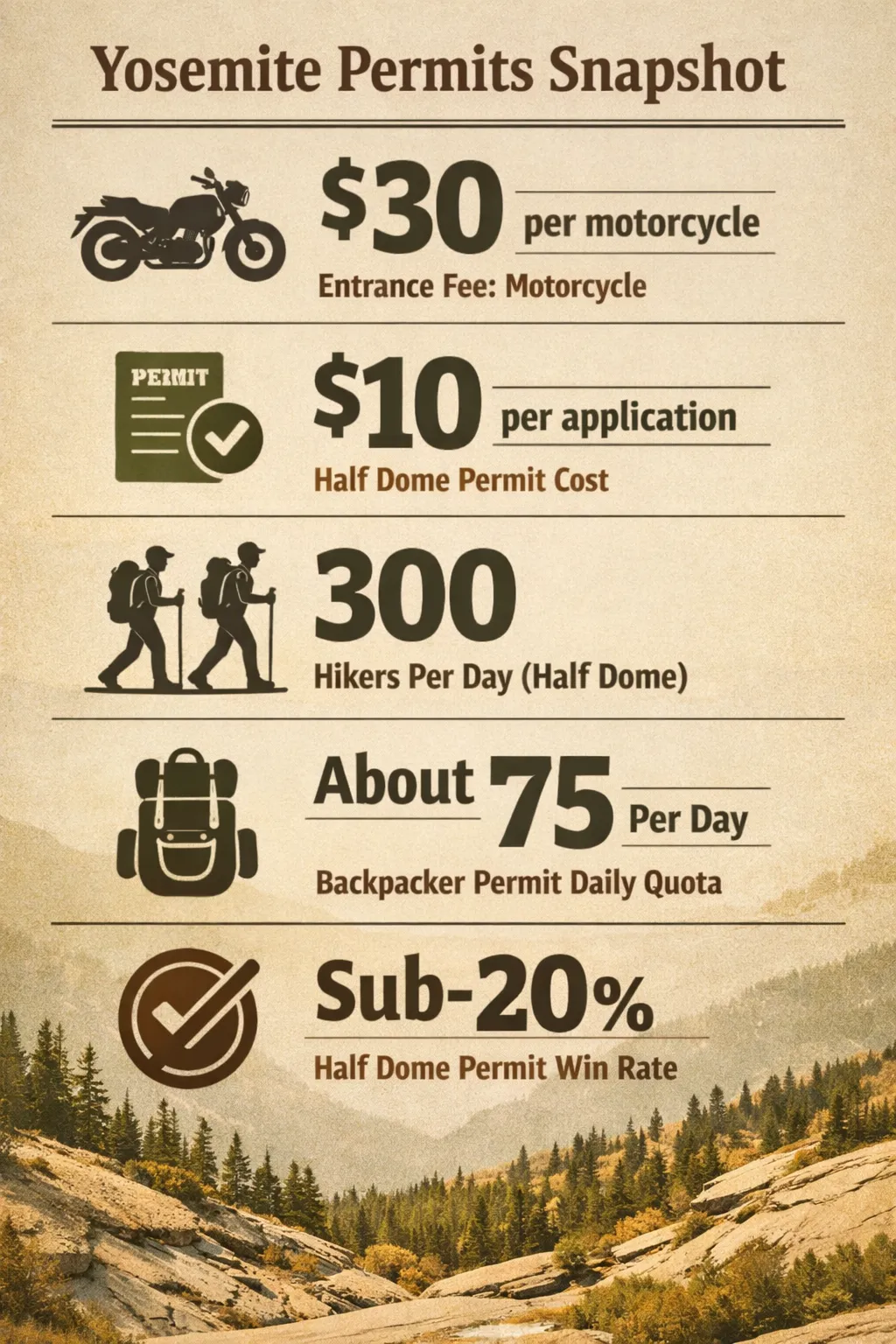 Yosemite entrance fees and permit quotas and rates.
A few money-savers worth knowing. The America the Beautiful annual pass covers entry across federal sites if you’re visiting multiple parks - worth it if Yosemite is one stop on a longer national park run. If that run swings into the Southwest, Zion’s Subway route is one of the standout hikes to build in. The NPS also designates fee-free days each year; check the official NPS fee-free days page before your trip, as the 2026 dates had not been confirmed at time of writing. One fine-print note for international visitors: non-U.S. residents age 16 and older pay an additional $100 per person on top of the standard entrance fee unless covered by an eligible pass, per the National Park Service’s nonresident fees page.
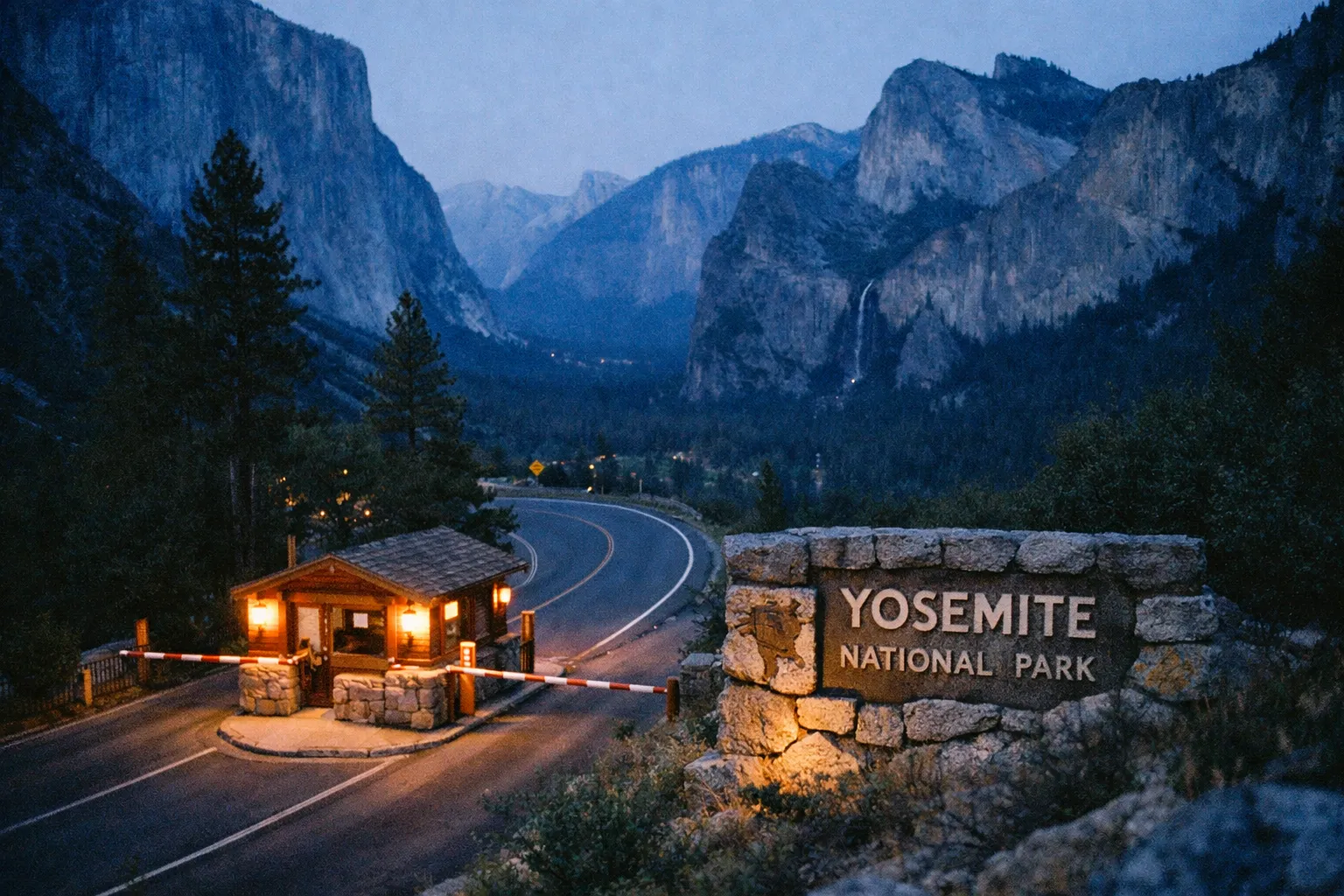
Now the part that turns people back at the gate. For 2026, the National Park Service confirms Yosemite does not require advance entrance reservations. Good news - but read the distinction carefully. In years when a timed-entry system is active, it typically covers arrivals between 6:00 and 14:00 on peak weekends and holidays, with exemptions for in-park lodging, wilderness permits, and local residents. And critically: a timed-entry reservation is not a Half Dome permit. Holding one grants you nothing on the cables. Plenty of visitors conflate the two systems and get stopped at the subdome checkpoint.
One more practical note. Mobile service inside the park is unreliable. Download your entrance and permit confirmations offline and carry printed copies. A confirmation you can’t load is a confirmation you don’t have.
Things to Do in Yosemite: The Three Experiences Worth Planning Around
The three experiences that dominate every list of things to do in Yosemite - Half Dome, Glacier Point, and Yosemite Falls - earn their spots through scale, range of access, and visual payoff. But each demands a completely different plan. Half Dome is a permit-gated, 14 to 16 mile day hike. Glacier Point is a drive-up viewpoint at 7,214 feet (2,199 m) with hiking options attached. Yosemite Falls flexes from a paved one-mile loop to a strenuous 7-mile climb. You can do all three inside a 2 to 3 day visit if you plan correctly, and the seven-day entrance pass makes that grouping painless on the fee side.
The range of visitors is wide, and that’s actually the point. A family doing the Lower Yosemite Fall loop, an experienced hiker gripping the Half Dome cables at 8 a.m., and a limited-mobility traveler photographing alpenglow from Glacier Point are all having a legitimate Yosemite day. What separates a smooth trip from a frustrating one is matching the experience to your group’s fitness and your travel dates.
One 2025-2026 update reshapes planning: Glacier Point Road is fully open to private vehicles again after the multi-year construction closures that turned people away in prior seasons. If you were shut out before, it’s back.
The rest of this guide goes deep on Half Dome first - the most searched and most misunderstood experience in the park - then Glacier Point, then Yosemite Falls, before pulling everything into itinerary frameworks and a March-specific breakdown.
Half Dome: What the Hike Actually Involves
Half Dome is a 14 to 16 mile (22 to 26 km) round trip with roughly 4,800 to 4,900 ft (about 1,463 to 1,494 m) of elevation gain, and a fit hiker should budget 10 to 14 hours (5)(6). That’s not a casual outing. It’s one of the most demanding day hikes in the national park system, and starting before sunrise with a headlamp is standard practice, not optional heroics.
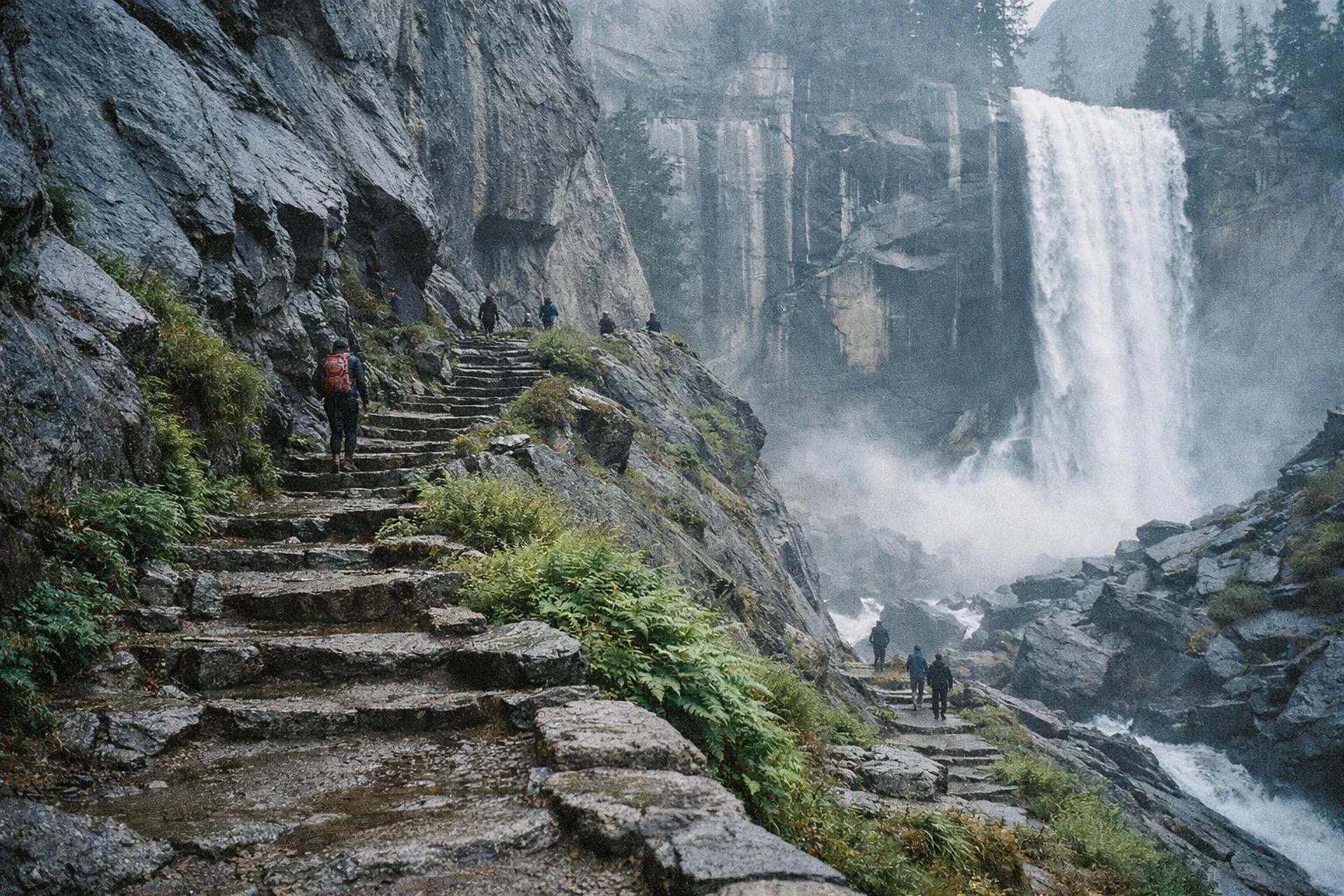
The route runs from the Happy Isles trailhead in Yosemite Valley, up the Mist Trail or John Muir Trail, through Little Yosemite Valley, over the subdome, and onto the cables. That final section - roughly 400 feet of steel cables and wooden planks bolted to bare granite - is what everyone pictures. It’s steep enough that you pull yourself up hand over hand. The cables are typically up from the Friday before Memorial Day through the day after the second Monday in October, weather permitting (3).
Gear that actually matters on this hike:
- A 30 to 35 L daypack
- 2 to 4 liters of water plus electrolytes
- Gloves for the cables (the steel chews up bare hands fast)
- Sturdy hiking footwear with real tread
- Sun protection and layers - expect a 15 to 20°F swing between the valley floor and the summit
The backpacking option is worth serious consideration if you’d rather not compress everything into one brutal day. Over 2 to 3 days, you camp at Little Yosemite Valley (about 4 to 5 miles in) on day one, summit and return on day two, and exit on day three. It slashes summit-day distance and elevation, and it draws on a separate backpacker permit quota of about 75 per day (9).
If you can’t land a permit at all, you still have a real hike. Going as far as the subdome or the base of the cables is strenuous and scenic, and it doesn’t require a Half Dome permit - as long as you don’t enter the cable zone.
How the Half Dome Permit System Works
A Half Dome permit costs $10 per application plus $10 per person if you’re awarded one, and the trail runs on a quota of 300 hikers per day - about 225 for day hikers and roughly 75 for backpackers (2)(3). There are two ways in: the preseason lottery, which runs March 1 to 31 and covers the entire cables season, and the daily lottery, which opens two days before your hike date and closes at 4:00 p.m. Pacific Time (3). Results come that same night for the daily lottery, and in mid-April for the preseason.
The rules that bite people: permits are non-transferable, there is no onsite purchase, and the application fee is non-refundable whether or not you’re selected (2). Hiking the cables without a valid permit is a federal violation - fines run up to $5,000 and/or six months in jail under 36 CFR 1.6 (2). Rangers enforce this. It is not a suggestion.
Here’s how to actually enter, step by step:
How to Enter the Half Dome Permit Lotteries
About 1 hourStep-by-step guide to applying for the preseason and daily lotteries on Recreation.gov
- 1
Create a Recreation.gov account
Register before March 1 to avoid last-minute delays during the lottery window.
- 2
Select your target dates in the preseason lottery
Navigate to the Half Dome Day Use Permit listing and choose dates between March 1 and 31.
- 3
Pay the application fee and add group members
Pay the $10 non-refundable fee and add 2 to 4 group members for better allocation flexibility.
- 4
Check preseason lottery results
Look for an email in mid-April; if selected, pay $10 per person to confirm your permit.
- 5
Enter the daily lottery if needed
Two days before your hike, submit an application between midnight and 4 p.m. Pacific Time; results post that night.
- 6
Download or print your permit
Cell service is unreliable at checkpoints; have a physical or offline copy ready.
The practical play: apply in the preseason lottery for shoulder-season dates - late May or early October - and target weekdays. Success rates drop below 20% on popular summer weekends, so have a backup hike ready either way.
Glacier Point: Drive-Up Views and Trail Access at 7,214 Feet
Glacier Point sits at 7,214 feet (2,199 m), roughly 3,200 feet above Yosemite Valley, with direct sightlines to Half Dome, Nevada Fall, Vernal Fall, Yosemite Falls, and the High Sierra, according to the NPS. It’s the rare spot where you can drive to a view that rivals what most people earn on foot.
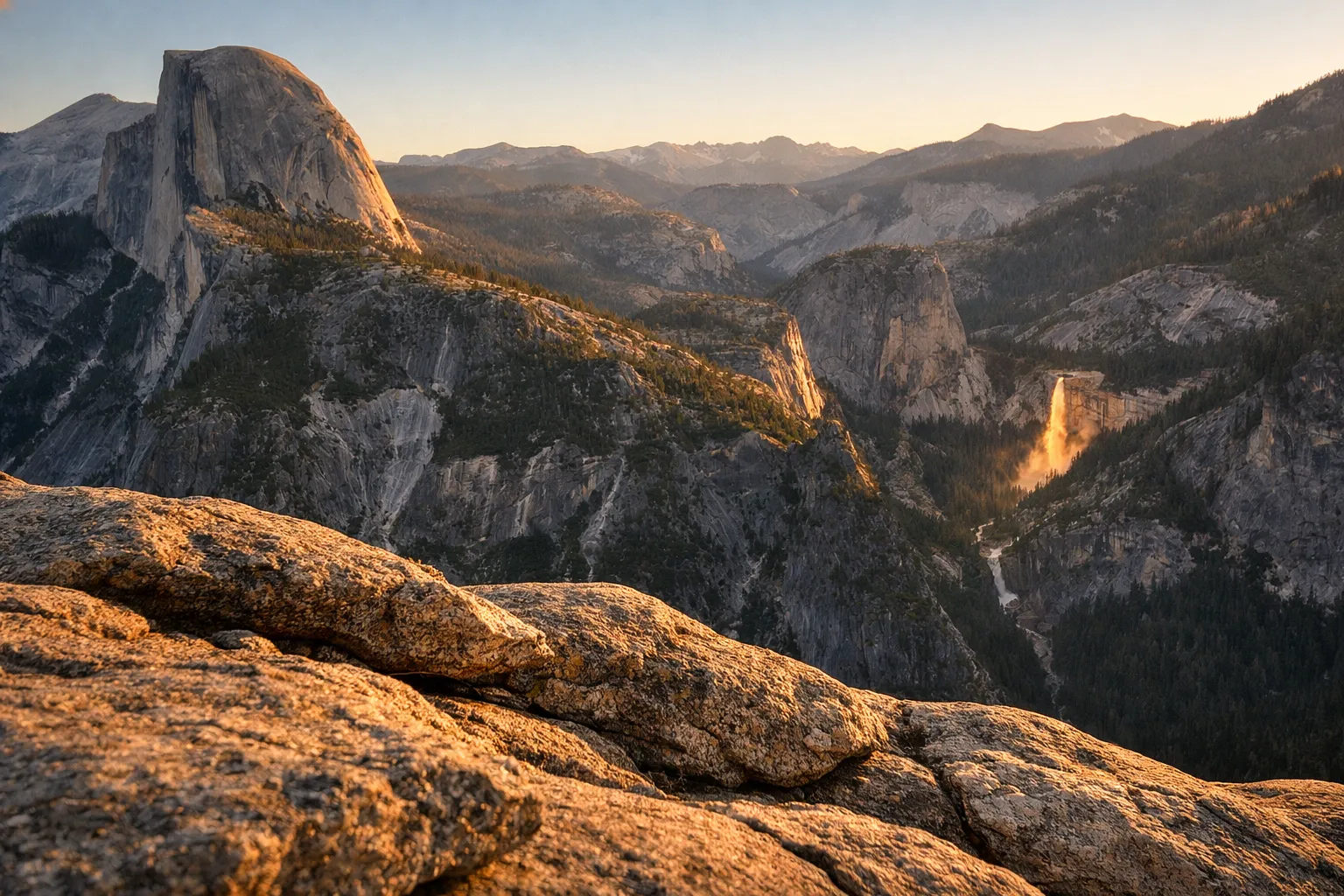
The drive from Yosemite Valley runs about an hour each way. Glacier Point Road is open only in the snow-free season - typically late spring through fall - and in winter the point is reachable only by cross-country skiing or snowshoeing from Badger Pass. The road status update that matters for 2025-2026: after the extended construction closures that shut it down in prior seasons, Glacier Point Road is fully open to private vehicles again.
For families and limited-mobility visitors, this is the highest-reward, lowest-effort stop in the park. It’s a short paved walk from the parking area to the main overlook, and nearby Washburn Point often has fewer people and a different angle on Nevada and Vernal Falls. I’d hit both in one stop - they’re minutes apart and the perspectives don’t overlap.
If you’re chasing the best shot, aim for sunset and the twilight window after. Alpenglow on Half Dome is the money frame. Carry a headlamp for the walk back to the lot - the parking area empties fast once the light goes and the trail back gets dark quickly.
Stronger hikers have real options from here. The Four-Mile Trail covers about 3,200 feet of elevation change between the valley and the point. The Panorama Trail and connections down to Little Yosemite Valley open up point-to-point routes for a full day. And here’s the backup-plan angle that most guides bury: if you strike out on a Half Dome permit, Clouds Rest and the Four-Mile Trail to Glacier Point deliver comparable Half Dome views with no cables permit required. They’re strenuous, but they’re not gated.
Yosemite Falls: Matching the Hike to Your Group
Yosemite Falls is 2,425 feet (739 m) tall counting the Upper, Middle, and Lower drops combined, making it one of the highest waterfalls in North America (1). There are three distinct ways to experience it, and picking the wrong one for your group is a common misfire.
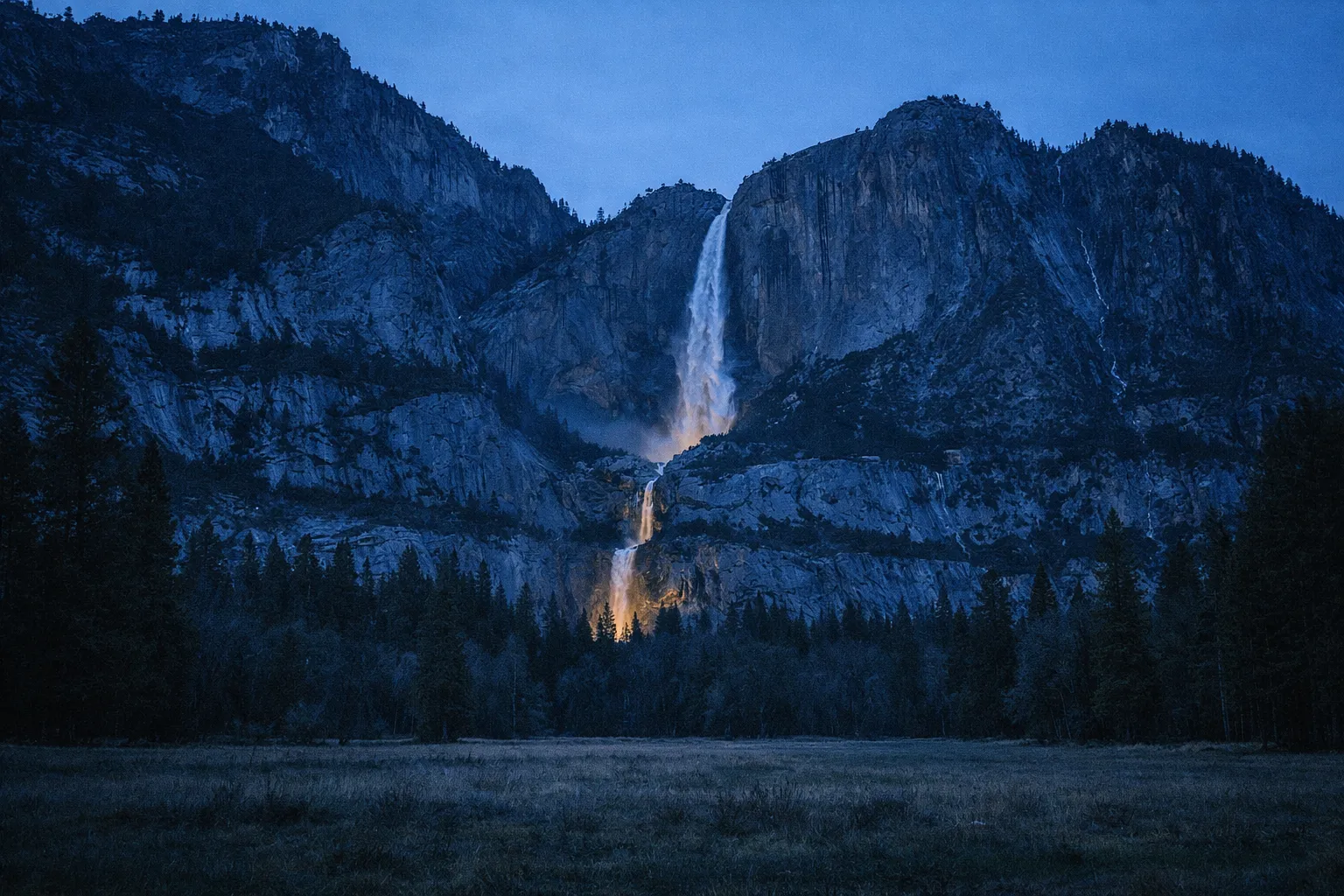
The biggest planning mistake here is seasonal. Spring - roughly April through June - is peak flow, when snowmelt drives the falls hard and the spray at the base soaks you (per NPS). By late August through October, the falls can be dramatically reduced or bone dry. If a roaring waterfall is the reason you’re going, do not book late summer and expect a show.
The Upper Yosemite Falls Trail starts near Camp 4 on the valley’s north side. Whatever route you pick, an early start before 7 a.m. buys you cooler temperatures and softer light. For the Lower Yosemite Fall area in spring, bring a waterproof layer or a camera cover - the mist near the base is heavy enough to soak gear.
Lower vs. Upper Yosemite Falls Trail Comparison
| Lower Yosemite Fall Loop | Upper Yosemite Falls Trail | |
|---|---|---|
| Distance | about 1 mile (1.6 km) loop | about 7.2 miles (11.6 km) round trip |
| Elevation Gain | Minimal | about 2,700 ft (823 m) |
| Time | 30-60 minutes | 6-8 hours |
| Difficulty | Easy / wheelchair accessible | Strenuous |
| Best Season | April-June (peak flow) | April-June (flow + cooler temps) |
| Best For | Families, all fitness levels | Experienced hikers |
Between them, the valley meadow viewpoints along Northside Drive let you take in the full 2,425-foot drop with no hiking at all - worth knowing if you’re short on time or energy.
Combining the Highlights: Practical Itinerary Frameworks
The seven-day entrance pass makes 1-day, 2-day, and 3-day structures all workable without repaying at the gate. Here’s how to actually sequence them.
One day, no Half Dome permit. Start at Tunnel View on arrival for the classic valley panorama, walk the short trail to Bridalveil Fall, then do the Lower Yosemite Fall loop. Drive up to Glacier Point in the afternoon and stay for sunset, then catch the valley meadow views on the way back. No strenuous hiking required - this works for families and first-timers.
Two to three days, with a Half Dome permit. Day one: arrive, drive Glacier Point, orient yourself in the valley. Day two: Half Dome, full day, pre-sunrise start. Day three: recover with the Yosemite Falls trail or the Mist Trail to Vernal and Nevada Falls (about 5 to 7 miles, sharing the Half Dome trailhead, no permit needed unless you continue to the cables).
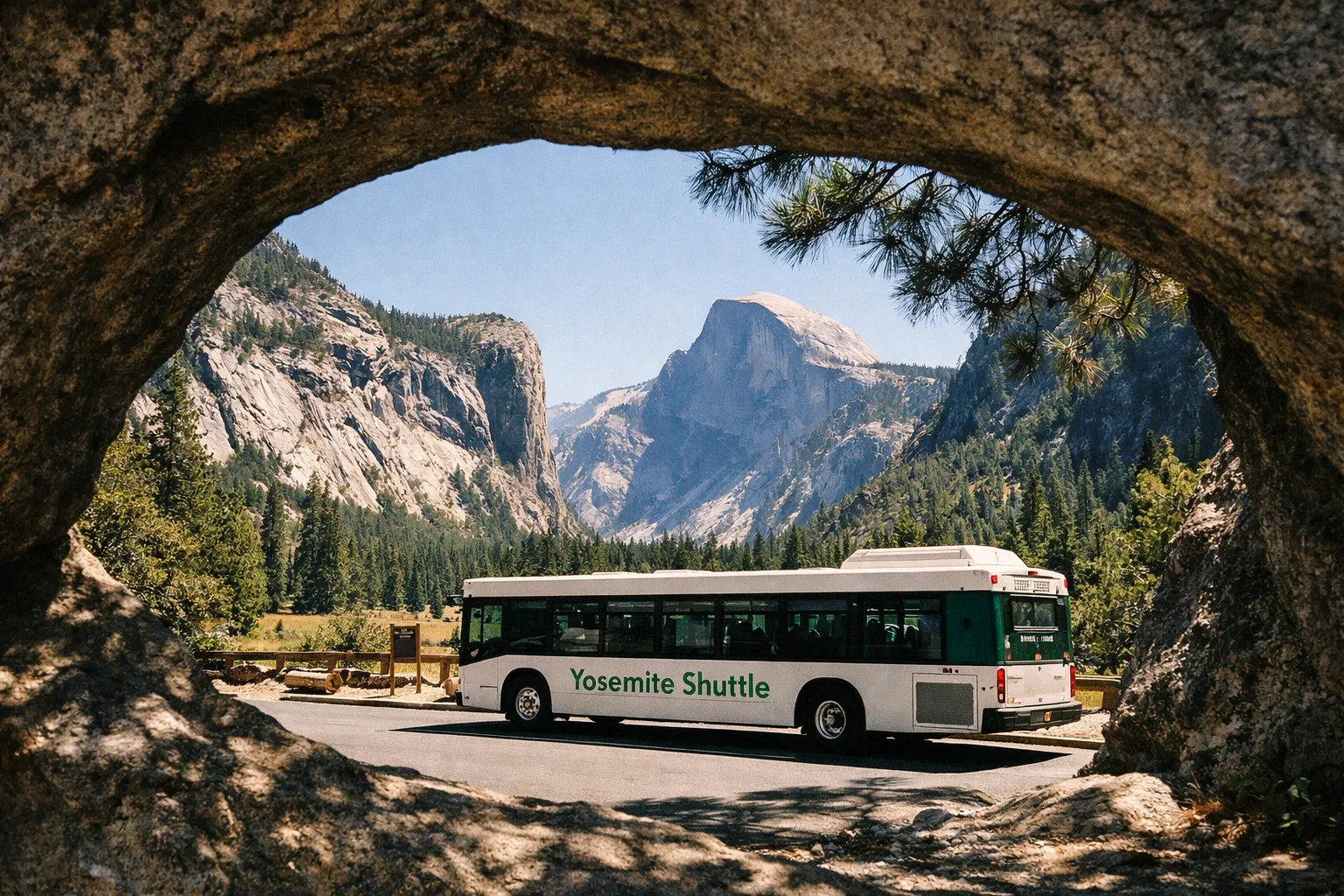
With kids. Stack the low-effort, high-reward stops: the Lower Yosemite Fall loop, the Glacier Point drive-up, the Mariposa Grove of Giant Sequoias, and a picnic at El Capitan Meadow. The valley shuttle system cuts down on driving stress and parking hunts, which is where family days usually fall apart.
December and winter. The Half Dome cables come down after the second Monday in October, so that hike is off the table. Glacier Point Road is closed to vehicles. The Yosemite Falls trail stays open year-round but ices over - microspikes are strongly recommended. Valley-floor activities carry the trip: Tunnel View, Bridalveil Fall, and meadow walks all remain accessible, and Badger Pass ski area opens for the season. Winter is a genuinely good time to visit if you drop the summit ambitions.
For a standalone waterfall day that doesn’t need a permit, the Mist Trail to Vernal and Nevada Falls (about 5 to 7 miles) shares the Half Dome trailhead and delivers two major falls without the cables commitment.
What to Do in Yosemite in March: Early Season Conditions
March is a valley-floor month, not a summit month. The Half Dome cables aren’t up yet - the season doesn’t start until late May - so cross that off entirely (3). Glacier Point Road is usually still closed to vehicles in early spring, with reopening tied to snowpack, so don’t plan a drive-up without checking current NPS conditions first.
The Yosemite Falls trail is open but often icy or snow-covered; microspikes belong in your pack. On the upside, snowmelt begins in March and the waterfalls start building toward their spring peak, so flow is climbing even if it hasn’t crested. Park entry is lower-complexity than peak summer - Yosemite wasn’t requiring advance entrance reservations in 2026 - which means fewer logistical hoops. It’s a solid month for valley walks, Tunnel View without summer crowds, and the Mariposa Grove if the access road is open. Verify road status before you build the day around any drive.
Common Mistakes That Derail Yosemite Trips
Treating Half Dome as a casual hike. It’s 14 to 16 miles and nearly 4,900 feet of gain. Starting after 7 to 8 a.m. pushes the cable descent into afternoon thunderstorms or darkness - a recurring safety problem, not a rare one. Start before sunrise or don’t start.
Confusing the permit systems. A timed-entry reservation does not cover Half Dome. Permits can’t be bought onsite and can’t be transferred between people. Violating the cables requirement carries fines up to $5,000 and/or six months in jail (2). The entrance fee and the Half Dome permit are entirely separate systems - paying one does nothing for the other.
Carrying too little water. Plan 2 to 4 liters per person for full-day strenuous hikes. Valley temperatures can top 90°F (32°C) in summer, and both the Half Dome and Yosemite Falls trails have long, exposed sections with no shade and no water source. Underhydrating on an exposed granite face is how good days turn into rescues.
Misjudging the season. Expecting a roaring Yosemite Falls in late August usually ends in a trickle or a dry cliff. Planning a Glacier Point Road drive in early spring without checking the snow-closure status ends with a locked gate. Both change seasonally and the NPS updates them regularly - check before you finalize.
No offline backup. Cell service is unreliable at permit checkpoints. A printed or downloaded confirmation isn’t optional insurance; it’s the thing that gets you past the ranger.
Frequently Asked Questions
- Do you need a permit to hike Half Dome?
- Yes - a permit is required to ascend the cables when they are up, typically from Friday before Memorial Day through the day after the second Monday in October.
- How hard is the Half Dome hike?
- It's a demanding 14-16 mile round trip with nearly 4,900 ft elevation gain, taking 10-14 hours and requiring solid fitness and early start.
- What are the best things to do in Yosemite with kids?
- Lower Yosemite Fall loop, Glacier Point drive-up, El Capitan Meadow, and Mariposa Grove are family-friendly with minimal hiking and shuttle access.
- When is the best time to visit Yosemite for waterfalls?
- April through June offers peak waterfall flow; late summer often sees reduced or dry falls, so spring is best for waterfalls.
- Is Glacier Point Road open right now?
- As of 2025-2026, Glacier Point Road is fully open to private vehicles during snow-free months; winter access is by skiing or snowshoeing.
- What's the difference between a timed-entry reservation and a Half Dome permit?
- Timed-entry controls park arrival time; Half Dome permit is a separate, limited permit required to ascend the cables.
The One Thing Most Guides Get Wrong About Yosemite
Most coverage treats Half Dome, Glacier Point, and Yosemite Falls as a checklist - three boxes to tick in sequence. The actual planning mistake is assuming they’re interchangeable on timing. Half Dome has a hard permit gate and a cables season that runs roughly late May through mid-October. Glacier Point Road is closed in winter. Yosemite Falls can be bone dry by late August. The experiences don’t overlap in their seasonal windows the way most itineraries imply. Build your trip around the one experience that’s non-negotiable for your group, then fit the others around it - not the other way around.
Before You Finalize Anything
Work the sequence in order. Sort your entrance situation first - pay the fee, confirm whether any timed-entry window applies to your dates, and download the confirmation offline. If Half Dome is the goal, enter the preseason lottery in March; that’s your best shot, and shoulder-season weekdays beat summer weekends every time. The best single month to visit if you want all three experiences running at full capacity is June: the cables are up, Glacier Point Road is open, and the falls are still running hard off late snowmelt. May is close but Tioga Road may still be closed, limiting eastern access. Then build the rest of the trip around Glacier Point and Yosemite Falls based on your group’s fitness and the time of year.
Before you lock in any itinerary, check the NPS conditions page for Glacier Point Road status and Yosemite Falls flow. Both change with the season, the park updates them regularly, and a five-minute check beats a locked gate or a dry cliff.