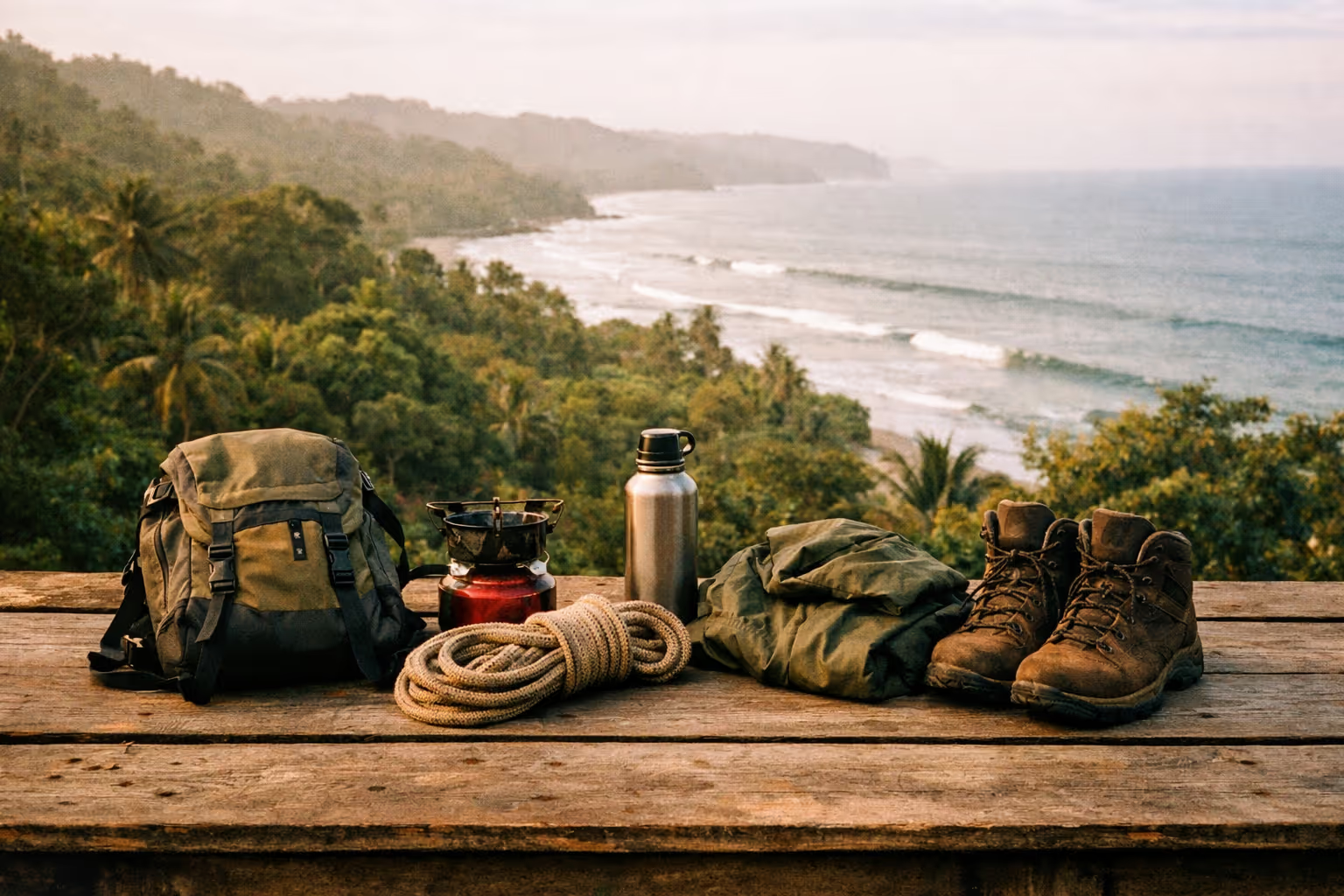
Costa Rica gear rentals cluster by activity, not by city, so plan them along your route rather than in one shop. Surfboards are everywhere and cheap, $15 to $30 a day in Tamarindo or Santa Teresa, but quality hiking boots are essentially unrentable, so pack your own. Rafting gear never rents solo; outfitters bundle helmets and guides into a $75 to $130 day on the Pacuare. And reserve headline gear months out, since it sells out around Christmas and July.
Where to Rent Gear in Costa Rica: Understanding the Landscape
Gear rental in Costa Rica clusters by activity, not city. San José offers photography rentals and some general outdoor gear, but the real selection is in adventure hubs.
- Surf gear - Tamarindo, Jacó, Santa Teresa, Nosara, Dominical, and Puerto Viejo all have multiple board shops close to the breaks.
- Snorkel and dive gear - Guanacaste (Playa Flamingo, Tamarindo, Playas del Coco), Manuel Antonio, and Cahuita on the Caribbean side.
- Rafting gear - usually included with tours on the Pacuare, Balsa, Sarapiquí, and Tenorio rivers. You won’t find rafting gear rentals solo.
- Hiking gear - limited mostly to trekking poles and daypacks near La Fortuna/Arenal and Monteverde.
- Baby gear, scooters, quads, golf carts - often delivered to hotels and rentals, with La Fortuna and Guanacaste beach towns offering the most options.
Tripadvisor’s 2026 list shows 15+ established rental operators covering everything from sports gear to golf carts. But once you leave the main towns, availability thins fast. If you’re heading to a remote beach or mountain village, arrange rentals ahead. The shop you counted on might not be open when you arrive.
If your trip hits multiple spots, plan pickups according to your route. Rent surf gear in your first surf town, return it, then pick up new boards at the next break instead of hauling gear across the country.
Surfboard Rentals in Costa Rica: Pricing, Deposits, and Swaps
Expect to pay $15-30 per day or $80-150 per week for boards in major surf towns. Soft-top foam boards and basic epoxy sit at the low end; high-performance shortboards and longboards from premium shops cost more.
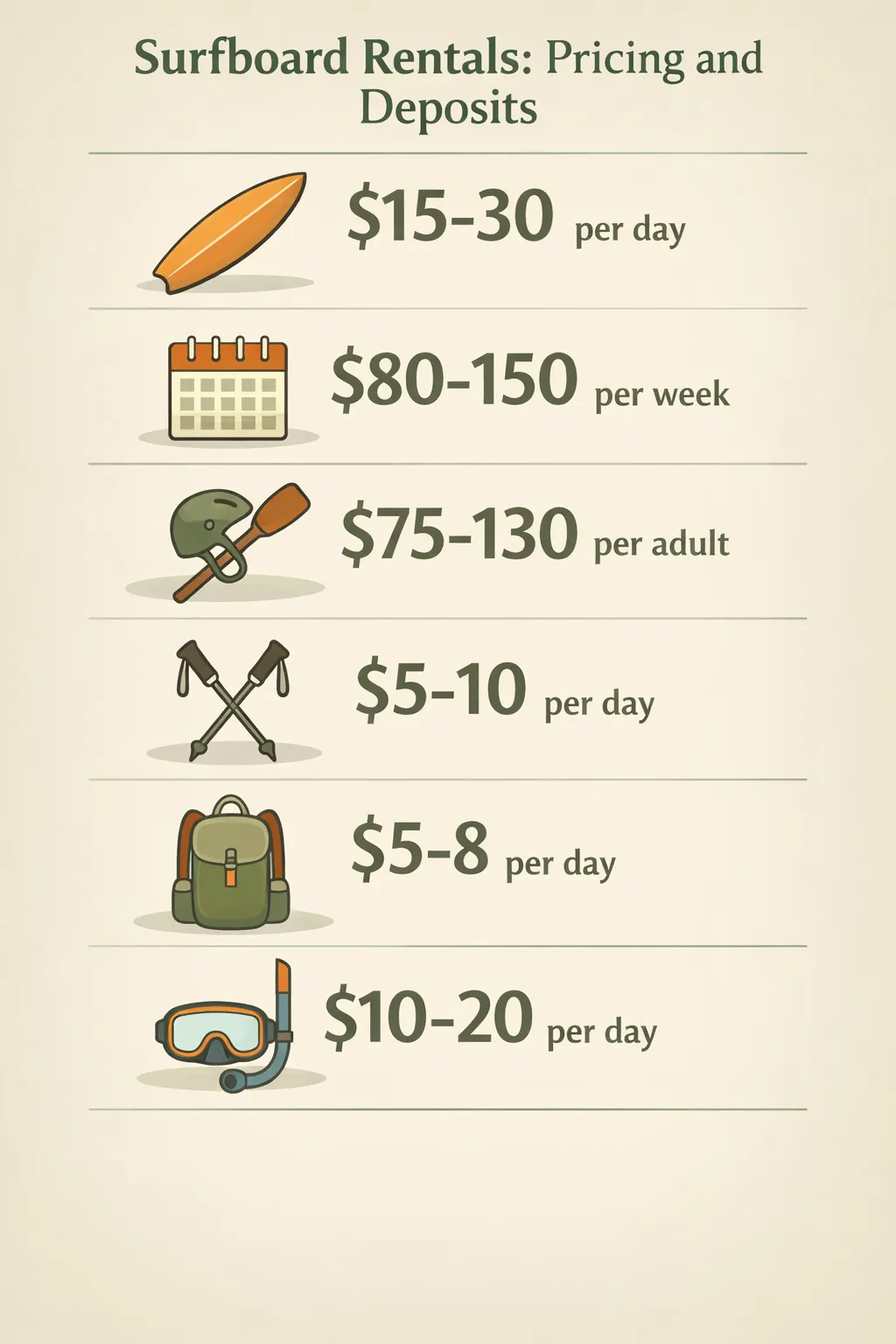 Costa Rica gear rental price ranges across activities: surfboards $15-30 per day, $80-150 per week; rafting $75-130 per adult; hiking poles $5-10 per day; daypacks $5-8 per day; snorkel gear $10-20 per day.
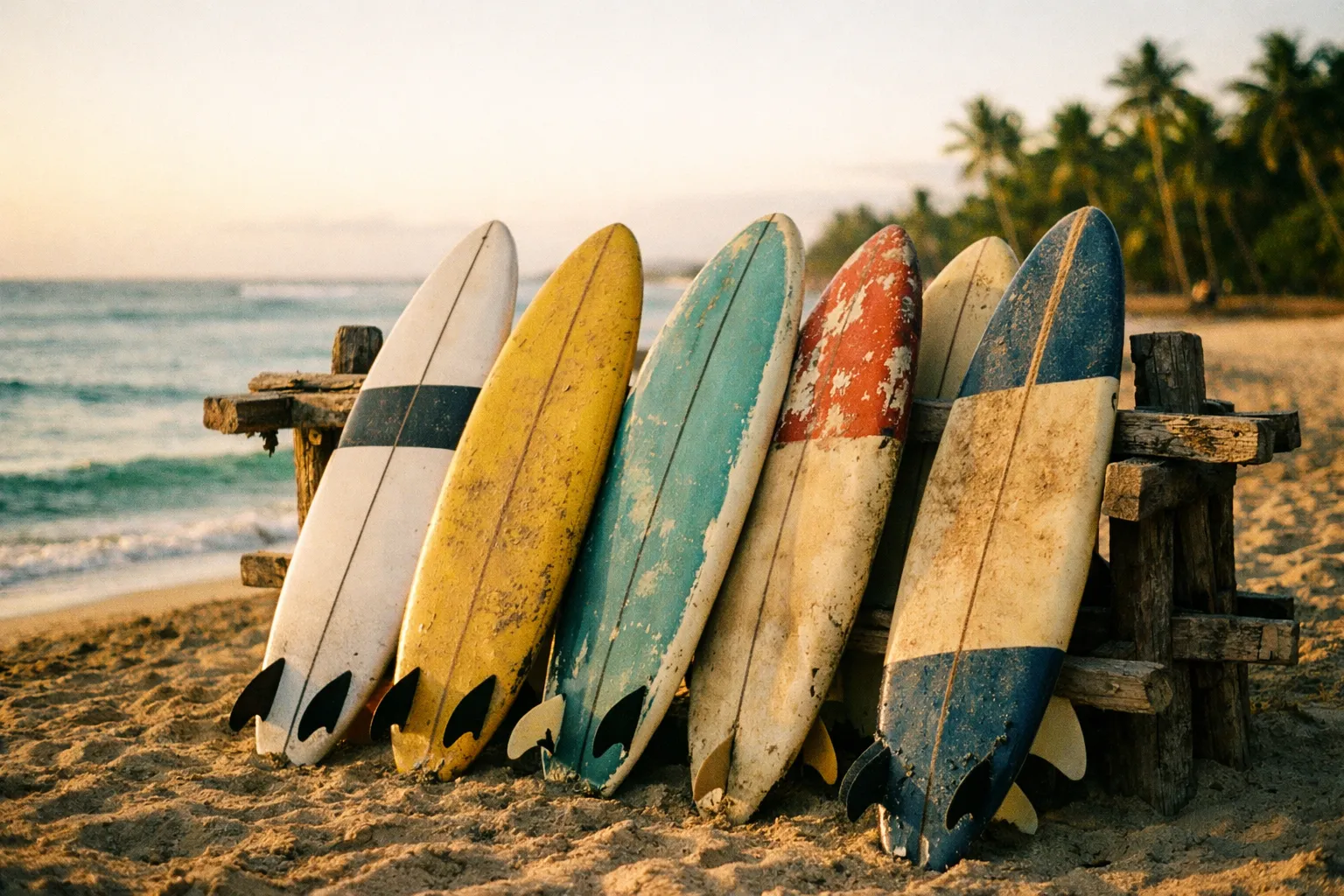
Most shops require a deposit. Usually it’s a passport photocopy plus a cash deposit of $50-200, or a credit card hold for pricier boards. Bring a photocopy so you don’t have to hand over your original passport.
Two practical tips:
- Ask about board swaps. Many shops allow you to trade boards mid-rental - switch from a longboard to a fish as your skills improve or conditions change. If you’re progressing fast or moving between breaks with different waves, this flexibility is worth prioritizing.
- Beginners should opt for lessons-plus-gear packages. Surf schools include a soft-top and rash guard with instruction, which is cheaper than renting gear separately. Plus, you get a board sized for learning rather than whatever’s left on the rack.
If you’re a digital nomad or long-stay visitor, negotiate monthly rates. Small shops often cut daily prices by 30-50% for monthly rentals. Staying a season? That usually beats buying unless you’re certain you’ll keep surfing afterward.
Worth the detour: Santa Teresa and Nosara for consistent waves and deep board selections. Skip if short on time: hunting for a specific board model in a small town - you’ll waste hours. Take what’s available.
Snorkel Gear: Standalone or Bundled with Tours
Beach shops charge $10-20 per day for snorkel gear, with full sets including fins at the higher end of that range. Multi-day discounts are common - ask about them.
Before renting separately, check if your snorkeling tour includes gear. Most boat trips to spots like Catalina or Caño Island bundle gear in the price, usually $55-100 per person. Renting gear on top of that is extra cost with no gain.
If you snorkel regularly at home and have a mask that fits well, bring it and rent fins only. A rental mask that leaks or fogs ruins a reef day, and fit is the one thing you can’t fix on the spot.
Rafting Gear in Costa Rica: Part of the Package
You won’t rent rafting gear solo. Outfitters on the Pacuare and Balsa rivers provide helmets, PFDs, paddles, rafts, wetsuits when needed, and certified guides. Expect $75-130 per adult for a full-day trip.
The Pacuare is worth the detour - Class III-IV rapids through rainforest gorge with all gear and safety briefings included.
Since rafting gear Costa Rica is bundled, your main choice is outfitter and river difficulty. Beginners and families should stick to Balsa or Sarapiquí (Class II-III). Experienced paddlers head to Pacuare. Book the trip; the gear comes with it.
Hiking Gear: Bring Your Own Boots
This is where reality bites. Rentals for hiking gear in Costa Rica are very limited. Near Arenal and Monteverde, you might find:
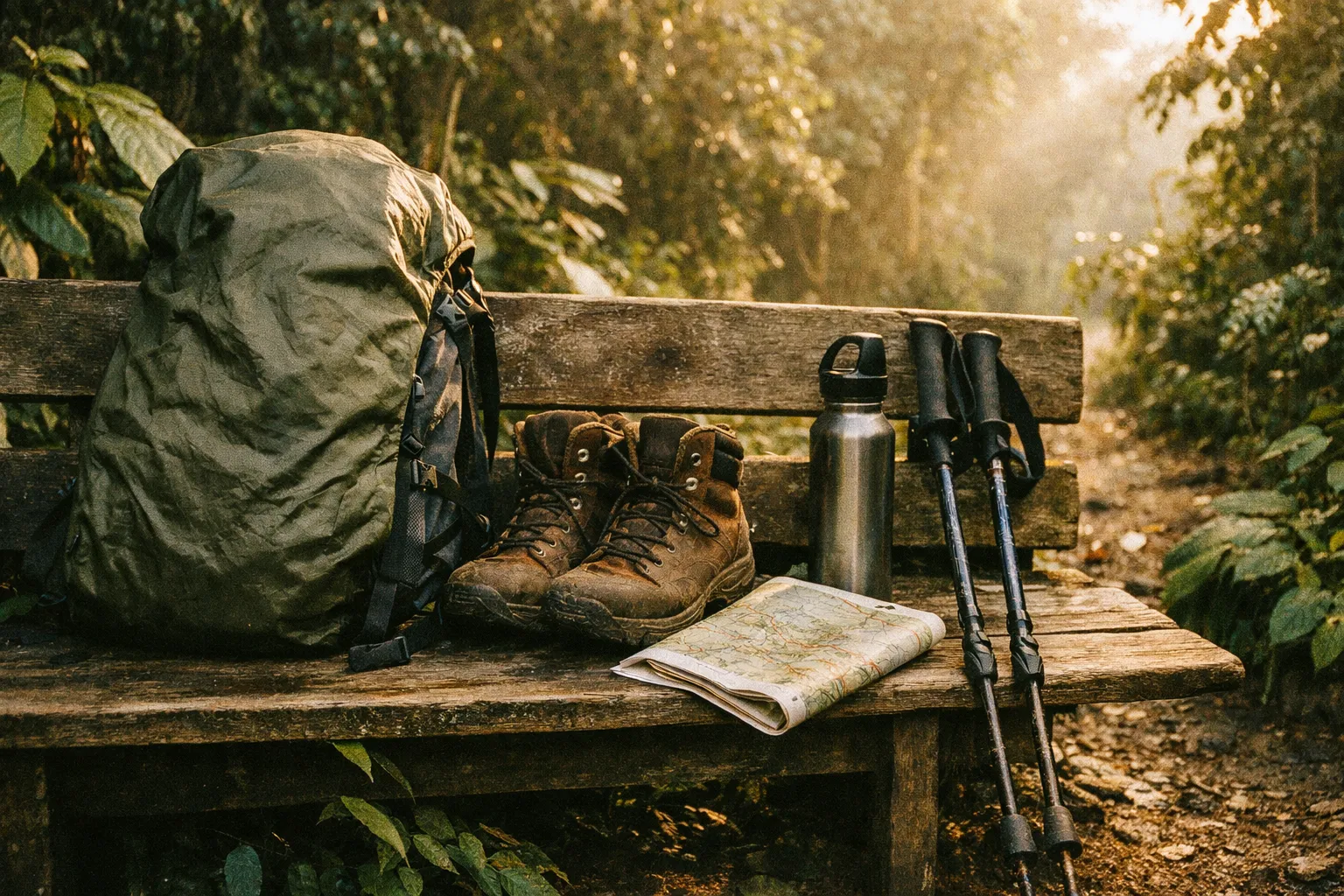
- Trekking poles - about $5-10 per day
- Daypacks - about $5-8 per day
- Occasionally rain jackets and binoculars
What you won’t find reliably: quality hiking boots or technical backpacks. Don’t expect to pick up broken-in boots on arrival - they simply aren’t available. Trails are wet, muddy, and root-tangled; rental footwear (if you find any) will give you blisters.
Binoculars are worth renting - they’re bulky to pack, genuinely useful in Monteverde’s cloud forest and the Osa Peninsula, and cheap locally. If you want to go deeper on what to bring for the trails, the essential hiking safety guidance on footwear, water, and navigation is worth reading before you pack.
Photography Gear Rental: Skip the Heavy Kit on the Plane
A growing market lets you rent pro-level cameras and lenses locally instead of flying with expensive, fragile gear. You’ll find mirrorless bodies like the Sony A7R V, Canon R5, and Nikon Z8, plus telephoto lenses and tripods.
Day rates run $60-120 for a pro body and $40-100 for high-end lenses, with insurance or a hefty deposit required. Book 2-3 weeks in advance - inventory is limited and these aren’t impulse rentals.
The smart move: tell the rental company what you’re shooting. The lens for a quetzal in Monteverde isn’t the same as the one for mammals on the Osa Peninsula. Local providers know their gear and will guide you to the right setup. Plan to pick up your kit in San José or another hub so it’s ready before your first park day at Corcovado, Manuel Antonio, or Tortuguero.
Baby and Family Gear Rentals: Delivered Where You Need Them
Traveling with kids changes everything. Services like Babonbo deliver strollers, travel cribs, high chairs, car seats, and toys straight to your hotel, Airbnb, or even the airport. Rates run about $6-15 per item per day, usually with a 2-3 day minimum.
This solves the baggage-fee headache on bulky gear you’ll only use a week. Delivery also makes multi-stop trips easier - no dragging car seats and pack-n-plays through every transfer.
Check cleaning and safety standards before booking, especially for car seats and cribs. Reputable platforms advertise current models and inspections; don’t skip verifying this when it’s your kid’s safety on the line.
Renting vs Buying Gear, and Car Rental Realities
For most travelers on a 1-3 week trip, renting is the clear choice - you don’t want to fly home with a longboard and a high chair. The rent-or-buy question only gets interesting for long-stay visitors and digital nomads, a fast-growing group with Costa Rica’s digital nomad visa.
If you’re staying three months or more and using gear daily, buying used locally and reselling before you leave can beat monthly rental. The catch is the hassle of resale and hunting for decent used gear. For stays under two months, negotiate monthly rental rates and skip the trouble.
Cars are a different beast since your adventure depends on them. To rent, you need a valid passport, driver’s license, a credit card in the main driver’s name, and must meet the minimum age (usually 21-25). The rental fleet is limited - book 3-6 months ahead for peak season (Dec-Apr), 1-2 months in shoulder season, and 2-3 weeks in low season. For remote surf and hike spots, you need a real 4x4, not a crossover with a badge. I tried driving the Nosara-to-Sámara back roads in a 2WD last green season and had to turn back at the first river crossing - a 4x4 is non-negotiable there.
When to Book: Gear Is Finite and Peak Season Hits Hard
Gear availability mirrors car rentals - supply is limited, and demand spikes sharply around Christmas, Easter (Semana Santa), and July. Premium surfboards, dive trips, and 4x4s sell out months ahead during these periods. The outlook for 2026-2032 also points to raw material shortages and supplier consolidation, so expect availability and prices to tighten, not loosen.
Rule of thumb: book headline gear at the same time you book lodging and your car. For December or Easter trips, that means 3-6 months in advance. Snorkel sets and basic boards can usually be grabbed day-of in low season; performance gear and peak season require reservations. If you’re still working out the broader logistics of your trip, a Costa Rica travel guide covering routes, costs, safety, and timing can help you sequence everything before you commit to bookings.
✓ Pros
- No need to fly with bulky or fragile gear - boards, cameras, and baby equipment all rentable locally
- Surf towns offer board swaps mid-rental, useful as conditions or skill levels change
- Baby gear delivery services reach most major tourist corridors
- Rafting tours bundle all safety gear and guides into one price
- Monthly rental rates for long-stay visitors can cut daily costs by 30-50%
✗ Cons
- Quality hiking boots and technical backpacks are nearly impossible to rent - bring your own
- Peak season (Dec-Apr, Easter, July) depletes 4x4s, premium boards, and dive trips months in advance
- Remote beaches and mountain villages have little to no rental infrastructure
- Photography gear inventory is limited - book 2-3 weeks out minimum
- Baby gear delivery coverage is sparse on the Osa Peninsula and Caribbean coast
Frequently Asked Questions
- Can I rent gear in remote Costa Rican villages?
- Remote villages often have very limited or no rental options. It's essential to arrange gear pickups in larger towns before heading to isolated areas.
- Are there insurance requirements for renting photography gear?
- Yes, most pro camera rentals require insurance or a significant deposit to cover potential damage or loss.
- Can I swap surfboards during my rental period?
- Many surf shops allow mid-rental board swaps, but you should confirm this upfront as policies vary by shop.
- Is it possible to rent a 4x4 vehicle last minute in peak season?
- No, 4x4 rentals sell out quickly during peak season. Booking 3-6 months in advance is necessary to secure one.
- Do baby gear rental services sanitize their equipment?
- Reputable rental services advertise cleaning and safety inspections, but always verify their standards before booking.
- Can I rent rafting gear separately from tours?
- No, rafting gear is only available as part of guided tours on the main rivers.