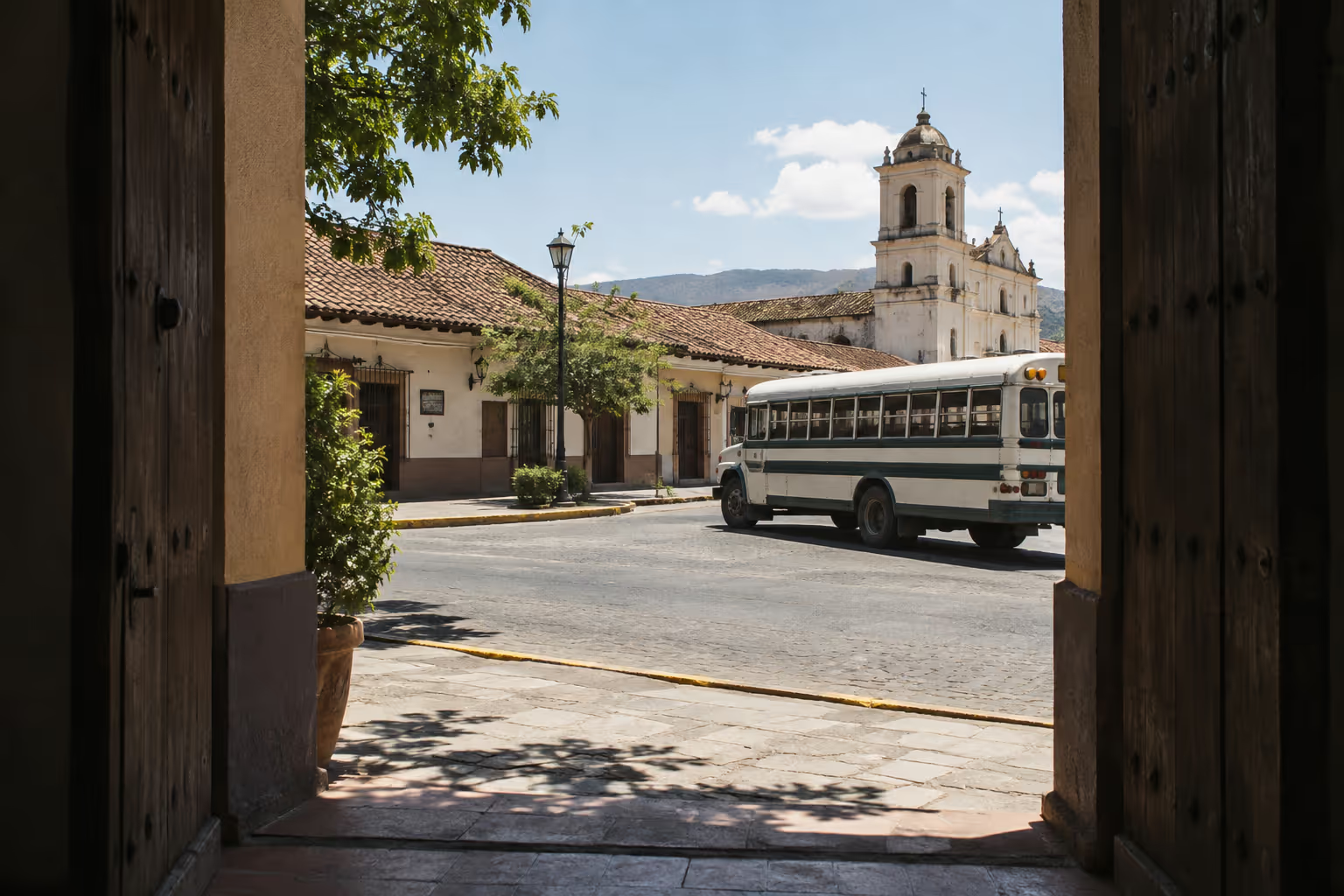
Most travelers treat Liberia as the airport exit on the way to the beach, and that skips the best reasons to stay a night. The top things to do in Liberia, Costa Rica are a walkable historic downtown, a municipal market serving everyday Guanacaste food, and a volcano national park and swimmable waterfall within driving range. Give the city a few hours and you’ll see the core. Give it a full extra day and you can pair it with a volcano hike or a waterfall swim before heading to the coast.
The trade-off comes down to two lists. In Liberia’s favor: it sits close to the airport, it has an old core with colonial adobe streets, and it gives you the shortest access to Rincón de la Vieja and the Guanacaste beaches. Against it: there are no beachfront hotels, the inland heat is harder to escape than on the coast, and evenings are quieter than in Tamarindo.
✓ Pros
- A downtown overnight can turn an airport arrival or departure into useful sightseeing time.
- The city makes a practical base when you want inland culture and nature rather than a resort stay.
- You can choose between a short town visit, a swim stop, a volcano hike, or a beach day.
✗ Cons
- The inland climate makes midday walking and exposed hikes harder to schedule comfortably.
- A car or other transport is needed to make most nearby nature trips practical.
- Evenings suit a quiet meal and plaza walk better than a late-night schedule.
Why Liberia Is Worth More Than a Layover
Liberia is Guanacaste’s inland gateway city, and its historic core, nearby volcano park and waterfalls make it worth at least one dedicated day rather than a straight drive to the coast. The city pairs downtown history and food with volcanic landscapes and Pacific beach trips, which is why it works as a base and not only as a transit point. Frommer’s calls it a major jumping-off point for Rincón de la Vieja National Park (5).
The appeal is the combination. You can walk from the Museo de Guanacaste, housed in the old military barracks, to the whitewashed Ermita de la Agonía in the morning. After lunch you can be standing under the 30-foot (9 m) Llanos de Cortés waterfall (5)(9). Few Costa Rican towns put that much variety within an hour’s drive.
Liberia is also best known for its sabanero (cowboy) culture. It is one of the country’s oldest towns, with a population of roughly 55,000, and cattle ranching still shapes the surrounding lowlands (6). You’ll see that heritage in the Calle Real adobe houses and in the ranchland you cross on the way to the park.
Keep the city and the airport separate in your planning. This guide covers Liberia city itself: its streets, food and day trips. Airport logistics such as terminals, car-rental counters and transfers belong to the airport, which sits outside town, and we cover them separately in our guide to Costa Rica’s airports. If your only question is how to get out of LIR quickly, that article is the one you want.
Repeat visitors use Liberia for three practical things:
- A first or last night that avoids a long drive to or from a flight
- A supply stop for groceries, cash and fuel before the beach
- A base for Rincón de la Vieja, which is much closer to Liberia than to any beach town
What most guides get wrong: they describe Liberia as a place with nothing to do. The downtown circuit is small, but it’s complete, and the city is the most efficient launch point for the volcano.
Things to Do in Liberia, Costa Rica: Exploring the Historic Downtown
Liberia’s historic downtown is a compact walking circuit of the central plaza, the main church, the Museo de Guanacaste and La Ermita de la Agonía, and it fits into a morning or a late afternoon. Everything sits within a few blocks of the Plaza Central, so you don’t need a car or a taxi once you’re in the center.
Liberia city follows a standard Spanish colonial grid, so orientation is easy: find the plaza and count blocks from there. Walk it early. By midday the inland heat builds, and the shade on the plaza benches is the most useful amenity downtown. Here’s how the stops rank if your time is limited:
- Worth the detour: Calle Real’s colonial streets and La Ermita de la Agonía (if your timing matches its hours)
- Worth a quick stop: the Central Plaza and main church
- Skip if short on time: Museo de Guanacaste, unless a current exhibit or event interests you
Museo de Guanacaste and Its Former Barracks
The Museo de Guanacaste sits just off the northwest corner of the central plaza, in the city’s former military barracks and prison (5). The building dates to 1940 and takes up a full city block. Locals call it the Comandancia de Plaza de Liberia or El Cuartel (5).
Set your expectations before you go. The museum has no real permanent collection. The space is mostly used for traveling exhibits and cultural events such as concerts, lectures and recitals (5). Because the programming leans on rotating exhibitions rather than a substantial permanent collection, check the current exhibit schedule before visiting instead of assuming a fixed, always-available collection. Walking in on a random weekday afternoon may get you an empty hall, while showing up for an evening recital gets you the building at its best. Check the current exhibit and event schedule before you plan around it. No reliable hours or admission figures are published for the museum, so confirm them locally or by phone (tel. 2665-7114) (5).
The building itself is the constant. The barracks architecture is worth a few minutes from the outside even when nothing is on inside.
La Ermita de la Agonía: Hours and What’s Inside
La Ermita de la Agonía, built in 1865, is the only colonial-era church left in Guanacaste (5), a whitewashed chapel that now holds a small religious-art museum (11). It sits five blocks east of the main church (11), and the walk there along Calle Real is half the reason to go. That stretch passes classic Spanish colonial adobe houses with ornate wooden doors, heavy beams, central courtyards and faded red-tile roofs (5).
Timing is the catch. Sources disagree on when you can get in. Frommer’s lists a narrow daily window of 2:30 to 3:30 p.m. (5), while Costa Rica’s official tourism board lists the religious-art museum as open daily from 2 to 4 p.m. (11). Arrive by 2:30 p.m. and you fall inside both windows. If the doors are shut, the exterior and the Calle Real walk still justify the trip.
A practical sequence is to do the plaza and museum in the morning, eat lunch at the market, then walk Calle Real to arrive at the Ermita around 2 p.m.
The Central Plaza and Main Church
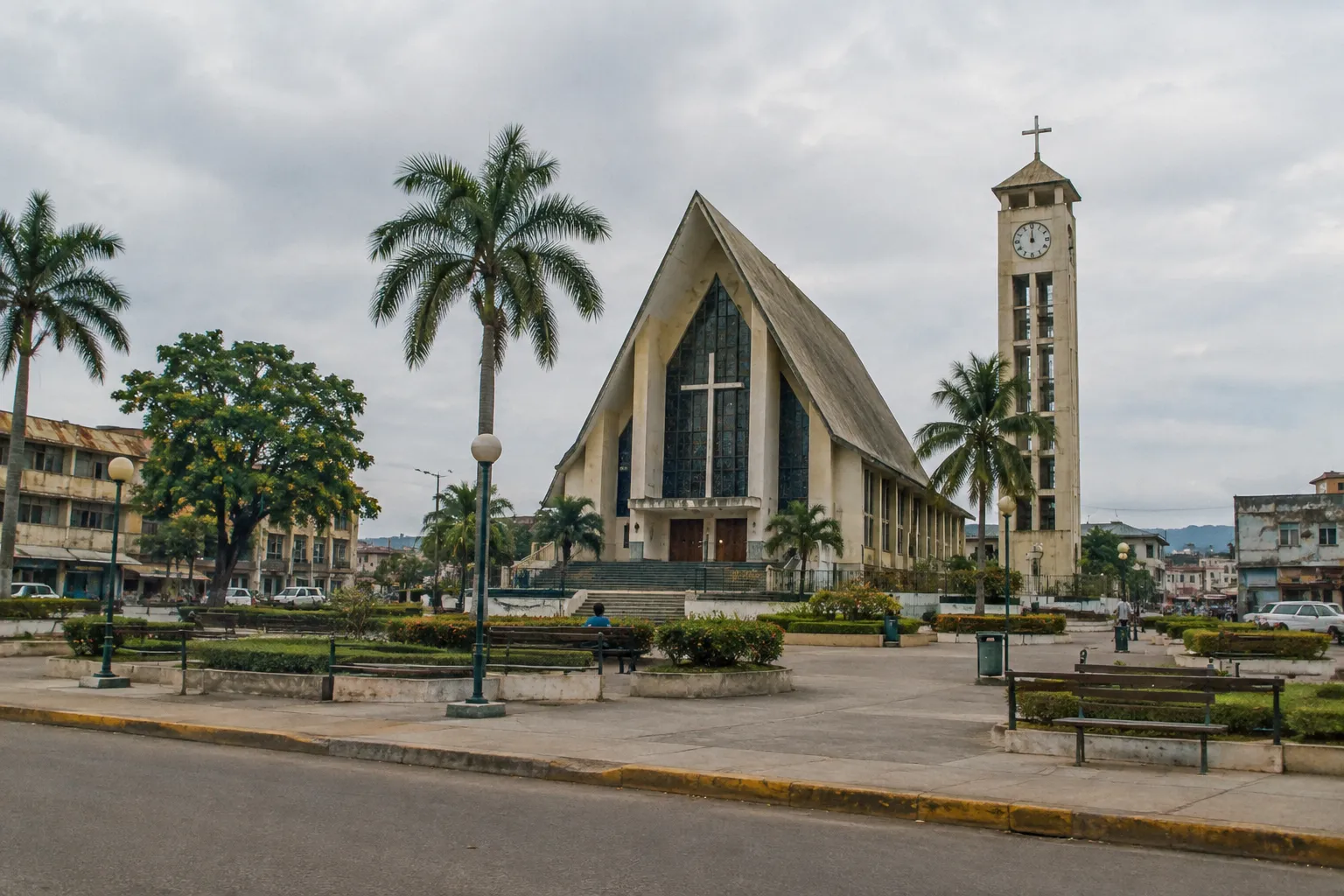
The Plaza Central is the social center of Liberia city, and it’s at its best in the early evening and on weekends. Families and couples stroll the loop, and the concrete benches fill with people-watchers (5).
On the plaza’s northern edge stands the Iglesia de la Inmaculada Concepción, Liberia’s main church. It was built in 1972 and has a tall A-frame central nave and a separate clock tower, a sharp concrete obelisk (5). It’s modern rather than colonial, so don’t expect the Ermita’s age. The church is generally open from 6 a.m. to 6 p.m., sometimes later for masses (5).
Fifteen minutes covers it. Come back at dusk if you want to see the plaza busy.
Liberia Restaurants and the Municipal Market: Where to Eat
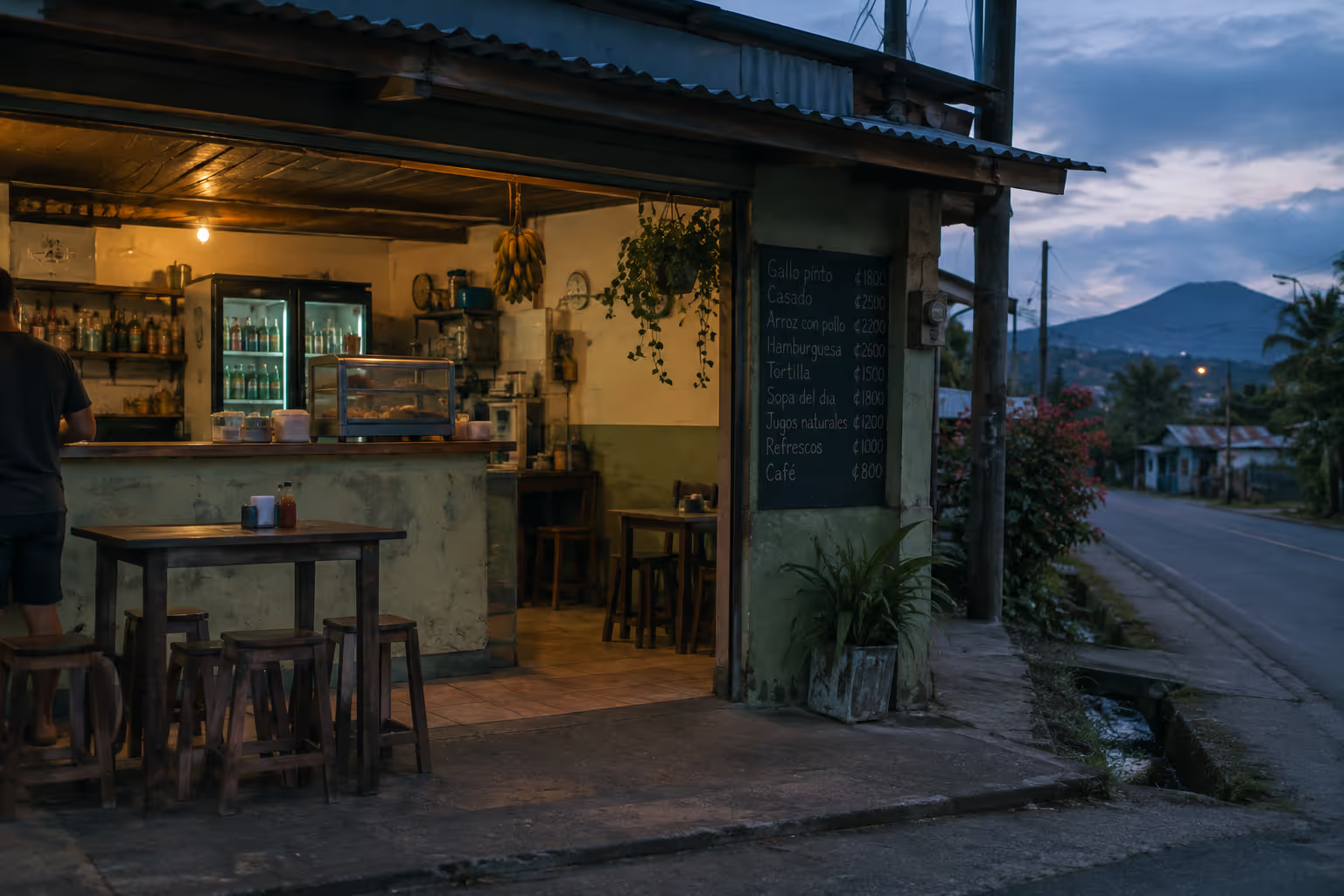
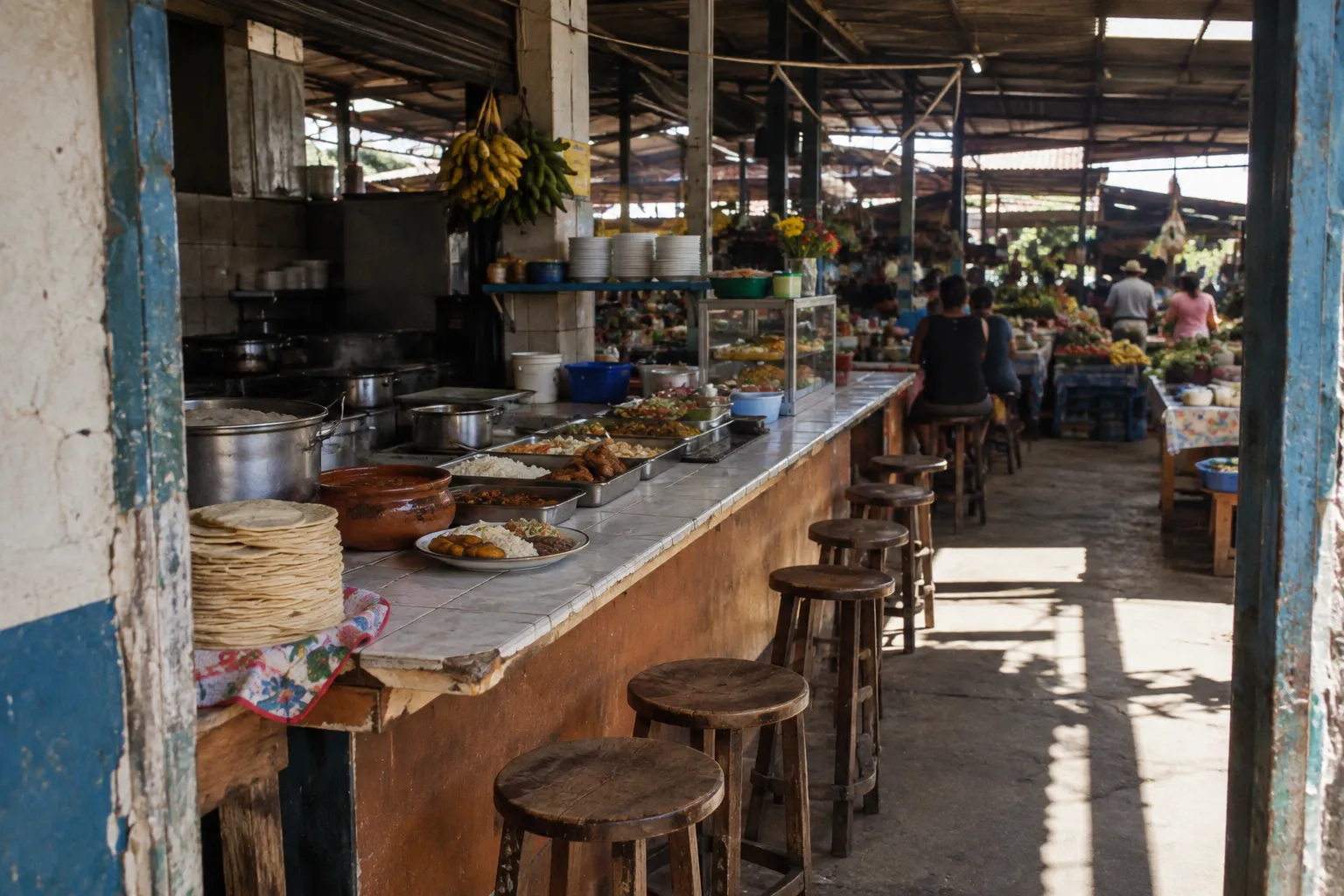
The Mercado Municipal is the best place to eat everyday Guanacaste food in Liberia. Market stalls serve gallo pinto, tamales and homemade tortillas, while sit-down restaurants in the center cover longer, air-conditioned meals. Choose the market for flavor and speed and a restaurant for comfort.
Mercado Municipal: Everyday Guanacaste Food
The municipal market is where Liberia shops and eats, and it shows you city life that the plaza doesn’t. Look for gallo pinto (rice and beans, the national breakfast), tamales and tortillas pressed and cooked by hand. The Guanacaste region leans heavily on corn, so tortillas are the item worth seeking out.
Expect plastic stools, counter service and noise. Market stalls typically operate from morning into mid-afternoon and wind down earlier than restaurants, but posted hours weren’t available, so aim for breakfast or an early lunch to find the full range of stalls open. No verified price range exists for market dishes. As a relative guide, a market meal costs noticeably less than a sit-down restaurant meal in town and far less than beachfront dining in Tamarindo.
For kids, the market is an easy win. Portions are simple, rice-and-bean plates aren’t spicy, and fresh fruit juices are common at Costa Rican market counters.
Sit-Down Restaurants in the City Center
Liberia restaurants in the center cluster around the plaza and the main streets leading off it. They offer table service, air-conditioning in some places and menus that go beyond market staples. They’re the better choice for dinner, since the market empties by late afternoon.
Families will find the central restaurants practical. Most serve a casado (a set plate of rice, beans, salad, plantain and a protein), which works for picky eaters and costs less than the tourist-oriented menus on the coast. If you’re staying one night before an early flight, eat near the plaza and walk back. It’s the easiest evening plan in town.
Day Trips from Liberia: Picking the Right One for Your Time
The best day trips from Liberia are Rincón de la Vieja National Park, Llanos de Cortés waterfall and a Tamarindo beach day. Match the trip to your time: a half day suits the waterfall, and a full day suits the volcano or the beach.
Start with how many hours you have. With only a few hours, stay in town. The downtown circuit of plaza, Museo de Guanacaste and La Ermita de la Agonía is the efficient plan, and a market lunch rounds it out. A full extra day justifies driving out for a nature-focused trip to Llanos de Cortés or Rincón de la Vieja (5)(9).
Here’s how the three options compare:
- Rincón de la Vieja is a full-day hiking trip with volcanic features, waterfalls and hot springs, depending on the sector. The Las Pailas sector lies about 25 km (16 miles) from Liberia: 5 km (3 miles) north on the Inter-American Highway, then east through Curubandé (13). Adult foreign admission is $16.95, bought online in advance (13). It suits hikers and anyone who wants the region’s defining landscape. Worth the detour.
- Llanos de Cortés is a half-day swim stop with a 30-foot (9 m) waterfall and a small white-sand beach at the base (9). It suits families, travelers short on time, and anyone who wants to cool off without hiking. Worth the detour if you have a spare afternoon.
- Tamarindo is a beach day about 78 km (48 miles) away. Driving takes about 1.5 hours, and the bus is slower (1). It suits travelers who want surf and sand without switching their base. Skip if short on time, since you’ll likely stay on the coast later anyway.
If you can only pick one, pick Rincón de la Vieja. It’s the one day trip that works better from Liberia than from anywhere else in Guanacaste.
Choose a Day Trip from Liberia
| Rincón de la Vieja | Llanos de Cortés | Tamarindo | |
|---|---|---|---|
| Time to allow | Full day | Half day | Full day |
| Main activity | Volcanic trails, waterfalls, or hot springs | Waterfall swim | Beach and surf |
| Best fit | Hikers seeking Guanacaste's volcanic landscape | Families or travelers with a spare afternoon | Travelers prioritizing a Pacific beach day |
| Planning constraint | Closed Mondays; online tickets only; dry-season waterfall entry by noon | Season affects waterfall flow and water clarity | Allow for a slower return by public bus |
Rincón de la Vieja National Park: Volcanoes, Hot Springs and Trails
Rincón de la Vieja National Park has two sectors, Las Pailas for volcanic trails and waterfalls and Santa María for hot springs. The Las Pailas sector is open Tuesday to Sunday, 8 a.m. to 3 p.m., and closed Mondays (13). The park is the main reason to base yourself in Liberia.
Two scheduling rules catch visitors out. The park is closed on Mondays, so a Monday itinerary built around it will fail. In the dry season (December to April), entry to the Las Pailas waterfall trail closes at noon, even though the sector stays open until 3 p.m.; in the rainy season, rangers can restrict it after heavy rain (13). That noon cutoff is stricter than the general closing time, and arriving at 1 p.m. with waterfalls as your priority means you’ve lost the day. Tickets are sold only online, through SINAC’s reservation system, so buy yours before you drive out (13).
The park sits on the flanks of the volcano, which has nine cones in total and a lagoon called Los Jilgueros (7).
Las Pailas Sector: Volcanic Trails and Waterfalls
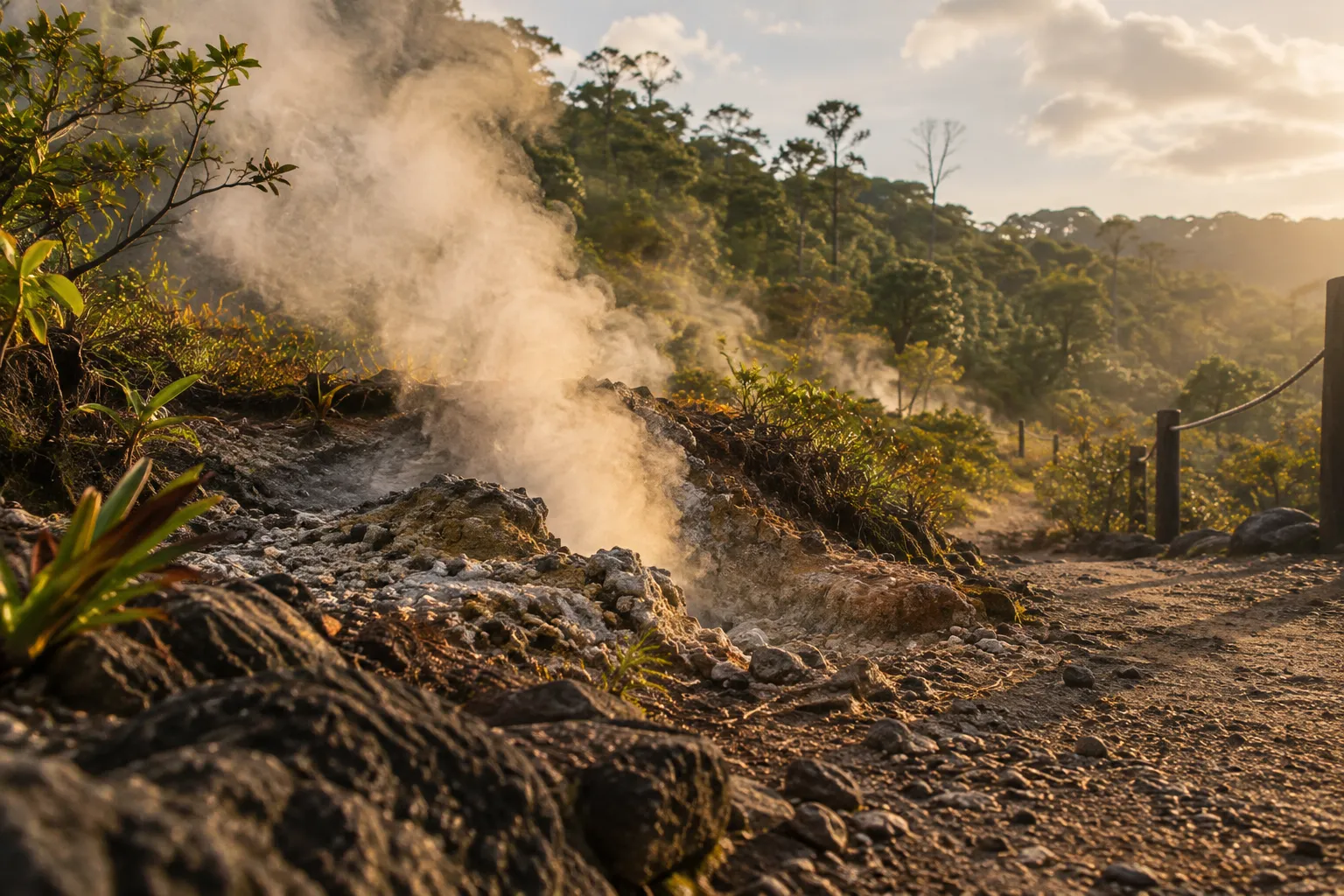
Las Pailas is the sector for volcanic activity. The Las Pailas circular trail runs 3 km (1.9 miles) and takes about two hours, past fumaroles, boiling mud pots and a steaming lagoon, the features most visitors come to see (13). It’s the shortest meaningful hike in the park and the right choice if you only have a morning.
The waterfall trail is longer. La Cangreja is 5 km (3.1 miles) each way and Escondida 4.3 km (2.7 miles) each way, about 4 to 5 hours round trip, and swimming is not allowed at either fall (13). Both fall under the noon entry rule. The route toward the Von Seebach crater, at 6,200 ft (1,890 m) above sea level (7), is closed because of volcanic activity and stays shut until the conservation area judges it safe (13).
Ranked by value:
- Worth the detour: the Las Pailas loop with fumaroles and mud pits (short, distinctive, doable in a morning)
- Worth the detour if you arrive before noon: La Cangreja waterfall
- Not available: the crater route, closed for volcanic activity
Santa María Sector: Hot Springs and Waterfalls
Santa María is the quieter sector, focused on hot springs and waterfalls. A hot-springs trail runs about 1.5 miles (2.4 km), and there’s a route to the Encantado (Enchanted) Forest waterfall (7). A linear trail of about 7 km (4.3 miles) links the Pailas area to Santa María’s hot springs (13).
The administration area has restrooms, picnic areas, a camping area, and a historic house and mill (7). Choose Santa María if you’d rather soak and walk than see mud pots. Santa María keeps its own days: the conservation area lists it as open Thursday to Monday, 8 a.m. to 3:30 p.m., at the same $16.95 foreign-adult rate (14), while Costa Rica’s tourism board lists it as open daily from 8 a.m. to 4 p.m. (7). Check that sector’s schedule before you leave Liberia.
Admission, Hours and What to Bring
Park admission is $16.95 for a foreign adult and $5.65 for a foreign child aged 2 to 12 (13). Tickets are sold only online through SINAC’s reservation system, which needs an account and a verified email, and the park takes no cash or card payments at the gate (13). The Guanacaste Conservation Area’s Las Pailas page was last updated in November 2025, so verify again the week you go.
Bring:
- Water, more than you think you need, because the lowland heat is intense
- Sunscreen and a hat for the open, unshaded stretches of the waterfall trail
- Closed-toe shoes for the uneven, sometimes muddy trails
- Snacks, since the park has no substantial food service inside
Pets are not allowed in the park. Stay on marked trails, especially around the fumaroles, where the ground near the mud pots is unstable and hot.
Plan a Day at Rincón de la Vieja
Choose the park sector and confirm its current access rules before setting out from Liberia.
- 1
Choose a sector
Pick Las Pailas for volcanic features and waterfall trails, or Santa María for hot springs.
- 2
Check current access details
Buy your ticket online, confirm the hours for your chosen sector, and avoid Mondays at Las Pailas.
- 3
Set an early arrival
Reach the park before noon if La Cangreja or Escondidas is part of your plan.
- 4
Pack for the trails
Bring water, closed-toe shoes, sunscreen and a hat for the exposed sections.
- 5
Leave pets behind
Arrange care at your accommodation; pets are not permitted in the park.
Llanos de Cortés Waterfall: A Quick Nature Break
Llanos de Cortés is a 30-foot (9 m) waterfall that drops into a swimming pool beside a small white-sand beach, and it’s the shortest nature outing from Liberia. Costa Rica’s tourism board describes the falls, the pool and the beach at the base (9). The site is run by the Municipality of Bagaces (15).
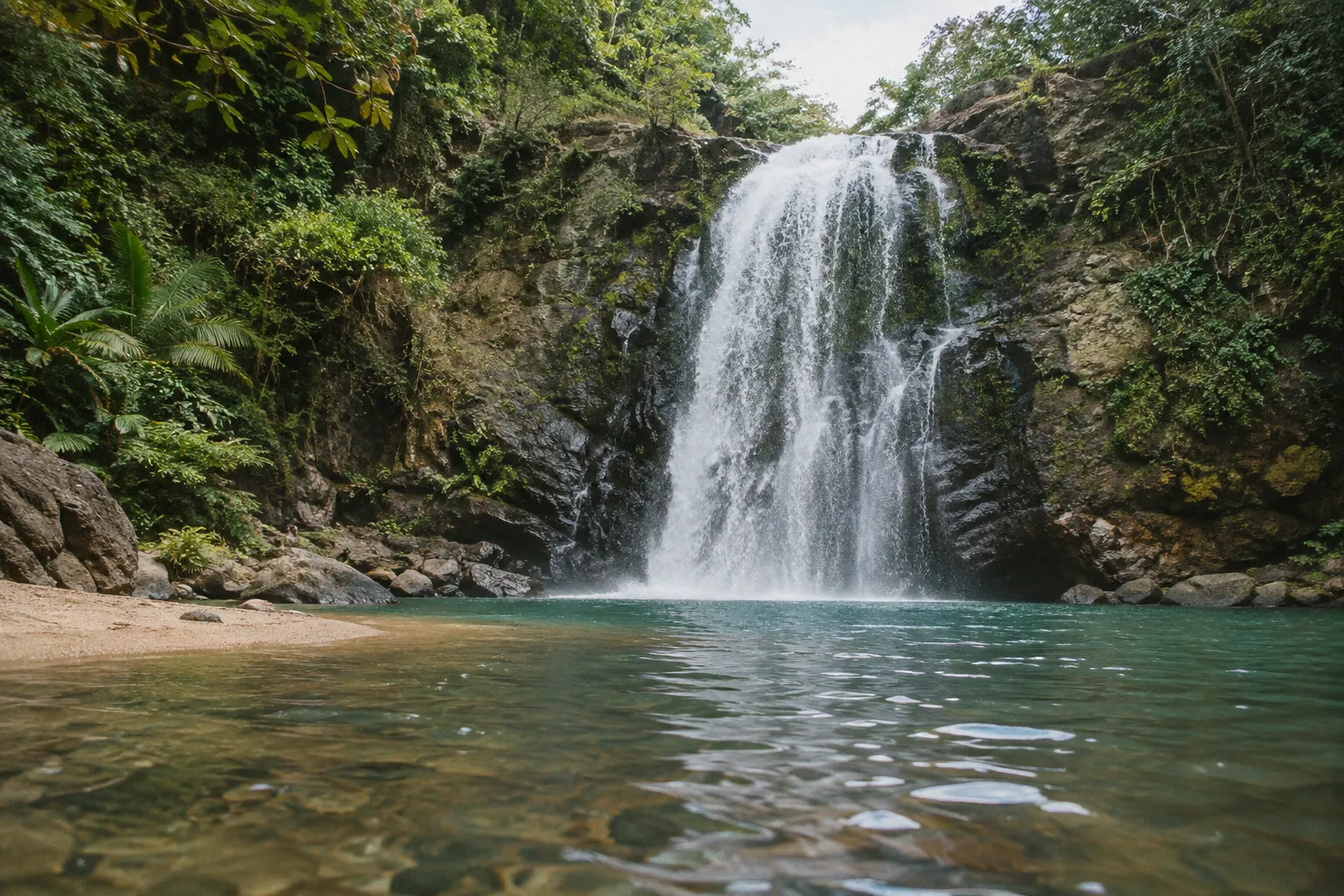
This is the alternative to a full national-park day. There’s no long trail and no noon cutoff to plan around. You park, walk down a short trail to the pool and swim. The water under the falls is the main attraction, and the sand at the base gives kids somewhere to play that isn’t a slippery rock ledge.
The falls sit about 25 km (16 miles) south of Liberia, off the Inter-American Highway toward Bagaces (5), and the drive is short enough to fit into a morning or a late afternoon. Exact drive times depend on traffic and parking, so plan for a half-day outing including the swim.
For fewer people, go early on a weekday. Weekends draw local families from Liberia and nearby towns, and midday brings tour groups heading between the beaches and the volcano. There is an entry fee at the gate: one visitor guide lists $7 for adults and $4 for children aged 7 to 12, daily hours of 8 a.m. to 4 p.m. with last entry at 3:30 p.m., and cash because card payments are unreliable (15). Bring small bills in colones.
The flow depends on season. Green-season rains make the falls fuller and the pool murkier. In the dry season the water is clearer but the cascade thinner.
Liberia to Tamarindo: Getting to the Beach
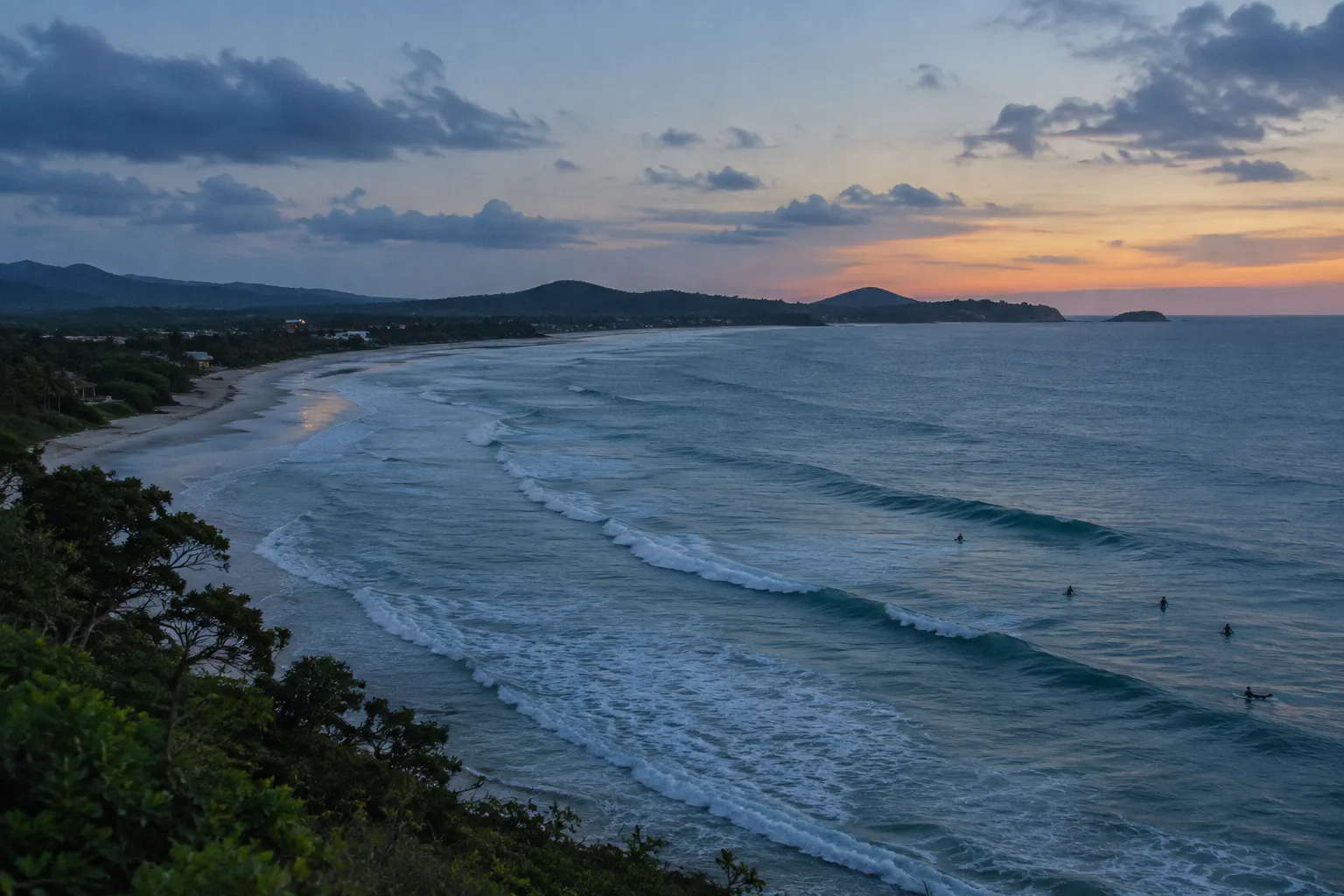
The road from Liberia to Tamarindo runs about 74-78 km (46-48 miles). Driving takes about 1.5 hours, and the public bus takes roughly 2.5-3 hours. Drive if your schedule is tight, and take the bus if your budget is.
Published figures vary more than you’d expect. One route guide puts the road at around 78 km (48 miles) (1), while a shuttle booking site lists 75 km (3). Both agree on the order of magnitude. They differ on the details because they measure from different starting points, the airport or the town center, and because shared shuttles, public buses and private cars behave differently on the road. Treat any single quoted duration as dependent on the route and the service.
Driving vs. the Bus: Which to Choose
Driving takes about 1.5 hours (1). Most of the route follows Route 21, a major road in generally good condition. Expect a smooth ride with occasional potholes or rough patches (1). With a rental car you set your own departure time, you can stop at a beach or supermarket on the way, and you arrive with luggage and flexibility. Parking in central Tamarindo is tight, so ask your hotel about space.
The public bus takes around 2.5 hours according to one route guide (1), and other route planners report closer to three hours. It’s the cheaper option by a clear margin and requires no navigation, but it adds at least an hour and ties you to a fixed schedule.
Shared shuttles fall between the two. Operators on this corridor run scheduled and on-demand transfers in air-conditioned minibuses. They take about 90 minutes, with departures roughly from 7 a.m. to 7 p.m. (3). They cost more than the public bus and less than a private taxi, and they pick up at the airport or your hotel.
The decision rule is simple:
- Short trip or tight connection: drive or book a shuttle
- Budget trip with open days: take the public bus
- Traveling with kids and gear: a car or shuttle saves a lot of hassle
Catching the Bus from Liberia’s Terminal
Direct buses to Tamarindo leave from the municipal bus terminal in Liberia’s town center, and some services also pick up at Liberia airport (1). Check which stop your bus uses before you land; if it only leaves from town, you’ll need a taxi in first.
Frequency isn’t consistent across sources. Some route planners list departures about every three hours, while other route information reports different schedules and durations. Check the posted timetable at the terminal the day before you travel, and confirm the Tamarindo departure bay with staff. Buses can fill up on weekends and around holidays, so arrive early. Carry small colones for the fare, because drivers can’t break large bills.
More to Explore: Family Fun, Nightlife and Nearby Attractions
Beyond the downtown circuit and day trips, Liberia has a family adventure park, a small art gallery and a quiet evening scene centered on the plaza. These fill a spare afternoon or evening but aren’t reasons to extend a trip on their own.
Ponderosa Adventure Park
Ponderosa Adventure Park sits outside the center and is the city’s main family-oriented attraction. It’s built around wildlife viewing and outdoor activities, with a safari-style format aimed at groups and kids. The activities on offer change, and some require advance booking, so check its official site for the current list and times before you drive out.
Choose it if you’re traveling with children and want a controlled wildlife experience. It’s a reasonable choice for a half day when the national park is closed on a Monday. Skip if short on time and you’re already planning Rincón de la Vieja, since the park gives you wildlife and landscape in a less staged setting.
Hidden Garden Art Gallery
Hidden Garden Art Gallery is a small cultural stop focused on Costa Rican art, located on the outskirts of the city rather than downtown. It suits travelers who want something quieter than another beach or trail, and it’s a practical stop on the way to or from the airport area.
Opening days are limited and the gallery is privately run, so confirm hours before making a special trip. It’s worth a detour for art-minded travelers and skippable for everyone else.
Nightlife and Evenings in Liberia
Evenings in Liberia are low-key compared with Tamarindo. The best evening plan costs nothing: walk to the Plaza Central at dusk, when families and couples fill the benches and loop the square (5). Follow it with dinner at one of the restaurants nearby.
Check the Museo de Guanacaste schedule, since its concerts, lectures and recitals are the city’s main cultural evenings (5). If you want bars and late nights, base yourself in Tamarindo instead.
Free and low-cost options in the city include:
- People-watching on the Plaza Central
- Walking Calle Real’s colonial adobe streets (5)
- Seeing the main church’s interior during open hours (5)
- A market meal at the Mercado Municipal
Best Time to Visit Liberia and Practical Planning Tips
The best time to visit Liberia for hiking and clear trails is the dry season, roughly mid-December to late April. The green season, roughly May through mid-December (12), brings fuller waterfalls, afternoon rain and muddier trails. Guanacaste is the driest region of Costa Rica, so the seasonal contrast here is sharp.
Dry Season vs. Green Season
In the dry season, the lowlands around Liberia turn brown and dusty, temperatures run hot, and Rincón de la Vieja’s trails are at their firmest. It’s the easiest time for the crater and waterfall hikes, and the busiest time for accommodation.
The green season softens the landscape and fills the waterfalls. Llanos de Cortés and La Cangreja carry more water. Afternoon storms are common, so start hikes early and aim to be off exposed trails by early afternoon. Early green season (May-June) is a good middle ground with fewer visitors and manageable rain.
Best month overall: January. The dry season is established, the trails are firm, and the heat hasn’t yet peaked the way it does by March and April.
As for the worst time to visit Costa Rica, the heaviest rain along the Pacific side typically falls in September and October. That question applies country-wide, since the Caribbean coast follows a different pattern. Our guide to the best time to visit Costa Rica breaks it down by region.
Liberia’s Cultural Week
Liberia’s Cultural Week takes place during the first week of September (9). It’s the city’s main reason to visit in the green season, with local traditions on display. Rooms in town book up that week, so reserve early if you’re planning around it.
Getting Around and Staying Safe
Downtown is compact enough to walk. Taxis cover the airport run, trips to the bus terminal with luggage and evening returns to hotels outside the center. For the day trips, a rental car is the most practical option, since public transport to Rincón de la Vieja and Llanos de Cortés is limited.
On safety, standard precautions apply. Don’t leave bags visible in a parked car at trailheads or waterfall lots, and carry only what you need downtown at night. Questions about the safest part of Costa Rica for tourists apply to the whole country rather than to Liberia specifically, and our Costa Rica safety guide covers regional differences in detail.
Frequently Asked Questions
- Is Liberia, Costa Rica worth visiting?
- Yes, Liberia is worth an overnight when you want a compact town visit or an inland base; it is less suited to travelers seeking a beach-resort stay.
- What is Liberia best known for?
- Liberia is best known as Guanacaste's inland gateway and for its sabanero heritage, visible in the region's ranching culture and historic streets.
- What is the worst time to visit Costa Rica?
- September and October are often the wettest months on the Pacific side; check conditions by region because the Caribbean coast has a different rainfall pattern.
- What is the safest part of Costa Rica for tourists?
- No part of Costa Rica is risk-free; choose lodging and transport with care, and avoid leaving valuables unattended in vehicles.
- How do you get from Liberia to Tamarindo?
- Travel by rental car, public bus, or shuttle; the bus requires the most schedule flexibility, so verify its departure details before setting out.
- Is Rincón de la Vieja open every day?
- No; Las Pailas closes Mondays and Santa María opens Thursday to Monday, and in the dry season the Las Pailas waterfall trail stops admitting hikers at noon.
- What is Ermita de la Agonía known for?
- Ermita de la Agonía is known for its historic chapel and religious-art collection; treat visiting access as a separate check from seeing the exterior.
Planning Your Time in Liberia
The split is simple. With a few hours, walk the plaza, main church, Museo de Guanacaste and La Ermita de la Agonía, then eat at the Mercado Municipal. With a full extra day, drive out to Rincón de la Vieja (not on a Monday, and at the trailhead before noon), cool off at Llanos de Cortés, or head to Tamarindo for the beach.
Before you leave Liberia, confirm three things: the current hours for your chosen park sector, the Ermita’s afternoon window, and the day’s bus timetable at the municipal terminal if you’re not driving. All three change more often than guidebooks update, and each one can cost you half a day if you get it wrong.