Playa Flamingo, Costa Rica is a beach for swimming and boating. It is not a snorkel-off-the-sand beach, and knowing that before you arrive saves you a wasted morning with a mask. The bay’s pale sand and usually small waves make for easy swimming, but the clear-water snorkeling is 30 to 45 minutes offshore at the Catalina Islands (12), which most guides gloss over. This guide covers what the beach is good for, which boat trips are worth booking, where to stay, and how to get there from Liberia in about an hour (9).
Playa Flamingo, Costa Rica: beach overview and swimming conditions
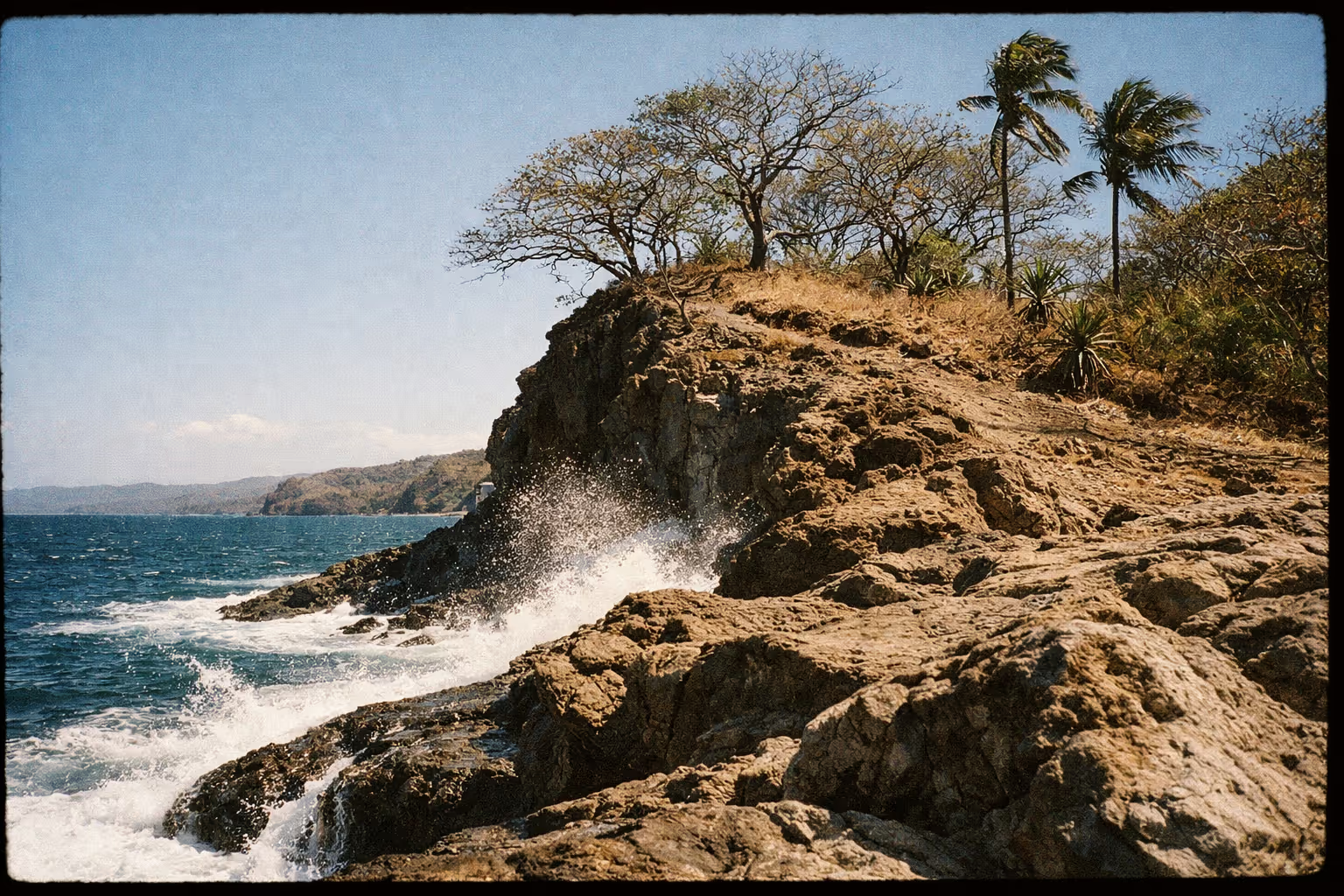
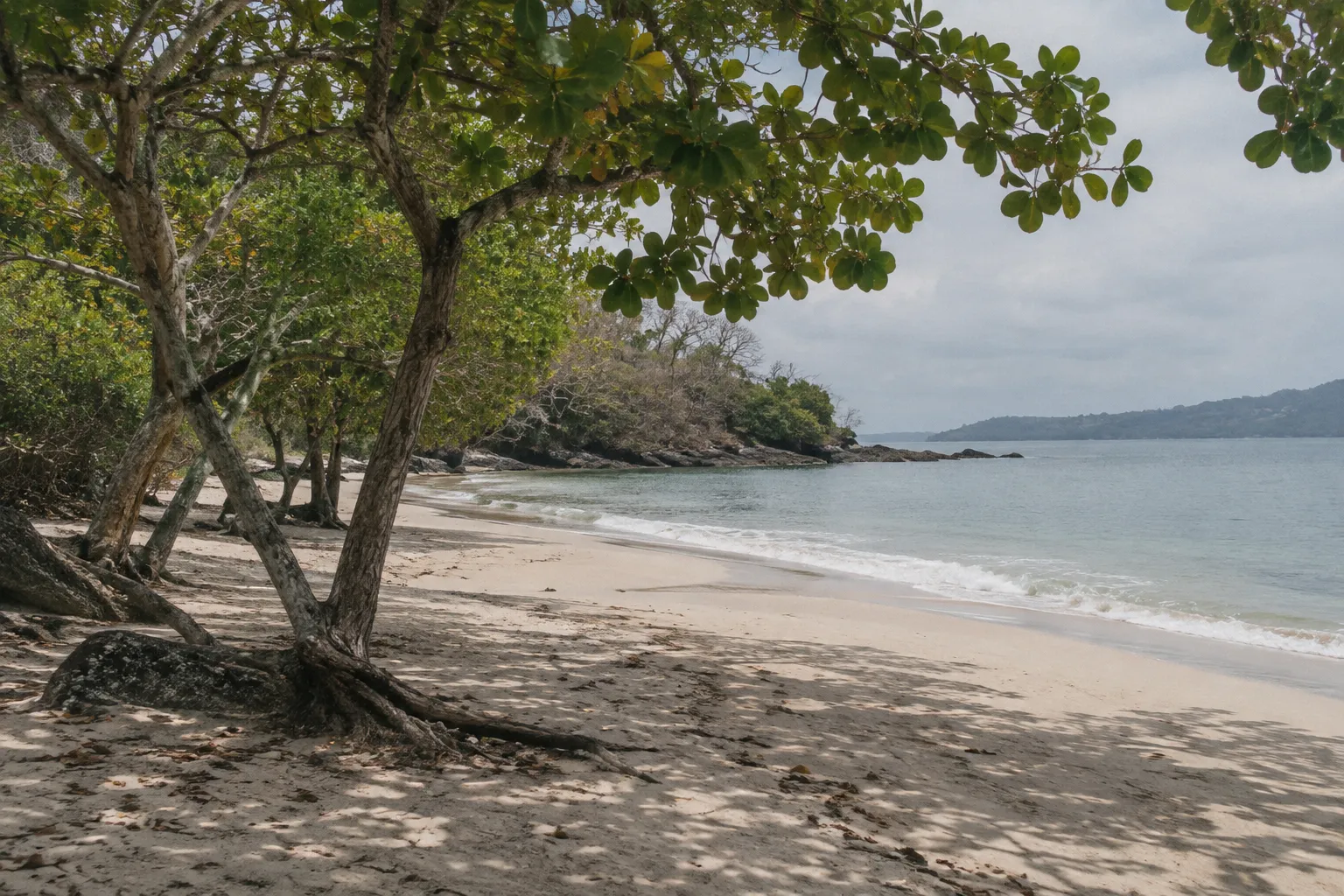
Flamingo Beach, Costa Rica is a 1 mile (1.5 km) crescent of pale sand in Guanacaste with usually small waves (10), but swimmers should know it has no full-time lifeguards (3). The town sits in the Cabo Velas district on the northern Pacific coast (3). The bay is framed by two rocky headlands, with villas climbing the hillside above the sand.
The beach is not named after the bird. There are no flamingos here, because the species doesn’t occur in Costa Rica. The name traces back to an early Canadian developer, George Howarth, who mistook a roseate spoonbill for a flamingo (6).
Flamingo is not a dependable surf break either. It is better suited to swimming and boating, with surf only occasionally when a large swell arrives (9)(12). If waves are the point of your trip, base yourself in Tamarindo instead (covered below).
Beach length and the northern vs. southern stretch
At 1 mile (1.5 km), you can walk the whole beach in well under an hour (10). The northern end is generally the busiest, partly because it is the easiest section to reach from nearby accommodation (10). The southern stretch tends to be quieter in comparison.
Shrubby trees along the upper beach give some shade. Some of these are manchineel trees, which produce a poisonous apple (10). Don’t eat the fruit, don’t touch your eyes after handling it, and don’t shelter under one during rain.
Swimming safety: waves, lifeguards, and when to be cautious
You can swim at Playa Flamingo, and on most days it is one of the calmer bays on this coast. Waves are usually small but can sometimes be powerful (10). One local guide describes the main bay as free of rip currents (12). That is encouraging, but it doesn’t replace looking at the water yourself.
There are no full-time lifeguards on the beach (3). In practice that means:
- Check the water from the sand for a few minutes before you go in, especially after a swell forecast.
- Swim near other people rather than at an empty end of the beach.
- Keep children within arm’s reach when the shore break picks up.
- Treat “usually calm” as a description of typical conditions, not a guarantee.
Quick pros and cons of Playa Flamingo as a base:
- Pro: calm, swimmable bay on most days
- Pro: direct boat access to the Catalina Islands, sportfishing and sunset cruises
- Pro: full-service marina with dining and supplies
- Pro: one hour from Liberia airport on paved road (9)
- Con: limited snorkeling directly off the sand (3)
- Con: no full-time lifeguards (3)
- Con: fewer surf and nightlife options than Tamarindo (9)
✓ Pros
- A practical base for fitting beach time and offshore outings into one stay.
- Marina access makes early boat departures easier to manage.
- Nearby towns give you alternatives without changing accommodation.
✗ Cons
- The beach is a poor fallback for a snorkel day when boats cannot go out.
- Beach access and quiet are competing priorities at the northern end.
- Without a car, the nearby beaches are harder to reach, since they are spread along the coast.
Things to do in Playa Flamingo
The core things to do in Playa Flamingo are swimming the bay, booking boat trips from Marina Flamingo, snorkeling or diving the Catalina Islands, and sportfishing charters (1)(10)(12). Catamaran cruises and sportfishing lead the list of water activities in one local guide (10). Here is how they rank if your days are limited.
Worth the detour:
- Catalina Islands snorkel or dive trip. This is the reason to choose Flamingo over a surf town. It covers the clear water the beach itself doesn’t offer.
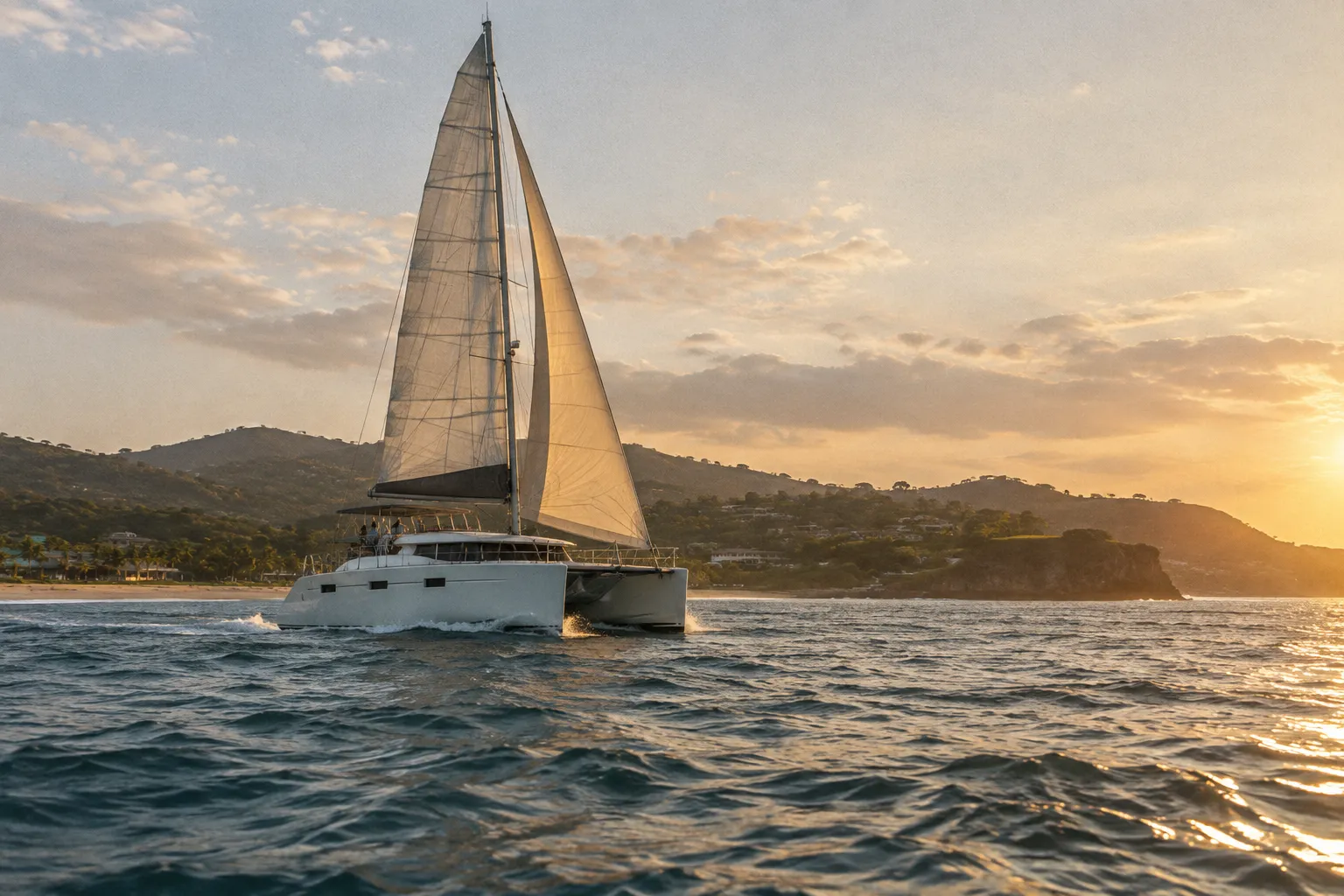
- Catamaran cruise with a swim stop. The easiest half-day on the water. A sunset departure doubles as your evening plan.
- Sportfishing charter. The marina’s main draw if you fish. Marina Flamingo advertises easy access to nearby fishing grounds, along with diving and sunset cruises (1).
- A slow beach morning on the bay. It’s free and calm, and the best water conditions usually come before the afternoon wind.
Skip if short on time:
- Shopping at the marina village. The operator lists boutique shopping and a supply store open 7 days a week (1)(2). It’s useful for provisions, but you don’t need to set aside time for it.
- Driving inland along Route 180. You’ll find a few restaurants and hotels scattered among farm fields and forest (10). It’s pleasant, not essential.
Flamingo works as a functioning town rather than a resort campus, with restaurants, services and a mixed community of expats and Costa Ricans (12). You won’t need to leave town for groceries or a meal out.
Playa Flamingo snorkeling: the beach vs. the Catalina Islands
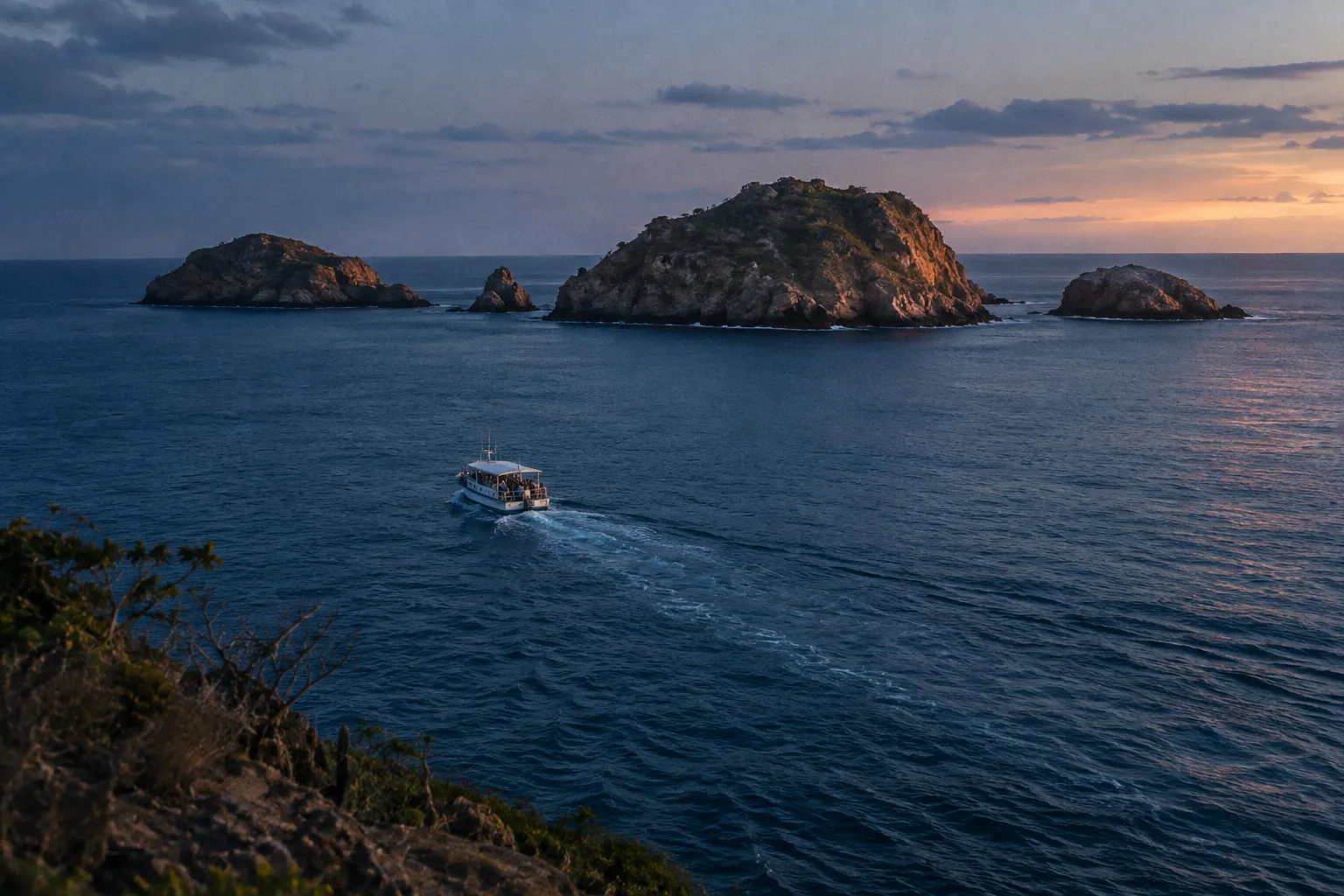
Playa Flamingo snorkeling is weak directly off the sand because the bay is sandy with limited nearshore visibility. The clear-water option is the Catalina Islands, about 30 to 45 minutes away by boat (12). If snorkeling matters to you, plan the boat from the start.
Why nearshore visibility is limited
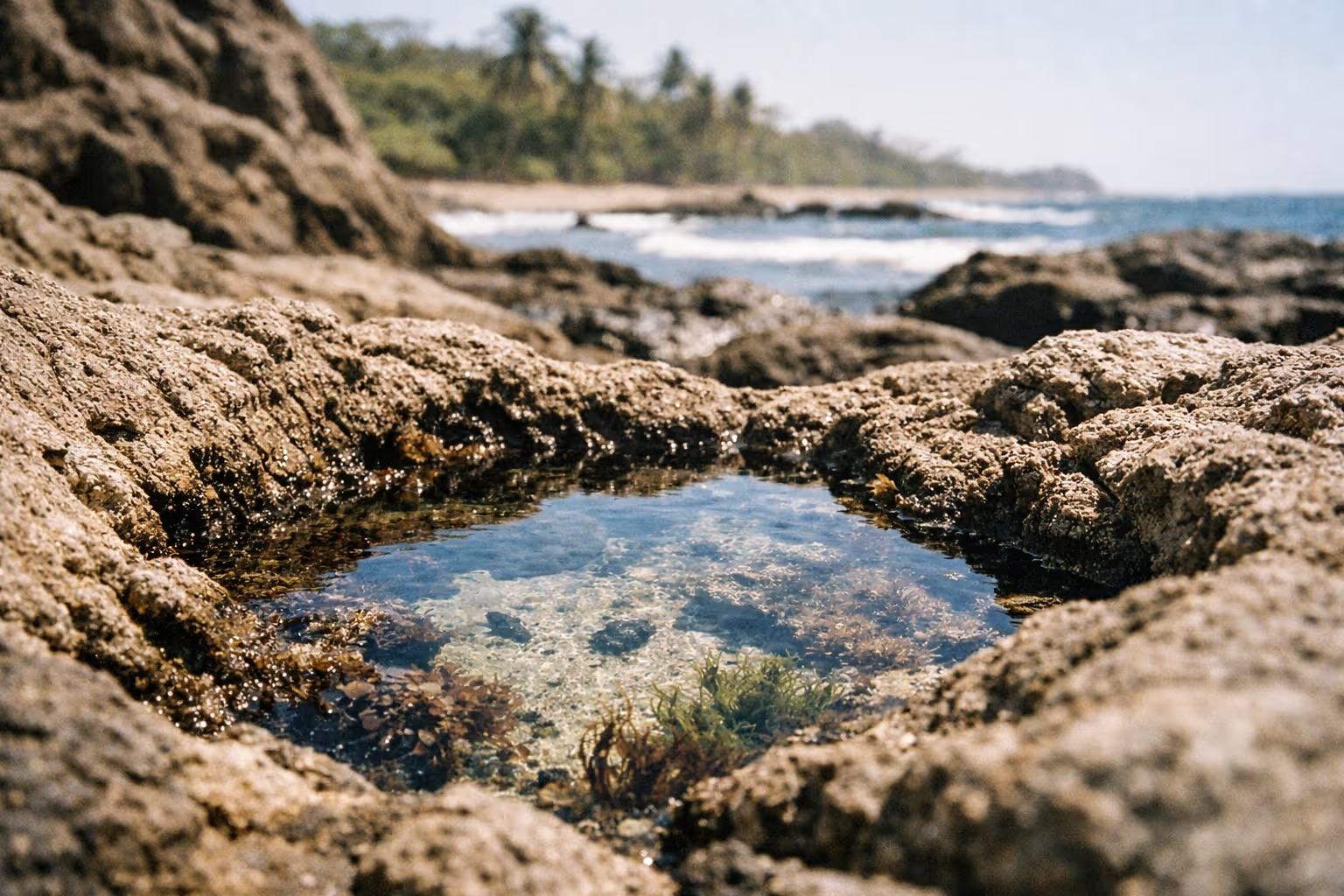
The bay has a sandy bottom, and visibility close to shore is described as limited (3). A sand floor also gives fish little structure to gather around, so you see less even on clearer days. From the beach, the best you are likely to see is the occasional ray or cornetfish on a calm morning (3). With no lifeguards on duty (3), don’t swim out alone toward the headlands looking for better water.
So when an operator or rental listing mentions “snorkeling in Flamingo,” ask where the snorkeling happens. Most of the time, the answer is offshore.
Booking a Catalina Islands snorkeling trip
The Catalina Islands are a cluster of offshore rocks and islets that a local guide describes as a major regional dive site (12). The marina also promotes diving access (1). The boat ride out takes 30 to 45 minutes according to one local guide (12), and 20 to 25 minutes from Flamingo according to a Catalinas dive guide (13), so plan on the trip taking up most of a morning.
Booking mechanics worth checking before you pay:
- Departure point. Some trips leave from the marina and others load from the beach. Confirm which, and how early to arrive.
- Destination and conditions. Compare where the boat goes and what water conditions to expect, not just which beach it departs from. A cheap trip that anchors in the bay defeats the purpose.
- Inclusions. Equipment, food and drinks vary by operator. Assume nothing is included unless it is listed.
- Snorkel vs. dive boat. If anyone in your group is certified, a dive boat to the Catalinas often carries snorkelers too. If nobody dives, a dedicated snorkel trip spends more time at shallow sites and less on dive briefings.
For calmer crossings, aim for the late-February-through-May window, when the Papagayo winds are fading (3). That window is covered in the weather section below.
Boat trips, catamaran cruises and the marina
The classic boat trip from Playa Flamingo is a catamaran cruise with time to swim and snorkel in one of the calmer coves along the coast (10). Marina Flamingo also runs as the base for sportfishing, diving and sunset cruises (1). If you only book one outing, the choice comes down to the catamaran (social, easy) or the Catalina Islands trip (better water).
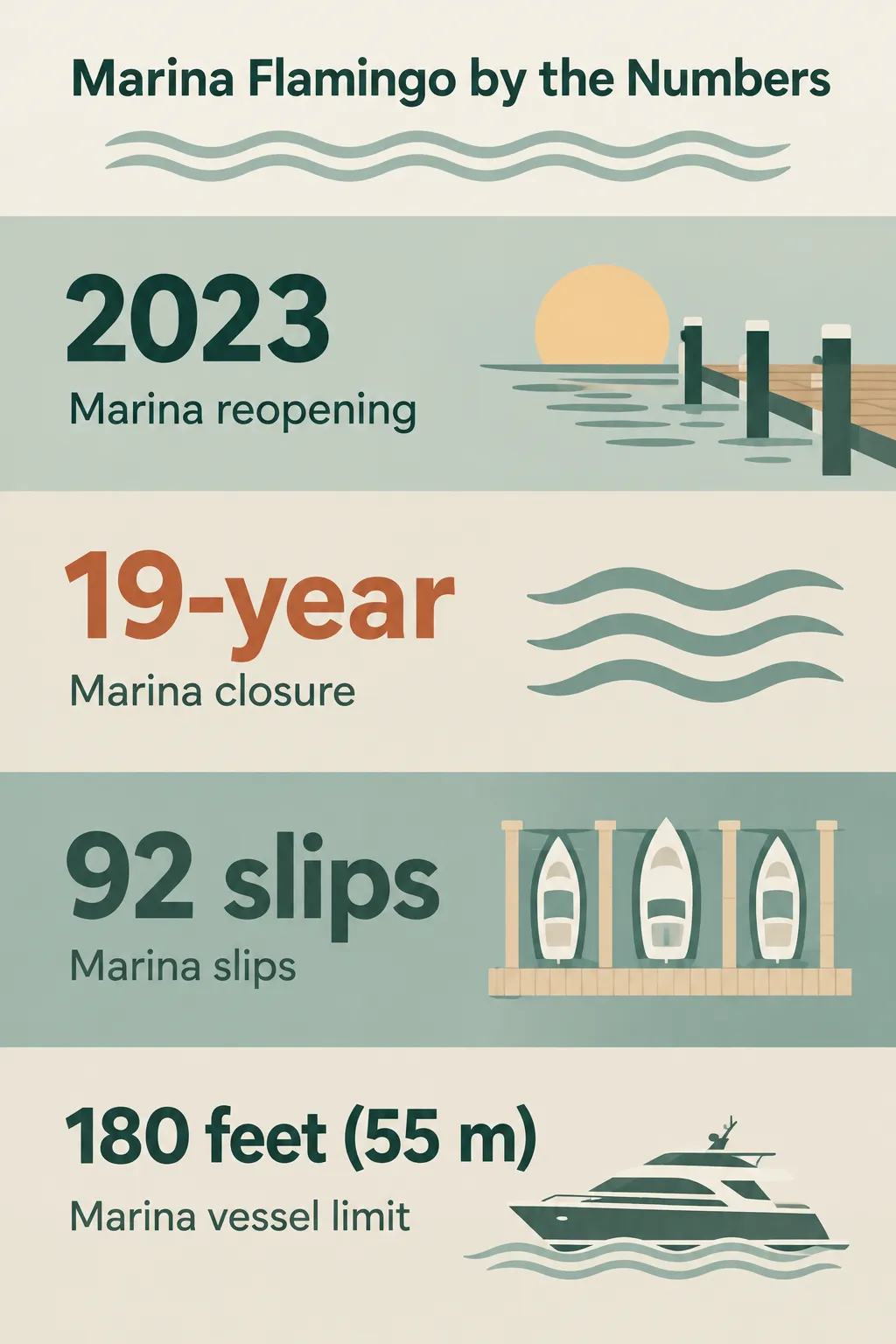 Marina Flamingo reopened in 2023 after a 19-year closure; its operator lists 92 slips and wet slips for vessels up to 180 feet (55 m).
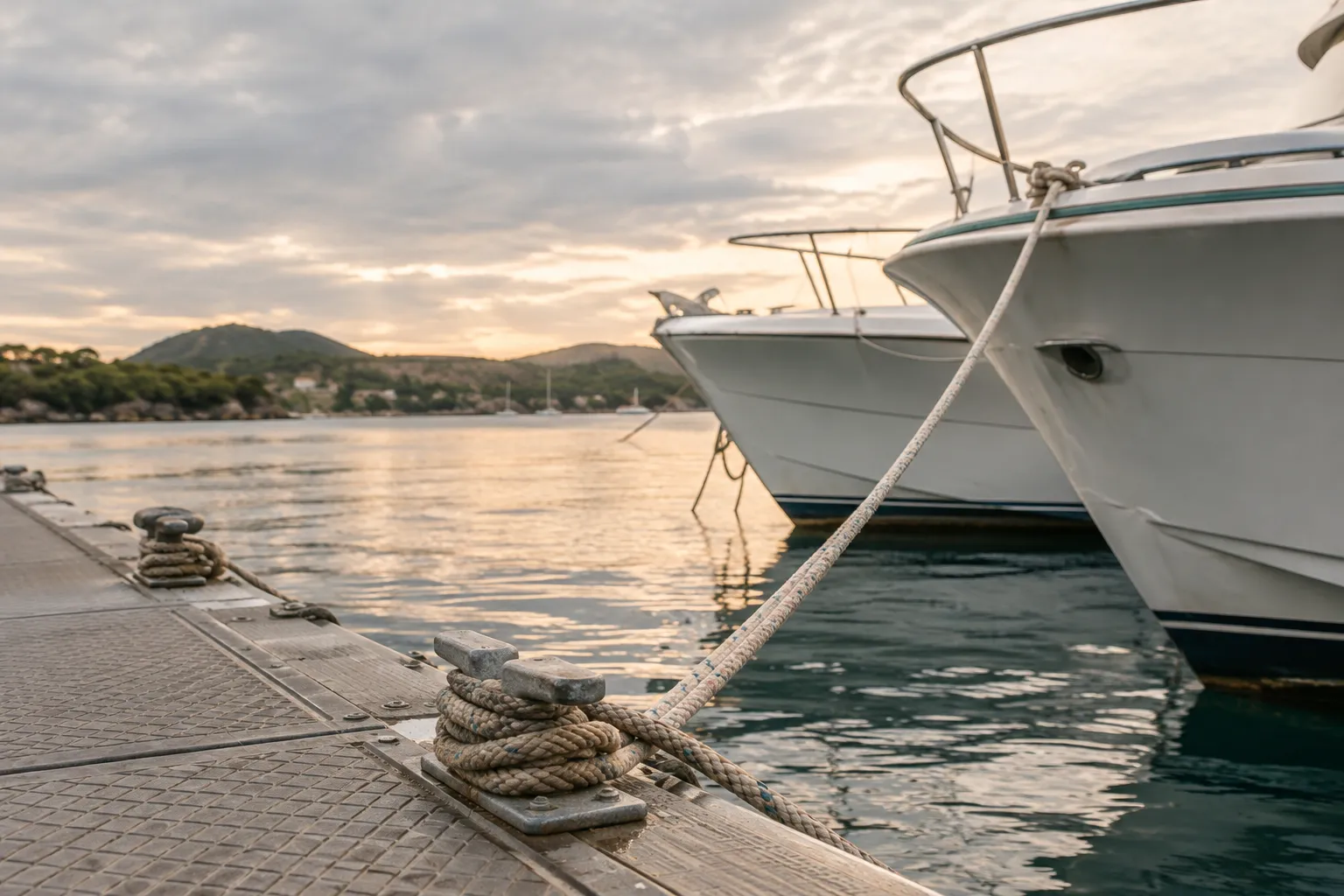
Catamaran sailing and snorkel-stop cruises
A typical catamaran outing combines sailing with a stop for swimming or snorkeling. Some listings include snorkel gear, food or drinks, but inclusions vary by operator. Read the itinerary line by line. “Snorkel stop” can mean the Catalina Islands or a sheltered cove closer to shore, and those are very different experiences.
Most operators run both a morning and an afternoon tour, and in the dry season (December through April) the afternoon departure almost always ends with a sunset (10). Morning departures suit you better if snorkeling matters more than the light.
Marina Flamingo: slips, fuel, and services
Marina Flamingo reopened in 2023 after a 19-year closure (3). That is why older guides describe the town without a working marina. The operator lists 92 slips with floating docks inside the breakwalls (2) and says its wet slips accommodate vessels up to 180 feet (55 m) (1).
Listed facilities include (2):
- Electric, water, Wi-Fi and dock boxes at the slips
- A high-speed marine fuel dock and sanitary pump-outs
- Restrooms, showers and laundry
- Secure storage and access-controlled gated facilities
- 24-hour professional security
- An on-site supply store open 7 days a week
The operator also advertises helipad access (1). If you’re arriving by boat, slips are requested through a reservation form on the marina’s own site (2). Submit it before you sail rather than radioing in on arrival.
For non-boaters, the marina is the most practical place to compare fishing, diving and sunset-cruise operators side by side before you commit.
Where to eat near the marina
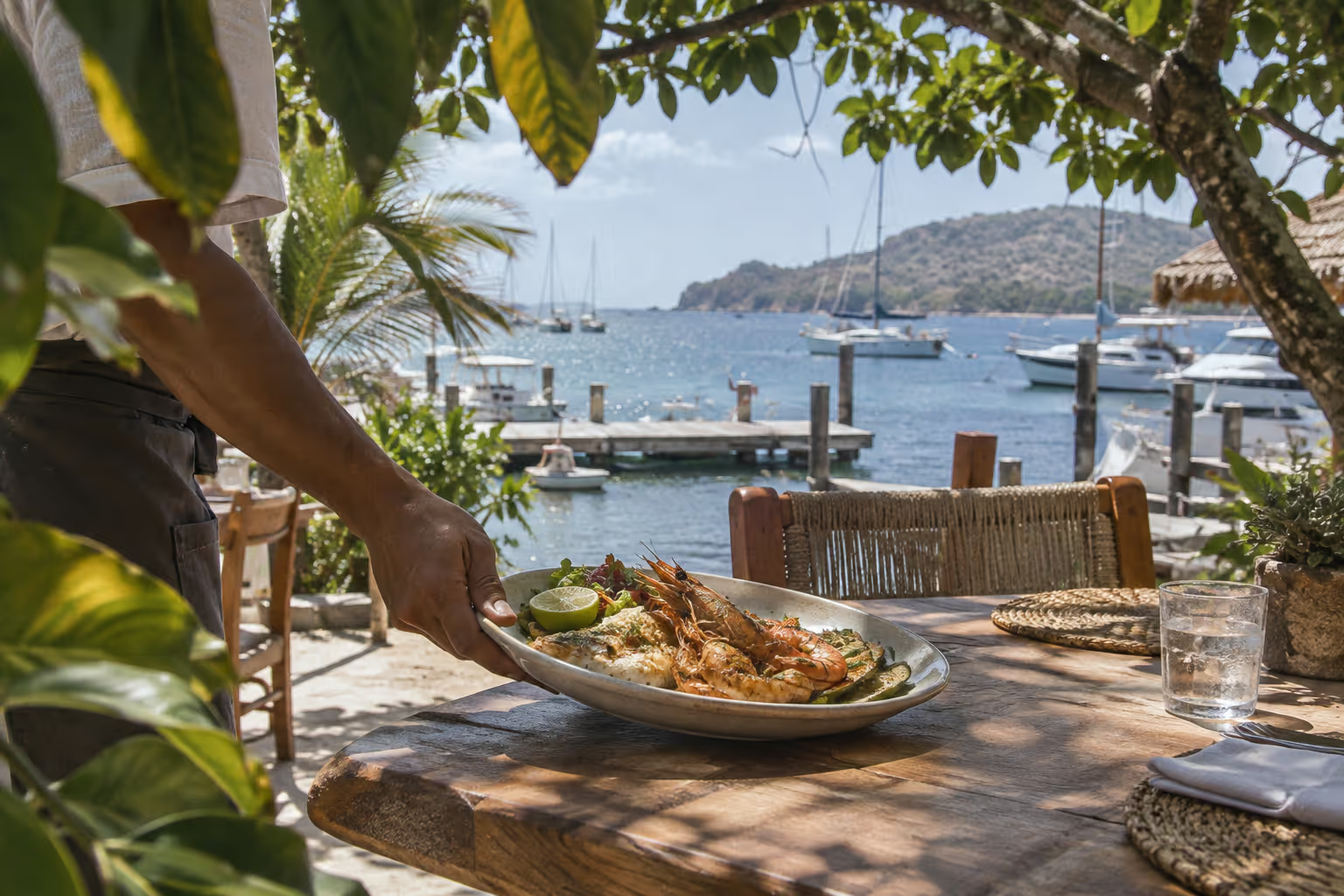
Marina Flamingo advertises on-site restaurants and oceanfront dining within its village (2)(1). The operator also lists a Kingfisher Club and an outdoor club pool and bar (2). Check access rules before you go, because club facilities at marinas are often restricted to members or slip holders.
Beyond the marina, the town has its own restaurants, and a few more line the main road inland along Route 180 (10). For a casual meal after a boat day, the marina village is the shortest walk from the dock.
Where to stay in Playa Flamingo
For the easiest beach access in Playa Flamingo, stay near the northern end of the 1 mile (1.5 km) beach, which is closest to beachfront accommodation and is the busiest section. Choose the hillside or the southern stretch if you want quieter sand (10). The decision comes down to convenience against calm.
Staying near the northern end vs. the hillside
The northern end puts you closest to the sand and to the beachfront hotels (10). You walk out the door and you’re on the beach. The trade-off is that the same convenience brings everyone else there too.
Higher-end properties are concentrated on the hillside above the bay (10)(11). Hillside stays trade a short barefoot walk for elevation, privacy and wider ocean views. Expect to drive down or walk a steep road to reach the beach, which matters if you’re traveling with small children or lots of beach gear. Since a rental car is the norm in this area anyway (3), hillside lodging is less of a burden than it sounds.
Hotels, condos, and vacation rentals
Accommodation in Playa Flamingo falls into three broad types: beachfront hotels, condos and vacation rentals, with the more upscale options on the hillside (10)(11). The marina also offers its own waterfront stays, from studios to one-, two- and three-bedroom villas (1). These suit you if your trip is built around boat days.
How to match lodging to your trip:
- Beach-first, low effort: a hotel or condo near the northern end of the bay.
- Boat-first (fishing, diving, Catalina trips): a marina villa, so early departures are a short walk.
- Quiet, views, longer stay: a hillside condo or vacation rental.
Is Playa Flamingo expensive?
Playa Flamingo is positioned as an upscale beach town (9) and is commonly described as a luxury destination in Guanacaste (10). Expect lodging and dining to sit at the higher end for the region. To bring costs down, the green season (May to November) brings lower prices in exchange for afternoon showers (3). Basing yourself in a nearby town and visiting Flamingo for the day is another option.
Nearby beaches and day trips: Potrero, Brasilito, Conchal and Tamarindo
From a Playa Flamingo base, you can fit two or three nearby beach towns into a single day: Potrero and Brasilito/Conchal are about 10 minutes away by car, and Tamarindo is about 30 minutes south (9). Short drives make Flamingo an efficient base rather than a one-beach commitment.
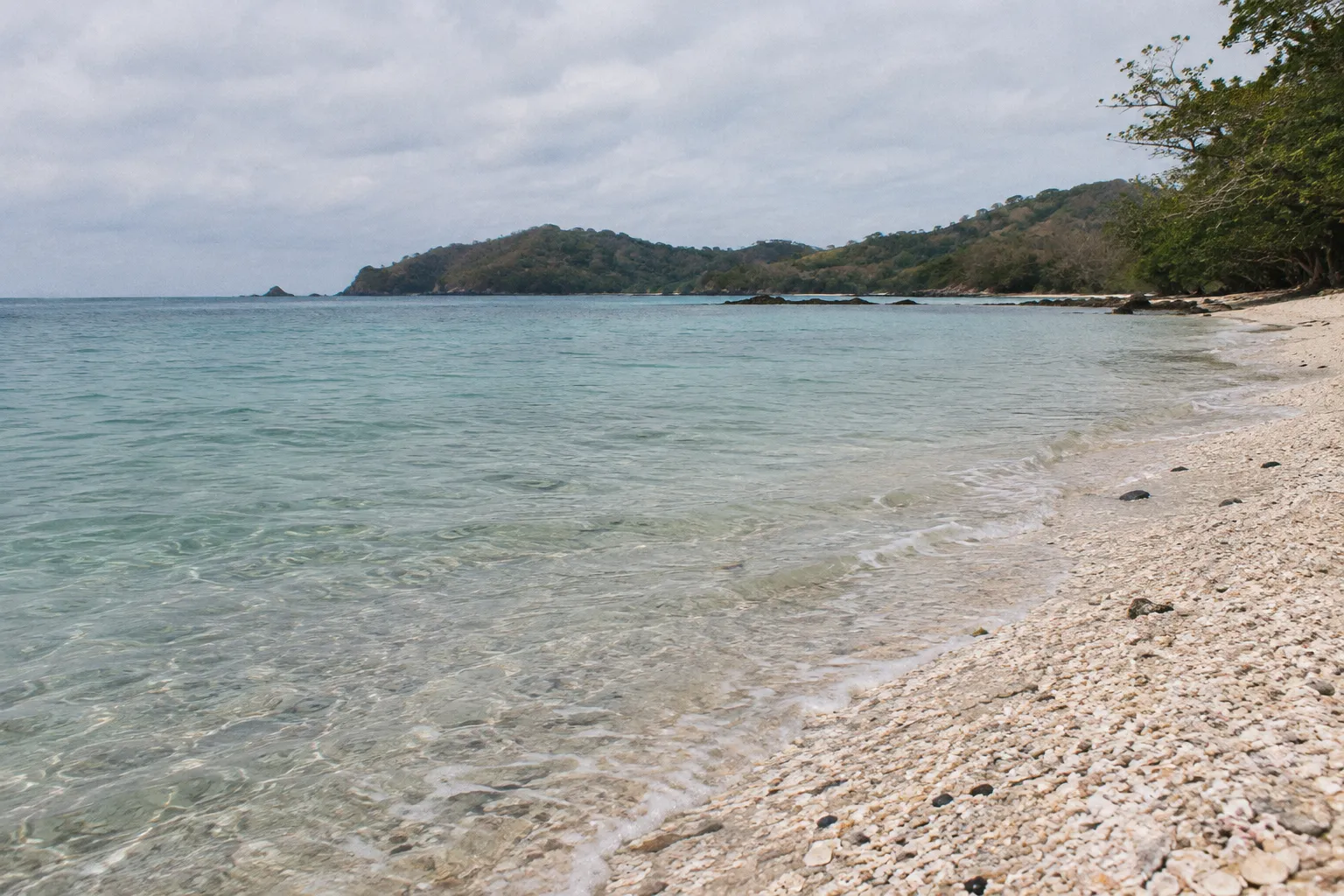
Potrero, Brasilito, and Conchal: a quick day trip
Playa Potrero sits just north of Flamingo, around the same bay (9)(10). Brasilito and Conchal lie to the south (10). At roughly 10 minutes each (9), you can do a morning swim at one, lunch at another and be back at your lodging before the afternoon heat.
These are the easiest day trips in the area. They also work as alternative bases if you want to sleep somewhere quieter and drive into Flamingo for boat departures. Arrange a rental car for this, since the beaches are spread along the coast (3).
Flamingo vs. Tamarindo: swimming and boats or surf and nightlife
Flamingo is built around calm-water swimming and boat excursions. Tamarindo, about 30 minutes south, is the area’s surf town and has more nightlife (9). Choose based on what you want from the water and from your evenings, not on which name you’ve heard more often.
If one person in your group surfs and everyone else wants calm water, stay in Flamingo and drive to Tamarindo for a surf session. The reverse doesn’t work as well: daily drives from Tamarindo to make early boat departures at the marina get old fast.
Here’s how the four stack up at a glance:
Choosing a base near Playa Flamingo
| Flamingo | Potrero | Brasilito / Conchal | Tamarindo | |
|---|---|---|---|---|
| Drive from Flamingo | No drive | About 10 minutes | About 10 minutes | About 30 minutes south |
| Best fit | Swimming, boat trips and marina access | A quieter swim day | A short beach-hopping trip | Surf, bars and nightlife |
| Base trade-off | Stay close to boat departures; upscale feel | Broader bay; drive to Flamingo for boats | South of Flamingo; drive between beaches | Better for evenings out; early marina departures mean a drive |
Getting to Playa Flamingo: airport distances and drive times
Fly into Liberia’s Daniel Oduber Quirós International Airport (LIR) whenever flights allow. It is 41 km (27 miles), or about 1 hour, from Playa Flamingo on paved road, while San José (SJO) is 4-4.5 hours by car (9). That difference can save you most of a vacation day at each end of the trip.
Flying into Liberia (LIR)
The LIR-to-Flamingo drive is 41 km (27 miles) and takes about 1 hour, on paved road the whole way (9). The last stretch follows Route 180, the main road into town (10). A rental car or a shuttle both work. A rental car is the norm once you’re there, because the nearby beaches are spread along the coast (3).
Pick up your car at the airport rather than arranging a transfer and renting later. You’ll want it for Potrero, Conchal and Tamarindo anyway.
Driving from San José (SJO)
From Juan Santamaría International Airport (SJO), plan on 4-4.5 hours by car (9). Traffic leaving the Central Valley can stretch that further. If SJO is your only option, a short domestic flight to Tamarindo or Liberia cuts the ground time (9).
The rule: book LIR first. Only use SJO if the fare difference is large enough to justify losing most of a day each way, or if you’re combining Flamingo with stops in central Costa Rica.
Weather and the best time to visit
Playa Flamingo’s dry season runs December-April and the rainy season runs from May into November (6).
The best window overall runs from late February through May, which pairs dry days with warm, calmer water as the Papagayo winds ease (3). That matters for boat trips: calmer water means smoother crossings to the Catalina Islands and a more comfortable catamaran ride.
Avoid the windiest weeks of January and early February if afternoon gusts on the sand will bother you (3). November and early December are quieter and greener (3), a good compromise if you dislike crowds. The green season (May to November) brings lower prices and afternoon showers instead of midday crowds (3). On green-season trips, book boat outings for mornings, before the afternoon rain.
Frequently Asked Questions
- Is Playa Flamingo worth visiting if you are not booking a boat trip?
- Yes, if a calm beach day and nearby coastal stops suit your plans; travelers focused on surfing or nightlife may prefer Tamarindo.
- Can you see flamingos at Playa Flamingo?
- No; flamingos do not occur in Costa Rica, and the beach name came from an early developer mistaking a roseate spoonbill for one.
- Where can you go sportfishing in Playa Flamingo?
- Marina Flamingo is the local starting point for sportfishing charters; compare operators directly for trip length, boat availability and inclusions.
- Where can I park at Playa Flamingo?
- One local guide reports free parking along the dirt road behind the beach: enter from the north side by the marina, where the paved road ends. Marina facilities themselves are gated.
- Do you need a car in Playa Flamingo?
- A car is most useful for reaching nearby beaches and hillside accommodation; a stay centered on the northern beach can be managed without one.
Planning your Playa Flamingo trip
Treat Playa Flamingo as a base for swimming and boat trips. Swim the bay in the mornings and book a Catalina Islands trip early in your stay so you have a weather buffer. An afternoon catamaran cruise fills an easy sunset slot. Fly into Liberia, rent a car at the airport, and stay near the northern end if beach access matters most, or on the hillside if you want quiet. If your group wants waves and late nights, sleep in Tamarindo and visit Flamingo for a boat day. If you want a quieter stretch of sand, Potrero is 10 minutes up the road (9).