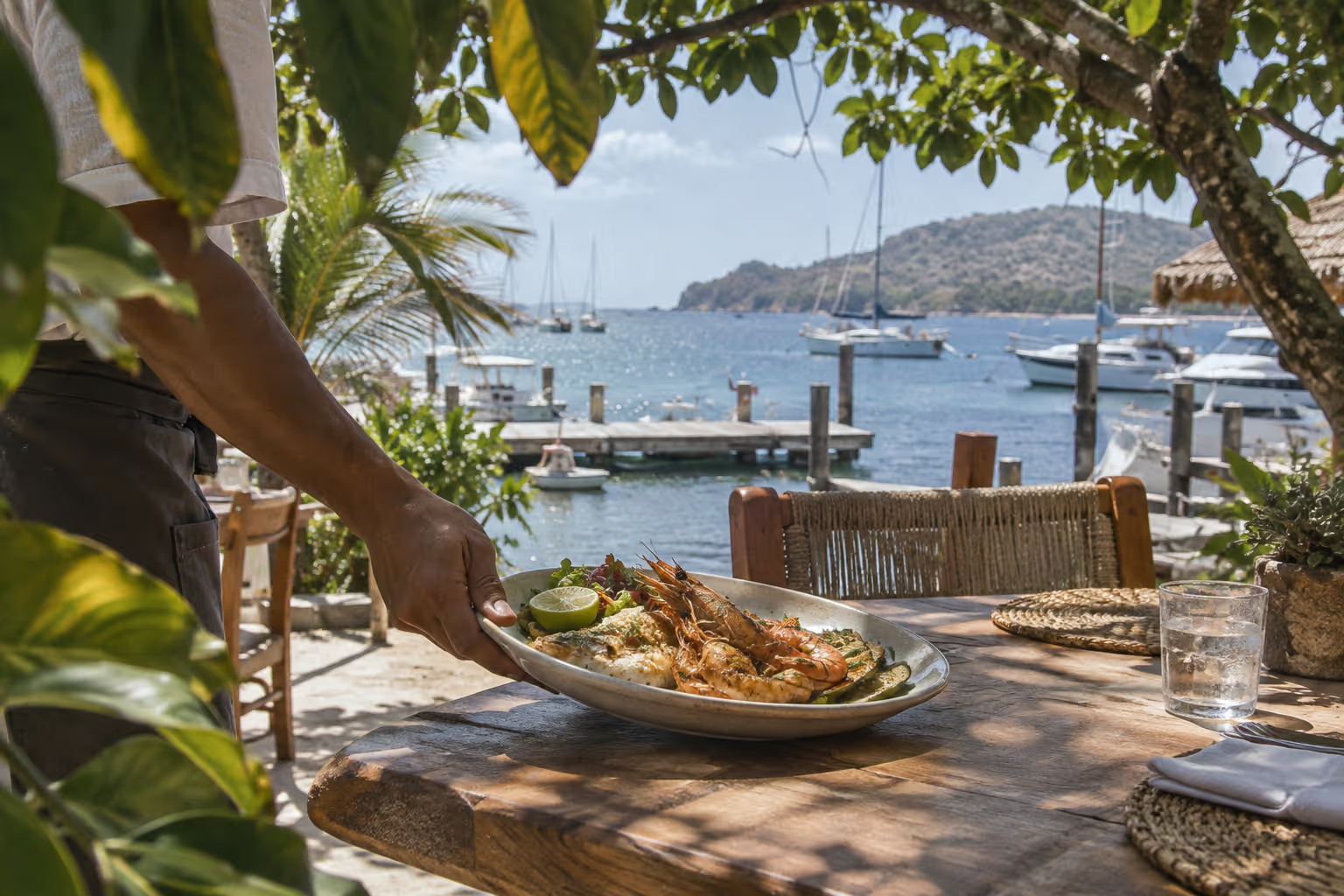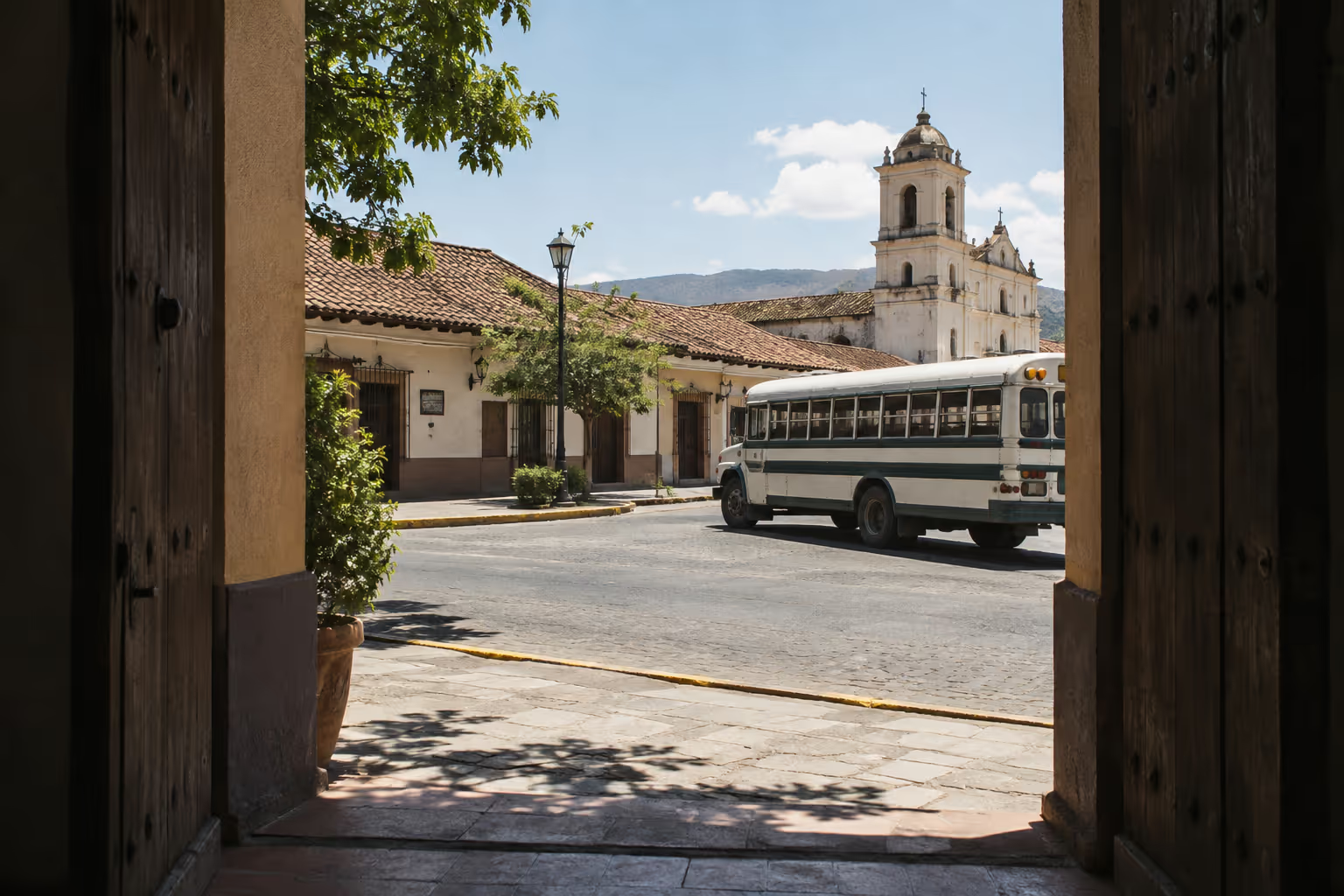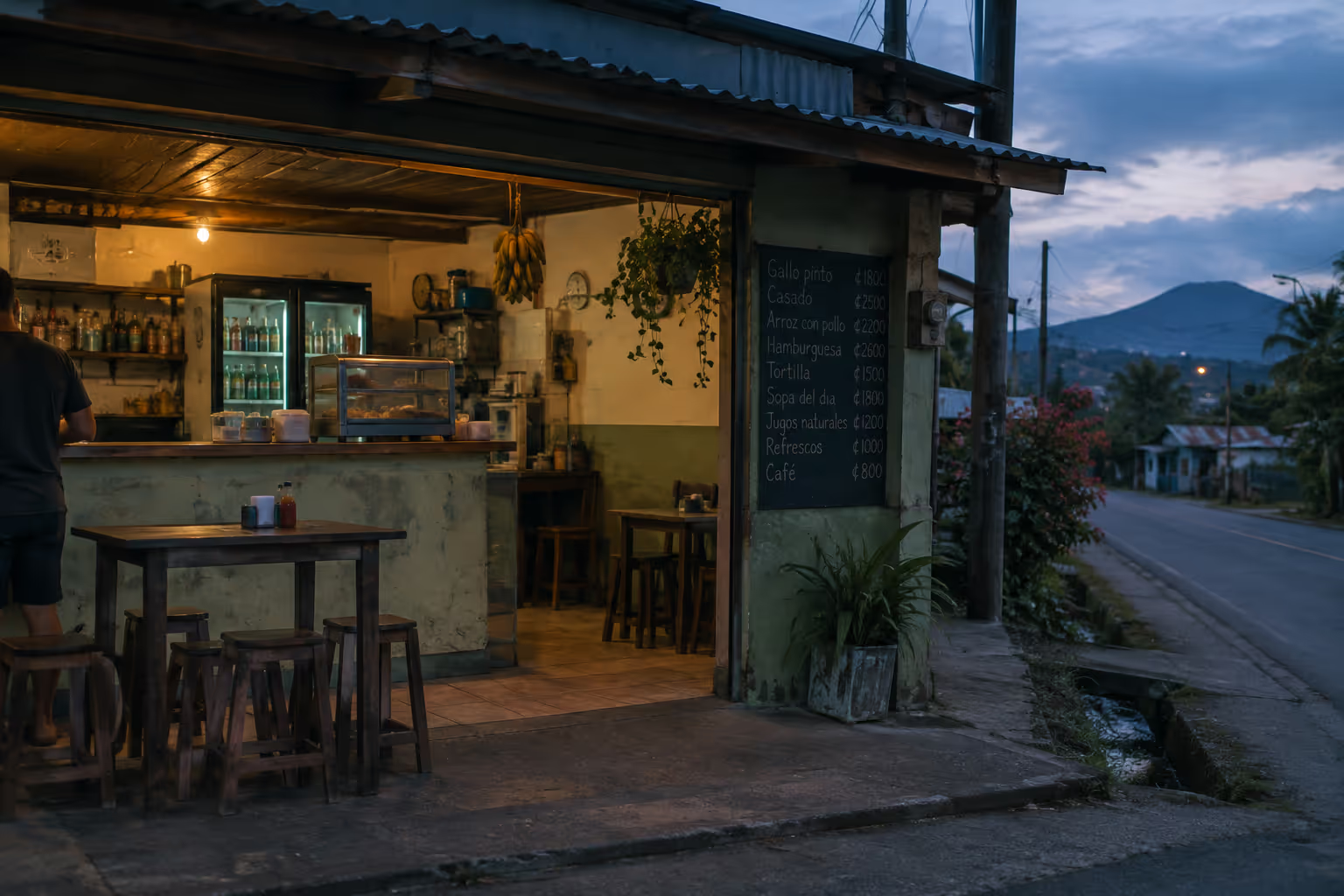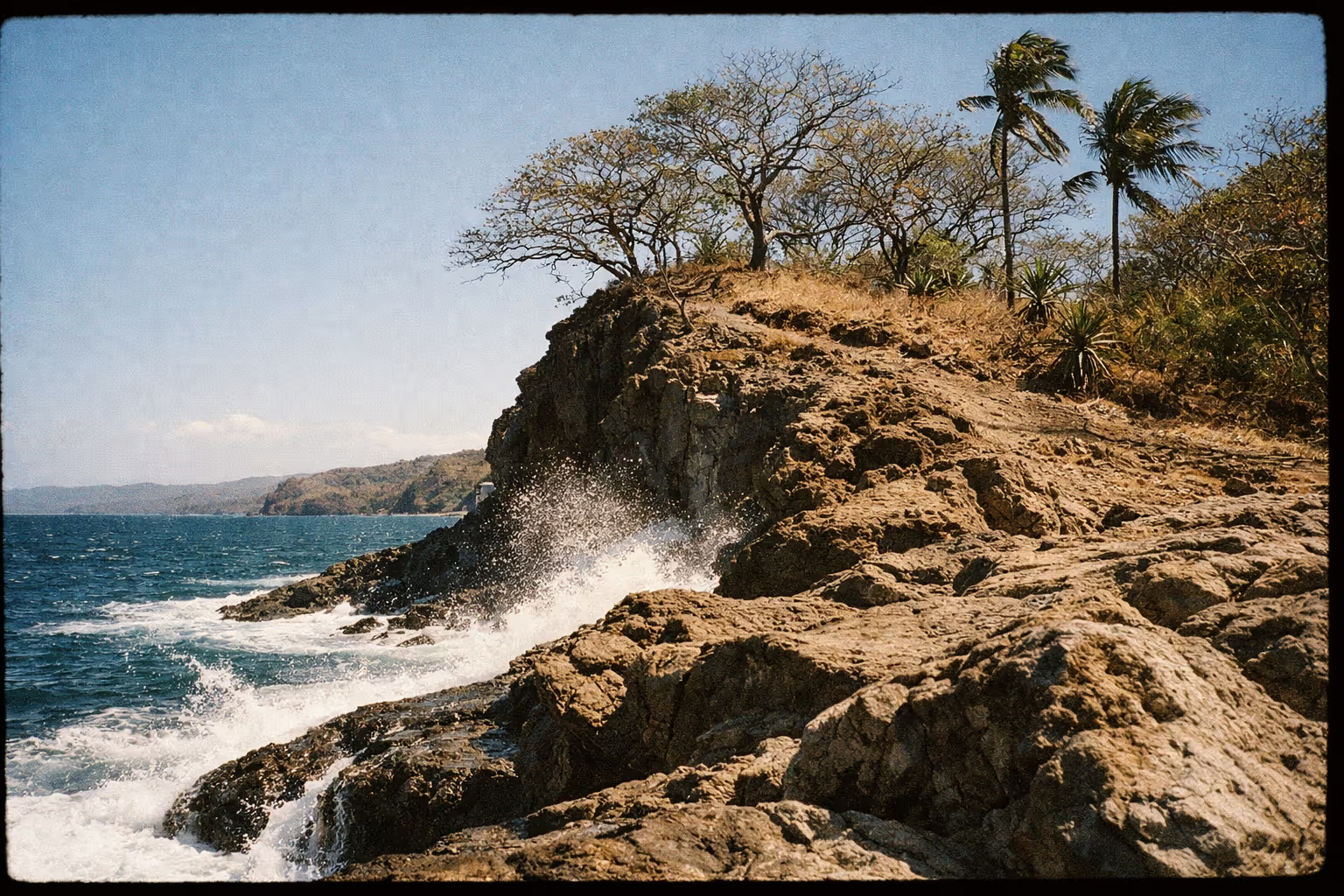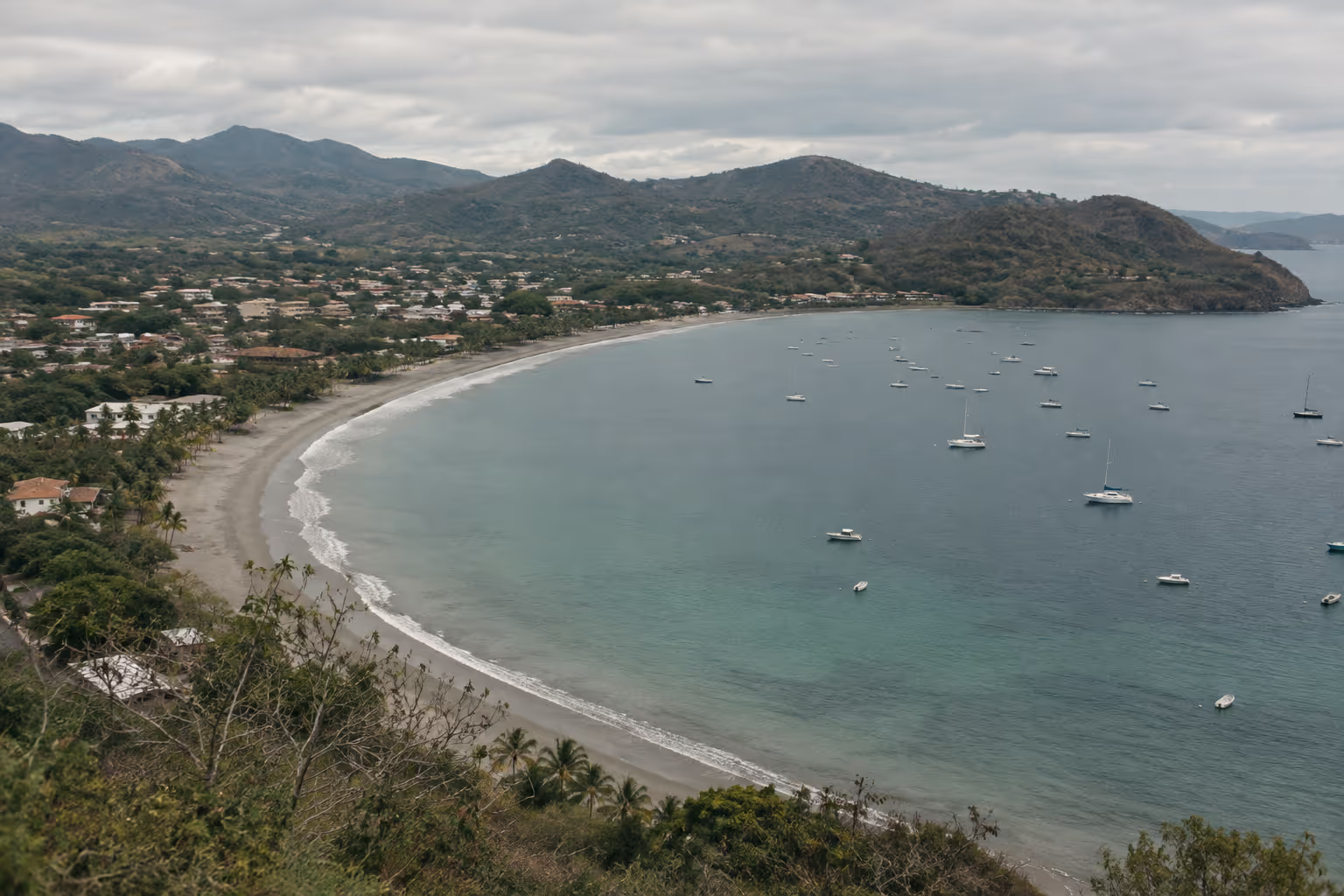
Playas del Coco, Costa Rica is a swimming-and-boating town, not a surf town. Its bay holds almost 3 km (1.8 miles) of grayish sand with relatively little swell and safe anchorage, which is why dive and fishing boats moor here (5), though the waves are often strong enough for boogie boarding (6). It sits 30-40 minutes by road from Guanacaste Airport (5). If your trip is built around diving, easy airport access and a walkable town, Coco works. If you want clear turquoise water out your door or a beach break to paddle into, pick another base or plan on day trips.
✓ Pros
- A compact base for pairing boat trips with evenings on foot.
- Several different beach and activity options are reachable without changing hotels.
✗ Cons
- The town beach is a working waterfront, not a secluded stretch of sand.
- A surf-focused trip usually means a boat ride to the breaks.
The case for Coco is short. You get a fast airport transfer, daily dive departures to the Catalina Islands, and restaurants and shops within walking distance of the sand. The case against is just as short. Water clarity in front of town varies, the sand is gray rather than white, and the well-known surf breaks are a boat ride away.
Playas del Coco, Costa Rica: Location and Why Travelers Base Here
Playas del Coco sits in Guanacaste province on Costa Rica’s North Pacific coast, inside the Gulf of Papagayo, and its sheltered bay makes it a natural launch point for dive, fishing and surf boats (3). Costa Rica’s tourism authority lists it among Guanacaste’s traditional, popular beaches and describes a bay with gentle waves suited to swimming and boat docking (13). The same official material lists diving, fishing, boat excursions, hiking and horseback riding as the main activities (13).
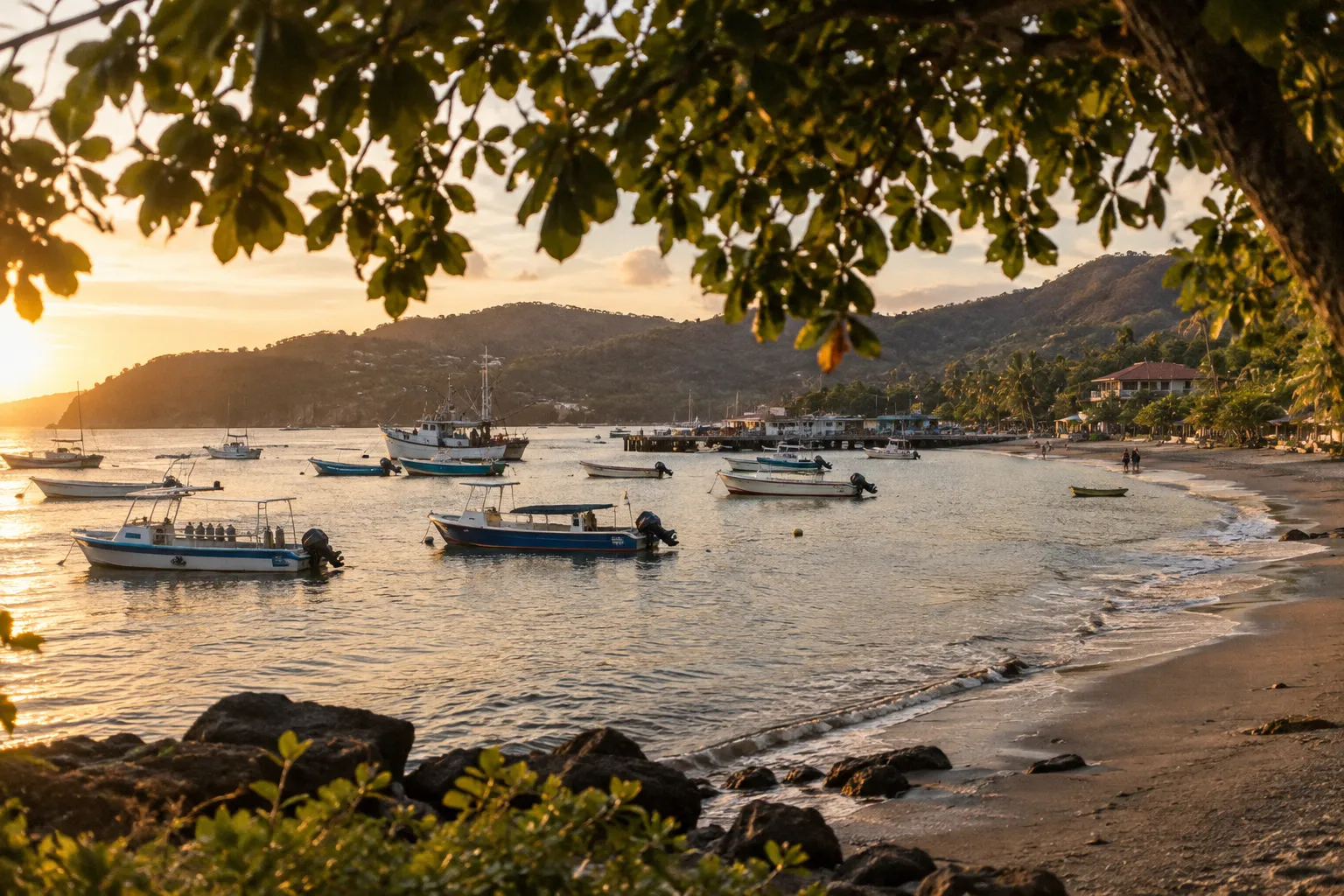
That list tells you how the town works. Coco is a launch point. Many visitors go out on the water each morning and spend their evenings in town, so the beach acts as a working harbor as much as a place to lie in the sun.
The town grew out of the water. In the 19th century the area was known for the pearls found in its waters, and tourism took over after that industry died out (7). For decades afterward it was known mainly as a fishing village, until visitors found it a convenient launch point for diving, snorkeling and surf trips (3). A local who returned in 2025 after nearly 30 years away describes a crowd that used to be mostly Costa Rican and now comes from all over the world (7).
Location is the other draw. Ocotal, Playa Hermosa and Playa Panama are all close by (10), so you can stay in one town and reach several beaches without moving hotels. If you would rather wake up to quiet, though, Coco’s harbor role works against you.
Playas del Coco Beach: Sand, Swimming Conditions and What to Expect
Playas del Coco beach is almost 3 km (1.8 miles) of grayish sand on a bay with relatively little swell (5). It is a good place to swim and wade and a poor place to look for clear, bright-blue water. The official description stresses gentle waves and suitability for swimming (13), and the town’s own guides agree, noting gentle waves for most of the year (3), though another guide notes the waves are often strong enough for boogie boarding (6).
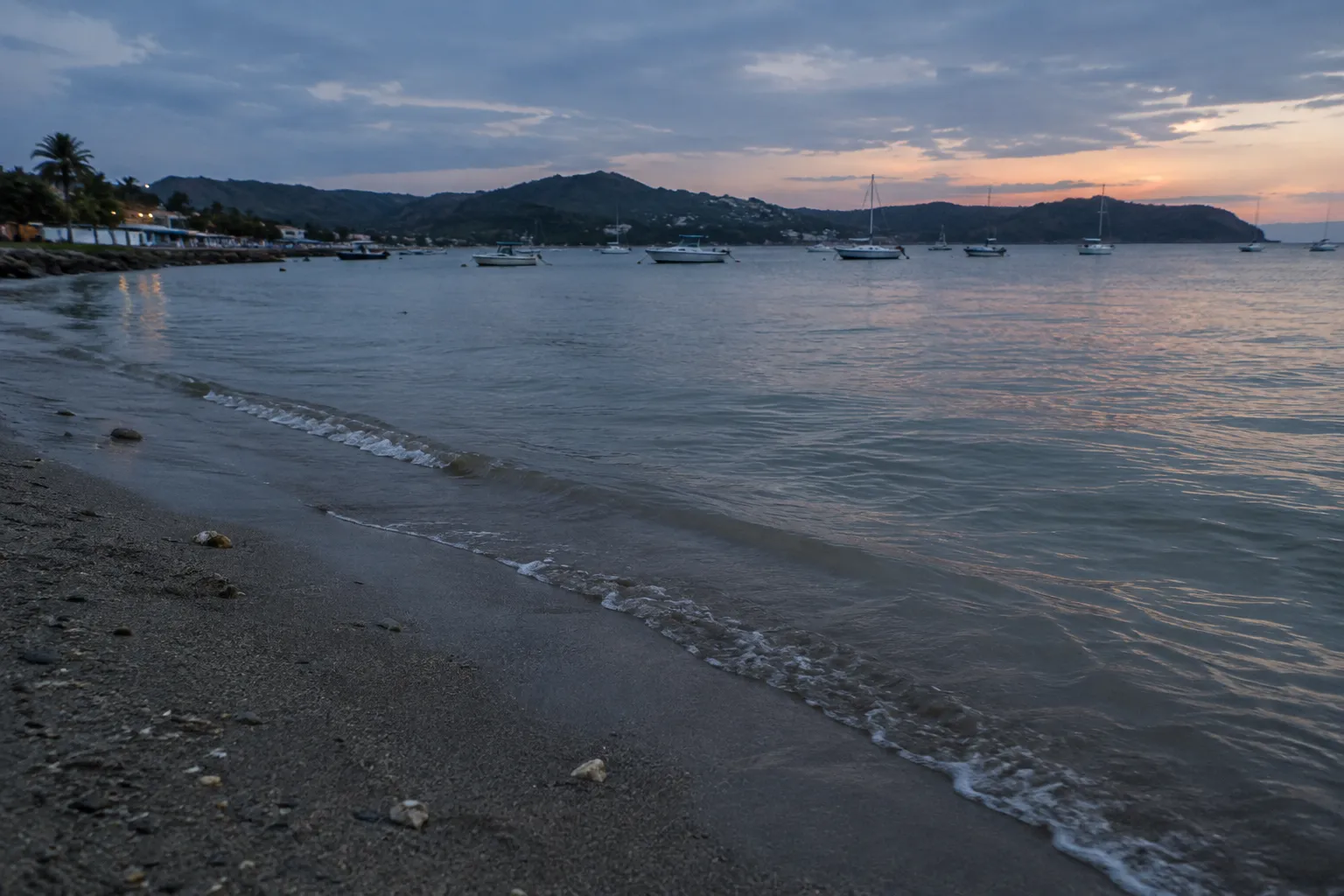
Expect these conditions:
- Sand: gray to dark, running point to point across the bay
- Waves: gentle most days; on days with some swell, the shorebreak is better for skimboarding than surfing (3)
- Use: swimming, wading, watching the boats come and go
- Not for: surfing from the sand, or snorkeling with reliable visibility straight off the beach
The boats are part of the scene. Dive boats, fishing charters and tour pangas anchor in the bay, so the beach in front of town looks like a working waterfront, not an empty strip.
Water Color and Clarity: What One Visitor Saw
The official description and at least one visitor’s experience do not fully match. In a travel post from January 2020, the writer behind Barbierika reported that on their first afternoon the water at the beach in front of their hotel looked brown. They added that brown water is common on Costa Rica’s Pacific side (4). The next day they walked the rocky edge of the beach at low tide. They saw some fish, but the water was cloudy and visibility was poor (4).
That is one account from one visit, not a rule. It still points to something many guides skip: “gentle waves” describes how the water moves, not how clear it is. Plan to swim in Coco’s bay, and if clear water matters to you, head to the dive sites offshore or to a calmer cove nearby.
Nearby Beaches: Ocotal and Playa Hermosa for Calmer Water
Playa Ocotal and Playa Hermosa are the two closest alternatives to Coco’s open bay. Ocotal is a calm, hill-sheltered cove (13) and Hermosa is a smaller, less crowded beach about 15 minutes north (7). Both are better if you want a quieter beach day without the harbor activity.
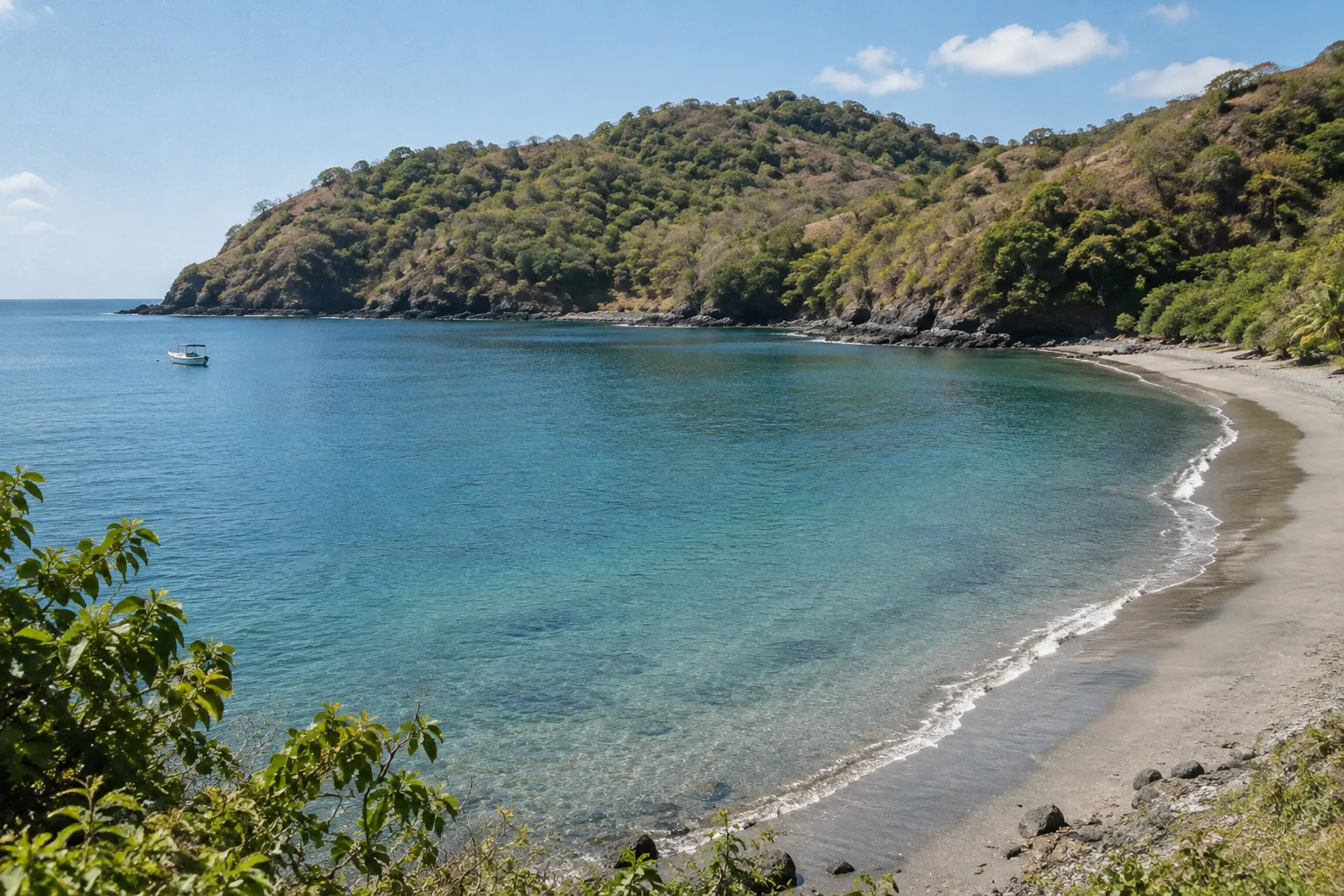
Playa Ocotal: Protected Cove for Swimming and Diving
Costa Rica’s tourism authority describes Ocotal as a gray-sand inlet bordered by hills, with calm waves suited to swimming, diving and sportfishing (13). The hills block the open-bay feel you get in Coco, so Ocotal is the better choice for families with young swimmers or anyone who wants still water and fewer boats. The same page describes Coco’s bay as suited to swimming and boat docking (13), so the split is simple: boats and a busier beach in Coco, a quieter swim in Ocotal.
Worth the detour if you are staying in Coco for three nights or more, or if you want a calmer place to snorkel from shore.
Playa Hermosa: Smaller and Less Crowded
Playa Hermosa sits about 15 minutes north of Coco and is smaller and less crowded (7). Its beach is gray sand with a laid-back town feel (6). It is worth going if Coco feels too busy, though it is quieter rather than dramatically different.
Do not mix up the two beaches with this name. Guanacaste’s Playa Hermosa is a different place from the Playa Hermosa near Jacó, farther south on the Central Pacific (6). The Jacó one is a surf beach several hours’ drive from here. When you book a hotel or transfer, check that the listing says Guanacaste or Gulf of Papagayo.
Skip if short on time. On a two- or three-night stay, a dive trip will do more for your trip than another gray-sand beach.
Compared side by side, the three beaches split by purpose. Coco’s main beach has gentle waves in an open bay with boat traffic, suits swimming and boat departures, and is right in town. Ocotal has calm water in a hill-sheltered cove, suits quiet swimming, diving and sportfishing (13), and is a short drive away. Hermosa is smaller and less crowded, suits a low-key beach day, and is about 15 minutes north of Coco (7).
Diving in Playas del Coco: Las Catalinas Day Trips
Diving in Playas del Coco centers on the Catalina Islands. Dive boats leave daily, and the boat ride takes 30-40 minutes (8). The Catalinas are a group of uninhabited volcanic rocks roughly 6 km (3.7 miles) off the Guanacaste coast, between Playa Flamingo and Playas del Coco, and they are known for encounters with large pelagic species (8).
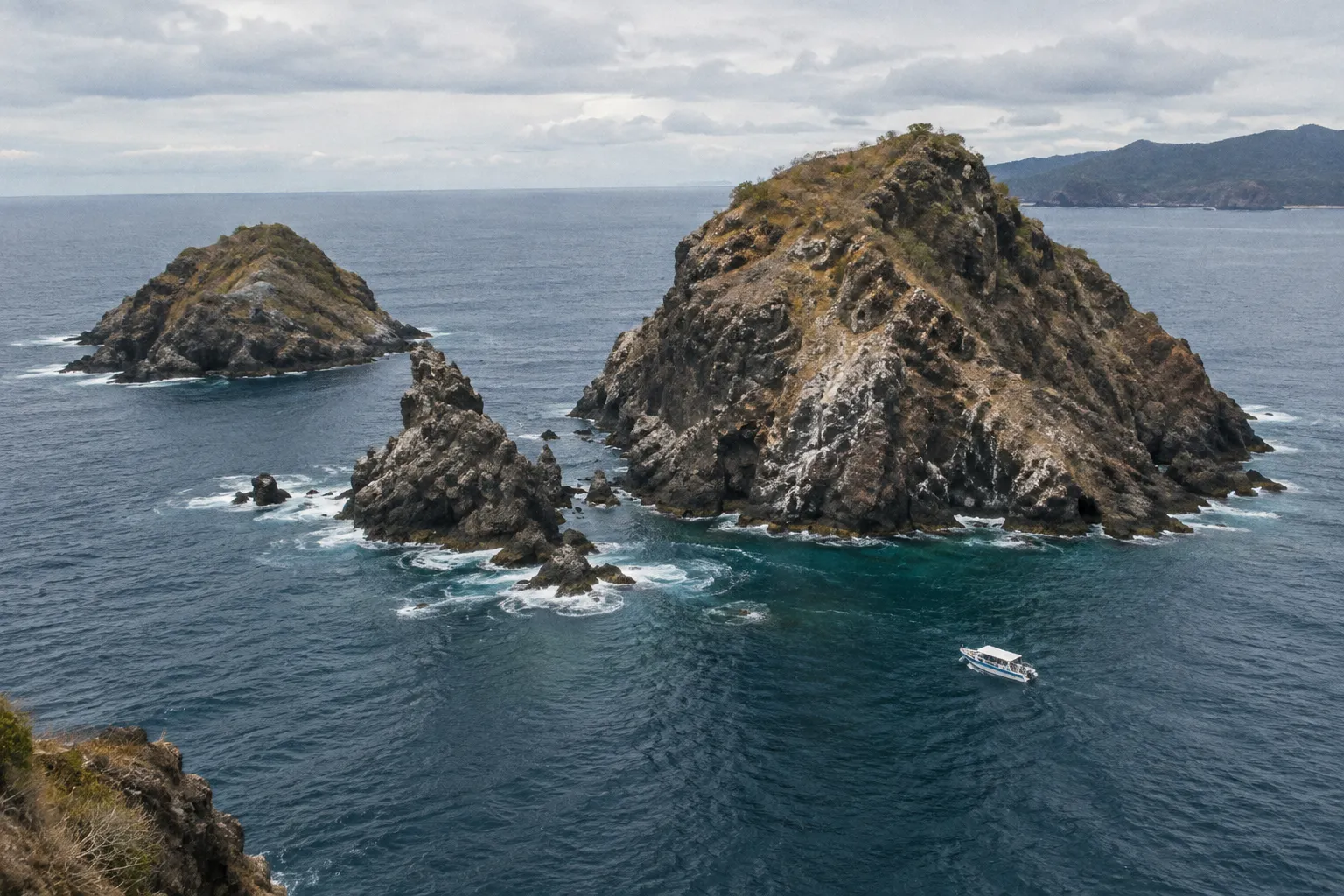
Do not confuse the islands with the pedestrian village also called Las Catalinas (8). Dive operators mean the offshore rocks.
The boat ride out to the dive sites takes about the same 30-40 minutes (8) as the road transfer from Guanacaste Airport into town (5). Getting to the reef from your hotel takes roughly as long as getting to your hotel from the plane.
Timing matters more than which operator you choose. Manta rays, eagle rays and devil rays are the main draw from December to May, when the Papagayo winds drive nutrient upwelling and concentrate marine life (8). Bull sharks are possible at the deeper sites (8).
What a Two-Dive Las Catalinas Trip Includes
A Catalinas dive outing fills the morning: you leave around 7:00 a.m. and return around 1:00 p.m. A dive guide lists one Coco operator’s two-dive trip at US$135-145 as of October 2026, including:
- Dive equipment
- A dive-master guide
- A light lunch (8)
The 7:00 a.m. departure and roughly 1:00 p.m. return come from the same guide (8). That leaves your afternoon free for the beach, a nap or a fishing charter, and it is the main reason divers base themselves in Coco and not in an inland town.
Booking and Schedule Tips
- Book ahead in ray season. December to May is the window most divers target (8), so reserve before you arrive if your dates fall in it.
- Confirm the schedule the week before. The 7:00 a.m. departure is one operator’s published timing (8). Others may leave earlier or later, so check with yours.
- Don’t fly too soon after diving. If your last dive day sits right before your flight home, ask your operator about the standard no-fly interval and build it into your plan.
- Check what’s included. The quoted price covers equipment, a guide and lunch (8). Ask separately about park or marine fees and gratuities.
Things to Do in Playas del Coco: Fishing, Surf Trips and More
The top things to do in Playas del Coco beyond the beach are diving, sportfishing, boat-access surf trips and horseback riding. Costa Rica’s tourism authority lists diving, fishing, boat excursions, hiking and horseback riding as the town’s activities (13). Almost all of them begin at the waterfront.
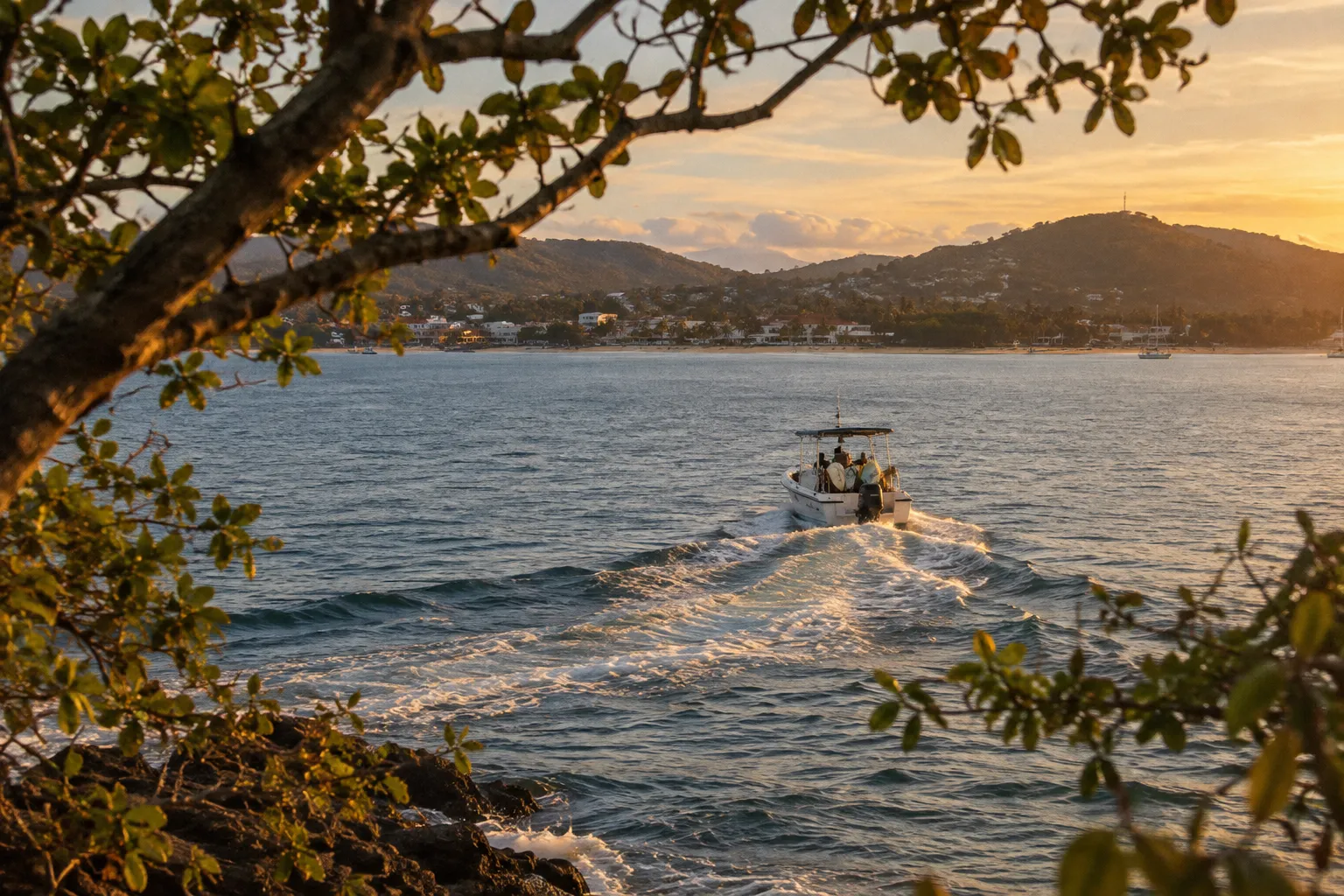
Ranked by how much they add to a short stay:
- Las Catalinas diving: worth planning the trip around in ray season (8)
- Boat surf trip to Ollie’s Point or Witch’s Rock: worth the detour for intermediate and advanced surfers (3)(6)
- Sportfishing charter: worth it if you fish; Coco built its name on fishing (3)
- Horseback riding: skip if short on time unless you are traveling with kids who want a land activity
Surfing: Ollie’s Point and Witch’s Rock by Boat
You cannot surf a proper break off Coco’s town beach. The official material presents the town’s water activities as swimming, diving and sportfishing (13), and the surf breaks connected with Coco, Ollie’s Point and Witch’s Rock, are reached by surf trips that leave from Coco by boat (6). The swell days on Coco’s own beach suit skimboarding more than surfing (3).
This is the most common mistake in planning a Coco trip. People see a Pacific beach town in Guanacaste and pack a board. If surfing is your main reason for traveling, base yourself in a surf town and visit Coco to dive. If surfing is one day out of seven, Coco works: you book a boat trip to the breaks and come back to town in the afternoon.
Fishing and Horseback Riding
Sportfishing comes from the town’s history as a fishing village (3), and charters still leave from the bay. Ocotal is also known for sportfishing (13), so you can depart from either place.
Horseback riding and hiking are on the official activity list (13). For routes and operators, ask at your hotel or one of the tour offices along the beachfront. These are good choices for a non-diver in your group on a morning when everyone else is out on the boat.
Inland Day Trips: Rincón de la Vieja National Park
Rincón de la Vieja National Park is the classic inland day trip from Playas del Coco, and a local guide lists it among the national parks Coco makes a good base for (3). Wikivoyage puts the volcano at about 1.5 hours’ drive from Coco (10). That is close enough for a day trip if you leave early, and it gives you a complete change from the coast: volcanic terrain and dry forest in place of gray sand and boats.
Treat that drive time as a minimum. The last stretch of road to many of Guanacaste’s park entrances can be rougher than the highway, and conditions change with the season and recent weather. Check current road conditions before you set out, and ask your rental agency whether your car is suited to the route.
Traffic is the other variable. A local guide warns that traffic around Liberia can be heavy on weekends and holidays, so a drive that should take 30 minutes can take up to an hour (7). Rincón de la Vieja trips usually pass through the Liberia area, so leave early, especially on a Saturday or during a holiday week.
Who should go: travelers staying five nights or more, families who need a day off the water, and anyone who has finished their dives and has a free day before flying home. On a three-night stay, use the time for diving.
Town Amenities, Restaurants and Nightlife
Playas del Coco’s town center puts restaurants, bars and shops in the same general area, so you can handle a short stay on foot (7). Former residents describe Coco as a walkable town and plan a four-day stay there without a car (3). You can walk from your hotel to dinner, a supermarket or a dive shop.
Restaurants and Dining
Coco offers international dining alongside Costa Rican food, a range that reflects its mixed crowd of locals, Costa Rican vacationers and foreign visitors (7).
Plan for prices to be on the higher end. The Barbierika writer reported in January 2020 that Playas del Coco and Bahía Drake were the two places in Costa Rica where food was most expensive on their trip, and attributed it to a mostly US tourist base (4). That is one traveler’s comparison, but expect to pay more than in inland towns. For simpler food, the quieter south side of town has a few local restaurants with home-style cooking (7).
Nightlife Downtown
Downtown Coco has a nightlife scene with drinking, dancing and dining (10), and some bars have live music (7). It is livelier than the quieter beaches around the gulf. If you want a beer and some music after a dive day, it is within walking distance. If you want early, quiet nights, look at accommodation in Ocotal or Hermosa.
Everyday Amenities
For a self-catering stay, the town covers the basics:
- Supermarkets for groceries and supplies (3)
- Healthcare from a public clinic and private clinics in town (3), which matters if you are diving or traveling with kids
- Shops concentrated near the beach and bars (7)
- Tour and dive operators along the beachfront
You will often hear English in shops and on the street. The Barbierika writer noted that people there addressed them in English, not Spanish (4). That makes things easy for first-time visitors and less appealing if you came to practice your Spanish.
Getting to Playas del Coco: Airport Transfers, Driving and Buses
The fastest way to Playas del Coco is from Guanacaste Airport (LIR). A direct transfer by road takes 30-40 minutes (5), and the public bus route takes about an hour plus walking time (1). LIR is the closest major airport (5), and the road distance to Coco is 23.3 km (14.5 miles) (1).
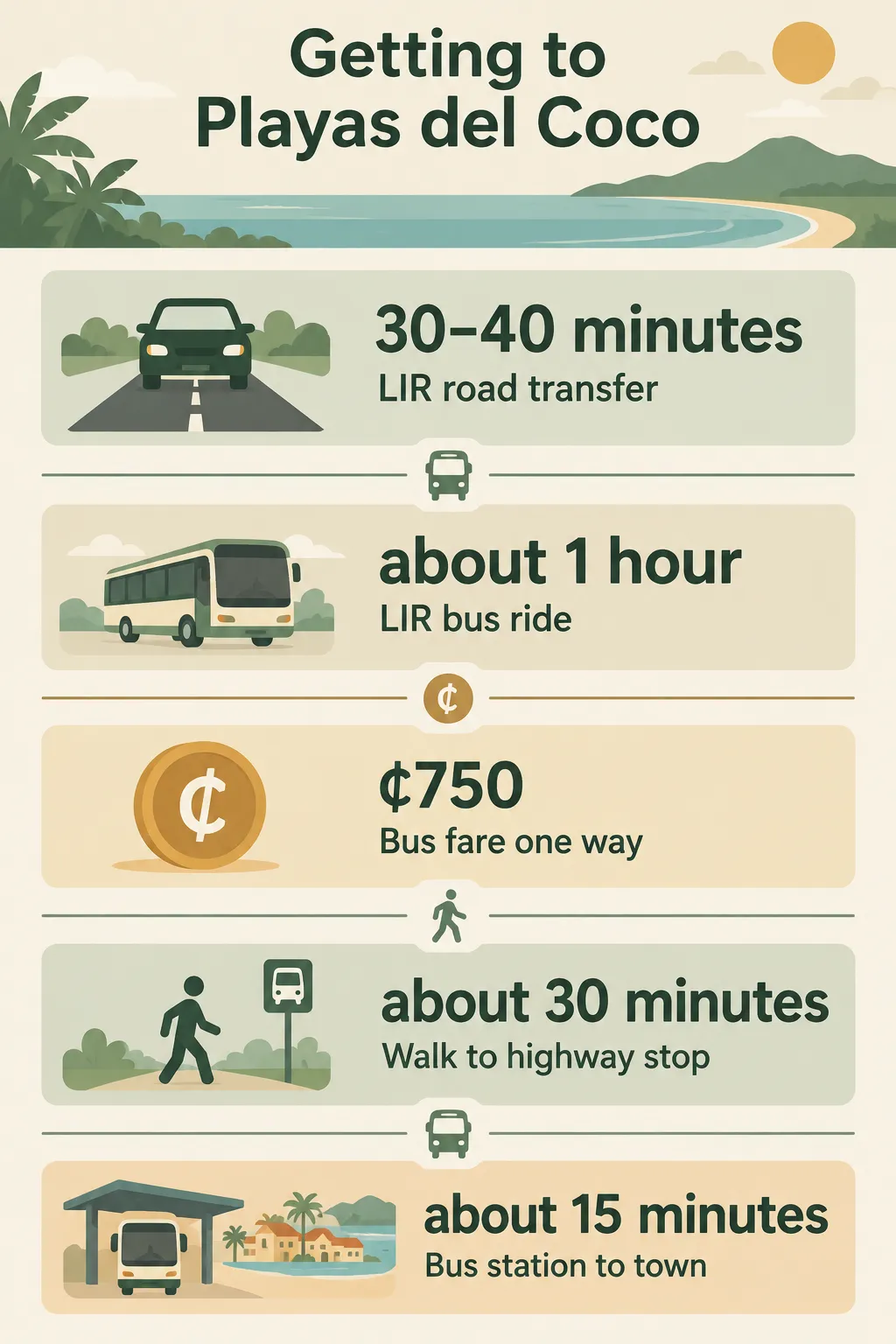 From LIR: a 30-40-minute road transfer, or a bus ride of about 1 hour for about ₡750 one way, plus walks of about 30 and 15 minutes.
From Liberia Airport (LIR): Direct Transfer vs. Bus
Decide by how much time and effort you want to spend.
Direct transfer (private car, taxi or rental): 30-40 minutes (5). Use this if you land with dive gear, kids or a late-afternoon arrival. The transport guide reports that there is no dedicated shared shuttle on the direct LIR-to-Coco route (5), so your options are private transfer, taxi or a rental car. Both main routes from Liberia are paved and generally well maintained, but heavy traffic around Liberia can stretch the drive toward an hour (7).
Public bus via Liberia: about 1 hour, plus two walks (1). The fare was about ₡750 one way as of January 2025 (1). The bus does not pick up at the airport curb. Travelers may need to walk about 25 to 30 minutes from the terminal to the highway bus stop (1)(3), and then about 15 minutes from the Coco bus station to the town center and beach (1). The same January 2025 guide has buses passing that stop about every 45 minutes from 6 a.m. to 8 p.m. (1).
The bus makes sense for a backpacker traveling light with a midday arrival. It does not make sense if you are carrying a dive bag in Guanacaste heat or landing after the last departure. For most travelers on a limited vacation, the 30-40-minute transfer is worth the extra cost over the bus.
Driving or Bus from San José
Driving: allow a minimum of about 4.5 hours for the 151 miles (243 km) from San José (3). Add time for traffic leaving the capital and for stops.
Bus: Pulmitan de Liberia runs a direct San José to Playas del Coco bus from its terminal in Barrio México. A local guide listed three daily departures as of September 2025, at 8:00, 14:00 and 16:00, with a ride of about 5 to 6 hours (7). If the direct buses are full, you can go via Liberia (10).
Fly into San José only if the fare saving is large or you are combining Coco with central Costa Rica. Otherwise, LIR saves you most of a day.
Frequently Asked Questions
- How far is Playas del Coco from Guanacaste Airport?
- Playas del Coco is close enough to LIR for a straightforward arrival day; check your landing time against the available ground transport before choosing a bus.
- Where should you stay in Playas del Coco?
- Choose accommodation by your evening routine: town suits people who want dinner and dive shops nearby, while quieter nearby beaches suit early nights.
- What is the weather like in Playas del Coco?
- Guanacaste's dry season is the safer choice for planning outdoor days; keep a flexible backup for changing coastal conditions and inland road travel.
- Can you surf at Playas del Coco?
- Coco is a poor fit for a trip centered on surfing from shore; arrange boat access to the regional breaks or choose a surf-focused base.
- What is the nightlife like in Playas del Coco?
- Expect a casual bar-and-dining scene rather than a dedicated club destination; staying outside town is a better fit if you prioritize quiet nights.
- What day trips can you take from Playas del Coco?
- Choose between an offshore activity day and an inland park day; the latter needs an early start and a check of current road conditions.
- Where can you shop or buy groceries in Playas del Coco?
- Self-catering is practical for a short stay, but visitors with specific dietary or specialty-product needs should shop before leaving a larger city.
Is Playas del Coco the Right Base for Your Trip?
Choose Coco if your trip involves diving, a quick airport arrival and walking to dinner. The Catalina Islands are 30-40 minutes away by boat (8), the airport is 30-40 minutes away by road (5), and a two-dive trip has you back on land by early afternoon (8). Don’t choose it for clear water off the sand or for beach-break surfing.
For a December-to-May trip, book a Las Catalinas dive operator before you arrive, then plan a day at Ocotal for calm-water swimming. If someone in your group surfs, add one boat trip to Ollie’s Point or Witch’s Rock and leave the board bag at home the rest of the week.