Costa Rica currency questions come down to three things: the colón is the official money, US dollars work across most of the tourist economy, and cards cover hotels and restaurants while small vendors want cash. The rate has also shifted. On October 6, 2026, the Central Bank’s reference rate was ₡454.50 buying and ₡460.35 selling (11), noticeably fewer colones than many older guides print. If you budget or tip using a stale number, you will be off before you land.
✓ Pros
- A card-and-cash setup lets you match payment to the kind of business.
- Colones are available from bank ATMs, reducing the need to exchange foreign cash.
✗ Cons
- Small vendors and public transit can leave you needing local cash.
- A stale exchange rate or a merchant's conversion can reduce the value you get from dollars.
Costa Rica Currency Basics: The Colón, the Dollar and Denominations
The official Costa Rica currency is the Costa Rican colón (CRC), but US dollars are widely accepted in tourist areas, hotels and many restaurants (2)(3). In practice, money in Costa Rica runs on a dual system. Locals price daily life in colones, and tourist-facing businesses often quote in dollars.
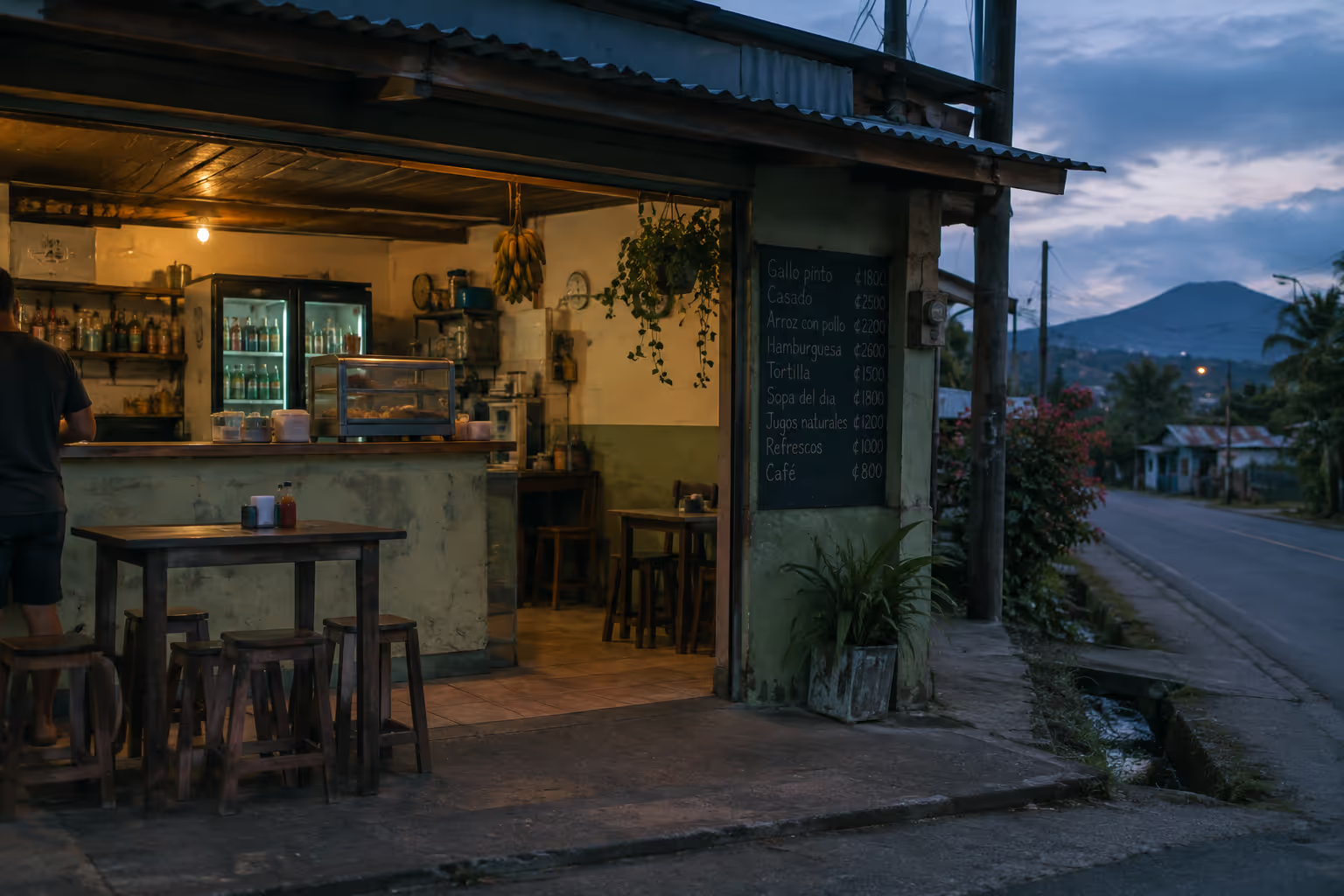
The symbol is ₡. You will see prices like ₡5,000 for a dish on a soda’s menu (9) and $85 for a guided tour (10).
Colón bills and coins to know
Colón banknotes currently in circulation are ₡1,000, ₡2,000, ₡5,000, ₡10,000 and ₡20,000; the ₡50,000 note is no longer issued. The Central Bank lists seven coins, ₡1, ₡5, ₡10, ₡25, ₡50, ₡100 and ₡500, and its new coin series starts at ₡10 (12). The bills are color-coded and sized differently, so you can sort them quickly once you have handled them for a day. The ₡500 coin is the one you will use most for small change.
Where US dollars are accepted
Hotels, tour operators, and mid-range to upscale restaurants in tourist corridors often price everything in dollars and take them without fuss. Some national park entry fees are also quoted in USD (2). Dollars get awkward with small local purchases and public transport, where colones are the better choice (2)(3). Roadside fruit stands, rural buses and market stalls deal almost entirely in colones (2).
Colones to Dollars: Checking Today’s Exchange Rate
To convert colones in Costa Rica to dollars accurately, check a dated Central Bank figure from the same week you travel. Don’t copy a number from an older guide. According to the Banco Central de Costa Rica, the MONEX weighted average was ₡455.66 per US$1 on October 6, 2026 (8). The official reference rate for the same day was ₡454.50 buying and ₡460.35 selling (11). The dollar has slid through 2026: the MONEX average stood at ₡497.07 on January 2 and bottomed at ₡446.80 on September 17 (8).
So how much is $1 US in Costa Rica? About ₡454 to ₡460 in early October 2026, depending on which side of the transaction you are on.
Why the rate keeps moving
The rate most guides get wrong is the headline one. Static travel pages cite broad ranges: one puts it at 450 to 550 colones per dollar (5), and another at roughly 450 to 520 (4). The Central Bank’s MONEX table, by contrast, publishes dated market observations in colones per dollar, and those numbers change daily (8). A figure that was accurate two years ago can overstate your spending power by 10% or more.
For the freshest planning number, a dated daily figure beats a range or an average. The MONEX table and the Central Bank’s reference rate are both listed date by date, so take the latest one before you exchange money (8)(11).
Buying rate vs selling rate, and which one applies to you
The buying rate (₡454.50 on October 6, 2026) is what a bank pays for your dollars. The selling rate (₡460.35) is what it charges you to buy dollars. If you are turning dollars into colones, the lower buying figure is closer to what you will get. Treat any posted reference rate as a benchmark, not a guarantee. A bank counter, a hotel desk and a shop giving change will each apply their own spread.
Costa Rica ATMs: Withdrawing Colones Safely
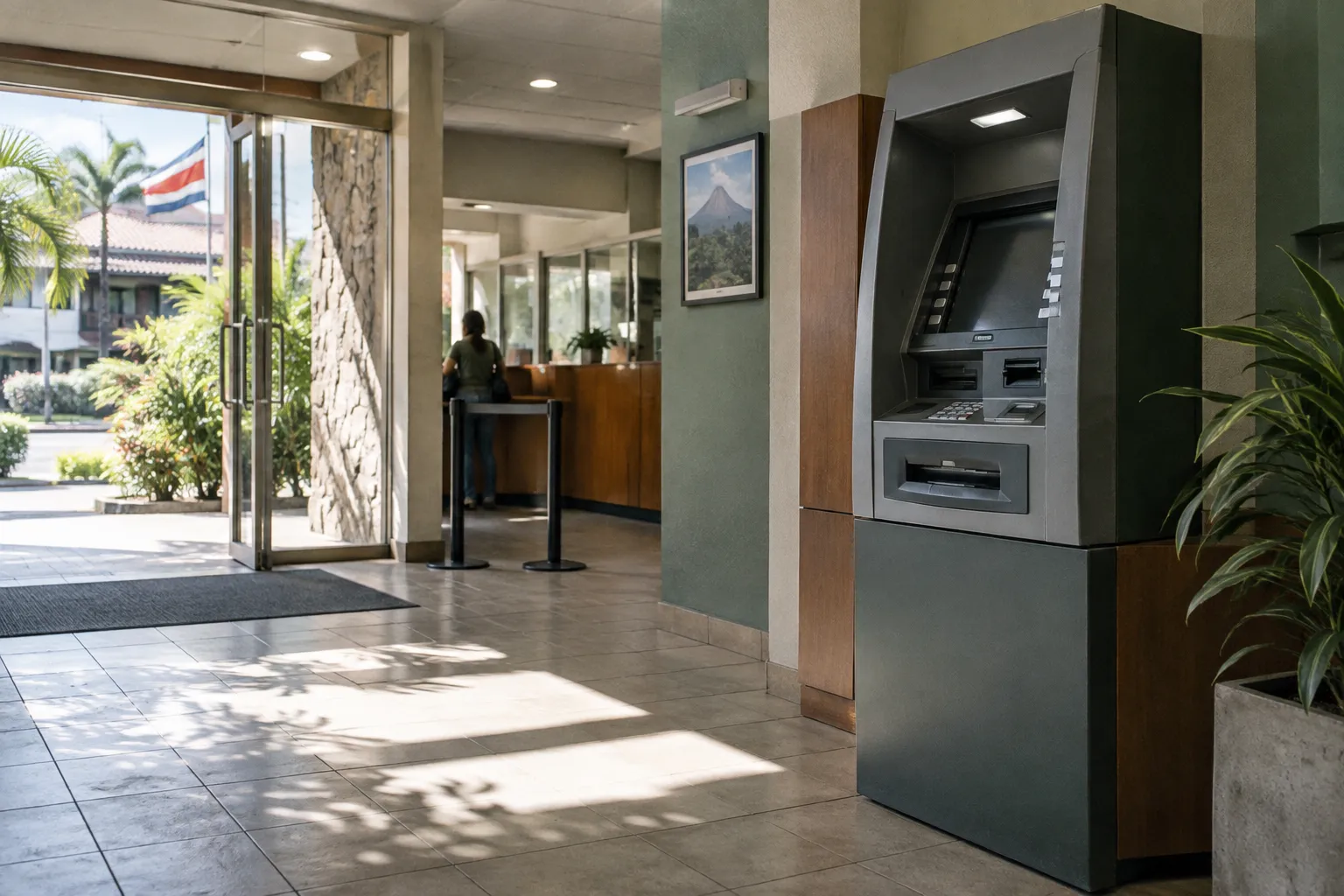
A Costa Rica ATM inside a bank lobby or a well-lit business is the safest way to get colones, and it requires a four-digit PIN (3). If your card uses a longer or shorter PIN, change it with your bank before you leave. That is a fix you cannot make from a Costa Rican sidewalk.
Before departure:
- Notify your bank of your travel dates so the first withdrawal isn’t flagged as fraud (3).
- Check whether your card charges a foreign-transaction fee (3), and what your bank charges for out-of-network ATMs.
- Confirm your daily withdrawal limit, since the sources used here don’t establish a reliable local limit or fee figure.
At the machine, skip standalone street-corner ATMs when a bank branch is nearby, and shield the keypad with your hand while entering your PIN (3). Pulling larger amounts less often keeps per-withdrawal fees down, but only carry what you are comfortable losing.
How to withdraw colones safely in Costa Rica
Prepare your card before departure, then use a safer ATM location and protect your PIN when withdrawing colones.
- 1
Prepare your card
Confirm it uses a four-digit PIN, notify your bank of your travel dates, check foreign-transaction and out-of-network ATM fees, and confirm your daily withdrawal limit.
- 2
Choose an ATM location
Use an ATM inside a bank lobby or a well-lit business; skip a standalone street-corner machine when a bank branch is nearby.
- 3
Withdraw carefully
Shield the keypad while entering your PIN and withdraw only an amount you are comfortable carrying.
Cash vs Card in Costa Rica: Which One to Use, When
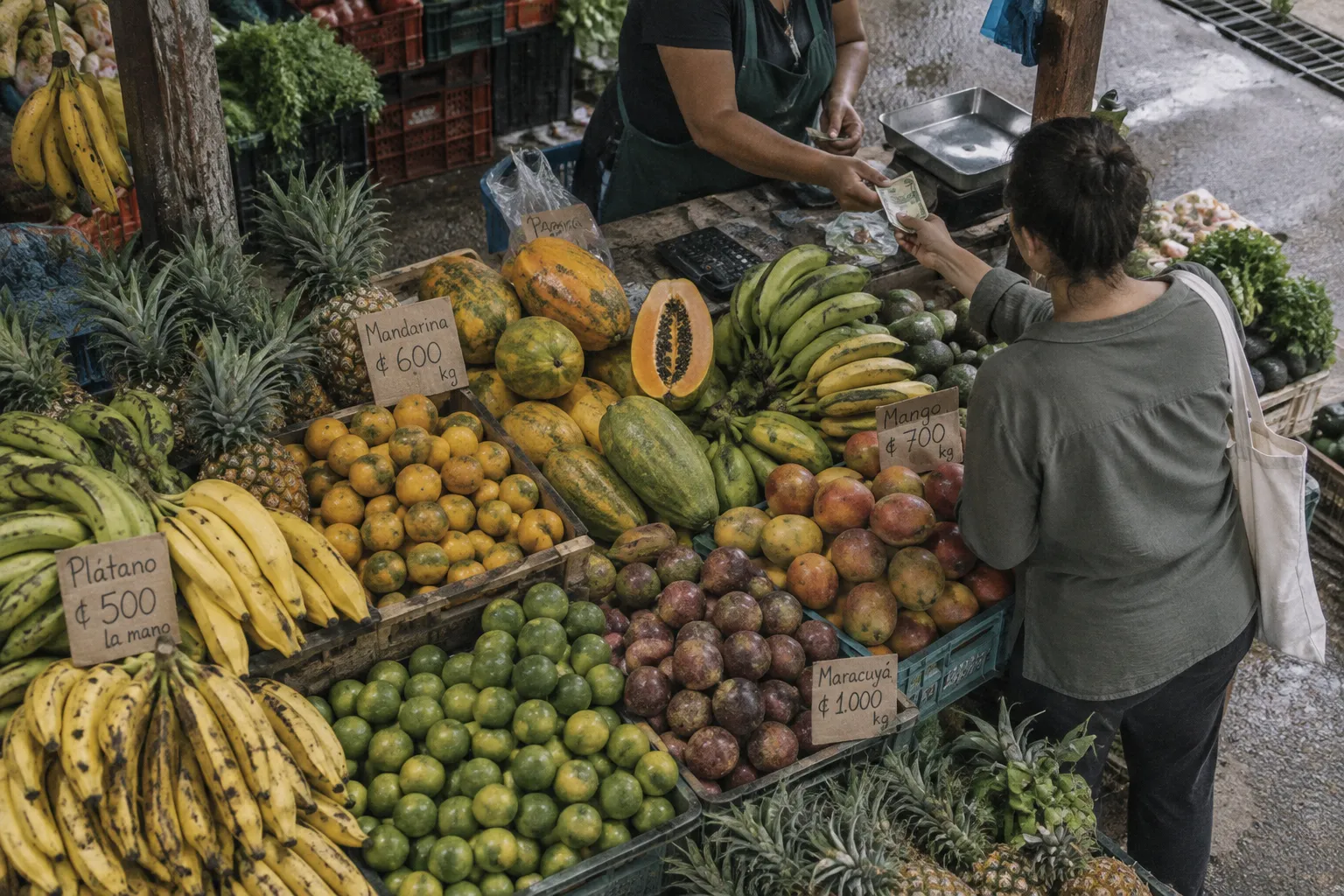
Cash vs card in Costa Rica follows one rule: use a credit card at hotels, restaurants, tour operators and larger shops, and pay with colones at family-run sodas, corner stores, markets, roadside stands and on public transit (3). Most trips need both. The card handles the big line items, and a modest stash of colones covers the rest.
Where a card is enough
Major credit cards are widely accepted at established hotels, restaurants, tour operators and shops (3). Your lodging, guided tours, rental car and sit-down dinners in tourist towns can go on a card. If a terminal offers to charge you in dollars instead of colones on a colón-priced bill, decline and pay in the local currency. Letting the merchant convert usually costs more than your bank’s own conversion.
Where you’ll need colones in hand
These cash-only vendors are also where colones pay off in another way: paying in local currency avoids the informal “tourist rate” that can appear when you hand over a large dollar bill (2). One writer living in Costa Rica, in a May 2026 guide, describes paying for a casado at a soda in Quepos with a $20 bill and getting colones in change at a rate he estimated was about 8% worse than the bank’s (5).
That answers whether $20 is a lot of money in Costa Rica. At the October 6 MONEX rate it is roughly ₡9,100. That is a meaningful sum at a soda or market stall, and many small vendors won’t have change for it. Costa Rica costs more than most of Central America but is still cheaper than the US or Europe (3).
Which currency to bring
US dollars are the easiest foreign currency to exchange in Costa Rica, while Canadian dollars can be hard to change locally (3). If you are coming from Canada, Europe or elsewhere, bring a card and withdraw colones at an ATM, or carry some USD. Small US bills are the most useful (3), since a small vendor may not have change for a $20 bill (2).
Ways to pay in Costa Rica at a glance
| Cash (colones) | Cash (USD) | Credit or debit card | ATM withdrawal | |
|---|---|---|---|---|
| Where it works | Sodas, corner stores, markets, roadside stands and public transit | Tourist areas, hotels, tour operators and many restaurants | Established hotels, restaurants, tour operators and shops | Bank ATMs provide colones |
| Typical fees | None at the counter; paying in colones avoids the informal tourist rate | Change in colones may come at an informal tourist rate, worse than the bank's | Your bank's foreign-transaction fee; merchant conversion to dollars usually costs more | Your bank's foreign-transaction and out-of-network ATM fees |
| Convenience | Useful for small purchases | Can be awkward for small purchases | Convenient for larger bills | Needs a four-digit PIN; safest inside a bank lobby |
| Best used for | Local day-to-day spending | Tourist-facing businesses and tipping | Lodging, tours and sit-down meals | Getting local cash from your home account |
Costa Rica Tipping: Service Charge, Tax and Extra Gratuity
Costa Rica tipping starts with the restaurant bill, which usually already includes a 10% service charge, so an extra tip is optional (3). Outside restaurants, tips for guides, drivers and housekeeping are appreciated but never mandatory.
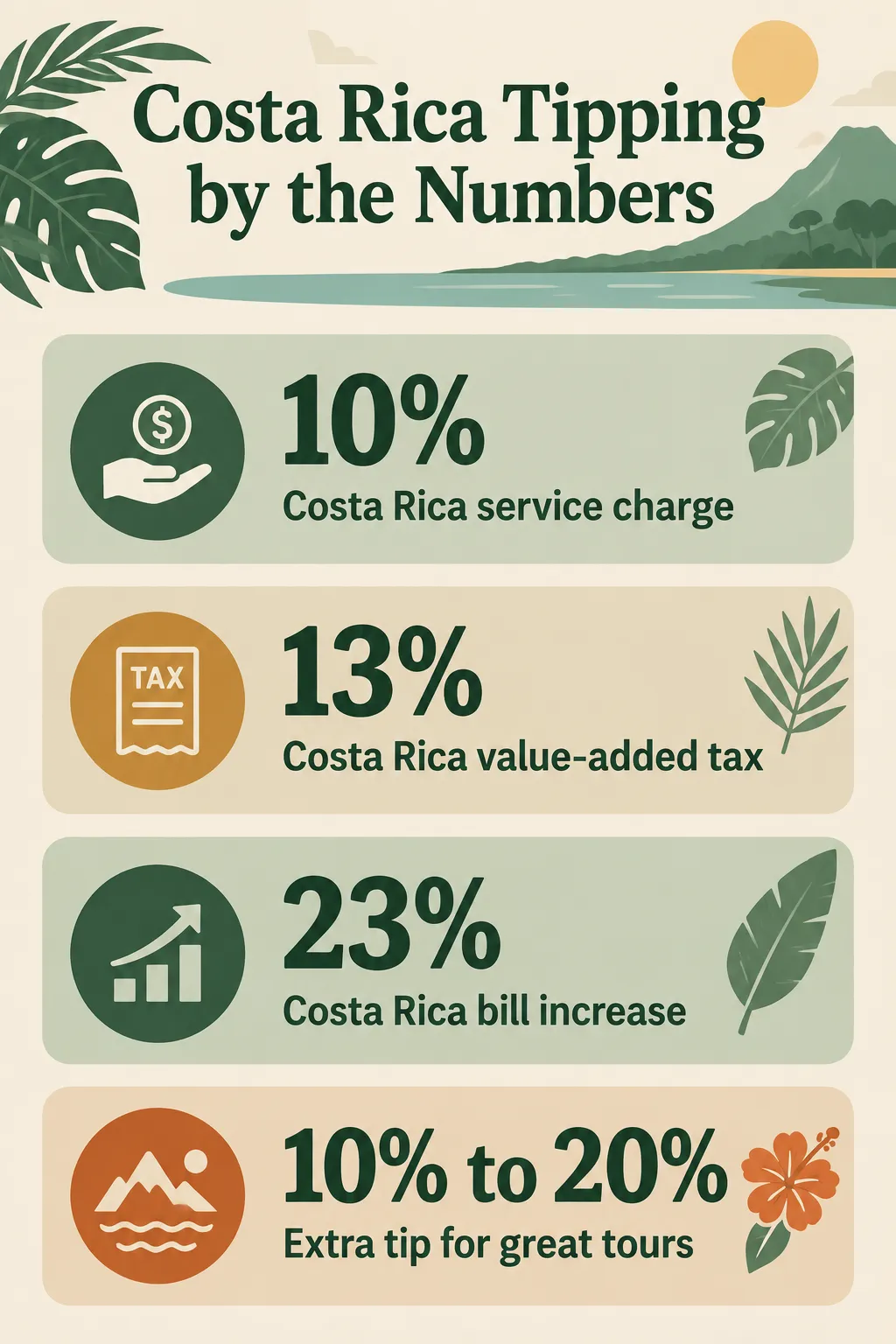 Costa Rica restaurant bills typically add a 10% service charge and 13% value-added tax, while extra gratuity is optional and especially good tour guiding may merit 10% to 20% of the tour price.
Reading your restaurant bill (expect about 23% on top)
Restaurant checks carry a 10% service charge, and a 13% value-added tax (IVA) applies to most goods and services (3). Costa Rican law requires restaurants and bars to add the service charge, which goes to staff, and both appear as separate line items (4). Expect your total to land roughly 23% above the menu prices before you think about tipping.
Look for the “10% servicio” line on the receipt (5). If it’s there, you have tipped. Rounding up or leaving a little extra for standout service is a nice gesture, not an obligation (4).
Tipping guides, drivers and hotel staff
Travelers commonly give guides, drivers, boat captains and housekeeping staff US$1 to US$10 per day, or 10% to 20% of a tour price for especially good guiding (3). For housekeeping, tips are usually US$1 to US$3 per day, left daily rather than at checkout because staff rotate (4). Taxi drivers don’t expect tips (3). Keep small US bills or colones set aside for this so you are not asking a guide to break a large note.
Frequently Asked Questions
- How much is $1 US in Costa Rica right now?
- Check the Banco Central de Costa Rica's latest dated reference rate before exchanging; the dollar-to-colón value can change from one trading day to the next.
- Is $20 a lot of money to carry in Costa Rica?
- A $20 bill can be awkward for small purchases because vendors may lack change; keep smaller notes or colones available for everyday payments.
- Which currency should I bring if I'm not traveling from the United States?
- A bank card and a supply of colones from an ATM are practical if you do not carry US dollars; Canadian dollars can be difficult to exchange locally.
- What can I expect 500 colones to cover?
- Treat ₡500 as small change rather than a meal budget; the article's sources do not establish reliable prices for specific snacks or goods.
- Is it better to exchange dollars at a hotel or a bank?
- A bank or bank ATM is the safer default; hotels and shops may give change for dollars at a less favorable rate.
- When does the Central Bank update its CRC-to-USD data?
- MONEX data is published for trading days, not non-trading days, so check the latest available date rather than assuming a weekend update.
- Should I exchange cash with street changers in San José?
- No; use a bank counter or bank ATM instead, since street transactions make it harder to verify the rate and the bills you receive.
The Short Version for Your Wallet
Put hotels, tours and sit-down restaurants on a card. Withdraw colones from a bank ATM with a four-digit PIN for sodas, markets, buses and roadside stands. Bring small US bills if you carry foreign cash at all, and leave Canadian dollars at home. Check restaurant bills for the 10% service line before tipping. Before you build a budget, look up the Central Bank’s rate that same week, because the ₡455.66 figure from October 6, 2026 won’t hold forever, and older guides are further off still.