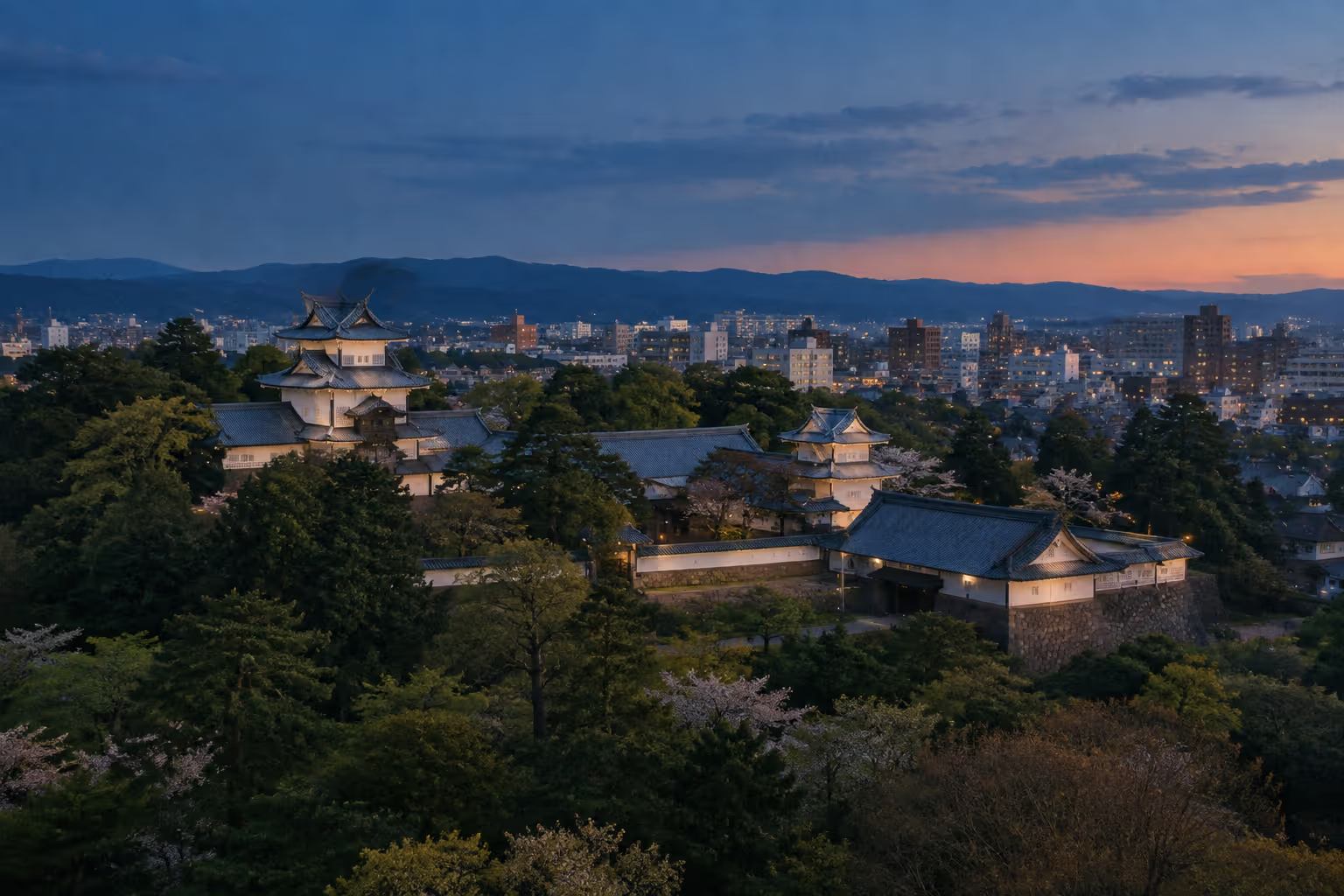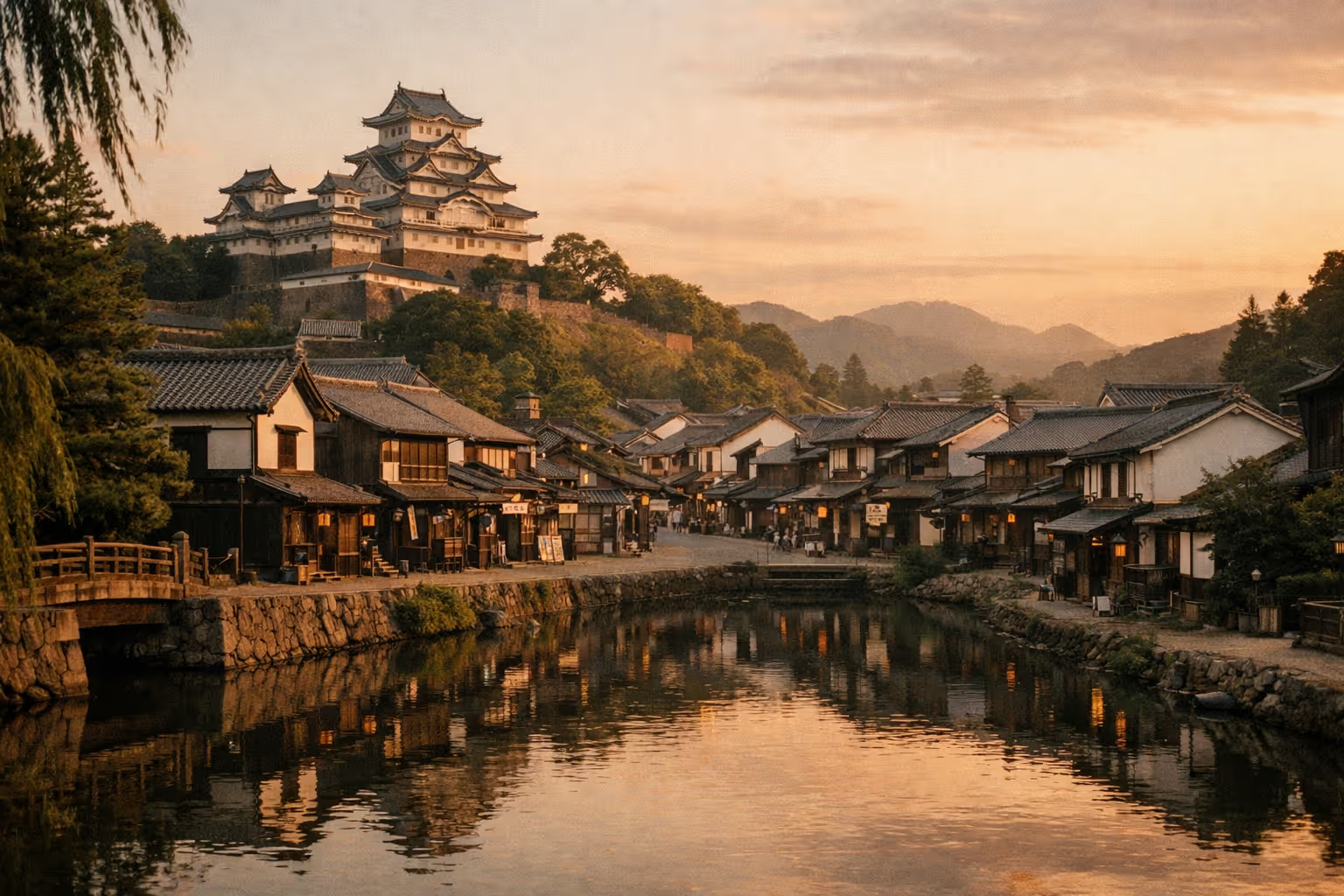
Japanese castle towns are hiding in plain sight: more than half of the country’s cities above 100,000 people grew up around a feudal lord’s keep. Yet only twelve of those original keeps survived past the 1868 Meiji Restoration, which is why a town like Matsue feels so different from a concrete-reconstruction castle. I planned a whole trip around those twelve originals, plus a walk between the old Nakasendo post towns. Here is the route, and what still stands where.
What Makes a Japanese Castle Town Different
Japanese castle towns give you something most historic sites don’t: a layout you can still read. The streets follow the logic of defense and class hierarchy laid down four centuries ago, and once you understand the pattern, you start seeing it everywhere. From the wooden keeps that survived Meiji-era demolitions to the samurai quarters and merchant streets radiating outward from each castle, these towns show you how power, commerce, and daily life were organized in feudal Japan. More than half of all Japanese cities with populations over 100,000 began as castle towns (2), so when you walk through one, you’re often walking through the original skeleton of a modern city.
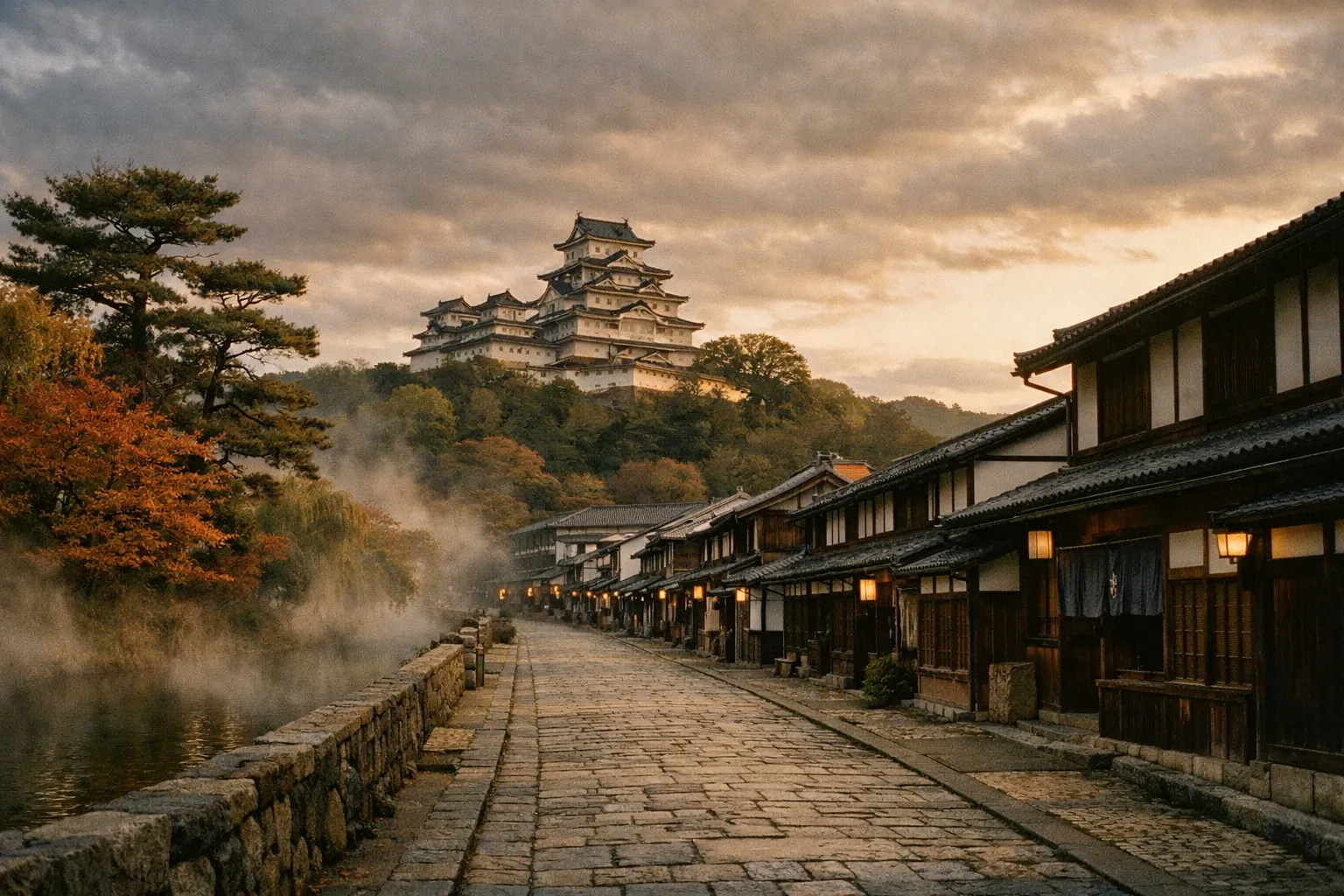
I’ve crossed various parts of Japan over several trips, looking for something specific each time. What follows is a walk through several of those towns - Matsue, Inuyama, the post towns of the Nakasendo - plus a wider survey of the best-preserved japanese castle towns and the history that shaped them.
✓ Pros
- Preserved original urban layouts reveal feudal social and defensive structures
- Several original wooden castle keeps remain authentic and climbable
- Combination of castles, samurai districts, merchant streets, and museums enriches the visit
- Many towns function as living cities with active cultural revivals
✗ Cons
- Original wooden keeps have steep, narrow stairs unsuitable for mobility issues
- Some towns can be crowded during peak cherry blossom and festival seasons
- Concrete reconstructions can confuse visitors seeking authentic castle interiors
What is a Japanese Castle Town?
A Japanese castle town - jōkamachi, literally “town below the castle” - was a settlement built directly around and below a feudal lord’s castle, planned for defense and administrative control (2)(5). The castle anchored the center. The town spread outward in deliberately organized rings.
These towns emerged from the Kamakura period (1185-1333) but became the dominant urban model from the 1570s, during the Sengoku (“Warring States”) period, when warlords consolidated their domains around a single citadel (2). Under the Tokugawa shogunate, each daimyo’s castle town served as the political, military, and economic capital of its domain. The model was so effective that Tokyo, Nagoya, Hiroshima, and Kanazawa all grew from former jōkamachi (2)(4).
Historically, Japan had something on the order of 5,000 castles. Today more than 100 survive in some form, but only 12 original castles retain main keeps built before the Meiji Restoration of 1868 - Himeji, Matsumoto, Matsue, Inuyama, Hikone, Hirosaki, Kōchi, Marugame, Maruoka, Iyo-Matsuyama, Uwajima, and Bitchū-Matsuyama (3)(4). Everything else is either ruins, a reconstruction, or a concrete rebuild with an elevator inside.
That last distinction matters more than most guidebooks let on.
How a Castle Town Is Laid Out
Once you understand the pattern, you can read any castle town as you walk it. The structure is consistent enough to function as a map.
The castle sits at the center, ringed by concentric defensive baileys: the honmaru (main bailey) at the core, then the ninomaru (second bailey), and sometimes additional rings (4). Around these ran moats, canals, and rivers - both defensive barriers and transport routes. Omihachiman’s canal network beside Lake Biwa is one of the best-preserved examples (1).
Beyond the moats, the town was zoned by social class:
- Samurai districts sat closest to the castle, on larger lots behind walls and gardens - these retainers were the lord’s standing force.
- Merchant and artisan quarters were pushed further out, with narrower shopfronts packed along the main roads.
- Streets were deliberately crooked - doglegs, T-junctions, and dead ends were designed to slow an attacking army and break its lines of sight (2)(5).
A few street-level cues that help you orient:
- Look for the former castle site - often a park, a school, or municipal grounds if the keep was lost to fire or demolition.
- Find the Otemon (main gate) street, which usually runs straight from the station toward the castle.
- Tell samurai from merchant architecture: large walled compounds with gardens versus tight rows of shop frontages.
I find this framework genuinely useful. Once you’ve walked two or three towns with it in mind, the third one clicks into place almost immediately.
Discovering the Essence of Matsue Castle Town
One of my most memorable visits was to Matsue, a castle town on the Shimane coast known for its Matsue Castle, one of the 12 original keeps (3).
Sitting beside Lake Shinji, the town pairs historical weight with water on every side. Boat rides along the moat give you a completely different angle on the castle and its surroundings - slower, quieter, and worth the time. The keep itself is nicknamed “Plover Castle” for its wing-like gables, and its black weatherboarding makes it one of the more striking originals. Admission runs about ¥680 (roughly $4.50) for adults.
The charm extends past the castle walls. Walking the Shiomi Nawate street that runs along the northern moat, I passed traditional tea houses where I could pause over a cup of matcha and slow down to the town’s pace. The Matsue Castle town experience works precisely because castle, samurai street, and canal all sit within walking distance of each other - you’re not shuttling between disconnected sights.
The samurai legacy is well preserved here. The Buke Yashiki (samurai residence), open as a museum, lays out the warrior lifestyle, customs, and diet in concrete detail - entry is a few hundred yen. Matsue’s tourism office offers combination tickets covering the castle plus key museums at a discount, which is worth asking about at the station.
Etiquette note: as in most historic Japanese buildings, you’ll remove your shoes before entering the castle keep and samurai houses. Wear socks you don’t mind being seen in, and expect cold floors in winter.
A Day in Inuyama
Inuyama, in Aichi Prefecture, has a different feel entirely. Inuyama Castle is one of the oldest surviving keeps in Japan, with parts of the structure dating to the mid-16th century (3). Perched on a hill above the Kiso River, it held a genuinely strategic position, and the climb up rewards you with wide-open views across the water to the mountains beyond.
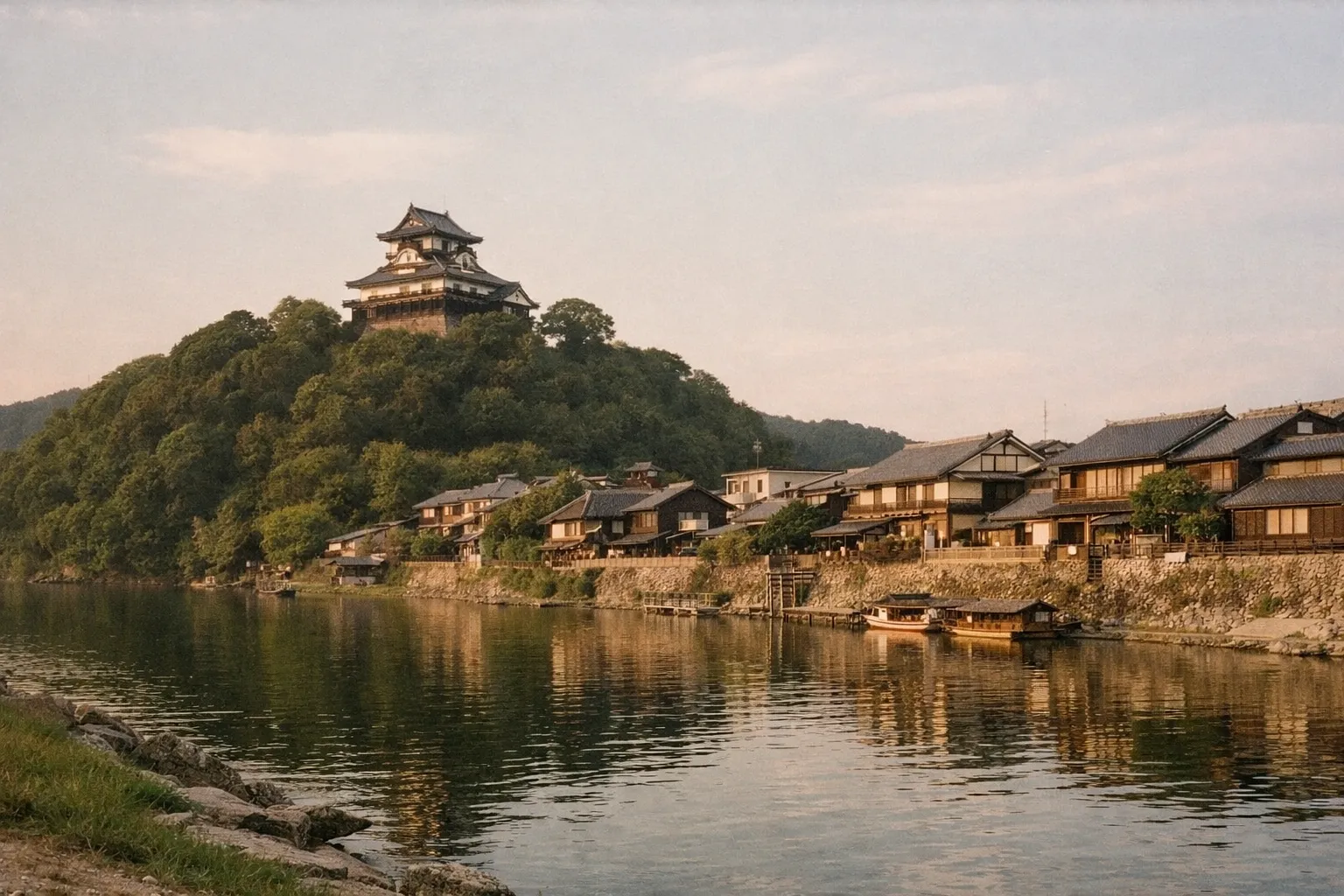
The wooden interior and exterior are the real draw. This is an original keep, not a concrete reconstruction, so the stairs are steep, narrow, and authentically punishing - budget time and decent footwear. The town below has a compact historic core: the Hon-machi and Jōkamachi streets that form Inuyama’s old merchant quarter are lined with shops selling local crafts and Inuyama wagashi (traditional sweets), which make a good wind-down after the climb. The same streets also hold several small sake breweries and a handful of machiya (wooden townhouses) converted into cafés - worth a slow hour if you have it.
Adjacent to the castle is the Uraku-en garden, home to a tea house where you can watch the ceremonial preparation of matcha (powdered green tea). I remember a real sense of calm walking through this carefully maintained garden - a sharp contrast to the castle’s vertiginous interior stairs.
One practical caution: original keeps like Inuyama, Matsumoto, and Himeji can take 60-90 minutes to climb with their steep interior stairs and queues, and none of them have elevators. Travelers with mobility issues should factor this in before making the trip.
The Nakasendo Way: Trekking Between Post Towns
The most adventurous stretch of my journey through these historic towns was trekking along the Nakasendo Way. This Edo-era highway once linked Edo (now Tokyo) to Kyoto, threading through the mountains with rest stops along the way - the Nakasendo post Towns.
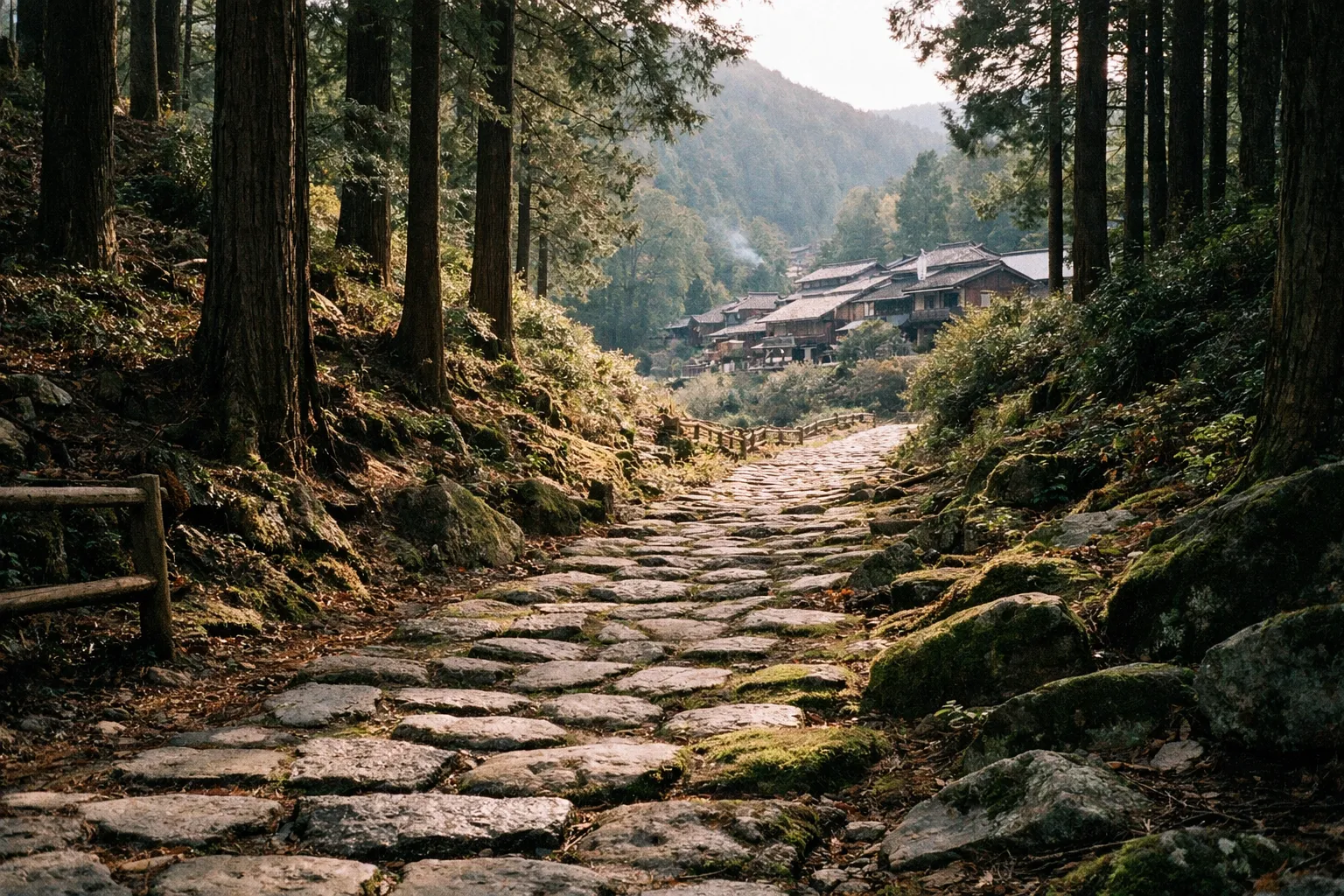
Walking between Magome and Tsumago, two of the best-preserved post towns, the trail runs roughly 8 km and takes most walkers two to three hours, with waterfalls and rivers along the route. It’s a living history lesson - each step reveals more of the travel infrastructure that held the Tokugawa state together. I found myself thinking less about photography and more about the actual logistics of moving people and goods through these mountains before rail existed.
Magome and Tsumago have worked hard to keep the Edo period intact. Power lines are hidden, modern vehicles are banned from the main streets during daytime hours, and traditional lodgings still take in travelers. The result is genuinely immersive in a way that most “historic” streets aren’t.
Pairing the Nakasendo with a nearby castle town makes for a strong three-to-five-day route through central Japan. Matsumoto - home to another of the 12 original castles, with its black “Crow Castle” keep - and Hikone, on Lake Biwa, both sit within reach and let you contrast Edo-era travel infrastructure against castle-town administration. Getting between these towns efficiently is worth thinking through in advance; understanding how to get around Japan by rail and IC card will save you real time and money on a multi-stop itinerary like this.
Best-Preserved Towns Beyond the Famous Keeps
If you want more than the big-brand japanese castles, these towns reward the detour. Each combines a historic streetscape with castle remains or ruins, and several are considerably quieter than Himeji or Matsumoto.
Best-Preserved Japanese Castle Towns Beyond the Famous Keeps
| Kanazawa | Hagi | Kawagoe | Omihachiman | Tsuwano | Izushi | Iwamura | Kakunodate | |
|---|---|---|---|---|---|---|---|---|
| Location | Ishikawa Prefecture | Yamaguchi Prefecture | Saitama Prefecture | Shiga Prefecture | Shimane Prefecture | Hyōgo Prefecture | Gifu Prefecture | Akita Prefecture |
| Highlights | Nagamachi samurai district, Higashi Chaya tea district | Samurai residences, merchant blocks, castle ruins | Kurazukuri warehouses, old bell tower | Canal town, merchant houses, boat trips | Sake distilleries, samurai homes, hilltop castle ruin | Hilltop castle ruins, partial reconstruction, sara soba noodles | Ruins of Japan's highest castle, uphill walk, merchant street | Samurai quarter, weeping cherry trees, late cherry blossom |
| Access & Notes | 1-2 days, local day bus pass about ¥600 | Flat walkable town, museums ¥300-¥700 | 30-60 min train from Tokyo, ¥500-¥800 | Half-day from Kyoto, train ¥600-¥1,000 | Compact, better overnight | Known for lunch timing | 30-45 min uphill walk, few crowds | Cherry blossom late April to early May |
The Three Famous Castles of Japan
Travelers often ask which japanese castles top the list. The classic “Three Famous Castles” are Himeji Castle, Matsumoto Castle, and Kumamoto Castle, cited repeatedly in tourism and history references as Japan’s most celebrated (3).
Himeji is the one most people put first - a large, intact white complex dating to the 14th-17th centuries and widely considered Japan’s best-preserved castle, a status reinforced by its designation as Japan’s first UNESCO World Heritage Site in 1993 (4). Admission is about ¥1,500 (roughly $10, early 2025) for the standard adult ticket, and it sits an easy day trip from Kyoto or Osaka. Tokyo to Himeji by Shinkansen runs roughly $90-$110 one-way for a non-reserved seat, covered if you’re traveling on a Japan Rail Pass.
Don’t confuse the “three famous castles” with the “japan 12 original castles.” Himeji and Matsumoto appear on both lists, but Kumamoto is a partial reconstruction - its keep was rebuilt in concrete and suffered serious damage in the 2016 earthquake. If architectural authenticity matters most to you, the 12-original-keeps circuit (Matsue, Inuyama, Himeji, Matsumoto, Hikone, Hirosaki, and the rest) is the purist’s route - figure 7-14 days to sample four to eight of them. Kyoto makes a natural base for the western end of this circuit, and things to do in Kyoto can fill the gaps between castle-town day trips without any wasted travel time.
A common mistake worth flagging: assuming any large keep is original. Most castles you’ll see are 20th-century concrete reconstructions with modern interiors and elevators (3)(4). The wooden interiors, the worn stairs, the genuine darkness inside - those belong to the 12 originals. Once you’ve been inside one of each, the difference is immediately obvious.
Castle Towns Today
These places aren’t museums frozen behind glass. Most function as ordinary small cities, with supermarkets, schools, and commuters, while keeping a historic core for tourism, festivals, and a growing wave of lifestyle migration. Travel coverage on towns like Tamba Sasayama shows exactly this - daily life running alongside the preserved old quarter (6).
There’s a creative revival underway too. Old machiya (wooden townhouses) are being converted into cafés, guesthouses, and studios, often aimed at remote workers and long-stay visitors. And the towns have leaned into pop culture: Sengoku-era dramas, anime, and video games set in the Warring States period draw younger travelers to the real sites that inspired them (7). Destination management campaigns in western Japan now market explicit “castle town itineraries” around Himeji and its neighbors (8).
Worth knowing if you’re planning around samurai history japan: the pop culture angle has genuinely broadened the visitor base, which means some towns are busier than they used to be. Hikone and Inuyama in particular have seen a noticeable uptick.
Planning Your Castle Town Trip
A few practical points to shape the itinerary:
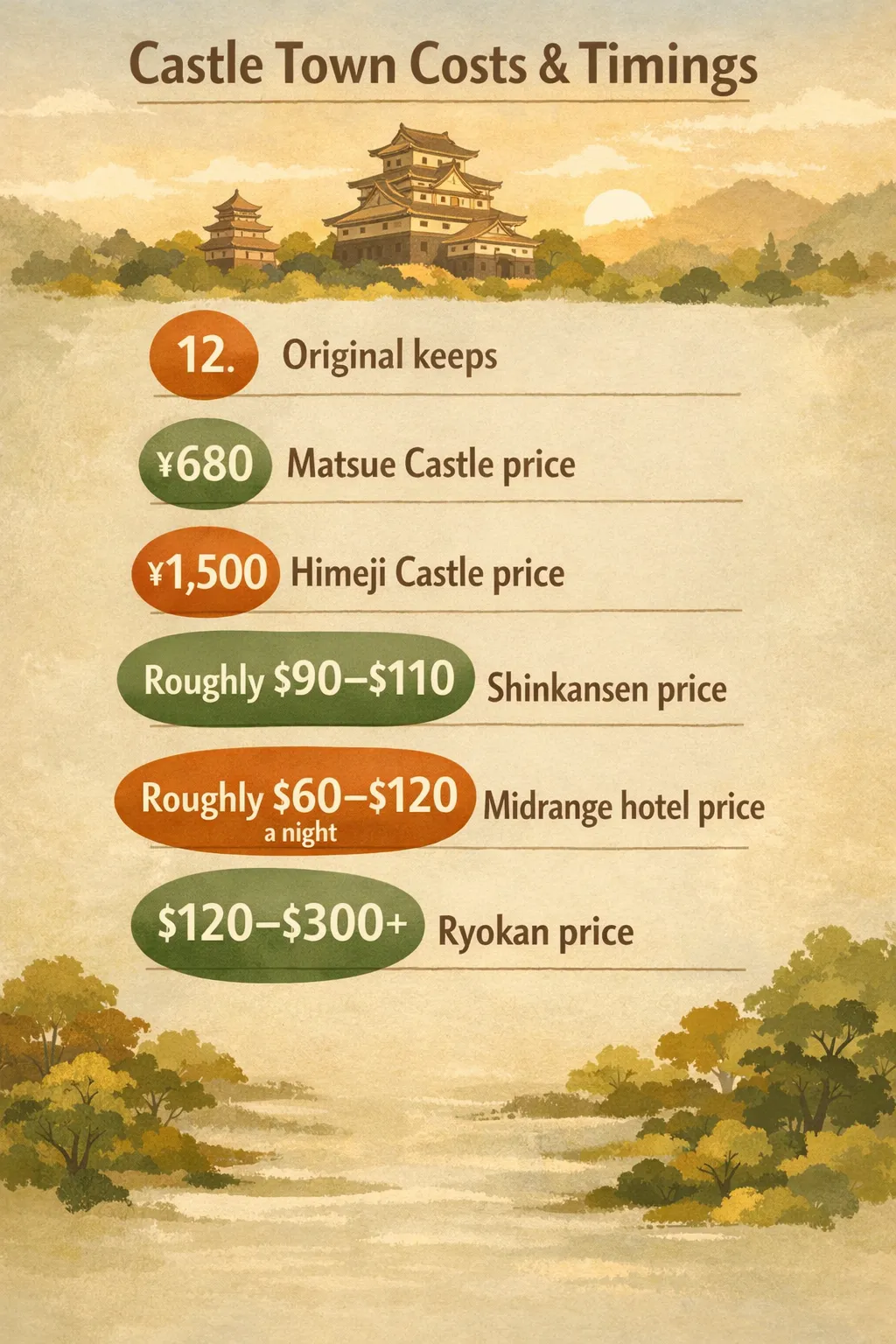 Costs and access figures for the 12 original keeps route: Matsue admission ¥680; Himeji admission ¥1,500; Shinkansen roughly $90-$110; midrange hotel roughly $60-$120 a night; ryokan $120-$300+.
- Time per town. Major castle towns like Kanazawa, Matsue, and Himeji warrant 1-2 full days to combine castle, samurai district, merchant quarter, and museums. Compact towns - Kawagoe, Omihachiman, Tsuwano, Izushi - work as 4-7 hour day trips from Tokyo, Kyoto, Osaka, or Hiroshima.
- Accommodation. A midrange business hotel runs roughly $60-$120 a night (early 2025). A traditional ryokan (Japanese inn) in a historic district - Hagi, Kanazawa, or Matsue - runs $120-$300+ including dinner and breakfast. Staying in a ryokan is itself part of the experience: a yukata (cotton robe), a multi-course local breakfast, and the chance to walk the streets before the tour buses arrive.
- Overnight in the small towns. The streets of Hagi, Tsuwano, Izushi, and Omihachiman are dramatically better outside the 10:00-16:00 peak. An overnight buys you empty lanes at dawn and dusk. This is not a minor upgrade - it’s a different trip.
- Combination tickets. Many towns bundle castle plus museums at a 10-30% discount. Check the tourism office at the station in Matsue, Hagi, and Kawagoe.
- Seasonality. Cherry blossom (late March-early April in most towns, later up north) and autumn leaves (late October-late November) are peak. Golden Week (late April-early May) and Obon (mid-August) push crowds and prices up sharply.
Don’t make the classic error of rushing the castle and skipping the town. The samurai streets, canals, merchant warehouses, and museums are where the jōkamachi structure actually lived - the keep was only the apex of it. Japan rewards travelers who slow down, and our 10-day Japan itinerary captures exactly that spirit - the country’s depth only reveals itself when you stop treating it as a checklist.
Frequently Asked Questions
- Are there any accessibility options for climbing original castle keeps?
- Most original keeps have steep, narrow stairs and no elevators, so visitors with mobility issues should plan accordingly or consider viewing from outside.
- How do I distinguish an original wooden castle keep from a concrete reconstruction?
- Original keeps feature worn wooden interiors, steep stairs, and a darker, authentic atmosphere, while reconstructions often have modern interiors and elevators.
- What is the best time to visit castle towns to avoid crowds?
- Visiting outside peak cherry blossom and autumn leaf seasons, and staying overnight in smaller towns, helps avoid crowds and experience quieter streets.
- Can I combine visits to castle towns with other cultural experiences?
- Yes, many castle towns have samurai districts, merchant quarters, museums, and traditional tea houses, offering a full cultural immersion beyond just the castle.
- Is it common to remove shoes when visiting castle keeps and samurai houses?
- Yes, removing shoes is standard etiquette inside historic Japanese buildings; wearing socks you don't mind showing is recommended.
- Are there public transport options connecting multiple castle towns?
- Many castle towns are accessible by train or bus, and local day passes or combination tickets can help manage travel between spread-out sights.