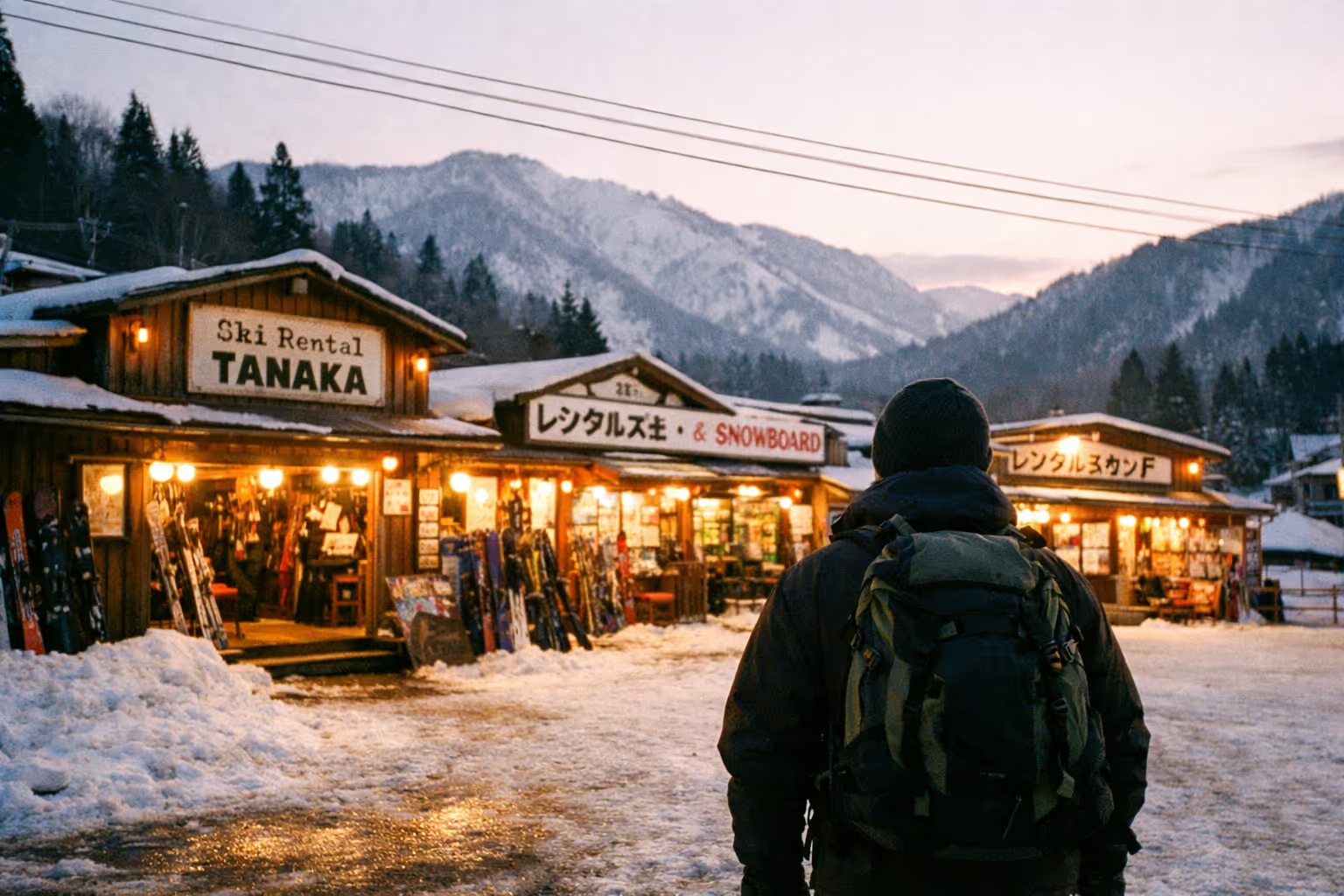
Ski rental Japan is cheaper than you would guess, but the sticker number is only the gear. A standard set runs $28 to $38 a day, but a full day with nothing of your own, gear, lift pass, and clothing, comes to roughly $72. Foreigners need no permit, just a passport, a card for the deposit, and cash for the shops that take nothing else. Aim for late January into early February in Hokkaido or Nagano for peak powder, and reserve gear before the surge sells out your size.
How much does ski rental in Japan cost?
A full ski or snowboard set - board or skis, boots, and poles - runs roughly ¥4,500-¥6,000 per day (about USD 28-38 at ¥160 to the dollar) at most Japanese resorts (1)(4). That’s the baseline. Prices climb at premium destinations and drop at smaller regional hills.
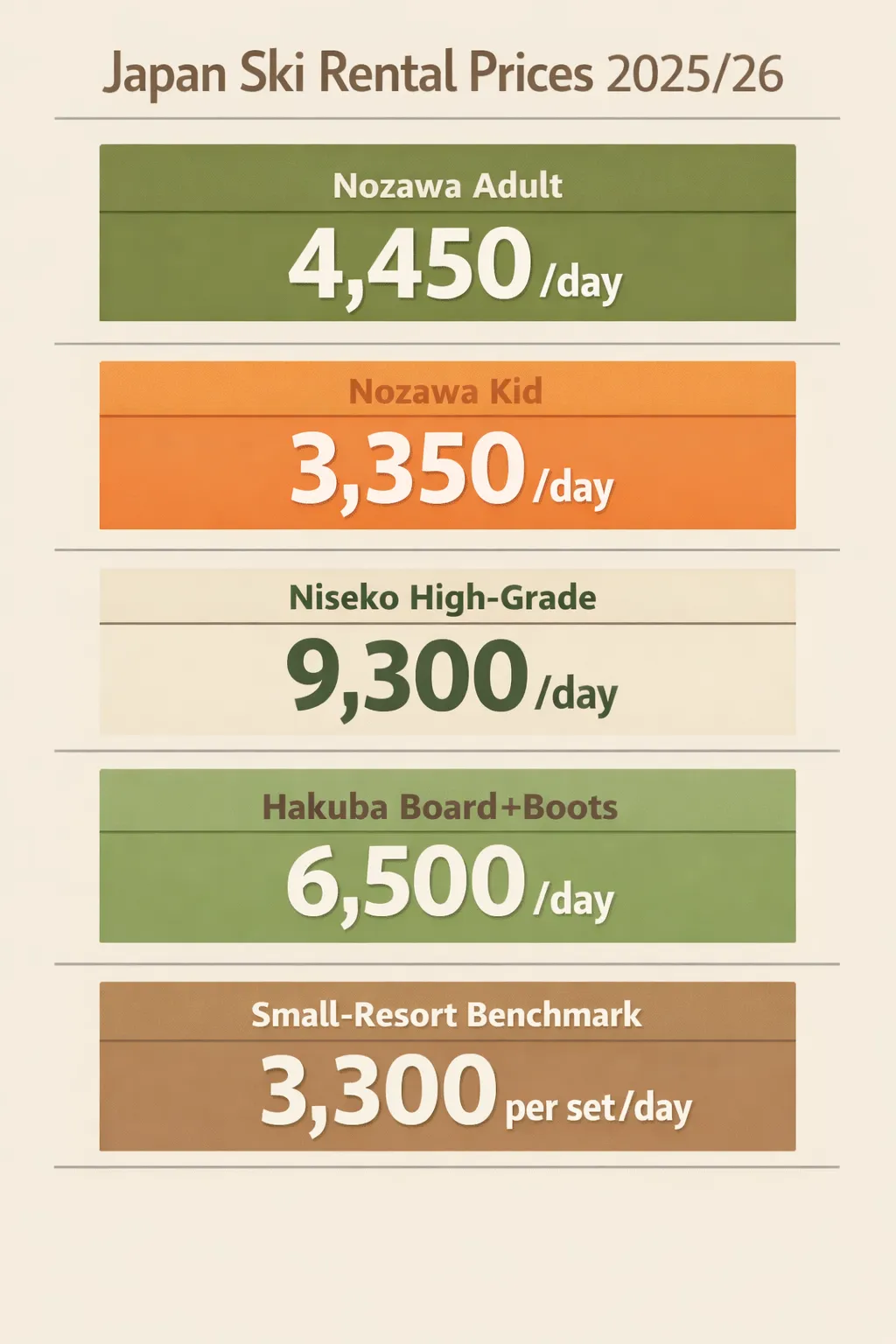 Daily ski-rental prices across Japan: Nozawa adult 4,450 yen, Nozawa kid 3,350 yen, Niseko high-grade board 9,300 yen, Hakuba board+boots 6,500 yen, small resorts from 3,300 per set/day.
Here’s what current 2025/26 pricing looks like across a few resorts:
- Nozawa Onsen: Adult ski or snowboard set ¥4,450/day (≈ USD 28); kids’ set under 12 ¥3,350/day (≈ USD 21) (1).
- Meihō Resort (Gifu): Main set ¥4,500/day (≈ USD 28), with an afternoon-only rate around ¥3,500 (≈ USD 22) and add-ons like helmets at ¥1,000 (≈ USD 6) and poles at ¥500 (≈ USD 3) (4).
- Niseko: Standard gear sits mid-range, but a high-grade board alone can hit ¥9,300/day (≈ USD 58) (7). Prices here run higher than anywhere else in Japan - Niseko draws the most international traffic of any resort in the country, and rental shops price accordingly.
- Hakuba: A standard board-plus-boots package runs around ¥6,500/day (≈ USD 41) (7).
The cheapest official benchmark from Japan’s tourism guidance puts rentals from ¥3,300 per set/day (≈ USD 21) at smaller resorts (3).
Don’t forget the soft goods. Flying in without snow clothing means budgeting another ¥3,000-¥4,000/day (≈ USD 19-25) for a jacket and pants, plus helmet rental on top (1)(4). One trick that saves real money: rent outerwear only and pack your own base layers, which cuts ¥1,000-¥2,000/day (USD 6-12) off the clothing tab (1). It’s a small adjustment that adds up fast over a week.
What are the full costs to ski in Japan?
Lift passes are the other half of the equation. Day passes across Japan typically run ¥3,500-¥5,000 (≈ USD 22-31), depending on resort size (3). Rusutsu’s lodge-package day ticket is ¥5,300 (≈ USD 33), or about ¥4,700/day averaged across a 4-day ticket - a discount worth grabbing if you’re staying put.
A realistic per-person, per-day total for someone who arrives with nothing:
- Lift pass: ¥4,000 (≈ USD 25)
- Rental gear set: ¥4,500 (≈ USD 28)
- Clothing and helmet: ¥3,000 (≈ USD 19)
That’s roughly ¥11,500/day, or about USD 72, before food and transport (1)(3)(4). Add a budget lodge bed from ¥5,000/night (≈ USD 31) (3), and a full ski day in Japan holds up well against North America or the Alps - especially given the snow quality and lower lodging costs.
Transport is the line item people consistently forget. From Tokyo, a one-way Shinkansen ticket to Nagano runs ¥8,000-¥10,000 (≈ USD 50-62), while flying to Sapporo for Hokkaido resorts is often ¥10,000-¥20,000 (≈ USD 62-124) depending on season (9). Build that into your numbers before you book anything else. If you’re still working out how to get around Japan between cities and resorts, how to get around Japan is worth reading before you commit to a route.
When renting stops making sense
If you’re staying two-plus weeks, do the math first. Renting at ¥4,500/day crosses the cost of buying used gear locally after about 10-12 days - roughly ¥45,000-¥54,000 (USD 280-335) total (9). Past that point, hit a Japanese marketplace or outlet store and buy instead.
Ski gear rental options in Tokyo, Sapporo, and gateway cities
You don’t have to wait until you reach the mountain. Several shops in Tokyo - particularly around the outdoor gear clusters in Kanda and Shinjuku - let you sort equipment before you board the train (8). That’s handy if you’re heading to a smaller resort with limited rental stock, or you simply want to skip the 30-60 minute fitting queue at a busy mountain on a January morning. Some Tokyo shops will deliver directly to your accommodation or to the resort.
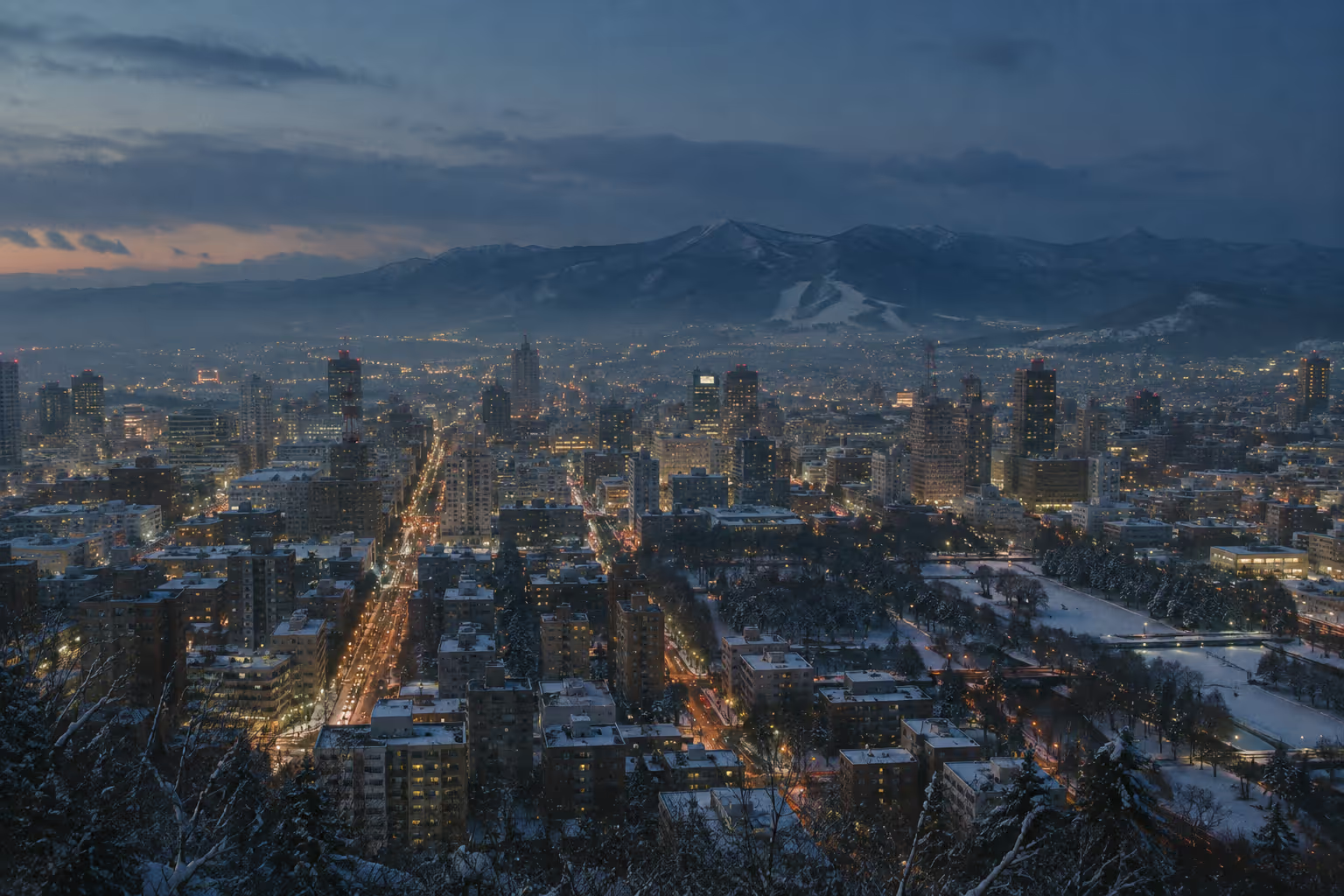
For Hokkaido trips, Sapporo is the natural staging point before you push on to Niseko, Rusutsu, or Furano. Rental shops in the Susukino and Odori areas stock full sets and can ship gear ahead to your lodge. Sapporo is also where you’ll find outlet stores like the Snow Peak Factory Store if you decide buying beats renting.
Wherever you rent, pre-booking online in English cuts your on-site time by roughly half and locks in your sizes. That matters more than you’d think during the January-February rush, when standard sizes at busy resorts go fast (7)(8).
What foreigners need to know before renting ski gear
Foreign visitors can ski and rent gear in Japan freely. No special permit, no licensing requirement - resorts serve hundreds of thousands of international skiers every season, and most rental shops at major resorts publish English forms and price tables.
What you’ll actually need at the counter:
- A valid passport as your primary ID.
- A credit card (Visa or Mastercard are widely accepted) for the deposit. Smaller shops may ask for a cash deposit of ¥5,000-¥10,000 (≈ USD 31-62) instead.
- Travel insurance that covers winter sports - strongly recommended. Damage charges on rental gear can run into the tens of thousands of yen, and if you get hurt, you’ll want coverage (4)(9).
Some local shops remain cash-only and round prices to the nearest ¥500, so carry yen even if you plan to tap a card.
Etiquette note: Japanese ski culture skews orderly. Lift lines form quietly, and cutting is genuinely frowned upon. On the slopes, on-piste skiing is the default - many resorts have strict rules about ducking ropes into the backcountry, and some will revoke your pass for it. If you want to ski trees or off-piste, check the resort’s specific gate policy rather than assuming it’s fine. For a broader look at staying safe when you head outdoors in Japan, safely explore Japan’s outdoors covers the key risks and how to manage them.
When is the best month to ski in Japan?
Most resorts run from late November through late April, with some Hokkaido mountains staying open into May (10). But if you came for the powder Japan is famous for, the window is narrower than people expect.
Peak conditions in Hokkaido and Nagano land in January through mid-February, when snowfall and coverage are statistically at their best (10). Booking March or early December and expecting bottomless powder is the classic first-timer mistake - you’ll often get spring slush or thin early-season cover instead.
The sweet spot is late January to early February. You dodge the New Year holiday crowds and inflated holiday-week lodging rates, but you still hit prime snow (10). That timing also matters for rentals - walk-in renters during the January-February surge in Niseko and Hakuba can find standard sizes sold out and get pushed into pricier high-grade gear at ¥9,300/day (USD 58) (7)(10). Reserve ahead.
Renting camping gear in Japan and beyond skiing
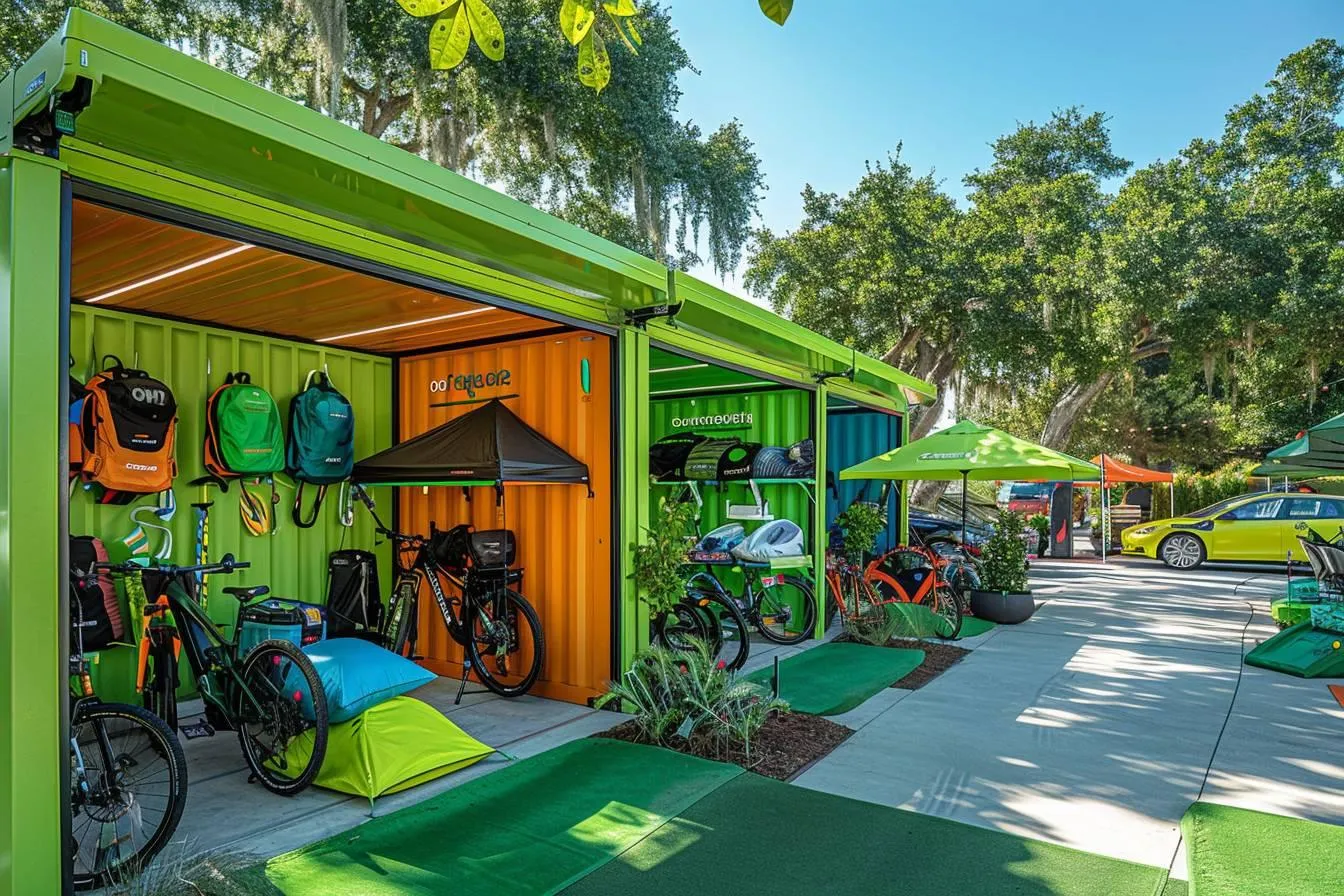
Japan’s rent-your-adventure appeal doesn’t end when the snow melts. But renting camping gear in Japan comes with a caveat worth knowing upfront: it’s patchy outside major areas.
Campsites across Hokkaido rent tents and stoves, and that works fine for a night or two (2). For longer trips, the math flips. Renting a full camping setup for 10-15 days can exceed the cost of buying used gear outright - which is why a lot of multi-week road-trippers skip rental entirely and shop secondhand. The Snow Peak Factory Store in Sapporo stocks quality tents and stoves at outlet prices. If you’re doing a long Hokkaido loop, price the buy-versus-rent break-even before you commit.
For summer water sports, jet ski rental Japan is available through commercial booking platforms, typically from around USD 150/day(2). Some operators require a valid boating license; others offer guided “without license” options where a certified operator handles the rules - useful if you don’t hold a Japanese boating permit (6).
Other gear worth renting
- Hiking and trekking: Rental outlets near Kamikochi and the Fuji Five Lakes carry everything from lightweight tents to navigation gear, serving day hikers and serious mountaineers alike.
- Snorkeling and diving: Islands like Ishigaki and Miyako rent complete snorkel sets and underwater cameras. Shop staff often know which reefs are reading best on a given day - ask them before you head out.
- Bicycles: Tokyo and Kyoto both have extensive cycling routes, and renting a bike can be as simple as tapping a smart card at a docking station. Many shops hand you a recommended route through historical districts or along riverbanks.
Adventure with local insights
Renting gear in Japan tends to be more than a transaction. The people behind the counter are a real source of on-the-ground knowledge, and I’ve found that asking one direct question - “where would you go today?” - usually gets you a better answer than any guidebook.
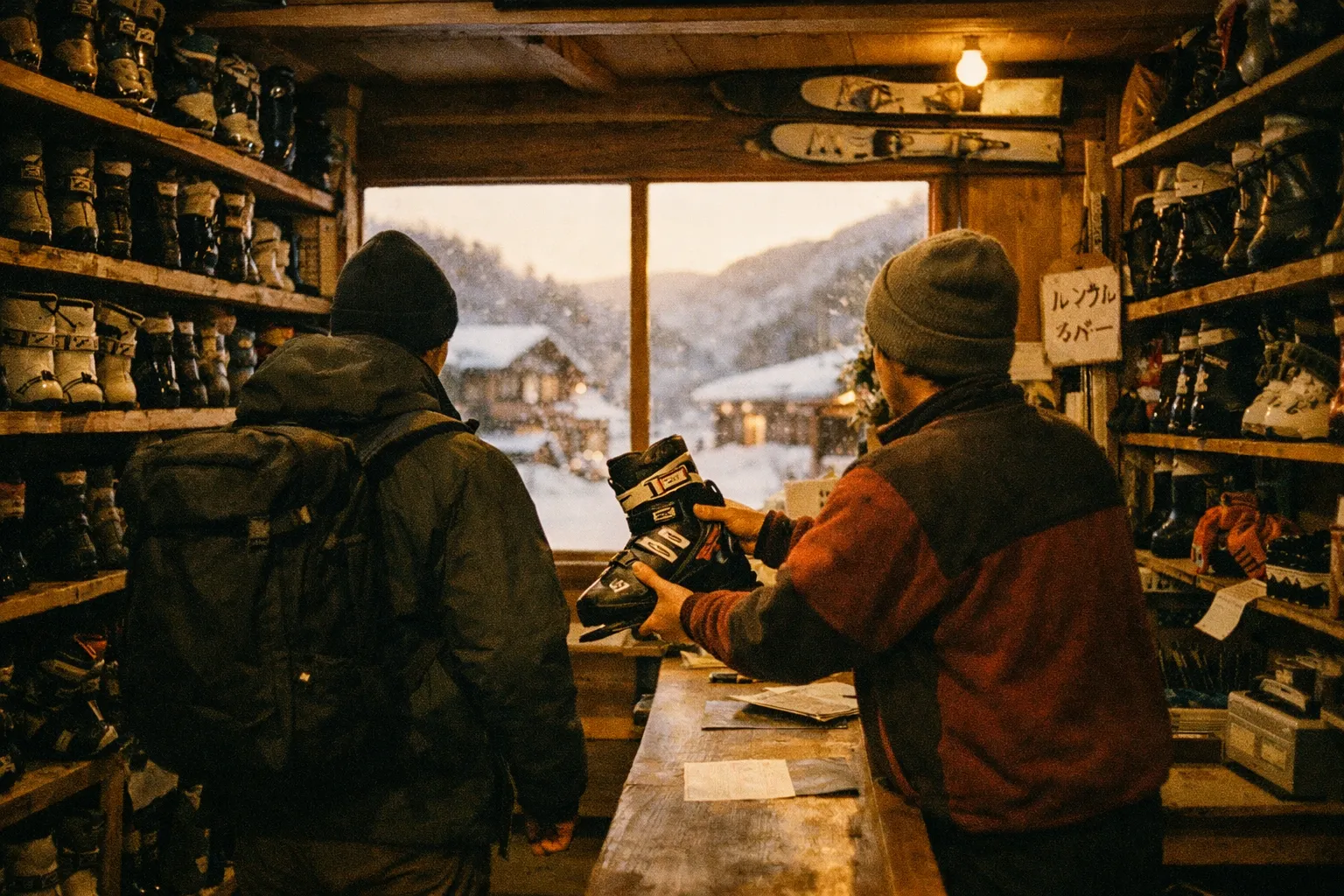
In Okinawa, snorkel shop staff pointed me toward quieter coves where the marine life was densest. In Kyoto, bicycle rental services came with curated routes that threaded through old neighborhoods I’d never have found on my own. The gear gets you out the door; the people you meet shape the trip. If you’re still building your itinerary around these kinds of experiences, our 10-day Japan itinerary offers a useful framework for balancing active days with slower ones.
Group activities add another layer. Joining a group bicycle tour in Kyoto turned a solo ride into a chance to meet locals and other travelers, and many cycling shops organize regular group runs worth asking about.
Frequently Asked Questions
- Can I rent ski gear in Japan without speaking Japanese?
- Yes, most major rental shops at popular resorts offer English-language forms and online booking, making it straightforward for foreign visitors to rent gear.
- Is it better to rent ski gear in Tokyo or at the resort?
- Renting in Tokyo can save time and guarantee your sizes before you arrive at the mountain, especially useful for smaller resorts with limited stock or busy peak periods.
- What happens if I damage rental gear?
- Damage fees can be costly, so travel insurance that covers winter sports is strongly recommended to protect you from large charges.
- Are there any special rules for skiing off-piste in Japan?
- Many resorts have strict policies against going off-piste or into the backcountry. Violating these rules can lead to pass revocation, so always check the specific resort's gate policy.
- Can I rent camping gear outside Hokkaido?
- Camping gear rental outside major areas is limited and patchy. For longer trips, buying used gear locally may be more cost-effective.
- Do I need a license to rent a jet ski in Japan?
- Some operators require a valid boating license, but others offer guided rides where a certified operator handles navigation, allowing those without a license to participate.