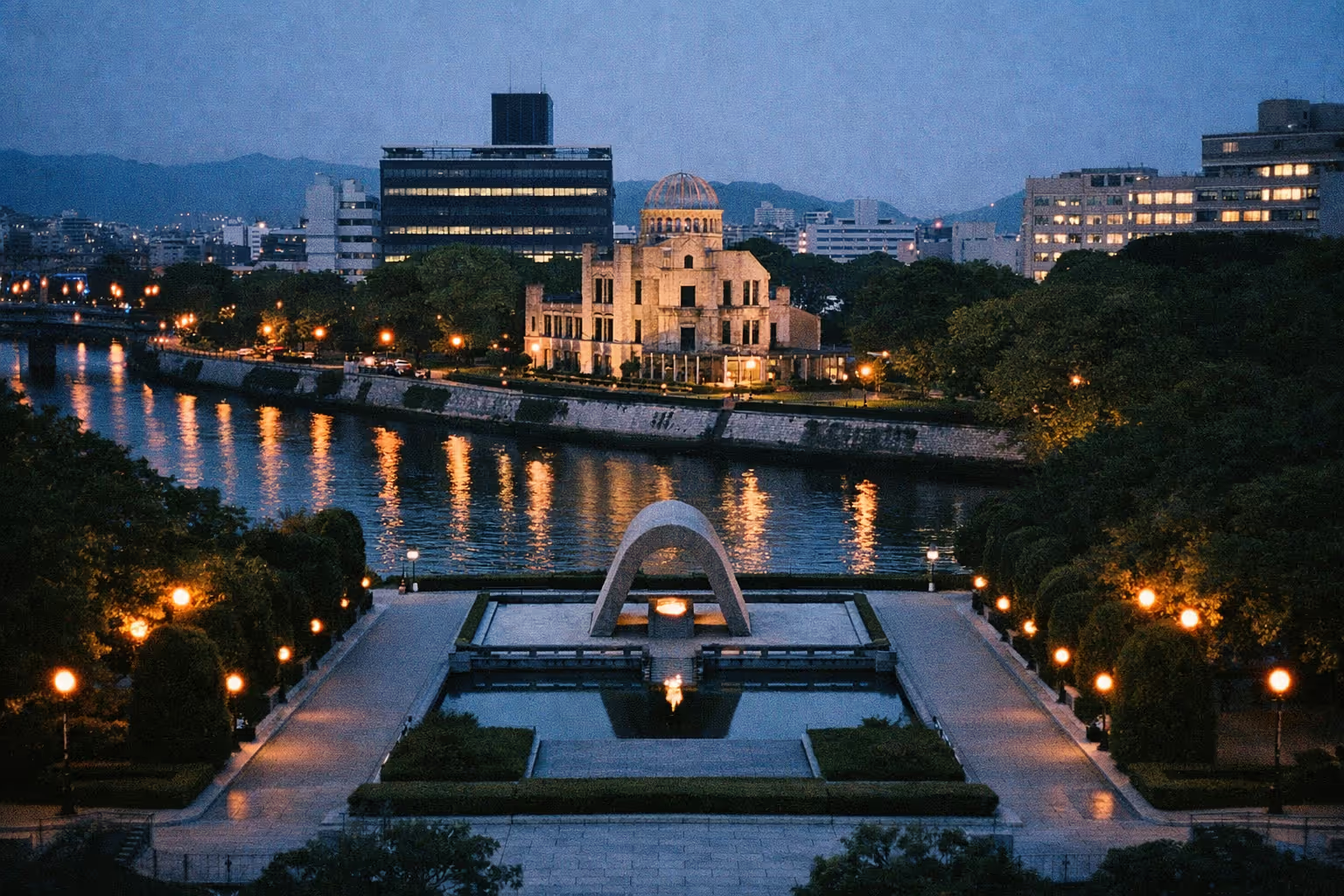
At 8:15 a.m. on August 6, 1945, an atomic bomb detonated about 600 meters above central Hiroshima, killing around 140,000 people by year’s end (1). The city that stands today is a functioning, forward-looking place, and the best things to do in Hiroshima split cleanly into two days: one for the peace sites at the hypocenter, one for the tidal shrine on Miyajima. Most visitors arrive planning a rushed half-day from Kyoto and leave wishing they’d given it longer. Give it two days if you can. This guide covers the Peace Memorial Park, the A-Bomb Dome, Miyajima and Itsukushima Shrine, the food that makes the city distinct, and the logistics that tie it all together.
Hiroshima handles its history with dignity. A good visit matches that register.
✓ Pros
- Compact, walkable city with tram network covering most sites
- Miyajima offers one of Japan's more scenic and accessible day trips
- Distinct local food scene featuring layered okonomiyaki and oysters
- Well-connected by Shinkansen from Kyoto, Osaka, and Tokyo
- Two UNESCO World Heritage Sites accessible in one trip
✗ Cons
- Peace Memorial Museum is emotionally heavy; plan your visit accordingly
- Miyajima's torii gate view depends entirely on tide timing
- August 6 brings large crowds and restricted access near the Cenotaph
- Summer heat above 30°C with humidity makes full outdoor days demanding
- Under-allocating time is the most common visitor mistake
When to Visit Hiroshima
March to April and October to November are the most practical windows. Spring brings mild temperatures (15-20°C) and cherry blossoms along the Motoyasu River, which makes the park walk genuinely pleasant rather than a heat endurance test. Autumn delivers similar temperatures with less rain and good light for the Miyajima torii. Both seasons keep the Mount Misen hike manageable.
Avoid July and August if you can. Hiroshima’s summer highs run 31-33°C with heavy humidity, and combining a full morning at the Peace Memorial Park with a Miyajima afternoon becomes a logistics problem as much as a sightseeing one. If August is your only option, start before 8 a.m. and build in shade breaks.
One thing most guides don’t flag: August 6 is not a good day to visit the Peace Memorial Park as a tourist. The anniversary ceremony draws large crowds and restricts access near the Cenotaph for hours. If your dates overlap, decide in advance whether you’re attending the ceremony or working around it - trying to do both is frustrating for everyone.
Getting to Hiroshima and Around the City
Hiroshima Station is your arrival hub. From there, the Hiroden tram reaches the Peace Memorial Park in about 15-20 minutes including the short walk. Nearly everything a first-time visitor wants is on the tram network or a short ferry ride away, so a rental car is unnecessary.
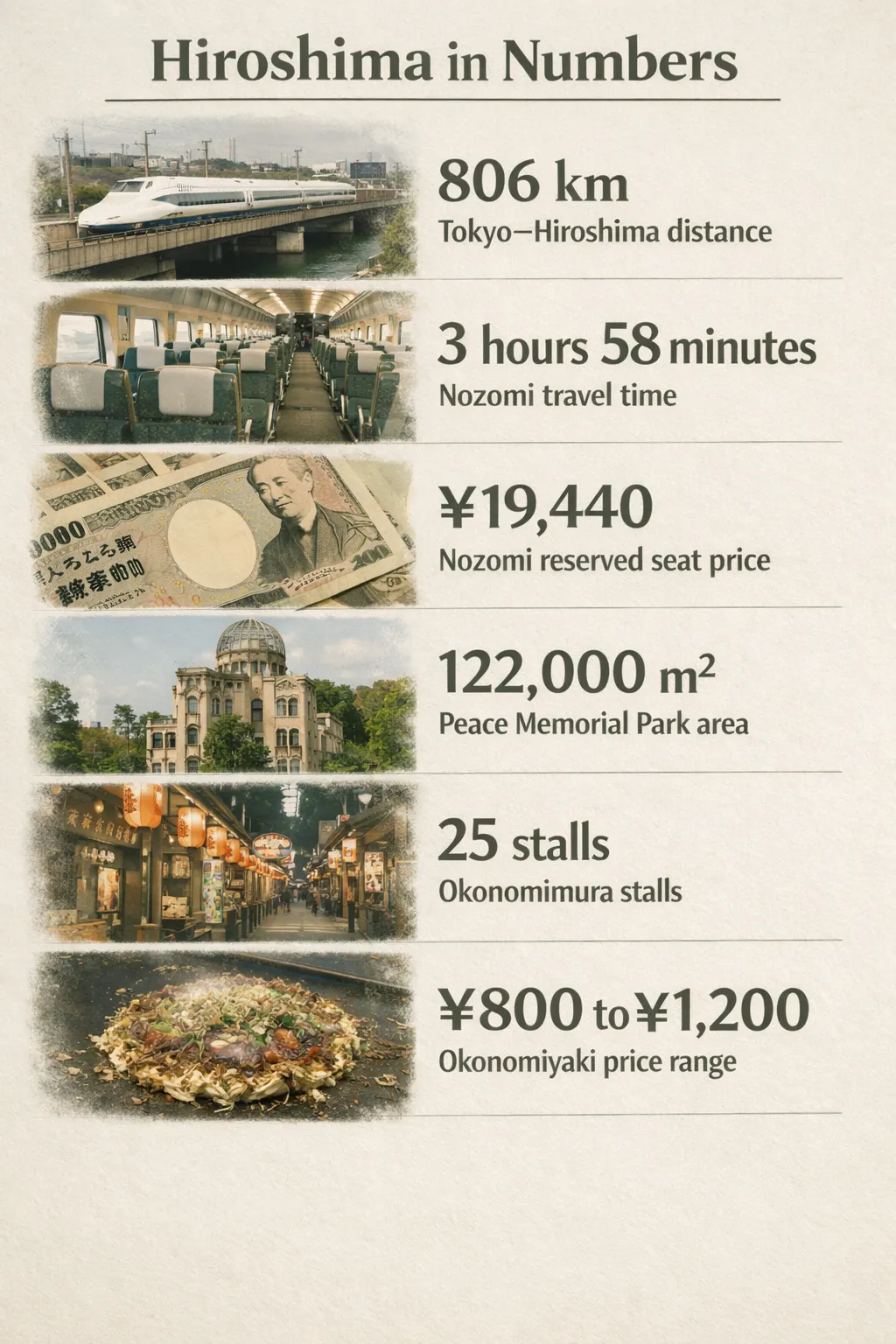 Hiroshima travel stats: 806 km Tokyo-Hiroshima distance; Nozomi travel time 3 hours 58 minutes; Nozomi reserved seat price ¥19,440; Peace Memorial Park area 122,000 m²; Okonomimura stalls 25; Okonomiyaki price range ¥800 to ¥1,200.
Arriving by Shinkansen
Journey time and pass coverage are the two things to check before you book. The direct Nozomi covers the roughly 806 km between Tokyo and Hiroshima in 3 hours 58 minutes, with a reserved ordinary seat priced at ¥19,440 in 2026. Slower Hikari and Kodama services with transfers run 5 to 6.5 hours. From Kyoto or Osaka, the trip is roughly 1.5 hours either way.
The catch for Japan Rail Pass holders: the pass does not cover Nozomi or Mizuho services. You’ll ride the Hikari or Sakura instead, which adds 20 to 30 minutes but costs nothing extra on the pass. If you’re doing a Tokyo-Kyoto-Hiroshima loop, run the numbers on point-to-point tickets versus the pass before committing - after the 2023 price rise, the pass isn’t automatically the cheaper option.
One planning note for same-day returns: the last direct Nozomi from Hiroshima to Tokyo departs at 19:57, arriving 23:55. Useful if you’re squeezing Hiroshima into a longer itinerary, though I’d argue against it - more on that below.
Getting Around by Tram
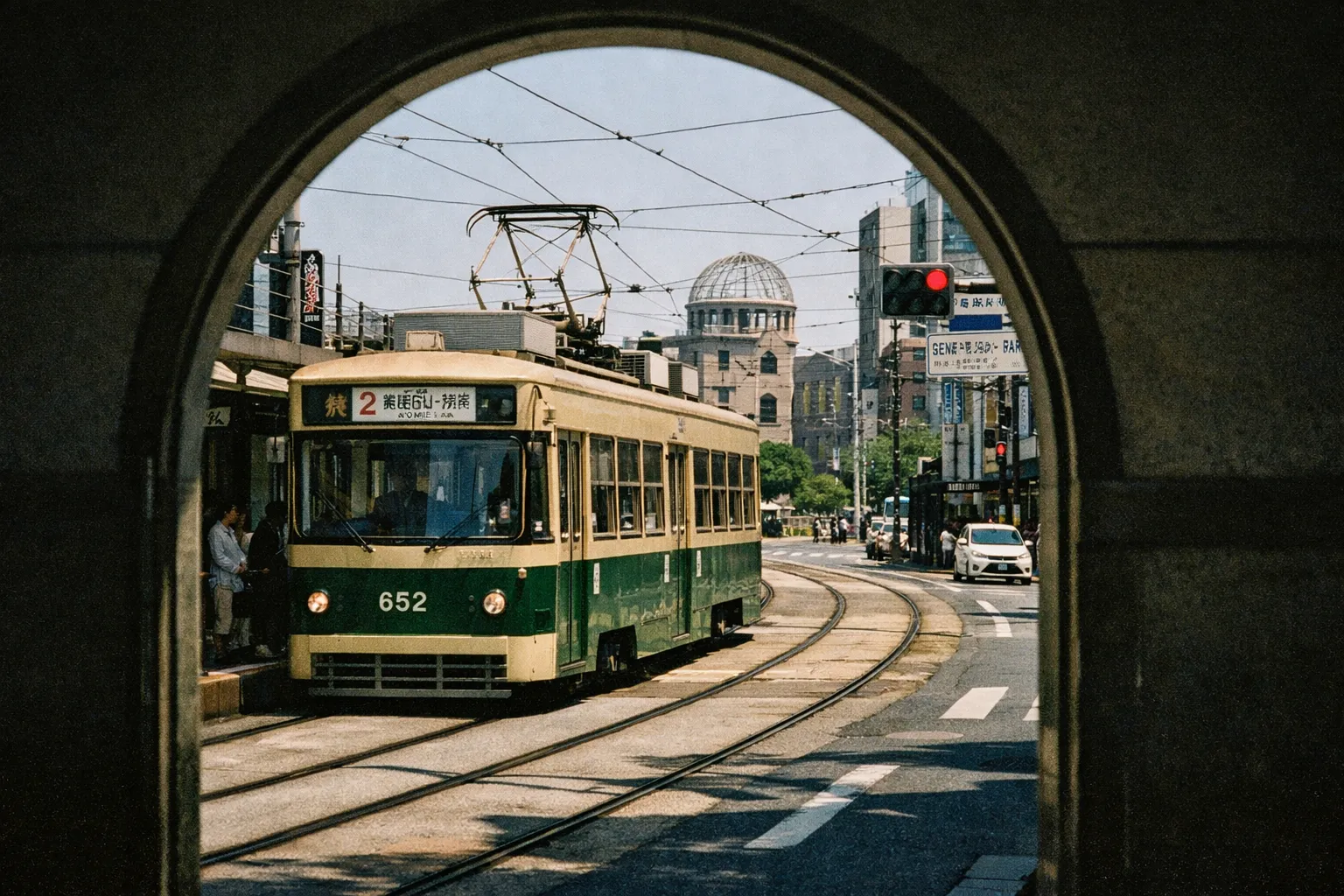
The Hiroden streetcar is the workhorse of a Hiroshima visit, and two stops cover most of your needs. Lines 2 or 6 from JR Hiroshima Station reach Genbaku Dome-mae in about 17 minutes, followed by a one-minute walk to the Dome on the Motoyasu River bank. That’s the stop for the A-Bomb Dome and the park.
The other stop worth knowing is Hondōri, which drops you at the commercial arcade a short walk from the park - handy if you want to fold in a meal or coffee on the way. A taxi from the station to the park runs around ¥1,500 and takes about 10 minutes, a reasonable option if you’re carrying luggage or short on time.
Get an IC card (ICOCA or Suica) at the station and tap through on trams and the JR ferry rather than buying individual tickets. It saves fumbling for coins and works across most of the network.
Things to Do in Hiroshima: Peace Memorial Park
Hiroshima Peace Memorial Park is a large open public space at the hypocenter of the 1945 bombing, holding dozens of monuments and memorials across its grounds (1)(2). There’s no entry fee for the park itself, and it sits just across the Motoyasu River from the Genbaku Dome-mae tram stop, 15 to 20 minutes from Hiroshima Station. Plan a half day here at minimum. A full morning is better.
The park occupies the former Nakajima-cho district - a neighborhood of roughly 6,500 residents before the bombing - between the Honkawa and Motoyasu Rivers. It was built under the Hiroshima Peace Memorial City Construction Law of 1949 and completed in 1954. Architect Kenzo Tange designed a deliberate axis: stand at the Peace Memorial Museum and your sightline runs through the Memorial Cenotaph and the Flame of Peace directly to the A-Bomb Dome. Walk that sequence in order. It’s the intended way to read the place.
The A-Bomb Dome (Genbaku Dome)
The A-Bomb Dome is one of the few structures left standing near the hypocenter, preserved as a ruin and inscribed as a UNESCO World Heritage Site. Hiroshima City formally decided to keep it indefinitely in 1966 (1), and the skeletal dome has become the globally recognized image of the bombing. The building was originally the Prefectural Industrial Promotion Hall; what remains is the exposed steel frame of its dome and the shell of its brick walls.
View it from the Motoyasu River bank, where the Genbaku Dome-mae stop leaves you within a one-minute walk. Early morning or late afternoon gives you softer light and thinner crowds. Midday is the busiest and harshest for photos. I’d recommend spending a few minutes both from across the water and up close against the fence - they’re genuinely different experiences, and neither substitutes for the other.
Hiroshima Peace Memorial Museum
The Hiroshima Peace Memorial Museum is the emotional core of any visit, and you should budget more time than you expect. Plan about 1 to 1.5 hours for the exhibits, which sit at the head of the park’s central axis. The museum holds graphic artifacts, survivor testimonies, and personal effects, and it does not soften them. Some visitors need to step outside partway through. That’s not a flaw in the museum - it’s the museum doing exactly what it was built to do.
Admission is modest: ¥200 for adults, ¥100 for high school students and visitors 65 and over, and free entry for junior high students and younger. The museum closes December 30-31; additional closure dates (including any mid-year maintenance periods) can shift year to year, so verify the current schedule on the museum’s official site before you go. For families, preview the more graphic sections before bringing younger children through - the imagery is unflinching.
Do the museum first, before the outdoor monuments. It sets the context for everything else in the park, and the walk toward the Dome afterward lands differently once you’ve been through it.
The Central Monuments and Survivor Trees
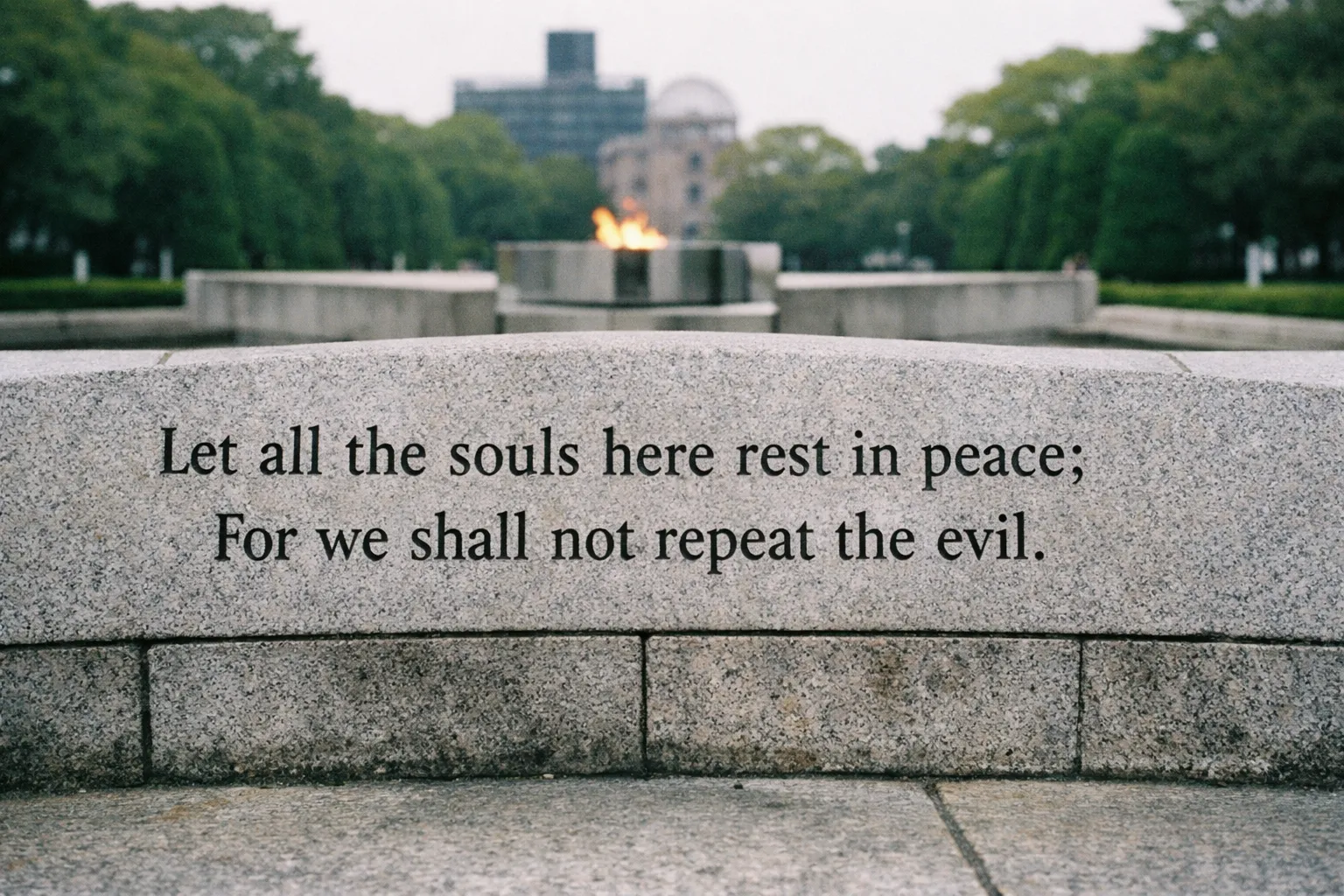
Beyond the museum and Dome, the park’s monuments reward a deliberate walk along Tange’s axis rather than a scattered wander. The Memorial Cenotaph holds the registry of victims’ names beneath its arch, framing the Flame of Peace and the Dome in a single line of sight. The Flame has burned continuously and is intended to stay lit until the world’s nuclear weapons are gone.
The Children’s Peace Monument is the one that stops most visitors. It commemorates Sadako Sasaki and the child victims of the bombing, and its glass cases overflow with folded paper cranes sent from around the world. Nearby sit the Atomic Bomb Memorial Mound and the Hiroshima National Peace Memorial Hall for the Atomic Bomb Victims, an underground space of quiet remembrance.
Look for the aogiri - Chinese parasol trees - marked as hibakujumoku, or bomb-survivor trees (9). Scorched in the blast and regrown, they offer a living counterpoint to the ruins. Keep quiet near the Cenotaph and Dome, don’t climb on monuments, and note the photography restrictions inside parts of the museum. This is a memorial, not a park in the ordinary sense.
Hiroshima Castle and Shukkeien Garden
After the weight of the Peace Memorial Park, Hiroshima Castle and Shukkeien Garden make a natural afternoon pairing. Worth the detour: Shukkeien Garden - quieter than the peace sites, genuinely restorative, and the 45-minute circuit is exactly the right pace after the museum. Skip if short on time: The castle keep interior - the reconstruction is competent but not essential; the moat walk and grounds give you most of the value without the queue. Both are within easy reach of downtown, both are quieter, and both give you room to decompress before dinner.
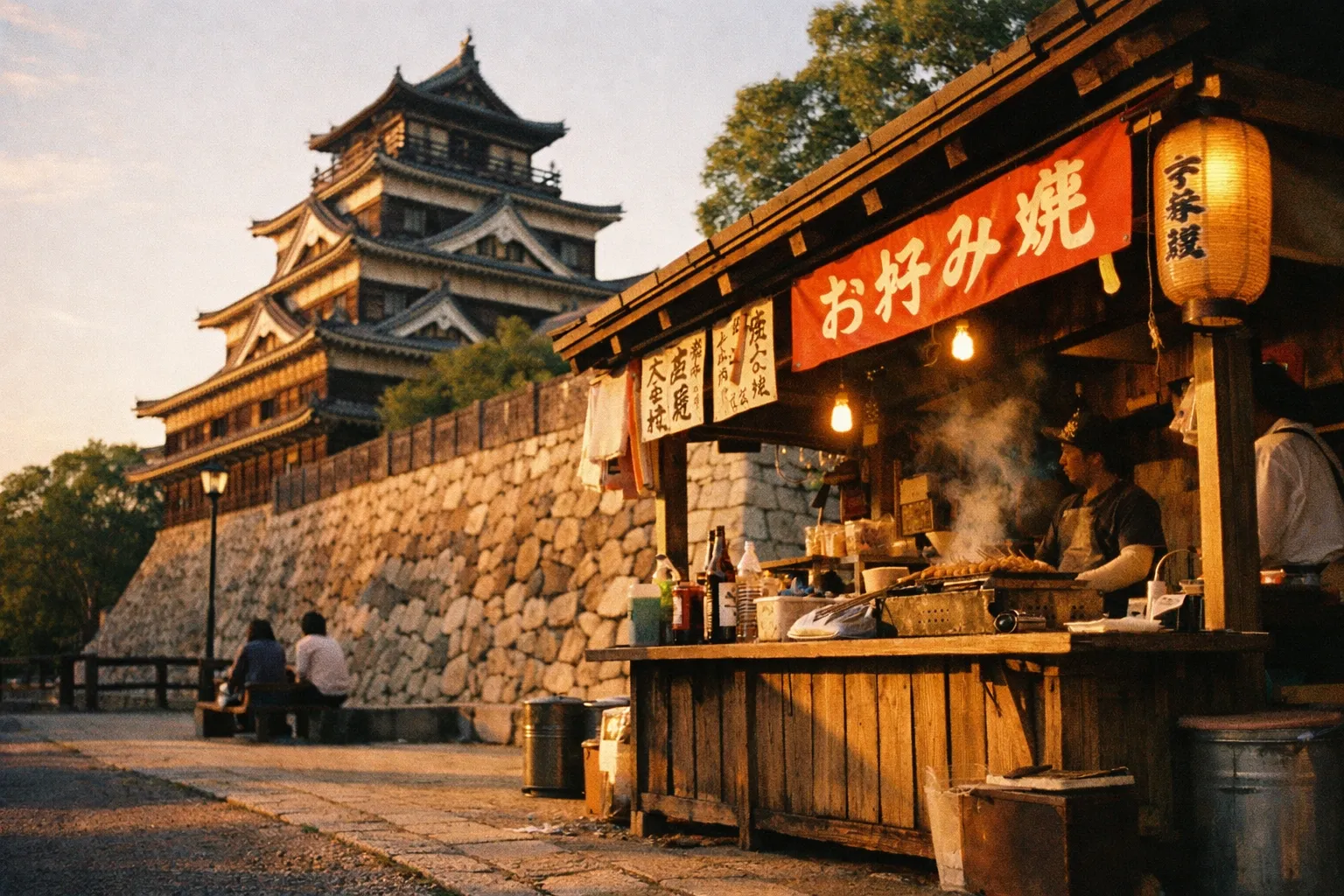
Hiroshima Castle’s original keep was destroyed in the 1945 bombing; the current five-story reconstruction was completed in 1958 and now houses a history museum, with city views from the top floor. It sits roughly 1.5 km northeast of the Peace Memorial Park - about a 20-minute walk or a short tram hop. The grounds and moat are worth a slow loop even if you skip the keep interior.
Shukkeien Garden is the better stop if you want stillness. Hiroshima Prefectural tourism information describes it as originally laid out in 1620 by feudal lord Nagaakira Asano, heavily damaged in the bombing, and later restored. It’s a compact circuit-style landscape garden built around a central pond, with stone bridges and a teahouse, and it takes about 45 to 60 minutes to walk. Markedly less crowded than the peace sites - exactly what you want after the museum.
If you have an art interest, the Hiroshima Museum of Art focuses on modern Western and Japanese modern art and sits within walking distance of both the castle and Shukkeien, making it an easy add. For most visitors, though, the castle-plus-garden loop is the right scope for one afternoon. The Hondōri shopping arcade connects the whole area and is your best bet for lunch or a coffee break between sites.
A Day Trip to Miyajima and Itsukushima Shrine
Miyajima - officially Itsukushima Island - sits about 20 km southwest of central Hiroshima and deserves a full day rather than a squeezed afternoon. Getting there is simple: a JR Sanyo Line train to Miyajimaguchi takes about 25 minutes, then a 10-minute ferry crossing, with both segments fully covered by the Japan Rail Pass on JR services.
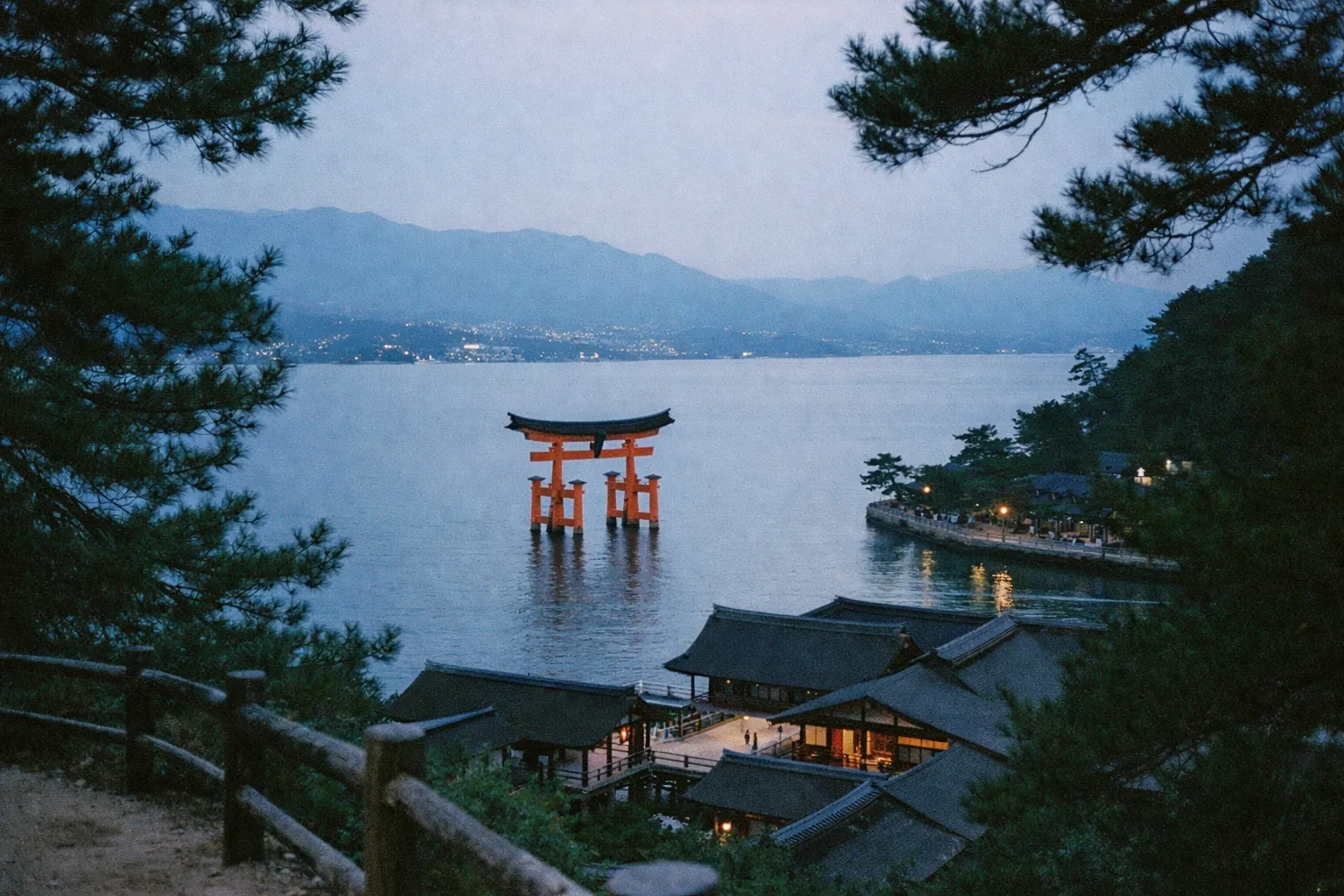
The draw is Itsukushima Shrine, inscribed by UNESCO in 1996 for the shrine complex and its “floating” torii gate in the Seto Inland Sea. The shrine’s covered walkways and stage are built out over the water, so at high tide the whole structure appears to float. The JR-operated ferry from Miyajimaguchi costs ¥200 and is covered by the rail pass, while the private Matsudai ferry is not - worth knowing at the ticket gate.
Beyond the shrine, the island has free-roaming deer, and the Omotesando shopping street is lined with vendors grilling oysters and selling momiji manju. The island gets crowded around midday when the day-trip groups arrive; going early or staying for sunset thins things considerably. Watching the torii at golden hour is frequently cited as the best single moment of a Hiroshima trip - but whether that’s achievable on your date depends entirely on the tide.
Worth the detour: Itsukushima Shrine and the O-torii gate - these are the reason you’re here, and the floating-gate effect at high tide is genuinely unlike anything else in Japan. The Omotesando oyster vendors are a close second; eat them standing up, straight off the grill.
Skip if short on time: The full Mount Misen trail (90 minutes each way) is rewarding but competes directly with shrine time. Take the ropeway for the views and save the full hike for a three-day trip. The interior of the shrine’s smaller sub-shrines adds little if you’re already pressed.
Timing Your Visit Around the Tides
Timing your Miyajima visit around the tide is the single most important planning decision you’ll make for this trip - more than any transport or booking detail. At high tide the O-torii gate appears to float; at low tide you can walk out across the flats to its base. Both are worth seeing. They’re just different experiences, and you can’t control which one you get without checking first.
The Japan Meteorological Agency publishes daily high and low tide times for Miyajimaguchi, and tide height varies by date and season, so you need the specific figures for your visit day. Check them the night before you go and build your schedule around them. Arriving to find the torii marooned in mud when you wanted the floating shot - or vice versa - is the most common Miyajima disappointment, and it’s entirely avoidable. A dedicated tide app works too.
Hiking Mount Misen
Mount Misen rises to roughly 500 m at the island’s summit and offers wide views over the Inland Sea, but it’s a genuine hike and not a casual add-on. You have two options: take the ropeway most of the way and walk a short final stretch to the summit, or hike the full trail from the base, which runs about 90 minutes each way.
If you also want proper shrine time, don’t try to cram in the full trail on the same day - the math doesn’t work, especially with tide timing pulling at your schedule. Carry water, wear sun protection, and use real footwear; the trail is steep and rooty in sections. In summer, with highs above 30°C (86°F), the full ascent is demanding. The ropeway-plus-short-hike combination is the sensible choice for most visitors who want the views without sacrificing the shrine.
What to Eat in Hiroshima
Hiroshima has a food identity distinct from the rest of Japan, built on layered okonomiyaki and Hiroshima Bay oysters, and it’s affordable by big-city standards. A memorable meal here costs less than you’d expect.
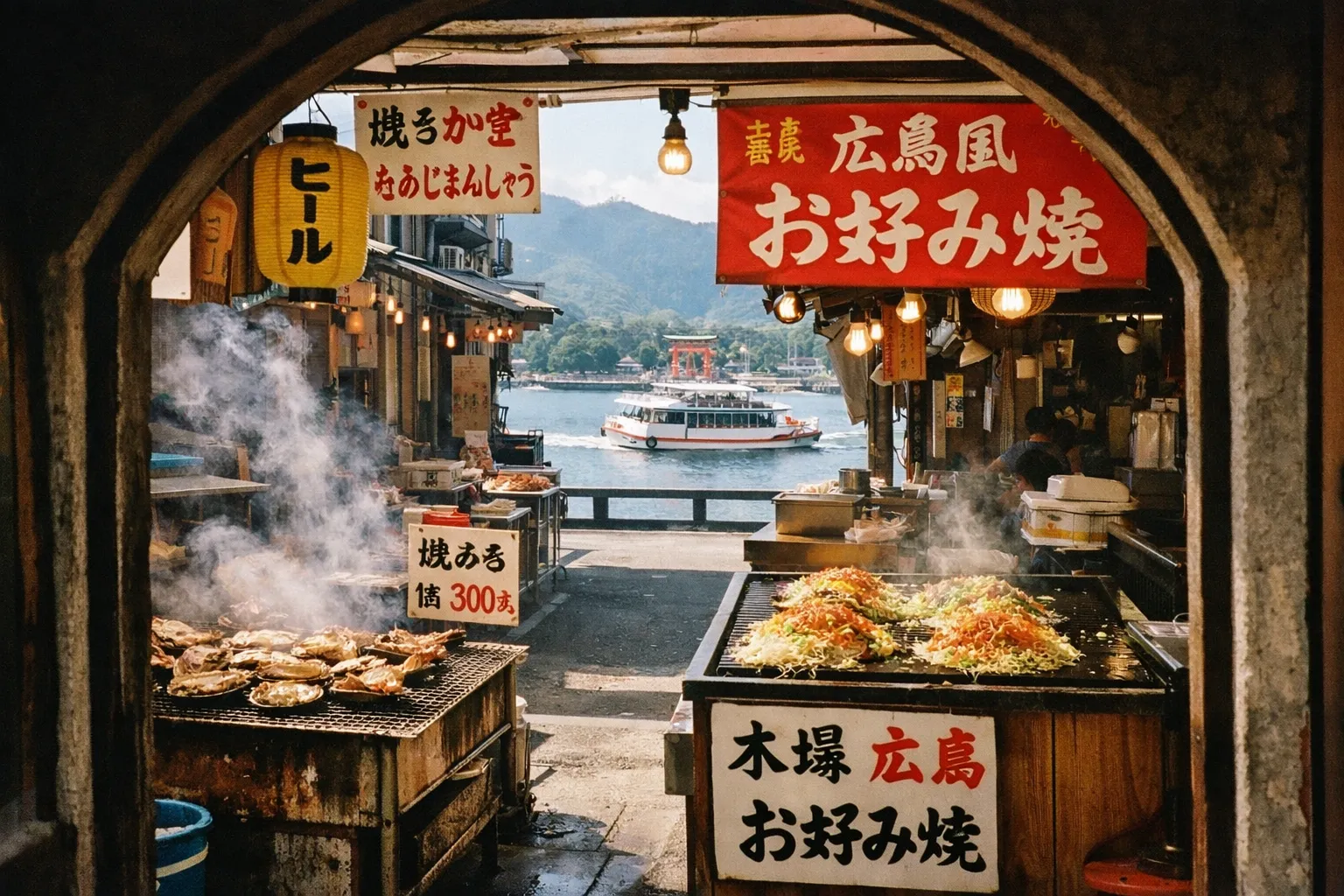
Hiroshima-style okonomiyaki is the signature dish, and the key word is layered - not mixed like the Osaka version. Batter, a mound of cabbage, noodles, meat or seafood, and egg are stacked and griddled, then finished with sauce. The Okonomimura complex is the go-to: a multi-story building housing around 25 okonomiyaki stalls, each doing the Hiroshima layered style, with plates typically ¥800 to ¥1,200 per person depending on toppings. Expect a short wait at peak times, and don’t overthink the vendor choice - they’re all doing the same thing well.
Oysters are the other pillar. Hiroshima Prefecture’s official oyster site states the region produces about 60-70% of Japan’s cultivated oysters, the largest share in the country - which is why grilled oysters turn up everywhere from Miyajima’s Omotesando street to city izakayas. On Miyajima, eat them grilled and standing up, straight off the vendor’s fire.
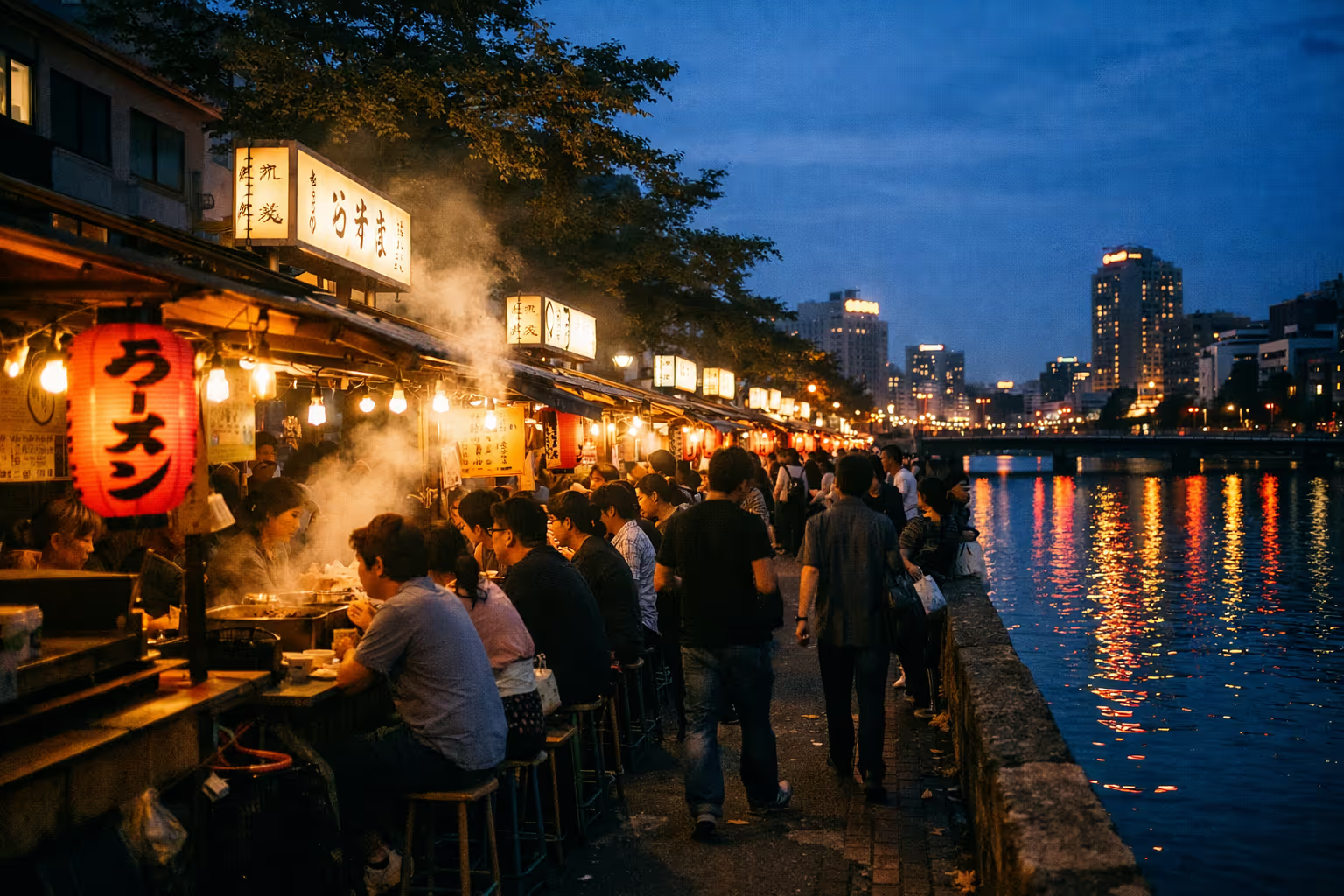
For a souvenir snack, momiji manju are the Miyajima classic: maple-leaf-shaped cakes first made in 1906, traditionally filled with red bean paste but now sold in custard, chocolate, and other flavors, in boxes of 8 to 20 pieces running roughly ¥800 to ¥2,000. For evenings, the Motoyasu River and Hondōri arcade area host izakayas and riverside restaurants, with casual dinner-and-drinks spots running ¥2,000 to ¥3,500 per person - a low-key way to end a heavy day at the park.
How to Plan Your Time: 1, 2, or 3 Days in Hiroshima
Two days is the recommended structure: one for the city’s peace sites, one for Miyajima. Here’s how each length actually plays out.
One day (compressed): Morning in the Peace Memorial Park - museum, Dome, key monuments - then the afternoon ferry to Miyajima for the shrine, with sunset if the tides cooperate. It’s doable but tight, and you’ll feel the pressure at both ends. Factor in the 17-20 minute tram to the park plus the roughly 35 minutes each way to Miyajima by train and ferry, and the day fills fast.
Two days (recommended): Day 1 is the Peace Memorial Park in the morning, Hiroshima Castle and/or Shukkeien Garden in the afternoon, and dinner in Hondōri. Day 2 is a full day on Miyajima - shrine, tides, and the Mount Misen hike if you want it. This is the pace most first-timers should aim for.
Three days (relaxed): Add a slower morning at Shukkeien, more time in the museum, a second Miyajima visit at a different tide, or the full Mount Misen trail. Three days also opens the Mazda Museum as a niche add-on: the factory museum is at Mazda headquarters in Fuchu-cho, reachable via JR local train to Mukainada Station, and tours run by advance reservation only. Book well ahead.
Hiroshima Trip Length Comparison
| 1 Day | Recommended 2 Days | 3 Days | |
|---|---|---|---|
| Peace Memorial Park (full) | Partial | ✓ | ✓ |
| Miyajima / Itsukushima | ✓ (rushed) | ✓ | ✓ |
| Hiroshima Castle / Shukkeien | ✗ | ✓ (one of two) | ✓ (both) |
| Mount Misen hike | ✗ | Optional | ✓ |
| Relaxed food time | ✗ | ✓ | ✓ |
| Best for | Transit visitors | First-timers | Repeat visitors / hikers |
How to Structure a 2-Day Hiroshima Visit
2 daysStep-by-step itinerary to cover Hiroshima's key sites efficiently over two days.
- 1
Day 1 Morning: Peace Memorial Park
Arrive at Hiroshima Station and take the tram to Genbaku Dome-mae. Walk the park axis starting with the museum, then the central monuments, finishing at the A-Bomb Dome.
- 2
Day 1 Afternoon: Castle or Garden
Take the tram or walk to Hiroshima Castle or Shukkeien Garden for a quieter afternoon.
- 3
Day 1 Evening: Dinner and Riverside Walk
Enjoy okonomiyaki at Okonomimura, then stroll along the Motoyasu River.
- 4
Day 2 Morning: Miyajima Ferry
Check the tide chart the night before. Take an early JR train and ferry to Miyajima.
- 5
Day 2 Daytime: Itsukushima Shrine and Oysters
Time your shrine visit to the tides and enjoy grilled oysters on Omotesando street.
- 6
Day 2 Optional: Mount Misen Hike
Take the ropeway and hike to the summit for views over the Inland Sea, then return to Hiroshima.
Practical Tips Before You Go
A few things separate a smooth Hiroshima visit from a rushed or exhausting one, and most come down to preparation rather than luck.
Give the museum more time than you think. The guidance of 1 to 1.5 hours is a floor, not a ceiling. The Hiroshima Peace Memorial Museum contains graphic exhibits and survivor testimony, and the advice to allow time for breaks exists because people genuinely need them. Don’t schedule a hard deadline right after.
Budget a half day minimum for the park. The museum alone absorbs 1 to 2 hours, and the outdoor monuments need another 2 to 3 hours to see properly. A rushed hour leaves you shortchanged.
Plan around summer heat. Japan Meteorological Agency climate data shows Hiroshima’s average July and August highs around 31-33°C (88-91°F) with high humidity. Combining a multi-hour park visit and a Mount Misen hike in one summer day without pacing and hydration is a reliable path to exhaustion. Carry water, wear sun protection, and take breaks in the shade.
Check the August 6 schedule if your dates overlap. Access near the Cenotaph is restricted for hours on the anniversary. Know before you go whether you’re attending the ceremony or working around it.
Treat the memorial as a memorial. Keep quiet near the Cenotaph and Dome, don’t climb on monuments, and observe photography restrictions inside the museum. Standard conduct for any active memorial site applies here.
Check the Miyajima tide tables. Look up the Japan Meteorological Agency tide times for Miyajimaguchi before you fix your Miyajima day. This one step prevents the most common disappointment on the island - and it takes two minutes.
Frequently Asked Questions
- How many days do you need in Hiroshima?
- Two days is standard: one for Peace Memorial Park and city sites, one for Miyajima. Three days adds Mount Misen and a slower pace.
- Is Hiroshima worth visiting if you're short on time?
- Yes, a focused day covers the Dome, museum, and Miyajima ferry, but expect time pressure and limited depth.
- What time should I visit the A-Bomb Dome and Peace Memorial Park?
- Early morning before 9 a.m. or late afternoon offers quieter conditions and better light; midday is busiest.
- How do I time the Itsukushima torii gate for the floating effect?
- Check Japan Meteorological Agency tide tables for Miyajimaguchi; high tide shows floating gate, low tide allows walking to its base.
- Is the Peace Memorial Museum suitable for children?
- Older children (10+) can handle it with guidance; some graphic exhibits warrant previewing. Younger children enter free.
- What is Hiroshima-style okonomiyaki and where should I eat it?
- Layered dish with noodles, cabbage, egg, and meat stacked. Okonomimura has about 25 vendors serving this style.
- Can I do Hiroshima and Miyajima in one day from Kyoto or Osaka?
- Technically yes, but transit time limits depth. An overnight stay in Hiroshima is strongly recommended.
The default plan holds: two days, one for the peace sites and one for Miyajima. If you can only manage one, do it, but know you’re compressing a city that rewards a slower read.
Before you arrive, make two decisions and you’ve handled the parts most visitors get wrong: check the Miyajimaguchi tide chart so the torii is what you came to see, and block out more time for the Peace Memorial Museum than feels necessary - you’ll use it.
What stays with you isn’t the checklist. Hiroshima rebuilt itself around the idea of peace without turning that into a performance for visitors. The park is quiet because it means to be, the trees that survived are marked because they matter, and the city around it simply gets on with living. That’s what makes the trip worth taking.