Things to do in Cork, Ireland punish a lazy schedule more than most Irish cities, because the best of them close on Sundays or sell out by noon. Two or three days is the right amount: one for the city and its English Market, one for the harbor town of Cobh and its Titanic history, and one for either seaside Kinsale or Blarney Castle. The English Market shuts entirely on Sunday, so build the week around what is actually open when.
Cork’s history: from monastic settlement to Rebel City
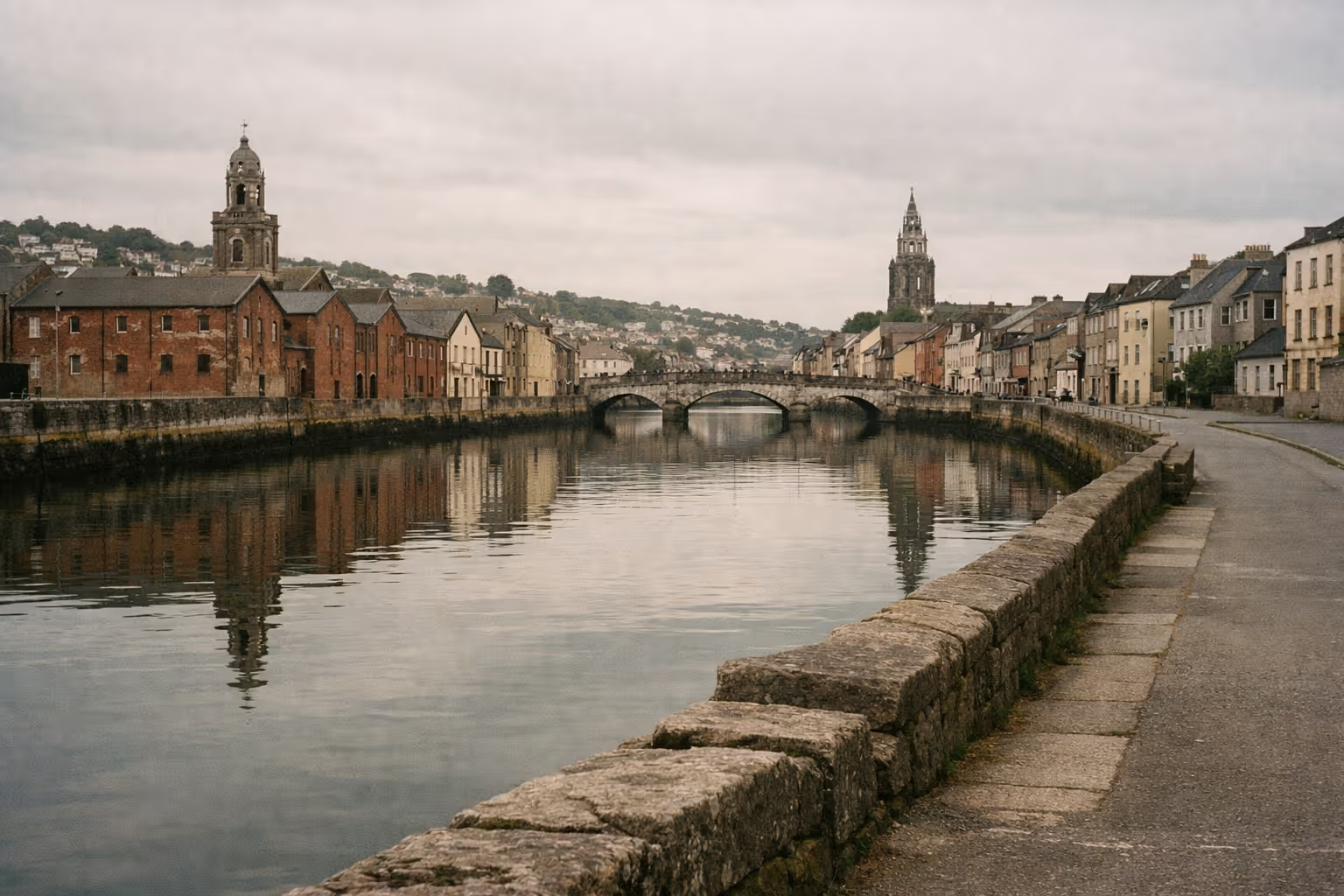
When exploring things to do in Cork Ireland, it’s fascinating to start with its origins. Cork began as a monastic settlement in the 6th century, and it wasn’t until the Viking invasion around 915 that the city started to take recognizable shape. Standing along the River Lee - which splits into two channels to embrace the city center - it’s not hard to picture why this site made sense to settlers and invaders alike.
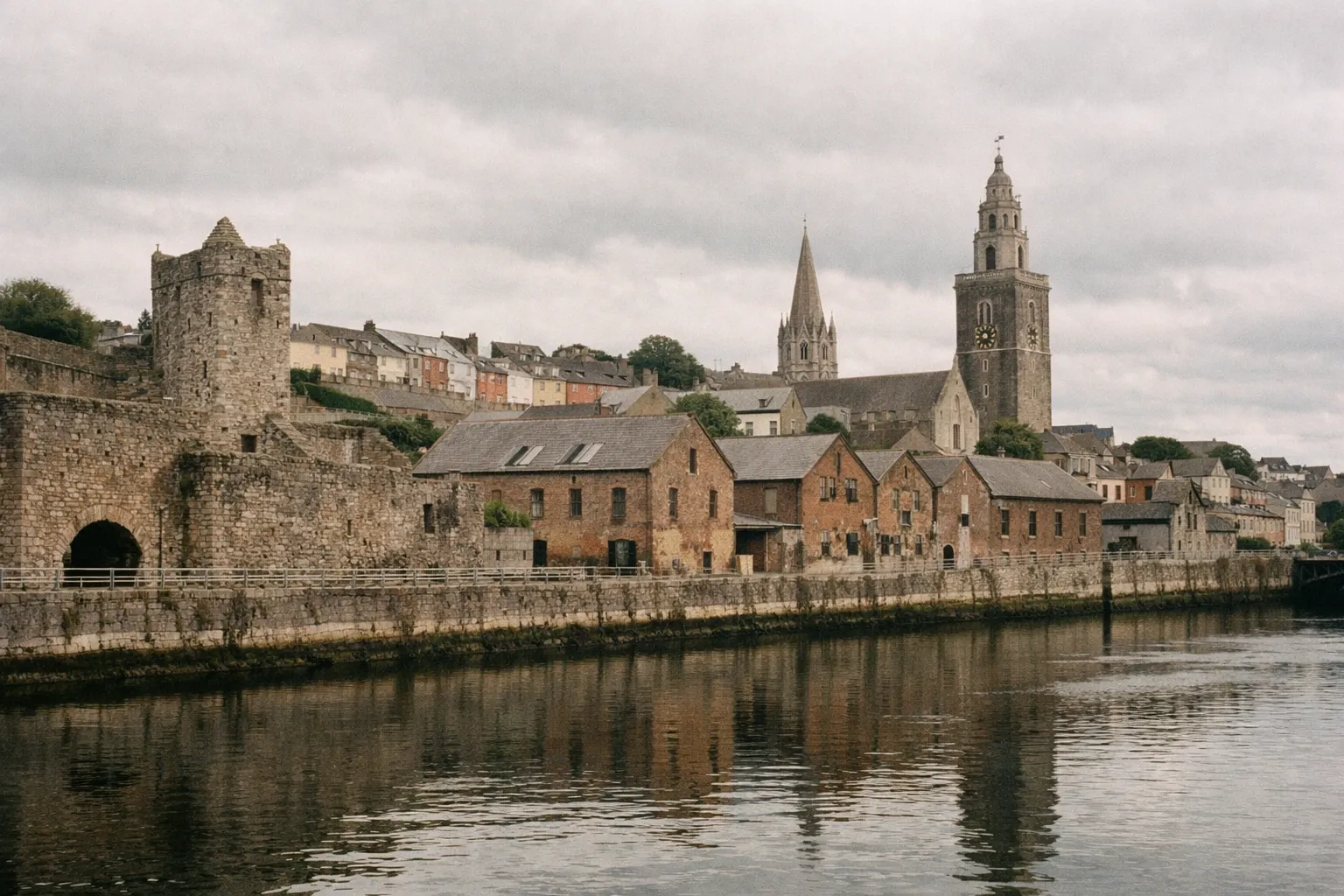
The city’s rebellious streak runs deep. During the Wars of the Roses, Cork earned the nickname “Rebel City” for backing the Yorkist cause, and that independent streak still shapes how Corkonians see themselves today. It’s not a marketing line; you’ll hear it from locals within about five minutes.
Cork’s maritime heritage is one of the most compelling threads in its story. The city sits on one of the largest natural harbours in the world, which shaped its identity and economy for centuries. That same port city has since built a solid technology sector, though the harbour still defines the place more than any office park does.
A quick historical timeline:
- 6th century: Founded as a monastic settlement
- 915: Expanded by Vikings
- 15th century: Earned the “Rebel City” nickname
- 18th-19th centuries: Flourished as a significant port city
- 20th-21st centuries: Transformed into a modern urban center
Is Cork worth visiting? What the city is famous for
Short answer: yes. Cork is worth visiting for the mix of heritage, food, free culture, and coast that few Irish cities pack into such a walkable footprint (7). You get St Fin Barre’s Cathedral, Cork City Gaol, and Elizabeth Fort within a short walk of each other, free attractions like the Crawford Art Gallery and Fitzgerald Park, and day trips to Cobh, Kinsale, and Blarney Castle that no other Irish city can match for variety (7).
So what is Cork most famous for? Four things come up again and again:
- The English Market - a covered food market trading since 1788
- The Blarney Stone at Blarney Castle, said to grant the gift of eloquence
- Cobh and Cork Harbour - the Titanic’s last port of call, and naval history at Spike Island
- Kinsale - a food town with a serious restaurant reputation and coastal walks (7)(8)
Newer local guides also push Cork’s beaches, its coffee culture, and the character of the place beyond the postcard sights (7). It’s a city that rewards slowing down.
✓ Pros
- Compact city with rich heritage and maritime history
- Walkable center with free cultural attractions
- Varied day trips including castles, coastal towns, and harbour cruises
- Strong food scene with historic markets and coastal dining
✗ Cons
- Weather can be unpredictable with frequent rain
- Some popular attractions require advance booking in summer
- Limited time means choosing between day trips
Cork’s cultural attractions: markets, galleries, and street art
Cork’s cultural scene runs across art, music, architecture, and food. Start at the English market Cork, the covered food market dating to 1788, where you can sample local specialties and talk to vendors who know their stalls inside out.
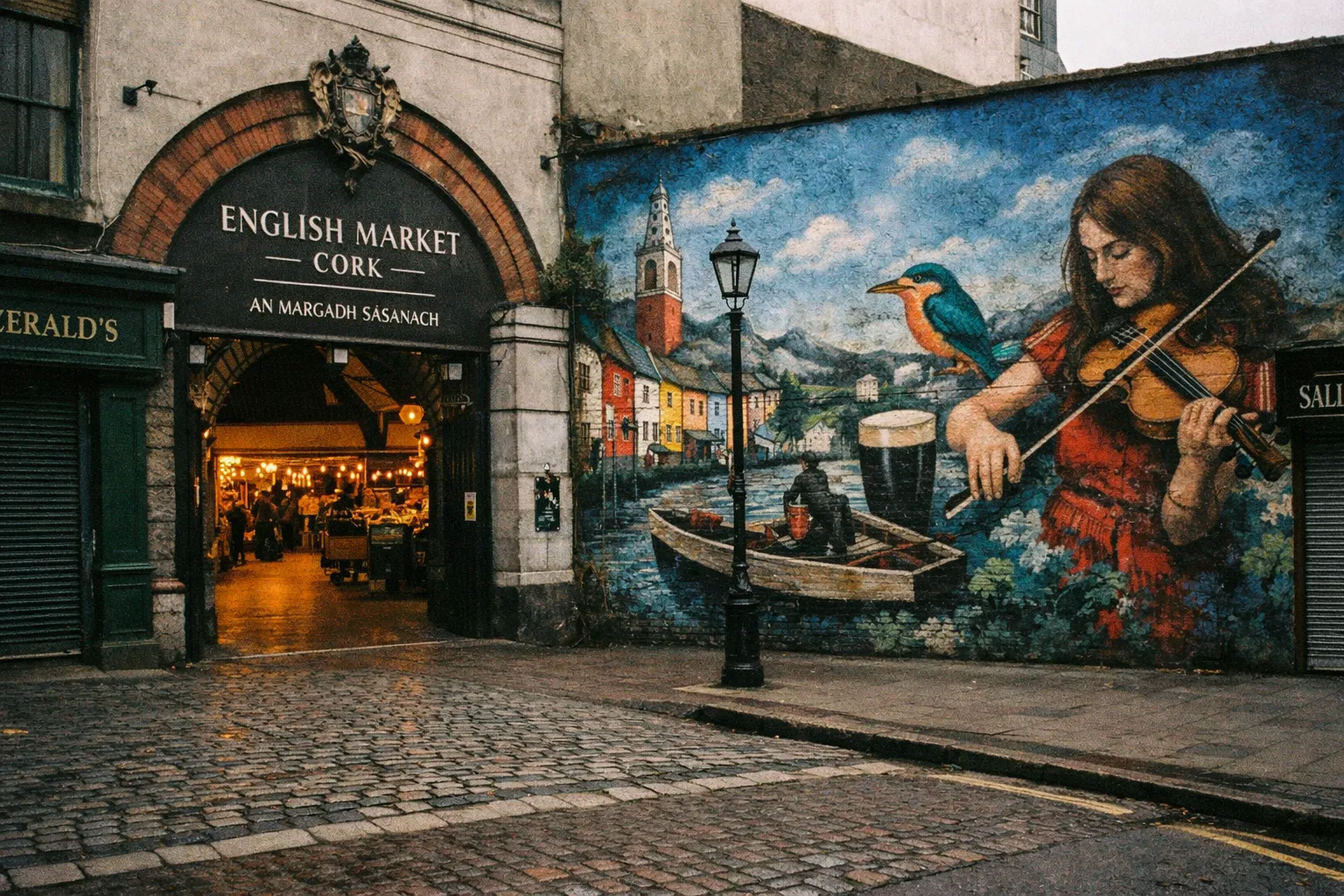
Practical details worth knowing: the English Market is open Monday to Saturday, 8:00-18:00, closed Sundays and bank holidays (2)(10). Entry is free. Casual stall dishes run roughly €5-€12 (about USD 5.50-13) (2)(10). Arrive between 10:00 and noon to catch the stalls lively but before the lunch rush. A common mistake is showing up on a Sunday and finding the doors shut - plan around it.
For art, the Crawford Art Gallery holds a strong collection of Irish and European work, and it’s free to enter (9). The gallery balances classical and contemporary pieces without feeling stuffy.
St. Fin Barre’s Cathedral is a French Neo-Gothic showpiece, worth the visit for the stonework alone. Another architectural landmark is St. Anne’s Church, home to the Shandon Bells - climb to the top, ring the bells yourself, and you’re rewarded with panoramic views across the rooftops.
If you like street art, walk the Ardú self-guided trail, which links large-scale murals across the city center and is one of the best free things to do in Cork (1)(9). Combine it with the Crawford and you’ve got a half-day of culture for the price of a coffee.
Cork’s cultural calendar peaks with the Cork Jazz Festival every October, drawing musicians and crowds from well beyond Ireland.
Key Cultural Attractions in Cork
| The English Market | Crawford Art Gallery | St. Fin Barre's Cathedral | St. Anne's Church and Shandon Bells | Ardú street-art trail | |
|---|---|---|---|---|---|
| Description | Historic covered food market | Free collection of Irish and European art | French Neo-Gothic architecture | Iconic church with panoramic city views | Free self-guided walk past large murals |
| Entry Fee | Free | Free | Paid entry | Paid entry (approx €5 adults) | Free |
| Opening Hours | Mon-Sat 8:00-18:00 | Varies, check website | Varies, check website | Varies, check website | Anytime |
Highlights for exploring Cork city
Beyond the market and the galleries, the core of the city fits into one well-paced day (8-10 hours) if you keep moving (8). Here’s what belongs on a shortlist of things to do in Cork city:
- Cork City Gaol - a restored 19th-century prison with waxwork inmates and genuinely good storytelling about crime and punishment
- Elizabeth Fort - a 17th-century star fort with free entry and rooftop views over the city
- Fitzgerald Park - riverside green space with the Cork Public Museum and the Shakey Bridge, a bouncing pedestrian bridge locals are fond of; free (9)
- Nano Nagle Place - a quiet complex of heritage gardens and a small museum, free to wander the grounds (9)
- University College Cork (UCC) - the campus is worth a walk for its grounds and the Glucksman Gallery
- The Lough - a freshwater lake south of the center, good for a quiet loop with the swans
Note that some free attractions like the Crawford and Nano Nagle Place close around 17:00-18:00, so front-load them and save outdoor spots like Fitzgerald Park for later.
For a deeper look at the city’s economic history, the Cork Butter Museum traces the butter trade that once made Cork one of the busiest ports in the empire. It’s small, quirky, and better than it sounds.
Getting into Cork’s daily rhythm: food, sport, and etiquette
Cork’s compact size makes it easy to cover on foot. The food scene mixes traditional Irish cooking with newer restaurants and a strong coffee culture (7). According to Fáilte Ireland’s regional visitor data, Cork city consistently ranks among Ireland’s top three urban destinations for food tourism - driven in large part by the English Market’s 200-plus-year trading history and the concentration of independent producers in the surrounding county. Fáilte Ireland’s 2023 visitor sentiment report (failireland.ie) also notes that food experiences are the single most-cited reason visitors extend their Cork stay beyond one night. Try the local specialties while you’re here:
- Crubeens (pig’s trotters)
- Drisheen (blood sausage)
- Cork’s famous spiced beef
- Locally-produced cheeses and artisanal bread
I tried the spiced beef at one of the English Market stalls on a Tuesday morning in late 2024 - it’s cured differently than what you’d find in Dublin, with a warmer spice profile, and worth seeking out specifically here. If you’re planning to explore Ireland’s hidden treasures beyond Cork, the country rewards that kind of regional curiosity at every turn.
For budgeting, casual meals from the market or street run about USD 8-15, while sit-down dinners in the city or Kinsale land around USD 20-40 per person as of 2025-2026 (2). Mid-range central hotels and guesthouses average USD 120-200 per night; hostels sit around USD 40-70 (2).
Cork is a university town, and UCC’s students give the place a youthful energy. Sports run deep here too - hurling (a fast, stick-and-ball field sport) and Gaelic football draw fierce crowds. Catch a match at Páirc Uí Chaoimh stadium if the fixtures line up and you’ll see why these games matter so much locally.
Etiquette note: tipping in Ireland is modest - around 10% at sit-down restaurants for good service, and there’s no need to tip at pubs when you order at the bar. Rounds matter more than tips: if you’re drinking with locals, buy your turn.
Cork Harbour and boat cruises
Cork harbour is one of the largest natural harbours in the world - second only to Sydney Harbour by some measures - and getting out on the water is one of the better ways to see it. Cork Harbour Cruises run round-trip routes from Cork city out to Cobh, taking about 2-3 hours in total, and they hold strong ratings - typically 4.5 out of 5 or higher across major travel platforms as of 2026 (6).
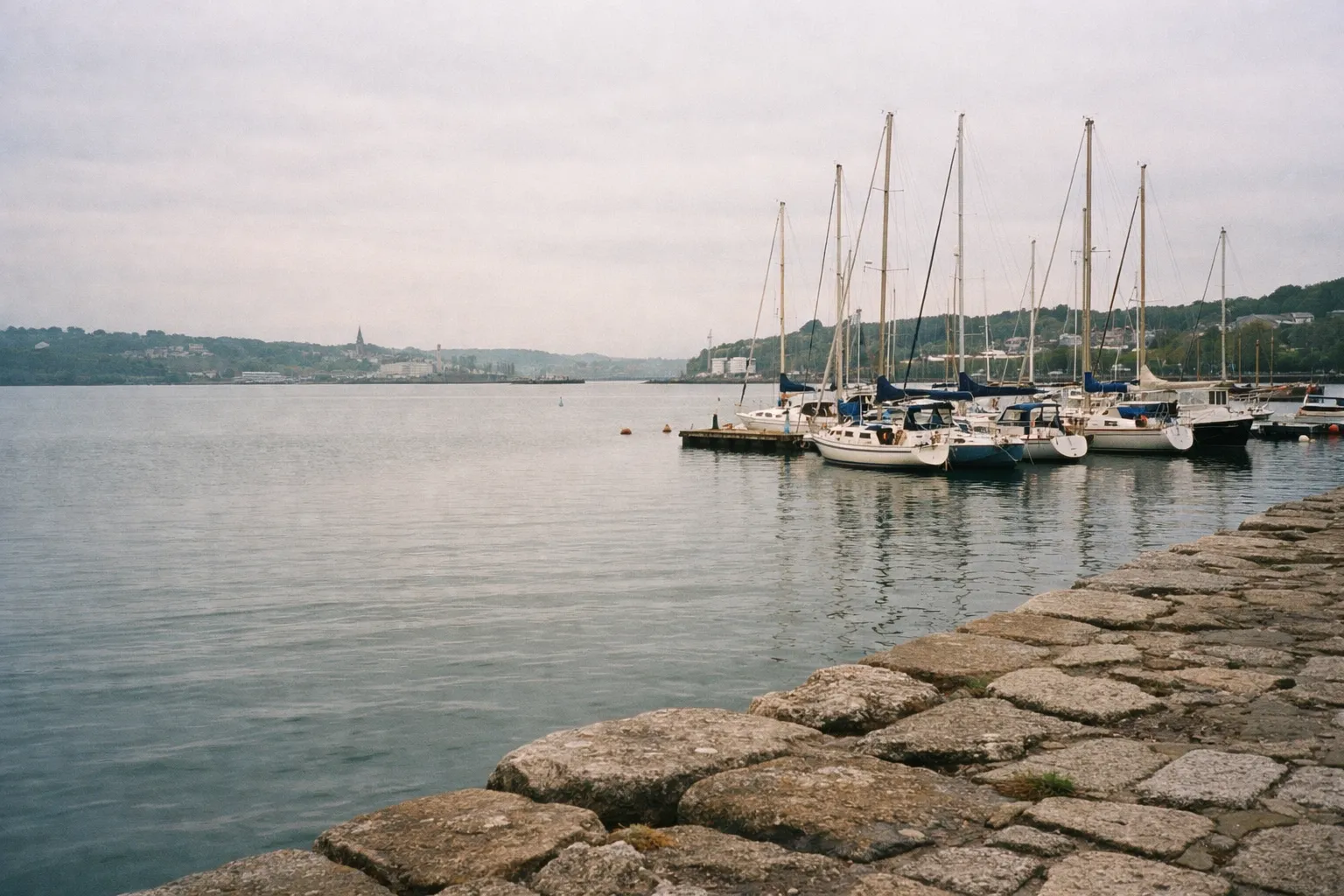
The cruise passes harbour forts and Cobh’s colourful waterfront, and evening sailings catch the best light on the buildings if you’re shooting photos (6). Check the day-versus-evening schedule before you book, since sailing times shift seasonally.
Bring a waterproof jacket. The harbour is exposed, and Cork sees rain on 150-plus days a year - Met Éireann’s long-term climate records for the Cork/Blarney area put annual rain days consistently above 150, making waterproofs non-negotiable rather than optional.
What to prioritize when visiting Cobh, Cork
Cobh (pronounced “cove”) sits about 23 km from Cork city by road on the harbour, and it was the Titanic’s final port of call before its Atlantic crossing in April 1912 - a fact documented in detail by the Cobh Heritage Centre and confirmed by White Star Line passenger records (4). You can reach it by train from Cork or by harbour cruise (6).
Here’s what to prioritize for things to do in Cobh Cork:
- Titanic Experience Cobh - a museum on the site of the original White Star Line ticket office, with timed entry and admission around USD 15-25 (4)
- Spike Island - a former prison and fortress on an island in the harbour, reached by ferry; one of Cobh’s headline paid attractions and prone to selling out on summer weekends, so book ahead (4)
- St Colman’s Cathedral - a towering Gothic church that dominates the Cobh skyline
- The “Deck of Cards” houses - the row of steeply stacked, brightly painted terraced homes below the cathedral, one of Ireland’s most photographed streets
- Cobh Heritage Centre - emigration history, including the millions who left Ireland through this port
Sequence your day to avoid backtracking: Spike Island first (it’s tide- and ferry-dependent), then the Deck of Cards, Titanic Experience, and St Colman’s Cathedral to finish (4). Cobh suits travellers drawn to maritime and Titanic-era history - if that’s not your thing, Kinsale is the better pick.
Exploring Kinsale and the surrounding County Cork area
About 30 km south of Cork - roughly a 40-50 minute drive or bus ride - Kinsale is the food capital of the region, wrapped in colourful streets and coastal walks (5). If you’re choosing between the two coastal towns, Kinsale leans food-and-scenery while Cobh leans maritime history - Cobh’s Titanic Experience and Spike Island together account for the bulk of a full day, whereas Kinsale’s Charles Fort, Scilly Walk, and restaurant strip can fill the same hours with an entirely different mood. Pick based on what you’re actually after.
Plan for things to do in Kinsale county Cork:
- Charles Fort - a 17th-century star fort overlooking the harbour, the town’s main historical draw (5)
- Old Head of Kinsale - a dramatic headland with the Signal Tower and a small museum, plus wide Atlantic views (5)
- Scilly Walk - a short, scenic coastal path from town along the water (5)
- Kinsale Mead Co. - tastings at Ireland’s first meadery in generations
- Food tours and restaurants - Kinsale’s reputation is built on seafood; guides point to breakfast spots like OHK Cafe and Lemon Leaf, and colourful lanes such as Newman’s Mall
A workable one-day plan: breakfast in town, a morning walk (Scilly Walk or out to the Old Head), Charles Fort in the afternoon, and dinner by the harbour (5). That’s a full day without feeling rushed.
Beyond the city: visiting Blarney Castle and West Cork
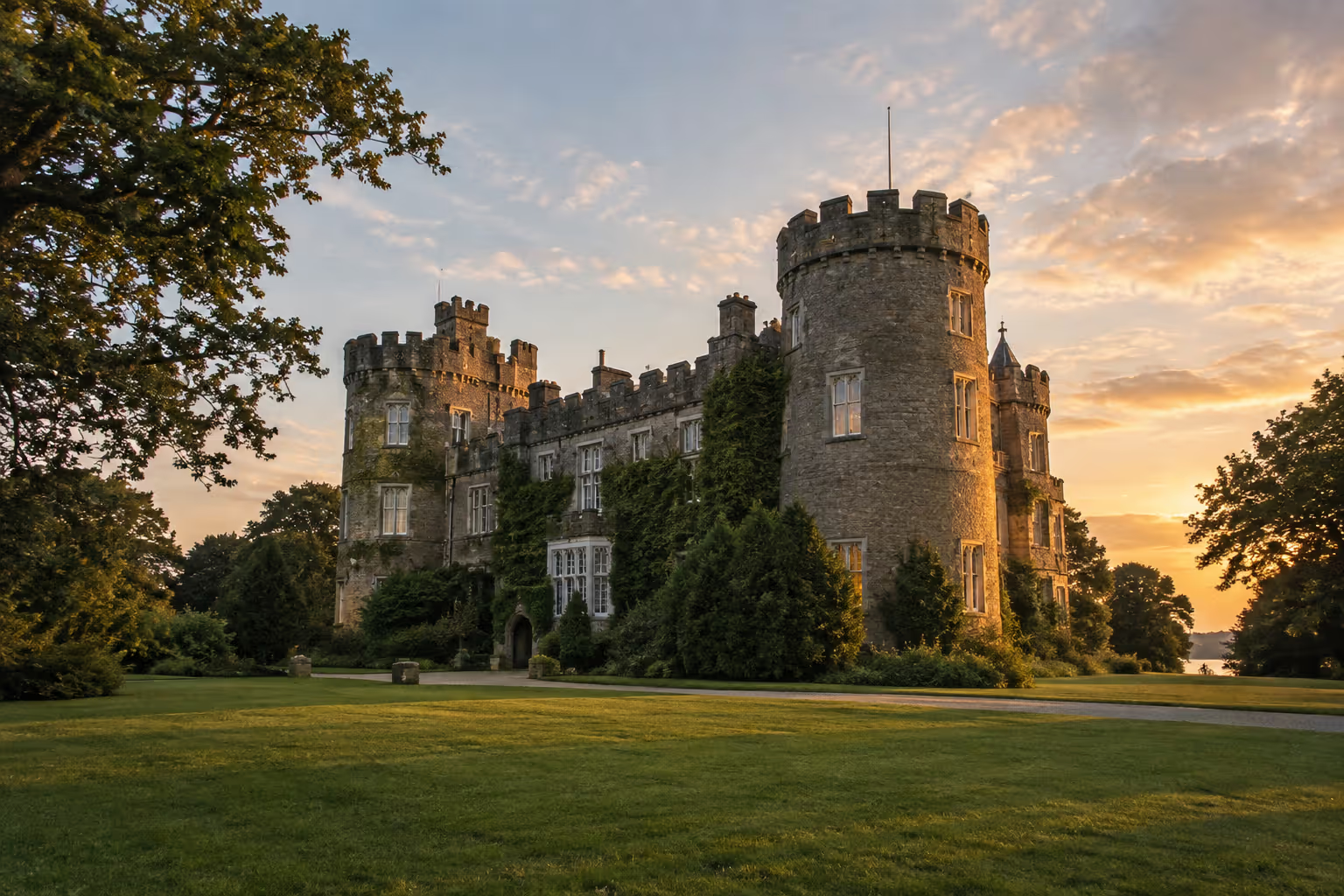
Just 8 km from the city center, Blarney castle Cork is the region’s most famous single sight. Legend says kissing the Blarney Stone grants the gift of eloquence - so of course I gave it a try. Whether it worked is a matter of debate.
Practical details for 2025-2026: adult admission is €24 (about USD 26), students and seniors €19 (about USD 21), with lower rates for children aged 6-16 (3). There are no timed entry slots - you can buy tickets online for convenience or at the gate (3). Getting there from the city runs about USD 5-10 one way by bus or USD 20-30 by taxi, and you’ll want a half-day (4-5 hours) to cover the castle and its extensive gardens (3).
Go early. The queue to kiss the stone builds fast, and the grounds are noticeably quieter in the morning (3).
For whiskey, the Jameson Distillery in nearby Midleton runs tours through the distilling process with tastings at the end. Worth it if you have the time.
West Cork’s coastline is within easy reach for a road trip - dramatic cliffs, quiet beaches, and small fishing villages. Experienced Ireland travellers can push further into West Cork or combine Cork with the Ring of Kerry or a rail trip to Dublin over a few extra days. Cork sits at the heart of Munster, a region that rewards travellers who take the time to explore beyond the obvious stops.
How many days do you need in Cork?
Is 2 days enough in Cork? Two days covers the essentials but leaves you choosing. A practical breakdown:
- Day 1 (city): English Market late morning, the Ardú street-art trail, St Fin Barre’s Cathedral, Cork City Gaol or Elizabeth Fort, then riverside pubs in the evening (8)
- Day 2 (one day trip): Blarney Castle in the morning, plus either a short harbour cruise or an afternoon in Kinsale if the transport lines up (6)
That’s a satisfying two days. But if you want Cobh and Kinsale and Blarney without rushing, you need three days. Most Cork guides structure trips around one city day plus one or two day trips, which makes 2-3 days the practical sweet spot.
The most common mistake is trying to cover Cork in a single day and leaving no room for the day trips that make the region worthwhile. Don’t do that. And book Spike Island and the Titanic Experience ahead in summer - both sell out on weekends and can cost you an entire Cobh day trip (4).
How to Plan a 2-3 Day Trip to Cork
3 daysA practical itinerary to cover Cork city and key day trips.
- 1
Day 1: Explore Cork City
Start late morning at the English Market, then walk the Ardú street-art trail. Visit St Fin Barre's Cathedral and choose between Cork City Gaol or Elizabeth Fort. End with riverside pubs.
- 2
Day 2: Choose a Day Trip
Visit Blarney Castle in the morning. In the afternoon, take a harbour cruise or explore Kinsale, depending on transport and preference.
- 3
Day 3: Optional Additional Day Trip
Add Cobh for maritime history or spend more time in Kinsale for food and coastal walks. Book Spike Island and Titanic Experience in advance if visiting Cobh.
Frequently Asked Questions
- Can I visit Spike Island without booking in advance?
- No. Spike Island often sells out on summer weekends, so booking ahead is essential to secure your spot.
- Is tipping expected at pubs in Cork?
- No tipping is needed when ordering at the bar, but buying rounds for your group is customary.
- Are there timed entry tickets for Blarney Castle?
- No. Blarney Castle does not have timed entry; tickets can be bought online or at the gate.
- What is the best time to visit the English Market?
- Arrive between 10:00 and noon on weekdays to enjoy lively stalls before the lunch rush.
- How should I dress for visiting Cork's coastal areas?
- Wear waterproof jackets and sturdy walking shoes as Atlantic weather changes quickly and rain is frequent.
- Is it better to visit Cobh or Kinsale for a day trip?
- Choose Cobh for maritime and Titanic history; pick Kinsale for food culture and scenic coastal walks.
- Can I cover all main Cork attractions in one day?
- No. One day is too short to include city sights plus day trips; 2-3 days is recommended.