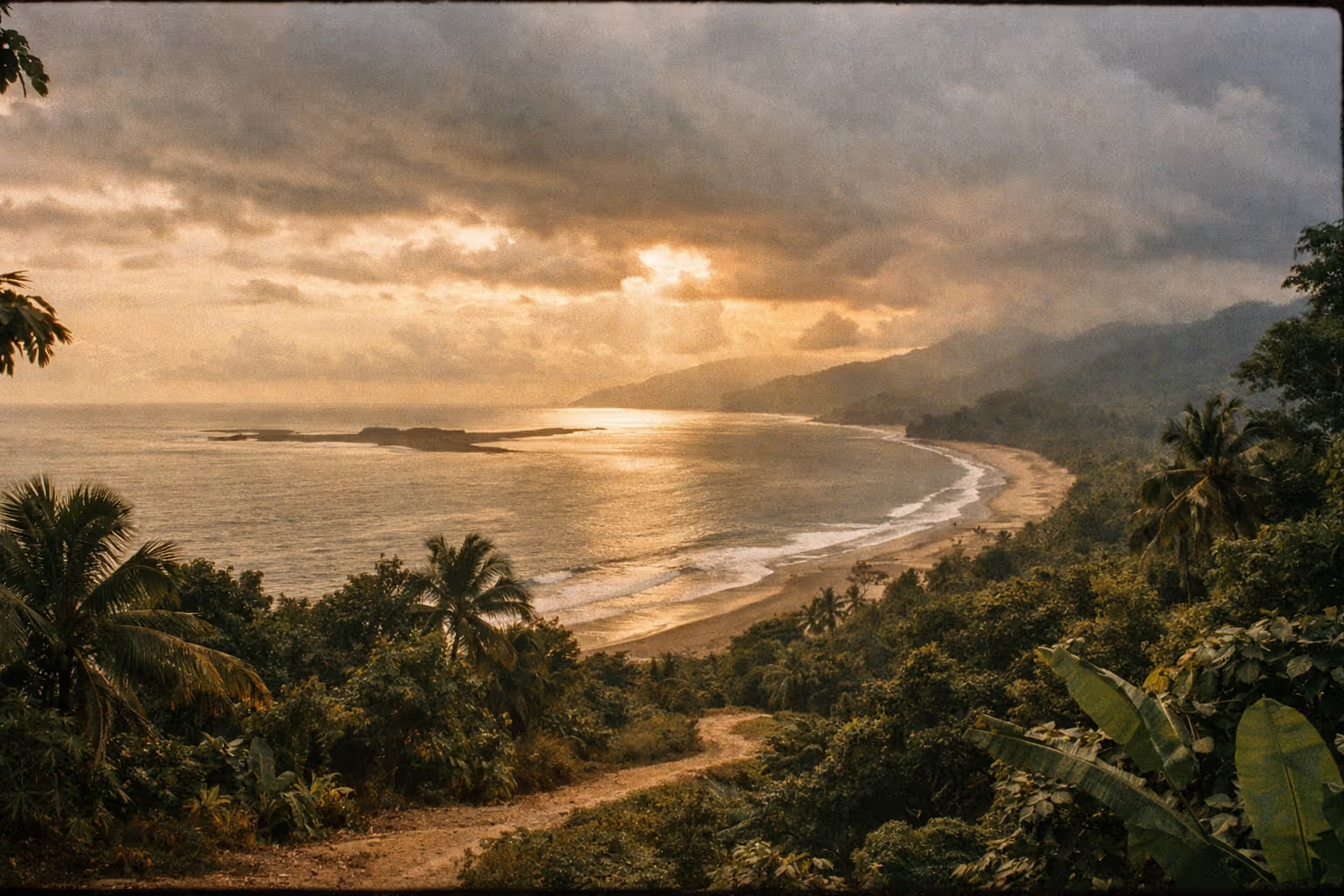
Uvita Costa Rica is the calmer Pacific base, trading the crowds of Manuel Antonio for two humpback whale seasons and star-filled lodge dinners. The signature sight is the Whale Tail sandbar in Marino Ballena, but you can only walk it 60 to 90 minutes before low tide, so check the Quepos tide tables first. Whales show December to April and again July to November, peaking in August and January. For a swim, stick to Punta Uvita; Playa Hermosa has riptides and Dominical is a surf break.
Is Uvita Costa Rica Worth Visiting?
Yes - if you want quieter beaches, two long humpback whale seasons, and a base that’s still functional (supermarkets, banks, tour operators) without the cruise-ship energy of Jacó or the crowded shuttle parking of Manuel Antonio, Uvita Costa Rica is an excellent choice. This coastal town offers a more relaxed vibe while still providing the amenities travelers need.
Here’s the honest comparison most guides skip:
- vs. Manuel Antonio: Uvita has fewer of the monkeys you’ll spot in 20 minutes and no famous postcard beach inside the national park boundary in the same way. But the park is bigger, far less crowded, and you can walk the Whale Tail at low tide - something Manuel Antonio cannot offer.
- vs. Dominical: Dominical is for surfers and backpackers; the waves are stronger and the town is one strip. Uvita is calmer, more spread out, and better for families or anyone who actually wants to swim.
- vs. Jacó: Different planet. Jacó has nightlife, casinos, and high-rises. Uvita has lodge dinners and stars.
Skip Uvita if you need walkable nightlife, a beachfront resort with all-inclusive food, or guaranteed big-mammal jungle encounters. Choose Uvita if you want a 4-day window with whales, waterfalls, and a real sunset without elbowing for space.
✓ Pros
- Less crowded beaches and national park access compared to Manuel Antonio
- Two distinct humpback whale seasons for extended viewing opportunities
- Functional town with necessary amenities without resort crowds
✗ Cons
- No nightlife or all-inclusive beachfront resorts
- Limited chances for big-mammal jungle encounters near town
- Spread out attractions require transportation
What airport do you fly into for Uvita, Costa Rica?
Juan Santamaría International (SJO) in San José is the practical answer for almost every visitor. It has the most international connections and the cheapest fares. Drive time to Uvita is 3.5 to 4.5 hours via Route 27 to Route 34 (Costanera Sur), and the road is paved the whole way.
Your options from SJO:
- Rental car: Best for Uvita because lodges, waterfalls, and beaches are spread across several kilometers. Expect $45-$80/day for an SUV with mandatory insurance in 2025. Pick up at the airport, not in town.
- Shared shuttle: $50-$70 per person one way. Operators like Interbus and Caribe Shuttle run daily routes. You’ll lose the flexibility to chase waterfalls, but it works fine if you’re staying at a lodge with included tours.
- Private transfer: $200-$280 for up to four passengers. Worth it if you’re arriving with kids or want to stop in Jacó or Manuel Antonio en route.
Alternative airports:
- Quepos La Managua (XQP), about 1 hour north of Uvita, takes domestic SANSA flights from SJO (around 25 minutes, $80-$130 one way).
- Palmar Sur (PMZ), about 1 hour south, also has limited domestic service and is useful if you’re combining Uvita with Corcovado or the Osa Peninsula.
- Liberia (LIR) in Guanacaste is too far - a 6+ hour drive. Don’t use it unless you’re road-tripping the whole coast.
Booking note: SANSA domestic flights have a 30-lb (14 kg) checked baggage limit. If you’re traveling with surfboards, dive gear, or oversized luggage, the rental car route is far less painful.
Exploring Marino Ballena National Park and the Whale Tail
Marino Ballena is the reason Uvita exists on the tourist map. The park protects about 2 miles of coastline and centers on the Whale Tail sandbar at Punta Uvita - a natural formation that, from above, mirrors the shape of a humpback’s fluke. It’s only fully walkable at or near low tide (3).
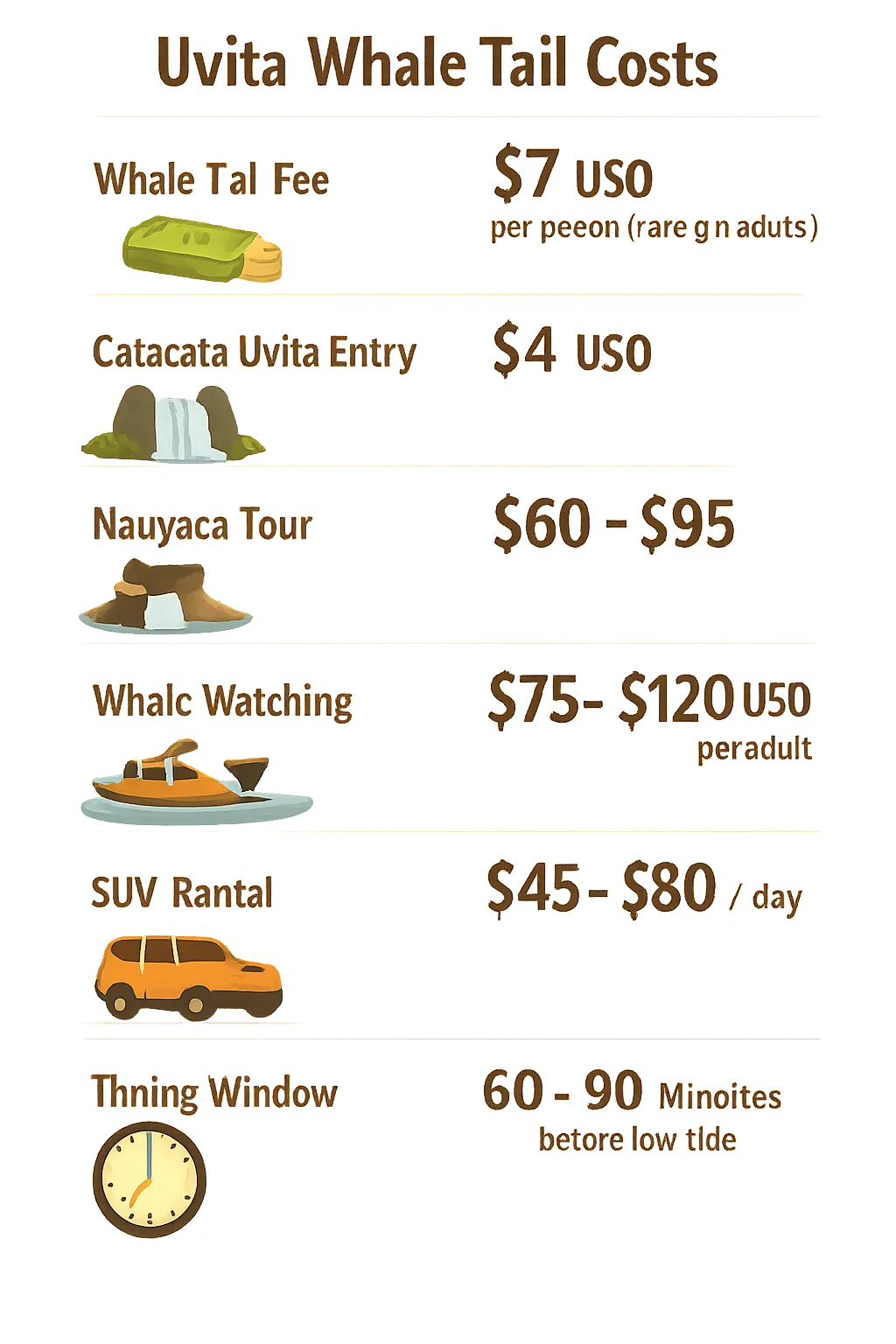 Key Uvita costs include Whale Tail entry $7, Catarata Uvita $4, Nauyaca tours $60-$95, Whale watching $75-$120, SUV rental $45-$80/day.
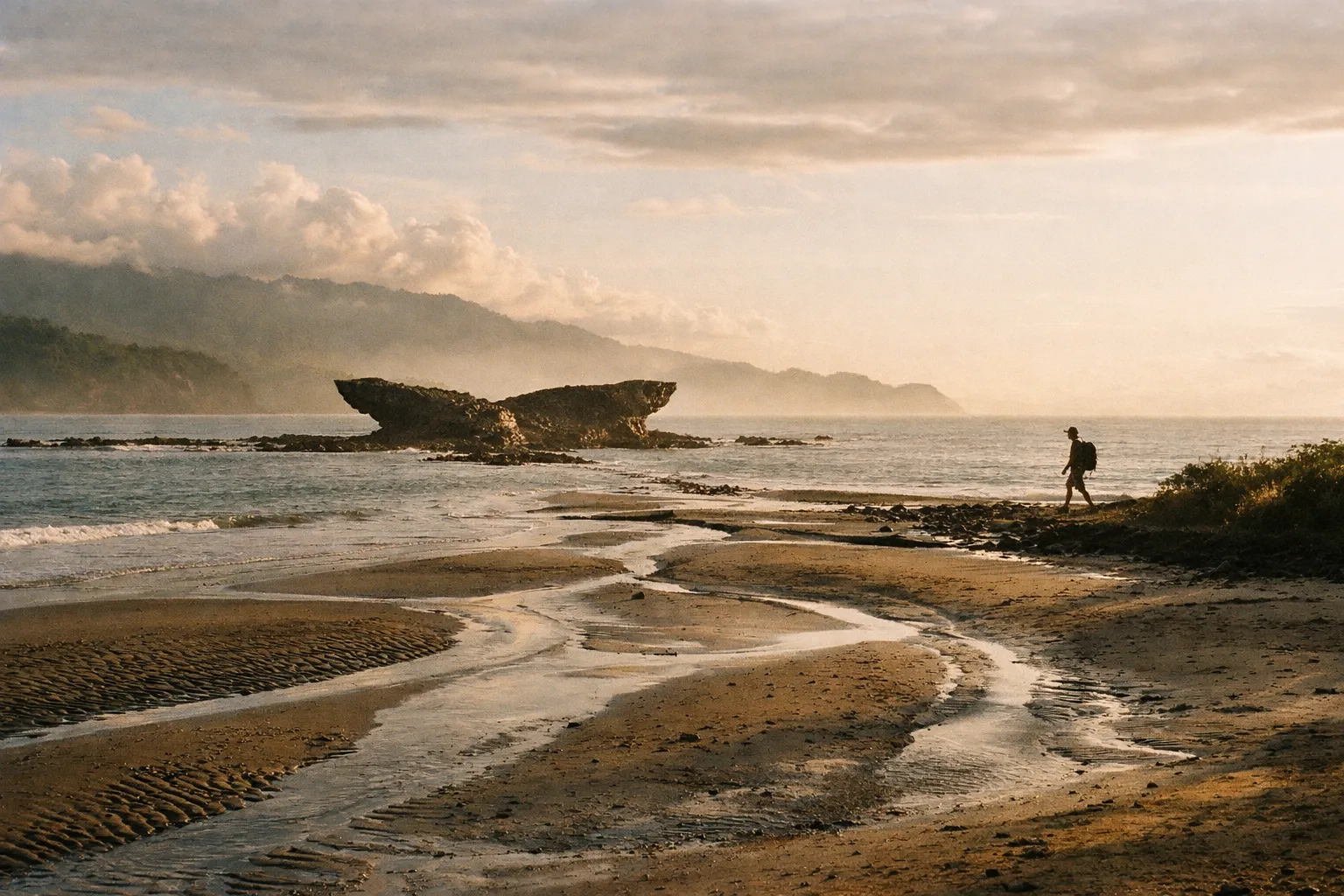
Current entry fee: $7 USD per person for foreign adults. Locals pay less. The park opens at 7 AM, and morning is when you want to be there - cooler temperatures, softer light, and the lowest tides typically fall in the early hours during peak season.
The Whale Tail timing trick most guides get wrong: Don’t show up “during” low tide. Arrive 60 to 90 minutes before low tide, walk out as the sand uncovers, and stay through the lowest point for photos. Then leave before the incoming tide submerges the neck of the sandbar - which it does faster than you’d expect. Check tide tables for Quepos (the closest official station) the night before. If you arrive at high tide, you’ll see a beach. That’s it.
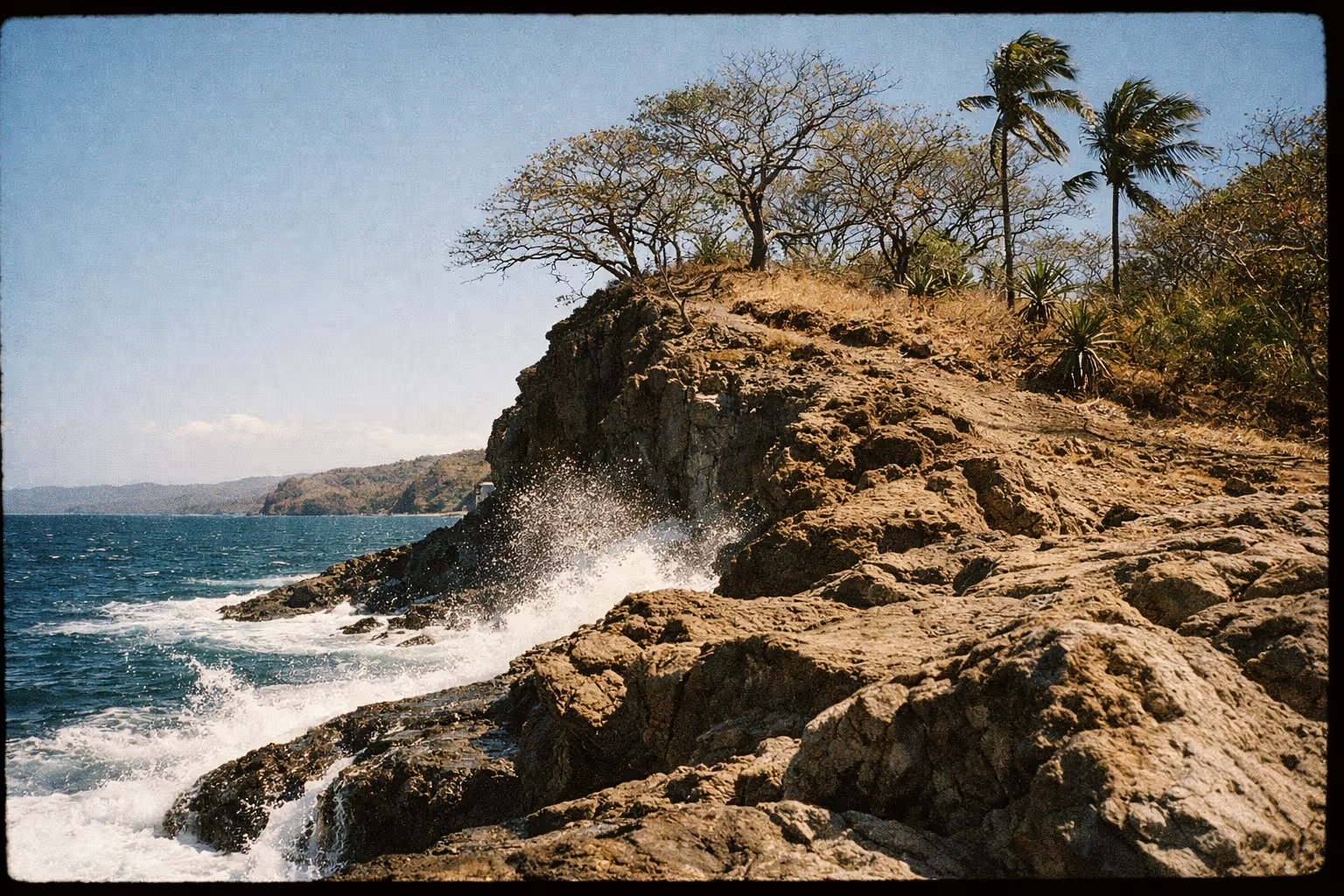
Inside the park you’ll also find iguanas, scarlet macaws in some sections, and seasonal sea turtle nesting (olive ridleys and hawksbills). The wave conditions on Punta Uvita Beach Costa Rica are slow and rolling - making it one of the better family swimming beaches on this stretch of coast (7).
Worth the detour: absolutely, year-round. The Whale Tail is the only formation of its kind in Costa Rica.
Humpback Seasons and Whale Watching Tour Operators
Uvita is one of the only places on Earth where two separate humpback populations breed in the same waters: the northern population (from California and Alaska) arrives roughly December through April, and the southern population (from Antarctic waters) shows up roughly July through November (5). That gives you two whale seasons, with the strongest sightings in August-September and January-February (7).
What to expect from a tour:
- Duration: 3-4 hours
- Cost: $75-$120 USD per adult, depending on season, boat size, and whether snorkeling at Isla Ballena or Tres Hermanas is included
- Departure: most boats leave from Marino Ballena beach access points; the park entry fee is separate from the tour price unless explicitly bundled
- What to bring: reef-safe sunscreen, a hat that won’t fly off, a dry bag, and motion sickness pills if you’re prone (the swells are real)
Operator notes: Smaller boats (6-10 passengers) get closer to legal viewing distance and turn faster when whales surface. Bahia Aventuras and Uvita Tour Center are the operators most consistently mentioned for ethical practices and bilingual guides. Book at least 2-3 days ahead during peak weeks - same-day availability disappears fast.
Land-based alternative: If you’d rather not pay for a boat, the cliffs near the southern end of Marino Ballena offer decent shore spotting in August and September. Bring binoculars and patience.
Worth the detour: in season, yes. Out of season (May, June, late November), skip it and do a mangrove or Caño Island snorkel tour instead.
The Waterfall Scene Around Uvita: Catarata Uvita, Nauyaca, and the Hidden Ones
Catarata Uvita (the one with the slide)
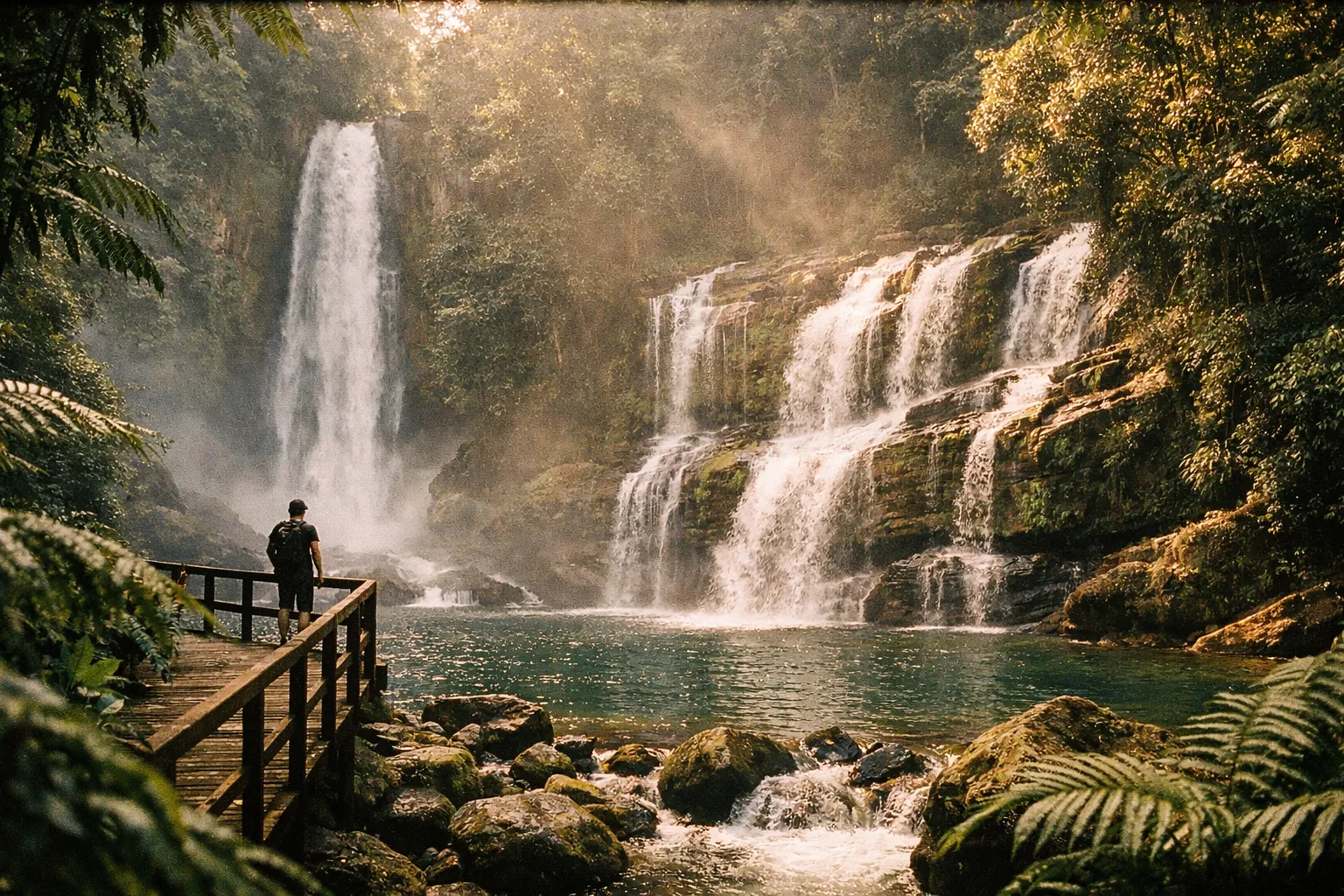
The closest Uvita Costa Rica waterfall sits about 1.5 miles (2.4 km) from town center - walkable in 30 minutes or a 5-minute drive (7). Entry runs 2,000 CRC (about $4 USD) (3).
What makes it different: a natural rock waterslide carved into the falls themselves. You climb up, sit down, and slide into the pool below. It’s one of the few legal waterfall slides in Costa Rica (4)(7). The lower pool is safe for swimming; the upper pools are quieter if you walk another 30-40 minutes along the river.
Go early morning on a weekday. Midday weekends in dry season turn this place into a parking problem (8).
Worth the detour: yes, especially if you’re traveling with anyone over 8 who wants the slide.
Nauyaca Waterfalls
About 90 minutes from Uvita by car (closer to Dominical), Nauyaca is the photogenic one - two large tiers dropping into a wide swimming pool with a lifeguard on duty in peak season (5). You can hike in (about 4 miles round trip, moderate) or pay for the 4x4 truck transport from the trailhead.
Cost: $10-$35 USD depending on whether you hike or ride; full tours from Uvita run $60-$95 with transport (5).
Worth the detour: yes, and pair it with a Dominical beach stop on the way back.
The secret waterfall and Río Uvita swimming holes
There’s a less-visited waterfall reached through a bamboo forest with river crossings - typically referenced as the “secret” or hidden falls (2)(3). It’s not signposted in town. You’ll need to either ask at your lodge for current trail conditions or hire a local guide for $30-$50.
Gear: water shoes (mandatory), dry bag, and don’t attempt it after heavy rain - the river crossings get sketchy fast. I’d skip this one in October during peak rainy season.
Can you swim at Uvita Beach? A real breakdown of the beaches
Yes, but the answer depends on which beach.
Punta Uvita Beach (inside Marino Ballena): The protected curve near the Whale Tail has slow, rolling waves and is the best swimming beach in the area for families (7). No riptides to speak of inside the sandbar. Watch for the incoming tide if you’re walking the Whale Tail.
Playa Hermosa (a few minutes north of Uvita): Black sand, free to enter, popular surf break, lifeguards on duty during peak hours (4). This beach has real riptides - swim near the lifeguard towers, don’t let kids drift, and treat it as a sunset spot first and a swimming spot second.
Playa Colonia and Playa Piñuela (south end of Marino Ballena): Quieter, fewer people, decent for swimming when waves are small. Good for picnics.
Dominical: A 15-minute drive north. Strong surf, not a swim beach. Go for the waves or the sunset bar scene.
One thing most guides get wrong: they treat all Costa Ballena beaches as equally safe. They aren’t. Marino Ballena’s protected stretch is genuinely calm; the open beaches north and south are surf beaches with currents. Match the beach to your group.
Are there jaguars in Uvita?
Technically yes. Realistically no.
The greater southern Pacific corridor - including Corcovado National Park on the Osa Peninsula, about 2.5 hours south - supports a small jaguar population along with pumas, ocelots, and other cats. Some of these animals range through the forested hills inland from Uvita. But sightings near Uvita itself are extremely rare and not something tour operators promote because they can’t deliver it.
What you’ll actually see on standard Uvita tours and hikes:
- White-faced capuchin monkeys (common, sometimes too bold around picnic areas)
- Howler monkeys (you’ll hear them at dawn whether you want to or not)
- Squirrel monkeys (less common; possible at La Cusinga and southern lodges)
- Toucans, scarlet macaws, motmots, hummingbirds
- Iguanas, basilisks (the “Jesus Christ lizard”), and occasionally crocodiles in the river mouths
- Marine life: humpbacks in season, bottlenose and spotted dolphins year-round, sea turtles
If jaguar tracking is your priority, book a multi-day Corcovado trip from Drake Bay with a licensed naturalist guide - and even then, manage expectations.
Where to stay in Uvita
Uvita’s lodging is spread across three zones: in town and near the beach, in the hills with ocean views, and tucked into the jungle. Pick based on what you actually value.
Beach-adjacent (5-minute walk or less)
- El Tecal - Studios and units with kitchens, about a 4-minute walk to the beach access (4). Mid-range, around $90-$140/night depending on season. Best for families who want to walk to the sand and cook a meal.
- Canto de Ballenas - Simple cabins with a small pool, walking distance to the park entrance (4)(6). Budget-friendly at $70-$110/night.
- Uvita Tropical Beach Hotel - Basic, clean, close to the beach. Around $80/night.
Hillside with ocean views
- Cristal Ballena - 4-star boutique hotel with an infinity pool, big breakfast, and panoramic views. Around $180-$280/night. Best for couples or anyone who wants a real resort experience without leaving Uvita.
- Vista Ballena - Hilltop, smaller, strong sunset views. Around $140-$200/night.
- Oxygen Jungle Villas - Adults-only, design-forward, set into the rainforest with private villas and a striking infinity pool. $350-$550/night. Honeymoon territory.
Eco-lodges and glamping
- La Cusinga Lodge - High-end eco-lodge south of town overlooking the coast, known for wildlife, yoga, and farm-to-table meals. $200-$320/night.
- Manoas - Glamping villas in the jungle near a river, more immersive and quieter. $180-$260/night.
My pick for first-time visitors: Cristal Ballena if you want the view and pool, El Tecal if you want to walk to the beach with kids. Skip the in-town budget options unless you’re truly on a backpacker budget - the hill and beach properties are worth the extra $30/night.
Booking note: Peak weeks are mid-December through mid-January, Easter week (Semana Santa), and US summer (July-August, which overlaps with the southern whale season). Book 3+ months ahead for these windows. Shoulder months like May and late November often have 30-40% lower rates.
Eating in Uvita: where to actually go
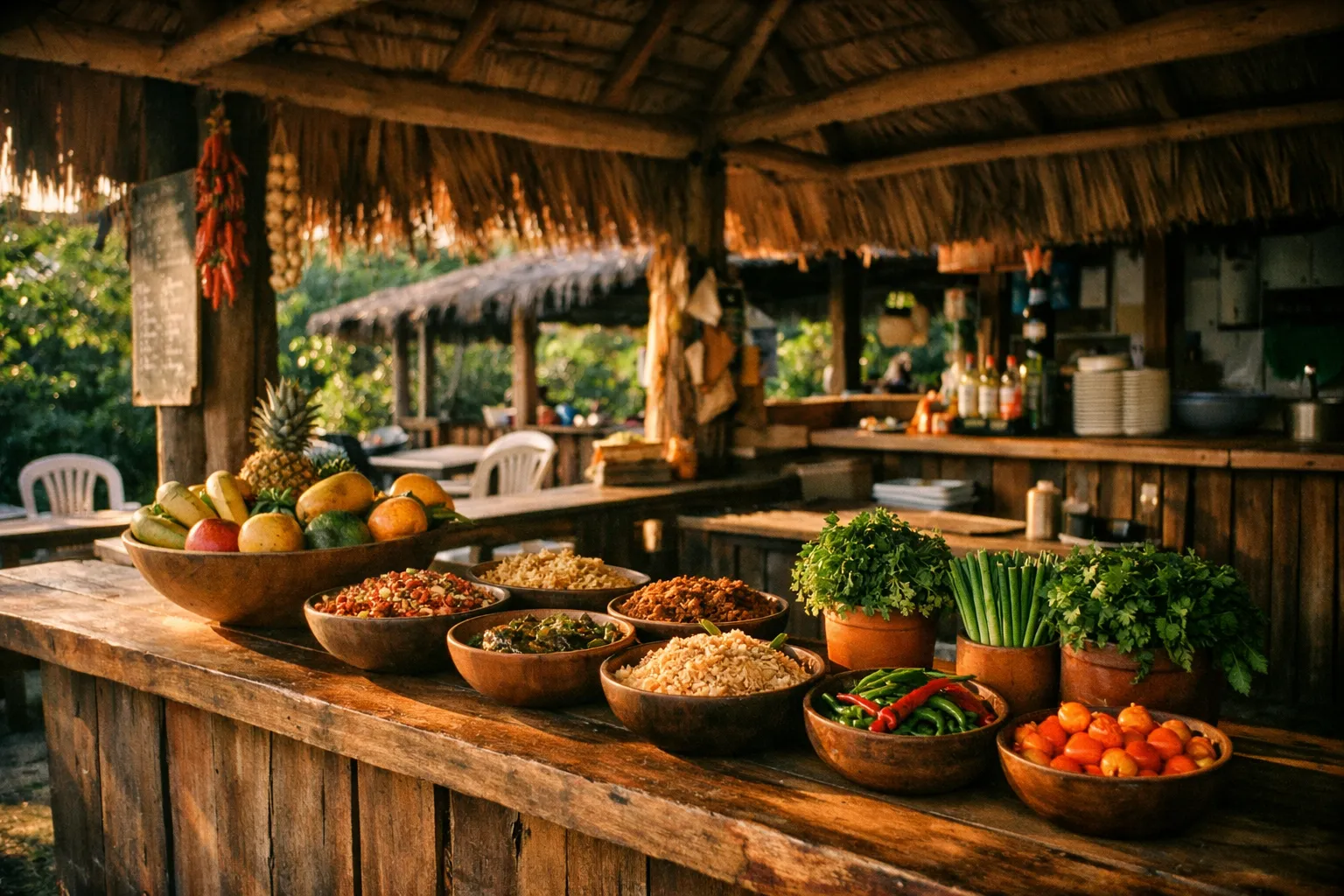
Uvita’s food scene punches above its size. A short list of what’s worth your time:
- Gusto Italian - Italian, ocean view, best sunset dinner in town. Reserve ahead in season.
- Sibu Restaurant at Cristal Ballena - Open to non-guests, strong cocktails, big view.
- Indomable - Casual, good ceviche and fish tacos.
- Sabor Español - Spanish, paella, solid wine list.
- Banana Sushi House - Surprisingly good sushi for a coastal town this size.
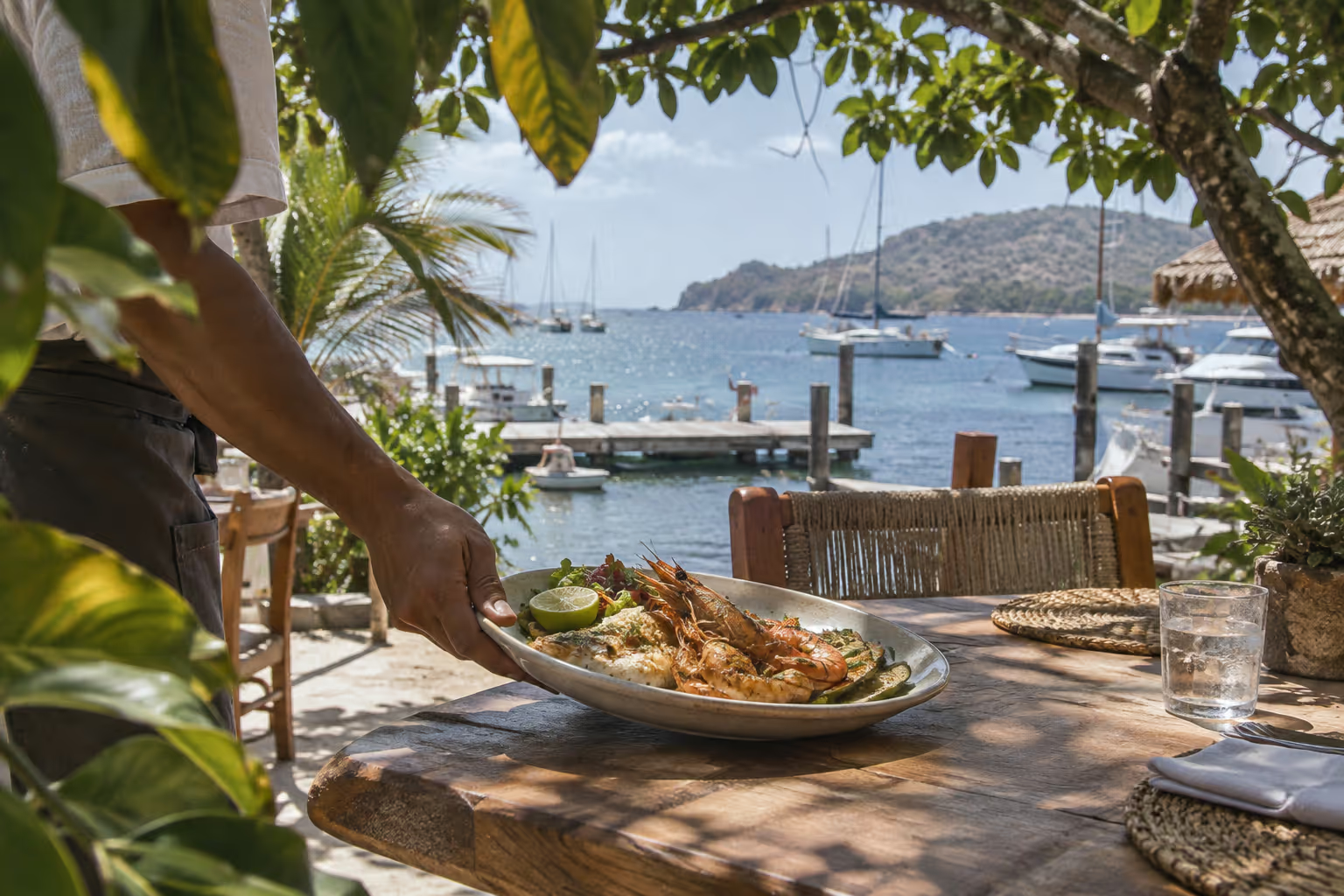
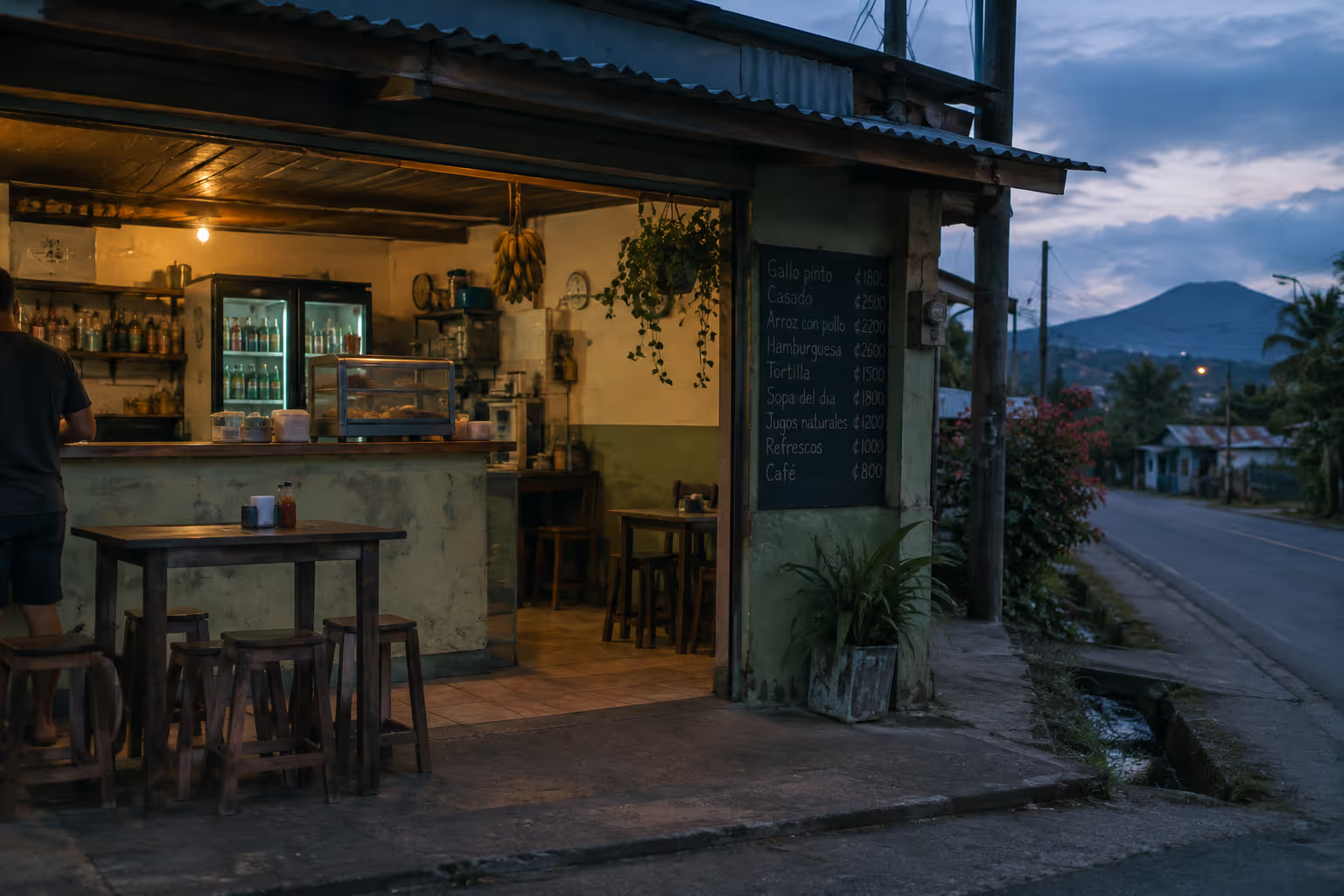
- Sodas (local diners) - For a $7-$10 casado (rice, beans, plantains, protein), try Soda Ranchito Doña María or any of the small sodas along the main road. This is where you’ll eat best for the price.
One thing most guides get wrong: they push fancy lodge restaurants exclusively. The sodas are not a downgrade - they’re the cuisine. Eat at one daily.
Suggested itineraries
3-day Uvita itinerary (whales, waterfalls, beach)
3 daysA compact itinerary covering Uvita's highlights in 3 days.
- 1
Day 1
Arrive, check in, sunset at Playa Hermosa.
- 2
Day 2
Whale Tail at low tide (check tide chart the night before). Lunch in town. Catarata Uvita in the afternoon.
- 3
Day 3
Whale watching tour in season, or mangrove tour at Térraba-Sierpe. Dinner at Gusto.
5-day itinerary (add depth)
5 daysExtended itinerary adding Nauyaca and Caño Island.
- 1
Days 1-3
Follow the 3-day itinerary above.
- 2
Day 4
Nauyaca Waterfalls, then Dominical beach and sunset drinks at Mirador Don Roger.
- 3
Day 5
Caño Island snorkeling tour (boat departs Uvita, approx. $130-$160 per person including gear and lunch), or a rest day with a massage and pool.
7-day itinerary
Add a 2-day side trip to Drake Bay for a Corcovado day hike, or stay put and do the secret waterfall hike with a local guide.
Getting around Uvita
Uvita is not walkable between attractions. The town stretches several kilometers along Route 34, with lodges set on side roads that climb into the hills.
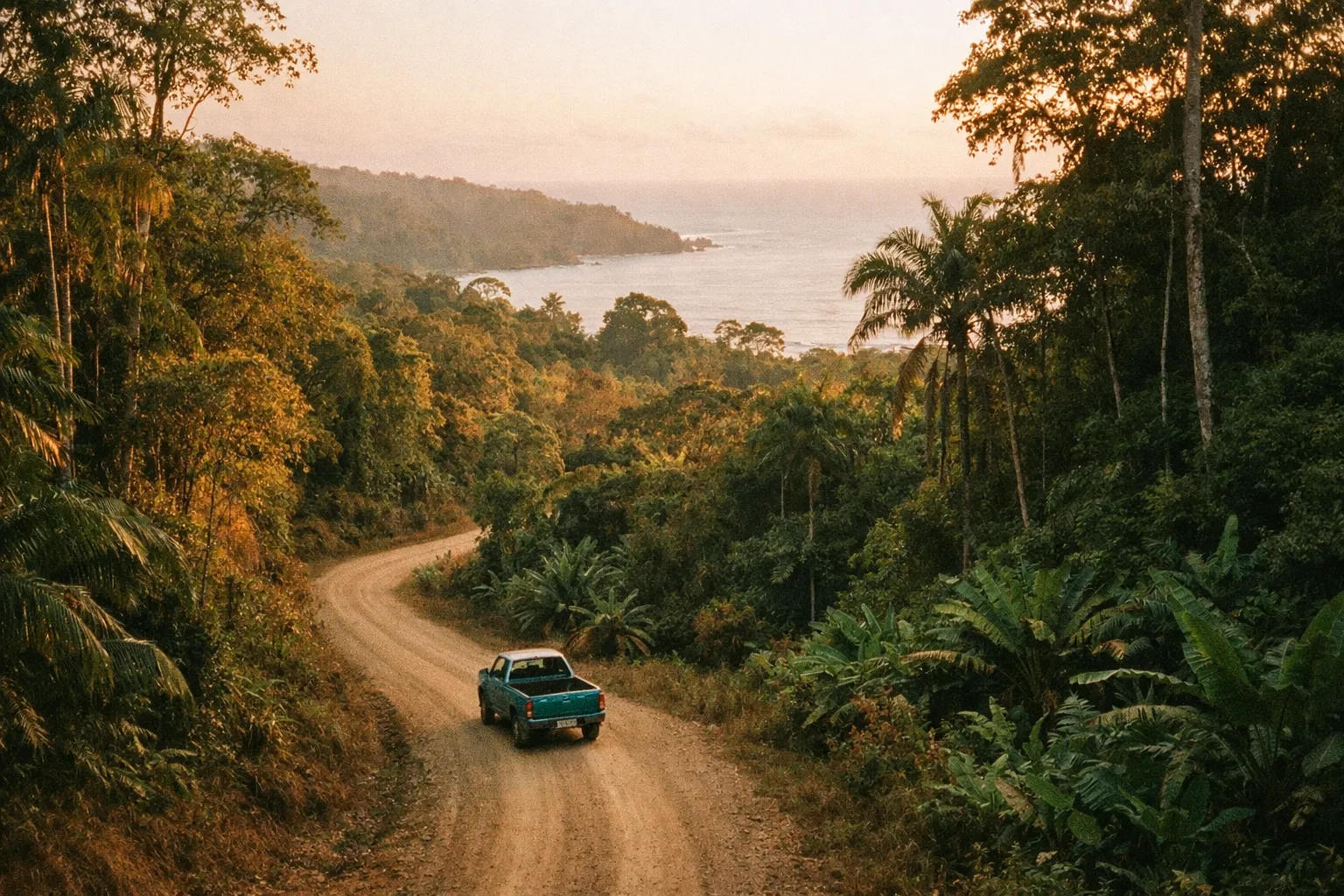
- Rental car: strongly recommended. A small SUV handles the main attractions fine; you only need 4x4 if you’re staying at a remote hillside lodge or chasing dirt-road waterfalls in rainy season (May-November).
- ATV rental: $80-$120/day. Fun, useful for hill roads, less useful in heavy rain.
- Taxis: $5-$12 for most rides within Uvita. Drivers don’t always run meters - confirm the price before getting in.
- Local bus: Runs along Route 34 between Dominical and Ojochal. Cheap (under $2), infrequent, fine for one-off trips to the beach.
Driving note: Route 34 is paved and well-maintained, but the dirt roads leading to lodges and waterfalls can wash out during October peak rains. I drove the Costanera Sur in October - the side roads to hillside lodges were right at the limit of what a 2WD could handle. Ask your lodge about current conditions before committing to a non-4x4 vehicle.
Best time to visit Uvita
The honest seasonal breakdown:
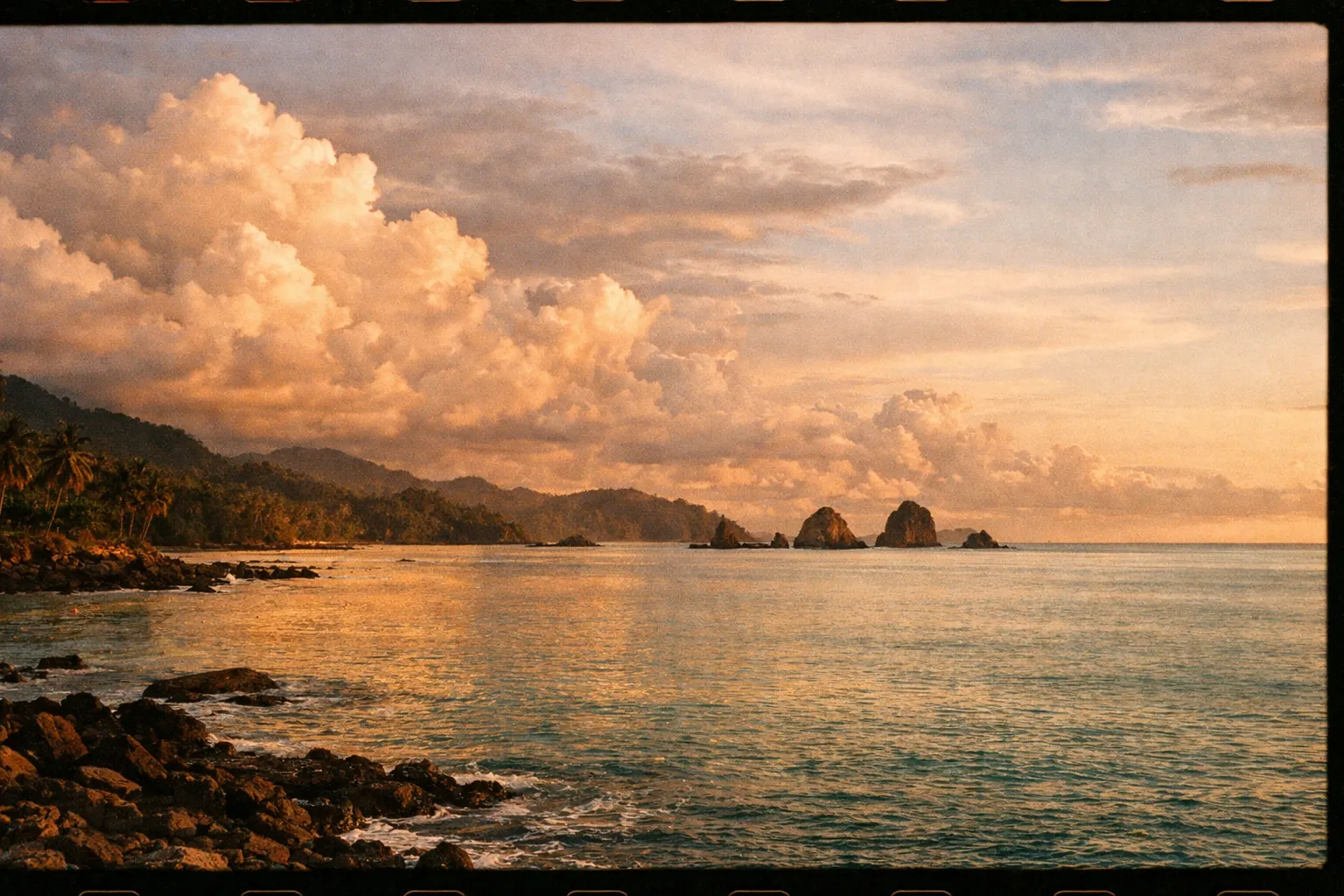
- December-April (dry season, high season): Sunny days, good ocean visibility for snorkeling, northern humpbacks present January-March. Crowds and prices peak mid-December to mid-January and Easter week. Best overall window: late January or February.
- May-June (early green season): Afternoon rain, lush landscape, lower prices, fewer tourists. Good for waterfall photography. Whale watching is off.
- July-September (southern whale season + green season): Best whale watching of the year in August-September. Rain is real but usually afternoon-only. Prices moderate.
- October (peak rain): The river crossings on side roads to hillside lodges can hit the limit of what a 2WD can handle. Skip this month unless you’re committed to a lodge with paved access.
- November: Rain tapers, prices still low, southern whales departing. An underrated window.
Frequently Asked Questions
- Is Uvita safe?
- Uvita is one of the safer towns on the Pacific coast with petty theft as the main risk. Standard precautions like not leaving valuables in unattended cars apply.
- How many days do you need in Uvita?
- Minimum three nights to see the Whale Tail, one waterfall, and do a whale watching tour. Five nights for a relaxed pace including Nauyaca and Caño Island. Seven days if adding Corcovado.
- Do I need to book whale watching in advance?
- Booking 2-3 days ahead is essential during peak weeks (mid-August to mid-September, late January to mid-February). Shoulder weeks often allow same-day bookings at your lodge.
- Is Uvita good for families?
- Yes. The protected beach at Marino Ballena is swim-safe, Catarata Uvita's slide appeals to kids 8+, and several mid-range hotels have pools and kitchens. A rental car is necessary.
- What's the closest international airport to Uvita, Costa Rica?
- Juan Santamaría International Airport (SJO) in San José is the closest major international airport, about 3.5-4.5 hours by car. Liberia (LIR) is too far for a direct trip.
- Can you walk the Whale Tail at any low tide?
- No. The best time is 60-90 minutes before low tide, staying through the lowest point. Arriving exactly at low tide or later means missing the sandbar exposure.
- Are there safe swimming beaches besides Punta Uvita?
- Punta Uvita inside Marino Ballena is the safest for families. Playa Hermosa has strong riptides and is better for surfing or sunset viewing. Other beaches vary in safety depending on conditions.
Final practical notes
If you’re booking now, the moves that matter most:
- Reserve lodging 3+ months ahead for December-February and July-August
- Book whale watching 2-3 days ahead during peak weeks
- Rent the car at SJO, not in Uvita - selection and price are better
- Check the tide chart for Quepos the night before your Whale Tail visit
- Pack reef-safe sunscreen, water shoes, and a dry bag
Uvita rewards travelers who plan around tides and seasons rather than just showing up. Get the timing right on the Whale Tail and the whales, and the rest of the trip - waterfalls, beaches, lodge dinners - falls into place without much effort.