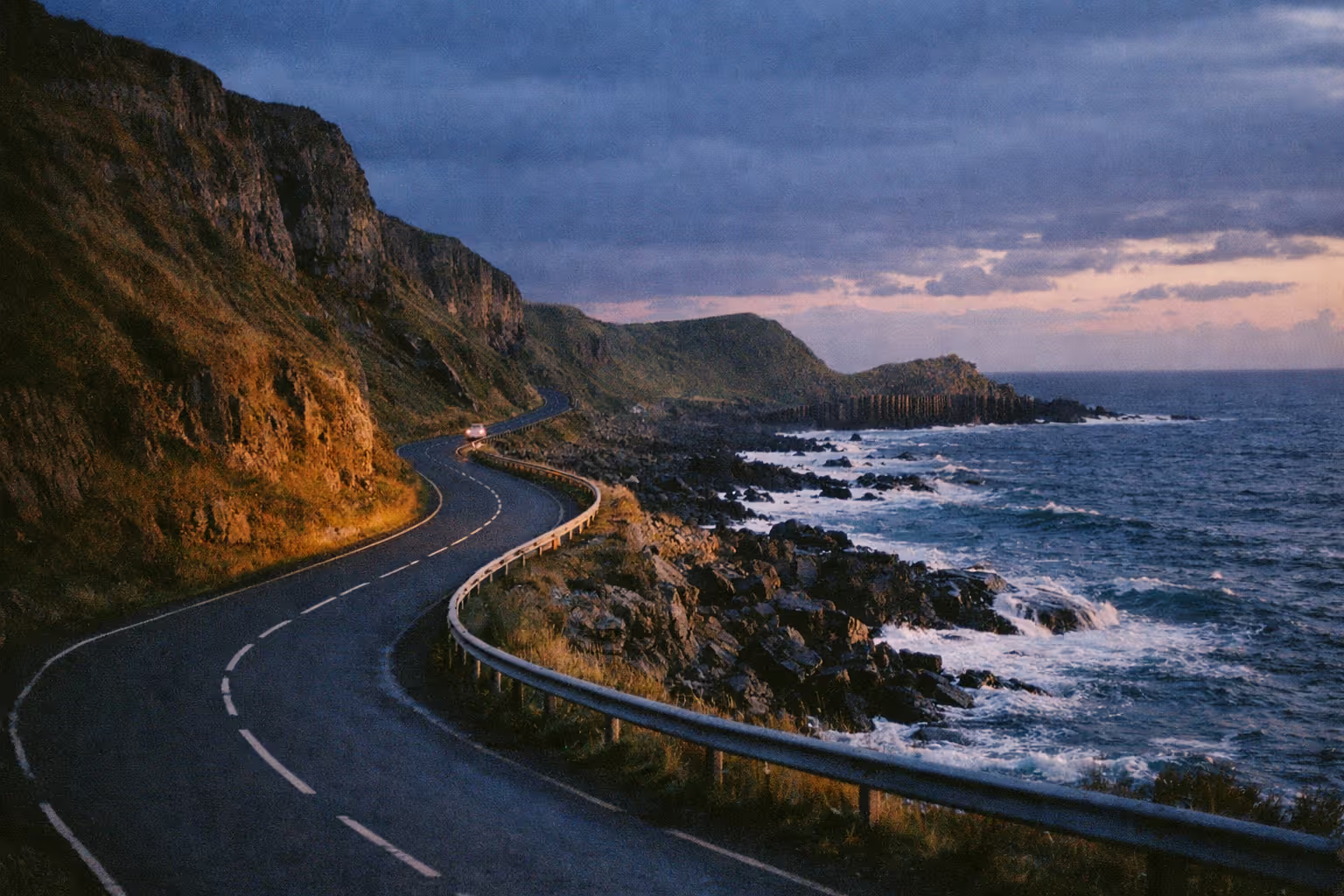
You can drive the entire causeway coastal route in under four hours without stopping. Doing so would be a mistake.
The road links Belfast and Derry/Londonderry along Northern Ireland’s north coast, packing basalt columns, clifftop castle ruins, a rope bridge over open water, and the world’s oldest licensed distillery into roughly 120 miles (190 km). The trick is knowing that the drive itself is the least interesting part: what matters is how you sequence the stops, what you book ahead, and how many days you actually give it. Yes, some of it doubles as Game of Thrones territory, but that’s a footnote here, not the pitch.
This guide covers how to get there, what the route costs relative to your choices, the stops in driving order, what needs reserving before you leave home, and how to fit it all into one, three, or five days without backtracking. One thing most guides get wrong: they treat the Giant’s Causeway as a paid attraction. The stones are on a public right of way: you can walk in for free and skip the visitor centre fee entirely. That single fact changes the cost calculation for a lot of travelers.
✓ Pros
- Major stops are close together, not spread across a full country
- Well-signposted and easy to self-navigate without specialist knowledge
- Mix of free and paid attractions lets you calibrate spend
- Strong base-town infrastructure, especially in Portrush, supports multi-night stays
- Works in most weather; dramatic skies over the Atlantic add to the experience
✗ Cons
- Peak-season parking pressure at every major stop from June to September
- Carrick-a-Rede rope bridge booking requirement catches unprepared visitors
- Bushmills distillery last-tour cutoff punishes late starters
- Route length is frequently misquoted; plan from a reliable figure
- One-day attempts are genuinely compromised; the route resists rushing
What the Causeway Coastal Route Actually Is (and How Long It Takes)
The causeway coastal route is a signposted scenic drive running roughly 120 miles (190 km) between Belfast and Derry/Londonderry along Northern Ireland’s northeast and north coast. That’s the figure the official route site uses (2), and it’s the one to plan from.
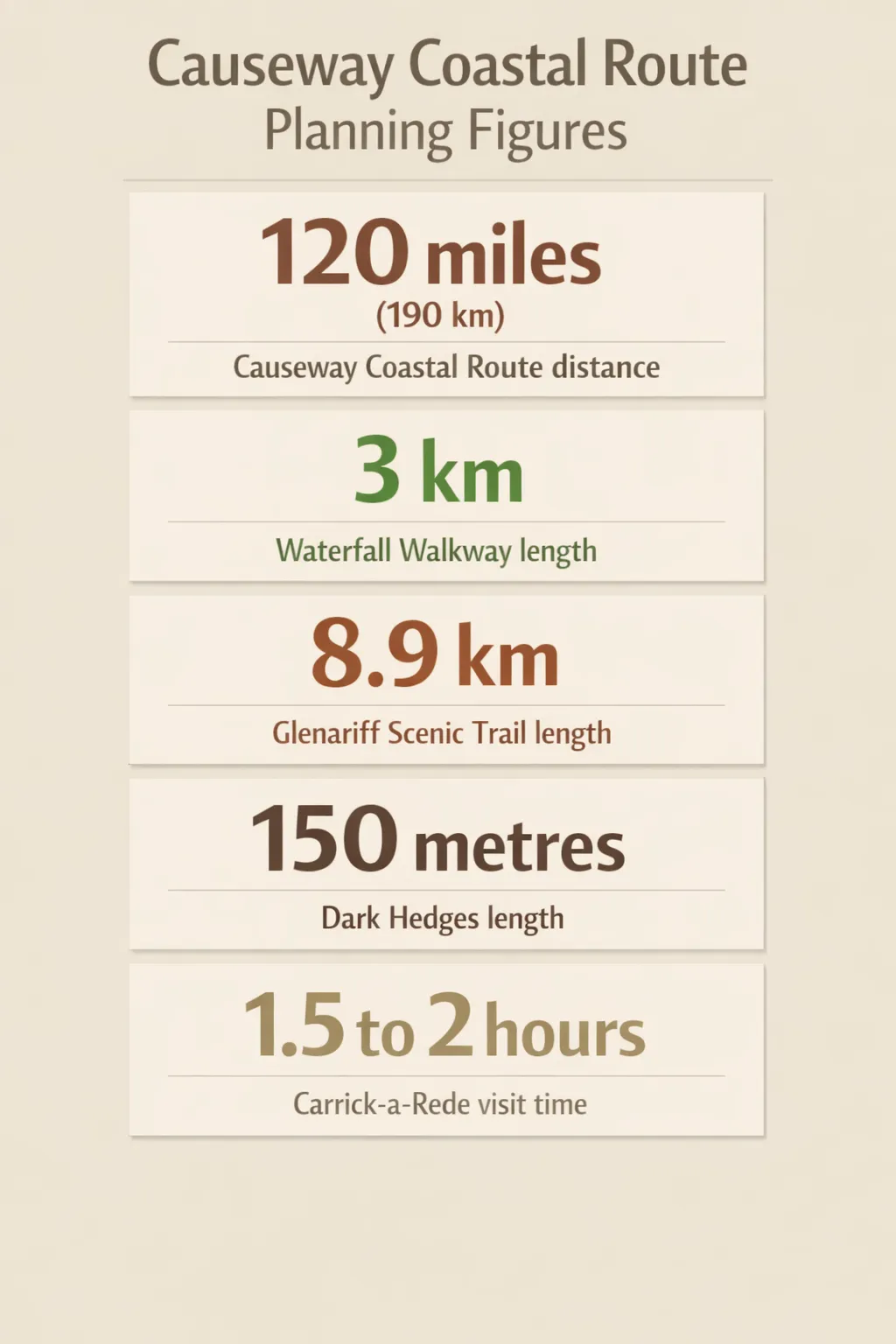 Key planning figures for the Causeway Coastal Route: distance, duration, and major stop lengths.
You’ll see other numbers, and they’re not wrong; they just measure different things. The Irish Road Trip cites 115 miles (185 km) (1), while a downloadable map from Causeway Coast and Glens tourism lists 130 miles between Derry/Londonderry and Carrickfergus Castle. The gap comes down to where you start and stop, and whether you count the scenic loop drives that branch off the main spine. The official route also has around 256 miles (410 km) of optional loop drives attached (2), which is why “how long is it” doesn’t have a single clean answer.
Pure driving time, coast road from end to end without stops, runs about three hours; Visit Portrush puts it at around two and a half if you drive it in one go (27). But that’s not how anyone should do it. The official route site recommends 3 to 5 days to travel Belfast to Derry while actually exploring the attractions (2), and that lines up with what the stops demand once you factor in walks, a distillery tour, and castle visits.
Self-drive is the most flexible format by a wide margin. Guided day tours from Belfast cover the headline stops, but they run on fixed schedules and skip the quieter coastal villages. With your own car you set the pace, chase the light, and linger where it’s worth it. Most itineraries run Belfast to Derry, but either city works as a starting point: the stops are identical in reverse.
One day vs. three days vs. five days: what you actually see at each pace
One day gets you the headline stops only, and only with a very early start and a pre-booked rope bridge slot. You’ll hit the Dark Hedges, Giant’s Causeway, Carrick-a-Rede, and Dunluce Castle, but you’ll be moving constantly and skipping the Glens of Antrim entirely. It’s a compromise, and you should treat it as one.
Two to three days is the practical sweet spot for most visitors. It covers the castles, the distillery, the rope bridge, and coastal walks without a forced march, with a night or two in Portrush or Ballycastle to break up the driving.
Three to five days is the full experience: the Glens of Antrim, a Rathlin Island day trip, a proper walk in Glenariff Forest Park, and time to treat Derry/Londonderry as a destination rather than a finish line.
The Main Stops on the Causeway Coastal Route, in Order
Here are the major stops from Belfast to Derry/Londonderry in driving sequence: what each one is, why it earns its place, and the practical note that matters most.
Carrickfergus Castle is the first major stop east of Belfast, about 11 miles (18 km) up the coast. The Norman fortress was begun by John de Courcy in 1177 and remains one of the best-preserved medieval structures in Northern Ireland (25). Worth a morning coffee and a quick walk-through before you push north, not a half-day anchor.
The Glens of Antrim form the scenic mid-section, and Glenariff Forest Park is the one to prioritize if you have time. It covers over 1,000 hectares of woodland, lakes, and waterfalls, with the 3 km Waterfall Walkway as the standout trail and an 8.9 km Scenic Trail for anyone with a full morning (19). If you’re short on time, this is skippable on a one-day run, but it’s the reason to add a third day.
Cushendun Caves and Ballintoy Harbour are secondary stops worth knowing. Both are quick, both photogenic, and both pair naturally with the rope bridge cluster further west. Neither justifies a long detour on its own.
Then comes the headline band near Bushmills and Portrush, where the four biggest stops sit within a tight stretch of coast. One road-trip guide logs the drive from Ballycastle through Carrick-a-Rede, Ballintoy, Giant’s Causeway, Bushmills, and on to Portrush at roughly one hour of total driving, which tells you how densely packed this section is.
At the western end, Portrush and Portstewart are base-town options rather than pass-through points, and Derry/Londonderry is a destination in its own right: fully intact 17th-century city walls, the Bogside murals, and a strong food and arts scene.
Giant’s Causeway: free access vs. the visitor centre
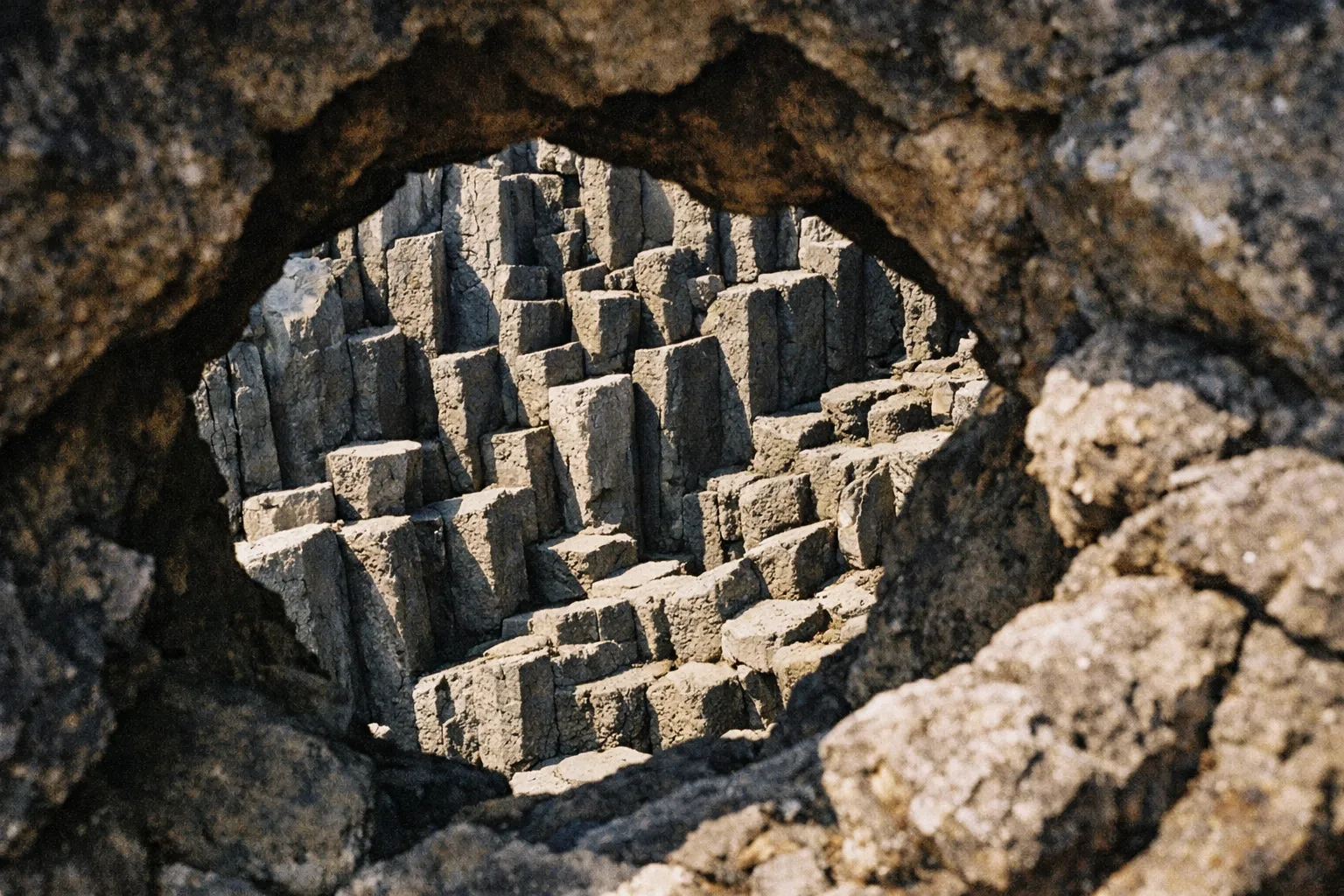
The Giant’s Causeway is a UNESCO World Heritage Site, inscribed in 1986, made up of around 40,000 interlocking basalt columns formed by volcanic activity 50 to 60 million years ago (26). It’s the single most recognized stop on the route, and the one most people get wrong on cost.
You do not have to pay to see the stones. They sit on a public right of way, and you can walk the coastal path to reach them for free: access to the Causeway itself is free of charge, and it is not necessary to go via the visitor centre that charges a fee (26). Park off-site, walk in, and you’ve skipped the visitor centre fee entirely. The visitor centre itself is a separate, ticketed experience: reserved parking, guided storytelling, audio guides in 11 languages, and the exhibition. Worth it for context if you want the full managed visit, but it is not mandatory to see the columns.
Arrive early. Before 9 a.m. in summer, you’ll beat the coach tours that dominate mid-morning. When I’ve visited outside peak hours, the difference in crowd density is stark: the columns feel like a geological site rather than a theme park queue. The site is about 4 km from Bushmills village, and all three north Antrim airports (Belfast International, Belfast City, and Derry City) sit within about an hour’s drive.
Carrick-a-Rede Rope Bridge: book before you leave home
The Carrick-a-Rede rope bridge crosses a 20-metre-wide chasm between the mainland and a small island, suspended almost 100 ft above the Atlantic and managed by the National Trust (23). It’s a genuine highlight, and a planning-critical stop rather than a spontaneous one.
Advance booking is non-negotiable. The National Trust states that pre-booking is essential for the rope bridge crossing, for everyone including its own members, and asks you to book online before travelling to the site (23). Treating it as a walk-up is the most common way people get turned away here, and I’ve spoken to visitors who drove two hours only to find the day fully booked by 10 a.m.
Allow 1.5 to 2 hours for the full visit: the 1 km (0.6-mile) walk from the car park to the bridge each way, over steps and uneven terrain, the crossing itself, and time for photos (23). Entry is free for National Trust members, though the pre-booking requirement still applies to them, which is worth calculating if you’re visiting several Trust sites on the trip. The bridge sits about 15 to 20 minutes’ drive west of Ballycastle on the A2, making Ballycastle a natural lunch stop.
Dunluce Castle: the clifftop ruin that earns its stop
Dunluce Castle is a medieval ruin perched on a basalt outcrop above the Atlantic, with the present ruins dating mainly from the 16th and 17th centuries (17). It’s the most atmospheric of the route’s castles, and it groups perfectly with the Giant’s Causeway and the distillery.
The castle sits on the A2 about 3 miles east of Portrush, on the road to Bushmills (17). Paid admission applies, no pre-booking is needed, and 45 to 60 minutes covers the ruins, the views, and the small gatehouse exhibition. In the summer season it opens 9:30 a.m. to 5 p.m., with last admission 30 minutes before closing (17).
If photography matters, plan for late afternoon or sunset. The coastline here faces west, and the low light against the ruin is when it earns the detour. Several route planners deliberately assign Dunluce to the end of a day for exactly that reason, and having visited at both midday and early evening, the difference isn’t subtle.
Old Bushmills Distillery: timed visit, not a casual drop-in
Old Bushmills Distillery holds a royal licence for whiskey production dating to 1608, the claim that earns it the title of oldest licensed distillery in the world (11). It sits in Bushmills village, around 4 km south of the Giant’s Causeway and about a 10-minute drive from both the Causeway and Dunluce Castle (11).
This is a timed stop, not an open-ended one. Bushmills runs scheduled guided tours with fixed start times, and in the March-to-October season the last tour leaves at 4 p.m. (11). Arrive after mid-afternoon and you risk missing the day’s final tour entirely, one of the most common ways to waste a stop on this route. Book a slot online in advance, especially in summer, when capacity fills. Walk-ins are sometimes possible off-peak but aren’t reliable.
The logical move is to group all three (a morning distillery tour, the Causeway before the coaches peak, and Dunluce for the late light) since they’re all within a short drive of each other.
The Dark Hedges: a photo stop, not a destination
The Dark Hedges is a beech-tree avenue on Bregagh Road between Armoy and Stranocum, planted around 1775 and running about 150 metres (28). It went global as the Kingsroad in Game of Thrones, which is why the crowds are what they are.
Treat it as a 20 to 30 minute photo stop, not a half-day activity, and note that you cannot drive it: Bregagh Road has been pedestrianised and closed to general traffic since October 2017 (28). Park at the Dark Hedges Estate or the Hedges Hotel on Ballinlea Road, where charges may apply, and expect it to fill fast (18). No booking is needed, but timing matters more here than almost anywhere else on the route. Arrive at first light or in the evening for cleaner photos and thinner crowds; the 10 a.m. to 4 p.m. window in summer is the one to avoid.
How to Group Your Stops Efficiently
The single biggest planning win on the causeway coastal route is clustering nearby stops into logical half-days instead of backtracking: the north Antrim headliners sit close enough that one afternoon can cover three of them.
The Giant’s Causeway cluster is the clearest example. The Giant’s Causeway, Bushmills distillery, and Dunluce Castle all sit within about a 10-minute drive of each other (11). One half-day covers all three comfortably. The rope bridge cluster is the other natural grouping: Carrick-a-Rede pairs with Ballintoy Harbour and a Ballycastle lunch stop, all within a short stretch. The Dark Hedges works best as a standalone morning or evening detour: it’s a quick stop, not a day anchor.
One practical driving note: the A2 coast road is the scenic spine, and it’s the one you want for the coastline. The inland A6 from Belfast to Derry is far faster, roughly 1.5 hours over 70 miles (112 km), but it misses nearly all of the coast. Know which road you’re on. Basing yourself in Portrush or Ballycastle for a night or two cuts daily driving pressure sharply.
The north Antrim cluster: one half-day for three headline stops
Here’s the sequence that works:
- Bushmills Distillery: morning tour, booked ahead for a fixed start time.
- Giant’s Causeway: mid-morning, ideally before the coach tours peak.
- Dunluce Castle: late afternoon or sunset, for the west-facing light.
Total driving time between the three is under 15 minutes. The order isn’t arbitrary: distillery tours have fixed start times you have to work around, the Causeway is best early, and Dunluce is best in low light. One four-day itinerary covers the whole north Antrim run (Ballycastle, Carrick-a-Rede, Ballintoy, Giant’s Causeway, Bushmills, and Portrush) in about an hour of total driving on a single day, which shows just how tight this section is.
Sample Itineraries: 1 Day, 2-3 Days, and 5 Days
Three pace levels, three different trips. Pick based on how many days you actually have and how much of the coast you want to see.
The 1-day sampler runs Belfast to Carrickfergus to the Dark Hedges to Giant’s Causeway to Carrick-a-Rede to Dunluce Castle to Portrush (overnight or return to Belfast). Honest caveat: this is a long day, it requires a pre-booked Carrick-a-Rede slot, and it demands a very early start. You’ll see the headliners and little else. It’s the compromise option, not the recommended one.
The 2-3 day trip is the sweet spot. Day 1: Belfast to Ballycastle, taking in the Glens of Antrim, Cushendun, and Ballintoy. Day 2: the Carrick-a-Rede and Giant’s Causeway cluster, adding Bushmills and Dunluce. Day 3: Portrush or Portstewart, the Dark Hedges, and on to Derry/Londonderry. This gives you the castles, the coastline, and the distillery without rushing.
The 5-day road trip adds a Rathlin Island day trip from Ballycastle, a proper Glenariff Forest Park hike, a full day in Derry/Londonderry, and a slower coastal pace throughout. This is the version for travelers who want food, walks, and one or two paid attractions without a schedule breathing down their neck. For context, Tourism Ireland’s current trip idea structures the route as a 6-day, roughly 148 km itinerary (6), so five to six days is very much within the official grain.
Causeway Coastal Route Itinerary Formats
| Compromise 1 Day | Sweet Spot 2-3 Days | Complete 5 Days | |
|---|---|---|---|
| Days Needed | 1 | 2-3 | 5 |
| Stops Covered | Headline stops only (Causeway, Carrick-a-Rede, Dunluce, Dark Hedges) | Headline cluster plus Glens of Antrim, coastal villages, Derry/Londonderry | All above plus Rathlin Island, Glenariff hike, Derry city day |
| Booking Requirements | Pre-book Carrick-a-Rede slot required | Book Carrick-a-Rede and Bushmills tours, plus accommodation | Book rope bridge, distillery, Rathlin ferry, multiple nights |
| Best For | Travelers with a single day to spare | Most first-time visitors | Relaxed travelers wanting full experience |
What to Book in Advance (and What You Can Leave Open)
The causeway coastal route punishes travelers who assume everything is walk-up. Two stops in particular require booking, and getting the sequence right saves the trip.
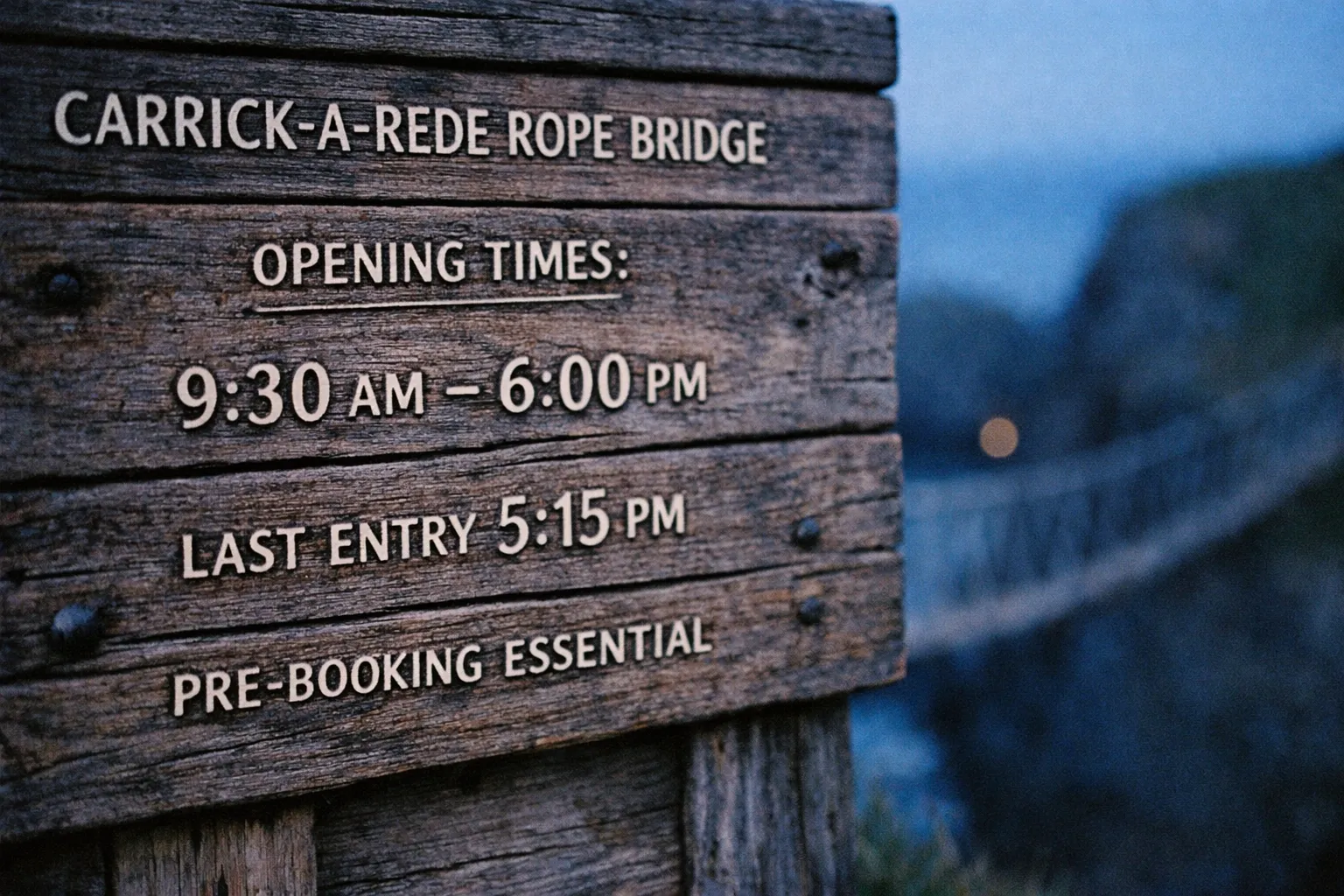
Must book ahead. Carrick-a-Rede rope bridge sits at the top of the list; the National Trust makes pre-booking essential for the crossing, its own members included (23). Bushmills distillery tours are next: fixed start times and a 4 p.m. last tour from March to October mean you book a slot or risk missing out (11). Accommodation in Portrush or Ballycastle needs locking in early for peak-season nights.
Book if you want certainty. The Giant’s Causeway visitor centre experience requires pre-booking, though the free path to the stones does not. Decide which one you want before you arrive.
No booking needed. The Dark Hedges (just manage your timing), Dunluce Castle (check opening hours, but generally walk-up), and Carrickfergus Castle all work without reservations.
One more calculation worth making: National Trust membership covers entry to Carrick-a-Rede (23) and the Giant’s Causeway visitor experience, along with Portstewart Strand and other properties. If you’re hitting several Trust sites, a single annual membership can undercut individual entry fees.
How to plan your Causeway Coastal Route bookings
About 1 hourStep-by-step booking sequence to avoid disappointment
- 1
Fix your travel dates and pace
Decide whether you're doing one, three, or five days before booking anything.
- 2
Book your Carrick-a-Rede slot immediately
This stop sells out first; secure your timed ticket online before you travel.
- 3
Reserve your Bushmills tour time
Book a distillery tour slot to fit your schedule and avoid missing the last tour.
- 4
Decide on Giant's Causeway visitor centre vs. free path
Book the visitor centre if you want the exhibition; otherwise plan to park off-site.
- 5
Book accommodation in your hub town
Lock in rooms in Portrush or Ballycastle early for peak season.
- 6
Leave the Dark Hedges and Dunluce Castle flexible
These stops don't require booking; slot them in based on light and weather.
Towns Along the Route Worth Knowing
The Causeway Coast has a handful of towns worth more than a drive-through. Portrush is the most practical base for the headline stops, but each town along the route serves a different purpose.
Carrickfergus is the first major stop east of Belfast, about 11 miles (18 km) up the coast, anchored by its Norman castle, begun in 1177 (25). Good for a morning coffee and a quick castle visit before you head north.
Ballycastle is the practical base for the eastern and central section. It’s the departure point for the Rathlin Island ferry, which crosses about six nautical miles (11 km) of open water: roughly 30 minutes on the fast passenger boat, closer to 40 on the larger vehicle ferry (20). It makes a natural lunch stop when you’re doing the rope bridge.
Bushmills village is small and walkable. The distillery is the main draw, but the village itself is a pleasant, low-key overnight option right in the middle of the north Antrim cluster.
Portrush is the western base town, with a population of 6,150 at the 2021 census (21). It has the best range of accommodation and restaurants on the route, plus Royal Portrush Golf Club, which hosted The Open in 2019 and again in July 2025 (22), and Whiterocks Beach. The Giant’s Causeway and Carrick-a-Rede are both about 25 to 30 minutes away.
Portstewart is Portrush’s quieter neighbour. Its main feature is Portstewart Strand, a two-mile (3.2 km) National Trust beach you can drive a car onto in a designated zone, free for members. A good alternative base if you want calmer evenings.
Derry/Londonderry is the western endpoint and a destination in its own right: fully intact city walls you can walk, the Bogside murals, and a strong food and arts scene. Give it at least a half-day, ideally an overnight.
Practical Driving Notes
A few logistics to sort before you get in the car.
You drive on the left. The route is well-signposted, but some coastal sections of the A2 are narrow, so take them at a relaxed pace. The A2 is the scenic spine; the inland A6 is the fast alternative. Know which one you’re actually on before you start.
Parking is paid at most major stops. Off-site parking near the Giant’s Causeway is the way to avoid the visitor centre fee, but it means a short walk to the stones. Budget for parking adding up across a multi-day trip.
Weather is a factor, not a dealbreaker. Coleraine, the nearest sizeable town on the route, averages 16 days of rain in June, 18 in July and 19 in August (24), so pack a waterproof layer and expect showers whatever the month. Rain doesn’t cancel the trip; it changes the light, often for the better over the Atlantic.
September is the month I’d pick: mild temperatures, thinner crowds, and good light, though it is no drier than August (24). The shoulder-season logic that applies across Ireland holds here too. May and June are the alternative shoulder window. July and August are peak, with the most pressure on parking and booking slots.
If you’re not driving, the Belfast-to-Portrush train takes about an hour and a half, roughly 1 hour 20 to Coleraine and 10 minutes on from there, with a change at Coleraine outside peak periods (27). That gives car-free travelers access to the western end. Guided day tours from Belfast bundle the headline stops; check current pricing directly with operators before booking.
Fuel up before the more remote coastal sections. Ballycastle and Portrush both have stations, so plan your top-ups around them.
Frequently Asked Questions
Frequently Asked Questions
- How long is the Causeway Coastal Route?
- The route runs approximately 120-130 miles (193-210 km) between Belfast and Derry/Londonderry, depending on start and end points.
- How long does it take to drive the Causeway Coastal Route?
- Pure driving time without stops is roughly three hours; with stops, allow at least two full days for a compressed version.
- Is the Causeway Coastal Route the most scenic drive in Northern Ireland?
- It's the most well-known and accessible, with a dense concentration of headline stops along a short stretch.
- What towns are on the Causeway Coast?
- Main towns include Carrickfergus, Ballycastle, Bushmills, Portrush, Portstewart, and Derry/Londonderry.
- Can you visit the Giant's Causeway for free?
- Yes, by parking off-site and walking the coastal path; the visitor centre experience is a separate paid option.
- Do you need to book Carrick-a-Rede Rope Bridge in advance?
- Yes. The National Trust makes pre-booking essential for the crossing, members included, whatever the season.
- Which direction should you drive the Causeway Coastal Route?
- Belfast to Derry/Londonderry is most common, but the route works equally well in reverse.
Before you go
Two decisions determine whether this trip works: how many days you’re giving it, and whether you’ve booked Carrick-a-Rede before you leave home. Get those two right and the rest falls into place. One day is a real compromise; two to three is the practical sweet spot; five lets you slow down and add Rathlin and the Glens.
The single most useful money-saving tip is that the Giant’s Causeway stones are free to reach on foot: park off-site, walk the path, and skip the visitor centre fee unless you specifically want the exhibition. Beyond that: fix your dates, lock in the rope bridge slot, reserve your Bushmills tour, and build everything else around those anchors. The route handles the rest.