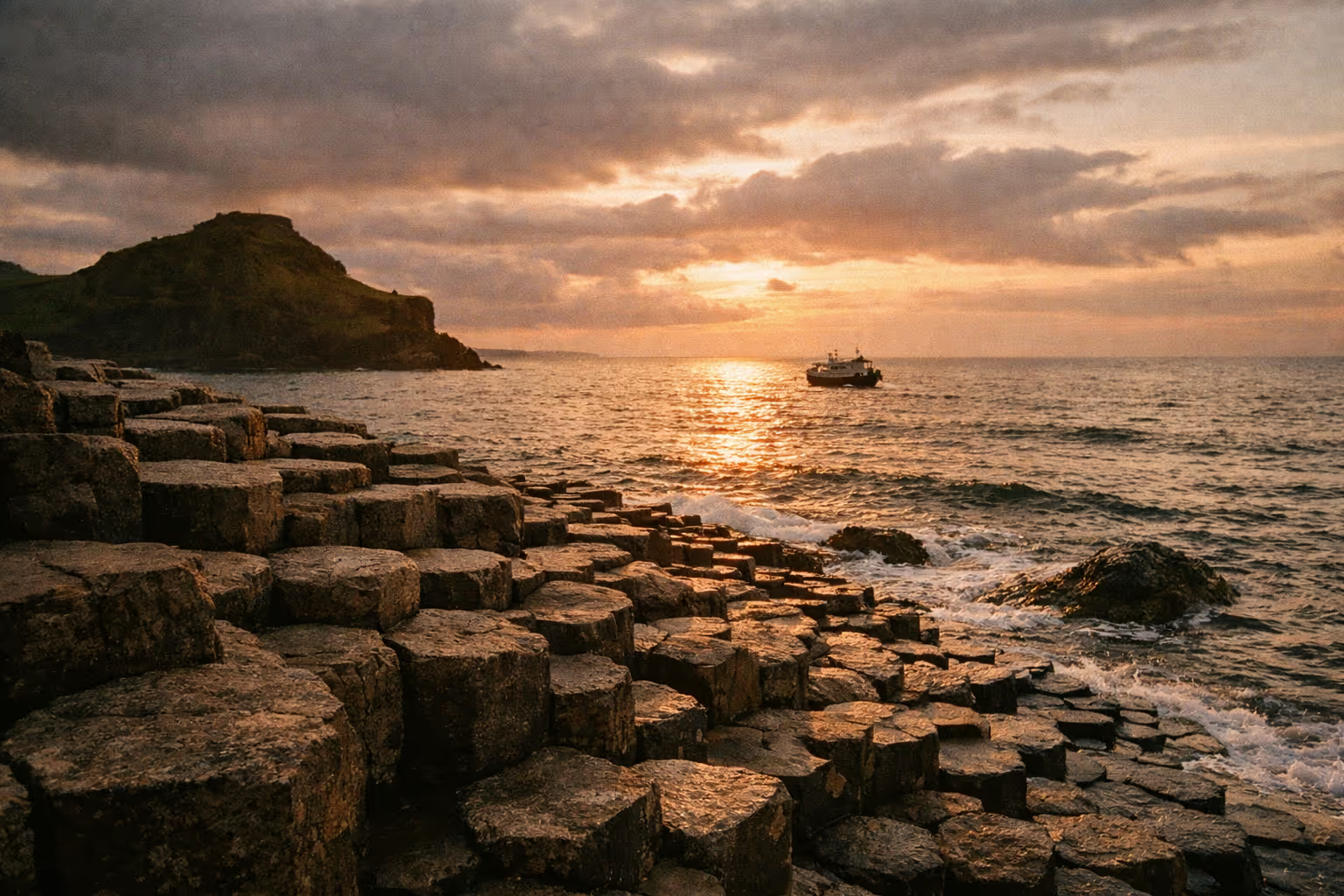
About 60 million years ago, a lava flow along the north Antrim coast cooled unevenly and cracked into roughly 40,000 interlocking basalt columns, forming what is now known as the Giant’s Causeway. Today, those columns sit on a public right of way, which means you can walk straight onto the Giant’s Causeway without paying a penny (5). What you do pay for is parking, the visitor centre exhibition, and the audio guide - not the rocks themselves. That detail surprises most first-time visitors, and it changes how you should plan your trip.
This guide walks you through the geology, what to do once you’re there, how to combine the visit with Carrick-a-Rede Rope Bridge, when to arrive to avoid the crowds, and how to get there from Belfast without losing half your day stuck in a parking queue.
✓ Pros
- Free access to the basalt columns themselves (public right of way)
- UNESCO World Heritage Site with genuinely unusual geology
- Easy to combine with Carrick-a-Rede and other coastal stops in a single day
- Extended summer hours allow early/late visits with fewer crowds
- Audio guide included with visitor centre ticket adds real context
✗ Cons
- Peak hours (11:00-15:00 in summer) can be extremely crowded - over 1 million visitors in peak years
- Exposed Atlantic coast: wind, rain, and slippery rocks are the norm, not the exception
- Visitor centre and parking require a ticket; the free-access approach needs advance planning
- Carrick-a-Rede tickets sell out hours ahead in summer - must book online
- Conservation issues: coin-jamming damage has forced staff to cordon off sections
What Makes the Giant’s Causeway Worth the Trip
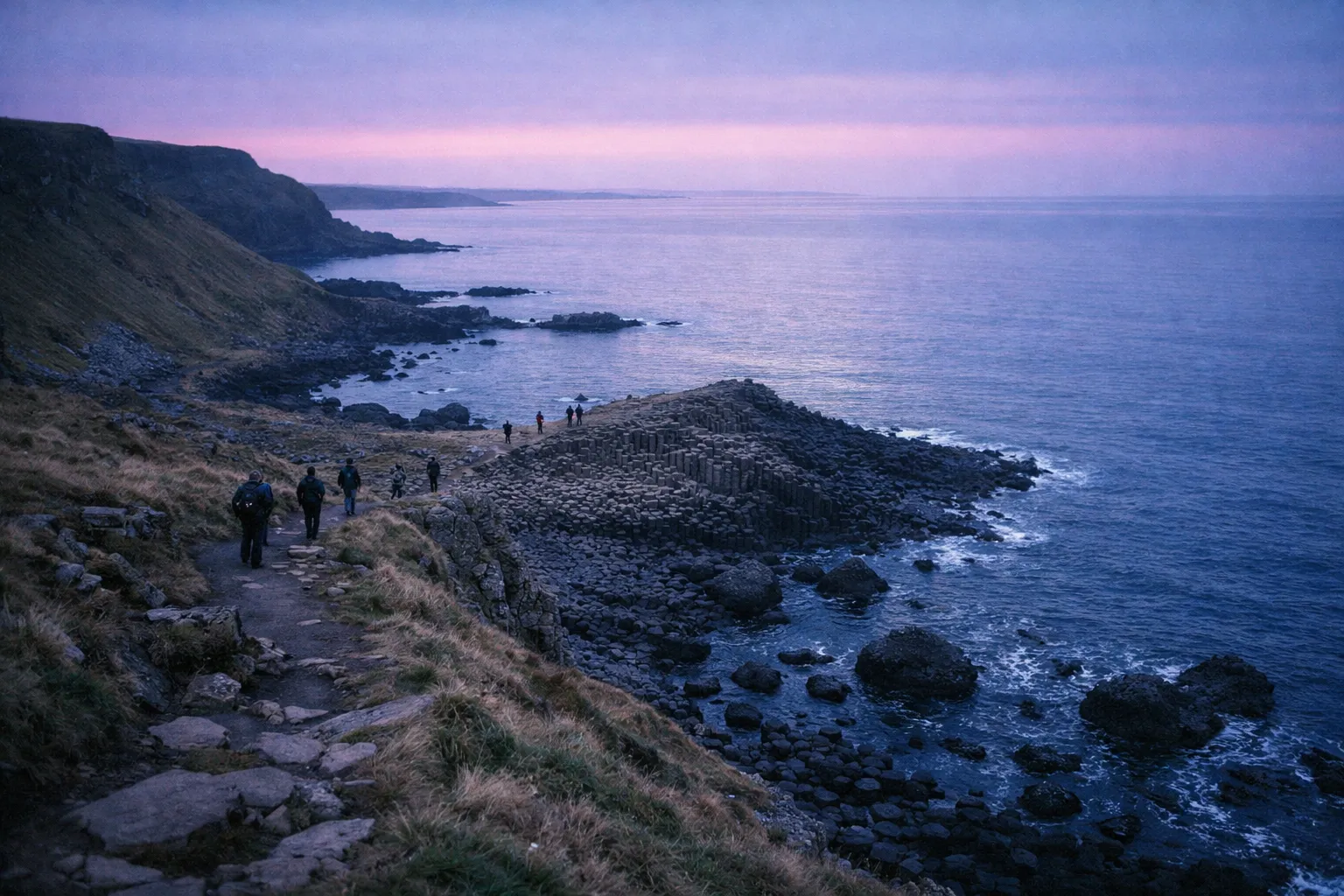
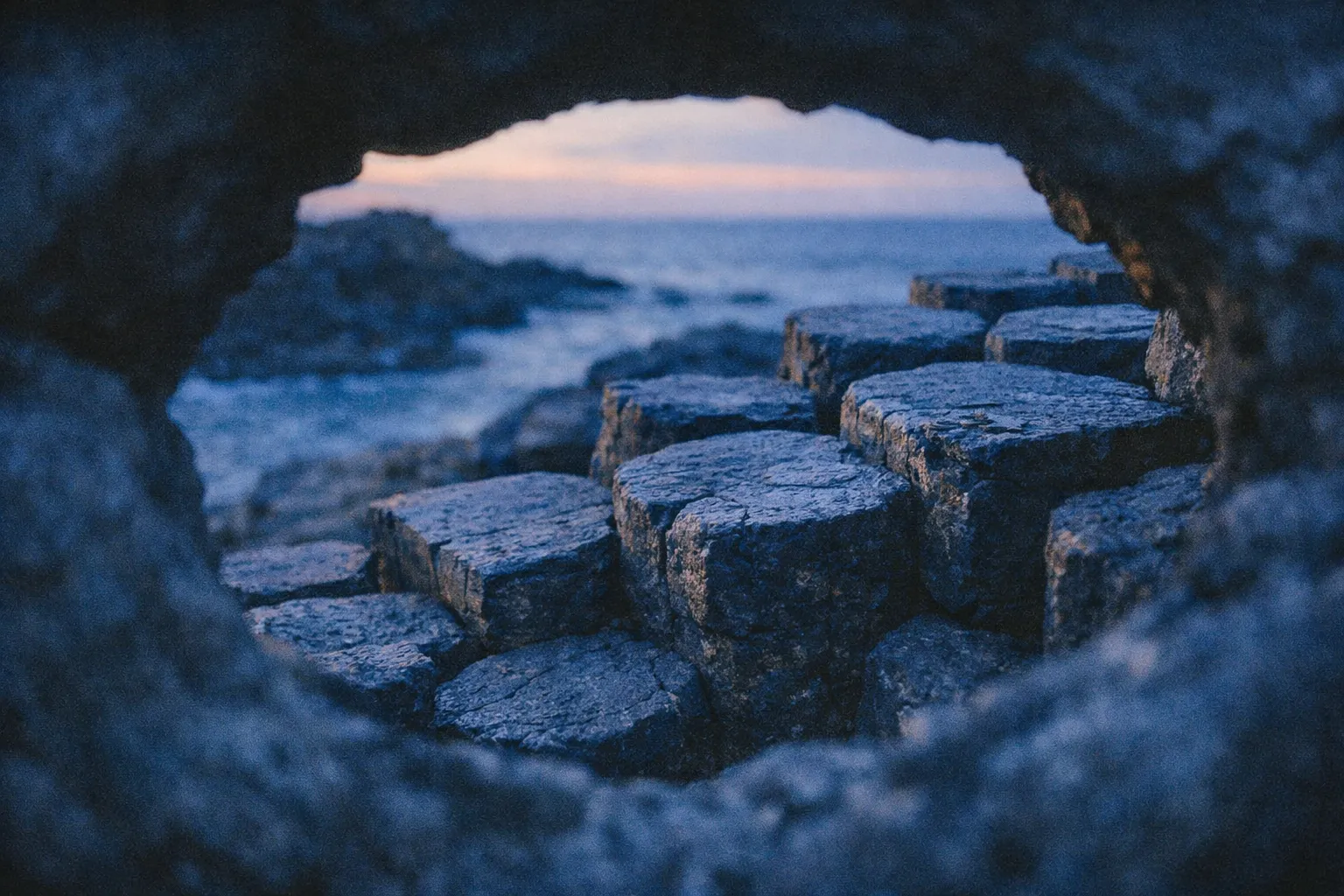
The Giant’s Causeway stands out because about 40,000 basalt columns - most near-perfect hexagons - are packed tightly together at the water’s edge in a formation you won’t find replicated at this scale anywhere else in Europe (5). It’s not a polished tourist attraction; it’s raw geology you can stand on.
The geology in plain terms
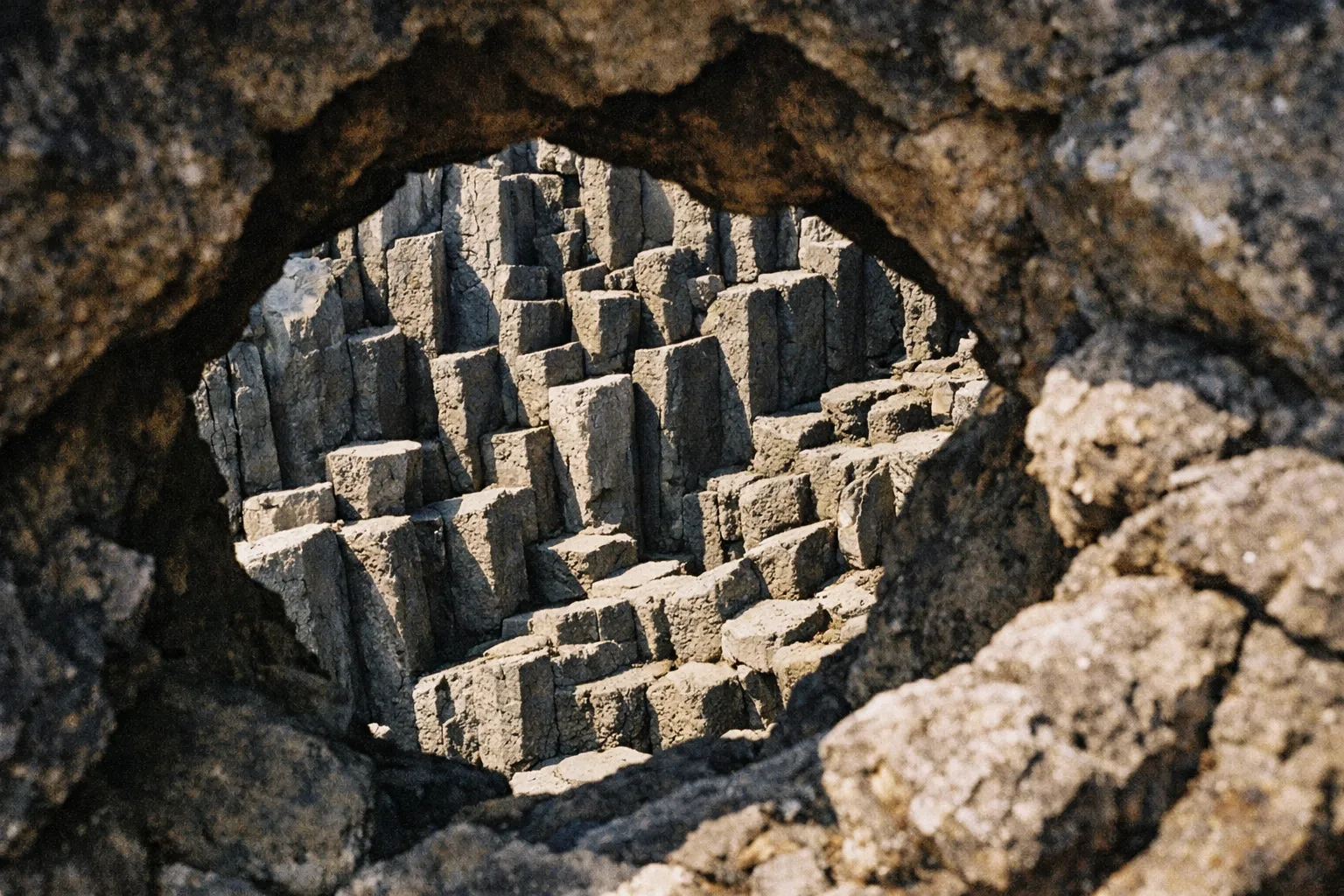
Around 60 million years ago, molten basalt lava pushed up through chalk beds here and pooled on the surface. As this thick lava cooled, it contracted and cracked. The physics is the same as drying mud, just on a much longer timescale and in three dimensions. Slow, even cooling tends to crack a sheet of rock into hexagons because that shape releases internal stress most efficiently. That’s why the columns are mostly six-sided, though some have four, five, or seven sides. The result is a tightly interlocking pavement that runs down into the sea.
UNESCO inscribed the Giant’s Causeway and Causeway Coast as a World Heritage Site in 1986, recognizing its importance for understanding Earth’s geological history (4)(5). That designation means the site is protected and actively conserved, which explains why staff take things like coin-jamming and rock damage seriously.
The Finn McCool story
The name comes from folklore, not science. The legend says the Irish giant Finn McCool built a causeway across the sea to Scotland to fight a rival giant, Benandonner. When Finn realizes Benandonner is much bigger than expected, his wife disguises him as a baby. The Scottish giant, seeing the size of the “infant,” panics and flees home, tearing up the causeway behind him. The columns are what’s left. The story sticks partly because it’s fun and partly because there’s a geological cousin - Fingal’s Cave on the Scottish island of Staffa - made of the same basalt formation. The visitor centre audio guide mixes the legend with geology, and it’s worth a listen even if you came just for the rocks.
Visitor numbers are climbing back toward the pre-pandemic peak of nearly a million, with about 684,000 recorded in 2024 and expectations of 700,000-plus in 2025 (2)(7). The nearby Carrick-a-Rede Rope Bridge is the usual pairing and gets its own section below.
Tickets, Free Access, and What You Actually Need to Pay For
Yes, you can see the Giant’s Causeway without paying. Pedestrian access to the basalt columns is free, since they sit on a public right of way. The National Trust charges a “visitor experience” fee that covers parking, the exhibition, the handheld audio guide, and orientation leaflets. It does not cover the rocks themselves. Walk in on foot, and the columns cost nothing.
Currently, standard admission to the visitor experience runs £9.00 per adult, £4.50 per child, and £22 per family, with National Trust members admitted free. Booking online ahead knocks £1.50 off an adult ticket and £3.50 off a family ticket. In US dollars, other references put the visitor centre and parking around $18-25 per adult based on mid-2025 rates - good for rough budgeting, but check the National Trust site for current prices before you go.
If you plan to visit several Trust sites, National Trust membership (about £80 a year) pays for itself quickly - it covers Giant’s Causeway parking and Carrick-a-Rede entry outright.
The free-access route: what it involves
To see the columns for free, park off-site and walk in. The Bushmills Park-and-Ride “Green Ticket” bundles the return shuttle fare with visitor experience access, listed at around £12 per adult and £6 per child. If you want the columns without paying any facility fee, the National Trust’s Causeway Coast Way Car Park at Innisfree Farm (60 Causeway Road) charges £12 per vehicle for walkers accessing the coastal paths; Trust members park there free via the app.
The trade-off is clear: parking off-site and walking the coastal path gets you the same view of the same rocks, but you skip the exhibition and audio guide. If you want context, pay for the centre. If you just want to stand on the columns, the free route works fine.
The Basalt Columns Up Close: What to Expect on the Ground
The walk from the visitor centre down to the main causeway is roughly 1 km each way on a paved road, and the National Trust reports most visitors spend about two hours on site (10). That’s a fair baseline; keen photographers or anyone walking the cliff-top trail should budget three hours or more.
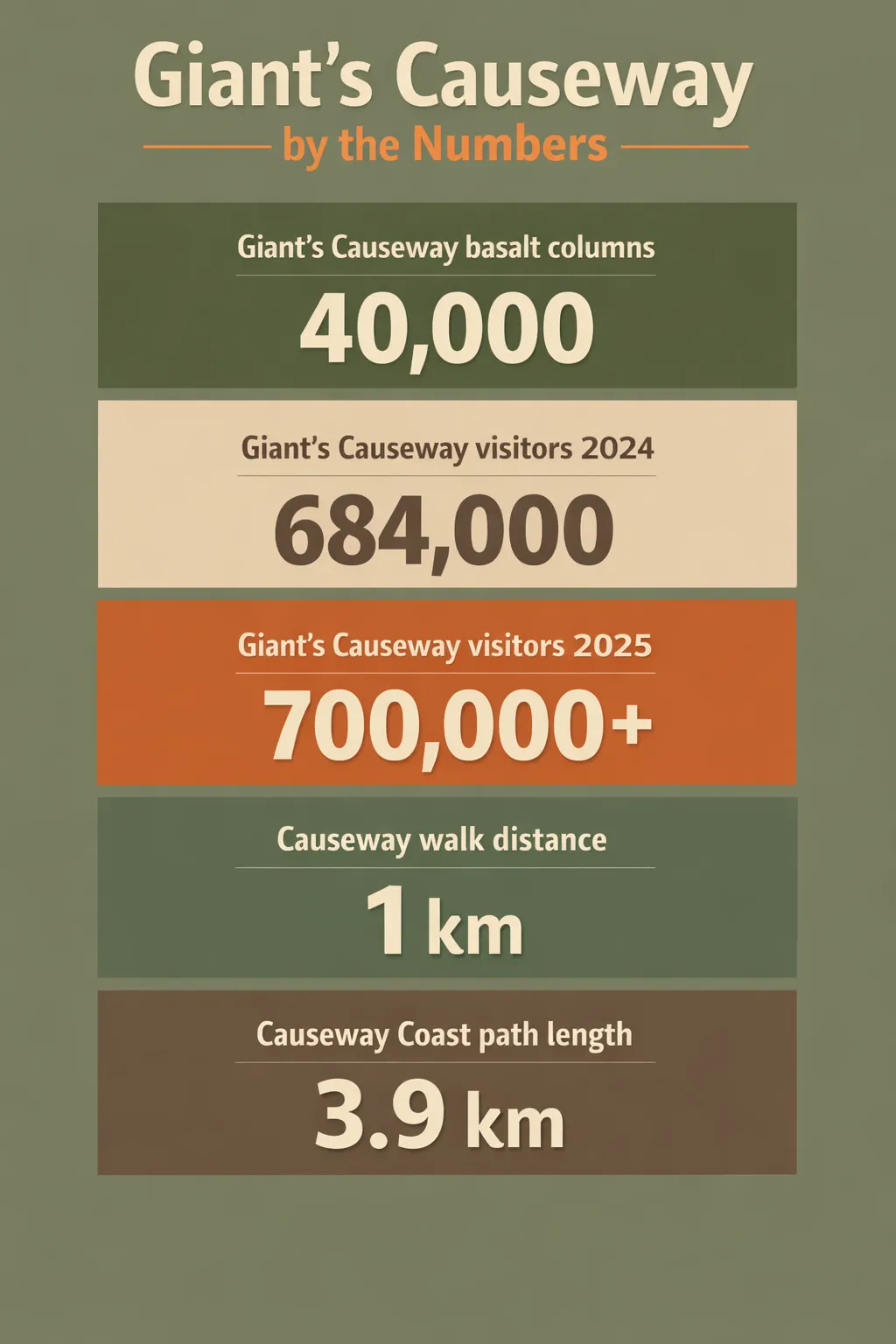 Giant’s Causeway had 684,000 visitors in 2024, with about 40,000 basalt columns; the walk is 1 km each way and the full coast path is 3.9 km, with a forecast of 700,000+ visitors in 2025.
The walk down: distance, terrain, and the return climb
Here’s something most guides skip: the walk in is downhill, which means the walk back is uphill. It’s not brutal, but after two hours clambering over rock with the weather turning, that final climb registers. The full Causeway Coast path option runs 2.4 miles (3.9 km) with about 150 ft (50 m) of ascent, so the cliff-top route is a proper walk, not a stroll.
If you’d rather not walk the road, a shuttle bus runs from the visitor centre down to the stones and back. It’s the sensible choice for anyone with mobility limits, tired kids, or a tight schedule.
On the stones, the terrain is uneven basalt with no handrails. Wet rock is genuinely slippery - this is the top complaint from underprepared visitors. Sturdy shoes with grip are non-negotiable. Trainers are borderline; flip-flops are a bad idea. And because this is a fully exposed Atlantic headland, windproof and waterproof layers matter regardless of the morning forecast.
Key formations to look for
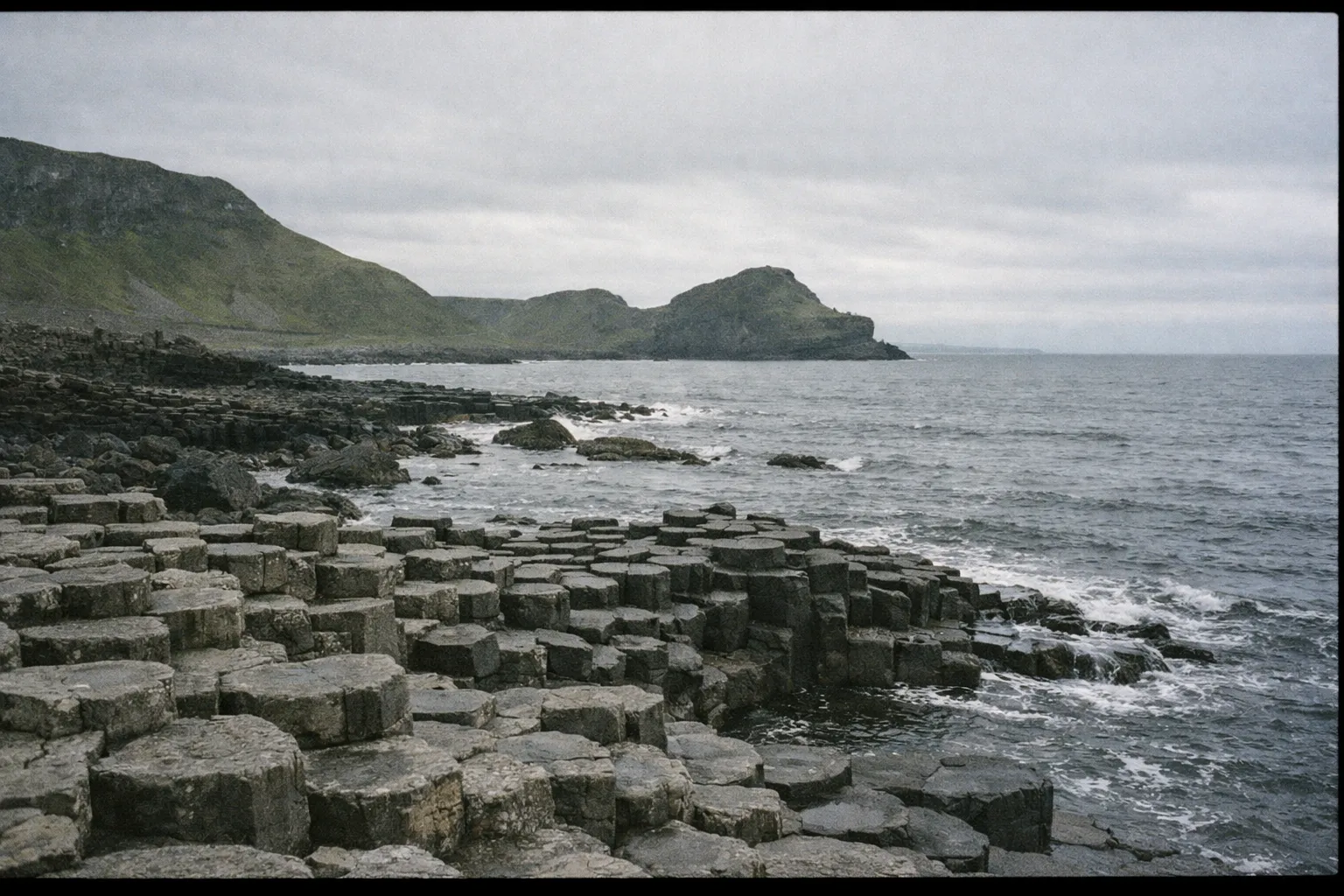
The main attraction is the Grand Causeway, the largest of the three column sections, stepping down into the water. From the cliff-top path, look for the Organ - a run of tall vertical columns pressed against the cliff face that genuinely resemble organ pipes. The Giant’s Boot, a boot-shaped rock near the shore, ties neatly into the Finn McCool legend and is a popular photo stop.
One area to treat carefully is the Wishing Well, where visitors have jammed coins into natural cracks. The metal expands and rusts, splitting and staining the rock. In 2025, the damage prompted BBC coverage and forced staff to cordon off sections (2)(9). Don’t add to it. Don’t wedge coins anywhere on the site, and respect any roped-off areas you see.
Carrick-a-Rede Rope Bridge: The Other Stop You Shouldn’t Skip
Carrick-a-Rede Rope Bridge, near Ballintoy, spans a chasm between the mainland and a small island. It’s the most common pairing with the Giant’s Causeway - the two sites are only about 10-15 minutes apart by car. Like the Causeway, it’s National Trust-managed but requires a separate ticket. The draw is the crossing itself plus coastal scenery: on a clear day, you can see Rathlin Island and Scotland.
Currently, the bridge operates 09:00-16:30 daily, though hours shift seasonally and for maintenance - check before you go (6). It welcomed over 450,000 visitors in a recent year and can handle more than 2,000 people a day in peak season, which is why booking matters.
Booking Carrick-a-Rede in summer: why it matters and how to do it
The National Trust uses timed one-hour slots to manage crowds, and in high season those sell out hours ahead on busy days. Book online well before your visit - not the morning of. Between June and September, treat “book the moment you have a date” as a rule.
Ticket prices run about £13.00 for adults, £6.50 for children (ages 5-17), and £32.50 for families, with National Trust members crossing free. US-dollar references put it in the same $18-25 per adult range as the Causeway visitor experience for mid-2025 budgeting. Walking the footpath to the bridge is free; you only pay to cross.
What the crossing is actually like
From the car park, it’s about a 1 km signed footpath to the bridge, along a cliff edge with wide coastal views that make you stop walking. The bridge hangs over roughly a 30-metre drop and sways underfoot. It’s short and safe, but if you have a real fear of heights, you’ll notice - and there’s a queue system, so backing out mid-crossing isn’t practical. On the far side, the small island has a few paths and a former salmon fishery cottage worth 20-30 minutes of exploring. Anyone height-sensitive can skip the crossing entirely and still enjoy the walk out for the scenery.
A typical pace is half a day at the Causeway, then 1-2 hours at Carrick-a-Rede including the walk each way.
Getting to Giant’s Causeway: By Car, Bus, and Guided Tour
The Giant’s Causeway sits near Bushmills in County Antrim, on the Causeway Coastal Route, roughly 90 minutes to two hours from Belfast depending on your route (5). There are three main ways to get there, and the best one depends on whether you want flexibility, budget savings, or a stress-free day.
Driving the Causeway Coastal Route: what to know before you go
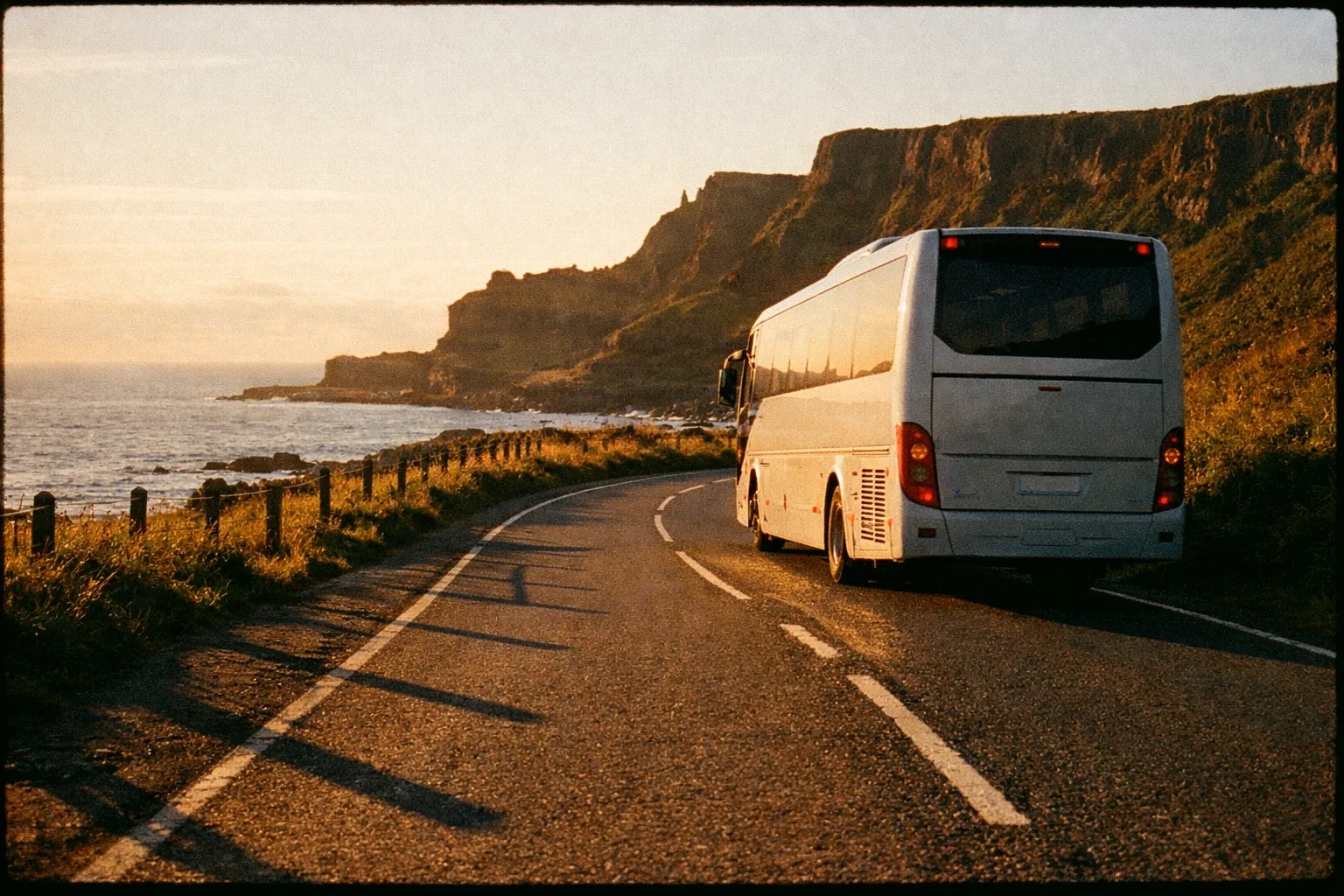
Driving gives you the most flexibility and makes it easy to link the Causeway with Carrick-a-Rede. Belfast to the Causeway along the scenic coast is about 79 miles and 2¼ hours; the direct inland return via Ballymena is about 60 miles and 1¼ hours. The full Causeway Coastal Route runs roughly 120 miles (195 km) between Belfast and Derry~Londonderry and takes 3½-4 hours to drive straight through without stops.
That last figure is the trap. The route is a full day of stops, not a transit corridor. Doing the whole thing in one day takes 10-12 hours and feels rushed. Splitting it over two days with a base in Portrush - about 90 miles and 1-2 hours from Belfast - is the better call. Portrush is roughly 20 minutes from the Causeway and the most practical coastal base.
On costs: car rental runs roughly $45-80 per day, with automatics often over $90; budget $10-25 a day for parking at major stops. Remember you’ll be driving on the left. Park at the visitor centre, use the Bushmills park-and-ride, or the Innisfree Farm car park if you’re walking in free.
Getting there by public transport
If you’re not driving, regional buses connect Belfast and the Coleraine/Ballycastle area to the Giant’s Causeway stop. The train from Belfast to Portrush takes about 1.5-2 hours, with return tickets around $15-25 booked in advance. From Portrush, it’s a short bus or taxi onward. This is the budget-friendly route and fine for solo travellers, but reaching Carrick-a-Rede by public transport takes planning - the connections aren’t frequent.
Guided tours vs. self-drive: the honest trade-off
Full-day guided tours from Belfast typically bundle the Giant’s Causeway, Carrick-a-Rede, the Dark Hedges, and Dunluce Castle, running roughly 08:00-19:00 and costing around $60-100 per person (3). They remove all parking and routing stress, which is a real benefit if you don’t want to drive on the left or fight for parking in July. The trade-off is a fixed schedule and roughly two hours at each stop - fine for a first look, frustrating if you want to linger for photos.
Here’s the honest comparison: By car, you get full flexibility, easy movement between sites, and a journey time around 90 minutes from Belfast - but you’ll pay $45-80 a day plus fuel and parking, and peak-season parking can be a hassle. By public transport, you spend the least (about $15-25 for train and bus) with no parking stress, but the journey takes 2-2.5 hours and Carrick-a-Rede requires extra planning; best for budget and solo travellers. By guided tour, you pay $60-100 per person for a coach that handles everything including Carrick-a-Rede, on a fixed schedule - best for first-timers and those avoiding driving. Couples and families doing a multi-stop day usually choose the car; nervous drivers and first-timers usually pick the tour.
Getting to Giant's Causeway: Access Methods Compared
| By Car | By Public Transport | By Guided Tour | |
|---|---|---|---|
| Flexibility | Full | Limited | Fixed schedule |
| Cost (approx.) | $45-80/day rental + fuel + parking | $15-25 train + bus fare | $60-100/person |
| Journey Time from Belfast | about 90 min | about 2-2.5 hrs | about 90 min (coach) |
| Carrick-a-Rede Access | Easy - drive between sites | Requires planning | Usually included |
| Best For | Couples/families, multi-stop days | Budget travelers, solo visitors | First-timers, those avoiding driving |
| Parking Stress | Moderate in peak season | None | None |
When to Visit and How to Beat the Crowds
The best way to see the Giant’s Causeway with room to move is to arrive before 11:00 or after 15:00 in summer. Peak crowds fall squarely between those hours when the tour coaches dominate. That timing decision does more for your visit than anything else.
The visitor centre extends its hours through summer, so arriving at opening or late afternoon gives you space on the rocks and better light for photos - check the National Trust site for current seasonal hours before you go (8). Winter hours are shorter, with fewer visitors and a quieter, wilder character - but colder, wetter conditions and limited daylight compress your window (8). Ticket sales at the visitor centre typically end an hour before closing, so don’t cut a winter afternoon too fine.
The shoulder seasons - March to May and October - are the practical sweet spot: reasonable weather, manageable crowds, and full opening hours. One accessible-travel guide pins the quietest window as weekday mornings between 09:30 and 12:00, which lines up with the general advice to beat the coaches.
Early morning and late evening visits in summer
Because the columns sit on a public right of way, the site itself is accessible dawn to dusk even when the visitor centre is closed. That opens a real option in summer: walk in early before the centre opens and have the Grand Causeway almost to yourself in soft morning light. Late evening works the same way. You lose the exhibition and audio guide and will need to sort parking off-site or at Innisfree Farm, but for photographers the empty rocks are worth it.
One current caveat: the 2025 coin-jamming damage led to sections being cordoned off (2)(9). Check the National Trust site for any active closures before you go, especially if there’s been a recent rockfall.
What Else Is on the Causeway Coastal Route
The Causeway Coastal Route packs several worthwhile stops within a short drive of the Giant’s Causeway, but they’re not all equal - some are half-day excursions, others ten-minute photo stops. Here’s how to rank them.
Dunluce Castle is the strongest add-on: dramatic clifftop ruins a few kilometres west of the Causeway, worth a proper stop for the setting and sunset light. Not a full excursion, but more than a photo.
Old Bushmills Distillery sits just a few kilometres from the Causeway and is the obvious cultural pairing for a half-day - tours run regularly, and it’s a natural indoor option when the weather turns. If you like whiskey, prioritize it.
The Dark Hedges - the beech-tree avenue made famous by Game of Thrones - is about 12 miles from the Causeway and strictly a photo stop, not a destination. It’s a 1 km lane; five minutes tells you if you’ve got your shot. Go before 10:00 or after 16:00 to avoid coach crowds, and note that on-site parking near the Hedges Hotel can cost around €5 unless you spend at the restaurant.
Ballintoy Harbour, about 10 minutes from Carrick-a-Rede, is a small fishing harbour worth 20 minutes if you’re already in the area - a quiet counterpoint to busier sites.
Portrush works best as a base rather than an attraction: a resort town with beaches on both sides, restaurants, good transport links, and Royal Portrush Golf Club, which hosted the Open Championship. It’s about 20 minutes from the Causeway and the most practical place to sleep on the coast.
Be realistic about pacing. One coastal overview describes the full drive as 185 km and suggests most travellers spend two to four days on it. Trying to fit the Causeway, Carrick-a-Rede, Dark Hedges, and Bushmills into one day works, but it’s a long day. Two days with a Portrush or Bushmills base lets you enjoy the sites instead of speed-running through them.
Practical Tips Before You Go
A few decisions made in advance separate a good visit from a cold, wet, queue-bound one. Footwear and booking matter most.
- Footwear: Sturdy shoes with grippy soles. The basalt is uneven and slippery when wet, which is most of the time. Trainers are marginal; flip-flops are a bad idea.
- Clothing: Windproof and waterproof layers. This is an exposed Atlantic headland and the weather changes fast - a real rain jacket, not a fashion one.
- Booking: Pre-book visitor centre tickets online for the better rate. Book Carrick-a-Rede timed slots well ahead in summer - weeks, not the morning of.
- Conservation: Don’t jam coins into rock crevices or remove any material from the site. Respect cordoned-off areas (2)(9).
- Accessibility: The visitor centre is accessible; the causeway itself is uneven. The shuttle bus cuts the walking distance dramatically, and the National Trust publishes accessibility details on its site.
- Dogs: Allowed on coastal paths but check National Trust guidance for any restrictions. Keep them on a lead near cliffs and the columns.
- Photography: Extended summer hours mean early morning and late evening are best. The cliff-top path above the columns offers wider compositions than standing on the stones.
How to Plan a Giant's Causeway Day Trip
About 6 hoursStep-by-step planning for a smooth visit including transport, tickets, and timing.
- 1
Choose your access method
Decide between car, bus, or guided tour and book your transport in advance.
- 2
Book visitor centre tickets
Reserve National Trust visitor experience tickets online for the best rates.
- 3
Reserve Carrick-a-Rede timed slots
Book your rope bridge crossing well ahead in summer to avoid sell-outs.
- 4
Plan your arrival time
Aim to arrive before 11:00 or after 15:00 in summer to avoid peak crowds.
- 5
Pack appropriate gear
Bring waterproof, windproof layers and sturdy shoes with good grip.
- 6
Explore the Causeway
Walk down (about 1 km), spend time on the columns, and take the cliff-top path back.
- 7
Visit Carrick-a-Rede
Drive or shuttle 10-15 minutes and allow 1-2 hours including the walk to the bridge.
- 8
Consider add-ons
Add Bushmills Distillery, Dunluce Castle, or Dark Hedges if time allows.
Frequently Asked Questions
Frequently Asked Questions
- What is the best way to see Giant's Causeway?
- Arrive before 11:00 or after 15:00 in summer to avoid peak crowds. Drive or take a guided tour from Belfast; book visitor centre tickets online in advance. Allow at least 2 hours on site, more if you plan to walk the cliff-top path. The audio guide included with the visitor centre ticket adds genuine context.
- Can you see Giant's Causeway without paying?
- Yes. The basalt columns sit on a public right of way, so access is free. The National Trust ticket covers the visitor centre exhibition, audio guide, and car parking - not the rocks themselves. Park off-site (e.g., in Bushmills) and walk the coastal path to reach the columns for free.
- What is so special about Giant's Causeway?
- Around 40,000 interlocking basalt columns, mostly hexagonal, formed when ancient lava flows cooled and contracted evenly. The regularity of the shapes - and the sheer scale of the formation at the water's edge - is what makes it visually unlike almost anywhere else. It's a UNESCO World Heritage Site for good reason.
- How long is the walk down to Giant's Causeway?
- From the visitor centre, it's approximately 1 km each way - mostly downhill going in, which means uphill on the return. Budget 20-30 minutes walking each way at a relaxed pace, plus time on the causeway itself. A shuttle bus is available from the visitor centre for those who prefer not to walk.
- Do you need to book Carrick-a-Rede Rope Bridge in advance?
- Yes, especially between June and September. Timed slots sell out hours ahead on busy days. Book online through the National Trust before you arrive - not the morning of your visit.
- What should I wear to Giant's Causeway?
- Sturdy shoes with grip - the basalt is uneven and slippery when wet. A windproof, waterproof jacket is essential; the site is fully exposed to Atlantic weather and conditions change quickly regardless of the forecast.
- Is Giant's Causeway worth visiting in winter?
- Yes, if you're comfortable with cold and wet conditions. Visitor numbers drop significantly between November and February, and the site has a different, quieter character. Hours are reduced (09:00-17:00), so plan accordingly and arrive early.
Plan the Timing and Book Carrick-a-Rede: Everything Else Falls Into Place
Two decisions determine whether your visit works. First, when you arrive: before 11:00 or after 15:00 in summer, and you’ll have space on the rocks and better light instead of a coach-park crush. Second, whether you’ve booked Carrick-a-Rede - because in peak season those timed slots sell out hours ahead, and you can’t just show up.
Everything else is easier than it looks. The columns themselves are free, so the real barriers are logistics and weather - both of which you can plan for. The Causeway Coastal Route deserves a slower pace; one day is doable but tight, while two days with a base in Portrush or Bushmills lets you actually enjoy both headline sites instead of sprinting between them.
Before you go, check the National Trust site for current ticket prices, opening hours, and any active closures from recent rockfalls or conservation work. Book Carrick-a-Rede as soon as your dates are fixed, and pack a proper waterproof jacket. The Atlantic storms here don’t wait.