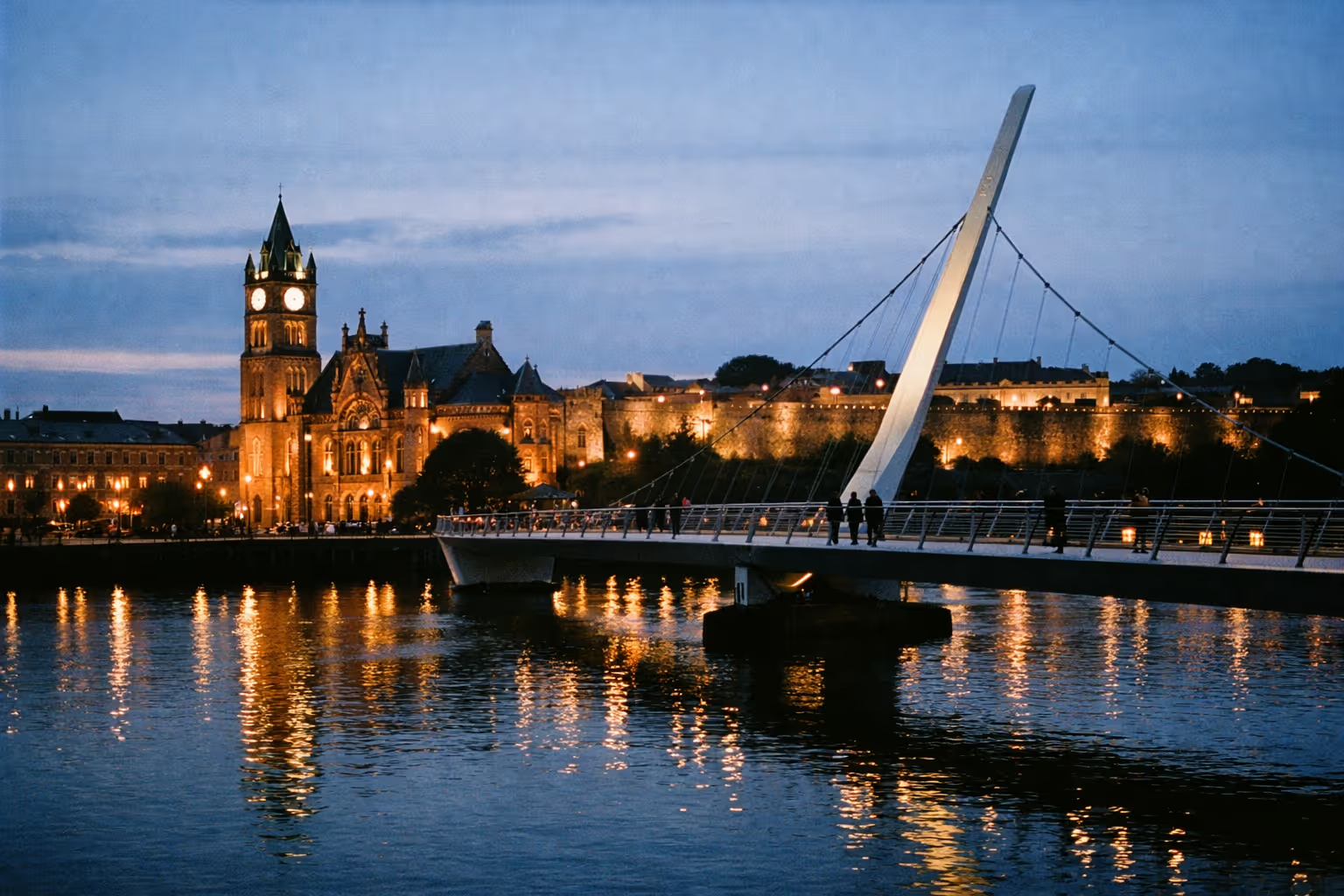
You can walk the full circuit of a 400-year-old, still-intact city wall in under an hour, for free, and still have a full day of history ahead of you. That’s the short version of things to do in Derry: the walls, the Bogside, the Peace Bridge, and the Guildhall all sit within a compact, walkable core on the River Foyle, and most of them cost nothing to see. Officially it’s Derry~Londonderry, a naming split that reflects the city’s divided history; I’ll use “Derry” throughout for brevity. The city counted 85,279 people at the 2021 census (13), and it rewards a full day, ideally two, rather than a drive-through.
Things to Do in Derry, and Why It’s Worth a Day (or Two)
Derry is worth visiting, especially if you have any interest in recent history, political heritage, or the Derry Girls series, because it packs an unusual density of walkable, mostly free attractions into a small footprint. Everything in the historic core is within a few minutes’ walk of everything else. The Bogside sits downhill from the walls. The Peace Bridge is a short stroll from the Guildhall.
The value proposition is real. The city walls circuit, the Peace Bridge crossing, the Bogside murals, and entry to the Guildhall are all free. Derry also sits at the western end of the Causeway Coastal Route, which makes it a logical stop between Belfast and Donegal, though it holds up fine as a standalone city break too.
The city has moved on from its Troubles-era reputation without erasing it. The history is the reason to come, not a reason to stay away. One honest caveat: the itinerary here leans outdoors, so an October-to-March visit is more weather-dependent. The Guildhall and the museums make solid indoor fallbacks when the rain sets in.
✓ Pros
- Mostly free attractions including the city walls and murals
- Compact and genuinely walkable city center
- Dense, layered history from 17th century to recent Troubles
- Good base for wider Northern Ireland and Donegal day trips
✗ Cons
- Outdoor-focused itinerary is weather-dependent October to March
- St Columb's Cathedral has reduced winter hours
- City walls have steps and uneven surfaces limiting accessibility
- Smaller city with limited options for a longer urban stay
Walking the 17th-Century City Walls: What to Know Before You Go
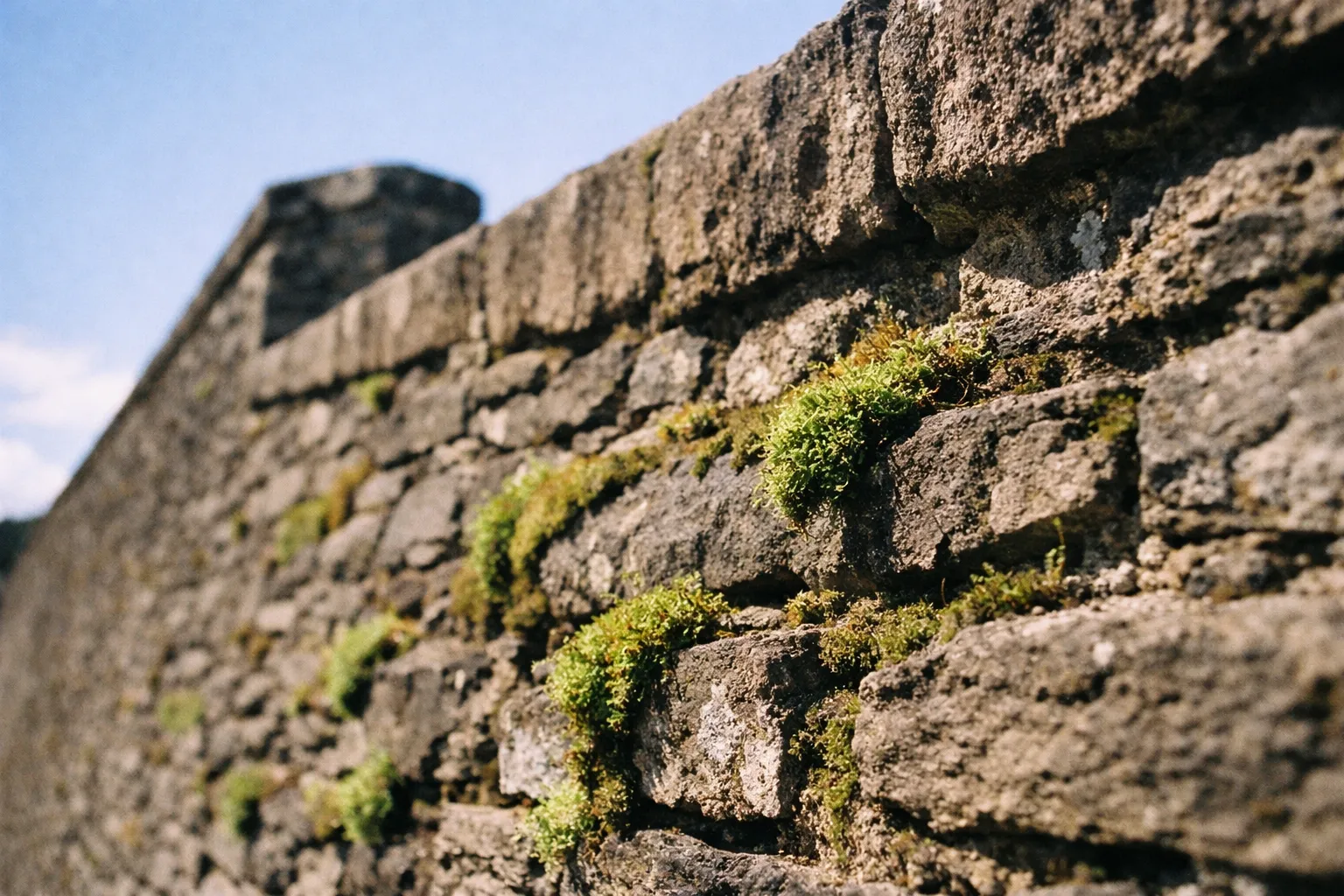
Derry’s city walls, built between 1613 and 1619, form a roughly 1-mile (1.6 km) circuit and are the only fully intact city walls in Ireland (13). The most common mistake visitors make is treating them as a quick photo stop. They’re the backbone of any visit, and they deserve real time.
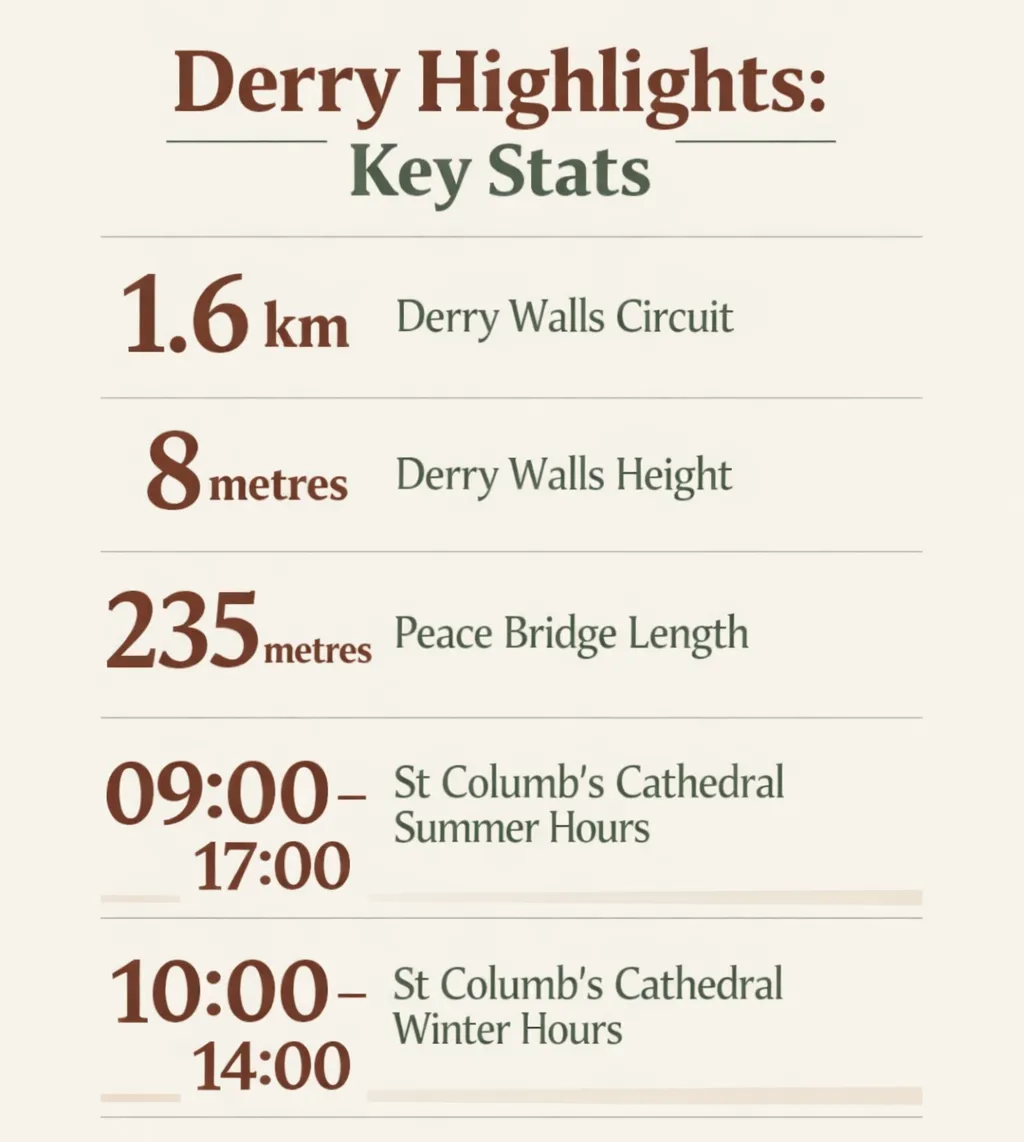 Core Derry sights and figures: 1.6 km walls circuit, 8 metres wall height, 235 m Peace Bridge, St Columb’s Cathedral hours 09:00-17:00 (summer) and 10:00-14:00 (winter).
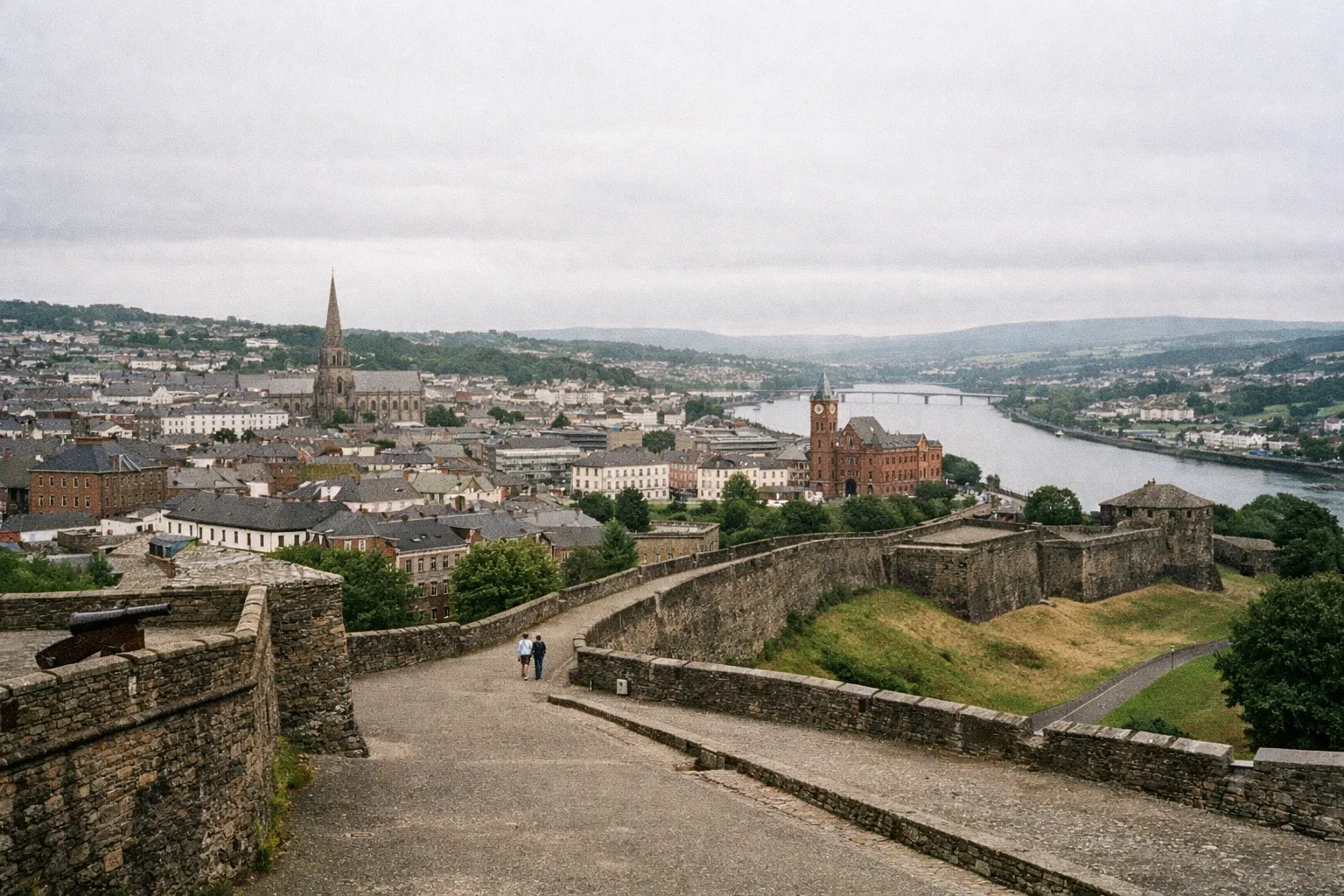
Allow 45 to 60 minutes at a relaxed pace with stops to read the information boards. The walls stand up to eight metres (26 feet) high (15), and the elevated bastions give you the best free views in the city. Look for the 24 restored cannons, including Roaring Meg, and the named gates, Shipquay Gate and Magazine Gate among them (15). Information boards along the route explain what you’re looking at.
One visitor review on a major travel review site sums up the appeal plainly: “Lovely 1 mile walk around the walls, it is free to go up and worth stopping to read the information boards as you go” (5).
A word on accessibility: the walls involve steps and inclines at several gates and are not fully wheelchair-accessible across every section. If mobility is a concern, you can still access parts of the rampart, but plan around the gate access points rather than assuming a continuous smooth loop. Walk during daylight for the views: the bastions offer the clearest sightlines over the walled city and across to the Bogside.
Guided vs. self-guided: which is worth it?
Self-guided is free and perfectly fine for casual visitors. The information boards cover the basic history at each gate and bastion, and you won’t feel lost. A guided tour earns its cost when you want the political and social context the boards don’t fully capture: the community divisions, the plantation history, the layers that made the walls matter to people living inside and outside them.
Multiple sources single out Derry Danders, run by David Douglas, as an informative and entertaining option for exactly that kind of context (8). If you have any interest in understanding present-day Derry rather than just the 17th-century fortifications, the guided walk is the upgrade to make.
Best time to visit. May and June are the strongest months for a Derry trip. Days are long, the outdoor sights (the walls, the Bogside, the Peace Bridge) are at their most accessible, and you avoid the wetter October-to-March window without hitting peak summer crowds. The city’s Halloween festival in late October is worth planning around if that’s your season, but go in knowing the weather is less reliable.
St Columb’s Cathedral: Visiting Hours, What’s Inside, and How to Plan Around It
St Columb’s Cathedral sits at 17 London Street, BT48 6RQ (18), inside the walls, which makes it an easy add-on to the wall circuit (11). Finished in 1633, it was the first cathedral built anywhere in Britain or Ireland after the Reformation, and its Planter’s Gothic spire is part of the walled city’s skyline.
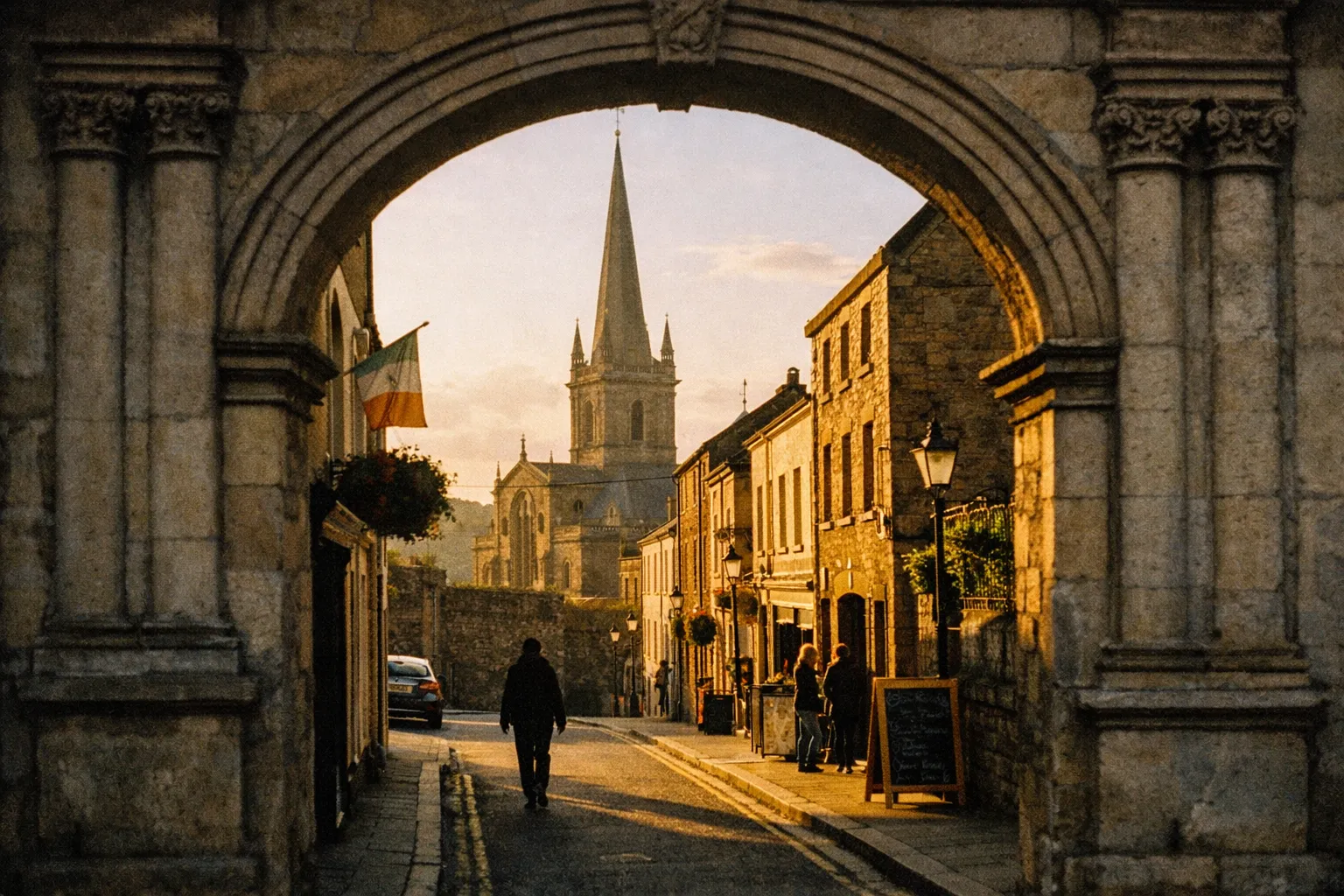
Inside, it functions as the single best place to make sense of the siege of 1688-89, because the objects that tell that story are still in the nave (11). This is an active Church of Ireland parish, so you’re visiting a working church rather than a museum set piece; the artefacts and the architecture are the draw.
The detail most guides skip is the seasonal opening hours, and getting this wrong is the most common planning trap in the city. From March to October, the cathedral is typically open to visitors Monday to Saturday, 09:00-17:00. From November to February, that window shrinks to 10:00-14:00, Monday to Saturday (11). Shoulder months can run shorter: Visit Derry’s listing for September 2026 shows 10:00-15:00 (19). It is closed to general visitors on Sundays, when worship services run (11).
The practical takeaway: if you’re visiting in winter, front-load the cathedral early in your day. A four-hour window that closes at 2pm catches a lot of people out, so don’t assume summer hours apply year-round. Entry is listed as free, with donations welcomed (11). The cathedral’s own website publishes no admission charge (18), and Visit Derry’s listing carries a “Book Tickets Online” button without quoting a price (19), so if you want a guided tour, which can carry a charge, ask the cathedral directly before you go. Combine it naturally with the wall walk, since the ramparts pass within easy reach of London Street.
The Bogside Murals, Free Derry Corner, and the Museum of Free Derry
A short walk downhill from the city walls brings you into the Bogside, the Catholic nationalist district that became a focal point of the civil rights movement and the Troubles, including Bloody Sunday in 1972 (2). This is not a decorative-mural neighbourhood. Approach it with the weight it deserves.
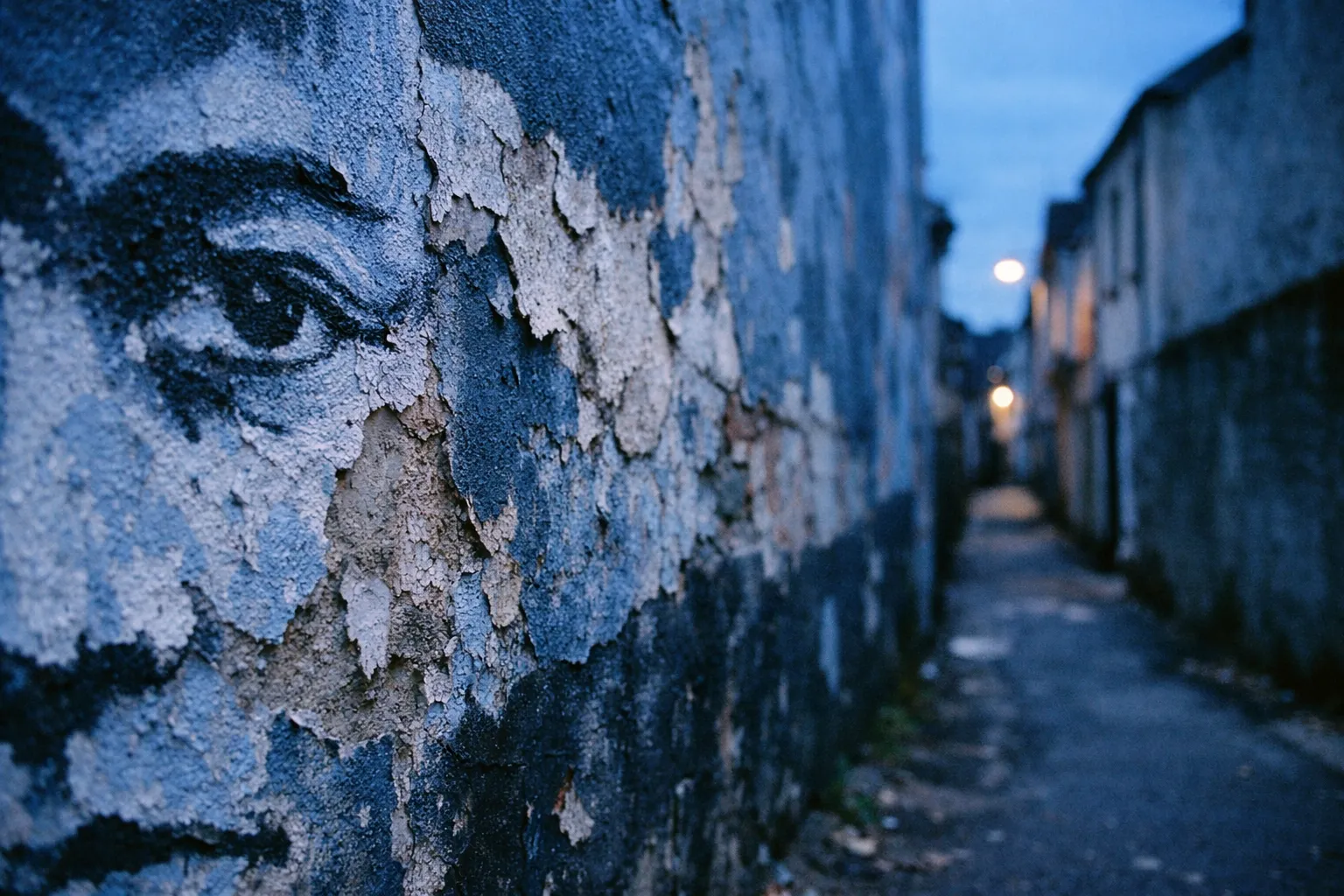
The large-scale political artworks here are centred on the People’s Gallery, a series sometimes referred to collectively as the Bogside murals. Key works depict Bloody Sunday, the Petrol Bomber, and other moments from the civil rights era. They’re large, they’re specific, and they commemorate events still within living memory for many residents.
Free Derry Corner is the fixed landmark of the district: the painted gable wall reading “You Are Now Entering Free Derry,” a marker of the area’s civil-rights history and a site that still matters to the local community. It sits on the same walking circuit as the murals, so you’ll pass it as part of a single Bogside loop.
The essential companion to the outdoor experience is the Museum of Free Derry, which supplies the context the street-level walk alone can’t. Admission is £10 for adults, with concessions of £8 (retired, low wage, disability), £7 (students) and £5 (local residents, carers) on the museum’s 2026 visitor information (16). Visit the museum before or after the murals, not instead of them. The two together are what make the visit land.
How to approach the murals respectfully
Go with context. The murals and Free Derry Corner mark real deaths and a contested political history, not a photo backdrop. The simplest way to get it right is to pair the walk with the Museum of Free Derry or a guided tour, so you understand what each mural commemorates before you raise a camera.
Photographing the murals is fine and expected. It’s the casual, context-free selfie at Free Derry Corner that reads as tone-deaf. A little background changes how you carry yourself through the area, and locals notice the difference.
The Peace Bridge and the Guildhall: Derry’s Modern Riverfront
The Peace Bridge, opened on 25 June 2011, is a 235-metre pedestrian and cycle bridge that links Ebrington Square with the city centre across the River Foyle (4). Together with the Guildhall on the near bank, it forms Derry’s modern civic riverfront, the peace-process counterpoint to the 17th-century walls uphill.
The crossing takes five to ten minutes on foot and gives you a clean 360-degree read on the city, which makes it a smart first stop for orientation. The bridge’s S-curve design is deliberate: two structural sweeps that meet in the middle, a physical metaphor for reaching across the divide. One Irish travel guide site calls it the bridge you want to do when you’re in Ireland (8).
The Guildhall, a red-brick late-Victorian civic building, stands at Guildhall Square beside the walls and the riverfront (13). Entry to the building is free, and inside you’ll find stained-glass windows and exhibitions including one on the Plantation of Ulster, the 17th-century colonisation that shaped the city and its walls.
Guided tours cost £3 per person. Visit Derry’s 2026 listing runs them at 11:00 and 14:00 (21), and Derry City and Strabane District Council’s own event listing for June 2026 gives the same £3 price (17). An older council visitor page still quotes £2 next to a COVID-era capacity notice; treat that figure as out of date. Tour times shift with the season, so confirm them at the Guildhall before you plan around one. The sequence most self-guided itineraries recommend: cross the Peace Bridge first for orientation, then double back to the Guildhall. Both are well-lit after dark, so they’re worth returning to for evening skyline shots.
Ebrington Square: worth crossing the bridge for?
Yes, for a short explore. The far bank of the Peace Bridge lands you at Ebrington Square, a former military barracks turned public space and events venue. It won’t fill an hour on its own, but it’s the reason to walk the full length of the bridge rather than turning back at the midpoint, and the view back toward the walled city from this side is the best free skyline shot you’ll get. Give it fifteen minutes, then head back over.
Derry Girls Filming Spots: Where the Show Was Actually Shot
Derry Girls, the Channel 4 and Netflix comedy set in 1990s Derry during the Troubles, has drawn a new wave of visitors chasing the show’s real-world locations. The good news for planning: most of the Derry Girls filming spots sit within the same walkable core as the walls and the Bogside, so you can fold a fan loop into a broader city walk without adding much time.
The city itself is the backdrop. The walls, the Bogside, and the wider streetscape all appear in the series, so simply walking the core route puts you in the show’s world. The single most popular dedicated stop is the large-format Derry Girls mural of the show’s cast, on the side of Badger’s Bar opposite the Foyleside shopping centre (20). It’s a fixture on self-guided routes.
Fans can also step into the show at The Derry Girls Experience, housed in the Tower Museum (4). For those who want structure and context rather than a self-guided wander, Visit Derry points to several Derry Girls screen walking tours built around the show’s most iconic filming locations (20). The tourism board gives the series its own dedicated section, which tells you how much weight the show now carries locally.
Museums Worth Adding to Your Itinerary
Derry’s two main museums split neatly by subject: the Tower Museum covers broad city history and the Spanish Armada, while the Museum of Free Derry covers the civil rights movement and Bloody Sunday. Which one you choose depends on what you came for.
The Tower Museum, a city-centre stop near the walls, works as a morning anchor before the wall walk: it gives you the long-view history of the city, from its origins through the Armada wreck material, in a way that sets up everything else you’ll see. The Museum of Free Derry, down in the Bogside, is the more focused option, built entirely around the Troubles and the events of Bloody Sunday, and it pairs directly with the outdoor murals (2).
Tower Museum vs. Museum of Free Derry
| Tower Museum | Museum of Free Derry | |
|---|---|---|
| Focus | City history, Spanish Armada | Civil rights movement, Bloody Sunday |
| Best For | Broad historical overview | Troubles-specific context |
| Admission | Check current rates directly | £10 adults / £5-£8 concessions (2026 price list) |
| Time Needed | about 1-1.5 hours | about 1-1.5 hours |
| Combine With | Wall walk, Guildhall | Bogside murals, Free Derry Corner |
If you only have time for one, the Museum of Free Derry is the more integrated choice: it completes the Bogside experience rather than standing apart from it. The Tower Museum is better as a morning anchor if you want the full sweep of city history before you start walking. Prices cited here are sourced and dated, so confirm current rates with each museum before visiting.
The Craft Village, Waterloo Street, and Everything Else Worth Your Time
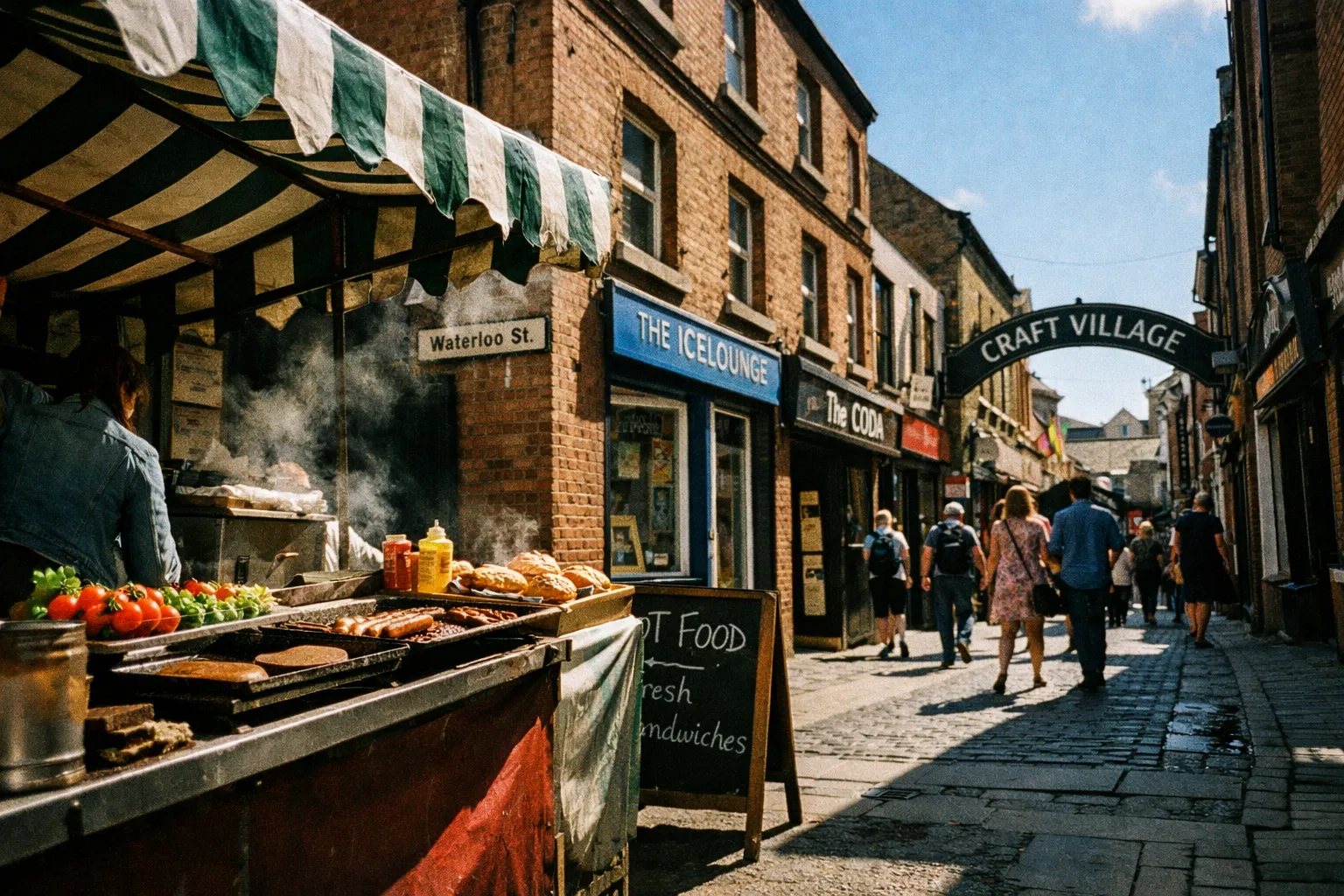
Once you’ve done the headline sights, a handful of smaller stops round out a full day. The Craft Village, a pedestrian area inside the walls, is a cluster of small independent shops and eateries that makes a natural mid-itinerary lunch stop (2). It’s not a destination in its own right, and it’s not a tourist trap either; treat it as a practical, pleasant pause between the wall walk and the afternoon’s history.
Waterloo Street is the city’s live-music corridor: a run of traditional pubs where the sessions kick off in the evening. After a day of heavy history, this is where the day naturally ends. Walk the street and follow the music.
St Eugene’s Cathedral, the Catholic counterpart to St Columb’s, sits north of the centre and is free to enter. It gets less coverage than St Columb’s but is worth a look if you’re in the area. Beyond the fixed sights, Derry runs a busy arts and festivals calendar (the city has built a reputation as one of Ireland’s best Halloween destinations, for one), so it’s worth checking Visit Derry’s “What’s On” listings for anything running during your dates. Use these smaller stops to pace a full day rather than sprinting between the major sites.
How to Spend a Day in Derry: A Self-Guided Route
How to Spend a Day in Derry
6 to 8 hoursA practical self-guided itinerary covering the main sights in 6 to 8 hours on foot.
- 1
Morning: Peace Bridge and orientation (30-45 min)
Start at the Peace Bridge and cross the 235 metres to Ebrington Square for river views and a spatial read on the city, then cross back. Low time cost, high orientation value.
- 2
Mid-morning: City walls circuit (60-90 min)
Join the walls at Shipquay Gate and walk the full 1-mile (1.6 km) circuit. Read the information boards. Don't rush this; it's the spine of the whole day.
- 3
Late morning: St Columb's Cathedral (30-45 min)
Drop in from the walls. Check the seasonal hours first: the winter window is only 10:00-14:00, and it's closed to tourists on Sundays.
- 4
Midday: Craft Village lunch (45-60 min)
Descend into the walled city for a relaxed lunch at one of the independent eateries.
- 5
Early afternoon: Guildhall (45-60 min)
Free entry, plus the Plantation of Ulster exhibition. Ask about the day's guided tour times (£3 per person) if you want one.
- 6
Mid-afternoon: Bogside murals and Free Derry Corner (60-90 min)
Walk down from the walls into the Bogside. Take time with each mural and visit the Museum of Free Derry for context.
- 7
Late afternoon: Derry Girls mural and filming spots (30-45 min)
Loop back through the city, find the cast mural, and walk the filming-location highlights.
- 8
Evening: Waterloo Street (open-ended)
Pubs, live music, dinner. The natural close to a full day.
On a budget, the walls, Peace Bridge, Bogside murals, Free Derry Corner, and Guildhall entry are all free. Add the Museum of Free Derry at £10 for adults (16) and a Guildhall guided tour at £3 per person (17), and you’re looking at around £13 per person for the paid attractions, a low bar for a full day.
Practical Things to Know Before You Visit Derry
Getting there. Derry sits at the western end of the Causeway Coastal Route, which runs roughly 120-130 miles between Belfast and Derry. It’s reachable by bus or train from Belfast and makes a natural stop on a Belfast-to-Donegal road trip.
Currency. Northern Ireland uses pound sterling (GBP), not euros, and US dollars are not accepted. Derry is a card-friendly city, but carry some cash for smaller pubs and venues where card readers can be unreliable. If you’re crossing the border from Donegal, note that the Republic uses euros, so you’ll be juggling two currencies on a cross-border trip.
Accessibility. The city walls involve steps and uneven surfaces at several gates, with height changes of up to 8 metres, so they’re not fully accessible at every section. The Peace Bridge, the Guildhall, and most museums are accessible, so build your route around those if mobility is a concern.
Seasonal hours. St Columb’s Cathedral’s winter hours (10:00-14:00, November-February) are the single most common planning trap. Check before you go, and front-load the cathedral in winter.
Weather. The major outdoor attractions are year-round, but October to March brings shorter days and wetter conditions. Keep the Guildhall and the museums in your back pocket as indoor fallbacks.
Time needed. One full day covers the core. Two days lets you slow down and adds room for a day trip out to the Causeway Coast or into Donegal.
Prices. Every price in this article is sourced and dated. Attractions change their rates, so verify current admission directly before you visit.
Frequently Asked Questions About Visiting Derry
Frequently Asked Questions
- How do I spend a day in Derry?
- Start at the Peace Bridge for orientation, then walk the full city walls circuit (allow an hour). Drop into St Columb's Cathedral, have lunch at the Craft Village, visit the Guildhall (free entry, guided tours for £3), then spend the afternoon in the Bogside with the murals and Museum of Free Derry. End the evening on Waterloo Street. The full loop is walkable and takes 6-8 hours.
- Is Derry worth visiting?
- Yes, particularly if you're interested in history, political heritage, or the Derry Girls series. Most major attractions are free, the city is compact and walkable, and the history is dense. One full day is minimum; two days is more comfortable.
- What are the main attractions in Derry?
- The city walls, the Guildhall, the Peace Bridge, the Bogside murals and Free Derry Corner, St Columb's Cathedral, the Tower Museum, and the Museum of Free Derry. The Derry Girls mural is a popular fan spot.
- Are the city walls free to walk?
- Yes. The full 1-mile circuit is free year-round. Guided tours cost extra but add valuable historical and political context.
- What are St Columb's Cathedral's opening hours?
- Typically 09:00-17:00 Monday-Saturday from March to October and 10:00-14:00 Monday-Saturday from November to February, though shoulder months can run shorter (Visit Derry listed 10:00-15:00 for September 2026). Closed to general visitors on Sundays, when worship services run. Always check current hours before visiting.
- Can I visit Derry on a budget?
- Easily. The walls, Peace Bridge, Bogside murals, Free Derry Corner, and Guildhall entry are free. Adding the Museum of Free Derry (£10 adults) and a Guildhall guided tour (£3) brings the paid total to around £13 per person for the day.
- Is Derry, Northern Ireland the same as Derry, PA?
- No. This guide covers Derry in Northern Ireland, a city of around 85,000 people on the River Foyle with a compact historic core built around 17th-century city walls, the Bogside, and the Peace Bridge. Derry, Pennsylvania is a separate borough in Westmoreland County, about 45 miles east of Pittsburgh, with no connection to the Northern Irish city beyond a shared name.
Final Word
Derry rewards slowing down. A single day handles the core: the walls, St Columb’s Cathedral, the Bogside, the Peace Bridge, and the Guildhall are all walkable in one loop, and most cost nothing. Two days gives you breathing room for the museums and a trip out to the coast or Donegal.
Before you go, check St Columb’s Cathedral’s seasonal hours. The winter 10:00-14:00 window is the mistake that catches most visitors, and the cathedral is closed to tourists on Sundays. For current events, tour bookings, and up-to-date admission prices, Visit Derry’s official site is the place to start.
What sets Derry apart from a standard heritage city is that its history is recent enough to still carry weight. The walls are 400 years old, but the murals in the Bogside mark events within living memory. Give that the time it deserves, and Derry does the rest.