Bali waterfalls cost almost nothing to enter, a dollar or two, so the real expense is the $35 to $50 a day you spend on a driver to reach them. The Munduk circuit is the best value, four or more falls in one loop for under $6 total and far fewer crowds. Skip the hard sell at famous Sekumpul by booking a fixed price ahead, or just favor Munduk. And if you want the easy one, hit Tegenungan near Ubud between 6:30 and 9 a.m., before the pools fill up.
The best Bali waterfalls, ranked by what they actually offer
If you ask which is the famous waterfall in Bali, nearly every guide lands on the same two names - for different reasons.
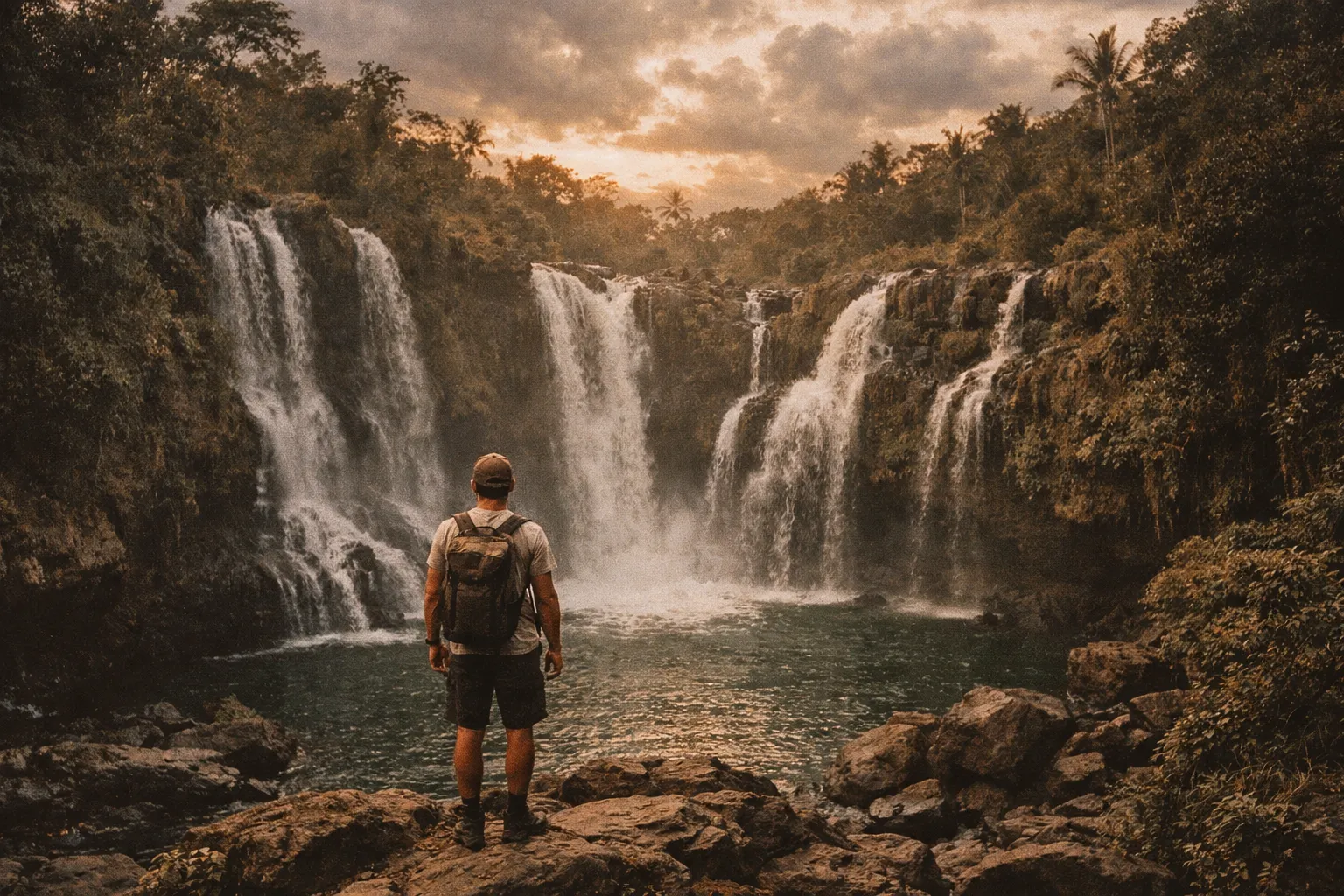
Sekumpul waterfalls Bali wins on scale and scenery. Near Singaraja in North Bali, this multi-cascade system drops roughly 80 m (260 ft) down a green amphitheater, and trekking operators routinely call it the biggest and best waterfall on the island (1)(4). It earns “most beautiful waterfall in Bali” status in most top-10 lists, and the trek down - through rice paddies, across a river, and back up - is half the reason to go. Budget a full day; combined with nearby Gitgit, a North Bali circuit runs 8-10 hours door to door (5).
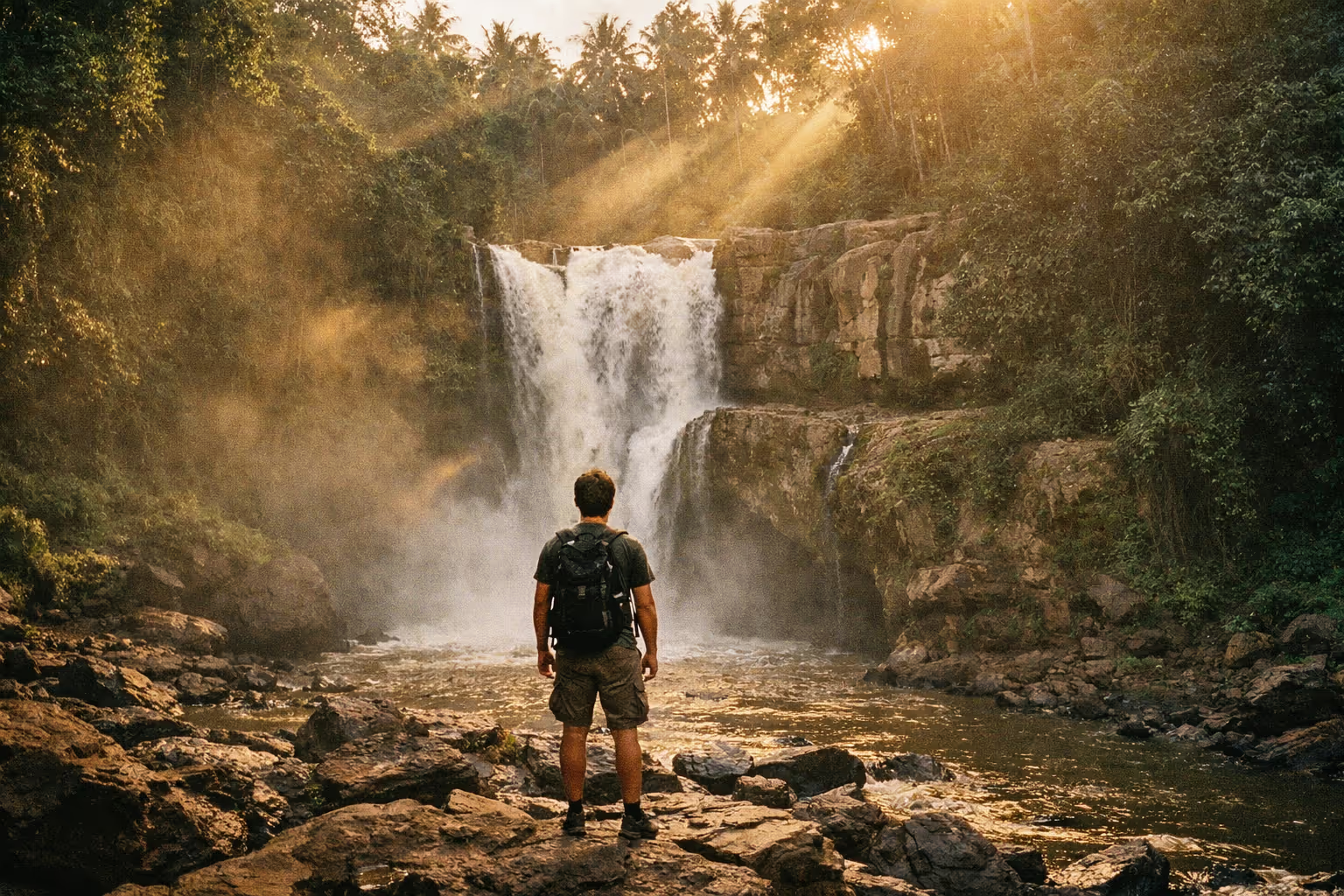
Tegenungan waterfall Bali, in Gianyar near Ubud, wins on accessibility. It’s about a 30-minute drive from Ubud, with a paved trail down and viewing platforms, which makes it one of the most accessible and frequently visited waterfalls on the island (3)(9). It’s not the tallest, but you can fit it into a half-day. Entrance fees vary and are worth confirming locally before you go -, adult tickets were reported at anywhere from 20,000 to 30,000 IDR (about USD 1.30-1.95), with children’s tickets around 15,000 IDR (about USD 1.00).
The other names that show up again and again across reputable 2023-2026 guides:
- Gitgit - North Bali, easy to pair with Sekumpul.
- Kanto Lampo - near Ubud, a tiered cascade you can climb partway into, popular for photos.
- Aling-Aling - the adventure pick, with cliff jumps and natural rock slides (guided, with lifejackets).
- Banyumala Twin Waterfalls - twin falls dropping into a single swimming pool, family-friendly.
- Leke Leke - a single elegant ribbon of water, very photogenic.
- Banyu Wana Amertha - four falls on one Munduk trek (more on that below).
That spread - from one-hour stops to full-day treks, from gentle swimming pools to cliff jumps - is exactly why no single waterfall is “the” answer. Sekumpul for the spectacle, Tegenungan for the convenience.
Munduk waterfalls Bali: the best scenery-per-dollar circuit
The Munduk highlands in North Bali are where I’d send anyone who wants several waterfalls in one relaxed day without Tegenungan’s crowds. The Munduk waterfalls Bali circuit strings together three or four falls within a short drive of each other, set among coffee and clove plantations at cooler elevation.
The standout is Banyu Wana Amertha, a trek that reaches four distinct falls. Entrance to access all four was reported at 40,000 IDR (about USD 2.55), though some current sources note the fee may have risen to 50,000 IDR (about USD 3.20) - confirm locally before you go (2). If you want a guide to take you to the bottom pool, expect a minimum of 250,000 IDR (about USD 16); the unguided entrance is 20,000 IDR (about USD 1.28) (2). Nearby Melanting Waterfall charges just 10,000 IDR (about USD 0.65) per adult, with a 50% discount for children, and Banyumala Twin Waterfalls rounds out a natural loop.
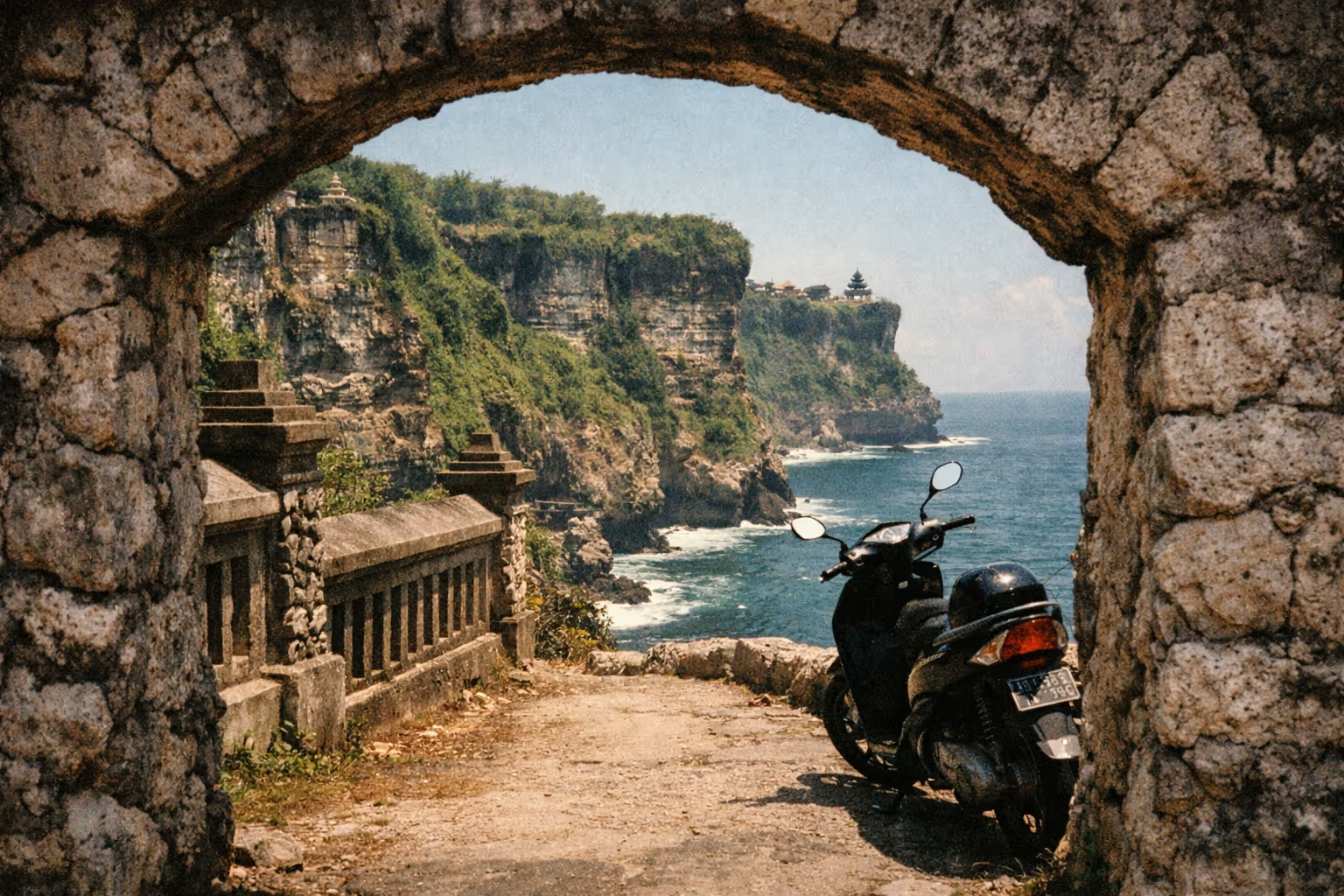
Stitch these together with a private driver (USD 35-50 per day) and you’ve got one of the highest-value waterfall days in Bali - multiple falls, minimal lines, and total entrance fees under USD 6 (2)(10). A scooter works too if you’re comfortable on Bali’s mountain roads, at roughly USD 5-8 per day for the rental plus fuel.
One etiquette note for Munduk: these falls sit in working agricultural villages and some have small temples or shrines nearby. Cover your shoulders and knees if you pass a temple area, and don’t climb on shrine structures for photos.
What it costs and how to get there
Waterfalls are among the cheapest attractions in Bali. Entrance fees for popular sites generally land between 10,000 and 40,000 IDR (about USD 0.65-2.60) (2). Most accept cash only, so carry small bills in 10,000-50,000 IDR denominations, plus 2,000-5,000 IDR for motorbike parking (2).
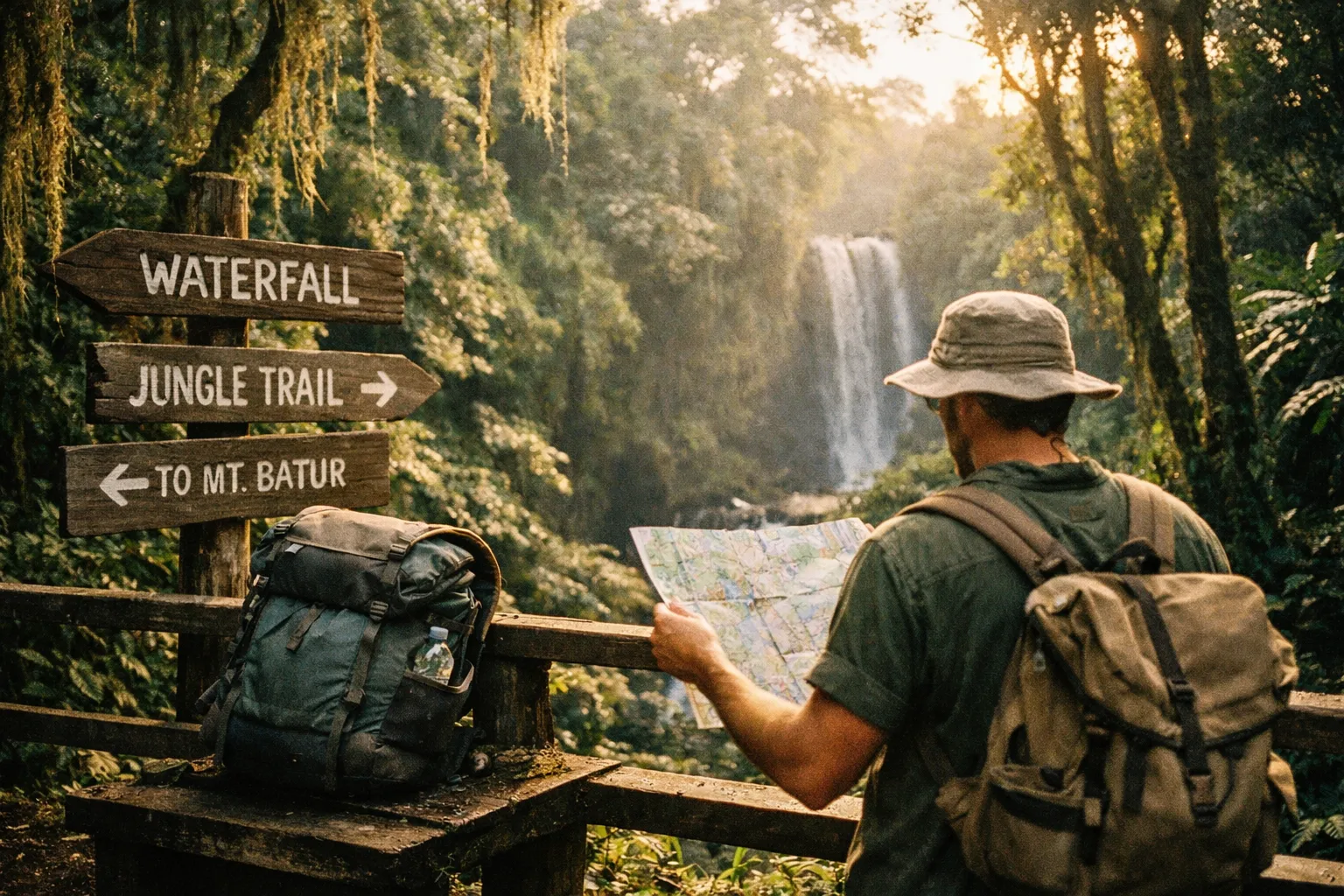
Transport is the real cost line, not the entrance:
- Scooter rental: about USD 5-8 per day, best for one or two nearby falls if you’re an experienced rider.
- Private car + driver: about USD 35-50 per day, the sensible choice for North Bali or Munduk circuits where falls are spread out.
- Organized Sekumpul trekking tours: typically 300,000-500,000 IDR per person (about USD 19-32), including transport, guide, and entrance; “long trip” packages run around 450,000 IDR (about USD 29).
Time planning matters as much as money. A single Ubud-area waterfall like Tegenungan or Kanto Lampo eats 2-3 hours including transit; a North Bali circuit is a full 8-10 hour day (5). Don’t try to combine Munduk and Sekumpul in one day - they’re in different corners of the north.
A prepaid data SIM (Telkomsel or XL) costs about USD 10-15 for two weeks and is genuinely useful for navigating to the lesser-known falls and checking weather before you commit to a two-hour drive (7).
Are they actually worth the trek?
Yes - and the value math is what makes the case, not the adjectives.
For an entrance fee of roughly USD 1-3 (January 2025 rates), you get jungle ravines, twin cascades, cliff jumps, and swimming pools, and you can pair almost any waterfall day with rice terraces or temples nearby (4)(5)(9). Compared with a beach club day bed or a single Instagram-cafe brunch, a waterfall delivers far more landscape and activity per dollar. Travel writers and tour operators - including Lonely Planet’s Bali coverage and TripAdvisor’s 2025 Bali Travellers’ Choice rankings - consistently position waterfalls as a do-not-skip Bali adventure activities worth prioritizing for exactly this reason (4)(5)(9).
The honest caveats: a few falls don’t justify the effort if you’ve already seen the big ones, and Sekumpul’s logistics have gotten complicated (see the pitfalls below). But for variety, swimming, and a break from the south’s traffic, the answer is a clear yes - especially if you favor the Munduk circuit, where four falls can cost less than a cocktail.
Top 10 animals in Bali you’ll spot near the falls
The forested ravines feeding these falls are the best place on the island to actually see wildlife. Here’s a rundown of the top 10 animals in Bali worth knowing about, weighted toward what you’ll encounter on a nature day (6):
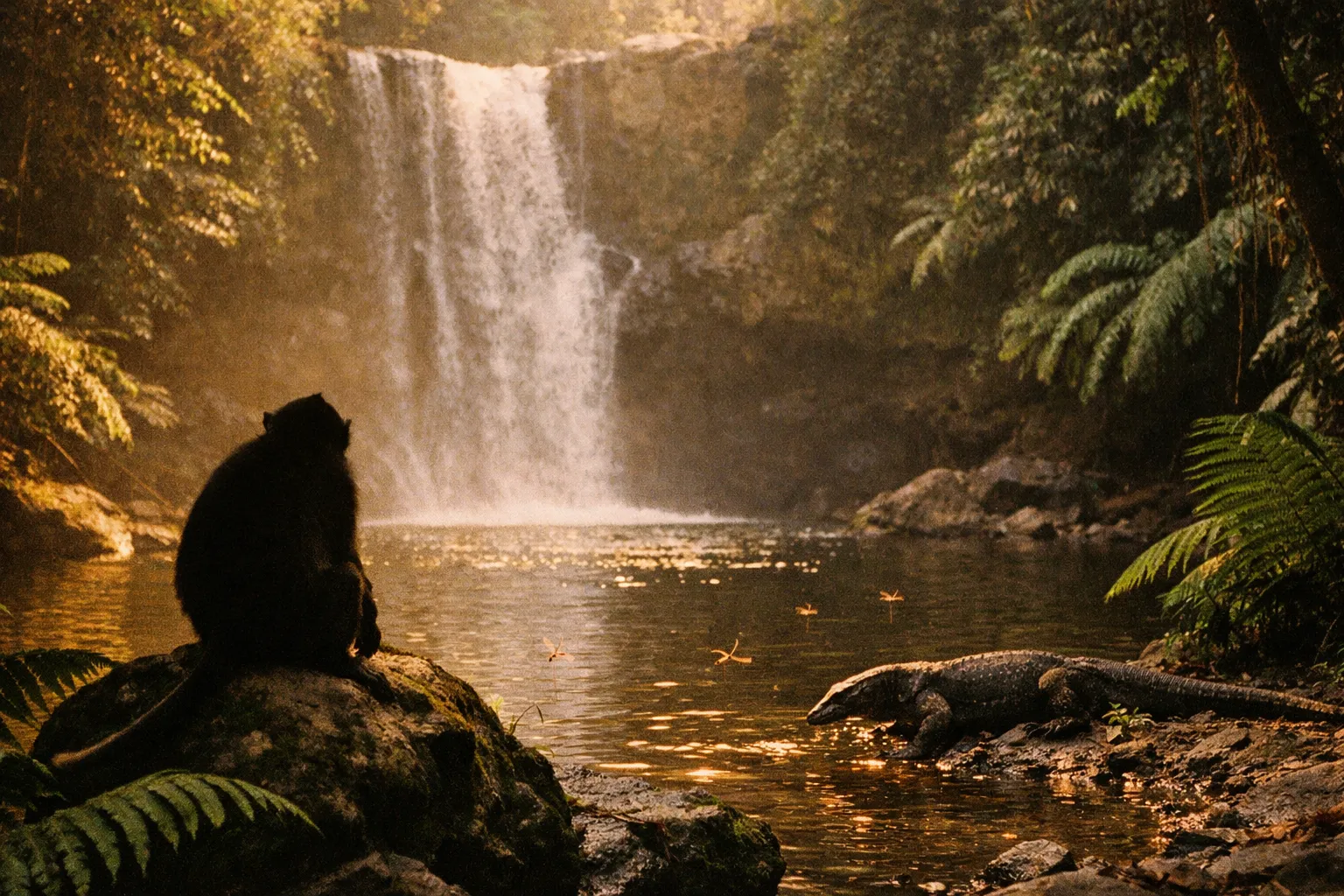
- Long-tailed macaque - the monkeys you’ll see at the Ubud Sacred Monkey Forest and along many jungle trails. Mischievous, food-motivated, and best admired without feeding.
- Bali starling (Bali myna) - the island’s critically endangered signature bird, white with electric-blue eye markings, the focus of intense conservation effort.
- King cobra - present in Bali’s forests and reptile parks; you’re unlikely to meet one on a trail, but it belongs on the list.
- Blacktip reef shark - common in Bali’s reefs, harmless to swimmers, a draw for snorkelers off the north and northeast coasts.
- Kintamani dog - Bali’s native dog breed, named for the highland region.
- Green and hawksbill sea turtles - nesting on Bali’s beaches and the subject of dedicated conservation programs.
- Tokay gecko - the loud, palm-sized gecko you’ll hear barking “to-kay” at dusk near jungle accommodations.
- Water monitor lizard - large reptiles that frequent rivers and mangroves, occasionally spotted near lowland water.
- Flying fox (fruit bat) - large fruit bats that stream across the sky at dusk in forested areas.
- Forest birds - the supporting cast of barbets, kingfishers, and bulbuls you’ll hear far more than see, plus the occasional long-tailed civet if you’re patient.
A genuine etiquette point on the macaques: feeding them disrupts natural foraging behavior, and amplified across thousands of daily visitors, it reshapes how whole troops behave. Keep food zipped away, don’t make eye contact with the big males, and skip the shoulder selfie.
Conservation and the wildlife around Bali’s nature
Bali’s wildlife narrative carries real weight. The island’s coastal ecosystems shelter hawksbill and green turtles, and conservation efforts - like those at the Turtle Conservation and Education Centre - work against poaching and habitat loss. The extinct Bali tiger and the critically endangered Bali starling stand as reminders of how fragile island ecosystems are.
There’s been a resurgence of community-led conservation in recent years, with local NGOs running rehabilitation and protection programs, and parks like the Bali Bird Park and Bali Reptile Park doing the educational work. When you choose tours and operators, favor the ones that keep wildlife wild - no chained animals, no feeding for photos, no captive-dolphin shows. The nature in Bali that draws you to the waterfalls is the same nature that needs you to tread lightly.
What to eat on a waterfall day in Bali
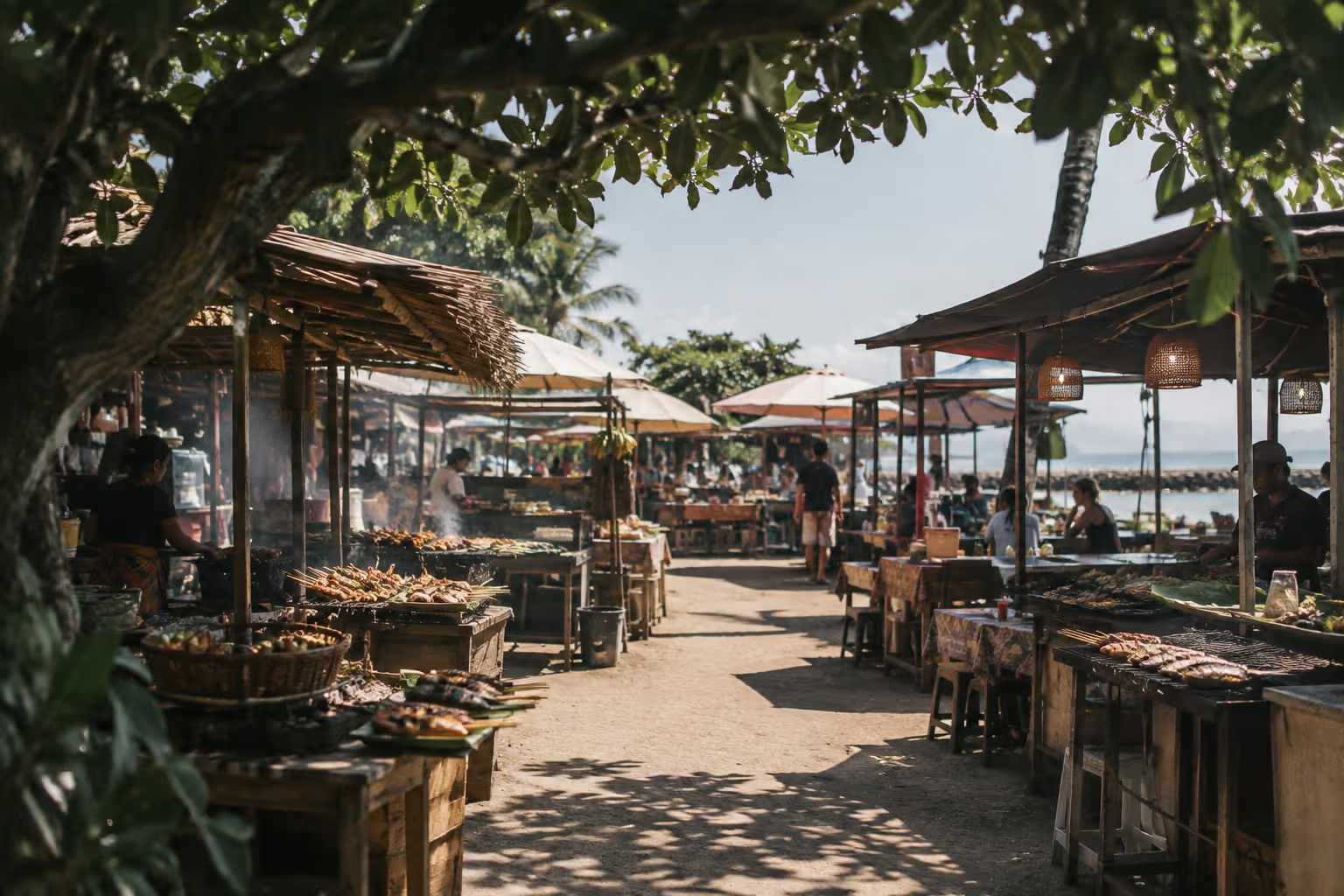
A waterfall day pairs naturally with a warung (small family-run roadside eatery) lunch, and the food is half the reason to leave the resort. The dishes worth seeking out, most landing at USD 2-5 per plate:
- Babi guling - Balinese spit-roasted suckling pig, stuffed with turmeric, lemongrass, and chili, served with rice and crackling. The signature celebration dish.
- Nasi campur - “mixed rice,” a plate of rice ringed with small portions of meat, vegetables, peanuts, and sambal. Every warung makes it differently; that’s the point.
- Sate lilit - minced fish or pork satay pressed onto lemongrass or bamboo skewers and grilled, distinct from the skewered-chunk satay elsewhere in Indonesia.
- Bebek betutu - duck slow-cooked in spice paste and banana leaf until it falls apart.
- Lawar - a mix of vegetables, grated coconut, minced meat, and spices, often served alongside babi guling.
If your route runs through Gianyar, Kanto Lampo waterfall sits near warungs and specialty food shops that local drivers single out - a 2025 foodie guide flags a nearby shop as a worthwhile stop on a nature day (8). Pairing falls with food this way keeps a waterfall budget intact while sampling the real range of Balinese cooking.
One dining etiquette note: at traditional warungs, eating with your right hand is the norm, and a small nod of thanks goes further than a big tip - service charges are usually baked into the bill, and tipping isn’t expected the way it is in the West. Rounding up or leaving 5-10% at a sit-down restaurant is generous.
A 7-day waterfall itinerary: is $1,000 enough for a week in Bali?
Short answer: yes, comfortably, unless you’re chasing luxury villas and beach-club bottle service.
A mid-range Bali day is benchmarked at about USD 75, covering three meals, local transport, and a couple of attractions (7). Run that for seven days and you’re at USD 525, leaving roughly USD 475 of a $1,000 budget for flights, splurges, or a spa day. Budget breakdowns for Bali reinforce this - travelers report that USD 3,000 covers two weeks of mid-range travel (about USD 214/day with room to spare), which makes USD 1,000 for one week generously sufficient even with waterfall tours folded in (7).
Here’s how a nature-focused week stays inside that budget:
- Days 1-2 (Ubud base): Tegenungan (20,000 IDR) and Kanto Lampo, plus the Monkey Forest. Two half-days, scooter or short driver hops.
- Day 3 (Munduk circuit): Banyu Wana Amertha (40,000 IDR), Melanting (10,000 IDR), and Banyumala on one driver day (about USD 40). Best value of the week.
- Day 4 (North Bali big day): Sekumpul + Gitgit. Book a fixed-price trek in advance - budget USD 29 for the long-trip package.
- Day 5 (Adventure): Aling-Aling cliff jumps and slides, guided with lifejackets, roughly 150,000-250,000 IDR (USD 10-16).
- Days 6-7 (Slow down): Rice terraces at Jatiluwih, a temple or two, beach time, and the warung food you’ve been meaning to try.
Across that week, waterfall entrance fees total well under USD 20. The transport and the occasional guided trek are where the money goes - which is precisely why booking fixed prices ahead matters.
7-Day Waterfall Itinerary in Bali
7 daysA nature-focused week exploring Bali's waterfalls within a $1,000 budget.
- 1
Days 1-2: Ubud Base
Visit Tegenungan and Kanto Lampo waterfalls plus the Monkey Forest. Use a scooter or short driver rides for easy access.
- 2
Day 3: Munduk Circuit
Explore Banyu Wana Amertha, Melanting, and Banyumala waterfalls with a private driver for best value.
- 3
Day 4: North Bali Big Day
Book a fixed-price trek to Sekumpul and Gitgit waterfalls in advance for a full-day adventure.
- 4
Day 5: Adventure Day
Experience Aling-Aling waterfall's cliff jumps and natural slides with a guided tour including lifejackets.
- 5
Days 6-7: Slow Down
Relax with visits to rice terraces at Jatiluwih, temples, beach time, and sampling warung food.
Common mistakes and how to avoid them
A few pitfalls cost travelers money, time, or a slip on wet stone.
The Sekumpul “waterfall mafia.” Since 2024, travelers have reported being pushed into higher-priced guiding packages (300,000-500,000 IDR per person) at the entrance, even when official fees are lower. Lock in a clear price through your accommodation or a reputable operator online before you arrive, with inclusions in writing (4).
Going at midday. Arriving between 11 a.m. and 2 p.m. means crowds, harsh light, and heat at Tegenungan and Kanto Lampo (3)(5)(9). Get to Tegenungan between 6:30 and 9:00 a.m. and you’ll have the pool nearly to yourself even in busy season (3).
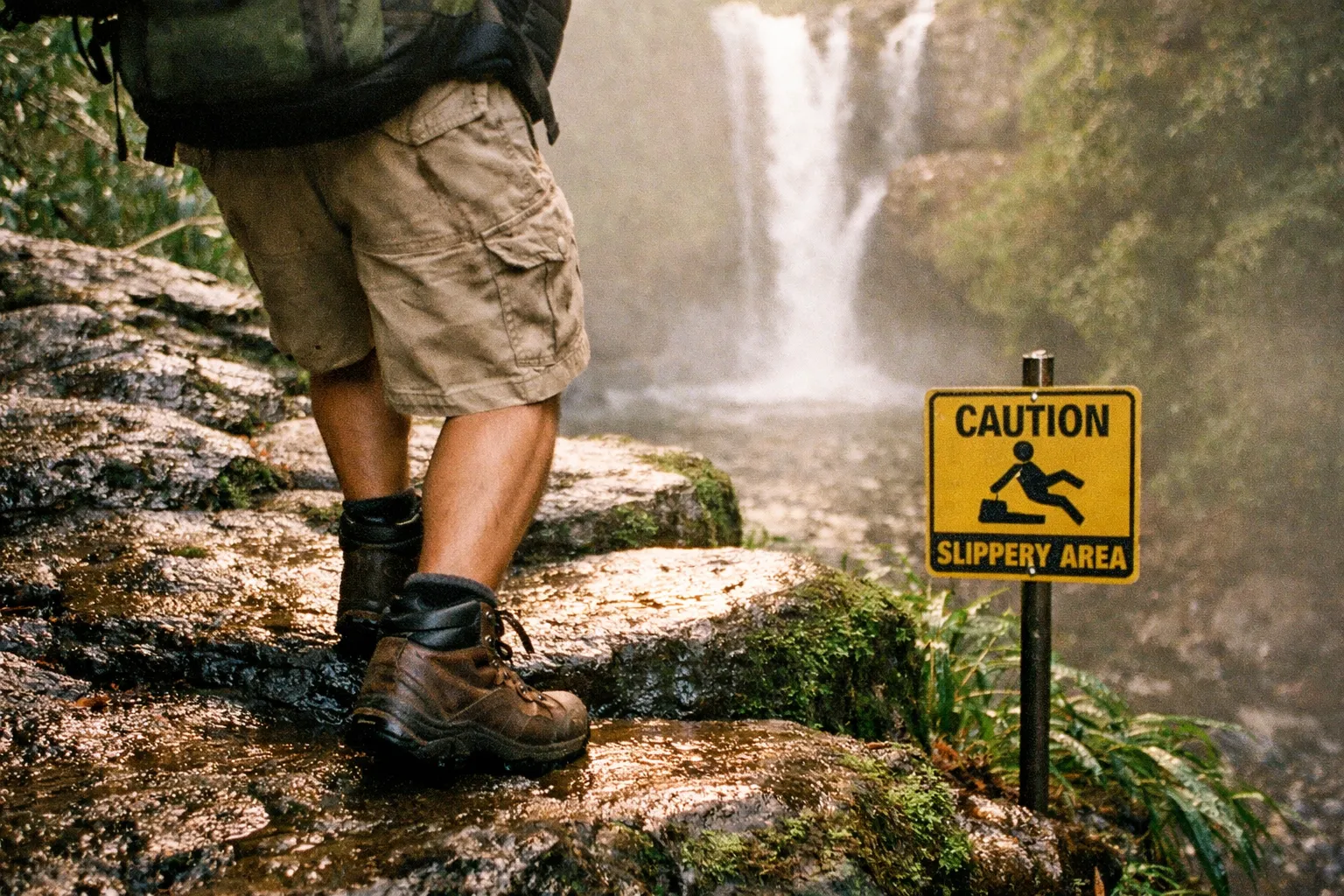
Flip-flops on wet stairs. Popular falls have 100-300 steps, often slick with spray (3)(4). Wear closed-toe shoes or grippy sandals. The stairs are structurally sound but slippery after rain - this is where people most reliably hurt themselves. If you’re planning a more serious trek, reviewing essential hiking safety in Bali before you go is time well spent.
Ignoring the weather. During and just after heavy rain (Nov-Mar), currents strengthen, trails turn to mud, and some falls close for safety. Check before committing to a two-hour drive.
Forgetting transport in the cost math. Cheap entrance fees lull people into underestimating the USD 35-50 driver day or the fuel and hours a scooter circuit demands.
Overpacking. A daypack under 20 L with water, snacks, and a rain layer beats hauling a big pack down narrow steps.
Frequently Asked Questions
- Can I visit multiple waterfalls in one day without a guide?
- Yes, with a private driver or scooter, you can visit several waterfalls like those in the Munduk circuit independently.
- Is it safe to swim at all Bali waterfalls?
- Swimming safety varies; some falls have strong currents or rocky pools. Always check local advice and use guides for adventure spots.
- What is the best time of day to visit Tegenungan Waterfall?
- Early morning between 6:30 and 9:00 a.m. offers fewer crowds and better light for photos at Tegenungan.
- Are there any cultural customs to observe near waterfalls in Bali?
- Yes, cover shoulders and knees near temples or shrines and avoid climbing on sacred structures for photos.
- Can I rent a scooter without prior experience to visit waterfalls?
- Scooter rental is best for experienced riders due to Bali's mountain roads and traffic conditions.
- Do I need to book Sekumpul waterfall tours in advance?
- Booking Sekumpul tours in advance helps avoid upselling and ensures fixed prices with reputable operators.
- Is tipping expected at warungs during waterfall day meals?
- Tipping is not expected; a small nod of thanks suffices, though rounding up or 5-10% is generous at sit-down restaurants.
Before you go
Carry small-denomination cash for every fall, wear shoes with grip, and aim for the early-morning window. Book Sekumpul at a fixed price in advance to sidestep the upselling at the gate.
For the best ratio of scenery to cost, point your driver toward Munduk - four falls, minimal crowds, and a total entrance bill smaller than a single beach-club drink. Keep your snacks zipped away from the macaques. The rest mostly takes care of itself.