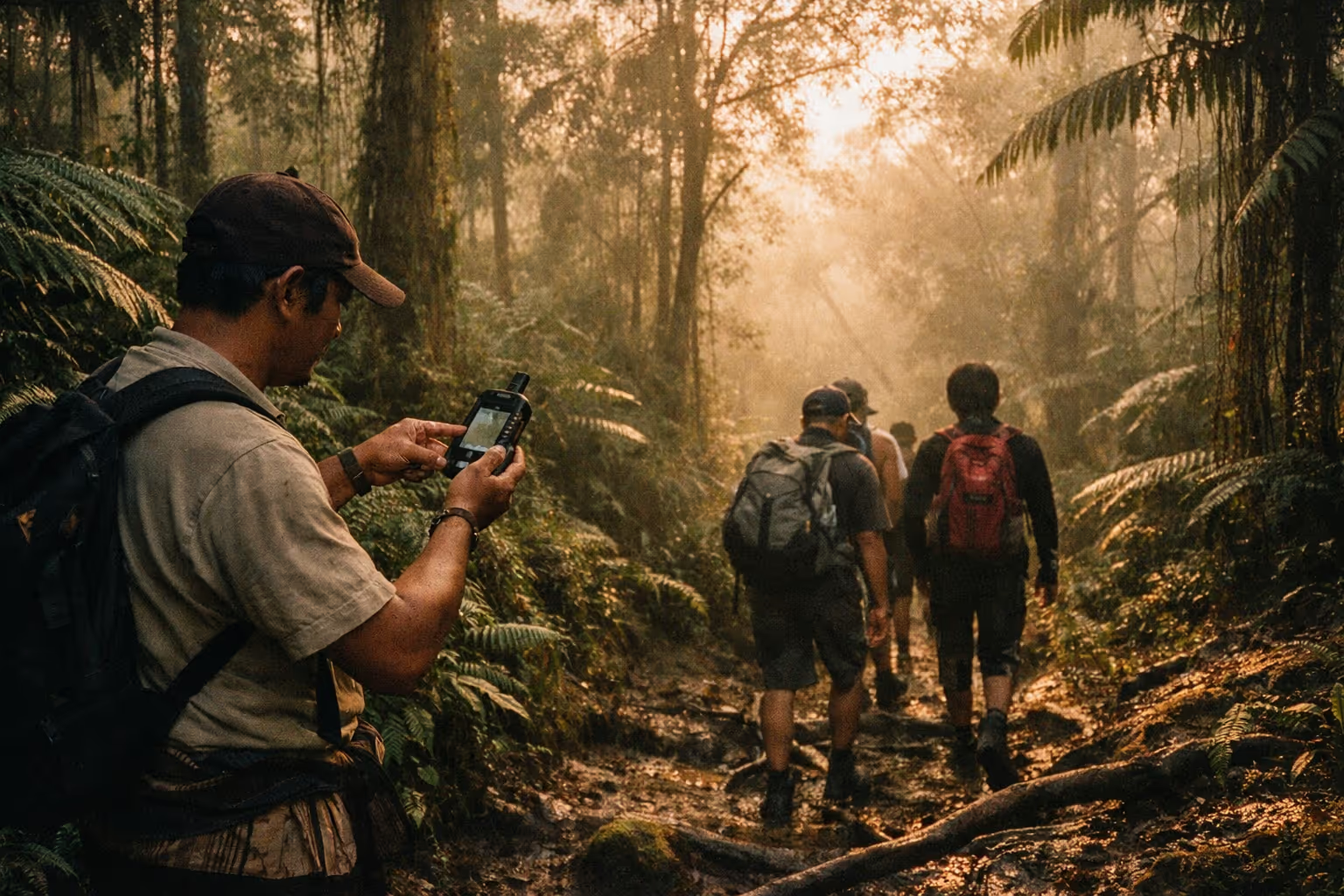
Bali jungle trekking gets cancelled by volcano closures more often than by weather, so check the permit status before you book anything. On Agung and Batur a local guide is effectively mandatory; the trailheads are controlled by guide associations, not open to walk-ins. The heat is the other quiet hazard: humidity above 70 percent drains you faster than the climb, so carry two to three liters. The classic Batur sunrise means a 2 a.m. start; sleep up in Kintamani to cut that pre-dawn transfer to twenty minutes.
Bali Jungle Trekking: Choosing Between Walks, Volcano Sunrises, and Harder Routes
Not every trek in Bali is the same effort, and matching the route to your fitness matters more than people expect.
Beginner-friendly jungle and rice-terrace walks near Ubud and East Bali run 2-3 hours with modest elevation gain (under 300 m). These suit anyone in reasonable shape using trail shoes and a litre of water. Many resorts run guided nature walks as part of a package, which is a low-stress way to get into the forest without navigation worries. If you want trekking bali ubud style - green ridgelines, river crossings, the Campuhan ridge at the gentler end - this is your category.
Mount Batur sunrise trekking is the classic. The climb to the 1,717 m summit is moderate, and commercial tours handle the logistics. It works for reasonably fit beginners willing to start in the dark. More on costs and timing below.
Advanced volcano and overnight jungle routes are a different animal. The overnight Mount Agung crater hike involves 600-800 m of continuous steep climbing on narrow, cliff-lined paths - AllTrails lists roughly 95% of one Agung route as narrow with cliffs. Multi-day jungle treks push past 2,500 m with cold and wind exposure; Bali’s own Munduk-to-Jatiluwih traverse is one example of a route that demands that kind of preparation (9). Be honest about your cardio before booking these. Operators stress this for a reason.
Mount Batur sunrise trekking: costs, start times, and what’s included
This is the trek most visitors do, so it’s worth getting the numbers right.
Pricing: Group tours including transport, guide, and breakfast run IDR 600,000-800,000 (about USD 35-50) per person (2). Private guides push past IDR 1,000,000 (about USD 65+) (2). On the budget end, basic guide-only bookings start around IDR 250,000 (about USD 17), and Ubud departures with transport included land at IDR 300,000-400,000 (about USD 20-27) (7).
Start times: Most mount batur bali sunrise trekking tours depart 02:00-03:00 with hotel pickup around 01:30-02:00, so you’re hiking 2-3 hours uphill in the dark to reach the summit by sunrise near 06:00 (4). That means a headlamp is non-negotiable, not a phone torch you hold in one hand.
A combined Batur sunrise hike and hot spring tour holds a 4.9/5 rating across roughly 1,900 reviews with a 98% recommendation rate - a sign that guided treks here are generally safe and well-run when access is open.
What’s typically included: hotel pickup, English-speaking guide, light breakfast (often eggs cooked over volcanic steam), entrance fees. What’s usually not: travel insurance, tips, and hot spring entry unless you book the combo. Confirm before you pay, because the cheapest listings strip these out.
Proper footwear and staying hydrated on the trail
Sturdy hiking shoes with real grip are the single most important piece of gear here. Bali’s terrain runs from paved temple steps to loose volcanic ash, and I’ve slipped on moss-covered stones near a waterfall - a quick reminder that the trails aren’t forgiving. Guides on the harder routes explicitly refuse sandals and city sneakers. For Agung-grade trails you want ankle-high boots. See our Hiking in Costa Rica: Footwear, Water, Maps Guide for parallels in essential hiking safety.
Hydration catches people out because the heat hides at altitude. Humidity sits above 70% and temperatures often top 28-30°C, which drains you faster than you’d think. My rule:
- Half-day sunrise hike (Batur): 1.5-2 L per person
- Full-day or multi-day jungle trek: 3 L per day (9)
Bringing only 500 ml-1 L for a 3-4 hour hike in this climate is the most common dehydration mistake operators see. Pack more than you think you need. On popular trails you can sometimes refill at small warungs (family-run roadside shops), so carry a reusable bottle plus purification tablets or a filter to cut plastic waste and stay safe.
Navigation: maps, GPS, and why a local guide pays off
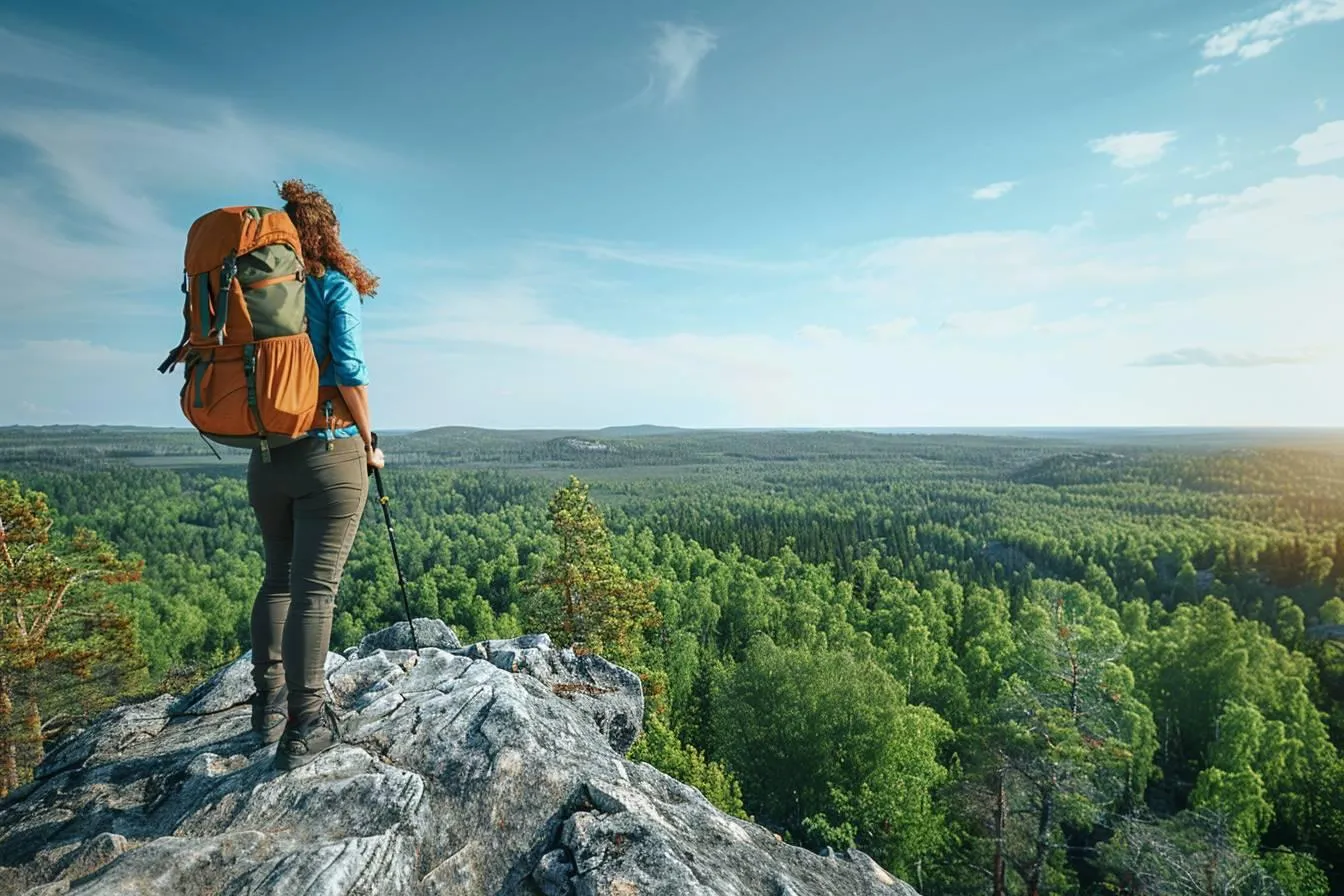
Bali’s jungle routes are poorly documented online, and dense canopy hides the landmarks you’d normally navigate by. On my trek toward Mount Agung I leaned hard on physical maps plus GPS, because veering off a faint trail is easy and mobile signal drops out on remote sections.
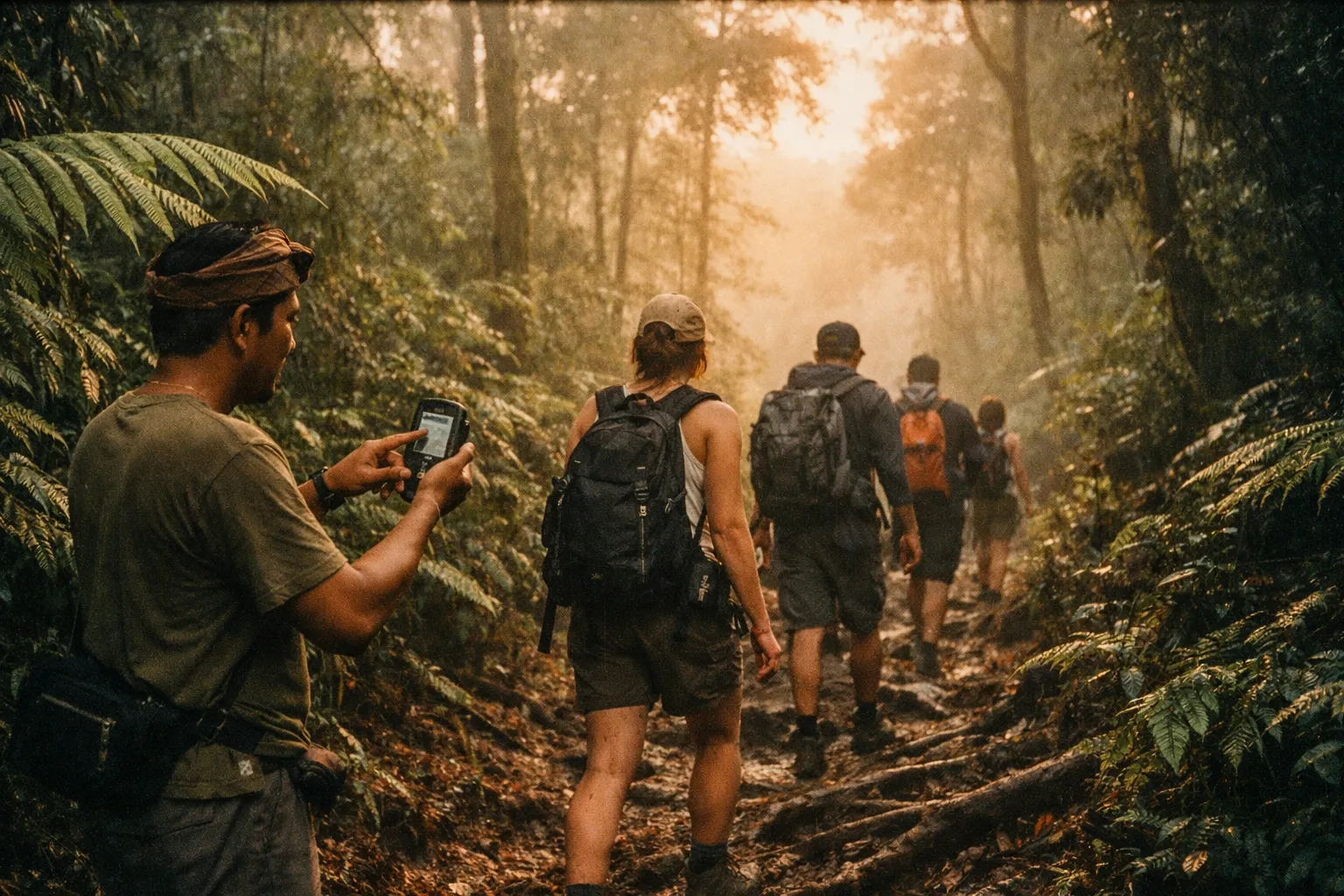
For pre-dawn starts, every hiker needs a headlamp, spare batteries, and a charged phone in a dry bag. Don’t rely on a single light source.
The honest answer is that a local guide solves most navigation problems before they start. On volcano peaks like Agung and Batur there are official entry fees and, at some trailheads, an informal guide “mafia” that controls access. Booking an official guide or using a posted-fee route reduces conflict and keeps you compliant (5). A good guide also reads the terrain in ways an app can’t - and I’ve reached secluded waterfalls and quiet forest I’d never have found solo, partly through their knowledge and partly through luck.
When to go: season-by-season planning for Bali trekking
The single biggest safety lever in Bali is when you go. Dry season, April-October, is consistently the safest hiking window - drier trails, less mud, fewer washouts. Here’s how the months actually break down:
- April-June: Trails are drying out and crowds are lighter. Good footing on most routes, the occasional lingering shower. My pick for the balance of conditions and quiet.
- July-September: Peak dry season and peak crowds. Trail conditions are best, but Batur sunrise summits get busy and accommodation prices climb. Book guides ahead.
- November-March: Rainy season. More mud, higher slip risk on volcanic gravel, and occasional trail closures or route washouts. Volcano summits in particular get genuinely dangerous on wet, loose rock - even experienced hikers report frequent slips on wet leaves and narrow ridges. Stick to wider, well-maintained jungle trails near Ubud and East Bali, and build flexibility into your itinerary.
Gear shifts with the season too. Rainy months demand reliable rain gear and a waterproof pack liner; dry season leans toward sun protection and extra water. Don’t pack the same kit year-round.
Sunrise hikes vs. daytime jungle treks: how time of day changes the risk
Time of day changes the risk profile as much as the season does.
Sunrise hikes (02:00-03:00 departures): cooler temperatures and that summit payoff, but you’re moving over uneven ground in the dark. The hazards are footing and cold - Batur summits get windy, so a windproof layer matters even though you started sweating at the trailhead. Sleep management is real: you’re losing most of a night, so don’t schedule a demanding day after.
Daytime jungle treks: far better visibility and easier navigation, but you trade that for heat and more insect activity. Here the priorities flip to sun protection, more frequent water breaks, and insect repellent on exposed skin.
If you’re choosing between the two and you’re not a confident night-walker, a daytime jungle trek near Ubud is the safer first outing. Save the sunrise volcano for once you’ve tested your footing on Bali’s terrain in daylight.
Wildlife on the trail: monkeys, snakes, and leeches
Vague “watch for wildlife” warnings don’t help much, so here’s the practical version, backed by Bali clinic guidance (1).
Monkeys: Don’t feed them, and avoid direct eye contact - monkeys read a stare as a threat. Keep food zipped away. They’re bold around temple and forest fringes and will grab anything loose.
Snakes: Some are venomous. Stomp gently or tap a trekking pole to send ground vibrations ahead of you, and never step blindly over logs or reach into brush without looking. Never handle a snake, however photogenic.
Spiders: far less of a problem than their reputation suggests. What you actually meet on Bali trails is mostly large, conspicuous and harmless.
Leeches: Common on damp jungle trails. Wear long pants tucked into high socks and apply repellent around your ankles. If one latches on, don’t yank it - use salt, soap, or a lit match near the head to make it release, then clean the bite. Yanking raises the infection and bleeding risk.
Carry a basic first-aid kit: antihistamines, anti-itch cream, blister plasters. Know where the nearest clinic is - Life Everyouth Bali is one medical resource for bites, sprains, and dehydration (1).
Bali pass trekking, permits, and the current volcano rules
Regulations have tightened, and assuming volcano hikes are always open is the mistake that ends trips at the trailhead.
Since late 2023, Bali’s governor has introduced and begun enforcing restrictions on hiking, trekking, and camping on specific volcanic peaks and sacred mountains during designated periods, aimed at both foreign and domestic tourists for safety and cultural preservation (3)(5). My own planned Agung summit was once postponed for heightened volcanic activity - a humbling reminder that the mountain sets the terms.
Short-term closures stack on top of the broader rules. AllTrails has at times listed all hiking trails to Mount Agung as temporarily closed, with user reports calling the route “pretty dangerous”. For bali pass trekking and other peak access, check current status before you book - closures and rule changes move faster than guidebooks update.
Practical steps:
- Check AllTrails and operator pages for closure dates within a week of your trek.
- Book through an official guide or a route with posted entry fees to stay compliant and avoid trailhead conflict (5).
- Have a jungle-trek backup near Ubud or East Bali ready if your volcano is off-limits.
When access is uncertain, the lower jungle and rice-terrace routes are almost always open and don’t carry the same regulatory headaches.
Local etiquette on the trail
Trail manners go a long way here. A “Selamat pagi” (good morning) or “Terima kasih” (thank you) when passing on narrow paths is appreciated, and trails are often single-file. Hiking with a local guide also opens up the spiritual side of these landscapes - one guide turned a climb into a walk through Bali’s relationship with its mountains.
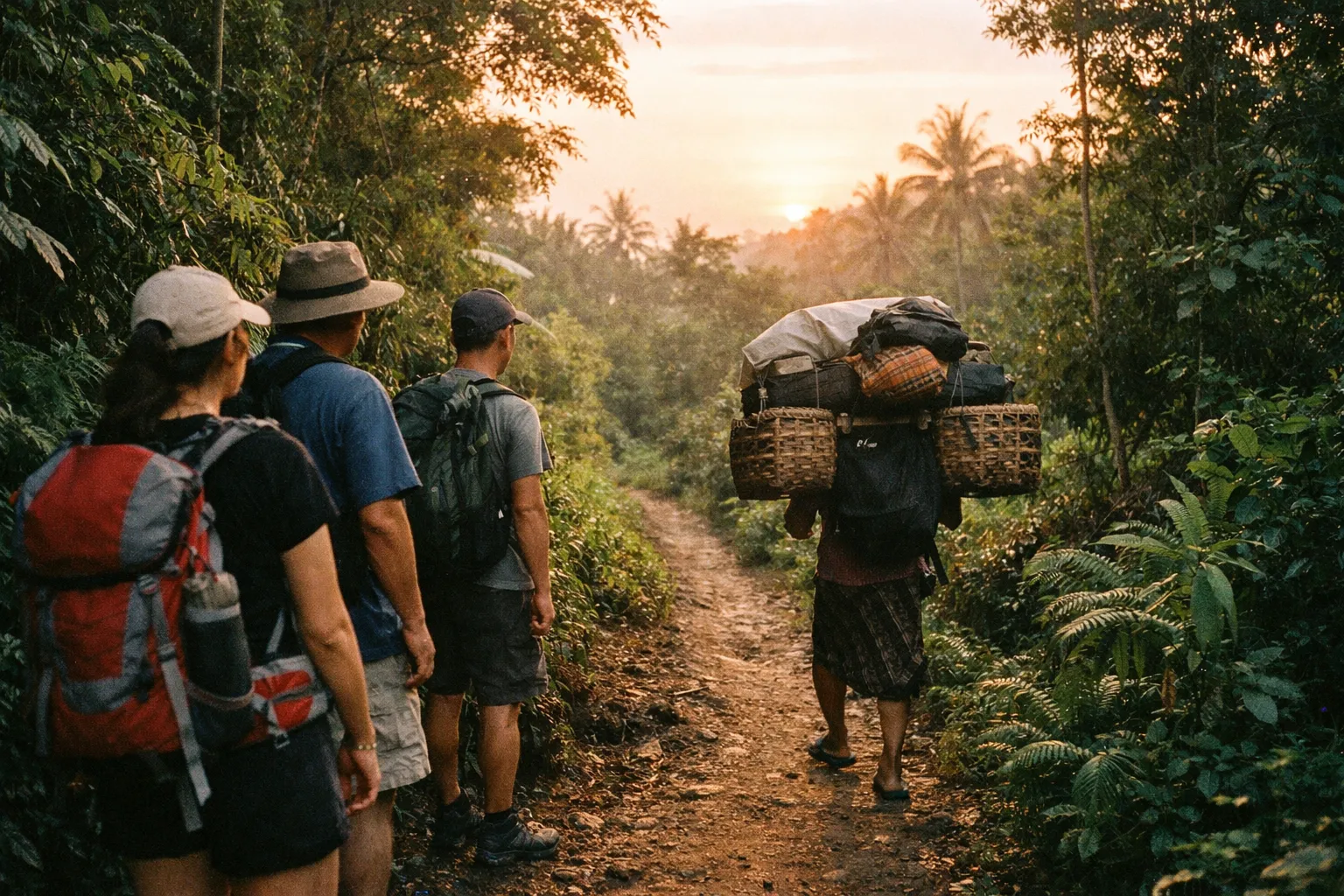
On spiritually significant routes, dress modestly, follow your guide’s lead around offerings, and keep noise and drone use down on ridgelines (3). Sacred-mountain access is being actively negotiated, and respectful behavior helps keep these trails open.
Etiquette note: Photography around temple offerings and sacred sites requires permission and discretion. Ask your guide before pointing a camera at anything ceremonial - the answer is usually yes, but asking matters.
Leave No Trace
Bali’s trails stay worth hiking only if visitors carry out what they carry in. Pack out all trash, stay on marked trails to protect the flora, and don’t disturb wildlife. On a hike to Sekumpul Waterfalls I was disheartened by litter along the path - a reminder of the shared responsibility here. Advanced jungle operators recommend dry bags for electronics and a single refillable bottle rather than a string of disposable plastic ones (9). It’s a small discipline that keeps these places intact.
Accommodation logistics for pre-dawn treks
Sunrise treks departing at 02:00-03:00 reward you for thinking about accommodation logistics in advance. Booking a stay that allows flexible check-in and check-out matters when you’re leaving in the small hours and crashing for a recovery nap afterward.
For Batur sunrise hikes, staying in Kintamani village itself - rather than commuting from Ubud or Seminyak - cuts the pre-dawn transfer to under 20 minutes and lets you sleep until around 01:30. Guesthouses along Jalan Raya Kintamani run IDR 250,000-500,000 (about USD 16-32) per night, and most will hold your luggage while you summit. For Agung routes, Amed and Tirta Gangga in East Bali put you closest to the Pasar Agung trailhead; small family-run homestays there start around IDR 200,000 (about USD 13) and owners often know which guides are operating that week. Either way, confirm late-checkout or a day-use rate before you book - a recovery nap after a 03:00 start is not a luxury, it’s part of the plan. If you’re watching your budget across the trip, affordable stays in nearby villages can make the logistics significantly easier.
Essential gear checklist for bali jungle trekking
Packing right is half the safety equation. Here’s what experienced operators and clinic guidance consistently flag (1)(9):
- Footwear: Ankle-high hiking boots with grip for Agung-grade routes; trail shoes minimum for Batur and jungle walks. No sandals, no city sneakers.
- Hydration: 1.5-2 L for Batur sunrise; 3 L per day for full-day jungle treks. Reusable bottle plus purification tablets.
- Lighting: Headlamp with spare batteries - not a phone torch. Essential for any pre-dawn departure.
- Layers: Windproof jacket for volcano summits (Batur gets cold and gusty at the top). Rain jacket and waterproof pack liner in rainy season (November-March).
- Sun and insect protection: SPF 30+ sunscreen, insect repellent applied around ankles and wrists, long pants on damp jungle trails.
- First aid: Antihistamines, anti-itch cream, blister plasters, salt sachets for leeches, rehydration salts.
- Navigation: Downloaded offline map (Maps.me or AllTrails), charged phone in a dry bag, physical trail map where available.
- Emergency contacts: Save the number for Life Everyouth Bali clinic before you leave the hotel. Indonesia’s national emergency line is 112.
✓ Pros
- Guided sunrise treks on Batur are well-run, with high satisfaction rates and clear pricing (IDR 600,000-800,000)
- Dry season (April-October) offers reliable trail conditions across all difficulty levels
- Local guides solve navigation, permit, and trailhead-access issues before they become problems
- Jungle and rice-terrace walks near Ubud's Campuhan ridge and Munduk are almost always open regardless of volcano restrictions
- Staying in Kintamani or Amed cuts pre-dawn transfer times significantly
✗ Cons
- Volcano summits (Agung, Batur) face periodic closures for volcanic activity, religious events, and new permit rules - always check within a week of your trek
- Pre-dawn starts mean a full night's sleep is off the table; plan a recovery window the following day
- Rainy season (November-March) raises slip risk substantially on volcanic gravel and narrow ridgelines
- Informal guide 'mafia' at some trailheads can create pressure; booking official guides in advance avoids this
- Dehydration is underestimated - humidity above 70% and temperatures of 28-30°C drain you faster than temperate hiking
- Do I need a permit for bali jungle trekking?
- It depends on the route. Mount Batur has an official entry fee collected at the trailhead (included in most guided packages). Mount Agung requires booking through a registered guide and is subject to periodic closures - check AllTrails and your operator within a week of your trek. Lower jungle and rice-terrace routes near Ubud's Campuhan ridge and Munduk generally don't require advance permits, though some private land crossings involve a small donation.
- What is the best time of year for mount batur bali sunrise trekking?
- April to June is the sweet spot - trails are drying out after rainy season, crowds are lighter than July-September peak, and footing is reliable. July to September has the best conditions but the busiest summits and higher accommodation prices. Avoid volcano summits in November-March if you can; wet volcanic gravel is genuinely slippery and closures are more frequent.
- Is bali jungle trekking safe for solo hikers?
- Shorter jungle walks near Ubud (Campuhan ridge, Munduk waterfall trails) are manageable solo in dry season with a downloaded offline map and enough water. Volcano routes - Batur and especially Agung - are strongly recommended with a guide, both for navigation and because trailhead access is often controlled by local guide associations. Going solo on Agung is inadvisable and may not be permitted.
- What should I wear for trekking bali ubud style jungle walks?
- Trail shoes with real grip, moisture-wicking long pants (doubles as leech protection on damp trails), a light long-sleeve layer for sun and insects, and a hat. Bring a small daypack with at least 1.5 L of water, sunscreen, and insect repellent. Dress modestly if your route passes temple grounds - a sarong or light scarf takes up almost no space and is appreciated.
- How much does a guided bali volcano trekking tour cost?
- Mount Batur group tours with transport, guide, and breakfast run IDR 600,000-800,000 (about USD 35-50) per person. Private guides start around IDR 1,000,000 (about USD 65+). Budget guide-only bookings start at IDR 250,000 (about USD 17). Mount Agung guided treks are priced higher given the difficulty and longer duration - expect IDR 1,200,000-2,000,000 (about USD 75-125) for a full overnight package. Always confirm what's included before paying.
Frequently Asked Questions
- Can I hike Mount Agung without a guide?
- No, official regulations and informal controls require guides for Mount Agung to ensure safety and compliance.
- What gear is essential for a pre-dawn volcano hike?
- A reliable headlamp with spare batteries, sturdy hiking shoes, windproof layers, and at least 1.5 liters of water are essential.
- Are there refill points for water on popular Bali trails?
- Some popular trails have small warungs where you can refill water, but carrying purification tablets or a filter is recommended.
- How do I handle leech bites during jungle treks?
- Use salt, soap, or a lit match near the leech's head to release it safely, then clean the bite to avoid infection.
- What should I do if a volcano trail is closed during my trip?
- Have a backup plan with jungle or rice-terrace treks near Ubud or East Bali, which are usually open and less regulated.
- Is tipping expected for guides on Bali trekking tours?
- Tipping is customary but not mandatory; 10-15% of the tour price is a common guideline for good service.
- Can I use a phone flashlight instead of a headlamp for night hikes?
- No, a dedicated headlamp is necessary for hands-free, reliable lighting on dark, uneven trails.