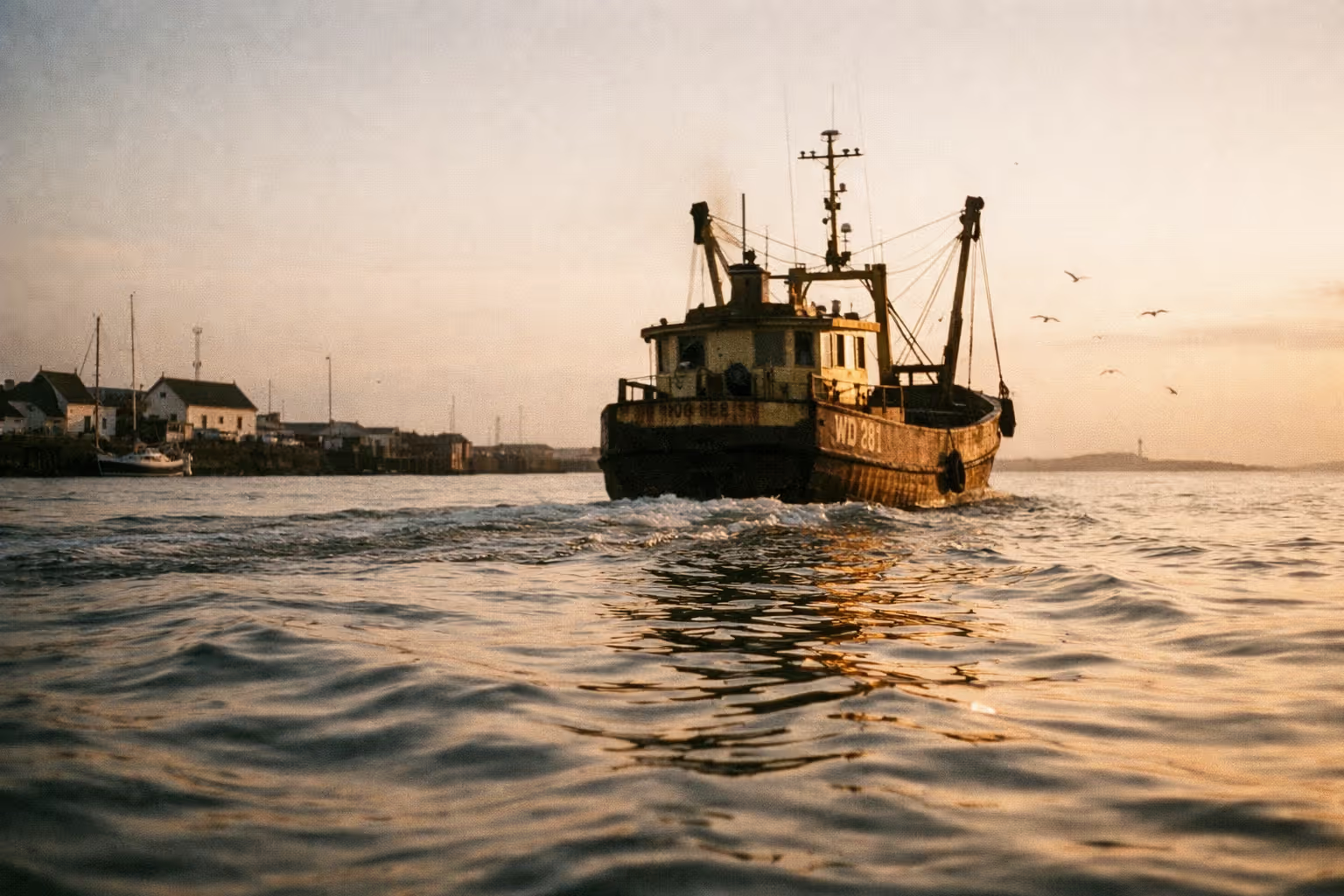
Wexford sits on Ireland’s southeast coast with around 250 km of coastline, a lighthouse that has been guiding ships for more than 800 years, and a beach that stood in for Omaha Beach in Saving Private Ryan. The best things to do in Wexford span that whole range: medieval heritage, wide strands, and one of Europe’s most important wintering grounds for wild geese. It rarely tops the standard Ireland list; that slot usually goes to Kerry or Galway. But if you want a mix of coast and history without the tour-bus crush, Wexford earns a long weekend, and the heritage and beach-day sides of it aren’t mutually exclusive.
Most guides treat Wexford as a year-round destination without committing to a best time. The honest answer: May is the strongest single month for most visitors. The geese are still trickling out through early May, the beach facilities are opening up, Hook Lighthouse and the Heritage Park are running full schedules, and the summer crowds haven’t arrived yet. If you’re coming specifically for the Greenland white-fronted geese at the Wildfowl Reserve, shift to October or November, when the bulk of the 7,000-strong flock arrives from Greenland. One thing most guides get wrong: they treat Hook Lighthouse as a quick add-on to a Wexford-town day. It’s 50 minutes each way on rural roads, and the tour plus grounds easily fills two hours on site. It’s a half-day excursion, not a detour.
✓ Pros
- Free or low-cost entry to several flagship attractions, including the Wexford Wildfowl Reserve and the beaches
- Compact enough for a 2-3 day trip from Dublin (roughly 2 hours by car)
- A genuine mix of heritage, wildlife, and coast that suits different travel styles
- Statistically Ireland's sunniest corner, the "Sunny South East"
- Family-friendly options with hands-on experiences at the Irish National Heritage Park and Hook Lighthouse tours
✗ Cons
- Driving is essentially mandatory; public transport between attractions is thin
- Hook Lighthouse is 50 minutes from Wexford town, and distances between sites add up fast
- Beach facilities (lifeguards, toilets) are seasonal, so off-season visitors need to plan around that
- Peak-summer crowds at Curracloe Beach, with limited parking at some access points
- Boat trips from Kilmore Quay are weather-dependent, with no guaranteed schedule
Is Wexford worth visiting? Yes, if you match your trip to what the county actually does well: coast and heritage, at a slower pace than the west. What is Wexford famous for? Hook Lighthouse, its Viking-founded town, the Wexford Festival Opera, and Curracloe Beach, the strand Steven Spielberg used for the Normandy landings.
Things to Do in Wexford: What the County Actually Offers
Wexford offers a compact mix of coastal, heritage, and wildlife attractions along around 250 km of coastline, most reachable within an hour of Wexford town by car. That coastline includes multiple Blue Flag beaches, cliff walks, and small fishing villages, so a beach day is rarely off the table between May and September.
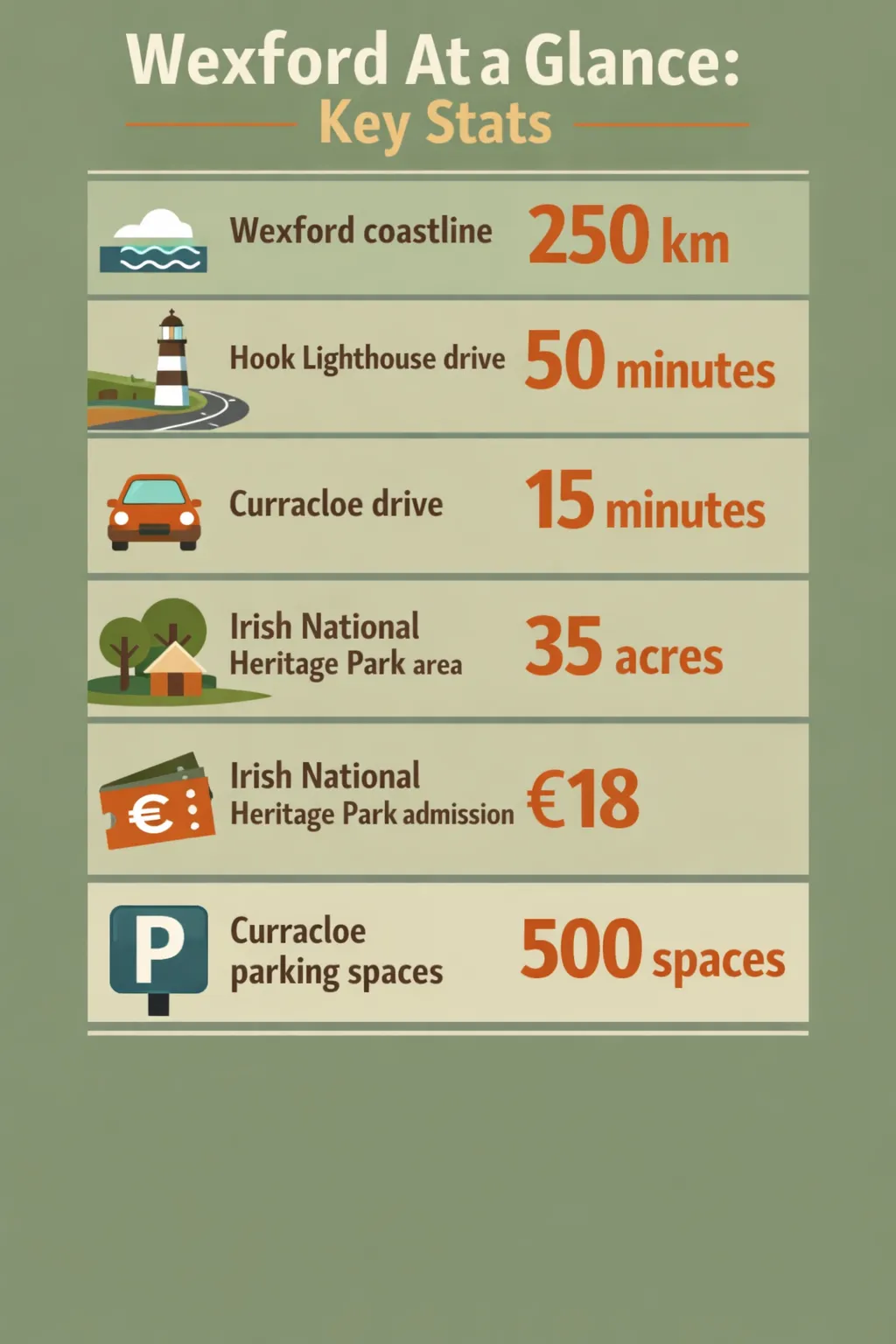 Wexford’s key sites cluster within a compact coastal region: 250 km coastline, 50-minute Hook Lighthouse drive, 15-minute Curracloe access, and €18 admission at the Irish National Heritage Park.
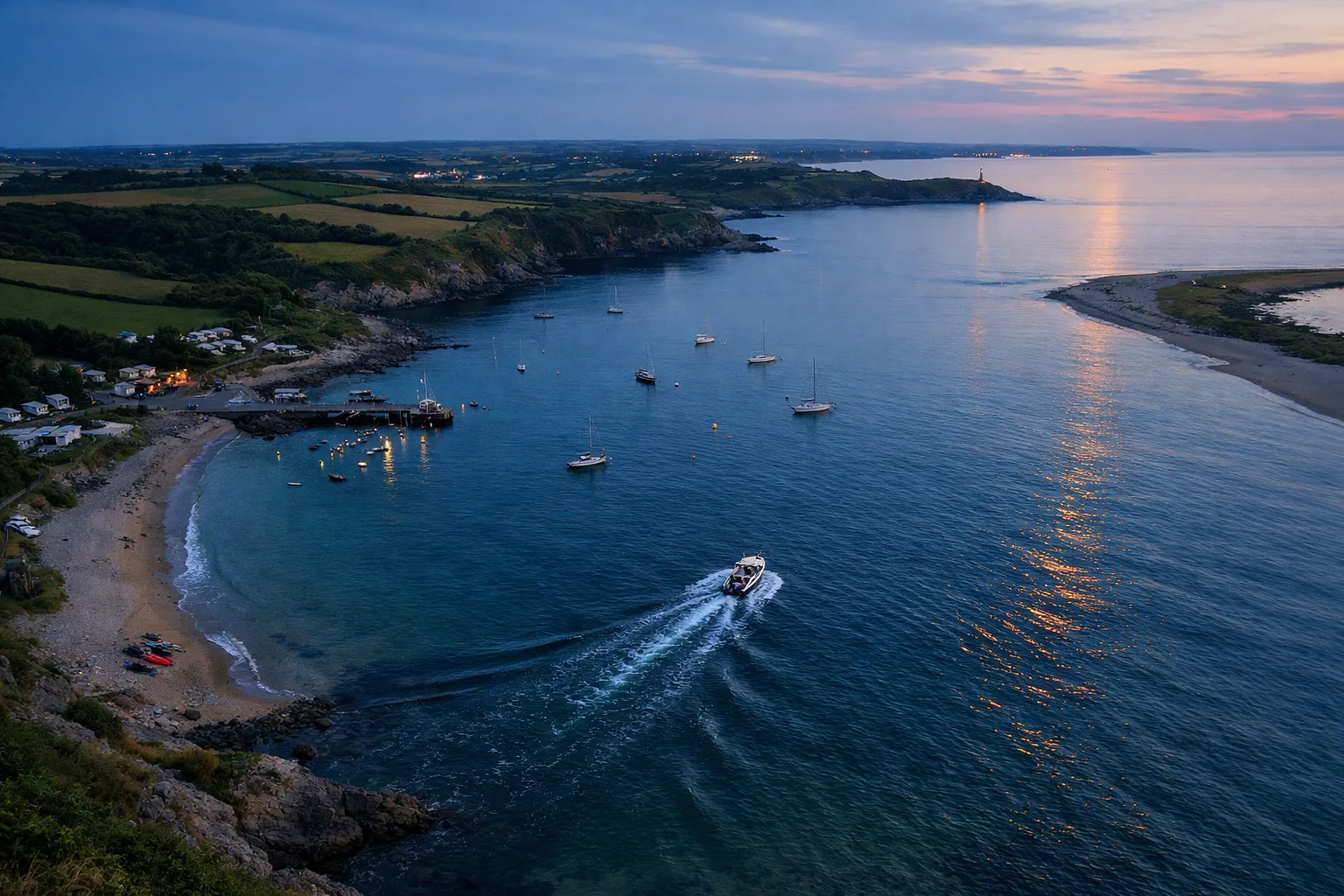
The heritage side runs deep. Wexford town was founded by Vikings around 800 AD, and its medieval street pattern is still visible around Selskar Abbey and the old town walls. The county sits squarely in Ireland’s Ancient East, the tourism corridor that positions the Irish National Heritage Park and Hook Lighthouse as anchor attractions; both combine actual history with guided, interactive experiences rather than just signage and rope barriers.
Wildlife is the third pillar. The North Slob, just north of Wexford town, is internationally significant for wintering birds, and the seas around Kilmore Quay support large seabird colonies, including puffins in season.
Here is the geographic logic you need before booking anything. Wexford town works as your base. From there:
- The Irish National Heritage Park is about 10 minutes (3 miles) northwest at Ferrycarrig.
- Curracloe Beach is about 15 minutes northeast.
- The Wexford Wildfowl Reserve at North Slob is about 10 minutes north.
- Hook Lighthouse is about 50 minutes southwest, at the tip of the Hook Peninsula.
Those drive times are the single most useful planning fact here. Three of the four cluster tightly around town; Hook is a genuine half-day excursion. If you are still shaping the wider trip, our week in Ireland guide covers how the regions fit together. Nearly everything requires a car: the rail line connects Wexford to Dublin and Rosslare, but it won’t get you between attractions.
Hook Lighthouse: One of the World’s Oldest Working Lighthouses
Hook Lighthouse, at the tip of the Hook Peninsula, is one of the world’s oldest operational lighthouses, and a guided tour up its 115 well-worn spiral steps is the only way to access the tower (20). It sits about 50 minutes’ drive from Wexford town and 40 minutes from New Ross, reached via the R734 (20).
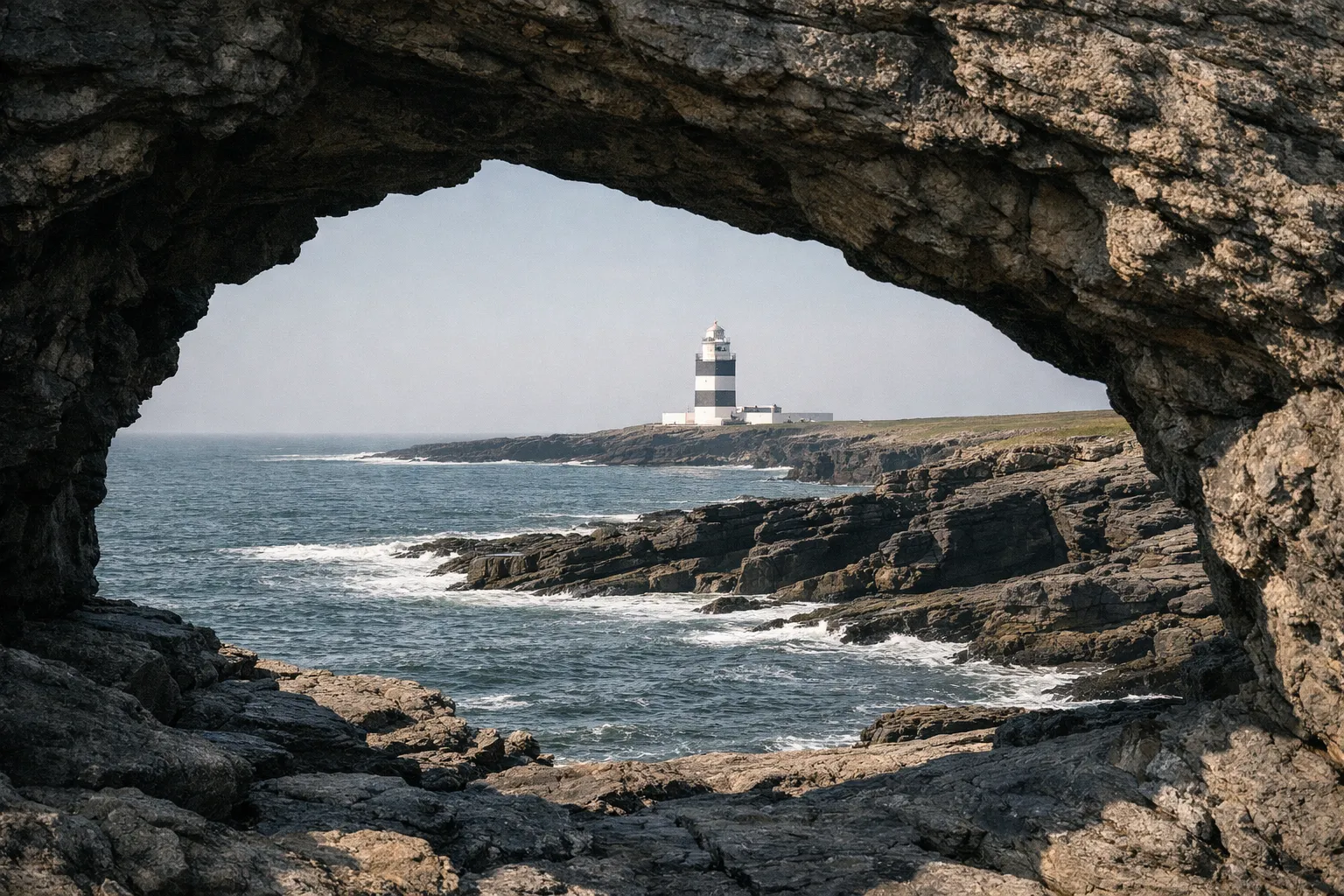
The tower has guided ships into Waterford Harbour for more than 800 years. Tours begin with a life-sized hologram of St. Dubhan, the 5th-century monk whose fellow monks kept a warning beacon on this headland, then climb through the thick-walled chambers as the guide walks you through the daily ritual of the light keepers who lived here (20). It’s a well-constructed tour. The hologram is a bit theatrical, but it works on kids and it sets the scene effectively.
A half-day is the realistic frame. Allow around 30 minutes for the tour itself and up to two hours on site with the café and grounds, then build the rest of the Hook Peninsula around it. Don’t try to pair Hook with the Irish National Heritage Park in the same short day; they’re at opposite ends of the county.
Getting There and Tour Logistics
There is no public transport to the tip of the Hook Peninsula, so a car is essential. Access is via the R734.
Per Hook Lighthouse’s official schedule, the site is open daily 09:30-17:00 year-round, with tours every hour from 10:00-16:00 from September to June, and every 30 minutes from 10:00-17:00 in July and August. Last admission follows the last tour time. In peak season, arrive at least 30 minutes before your target tour time, because tours fill. Group bookings require prior arrangement.
One date to note: Hook Lighthouse is closed from 20-25 December inclusive, reopening on 26 December at 12:00. If you’re planning a holiday-week visit, plan around that.
What to Combine on the Hook Peninsula
The peninsula rewards a full day if you string sites together:
- Tintern Abbey: atmospheric 13th-century Cistercian ruins with free access and woodland walks nearby. Worth the detour.
- Baginbun Beach: a quiet, well-rated cove (TripAdvisor 4.5/5) that pairs naturally with the lighthouse run.
- Fethard-on-Sea: a useful base if you want to add sea-cave kayaking, one of the more adventurous options in the county.
Because Hook, Baginbun, and Kilmore Quay all sit in the same southwest corridor, this is the day to consolidate the county’s southern coast.
Irish National Heritage Park: 9,000 Years of Irish History on 35 Acres
The Irish National Heritage Park at Ferrycarrig is a 35-acre open-air museum with 16 reconstructed sites tracing 9,000 years of Irish history, from Neolithic dolmens through Viking ships to the first Norman settlement. It sits about 3 miles (10 minutes) from Wexford town, just off the N11, and roughly 2 hours’ drive from Dublin via the M11/N11 (5).
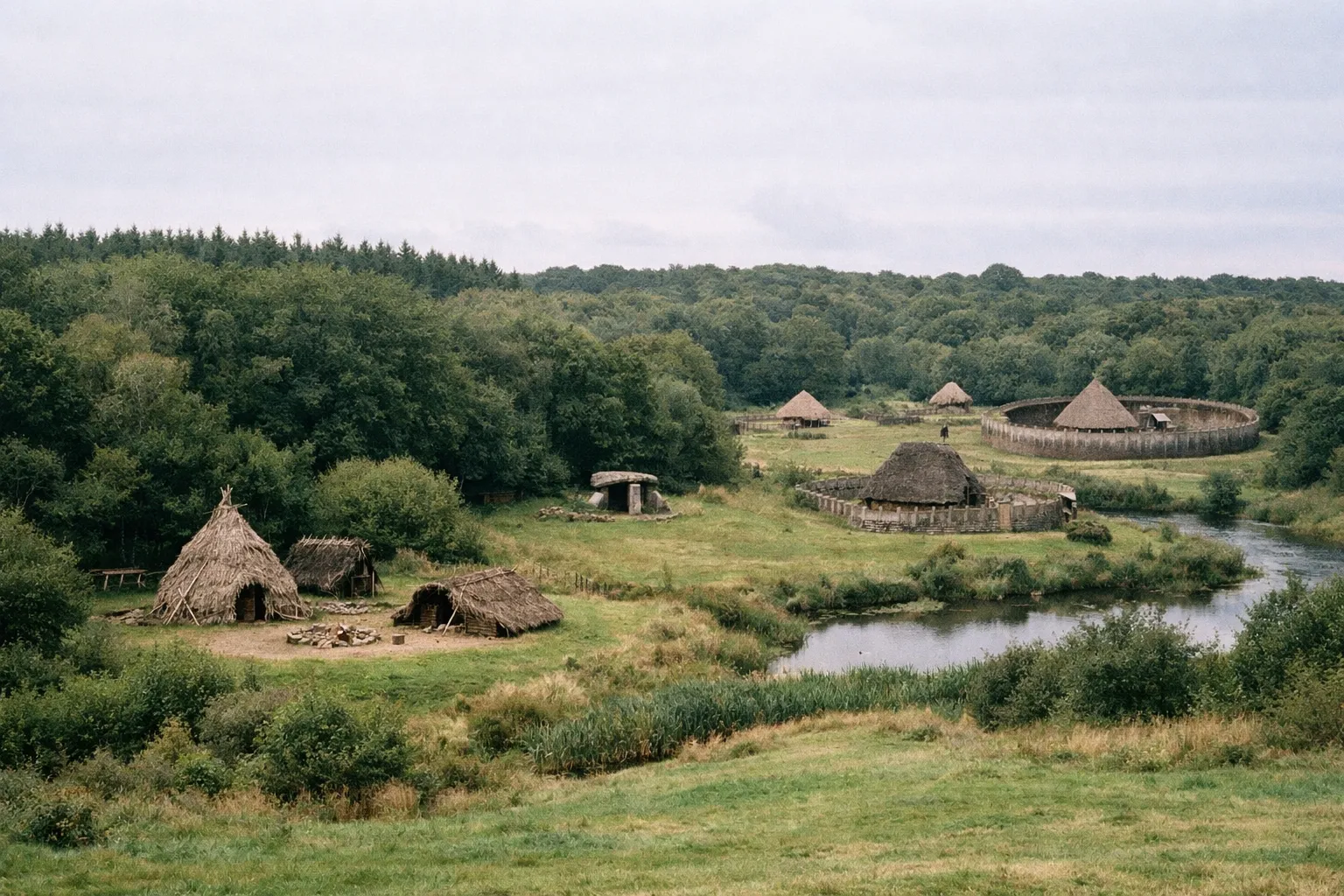
The reconstructions span from a Mesolithic hunter-gatherer camp and a Neolithic farmstead through portal dolmens, a Bronze Age fulacht fiadh cooking pit, a ringfort, a crannóg (a lake-dwelling on an artificial island), and Viking and Norman structures. The Carrig site holds the remains of a fortified ringfort built by Robert FitzStephen in 1169, the first Norman settlement in Ireland (3). It’s all set in genuine forest and wet woodland, which means it doubles as a good riverside walk even if you skip half the interpretation.
Visitor reviews consistently praise it for bringing 9,000 years of history to life through reconstructed buildings and hands-on experiences rather than display cases (7). For families, this is the strongest bet in the county: the hands-on activities (flint knapping, foraging, a Viking-style boot camp, falconry) hold kids’ attention in a way that static museums don’t.
Guided Tours vs. Self-Guided: Which Works Better
You can walk the park self-guided, but you’ll see the physical sites without the chronological narrative that makes them cohere. The park runs three themed guided tours: Pre-Historic Ireland, Early Christian Ireland, and The Age of Invasion. The first two run 30 minutes each; The Age of Invasion takes 40 to 45 minutes. Local guidance is consistent: join all three in one visit for the full sweep from prehistory to the Normans (3).
Most people find 90 minutes to two hours plenty, though the tours push it longer. Last entry is well before closing, so a late arrival cuts your tour options sharply.
Opening Hours and Booking
The park is open seven days a week. Per its official opening times, hours run 09:30-17:30 from March to October (last entry 16:00) and 09:30-17:00 from November to February (last entry 15:00). Book tickets online in advance: it secures your slot in peak periods, and you can present them on your phone or as a printout.
Per the Irish National Heritage Park’s prices page, adult admission is €18, seniors (65+) €14, students €14, children €9, under-4s free, a family ticket (2 adults + 1 child) €40, and a family ticket (2 adults + 2-3 children) €48. Expect the park to be the main paid item in a Wexford-town day.
Facilities are solid: free on-site car parking, a café serving breakfast, lunch and light bites, mobility scooter hire, and bathrooms in the visitor centre and out in the park between sites 10 and 11 (2). It’s reachable by bus or taxi from Wexford Station if you’re carless for the day.
Curracloe Beach: A Long Strand With More Access Points Than You’d Expect
Curracloe Beach is a long, white-sand strand about 15 minutes’ drive from Wexford town, running from Raven Point to Ballyconigar near Blackwater, with three main access points and Blue Flag status. Wexford County Council names the three entrances: Ballinesker, White Gap (the main one) and Culletons (Colloton’s) Gap, with White Gap the largest and Culletons Gap bordered by the Raven Nature Reserve and forestry (36).
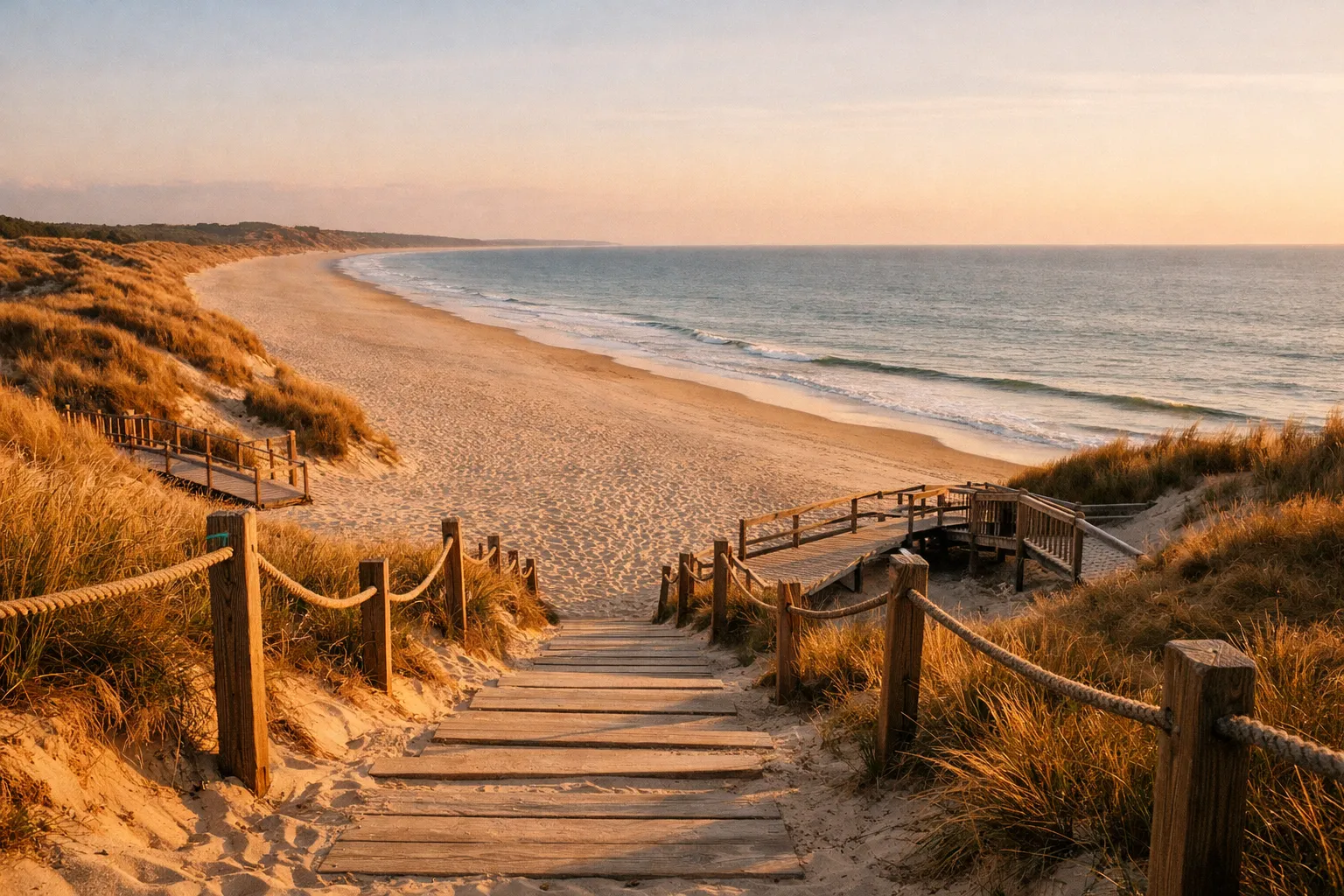
Each entrance has its own character. White Gap is the largest and best-equipped. Ballinesker is the film-famous stretch: it stood in for Normandy in Saving Private Ryan, and later appeared in Brooklyn, though that’s a footnote, not a reason to prioritise it over the facilities at White Gap. Culletons Gap is the quiet, rustic option, bordered by the Raven Nature Reserve and forestry, with a longer walk back to the car park.
Come in shoulder season and you’ll likely have space to yourself, provided you don’t need lifeguard cover or open toilets. Summer is busy. That’s the honest summary.
Facilities and Accessibility Breakdown
According to Wexford County Council, the access points break down like this:
- White Gap: approximately 500 parking spaces (the majority of Curracloe’s total), toilets, lifeguards on duty in summer, and 4 disabled parking spaces. Beach wheelchairs are free of charge here, pre-booking recommended through the Curracloe Beach Warden (36).
- Ballinesker: a car park, male and female toilets, and 2 disabled parking spaces. The boardwalk here is nearly flat and best for wheelchairs (36).
- Culletons (Colloton’s) Gap: more rustic, with a steep boardwalk and steps at the end that are currently buried in sand, so it is not suitable for mobility-limited visitors (36).
Toilets at White Gap and Ballinesker open on bank-holiday weekends from October to May, then daily from May to October, 08:00-21:00. Accessible toilets require a universal key (36). Soft, wind-blown sand often covers the wooden walkways, so grip and footwear matter more than you’d expect on a flat beach.
When to Visit and What to Expect
Summer means full facilities and lifeguard cover at White Gap, but also the crowds and parking pressure. Shoulder season (May, September) gives you a near-empty strand with most access still open. Off-peak, pack what you need; the facilities largely shut down. Either way, the adjacent Raven Point woodlands make a good post-beach walk through mature pine growing on old dunes.
Wexford Wildfowl Reserve: Free Birdwatching at One of Europe’s Key Wintering Sites
The Wexford Wildfowl Reserve at North Slob (Eircode Y35 EY89) has free entry and is open seven days a week, 09:00-17:00 all year, with the car park and hides locked at 17:00. It’s about 10 minutes’ drive north of Wexford town and clearly signposted: cross the bridge, travel 2.9 km, turn right at the reserve sign just after Bates Oil, then drive 2.5 km to the car park and visitor centre (26).
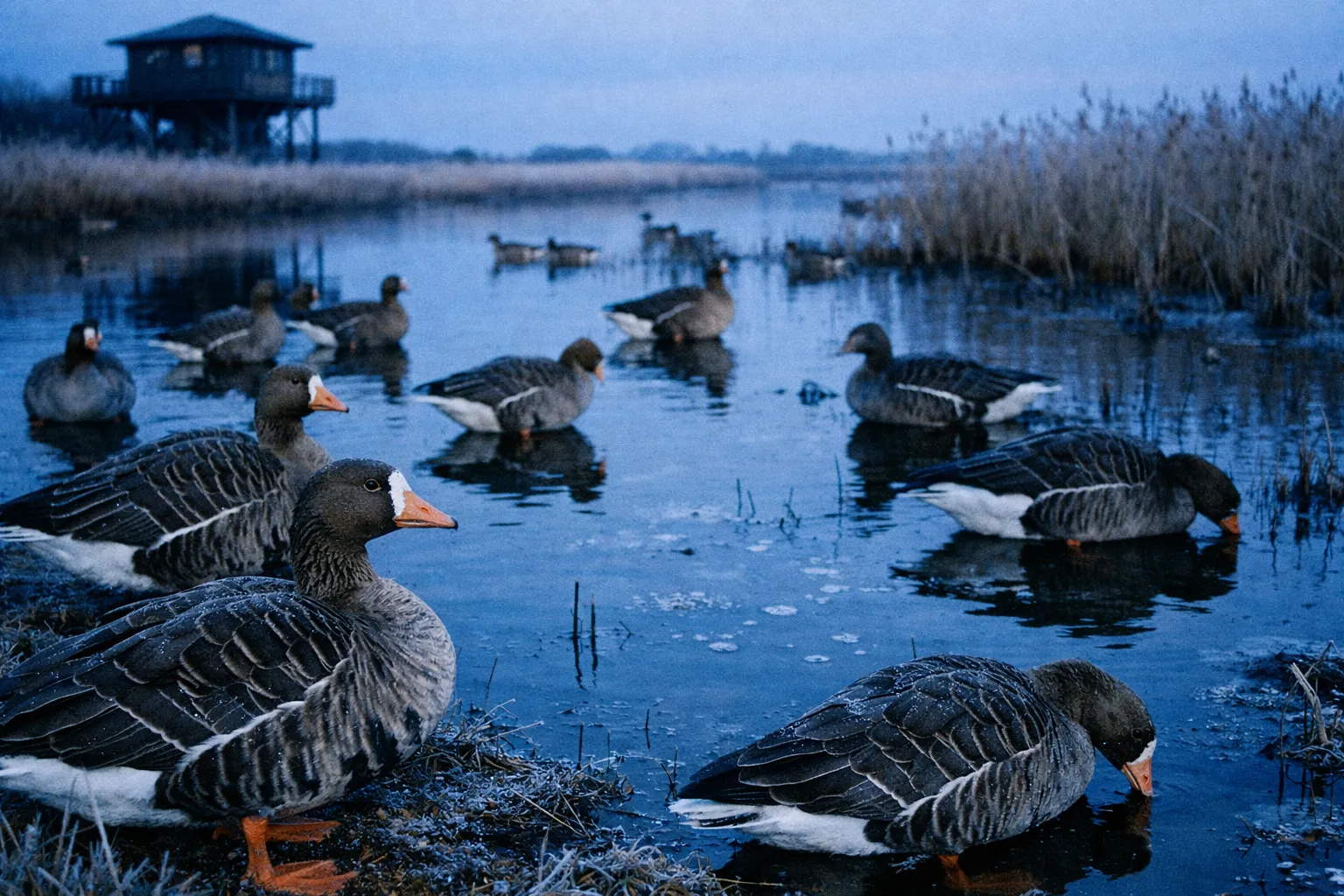
This is one of the more internationally significant sites in the county. The North Slob is reclaimed farmland, walled off from Wexford Harbour in the 1840s partly as a famine-relief project, and it’s now the winter home of nearly half the world population of Greenland white-fronted geese, over 7,000 birds, from October to April (27). Over 250 bird species have been recorded here. You view the flocks from an observation tower and four hides.
For the best activity, arrive early or time your visit around high tide, when birds concentrate on the remaining ground; check tide times separately before you drive out. Per Visit Wexford’s official listing for the reserve, guided tours run at 3pm Monday to Friday from March to December, covering the visitor centre, hides, observation tower, and the history of the North Slob, with no fee and no booking required.
Two operational notes worth keeping front of mind. The reserve is closed on Christmas Day. And because everything locks at 17:00, a late arrival gets you nothing, so plan to be settled in a hide with time to spare. Group and educational bookings can be arranged through the office (phone +353 1 539 3460). Between this and the beaches, you can fill a genuinely good day in Wexford without spending anything beyond fuel.
Kilmore Quay: Harbour Village, Island Trips, and Seasonal Puffins
Kilmore Quay is a small working fishing village on the south Wexford coast, about 45 minutes’ drive from Wexford town, best known as the launch point for seasonal boat trips to the Saltee Islands. It’s a low-key place: a working harbour, a cluster of traditional thatched cottages, fishing boats, and a pace that rewards an unhurried visit.
The main draw is offshore. Boat operators run seasonal trips to the Saltee Islands, Ireland’s largest privately owned islands, home to large seabird colonies including puffins, typically visible from about May to July. The rest of the year the puffins are gone, so time this deliberately.
Here’s the caveat that most guides skip: these trips depend on sea conditions and operator schedules, with no guaranteed timetable. Check locally before you make the 45-minute drive out, or you may arrive to find nothing sailing.
At village level, there’s plenty to fill an hour or two on land: a harbour walk, several seafood venues around the marina, and the Guillemot Maritime Museum, housed in a former lightship. Because Kilmore Quay, the Hook Peninsula, and Baginbun Beach all sit in the same southwest coastal corridor, treat this as part of a southern-coast day rather than a standalone half-day from town.
More Wexford Attractions Worth Fitting In
Beyond the flagship five, Wexford has a solid second tier: the town itself, additional heritage sites and activity options, worth slotting in around your main days.
Wexford town rewards a slow morning on foot. Founded by Vikings around 800 AD, it keeps its medieval lane pattern, the ruins of Selskar Abbey, St Iberius Church, and a harbour quay worth a wander. The National Opera House, home of the Wexford Festival Opera, seats 855 in its main auditorium and anchors an annual festival that runs over two weeks in October (15-31 October in 2026), and it pairs neatly with a Heritage Park day if the timing lines up.
Dunbrody Famine Ship (New Ross, about 30 minutes from Wexford town) is a full-scale replica emigrant ship moored on the River Barrow, offering an immersive famine-era experience, a very different historical register from the Heritage Park’s ancient-to-medieval sweep. Worth the detour if you have a New Ross day.
JFK Memorial Park & Arboretum near New Ross covers around 600 acres of woodland and gardens with more than 4,500 types of trees and shrubs, free to walk (standard car-park charges may apply). It pairs with the Kennedy Homestead nearby.
Two low-effort free stops round things out: Tacumshane Windmill, a late-18th-century thatched windmill and one of the last intact examples in Ireland (TripAdvisor 4.5/5), and Our Lady’s Island Lake, a peaceful, free spot rated 4.4/5 across 149 reviews.
For activity-based days, Wexford Golf Club (4.5/5), Bunclody Golf and Fishing Club (4.4/5, 104 reviews) and Shelmalier Stables (4.7/5, 24 reviews) cover golf and horse riding.
Wexford with Kids: Best Bets for Families
If you’re travelling with children, prioritise in this order:
- Irish National Heritage Park: the interactive experiences (flint knapping, Viking boot camp, foraging, falconry) are the strongest family draw in the county.
- Curracloe Beach: supervised swimming at White Gap in summer, plus enough space that kids can run without you worrying about it.
- Hook Lighthouse: the tower climb and hologram storytelling work well for older kids.
- Wells House & Gardens and the Seal Rescue Centre: both worth checking for younger children, especially on a rainy day.
Practical Tips for Visiting Wexford: Timing, Transport, and Common Mistakes
The single non-negotiable for visiting Wexford is a car. The county’s attractions are spread out and public transport between them is minimal. Wexford town connects to Dublin and Rosslare by rail, and the town is about 150 km (roughly 2 hours) from Dublin via the M11/N11, but once you arrive, the lighthouse, the beach, and Kilmore Quay are all beyond any useful bus route.
Plan by geographic cluster. The drive times don’t lie: Irish National Heritage Park (10 minutes), Curracloe Beach (15 minutes), and the Wexford Wildfowl Reserve (10 minutes) all sit close to town, while Hook Lighthouse is around 50 minutes southwest. You cannot comfortably combine the Hook Peninsula and the north coast in a single day; pick one per day.
Watch the closing-time traps. Last entry at the Irish National Heritage Park is 16:00 from March to October and 15:00 from November to February. The Wexford Wildfowl Reserve locks its hides and car park at 17:00. Hook Lighthouse is closed 20-25 December. Curracloe’s toilets and lifeguards are seasonal. Late arrivals lose out on all four.
Book and check ahead. Reserve Irish National Heritage Park tickets in advance for peak season. Confirm Kilmore Quay boat operators are sailing before you drive out. Pre-book a beach wheelchair at Curracloe’s White Gap through the beach warden.
Accessibility, in brief. Mobility scooter hire is available at the Heritage Park. Beach wheelchairs at Curracloe White Gap are free with pre-booking. White Gap and Ballinesker are the accessible beach entrances, and Ballinesker’s boardwalk is nearly flat, while Culletons Gap is not suitable for mobility-limited visitors. Accessible toilets at Curracloe require a universal key.
A Suggested 2-Day Structure for Wexford
2 daysPlan your visit efficiently with this two-day itinerary covering heritage, coast, and wildlife.
- 1
Day 1: Wexford town and heritage
Start with a morning walk through the medieval lanes, Selskar Abbey ruins, and harbour quay. Spend the afternoon at the Irish National Heritage Park joining all three guided tours for a full historical sweep. If timing aligns, enjoy an evening at the National Opera House.
- 2
Day 2: Choose a coastal cluster
Pick either the Hook Peninsula (Hook Lighthouse, Tintern Abbey, Baginbun Beach, and optionally Kilmore Quay if boats run) or North Wexford (Curracloe Beach, Wexford Wildfowl Reserve, and a Raven Point woodland walk).
Wexford's Main Attractions at a Glance
| Irish National Heritage Park | Hook Lighthouse | Curracloe Beach | Wexford Wildfowl Reserve | Kilmore Quay / Saltee Islands | |
|---|---|---|---|---|---|
| Entry Cost | €18 adult (per Irish National Heritage Park prices page) | €15 adult (2026 rate, tower tour included) | Free | Free | Boat trip (price varies) |
| Drive from Wexford Town | 10 min | 50 min | 15 min | 10 min | 45 min |
| Best Season | Year-round | Year-round (closed 20-25 Dec) | May-Sept for full facilities | Year-round (best Oct-Mar for geese) | May-July for puffins |
| Booking Required | Recommended in peak | No, but arrive early in summer | No (beach wheelchair: yes) | No | Check operator |
| Family-Friendly | Yes, interactive tours | Yes, guided tours | Yes, supervised swimming in summer | Yes, educational | Older kids |
Frequently Asked Questions
Frequently Asked Questions
- Is Wexford worth visiting?
- Yes, particularly if you want a mix of coast and heritage without the crowds of Kerry or Galway. The Irish National Heritage Park and Hook Lighthouse alone justify the trip, and Curracloe is one of the better strands on the east coast. Two days gives you enough time to cover the main sites without rushing.
- What is Wexford famous for?
- Hook Lighthouse, one of the world's oldest operational lighthouses, is the county's most distinctive landmark. Wexford is also known for its Viking origins, the Wexford Festival Opera at the National Opera House, and Curracloe Beach, which stood in for Normandy in Saving Private Ryan.
- What is Wexford, PA known for?
- That's a different Wexford entirely: an unincorporated area in Pennsylvania's North Hills, north of Pittsburgh, covering four townships. It's known for suburban living, shopping along U.S. Route 19, and as the childhood home of singer Christina Aguilera. It has no connection to County Wexford in Ireland beyond the shared name.
- How far is Wexford from Dublin?
- Roughly 2 hours by car via the M11/N11, about 150 km. There's also a direct rail connection from Dublin to Wexford town, which makes a day trip feasible, though you'll need a car once you arrive to reach most attractions.
- Is entry to the Wexford Wildfowl Reserve really free?
- Yes. Free entry, open 09:00-17:00 every day of the year except Christmas Day. The hides and car park are locked at 17:00, so arrive with enough time to settle in. No booking required for individual visitors.
- Can I visit Hook Lighthouse without a tour?
- No. Access to the tower requires joining a guided tour. Tours run hourly from 10:00 to 16:00 from September to June, and every 30 minutes from 10:00 to 17:00 in July and August. Last admission follows the last tour of the day. The site is closed 20-25 December.
- What are the best free things to do in Wexford?
- The Wexford Wildfowl Reserve, Curracloe Beach, Our Lady's Island Lake, Tacumshane Windmill, the Selskar Abbey ruins in Wexford town, and the JFK Arboretum near New Ross. Between the beaches and the reserve, you can fill a full day spending nothing beyond parking.
- What are some fun things to do in Wexford today?
- If the weather's fine, head to Curracloe Beach or drive out to the Wexford Wildfowl Reserve; both are open daily and free. For a wet day, the Irish National Heritage Park's indoor visitor centre and guided tours work year-round, and Hook Lighthouse runs tours daily outside its Christmas closure.
Making the Most of a Wexford Trip
Wexford works best when you respect its geography. Use Wexford town and the Irish National Heritage Park as your base, then choose your second day by interest: the Hook Peninsula corridor for heritage and lighthouses, or the north coast for Curracloe Beach and the Wexford Wildfowl Reserve.
Two days is the realistic minimum. Heritage-first visitors should anchor on the Heritage Park and Hook Lighthouse; wildlife and coast visitors should prioritise Curracloe and the reserve, adding Kilmore Quay only if the weather and boat schedules cooperate.
Three things to lock in before you leave: check seasonal opening hours for anything you’re driving out to, book Heritage Park tickets in advance if you’re visiting in summer, and don’t try to cram the Hook Peninsula and the north coast into the same day. Bring the car. Without it, most of this list stays out of reach.