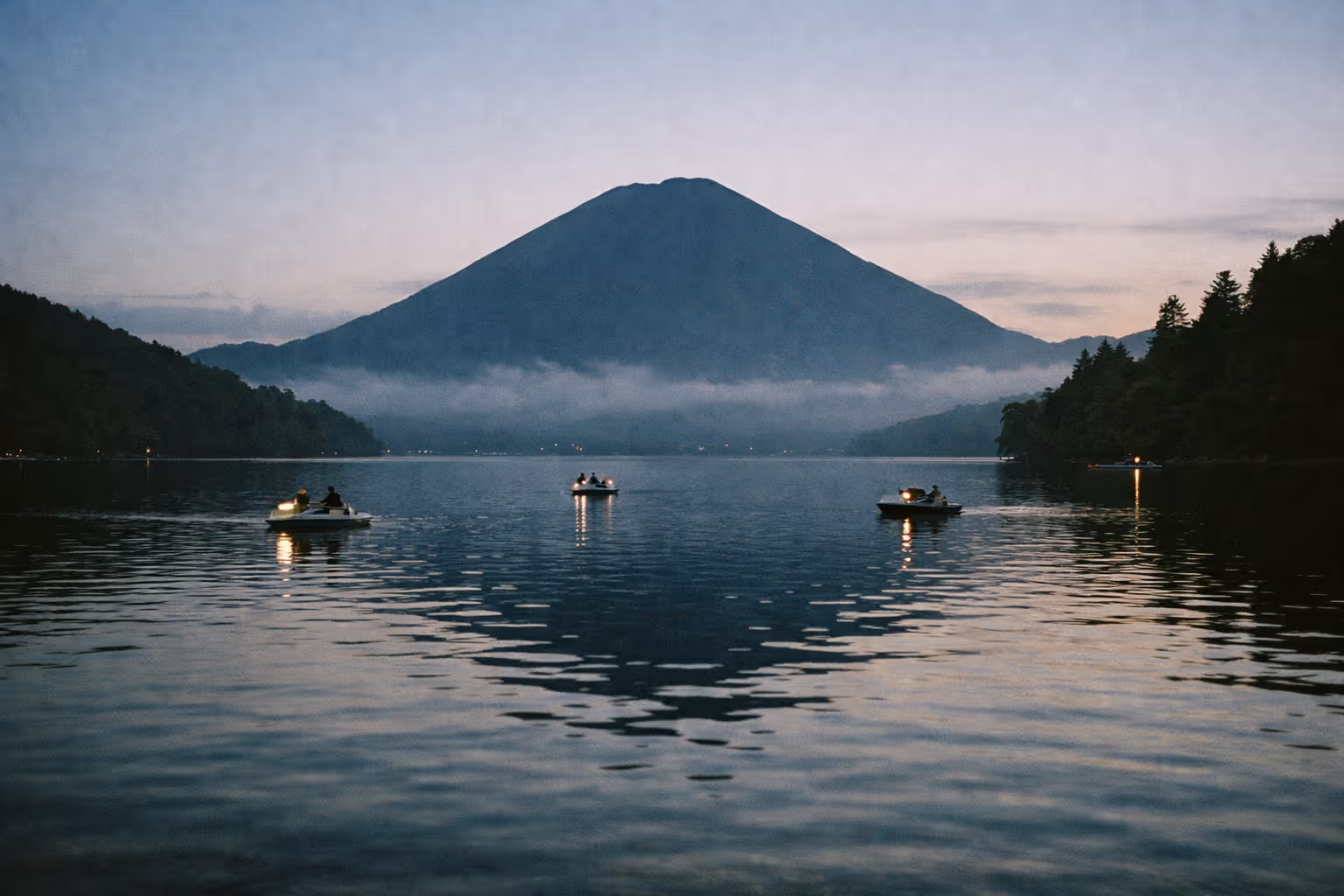
Nikko sits about 150 km north of Tokyo, roughly 2 hours by limited express from Asakusa, and the best things to do in Nikko split into two zones that most visitors fail to balance. There’s the World Heritage shrine cluster (Toshogu, Futarasan, Rinnoji, the vermilion Shinkyo Bridge), all walkable from the station. Then there’s Okunikko, the mountain half: Lake Chuzenji, Kegon Falls, and the Senjogahara marshland, reached by bus up a switchback road. The single most common mistake is treating Okunikko as a quick afternoon add-on. It isn’t, and this guide covers both zones with honest time budgets so you don’t lose half your trip to bad planning.
Nikko is not a single-day shrine stop. It’s a layered destination inside Nikko National Park, and how satisfying your visit feels comes down largely to whether you get on the bus to the lakes and waterfalls above town.
✓ Pros
- Two hours from Tokyo, viable as a day trip or an overnight
- UNESCO World Heritage shrines and temples in a walkable cluster
- Kegon Falls, Lake Chuzenji, and Senjogahara Marshland all inside the same national park
- Autumn foliage (koyo) here is among Japan's best-regarded
- Onsen villages at Yumoto and Kinugawa for multi-day stays
- The NIKKO PASS bundles Tokyo transport with local buses
✗ Cons
- Okunikko requires bus travel, and the distances catch day-trippers off guard
- Steep stone staircases at Toshogu and Taiyuin limit accessibility
- Peak autumn weekends are crowded, and parking and transport get strained
- The full frontal view of Kegon Falls needs a paid elevator; the free platform is partial
- Highland areas around Lake Chuzenji get cold and snowy in winter, affecting bus operations
What Nikko Is Actually Famous For
Nikko has a dual identity that most guides handle unevenly: there’s the UNESCO-listed shrine complex, and then there’s the mountain landscape of Nikko National Park surrounding it. Lead with the shrines and stop there, and you’ve sold the place short.
The cultural core is the “Shrines and Temples of Nikko,” inscribed by UNESCO in 1999. The designation covers 103 buildings across three institutions: 42 belong to Toshogu, 38 to Rinnoji, and 23 to Futarasan Shrine, per the UNESCO World Heritage Centre (26). Toshogu is the headline act, the lavishly decorated mausoleum of Tokugawa Ieyasu, founder of the shogunate that ran Japan for over 250 years.
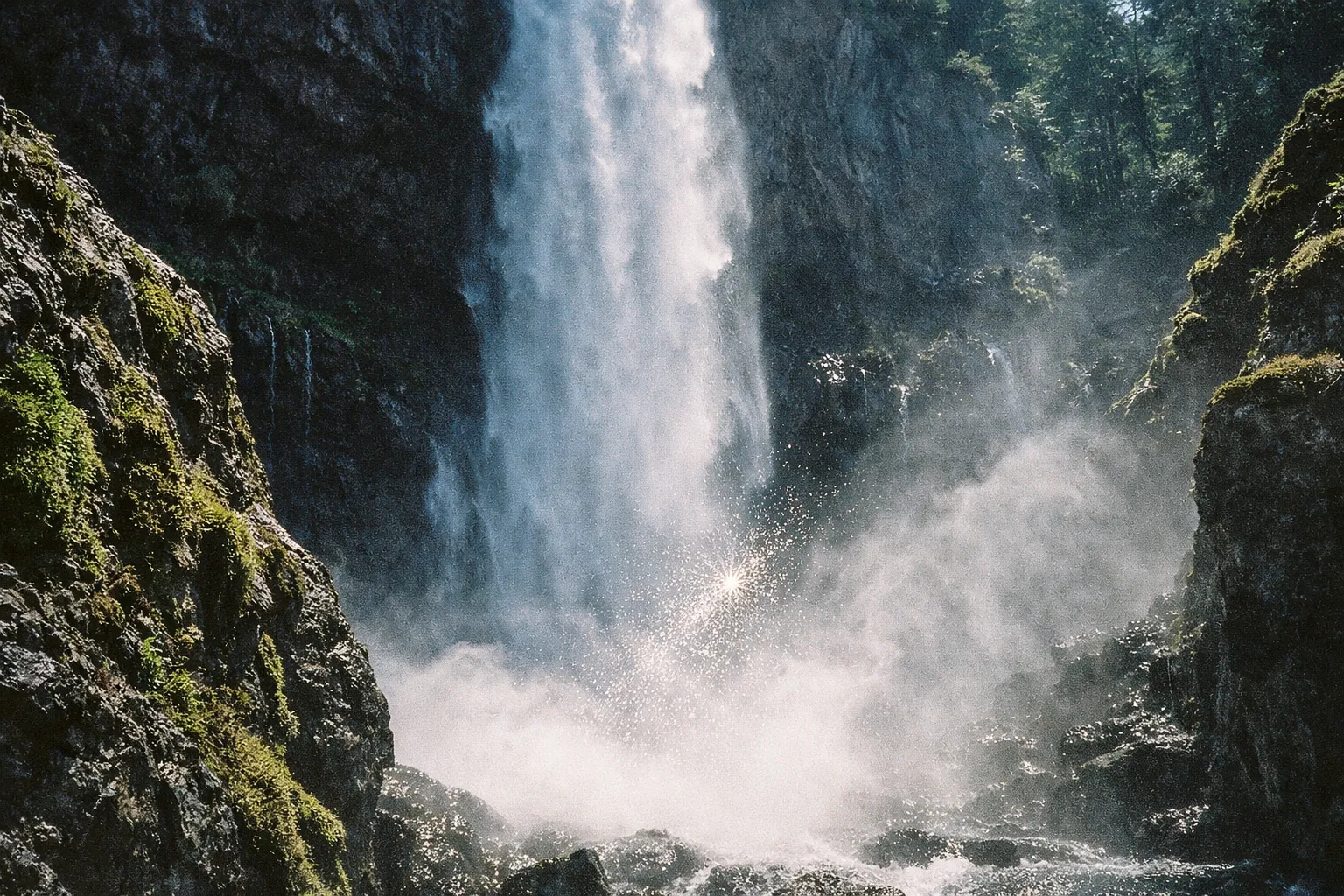
The nature counterpart is Okunikko, in the center of the national park. That’s where you find Lake Chuzenji at 1,269 m elevation, the 97 m drop of Kegon Falls, the Senjogahara marshland, and Mt. Nantai rising to 2,486 m above the lake. Kegon is often counted among Japan’s three most famous waterfalls, alongside Nachi and Fukuroda.
Nikko is also known for autumn foliage. The colors descend from the higher elevations of Yumoto Onsen in early October, peak around Lake Chuzenji and the Irohazaka road in mid to late October, and reach the town itself in early November (27). That timing drives the biggest crowds of the year.
What most guides underplay is the family and entertainment layer: Edo Wonderland Nikko Edomura, an Edo-period theme park, and Tobu World Square, with its scale models of world landmarks. Neither is a shrine, and both are legitimate reasons to extend a visit. Nikko sits in Tochigi Prefecture, a compact town that punches well above its size.
The Best Things to Do in Nikko’s World Heritage Area
The World Heritage area packs Nikko’s most important cultural sites into a walkable cluster in the Sannai district, about 20 to 30 minutes on foot uphill from Nikko Station, or 5 to 10 minutes by local bus. Plan a half-day here at minimum. Most sites open around 09:00 and close by 17:00 (16:00 in winter), with last entry 30 minutes before closing.
A workable order: start at the Shinkyo Bridge, walk up to Rinnoji, continue to Toshogu, then loop to Futarasan and Taiyuin before heading back. That sequence keeps you moving uphill once and downhill once, which matters more than it sounds after a few hours on stone steps.
Nikko Futarasan Shrine is the older, quieter counterpart to Toshogu, dedicated to Mt. Nantai and Nikko’s sacred mountains. It’s often skipped, which is exactly why it’s worth the short walk: you get a Shinto shrine at close to its intended pace, without the tour groups.
Rinnoji Temple and the Taiyuin Mausoleum are worth prioritizing. Taiyuin is the mausoleum of Tokugawa Iemitsu, Ieyasu’s grandson, and for visitors who prefer atmosphere over ornamentation it’s arguably a better experience than Toshogu, with fewer crowds, similar craftsmanship, and more shade under the cedars.
Tamozawa Imperial Villa is the one most itineraries drop, and it shouldn’t be. This former imperial retreat is a complete tonal shift from the shrines, all restrained wooden architecture instead of gold leaf and carving. Budget 45 to 60 minutes. It’s the best thing in the area for anyone who’s had enough of crowds.
Toshogu Shrine: What to Prioritize Inside the Complex
Toshogu is the single site to prioritize in Nikko. Admission is ¥1,600 for adults and ¥550 for children, and the shrine has no regular closing days (28). Hours are 09:00 to 17:00 from April to October and 09:00 to 16:00 from November to March, with last entry 30 minutes before closing (28). Give it 1.5 to 2 hours.
Three things inside earn the detour. The Yomeimon Gate is the visual centerpiece, densely carved and gilded to the point of excess, and the image most people carry away from Nikko. The three wise monkeys carving (hear no evil, see no evil, speak no evil) sits on the sacred stable and is smaller than photos suggest, so look for it deliberately rather than expecting it to announce itself. The Nemuri-neko (sleeping cat) carving marks the path to the Okusha inner shrine, reached by a long climb of stone steps to Ieyasu’s actual tomb. The steps are steep and uneven, a genuine accessibility barrier worth knowing about before you commit.
Shinkyo Bridge and the Approach to the Shrines
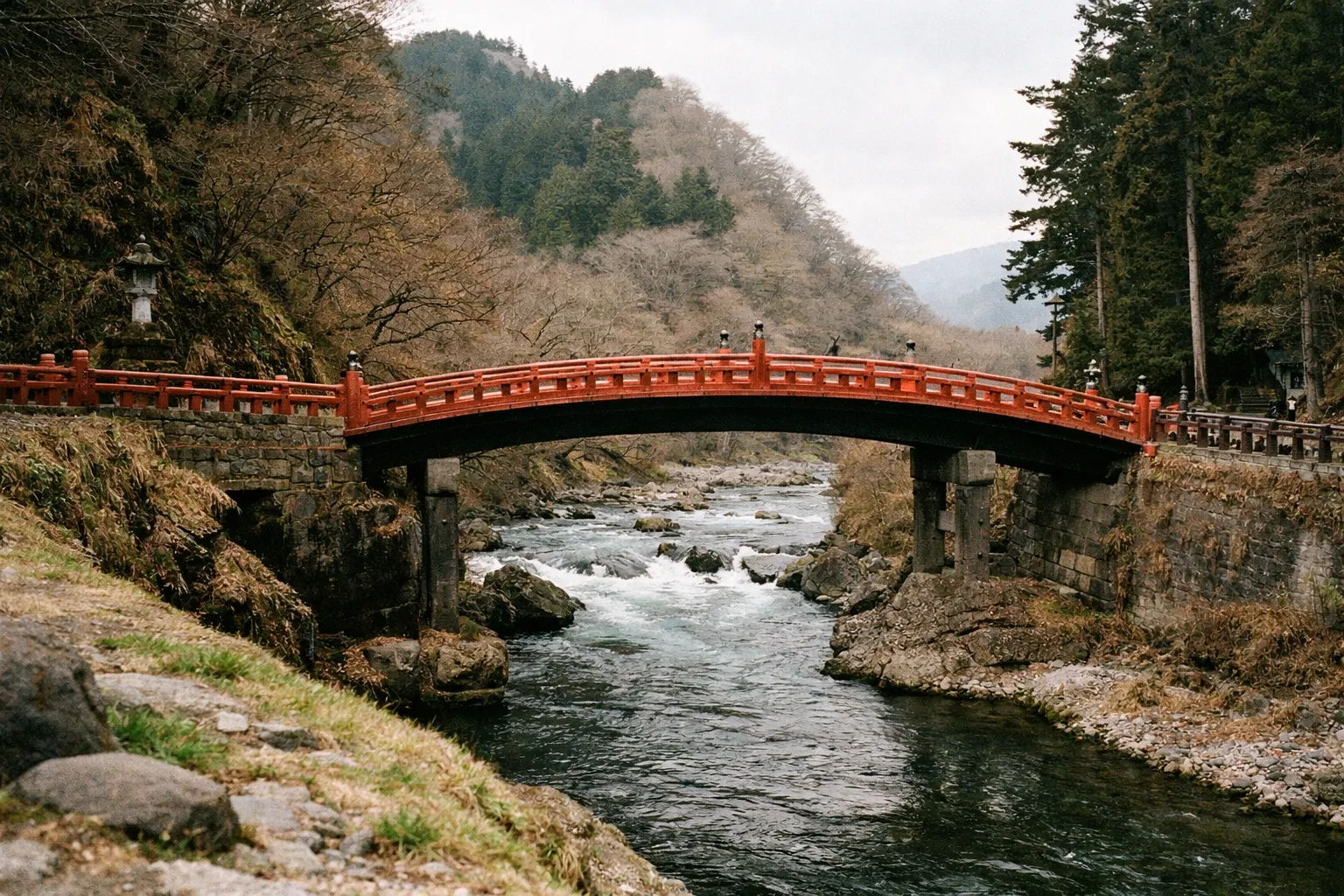
The Shinkyo Bridge is a vermilion lacquered bridge over the Daiya River at the entrance to the shrine area, traditionally counted among Japan’s three finest bridges, alongside Iwakuni’s Kintaikyo and the Saruhashi in Yamanashi (29). It sits about 10 to 15 minutes on foot from the World Heritage bus stop.
Here’s the practical split: the exterior view from the roadside is free, and it’s the view that ends up in most photographs. Actually crossing the bridge is a separate paid step, and for most visitors it isn’t necessary. You photograph the bridge; you don’t need to walk it. Arrive between 08:00 and 09:00: tour groups roll in mid-morning, and an early start buys you noticeably quieter access and better light on the red lacquer.
Okunikko: Lakes, Waterfalls, and Open Marshland
Okunikko is the mountain zone above town, reached by bus up the Irohazaka switchback road, and it’s the half of Nikko most day-trippers skip entirely. Set your expectations on distance first: the full Tobu bus run from Tobu-Nikko Station to Yumoto Onsen takes about 75 minutes end to end, with stops at Kegon Falls, Lake Chuzenji, and Senjogahara along the way. Buses to Chuzenji and Kegon generally run every 20 to 30 minutes in peak season, less often in winter.
Lake Chuzenji sits at 1,269 m, one of Japan’s highest natural lakes, with a shoreline of about 25 km. Seasonal cruises operate from the ports near Chuzenji Onsen, and you can rent paddleboards or swan boats in summer. The Italian and British Embassy Villas on the shore make a good low-effort stop with lake views.
Ryuzu Falls sits upstream from the lake and is at its best in autumn, when the maples framing the cascade turn. Access is easy from the road, which makes it a rare high-reward stop that costs you almost no walking. Worth the detour if you’re already on the bus to Yumoto; easy to skip if you’re pressed for time and Kegon is already checked off.
Yumoto Onsen is the hot spring village at the top of the chain, fed by natural sulfur springs. It’s best paired with an overnight ryokan stay rather than a rushed day visit, and it doubles as the trailhead base for Senjogahara.
How to Plan a Day in Okunikko by Bus
About 8 hoursA step-by-step itinerary for visiting Okunikko's main sights using local buses.
- 1
Start from Nikko Station
Take the first or second morning bus toward Yumoto Onsen.
- 2
Visit Kegon Falls
Alight at Kegon Falls; allow 45 to 60 minutes including the elevator observatory.
- 3
Walk Senjogahara Marshland
Continue by bus to the Senjogahara trailhead at Akanuma stop; walk the marshland trail (about 2 hours).
- 4
Exit at Yudaki Falls
Finish the trail at Yudaki Falls and catch the bus onward toward Yumoto Onsen.
- 5
Optional stop at Yumoto Onsen
Soak your feet or have lunch before returning.
- 6
Return to Nikko Station
Take the bus back; check last bus times before starting the hike.
Kegon Falls: Free Viewpoint vs. Paid Observatory
Kegon Falls drops about 97 m from the outflow of Lake Chuzenji. Seeing it properly means paying for the elevator. The free upper platform gives you a partial side angle; the paid elevator descends to a lower observatory that faces the full frontal drop. The fee is collected on site and isn’t covered by any bus ticket or NIKKO PASS.
Is it worth it? Yes. The Partying Traveler’s Nikko guide calls the elevator effectively unavoidable for seeing the falls “in all their beauty” (1). The free platform is fine if you’re passing quickly, but if Kegon is a headline stop for you, budget the elevator fee. Go early to beat the tour buses, which cluster mid-morning.
Senjogahara Marshland: the Best Walk in Nikko for Most Visitors
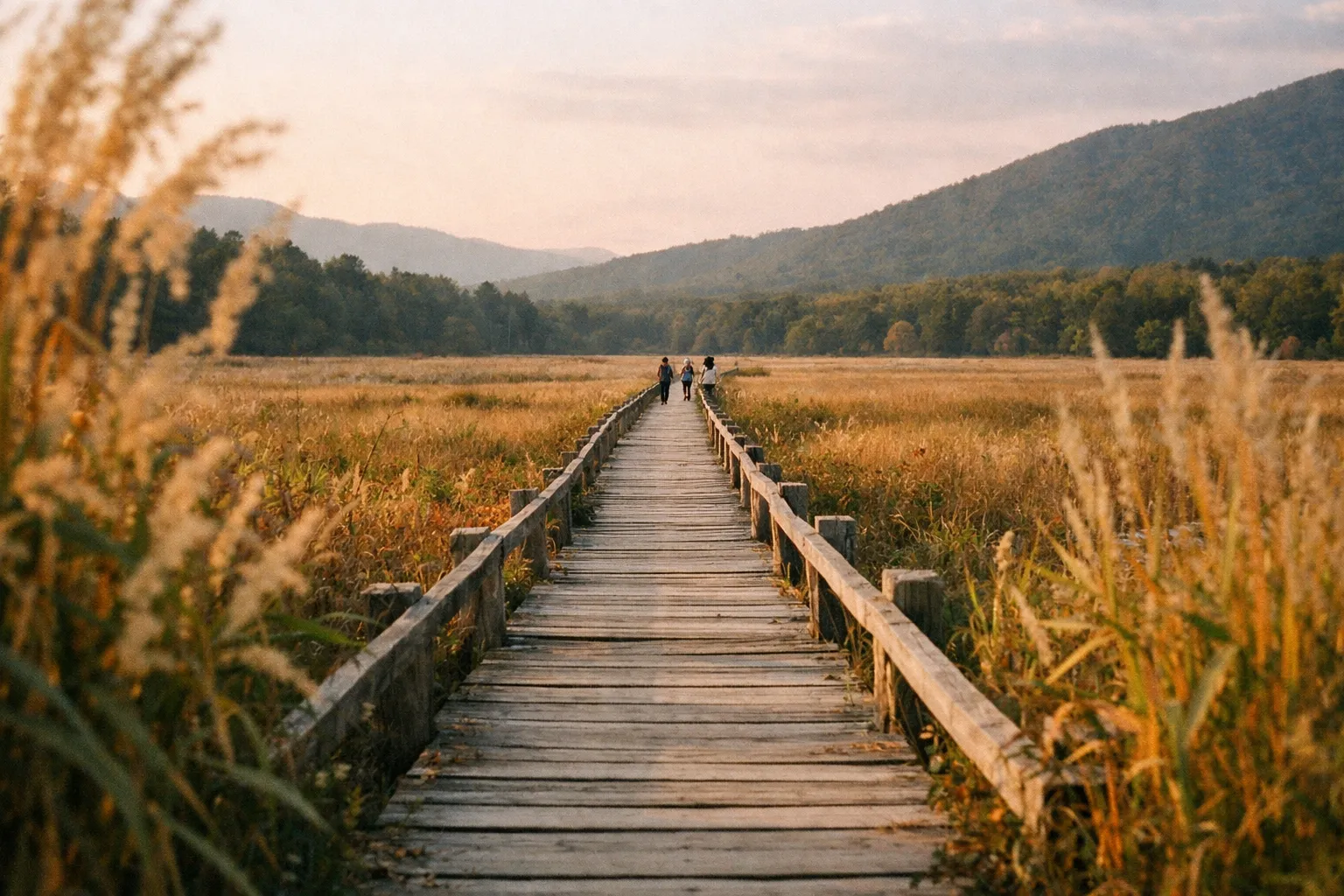
Senjogahara is the best hike in Nikko for non-expert walkers, a near-level trail across a highland wetland that rewards you without demanding real fitness. The official route runs about 6 km between Yudaki Falls and the Akanuma junction, and the Nikko tourism association allows two hours for it, or three if you carry on to Ryuzu Falls (33). Count on the upper end of that if you stop for photographs.
There’s almost no elevation gain. The first third is a shaded forest walk on packed trail, after which you follow raised boardwalk over the marsh, and the scenery shifts from forest to open marsh to the Yudaki cascade (33). In summer it’s green and cool; in autumn the grasses turn gold. Both ends are on the Tobu bus route, Akanuma and Yutaki Iriguchi, so you never have to backtrack. Check the return timetable before you set off: evening service thins out.
Active Pursuits and Outdoor Adventures in Nikko National Park
Nikko National Park supports everything from a full-day volcano climb to a few minutes in a cable car. Match the effort to your day.
Mt. Nantai is the serious one. The volcano above Lake Chuzenji reaches 2,486 m, and the main trail from Futarasan Shrine opens roughly May 1 to October 25, with the round trip taking around 6 to 8 hours for fit hikers. This is a full-day commitment on a steep, unrelenting climb. It is not a casual walk, and not something to attempt late in the day.
Hangetsuyama is the accessible alternative. A road plus a short trail gets you to a viewpoint around 1,738 m with wide-open views over Lake Chuzenji and the Kegon Falls area. Half a day covers it, and the reward-to-effort ratio is excellent.
The Akechidaira Ropeway is the no-effort option. A short cable-car ride lifts you to an observation deck with one of the best vantage points over Lake Chuzenji and Kegon Falls in the whole area. Combine it with a Kegon Falls visit: they’re close, and the aerial perspective completes what you see from the ground.
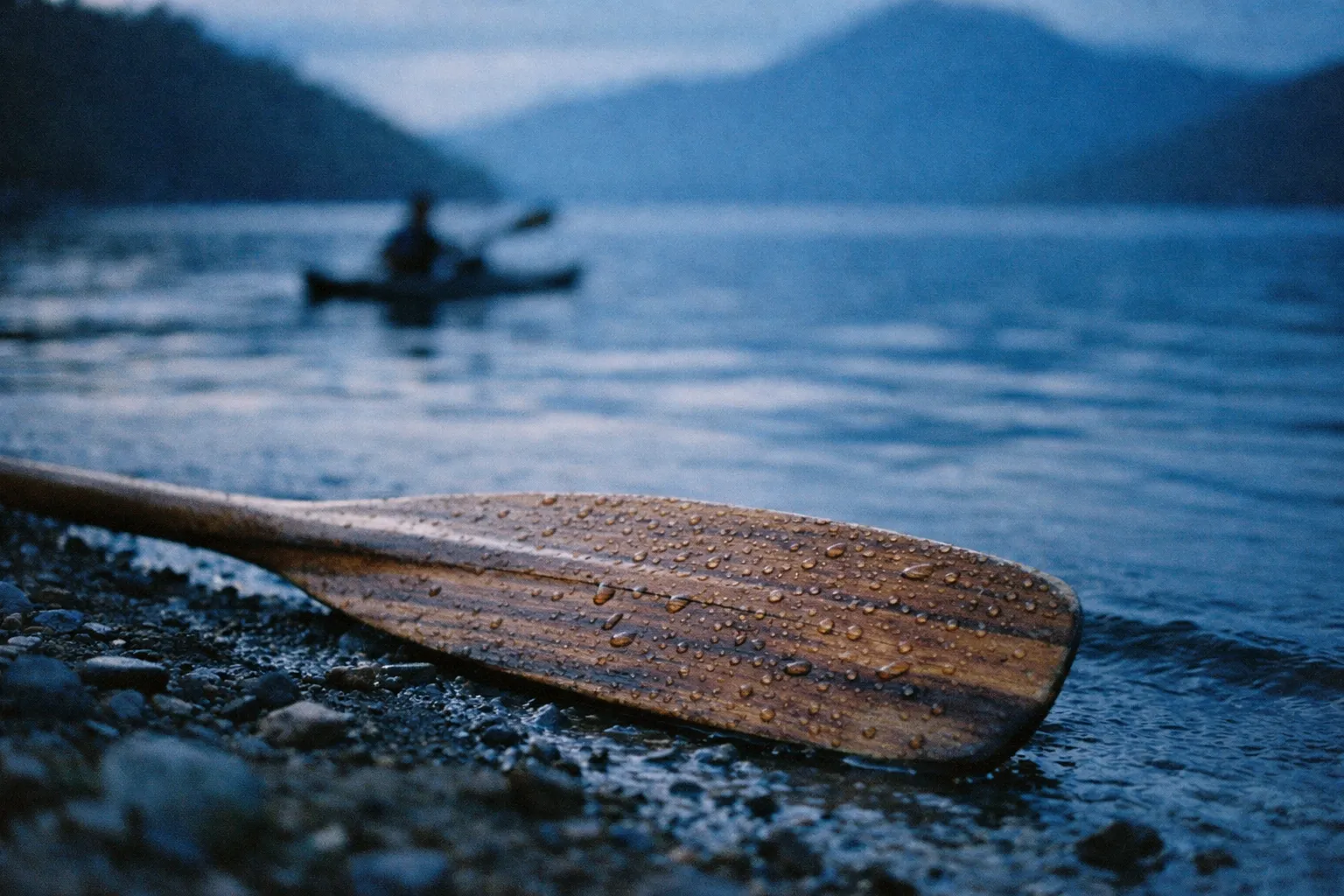
Kayaking and paddleboarding on Lake Chuzenji run seasonally, with calm water and a mountain backdrop. Downstream near Kinugawa Onsen, Kinugawa River rafting offers a family-friendly adventure in the warmer months.
Forest bathing costs nothing. The Nikko Suginamiki Kaido, or Cryptomeria Avenue, runs over 35 km and is lined with more than 12,000 cedar trees (14), and Guinness World Records lists it as the world’s longest avenue of trees (15). Walk a stretch of the cedar-lined approach toward the shrines. It’s free, atmospheric, and routinely overlooked by visitors who head straight for the ticket gates.
Family-Friendly Options: Theme Parks and Accessible Attractions
Families who find the shrine staircases hard going have two solid theme-park alternatives, both flatter and more forgiving than the Sannai district.
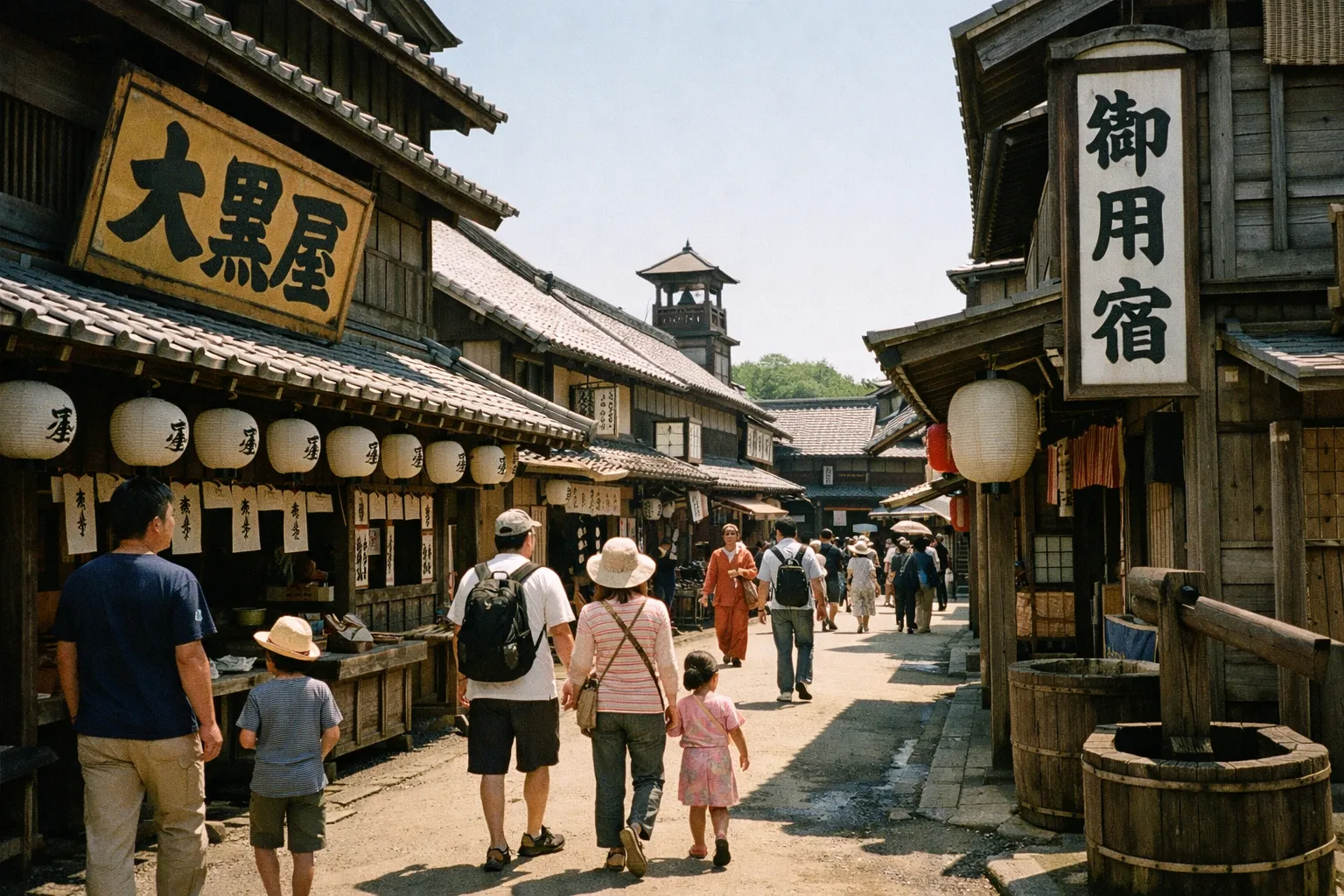
Edo Wonderland Nikko Edomura recreates an Edo-period town with costumed staff, ninja shows, and hands-on experiences. With its shows running on a fixed daily schedule, it works as a half-day to full-day outing rather than a quick stop. It sits about 15 minutes by bus from Kinugawa Onsen Station (16), and opens 09:00 to 17:00 from March 20 to November 30 and 09:30 to 16:00 from December 1 to March 19, with closed days listed on its operating calendar (17).
Tobu World Square exhibits 102 architectural models from 22 countries and regions at 1:25 scale, including 50 UNESCO World Heritage properties (18). It’s genuinely good for kids and for photography, and the park itself puts a visit at 1.5 to 2 hours (20). Gates open at 09:00 and close at 17:00 on most days, at 18:00 on some holiday dates and earlier from November (16:30, then 16:00), with last admission one hour before closing (19).
Kinugawa Onsen anchors the family side of the region, a resort hot-spring town with riverside ryokan, reachable by Tobu Railway and close to both theme parks.
For younger children who won’t manage the Senjogahara walk, the swan boats and lake cruises on Lake Chuzenji work well. And on accessibility: both theme parks are markedly easier to navigate than the steep stone stairs at Toshogu and Taiyuin. If mobility is a concern, plan your day around the parks first and treat the shrine complex as secondary.
What to Eat in Nikko: Local Specialties Worth Seeking Out
Nikko’s signature dish is yuba, the skin that forms on top of soy milk as it boils, lifted off and used in everything from stews and ramen to onigiri. Most restaurants in town serve it in some form, from a topping on simple soba to high-end kaiseki at specialist restaurants and ryokan (21). It’s the one local specialty worth going out of your way for.
Soba is the other mountain-town staple. Nikko’s climate and natural water suit buckwheat, and the town now counts over 100 restaurants serving handmade soba (22). For a heavier meal, look for Tochigi wagyu on mid-range and higher menus in town: the brand is reserved for black wagyu from designated Tochigi producers that reach the top two quality grades, 4 and 5 (23).
In summer, look for kakigori, shaved ice made with Nikko’s natural ice, often paired with the local summer strawberries (24). If you’re staying overnight, look for sake from the Katayama Shuzo brewery, founded in 1880 and brewing with Nikko’s water (25).
One logistical note worth repeating: restaurants concentrate near the World Heritage area and Nikko Station. Okunikko dining is thin. Eat before you head up the mountain or plan around your ryokan’s meals. Don’t assume you’ll find options at the trailhead.
Seasonal Highlights: When to Visit and What Changes
Autumn (October to early November) is peak season for a reason: koyo foliage around Lake Chuzenji and Ryuzu Falls is the most dramatic scenery Nikko offers, and traffic into Okunikko becomes congested at the peak of the season, with weekends the worst of it (27). If you come now, start early, pre-plan your buses, and visit on a weekday if you can.
Spring (April to May) is the quieter shoulder. Cherry blossoms in the lower town bloom from mid to late April, a little later than Tokyo due to elevation, with trees around the Shinkyo Bridge and shrine approaches. The Mt. Nantai trail opens around May 1, so late spring is when serious hiking becomes possible.
Summer (June to August) turns Okunikko into a cool-weather escape from Tokyo’s heat. Hiking season is in full swing, Senjogahara is green and lush, and the lake activities are all running.
Winter (December to March) is the quietest and coldest. The Yumoto Onsen Snow Festival is the headline event, and Kegon Falls can partially freeze in January and February, drawing photographers to the ice formations. Highland roads and bus schedules into Okunikko may be reduced in heavy snow, so check services before committing to a lake or marshland plan.
One constant across all seasons: Lake Chuzenji and Senjogahara sit near 1,270 m, several degrees cooler than the town below. Pack a layer even in summer.
How Much Time You Actually Need in Nikko
Two days is the practical baseline for seeing both of Nikko’s zones without rushing. One day works only if you’re disciplined, and three days suits active travelers or families.
One day realistically covers the World Heritage area plus a single Okunikko stop, either Kegon Falls or a short section of Senjogahara, not both comfortably. A day trip from Tokyo gives you roughly 5 to 7 hours on the ground once the approximately 2-hour train each way is accounted for. Arrive on the first or second morning train from Asakusa and move efficiently.
Two days is the recommendation. Day one for the shrine cluster and Kegon Falls or Lake Chuzenji; day two for the Senjogahara hike, Ryuzu Falls, and Yumoto Onsen, with a ryokan overnight in between. This is the version most visitors should aim for.
Three days adds a Mt. Nantai or Hangetsuyama hike, a theme park, Tamozawa Imperial Villa, and a slower pace overall, or a night at Kinugawa Onsen to round things out.
The trap is the same one that catches everyone: treating Okunikko as a bolt-on. The bus from Nikko Station to Yumoto Onsen alone takes 75 minutes each way, and the distances between Kegon Falls, Senjogahara, and Yumoto add up fast. Most people who leave feeling they “didn’t have enough time” spent only one day. On a longer Japan trip, Nikko fits either as a Tokyo day trip or as an overnight. It’s the standard side trip on a 10-day itinerary, and it earns that slot.
How to Spend 1, 2, or 3 Days in Nikko
| 1 day | Recommended 2 days | 3 days | |
|---|---|---|---|
| Days | 1 day | 2 days | 3 days |
| Zones Covered | World Heritage area + 1 Okunikko stop | Both zones fully | Both zones + extras |
| Key Sites | Toshogu, Kegon Falls | Shrines, Kegon Falls, Lake Chuzenji, Senjogahara | Above + Edo Wonderland or Mt. Nantai hike, Kinugawa Onsen |
| Stay Overnight? | No | Yes (Nikko town or Yumoto) | Yes (2 nights) |
| Best For | Tokyo day-trippers | Most visitors | Active travelers, families |
Getting to Nikko and Getting Around Once You’re There
The cleanest route from Tokyo is the Tobu Railway limited express from Asakusa to Tobu-Nikko Station. The fastest direct services take approximately 1 hour 50 minutes on the Limited Express SPACIA, per Tobu Railway’s official access guide (32). The alternative (JR to Utsunomiya, then a local train) takes around 2 hours or more with a transfer, and is less convenient for most visitors.
Once you arrive, Tobu buses run from the station up the Irohazaka road to Lake Chuzenji, Kegon Falls, Senjogahara, and Yumoto Onsen, every 20 to 30 minutes in peak season and less often in winter. Confirm seasonal timetables in advance. Car rental gives more flexibility, especially for the Senjogahara trailheads, but parking at major sites fills early during autumn peak. The World Heritage area is walkable from the station in 20 to 30 minutes; Okunikko is not walkable.
NIKKO PASS: Which Version to Buy After the 2025 Price Revision
Tobu Railway revised the NIKKO PASS fares for passes used from 20 April 2025, and the All Area rate is now flat year-round (30). Two versions exist, and choosing between them is the key planning decision.
The NIKKO PASS All Area costs ¥8,000 for adults and ¥4,000 for children and is valid 4 consecutive days. It covers the round trip from Asakusa plus all local Tobu buses, including the Okunikko routes up to Yumoto Onsen (30). The NIKKO PASS World Heritage Area costs ¥3,000 for adults and ¥1,500 for children and is valid 2 days, covering the round trip and buses within the World Heritage zone only, not the Okunikko routes (31).
The decision rule is simple. If you’re visiting only the shrine cluster, the World Heritage Area pass is enough. If you’re going anywhere in Okunikko (Kegon Falls, Lake Chuzenji, Senjogahara, or Yumoto Onsen), the All Area pass is the one that covers the buses you’ll actually ride, and it’s worth the difference. Note that the JR Pass does not cover the Tobu limited express, so JR Pass holders either route slowly via Utsunomiya or buy a NIKKO PASS anyway.
NIKKO PASS Options (Post-April 2025 Pricing)
| NIKKO PASS All Area | NIKKO PASS World Heritage Area | |
|---|---|---|
| Adult Price | ¥8,000 | ¥3,000 |
| Child Price | ¥4,000 | ¥1,500 |
| Tokyo Round-Trip (Tobu) | ✓ | ✓ |
| Local Buses (World Heritage Zone) | ✓ | ✓ |
| Local Buses (Okunikko) | ✓ | ✗ |
| Best For | Multi-day, Okunikko visitors | Day-trippers, shrine-only visits |
Where to Stay in Nikko: Town, Lakeside, or Onsen Village
Nikko town, around the stations and World Heritage area, has the widest range of accommodation, from budget guesthouses to mid-range hotels. It’s the most convenient base for the shrines and for day-trippers extending to one night.
Chuzenji Onsen, on the lakeshore at 1,269 m, offers a smaller set of lakeside hotels and ryokan, many with Mt. Nantai views and quick bus access to Kegon Falls. Cooler, quieter, and stronger on setting than on choice.
Yumoto Onsen at the northern end of Okunikko is the most immersive onsen option, a compact village of sulfur-spring ryokan, about 75 minutes by bus from Nikko, and a natural base for Senjogahara and nearby trails. Best for travelers pairing hiking with hot springs.
Kinugawa Onsen, a short train ride from Nikko, is the resort-style, family-oriented option, with larger hotels and proximity to Edo Wonderland.
Book ryokan well ahead for autumn. The popular properties fill months before the foliage peaks, and that’s not an exaggeration.
Practical Tips to Avoid the Most Common Nikko Mistakes
- Arrive early at the Shinkyo Bridge and Toshogu. The roadside view of the bridge is free and open at any hour, so shoot it before 08:30; Toshogu itself opens at 09:00, and being at the gate then puts you ahead of the mid-morning tour groups.
- Don’t underestimate Okunikko bus times. Nikko Station to Yumoto Onsen is about 75 minutes one way. Build the transit into your day, not just the attractions.
- Plan autumn weekends deliberately. During peak koyo, check bus timetables in advance and consider a weekday visit. Parking fills early.
- Pay for the Kegon Falls elevator. The free platform gives a partial side view; the elevator delivers the full 97 m drop face-on. Carry cash for the on-site fee.
- Dress for elevation. Lake Chuzenji sits near 1,269 m, noticeably cooler than the town even in summer. Bring a layer.
- Give the theme parks real time. Edo Wonderland is a half-day outing and Tobu World Square needs 1.5 to 2 hours on its own; neither is a quick add-on to a shrine visit.
Frequently Asked Questions
Frequently Asked Questions
- What not to miss in Nikko?
- Toshogu Shrine and the Yomeimon Gate, Kegon Falls (with the elevator for the full view), and Senjogahara Marshland. Prioritize the shrine cluster in the morning and Kegon Falls in the afternoon if limited on time.
- Is Nikko worth visiting?
- Yes, especially beyond the shrine cluster. The combination of UNESCO-listed temples, a 97 m waterfall, highland marshland hiking, and onsen villages within two hours of Tokyo is unique.
- How much time should I spend in Nikko?
- One day covers the World Heritage area and one Okunikko highlight. Two days is the practical minimum to see both zones without rushing. Three days suits active travelers and families.
- Is the JR Pass valid for Nikko?
- The Tobu Railway route from Asakusa to Tobu-Nikko is not covered by the JR Pass. The NIKKO PASS, bundling Tobu trains and local buses, is the more practical option for most visitors.
- What is the best time of year to visit Nikko?
- Autumn (October to early November) for foliage and crowds; spring (late April to May) for cherry blossoms and fewer visitors; summer for cooler mountain weather; winter for the Yumoto Onsen Snow Festival and frozen falls.
- Can you do Nikko as a day trip from Tokyo?
- Yes, but only the shrine cluster plus one Okunikko stop comfortably. Early morning trains maximize time. For full experience, an overnight stay is recommended.
- What are the best things to do in Nikko in winter?
- The Yumoto Onsen Snow Festival and partially frozen Kegon Falls are highlights. The shrine complex is atmospheric under snow. Highland bus services may be reduced; dress warmly.
Before You Book
Nikko rewards a plan, and the plan comes down to one decision: whether you get on the bus to Okunikko. The World Heritage shrines and the mountain zone are both worth your time, but the gap between a rushed day trip and a satisfying visit is almost always that single choice. Decide how many days you have: one for a taste, two to do it right, three to add hikes and theme parks. Match your NIKKO PASS to it: the World Heritage Area pass for shrines only, the All Area pass the moment Okunikko is on your list. If you’re coming in autumn, sort your ryokan first. The best properties book out months ahead of the foliage peak, and that’s the one thing worth locking in before anything else.