The deer at the Nara deer park will bow to you for a cracker, but Nara’s own tourism bodies still describe them as wild animals and not mascots. The park itself costs nothing to enter, the two big religious sites inside it charge separately, and the fastest trains from Kyoto or Osaka put you there in a little over half an hour.
Nara Deer Park Overview: Population, Area, and Why It’s Famous
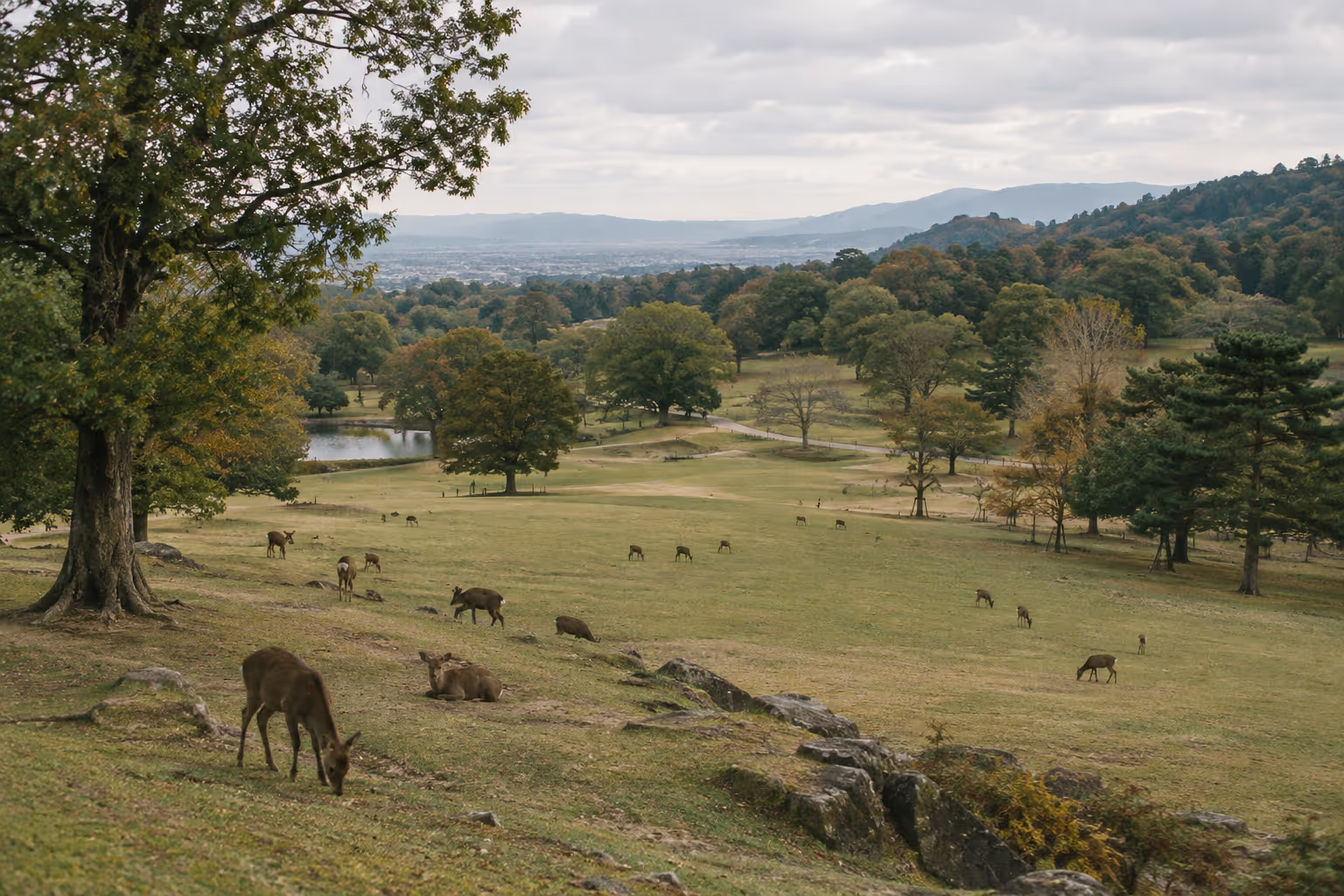
Nara Park is a free, open public park covering about 660 hectares (1,630 acres) of eastern Nara City, known for wild sika deer that roam among major temples and shrines (11)(10). There is no gate, no ticket and no closing time for the park itself. You can walk in from the station side and be among deer within minutes.
The park’s boundaries take in Todai-ji, Kohfukuji, Kasuga Taisha, the Nara National Museum and the Kasugayama Primeval Forest. The tourism association describes these as a single landscape of lawns, old pines and woodland (10). Admission applies only at specific buildings, such as Todai-ji’s Great Buddha Hall, and each site sets its own hours (1)(10).
How Many Deer Actually Live in Nara Park
Tourism pages still round the Nara park deer population to almost 1,200 (Visit Nara) or about 1,300 (Nara City Tourism Association) (11)(10). The Nara Deer Preservation Foundation counts the herd every July, and its count of July 16, 2026 found 1,687 deer: 411 males, 990 females and 286 fawns, 222 more than in 2025 and a record since comparable surveys began in 1953 (18)(13).
The exact headcount matters less than this: you will not have to look for deer. They graze under trees, lie on the lawns and cross roads with traffic.
Why the Park Draws So Many Visitors
The deer are famous because of what they stand for. They have long been regarded as divine messengers of the gods of Kasuga Taisha, and they are designated natural monuments of Japan (7)(10). Visit Nara notes that until 1637, killing one was punishable by death (11). Centuries of protection also left a biological mark. Researchers found that Nara’s deer are genetically distinct from nearby sika populations, having split from their ancestors more than 1,400 years ago, around the time Kasuga Taisha was founded (4).
Add a bronze Buddha at Todai-ji whose seated body rises 14.98 m (49 ft) (14) and a shrine lined with stone lanterns, and you have one of the densest concentrations of heritage sites in Japan, all within walking distance of each other.
Is it worth it? For most people, yes. Entry is free, you get close to wild animals, and two major heritage sites sit inside the same walk. You don’t need to buy crackers to enjoy the deer. The trade-offs:
- Todai-ji and Kasuga Taisha charge their own admission.
- Deer can nip, bite or headbutt when they want food.
- The park gets crowded during cherry blossom season and autumn foliage weeks.
- Male deer are riskier in autumn.
✓ Pros
- The park works as a natural link between several major heritage sites.
- You can encounter deer without making feeding part of the visit.
- Open lawns and wooded approaches offer different settings for a walk.
✗ Cons
- The large grounds can make a short visit feel rushed.
- Deer encounters call for attention to bags, paper and food throughout the visit.
- The route between the shrine and temple includes a gentle uphill stretch.
Nara Park Deer Behavior and Safety
The Nara park deer are wild animals, and official guidance tells you not to touch them, tease them or approach fawns carelessly (15). The deer seem calm because they are used to people. They are still not tame.
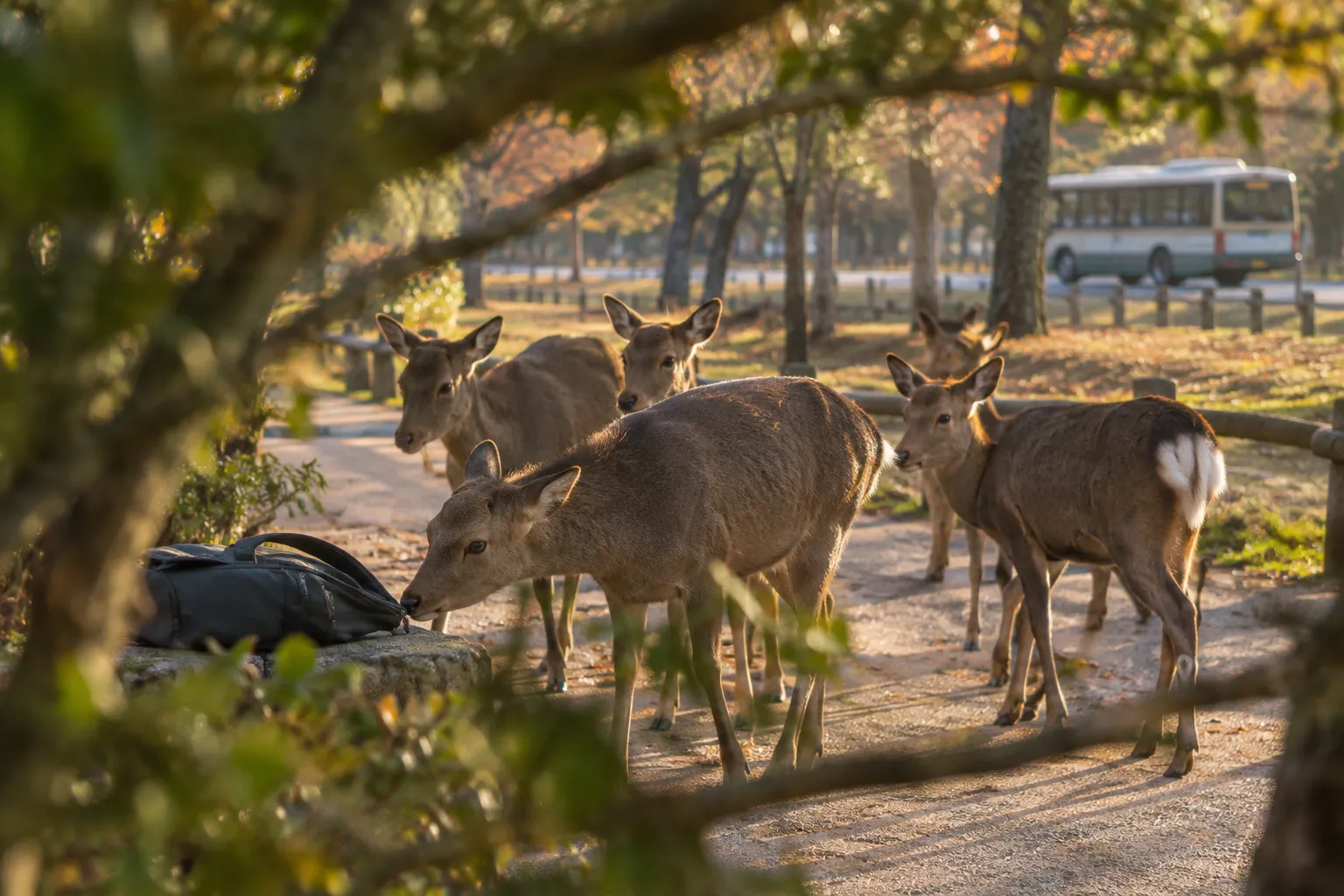
The Nara City Tourism Association describes the deer as friendly creatures that actively approach people. The same page warns that males can become aggressive because they are wild animals (7). Both statements are true at once. A deer that has spotted a cracker in your hand will crowd you, tug at your clothes and, if you hesitate, nip. Children are at eye level with a hungry deer, so adults should supervise them closely when feeding, and you should keep an eye on the other deer around you.
What Not to Do Around the Deer
The rules are short and worth following exactly:
- Don’t tease. Holding a cracker where a deer can see it but can’t reach it excites the animal and can lead to biting (7)(10).
- Don’t touch or grab antlers. Patting a grazing deer seems harmless. Grabbing antlers is how people get hurt (15).
- Don’t approach fawns. The Nara Park Office also advises against approaching females during birthing season and males during mating season (15).
- Secure paper and plastic. Deer will try to eat plastic bags, maps and pamphlets as well as food (7)(10). Keep your park map in a closed bag, not in your hand.
- Carry your rubbish out. Visit Nara reports that deer have died after swallowing plastic bags and other trash (4). The park has no trash bins, so pack a zip bag for wrappers and take them with you (10).
A practical habit: before you walk onto the lawns, zip every pocket and put loose paper away. Deer go for whatever is fluttering.
Why Autumn Calls for Extra Caution
Official deer guidance flags males as especially aggressive in autumn, which is the mating season (7)(19). If you visit then, look at the deer rather than feed them. A pack of crackers turns you into a target, and an adult buck in rut has antlers and the weight to use them.
The same logic applies in late spring and early summer, when fawns appear. Mothers are protective, and a newborn fawn spends its first two to three weeks hiding in the grass, so one lying alone has not been abandoned (19). Give both a wide berth.
Deer Crackers (Shika Senbei): Buying and Feeding Them the Right Way
Shika senbei (deer crackers) are the only food you should give the Nara deer (4). Official guidance describes them as made from wheat flour and rice bran with no sugar or sweeteners (7). They cost little. The Nara City Tourism Association reported ¥200 for a pack of 10 crackers in 2024 (7).
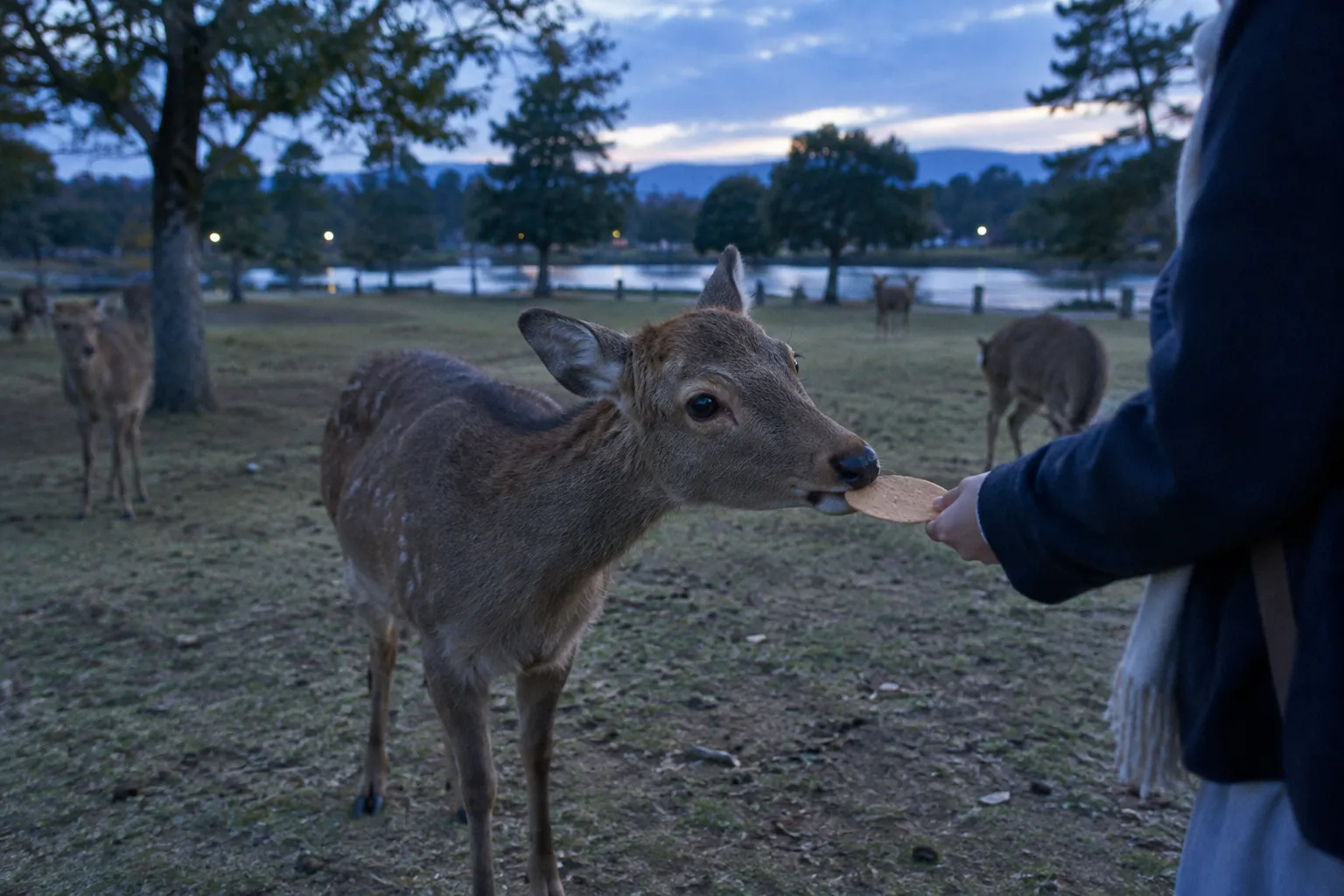
Feeding is optional. The deer eat grass, leaves and acorns that grow in the park, and they don’t depend on visitors (4)(7). Plenty of people spend a full day in Nara without buying a single pack and still have deer wander up to them. Feeding is fun for about two minutes. After that you are mostly managing a crowd of deer.
Where to Buy Deer Crackers
Crackers are sold at stalls around the park, in shops and from vending machines (7). The stalls are easiest to find near the main routes from the station and along the approach to Todai-ji. Vendors stack the crackers in the open, and the deer know not to raid the stall stock.
Vending machines added in 2022 let you buy crackers after the stalls close. They sit at ROKUEN, the deer-focused facility, and at the rest area by the Kasuga Taisha car park (7). If you plan to arrive on a late train, these are your only reliable option.
Foods You Should Never Give the Deer
Do not feed the deer bread, sweets, vegetables or leftovers. Official guidance warns that unsuitable food can harm them and contribute to accidents (7). That covers the onigiri (rice ball) in your bag, fruit and the snack you bought on the train. Eat your own food away from the herds. A sandwich unwrapped on the lawn draws deer from all directions.
How to Feed the Deer Safely
Many Nara deer have learned to bow when they want food, and visitors treat it as a small exchange of manners: bow back if one bows to you. Beyond that courtesy, the steps below are the whole routine, and the empty-hands gesture at the end works: deer that keep nudging you usually haven’t seen it yet.
How to Feed Nara's Deer Safely
Offer only deer crackers, one at a time, and make it clear when you have run out.
- 1
Buy deer crackers
Get one pack of shika senbei (deer crackers) from a stall, shop or vending machine; keep it in your bag until you are ready.
- 2
Choose one deer
Approach calmly and offer one cracker promptly, without waving it around or pulling it back.
- 3
Keep the remaining crackers hidden
Take out crackers one at a time and keep the rest of the pack out of sight.
- 4
Show empty hands when finished
When the pack is empty, spread your arms and show your open hands so the deer can see there is no more food.
- 5
Carry the wrapper away
Put the wrapper in your bag and take it away from the deer.
Todai-ji Nara and Kasuga Taisha: Temples Among the Deer
Todai-ji and Kasuga Taisha are the two major sites inside Nara Park, and each charges its own admission even though walking the park is free. As of November 2026, entry to Todai-ji’s Great Buddha Hall costs ¥800 for an adult (1) and special worship at Kasuga Taisha’s Main Sanctuary costs ¥700 for an adult (3). If you plan to see both interiors, budget for both fees in cash.
Todai-ji Great Buddha Hall: Hours and Admission
Todai-ji’s Great Buddha Hall (Daibutsu-den) opens 7:30 a.m.-5:30 p.m. from April to October and 8:00 a.m.-5:00 p.m. from November to March (1). Adult individual admission is ¥800 as of November 2026, and group rates apply to parties of 30 or more (1). Other buildings in the complex, such as Hokke-dō and the Todai-ji Museum, keep their own shorter hours (1).
Visit Nara calls Todai-ji the most prestigious of Nara’s seven great temples (11). You enter through Nandaimon Gate, which holds two guardian figures about 8 m (26 ft) tall. Look up as you pass, because they are easy to miss in the crowd. Inside the hall sits the 15 m (49 ft) Buddha. Behind it is a wooden column with a small hole at its base, and crawling through is said to bring enlightenment (11). Expect a queue of schoolchildren.
The approach to Todai-ji is one of the most reliable places to meet deer (7). It is also where crowds thicken, so keep maps and tickets in a closed bag here.
Kasuga Taisha: Worship Hours and Fees
Kasuga Taisha’s general worship hours run 6:30 a.m.-5:30 p.m. from March to October and 7:00 a.m.-5:00 p.m. from November to February (2)(3). Special worship of the Main Sanctuary, inside the cloisters, has narrower hours of 9:00 a.m.-4:00 p.m. and costs ¥700 for adults as of November 2026 (3).
Check the shrine’s calendar before you go. Special worship closes on several dates for shrine events, including stretches in mid-March and around New Year. It also pauses on certain mornings each month, and the shrine notes that times can change without notice (3).
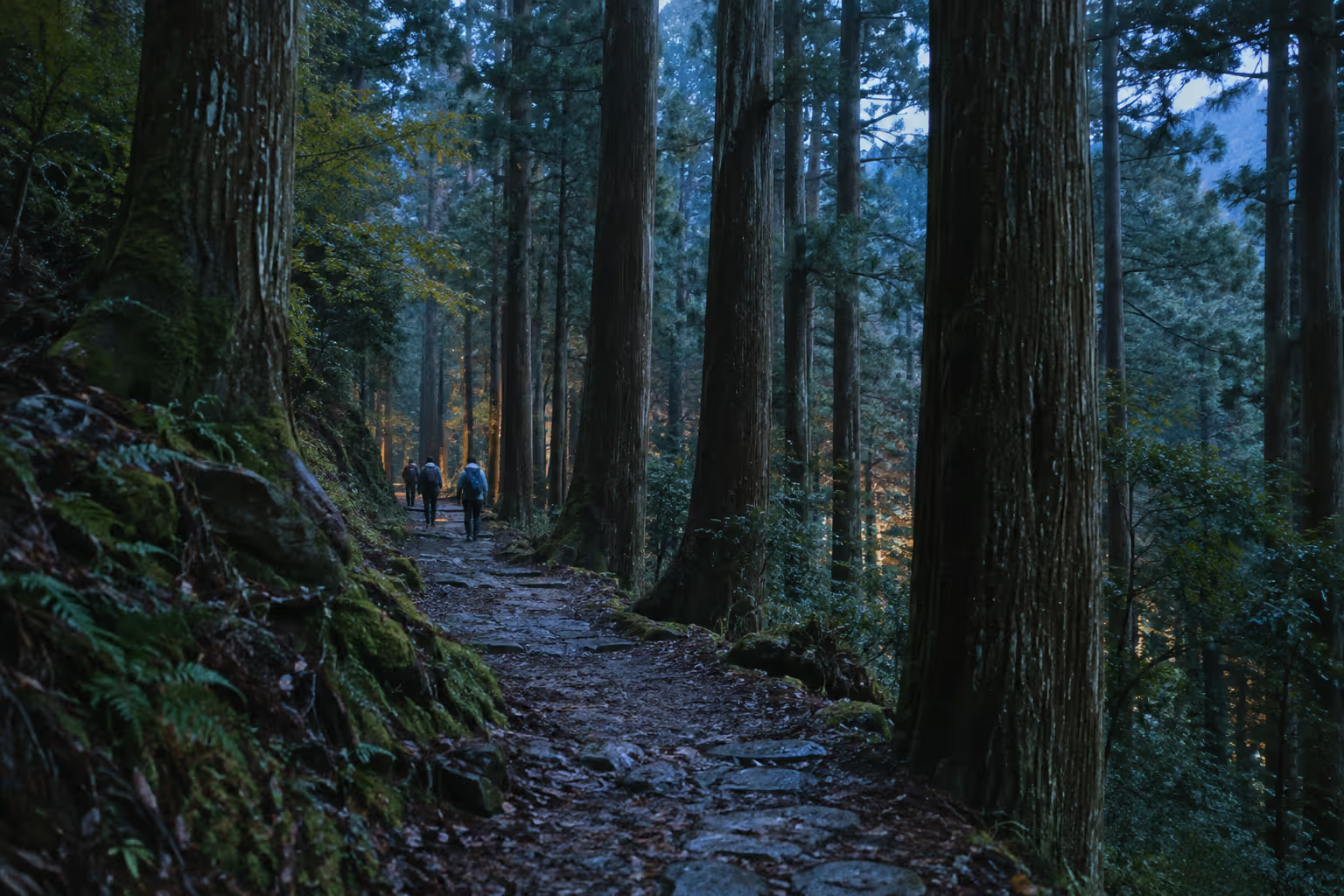
Kasuga Taisha is part of the Historic Monuments of Ancient Nara UNESCO World Heritage Site. It sits against a primeval forest that has been left untouched for over a thousand years (2). It is also the shrine whose gods the deer are said to serve, which is why the herds are part of the setting here (7). One etiquette note specific to the site: the shrine posts its own rules on photography and videography in the precincts (3). Read the signs before filming inside the cloisters, and bow briefly at the torii (shrine gate) as you enter and leave.
Best Spots to See Deer Near the Temples
The Nara City Tourism Association names Ukigumo-enchi, between the Todai-ji approach and the Kasugano International Forum, as the spot where you’ll meet the most deer. It also points to the Todai-ji approach and Tobihino, the open lawns on the way toward Kasuga Taisha (7).
The Todai-ji approach has the most cracker-hungry deer. Tobihino is more open and spread out, so you’ll see deer grazing and resting rather than lining up at stalls. If you want photos of deer behaving like deer rather than panhandlers, the lawns are better.
Planning a Nara Day Trip from Kyoto or Osaka
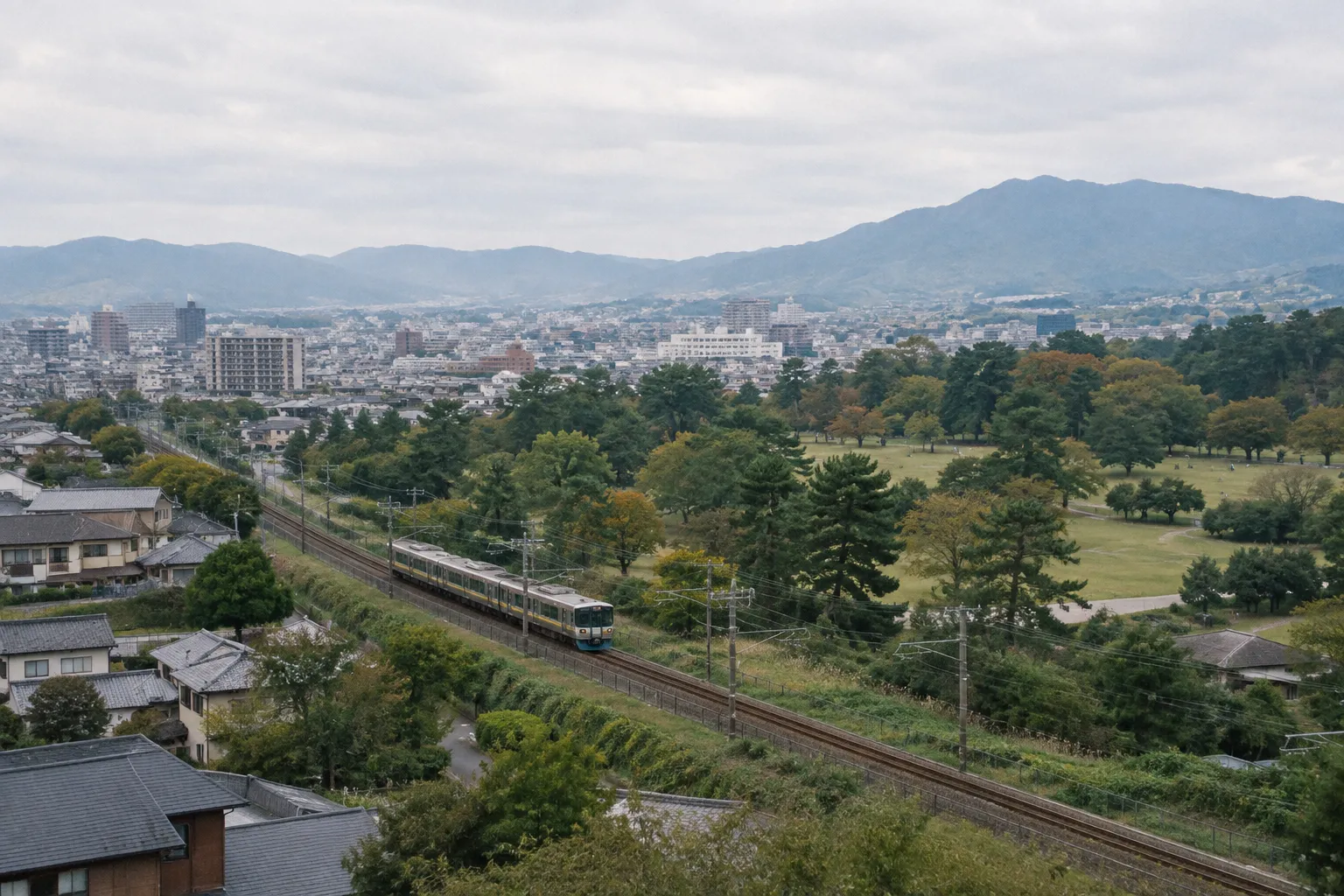
Nara sits between Kyoto and Osaka, and the fastest trains reach Kintetsu Nara Station in about 34 minutes from Kyoto Station (16) or about 35 minutes from Osaka-Namba (6). Either city works as a base, and our guide to Kyoto’s sights by neighborhood shows where a Nara day fits into a longer stay. What matters most is which Nara station you arrive at, because the walk to the park ranges from 5 minutes to 20.
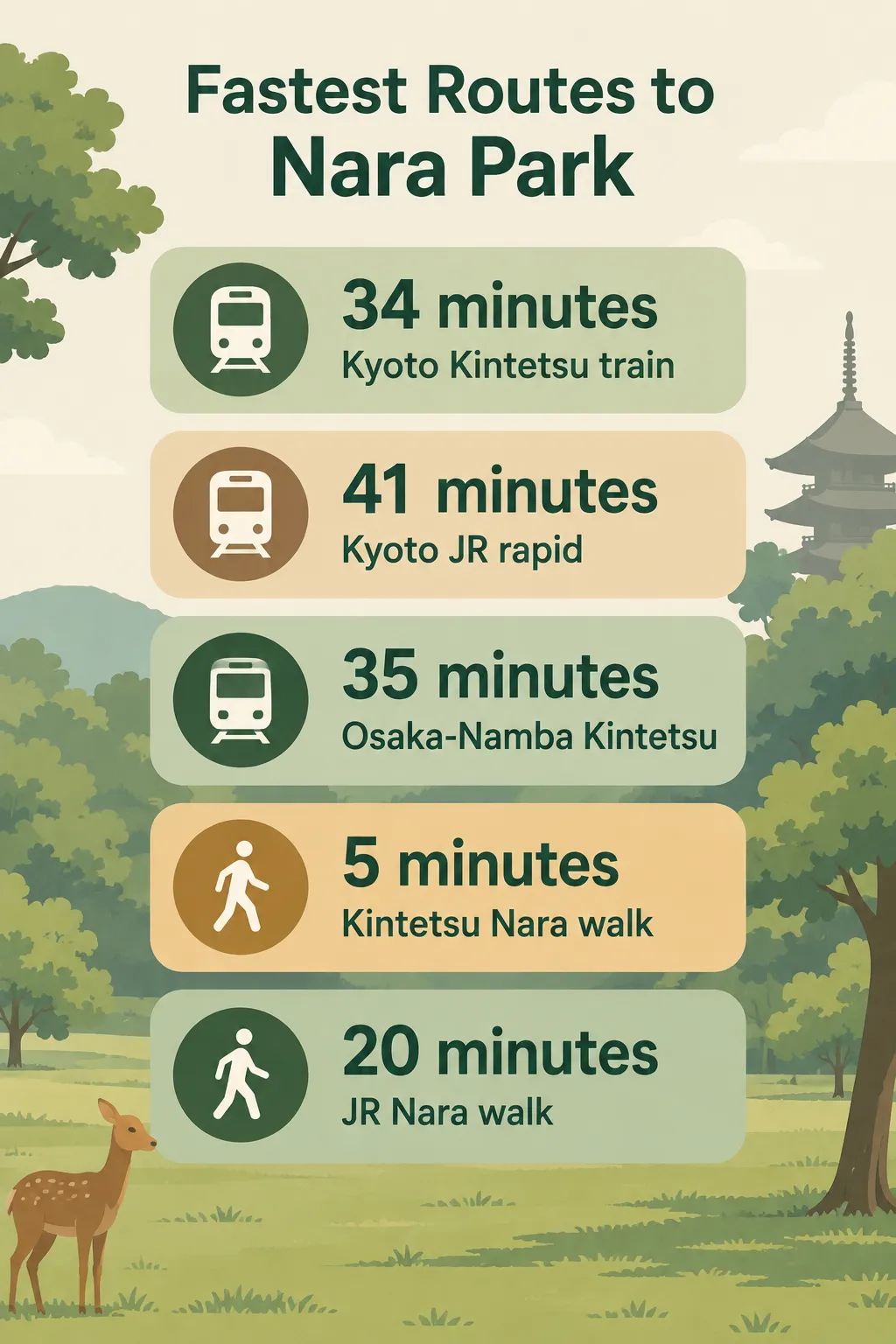 The fastest listed trains take 34 minutes from Kyoto and 35 minutes from Osaka-Namba to Kintetsu Nara, while the Kyoto JR rapid takes 41 minutes; the stations are 5 and 20 minutes from the park, respectively.
From Kyoto Station
A Nara day trip from Kyoto comes down to two lines:
- Kintetsu Limited Express: about 34 minutes to Kintetsu Nara Station (16). It is the fastest, all its seats are reserved, and you need a Limited Express ticket on top of the basic fare (17).
- JR Nara Line: about 41 minutes on a JR rapid train to JR Nara Station (16). This is the one to take if you hold a JR pass, since the pass covers it.
Without a JR pass, Kintetsu wins on both journey time and walking time.
From Osaka-Namba
The fastest train from Osaka-Namba to Kintetsu Nara takes about 35 minutes. The regular express services take about 5 minutes longer and cost less (6). For a day trip, the 5-minute saving rarely justifies the extra fare unless you’re cutting it close at either end. If you are staying in Osaka, our guide to Osaka’s Namba district and day trips explains why Namba works as the base.
Kintetsu Nara vs JR Nara Station
Kintetsu Nara Station is about a 5-minute walk from the park, while JR Nara Station is about a 20-minute walk (6). That gap shapes your day. Arriving at JR Nara means about 20 minutes on foot each way through town before you see the first deer. If you’re traveling with kids, with limited mobility or on a short visit, pick Kintetsu.
The JR walk isn’t wasted, though. It takes you along Sanjo-dori (11), a shopping street with snack stands and souvenir shops. If you have a JR pass and time to spare, walk in one way and take the bus back.
Train Routes to Nara Park
| Kyoto-Kintetsu Limited Express | Kyoto-JR Nara Line | Osaka-Namba-Kintetsu | |
|---|---|---|---|
| Departure | Kyoto Station | Kyoto Station | Osaka-Namba |
| Train | Kintetsu Limited Express | JR rapid, Nara Line | Fastest Kintetsu service |
| Journey time | About 34 minutes | About 41 minutes | About 35 minutes |
| Arrival station | Kintetsu Nara | JR Nara | Kintetsu Nara |
| Walk to park | About 5 minutes | About 20 minutes | About 5 minutes |
A Sample Half-Day in Nara Park
A half-day covers Nara Park’s three essentials in a sensible order: deer near the station side, then Todai-ji, then Kasuga Taisha. Arrive early in the morning and you’ll be ahead of the tour groups. Here’s how to run it.
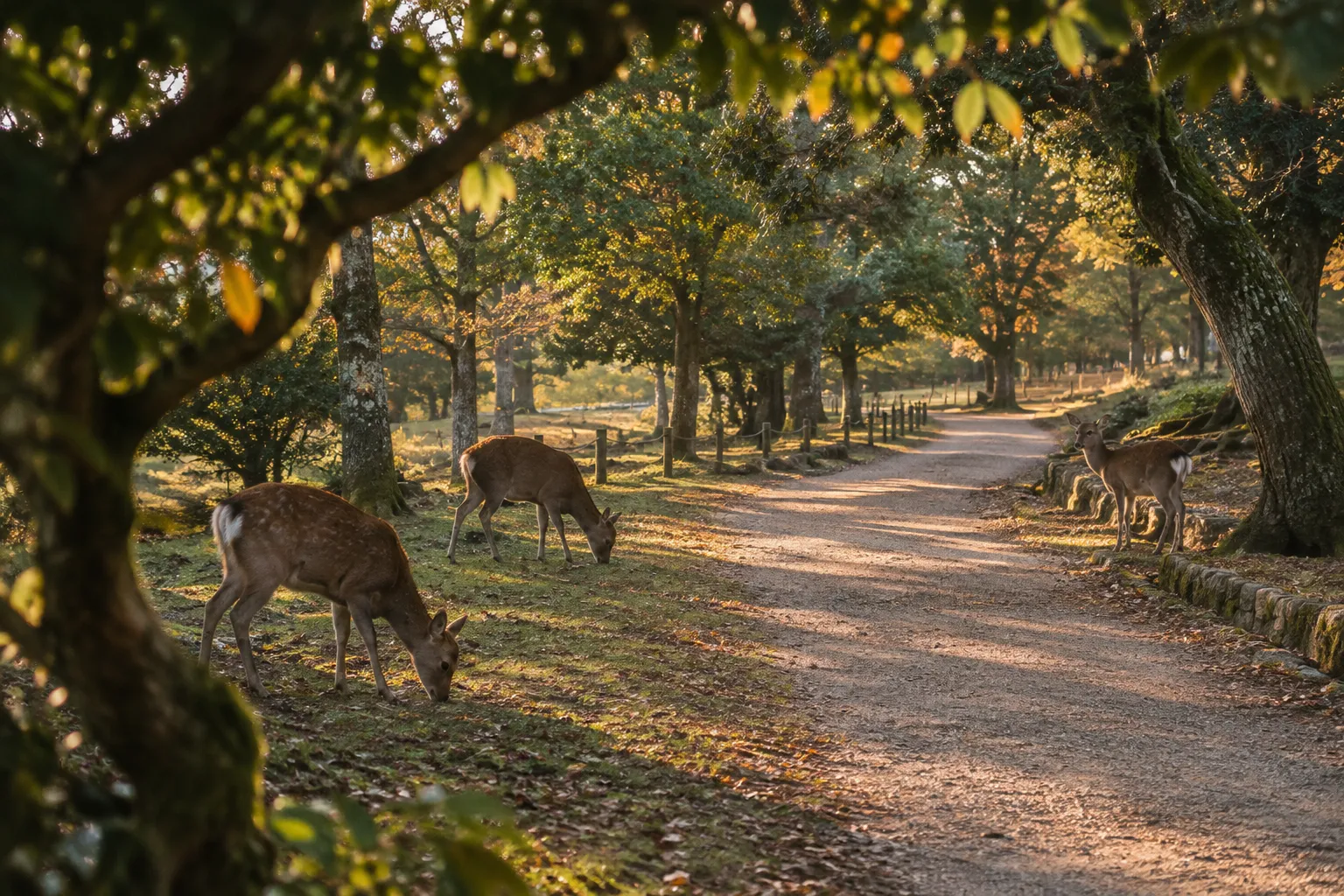
Morning, first hour. Take Kintetsu to Kintetsu Nara and walk the 5 minutes into the park (6). The deer near the station end are the most food-motivated. If you want to feed them, buy one pack here and use it up before heading to the temples, so you aren’t carrying crackers through the crowds.
Mid-morning. Walk to Todai-ji. Getting there close to opening time is the most effective way to avoid the school-group rush. Allow around an hour for the gate, the hall and the walk through the grounds.
Late morning. Continue east across Tobihino toward Kasuga Taisha. This stretch is longer than it looks on the map. The shrine approach climbs gently through forest lined with stone lanterns. Allow time to wander rather than march. If you want the Main Sanctuary’s special worship, it doesn’t start until 9:00 a.m. (3), so the shrine fits naturally after Todai-ji. Kasuga Taisha is about 25 minutes on foot from Kintetsu Nara Station, and buses bound for the Kasuga Taisha Honden stop run from both JR and Kintetsu Nara stations (3).
What to bring:
- Cash in yen for admission and crackers
- A zip bag for rubbish, since the park has no bins
- A bag that closes, for maps and tickets
- Comfortable walking shoes
- No loose food in your hands or open pockets
If you have a full day, add Kohfukuji or the Nara National Museum, both inside the park (10), or a late afternoon at Ukigumo-enchi watching the deer settle in.
Frequently Asked Questions
- Is Nara deer park free entry?
- Yes. Nara Park is open every day of the year and charges no admission. You pay only inside specific sites: ¥800 for Todai-ji's Great Buddha Hall and ¥700 for special worship at Kasuga Taisha's Main Sanctuary, as of November 2026.
- Is Nara Park worth visiting if I do not want to feed the deer?
- Yes. Deer roam the park without visitors feeding them, and you can enjoy the grounds and nearby heritage sites without buying crackers.
- What should I do if a deer keeps following me?
- Show your open, empty hands and put away anything that resembles food; do not tease the deer or offer unsuitable snacks.
- Can I bring food to eat in the park?
- Yes, but eat away from the deer and keep food secured between bites, since deer may approach an unwrapped snack.
- Is it safe for children to feed the deer?
- Children need close adult supervision while feeding, because hungry deer can crowd them, tug at clothes or nip.
- What should I do if I find a fawn alone?
- Leave it alone and keep your distance; a fawn lying by itself has not necessarily been abandoned.
- Can I take photographs at Kasuga Taisha?
- Check the shrine's posted rules before taking photographs or video, particularly inside the cloisters.
Before You Go
Walking through Nara Park and meeting the deer costs nothing. Set aside cash for Todai-ji (¥800) and Kasuga Taisha’s special worship (¥700) if you want to go inside (1)(3). Take Kintetsu rather than JR unless your rail pass tips the balance. Kintetsu Nara is about a 5-minute walk from the park, JR Nara about 20 minutes (6). Treat the deer as wild animals. Feed them only shika senbei, one cracker at a time, or skip feeding entirely, especially in autumn when the males are at their most aggressive (7).