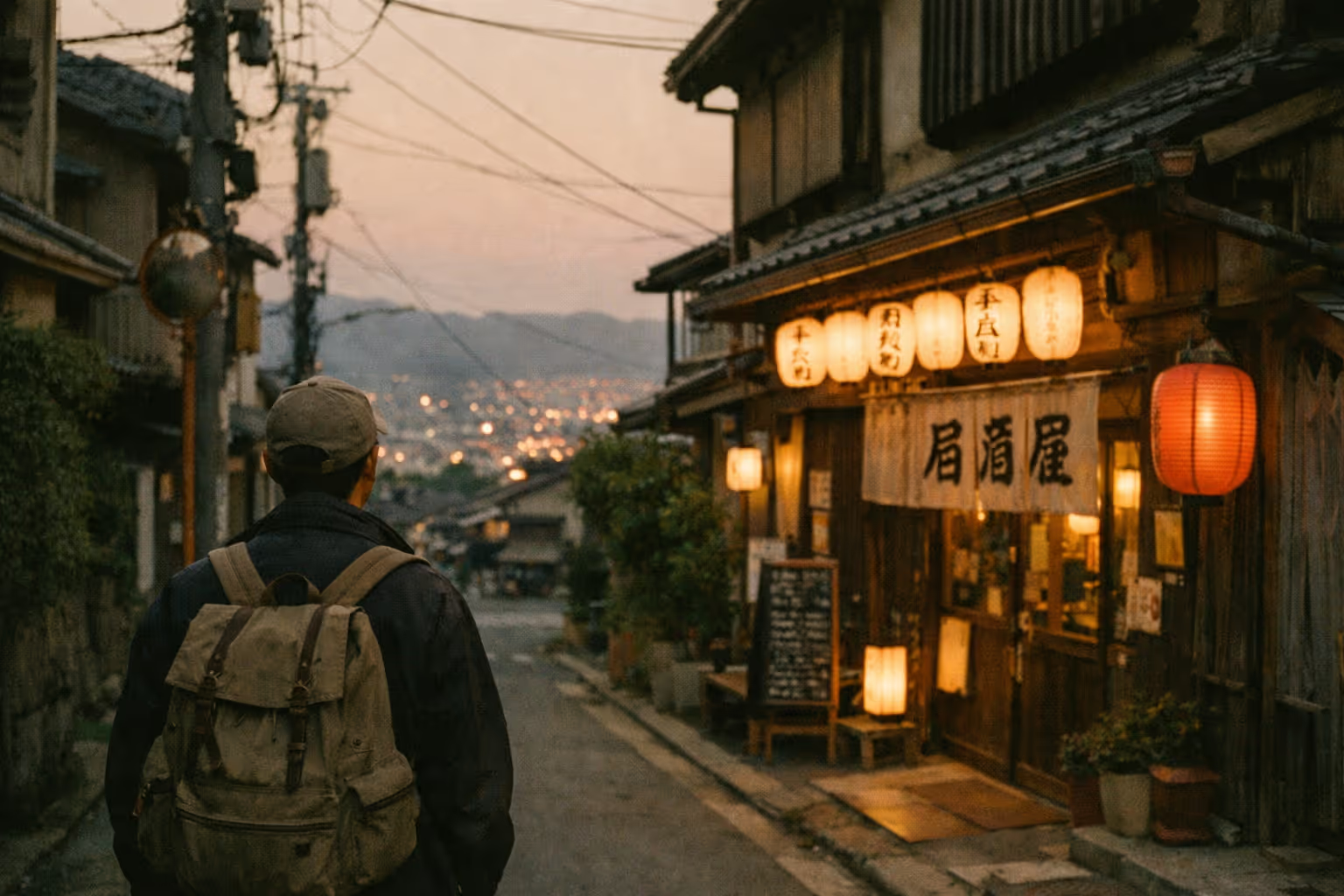
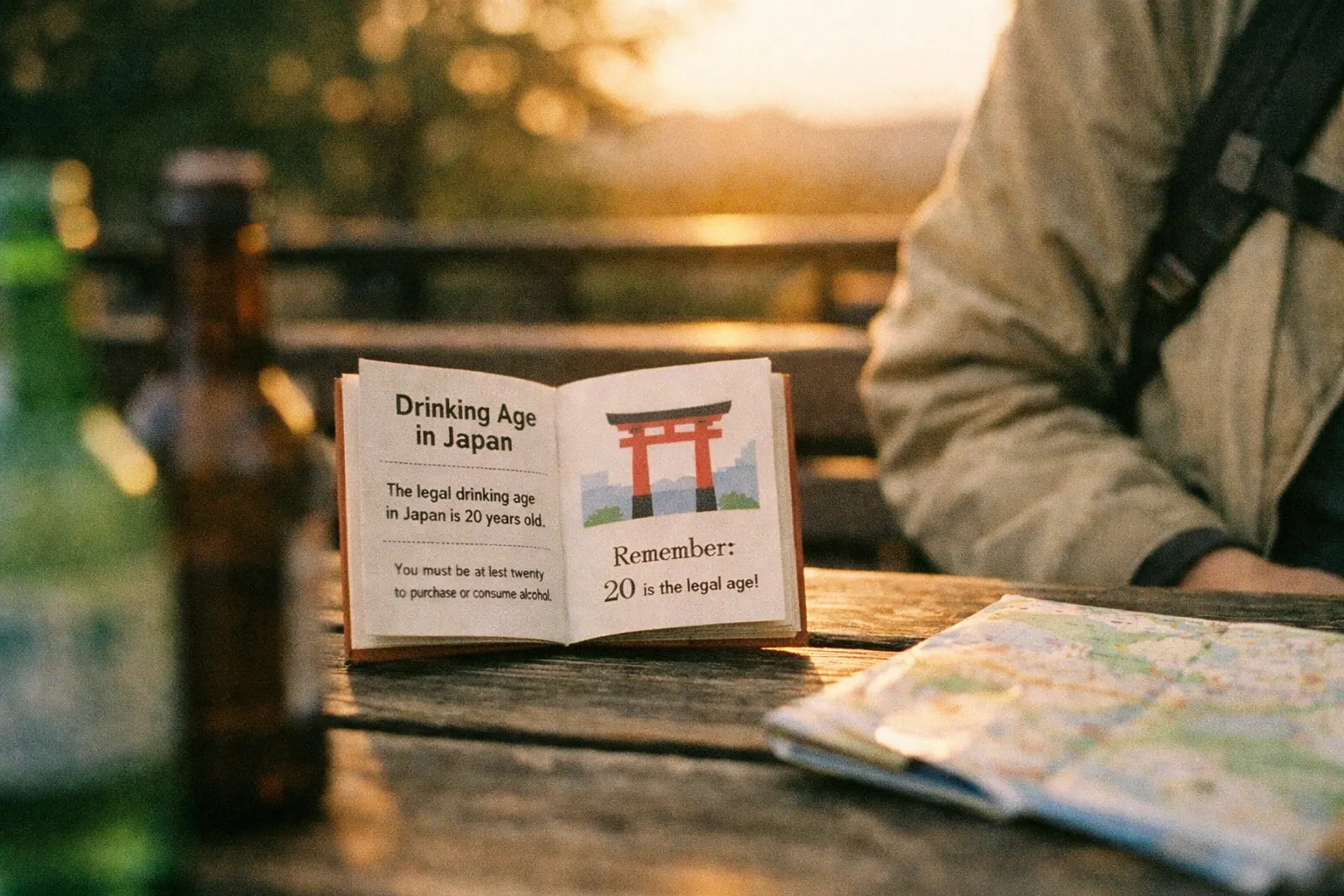
The legal drinking age in Japan is 20, and it did not budge when adulthood dropped to 18 in 2022. At 18 you can vote, marry, and sign a contract, but alcohol, tobacco, and gambling all wait two more years. There is no parental exception either: handing a drink to anyone under 20, even your own kid at home, breaks the law and can fine the giver. Stores card anyone who looks under 25, so carry your passport; foreign licenses and phone photos often get refused.
Understanding the Legal Drinking Age in Japan
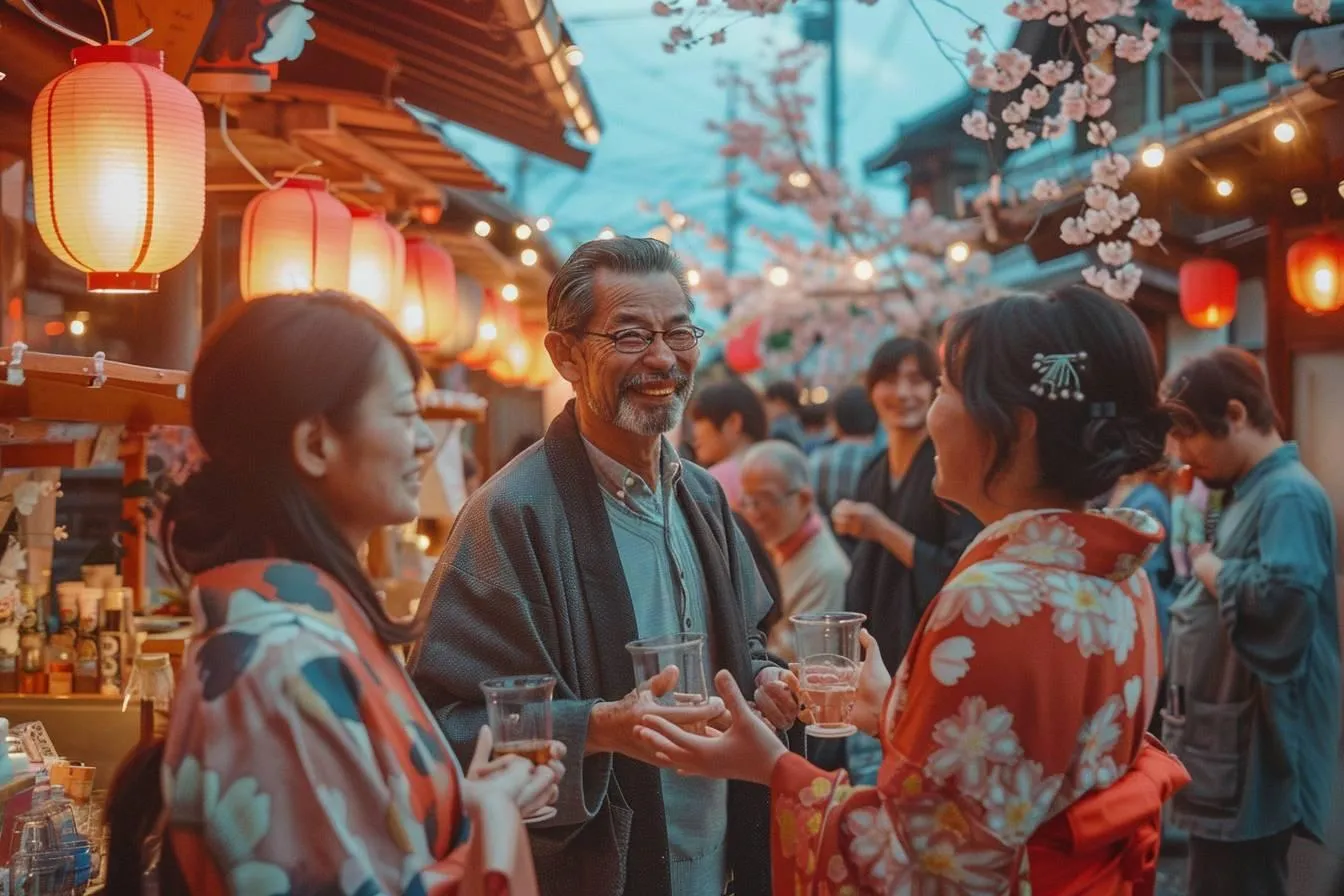
The legal drinking age in Japan is 20. It applies to purchasing, possessing, and consuming alcohol of any kind - beer, wine, sake, shochu, cocktails - and it applies to everyone, regardless of nationality (7)(8). Showing a foreign ID or explaining that you’re 18 and legal back home changes nothing.
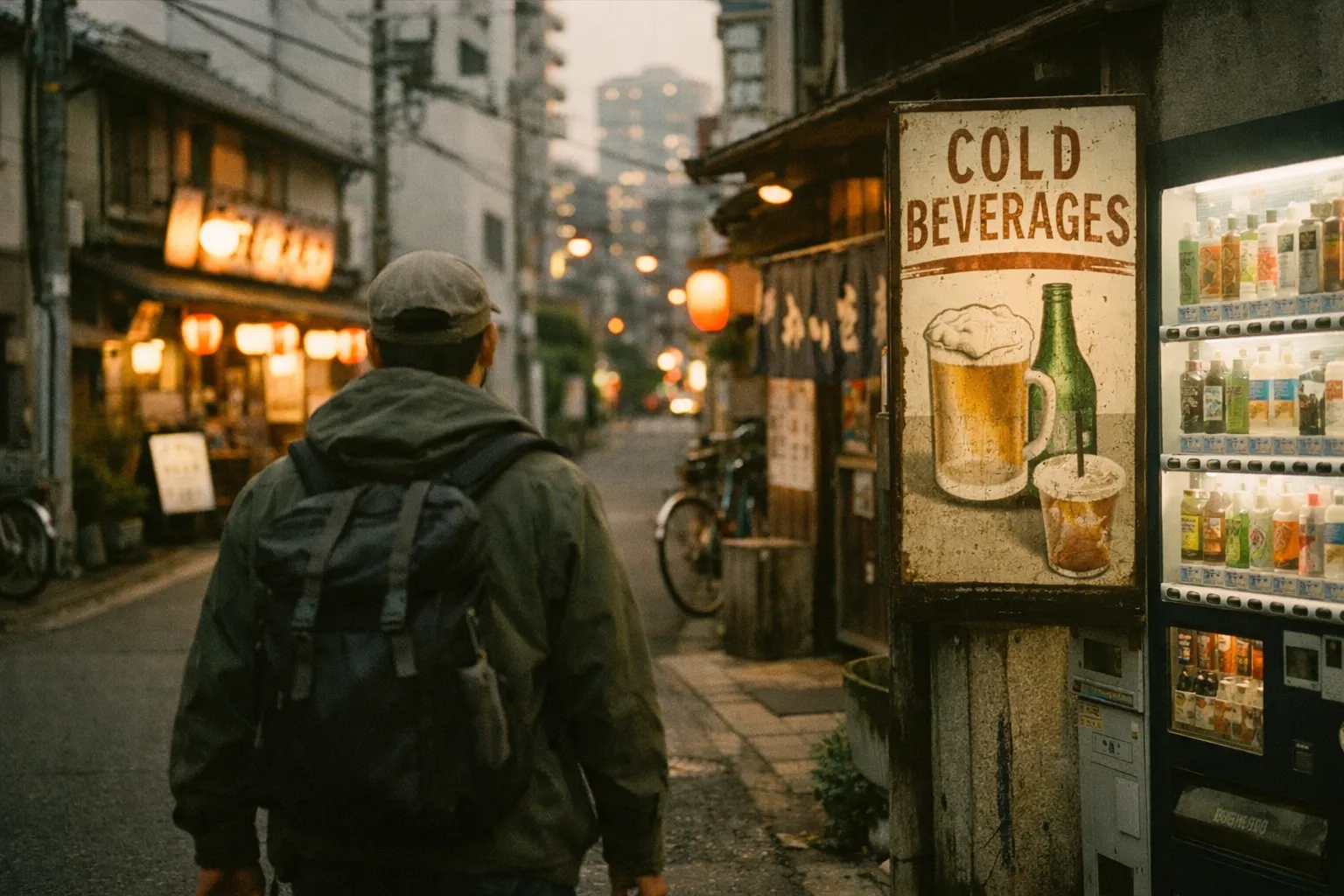
This is set out in the Minor Drinking Prohibition Act (Shōnen Inshū Kinshi Hō), which bans providing alcohol to anyone under 20. The law punishes both the minor and the person who supplied the drink (7). A bartender, a shopkeeper, a parent - anyone who hands alcohol to someone under 20 can face consequences.
So if you’re asking what is the drinking age in Japan, the answer is clean and simple: 20, no regional variation, no exceptions for tourists.
How Does Japan’s Drinking Age Compare to the Rest of the World?
Japan’s age of 20 sits on the higher end globally. The most common minimum legal drinking age worldwide is 18 (1)(6). The United States is the notable outlier at 21, while much of Latin America and most of Europe settle at 18. Against that backdrop, Japan’s threshold is comparatively strict - though, as you’ll see below, the country pairs that high age with one of the most accessible alcohol markets anywhere.
Enforcement and Penalties
ID checks are routine, especially at chains. Convenience stores and large restaurant groups run automated prompts at the register and will ask for identification from anyone who looks under 25 (2). Staff receive regular compliance training, and they’ll request a passport from foreign visitors without hesitation.
The penalties are why establishments take this seriously. A vendor who serves a minor can face fines exceeding ¥500,000 (about USD $3,100 at ¥160/USD) plus suspension or revocation of their alcohol license (2). For a busy izakaya (Japanese pub), that license is worth tens of thousands of dollars in annual revenue - nobody risks it for one sale.
Minors caught drinking typically get a warning or a referral to guardians, though repeat or serious cases can escalate to fines and a criminal record (2).
I’ve watched this play out firsthand. At a small izakaya in Tokyo, a group of younger-looking foreign visitors got politely but firmly asked for ID before the first round arrived. Nobody made a scene. The request was matter-of-fact, the passports came out, and the evening continued. That’s the norm, not the exception.
Self-Checkout and Vending Machines
Since 2023, you can legally buy beer and cigarettes at self-checkout machines, but staff must still confirm the purchaser is 20 or older - usually through an on-screen tap-to-confirm prompt and occasional manual checks. Retailers across the country upgraded their point-of-sale systems to handle this.
Alcohol vending machines still exist, but there are far fewer than there used to be. The remaining ones generally require an age-verification IC card or sit in controlled areas, so the old image of teenagers buying beer from a street-corner machine no longer reflects reality.
Cultural Context: Turning 20
The drinking age lines up with a meaningful cultural milestone. Turning 20 - hatachi - has long marked the entry into full adulthood in Japan, celebrated each January with Seijin no Hi (Coming-of-Age Day), where new 20-year-olds dress up and gather at local ceremonies.
Here’s where it gets confusing. In April 2022, Japan lowered the age of majority from 20 to 18. At 18 you can now sign contracts, take out a credit card, and marry without parental consent. But lawmakers deliberately kept the drinking and smoking age at 20. The old neat alignment between adulthood and alcohol no longer holds - and that gap is the source of most of the confusion travelers run into.
Can You Drink in Japan at 18 or with Parents?
No. You cannot legally drink in Japan at 18, even though 18 is now the legal age of adulthood.
This catches exchange students and young workers constantly. The logic feels reasonable - “I’m an adult now, I can sign a lease, surely I can have a beer” - but Japanese law draws the line at 20 specifically for alcohol and tobacco (7). Being 18 or 19 grants you a long list of adult rights without touching the drinking age.
Is There a Parental Exception for Under-20s?
There isn’t. People search for the legal drinking age in Japan with parents rule hoping for the kind of carve-out some countries allow - where a parent can buy a teenager a glass of wine at dinner. Japan has no such statutory exception (7).
The Minor Drinking Prohibition Act bans providing alcohol to anyone under 20, full stop. A parent serving their 18-year-old a beer at home, or ordering one for them at a restaurant, technically violates the law. In practice, family settings rarely draw police attention, but the legal protection some travelers assume exists simply doesn’t. Don’t plan around it.
What Can You Do at 18 in Japan?
Quite a lot, actually - just not drink or smoke. At 18 in Japan you can:
- Sign contracts and rental agreements without a guardian’s co-signature
- Apply for credit cards and take out loans
- Marry without parental consent
- Vote (the voting age dropped to 18 in 2016)
- Obtain certain professional licenses and a standard driver’s license
What you still can’t do until 20: buy or consume alcohol, smoke tobacco, or gamble on public sports like horse racing and certain types of betting. If you’re 18 or 19 and traveling in Japan, plan for soft drinks and non-alcoholic beer - more on those options below.
ID Checks and Enforcement: What to Expect
Yes, Japan IDs for alcohol frequently - though it depends heavily on where you are.
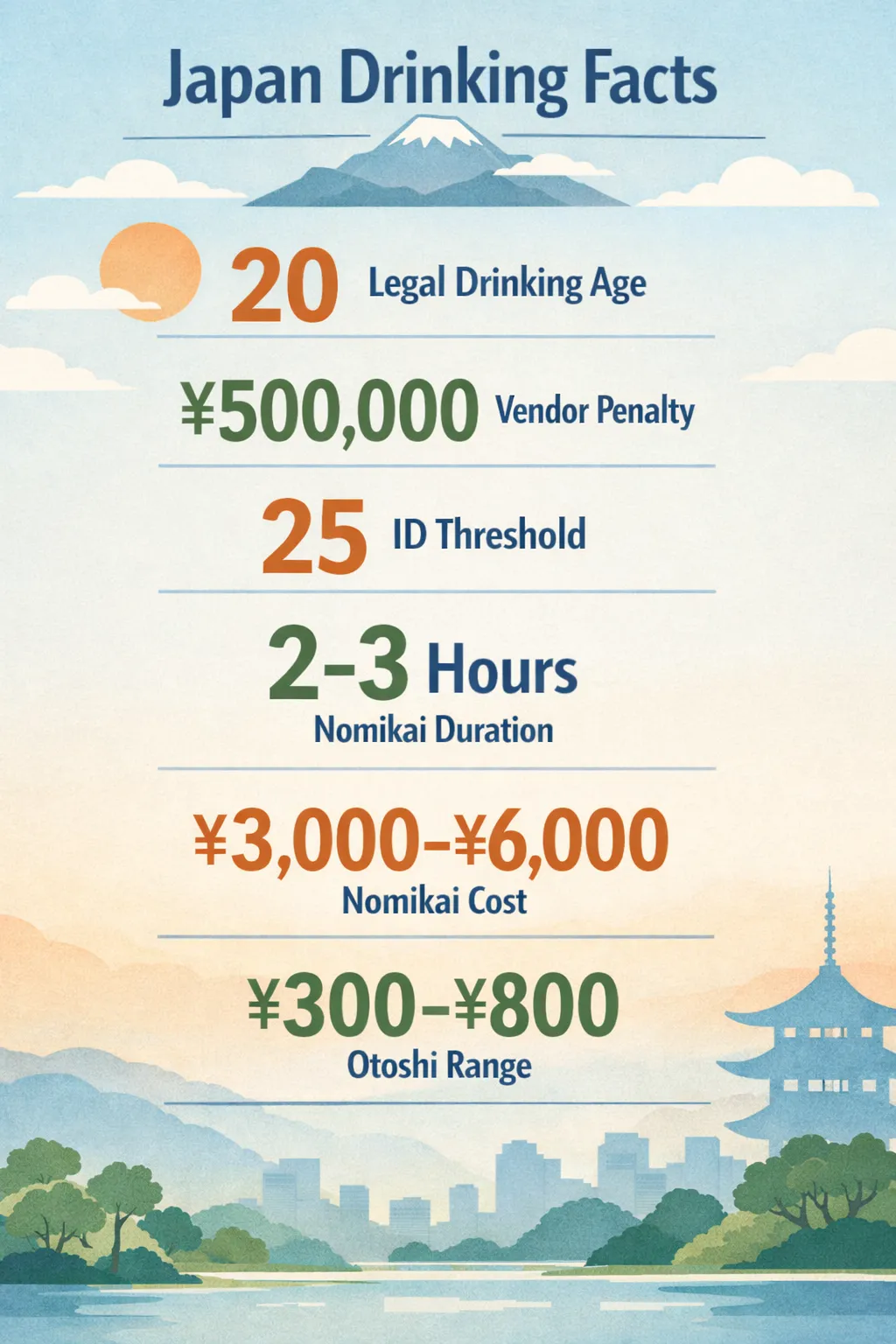 Japan’s drinking age is 20 nationwide for all alcohol; vendors face fines of ¥500,000 or more, and ID checks target those who look under 25; typical nomikai costs ¥3,000-¥6,000 with otoshi charges of ¥300-¥800, and events last about 2-3 hours.
Large chains and convenience stores are strict. Their policy is to ID anyone who appears under 25, and the register often forces a confirmation step the cashier can’t skip (2). If you look young and refuse to show ID, the sale simply won’t go through. Foreign visitors should carry a passport; many bars and clubs won’t accept a non-Japanese driver’s license as primary identification, and they definitely won’t accept a photo of your ID on your phone.
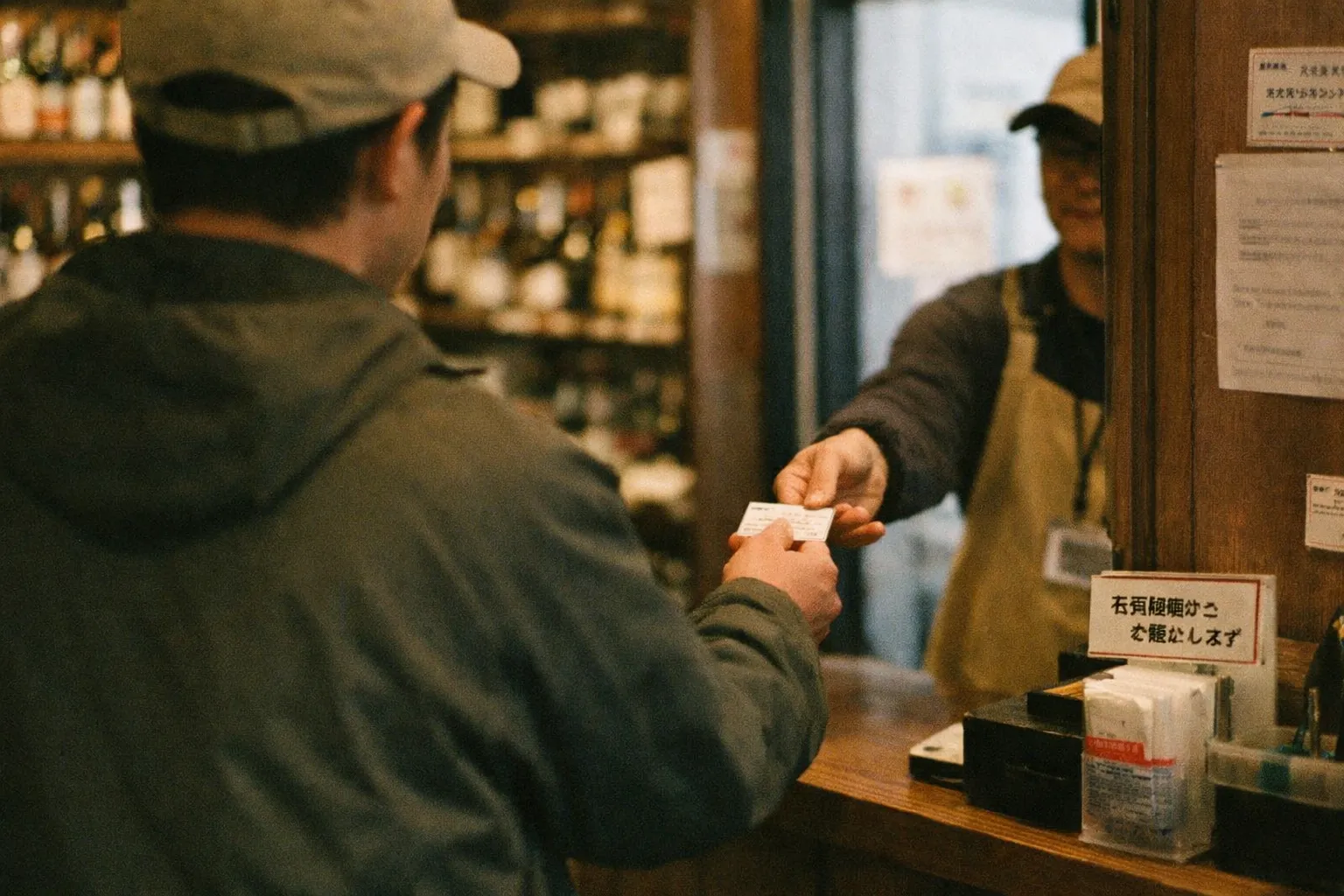
Small neighborhood bars are a different story. A tiny six-seat spot run by an owner who’s been there thirty years may not card you at all - but that owner is still legally responsible, so some refuse anyone who looks obviously under 20 just to stay safe.
A few practical notes:
- Residents should carry a Zairyu card (residence card) or a Japanese driver’s license showing date of birth.
- Self-checkout alcohol purchases trigger an age-confirmation prompt; expect a quick tap or occasional staff verification.
- Clubs in Tokyo and Osaka often set entry at 20+ and check ID at the door, with cover charges running ¥1,000-¥4,000 (USD $7-$27).
The short version: assume you’ll be asked, carry your passport, and the whole thing takes ten seconds.
What Is the Most Popular Alcoholic Drink in Japan?
Beer. By volume and by tradition, beer is the default - so much so that there’s a phrase for it. Toriaezu biiru (“beer for now”) is the near-automatic first order when a group sits down, before anyone’s even looked at the menu (9). The big domestic brands you’ll see everywhere are Asahi Super Dry, Kirin Ichiban, and Sapporo.
The fastest-growing category, though, is chuhai - shochu-based canned cocktails, sometimes labeled as “sour” drinks. Production has climbed to roughly 1.3 million kiloliters per year, nearly doubling over the past six years (4). They’re cheap, refreshing, and come in flavors like lemon, grapefruit, and ume (plum). Younger adults and women have driven much of this growth.
One warning on chuhai: the ABV varies wildly. Standard cans run 3-5%, but “Strong” series drinks hit 9% ABV, and a single 500 ml can of those can equal three-plus standard drinks (4)(5). The packaging looks almost identical to the weaker versions. Check the percentage before you commit to a few of them.
Beyond beer and chuhai, the drinks worth seeking out:
- Sake (nihonshu) - brewed from fermented rice, ranging from dry and crisp to sweet and fruity. Regional tasting flights run ¥500-¥1,000 (USD $3-$7) and let you compare styles side by side.
- Shochu - a distilled spirit made from barley, sweet potato, or rice, with a higher ABV than sake. Okinawa’s awamori is a distinctive regional version.
- Japanese whisky - internationally acclaimed; flights at specialist bars run USD $20-$80.
Exploring Japan’s Drinking Culture
Japan’s drinking culture spans centuries-old sake breweries and ultra-precise cocktail bars, and it ranks among the country’s most approachable cultural experiences for a curious visitor. Japan drinking culture rewards a little curiosity - knowing where to go and how to behave opens doors.
Sake and Traditional Drinks
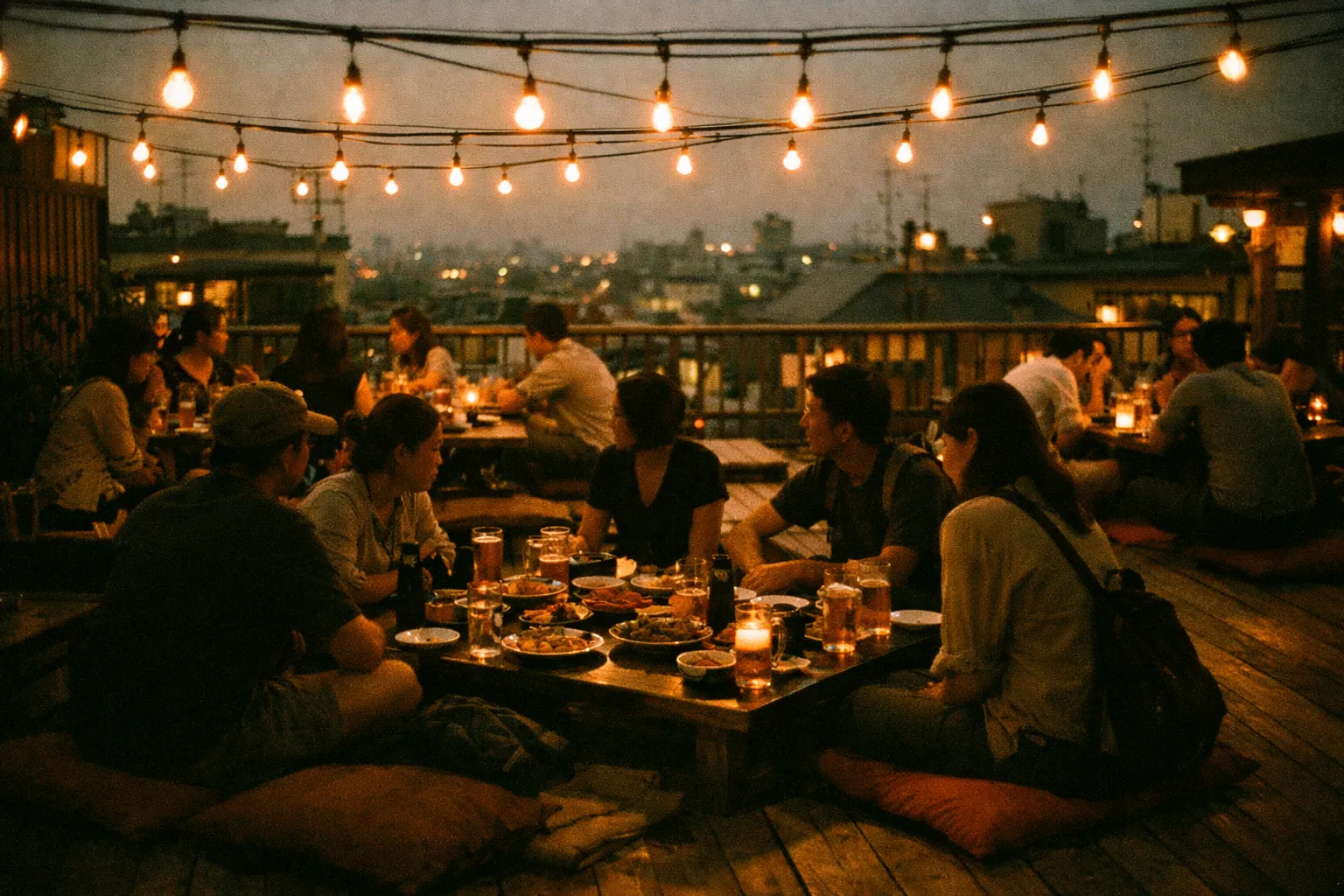
Visiting a sake brewery is worth building into a trip. On a visit to Niigata - a region famous for its sake - I spent an afternoon tasting different varieties and learning the brewing process from the people who make it. Rural breweries and shochu distilleries often run tastings for ¥500-¥1,500 (USD $3-$10), and the staff are usually happy to walk you through what makes a dry junmai (pure-rice sake, brewed without added alcohol or sugar) different from a sweeter nigori (unfiltered sake).
Modern Drinking Venues
Tokyo’s craft beer scene has grown into something serious, with dedicated breweries and bars across the city. I once wandered into a small place in Shibuya’s Udagawacho neighborhood - the block just behind Tower Records - where the owner turned out to be the brewer, full of recommendations and stories about each tap. That kind of thing happens more than you’d expect.
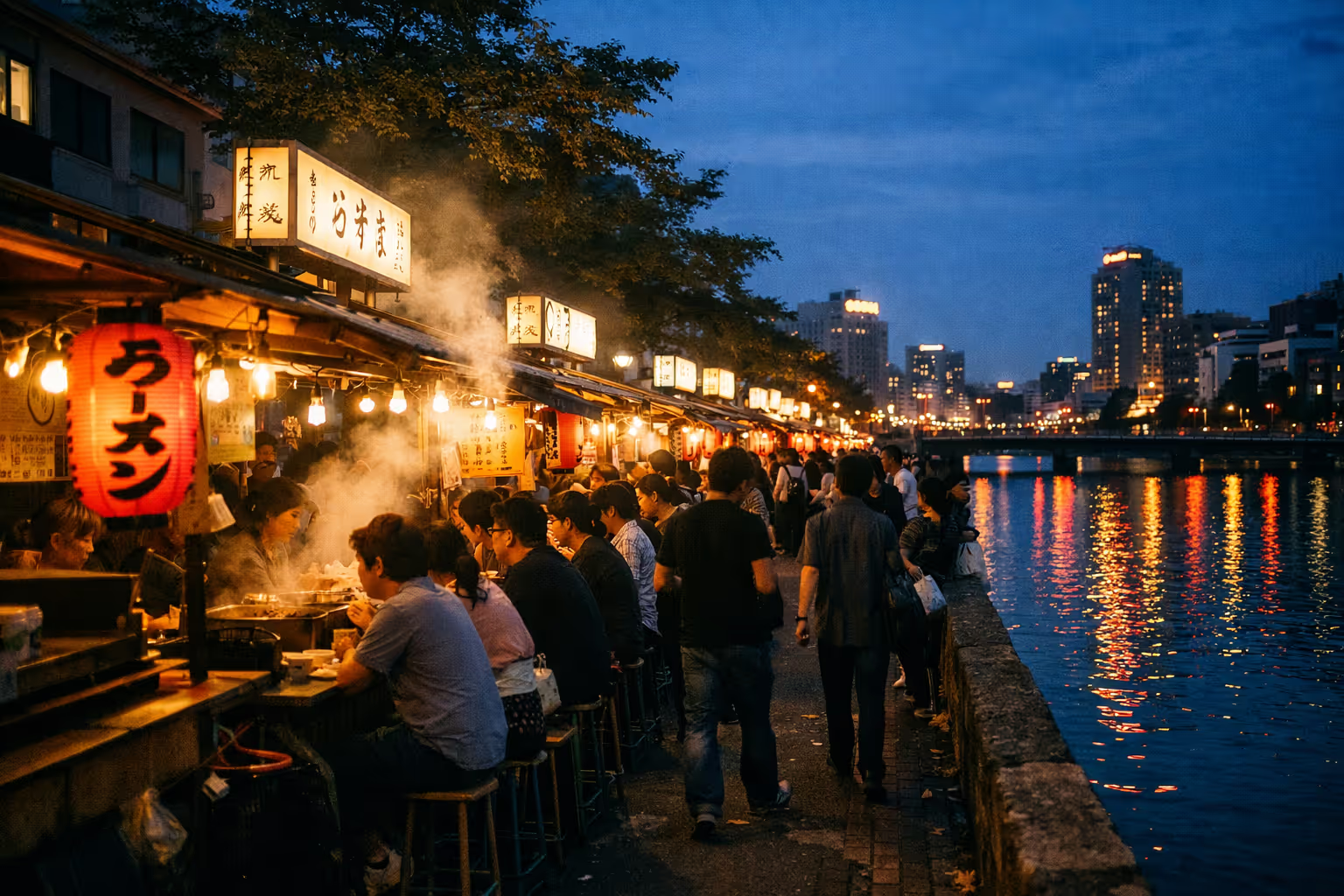
If cocktails are your thing, Japan’s bartending reputation is well earned. Bars like Bar High Five in Ginza turn drink-making into something close to ceremony. Expect cocktails to run ¥800-¥1,500 (USD $5-$10), plus a cover charge - otoshi (a small appetizer charge) - of ¥300-¥800 (USD $2-$5) that comes with a small appetizer whether you asked for it or not.
For budget options, two categories deliver:
- Tachinomi (standing bars): beer from ¥300-¥500 (USD $2-$3.20), no frills, good atmosphere.
- Izakaya chains (Torikizoku, Watami): draft beer around ¥300-¥600 (USD $2-$4); food-and-drink sets from ¥2,000-¥3,500 (USD $13-$23).
Non-Alcoholic Options Are Everywhere Now
If you’re under 20, or just not drinking, you’re well covered. Japan has leaned hard into the sober-curious trend. Major breweries sell multiple 0.00% beers, and trendy Tokyo bars now list 5-10 mocktails around ¥600-¥900 (USD $4-$6). Most izakaya menus carry 10 to 20 soft-drink options. Saying you’re not drinking tonight is increasingly unremarkable - the phrase kyō wa nomemasen (“I can’t drink today”) paired with an order of oolong tea works fine.
Japanese Drinking Etiquette
Understanding drinking etiquette in Japan - one piece of the wider etiquette that shapes daily life here - turns a regular night out into something smoother and more enjoyable. None of this is complicated, but the small gestures matter.
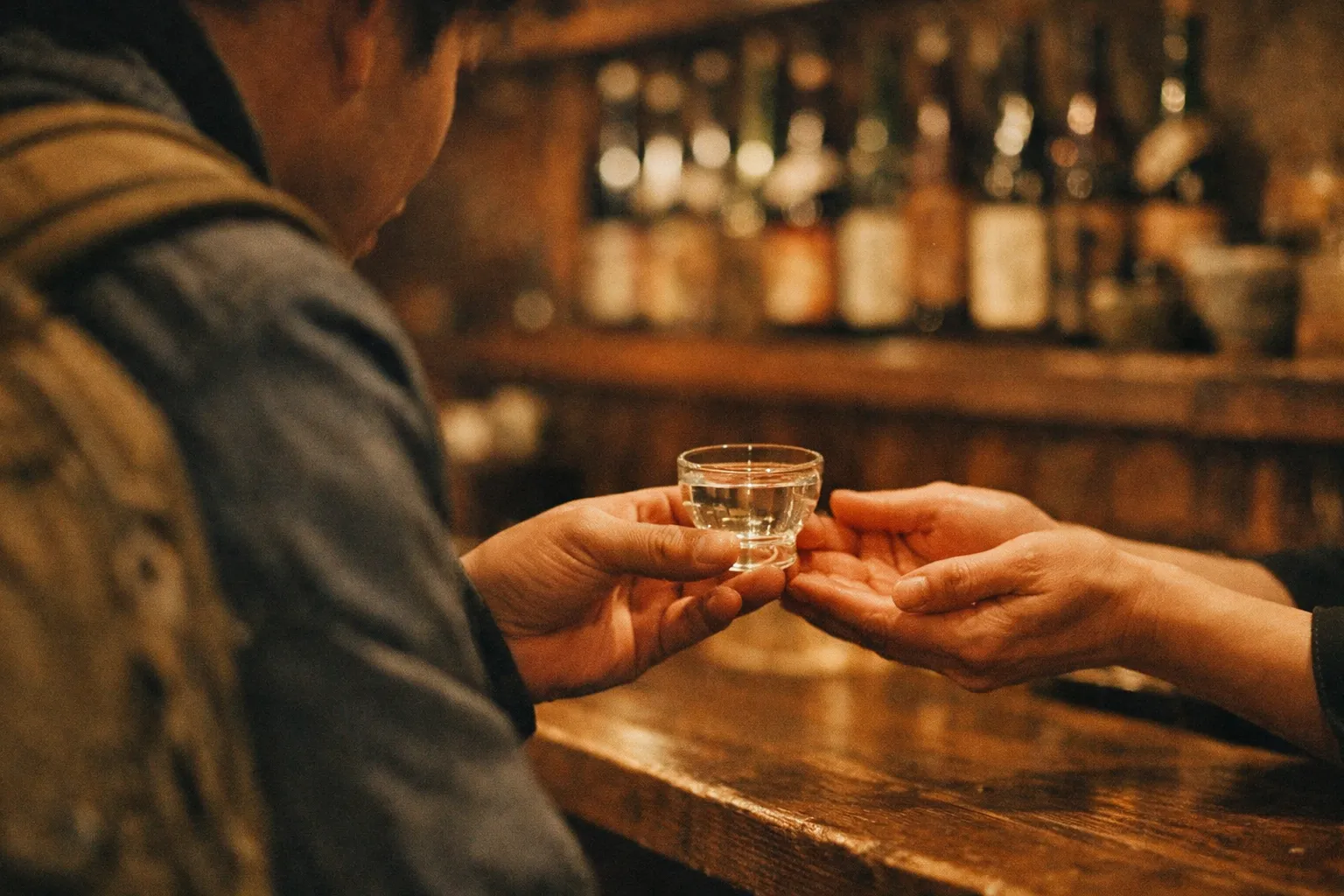
- Pour for others, not yourself. You keep an eye on your companions’ glasses and top them up; they do the same for you. When pouring for someone senior to you, hold the bottle with both hands as a sign of respect (3)(9).
- Wait for kanpai. Don’t sip until everyone’s glass is raised and someone calls out kanpai (“cheers”). Jumping the gun reads as rude.
- Pace yourself. A proper night out often moves through multiple venues - start at an izakaya, hit a karaoke box, end at a late-night ramen (wheat noodle soup) shop. Going hard in the first hour means you won’t last.
- It’s fine to not drink. Order a soft drink, still join the toast, and nobody will push. This has become much more acceptable, especially among younger crowds.
One etiquette note worth flagging: drinking in most public spaces is legally allowed in Japan, but several municipalities have introduced bans or time restrictions on public drinking in busy nightlife zones since around 2023-2024, particularly during events like Halloween in Shibuya and some summer festivals (5). Don’t assume a park or street is fair game during a big event - signage and police presence will tell you.
On a night out in Osaka’s Namba Sennichimae drinking strip, these small practices created an easy camaraderie among strangers. Someone refilled my glass, I refilled theirs, we figured out the kanpai timing, and the formality melted into something genuinely warm.
A Note on Alcohol Tolerance
Many people in Japan carry an ALDH2 enzyme variant that makes them flush red and feel the effects of alcohol fast. If your drinking companions slow down or switch to tea early, that’s why - and trying to match a heavy drinker drink-for-drink can land you in trouble quickly. Know your own limits and don’t treat the table’s pace as a target.
Drinking with Co-Workers: Nomikai Explained
If you work in Japan, or spend time with Japanese colleagues, you’ll encounter the nomikai (after-work drinking party) (3)(9). It’s a cornerstone of office life, built around group bonding, and worth understanding before you walk into one.
A typical nomikai runs 2-3 hours, costs each participant ¥3,000-¥6,000 (USD $20-$40) - sometimes subsidized by the company - and follows a few predictable beats (3)(9). The first round is almost always beer. The senior-junior dynamic shapes the pouring: a kōhai (junior) keeps an eye on their senpai’s (senior colleague’s) glass and pours for them, two hands on the bottle.
The drinking age still applies. Interns and young employees under 20 are expected to attend but not to drink - non-alcoholic options are standard, and nobody should be pressuring an under-20 to have a beer (3).
The culture is shifting, though. Attendance for big events like the year-end bōnenkai (year-forgetting party) or welcome parties still runs high - exceeding 70-80% in some companies - but younger workers increasingly opt out of routine drinking nights, and remote work has thinned out the after-hours circuit (9)(10). Per-capita alcohol consumption is declining overall, with government data showing a roughly 20% drop in consumption per adult over the past two decades (10). That shift shows up in the nomikai format too: two-hour capped sessions with a fixed menu have largely replaced the open-ended, drink-until-the-last-train nights that defined the 1990s office culture.
Practical guidance if you’re a guest at one:
- For major events, staying at least 1.5-2 hours is courteous. Slipping out early from a casual Friday session is increasingly fine.
- If you don’t drink, order a soft drink but still raise your glass for the toast.
- Watch the last train. Lines stop running between roughly 23:30 and 01:00, and missing it after a nomikai can mean an unexpected ¥5,000-¥10,000 (USD $33-$66) taxi fare home.
Beyond the Age Threshold: Alcohol Rules Worth Knowing
Beyond the age threshold, a handful of alcohol laws in Japan are worth knowing so you don’t accidentally cross a line.
- Drunk driving is zero-tolerance. This is not a country where one drink is acceptable behind the wheel. Penalties are severe and extend to passengers and even the person who served the alcohol. Riding a bicycle while drunk can also result in fines and, in serious cases, imprisonment.
- Public drinking is legal but situational. Drinking in a park or on a train is generally allowed, but watch for event-specific municipal bans in nightlife districts (5).
- Respect quiet hours. Residential areas enforce noise ordinances. Loud, drunk behavior late at night in a quiet neighborhood will not go over well.
- Otoshi is normal. Many izakaya add a per-person cover charge of ¥300-¥800 (USD $2-$5) that comes with a small appetizer you didn’t order. It’s not a scam - it’s standard practice.
How Japan’s Drinking Age of 20 Compares Globally
To place Japan’s age of 20 in context, here’s how minimum legal drinking ages break down across continents (1)(6).
Asia
Japan sits at 20. South Korea uses 19. Many Southeast Asian nations - Thailand, Vietnam, the Philippines - set theirs at 18 or 20 depending on the country (6). Among its neighbors, Japan is on the stricter end.
Americas
The United States is the global standout at 21 nationwide. Canada ranges from 18 to 19 by province. Most of Latin America - Mexico, Brazil, Argentina - uses 18 (6).
Europe
The majority of European countries set the age at 18, though many distinguish between beer/wine and spirits. Germany, Austria, and Switzerland allow 16-year-olds to buy beer and wine, with spirits typically requiring 18. This is the most permissive cluster among developed nations.
Africa
Many African countries set the minimum at 18, though enforcement varies widely and some have no national law or allow religious and cultural exceptions.
Oceania
Australia and New Zealand both use 18. Some Pacific island nations vary, and a few have higher thresholds or local restrictions (6).
Where Is the Drinking Age 16?
This question comes up because 16 sounds surprisingly low. The answer points squarely to parts of Europe: Germany, Austria, and Switzerland permit 16-year-olds to buy and drink beer and wine, while reserving spirits for 18 and up. A handful of other European regions have similar split-age systems.
No major country in Asia, Africa, or the Americas sets a general drinking age of 16 - and Japan certainly does not. If you’re 16 and traveling in Japan, you’re four years short of legal, full stop.
✓ Pros
- Clear, nationwide legal drinking age of 20 with no exceptions
- Strict enforcement with routine ID checks at chains and convenience stores
- Cultural milestone of turning 20 aligns with drinking age, aiding social understanding
- Wide availability of non-alcoholic options and diverse drinking venues
- Public drinking generally legal with some local event restrictions
✗ Cons
- Drinking age confusion due to adulthood age lowered to 18 but drinking age unchanged
- No parental exception for under-20s drinking alcohol
- Strict penalties for vendors serving minors can limit flexibility
- Limited acceptance of foreign IDs other than passports for alcohol purchase
- Public drinking restrictions during major events can catch visitors off guard
Drinking Responsibly in Japan
Enjoying the drinking culture means doing it sensibly. A few practical habits:
- Stay hydrated. Japanese convenience stores (konbini) are stocked around the clock with water, sports drinks, and snacks. Match each alcoholic drink with a glass of water.
- Eat while you drink. Izakaya serve otsumami - small dishes like edamame, grilled yakitori (skewered chicken), or a bowl of miso soup - designed to pair with alcohol and slow your consumption. Lean into them.
- Know how to get home. Public transport is excellent but stops overnight. Taxis are reliable if you miss the last train, and major cities have English-speaking medical assistance if a night goes sideways. Two useful words: byoin (hospital) and tasukete (help).
Quick Reference
| Aspect | Detail |
|---|---|
| Legal drinking age | 20 years old, nationwide, all alcohol types |
| Age of adulthood | 18 (since April 2022) - but drinking age stayed at 20 |
| Applies to tourists | Yes - passport is the standard ID |
| ”With parents” exception | None - providing alcohol to under-20s is illegal |
| Most popular drink | Beer; chuhai (canned cocktails) fastest-growing |
| Vendor penalty | Fines over ¥500,000 (about USD $3,100) plus license loss |
| ID threshold | Anyone appearing under 25 at chains/konbini |
| Drunk driving | Zero-tolerance, severe penalties |
| Public drinking | Legal but with event-based local bans |
Frequently Asked Questions
- Can you drink alcohol at 18 in Japan if you are a tourist?
- No. The drinking age is strictly 20 regardless of nationality or visitor status. Being 18 or older in your home country does not grant any exceptions.
- Are there any exceptions to the drinking age with parental supervision?
- No. Japan's law prohibits providing alcohol to anyone under 20, including by parents at home or in restaurants.
- What forms of ID are accepted for alcohol purchases?
- Passports are the most widely accepted form of ID for foreigners. Japanese driver's licenses and residence cards work for residents, but photo copies or phone images are generally not accepted.
- Are alcohol vending machines still common in Japan?
- They exist but are much less common than before. Remaining machines require age-verification cards or are located in controlled areas.
- What happens if a vendor serves alcohol to a minor?
- Vendors face heavy fines and possible suspension or loss of their alcohol license, which is a serious business risk.
- Is public drinking legal everywhere in Japan?
- Public drinking is generally legal but some municipalities impose bans or time restrictions during major events or in busy nightlife areas.
- What is the typical cover charge at bars in Tokyo and Osaka?
- Cover charges (*otoshi*) typically range from ¥300 to ¥800 (USD $2-$5) and include a small appetizer.