Ireland’s annual average temperature sits at 9.8°C (about 50°F), and even a July afternoon in Galway can turn cold and wet within the hour. That single fact is why most travelers pack wrong for Ireland, not because they don’t know it rains, but because they underestimate how little summer feels like summer. This ireland packing list gives you the actual numbers by season and region alongside the gear decisions that matter, so you show up dressed for the weather Ireland actually delivers rather than the weather you were hoping for.
The core principle is simple: a layering system beats one heavy coat every time. And where you’re going matters more than most guides admit. The drier east around Dublin records 772 mm of rain a year at Dublin Airport, while the west generally runs 1,000 to 1,400 mm and many mountainous districts pass 2,000 mm, per Met Éireann. Pack for the west and you’re covered anywhere; pack for Dublin and Kerry will soak you. What follows covers clothing by season, footwear, tech and adapters, your day pack, and the practical documents-and-customs stuff.
✓ Pros
- Mild year-round temps mean no extreme heat gear needed
- Layering system keeps luggage lighter than packing bulky coats
- Ireland is compact; one versatile wardrobe covers city and countryside
- Type G adapters are cheap and easy to source before you go
- Most gear doubles across seasons
✗ Cons
- Cool, wet conditions require waterproof gear even in summer
- Multiple layers add up; discipline required to avoid overpacking
- Atlantic-side rain is relentless; non-waterproof footwear fails fast
- Easy to forget until you're at the airport
- Winter adds thermal base layers and insulated boots, so pack volume increases
The Ireland Packing List: Core Clothing for Any Trip
The universal Ireland wardrobe is built on three layers: a moisture-wicking base, an insulating mid-layer, and a waterproof shell. That system adapts to Ireland’s rapid weather swings far better than one heavy coat, and with a national mean temperature of 9.8°C and summers averaging only 14.6°C, you’re dressing for cool and changeable in every month, not hot.
For a 7-to-10-day trip, a practical baseline looks like this:
- 3-4 bottoms: dark jeans or trousers over shorts for most days
- Around 8 tops, mixing long and short sleeves
- 4-5 mid-layers (fleeces or knit sweaters)
- 8 pairs of warm socks
- 1 waterproof jacket with a hood
- 1 pair of waterproof shoes or boots, plus 1 pair of sneakers
Skip cotton next to the skin. In Ireland’s cool, damp air it stays clammy and cold once it’s wet, and with only 1,100-1,600 hours of sunshine a year, it dries slowly. Quick-dry fabrics (merino or synthetic) are the pragmatic choice for tops and socks alike. A scarf and a packable hat earn their place too, and not only in winter: wind chill in spring and autumn can make a 10°C day feel considerably colder than the raw number suggests.
For a short break of 3-4 days, scale down hard. Two bottoms, several rewearable tops, and one mid-layer will do. Rewearing is expected here; nobody is tracking your outfits.
Base Layers: When to Pack Them and When to Skip Them
Thermal base layers (a top and leggings) are a sensible default for late autumn and winter trips (October through February), when Ireland’s winter mean sits at 5.4°C and damp cold works its way in steadily. For spring, with a seasonal mean of 8.8°C, they’re optional but genuinely useful if you tend to run cold.
Merino versus synthetic comes down to trip length and budget. Merino regulates temperature well and resists odor over multiple wears, which matters on a packing-light trip. Synthetic dries faster and costs less. One thermal set covers most travelers; bring two if you’re hiking or doing extended outdoor days where one set might not dry overnight.
Mid-Layers: Sweaters, Fleeces, and the Irish Knit Question
A medium-weight fleece or knit sweater is the workhorse of the Irish wardrobe. With autumn averaging 10.3°C and summer evenings dropping into cool territory even in June, it sees real use rather than sitting dead weight in your bag. Plan on 4-5 mid-layers for a week and expect to rewear them.
One legitimate space-saver worth knowing: Irish wool sweaters are widely available in-country, and buying one there is a fine strategy if you’re traveling light. Plenty of visitors do exactly that. Whatever you do, don’t pack a stack of bulky jumpers; one good fleece plus one or two knit sweaters covers nearly every condition you’ll meet.
Rain Jacket and Waterproof Footwear: the Non-Negotiables
A waterproof jacket with a hood and one pair of waterproof shoes or boots are the two items that separate a comfortable Irish trip from a miserable one. The jacket is the single most important thing on this list. Irish wind makes umbrellas impractical (they invert and blow inside out on exposed coasts), so a cinching hood is the functional replacement, not an add-on.

When choosing the jacket, prioritize:
- A breathable waterproof membrane (you’ll sweat inside a plastic shell on active days)
- A packable design that stuffs into your day pack
- A hood that actually cinches down against wind
- Pit zips: optional, but useful for hiking days
On footwear: non-waterproof sneakers will be soaked within a day once you’re outside the city and onto the west-coast routes. Spring is statistically the driest season and still records 256 mm of rain nationally, per Met Éireann’s 1991-2020 averages, so “it’s summer, I’ll risk it” is a losing bet. The baseline is one waterproof pair plus one pair of sneakers for dry city evenings.
Pair your waterproof boots with wool socks. Wool holds warmth even when damp and dries faster than cotton, which is why eight pairs for a week is not excessive given how often feet get wet here. Carry a compact windproof umbrella if you like, but treat it as backup only: the hood is your primary rain defense.
Footwear by Trip Type
Your itinerary decides the boot. Average daily highs only climb from about 10°C in March and 12°C in April to around 19°C in July and August, and wet conditions persist throughout, so match the shoe to the ground you’ll cover:
- City-only (Dublin, Cork, Galway): waterproof walking shoes or smart waterproof sneakers. Traction matters on wet cobblestones more than ankle support does.
- Rural, coastal, or road trip: waterproof hiking boots with ankle support and grip. Wet grass, muddy trails, and slippery stone steps are routine, and by October dim light and wet leaves make traction a real safety point.
- Winter: insulated waterproof boots. With winter averaging 5.4°C and frequently wet, damp ground stays cold; hand warmers are worth carrying for exposed coastal walks.
What to Wear in Ireland by Season
The base-mid-shell system stays constant across all four seasons. What changes is the weight of each layer and a few specific additions. Met Éireann’s 1991-2020 averages tell the story: 8.8°C in spring, 14.6°C in summer, 10.3°C in autumn, and 5.4°C in winter. Every season is cool by global tourism standards, which is exactly why “summer rarely feels like summer” to visitors arriving from warmer climates. Knowing what to wear in Ireland by season is mostly about adjusting that weight, not rebuilding your wardrobe from scratch.
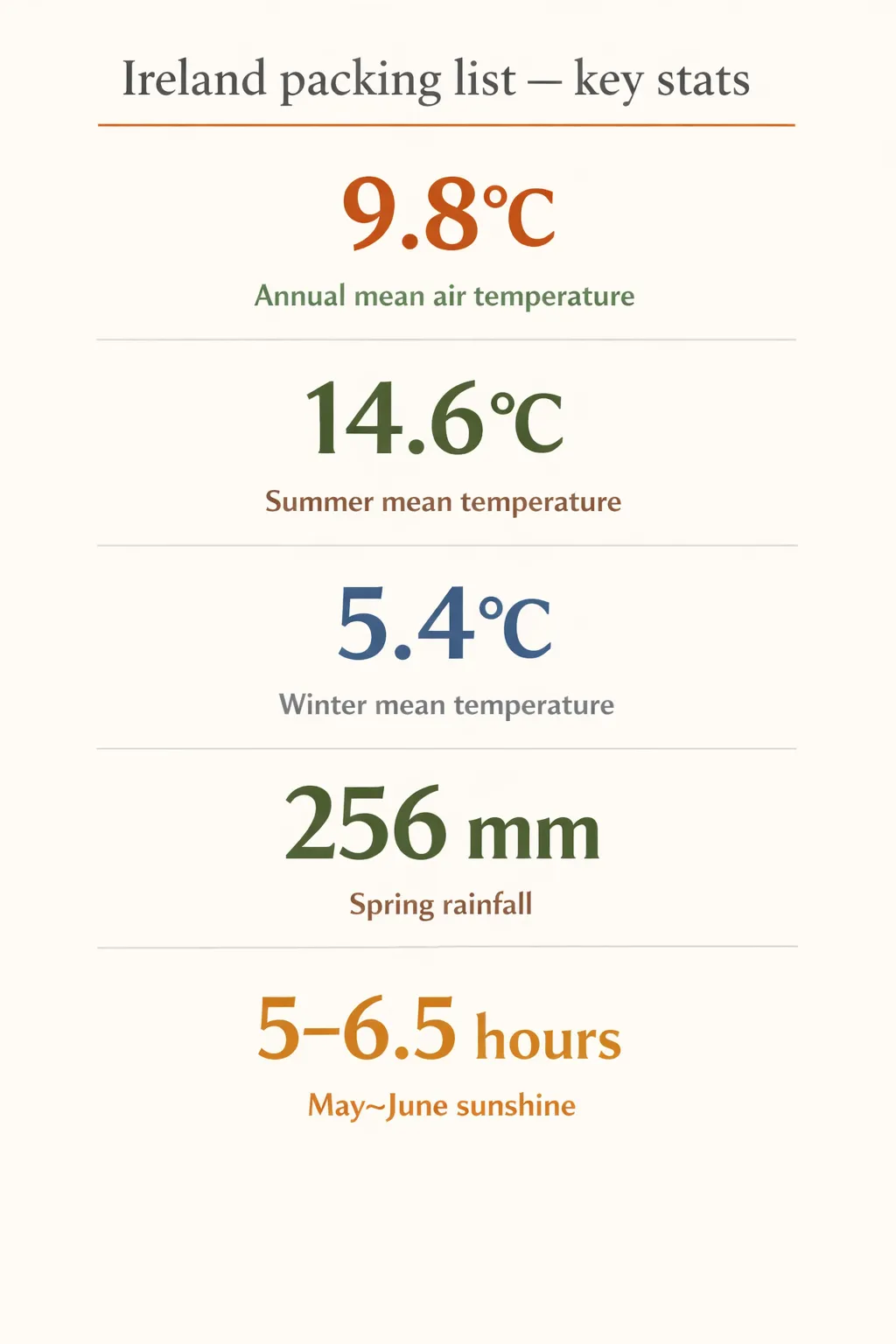 Seasonal climate figures inform packing decisions for Ireland: 9.8°C annual mean, 14.6°C summer, 5.4°C winter, 256 mm spring rainfall, and 5-6.5 hours May-June sunshine.

Seasonal Packing at a Glance
| Spring (Mar-May) | Summer (Jun-Aug) | Autumn (Sep-Nov) | Winter (Dec-Feb) | |
|---|---|---|---|---|
| Temp Range | 8-15°C (46-59°F) | 17-20°C (63-68°F) | 8-14°C (46-57°F) | 5-8°C (41-46°F) |
| Key Outerwear | Medium waterproof shell | Lightweight waterproof shell | Warmer waterproof jacket | Insulated waterproof coat |
| Footwear | Waterproof walking shoes | Walking shoes + optional sandals | Waterproof boots with traction | Insulated waterproof boots |
| Key Additions | Light scarf, sunglasses, sunscreen | Sun hat, sunscreen; still pack a sweater | Gloves + hat from Oct, warm fleece | Thermal base layers, hand warmers |
Spring Packing (March, April, May)
Spring runs 8-15°C (46-59°F), with rain frequent but days brightening noticeably toward May. Average highs rise from about 10°C in March to 12°C in April and 15°C in May, so you want a medium-weight waterproof shell, a mix of t-shirts and long sleeves, a light fleece, and a light scarf for the wind rather than any true cold-weather gear.
Don’t skip sun protection. Ireland gets 5-6.5 hours of sunshine a day in May and June, its sunniest stretch, and the low sun angle in March can be genuinely blinding on the road. Bring sunglasses and sunscreen. A compact umbrella works as backup, and waterproof walking shoes handle most spring itineraries.
May is the best month to visit if you’re weighing up the calendar: the countryside is at its greenest, crowds haven’t peaked, daylight runs long, and you’re packing for spring rather than hauling winter insulation. The practical case for May over July is that rainfall is lower and the shoulder-season ferry and accommodation availability is easier to work with, and popular coastal routes like the Wild Atlantic Way are drivable without the August bottlenecks. Book ferry crossings well ahead for May bank-holiday weekends, when sailings from Holyhead and Fishguard fill fast.
Summer Packing (June, July, August)
Summer highs average only 17-20°C (63-68°F), cooler than most European summer destinations, with July the warmest month of the year. A lightweight waterproof shell is still essential. T-shirts and light tops work for daytime, but evenings drop into the low teens fast, so pack at least one warmer layer.
Favor jeans or light trousers over shorts for most days. Shorts are fine for a genuinely warm afternoon, but don’t build a shorts-only wardrobe. A practical summer kit is 2-3 short-sleeve tops, 2-3 trousers or jeans, 1-2 light sweaters, walking shoes, and optionally sandals for dry days. Add sunglasses, sunscreen, and a sun hat: Met Éireann’s 1991-2020 averages put May and June at 5 to 6.5 hours of sunshine a day, easing to about 5 hours a day in July.
Recent summers have run wet. The waterproof shell stays in the bag regardless of what the calendar says.
Autumn Packing (September, October, November)
Autumn cools steadily. The season averages 10.3°C nationally, and Dublin Airport’s 1991-2020 monthly means fall from 13.2°C in September to 10.4°C in October and 7.3°C in November. September still holds highs near 17°C and feels like an extension of shoulder season, but October is the transition point where gloves and a warmer hat start to earn their place. By November you’re tipping toward winter conditions.
Pack a warmer waterproof jacket (a heavier shell or a light insulated one), long sleeves and jumpers, and a warm fleece. Add gloves and a hat from October onward, and treat the scarf as wind-chill defense rather than decoration: wind-driven rain at single-digit temperatures feels far colder than the number suggests. Traction-focused waterproof boots matter now, with wet leaves and muddy paths underfoot and daylight down to around 10.5 hours by mid-October.
Winter Packing (December, January, February)
Winter averages 5.4°C (41.7°F), with January the coldest month at a 5.3°C mean, short days, and persistent damp. Ireland rarely gets extreme cold (the winter mean daily minimum is 2.4°C nationally), so the focus is insulation plus waterproofing, not expedition gear. Thermal base layers move from optional to mandatory here.
Bring an insulated waterproof coat rather than just a shell, a warm hat, waterproof gloves, and a scarf. Hand warmers are worth it for coastal or exposed walks. Footwear means insulated waterproof boots and multiple pairs of wool socks, with 11 to 13 days a month bringing 1 mm of rain or more at Dublin Airport, keeping the ground wet. Keep sunglasses in the bag too: winter daylight is short and low-angle, and coastal glare is real even when the sun barely clears the horizon.
Day Pack Essentials for Ireland
A dedicated day pack matters in Ireland because the weather changes faster than you can dig through a suitcase. You need rain gear, a spare layer, and charging kit within arm’s reach, not buried at the bottom of your main bag. This is doubly true on road trips and rural days, where the stretches between services run longer than city travelers expect.
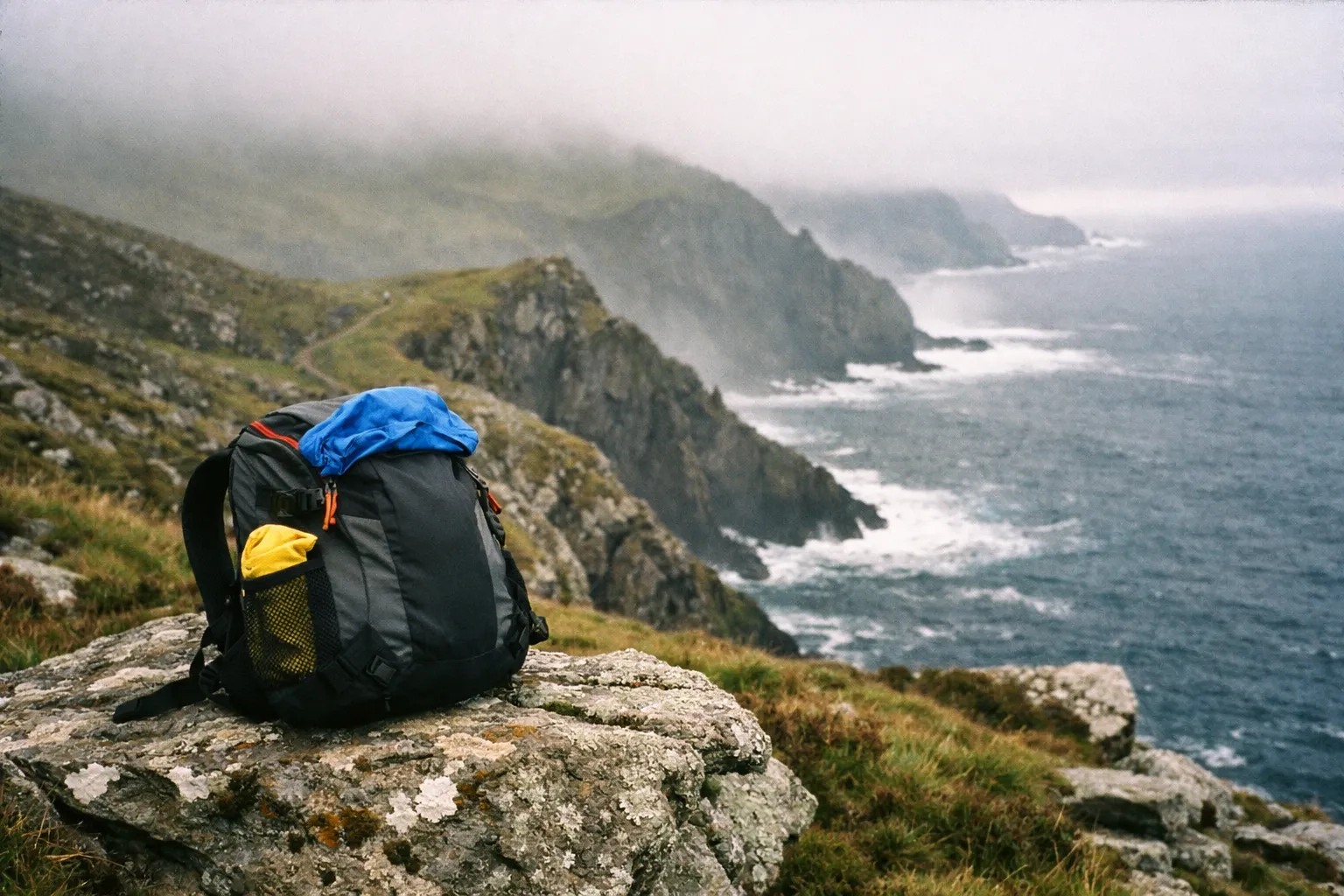
The single most overlooked item is a rain cover for the pack itself. With year-round rainfall (even the driest season averages 256 mm), a pack without a cover soaks your gear through on any coastal walk. Beyond that, a reusable water bottle, a portable power bank, and a bit of cash cover the practical gaps rural Ireland regularly leaves.
What to Put in Your Ireland Day Pack
10 minutesStep-by-step checklist to pack your day bag for Ireland's variable weather and rural logistics.
- 1
Waterproof shell first
Place your waterproof jacket with hood at the top of your pack for quick access during sudden rain.
- 2
Pack a mid-layer
Add a packable fleece or knit sweater to handle temperature drops throughout the day.
- 3
Scarf and packable hat
Include these even in shoulder seasons to protect against wind chill.
- 4
Portable power bank and charging cable
Essential for navigation and charging devices on long driving or walking days.
- 5
Reusable water bottle
Carry enough water for rural stretches where services are sparse.
- 6
Cash
Carry enough to cover small pubs, rural cafés, and parking where card readers may fail; a modest daily buffer goes further than you'd expect outside cities.
- 7
Sunscreen and sunglasses
Protect yourself from UV even on cloudy days, especially in May and June.
- 8
Small snacks
Pack light snacks for long drives along routes like the Wild Atlantic Way.
- 9
Rain cover for the pack
Attach or pack a rain cover to keep your gear dry during coastal or rural walks.
A camera is worth its space too. Ireland’s diffuse light photographs well even under overcast skies, which is most of the time.
Tech, Adapters, and Staying Charged
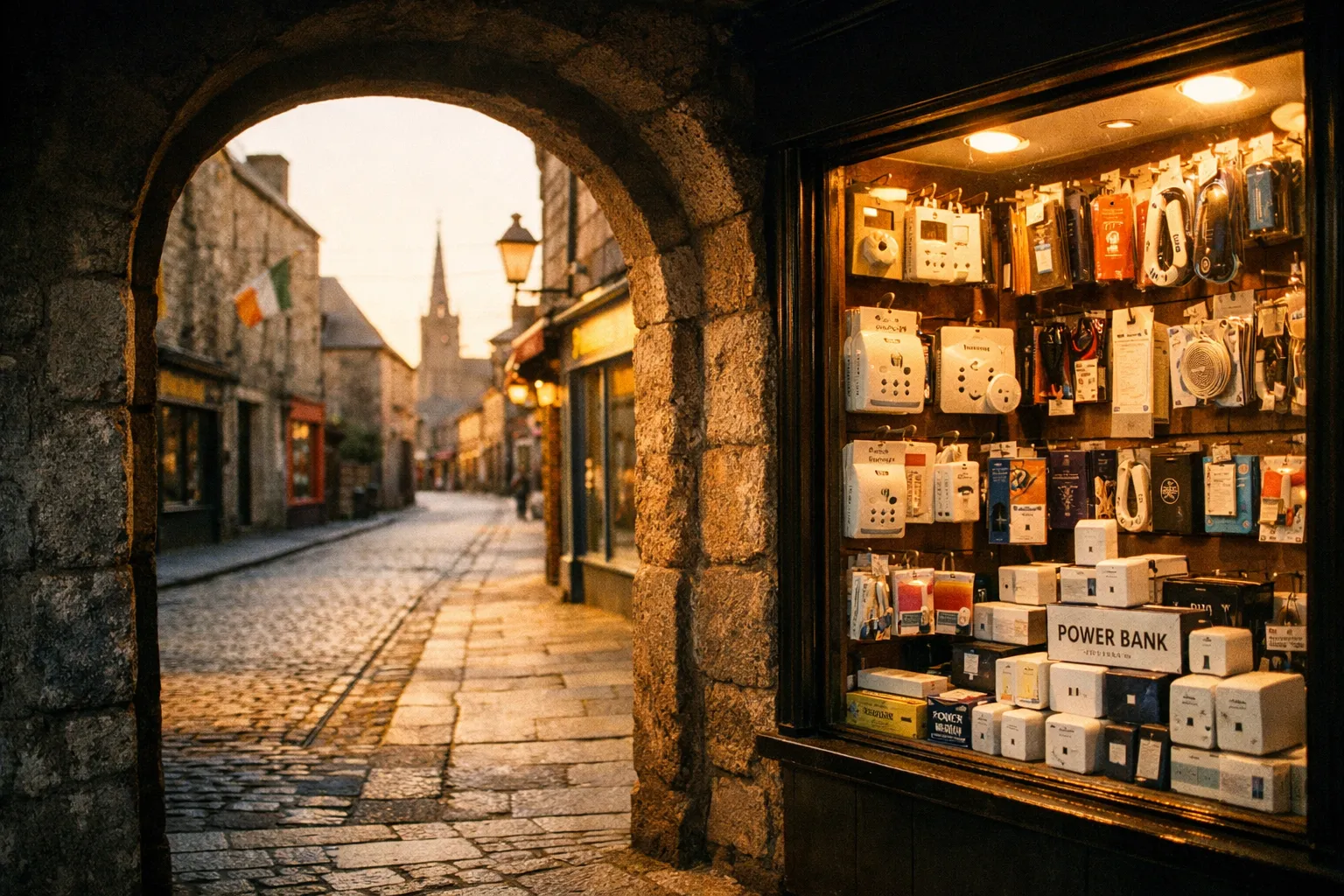
Ireland uses Type G electrical sockets (three rectangular pins in a triangular layout) running at 230V, 50Hz. Visitors from North America (120V, Type A/B) and mainland Europe (Type C/E/F) need a Type G plug adapter for Ireland. The Type G plug carries three rectangular blades and an incorporated fuse, so the adapter has to present that exact geometry to work. The same standard covers both the Republic and Northern Ireland, so one adapter set handles a combined trip.
Check voltage before you worry about converters. Most modern electronics (laptops, phone chargers, camera batteries) are dual-voltage. Look at the label on your charger brick: if it reads “INPUT 100-240V, 50/60Hz,” you only need the plug adapter, not a separate voltage converter. Older single-voltage appliances like some hair tools are the exception.
Two practical habits save the trip:
- Bring two Type G adapters: one for the room, one for the bag. Redundancy matters when one gets left behind in a hotel socket.
- Pack a portable power bank for long driving days and rural walks, and for topping up a camera while your phone charges from the wall.
- Add a USB car adapter if you’re renting; it keeps devices charged between stops on road-trip days.
You can buy adapters at Irish airports and electronics shops, but they’re overpriced and inconvenient to hunt down on arrival. Bring them from home.
Documents, Money, and the Practical Stuff
Beyond clothing, a handful of documents and rules decide whether your arrival goes smoothly. A passport is required for virtually all visitors and must stay valid for the length of your stay.
On money: the Republic of Ireland uses the euro (€) and Northern Ireland uses pound sterling (£). If you’re crossing the border, plan for the currency switch. Ireland is card-friendly with widespread tap-to-pay, but carry cash for rural cafés, small pubs, taxis in smaller towns, and parking where card readers are unreliable. Keep travel insurance documents and booking vouchers accessible; digital copies are fine.
For medication, bring an adequate supply and, ideally, written confirmation from your doctor; it smooths any customs questions.
What you cannot bring into Ireland follows EU biosecurity rules. The Department of Agriculture, Food and the Marine states that personal consignments of meat, milk, or their products are not allowed from almost all non-EU countries, and that plants, fruit, vegetables, cut flowers, seeds, soil, and timber from outside the EU require a phytosanitary certificate at entry. Revenue’s guidance further flags live animals, dangerous drugs, counterfeit goods, offensive weapons, and many animal-origin products as prohibited or tightly restricted. For general shopping, travelers aged 15 or over arriving from outside the EU can bring other goods (gifts and clothing) up to €430 in value duty-free when arriving by air or sea, with €215 per child under 15. Allowances change, so confirm the current figure with Revenue before you fly. Check the current customs rules before you pack anything borderline.
A small first-aid kit earns its space: blister plasters are genuinely useful given how much you’ll walk, and motion-sickness tablets help on winding coastal roads.
What Not to Pack, and a Few Cultural Notes for American Travelers
The fastest way to overpack for Ireland is to fight the layering system. The common mistakes are predictable:
- Multiple bulky sweaters or one heavy coat instead of layers: adds weight without adding versatility
- Only summer clothes for a summer trip: with highs averaging 17-20°C and cool evenings, a shorts-only wardrobe leaves you cold
- Non-waterproof sneakers as your only footwear: soaked within a day outside Dublin
- Forgetting the Type G adapter until you’re standing at the airport
- Skipping thermal base layers for a late-autumn or winter trip
A few cultural notes save American travelers some friction, since these questions come up constantly.
On wearing orange: in the Republic, orange carries historical associations with Unionism and the Orange Order, but it’s not a banned or provocative color in everyday clothing, and most people won’t give it a second look. The context is more pronounced in Northern Ireland, where sensitivities around symbols run higher. Wearing an orange jumper casually is fine anywhere; wearing an orange sash to a parade in Belfast is a different matter entirely. Dress by weather, not by color politics.
On not standing out: the main tells are volume, tipping, and currency. Irish pub culture is quieter than American bar culture, so don’t talk over live music or musicians in a session. Tipping is lighter here: rounding up or about 10% in sit-down restaurants is generous, and tipping at the bar for drinks isn’t expected (buying the bartender a drink is the friendly equivalent). And don’t assume anywhere takes dollars: it’s euros in the Republic, pounds in Northern Ireland.
A couple more things worth knowing: don’t launch into your Irish ancestry at length with strangers who didn’t ask; it lands differently than you’d hope. Don’t conflate the Republic of Ireland with Northern Ireland: different country, different currency, different jurisdiction. And don’t rely solely on a card in rural areas, where the reader may simply not work.
Frequently Asked Questions
- Do I need a rain jacket even in summer?
- Yes. Ireland's summer highs average 17-20°C and rain is possible any month; a lightweight waterproof shell with a hood is essential every trip.
- What Type G plug adapter do I need for Ireland?
- Ireland uses Type G sockets at 230V, 50Hz. Visitors from North America need a Type G adapter and should confirm devices are dual-voltage; most modern chargers are.
- Is it okay to wear orange in Ireland?
- In the Republic, wearing orange casually is generally fine. In Northern Ireland, orange has stronger cultural associations; context matters but casual wear rarely causes issues.
- What can I not bring into Ireland?
- EU biosecurity rules prohibit meat, dairy, and most plant products from outside the EU without declaration; some medications require documentation. Check Irish customs before packing.
- How do I not stand out as an American in Ireland?
- Keep your voice down in pubs, tip about 10% in restaurants but not at the bar, carry euros not dollars, and avoid assuming everyone wants to discuss Irish ancestry.
- How many pairs of socks should I actually pack?
- Eight pairs for a week is not excessive. Wool socks stay warm when wet and dry faster than cotton, making them worth the extra pack weight.
- Do I need waterproof boots or will waterproof shoes do?
- City trips can use waterproof walking shoes; rural, coastal, or hiking-heavy itineraries need boots with ankle support and traction, especially in autumn and winter.
Getting to Ireland: Flights, Ferries, and One Thing Most Guides Get Wrong
Most packing guides for Ireland skip the journey entirely, which is a mistake because how you arrive shapes what you carry. Flights into Dublin Airport (DUB) are the default for transatlantic travelers, with direct services from major US and Canadian cities; Cork Airport (ORK) and Shannon Airport (SNN) are worth checking if your itinerary skews south or west. From the UK, Ryanair and Aer Lingus cover the main routes in under two hours, but the ferry is a genuine alternative: Irish Ferries and Stena Line both sail Holyhead-Dublin year-round, and Stena runs Fishguard-Rosslare, with overnight sailings that let you skip a hotel night. Irish Ferries puts its Dublin Swift fast craft at just over two hours on the Holyhead-Dublin run, against roughly three and a half hours on the standard cruise ferries; book ahead for summer sailings, which fill up.
The one thing most packing guides get wrong about Ireland: they treat it as a single climate zone and tell you to pack for “Irish weather.” The east-west split is the real variable. Dublin Airport’s 1991-2020 annual rainfall is 772 mm; the west generally runs 1,000 to 1,400 mm, and many mountainous districts top 2,000 mm. Pack for the west and you’re covered everywhere. Pack for Dublin and Kerry will soak you inside a day.
The Bottom Line on Packing for Ireland
The layering system is the whole strategy (a moisture-wicking base, an insulating mid-layer, and a waterproof hooded shell), and everything else is calibration by season and activity. Get that right and Ireland’s changeable weather stops being a problem.
Before you zip the bag, double-check two things: the Type G plug adapter and waterproof footwear. Both are harder and more expensive to source once you’re on the ground, and both are easy to forget. And remember that the Atlantic west (Galway, Kerry, Donegal) demands more waterproofing than the drier east around Dublin, so let your route shape how heavily you weight the pack toward rain gear.
Pack for the weather Ireland actually delivers, and you’ll spend your energy on the coastline, the pubs, and the drives, not on being cold and wet.