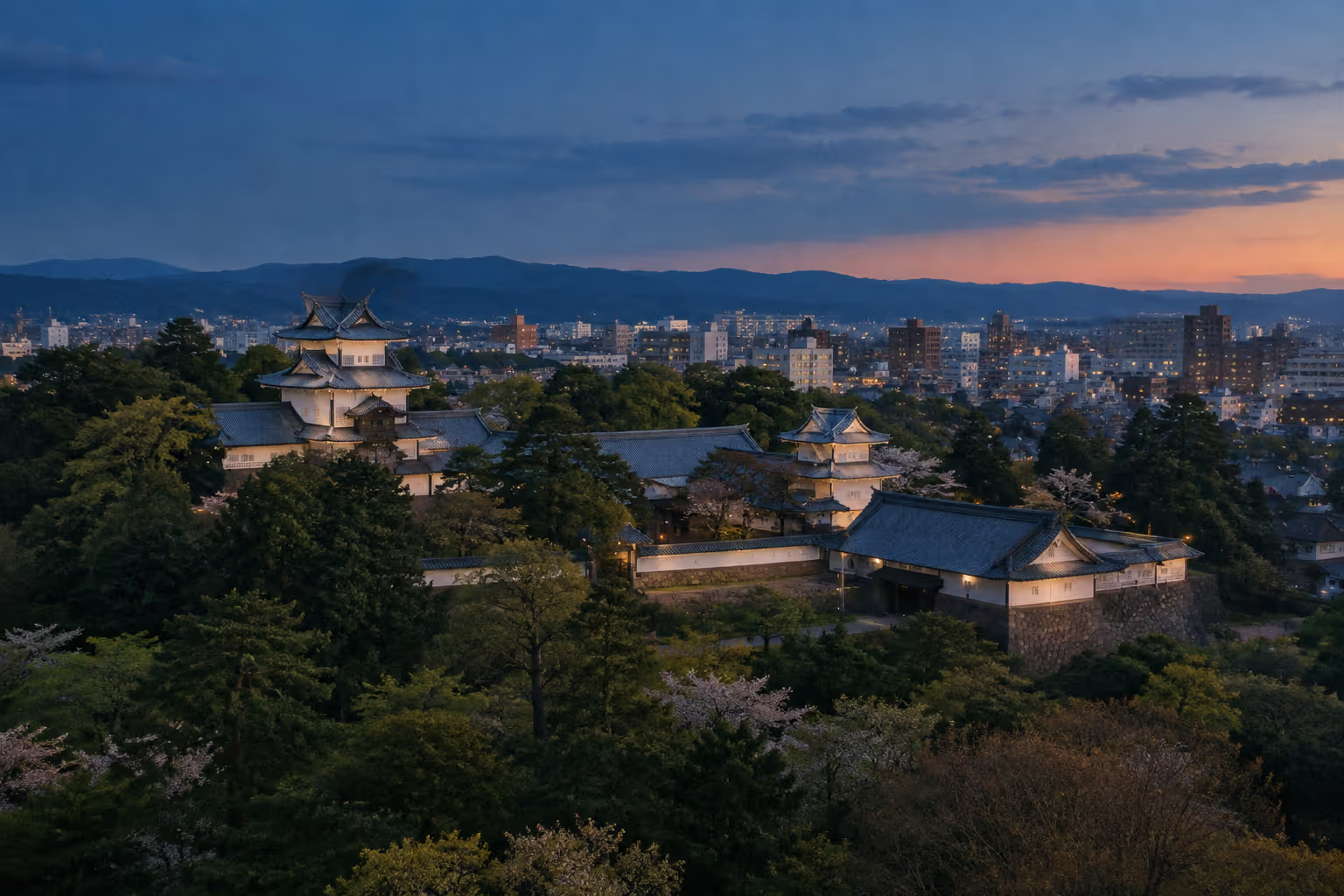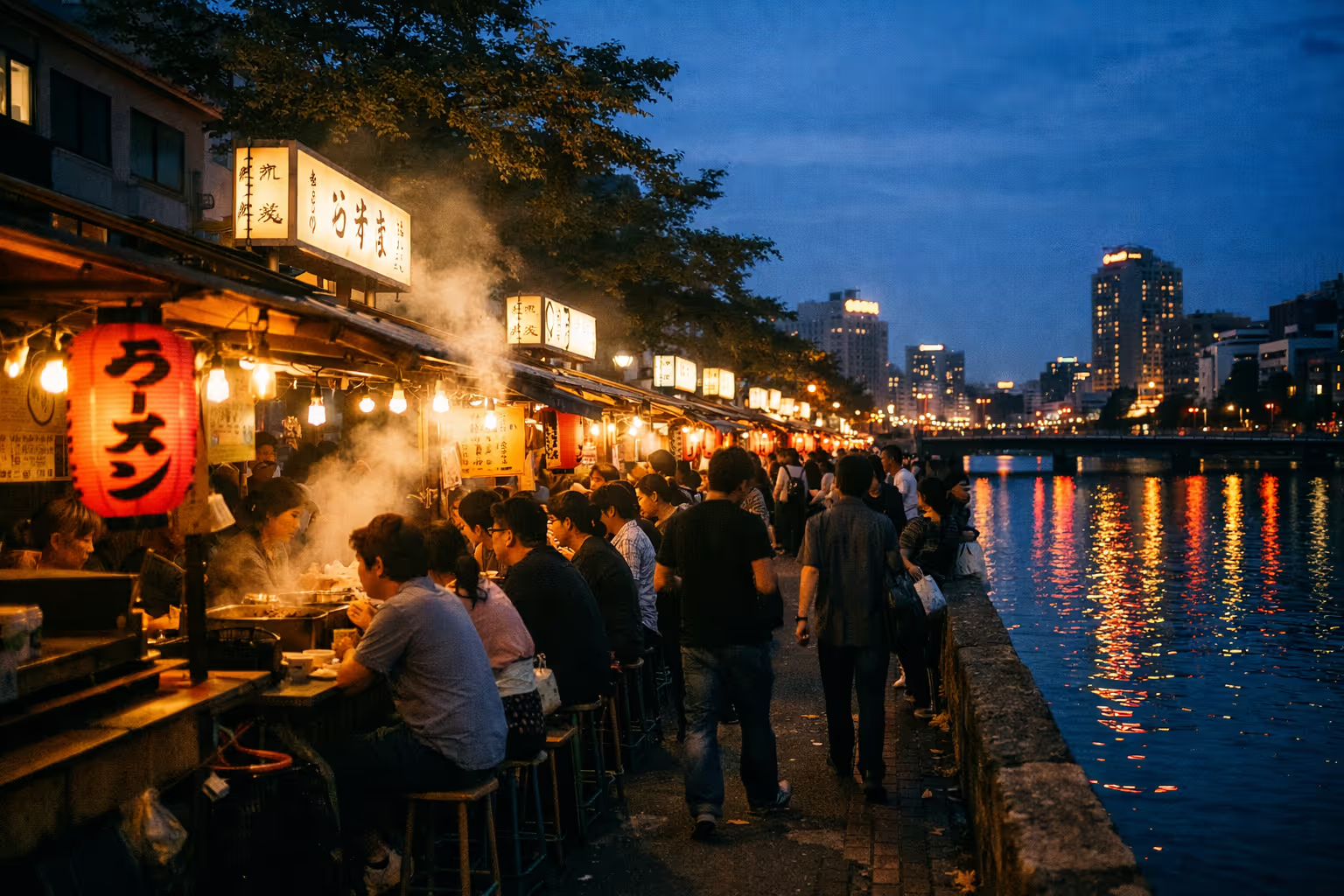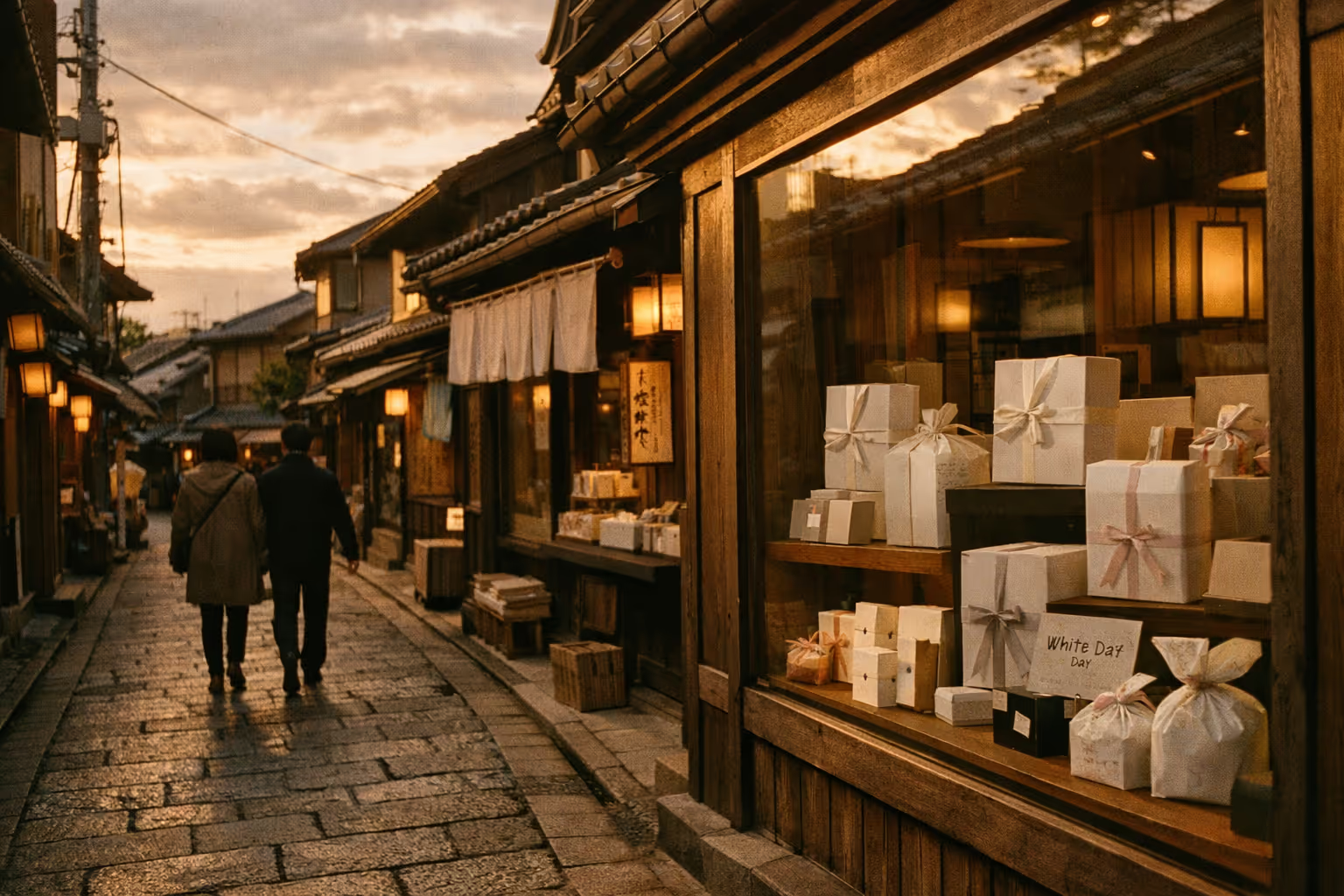
White Day in Japan lands on March 14, exactly one month after Valentine’s, and flips the script: this is the day men return the chocolate women gave them. The unwritten rule is san-bai gaeshi, a reply worth two to three times the original gift, though aiming for double keeps you from overspending. Cookies or white chocolate read as a safe thank-you for a coworker; jewelry says something romantic. Shop the depachika food halls in early March before the limited runs sell out.
How White Day in Japan Forged Its Unique Identity
White Day is a marketing holiday, and nobody in Japan pretends otherwise. The confectionery industry built it in the late 1970s to give men a structured occasion to respond to the chocolates they’d received on Valentine’s Day (2)(5). For when did white day start in Japan, the Fukuoka confectioner Ishimura Manseido marketed the first Marshmallow Day in 1977, and White Day was first celebrated the following year, in 1978, before the wider industry picked up the idea (2)(5). Broader commercialization followed through the 1980s.
The original 1977 Marshmallow Day campaign centered on marshmallows - white chocolate was not part of that initial push, though it appeared soon afterward and became closely associated with the holiday. The “Marshmallow Day” name was rebranded as White Day in most accounts (2). The “white” label stuck around the marshmallow-and-candy origin and the branding - not because gifts must literally be white, which is a common misreading worth clearing up.
Today the standard return gifts still lean confectionery: white chocolate, cookies, marshmallows, and candy, alongside non-food items like jewelry, accessories, lotions, and handbags (2)(4). Department stores and confectionery brands treat early March as a genuine sales season, with seasonal assortments and limited-edition packaging. Walk through the basement food hall at a major depachika (department store food hall) - the B1 floor at Isetan Shinjuku in Tokyo, for instance - in early March and the White Day displays are hard to miss. According to Japan’s National Confectionery Industry Association, White Day retail sales have consistently exceeded ¥50 billion (roughly $330 million USD) annually in recent years.
The Difference Between Valentine’s Day and White Day
The cleanest way to understand the system is to see the two days as one mechanism, not two separate holidays.
On Valentine’s Day (February 14th), women give chocolate. Some of it is honmei-choco (本命チョコ, “true feeling chocolate”) for a partner or crush, and a lot of it is giri-choco (義理チョコ, “obligation chocolate”) handed to coworkers, bosses, and male acquaintances as a social courtesy (3)(4).
On White Day (March 14th), the recipients respond. That’s the core difference: Valentine’s Day is the opening move, White Day is the reply (1)(3)(5). The exchange isn’t symmetrical the way Western reciprocal gift-giving often is - in the West, two people might both give gifts on the same day. In Japan, February and March split the roles across a month.
The other difference is the value math. Western Valentine’s Day has no equivalent rule that the return gift should outscale the original - which is where things get interesting.
The san-bai gaeshi rule and the actual gift budget
The convention that trips up most newcomers is san-bai gaeshi (三倍返し, “triple the return”), which holds that the return gift should be roughly two to three times the value of the Valentine’s gift - a steeper expectation than the straightforward one-for-one exchange common in Western reciprocal gifting (1)(4).
In practice:
- A Valentine’s gift worth around ¥1,000 (roughly $7 USD) typically prompts a White Day return of about ¥2,000-¥3,000 ($13-$20 USD).
- The “triple” figure is the version English-language coverage repeats most, but two times is widely treated as acceptable (1).
My own rule of thumb: if you’re unsure of the expected value, aim for 2x rather than 3x. It still honors the tradition implied by san-bai gaeshi while reducing the risk of overshooting and accidentally sending a stronger signal than you mean to. Overdoing it for a casual giri-choco return can read as awkward, not generous. That’s the part most guides skip over.
To plan a White Day gift properly, you need two pieces of information: who gave you something on February 14th, and roughly what tier it was. The return is judged against that baseline (1)(2)(4).
White Day gifts: choosing by relationship type
Most guides list gifts as a generic pile. The part that actually matters is matching the gift to the relationship, because the gift type sends a signal - and getting that wrong is more awkward than getting the price wrong.

For a romantic partner
Higher-value items fit here: a dessert assortment, accessories, beauty items, or jewelry, often paired with a planned date (1). This is where the full san-bai gaeshi expectation lands hardest, and where non-food gifts make the most sense.
For a coworker or acquaintance (giri-choco return)
Keep it modest, neutral, and well-presented. Packaged sweets, boxed cookies, or a seasonal confectionery set are the safe choices (3)(4). The goal is polish, not extravagance. An expensive gift in response to obligation chocolate can imply a level of interest you don’t intend - and that kind of misread is genuinely uncomfortable in a Japanese office context.
For groups of female colleagues
Collective gifting at the office is common: a shared box of sweets distributed among coworkers reads as professional courtesy rather than personal gesture. It’s the workplace version of reciprocity, and it keeps the whole exchange balanced without anyone feeling singled out.
A useful split to remember: food gifts are the low-risk default, while non-food gifts signal more commitment - and therefore more pressure to match the relationship level.
White Day Gift Types by Relationship
| High Value Romantic Partner | Modest Coworker or Acquaintance | Group Gift Groups of Female Colleagues | |
|---|---|---|---|
| Relationship Type | Partner or crush | Work colleagues, acquaintances | Office groups |
| Typical Gift Type | Dessert assortments, jewelry, accessories, beauty items | Packaged sweets, boxed cookies, seasonal confectionery | Shared box of sweets |
| Value Expectation | 2-3x Valentine's gift | Modest, polished | Modest, shared |
| Social Signal | Strong commitment | Professional courtesy | Balanced workplace reciprocity |
Gift ideas at a glance
- White chocolate - the original White Day gift, tied directly to the holiday’s branding
- Cookies - often read as signaling a sweet, steady relationship
- Marshmallows - the namesake of the original “Marshmallow Day”
- Macarons - a popular modern dessert-counter choice (1)
- Jewelry or accessories - higher-commitment, partner-tier gifts (1)
Where and when to shop for White Day in Japan
If you’re in Japan and need to participate, timing and venue both matter more than most people expect.
Where to buy: Department store food halls (depachika), confectionery shops, and seasonal gift counters are the right sources (1). The basement floors at Isetan Shinjuku or Takashimaya Nihonbashi in Tokyo, or Daimaru Shinsaibashi in Osaka, stock the widest seasonal assortments and are worth the trip over a convenience-store grab - the holiday is built on curated sweets culture, and presentation signals effort in a way that a combini bag simply does not. Presentation is part of the message - the wrapping and the box matter almost as much as what’s inside.
When to buy: Seasonal White Day displays concentrate in late February and early March, and the premium and limited-edition assortments sell through. Last-minute shoppers face noticeably thinner options. Start in early March if you want range.
Limited-edition seasonal packaging is worth seeking out even on a small budget. Because the holiday grew out of confectionery marketing, the themed boxes often punch well above the price of what’s inside. I’ve picked up beautifully packaged ¥1,500 ($10 USD) cookie sets in early March that looked like they cost three times that.
How younger generations are shifting the tradition
The san-bai gaeshi math and the giri-choco obligation aren’t universally loved, and the practice is shifting. Younger people increasingly favor personal, meaningful gifts over obligatory expensive ones - which reflects broader changes in relationship dynamics and a move away from the strict reciprocity script.
Giri-choco itself has drawn real pushback in Japan over the past several years, with some companies - including major firms like Godiva Japan, which ran a notable 2018 campaign questioning the obligation - actively discouraging office chocolate to ease the pressure on women. As that softens on the February side, the White Day response side naturally relaxes too. The direction of travel is from obligation toward genuine appreciation, which arguably brings the holiday closer to what gift-giving is supposed to be in the first place.
Worth noting if you’re observing this as a visitor: the shift is real but uneven. In some workplaces the old conventions still hold firmly. If you’re curious about the broader cultural backdrop, discover astonishing facts about Japan that shape these everyday social customs.
White Day abroad: South Korea and Taiwan
White Day didn’t stay in Japan. South Korea and Taiwan both observe March 14th with their own versions of the reciprocal exchange.
While living in South Korea, I saw a comparable level of enthusiasm, with one notable local addition: April 14th, Black Day (블랙데이), when people who received nothing on either February 14th or March 14th gather to eat jajangmyeon (자장면, black bean noodles) - a wry singles’ counterpart to the couples’ calendar. The core reciprocity logic carries across all three countries. Each just adds its own framing around it.
Frequently Asked Questions
- What is the main difference between Valentine's Day and White Day?
- Valentine's Day is when women give chocolate, including honmei-choco for partners and giri-choco for coworkers. White Day is when recipients return gifts, often at two to three times the value, completing the paired system of gift exchange.
- Can girls give gifts on White Day?
- Yes, anyone who received a Valentine's gift can reciprocate on White Day. The tradition frames men as the return-gift givers because women typically give on Valentine's Day, but the custom is about reciprocation, not gender.
- Why do people celebrate White Day?
- White Day exists to complete the reciprocal cycle started on Valentine's Day. Created by the confectionery industry, it fulfills social expectations of returning favors, especially in romance and workplace contexts.
- What are the rules for White Day gifts?
- Customary guidelines include returning gifts if you received one on Valentine's Day, aiming for two to three times the original value, matching gift type to relationship level, and prioritizing presentation with curated boxed assortments over casual candy.
- How is White Day observed differently outside Japan?
- South Korea and Taiwan also observe White Day with reciprocal gift-giving. South Korea adds Black Day on April 14th, when singles who received no gifts on the previous two days gather to eat black bean noodles, adding a unique cultural twist.
- What is the significance of the san-bai gaeshi rule?
- San-bai gaeshi means 'triple the return' and sets an expectation that White Day gifts should be two to three times the value of Valentine's gifts. This rule guides gift budgeting and signals the importance of reciprocity in Japanese culture.
- Are there any etiquette tips for participating in White Day at work?
- Yes, keep gifts for coworkers modest and polished to avoid implying personal interest. Group gifting is common to maintain balance and avoid singling anyone out, reflecting professional courtesy rather than personal gestures.
What to take away
White Day works as the back half of a 30-day exchange, and the only things you really need to get right are timing, value, and gift type. Note who gave you something on February 14th, aim for about double the value, and choose food gifts for casual relationships and something more considered for a partner.
Shop the department store food halls in early March before the good assortments sell out. The “reverse Valentine’s Day” shorthand people use isn’t wrong exactly - it just misses the part where the return gift is supposed to be worth more than the original, and where the gift type carries its own meaning depending on who you’re giving it to.
Get those things right and you’ve understood white day in Japan well enough to participate without putting your foot in it - which, in a workplace context especially, is the actual goal.