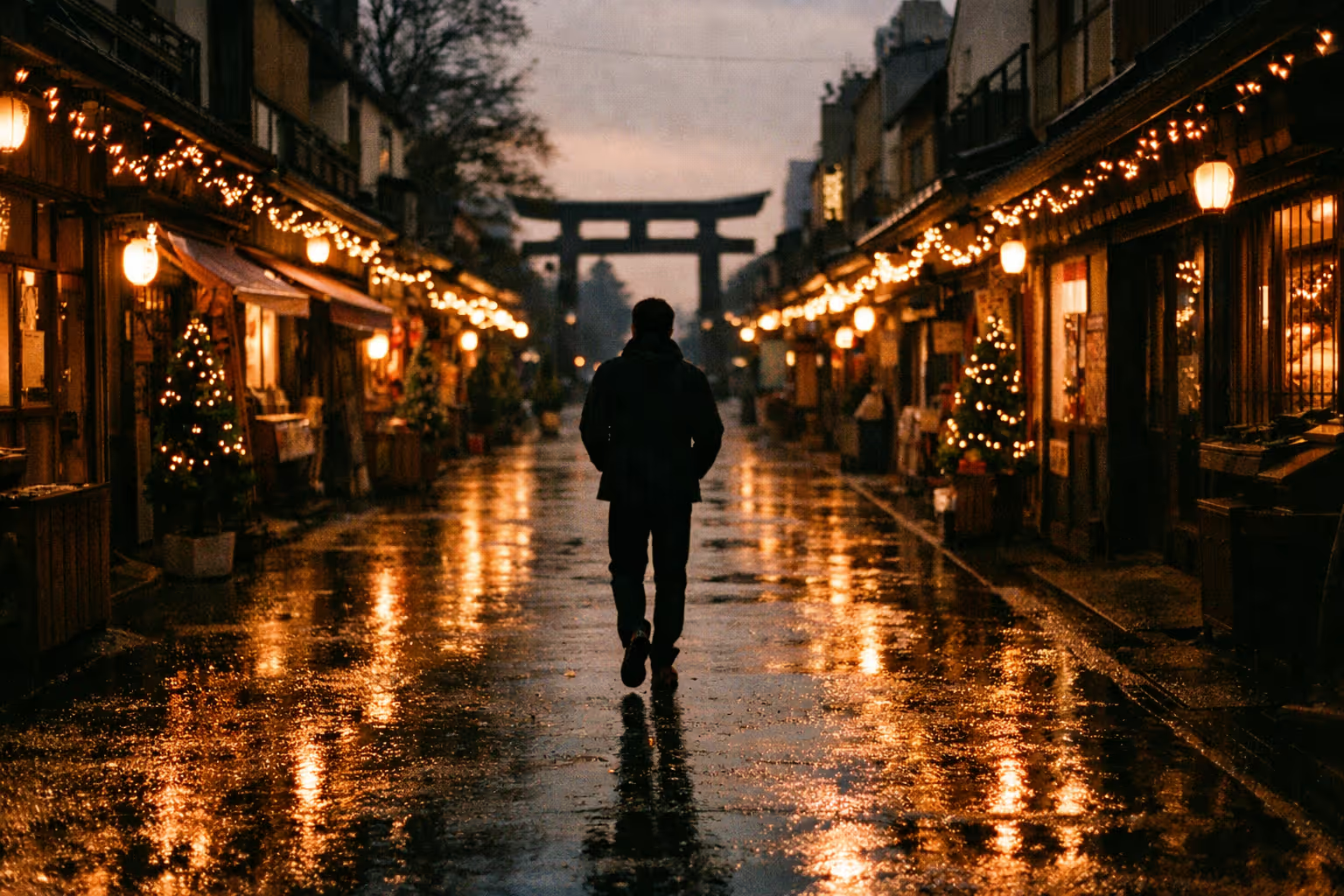
Christmas in Japan looks familiar and works nothing like you would expect. December 25 is an ordinary workday in a country that is about one percent Christian, so there is no family feast and no day off. Instead the holiday belongs to couples: Christmas Eve is the big romantic night, the traditional dinner is a pre-ordered bucket of KFC, and dessert is a light strawberry shortcake. Understand that it is a date night, not a family one, and the whole thing suddenly makes sense.
Christmas in Japan: Traditions, KFC, Food, Tokyo Celebrations, and How It Is Celebrated
No. December 25 is a normal working day in Japan (4)(8). Offices stay open, trains run on the regular schedule, and most people go to work and school as usual. Some schools close, but only because the date falls close to the New Year break - not because of Christmas itself.
This is the single most important fact to internalize before you travel. If you’re expecting shuttered shops and a quiet, family-at-home atmosphere, you’ll be surprised. The city keeps moving, and the festive energy is concentrated in the evening rather than the daytime.
The real shutdown comes later. New Year (Shogatsu - the Japanese New Year holiday) is the culturally significant event, when families gather, businesses close, and people visit temples and shrines (1). Think of a Japanese December this way: Christmas is the party, New Year is the family holiday. More on that distinction in the logistics section below.
The Origins and Unique Features of the Holiday
Christianity arrived in Japan in the 16th century, but Christians make up only about 1% of the population today. That’s why Christmas never developed as a religious observance here. What spread instead was the look and feel of the holiday - the decorations, the music, the gift-giving - imported and then reshaped to fit Japanese consumer culture.
Two commercial campaigns did most of the heavy lifting. The first was a department-store-driven embrace of Christmas as a shopping and gifting season in the postwar decades. The second, and more famous, was KFC’s marketing push in the 1970s (more on that below). Together they turned December 25 into a date built around food, lights, and romance rather than faith or family.
The result is a holiday that looks Western at a glance but functions completely differently underneath. The trio you’ll see repeated everywhere - romantic dating culture, strawberry Christmas cake, and fried chicken - is the core of how Christmas is celebrated in Japan (4)(5)(7).
Japanese Christmas Traditions
Despite only about 1% of the population practicing Christianity, the Christmas atmosphere in Japan is everywhere you look (1).
Decorations and illuminations transform the streets of major cities from late November through Christmas Day. The lights are genuinely the centerpiece of the season - entire districts get wrapped in displays that draw crowds every evening, and the competition between neighborhoods to put on the best show is real.
Fried chicken for Christmas dinner tops the list of traditions that surprise visitors. Yes, you read that right.
The story goes back to the 1970s, when Takeshi Okawara, the manager of the first KFC in Japan, dreamed up a Christmas party bucket. This sparked the “Kurisumasu ni wa, Kentakki” (Kentucky for Christmas) campaign, turning fried chicken into a festive fixture (4)(5).
Demand is so high today that people reserve their buckets weeks in advance. KFC pre-orders open in early November, and Christmas is one of the chain’s busiest periods of the year. I walked past a KFC in Shinjuku on December 23 once and the line stretched around the corner - not for walk-in orders, just for pickup.
Another key tradition is the Japanese Christmas cake, a sponge shortcake decorated with strawberries and whipped cream, reflecting the red-and-white color scheme that reads as celebratory in Japan (5). This is not the dense, boozy fruitcake of a British Christmas. It’s light, fresh, and meant to be shared on Christmas Eve.
The concept of Christmas Eve also stands out. In Japan, December 24 is treated not as a prelude to Christmas Day but as the closest thing the country has to Valentine’s Day (1)(2)(4). The February holiday it borrows from has its own sequel a month later, when the gifts are returned on White Day.
Christmas Eve: A Romantic Night Out
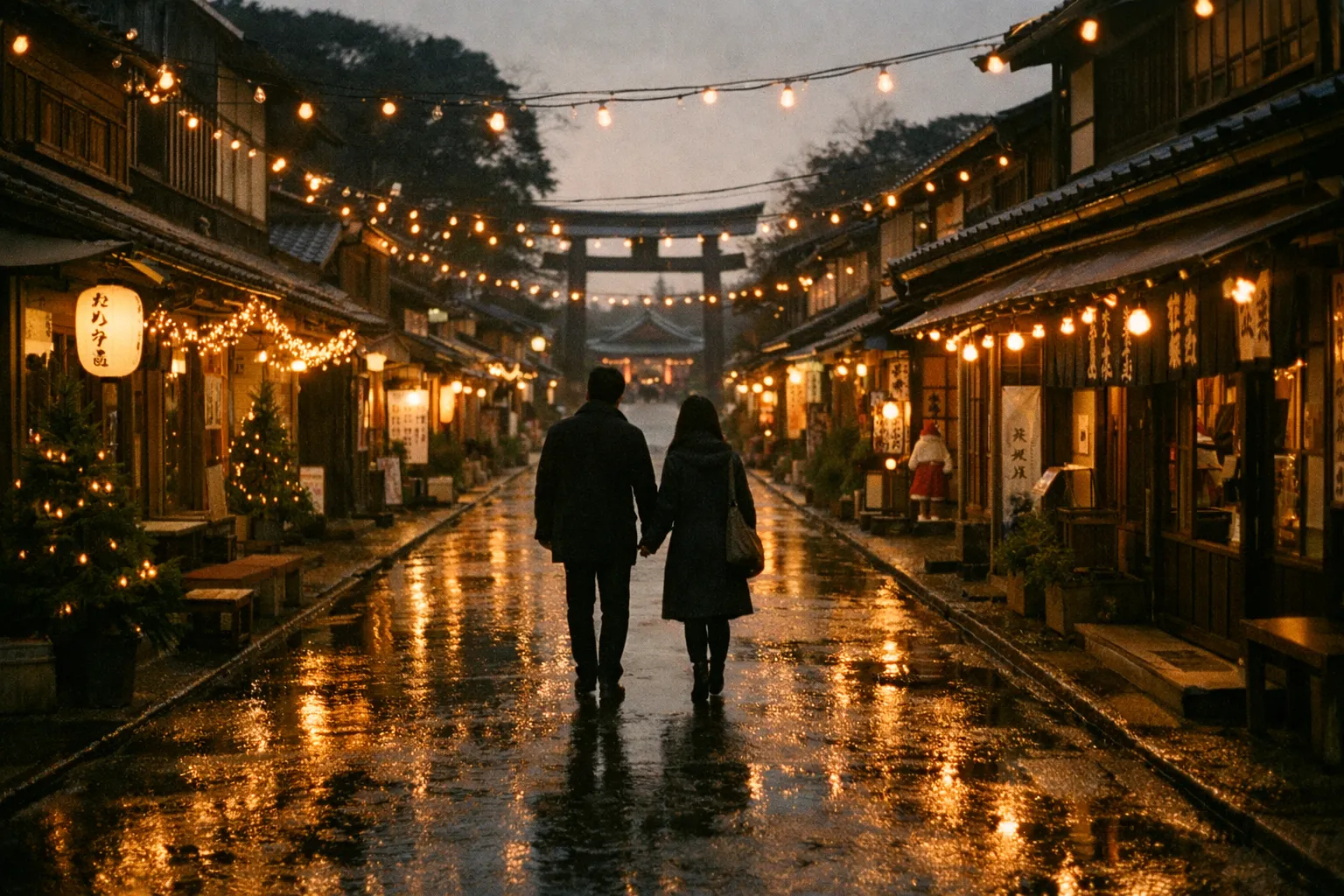
Christmas Eve is the peak of the season, and it belongs to couples. December 24 is the most romantic night on the Japanese calendar - candlelit dinners, illumination walks, reservations that book out weeks ahead (2). If you want to know how merry Christmas in Japan actually plays out, picture two people sharing a table near a light display rather than a family gathered around a tree.
A few practical notes if you’re planning a date night:
- Book early. Popular restaurants - especially in Tokyo - fill up weeks in advance for December 24. Hotel buffets and fine dining go first (6).
- Pair dinner with lights. Reserve a table near a major illumination district so you can walk the displays before or after your meal. That’s how locals stack the evening.
- Expect premium pricing. Christmas Eve dinner menus run higher than usual, particularly at hotels and upscale spots. Casual seasonal food like cake and fried chicken stays cheap; a fancy dinner does not (6).
- Avoid the busiest corridors if crowds bother you. The pressure point is nighttime dining on the 24th. Shift to a quieter neighborhood or do your sightseeing by day.
This couples-first framing is the dominant one, but it’s not the only way to spend the night. Friends go out together too, and families with kids lean into cake and casual meals at home.
What to Expect from Christmas Food
The food is where Christmas food in Japan diverges most sharply from Western expectations. Two items define the table, and both are worth seeking out.
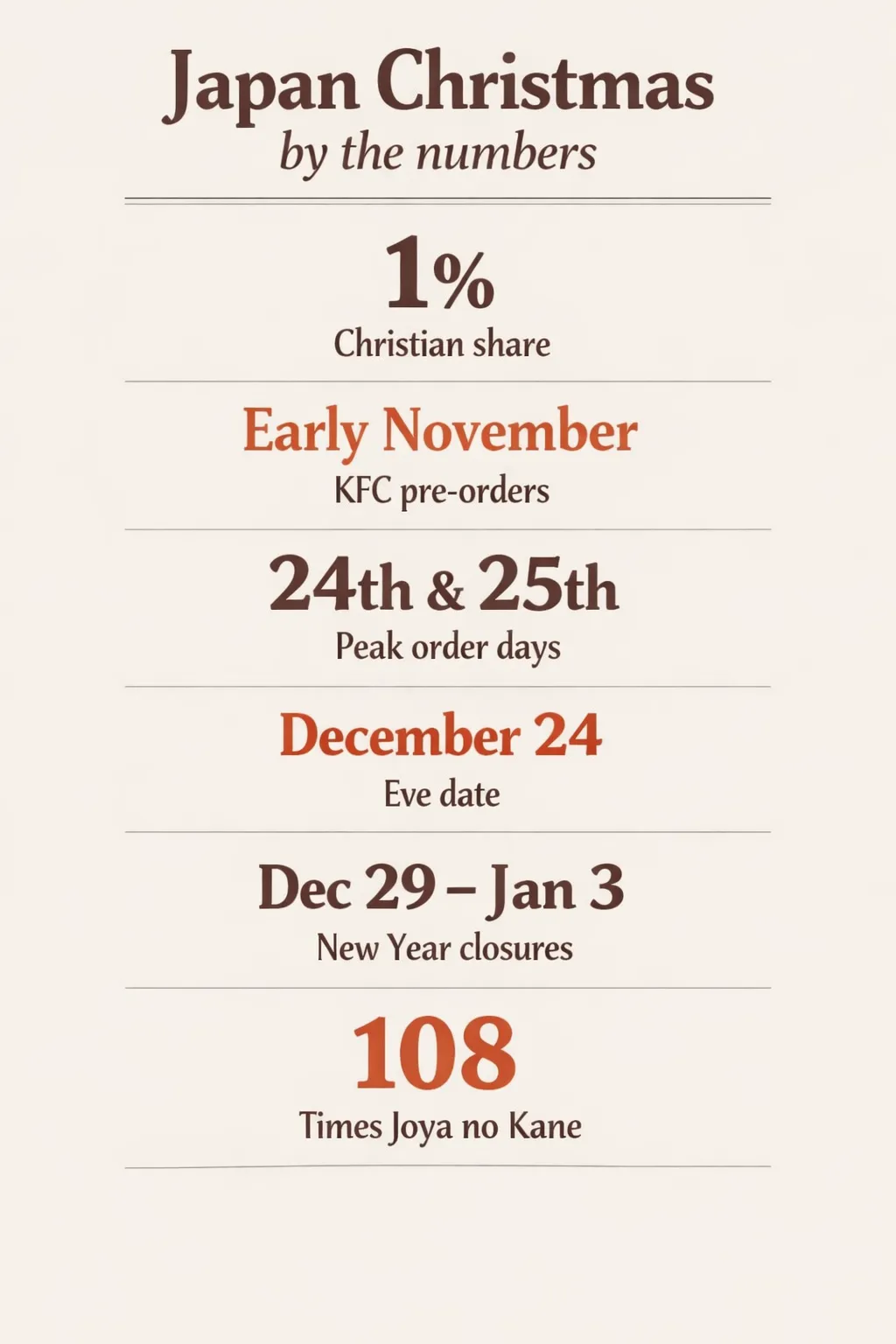 Christmas in Japan centers on KFC, cake, and romantic evenings, with 1% Christian population, early-November pre-orders for fried chicken, peak on December 24–25, and closures around New Year (Dec 29–Jan 3).
KFC and fried chicken. The chicken bucket is genuinely the centerpiece for many households. Beyond KFC itself, supermarkets and convenience stores sell their own fried chicken sets in December, and demand peaks hard around the 24th and 25th. If you want the full KFC experience, pre-order. Walk-in lines on Christmas Eve can stretch out the door, and stock sells out.
Strawberry shortcake. The classic Japanese Christmas cake is a round sponge layered with whipped cream and strawberries (4)(5). Bakeries, department-store food halls (depachika - the basement food floors found in most major department stores), and convenience stores all sell them. Convenience-store cakes are surprisingly good and cheap; depachika and specialty patisserie versions cost more and look the part.
Beyond the two icons:
- Hotel Christmas buffets offer a more Western spread - roast meats, seafood, dessert tables - and are popular for groups and families.
- Seasonal café desserts appear everywhere, often strawberry-and-cream themed to match the cake.
- Convenience stores are your budget-friendly hub: cake, fried chicken sets, sparkling drinks, all in one stop.
If you want to eat the way locals do, skip the search for a Western turkey dinner and lean into the chicken-plus-cake combination. That pairing is the most representative version of the holiday meal here (4)(5)(7).
Shopping and Gift-Giving During the Season
Holiday shopping in Japan rewards anyone who likes both tradition and tech. Department stores and electronics districts run themed sales, and the displays go all out with lights and music.
The range of gifts mirrors Japan’s mix of old and new - from daruma dolls and seasonal sweets to the latest electronics. Wander Tokyo’s Akihabara for gadgets, or the shops around Kyoto for craftwork, and you’ll feel the season in the displays and soundtracks. If you’re planning time in Kyoto, it helps to plan by zone, start early so you can fit sightseeing around the holiday crowds. I’ve spent more than a few December afternoons in the basement food halls of Isetan in Shinjuku, where the Christmas cake displays alone are worth the trip.
Gift-giving here is formal and thoughtful. The wrapping itself is part of the gift - department stores will gift-wrap purchases to a standard that’s hard to find elsewhere, and it’s worth asking even for small items.
One etiquette note: tipping is not part of Japanese culture, even at Christmas. Don’t tip restaurant staff, cab drivers, or hotel porters - it can cause confusion rather than convey gratitude. Good service is the baseline expectation, not something you pay extra for.
Experience Joya no Kane
If you stay through New Year, you’ll catch a tradition that contrasts completely with the commercial sparkle of Christmas. On New Year’s Eve, Buddhist temples across Japan ring their bells 108 times in a ritual called Joya no Kane (the New Year’s Eve bell). Each toll is said to represent one of the 108 earthly desires in Buddhist belief, and the ringing is meant to cleanse them as the year turns.
It’s a quiet, reflective counterpoint to the December 24 light displays - and it underscores how Japan separates its imported holiday from its deeply rooted one. If your trip spans both, you get the full arc: festive lights and fried chicken, then temple bells and family ritual a week later. The shift in atmosphere is striking enough that I’d plan for it deliberately.
Weather During the Holiday Season
Weather varies dramatically depending on where you go. Hokkaido’s snowy landscapes sit at one extreme; Tokyo’s relatively mild winters sit at the other.
In the north, snow creates ideal conditions for winter sports. Ski resorts in the Japanese Alps and across Hokkaido offer some of the best slopes anywhere, drawing skiers and snowboarders through the season. Pack a proper layering system if you’re heading north - temperatures drop well below freezing.
Tokyo, by contrast, runs cold but manageable in December. Daytime highs typically land in the single digits Celsius (mid-40s to low-50s Fahrenheit), dry and often clear. It’s good weather for walking illuminations without the biting cold of the mountains. The contrast of warm Christmas lights against crisp winter air is the visual signature of the season, and it’s why so many people plan their evenings around the displays.
Planning Your Trip Around the Season
The logistics of a December trip are different from what most Western travelers assume. Plan around these realities:
- December 25 operates normally. Shops, restaurants, museums, and transit run on regular schedules (4)(8). You don’t need to stockpile food or expect closures on Christmas Day itself.
- Book Christmas Eve dinner well ahead. The 24th is the high-demand night. Reserve restaurants and hotel buffets weeks in advance, especially in Tokyo (6).
- Pre-order your KFC if fried chicken is on your list - orders open in early November and sell out.
- The real closures hit at New Year. From roughly December 29 through January 3, many businesses, restaurants, and some attractions close as the country observes Shogatsu (1). This - not Christmas - is when you need to plan around shut doors and shifted transit.
- Hotel prices climb across the holiday-into-New-Year window. Book accommodation early, particularly if your dates straddle both holidays.
- A Western-style celebration takes effort. The local market is optimized for Japan’s version of Christmas, so if you want a turkey, specialty decorations, or a full Western dinner, you may need a hotel with a kitchen or to source extras yourself (6).
If you’re building a couples trip, center it on Christmas Eve, illuminations, and date-night dining. A family trip works better around daytime sightseeing, theme parks like Tokyo Disneyland, cake, and casual meals. A food-first trip writes itself: KFC, Christmas cake, hotel buffet, repeat. If you want to extend your December itinerary beyond the capital, the things to do in Osaka guide covers how to balance history, food, and modern attractions across a few days.
So, What Is the Holiday Really About?
Strip away the lights and the marketing and Christmas in Japan is a secular, social occasion - a night for couples and friends rather than a religious or family holiday (1)(2)(4). It borrows the Western aesthetic and discards the meaning behind it, replacing church with illumination walks and turkey with fried chicken.
The smartest way to understand it is by contrast with New Year. Christmas is the sparkle; New Year is the substance. One is imported and commercial, the other rooted and reflective. Travelers who grasp that distinction stop trying to recreate a Western Christmas and start enjoying the Japanese one - which is its own thing, and a genuinely good one.
Frequently Asked Questions
- How do they celebrate Christmas in Japan?
- Celebrations focus on illuminations, romantic dinners, fried chicken, and strawberry shortcake, with Christmas Eve treated like a second Valentine's Day rather than a family holiday.
- How is Japan during Christmas?
- The atmosphere is festive in the evenings with elaborate light displays and booked restaurants, but daytime remains business-as-usual with normal schedules for shops and transit.
- What are 5 interesting facts about Japan's Christmas?
- Key facts include the 1% Christian population, KFC as the traditional meal requiring pre-orders, the strawberry shortcake Christmas cake, Christmas Eve as the most romantic night, and December 25 being a normal workday.
- Why is Christmas such a big deal in Japan?
- Christmas became a commercial and social event through marketing by department stores and KFC, focusing on lights, gifts, food, and romance rather than religion, making it widely embraced.
- What should I know about Christmas Eve dining in Tokyo?
- Reservations fill up weeks in advance, prices are higher than usual, and pairing dinner with nearby illumination walks is the local way to enjoy the evening.
- Is tipping expected during Christmas in Japan?
- No, tipping is not part of Japanese culture and can cause confusion; good service is standard without extra payment.
- How do New Year celebrations differ from Christmas in Japan?
- New Year is the major family holiday with business closures and temple visits, while Christmas is a secular, commercial celebration focused on couples and lights.