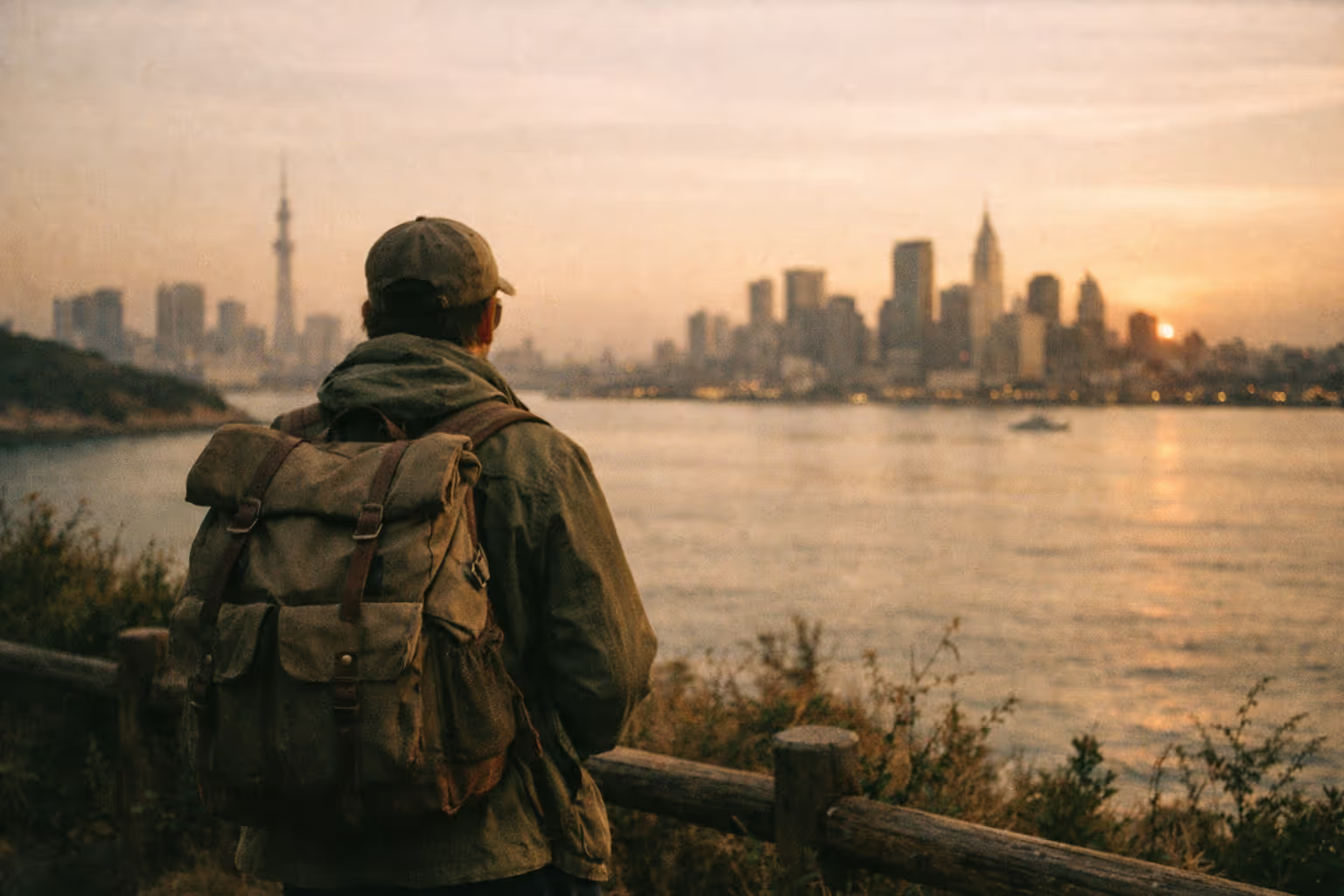
The cultural differences between Japan and the USA show up in a story many Americans find hard to believe: a Japanese rail company once issued a formal apology because a train left twenty seconds early. That instinct, precision and consideration as defaults, ripples through everything from a no-tipping rule that has staff chasing you down the street to the silence expected on a packed commuter train. None of it is hard to respect once you see the logic underneath. Six areas are where travelers trip up most.
Business etiquette as a critical component of professional life
Walk into Marunouchi’s glass towers or Shinjuku’s west-exit business district and the cultural differences between Japan and the USA announce themselves within the first handshake - long before anyone opens a laptop. Japanese business interactions are formal in ways that catch Americans off guard. The exchange of business cards (meishi - the Japanese term for business cards) is done with both hands and a slight bow. You receive the card with both hands too, take a moment to actually look at it, and set it on the table in front of you rather than immediately pocketing it. Shoving it in your back pocket is roughly the equivalent of dismissing the person.
American offices run on a first-name basis even with managers. In Japan, people address each other by last name plus the honorific -san. That difference alone signals how the whole hierarchy works.
Punctuality in Japan isn’t just appreciated - it’s a baseline expectation that carries real weight. The famous example: in 2017, a Japanese rail company publicly apologized for a train leaving 20 seconds early (2). That’s not a quirky news story. It’s a data point about what “on time” actually means here.
The US is more lenient about schedules in social settings, though that varies by industry. In Japan, punctuality is close to non-negotiable in professional and formal contexts - though informal gatherings among close friends can be a little more relaxed.
Japanese work culture: hierarchy, hours, and the after-work drink
The legal workweek in Japan is 40 hours, but unpaid overtime and presenteeism remain common. OECD data shows Japanese employees average about 1,607 annual hours worked versus 1,791 in the US - fewer hours on paper, but the culture of staying until your boss leaves means office departures of 7-9 PM are normal at traditional firms. The numbers don’t fully capture what the day actually feels like.
Japanese work culture still carries the ideal of lifetime employment - major companies hire new graduates into long-term tracks (shūshin koyō, meaning a system of lifelong employment), whereas the median US employee tenure sits at 4.1 years. Loyalty to the group is the organizing principle: in cross-cultural surveys, over 70% of Japanese respondents say the company’s needs come before their own, compared to under 40% in US samples (5)(6).
A few things that catch newcomers off guard:
- After-work drinking (nomikai - group drinking events) happens one to three nights a week at traditional firms. It’s not optional in spirit, even if it is in theory. When pouring beer, never fill your own glass first - pour for others and let them pour for you.
- Decision-making is group-based and slow. Don’t expect a quick yes or a public “no.” Challenging a superior directly in front of others reads as humiliating them.
- Karōshi (death from overwork) prompted government campaigns to cap overtime. Some large companies now enforce lights-off policies after 8-9 PM.
International and foreign-owned firms clustered in areas like Roppongi Hills and Shiodome run more US-style feedback and performance systems, with English in the office, though Japanese punctuality and meeting etiquette still apply. Telework and flexible hours have expanded in IT and white-collar sectors since COVID, but traditional companies remain office-centric. If you work remotely for a US company while living in Japan, your cultural friction shows up in daily life rather than the workplace.
✓ Pros
- Strong group loyalty and lifetime employment provide job security in many firms
- Formal business etiquette fosters respect and clear hierarchy
- Punctuality is rigorously observed, reducing scheduling confusion
✗ Cons
- Unpaid overtime and after-hours socializing can be demanding
- Slow, group-based decision-making may frustrate those used to directness
- Traditional firms remain office-centric despite some telework growth
How communication style in Japan differs from the USA
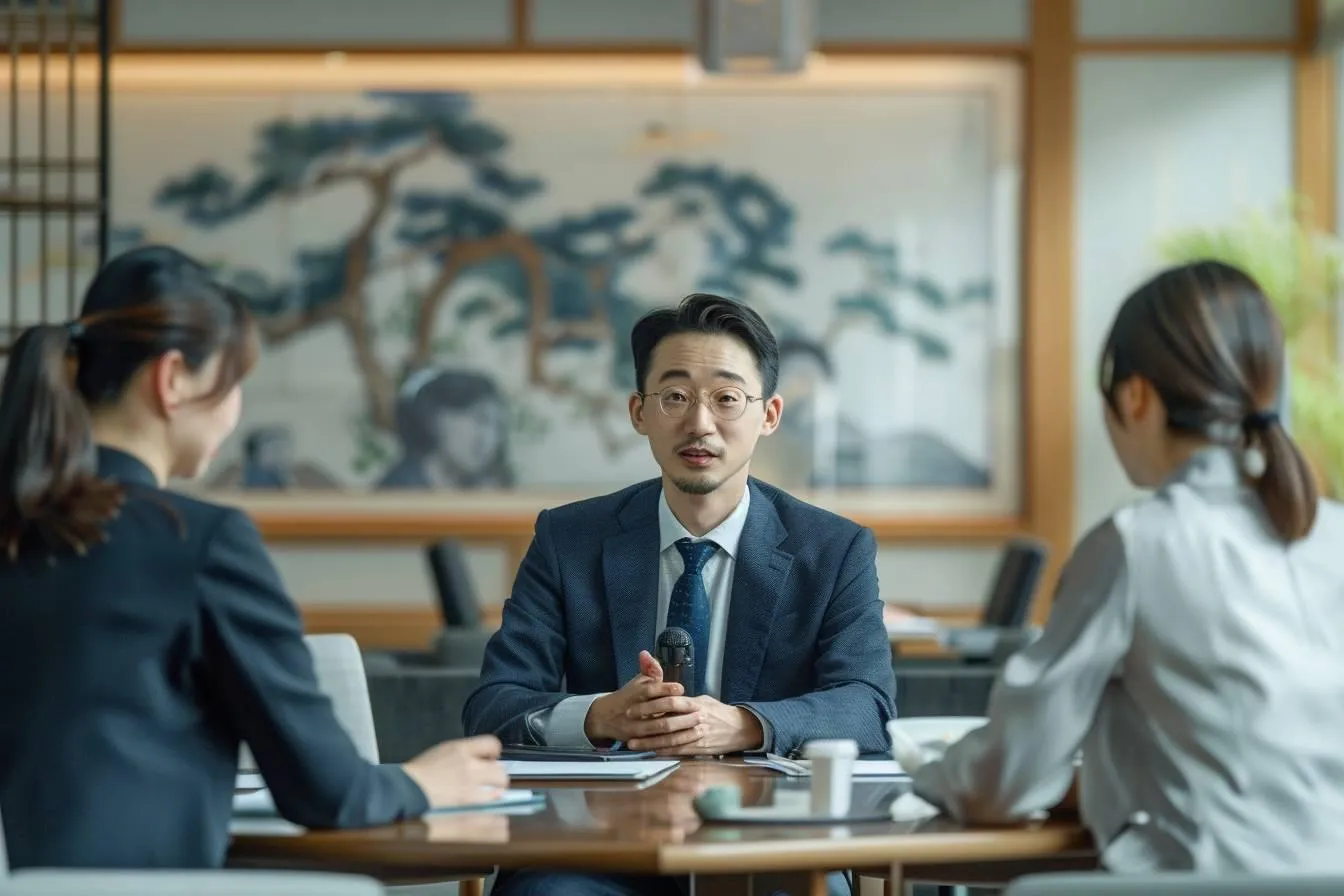
The communication style in Japan is high-context - Japanese call it reading the air (kuuki wo yomu, meaning the ability to read a situation without being told). A refusal rarely comes as a flat “no.” Instead you’ll hear “it may be difficult” or a trailing “chotto…” (“a little…”), which already means no. Push past it and you’ll cause discomfort. The better move: offer an alternative.
Silence in conversation is also accepted in Japan - several seconds is normal - whereas in the US a pause that long feels awkward (7). Americans tend to fill silence. In Japan, rushing to fill it reads as anxious or pushy.
I learned this the hard way in a Tokyo meeting early on. I laughed loudly at a joke made during a serious business discussion. The room went quiet - not because the joke wasn’t funny, but because open displays of emotion that size are uncommon in Japanese business settings. Nobody said anything. Nobody needed to. I got the message.
Americans are typically expressive and value clarity in their communications - firm handshake, direct eye contact, clear introduction. From a Japanese perspective, that can read as overly bold. Bowing and avoiding prolonged eye contact are markers of respect, not awkwardness.
If you’re a direct American speaker, you don’t have to abandon clarity. Just add softeners: “sumimasen” (excuse me / sorry), “maybe,” “if possible.” Keep the meaning, lower the volume. That’s essentially the whole adjustment.
Japanese dining etiquette and the no-tipping rule
The single biggest money difference at the table: there is no tipping in Japan. In the US, restaurant tipping runs 15-20% and taxi tipping is expected. In Japan, leaving cash on the table confuses staff, who may chase you down the street to return it. The rare exceptions are envelopes - handed over, not left loose - for ryokan staff or private guides.
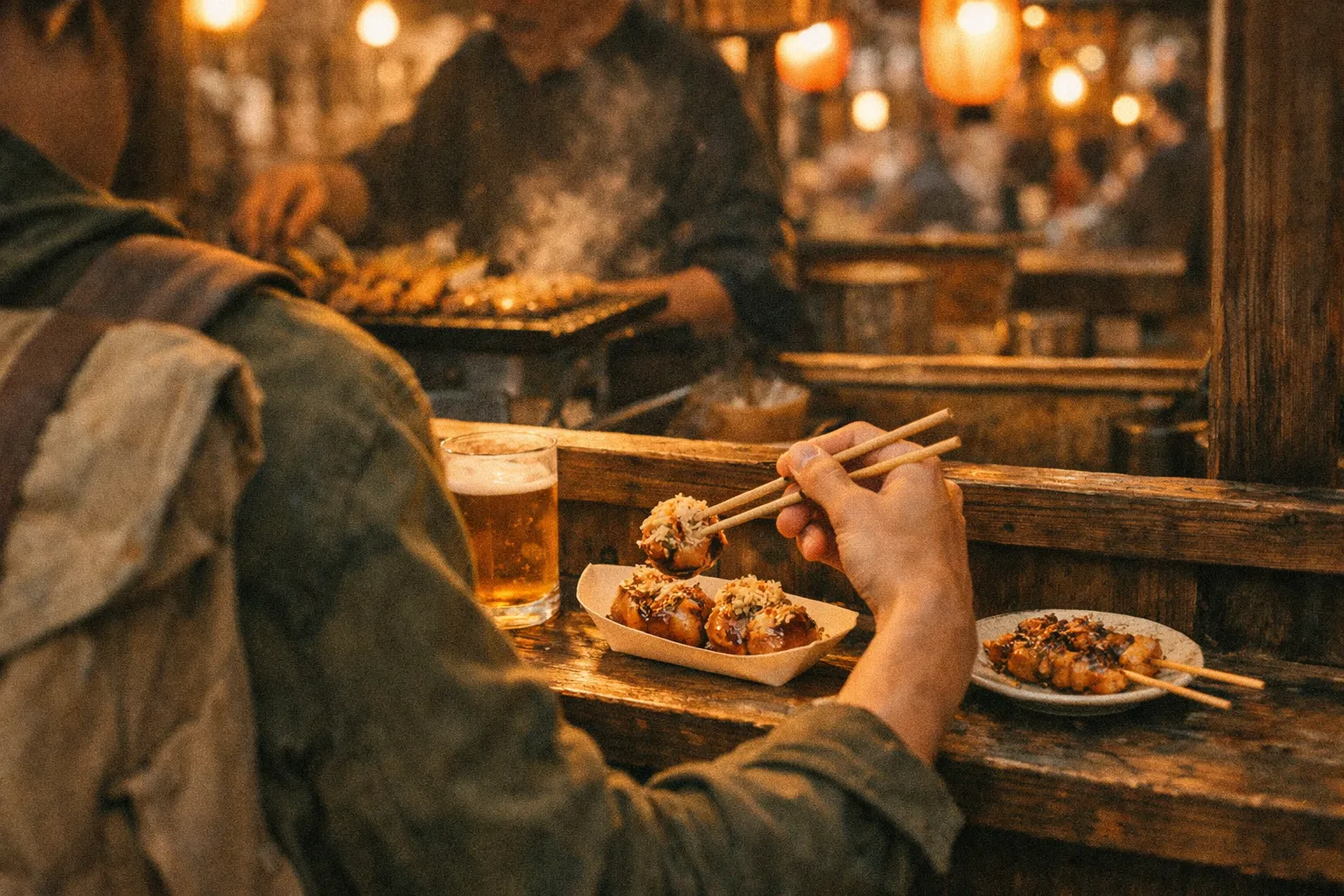
Other points of Japanese dining etiquette worth internalizing before your first meal:
- Don’t eat while walking, especially on standard trains. It reads as rude. Acceptable exceptions: festival food zones and the Shinkansen (Japan’s high-speed rail network), where eating a bento on board is normal.
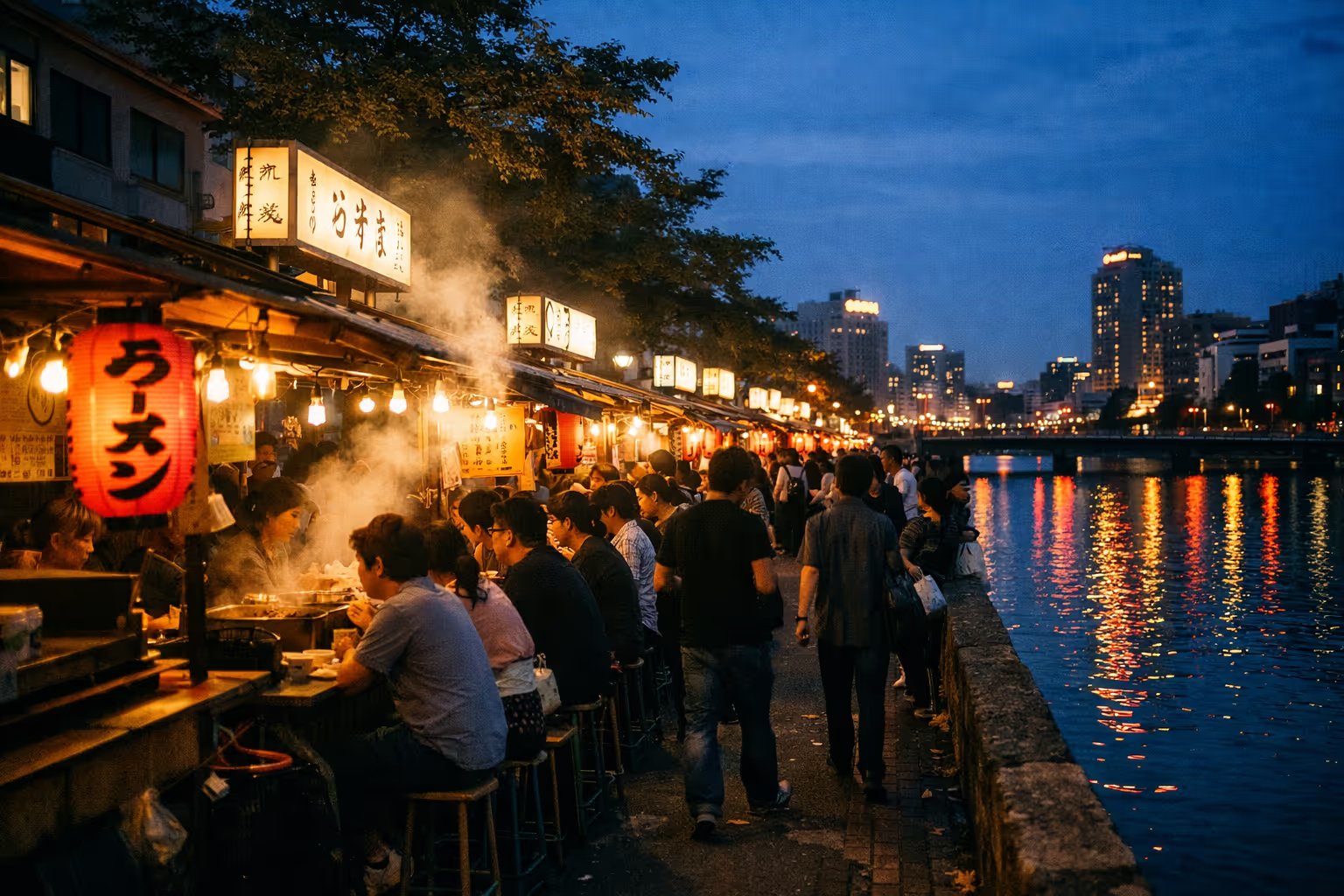
- Slurping noodles is fine - even encouraged for ramen and soba.
- Never stick chopsticks upright in rice (it mimics a funeral rite) and don’t pass food chopstick-to-chopstick.
- Cash still matters. Smaller restaurants, shrines, and rural shops can be cash-only, particularly for charges under ¥1,000. QR payments (PayPay, Rakuten Pay) and card acceptance have grown fast in Tokyo and Osaka since COVID, but carry cash anyway.
For cheap, genuinely good meals, lean on konbini (convenience stores) - 7-Eleven, FamilyMart, Lawson. Onigiri (rice balls) run ¥130-¥200, hot meals ¥400-¥700, and decent coffee ¥100-¥200. I’ve eaten well out of konbini for days at a stretch. Don’t overlook them.
What daily life in Japan looks like: public behavior, cleanliness, and the small stuff
It’s rare to hear loud conversations or phone calls on public transit in Japan - in-train announcements explicitly ask passengers to switch phones to silent mode. That’s a stark contrast to American public life, where loud calls are commonplace and generally tolerated. On the Tokyo Metro during rush hour, the silence is almost eerie by US standards.
Cleanliness in public is another sharp divergence. Litter in Japanese streets is uncommon, and the concept of omotenashi (selfless hospitality) extends to keeping public spaces immaculate. The catch for visitors: Tokyo has very few public trash cans, so people carry their trash home. In the USA, bins sit in most fast-food spots and public areas, and cleanliness leans more on municipal services than personal responsibility.
A handful of other realities of daily life in Japan that surprise first-timers:
- Public displays of affection draw disapproving looks. Hand-holding is mild; kissing on the street is unusual. Not illegal, just socially awkward.
- Shoes come off in homes, many restaurants, temples, and ryokan - sometimes 5-10 times a day of sightseeing. Watch for separate toilet slippers in some places; wearing them back into the main room is a classic gaffe.
- Onsen (hot springs) require full nudity and washing thoroughly before entering. Swimsuits aren’t allowed, and many onsen still bar large tattoos, though tattoo-friendly lists exist.
- Phone cameras must emit a loud shutter sound by law to deter covert photography - there’s no true silent mode on Japanese-market phones.
- Most smaller and residential streets have no names. Major roads and routes do carry names or numbers, but the side streets that make up most neighborhoods work by area and block number rather than a named-street grid - download offline maps before you arrive.
To put the broad strokes side by side:
Cultural Differences: USA vs Japan
| USA | Japan | |
|---|---|---|
| Business Etiquette | Direct, informal | Formal, hierarchical |
| Communication | Open, expressive | Subtle, indirect |
| Public Behavior | Casual, tolerant | Reserved, conscientious |
| Cleanliness | Reliance on services | Personal responsibility |
| Tipping | 15-20% standard | None, can offend |
| Punctuality | Appreciated, flexible | Near-absolute |
Etiquette note: the one habit that carries you furthest is matching the volume of the room. On trains, in elevators, in temples - quiet. When in doubt, lower your voice and follow the person ahead of you.
Comparing cost of living Japan vs USA with real numbers
Vague claims that “Japan is expensive” are outdated. With a weak yen through 2024, Japan runs comparatively cheap against major US cities for travelers. Here’s the cost of living Japan vs usa broken down:
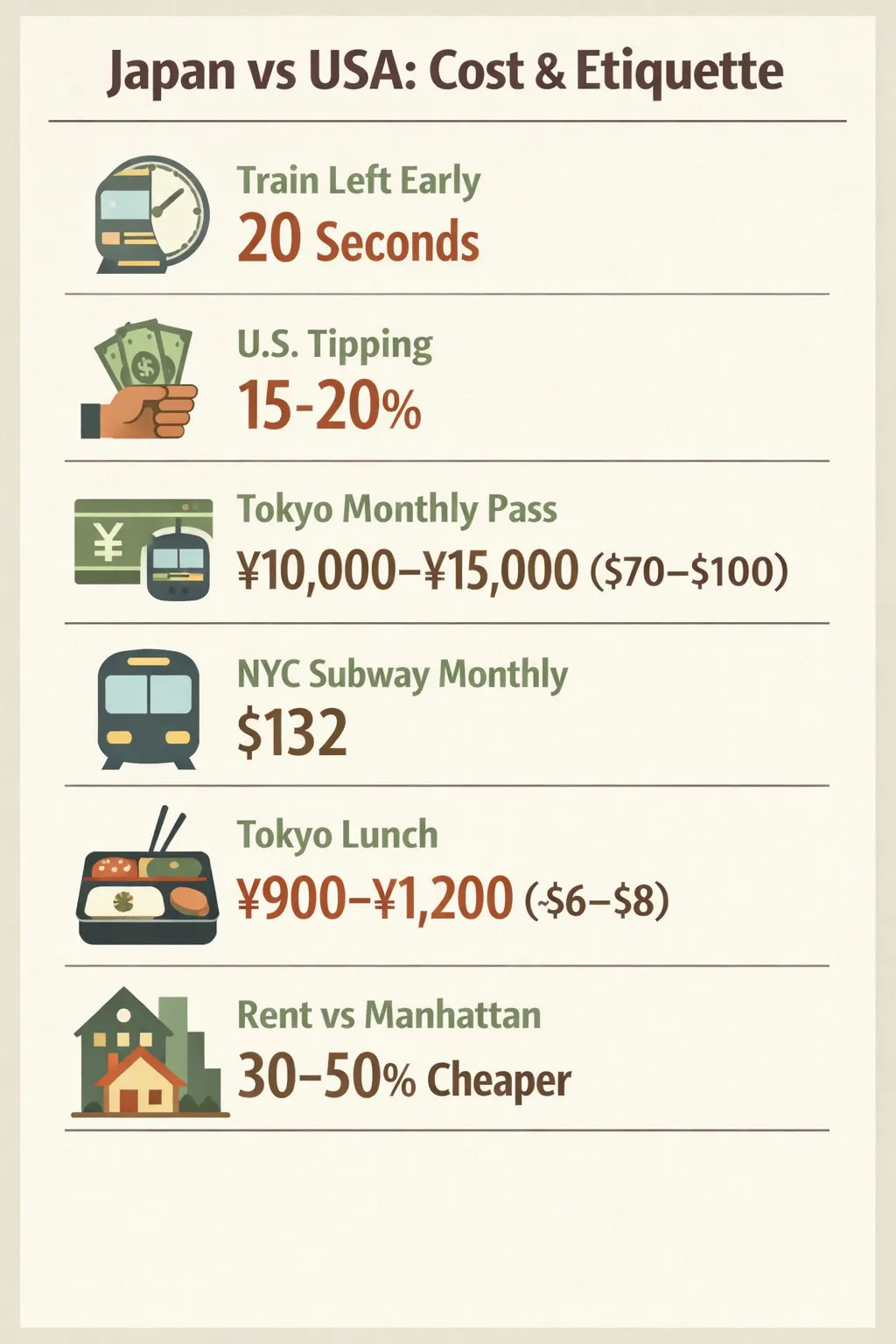 A side-by-side cost and etiquette comparison between Japan and the USA, using figures.
- Daily meals: A lunch set in Tokyo costs ¥900-¥1,200 (about $6-$8) versus $12-$18 for a big-city US lunch.
- Consumer prices: Tokyo prices run roughly 20-30% below New York City excluding rent; central Tokyo rent can be 30-50% cheaper than comparable Manhattan units.
- Transit: A monthly inner-city Tokyo pass is about ¥10,000-¥15,000 ($70-$100); the NYC subway monthly runs $132.
- ATMs: Convenience-store ATMs charge ¥110-¥220 per withdrawal - annoying but unavoidable since cash still rules.
Daily travel budgets, by style:
- Shoestring: Hostel dorms $20-$35/night, konbini meals $10-$15/day, local trains and walking - roughly $50-$70/day.
- Mid-range: Business hotels $70-$130, casual restaurants, the odd bar - $120-$200/day.
- The US equivalent typically runs 30-60% higher in coastal cities, driven by housing and the tipping baseline (US menu price plus tax plus 20% adds up fast).
Two cultural behaviors quietly inflate the US side of the ledger: tipping and tax added at the register. In Japan, the price you see is the price you pay.
Before you go: a pre-departure briefing for Tokyo
Treat your first trip as a mental reset, not just a packing exercise. US citizens enter Japan visa-free for up to 90 days for tourism; your passport needs validity for the stay plus a blank page. Budget $100-$150/day for mid-range travel versus $150-$250/day in major US cities.
Set your expectations before you land:
- Less personal space on trains, more respect for quiet. Rush-hour packing is intense, but it’s silent.
- Cash is still important despite rising card use. Pull yen on arrival and grab an IC card - a rechargeable contactless transit card; the two main ones are Suica (issued by JR East) and PASMO (issued by Tokyo Metro and private lines) - loading ¥2,000-¥5,000 ($13-$35) for trains and buses. Physical Suica cards faced supply shortages in 2023-24 due to chip constraints, so mobile Suica on your phone is the smoother route.
- You’ll be treated with polite formality as a guest - warm, helpful, attentive - but don’t mistake it for fast emotional closeness.
- Get connectivity sorted. A pocket Wi-Fi or eSIM ($3-$6/day) is close to essential given the address system and limited English signage outside major hubs.
Top 3 things to pack for Tokyo
Plenty of packing lists tell you to bring an adapter. These three items tie directly to Japanese norms and infrastructure:
- A compact umbrella and light rain jacket. Rainy season (June-July) and typhoon season bring sudden downpours. If you forget, convenience stores sell umbrellas for ¥500-¥1,000.
- Slip-on shoes. You’ll remove shoes 5-10 times on a busy sightseeing day - homes, temples, some restaurants, ryokan. Laces are your enemy.
- A small foldable tote bag. With public trash cans scarce and plastic-bag fees (¥3-¥5 per bag) now standard, a tote handles your daily trash and shopping while aligning with Japan’s waste norms.
Throw in a small coin purse, too - ¥500 coins (about $3.50) pile up fast from vending machines and small payments.
Weathering the storm: what a typhoon night actually looks like
Most culture guides mention “typhoon season” and move on. The season runs July-October, peaking August-September, with 20-25 tropical cyclones approaching Japan annually and 3-4 making landfall. Here’s how to handle one as a traveler.
Hours before landfall: Rail operators announce planned suspensions, often well in advance. JR and private lines may shut entirely, and the Shinkansen (Japan’s high-speed rail network) can halt for 12-24 hours. Check last-train times - lines close hours earlier than usual. Stock up at a konbini 6-12 hours ahead: water (2L for ¥100-¥130) and a bento (¥400-¥700). Convenience stores are your lifeline.
During the storm: Stay in. Do not go out “to watch it” - flying debris and halted trains strand people every season. Most Japanese buildings are engineered for typhoons, so power cuts are less common than on many US coasts, though rural areas can still lose power for hours to days.
If you’re flying: When a forecast landfall falls within 24 hours of your flight, contact the airline proactively. Japanese carriers routinely issue change waivers to move you a day earlier or later.
Insider booking tip: Choose a hotel within 5-7 minutes’ walk of a major station. Even when trains stop, those hubs reopen first and have 24-hour konbini nearby.
Being LGBTQ in Japan
Most mainstream cultural-difference guides compress this into a sentence or skip it entirely. The reality is layered.
As of 2024, Japan has no national same-sex marriage, though over 300 municipalities and prefectures offer partnership certificates covering a majority of the population - but with limited legal rights. The US has had federally recognized same-sex marriage since the 2015 Obergefell v. Hodges ruling. Court challenges to Japan’s ban have produced mixed rulings, with some courts finding it partly unconstitutional, keeping the issue in active public debate.
On the ground:
- Nightlife is concentrated. Tokyo’s Shinjuku Ni-chōme and Osaka’s Dōyama districts have dozens of bars and clubs. Many bars are tiny (5-15 seats) and may be men-only or women-only - look for “mixed” or “foreign-friendly” notes on the signage. Seat charges of ¥500-¥1,000 plus drinks are common.
- Hotels generally let same-sex couples share a bed without comment. Some traditional ryokan may be less comfortable, so email ahead in English or Japanese to confirm.
- Public affection follows the same restraint that applies to everyone - milder than in US cities, especially outside major hubs.
- Pride events in Tokyo and Osaka draw tens of thousands, though the activism tone is more subdued than US parades. If you’re planning time in either city, the things to do in Kyoto guide and the things to do in Osaka guide are useful companions for building out your itinerary around cultural and nightlife zones.
The practical gap to remember: the absence of marriage equality affects hospital visitation, housing, and immigration rights in ways US travelers may not anticipate.
Life after coming back from Japan
Reverse culture shock is real and rarely discussed. Returning travelers typically report 1-3 weeks of readjustment, mostly around three things:
- Money math returns. Menu price plus tax plus 20% tip after the tax-inclusive, no-tipping simplicity of Japan feels clunky for a while.
- The baseline shifts back down on cleanliness, public quiet, and the ambient sense of safety - Japan ranks among the world’s safest countries, and the contrast lands hard the first few days home.
- Plain jet lag. Japan-to-US recovery usually takes 3-5 days depending on direction and distance.
Two habits make the transition useful rather than jarring. Bring back small Japanese snacks or stationery as gifts - it continues the omiyage (souvenir gift-giving custom) and gives you a reason to talk about the trip. And keep one Japanese habit going at home: removing shoes at the door, carrying a handkerchief, lowering your voice in shared spaces. It’s a small thread of continuity.
Frequently Asked Questions
- Do you tip in Japan?
- No. Tipping is not customary and can confuse or even offend staff, who may return the money to you. The only exceptions are envelopes for ryokan staff or private guides. Service is included in the price, and there's no added tax surprise at the register.
- Is Japan cheaper than the USA right now?
- For travelers in 2024, generally yes. With a weak yen, Tokyo consumer prices run about 20-30% below New York City excluding rent, and mid-range daily budgets land around $120-$200 versus $150-$250 in major US cities. The lack of tipping and tax-inclusive pricing widens the gap further.
- How direct can I be when communicating in Japan?
- Keep your clarity but soften the delivery. Add apologies and hedges - "sumimasen," "maybe," "if possible." Recognize that "it may be difficult" or a trailing "chotto..." usually means no, and respond by offering an alternative rather than pushing.
- What's the hardest adjustment in Japanese work culture for Americans?
- Group-based, slow decision-making and indirect hierarchy. You won't get a quick yes, public disagreement with a superior reads as humiliating them, and after-work drinking (nomikai) is a genuine part of the job at traditional firms.
- Is Japan safe for LGBTQ travelers?
- Day-to-day safety is high and overt hostility is uncommon, but legal protections lag the US - there's no national same-sex marriage, only local partnership certificates with limited rights. Nightlife is concentrated in Tokyo's Shinjuku Ni-chōme and Osaka's Dōyama, and public affection follows the same general restraint expected of everyone.