Nusa Penida island earns its hype, if you plan around the crowds and the cliffs. A fast boat from Sanur gets you there in 40 minutes, and a snorkeling tour, $20 to $40, puts you over Manta Bay with strong odds of a five-meter reef manta. The west-coast loop of Kelingking, Broken Beach, and Crystal Bay fills a day, so hit Kelingking before 8 a.m. to beat the heat on those stairs. And respect the edges: people die at the cliff photo spots and on rented scooters here.
Snorkeling with manta rays on Nusa Penida island: what actually happens underwater
My first encounter with the mantas at Nusa Penida Island came after a 20-minute boat ride from the harbor at Toyapakeh, the cliffs rising ahead like a wall. The water that day was darker than I expected - overcast sky, plankton-heavy - and the temperature hit me as soon as I dropped in. Around 22°C. Not cold enough to stop you, but cold enough to notice.
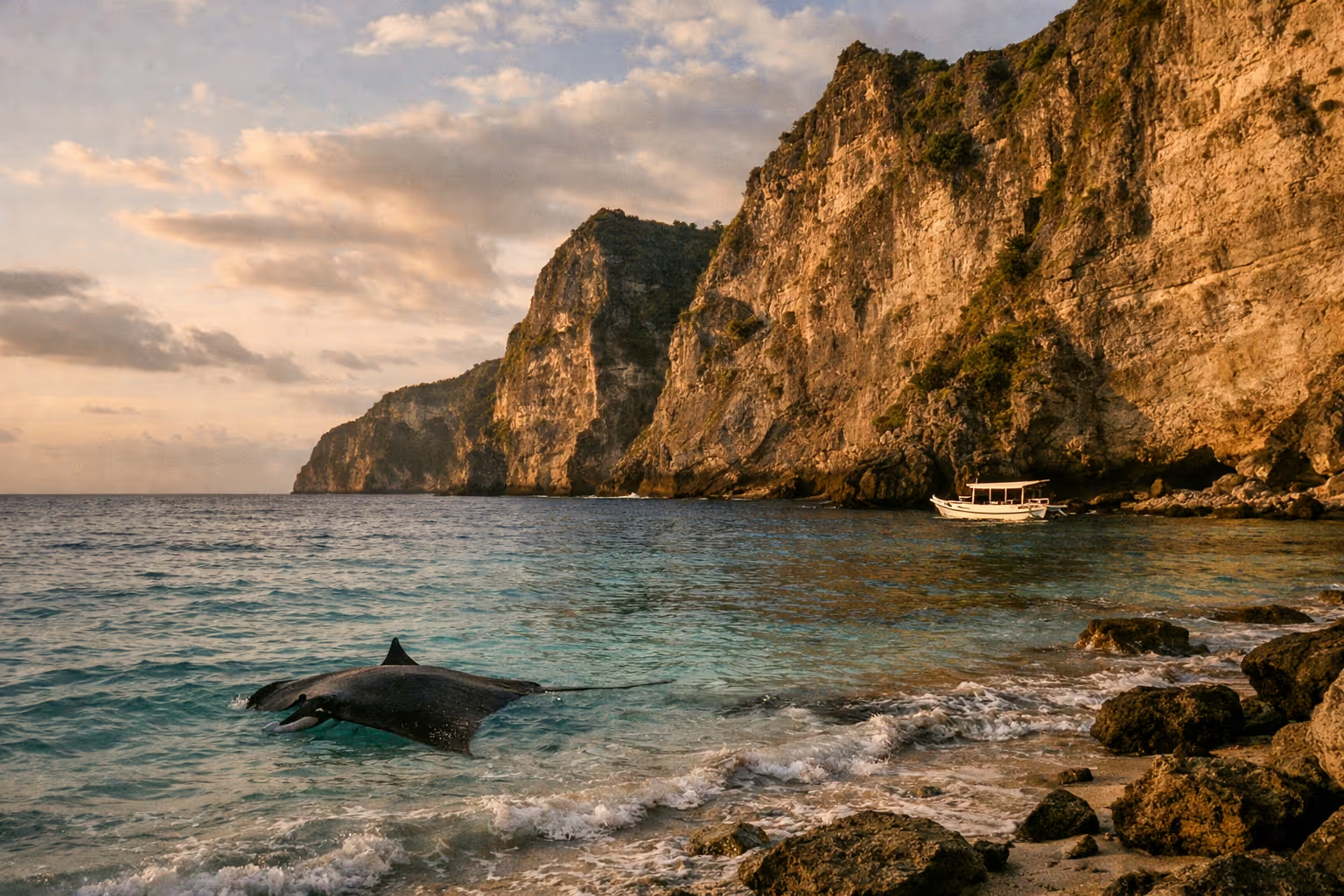
Our guide, Diasa - a PADI-certified divemaster who’d been running these trips for years - led us into Manta Bay with a clear briefing: stay horizontal, no touching, no chasing. Then a shadow appeared below us, growing more defined as it rose. A reef manta ray, wingspan close to five meters, moving through the water at snorkeling depth - maybe 5 to 10 meters down - with the kind of unhurried ease that makes you feel like you’re the one intruding. Nusa Penida is one of the few easily reached places on earth where you can watch animals this size from the surface.
Crystal Bay Nusa Penida was our second stop: shallower, clearer, calmer. Good reef fish, clownfish tucked into anemones, the occasional emperor angelfish. Mangrove Point near Lembongan was calmer still - more protected water, schools of smaller fish, a useful third stop if the swell picks up elsewhere.
Snorkeling Tour Options in Nusa Penida
| Shared Snorkeling Tour | Shore Snorkeling at Crystal Bay | |
|---|---|---|
| Price Range | IDR 300,000-600,000 (USD 20-40) | IDR 50,000-80,000 (USD 3-5) per day |
| Duration | 3-4 hours | Flexible |
| What's Included | Boat, guide, life jacket, mask, snorkel, fins | Mask and snorkel rental |
| Manta Sightings | 70-90% in peak season | No guarantee |
Booking a snorkeling tour: prices and what’s included
Shared snorkeling Nusa Penida tours run IDR 300,000-600,000 (USD 20-40) for three to four hours, covering Crystal Bay, Gamat Bay, and Manta Bay, with boat, guide, life jacket, and basic mask, snorkel, and fins included. If you’d rather skip the boat, you can snorkel directly from shore at Crystal Bay with a rented mask and snorkel for IDR 50,000-80,000 (USD 3-5) per day.
A few things worth knowing before you book:
- Manta sightings aren’t guaranteed. Operators report 70-90% success at Manta Point in peak season, dropping sharply when the sea is rough.
- Currents are real. Most sites require a life jacket and boat-crew supervision. Don’t drift from the boat in Crystal Bay’s channel or Manta Bay’s surge - this is where people get into trouble.
- Choose shorter trips if you get seasick. Afternoon return crossings can be choppy. Bring medication and pick a two-to-three-hour itinerary over a full-day one.
Freediving and cliff jumping: the higher-stakes version
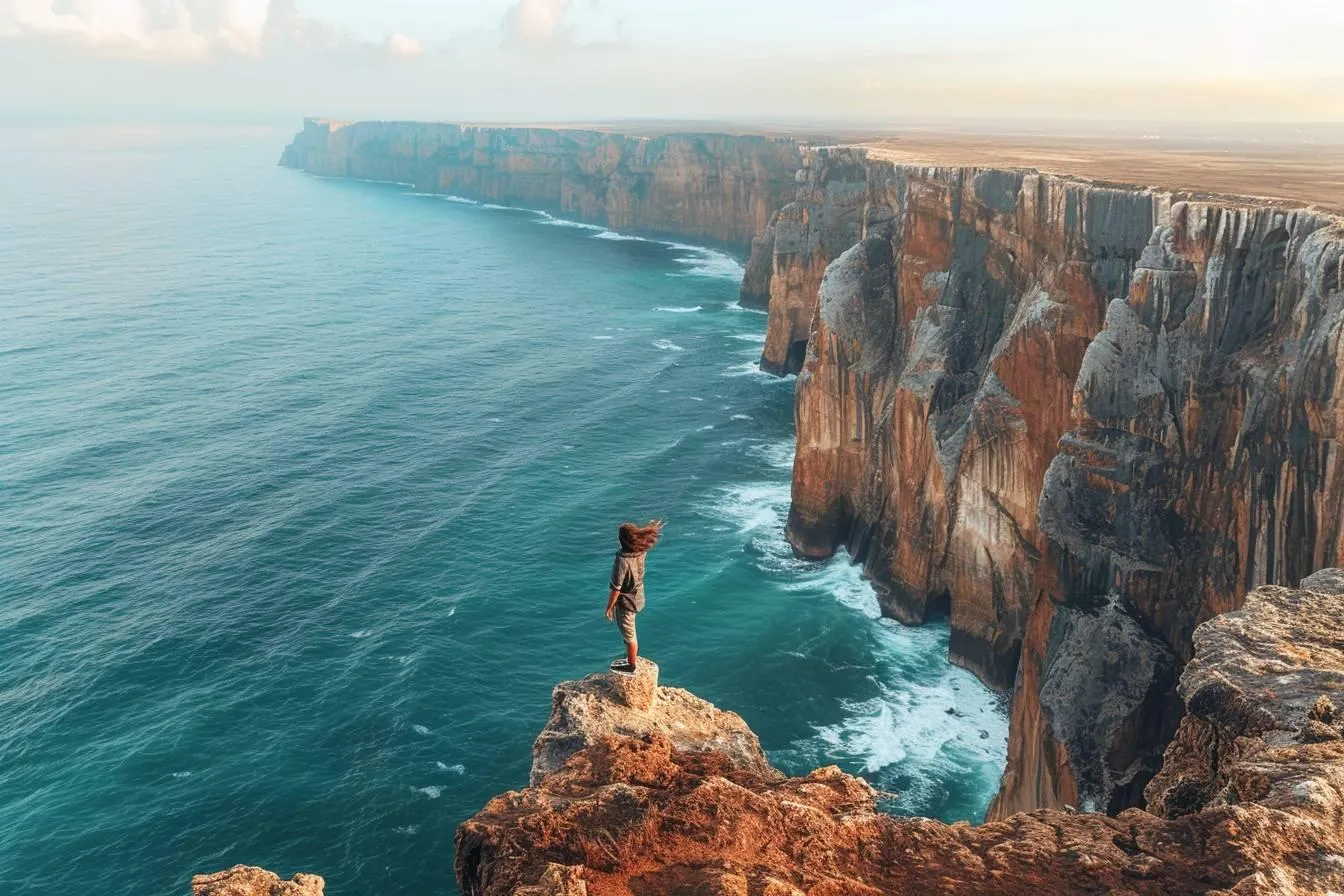
Snorkeling is the calm version. Freediving is something else - the silence underwater broken only by your own heartbeat, a meditative descent that puts you among the ocean’s inhabitants rather than floating above them. Local operators run intro freedive sessions for newcomers and depth training for the experienced.
The water turns cold below the surface here. On deep sites during the July-October mola mola (oceanic sunfish) season, temperatures drop to 18-24°C, and a 5 mm wetsuit earns its keep. Thermoclines - sharp layers of colder water - and strong currents are part of the deal on the deeper offshore dives.
Then there’s the cliff jumping off Nusa Ceningan, a short bridge crossing from Nusa Penida. The drop ends in the ocean and the leap is exactly as frightening and freeing as it sounds. One caution that doesn’t make the brochures: the rocks and edges around these spots are unforgiving, and people have died from falls. Jump only where local guides confirm the water depth and conditions, and never edge backward toward a cliff for a photo.
Getting there: the fast boat to Nusa Penida
Most people reach Nusa Penida island on a fast boat to Nusa Penida from Sanur on mainland Bali. The crossing is 35-45 minutes across the Badung Strait (1).
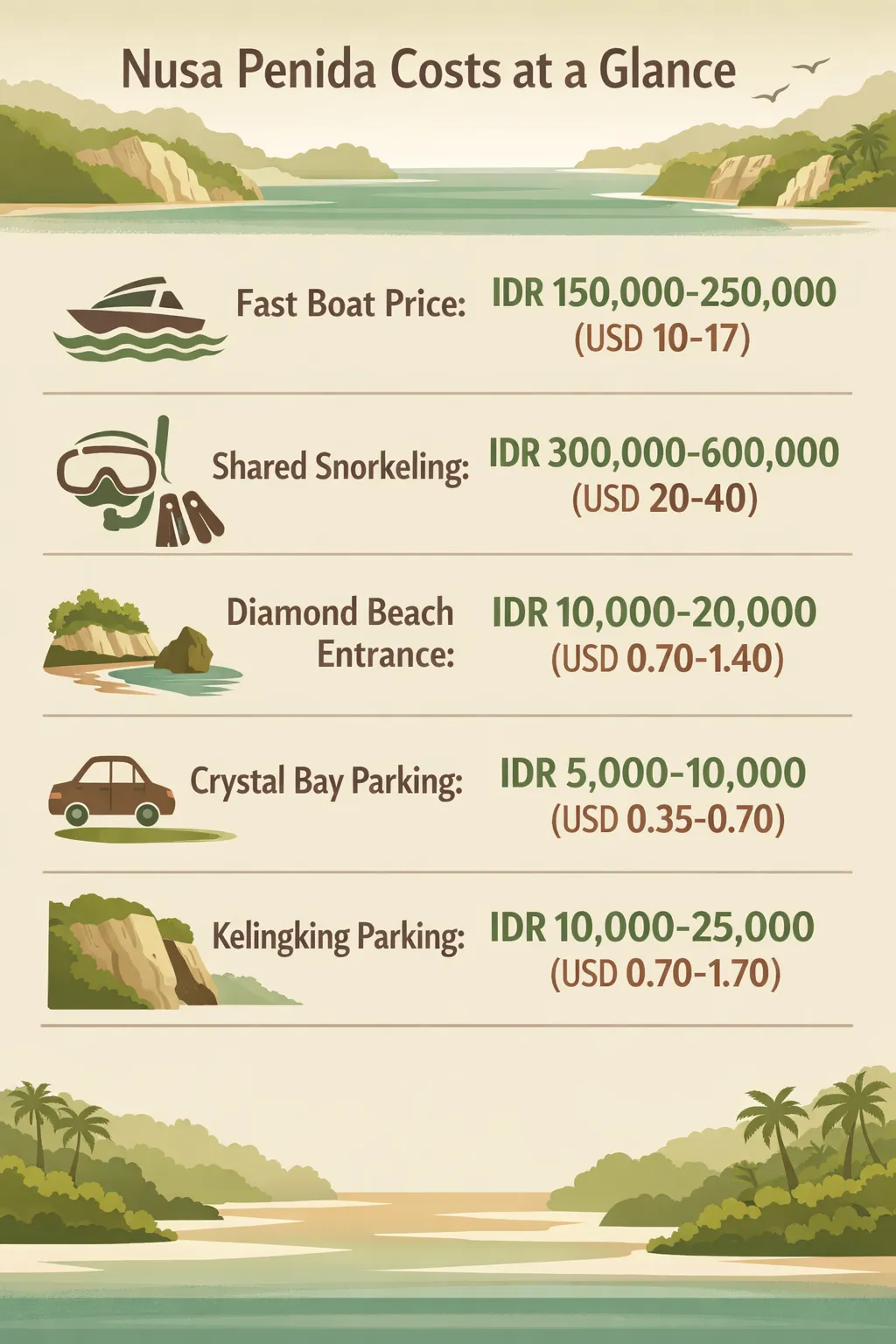 Typical costs: fast boat IDR 150,000-250,000 (USD 10-17); snorkeling tour IDR 300,000-600,000 (USD 20-40); Diamond Beach entrance IDR 10,000-20,000 (USD 0.70-1.40); Crystal Bay parking IDR 5,000-10,000 (USD 0.35-0.70); Kelingking parking IDR 10,000-25,000 (USD 0.70-1.70).
- Price: roughly IDR 150,000-250,000 (USD 10-17) one way, depending on operator, departure time, and whether a hotel transfer is bundled in (2).
- Departures: between 07:00 and 17:00. Day-trippers usually take a boat before 09:00 and return by 16:00-17:00.
- Budget option: slow ferries from Padangbai or Kusamba cost under USD 5 one way but take up to 90 minutes.
Book at least 1-3 days ahead in high season (July-September, December-January). Last-minute tickets sell out or cost 20-30% more. Sea conditions get rough during the December-February monsoon, with cancellations and delays - build a buffer day into your Bali itinerary so a missed boat doesn’t blow up your plans.
One more logistical note: the harbor at Toyapakeh has improved in recent years, but boarding is still a wade-through-the-surf affair at some beaches. Pack your gear in a dry bag and wear sandals you can walk into the water in.
How to Get to Nusa Penida by Fast Boat
45 minutesStep-by-step process for reaching Nusa Penida from Bali's mainland
- 1
Book Your Ticket
Reserve your fast boat ticket at least 1-3 days in advance during high season to avoid sold-out trips or price hikes.
- 2
Depart from Sanur Harbor
Arrive early at Sanur harbor, Bali, and board the fast boat departing between 07:00 and 17:00.
- 3
Cross the Badung Strait
Enjoy the 35-45 minute crossing to Nusa Penida, watching for sea conditions and preparing for possible rough water.
- 4
Arrive at Toyapakeh Harbor
Disembark by wading through shallow surf; have your gear packed in a dry bag and wear sandals suitable for water.
Nusa Penida day trip vs. staying overnight
A Nusa Penida day trip from Bali is the most popular way to see the island, and it works - barely.
The day trip. Packages run USD 40-80 per person including round-trip fast boat, car with driver, lunch, and entrance fees for two to four spots (early 2025 pricing). The standard one-day west-coast loop hits Kelingking, Paluang Cliff, Broken Beach, Angel’s Billabong, and Crystal Bay - about 60-70 km that takes 8-10 hours with stops. You get six to seven hours on-island. It suits travelers with five to seven days in Bali who want the highlights without planning.
The single biggest mistake people make is trying to cram both the west and east coasts into one day. That means over six hours in a car plus boat transfers, and 10-minute stops at viewpoints that deserve an hour. Google Maps times run 20-40% short here because the roads are narrow, potholed, and clogged with people stopping mid-road for photos.
The 2-3 day stay - what I’d recommend. Split the island: a west day (Kelingking, Paluang, Broken Beach, Angel’s Billabong, Crystal Bay) and an east day (Diamond beach Nusa Penida, Atuh Beach, Thousand Island Viewpoint, the Rumah Pohon tree house). Two nights mid-range runs USD 200-350 per person including accommodation, boats, transport, and food. Base yourself centrally around Toyapakeh or Sampalan to cut daily driving. This is the version for photographers, divers, and anyone who wants both sunrise and sunset at multiple spots.
Accommodation spans USD 12-25/night for budget guesthouses, USD 40-80 for mid-range bungalows with a pool, and USD 120-300+ for cliff-edge boutique stays around Crystal Bay and the east coast. For more on places to stay, see Bali Accommodation Types: 7 Categories and What They Cost.
Kelingking Beach Nusa Penida: the T-Rex cliff
Kelingking beach Nusa Penida is the image you’ve already seen - a limestone headland shaped like a sleeping dinosaur, a thin white beach far below at the bottom of a near-vertical cliff. The viewpoint is free to enter; parking runs IDR 10,000-25,000 (USD 0.70-1.70).
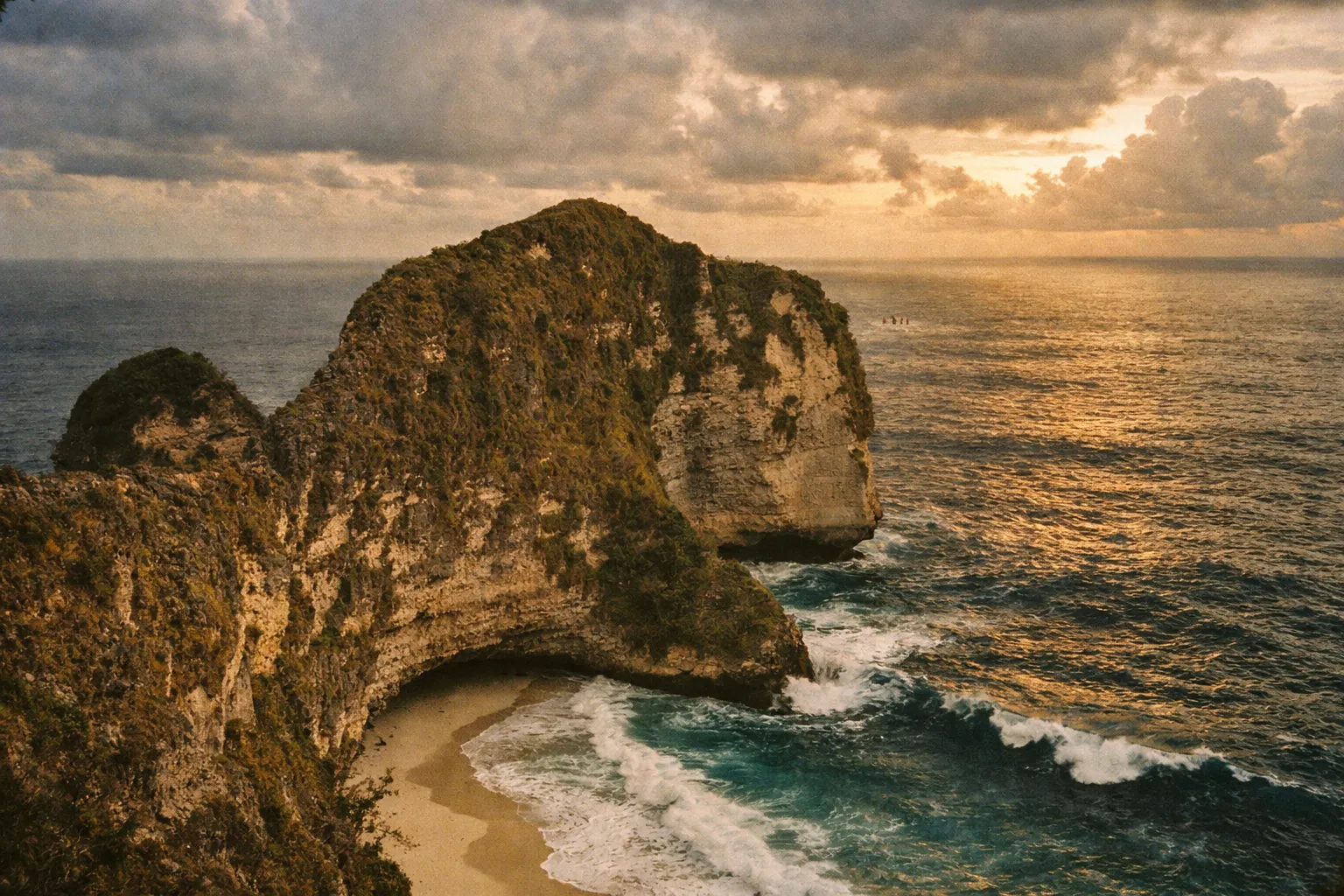
You can climb down to the beach itself, but take this seriously. The stairway is steep, partly a scramble on hand-rail ropes, and takes 30-45 minutes each way in heat that bakes the exposed rock. People with knee issues or limited fitness should enjoy it from the top.
Timing makes or breaks the visit. Arrive between 10:00 and 14:00 and you’ll queue 20-40 minutes for a photo at the T-Rex viewpoint. Come before 08:00 or after 16:30 and the crowds thin by half or more. Light-wise, late afternoon (15:30-17:30) lights the cliff and deepens the water to its bluest; mornings backlight the headland.
Diamond Beach and the east coast
Diamond beach Nusa Penida sits on the far east end - a crescent of white sand framed by jagged limestone pillars, reached by a carved stone stairway down the cliff. It’s widely rated the best beach on the island (2). Entrance and parking run IDR 10,000-20,000 (USD 0.70-1.40), with another IDR 5,000-10,000 for the swings and photo setups.
Next door, Atuh Beach often shares a joint ticket with Diamond, around IDR 10,000-20,000. Above both, the Thousand Island Viewpoint looks out over a scatter of green islets, and the Rumah Pohon tree house gives you the postcard frame.
Do the east coast at sunrise. Arrive at Diamond or Atuh by 06:00-06:30 for soft light and, more practically, cooler temperatures. By midday the stairs are brutal and the rock surfaces hit 40°C+, turning the climb back up into a slog.
Crystal Bay, Broken Beach, and Angel’s Billabong
Crystal Bay Nusa Penida is the west coast’s swimming and snorkeling beach - calm, clear, and one of the few places you can wade in straight from shore. Parking is IDR 5,000-10,000 (USD 0.35-0.70) and beach entry is free. It’s a sunset spot and a launch point for snorkel boats, but the channel offshore has a strong current; stay in the protected near-shore zone unless you’re with a guide.
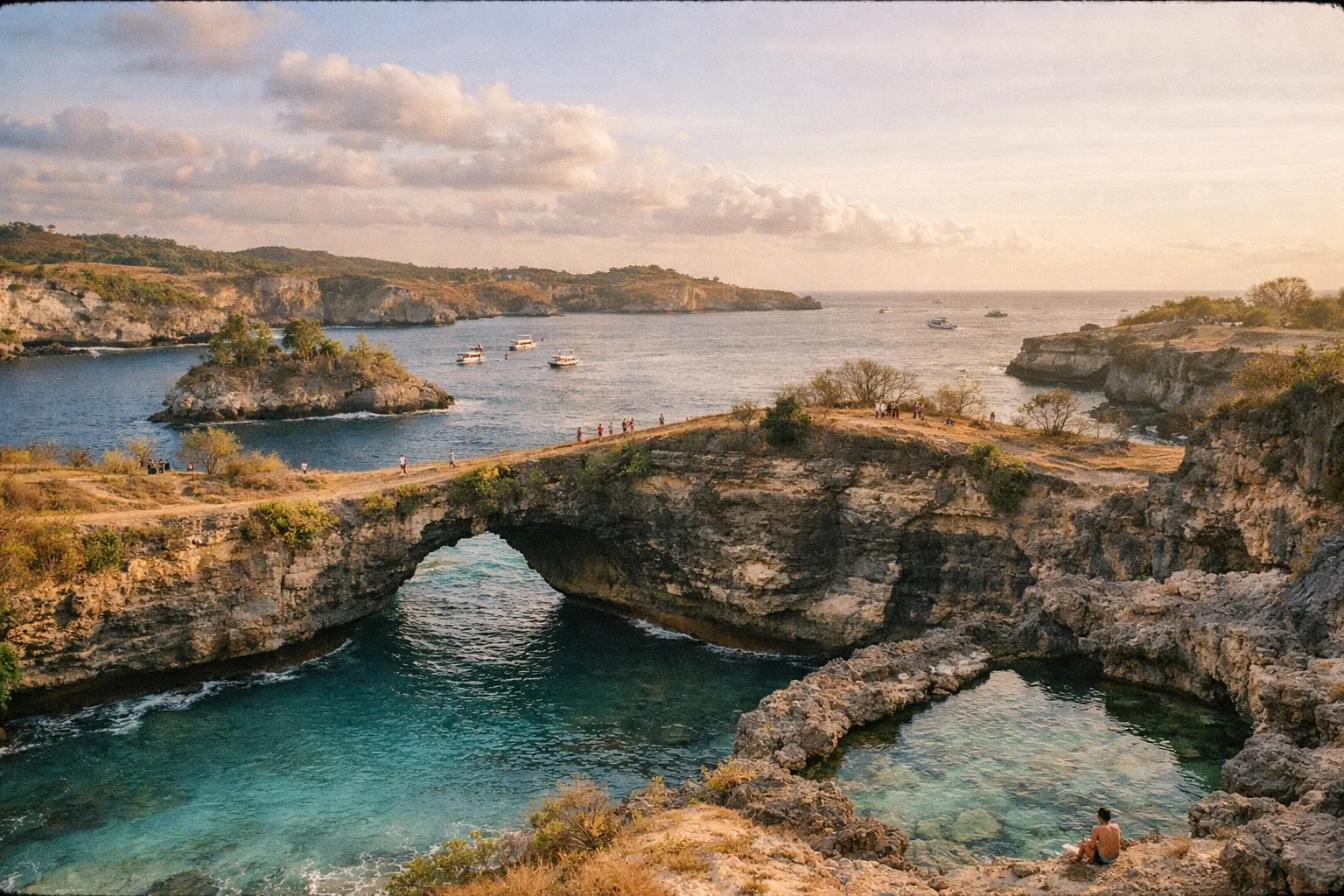
Broken Beach (Pasih Uug in Balinese) is a natural rock arch enclosing a circular cove where the sea flows in through the gap - you walk the cliff rim and look down. Just beside it, Angel’s Billabong is a tidal rock pool that fills emerald at low tide. Combined parking and entrance for the pair is typically IDR 10,000-20,000.
Here’s the warning that matters: people have been swept off the rocks at Angel’s Billabong and Broken Beach by rogue waves. Do not climb into the Angel’s Billabong pool during high swell, and don’t turn your back on the ocean near the edges. Check conditions with locals before you go anywhere near the water line.
What to avoid in Nusa Penida
The island rewards a bit of caution. The most common ways trips go sideways:
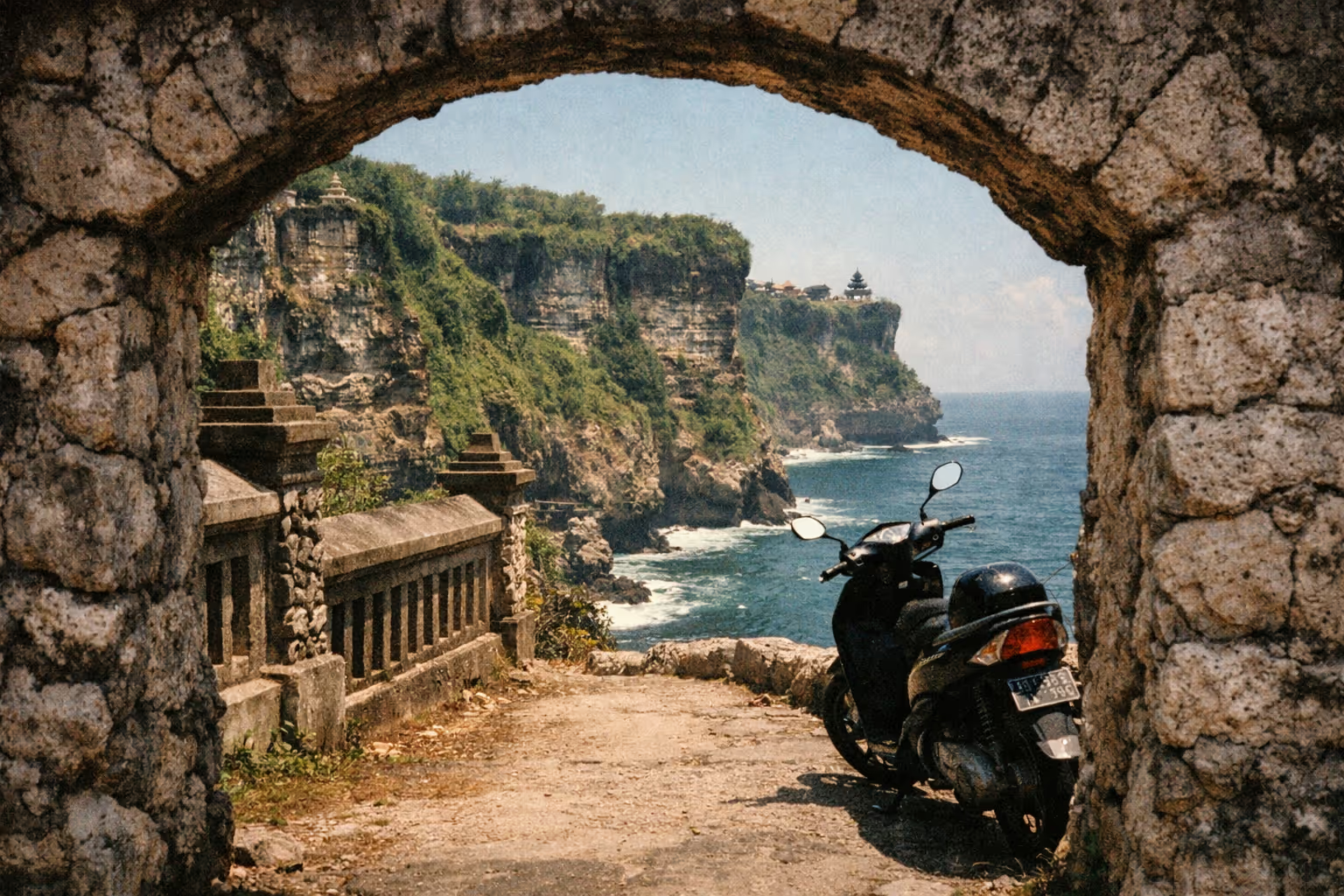
- Overconfidence on scooters. Rentals are cheap - IDR 80,000-100,000/day (USD 5-7) plus fuel from roadside glass-bottle kiosks at IDR 12,000-15,000/litre - but the roads to Kelingking, Tembeling, and Saren Cliff are steep, gravelly, and potholed. Realistic speed is 20-30 km/h. Inexperienced riders heading straight to these descents on day one is how road-rash and broken-bone stories start. Many budget insurance policies won’t pay out without an international motorcycle license or if you weren’t wearing a helmet.
- Skipping cash. Small warungs (roadside food stalls), parking attendants, and homestays are cash-only. ATMs are limited and run dry on busy weekends. Arrive with IDR 500,000-1,000,000 (USD 35-70) per person for a one-to-two-day stay, and keep small bills for parking and toilets (IDR 2,000-5,000 each).
- Driving after dark. No street lighting, free-roaming animals, and potholes. If you’re not confident on the roads in daylight, don’t ride them at night.
- Cliff-edge photos. Falls of 100 m+ have killed visitors. No shot is worth standing on the lip.
- Ignoring the heat and the medical situation. The UV index regularly hits 11+ at midday. Run SPF 50+, a long-sleeved rash guard, and 3-4 liters of water a day for active sightseeing. There’s no major hospital on the island - only small clinics - and a serious case means a 60-90 minute speedboat evacuation to Bali.
Is Nusa Penida worth visiting, and is it better than Bali?
Yes, it’s worth it - with the right expectations. Major attractions on Nusa Penida consistently score 4.5+/5 across thousands of reviews, and the combination of shallow-water manta encounters and 150-meter sea cliffs is genuinely hard to find elsewhere. The island is also Bali’s clearest “adventure extension”: close enough for a day trip, less developed than Canggu or Ubud, and comparatively uncrowded in the early morning.
Is Nusa Penida better than Bali? That’s the wrong frame. Penida gives you rugged nature, fewer restaurants, basic roads, and lower service levels. Mainland Bali gives you the cafes, beach clubs, spas, shopping, and nightlife. People who book five nights on Penida expecting Canggu-style comforts come away disappointed; people who treat it as a one-to-three-day add-on to a Bali trip come away thrilled. Complement, not replacement.
A note on what’s changed recently: as Bali’s visitor numbers rebounded - Indonesia passed 13 million international arrivals in 2024 (4) - the crowds and the fees have grown. Viewpoints that were free a few years ago now have ticket booths and barrier gates, and entrance and parking fees at Diamond Beach, Atuh, and Kelingking have crept up by IDR 5,000-10,000 over the last year or two. Old blog posts claiming “no entrance fee” are out of date. Authorities and marine NGOs have also tightened manta-tourism rules - keep your distance, don’t touch or chase the rays - and pushed life-jacket use and swimming restrictions at hazardous spots.
Practical tips before you go
A few logistics that smooth the trip:
- Entry requirements. A passport with six months’ validity and an onward ticket. Many nationalities get a Visa on Arrival for IDR 500,000 (about USD 35), valid 30 days.
- Insurance. Get a policy that explicitly covers motorbike riding, snorkeling, and scuba to 30 m. Check the motorbike clause - many exclude it without an international license.
- Diving certification. Fun dives need PADI Open Water or equivalent; intro dives (no license) run USD 80-120 for two dives with gear and lunch. Certified divers pay USD 90-140 for two to three boat dives, up to USD 150-180 for full-day packages. For more on diving, see Diving in Amed Bali: dive sites, Liberty day trip, costs.
- Fuel up early. Kiosks (“Pertamini”) sit every 2-5 km on main roads but thin out on the remote east and south coasts. Fill the tank before heading out.
- Etiquette. Bali’s temple-and-dress norms apply on Penida too. When visiting any temple - including small shrines at viewpoints - cover shoulders and knees, and wear a sarong if one’s offered or required. Greet warung owners and ask before photographing people at work. It’s the baseline courtesy locals extend to you, and it goes both ways.
Environment and preservation: a delicate balance
I’ve spent enough time in the water around the Nusa Islands to feel some responsibility for what happens to it. The clarity and the biodiversity here rest on a real balance, and the post-pandemic surge in visitors has put pressure on waste management, the roads, and the reefs.
Through conversations with local guides and watching their work first-hand, the message is consistent: the adventures only stay possible if they’re sustainable. Manta and coral protections - distance rules at Manta Point, no touching, no chasing - exist because the alternative is losing the very thing people fly across the world to see. Carry your trash out, refuse single-use plastics where you can, and pick operators who run small groups and brief their guests properly.
It isn’t only about today’s dive. It’s about whether the next traveler gets the same shadow rising out of the plankton.
Frequently Asked Questions
- Can I rent snorkeling gear on Nusa Penida or should I bring my own?
- Basic snorkeling gear like masks and snorkels are available for rent at Crystal Bay and from tour operators, but if you prefer a custom fit or higher-quality equipment, bringing your own is recommended.
- Is it safe to rent and ride scooters on Nusa Penida without prior experience?
- No, the island's steep, gravelly, and potholed roads require confident riding skills. Inexperienced riders risk accidents, and many insurance policies exclude coverage without an international license.
- Are there medical facilities on Nusa Penida in case of emergencies?
- Only small clinics are available on the island. Serious injuries require a speedboat evacuation to Bali, which can take 60-90 minutes, so travel insurance and caution are essential.
- What is the best time of day to visit Diamond Beach to avoid crowds and heat?
- Arriving at Diamond Beach by 06:00-06:30 allows you to enjoy soft morning light and cooler temperatures before the midday heat makes the stair climb more difficult.
- How do manta ray tour operators ensure sustainable interactions?
- Operators enforce strict rules such as no touching or chasing manta rays, maintaining distance, and requiring life jackets to protect both the animals and visitors.
- Is it possible to do both the east and west coasts of Nusa Penida in one day?
- Trying to cover both coasts in one day is not recommended due to long travel times, narrow roads, and short stops that don't do justice to the sites.