Vikings founded Waterford in 914 AD, making it Ireland’s oldest city and, oddly, one of its most skipped. The best things to do in Waterford split into two clear categories: a compact medieval core you can cover on foot in a day (the Viking Triangle, five museums, the crystal factory) and a coastline that needs a car (the Copper Coast Geopark, Dunmore East, and the 46 km Greenway that ends by the sea). This is not a day-trip footnote on the road to Cork. Give it two or three nights and it pays you back.
Two planning mistakes catch most first-timers. They underestimate how long the museums take (a proper Viking Triangle day runs six to seven hours, not two), and they hear “city cycle path” and picture a lunchtime spin. The Waterford Greenway cycle trail is 46 km end to end (6). Below, the plan works in four blocks: city attractions, then the Greenway, then the coastal escapes, then how to fit it all into the nights you actually have.
Getting to Waterford
Waterford is roughly 2.5 hours from Dublin by car via the M9 motorway, the most direct route for most visitors arriving through Dublin Airport. By train, Irish Rail runs Dublin Heuston to Waterford in around 2 hours 20 minutes, with several departures daily; check irishrail.ie for current schedules. Bus Éireann and Citylink both serve the route from Dublin, Cork, and Limerick, with journey times varying by service. If you’re coming from the UK, Rosslare Europort is the closest ferry terminal, about 75 km east of Waterford by road (a little over an hour’s drive), with Stena Line and Irish Ferries operating crossings from Fishguard and Pembroke. Waterford Airport has had no scheduled passenger flights since 2016, and runway works aimed at reopening it were only under way in 2026 (23), so Dublin or Cork are the practical air gateways.
Best Time to Visit Waterford
May and June are the strongest months. The days are long, the coastal walks are dry underfoot, and the crowds haven’t peaked the way they do in July and August. Spring also catches Mount Congreve Gardens at their best for rhododendrons. September works nearly as well: shoulder-season pricing, fewer tourists, and the Greenway still rideable in good conditions. The Viking Triangle museums run year-round, so a winter visit is viable for a city-focused trip, but the Copper Coast and Dunmore East lose most of their appeal in a January squall.
What Most Guides Get Wrong About Waterford
Most guides treat Waterford as a half-day stop between Dublin and Cork, which is exactly the wrong frame. The Viking Triangle alone needs a full day done properly. The Greenway is a full day on its own. Stack those with the coast and you have a three-night destination, not a footnote. The other persistent error: guides list the five museums as roughly equal stops. They’re not. The Medieval Museum and Bishop’s Palace are the anchors; the Irish Museum of Time and Irish Silver Museum are fillers for anyone with time to spare.
✓ Pros
- Genuinely compact city centre, with all major museums and the Crystal factory within walking distance
- The Waterford Greenway is the longest off-road cycling route in Ireland and largely car-free
- Less crowded than Dublin, Galway, or Killarney, so you can actually get into museums without booking weeks ahead
- Strong mix of indoor (rainy day) and outdoor options
- Coastal day trips (Dunmore East, Copper Coast) are under an hour from the city
✗ Cons
- Copper Coast and Dunmore East require a car; there's no realistic public transport option
- The Greenway's full 46 km is a serious commitment; casual visitors often underestimate it
- Museum opening hours can be restrictive (later Sunday starts around 11:00)
- Trying to cover everything in a weekend is a recipe for a rushed, unsatisfying trip
- Fewer accommodation options than larger Irish cities; book ahead in summer
Things to Do in Waterford: What the City Actually Offers
Waterford earns its place on an Irish itinerary, particularly if you care about Viking and medieval history, cycling, or coastal scenery, and if you’re happy trading nightlife and big-city scale for a walkable, low-crowd break.
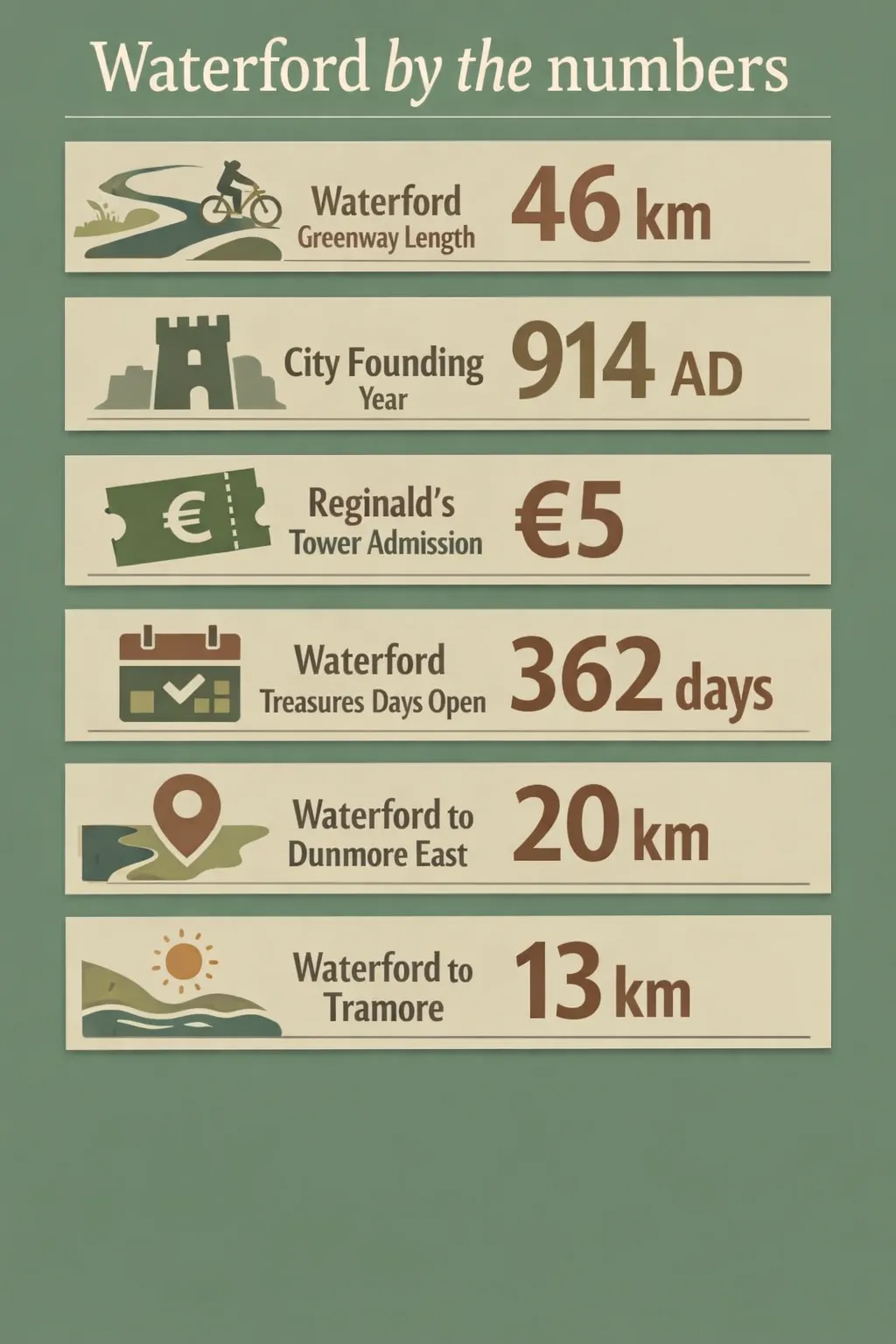 Waterford’s core numbers highlight the Viking Triangle museums, the 46 km Greenway, and nearby coastal escapes.
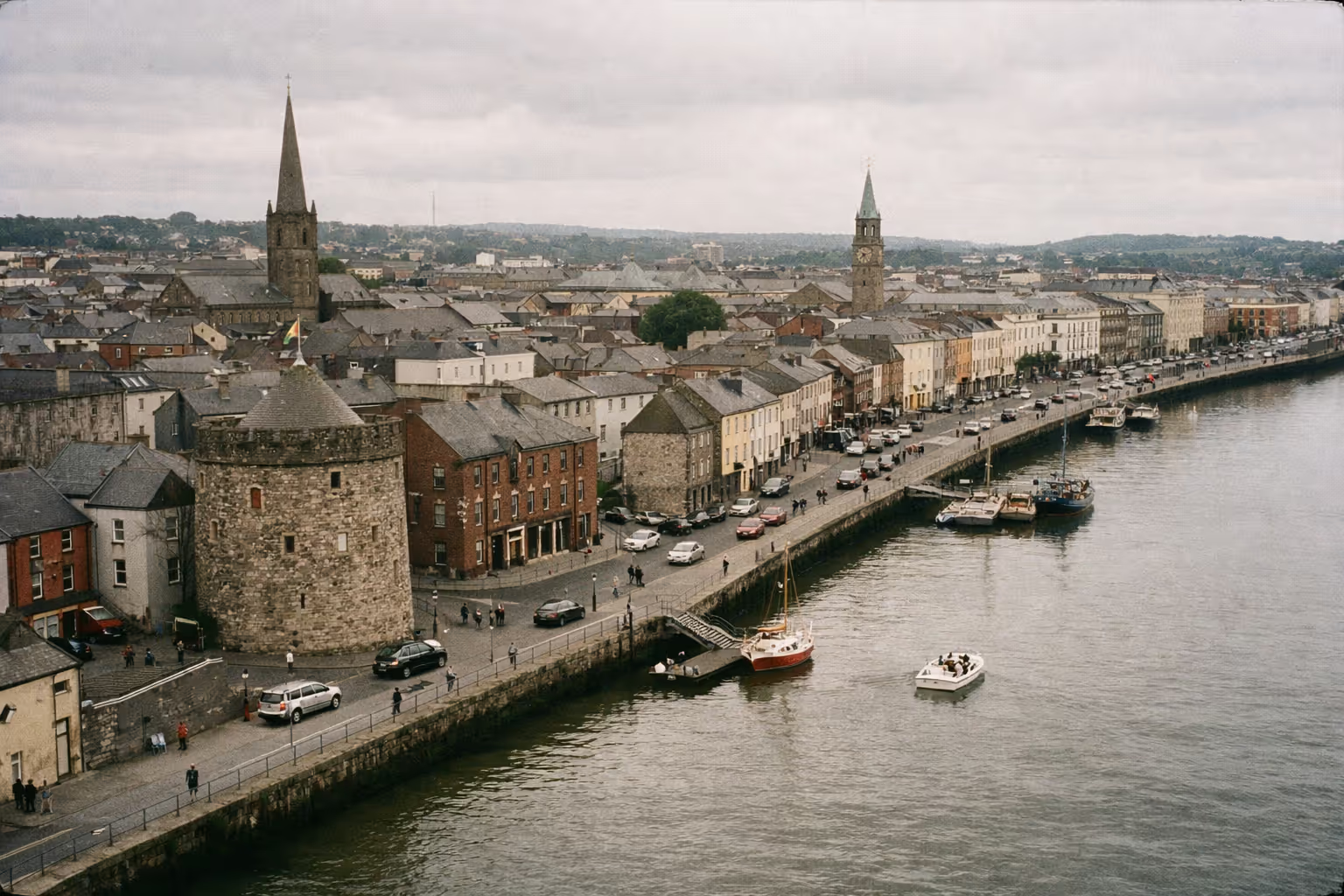
The scale is the selling point. Reginald’s Tower, the Medieval Museum, Bishop’s Palace, the Irish Museum of Time, and the Irish Silver Museum all cluster in the Viking Triangle, around Cathedral Square, The Mall, and Parade Quay. The House of Waterford Crystal is a short walk away on The Mall, and the Greenway trailhead is also central. You can base yourself in the city and reach nearly everything on foot.
The Waterford Greenway carries real national weight. At 46 km (6) it’s the longest off-road walking and cycling route in Ireland (4), and Irish Independent readers ranked it #3 among Ireland’s top 10 visitor attractions in the 2024 Reader Travel Awards, ahead of Kilmainham Gaol and Spike Island (22). That ranking is the shorthand locals reach for when asked why the city punches above its size.
What Waterford isn’t: a nightlife destination or a large cosmopolitan city. If your idea of a city break is late bars and a dense restaurant scene, Ireland’s bigger cities will suit you better. If it’s Viking heritage, a car-free ride along a river and through old rail tunnels, and cliff walks within half an hour of the centre, Waterford delivers more than most visitors expect. The catch is time: a single day feels rushed. Two to three nights is the sweet spot.
The Viking Triangle and Reginald’s Tower: Waterford’s Medieval Core
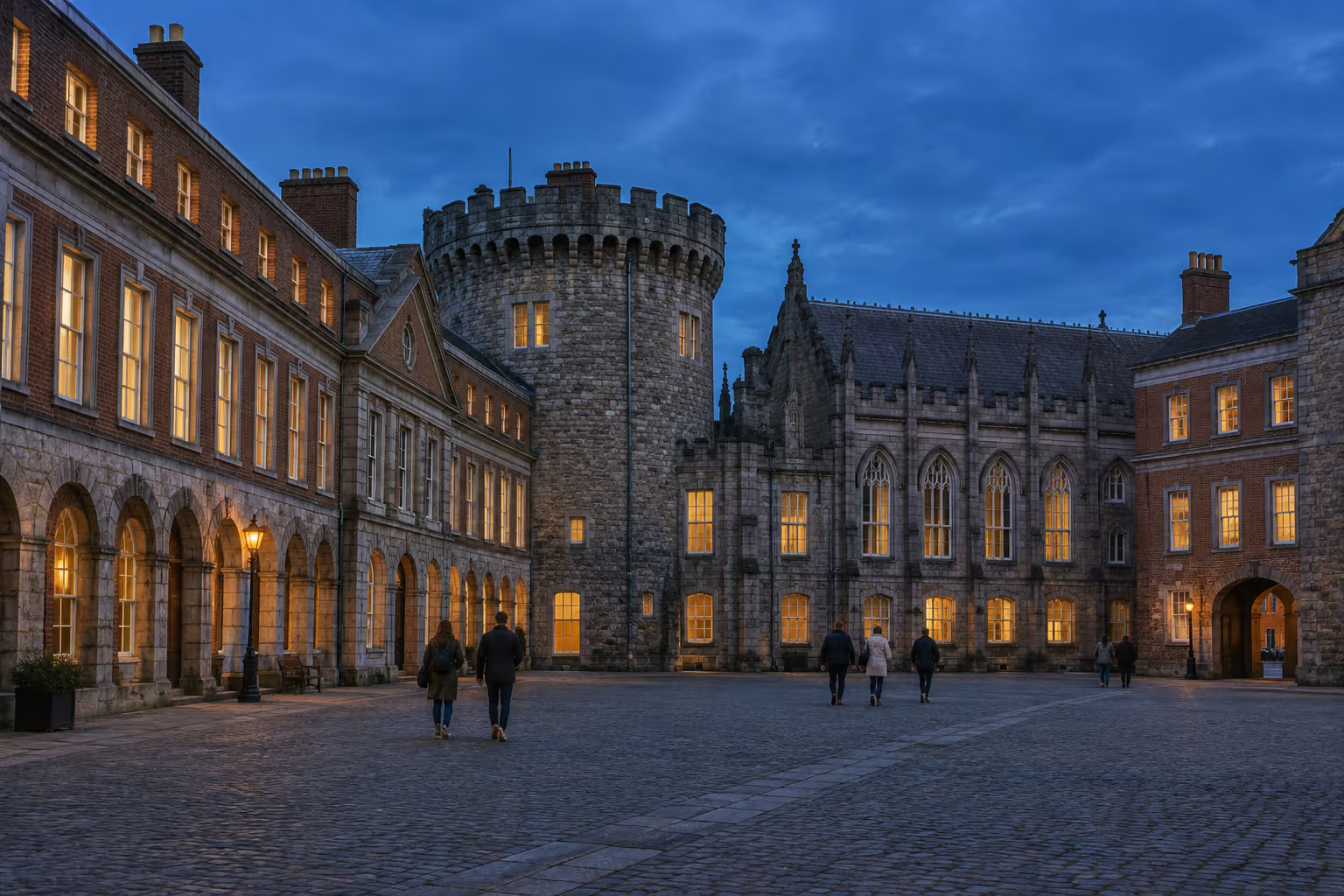
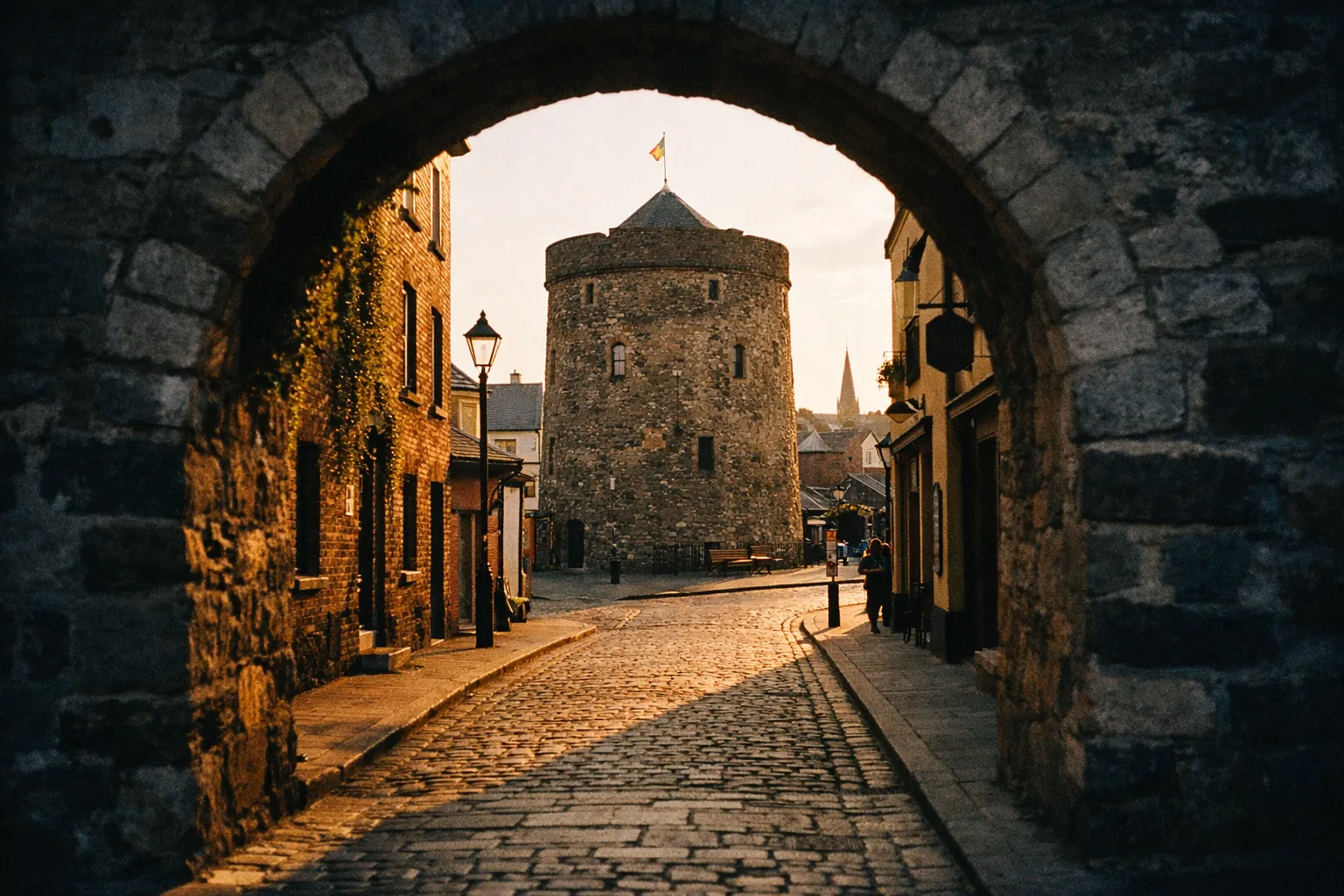
The Viking Triangle is a walkable heritage quarter holding five major museums within a few minutes of each other, anchored at its eastern end by Reginald’s Tower on Parade Quay. The tower is Ireland’s oldest civic building, a stone tower the Anglo-Normans raised on the site of a Viking fort (16). One detail worth knowing before you plan: Bishop’s Palace holds the world’s oldest surviving piece of Waterford glass, the 1789 Penrose decanter (17), which makes it the logical companion to the factory tour rather than a separate errand.
The Five Museums and What Each One Is Actually For
Not all five earn equal time. Here’s how to weight them.
- Reginald’s Tower: Viking and medieval exhibits, and the natural place to start. Budget around 45 minutes. Hours run 09:30-17:00 with last admission at 16:15, and from December to March the tower opens Wednesday to Sunday only (16). Adult admission was €5.00 on Heritage Ireland’s page in September 2026 (16), so confirm on heritageireland.ie before you go. Worth prioritising.
- Medieval Museum: the most substantial stop, covering the city’s medieval civic life and holding items like Henry VIII’s Cap of Maintenance and the Great Charter Roll. Allow 60-90 minutes. Worth prioritising.
- Bishop’s Palace: Georgian architecture, decorative arts, and that oldest surviving piece of Waterford glass. Around 60 minutes, and there’s a café if you need a break. Worth prioritising.
- Irish Museum of Time: a smaller, quirkier collection of clocks and timepieces. Good for a 30-minute detour if you have the time; skip it if you’re tight.
- Irish Silver Museum: a specialist collection near Cathedral Square. Brief if silver isn’t your thing.
The Waterford Treasures museums (which include the Medieval Museum and Bishop’s Palace) open seven days a week, 362 days a year, closing only on Christmas Day, St Stephen’s Day, and New Year’s Day (18). As listed in September 2026, both open at 09:15 on weekdays, at 10:00 (Medieval Museum) or 10:15 (Bishop’s Palace) on Saturdays, and at 11:00 on Sundays and bank holidays, closing at 17:00 with last admission at 16:15 (18).
How to Walk the Viking Triangle Efficiently
6 to 7 hoursAn efficient walking sequence to cover the five museums and the crystal factory tour in one day.
- 1
Start at Reginald's Tower at 10:00
It opens on time and sets the historical context for everything that follows. Allow 45 minutes.
- 2
Walk to the Medieval Museum
About two minutes away. Give it 60-90 minutes; this is the time-intensive stop.
- 3
Continue to Bishop's Palace
Around 60 minutes. Note the oldest surviving Waterford Crystal piece here before your factory visit.
- 4
Take lunch near the quay
Several cafés sit within the Viking Triangle, including the one at Bishop's Palace.
- 5
Book the 14:00 or 15:00 House of Waterford Crystal tour in advance
Slots in cleanly after lunch.
- 6
Finish at Christ Church Cathedral
Closes the loop without doubling back, on the site where Strongbow married Aoife in 1170.
Done properly, this full sequence runs six to seven hours including lunch and walking. Don’t try to fold it into a half-day. Families or anyone wanting a more immersive angle can add the King of the Vikings VR experience, a virtual-reality take on the city’s Norse past that plays better with kids than static display cases do.
Waterford Crystal Factory Tour: Inside the Craft
The House of Waterford Crystal sits on The Mall in the city centre, a short walk from Bishop’s Palace and the rest of the Viking Triangle. The tour walks you through the full production process (moulding, blowing, cutting, and engraving), watched live on the factory floor. Budget roughly an hour for the tour itself (2), plus whatever time the showroom pulls out of you.

Admission fees apply for the factory tour, so check the official House of Waterford Crystal site for current pricing before you book. Book the 14:00 or 15:00 slot to pair naturally with a morning in the museums. On hours, the House of Waterford lists tours daily from 09:30 to 16:15 in peak season (April to October), daily from 09:30 to 15:15 in March, and on weekdays only from 09:30 to 15:00 in January, February, November and December, with longer hours for the retail store (20). Check ahead if you’re visiting outside the peak season, and especially on a winter weekend.
Here’s the ordering tip that most guides skip: see the world’s oldest surviving piece of Waterford glass at Bishop’s Palace first (17), then watch the modern process. Doing it in that order turns a factory tour into something with actual historical depth rather than a glorified retail visit. And be honest with yourself about the showroom: it’s a working retail operation, and the glassware is priced accordingly. Budget for it if you’re the type to be tempted.
Cycling and Walking the Waterford Greenway Cycle Trail
The Waterford Greenway runs 46 km along a former railway line from Waterford city to Dungarvan, car-free, over bridges and viaducts and through tunnels before it reaches the coast (6). It’s the longest off-road walking and cycling route in Ireland, and it’s the thing locals mention first when asked what makes the city worth the trip. The planning reality to internalise: at 46 km, this is a full day for leisure cyclists, not a quick spin.

Using the Greenway costs nothing; you only pay for optional bike hire or transport. Waterford Greenway Bike Hire listed adult bikes from €25, e-bikes from €45, and kids’ bikes from €10 in September 2026, with depots in Waterford, Kilmacthomas and Dungarvan so you can collect a bike in one town and drop it in another; for the trip back, the operator points riders to the public Bus Éireann service that links the three towns (19). Confirm rates directly with your chosen hire company, since several firms work the route and they don’t all price the same way.
Waterford Greenway Key Segments
| Waterford city → Kilmeadan | Kilmeadan → Dungarvan | Full route (Waterford → Dungarvan) | |
|---|---|---|---|
| Distance | about 10 km | about 36 km | 46 km |
| Highlights | River Suir views, flat terrain | Viaducts, tunnels, coastal finish | Complete experience |
| Best For | Families, beginners | Fit cyclists, full-day riders | Serious leisure cyclists |
| Notes | Easy out-and-back option | One-way hire recommended | Allow a full day; bus back or overnight in Dungarvan |
Bike Hire, One-Way Trips, and Access Points
Multiple access points along the route let you ride one-way, so you don’t have to double back the way you came. Local operators handle bike hire and one-way drop-offs, and Dungarvan makes a good turnaround: a quayside town with lunch options at the far end.
Walkers usually split the full route over two or more days. If you want a single walkable section, the Waterford-to-Kilmeadan stretch is the most manageable. Casual cyclists and families should stick to that same segment. Serious cyclists riding the full 46 km are better off overnighting in Dungarvan than grinding out an immediate return push the same day.
The Copper Coast Geopark: Waterford’s Scenic Coastal Drive
The Copper Coast Geopark is a UNESCO Global Geopark running roughly 25 km of coastline between Tramore and Dungarvan, named for the area’s 19th-century copper mines (4), and one of the coastal highlights of Munster. It extends from Fenor in the east to Stradbally in the west (4), with stops taking in beaches, old mining sites, and cliffs.
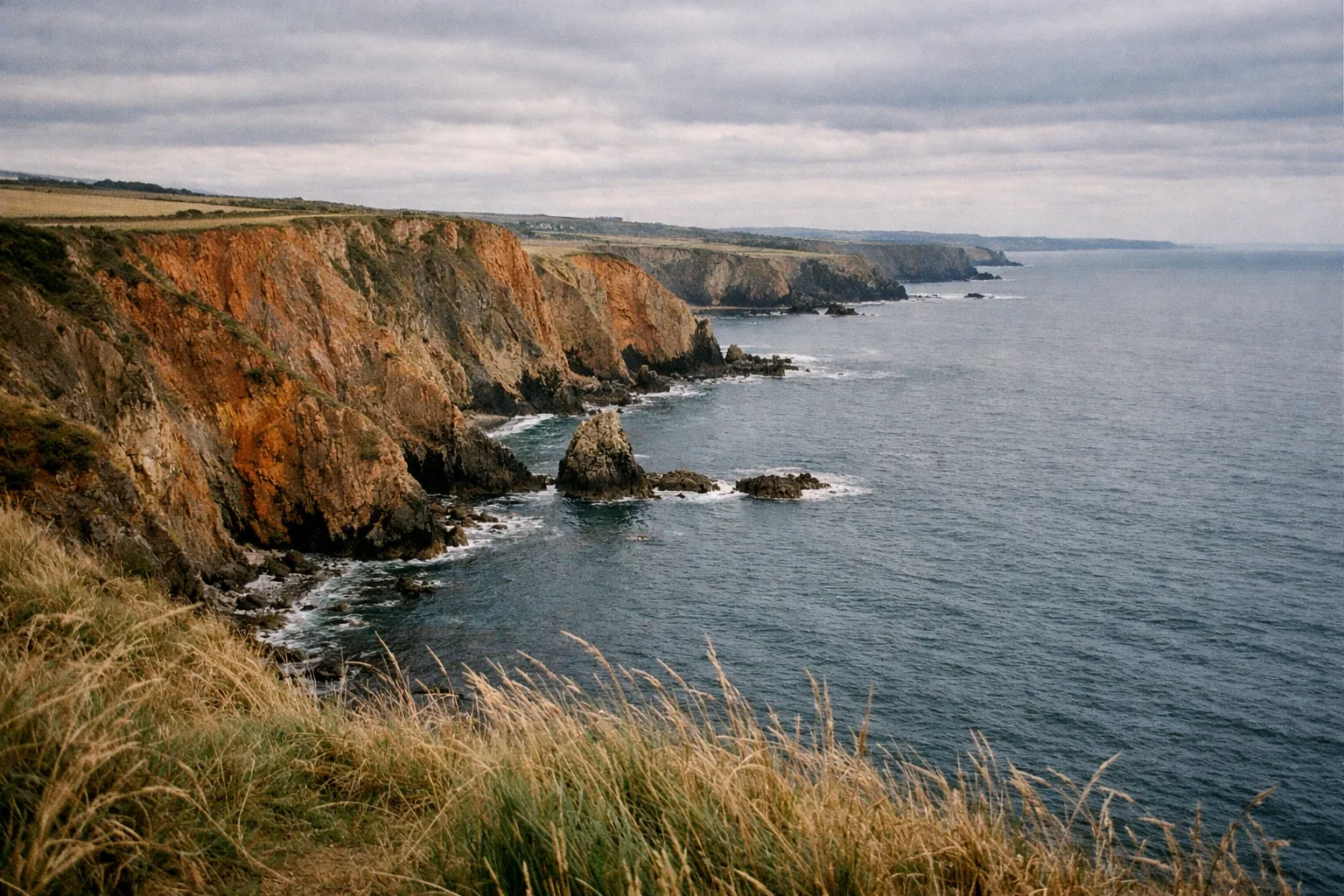
Treat it as a half-day or full day, not a 30-minute drive-through. The point of the Copper Coast is getting out of the car: beaches, cliff walks, geological viewpoints, and marked walking routes that run from about 2 km to 8 km. Visit Waterford specifically flags pairing the drive with the Ardmore Cliff Walk, a loop walk with sea views by the village of Ardmore (6), whose monastic remains add heritage interest alongside the geology (4). Do that and you get a varied day of stops instead of a windscreen tour.
You’ll need a car. There’s no regular public transport along the route; it’s a self-drive or organised-tour proposition. The Geopark is open year-round, but the walks and cliff-top viewpoints are best from spring through early autumn, when the daylight and weather actually cooperate. Winter driving on the coastal roads is possible; the walks just won’t be pleasant in a squall.
In a multi-day plan, the Copper Coast works well as a Day 2 activity paired with the Greenway, or as a standalone day trip from the city.
Dunmore East and Waterford’s Coastal Villages
Dunmore East is a working fishing harbour and holiday village on the western side of Waterford Harbour, an actual harbour with a fleet, not a manufactured attraction. It sits roughly 20 km southeast of the city, about a 20-25 minute drive via the R683 and R684. What earns it a visit is the combination: harbour scenery, cliff walks, seafood, and a pace noticeably slower than the city.
Tourism itineraries consistently slot it in as a final-day coastal stop after the museums and the Greenway, a good way to decompress before heading home. Be realistic about scale, though. Dunmore East is a half-day stop, not a full-day destination on its own. Pair it with a Copper Coast drive or a Comeragh Mountains walk for a rounded day out.
For alternatives, Tramore sits about 13 km from the city, a 15-20 minute drive, and works as a larger, family-oriented beach town with a long sandy strand and amusements. And Dungarvan, at the far end of the Greenway, doubles as a coastal destination in its own right: quayside restaurants and accommodation make it the natural lunch or overnight stop if you’re cycling the full route. All three need a car unless you’re arriving in Dungarvan by bike.
Gardens, Estates, and What Else Waterford Has Going For It
Beyond the city and the coast, a few inland attractions round out a longer stay, though they’re secondary for most visitors.
Mount Congreve Gardens, about 8 km west of the city (a 10-15 minute drive), comprises seventy acres of intensively planted woodland, a four-acre walled garden and 16 km of walkways (21), and is at its best in spring for rhododendrons and camellias. It’s one of the county’s signature attractions and worth the detour if gardens are your thing.
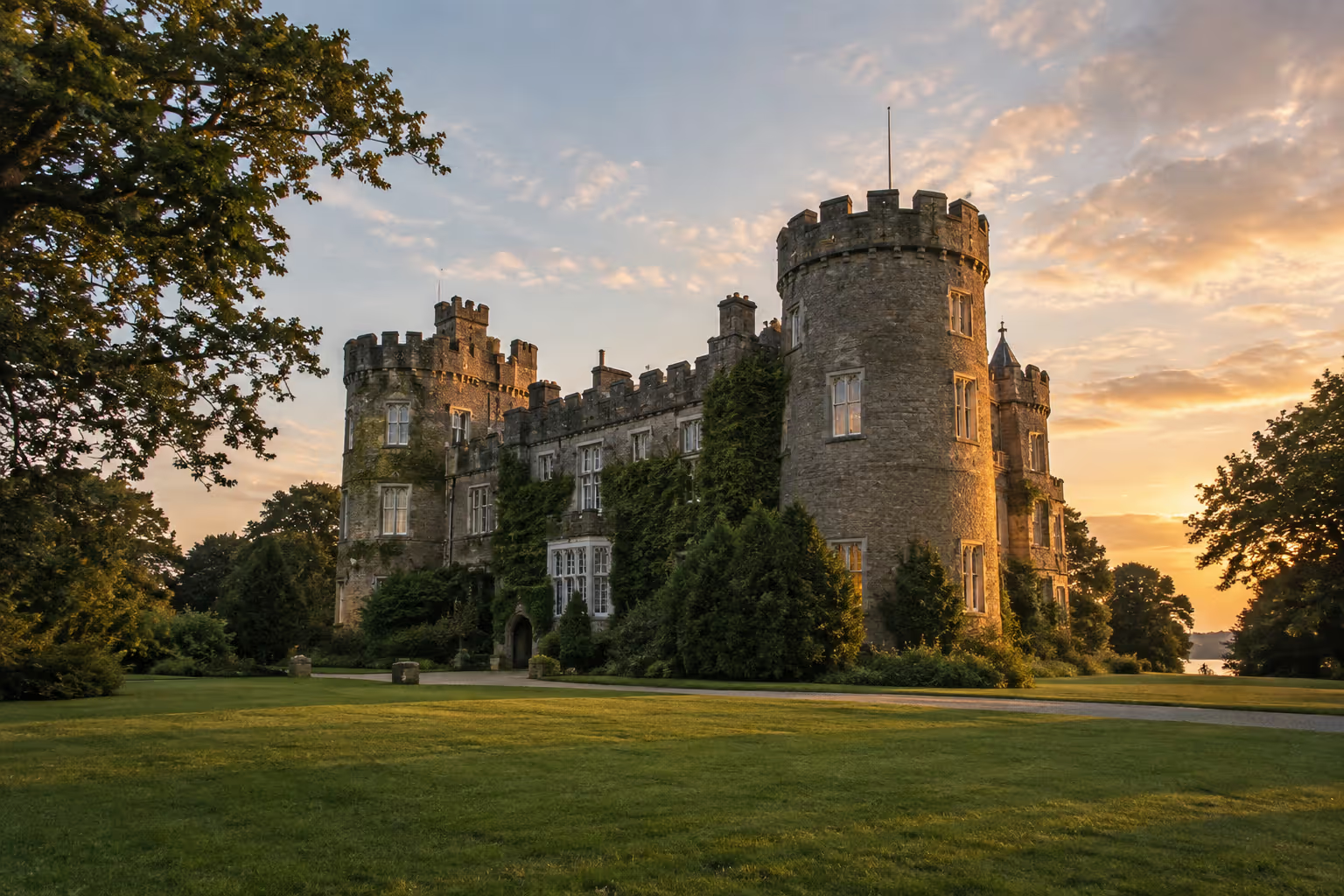
Curraghmore House & Gardens, a still-inhabited historic estate near Portlaw, sits about 27 km from the city (roughly a 40-minute drive). Its estate and gardens open from May to the end of September, Friday to Sunday and bank holidays, 10:00 to 16:00, with public house tours at 11:00 and 14:00 on those days (24). Suits garden and architecture enthusiasts; check the dates before driving out.
The Comeragh Mountains give walkers something beyond coastal scenery. Popular walking areas like Mahon Falls are around a 40-45 minute drive from the city, and the range appears consistently as a Day 3 activity in three-night itineraries, usually paired with Dunmore East.
Honest calibration: if you’re on a two-night city break, prioritise the Viking Triangle, the crystal tour, and one outdoor activity (the Greenway or the Copper Coast) before you add gardens or a mountain walk. These are for the traveller with a third or fourth day to fill.
How to Plan Your Time in Waterford: Practical Itinerary Structures
The core planning principle: Waterford rewards focus. Trying to cover the city museums, the Greenway, the Copper Coast, and Dunmore East in one weekend will feel rushed and leave you satisfied with none of them. Match the plan to the days you actually have.
- One day: Viking Triangle (Reginald’s Tower, Medieval Museum, Bishop’s Palace) plus the crystal factory tour. That’s your day, done properly, so don’t try to bolt on the coast.
- Two days: Day 1, the Viking Triangle and crystal tour. Day 2, pick one: the Greenway (full or partial) or the Copper Coast drive with the Ardmore Cliff Walk. Don’t attempt both.
- Three nights (the structure most tourism itineraries settle on): Day 1, city museums and crystal; Day 2, Greenway plus a Copper Coast drive; Day 3, the Comeragh Mountains and Dunmore East.
Two logistics to build around. First, opening hours: the Waterford Treasures museums open at 09:15 on weekdays and not until 11:00 on Sundays and bank holidays, with last admission at 16:15 (18), and Reginald’s Tower runs 09:30-17:00 with last entry 16:15, opening only Wednesday to Sunday from December to March (16). Don’t assume an early-morning start, especially on a Sunday. Second, transport: the city-centre attractions are all walkable, but the Greenway return trip, the Copper Coast, and Dunmore East need a car or a local operator’s transport.
Frequently Asked Questions
- Is Waterford city worth visiting?
- Yes, if you're interested in Viking and medieval history, cycling, or coastal scenery. It offers a compact heritage quarter and Ireland's longest off-road cycling route.
- How long do you need in Waterford?
- Two nights is the practical minimum for museums and an outdoor activity; three nights add a coastal village and more breathing room.
- Can you walk the Waterford Greenway, or do you need a bike?
- Both are possible, but the full 46 km on foot is a serious undertaking usually split over multiple days; cycling is more practical for a single day.
- Do you need a car to visit Waterford?
- No car is needed for the city centre and Greenway trailhead, but a car or tour is required for the Copper Coast, Dunmore East, and inland estates.
- Is Waterford Crystal still made in Waterford?
- Yes. The House of Waterford Crystal offers live factory tours on The Mall, showing the full production process.
- When is the best time to visit Waterford?
- Indoor attractions run year-round; coastal activities are best spring through early autumn, with summer offering the longest days and shoulder seasons fewer crowds.
- What are some fun things to do in Waterford, CA or Waterford, Wisconsin?
- This guide covers Waterford, Ireland, the Viking city on the River Suir. Waterford, California is a small Central Valley town in Stanislaus County; for things to do there, the Turlock Lake State Recreation Area nearby is the main outdoor draw. Waterford, Wisconsin is a village in Racine County southeast of Milwaukee; visitors typically head to the Fox River for fishing and kayaking, or use it as a base for exploring the Kettle Moraine State Forest. Neither shares much with the Irish city beyond the name.
What Actually Determines Whether the Trip Works
The decision is simpler than the options make it look. One day means stay in the city and do the Viking Triangle and crystal tour properly. Two days means add one outdoor activity: the Greenway or the Copper Coast, not both. Three nights means you can do Waterford the way the place deserves, with the coast and the mountains folded in without a rush.
Avoid the two mistakes that catch everyone: budgeting two hours for museums that need six or seven, and treating a 46 km rail-trail like a lunchtime pedal. Both come from underestimating a compact city that packs in more than its size suggests. City plus one activity done well, or everything attempted and all of it rushed. Pick depth. Waterford rewards it.