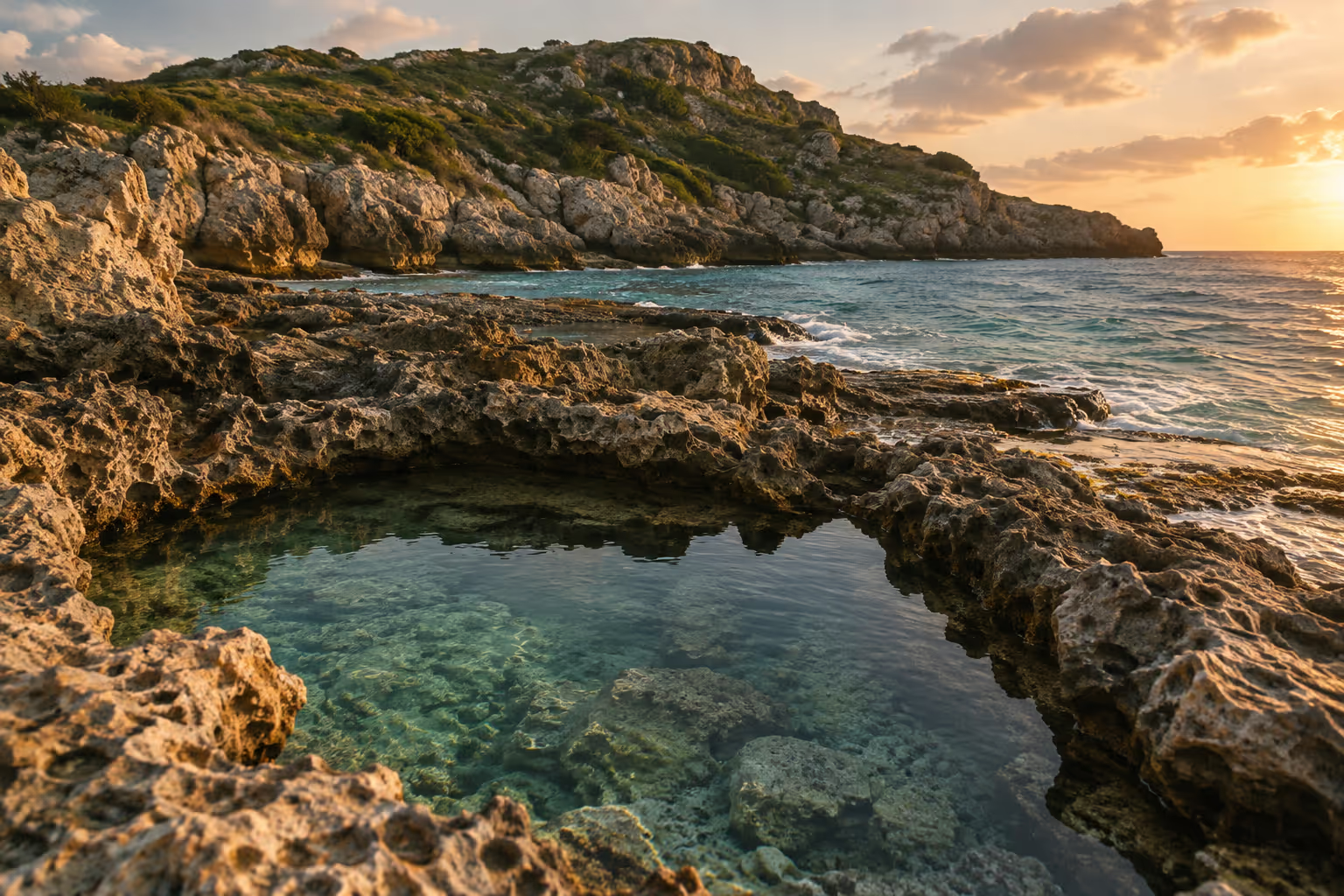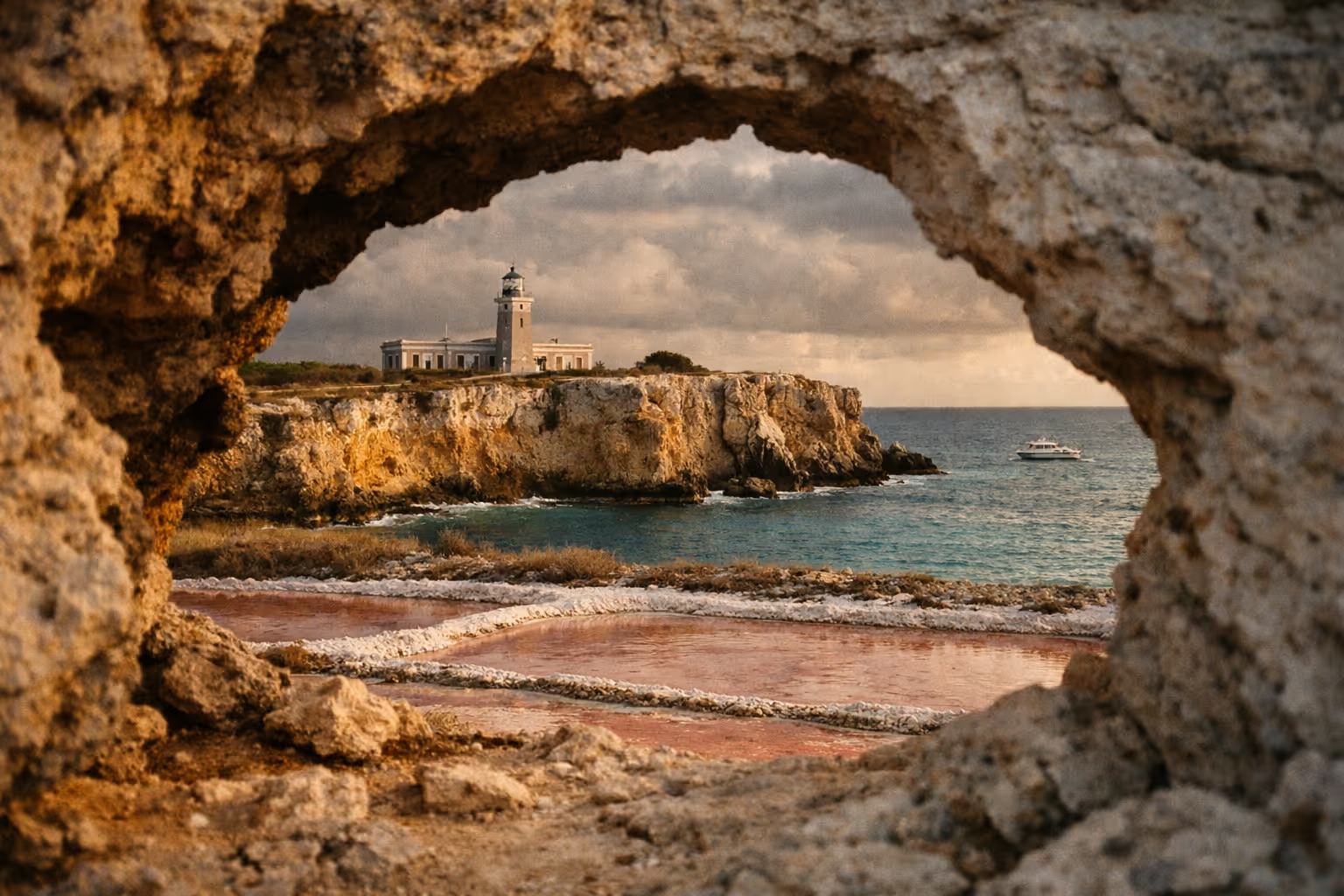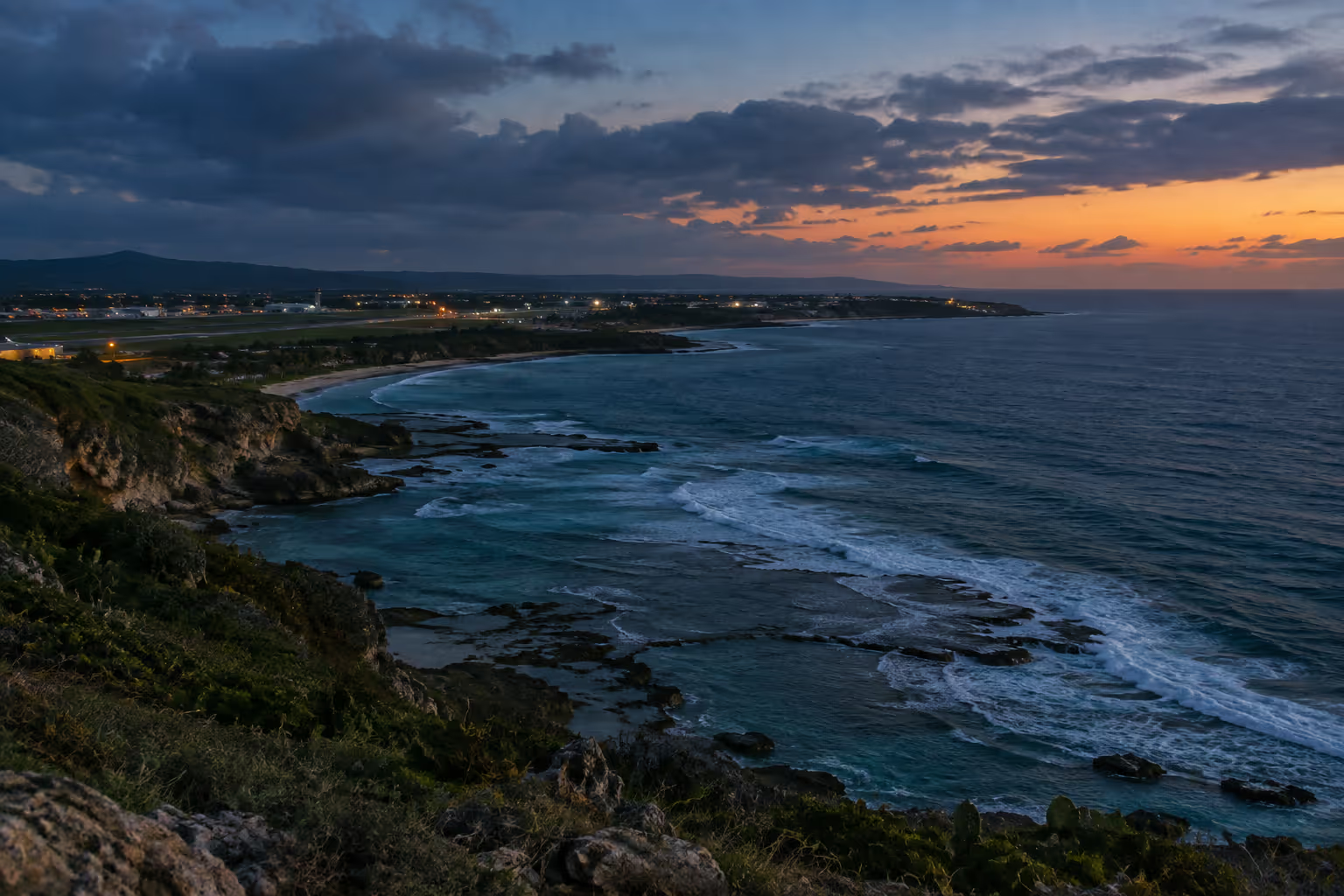
Most things to do in Aguadilla come down to one stretch of coast: Crash Boat Beach for swimming and snorkeling, the Punta Borinquen breaks for surfing, and a short drive to Rincón or Isabela when you want a change of scene. Crash Boat gets most of the attention. The bigger story is the nearly 5 miles (8 km) of Punta Borinquen coastline and its cluster of surf breaks (18). The former Ramey Air Force Base, now the site of the airport (19), still shapes how you arrive and where you spend your time.
✓ Pros
- A single base makes it practical to combine a beach stop with a surf check.
- The coast offers options for both non-surfers and experienced surfers.
- Nearby towns give you alternatives without requiring a cross-island drive.
✗ Cons
- A rental car is the practical way to link the beaches and towns.
- A short visit can be constrained by a seasonal, weekend-only water park and limited beach parking.
- The strongest surf spots are not suitable for casual swimming.
Aguadilla, Puerto Rico: What the City Is Known For
Aguadilla, Puerto Rico is best known for Crash Boat Beach, the Punta Borinquen surf coast, and the former Ramey Air Force Base that now houses Rafael Hernández Airport. The town sits on the island’s northwest coast, with the Atlantic Ocean to the north (20). That position matters. Winter swells from the north and west reach this exposed coast (18), which is why surfers plan whole trips around it.
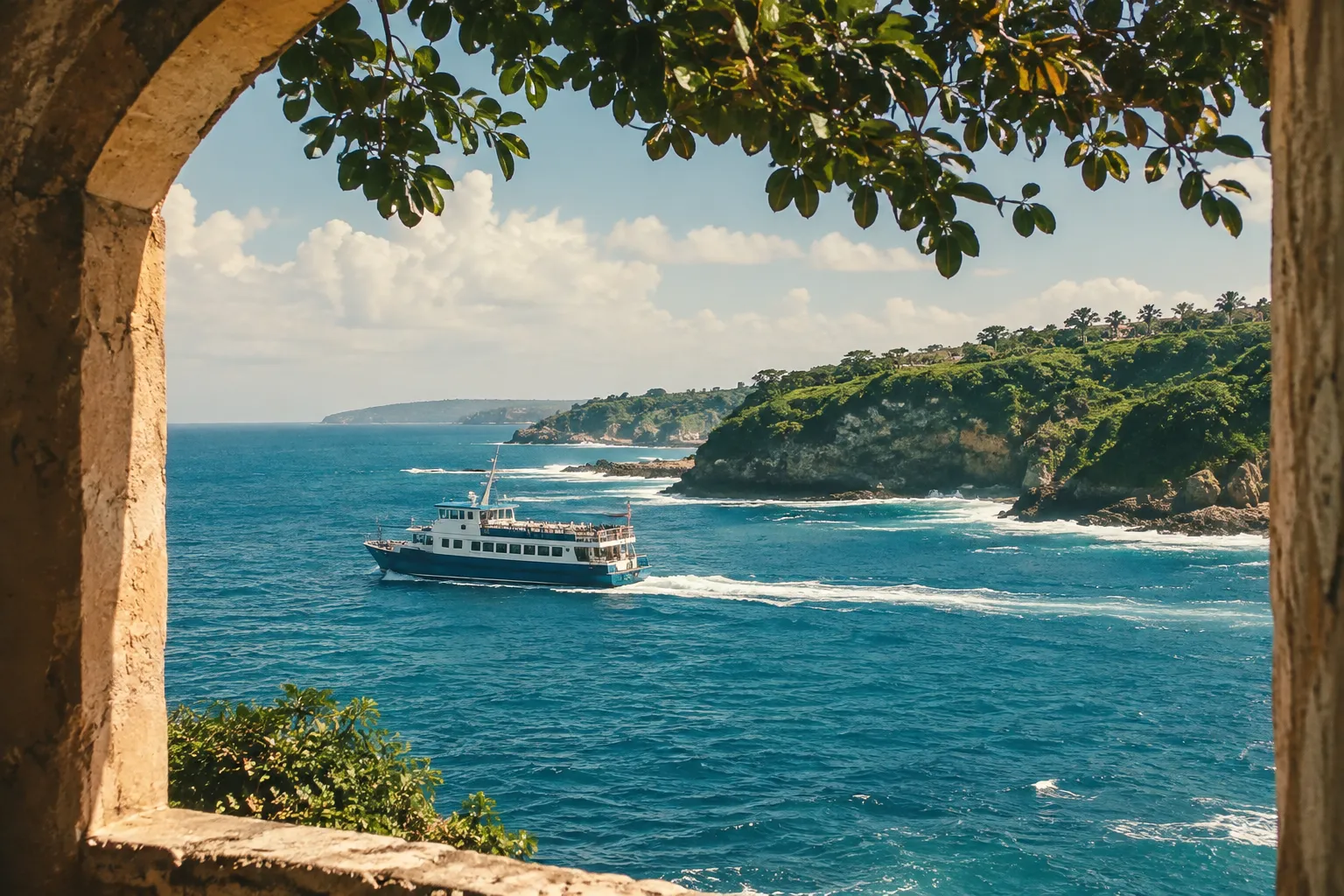
For most visitors, the trip starts at Rafael Hernández International Airport (BQN), on the former base grounds north of the town (19). Flying into BQN instead of San Juan cuts out the cross-island drive, and you land within a short drive of every beach in this guide. You will want a rental car. The beaches, the breaks at Punta Borinquen, and the day-trip towns are spread along coastal roads. You can collect a rental car directly at the airport (2).
The former Ramey base today
The former Ramey Air Force Base grew to about 4,357 acres (about 1,763 hectares) and was deactivated in 1973 (19). It is not an abandoned airfield. The U.S. Army Corps of Engineers says the former base is now home to Rafael Hernández Airport and other governmental facilities and private enterprises (19). Base buildings have new uses: the barracks house the Faro Inn Suites hotel, the former hospital is the Courtyard by Marriott Punta Borinquen Resort, and the grounds also host the University of Puerto Rico at Aguadilla and a Coast Guard air station (20). What you’ll find is a working airport district, not ruins.
A note on the Aguadilla incident. If you searched for Aguadilla and landed on UFO forums, that’s the “Aguadilla UFO incident”: thermal-camera footage recorded from a U.S. Customs and Border Protection aircraft near Rafael Hernández Airport on April 26, 2013, and released in September 2023. Skeptics have proposed Chinese lanterns, drones, birds, or balloons as explanations (20). It’s a curiosity tied to the airport’s location, not a visitor attraction, and nothing about it affects planning a trip here.
Why Aguadilla is worth the trip
Aguadilla is worth visiting if your trip centers on beaches and surf. It is a weaker pick if you want colonial architecture, nightlife, or a walkable historic core. Old San Juan does those better. What Aguadilla does well is range. Crash Boat handles swimming, snorkeling, and beginner diving (17). Wilderness serves experienced surfers (18). Rincón and Isabela are both within about 30 minutes of the airport (2).
Here are the tradeoffs.
Where Aguadilla works well:
- Crash Boat Beach covers several activities in one spot.
- The Punta Borinquen breaks are close together.
- Short drives reach Rincón and Isabela.
- The airport sits minutes from the beaches.
Where it falls short:
- Beach parking is limited at popular spots.
- Wilderness suits experienced surfers only.
- Las Cascadas Water Park is closed until its planned March 2027 reopening (16), then opens on weekends only (6).
- Crash Boat’s facilities are rustic, with portable bathrooms (23).
Things to Do in Aguadilla: Quick Overview
The main things to do in Aguadilla fall into four groups: beach days at Crash Boat, surfing along Punta Borinquen, the Las Cascadas water park on weekends in season, and day trips to Rincón or Isabela. Pick your group by skill level and by what the ocean is doing that day.
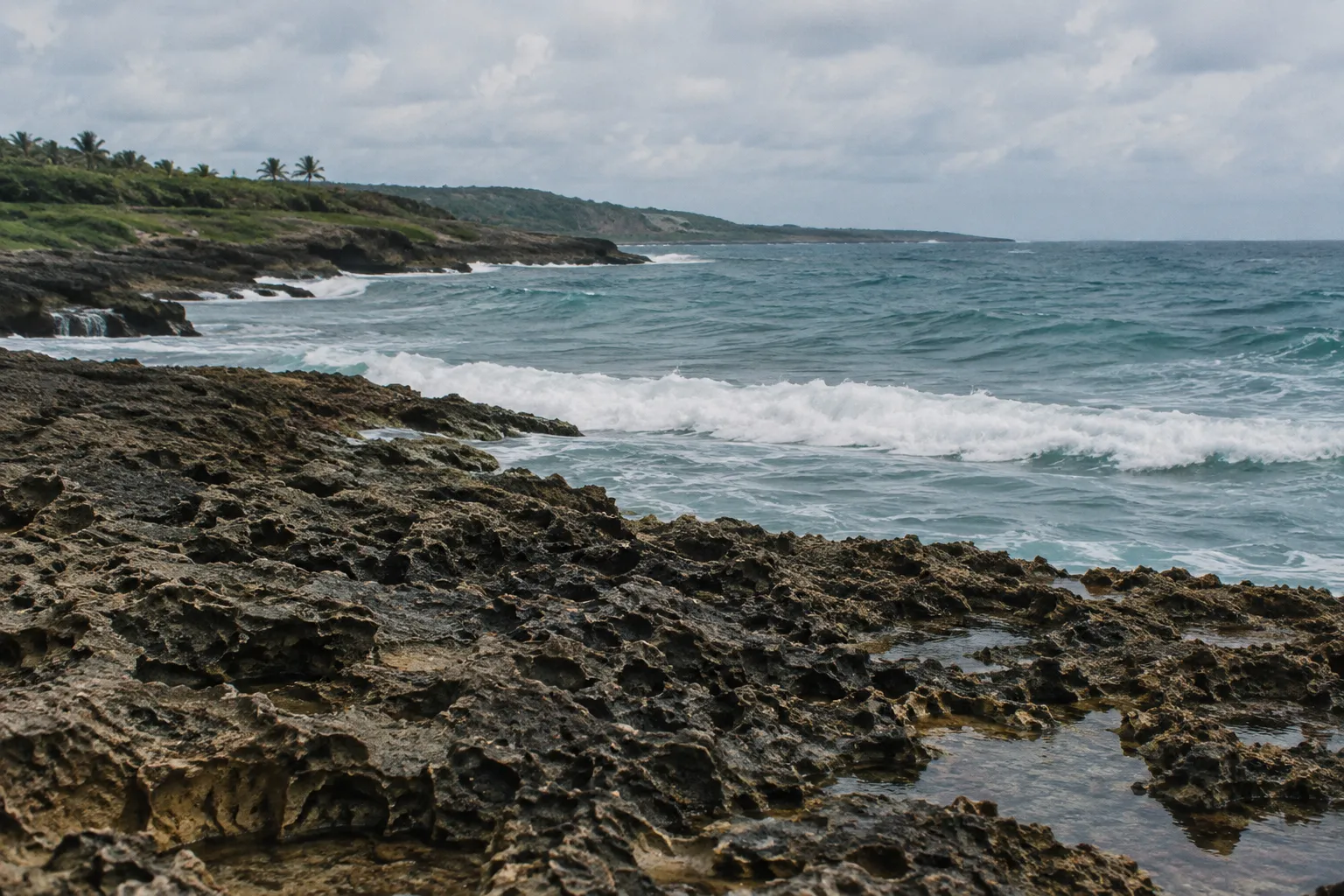
Beaches and water activities. Crash Boat Beach is the default. You can swim, snorkel, and try beginner diving there, and kiosks and food stands line up around the pier (17). Wilderness Beach is a surf break first and a beach second.
Surfing. Punta Borinquen has more than a dozen surf breaks along nearly 5 miles (8 km) of coast (18). Peak season runs October to April. Most breaks here reward intermediate and advanced surfers. Beginners should stick to calmer days and softer spots.
Non-beach option. Las Cascadas Water Park is closed for the fall and winter season and plans to reopen in March 2027 (16). In season it opens Saturdays and Sundays, 9:00 a.m.-5:00 p.m. (6). It works for families or a rest day from salt water, but only if your dates fall in season and include a weekend.
Day trips. Isabela is about 15 minutes from the airport and Rincón 20 to 30 minutes (2). Isabela fits into a spare afternoon. Rincón is better with a fuller day.
If you only have one day, spend the morning at Crash Boat before the parking fills and the afternoon in Isabela. With three days, add a surf session or lesson on the right swell, a Rincón day trip, and Las Cascadas if an in-season weekend falls in the window.
Aguadilla Beaches: Crash Boat, Wilderness, and More
Aguadilla beaches split into two types: Crash Boat for swimming, snorkeling, and beginner diving, and Wilderness for experienced surfers who don’t need facilities. Choosing the wrong one isn’t a minor inconvenience. Wilderness’s powerful reef-break surf is no place for a casual swim, and Crash Boat on a crowded summer weekend is no place to look for solitude.
Crash Boat Beach: swimming, snorkeling, and beginner diving
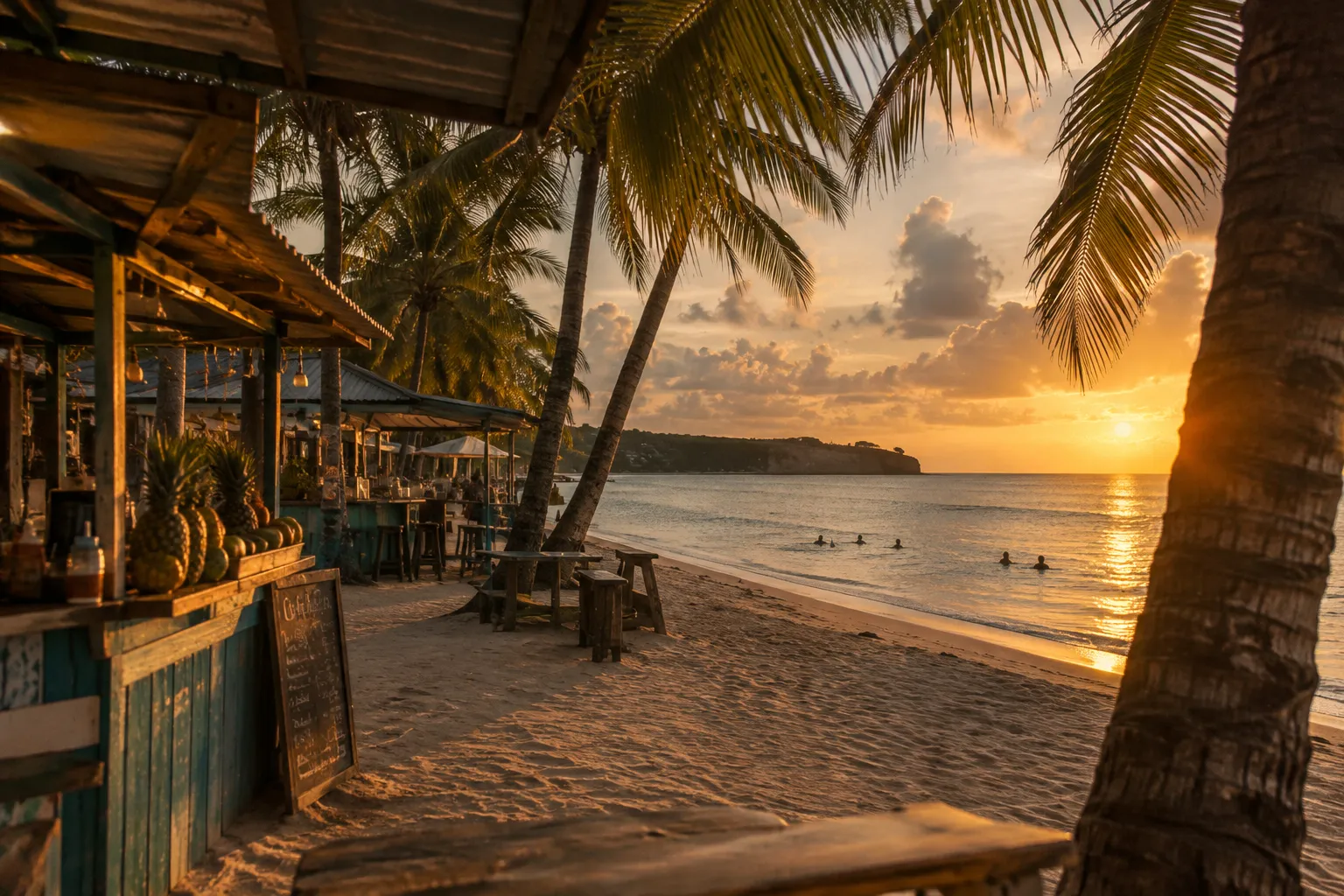
Crash Boat Beach is Aguadilla’s most versatile beach. Puerto Rico’s official tourism site describes it as a beginner diving spot that suits snorkeling, swimming, and even surfing during the summer (17). It’s on PR-485, Aguadilla, Puerto Rico 00603, and the official tourism listing gives the contact number as 787-891-1005 (17).
The name comes from the base era: the pier was originally used by the U.S. Air Force as a rescue station for boats and aircraft from Ramey Air Force Base (23). The pier is still the beach’s focal point. Kiosks and food stands line up around it (17), so you can spend a full day here without packing lunch. The pier also marks where snorkelers and jumpers gather, and the water near it has stronger currents (23), which matters for safety (covered below).
That popularity is the main drawback. The beach gets crowded on weekends, holidays, and during summer, while weekdays are quieter (23).
Parking is limited. Crash Boat has both free and paid parking nearby, and it fills up quickly on weekends (23). Arrive early on weekends, or expect to circle and walk.
Good fits for Crash Boat:
- Swimmers who want calmer water on a low-surf day
- Snorkelers, especially around the pier structure when conditions are flat
- First-time divers on a guided introductory dive
- Groups who want food on site
- Summer surfers, since the tourism board describes Crash Boat as a summer surf option
Wilderness Beach: for experienced surfers only
Wilderness Beach is a surf break, not a swimming beach. Discover Puerto Rico lists it among the island’s best breaks for experienced surfers, and groups it with the spots known for larger, more powerful waves and reef breaks (18). It is not a beginner spot. When a solid winter swell lines up, it’s one of the more demanding waves on the Punta Borinquen stretch.
The reef sets the rules. A wipeout here means reef or rock, not sand, so this is a wave for surfers who already read lineups well and can control where they fall. If you’re newer to surfing or unsure about the day’s size, watch from shore first or pick a softer break.
Plan to be self-sufficient. Bring more water than you think you need, plus sun protection, food, a basic first-aid kit for reef and rock cuts, and whatever you need to change out of a wet suit. Leave valuables at your lodging instead of in a visible spot in the car.
If you’re traveling with non-surfers, Wilderness makes a poor shared beach day. Drop the surfers off, then take everyone else to Crash Boat.
Choosing between them on the day
The swell usually decides. On a flat or small day, Crash Boat is the better beach for almost everyone, and Wilderness may not be worth the trip for surfers. On a solid north or northwest swell in winter, Wilderness comes alive, and swimmers should treat every Aguadilla beach with more caution, Crash Boat included. Check the forecast (see the safety section) before you commit a day to either.
Aguadilla Surfing: Where and When to Catch a Wave
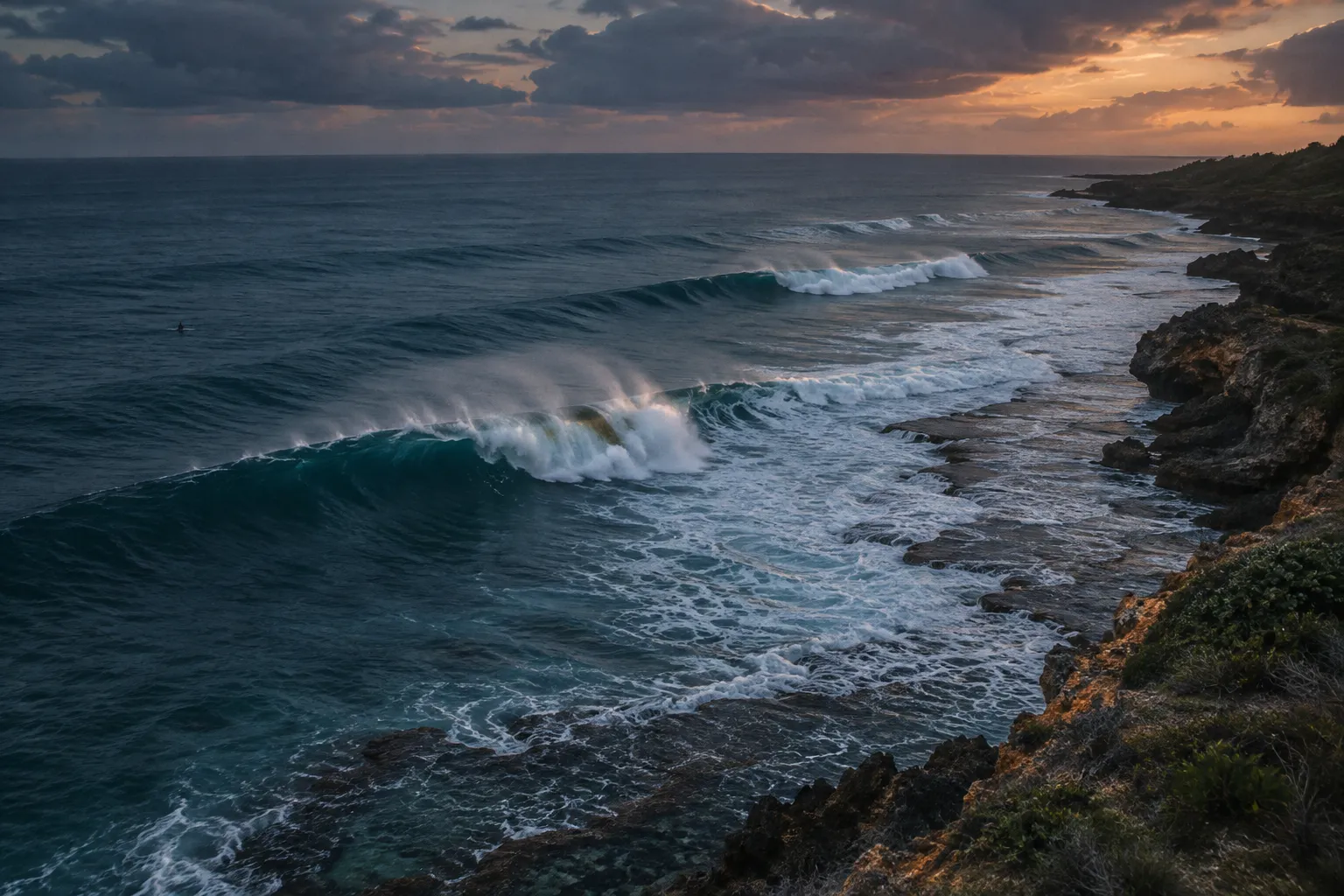
Aguadilla surfing centers on Punta Borinquen, where nearly 5 miles (8 km) of coast from Crash Boat to Surfer’s Beach hold more than a dozen surf breaks (18). Peak season runs October to April. The mix of reef, rock, and point setups covers intermediate to expert surfers well. Beginners have fewer options and should match the day’s conditions carefully.
Punta Borinquen Surf Breaks
According to Discover Puerto Rico, Punta Borinquen became the Caribbean’s first World Surfing Reserve in 2018, a designation that recognizes its waves and coastal environment (18). For you as a visitor, the point is a dense cluster of breaks in a short distance. You can check two or three spots in a morning and surf whichever is working.
Two breaks anchor this guide:
- Wilderness: larger, more powerful reef-break surf. For experienced surfers.
- Crash Boat: the tourism board’s pick for summer surfing (17), with the added advantage of food and a crowd nearby.
Other names you’ll hear from local surf shops and in the lineup include Surfer’s Beach, Table Tops, Survival Beach, Wishing Well, Manglito, and Gas Chambers (18). Ask a local shop which spot suits your level on that day’s swell. Breaks along this coast change character quickly with swell direction, and shop staff know what’s working that morning.
Matching break to ability:
- Beginners: take a lesson, stay on small days, and avoid reef and rock breaks. Summer, when swells are generally calmer, is the easier season to start, and Discover Puerto Rico names Surfer’s Beach as Aguadilla’s beginner pick (18).
- Intermediate surfers: shoulder season, with its smaller waves and fewer crowds, is your window.
- Advanced surfers: plan for the October-April peak and chase north and northwest swells to Wilderness, Gas Chambers, and the reserve’s heavier points.
Best season for surfing (and the worst time to go)
Puerto Rico’s tourism board identifies October through April as the most consistent surf season, when swells from the north and west reach the island’s exposed beaches (18). That’s the best time to visit Aguadilla if surf is the point of the trip.
September-October and April-May are shoulder periods with smaller waves and fewer crowds (18). These months suit intermediate surfers who want rideable waves without winter size or packed lineups. Late April into May is also a reasonable compromise for a mixed group of surfers and swimmers.
The worst time to go to Puerto Rico depends on your goal:
- Surfers: summer is generally calmer (18), so it’s the weakest season for north-coast surf. Crash Boat can still produce summer waves, but you won’t get Wilderness at its best.
- Anyone: the Atlantic hurricane season runs June 1 to November 30, with most activity between mid-August and mid-October (21). That doesn’t make the island unvisitable, but it does raise the odds of disrupted plans and dangerous surf. Buy travel insurance that covers weather if you book in those months.
- Crowd-averse travelers: weekends, holidays, and summer bring the biggest crowds to Crash Boat, and parking gets harder (23).
For weather and crowds across the rest of the island, see our guide to the best time to visit Puerto Rico. Even in peak season, one day can be too big or messy to surf. That’s why the daily forecast matters more than the calendar.
Beyond the Beach: Las Cascadas Water Park and the Ramey Base Grounds
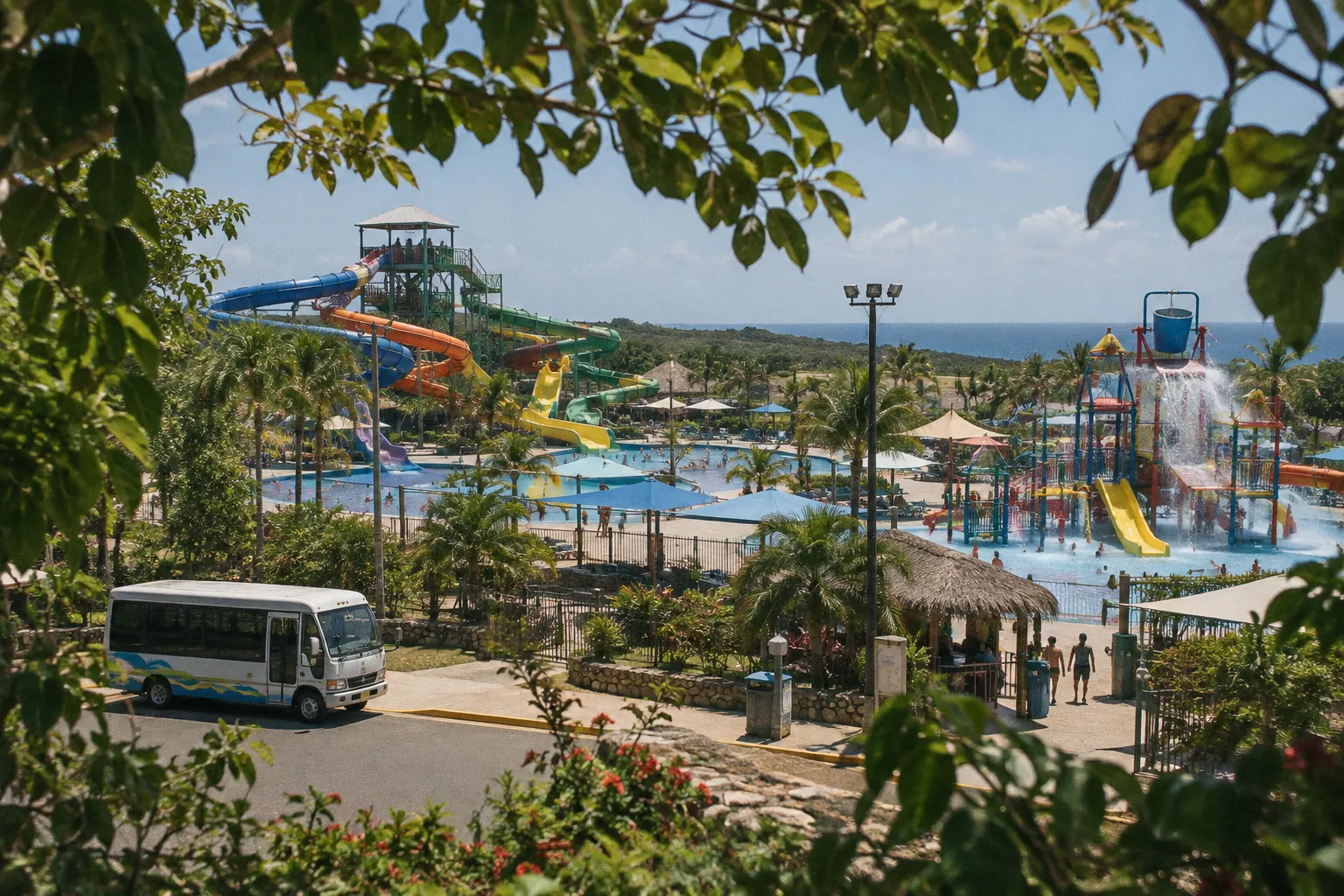
Las Cascadas Water Park is Aguadilla’s main non-beach family attraction, but check the season first. As of October 2026, the park says it is closed for the fall and winter and plans to reopen in March 2027 (16). In season, it opens Saturdays and Sundays, 9:00 a.m.-5:00 p.m. (6). The former Ramey base grounds offer a quieter option any day of the week.
Las Cascadas Water Park: season, hours, and what’s included
Las Cascadas describes itself as one of the largest water parks in the Caribbean, sitting in the heart of Aguadilla (6). Its site lists:
- Water-park attractions (a full list is on the park’s attractions page)
- Ample parking
- A food concession
- An ice-cream shop
- Live music
- Group options and birthday party bookings
- Online ticket sales (6)
The schedule is the planning constraint that trips people up. Between the fall closure and the March 2027 reopening the park has announced, there are no opening days at all (16). Once the season resumes, the park opens on weekends only (6), so on a Monday-to-Friday trip Las Cascadas isn’t an option. Keep the weekdays for beaches and a weekend day for the park.
Booking mechanics: tickets can be bought online through the park’s site (6). The homepage didn’t post a ticket price when checked in October 2026, so check the ticket page for current rates before you go. Buying ahead also saves time at the gate on a busy weekend.
Verify the season and hours before you drive over. Older third-party listings may show outdated days or times. The park’s own site posts its current season and hours, including closure notices on its announcements page (16). Check it the morning you plan to go, especially around holidays.
For families with young kids who aren’t strong ocean swimmers, Las Cascadas is often the better choice on a high-surf weekend in season, when the beaches are less safe for casual swimming.
Exploring the former Ramey base grounds
The former Ramey base grounds are worth a slow drive or a walk if you’re curious about the town’s history. Set expectations: this is not a preserved military site or an abandoned-base photo tour. The 4,357-acre footprint, deactivated in 1973, now holds Rafael Hernández Airport along with other governmental facilities and private enterprises (19). Much of it is in active use.
What you’ll notice is how the base was repurposed. Former barracks and the old Officer’s Club now serve as a hotel and a conference center, and the area also holds a university campus, the Ramey Skating Park, a butterfly farm, and the Ramey Shopping Center (20). Respect posted signs and restricted areas around the airport and any active facilities. Access varies by property, and “former base” doesn’t mean open ground.
Skip it if you’re short on time. It’s a good fill for a flat surf day or the hours before an afternoon flight out of BQN, since you’re already next to the airport.
Rincón Day Trip (and an Isabela Add-On)
A Rincón day trip from Aguadilla Airport covers about 20 km (12 miles), a 20- to 30-minute drive. Isabela is closer, at about 15 km (9 miles) and 15 minutes (2). Pick Isabela for a short window and Rincón when you have most of a day.
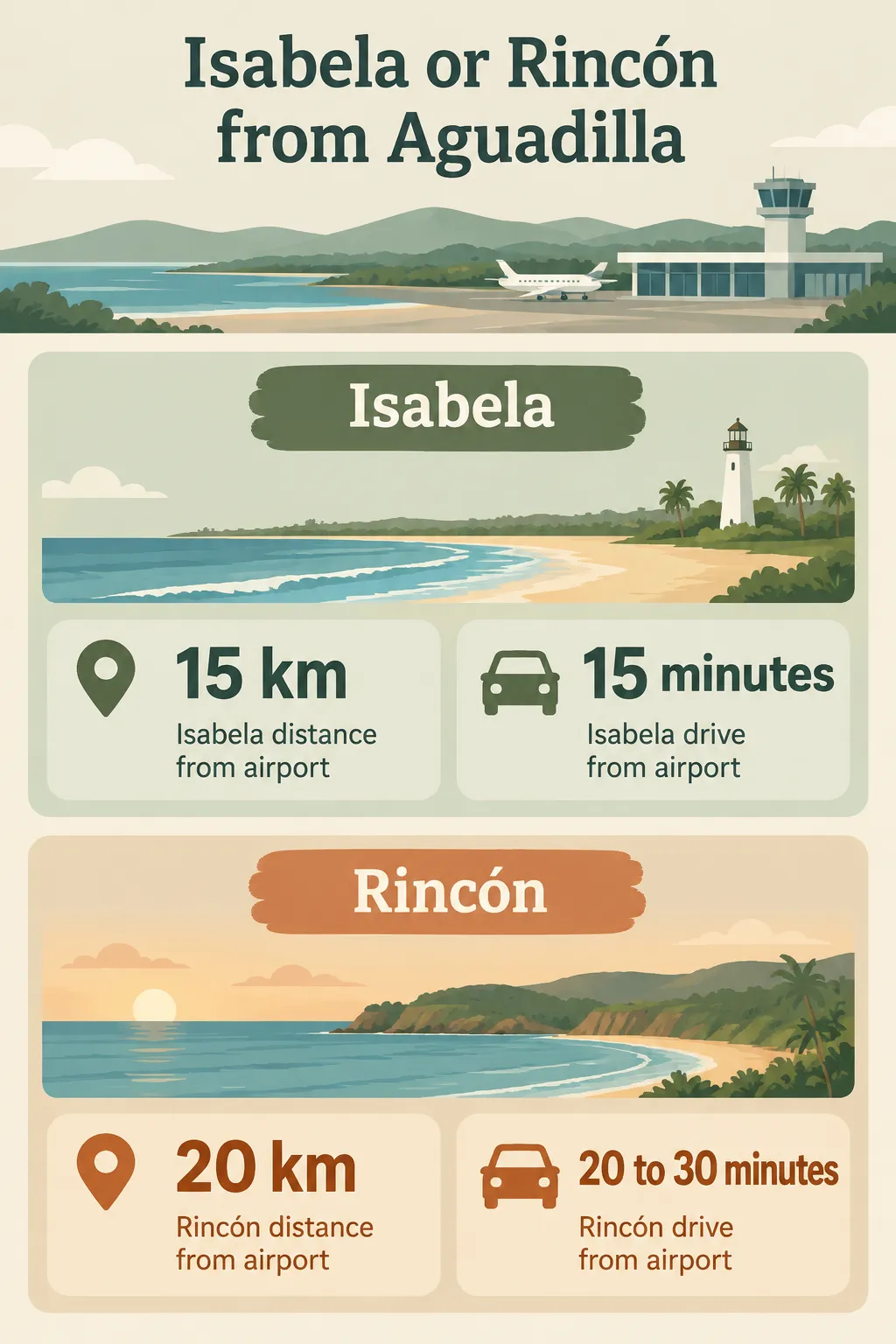 The article places Isabela about 15 km and 15 minutes from Aguadilla Airport, and Rincón about 20 km and 20 to 30 minutes away.
Rincón: distance and what’s there
Rincón sits south of Aguadilla on the west coast, about 20 km (12 miles) from Aguadilla Airport, a 20- to 30-minute drive depending on traffic and stops (2). Allow extra time on weekends and during the winter surf season, when the coastal roads carry more cars.
Rincón is the west coast’s best-known surf town, and it earns a full day rather than a quick look. On Puerto Rico’s westernmost point, it pairs a strong surf culture with golden sunsets, and its breaks include Domes, María’s, Tres Palmas, and Sandy Beach (18). Rincón is also the area’s standard base for whale watching: humpback whales pass offshore from January to March (22), and the coastline here gives you a good vantage point.
Worth the detour if:
- You surf and want to sample a second concentration of breaks
- You want a west-facing sunset beach
- You’re visiting in whale season
Skip if short on time:
- You have under half a day free. The round trip plus parking and a meal eats more time than the drive suggests.
Isabela: the faster add-on
Isabela is about 15 km (9 miles) from Aguadilla Airport, roughly a 15-minute drive (2). That makes it the easy choice when you only have an hour or two to spare. You can fit Isabela around a morning at Crash Boat or before an evening flight without turning your day into a driving day.
Isabela sits east of Aguadilla along the north coast (20), so it’s a different kind of coast from Rincón’s west-facing beaches. Use it for a change of beach, a meal, or a look at another stretch of the northwest coast. It’s the lower-commitment option.
Doing both in one loop
A same-day loop covering Isabela and Rincón from Aguadilla Airport is feasible if you start early. Both fall within roughly 15 to 30 minutes of the airport (2). Here’s how the day works:
- Early morning: Isabela (about 15 minutes from the airport) for a first beach stop (2).
- Midday: back through Aguadilla, with an optional lunch stop at the Crash Boat kiosks if parking allows.
- Afternoon: continue south to Rincón (20 to 30 minutes from the airport) (2).
- Evening: stay in Rincón for sunset before driving back to Aguadilla in the dark.
The loop works because Aguadilla sits between the two towns. Pad every leg with buffer time, since the drive figures don’t account for weekend traffic or the stops you’ll inevitably make.
How the three options compare
The table below lays out the tradeoff: no drive at all versus a short hop versus a full day out, and what each one buys you.
Choose Your Day Trip from Aguadilla
| Aguadilla | Isabela | Rincón | |
|---|---|---|---|
| Drive from Aguadilla Airport | No drive needed for local activities | About 15 minutes | About 20 to 30 minutes |
| Best fit | No-travel day | Short add-on | Fuller day trip |
| What sets it apart | Crash Boat, Wilderness, or the water park in season | A change of beach on the north coast | West-facing beaches and winter whale watching |
Beach Safety and Practical Tips
Beach safety in Aguadilla starts with the National Weather Service’s daily surf zone forecast, because season alone doesn’t tell you whether a given day is safe for swimming. The forecast’s Northwest PR zone covers the beaches of Aguadilla, Camuy, Isabela, and Quebradillas, with a rip-current risk and a surf height for each day (15). Conditions change daily, so check the current forecast every morning you plan a beach day.
Read the rip-current categories correctly. The NWS uses Low, Moderate, and High risk. Even at Low risk, life-threatening rip currents often occur near groins, jetties, reefs, and piers (15). That caveat applies directly to Crash Boat, where the pier is the beach’s main feature and the water near it has stronger currents (23). Swim away from the pier structure unless you’re a confident ocean swimmer on a calm day. At High risk, life-threatening rip currents are likely in the surf zone (15): stay out of the water or stay in the shallows.
Practical checks before you go:
- Forecast: check the NWS surf zone forecast for northwest Puerto Rico. It lists rip-current risk and surf height, and it’s updated daily.
- Parking: arrive early at Crash Boat. Free and paid parking both fill quickly on weekends.
- Supplies for Wilderness: bring water, food, sun protection, and first aid, and plan to be self-sufficient.
- Supplies for Crash Boat: food stands help, but facilities are rustic, with portable bathrooms. Bring hand sanitizer, a towel, and a jug of fresh water to rinse off at the car.
- Surf level: match the break to your skill. The reef at Wilderness is unforgiving.
- Valuables: keep them out of sight in the car, or leave them at your lodging.
A note on cost: Crash Boat Beach is free to enter (23), and a beach day there with food-stand meals is the cheapest option on this list. A water-park day in season or a guided surf lesson costs more. Check operators directly for current rates.
Frequently Asked Questions
- Is Aguadilla worth visiting?
- Aguadilla suits travelers prioritizing coastal activities over a historic city base. For a first Puerto Rico trip, pair it with another region if architecture and nightlife matter.
- What is Aguadilla, Puerto Rico known for?
- Aguadilla is known for its surf coastline and beach scene, with the former Ramey base shaping the town's layout and airport access.
- When's the worst time to go to Puerto Rico?
- For a surf-focused Aguadilla trip, summer is the least reliable season for north-coast waves. Travelers worried about storms should weigh hurricane-season disruption risk.
- What is the Aguadilla incident?
- The Aguadilla incident is a 2013 aerial video that became associated with UFO claims; it is not a landmark or visitor attraction.
- Where can you surf in Aguadilla?
- Punta Borinquen is Aguadilla's main surf area. Beginners should seek a lesson and a suitable small-wave day rather than choosing a break by name alone.
- Does Aguadilla have a bioluminescent bay?
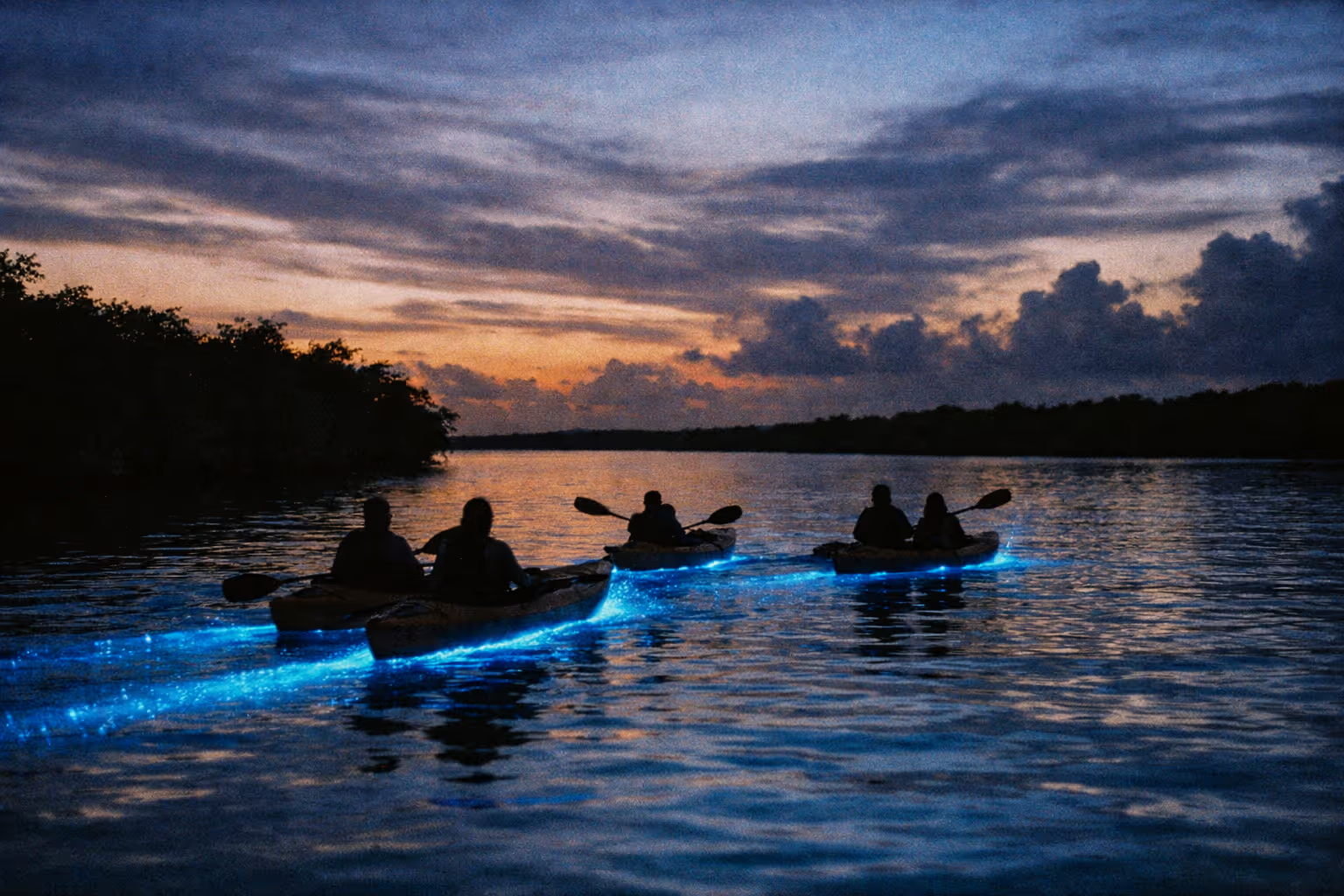
- No. Puerto Rico's three bioluminescent bays are Laguna Grande in Fajardo, Mosquito Bay on Vieques, and La Parguera in Lajas, so a bio-bay outing needs separate travel planning.
- When is the best time to see whales near Aguadilla?
- Winter, roughly January through March, is humpback whale season off Rincón on Puerto Rico's west coast. Treat sightings as wildlife viewing, not a guaranteed part of a day trip.
Planning Your Aguadilla Days
The decision logic is short. Go to Crash Boat Beach for swimming, snorkeling, and beginner diving, and get there early for parking. Save Wilderness for experienced surfers on a solid winter swell, and pack everything you need. Use Isabela, about 15 minutes away, as a quick add-on. Give Rincón, 20 to 30 minutes away (2), a fuller day, especially in winter whale season. Check Las Cascadas’ season first: it plans to reopen in March 2027 (16), then opens Saturdays and Sundays, 9:00 a.m.-5:00 p.m. (6).
Before you head out each morning, do two things. Check the National Weather Service surf zone forecast for northwest Puerto Rico, and remember that rips often form near piers even on low-risk days (15). If a weekend water-park visit is on the list, confirm Las Cascadas’ current season and hours on its own site (16). If you’re planning a surf trip, book for the October-April season (18).