Garden of the Gods charges nothing at the gate, but its Visitor Center lot still fills during summer peak hours and holidays. Entry to this Colorado Springs park and its Visitor & Nature Center is free (5). What takes planning is parking, choosing a trail that fits your time and legs, and knowing which rocks you’re allowed to climb. This guide covers all of it: the short trails, Balanced Rock, the driving loop, overflow parking and the seasonal shuttle, climbing permits, and how to add Manitou Springs to the same day.
Garden of the Gods, Colorado Springs: Why It Draws Visitors
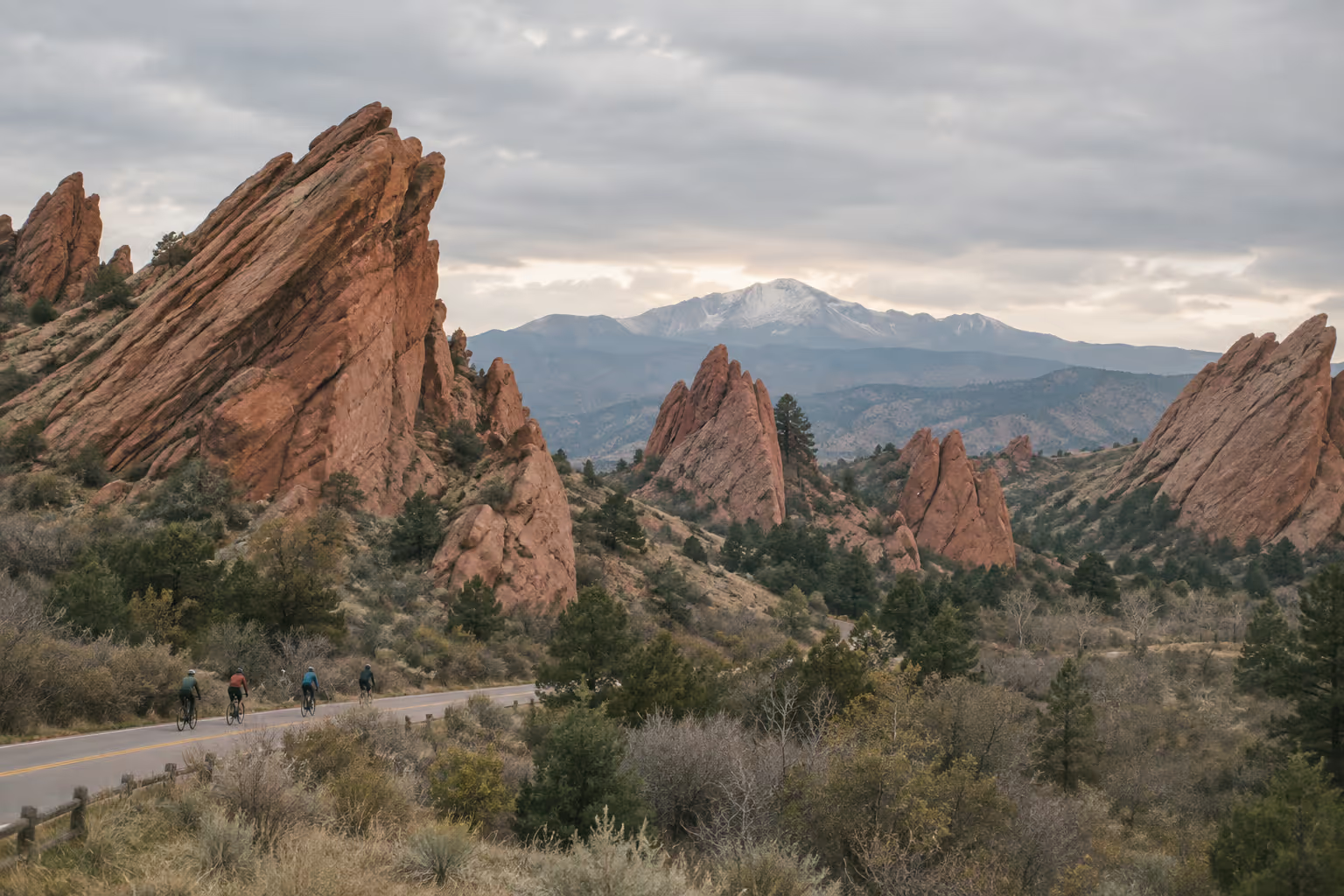
Garden of the Gods in Colorado Springs is a free city park and National Natural Landmark, where tilted red sandstone formations stand at 6,400 feet (1,951 m) with Pikes Peak behind them. It is a city park, not a state or national park (5). That explains why there’s no entrance booth, no annual pass, and no reservation system for general entry.
The free admission dates back more than a century. In 1909, the land was deeded to the City of Colorado Springs on the condition that it remain “forever free” to the public (5). The City’s Parks department, the Visitor & Nature Center, and the Garden of the Gods Foundation now manage and protect it together (5).
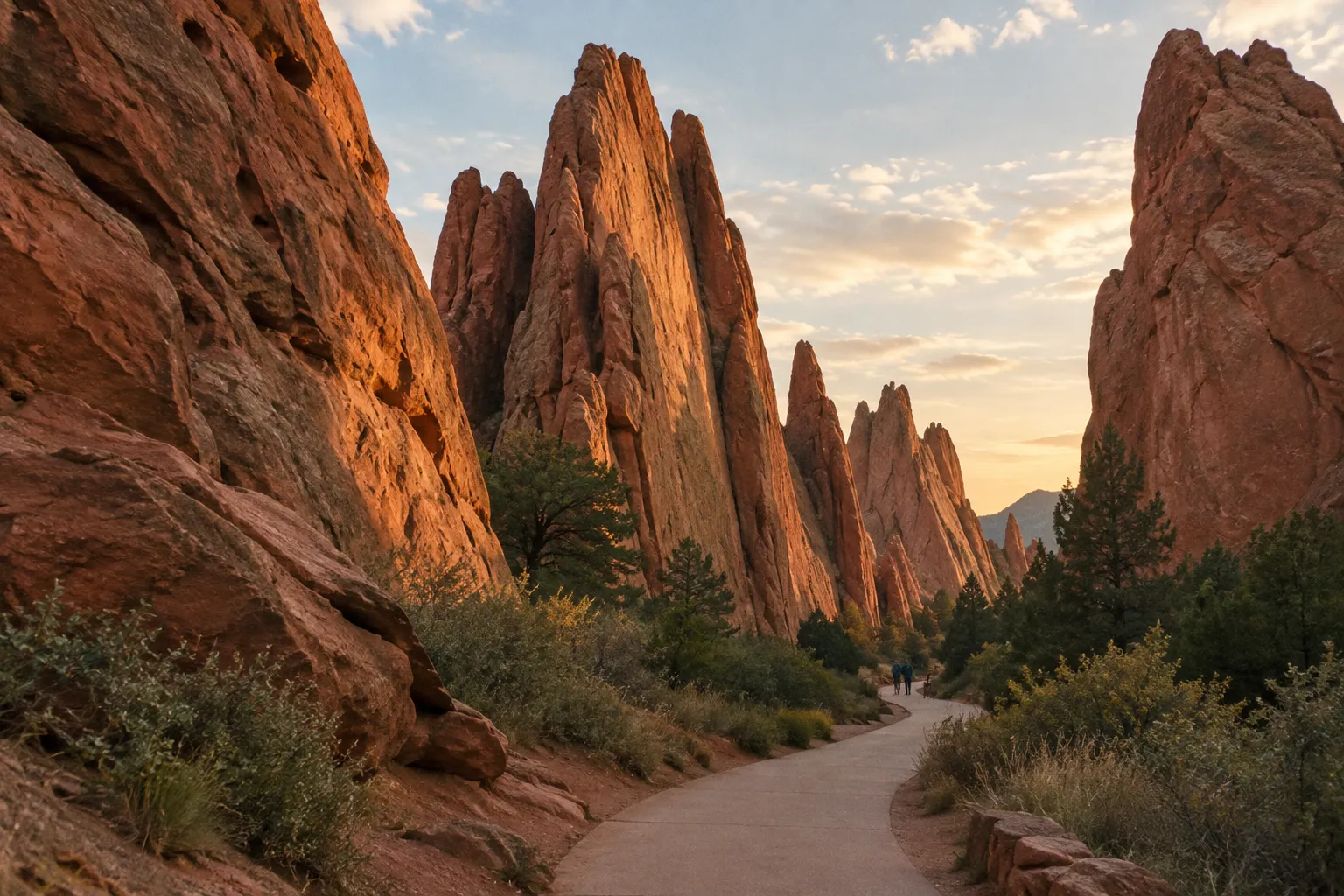
The geology is the main draw. The formations are sedimentary layers left by eroded ancient mountains, sand dune fields, beaches, and shallow seas, laid down horizontally over millions of years and then uplifted by mountain-building events (7). The result, in the park’s own description, is rock that has been “stood-up, pushed around, and slanted” (7). You see layers that formed flat now standing nearly vertical, many of them taller than the trees around them, and you can walk between them on paved trail in under an hour. Few places put that much exposed geology this close to a city’s road grid.
Check you’re planning for the right place. A separate Garden of the Gods Recreation Area sits in Shawnee National Forest in southern Illinois, and the Hawaiian island of Lānaʻi has its own Garden of the Gods rock formations, covered in our guide to the best places to visit in Hawaii. If your search results mention Shawnee, Illinois, or Lānaʻi, you’ve found the wrong park. Everything in this guide refers to the Colorado Springs park off 30th Street, west of I-25 (6).
Is it worth the stop?
Yes, for most travelers coming through Colorado Springs. A one-hour visit gets you among the tallest formations on a paved trail, and a half day lets you add a loop drive and a second trail. Two groups might reasonably skip it. The first is people who only like long, remote backcountry hiking: this is a busy city park with traffic running through it. The second is anyone arriving at midday on a summer weekend who isn’t willing to use overflow parking.
The case for visiting: entry is free, you can drive through in your own car, the paved trails suit almost any fitness level, and Pikes Peak is visible from several spots. The case against: summer crowds, a Visitor Center lot with fewer than 200 spaces (6), the 6,400-foot (1,951 m) elevation if you’ve just flown in from sea level, and a ban on overnight stays (4).
✓ Pros
- No gate or reservation step to build into a visit.
- You can see the park by car or on short walks, so plans can flex with mobility and time.
- Several activities can be combined without leaving the park.
- Manitou Springs gives you an easy nearby option for food and a town stop.
✗ Cons
- Busy periods can turn parking into the main planning problem.
- The altitude can make short climbs feel harder than their distance suggests.
- A car-first visit gives you less close-up time among the formations.
- No overnight stays means you need lodging elsewhere.
Free Admission, Hours, and Visitor Center Basics
As of November 2026, the park opens at 5 a.m. year-round and closes at 9 p.m. from November 1 to April 30 or 10 p.m. from May 1 to October 31 (1). The early opening matters. In summer, arriving soon after the gates open gets you cooler temperatures, easier parking, and softer light on the red rock.
The Visitor & Nature Center keeps shorter hours. It’s open daily, 9 a.m. to 5 p.m. in winter and 9 a.m. to 6 p.m. from Memorial Day weekend through Labor Day weekend (1). It closes on Thanksgiving, Christmas, and New Year’s Day (1). The building has an information desk on the second level where staff can suggest a trail (2). It also has exhibits, a film, a café, and a gift shop (5). If you want trail advice before you start, plan your arrival around the 9 a.m. opening rather than 5 a.m.
The park closes every night. Roads are shut with locked gates, and no overnight stays are allowed (4). Camping isn’t permitted inside the park, though the Visitor & Nature Center keeps a list of campgrounds nearby (4).
Altitude at 6,400 feet
The whole park sits at 6,400 feet (1,951 m) (4). That isn’t extreme, but if you drove up from Denver that morning or flew in from the coast, expect to breathe harder on short climbs than you would at home. Walk slower than you think you need to, drink water before you feel thirsty, and treat the Ridge Trail’s short climb with more respect than its half-mile length suggests.
The city asks visitors to bring plenty of water (13), and the Visitor & Nature Center has water bottle refilling stations (15). Fill up there or before you leave the car, and carry more than seems necessary for a short walk on a hot day.
There’s also a free self-guided audio tour that plays through headphones or your car speakers (2). It works for walking or for the driving loop.
The Best Short Trails for a Quick Visit
The best short Garden of the Gods trails for first-time visitors are the paved 1.5-mile Perkins Central Garden Trail, the 0.5-mile Ridge Trail loop, and the 1-mile Siamese Twins Trail (2). The park has more than 22 miles (35 km) of trails in total, ranging from beginner to advanced and from paved to dirt (2). A first visit doesn’t need most of that.
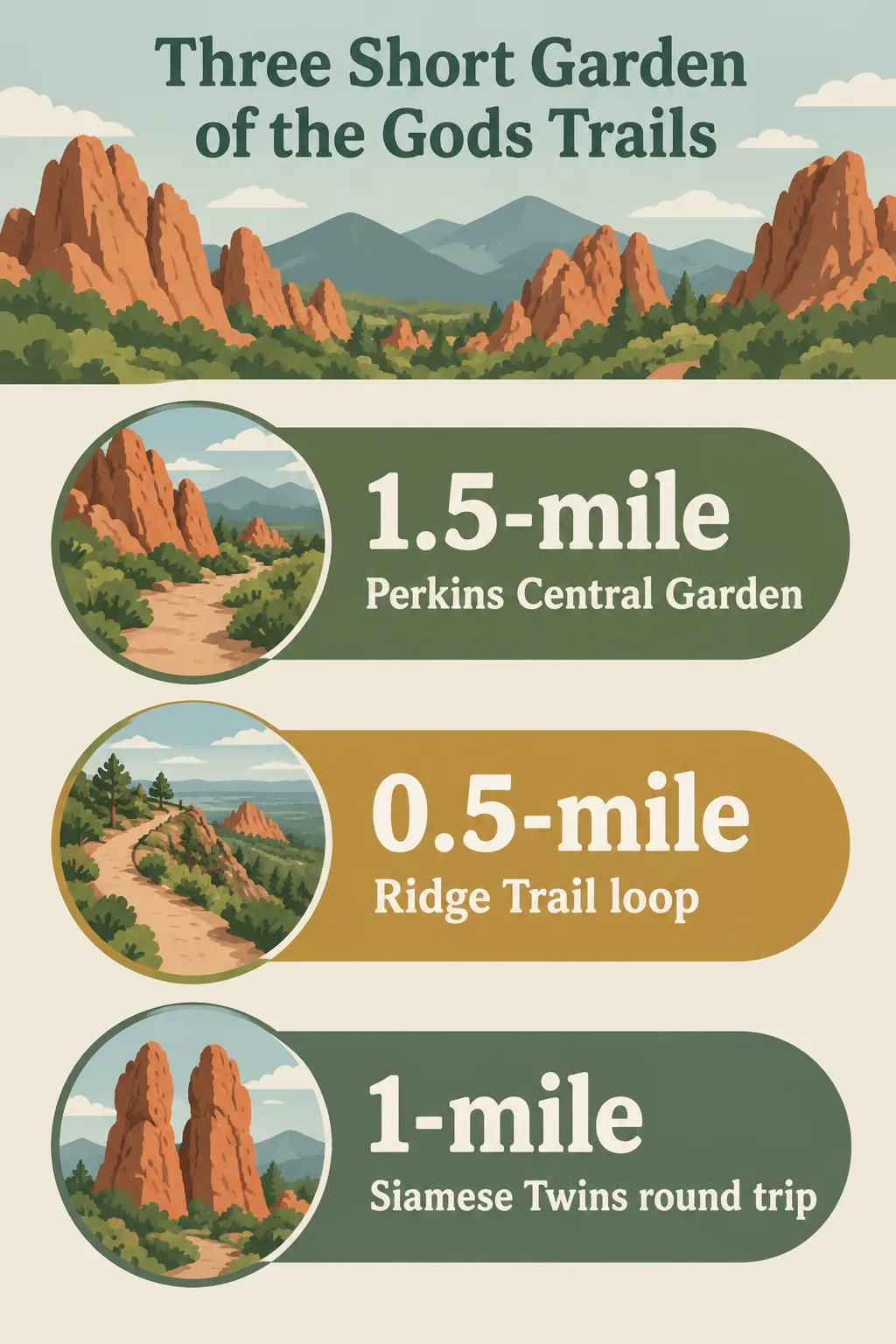 Compare three short Garden of the Gods routes: Perkins Central Garden is 1.5-mile round trip, Ridge Trail is a 0.5-mile loop, and Siamese Twins is 1-mile round trip (2).
Choose by effort and goal:
- If you want the tallest formations with almost no climbing, take Perkins Central Garden.
- If you want more elevation change packed into less distance, take the Ridge Trail.
- If you specifically want to frame Pikes Peak through a rock window, take Siamese Twins (2).
Perkins Central Garden Trail (easy, paved)
Perkins Central Garden Trail is an easy 1.5-mile (2.4 km) round trip with less than 30 feet (9 m) of elevation rise (2), on paved pathway (13). It runs through the heart of the park at the base of the highest rock formations (2). This is where most visitors end up, and that’s because it does its job: you walk among the biggest rocks on a wide paved surface, with nothing you’d call a hill.
Most of the classic close-up photos come from this trail. You walk past the Gateway Rocks and below the fins of the Central Garden. If you’re traveling with kids, older relatives, or a stroller, start here. Expect company.
Water: carry your own, filled at the Visitor & Nature Center’s refill stations (15).
Ridge Trail Loop (moderate, short)
Ridge Trail is a moderate 0.5-mile (0.8 km) loop with less than 100 feet (30 m) of elevation rise (2). The distance is short. The extra climb, at 6,400 feet (1,951 m), is what earns the “moderate” rating. It’s a good add-on if Perkins Central Garden felt too flat and you want to get a bit above the crowd for a different angle on the formations.
Wear shoes with real tread rather than sandals for the short climb among the rocks.
Water: carry your own from the Visitor & Nature Center (15).
Siamese Twins Trail (Pikes Peak view)
Siamese Twins Trail is an easy 1-mile (1.6 km) round trip with less than 150 feet (46 m) of elevation rise (2). It goes to a formation with a natural window that frames Pikes Peak (2). If the Pikes Peak photo is the reason you came, take this trail rather than hoping for a good angle from the Central Garden.
It sits away from the Central Garden, on the park’s west side (14), which makes it a good second walk after Perkins. Pick up a free trail map at the Visitor & Nature Center information desk for the trailhead (2).
Water: carry your own from the Visitor & Nature Center (15).
Gateway/Central Garden route from the overflow lot
If you park in the overflow lot, the Gateway/Central Garden route is a low-grade 2.5-mile (4 km) hike (2). It follows the paved Foothills and Gateway trails and takes in the Central Garden’s shorter loops (2). This is the one to pick when the Visitor Center lot is full and the shuttle isn’t running. You end up walking the highlights anyway, plus the approach.
Short routes compared
Here are the routes side by side:
- Perkins Central Garden Trail: 1.5 miles (2.4 km) round trip, less than 30 ft (9 m) of rise, paved and easy. Best for the tallest formations with minimal effort (2)(13).
- Ridge Trail: 0.5-mile (0.8 km) loop, less than 100 ft (30 m) of rise, moderate. Best for elevation change in a short distance (2).
- Siamese Twins Trail: 1 mile (1.6 km) round trip, less than 150 ft (46 m) of rise, easy. Best for the Pikes Peak window view (2).
- Gateway/Central Garden route: 2.5 miles (4 km), low-grade, paved Foothills and Gateway trails. Best for walking in from overflow parking (2).
- Garden Drive/Juniper Way loop: about 6 miles (9.7 km) by road, hills up to a 15% grade. Best for driving or road cycling (4).
Balanced Rock and Other Must-See Formations
Balanced Rock sits near the south end of Garden of the Gods, close to Parking Lot 16 and the Trading Post (4)(7), and the city notes you can photograph it from its parking lot (13). It’s a large sandstone block resting on a much narrower base, and it looks like it shouldn’t still be standing. You don’t need to hike to it. Park at Lot 16 and walk a short distance.
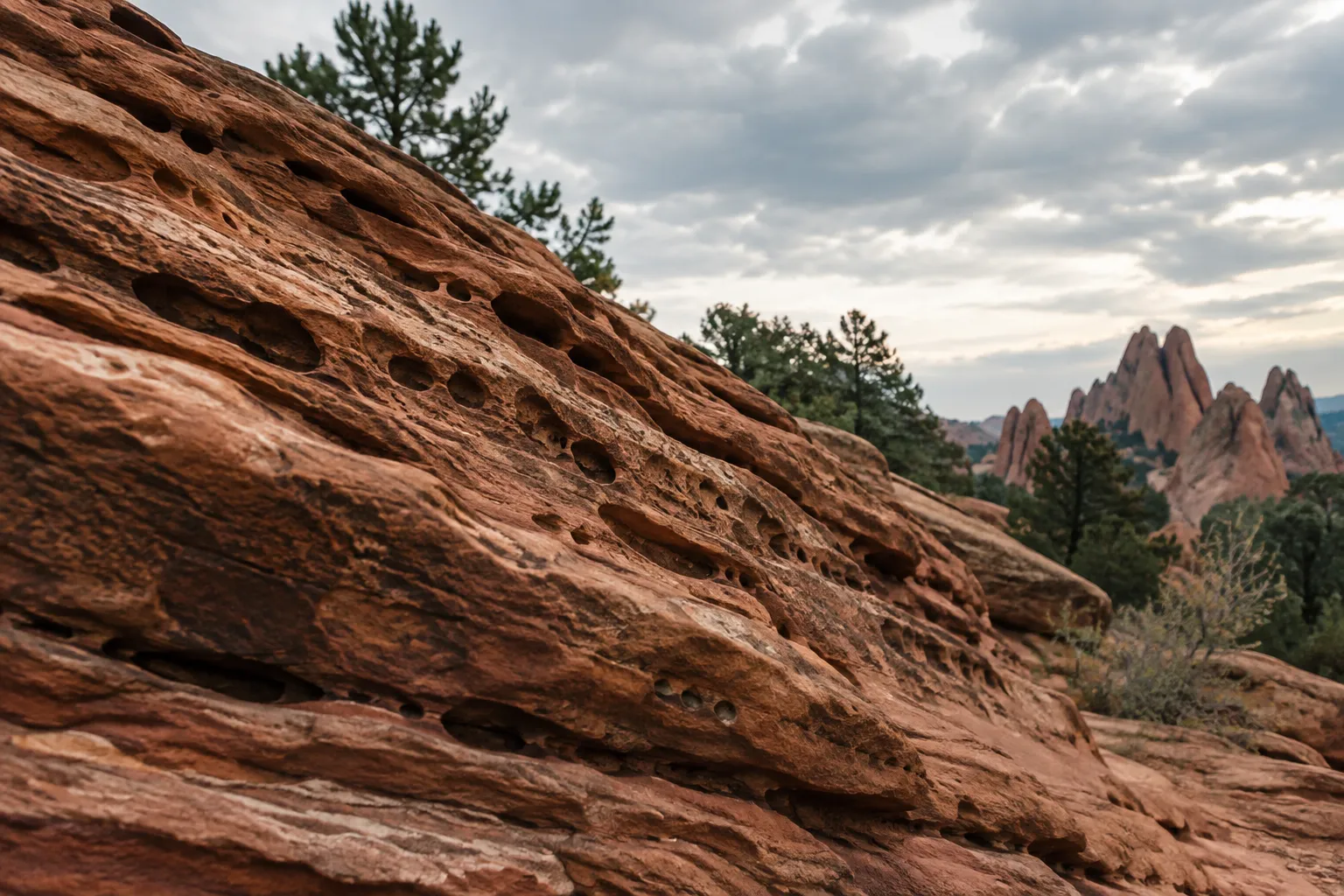
Because Lot 16 also serves the Trading Post, it gets busy in the middle of the day. Arriving early helps here as much as it does at the Visitor Center. Lot 16 is also one of only two lots where large vehicles and trailers may park (4), which matters if you’re in an RV. See the parking section below.
How Erosion Shaped Balanced Rock
Erosion removed the softer rock layers near Balanced Rock’s base and left the harder rock above them, producing the outcrop you see today (7). The park’s formations began as horizontal sediment layers, were uplifted and tilted by mountain building, and were then worn down unevenly (7). Harder layers lasted longer, while weaker ones broke down faster, which is why so many of the formations are narrow fins and odd profiles instead of rounded hills.
Erosion here isn’t only something that happened in the past. It’s why the park asks you to stay on official trails: the soil is sensitive, and a single person going off-trail can cause damage that lasts decades (4). Carving or marking the rock is prohibited, and so is taking rocks or plants (4).
Other named formations worth finding
Beyond Balanced Rock and the Siamese Twins, these are formations the city’s park map names (14):
- North and South Gateway Rocks: the large fins at the entrance to the Central Garden, seen up close from Perkins Central Garden Trail.
- Kissing Camels: a pair of shapes on top of North Gateway Rock that look like two camels touching noses. Look up from the Central Garden.
- Cathedral Spires: thin, pointed fins on the east side of the Central Garden.
- Steamboat Rock: a bulky formation close to Balanced Rock on the park’s south end, so you can see both from the same stop.
Free trail maps are available at the Visitor & Nature Center information desk (2).
Driving Through the Park: The Scenic Loop
Yes, you can drive your own car through Garden of the Gods: the main Garden Drive/Juniper Way loop runs about 6 miles (9.7 km), with no admission fee (4). This is one of the park’s practical strengths. If you have limited mobility, limited time, or bad weather, you can still see the major formations through the windshield and stop at pullouts and lots.
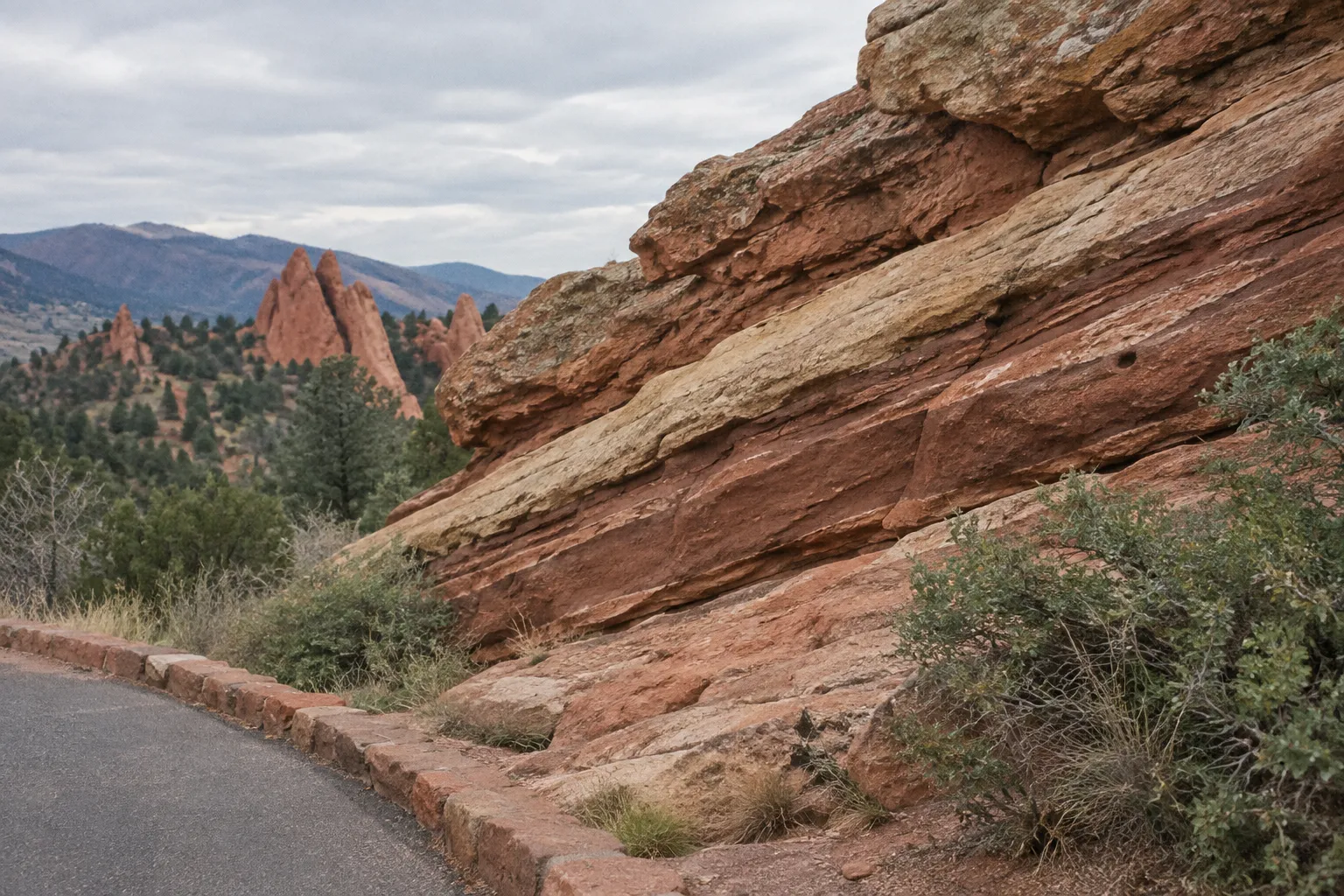
The speed limit is 20 mph (32 km/h) for all traffic, including bicycles and e-bikes (4). Don’t stop or park in pedestrian or bicycle lanes (4). Use a designated lot or pullout instead.
Driving vs. walking: the real difference
The roughly 6-mile (9.7 km) driving loop (4) covers more of the park than the 2.5-mile (4 km) Gateway/Central Garden walking route from the overflow lot (2). Driving gets you around the outer formations, including the south end near Balanced Rock. Walking gets you closer to the Central Garden fins, which you can’t see properly from a car. For a first visit, do both: drive the loop to get oriented, then park and walk Perkins Central Garden.
For cyclists
The one-way roads in the park have paved bike lanes (4). The loop’s hills reach a 15% grade in places, and at 6,400 feet (1,951 m) the park says riders on standard pedal bikes need to be in appropriate physical condition (4). A loop of about 6 miles (9.7 km) can sound like an easy spin. With those grades at that altitude, it isn’t one for unconditioned riders, especially on a rental. Mountain biking is allowed only on designated mountain bike trails, which are shared with hikers and horse riders (4).
Safety note for cyclists: you share narrow roads with drivers who are looking at rocks instead of the road. Ride predictably in the bike lane, wear bright colors, and stay at or under the 20 mph (32 km/h) limit on the descents. The limit applies to you as well (4).
Parking Lots, Overflow, and the Seasonal Shuttle
The Visitor Center lot at Garden of the Gods has fewer than 200 spaces and can fill during summer peak hours and holidays, so the overflow lot across Gateway Road is your backup (6). The Visitor & Nature Center is at 1805 N. 30th Street. Vehicles reach the park through the roundabout on 30th Street by taking the west exit, and walkers reach it through a pedestrian tunnel from the Visitor Center (6).
If you’re driving down from Denver, allow roughly 1.5 hours via I-25, plus extra time at rush hour or on weekends (6). CDOT announced on September 29, 2026, that the new I-25 auxiliary lanes between Fillmore Street and Garden of the Gods Road were substantially complete (12); as of November 2026, the project page still lists overnight double-lane closures through mid-November (3). Check COtrip.org for current lane closures before you drive (3). If you fly into Colorado Springs instead, our Colorado Springs Airport directions cover the routes out of the terminal.
Visitor Center Lot vs. Overflow Lot
If the Visitor Center lot is full, go straight to the overflow lot across Gateway Road (6). With fewer than 200 spaces in the main lot (6), the overflow lot is the reliable fallback, and the walk from it to the Visitor Center is short (8).
From the overflow lot (also called Parking Lot 1), you have three choices:
- Walk the short distance through the pedestrian tunnel up to the Visitor Center (8).
- Ride the free seasonal shuttle (8).
- Walk the 2.5-mile (4 km) Gateway/Central Garden route on paved trails straight into the Central Garden (2).
The free summer shuttle loops between four stops: the Visitor & Nature Center, the Central Garden, Parking Lot 1/Overflow Parking, and the Rock Ledge Ranch Historic Site entrance (8). For the 2026 season, it runs daily 9 a.m. to 5 p.m. on May 23-25 and June 5 to August 23, plus Labor Day weekend, September 4-7 (8). Shuttles leave about every 15 minutes, and the last drop-off at the Visitor & Nature Center is at 5 p.m. (8). The fleet is two ADA-compliant vans (8).
Service is seasonal, not year-round (8): the 2026 season ended with Labor Day weekend on September 7, so for an autumn or winter visit, plan to walk from the overflow lot.
Parking for Large Vehicles and Trailers
Large vehicles and trailers may park in only two lots: Parking Lot 1 (Overflow) or Lot 16 near Balanced Rock and the Trading Post (4). If you’re towing or driving an RV, plan your route around those two lots before you enter the park. Don’t turn onto the one-way loop expecting to find a long space somewhere along the way.
Overflow (Lot 1) is the easier pick if you want the Central Garden trails, since you can walk or take the shuttle from it. Lot 16 suits you better if Balanced Rock and the south end are the priority.
Climbing Permits and Rules for Scrambling on the Rocks
Technical climbing at Garden of the Gods requires a local climbing permit, proper safety gear, and a party of at least two, while scrambling more than 10 feet (3 m) up a formation without gear is illegal (4). That rule catches a lot of casual visitors. It’s not a suggestion or a liability disclaimer. The 10-foot limit is the legal line.
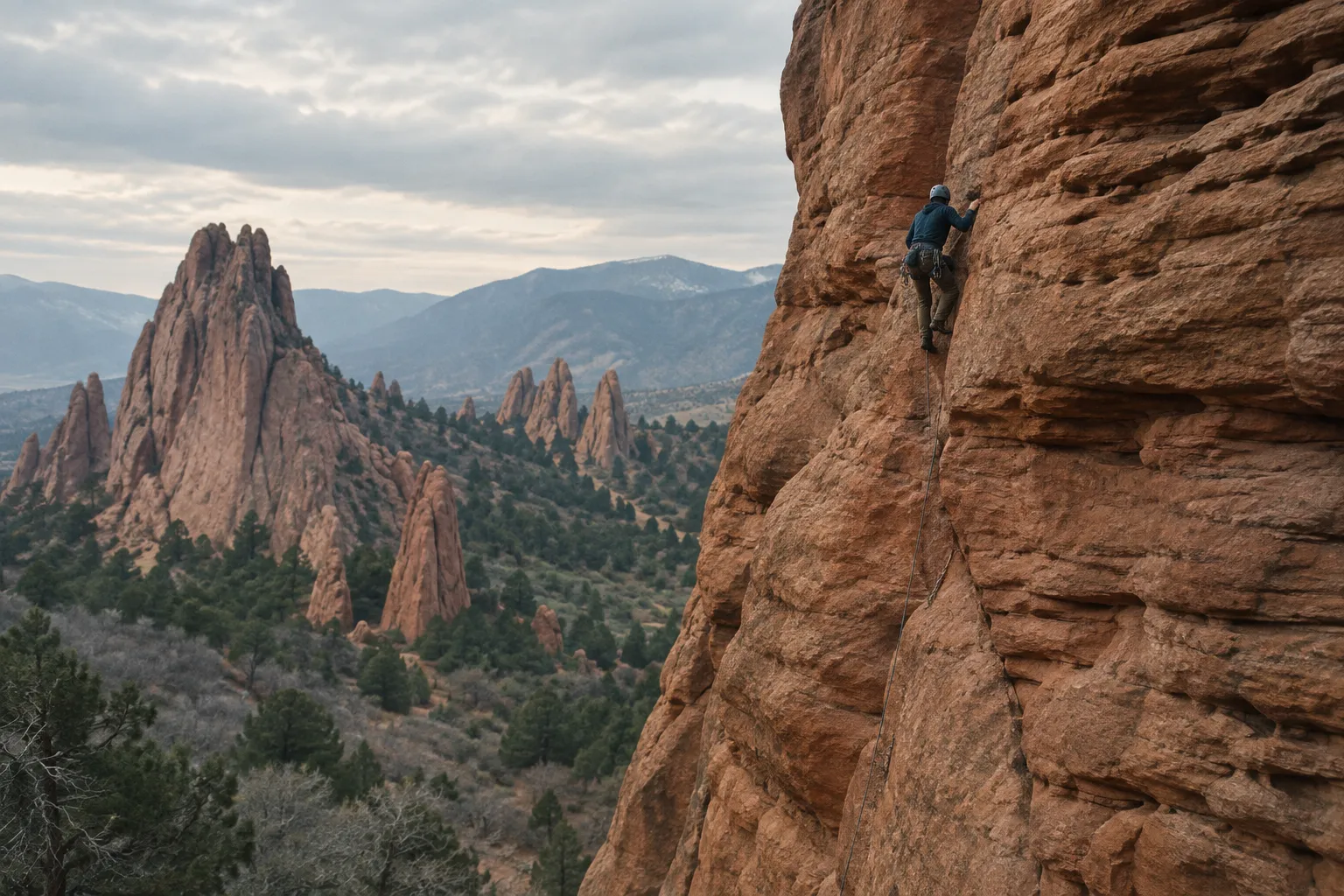
In practice: if you’re in sneakers with no rope, no harness, and no permit, keep your feet within 10 feet (3 m) of a formation’s base. Kids scrambling up the lower slabs need to follow the same limit. “Climbing on the rocks” past that height without proper equipment is against park rules, not just a bad idea (4).
The permit, which you get online, is valid in all Colorado Springs city parks where climbing is allowed (4). Closed routes are marked with signs (4), and as of November 2026, the city lists no seasonal route closures in effect, with closures expected to resume in March 2027 (13).
Safety: wet sandstone. Park rules forbid climbing sandstone when it is wet (4), and the city’s park map warns that serious and fatal scrambling accidents have happened in the park (14). If the rock is damp after rain or snow, climb another day.
Climbers who rely on chalk at their home crag need to adjust here: chalk and chalk substitutes are prohibited in the park (4).
How to get and use a climbing permit
The steps below cover what you need before you rack up.
How to Get and Use a Garden of the Gods Climbing Permit
Prepare your permit, partner, and gear before climbing, then check conditions and route closures at the crag.
- 1
Get the permit
Obtain the local technical climbing permit online before your visit.
- 2
Save an offline copy
Screenshot or print the permit because mobile reception may be unreliable in the park.
- 3
Confirm your climbing partner
Make sure your party includes at least two climbers.
- 4
Bring technical gear
Use proper climbing gear; without it, stay within 10 feet (3 m) of a formation's base.
- 5
Check the rock and route
Do not climb wet sandstone, and read and follow signed seasonal closures at the route.
- 6
Leave chalk behind
Chalk and chalk substitutes are prohibited.
How Much Time to Set Aside for Your Visit
Most visitors need between one hour and a full day at Garden of the Gods, depending on which fixed-length trails, the driving loop, and guided programs they combine. Since each option has a known length, you can build the time budget from those pieces.
Quick stop (about 1 hour): Walk the 1.5-mile (2.4 km) Perkins Central Garden Trail (2); the park’s own guided walk over the Gateway and Central Garden trails takes 45 to 60 minutes (2). It’s flat, paved, and goes past the tallest formations. If you’re passing through Colorado Springs on the way somewhere else, this is the minimum that’s worth the detour. Add a few minutes for the drive to Balanced Rock if your route goes past the south end.
Half day: Add either the roughly 6-mile (9.7 km) driving loop (4) or the 2.5-mile (4 km) Gateway/Central Garden walk from overflow parking (2). A good half day: drive the loop with the free audio tour on your car speakers (2), stop at Balanced Rock, then park and walk Perkins Central Garden. Add the Ridge Trail or Siamese Twins if you still have the energy.
Full visit: Stack the free self-guided audio tour with the daily guided nature walk at 10:30 a.m., which lasts 45 to 60 minutes (2). The guided walk requires a reservation, and as of November 2026 the park lists a $5 fee for it (2), so book before you arrive. Then add a couple of the short trails, time in the Visitor & Nature Center exhibits, and lunch at its café (5).
Plan around two limits. The Visitor & Nature Center opens at 9 a.m. (1), and on busy summer days the main lot fills during peak hours (6). An early start, gates at 5 a.m. with trails before the crowds, followed by the guided walk and Visitor Center mid-morning, works around both.
Nearby Manitou Springs: Pairing It with Your Visit
Manitou Springs’ visitor site lists Garden of the Gods as half a mile (0.8 km) away (11), which makes the town the easiest add-on to a park visit. That’s close enough to combine the two in one half day without much driving.
The pairing works because the two places offer different things. The park gives you trails and formations but no town. Manitou Springs gives you more than 30 locally owned restaurants and the natural mineral springs it’s known for, at the foot of Pikes Peak (11). A common plan is an early-morning walk in the park before the heat and crowds, then lunch and an afternoon in Manitou.
If you’re considering the Manitou Incline, the town’s site listed it as open with reservations required as of November 2026 (11). That’s a strenuous stair climb and a different kind of outing from the park’s short trails. Don’t treat it as a casual add-on after a morning of hiking at altitude, and book ahead.
Our guide to fun things to do in Colorado Springs covers Manitou Springs as a half-day add-on, including its mineral springs.
Frequently Asked Questions
- What makes Garden of the Gods different from other red-rock stops?
- Garden of the Gods is a city park where public roads, a Visitor Center, and walkable routes share space with tilted sandstone formations.
- How much time should you leave between the park and a Manitou Springs stop?
- Leave a flexible buffer for parking and walking between stops; the park's busiest hours can make a short visit take longer than planned.
- Can you drive your car through Garden of the Gods?
- Yes, the public road loop lets you see the park without hiking, but use designated pullouts rather than stopping for photos in traffic lanes.
- Is Garden of the Gods worth visiting if you dislike crowds?
- A weekday outside summer is a better fit for avoiding busy trails and parking pressure than a summer weekend.
- Is entry really free, and does that guarantee a parking space?
- Entry is free, but free admission does not reserve a space; have the overflow lot in mind before the main lot fills.
- Do you need a permit to climb the rocks?
- A local permit is required for technical climbing; casual scrambling without gear has a separate 10-foot limit.
- Can you see Pikes Peak from the park if the weather is cloudy?
- Cloud cover can obscure Pikes Peak, so treat the view as weather-dependent rather than guaranteed.
Planning Your Visit: What to Do
Entry to Garden of the Gods is free (5), so planning is mostly about logistics. Arrive early in summer, because the Visitor Center lot has fewer than 200 spaces (6). If it’s full, go straight to the overflow lot across Gateway Road and use the shuttle when it’s running; its 2026 season ended on September 7 (8). Choose your trail by what you want: Perkins Central Garden for the tallest formations on flat pavement, Ridge Trail for a short climb, Siamese Twins for Pikes Peak (2). Carry your own water and fill up at the Visitor & Nature Center’s refill stations before you set out (15). Stay within 10 feet (3 m) of the ground unless you have a permit, a partner, and proper gear (4). If you’re towing, use Lot 1 or Lot 16 only (4). After that, head into Manitou Springs (11) for lunch.