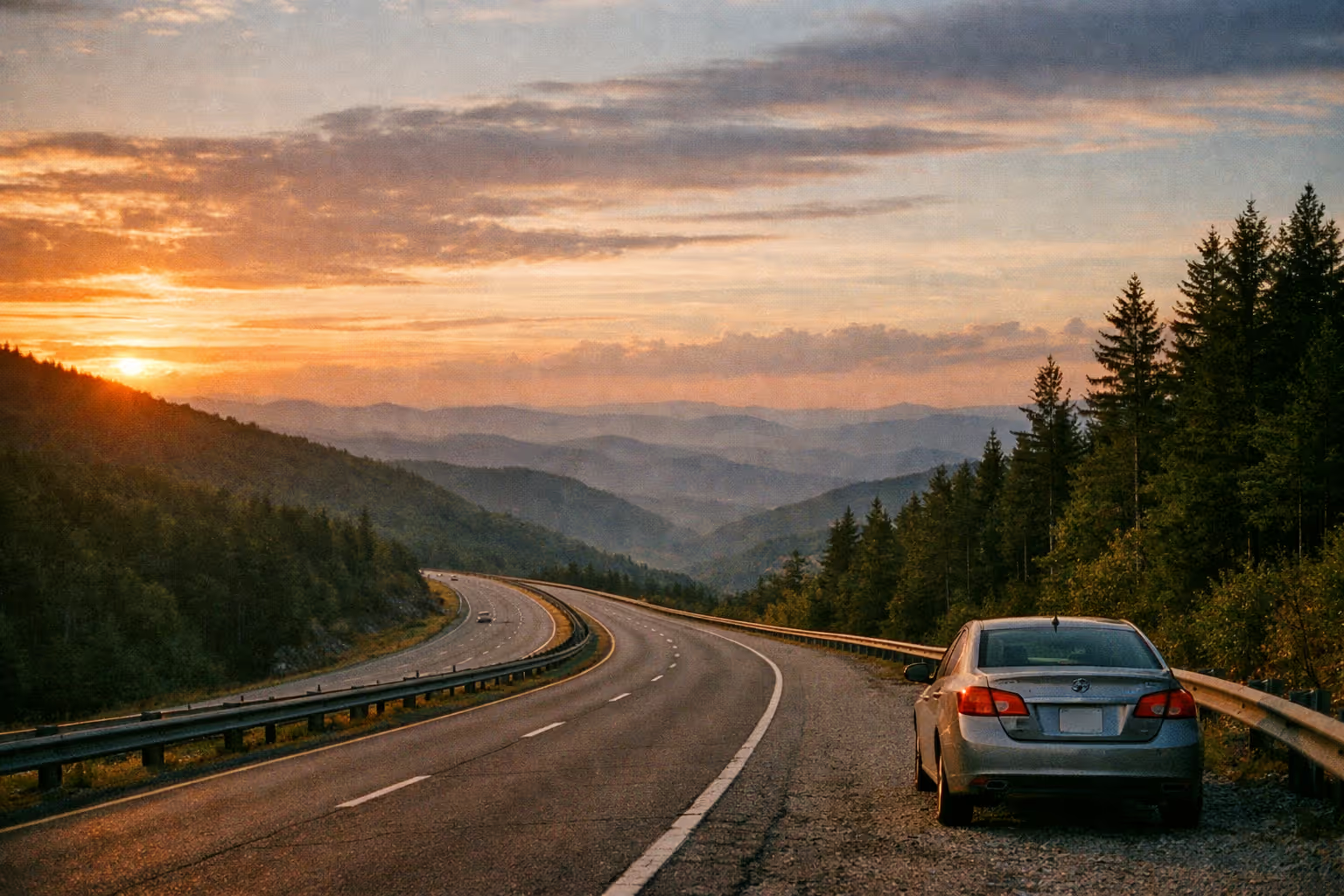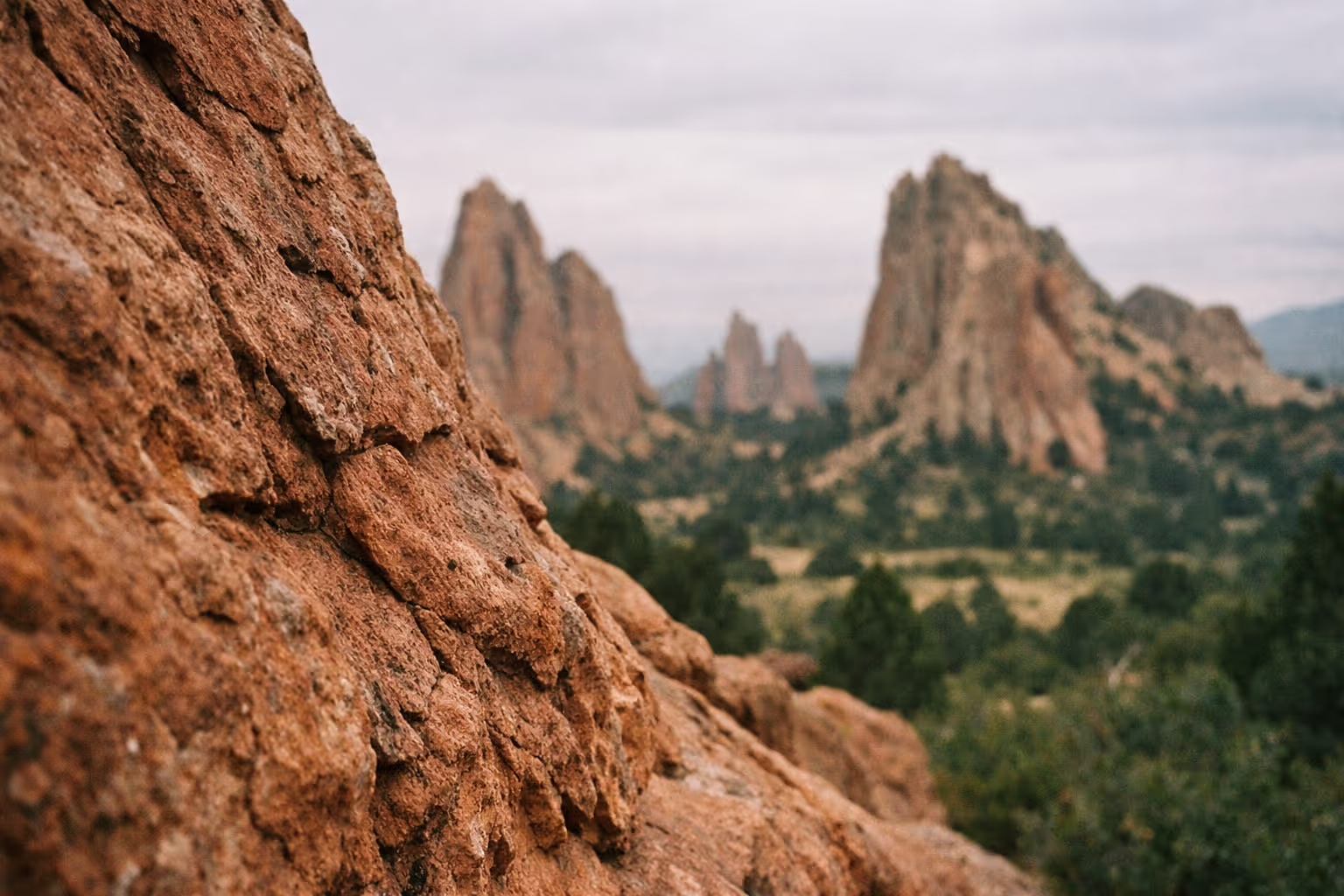
Garden of the Gods costs nothing to enter, and its main parking lot fills by 9 a.m. on summer weekends. That single fact tells you how the city works: the best fun things to do in Colorado Springs reward early risers and punish anyone who plans on the fly. The city is built around two anchors, Garden of the Gods and Pikes Peak, and the smart way to approach a trip here is to build your day around the weather and your budget rather than a fixed checklist. If you’re flying in and want a same-day start, check the drive times from the terminal in the site’s Colorado Springs airport directions guide before you commit to a schedule.
✓ Pros
- Garden of the Gods is genuinely free (entry + visitor center + parking)
- Strong indoor backup options mean a bad-weather day isn't a wasted day
- Two world-class anchors (Garden of the Gods, Pikes Peak) within easy reach of each other
- Good range of family-friendly venues across price points
- Compact enough that you can switch plans mid-day without losing hours to driving
✗ Cons
- Summer parking at Garden of the Gods is a real operational problem, not a minor inconvenience
- Pikes Peak requires advance planning in summer: it's not a spontaneous add-on
- The best free experiences are outdoors, so weather dependency is real
- Altitude (city sits above 6,000 ft) catches some visitors off guard
Garden of the Gods: The Free Anchor That Earns Its Reputation
Garden of the Gods is free to enter, free to park, and the Visitor and Nature Center is free too: no admission fee, no reservation required (9). Most visitors assume it works like a national park. It doesn’t. The park was given to the city in 1909 on the condition that it stay open and free to the public forever, and that promise still holds. That distinction matters for your budget more than almost anything else in Colorado Springs.
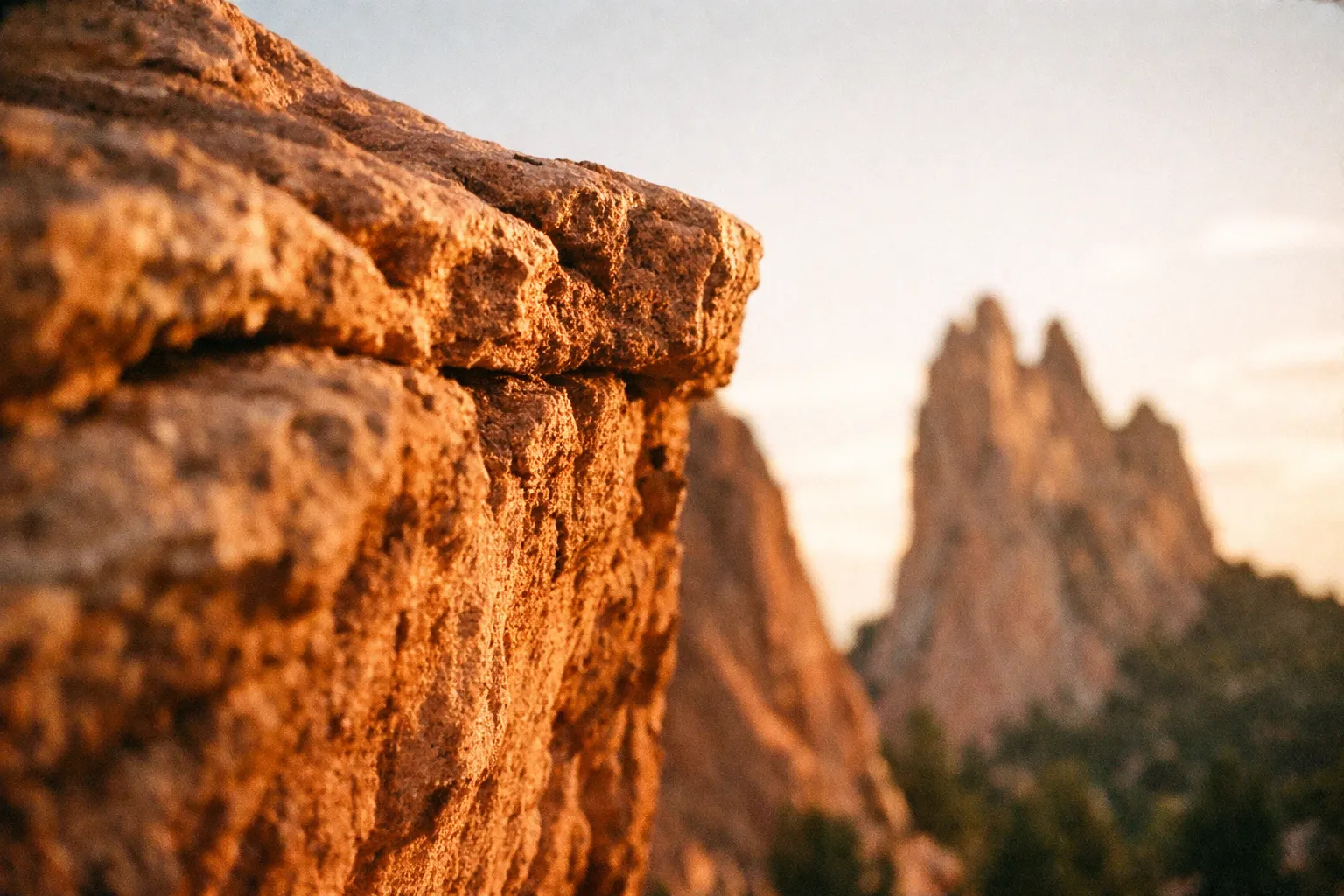
The park covers 1,341 acres, per the City of Colorado Springs (8), holds National Natural Landmark status, and has more than 22 miles of paved and dirt trails ranging from beginner to advanced (20). Park hours run 5:00 a.m. to 10:00 p.m. from May 1 through October 31, and 5:00 a.m. to 9:00 p.m. from November 1 through April 30. The Visitor and Nature Center keeps shorter hours: 9:00 a.m. to 6:00 p.m. from Memorial Day weekend through Labor Day weekend, and 9:00 a.m. to 5:00 p.m. the rest of the year. Give the center 20 to 30 minutes even if you’re only doing a short walk. The geology exhibits give you actual context for what you’re looking at, which is more than most roadside visitor centers manage.
How Early You Actually Need to Arrive (Summer Parking Reality)
Arrive before 8 a.m. on summer weekends if you want the main lot. The Visitor Center lot fills by 9 a.m. in summer, and the interior road backs up between 10 a.m. and 3 p.m. on busy weekends (2). The gates open at 5:00 a.m. year-round, so you have hours of daylight before the crush.
If you miss the main lot, don’t circle it. Head straight to a perimeter lot or overflow instead. The overflow lot sits across the street from the Visitor and Nature Center, a short walk through a pedestrian tunnel (22), and Balanced Rock, at the south end of the park (21), has its own parking lot (8). The free park shuttle runs only in summer, looping between the overflow lot, the Visitor and Nature Center, the Central Garden and the Rock Ledge Ranch entrance, and its 2026 season ended with Labor Day weekend on September 7 (22). Early arrival also gives you the best light on the red sandstone, so you’re solving two problems with one alarm.
The park works even if you only have an hour or two. That flexibility is exactly what makes it the default anchor for almost any itinerary here.
Which Trails to Pick Based on Your Group
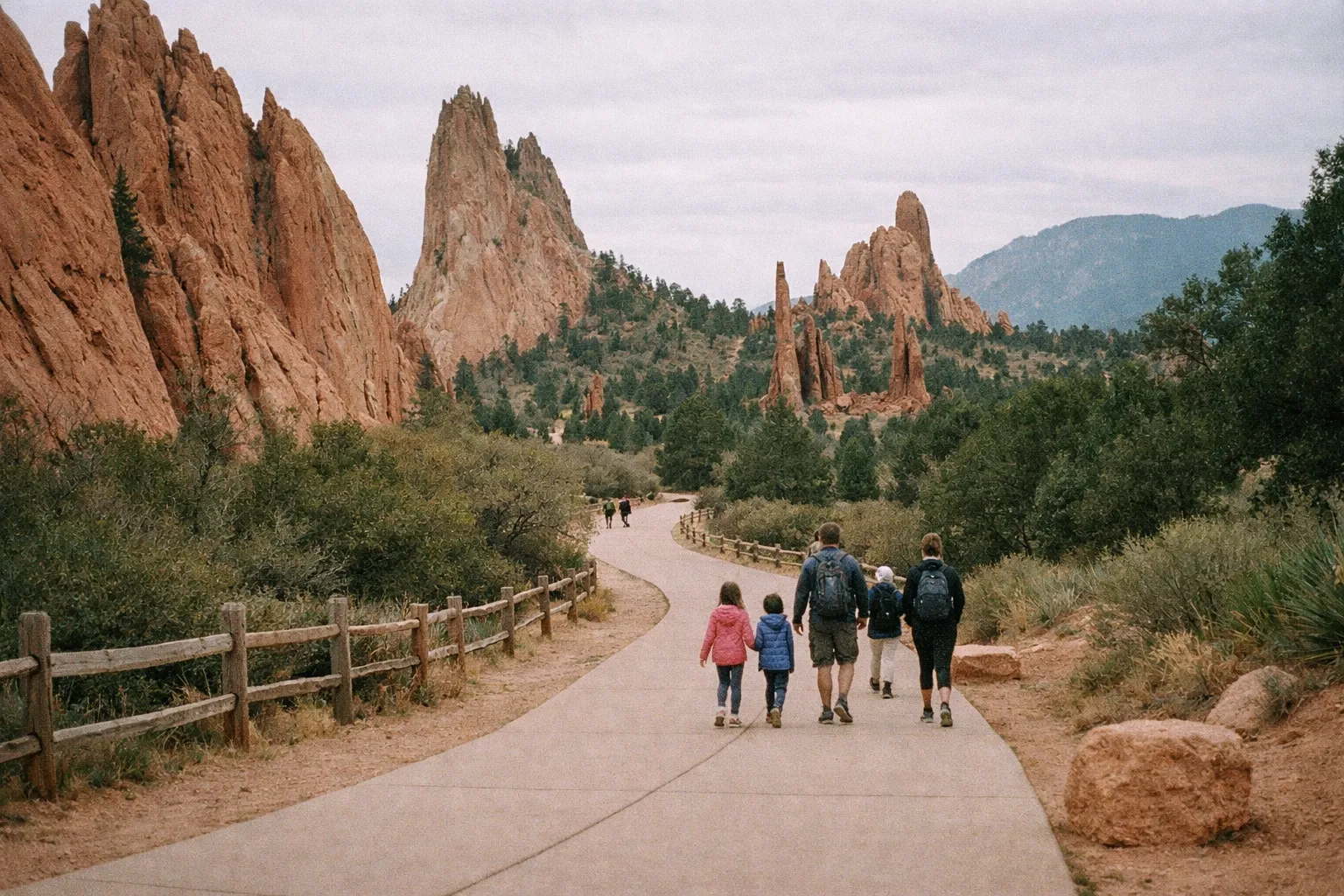
The Perkins Central Garden Trail, the central paved loop, runs about 1.5 miles, stays flat, and is stroller-accessible and suitable for visitors with limited mobility (2). It passes the most photographed formations, including the Kissing Camels and Cathedral Rock. If you’re short on time, this is the one to do first.
For casual visitors who want the views without committing to a full hike, several signed spur walks in the main garden run under a mile one way. If you want more mileage, the Palmer Trail climbs the wooded western edge of the park and ends at the Siamese Twins, about 3.5 miles round trip (2). All trail access is included in the free entry. No permits, no trail fees.
Pikes Peak: What to Know Before You Book
Pikes Peak is the city’s premium anchor, summiting at 14,115 feet above sea level. It’s the most-visited mountain in North America, and if someone asks what the top attraction in the region is, Pikes Peak and Garden of the Gods split the vote. Garden of the Gods wins on cost and accessibility. Pikes Peak wins on sheer drama.
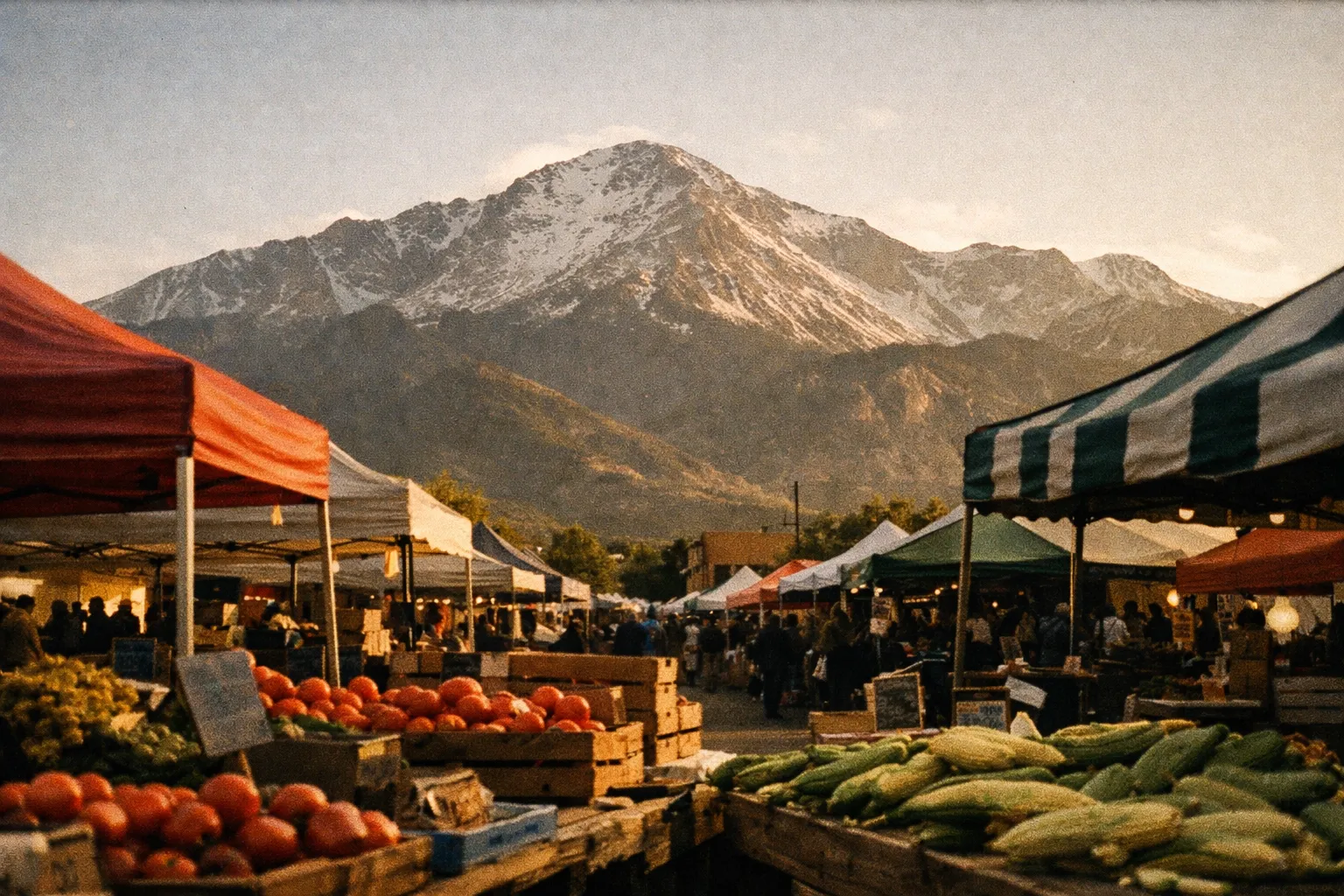
The catch is that summer access is capacity-managed. For the 2026 season, every vehicle going past mile 7 of the Pikes Peak Highway needs a $2 timed-entry permit, required from May 22 through September 30; permits went on sale on April 1 for the whole season and assign you an arrival window at the Gateway (14). Treat Pikes Peak as a pre-booked day, not an impulse stop, and check the current rules before you travel, because the system is reset each season.
This is also the variable-cost portion of a Colorado Springs trip. Garden of the Gods can fill a free day, but Pikes Peak, whether by rail or by toll road, is where the budget line moves. Plan for it accordingly.
Cog Railway vs. Driving Yourself: Which Makes More Sense
The Broadmoor Manitou and Pikes Peak Cog Railway is the classic ascent. It departs from Manitou Springs, about 6 miles west of central Colorado Springs, climbs through pine forest and above treeline, and runs about 3 hours round trip including time at the summit. Seats are assigned, departures are fixed, and summer dates frequently sell out weeks in advance. Book early.
Driving the Pikes Peak Highway is the other option: a 19-mile toll road from the gate to the summit, gaining more than 6,000 vertical feet in under an hour. It gives you flexibility to stop for photos, but you’re managing the timed-entry permit and driving a high-altitude road yourself. If you’d rather not drive it, the shuttle boards at mile 7 and stops at Glen Cove, Devils Playground and the summit; tickets run $40 for adults and $12 for children aged 6 to 15, include highway admission, and need no separate permit (14).
The rail suits families with young kids, anyone prone to altitude sickness who’d rather not white-knuckle the descent, and travelers who want a hands-free ride. Driving suits photographers who want to control their own stops and groups who don’t want to be tied to a departure time. Either way, the summit is above 14,000 feet, so go slower than you think you need to.
Watching the Budget: Cheap Outdoor Days in Colorado Springs
The free-first strategy is simple: Garden of the Gods can absorb 2 to 6 hours at no cost, which means a budget day in Colorado Springs is genuinely easy to build. The park’s free entry, free parking (2), and more than 22 miles of trails (20) make it the strongest no-cost core anywhere in the city. Anchor the day there, add one or two free outdoor stops, and keep any paid attraction to a single choice rather than stacking tickets.
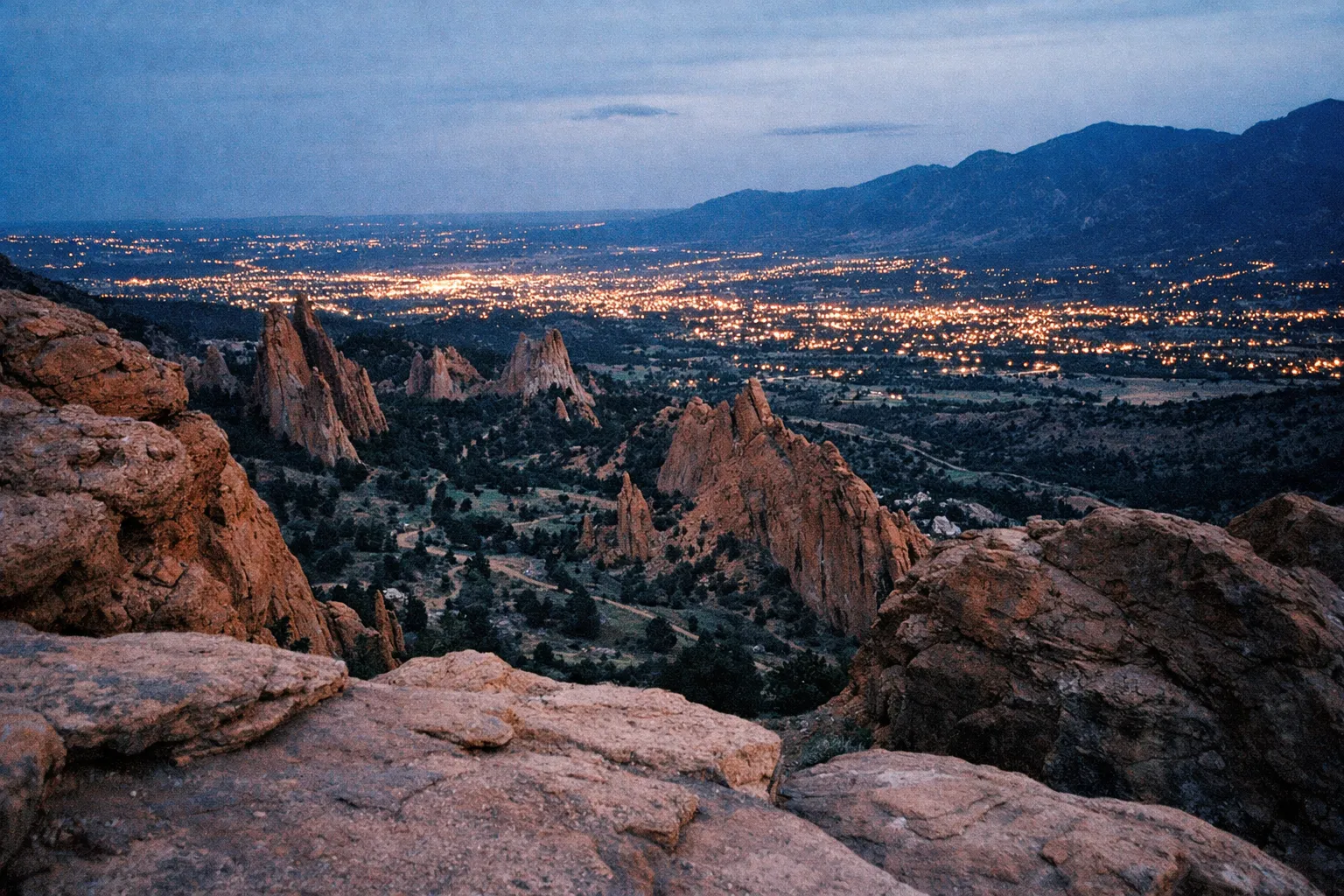
The distinction that matters for cheap things to do in Colorado Springs is between free outdoor anchors and paid ticketed venues. The free anchors can carry an entire day. The paid stops, Pikes Peak, the zoo, a specialty museum, are the variable cost. Pick one if you want it. Going early also keeps parking stress and costs down at the same time.
Free Parks and Outdoor Spaces Beyond Garden of the Gods
North Cheyenne Cañon Park is a city-run park with free admission, canyon roads, and short waterfall hikes including Helen Hunt Falls, enough to fill one to three hours without a ticket. It works well as a half-morning add-on.
Bluestem Prairie Open Space sits roughly 4 to 6 miles south of the Colorado Springs airport, charges no entry fee, and offers several miles of flat trails. If you’re arriving or departing by air and want a quick outdoor stop, it’s 10 to 15 minutes from the terminal and costs nothing.
For something genuinely odd, Skyline Drive near Cañon City is a narrow ridge-top road about 3 miles long with roadside dinosaur trackways embedded in the rock. You can drive it free in under 30 minutes, and it lands as one of the more unusual spots near Colorado Springs. It works for all ages and costs nothing.
Manitou Springs, Old Colorado City, and Downtown Colorado Springs are all free to walk. Browse the shops, taste the mineral springs in Manitou, and treat any paid attraction as optional rather than assumed. A full day of free activity here is realistic, not aspirational.
Indoor Things to Do in Colorado Springs When the Weather Turns
The best indoor things to do in Colorado Springs are a real plan, not a consolation prize. The city carries enough museum and activity inventory to fill a half-day without repeating yourself. Summer afternoon thunderstorms are common, and mountain weather shifts fast, so a rain plan is genuinely useful here. The city’s own family guides list plenty of indoor options rather than a single fallback (4).
Museums Worth a Half-Day
The Colorado Springs Pioneers Museum covers local and regional history in the historic 1903 El Paso County Courthouse, is always free to enter, and works well for a one to two hour stop; it opens Tuesday to Saturday, 10 a.m. to 5 p.m. (15). The Space Foundation Discovery Center leans hands-on and STEM, strong for curious kids and adults, and runs about 1.5 to 2 hours.
The Western Museum of Mining and Industry pairs massive historic machinery with working steam engines and hands-on Gold Rush displays, which makes it more engaging than the name suggests, especially for families (4). The Ghost Town Museum is an enclosed Wild West streetscape with gold-panning troughs, one of the more unusual indoor options in the city and manageable for short attention spans. The National Museum of World War II Aviation displays 28 fully restored aircraft, and you can either self-guide or add a guided tour for a small extra fee, appealing to a specific interest but genuinely well regarded (16). Confirm current admission at each venue before you go, since some are free and others charge.
Active Indoor Options
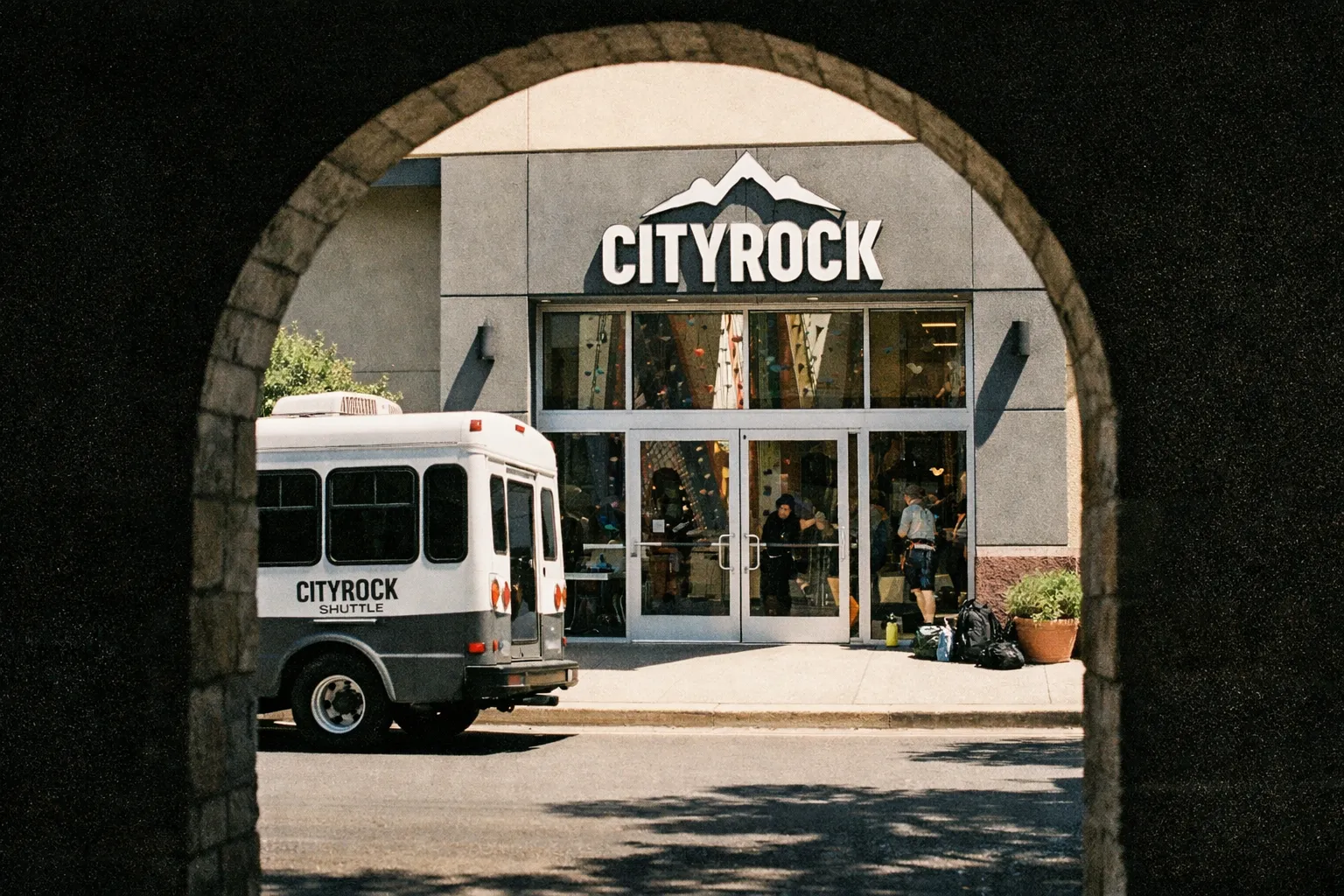
CityROCK is an indoor climbing gym at 21 N. Nevada Avenue with top-rope, lead, and bouldering areas and rental gear available, a solid pick for active teens and adults. It generally runs early morning to late evening on weekdays and shorter hours on weekends.
Miramont Castle Museum in Manitou Springs is a short drive west and offers a distinctive indoor stop: Victorian-era rooms, stone architecture, and optional afternoon tea. Several venues, including the Pioneers Museum and the National Museum of World War II Aviation, sit within a 15 to 20 minute drive of each other, so two indoor stops in a single half-day is realistic.
Colorado Springs Indoor Attractions at a Glance
| Colorado Springs Pioneers Museum | Space Foundation Discovery Center | Western Museum of Mining and Industry | Ghost Town Museum | National Museum of WWII Aviation | CityROCK | Miramont Castle Museum | |
|---|---|---|---|---|---|---|---|
| Admission | Free | Paid | Paid | Paid | Paid | Paid | Paid |
| Best For | History interest, all ages | Kids, STEM interest | Families, history | Families, young kids | Aviation interest, teens+ | Active teens and adults | History, architecture |
| Approx. Time Needed | 1-2 hours | 1.5-2 hours | 1.5-2 hours | 1-1.5 hours | 1.5-2 hours | 2+ hours | 1-1.5 hours |
| Hands-On? | Moderate | Yes | Yes (gold panning) | Yes (gold panning) | Moderate | Yes (climbing) | Low |
Colorado Springs With Kids: Family-Friendly Planning (Including Younger Kids)
The core planning insight for family friendly things to do in Colorado Springs is to pair one outdoor stop with one indoor stop, so the day still works if weather or fatigue cuts the outdoor portion short (4). Garden of the Gods handles the outdoor half well for families: the paved central loop is stroller-accessible and short enough not to wear out small kids (2).
Cheyenne Mountain Zoo is a strong family anchor, sitting at about 6,800 feet on the slopes of Cheyenne Mountain, which makes it one of the only mountain zoos in the United States and a distinctive half-day at three to four hours. Royal Gorge works as a day trip for older kids, with the bridge standing 956 feet above the Arkansas River plus a gondola and zipline. The indoor museum cluster, made up of the Ghost Town Museum, the Western Museum of Mining and Industry, and the Space Foundation Discovery Center, is a reliable fallback when the weather or the kids give out.
What Actually Works with Toddlers and Young Kids
Garden of the Gods’ paved loop, about 1.5 miles with minimal elevation gain, can be finished with toddlers in under an hour. It’s the single easiest outdoor win for families with very young kids.
The Ghost Town Museum keeps everyone enclosed, and the gold-panning troughs give small kids something to do with their hands in a one to 1.5 hour window. The Western Museum of Mining and Industry adds interactive elements that hold interest across a 1.5 to 2 hour stop.
The practical rule: keep the day to two stops maximum with young kids. Colorado Springs sits at 6,035 feet, and altitude adds fatigue faster than parents expect, especially on day one.
Colorado Springs with Teenagers
For teenagers, the winners lean physical and dramatic. The Pikes Peak Cog Railway packs a full above-treeline mountain experience into about three hours, which tends to land well with teens who would otherwise tune out a slower itinerary. CityROCK indoor climbing suits active teens, with rope and bouldering routes for all levels under supervision.
The Manitou Incline is the serious option: roughly 2,000 feet of gain over less than a mile, an average grade around 41 percent with sections steeper than 60 percent, and a genuine physical push that appeals to fit teens. Reservations are required seven days a week, 6 a.m. to 6 p.m. from May 1 to October 31 and 6 a.m. to 3 p.m. the rest of the year; they are free and bookable up to eight weeks ahead, and a waiver has to be signed every time (19). The Royal Gorge Bridge, with its 956-foot drop and gondola, tends to land well with anyone comfortable with heights. And Manitou Springs, about five to ten minutes west of Garden of the Gods, gives teens walkable streets, independent shops, and the Manitou Cliff Dwellings nearby for something less structured.
More Colorado Springs Attractions Worth Your Time
Beyond the two anchors, a handful of attractions are worth ranking rather than listing flat.
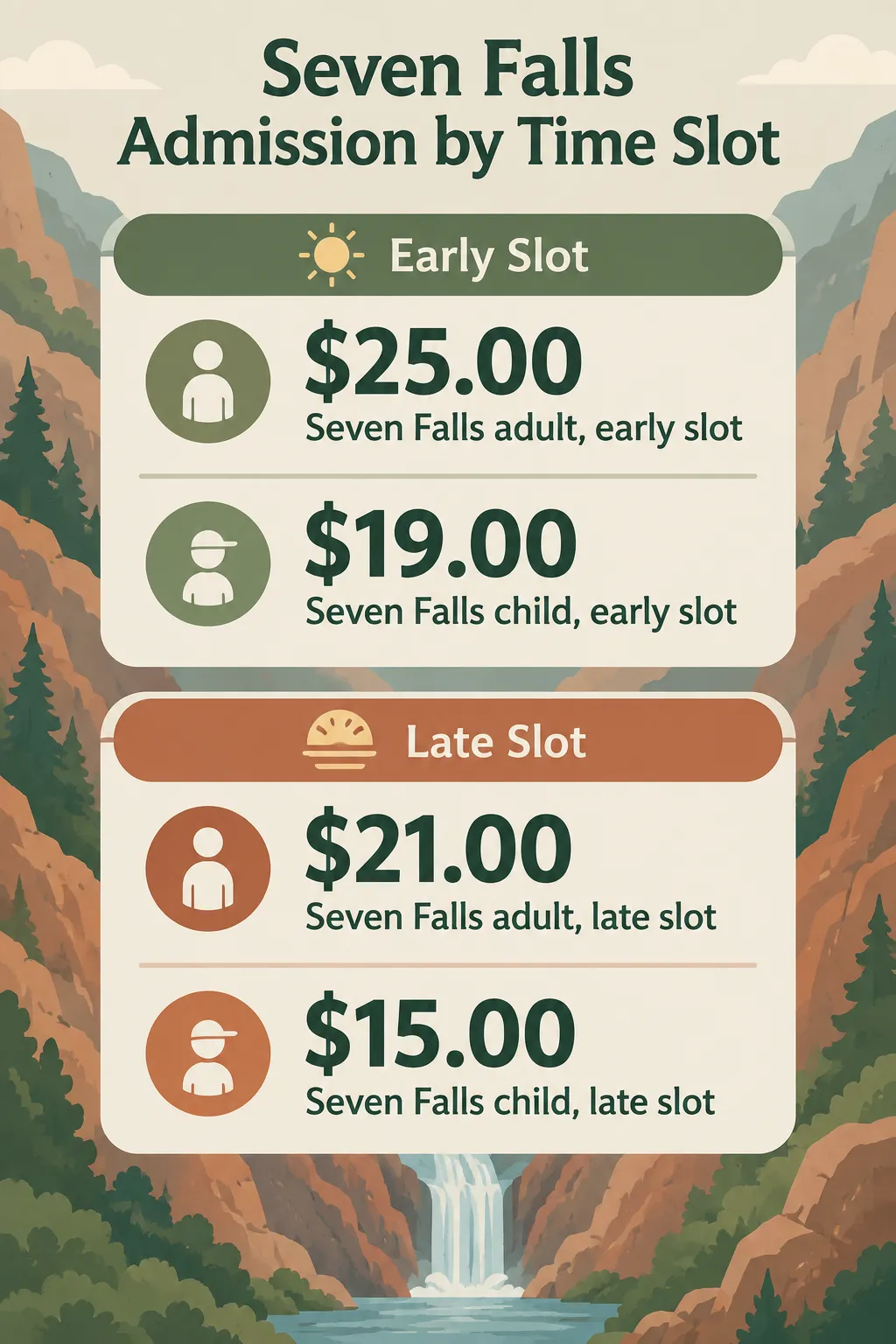 Seven Falls online admission is $25.00 for adults and $19.00 for children in the 9 a.m. to 1 p.m. slot, and $21.00 and $15.00 respectively in the 2 p.m. to 7 p.m. slot.
Cheyenne Mountain Zoo earns its spot near the top of the paid list. At about 6,800 feet, it’s one of the few genuine mountain zoos in the country, and its giraffe-feeding experience is a standout for families willing to spend three to four hours. The U.S. Olympic & Paralympic Museum, which opened downtown in 2020, is modern and interactive, built around Team USA history and athlete stories, and runs a tight 1.5 to 2 hours that works for sports-interested visitors of any age.
Seven Falls, operated by The Broadmoor, is a waterfall hike in a box canyon with online admission at $25.00 for adults (13 and up) and $19.00 for children (ages 2 to 12) on the 9 a.m. to 1 p.m. slot, dropping to $21.00 and $15.00 on the 2 p.m. to 7 p.m. slot (17). It’s scenic but paid, so weigh it against the free canyon hikes at North Cheyenne Cañon. The U.S. Air Force Academy’s Hosmer Visitor Center, north of the city, is free, needs no base access, and opens daily 9 a.m. to 5 p.m.; it replaced the old Barry Goldwater center in May 2026. The Cadet Chapel, the landmark most visitors come for, is closed for renovation with completion estimated in 2028, so don’t build a visit around it (18).
Manitou Springs as a Half-Day Add-On
Manitou Springs sits just west of Colorado Springs, roughly five to ten minutes by car from Garden of the Gods, which makes it the easiest half-day add-on in the region. The historic district is walkable, with independent shops and restaurants, and the town consolidates several attractions within a few miles: the Cog Railway base station and the Manitou Incline trailhead are both here.
The Manitou Cliff Dwellings, reconstructed Ancestral Puebloan structures in a canyon setting, take about one to two hours and work for history-minded visitors and families. Scattered through the district are natural mineral springs fountains where the water is free to taste at public taps. It’s one of the more genuinely quirky things you can do in the Colorado Springs area, and it costs nothing.
How to Plan a Day in Colorado Springs: Practical Logistics
The default structure is simple: Garden of the Gods early, before 8 a.m. in summer, then pivot based on weather, energy, and budget. From there, the day forks.
If the weather holds, do Garden of the Gods in the morning and Pikes Peak or Manitou Springs in the afternoon, assuming Pikes Peak is pre-booked. If storms build, and summer afternoon thunderstorms are common, swap the afternoon for the indoor museum cluster. If money is tight, run a free outdoor day anchored at Garden of the Gods with one paid indoor stop maximum. If you’re traveling with young kids, do the Garden of the Gods paved loop in the morning, one indoor venue in the afternoon, and call it done by 3 p.m.
Factor in altitude on any plan. The city sits at 6,035 feet, and if you continue up Pikes Peak you gain more than 6,000 vertical feet to a 14,115-foot summit in the same day. Drink water and slow down, especially on day one.
Summer Crowd and Parking Timeline
The Garden of the Gods main lot can fill by 9 a.m. on summer weekends, so arrive before 8 a.m. or plan to use a perimeter lot (1)(2) or the overflow lot across the street from the Visitor and Nature Center (22). The free park shuttle runs only in summer, and its 2026 season ended on September 7 (22). Pikes Peak needs to be booked ahead in summer, whether by Cog Railway or timed-entry permit, not decided the morning of (14). Cheyenne Mountain Zoo and the indoor venues are less parking-sensitive, which makes them good mid-morning or afternoon arrivals when the outdoor lots are already jammed. If you’re arriving by plane and starting the same day, check drive times from the terminal on the airport directions page linked in the introduction.
How to Plan a Budget Day in Colorado Springs
6 hoursStep-by-step guide to organizing a cost-conscious day around key attractions and weather.
- 1
Book Pikes Peak access early
Reserve Cog Railway seats or timed-entry driving slots weeks ahead if visiting in summer; this can't be decided the morning of.
- 2
Plan your Garden of the Gods arrival
Arrive before 8 a.m. on summer weekends to secure main lot parking or prepare to use secondary lots.
- 3
Explore Garden of the Gods trails and Visitor Center
Walk at least one trail and spend 20-30 minutes at the Visitor and Nature Center for geological context.
- 4
Monitor weather mid-morning
If weather holds, continue outdoor activities; if storms build, pivot to indoor venues.
- 5
Limit paid attractions
Choose one paid stop maximum to keep costs down; free outdoor anchors can fill the day.
- 6
Adjust pace for altitude
Drink water and slow your pace, especially on day one, as the city sits above 6,000 feet.
Frequently Asked Questions
- Is Garden of the Gods really free?
- Yes. Entry to the park, the Visitor and Nature Center, and parking are all free. No admission fee, no reservation required.
- What is the #1 attraction in Colorado Springs?
- Garden of the Gods and Pikes Peak are the two anchors. Garden of the Gods is more accessible and free; Pikes Peak offers a dramatic summit experience.
- What are some fun things to do in Colorado Springs with teenagers?
- Pikes Peak via Cog Railway, CityROCK climbing, Manitou Incline, and Royal Gorge Bridge are popular with teens. Manitou Springs offers a less structured walk.
- What are some quirky things to do in Colorado Springs?
- Skyline Drive has roadside dinosaur footprints, Manitou Springs has free mineral springs to taste, and the Ghost Town Museum offers indoor gold panning.
- How early do I need to arrive at Garden of the Gods in summer?
- Before 8 a.m. on summer weekends to secure main lot parking, which fills by 9 a.m. Early light also enhances photography.
- Do I need to book Pikes Peak in advance?
- Yes, in summer. Timed-entry reservations and Cog Railway seats sell out weeks ahead. It's not a same-day decision.
- What are the best indoor things to do in Colorado Springs on a rainy day?
- Colorado Springs Pioneers Museum, Space Foundation Discovery Center, Western Museum of Mining and Industry, Ghost Town Museum, and CityROCK climbing gym.
- What can I do in Colorado Springs for free or nearly free?
- Garden of the Gods, North Cheyenne Cañon Park, Bluestem Prairie Open Space, Skyline Drive, Air Force Academy visitor area, and walking Manitou Springs or Old Colorado City.
The Bottom Line on Planning a Colorado Springs Trip
Garden of the Gods is the default yes. It’s free, flexible, works for almost any group, and absorbs anywhere from an hour to a full half-day. Pikes Peak is the premium anchor that needs advance planning, so book it before anything else if it’s on your list. The indoor cluster is a real backup, not an afterthought, and a stormy afternoon doesn’t sink the trip. Budget travelers can put together a full, high-quality day without spending much, and families do best pairing one outdoor stop with one indoor stop.
Two moves matter most: book Pikes Peak before you leave home if you want it, and show up at Garden of the Gods before 8 a.m. in summer. Everything else you can decide on the day.