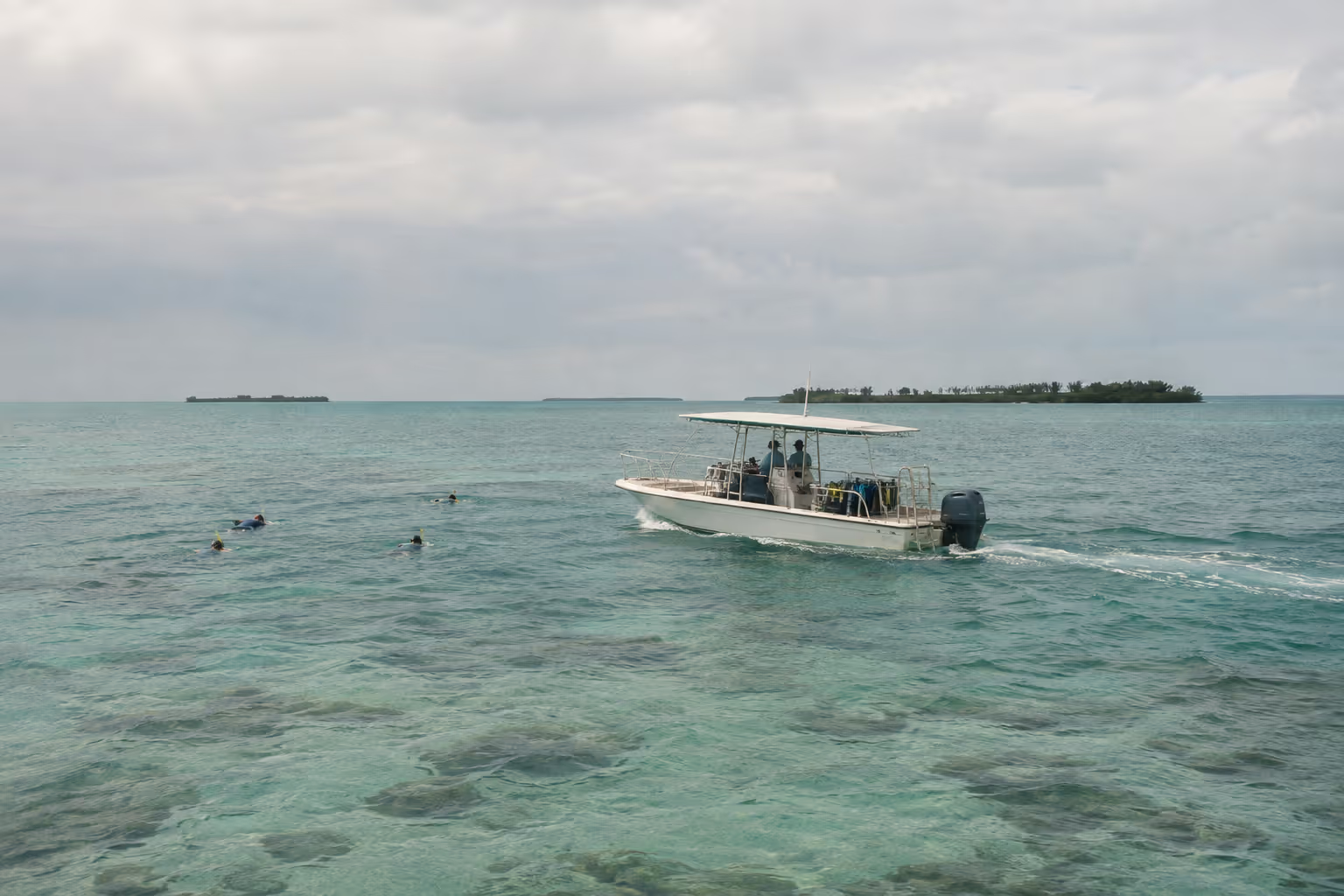
A Florida Keys road trip covers the 113-mile Overseas Highway and its 42 bridges between Key Largo and Key West (3). The 60-minute drive time you see quoted only gets you from Miami International Airport to Key Largo (3), and most first-time itineraries go wrong by treating that figure as the whole trip. Two days works if Key West is the point. Three or four days gives you room for a reef outing, a Marathon beach and an overnight on the way down.
✓ Pros
- Stops are easy to tailor to your pace, from quick roadside breaks to full water excursions.
- The drive links reef access, beaches and historic sites without changing bases every night.
✗ Cons
- A single slow stretch of US-1 can disrupt the day because there is no alternate route through the Keys.
- A short itinerary can feel crowded once boat tours and check-in time are included.
The trade-offs are worth knowing before you book anything. On the plus side, you control the pace and the stops, reef and beach access sit a few minutes off the highway, and the long bridge spans over open water are the reason the drive has a reputation. On the minus side, there is one road and no shortcut, so a slow truck or a crash sets the pace for everyone behind it. Snorkel trips run only when the weather allows. And the car that got you to Key West becomes a parking problem once you reach Old Town.
Florida Keys Road Trip Planning: How Many Days You Need
A Florida Keys road trip works best at three to four days, the length of the three published trips described below (8)(9)(10). A two-day version is a compressed option that prioritizes the drive and Key West. No single itinerary fits every traveler, so the useful question is what you want the extra days to buy.

Three published itineraries show what works in practice. A Guided by Destiny account (last updated March 4, 2026) describes a 3-day, 3-night trip with overnights in Key Largo, Long Key and Key West (9). The writer notes they had already done Key West a few times, so they could spend more of the trip in the other islands (9). Travel on the Reg publishes a four-day plan: Miami to Islamorada, Islamorada to Key West, a full Key West day, then the return to Miami (10). Deep Arrival also lays out four days, moving from Key Largo to Islamorada and Marathon, then Bahia Honda and the Lower Keys before a final Key West day (8).
Here is the decision rule:
- Pick 2 days if Key West is the main event and you accept seeing the rest of the Keys mostly through the windshield.
- Pick 3 days (3 nights) if you want one overnight between the Upper Keys and Key West, plus one main water activity.
- Pick 4 days if you want a dedicated overnight and activity day in Islamorada, a full Key West day, and a return drive that doesn’t eat into either.
If you have a full week of PTO to spend on South Florida, four days in the Keys leaves three days total for Miami or an Everglades day trip, not a free run at both. Five days or more in the Keys only pays off if you’re diving, fishing or planning several days on the water.
Best time of year to visit
Late April and May are the best months for a Florida Keys road trip. VisitFlorida calls November to April the dry season and warns that it is also peak season, when rooms cost more (23). May is a shoulder month with thinner crowds and lower rates (22), and you arrive before the Atlantic hurricane season starts on June 1. Hurricane season runs through November 30, and the official Keys tourism site puts the historically busiest stretch between August 15 and October 15 (21). During those months a Monroe County evacuation order or a highway disruption can override your plans, and Deep Arrival’s planning advice is to let FL511 traffic alerts and county instructions win over your itinerary immediately (8).
Winter is peak season for a reason: roughly December through April brings the best weather and the calmest water, along with the highest prices and the heaviest traffic (22). The catch for snorkelers is cold fronts. The Guided by Destiny trip ran into one, which cut down both the number of stops and the time on the water (9). Summer is hot, humid and quiet, but it overlaps hurricane season, and the Keys have only one road out (22).
Driving the Overseas Highway: Distance, Bridges and the Real Key West Drive Time
The Key West drive from Miami takes far longer than the 60 minutes tourism sites quote, because that figure only covers the trip to Key Largo, the first island in the chain (3)(4). This is the one thing most guides get wrong about the Keys. The official drive-times page states that all its listed times run to the beginning of the Keys (4). For Miami, it gives roughly 50 miles (80 km) and 1 hour (4).
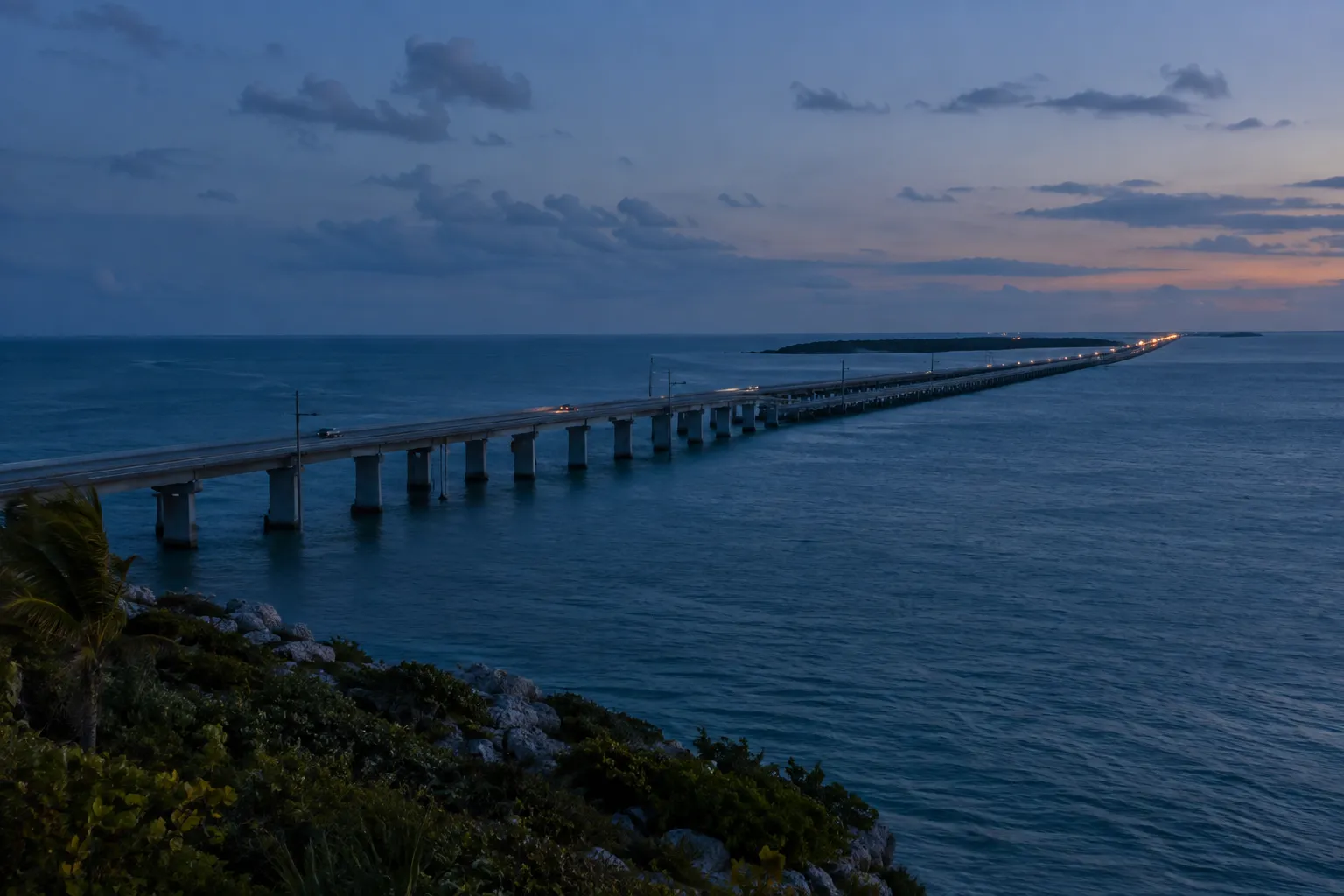
After Key Largo, most of the highway is still ahead of you: Key Largo covers mile markers 108 to 90, and the count ends at 0 in Key West (6). Driven straight through, Miami to Key West takes about 3.5 to 4 hours without stops (9), and Travel on the Reg puts the distance at about 165 miles (10). US-1 is mostly two lanes with limited passing, speed limits drop through the residential stretches (22), and there is no alternate route if traffic stops (8). Even with no planned stops, plan on the Key Largo to Key West leg taking most of a morning or most of an afternoon. Don’t schedule a sunset or a dinner reservation in Key West on the assumption that the drive is a quick hop.
The highway itself is part of the reason to go. It was first built on the remains of Henry Flagler’s Overseas Railroad and links each Key to the next across a 125-mile island chain (4). The 42 bridges give you long stretches with water on both sides of the car (3). The Seven Mile Bridge near Marathon is the one most people remember, and National Geographic’s advice is to cross it in daylight to see the water (7).
Addresses along the route use mile markers (the small green roadside signs). The count runs down from 127 near Florida City to 0 in Key West (6). When a restaurant or park lists “MM” and a number, that is the fastest way to tell whether it’s 10 minutes ahead or already behind you.
Getting from Miami International Airport to the Keys
Most road trips start at Miami International Airport (MIA), where you can continue to the Keys by rental car, shuttle or private transportation (6). Fort Lauderdale-Hollywood International Airport is another option (6). Key West International Airport (EYW) has service from Allegiant, American, Breeze, Delta, JetBlue and United (6). That makes a one-way trip possible: drive down, fly home, and skip the return drive.
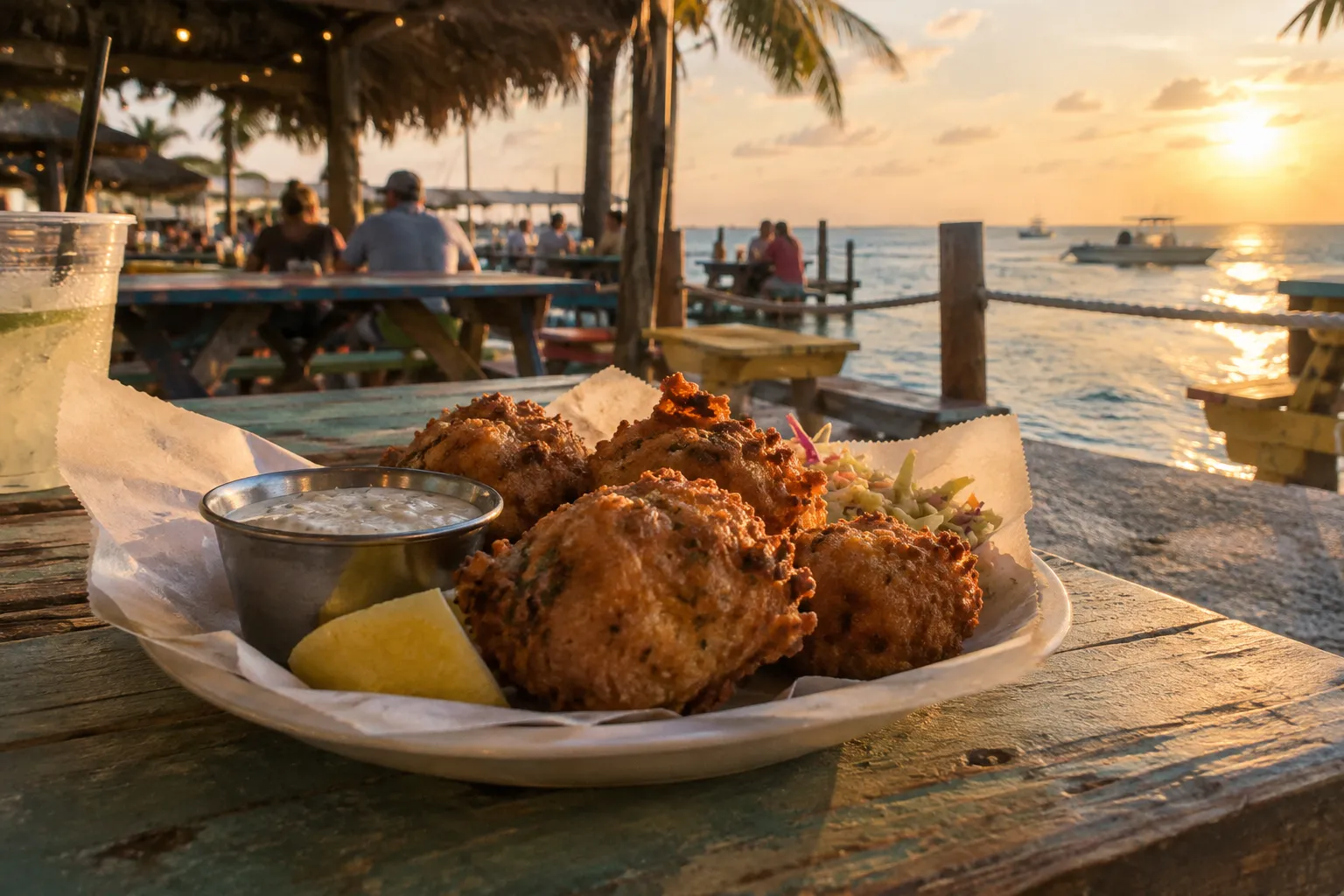
Leaving the Miami area, you can stay on US-1 or detour east onto Card Sound Road (CR 905) south of Homestead. That road crosses the Card Sound Bridge into North Key Largo. National Geographic suggests the detour for a slower entry to the Keys, with a stop for conch fritters at Alabama Jack’s, an old-school bar on the water (7)(10). Card Sound Road has a cashless toll at the Card Sound Bridge: from October 1, 2026, a car pays $2.18 with SunPass or $3.28 by Toll-By-Plate, and Toll-By-Plate bills add a monthly $2.50 fee (20).
If your flight lands in the afternoon, follow Deep Arrival’s advice and protect the first night: drive to Key Largo and stop adding attractions once traffic threatens a comfortable arrival (8). If you land late at night, sleep near the airport and start fresh. Your first hour on US-1 should be in daylight.
Best Stops Along the Route: Key Largo to the Lower Keys
The best Florida Keys stops come down to one signature activity per region: John Pennekamp in Key Largo, a fishing or historic activity in Islamorada, a beach or Pigeon Key near Marathon, then Key West’s sunset and historic district. This pattern follows the official tourism guide’s own groupings (3), and it works better than trying to cover every option listed for each island. Deep Arrival recommends no more than two anchor stops between overnight bases, because meals, parking and check-in also eat into the day (8).
Key Largo: reefs and eco-tours
Key Largo is the first and longest island in the chain. Florida Bay and the Everglades backcountry sit on its west side and the Atlantic on its east (3). The official guide lists scuba diving, snorkeling, sport fishing, eco-tours, beaches, dolphin encounter programs and an underwater hotel (3).
Worth the detour:
- John Pennekamp Coral Reef State Park, the area’s signature attraction (3). It is the easiest reef access on the whole drive, and the park’s Mangrove Trail, a 0.3-mile boardwalk loop, is there if the boats aren’t going out (7)(13).
- The African Queen canal tour, on the restored steamboat from the 1951 film (3)(7). The steamboat still runs daily canal cruises with online booking (24), and National Geographic notes that reservations are required (7).
Skip if short on time:
- Dolphin encounter programs and the underwater hotel (3). They are specialist experiences. Book them only if one of them is the reason for your trip.
For food, Alabama Jack’s on the Card Sound Road approach is the low-effort, old-school option (7).
Islamorada: fishing, tarpon and historic trails
Islamorada’s official guide focuses on fishing charters, eco-tours, water-sports rentals, bicycle trails and historic hikes, with dining from upscale seafood to casual restaurants (3). If you only do one thing here, make it a half day on the water, either a charter or a kayak or paddleboard rental.
Worth the detour:
- A fishing charter or eco-tour (3). This is the activity Islamorada is known for, so book it ahead in winter and spring.
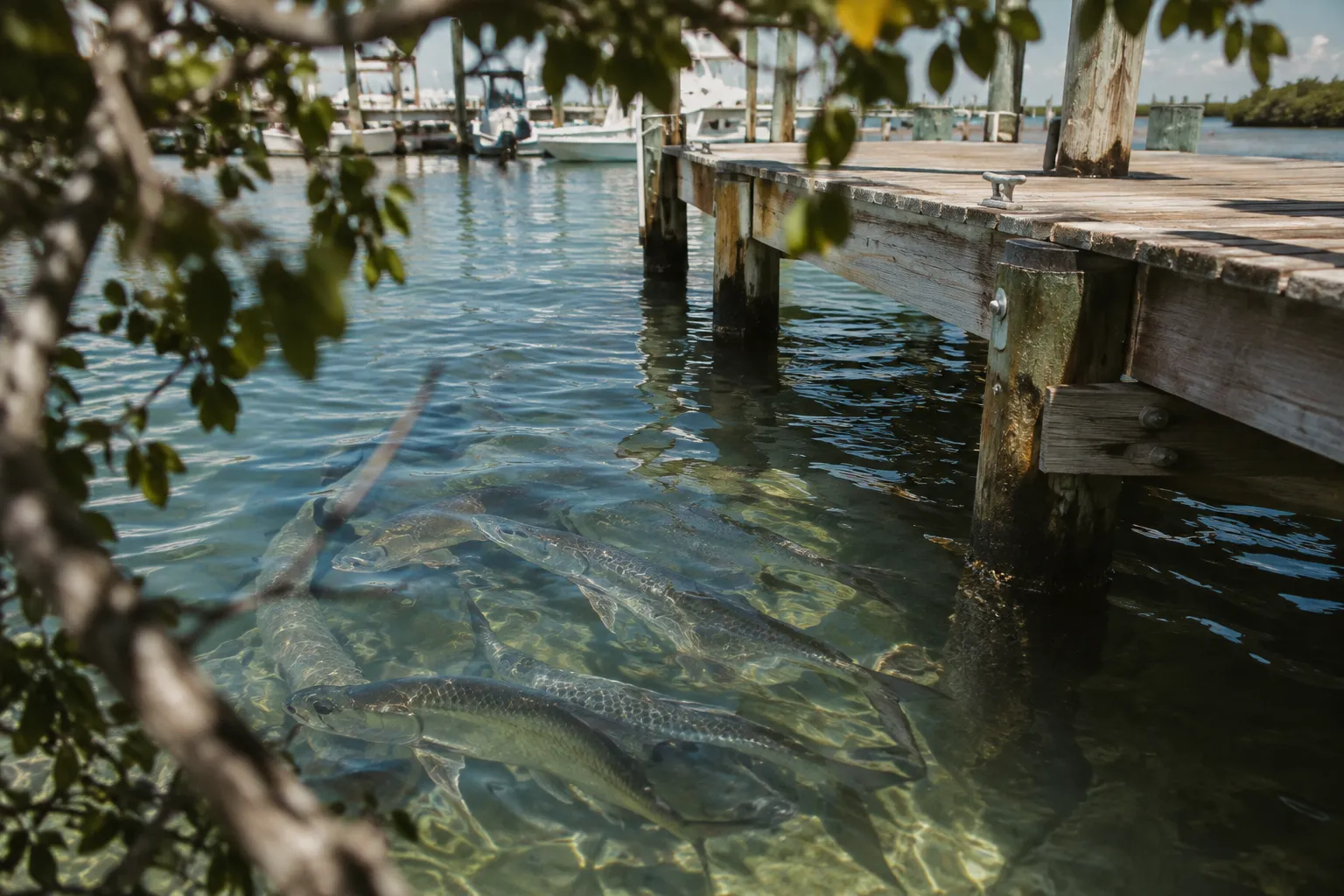
- Robbie’s Marina tarpon feeding. You buy a bucket of baitfish on the dock, and large tarpon gather below (10). As of October 2026, dock admission is $2.50 per person and a bucket of fish is $5 (17), so it’s quick, cheap entertainment and easy to fit into a driving day.
Skip if short on time:
- Bicycle trails and historic hikes (3). They’re pleasant, but on a two- or three-day trip they compete with water time. Save them for the four-day plan.
Islamorada also works as an overnight base. It is the halfway stop in the Travel on the Reg itinerary (10) and the logical place to break the drive if you want a slower evening than Key West offers.
Marathon and the Lower Keys: beaches, Pigeon Key and the Turtle Hospital
The densest cluster of good stops is in the Marathon and Lower Keys stretch. Sombrero Beach, Pigeon Key, Bahia Honda State Park, kayaking and the National Key Deer Refuge (established in 1957) all sit along a single section of the route (3). That means you can stack two worthwhile stops here without long drives in between.
Worth the detour:
- The Turtle Hospital in Marathon, with a guided behind-the-scenes program of 70 to 90 minutes (16). Travel on the Reg also lists it among its top stops (10). Reservations are highly recommended, the last program starts at 4 p.m., and as of November 2026 admission is $38 for adults and $19 for children aged 4 to 12, paid at check-in (16).
- Bahia Honda State Park, for its beach and scheduled snorkel trips (3)(11). The park opens at 8 a.m. and can close temporarily when its day-use areas reach capacity, so arrive early on weekends and holidays (15).
- The Seven Mile Bridge and Pigeon Key (3). Driving across the bridge is unavoidable, and the stop at Pigeon Key adds the railroad-era history. Pigeon Key is open 9 a.m. to 4 p.m.; you reach it by the train from its visitor center in Marathon, or on foot or by bike along the Old Seven Mile Bridge (19). The old bridge is open to walkers, runners and cyclists, but island admission is required, and the guided historical tour lasts about an hour (18).
Skip if short on time:
- Sombrero Beach (3). It’s a good local beach, but if Bahia Honda is already on your plan, you only need one.
- The National Key Deer Refuge (3). It’s interesting if you have an hour spare in the Lower Keys. It’s also the easiest stop to drop when the day runs late.
Long Key, between Islamorada and Marathon, was the middle overnight in the Guided by Destiny three-night trip (9). It’s a quieter base than either neighbor and splits the drive well.
Where to Snorkel: Key Largo’s Reef vs Bahia Honda’s Scheduled Trips
For snorkeling on a Florida Keys road trip, you choose between John Pennekamp Coral Reef State Park in Key Largo and Bahia Honda State Park’s scheduled reef trips in the Lower Keys. Both run on fixed tours, not drop-in timing.
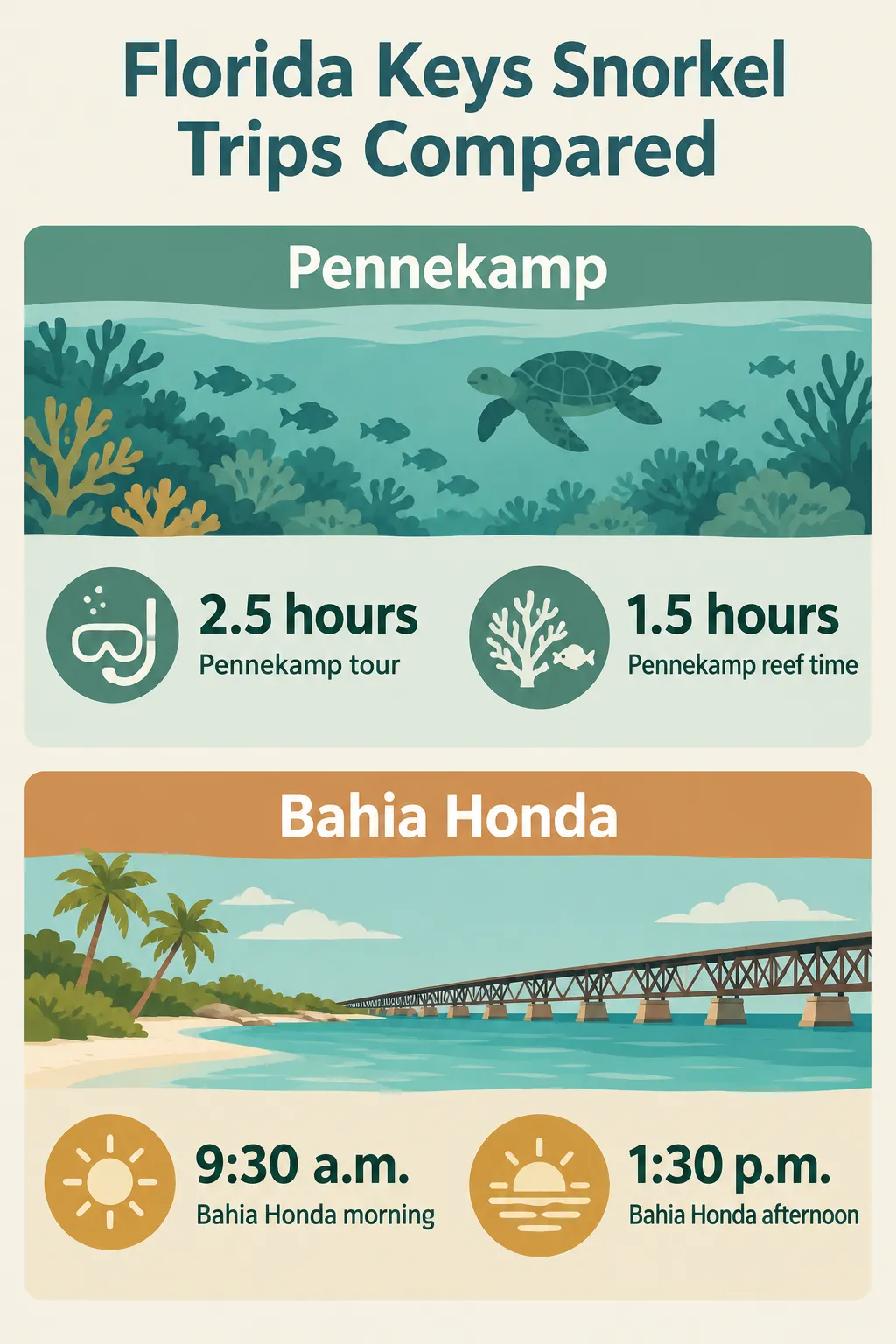 John Pennekamp tours last 2.5 hours with 1.5 hours of reef time, while Bahia Honda offers departures at 9:30 a.m. and 1:30 p.m. with 1.5 hours of snorkeling (13)(11).
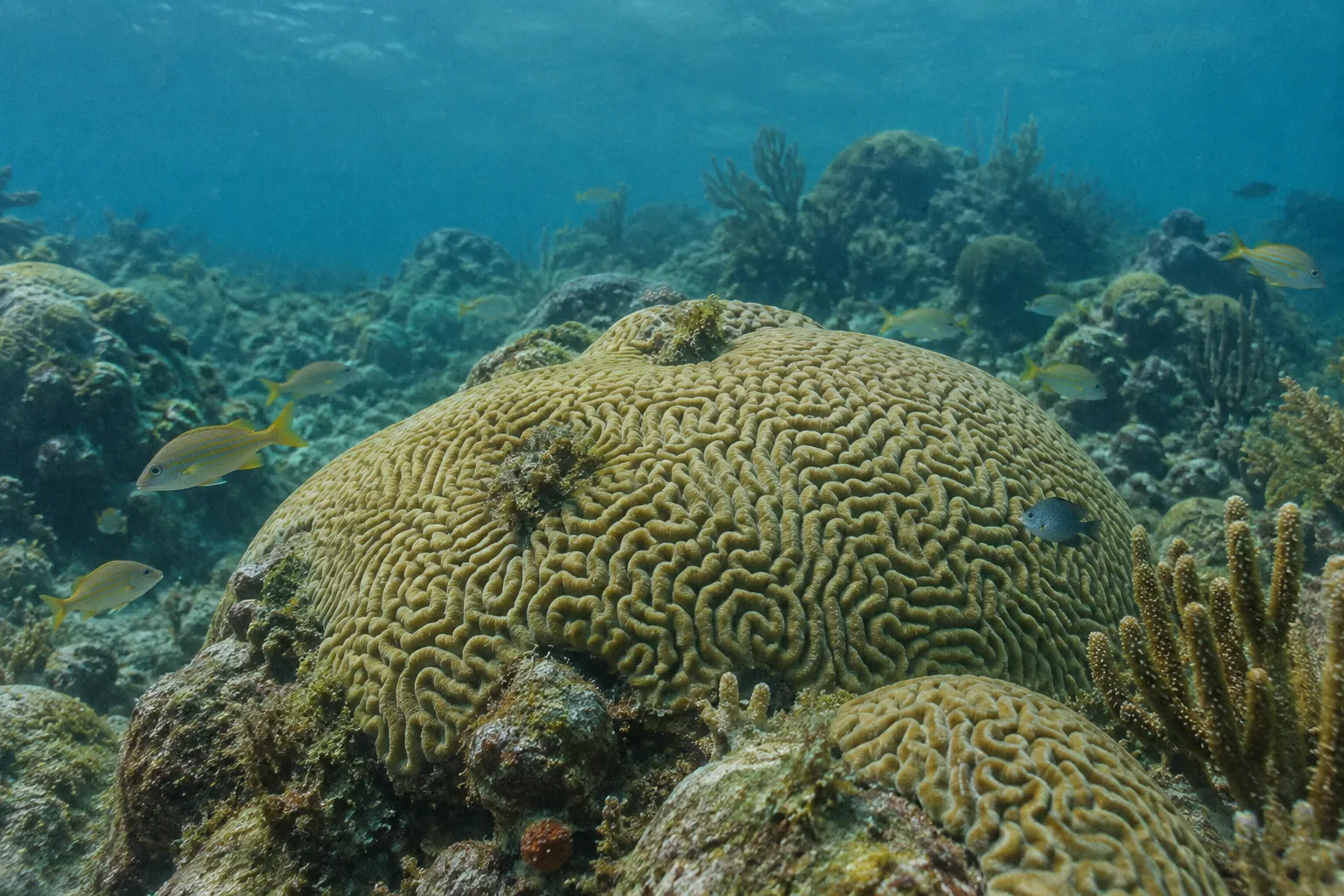
John Pennekamp: snorkeling and glass-bottom boat tours last 2.5 hours, including about 1.5 hours of reef time, according to Florida State Parks (13). The concession’s own snorkel price list counts it more tightly, as a 45-minute boat ride each way and about 1 hour of snorkel time, and asks you to confirm reservations in person at least an hour before departure (14). Because Pennekamp sits at the start of the Keys, it fits naturally on the first afternoon of a trip from Miami or the first morning after a Key Largo overnight.
Bahia Honda: reef snorkel trips depart daily at 9:30 a.m. and 1:30 p.m., with 1.5 hours of snorkeling per trip, and the park asks you to call for information and reservations (11). The boats go to Looe Key; the concession lists 3-hour tours with a 35-minute ride each way, departures at 9:30 a.m. and/or 1:30 p.m., and schedules subject to seasonal change (12). Bahia Honda suits a day that ends in Key West: take the morning boat, have lunch, then drive the last stretch in the afternoon.
Trips are weather-dependent. Bahia Honda states this outright (11). Wind and cold fronts can cancel any boat on any day, as the Guided by Destiny account shows (9). Confirm the morning of your trip, and keep a land-based backup in mind, such as the Turtle Hospital or the Pennekamp boardwalks.
Here is how to choose:
- Pick Pennekamp if you’re doing a two-day trip or your first night is in Key Largo.
- Pick Bahia Honda if you’re overnighting in Islamorada, Long Key or Marathon and heading for Key West the same day.
- Pick one, not both, on a three-day trip. Two boat outings on a short itinerary leave little time for anything else.
Snorkeling is where the gap between distance and time shows most clearly. A 1.5-hour snorkel plus check-in, the boat ride and drying off can take up half your day, even though the highway miles between stops are short.
Key West: Old Town Attractions, Dining and Getting Around Without a Car
Key West’s main draws are Old Town’s historic homes, Mallory Square’s sunset gathering, museums, galleries and live music, and all of them are easiest to reach on foot rather than by car (3)(6). Plan at least one full day here, or more if Key West is the main reason for the trip. Our guide to things to do in Key West ranks the island’s sights in more detail.
Mallory Square sunset and historic sites
Set aside time for Old Town, the historic homes and the sunset gathering at Mallory Square (3)(6). Travel on the Reg calls the Ernest Hemingway Home & Museum Key West’s most famous attraction (10). Pair it with a walk through Old Town’s residential streets in the late afternoon, then head to the waterfront for sunset.
Worth prioritizing:
Skip if short on time:
- Extra museums and galleries (3). They’re good on a rainy afternoon, but not essential on a one-day visit.
Mallory Square is crowded, and the sunset is the same one you can see from a quieter dock. It’s worth seeing once. Don’t plan your evening around it twice.
Dining and nightlife
The official guide describes Key West’s food scene as eclectic restaurants and watering holes, with live music and theater (3). For a single evening, the efficient plan is an early dinner after sunset, then music or a show, all within walking distance.
As for where to avoid in Key West, the main thing is driving into Old Town at sunset or in the evening, when you’d be hunting for a space. National Geographic’s suggestion is to park at the Old Town Garage in the Historic Seaport and walk (7). The city garage at 301 Grinnell Street is open 24 hours and, as of November 2026, charges $6 an hour or $48 a day plus tax (25). Duval Street is the island’s bar strip (9), so book lodging a few blocks away if you want to sleep.
Getting around Old Town without a car
You need a car to get between the islands, but in Key West it becomes a burden, because walking, biking, taxis, rideshare and local transit all cover Old Town (6). The tourism site describes the historic core as particularly easy to explore without a car (6). Once you’ve checked in, park the car and leave it until you drive out.
For lodging, the tourism guide notes that many of Key West’s historic mansions have been converted into guest houses and inns (3). If your lodging doesn’t include parking, settle that before you arrive, not when you pull up.
Overseas Highway Itinerary Options: 2, 3 and 4 Days from Miami
The right Overseas Highway itinerary balances short daily drives against long activity blocks. Spread across three nights, the 113-mile highway (3) works out to under 40 miles (about 60 km) of driving a day, the pace of the three-night trip described above (9). The trip is built around stops, not hours behind the wheel. The plans below assume a Miami start.
Two-day itinerary: drive and Key West focus
This is a compressed plan. You won’t see every island, but you will reach Key West with daylight to spare.
Day 1: Miami to Key West. Leave early. Choose either a Pennekamp snorkel or glass-bottom tour in Key Largo, or a short Islamorada stop, but not both. Cross the Seven Mile Bridge in the afternoon, check in, park the car and walk to Mallory Square for sunset (3).
Day 2: Key West, then out. Spend the morning on Old Town and the Hemingway Home (10). Then either fly home from Key West International (6) or start the long drive back to Miami. If you drive back the same day, add no stops: the return is the full highway plus the Miami approach.
Best for: travelers who have seen the Keys before, or who care mainly about Key West.
Three-day itinerary: one overnight stop
This version follows the shape of the Guided by Destiny three-night trip: Key Largo, Long Key, Key West (9).
Day 1: Miami to Key Largo. Make the short first leg and arrive with time for Pennekamp or the African Queen (3)(7). Overnight in Key Largo.
Day 2: Key Largo to Long Key or Marathon. Spend the morning in Islamorada on a charter, eco-tour or rental (3), and stop at Robbie’s for the tarpon (10). In the afternoon, visit the Turtle Hospital, booked ahead (16). Overnight on Long Key or in Marathon.
Day 3: Lower Keys to Key West. Take the 9:30 a.m. Bahia Honda snorkel trip if it runs that day and the weather cooperates (11)(12), or swim at the beach if it doesn’t. Cross into Key West by mid-afternoon in time for sunset (3). Overnight in Key West and leave the next morning.
Pick one main water activity across the three days. If you snorkeled at Pennekamp on Day 1, use Bahia Honda for the beach only.
Four-day itinerary: dedicated Islamorada time
The Travel on the Reg structure divides the trip into four parts: Miami to Islamorada, Islamorada to Key West, a full Key West day, and the return to Miami (10).
Day 1: Miami to Islamorada. Stop at Pennekamp on the way (3), then check in for an Islamorada evening and a sit-down seafood dinner (3).
Day 2: Islamorada to Key West. Stop at a fishing charter or rental in the morning. In the Marathon cluster, choose two anchors from the Turtle Hospital, Pigeon Key, Sombrero Beach and Bahia Honda (3)(7)(8). Arrive in Key West for sunset.
Day 3: Key West. This is a car-free day covering Old Town, the Hemingway Home, the historic homes and evening music (3)(10).
Day 4: Key West to Miami. Make this a pure transfer, with one stop at most. Check FL511 before you leave (8).
Deep Arrival’s four-day variant shifts the overnights: Key Largo first, then Islamorada and Marathon, then Bahia Honda and the Lower Keys before the Key West day (8). Choose it if you’re flying home from Key West rather than driving back.
Comparing the three versions
The table below lays out the differences, but the short version: more days buy you more overnights outside Key West and a slower pace, not a different drive. Two days compresses everything into one Key West overnight. Three days (9) spreads the trip across the Upper Keys, the Middle Keys and Key West. Four days (10) adds a dedicated Islamorada night on top of that. Pick based on how much of the Middle and Upper Keys you actually want to see versus drive past.
Choose Your Florida Keys Itinerary
| 2 days | 3 days | 4 days | |
|---|---|---|---|
| Overnight stops | Key West | Key Largo, Long Key or Marathon, Key West | Islamorada and Key West, with other overnight patterns possible |
| Main activities | One en-route stop; Old Town evening and morning | One snorkel trip, an Islamorada activity and Key West | Charter, Marathon stop and a full Key West day |
| Pace | Fast | Moderate | Relaxed |
| Best for | Repeat visitors or travelers focused on Key West | First-timers wanting a sample of each region | Activity-heavy trips and travelers driving back to Miami |
Frequently Asked Questions
- Can you drive the Overseas Highway in one day?
- Yes. Driven straight through, Miami to Key West takes about 3.5 to 4 hours without stops, but a one-day drive leaves little time for stops or activities along the Keys.
- Is a one-way rental car practical for a Miami-to-Key-West trip?
- A one-way trip can work if you fly home from Key West International Airport; confirm rental-car return availability before booking flights.
- Should you book a snorkel trip before the road trip?
- Reserve your preferred departure in advance, then check with the operator on the day because wind and cold fronts can cancel boats.
- Is it better to stay in Key Largo or Islamorada on the first night?
- Choose Key Largo to prioritize an early Pennekamp visit; choose Islamorada to break the drive farther south and have an evening there.
- Can you see the sunset at Mallory Square without staying in Old Town?
- Yes, you can visit Mallory Square for sunset and stay elsewhere in Key West; plan where to park before arriving.
- What should you do if a boat tour is canceled?
- Switch to a land-based stop such as the Pennekamp boardwalks or the Turtle Hospital, rather than trying to replace the outing with another boat.
- Is the drive back from Key West to Miami worth doing on the same day as sightseeing?
- Treat the return as a transfer day if you are driving to Miami; adding sightseeing can leave too little time for the full highway and Miami approach.
- Do you need to keep the rental car during your Key West stay?
- Not for exploring Old Town; park after check-in and use walking, biking, taxis, rideshare or local transit.
Bottom Line: Two Budgets, Not One
A Florida Keys road trip has two separate time budgets: the 113 miles of highway (3) and the hours your stops take. The second one decides your itinerary. A single snorkel trip uses half a day, and the 60-minute figure from Miami ends at Key Largo (3)(4). If Key West is the point, take the two-day plan and fly home from EYW. If you want a sample of every region, use the three-night Key Largo, Long Key and Key West structure (9). If you want a charter in Islamorada and a car-free day in Old Town, book four days on the Travel on the Reg pattern (10). Whichever you pick, reserve your snorkel slot and your first night before you finalize anything else.