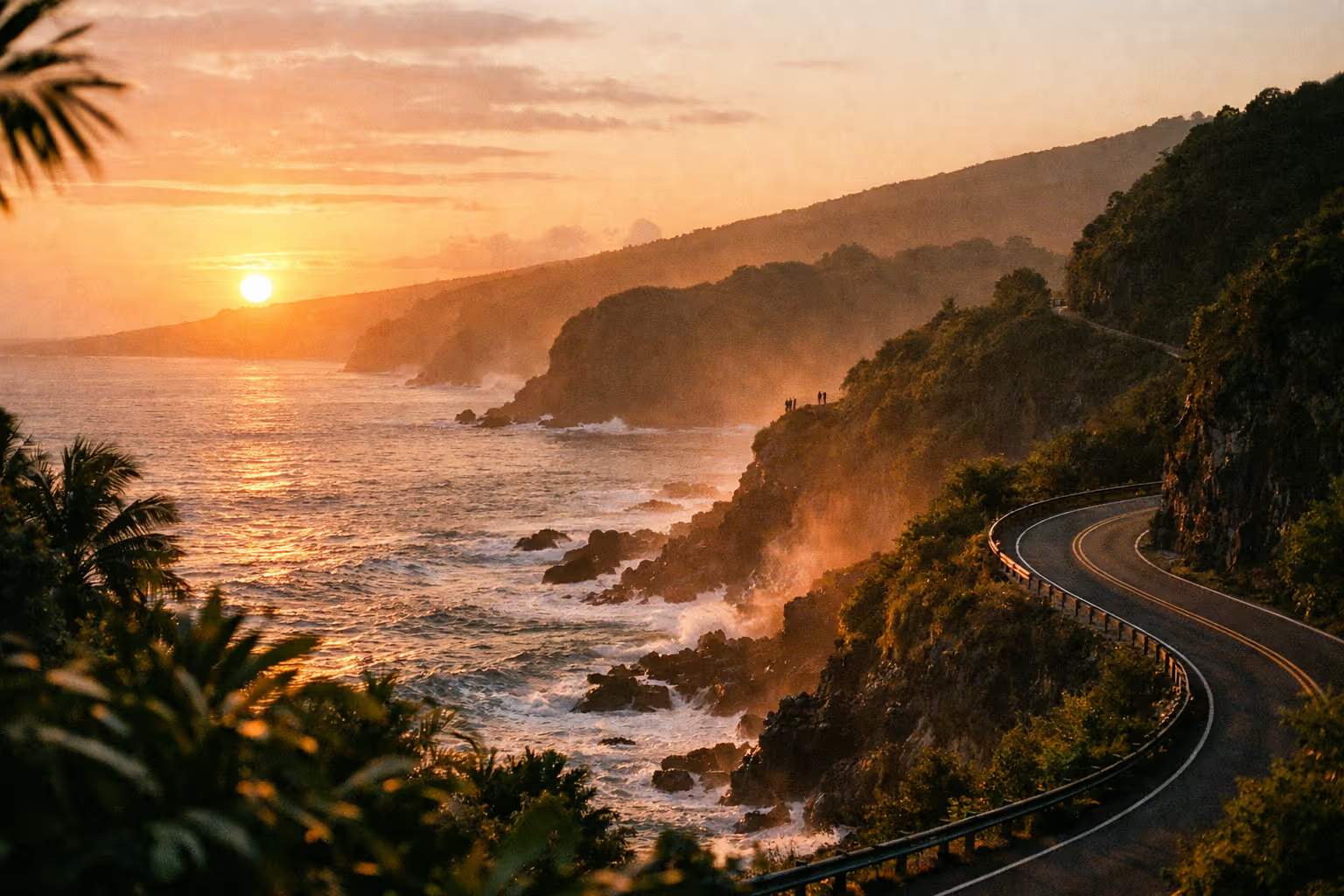
The best things to do in Maui Hawaii run on reservations now, so planning matters as much as driving. Haleakala sunrise needs a $1 timed booking plus a $30 park pass, released 60 days out; Waianapanapa on the Road to Hana wants $5 a person and $10 a vehicle booked weeks ahead. Three focused days cover the island if you sequence them: sunrise and a west beach, a condensed Hana run, then snorkeling and Makena. Come in September for summer seas and rates a fifth cheaper than winter.
How to get to Maui Hawaii
Most visitors fly into Kahului Airport (OGG) on Maui’s north-central coast - it’s the island’s main hub and the only airport with direct mainland service. Nonstop flights operate from Los Angeles, San Francisco, Seattle, Denver, Phoenix, and a handful of other West Coast and Mountain West cities. Flight time from LAX runs roughly 5.5 hours; from the East Coast, expect a connection in a West Coast hub and a total travel day of 10-13 hours. Round-trip fares from the West Coast typically range from $350 to $650 depending on season and how far ahead you book; East Coast fares run $550-$950.
If you’re already in Hawaii, inter-island flights from Honolulu (HNL) to Kahului take about 30 minutes and run multiple times daily on Hawaiian Airlines and Southwest. Fares are usually $60-$120 each way. There is no regular passenger ferry between islands.
Ground transport: A rental car is not optional for this itinerary - Maui has no meaningful public transit to Haleakalā, the Road to Hana, or Makena. Budget $50-$90 per day for a standard compact; book early in peak season because inventory tightens fast. Verify your rental agreement covers the Road to Hana before you sign (some companies restrict it or add fees). Kahului Airport has all major rental counters on-site.
The top 5 things to do in Maui Hawaii
If you’re planning your trip and wondering about the best things to do in Maui Hawaii, start here. These highlights are ranked by how much they’re worth reshuffling your schedule to fit in - not padded to look comprehensive.
- Haleakalā sunrise (or sunset). The single most-cited signature experience on the island (2). Standing above the clouds at 10,000 feet while the sun comes up is the thing most people remember. Requires a separate reservation (details below).
- The Road to Hana. A 64-mile scenic drive treated as the activity itself, not just transport (8). Waterfalls, one-lane bridges, black sand, and a rainforest that feels a world away from the resorts.
- Snorkeling Molokini or Turtle Town. The clearest water and best marine life on the island. Molokini is a crescent-shaped crater rim reachable only by boat; Turtle Town off Maluaka delivers reliable green sea turtle sightings.
- A south or west shore beach day. Makena, Ka’anapali, or Nāpili. Easy swimming, easy parking (if you arrive early), and the reset you’ll need after the east-side driving.
- ‘Īao Valley State Park. A short, accessible walk to the 1,200-foot ‘Īao Needle in central Maui. Worth the detour if you want green mountain scenery without committing a full day to Hana.
✓ Pros
- Clear priority ranking saves time and avoids over-scheduling
- Focus on signature experiences with practical booking advice
- Includes both active and relaxed options for varied traveler types
✗ Cons
- Some iconic stops require advance reservations that can sell out
- Limited coverage of nightlife or cultural events
- Snorkeling tours vary widely in price and quality without specific recommendations
View a sunrise on Haleakalā
The Haleakalā sunrise is the one experience on Maui that holds up to its reputation. Standing at over 10,000 feet while the summit district sits above the cloud layer, watching the light shift from black to orange to white - it’s the kind of thing that’s hard to oversell because the scale does the work.
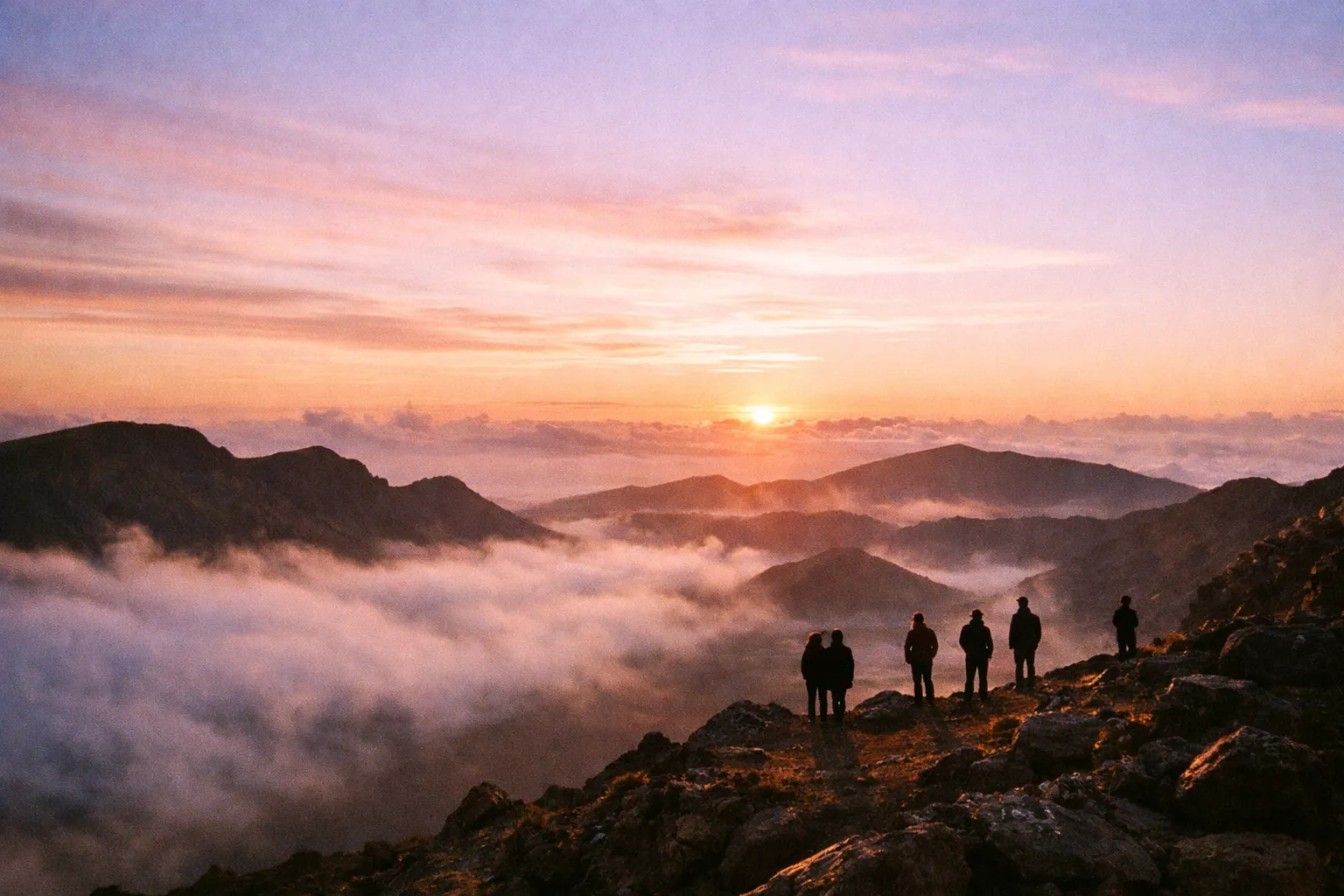
I’ve stood up there in a fleece and rain shell at 5:30 a.m. while the coast was already warm. The temperature gap is real and it catches people who pack for a beach trip.
The bike tour that many operators offer afterward - a guided downhill ride back through changing elevation zones - is worth considering if you want to extend the morning rather than just drive back down. You move through distinct ecosystems on the descent: alpine scrub at the top, then grassland, then dense forest as you lose altitude. It’s a legitimate add-on, not just a tourist gimmick.
What it costs and how to book
Here’s where trips get derailed. The sunrise is not first-come, first-served, and the reservation is separate from your park pass. You need three things.
- A timed sunrise reservation: $1 per vehicle, required for anyone entering the summit district between 3:00 a.m. and 7:00 a.m., booked through Recreation.gov (7)(9).
- A park entrance pass: $30 per private vehicle, $25 per motorcycle, or $15 per pedestrian/bicyclist - good for 3 days, per the National Park Service (7).
- A realistic timeline: plan 4-6 hours door-to-door from the resort areas, including 60-120 minutes of ascent, a 30-60 minute buffer, and 20-40 minutes at the summit for the sunrise itself (8).
The reservation is not covered by the standard entrance fee, fee-free days, or annual passes - budget both separately (7). Inventory releases in two batches: up to 60 days in advance and again 2 days out (7)(9). Book the moment your window opens. The best dates during peak winter and spring travel sell out fast.
One correction worth flagging: some travel content still lists the sunrise reservation at $1.50. The National Park Service and Recreation.gov both show $1.00 - treat the official pages as authoritative (7)(9). If you arrive after 7:00 a.m. you skip the sunrise reservation entirely, but you still owe the standard park fee (7).
Bring layers. Summit temperatures run 20°F or more below the beaches (8). Also worth knowing: some park entrances are cashless, so don’t count on paying at the gate with bills (1)(7).
Exploring the Road to Hana Maui Hawaii experience
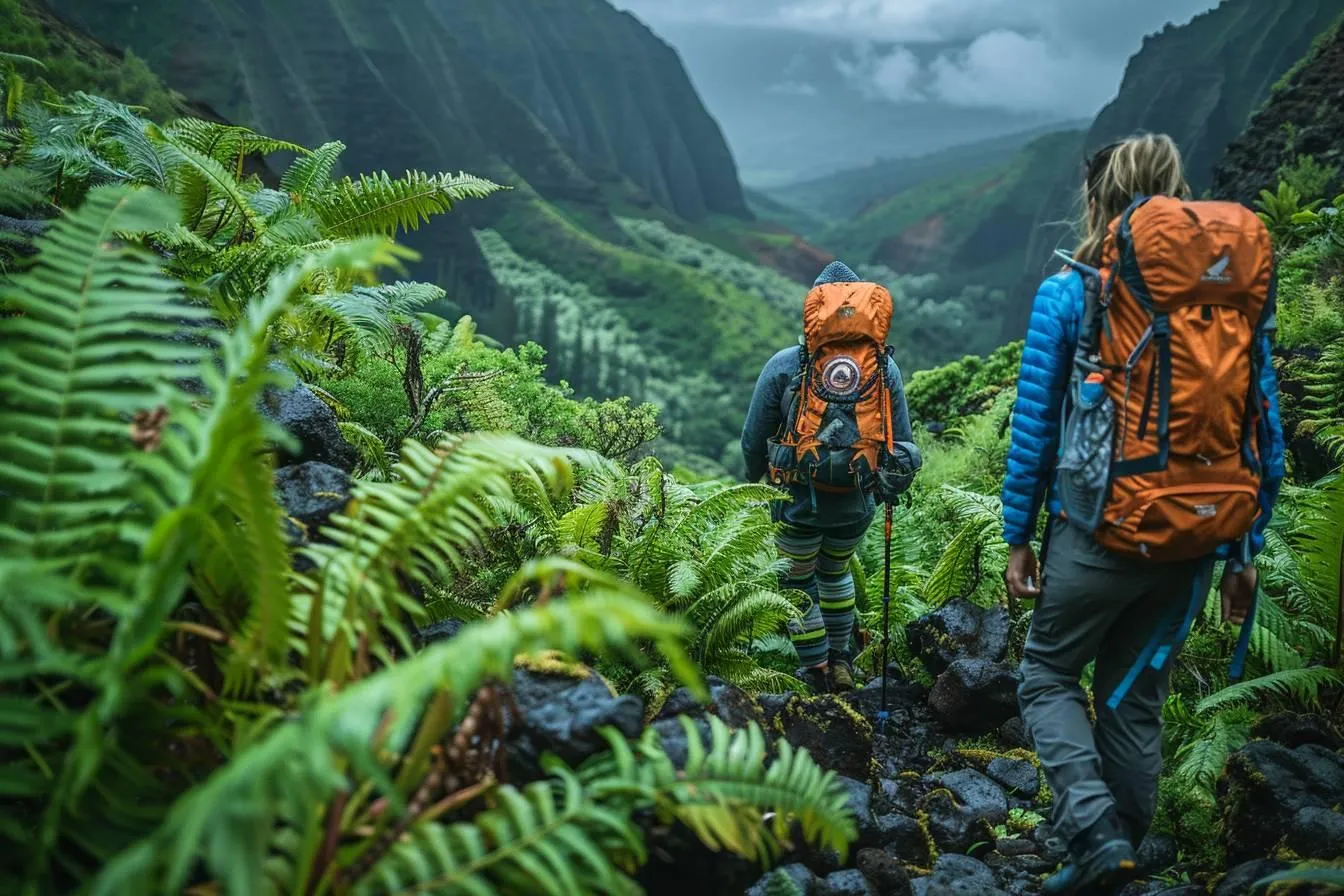
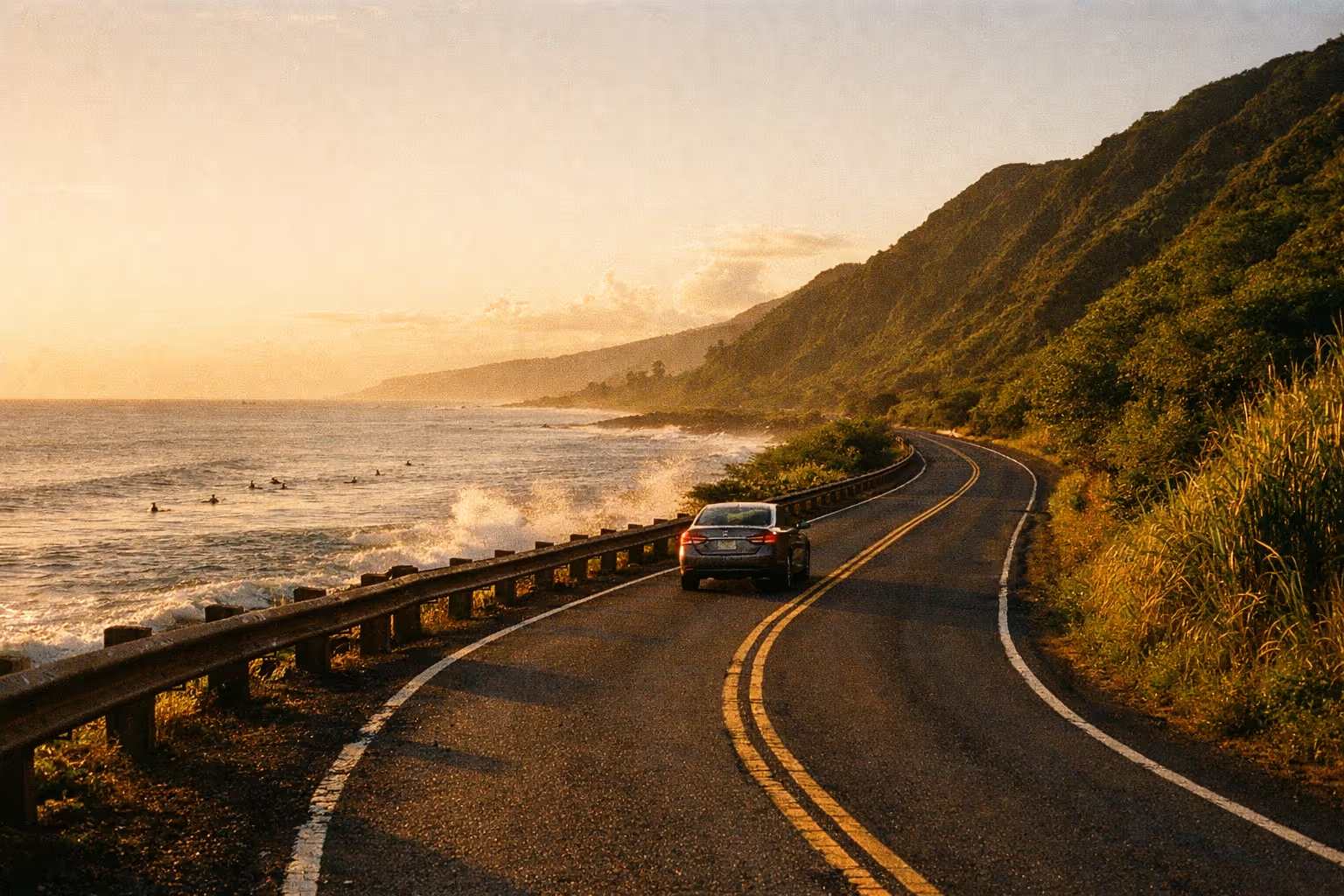
The Road to Hana is 620 curves and 59 bridges between you and the east side of the island. Most people treat it as a drive, but the drive is just how you get between stops - the stops are the actual day. Waterfalls, a lava-rock coastline, a black sand beach, roadside banana bread stands. The Road to Hana is the closest thing to a full-island sampler you’ll find in a single outing.
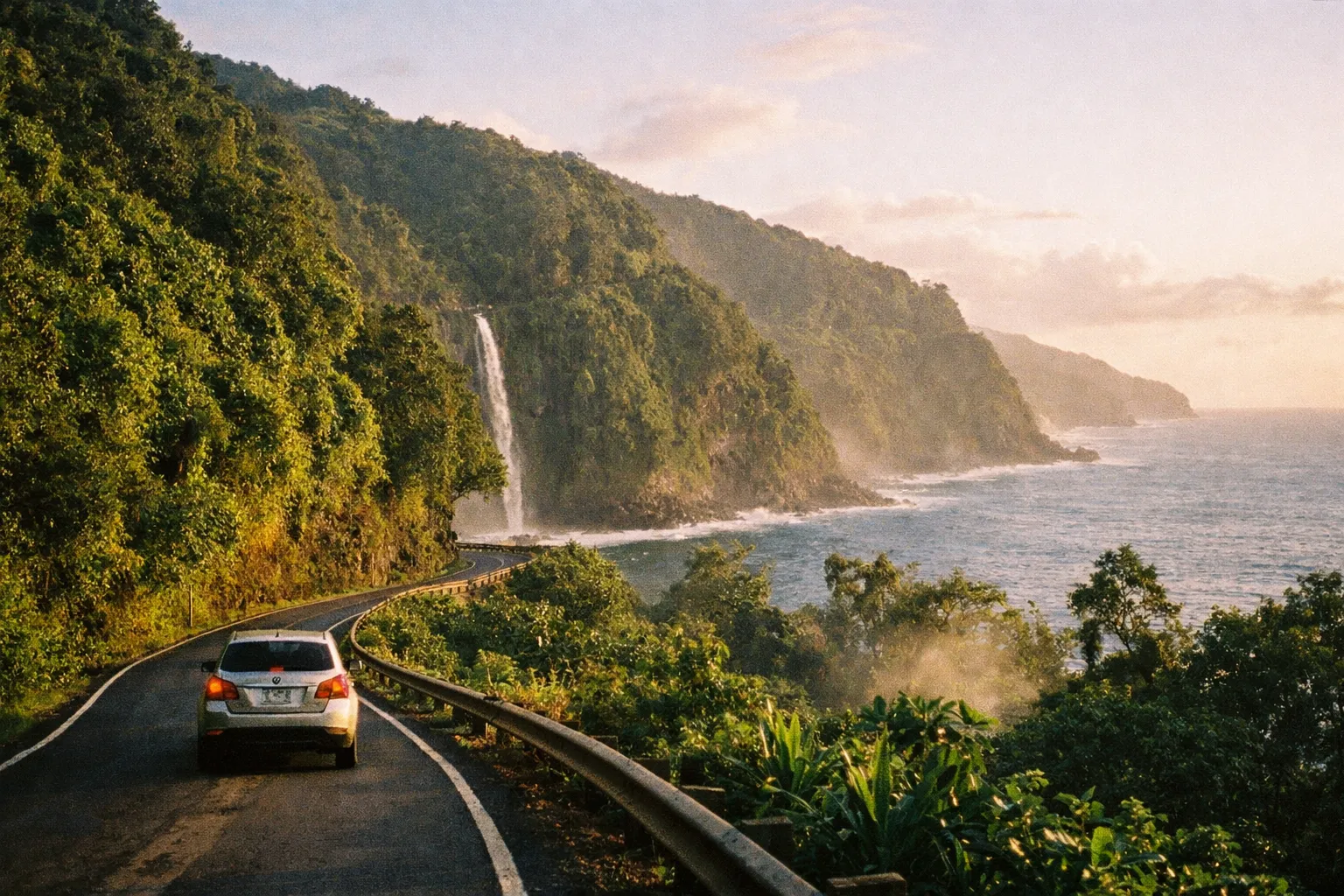
I’ve driven it in both directions. Going east in the morning is the right call - you’re ahead of the tour buses, and the light on the waterfalls is better before noon.
Plan a full day and book Wai’ānapanapa
Treat this as an 8-12 hour day, not a half-day errand. The route is 64 miles of winding, one-lane-bridge driving, and the stops are the point (8).
The one reservation you cannot skip is Wai’ānapanapa State Park - the black sand beach that’s the highest-value stop on the whole corridor. Entry runs $5 per person plus $10 per vehicle, with timed entry required. Reservations open up to 30 days in advance; same-day slots occasionally appear in the off-peak shoulder months but are unreliable - treat it as advance-booking-only and don’t gamble on walk-up availability in peak season. People routinely drive most of the way to Hana, then get turned away at the gate because they never grabbed a slot. Book yours weeks ahead.
Start before 7:00 a.m. to get ahead of the tour buses, avoid one-lane congestion, and actually find parking at the popular stops.
My condensed east-side priority list, ranked by whether it’s worth the detour:
- Wai’ānapanapa black sand beach - worth the detour, and it’s the reservation you already paid for.
- Ke’anae Peninsula - worth it, especially for photographers; a lava-rock coastline with pounding surf and the famous banana bread stands.
- Pools of Oheo (Kīpahulu) - worth it if you’re continuing past Hana, but check whether the pools are open for swimming before you go, as conditions change.
- Wailua Falls - worth a quick stop; it’s roadside and photographs well.
- Twin Falls near the start - skip if short on time. It’s the first stop everyone hits, which means it’s crowded and less dramatic than what’s ahead.
Food matters on this route. Many east-Maui stretches have thin restaurant density and slow service, and late departures can leave you stuck after 3:00 p.m. with limited options - especially if you push past Hana. Carry water, breakfast, and a way to pay cashless. If self-driving feels like too much, guided tours handle the navigation and reservations for you; the trade-off is a fixed schedule and less time at the stops you care about most.
Verify your rental terms before you book, too. Some companies restrict travel on the Road to Hana or add charges for a second driver.
Travelers who want more waterfall mileage can extend the theme by exploring Rainbow Falls, Hilo farmers market stops and lush scenery on the Big Island.
Maui Hawaii Makena Beach and the best beaches
After a day of east-side driving, the south and west shores are where you recover. Swimming is easy, logistics are simple, and the only real variable is parking - which fills faster than most visitors expect.
Maui Hawaii Makena beach sits on the south shore and anchors most family beach itineraries. The main draw is Mākena State Park, better known as Big Beach - a wide, long stretch of golden sand with strong shore break. It’s worth the visit, but the waves can be rough for young kids. The smaller, more protected Little Beach next door is calmer. Parking fills early on peak days, so treat it like the sunrise summit: get there before mid-morning or don’t bother.
Other beach zones worth your time:
- Ka’anapali (west Maui) - worth the detour for families; long resort beach with reliable snorkeling at Black Rock and easy amenities.
- Nāpili Bay (west Maui) - worth it; a smaller crescent bay with calm water and good turtle sightings close to shore.
- Kīhei (south Maui) - a string of accessible beach parks, good for a low-effort swim day without the drive.
For families especially, pair one east-side day with one west or south beach day. You get the lush scenery and the easy swimming without overdriving, and kids under 10 will thank you for not attempting the full Hana loop in one shot (5). If you’re traveling with children, practical tips for visiting Hawaii with kids can help you plan the right balance of adventure and downtime.
Best time to visit Maui Hawaii
The best time to visit Maui Hawaii depends entirely on your goal. Pick the season around what you actually want to do (5).
Best single month: September. Crowds drop sharply after Labor Day, Haleakalā and Wai’ānapanapa reservations are easier to land, and the ocean on the west and south shores is still calm enough for snorkeling. You get summer-quality water conditions without summer-level competition for parking and tour slots. Prices on accommodation typically run 15-25% below peak winter rates.
- Winter (December-March): whale watching season. Humpbacks are close to shore off the west and south coasts, and boat tours are at their best. This is also peak crowd and price season, so book Haleakalā and Wai’ānapanapa reservations well ahead.
- Spring and fall (April-May, September-October): lighter crowds and easier reservation availability. Weather is still reliable and the resorts are less packed.
- Summer (June-August): calmest ocean conditions on many west and south beaches, which makes it the best window for snorkeling and swimming with kids. Expect family-travel crowds.
Whatever month you choose, the summit is cold and the east side is wet. Those two constants don’t change with the calendar.
Where to eat: Maui restaurants by zone
The smart way to think about Maui restaurants Hawaii is by geography. The island’s dining is spread across logistically separate zones, and a “best restaurants” list that ignores where you’ll actually be at mealtime isn’t useful (5).
- Near the sunrise routes (Upcountry / Kula): After Haleakalā you’ll come down hungry and early. Kula and Makawao have breakfast spots and coffee that open early enough to catch descending sunrise crowds. Plan this in advance - you’ll be famished by 8 a.m. Grandma’s Coffee House in Keokea opens at 7:00 a.m. and sits directly on the descent route from the summit.
- West shore (Ka’anapali / Lahaina area): Seafood and beachfront dining are concentrated here. Note that Lahaina is still recovering from the 2023 fires - check what’s open before you go and support the businesses that have reopened. The dining corridor along Front Street has been rebuilding, but call ahead rather than assuming a specific spot is operating.
- South shore (Kīhei / Wailea): The densest cluster of restaurants on the island, from casual fish tacos in Kīhei to upscale dining in Wailea near the Makena beach zone. If you’re eating on a budget, Kīhei’s South Kīhei Road strip runs $12-$20 per plate at most spots. Wailea restaurants average $40-$80 per person for dinner.
- East side (Road to Hana corridor): Thin and slow. This is snack-stand and banana-bread territory, not sit-down dining. Carry your own food and don’t count on a real meal until you’re back on the main road. The Halfway to Hana stand near the Ke’anae turnoff is a reliable mid-route stop for banana bread and fresh fruit - cash or card accepted, and it moves fast.
One thing most guides get wrong about Maui dining: they treat the island as a single restaurant market. In practice, you’re eating in whichever zone you happen to be in at mealtime, and the east side has almost nothing. Build your food plan around your driving plan, not the other way around.
Is 3 days in Maui enough?
3 days | Estimated cost: $350-$600 per person (excluding flights and accommodation). That range covers a rental car split between two people ($75-$135/day), park and reservation fees ($46-$61 total for Haleakalā and Wai’ānapanapa), one snorkel tour ($80-$130), meals ($40-$70/day), and incidentals. Budget toward the higher end in peak winter and spring months.
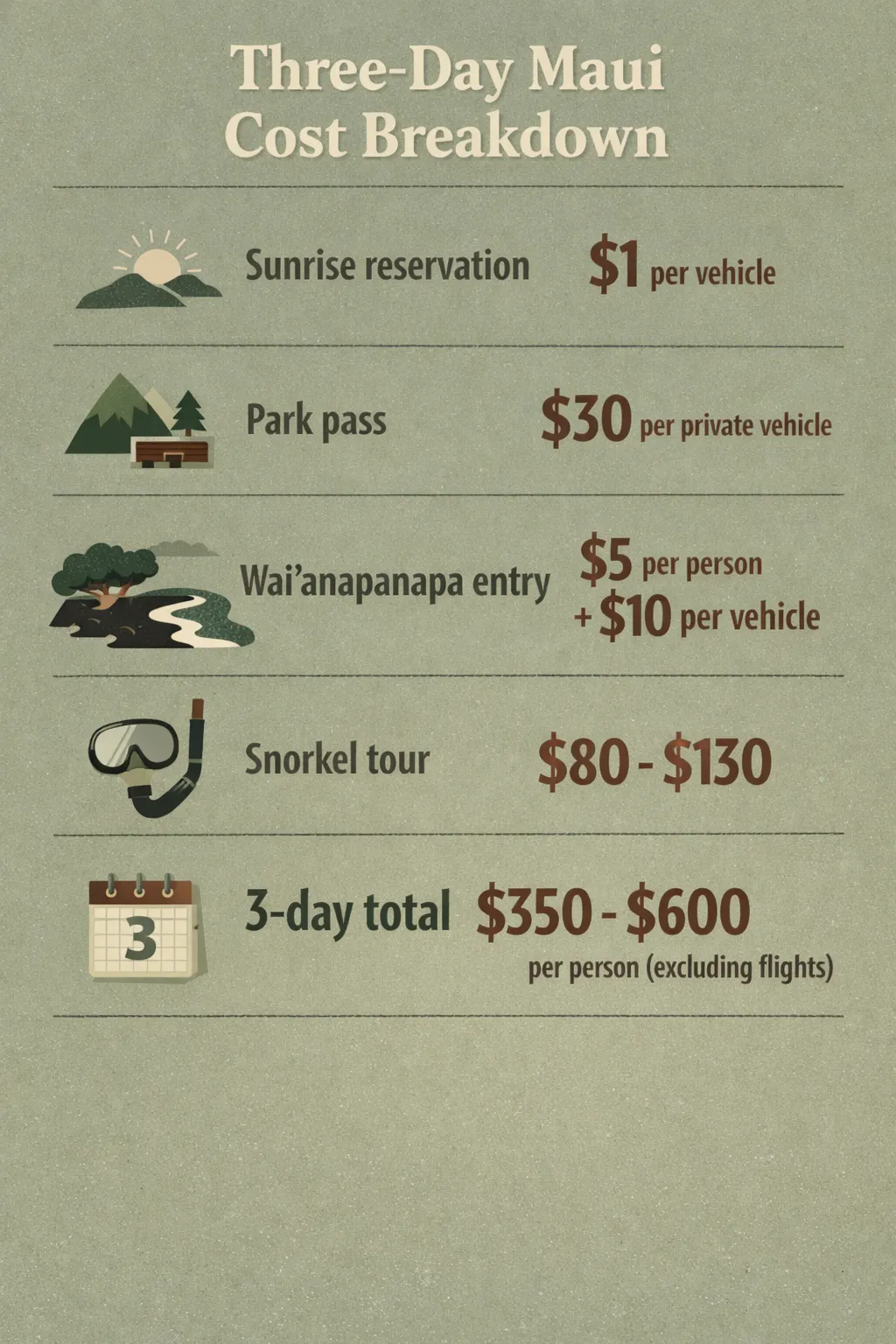 Three-day Maui itinerary cost ranges from $350 to $600 per person (excluding flights), including $1 sunrise reservation per vehicle, a $30 park pass, Wai‘ānapanapa entry at $5 per person plus $10 per vehicle, and a snorkel tour at $80-$130.
Three days is enough for a strong first trip if you accept that you’ll do the highlights and skip the deep cuts. Trying to complete every waterfall and every beach in 72 hours is how people end up exhausted and stuck in traffic. Here’s the sequence I’d run:
- Day 1 - Haleakalā sunrise + a west beach afternoon. Book the $1 sunrise reservation and the $30 park pass ahead (7). Come down, eat Upcountry, then recover at Ka’anapali or Nāpili.
- Day 2 - Road to Hana (condensed). Leave before 7:00 a.m. Hit Ke’anae, your reserved Wai’ānapanapa slot, and 2-3 other stops. Don’t chase the full loop.
- Day 3 - Snorkel morning + Makena or ‘Īao. A Molokini or Turtle Town tour in the morning, then a relaxed beach day at Makena or a short walk in ‘Īao Valley.
Budget rough numbers for the signature days: $30 Haleakalā entry plus $1 sunrise reservation, $15-$30 for food stops on the Hana corridor, and $15-$20+ in reservation fees for Wai’ānapanapa. Snorkel tours run separately and vary by operator. For a broader look at island hopping in Hawaii and what each island adds to a longer trip, that’s worth reading before you finalize your itinerary.
If you have more time, add a second beach zone or push past Hana to Kīpahulu. Three focused days covers the essentials without turning the trip into a checklist.
3-Day Maui Itinerary
3 daysA practical sequence covering the island's top highlights with budget and timing estimates.
- 1
Day 1 - Haleakalā sunrise + west shore beach
Book the $1 sunrise reservation and $30 park pass in advance. After sunrise, eat in Upcountry, then relax at Ka'anapali or Nāpili beach.
- 2
Day 2 - Road to Hana (condensed)
Start before 7:00 a.m. Visit Ke'anae Peninsula, Wai'ānapanapa (reservation required), and 2-3 other stops. Avoid the full loop to save time.
- 3
Day 3 - Snorkeling + Makena or 'Īao Valley
Take a morning snorkel tour to Molokini or Turtle Town, then spend a relaxed afternoon at Makena Beach or a short walk in 'Īao Valley State Park.
Frequently Asked Questions
- Can I buy the Haleakalā sunrise reservation on arrival?
- No, the $1 sunrise reservation must be booked in advance on Recreation.gov, with inventory released up to 60 days ahead and again 2 days prior.
- Are there any rental car restrictions for the Road to Hana?
- Some rental companies restrict travel on the Road to Hana or charge extra for a second driver; verify terms before booking.
- Is it possible to do the full Road to Hana loop in one day?
- The full loop is long and challenging; a condensed route with key stops is recommended for a day trip to avoid exhaustion.
- What payment methods are accepted at Haleakalā park entrances?
- Some park entrances are cashless and require electronic payment; do not rely on paying with cash at the gate.
- How early should I arrive at popular beaches to find parking?
- Arrive before mid-morning on peak days at beaches like Makena and Ka'anapali to secure parking; spots fill quickly.
- Are there guided tours that handle Road to Hana logistics?
- Yes, guided tours manage navigation and reservations but offer less flexibility and fixed schedules compared to self-driving.