Flamenco Beach on Culebra earns every ranking it wins, but the beach is the easy part; getting there is where trips unravel. The 2.25 dollar ferry from Ceiba is a bargain that sells out a week or two ahead, especially on weekends, and the island has no real taxi network beyond shared vans at about 5 dollars a head. Once you land, a small donation and parking fee is all it costs. Sort the ferry first, and the rest of Culebra is simple.
Why Flamenco Beach Culebra is so famous
Flamenco is a 1.5-mile crescent on Culebra’s north shore, and it earns its reputation on three things: water clarity, sand quality, and the near-total absence of high-rise development (1). TripAdvisor reviewers rate it around 4.5 out of 5 from thousands of reviews, and it lands on TripAdvisor’s global top-ten beach rankings with some regularity. Most curated guides call it the best beach in Puerto Rico.
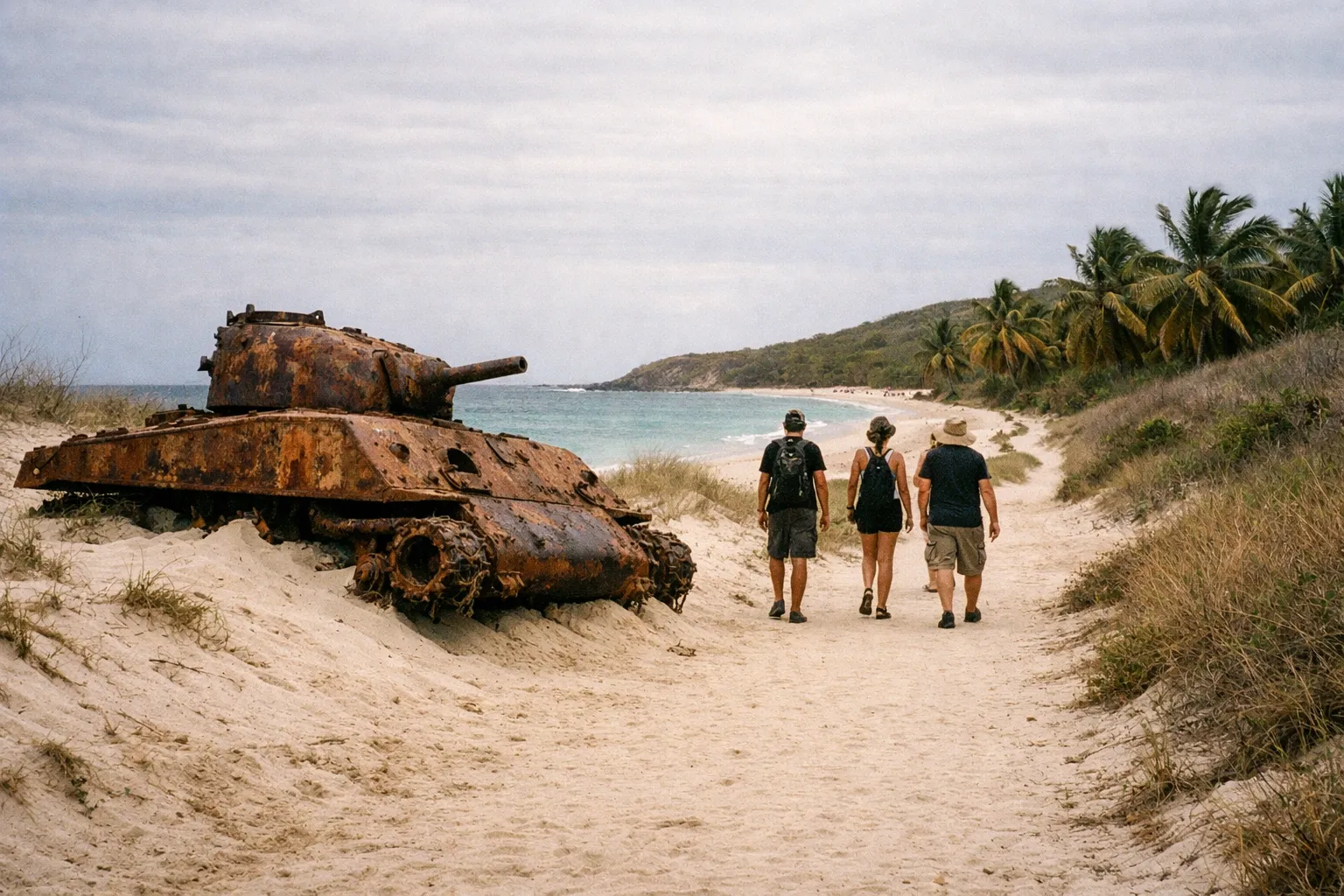
The water is the real selling point. Long stretches near the main entrance stay shallow and calm - you can wade out a surprisingly long way, which makes it good for kids, nervous swimmers, and anyone who just wants to float without fighting current. There’s no resort casting a shadow over the sand, which is exactly what separates Flamenco from most Caribbean beaches you can reach by car.
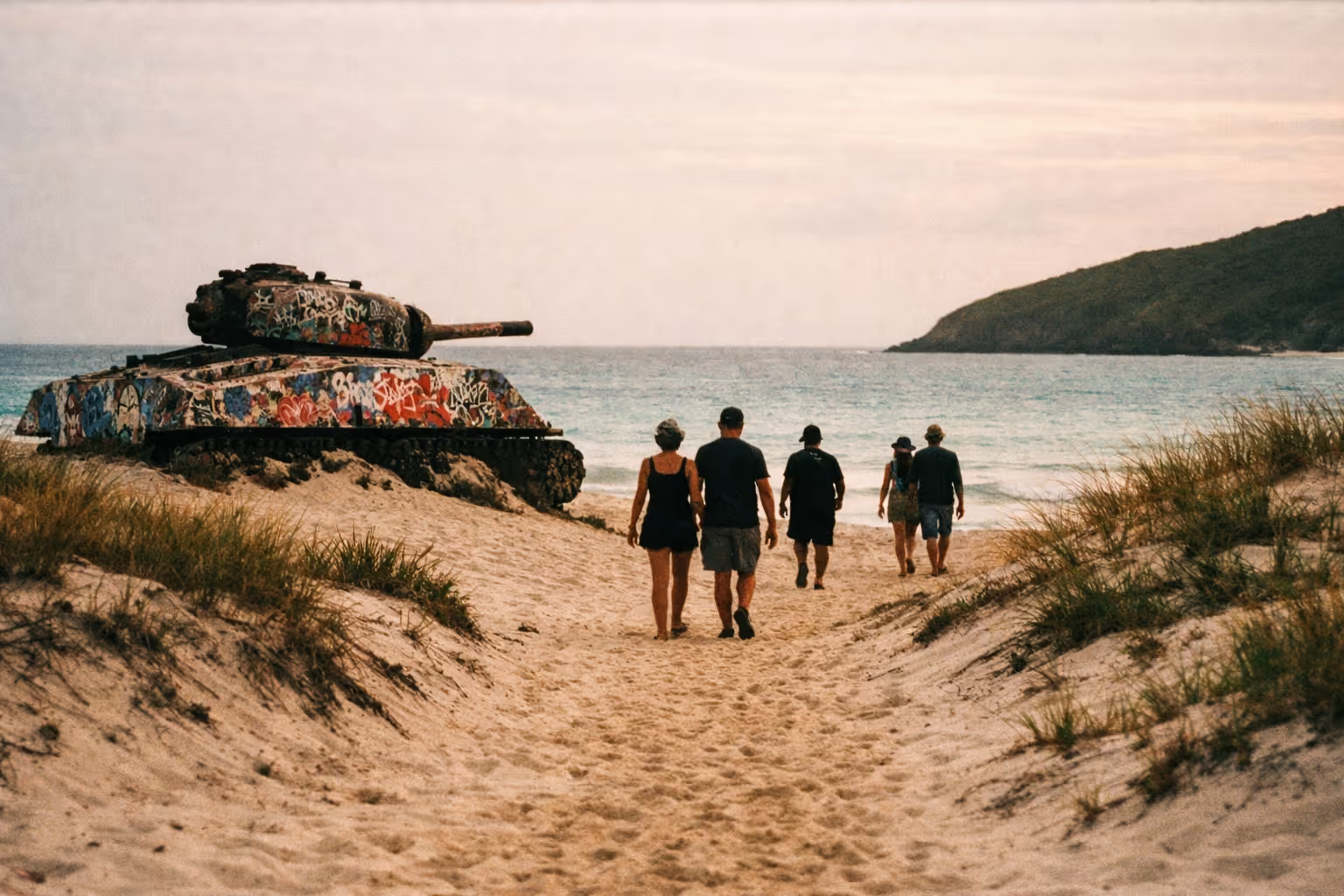
Then there are the rusted tanks. Two decommissioned Sherman tanks sit half-buried in the sand toward the northwest end, leftovers from the decades when the U.S. Navy used Culebra for bombing practice. They’re covered in graffiti now and have become the island’s most-photographed landmark. Walk about 5-10 minutes from the main entrance and you’ll find them - and, conveniently, some of the emptier stretches of beach.
What most guides get wrong: they describe Flamenco as a full-service beach. It isn’t. There are food kiosks, restrooms, showers, and chair rentals near the parking lot, but no beachfront hotel, no waiter service, no jet skis lined up for rent. Come expecting a well-maintained public beach, not a resort strip, and you won’t be disappointed.
Is Flamenco Beach worth the visit?
Short answer: yes, but be honest about the logistics. From a San Juan hotel, you’re looking at a minimum of 3-4 hours each way - drive to Ceiba, ferry, taxi - which means a day trip runs 10-12 hours door to door. If you can only manage it as a rushed day trip, it’s still worth doing, but you’ll spend more of the day in transit than on the sand.
The beach delivers on its ranking. The water color is real, the nearby snorkeling is good, and the crowds thin out dramatically if you walk even a few minutes from the entrance (4). Where people come away disappointed is when they arrive mid-afternoon on a busy weekend, park in full sun, skip the umbrella rental, and stay glued to the crowded central section.
To make it worth the trip: stay overnight on Culebra if you can, arrive early, and combine Flamenco with at least one other beach or snorkel spot. Two to four nights gives you time to see Flamenco, Tamarindo, and Carlos Rosario without racing a ferry schedule.
✓ Pros
- Exceptional water clarity and shallow calm areas suitable for all swimmers
- Minimal shoreline development preserves natural beach experience
- Multiple nearby beaches offer varied snorkeling and crowd levels
✗ Cons
- Long and complex logistics from San Juan requiring 3-4 hours each way
- Limited beach facilities and no resort-style services
- Ferry tickets sell out quickly on weekends and holidays
Ferry schedules, prices, and booking for trips to Culebra
Culebra is reached by ferry from Ceiba, a terminal about 40-50 miles east of San Juan - roughly a 1 to 1.5-hour drive (2). The passenger ferry crossing takes about an hour; the cargo ferry runs closer to 1.5 hours.
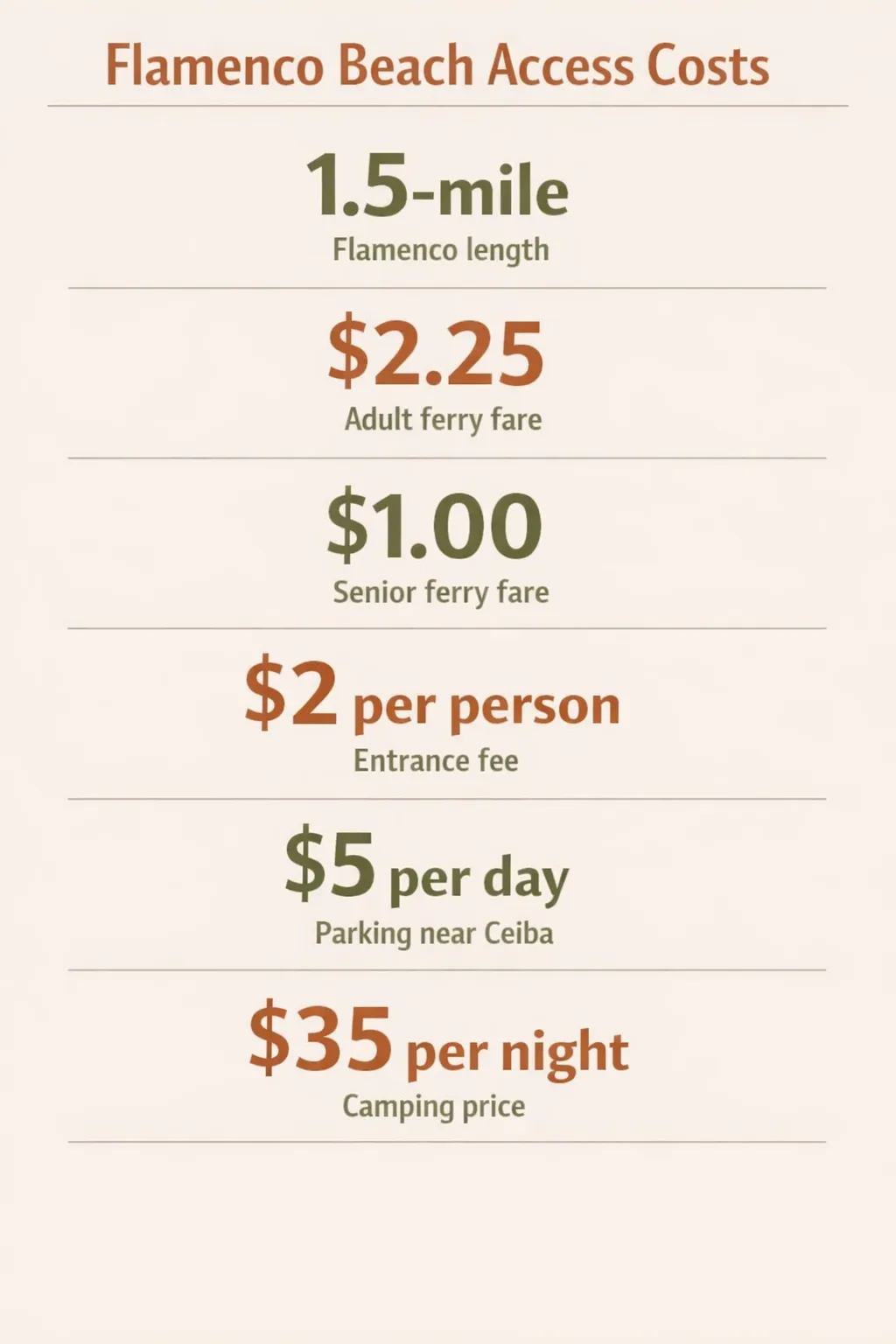 Costs and access details for Flamenco Beach, including ferry, entrance, parking, and camping, as cited in the article.
Fares are cheap. As of 2026, the one-way adult fare (ages 11-59) is $2.25 (2)(8). Seniors 60-74 pay $1.00, and travelers 75 and older ride free with ID (2)(5). A small environmental fee (usually under $2) is added to Culebra-bound tickets (2). Secure parking near the Ceiba terminal runs about $5 per day (5).
Ferries run multiple times daily - often 6-8 departures each direction, with early morning runs starting around 3:30-7:30 a.m. and afternoon and early-evening returns (5)(8).
Booking mechanics that matter: the biggest mistake travelers make is showing up same-day for a popular weekend or holiday departure and finding it sold out - losing a full day of the trip. Buy tickets online in advance through the official portal or app, and for weekends or holidays, book at least 1-2 weeks ahead (8). This is a shift from older advice that told you to just buy at the terminal. That advice is now wrong.
Do not plan to bring a mainland rental car. Cargo ferry vehicle space is limited and heavily prioritized for residents and freight. Visitors regularly fail to secure a return spot and get stranded. Rent a golf cart or jeep once you’re on the island instead.
The flight alternative: small-plane flights from San Juan or Ceiba to Culebra run about $60-$120 one way, with a flight time of roughly 30 minutes. It costs more than the ferry but removes the sellout risk and cuts hours off the door-to-door time. Worth considering if your schedule is tight or you’re traveling during a holiday weekend.
How to get to Flamenco Beach on Culebra
Once you’re off the ferry, Flamenco is close. The beach sits about 2.5 miles from the Culebra ferry terminal - roughly a 10-minute drive (10).
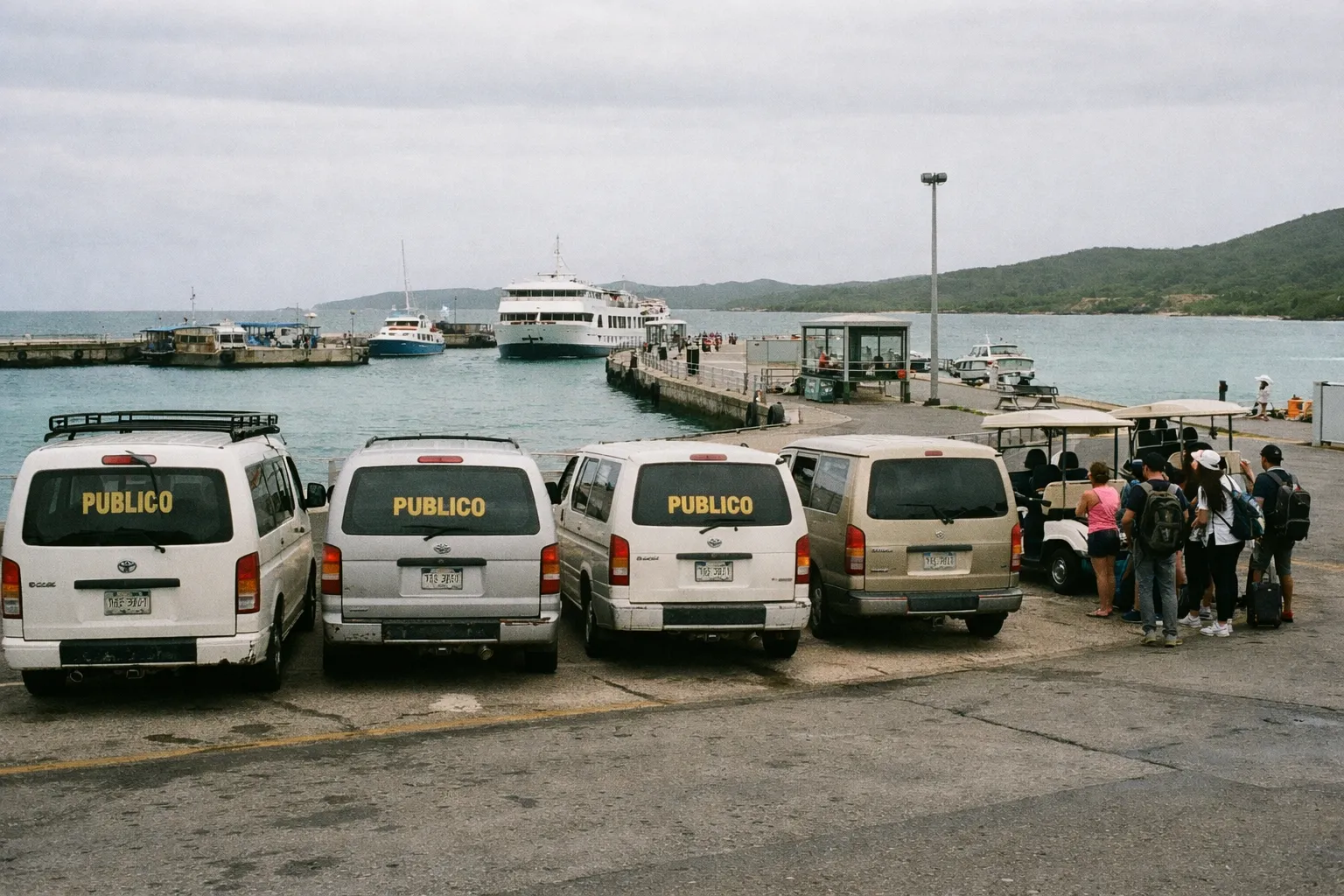
Your options from the dock:
- Publico (shared taxi): the standard move - about $5 per person each way to Flamenco (5). Drivers line up near the ferry terminal.
- Golf cart rental: widely available, roughly $60-$90/day, and lets you hit multiple beaches on your own schedule.
- Jeep/4x4 rental: about $70-$120/day, useful if you want to reach rougher-access spots like Zoni.
The Flamenco facility gate is open 7:00 a.m. to 5:30 p.m., and vehicles get locked out promptly at 5:30. If you’re chasing a late-afternoon photo, plan to walk back to town or pre-arrange a taxi. Restrooms and changing rooms at the parking area are reportedly available 24/7, but kiosks and food service run daytime only (10).
How to Get to Flamenco Beach from San Juan
Approximately 4 hoursStep-by-step travel from San Juan to Flamenco Beach on Culebra
- 1
Drive from San Juan to Ceiba
Drive 40-50 miles east to the Ceiba ferry terminal, about 1 to 1.5 hours depending on traffic.
- 2
Take the ferry to Culebra
Board the passenger ferry at Ceiba for a roughly 1-hour crossing; buy tickets online in advance to avoid sellouts.
- 3
From Culebra ferry terminal to Flamenco Beach
Take a shared taxi (publico) for about $5 per person or rent a golf cart or jeep for more flexibility.
Do you have to pay to enter Flamenco Beach?
Yes. There’s an entrance fee of about $2 per person, collected as a required “donation” that funds the showers, bathrooms, and picnic facilities. July 2026 reviews confirm the fee is actively being collected and the facilities are functioning.
On top of that, expect parking fees of about $5 per car per day, with additional charges for golf carts (1)(10).
Budget guidance for a beach day: carry $20-$40 in small bills per person to cover the entrance fee, taxi, snacks, and chair or umbrella rentals (which run about $15-$25 per set per day). Card acceptance is spotty, so bring cash.
Camping at the Flamenco campground reopened by reservation only as of February 2025, at $35 per night (1). Sites have no electricity and no campfires, though BBQ pits are available if you bring your own charcoal (1). There’s no camp store, so haul in your own water and food - kiosks close by late afternoon.
Beaches on Culebra beyond Flamenco
Flamenco gets the headlines, but the island’s other Culebra beaches are where the snorkeling gets better and the crowds disappear. Ranked by whether they’re worth the detour, and by how they stack up against Puerto Rico’s best beaches:
Carlos Rosario - worth the detour. This is the best shore-accessible snorkeling near Flamenco. Reach it via the trail from the Flamenco parking lot, past a chained gate - about a 20-minute walk (3). The reef structure and water clarity beat the main swimming area at Flamenco. Wear something on your feet for the trail and rocky entry.
Tamarindo Beach - worth the detour. Your best odds of snorkeling with sea turtles. Guides consistently report high turtle-sighting rates here (3). A smart pairing: taxi to Flamenco in the morning, then move over to Tamarindo around midday for the turtles, and you get real variety without renting a car.
Zoni Beach - worth it if you have wheels. A quieter, more secluded stretch on the east side, better for a low-key afternoon than for snorkeling. You’ll want a golf cart or jeep to reach it comfortably.
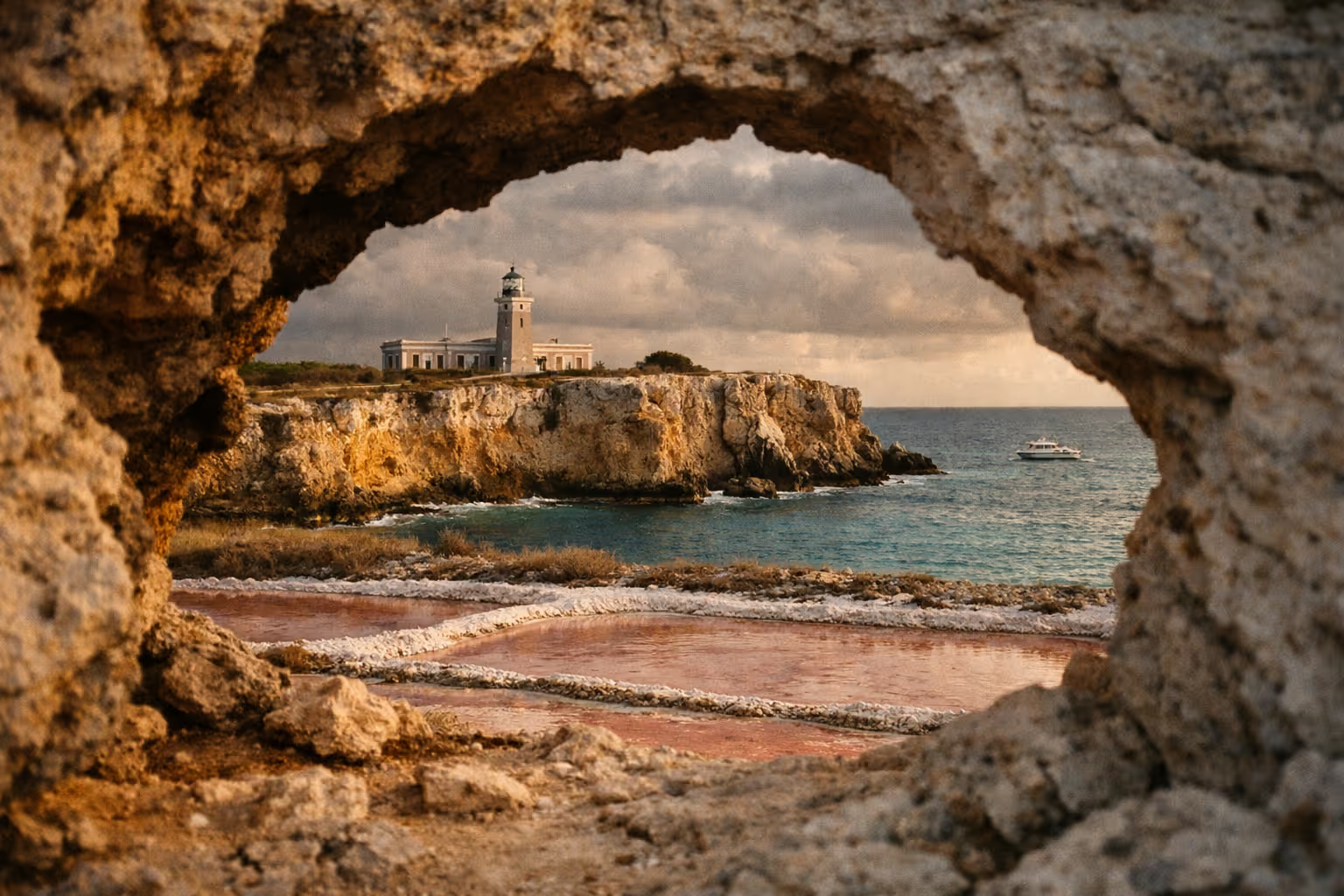
Cayo Luis Peña and Culebrita - worth it with a boat. These offshore cays require a boat tour or water taxi. Culebra Divers and similar operators run half-day boat snorkeling trips to Luis Peña, Carlos Rosario, and other spots for roughly $90-$140 per person, gear included (6). Culebrita, with its beach and old lighthouse, is a common day-trip target.
Snorkeling and other activities to enjoy in Culebra
The best of the things to do in Culebra revolve around the water, but not exclusively.
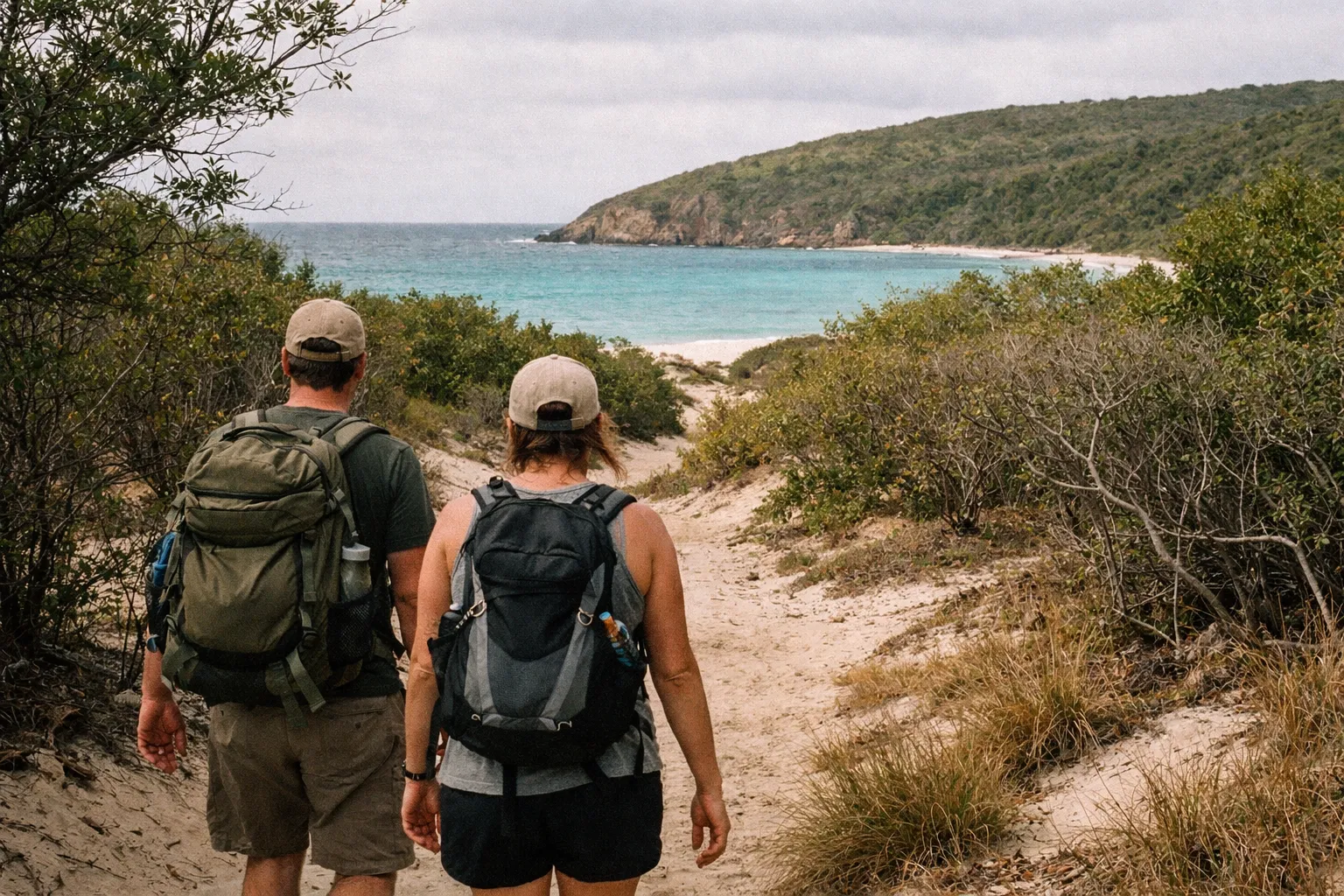
Snorkeling is the top activity. For DIY snorkeling without a boat, the Flamenco-to-Carlos Rosario trail is your best option (3)(1). Bring your own mask, snorkel, and fins, or rent a set on-island for about $15-$25/day from dive shops or kiosks (6). Beginners can stick to the calm, shallow zones near Flamenco’s main entrance; stronger swimmers should head to the far ends of the beach or hike to the reefs.
Boat and catamaran tours are the convenience play. Full-day snorkeling tours from Fajardo or Ceiba to Culebra and Flamenco typically run $130-$190 per adult, including lunch and gear, with about 3-5 hours on the beach across a 6-8 hour day (9). These make sense if you’re based on the mainland and don’t want to gamble on ferry tickets.
I’ve done the DIY ferry route in late spring and the tour-boat version in December - the tours are genuinely comfortable, but you lose all flexibility on timing. If you want to stay until 4 p.m. because the light is good, you can’t.
Beyond the water:
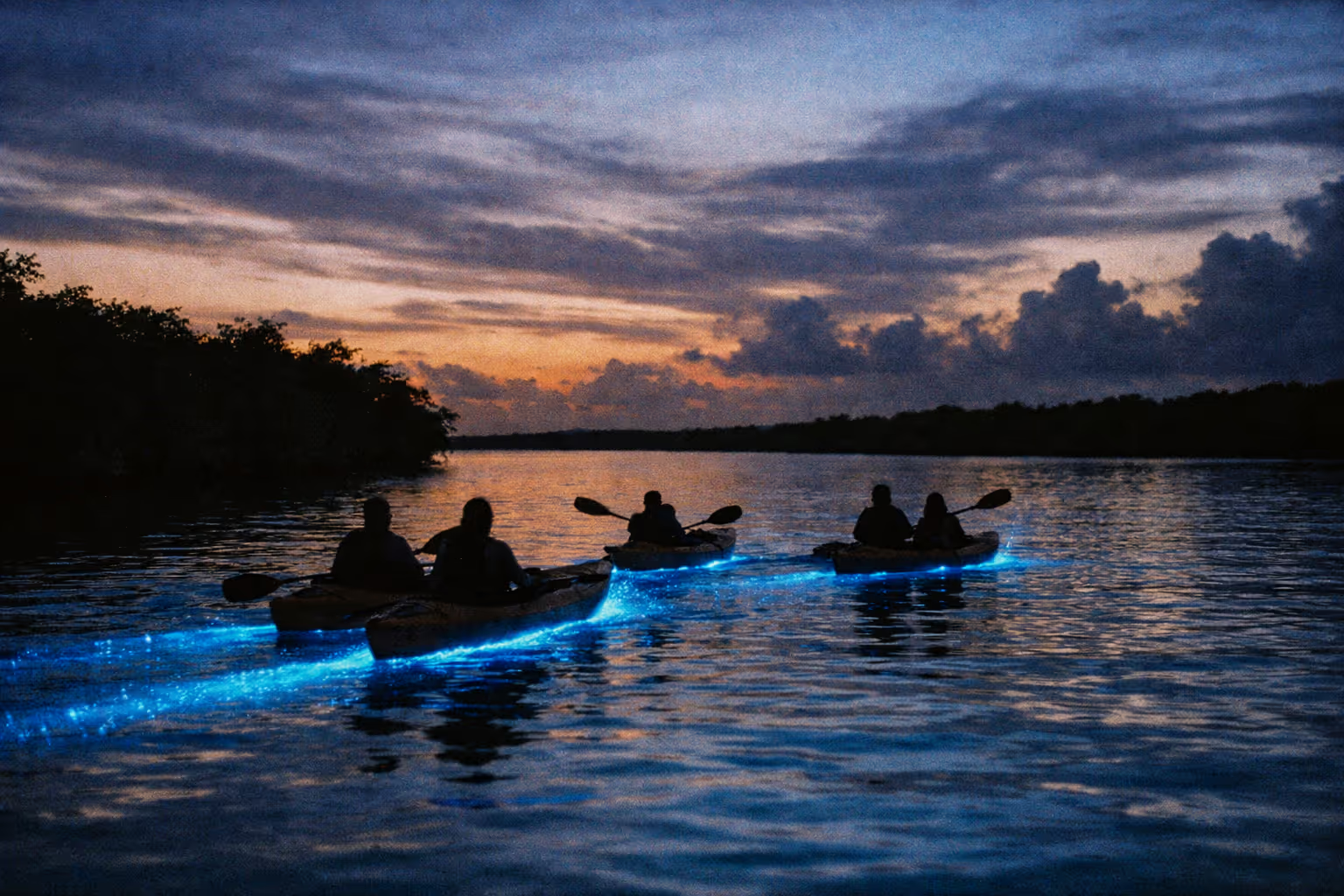
- Kayaking the mangrove channels
- Hiking in the Culebra National Wildlife Refuge
- Sampling local food at Dewey’s family-run kiosks and beachside spots
DIY vs. Tour Options for Visiting Flamenco Beach
| DIY day trip (ferry + taxi) | Overnight DIY (2-3 nights) | Full-day boat tour | |
|---|---|---|---|
| Cost per Person | about $15-$50 round-trip transport | $120-$250/night lodging + rentals | $130-$190 |
| Time on Beach | You control it | Multiple full days | 3-5 hrs |
| Flexibility | High - but ferry sellout risk | Highest | Low - fixed itinerary, no ferry gamble |
Culebra’s history and small-town character
While the beaches take center stage, Culebra’s past is worth understanding - it explains the tanks on the sand and the low-key feel of the place. The main town, Dewey (also called Culebra Pueblo), anchors an island of around 1,800 residents, making it Puerto Rico’s least populous municipality.
The rusted tanks on Flamenco are the most visible reminder of the U.S. Navy’s decades of bombing practice here. Community protests in the 1970s eventually forced the Navy to stop bombing and, by 1982, to withdraw entirely. Locals are quick to share stories of those protests - it’s a point of real pride here, and worth knowing before you pose for a photo in front of the graffiti.
| Year | Event |
|---|---|
| 1500s | Spanish colonization begins |
| 1901 | U.S. Navy establishes presence on Culebra |
| 1970s | Protests lead to end of Navy bombing practices |
| 1982 | U.S. Navy fully withdraws from Culebra |
| Present | Culebra thrives as an eco-tourism destination |
The Culebra National Wildlife Refuge protects over 1,500 acres of habitat for sea turtles and seabirds, and the island’s culture blends Puerto Rican traditions with an unhurried pace that’s hard to find anywhere this close to San Juan.
Planning your Culebra trip: costs, timing, and logistics
Documents: Culebra is part of Puerto Rico, a U.S. territory. U.S. citizens need no passport - a standard driver’s license or ID is fine. Non-U.S. visitors need the same entry documents (visa/ESTA as applicable) required for the mainland; there are no extra formalities.
Best month to visit: December through April is the dry season - least rain, calmest water, and the most predictable beach days. It’s also the busiest and most expensive stretch. For a quieter island with lower rates and still-solid weather, aim for May-June or November. I’ve found late spring hits the sweet spot: warm water, thinner crowds, and ferry tickets that are actually available.
Where to stay: guesthouses and small hotels in Dewey or near Flamenco typically run $120-$250 per night for a double in high season. Vacation rentals near town let you walk to restaurants and grab a publico to the beaches. Camping at Flamenco ($35/night) is the budget play if you’re equipped (1).
Sample budgets:
- Budget day-tripper: with the ferry and shared taxis, round-trip transport can run as low as $30-$50 per person. A packed-lunch beach day with no chair rental comes in under $15 on-island.
- Mid-range (2-3 nights): $120-$250/night lodging, a golf cart at $60-$120/day, and one snorkel tour at $100-$150 - a comfortable, flexible trip.
- Higher-end 3-day trip: flying in, pre-booked transport, and a nicer hotel can run $500-$900 per person depending on dates.
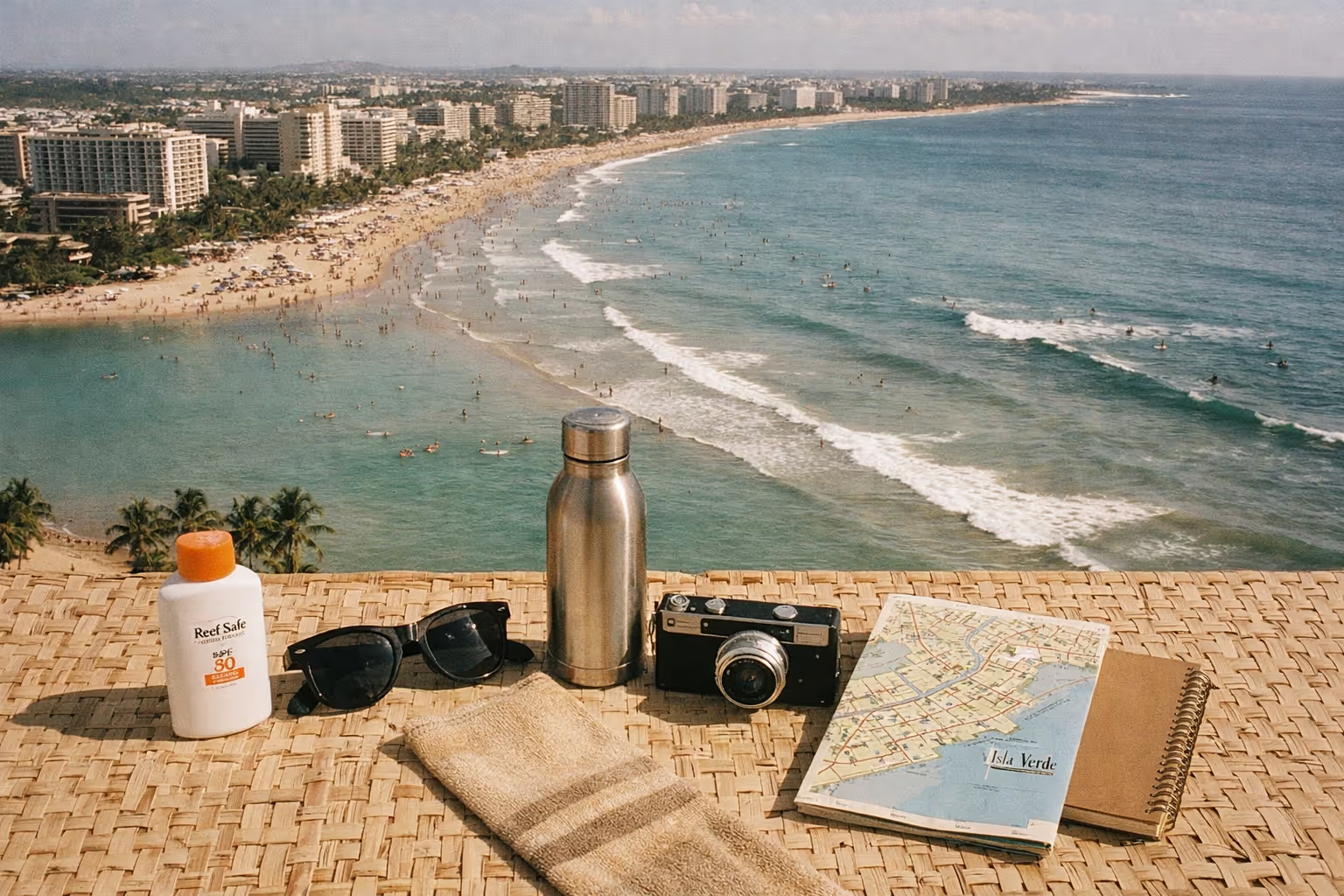
What to bring: cash in small bills, reef-safe sunscreen, your own snorkel gear if you have it, and a soft-sided cooler. There’s limited natural shade at Flamenco, so an umbrella rental - or your own - is close to essential in 86°F-plus heat. Glass bottles are banned on the beach and will be confiscated.
Common mistakes to avoid
- Waiting to buy ferry tickets. Weekend and holiday departures sell out. Book online 1-2 weeks ahead (8).
- Trying to bring a mainland rental car. Vehicle ferry space is prioritized for locals; you may not get a return spot. Rent on-island.
- Missing the 5:30 p.m. gate closure. Vehicles get locked in - plan your exit.
- Skipping shade. Umbrella rentals can sell out by late morning on peak days; arrive before 10:00 a.m. to lock in a set at standard rates.
- Assuming there’s a camp store. There isn’t. Bring all your water and food (10).
- Bringing glass. It’s prohibited and will be taken.
Insider tips
- Walk 5-10 minutes from the main entrance in either direction and the crowds vanish, even on busy days.
- For the best shore snorkeling, take the 20-minute trail from Flamenco parking to Carlos Rosario - better coral and visibility than the main swim area (3).
- Buy food and drinks at supermarkets in Dewey; Flamenco kiosks charge a 30-50% premium.
- Best light for photos is before 9:00 a.m. or after 3:30 p.m. - softer light, fewer people.
- Pair Flamenco in the morning with Tamarindo at midday for turtle snorkeling, and you get real variety on a single, car-free day.
Frequently Asked Questions
- Can I bring my own vehicle on the ferry to Culebra?
- Vehicle space on the ferry is limited and prioritized for residents; visitors often fail to secure return spots.
- Are there any camping facilities at Flamenco Beach?
- Yes, camping is available by reservation only at $35 per night, with no electricity or campfires allowed.
- Is it better to visit Culebra during the dry season or shoulder months?
- Dry season offers calm water and predictable weather but is busiest; shoulder months like May-June have fewer crowds and good conditions.
- How early should I arrive to secure an umbrella rental at Flamenco?
- Arrive before 10:00 a.m. on busy days to avoid missing out on umbrella rentals, which sell out quickly.
- What is the best way to avoid ferry ticket sellouts?
- Book ferry tickets online at least 1-2 weeks in advance for weekends and holidays to guarantee your spot.
- Are there any restrictions on what I can bring to Flamenco Beach?
- Glass bottles are prohibited and will be confiscated; bring cash as card acceptance is spotty.