Things to do in Howth all hang off one lucky fact: it is a 35-minute DART ride from central Dublin, which makes this fishing village the easiest coastal escape in Ireland. The headline is the cliff walk, an 8-kilometer loop of sea views that takes about two hours, but a weekend seafood market and a summer boat trip to Ireland’s Eye for seals and puffins round out a full day. Give it six to eight hours and catch the last train back.
The best things to do in Howth, including the Howth cliff walk, Howth market, and a Howth day trip from Dublin
If you’re wondering about the best things to do in Howth, the DART is the straightforward answer for getting there. From central Dublin - Connolly, Tara Street, or Pearse stations - the ride takes about 35 minutes and drops you steps from the harbour. A round-trip runs under $10 USD (roughly €8-9), and at peak hours trains come every 10 minutes or so (3)(5). Use a Leap card if you have one; it shaves a bit off the fare.
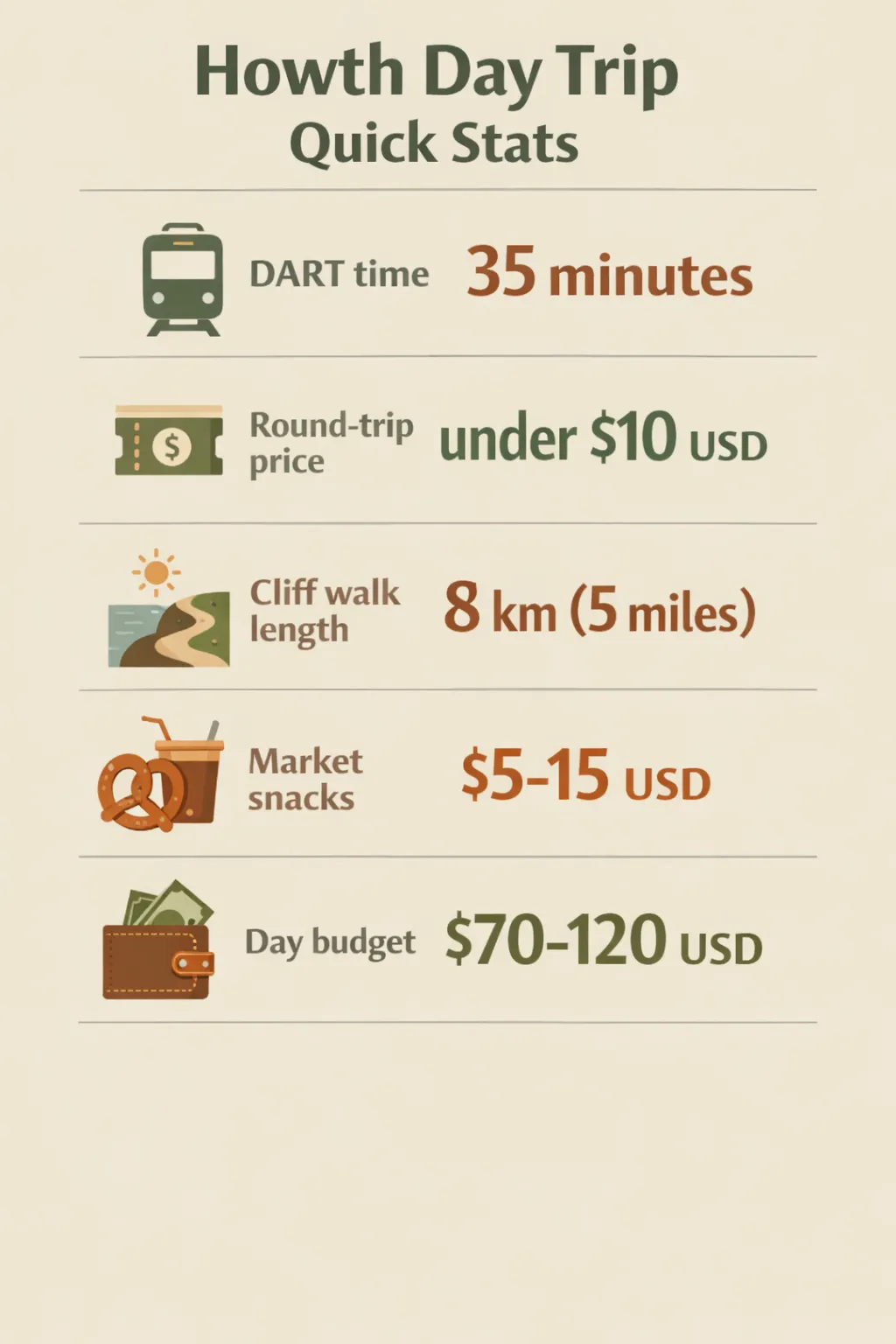 Snapshot of key Howth trip figures: DART time 35 minutes, round-trip under $10, cliff walk 8 km (5 miles), market snacks $5-15 USD, day budget $70-120 USD.
Buses run too, leaving central Dublin every 15-30 minutes for a similar price, but the journey stretches to 45-60 minutes depending on traffic. I’d only take the bus if you’re already near a route that serves Howth - the DART wins on both speed and reliability.
One logistics note that trips up a lot of day-trippers: DART frequency drops off in the evening. Check the last train time before you settle into a long seafood dinner. Otherwise you’re looking at a pricey taxi back.
How to get to Howth from Dublin
Here’s the short version of what fills a good day, before I get into the detail:
- Walk the Howth Cliff Path Loop - free, 8 km, 2+ hours, the best views on the peninsula
- Stroll the East Pier to Howth Lighthouse - flat, 30-45 minutes, harbour seals if you’re lucky
- Take a boat trip to Ireland’s Eye - seabirds, seals, and puffins in season
- Browse Howth Market - weekend food and craft stalls near the harbour
- Eat seafood - fish and chips or a sit-down meal along the waterfront
- See Howth Castle and St Mary’s Abbey ruins - history without the entry queue
- Duck into a museum - vintage radios or transport, ideal on a wet day
You won’t fit all of it into four hours. Six to eight hours covers the highlights comfortably, and I’ll break down the timing further down.
Howth’s coastal walks and cliff views
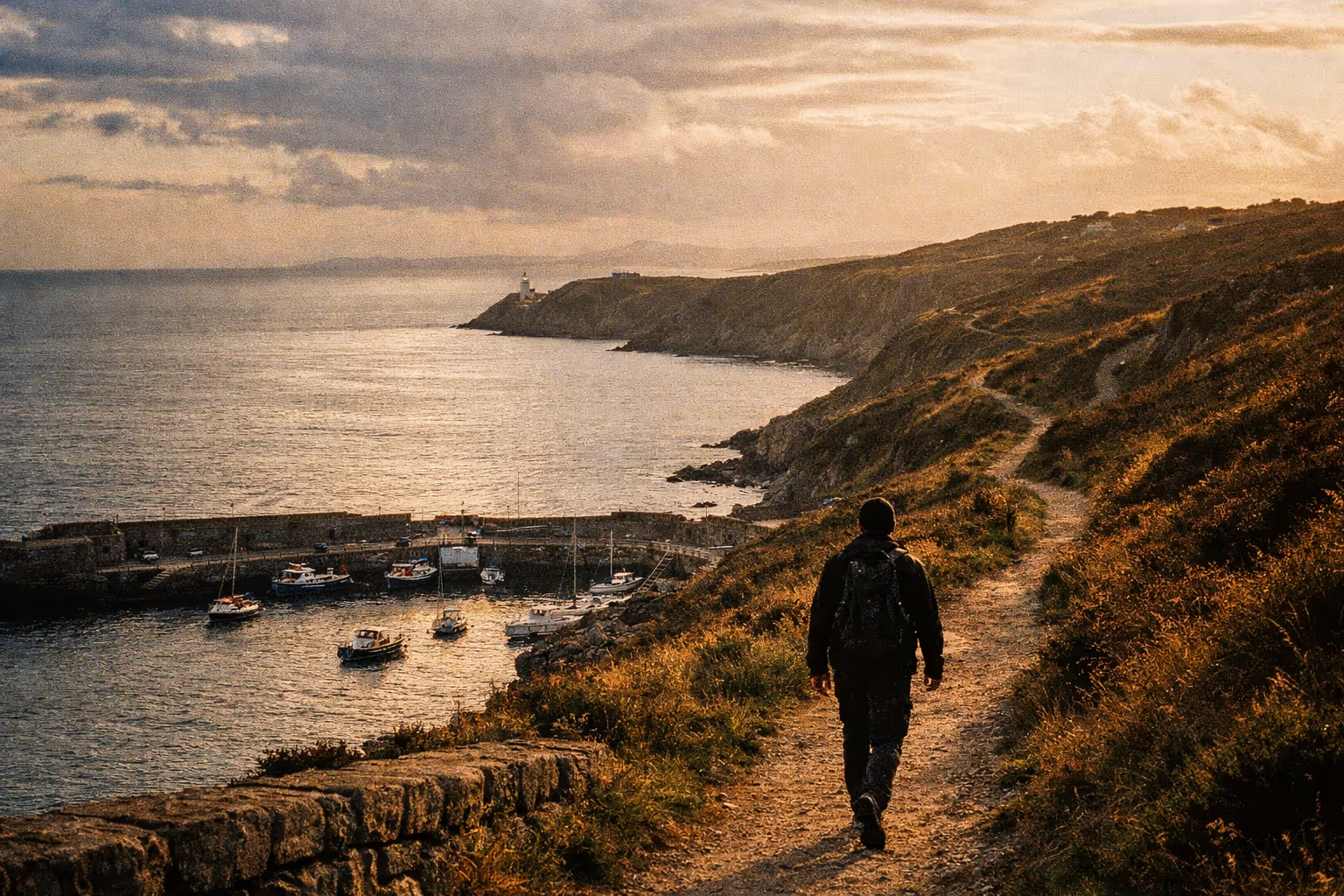
Howth’s rugged coastline is the main event, and the Howth cliff walk is where you’ll want to spend your legs. The main loop runs about 8 km (5 miles), rated moderate, and takes two hours or more depending on how often you stop (5).
As I climbed along the clifftops, the views opened up across:
- The Irish Sea stretching east
- Dublin Bay’s arc of water to the south
- Ireland’s Eye and, further out, the Baily Lighthouse
Keep an eye out for the yellow gorse that blankets the hillsides - its coconut-like scent is oddly unexpected this close to the sea. There are shorter and longer options too. The green trail is a solid 1.5-hour walk if you’re short on time or energy, while the 12 km purple trail loops past an area called the Bog of Frogs and eats most of a day - save that one for experienced walkers (8). At the far end, the longest Howth Head route stretches to 10.5 miles and can take around five hours (5).
A word on footwear: these are narrow dirt trails, not paved promenades. In wet weather they get slick, and I watched more than one person in fashion trainers regretting the choice. Waterproof shoes or boots, layers for the wind - the coastal exposure can make it feel 5-10°F colder than the city.
For a quieter moment, a tiny beach accessible via steep stairs offers a spot for a picnic with a view. Pack sensible footwear for those stairs too. They’re steeper than they look.
Howth Castle, the abbey ruins, and the village’s longer history
Howth’s story stretches back to prehistoric times, and the layers of it are visible if you know where to look. Vikings settled here, Normans took control, and the fishing port that followed has shaped the village ever since.
Historical Eras of Howth
| Prehistoric | Viking Age | Norman Invasion | Modern Era | |
|---|---|---|---|---|
| Era | Prehistoric | Viking Age | Norman Invasion | Modern Era |
| Significance | Early settlements | Important Norse settlement | Control shifts to Norman invaders | Fishing port and suburban development |
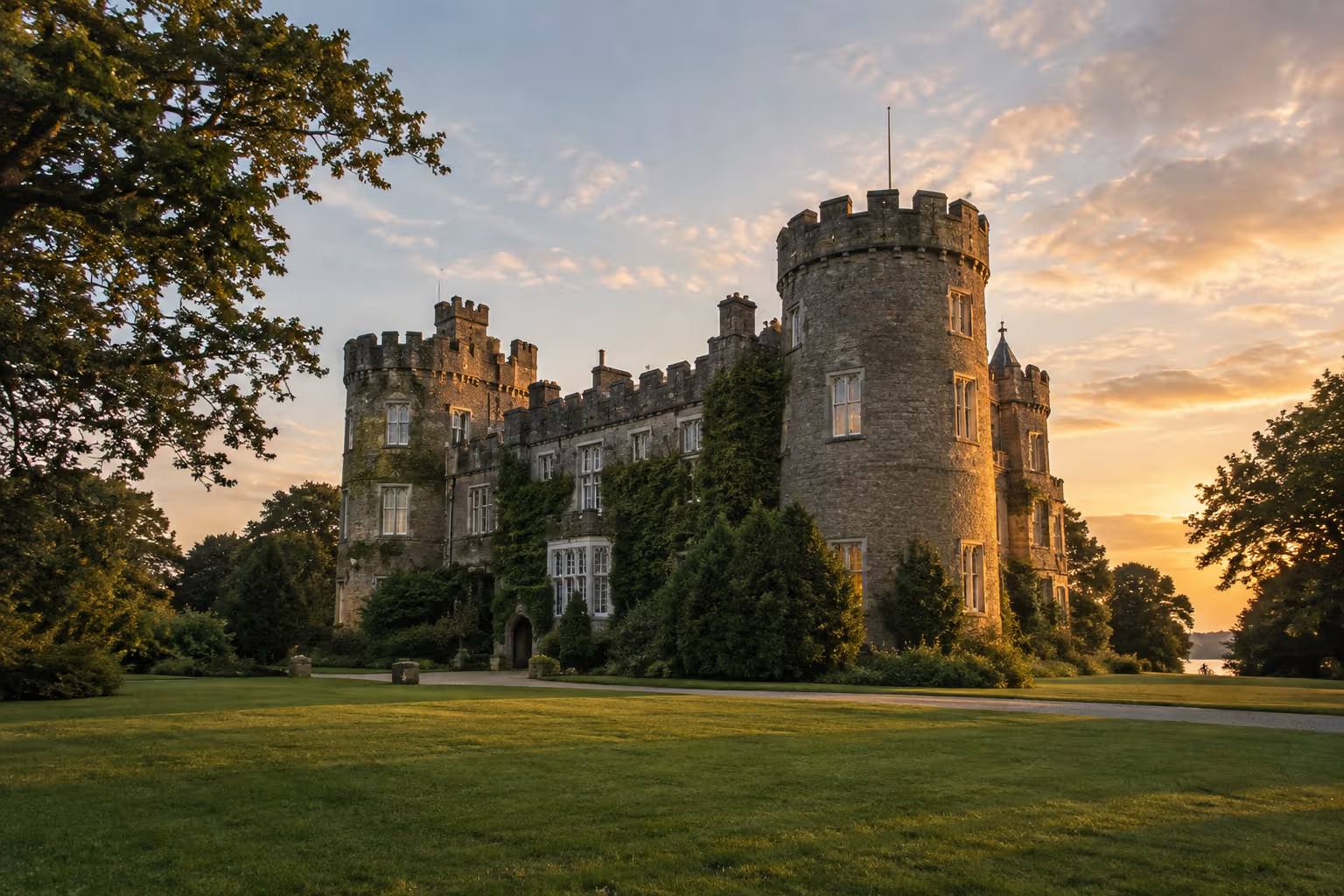
Howth Castle is one of the oldest occupied buildings in Ireland - and that’s the key word, occupied. It’s a working private home rather than a museum, so temper your expectations before you walk up. The grounds are open to visitors, but interior tours generally require pre-booked group arrangements, and walk-ups usually see only the exterior (3)(8). Still, the gardens are worth a wander, and the castle backdrop is striking enough to justify the detour.
Nearby, the ruins of St Mary’s Abbey date to the medieval period and cost nothing to visit - one of at least ten free attractions in the area, according to TripAdvisor listings (4). For older history still, Aideen’s Grave, a 3,000-year-old dolmen tomb, offers a glimpse into Ireland’s prehistoric past. Standing in front of it, I found it genuinely arresting - the scale of those stones, and the thought of what it took to move them.
Howth Market and where to eat
No visit is complete without eating your way through the harbour. Howth’s commercial fishing port keeps the local kitchens supplied with the day’s catch, and the fish and chips here rival any coastal town I’ve eaten in.

Howth market, near the harbour, is at its best on weekends when the full run of stalls is open (1)(9). You’ll find seafood, Mexican food, baked goods, and crêpes alongside craft stands, with snacks typically running $5-15 USD. My advice: arrive before 2 pm, both to beat the queues and to catch the baked goods before they sell out (1)(9).
For a sit-down meal, waterfront seafood restaurants and Main Street spots serve mains in the $20-35 USD range, while takeaway fish and chips runs $12-18 USD. Local reviewers repeatedly point to places within a 5-10 minute walk of the DART - the Harbour Bar and Beshoffs among the recurring names (9). If you’re keeping costs down, grab a paper cone of fish and chips and eat it on the pier. That works too.
Etiquette note: tipping in Irish restaurants isn’t obligatory the way it is in the US. For table service, rounding up or leaving around 10% is a friendly gesture, but nobody expects a tip at a takeaway counter or a market stall.
As the sun dropped, I found myself drifting toward the marina - sailboats bobbing, gulls calling, the kind of quiet that makes a coastal village worth the trip in the first place.
Ireland’s Eye, puffins, and Howth’s wildlife
Ireland’s Eye, a small uninhabited island visible from the harbour, is the wildlife draw. A short boat ride takes you out to see seals hauled up on the rocks and, in season, one of the more impressive seabird colonies near Dublin - over 30,000 pairs of seabirds nest on the cliffs during the April-July breeding season (2)(7).
Harbour-based boat tours around the cliffs and lighthouses last about an hour and cost under $20 USD per person (5). Dedicated puffin and wildlife cruises to Ireland’s Eye typically price in the $25-45 USD range, often with free cancellation, and run in season from spring through autumn (7)(9).
If puffins are the goal, timing matters. They’re present mainly late April through early July; show up in autumn or winter and they’ll be gone, though seals and other birds stick around (2)(7). Bring binoculars. The birds cluster on the cliff faces, and a bit of magnification turns a distant smudge into an actual puffin.
For photographers, the Baily Lighthouse on Howth Head is the shot to chase - its silhouette against the Irish Sea is best caught during golden hour. Howth Head is also a designated Special Area of Conservation, which protects the flora and fauna along the peninsula.
If a full cliff loop isn’t in the cards, take a bus or coastal tour up to Howth Summit and walk a few minutes to the Baily Lighthouse viewpoints instead - far less effort for a comparable view (8)(9). The East Pier and harbour walks are flat, paved, and stroller- and wheelchair-friendly, with benches along the way (6).
A full day in Howth: how to structure it
If you want a ready-made plan, here’s how I’d structure a full day arriving mid-morning by DART:
How to Spend a Full Day in Howth
8 hoursA step-by-step itinerary for a day trip from Dublin to Howth.
- 1
Morning (3 hours)
Train from Dublin, walk the East Pier out to Howth Lighthouse, grab a coffee at the market. Watch for seals in the harbour.
- 2
Midday (2-3 hours)
Tackle the Howth cliff walk. Start by 10-11 am so you're not racing daylight, especially outside summer.
- 3
Afternoon (1 hour)
Boat trip out to Ireland's Eye for seals and seabirds.
- 4
Early evening (1-2 hours)
Seafood dinner along the waterfront before catching the DART back.
Budget-wise, a mid-range day lands around $70-120 USD per person: roughly $10 for transport, $20-40 for a boat tour, $25-35 for a sit-down meal, $10-20 on coffee and market snacks, plus $8-15 if you add a museum (1)(7). Keep it lean - free cliff walks, a picnic, and takeaway fish and chips - and you can do the whole day for under $30 USD.
On a rainy day, or just to vary things, two small museums fill a 1-2 hour window: the National Transport Museum, with over 60 vintage vehicles including an 1883 fire engine, and the Ye Olde Hurdy-Gurdy Museum of Vintage Radio, tucked into a Martello Tower with gramophones and early TVs (6).
Frequently asked questions
Frequently Asked Questions
- What is the best way to get to Howth from Dublin?
- The DART train is the fastest and most reliable, taking about 35 minutes from central Dublin stations.
- Are there any accessibility options for the Howth walks?
- The East Pier and harbour walks are flat, paved, and stroller- and wheelchair-friendly with benches along the way.
- When is the best time to see puffins in Howth?
- Puffins are mainly present from late April through early July on Ireland's Eye; outside this, they are absent.
- Is tipping customary in Howth restaurants and markets?
- Tipping is not obligatory; rounding up or leaving about 10% for table service is polite, but not expected at takeaways or market stalls.
- Can you visit the interior of Howth Castle?
- Interior tours require pre-booked group arrangements; walk-ups usually only see the exterior and gardens.
- How long should I plan for a full Howth day trip?
- Six to eight hours covers the main highlights comfortably; adding boat trips and museums extends it to eight to ten hours.
Making the most of your visit and day trip to Howth
Start the cliff walk by late morning, check the last DART time before dinner, and pack for coastal wind regardless of what the forecast says in the city. If you’re chasing puffins, come between late April and July. If you just want the views and the seafood, any clear day will do.
Waterproof shoes, one more layer than you think you need, and cash for the market stalls. Then let the harbour set the pace.
For more on exploring Ireland’s vibrant cities and hidden gems, consider reading about Discover Dublin : Ireland’s captivating capital of culture or Discover the hidden gems of Sligo : Ireland’s wild Atlantic gem. If you want to venture further along the coast, Discover Mayo : Ireland’s hidden gem on the Wild Atlantic Way offers a great perspective on Ireland’s rugged west.