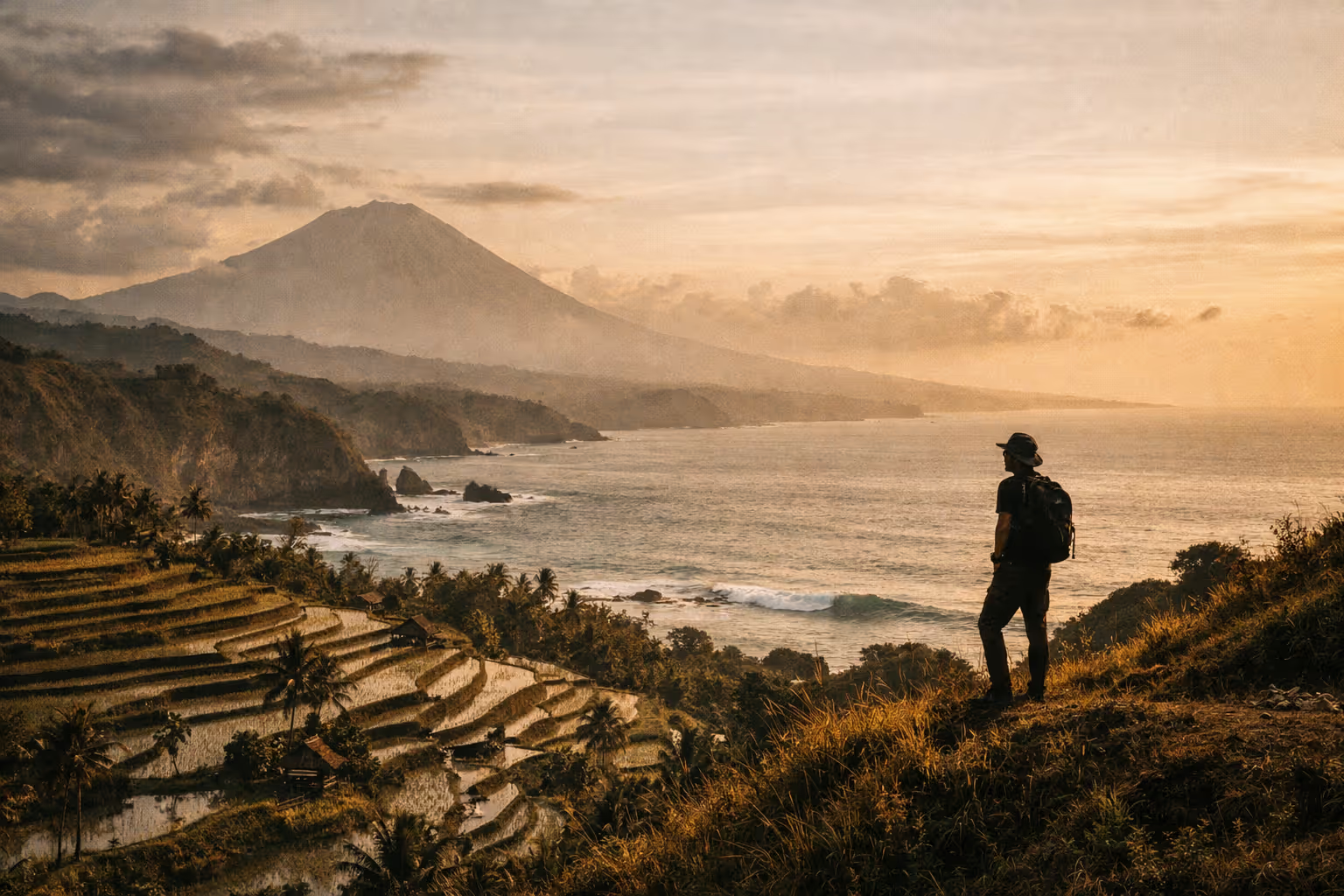
Is Bali safe is almost the wrong first question, because the honest answer surprises people: violent crime is rare, and it is scooters and tap water, not theft, that send most travelers to a clinic. Indonesia sits at the same U.S. advisory level as France or Germany. The real risk list is short and manageable once you know it, from night riding to rip currents at Uluwatu. Here is what actually matters, ranked by how likely it is to touch your trip.
So, is Bali safe? What you need to know about safety in Bali
When asking “Is Bali safe?” it’s important to look beyond simple answers. I’ve covered a lot of ground on this island - rice paddies outside Ubud, clifftop temples at Uluwatu, the traffic-choked lanes of Canggu at rush hour - and the safety picture I’ve seen firsthand is more nuanced than either the “it’s paradise, stop worrying” crowd or the anxious travel-forum posts suggest.
The U.S. State Department lists Indonesia at Level 2: Exercise Increased Caution, citing terrorism and natural disasters (7). Bali falls under that country-wide advisory rather than getting its own lower-risk rating. That sounds alarming on paper, but Level 2 is the same tier as France, Germany, and the UK - it’s a “stay aware,” not a “stay away.”
On the ground, Bali’s low violent-crime rate is real. The risks worth staying alert to are pickpockets and opportunistic scams in crowded spots - Kuta’s nightlife streets, busy markets, and packed beaches in Seminyak and Canggu are the usual locations (2)(5).
Bali also sits in a seismically active region, and its coastal currents can be genuinely fierce (5). These aren’t reasons to skip the trip. They’re reasons to pay attention.
✓ Pros
- Low violent crime rate compared to many tourist destinations
- Warm and generally respectful local interactions
- Reliable ride-hailing apps reduce transport risks
- Wide availability of bottled water and health resources
✗ Cons
- High risk of scooter accidents, especially for inexperienced riders
- Petty theft common in crowded tourist areas
- Tap water is unsafe to drink
- Natural hazards like earthquakes and strong coastal currents
What and where is Bali?
Bali is one island in Indonesia, a country of more than 17,000 islands stretching across Southeast Asia. It sits just east of Java and west of Lombok, roughly 8 degrees south of the equator. The capital is Denpasar, and the main international gateway is Ngurah Rai International Airport (DPS) near Kuta.
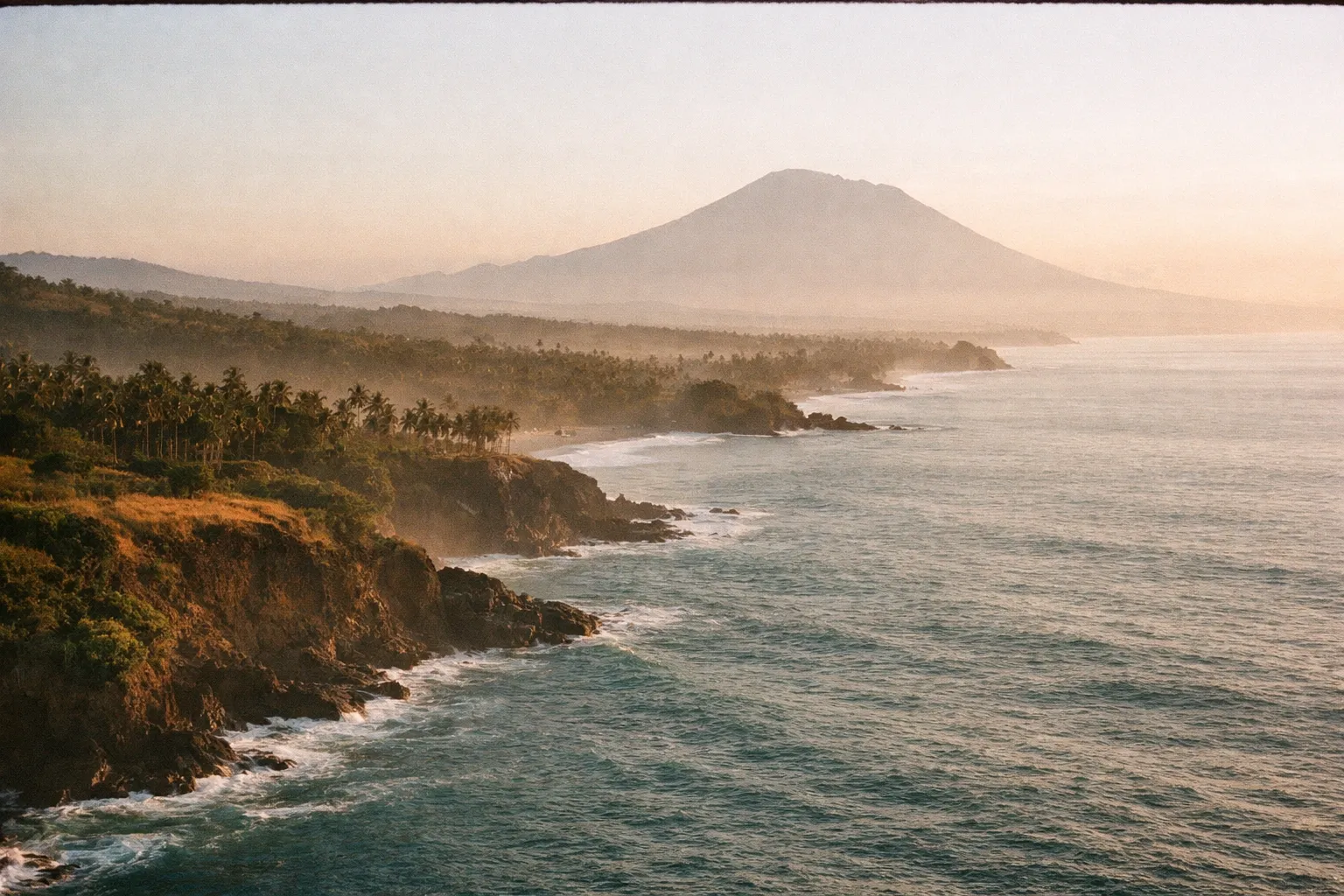
Most tourism clusters in the south: Kuta, Seminyak, and Canggu for beaches and nightlife, Uluwatu for surf and clifftop temples, and Ubud inland for rice terraces, yoga, and the monkey forest. The north and east - Amed, Munduk, Sidemen - are quieter and see fewer visitors.
This matters for safety because your risk profile shifts by neighborhood. Canggu’s traffic-choked lanes are a scooter-accident hotspot. Kuta’s bar strip is where petty theft and drink-related incidents concentrate. Ubud is calmer but has its own hazard: a monkey forest full of bold macaques that will grab sunglasses, phones, and snacks without a second’s hesitation.
What the numbers say about Bali
The statistics are reassuring on crime and cautionary on roads and health.
- Violent crime against tourists is uncommon. The realistic threat is petty theft - pickpocketing and bag-snatching in crowded zones (2)(5).
- Road accidents are the standout preventable danger. Motorbike crashes injure and kill foreign tourists every year, and night roads are particularly hard to judge visually. Treat riding a scooter as a high-risk activity unless you’re genuinely experienced.
- Tap water is not potable. Multiple 2026 water-safety guides confirm Bali’s tap water should not be consumed directly (3)(6)(9).
- Natural-disaster exposure is structural, not seasonal. Earthquakes and volcanic activity are part of living on the Pacific Ring of Fire (8).
Don’t overfocus on violent crime, which is statistically unlikely, and don’t underestimate the two things that actually send tourists to the clinic - scooters and water.
Indonesia safety overview: the official advisory
For the official line, the U.S. State Department’s Indonesia Travel Advisory is the document that governs Bali (7). it remains at Level 2: Exercise Increased Caution, with terrorism and natural disasters named as the headline concerns (7).
A few practical notes drawn from that advisory and embassy guidance:
- Bali is not carved out as a separate, lower-risk zone - the country-wide Level 2 applies (1)(7).
- Terrorism risk is flagged at the national level. Bali experienced major attacks decades ago, but day-to-day, the practical risks you’ll encounter are theft, traffic, and health (8).
- The advisory’s natural-disaster warning is the genuinely Bali-relevant part: have a plan for earthquakes and stay informed about volcanic activity if you’re traveling near Mount Agung.
Safety tips for Americans visiting Bali
Is Bali safe for Americans specifically? Yes - and there’s no evidence U.S. citizens are targeted based on nationality. The U.S. Embassy in Indonesia updated its Bali guidance in January 2026, and its core message is simply to review the State Department’s country advisory before you travel (1).
The risks an American faces in Bali are the same ones every visitor faces: scams, traffic, theft, and avoidable health mistakes (1)(7). What does matter for U.S. travelers:
- Register your trip with the embassy’s Smart Traveler Enrollment Program so you can be reached in an emergency.
- Carry travel insurance that covers overseas medical care and evacuation - U.S. health plans rarely work in Indonesia.
- Keep the U.S. Consular Agency contact handy; for Bali, consular services are coordinated through the embassy network (1).
Getting around Bali safely
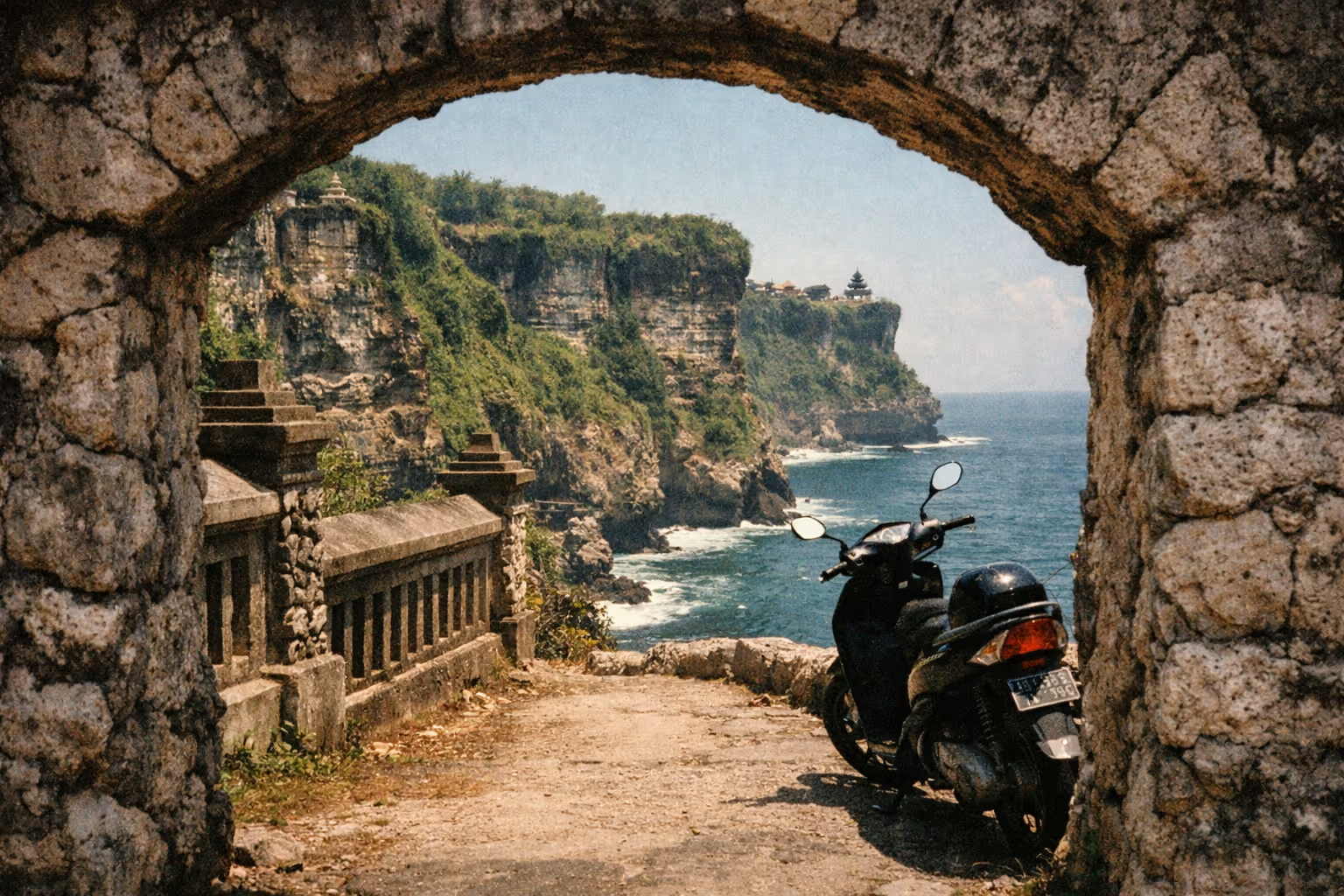
Renting a scooter is a rite of passage in Bali. It’s also the single most common way a relaxed holiday turns into an emergency-room visit.
I’ve watched tourists wobble out of rental shops in Canggu on bikes they’ve never ridden before, flip-flops on, no helmet, heading straight into some of the most chaotic traffic in Southeast Asia. It doesn’t end well at a rate that should give anyone pause.
If you do ride:
- Wear a helmet, every time. Many insurance policies exclude scooter injuries unless you have a valid license and documented helmet use.
- Carry an international driving permit plus your home motorcycle license. Police checkpoints do stop tourists, and riding without proper documentation invites fines or worse.
- Use reputable rental services to avoid scams and get a bike that’s actually maintained.
- Avoid riding at night. Poor lighting, unfamiliar roads, and drink-driving culture make after-dark scooter trips disproportionately dangerous.
For everyone less inclined toward two wheels, ride-hailing apps like Grab and Gojek are reliable and cheap. On longer distances and nighttime travel, I’ve defaulted to Grab almost exclusively - no negotiating, no guessing the fare. A private driver for the day typically runs around IDR 700,000-900,000 (roughly $45-$60) for 8-10 hours, and it’s the lowest-stress way to cover ground without touching a scooter.
Bali private driver and motorbike rental
Two transport choices shape your safety more than any other.
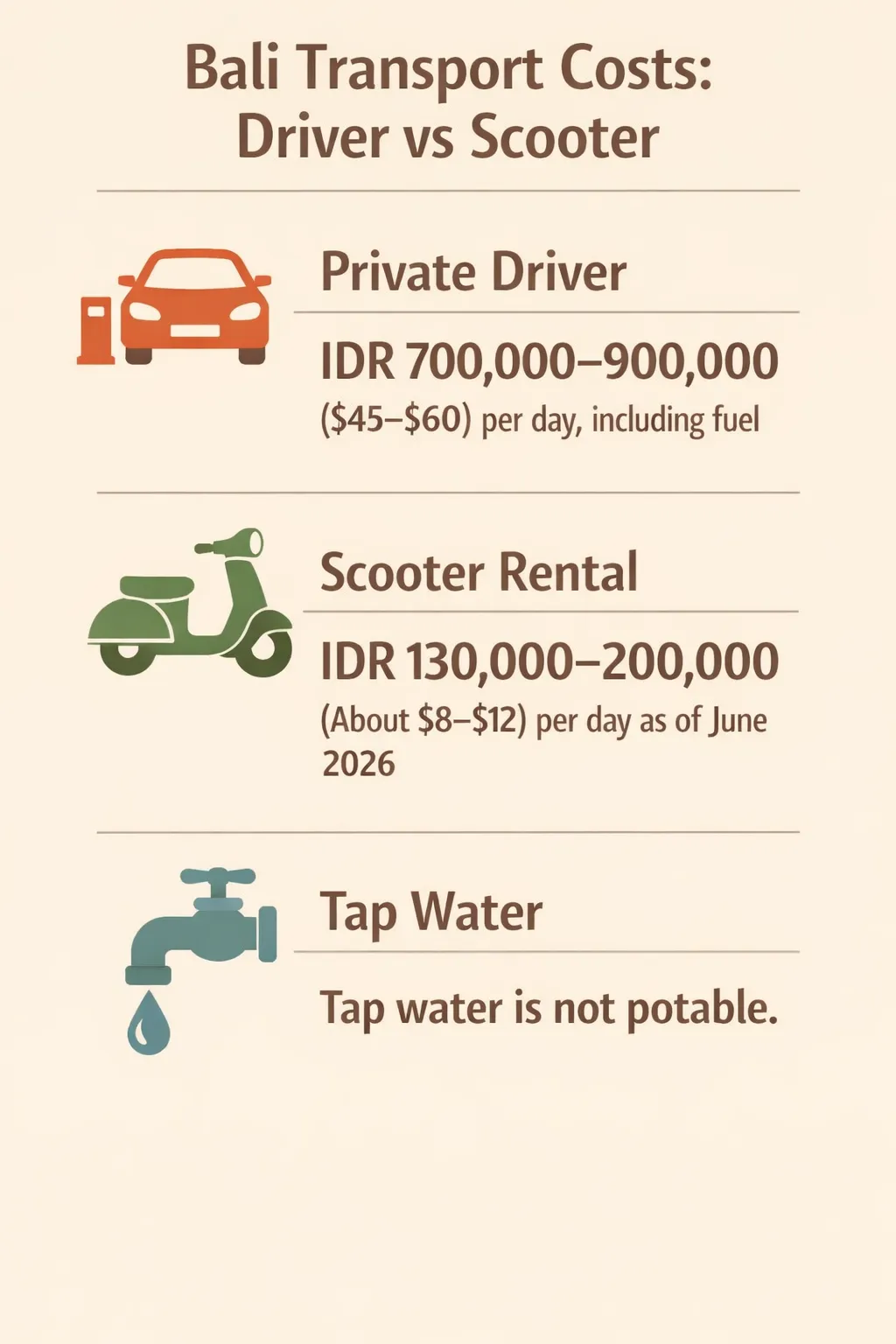 Private driver: IDR 700,000-900,000 ($45-$60) per day; scooter: IDR 130,000-200,000 ($8-$12) per day.
Private driver. Hiring a car with a driver for the day is the safest way to see Bali’s spread-out sights. Hotels can arrange it, or you can book through ride-hailing apps. Rates run IDR 700,000-900,000 ($45-$60) per day including fuel for most of the island (prices, vary by distance). For airport transfers and late-night returns, this small premium beats navigating unfamiliar roads yourself (5)(8).
Motorbike rental. Scooters run roughly IDR 130,000-200,000 (about $8-$12) per day - the budget appeal is real, but so is the island’s biggest preventable risk. Only rent one if you’ve ridden before, never ride without a helmet, confirm your travel insurance covers it, and stay off the bike after dark. If any of those conditions don’t apply to you, the daily rate for a private driver is money well spent. For a deeper look at scooter travel and safety tips specific to the island, it’s worth reading up before you rent anything.
Bali Transport Options: Private Driver vs. Motorbike Rental
| Safer Choice Private Driver | Budget Option Motorbike Rental | |
|---|---|---|
| Price Range (IDR/USD) | IDR 700,000-900,000 ($45-$60) | IDR 130,000-200,000 (about $8-$12) |
| Safety Level | High | Moderate to Low (depends on experience) |
| Convenience | Very High | High |
| Best For | Sightseeing, night travel, families | Experienced riders, solo travelers on a budget |
Health and medical precautions for Bali
The most famous health issue in Bali is “Bali belly” - traveler’s diarrhea that comes from contaminated food or water. It’s not inevitable, but it’s common enough that you should plan around it, not hope to avoid it through luck.
Is Bali water safe to drink?
No. “Is Bali water safe to drink?” is one of the most-searched safety questions about the island, and the answer from every recent guide is consistent: Bali’s tap water is not safe to drink (3)(6)(9). Here’s what that means in practice:
- Drink sealed bottled water only. A small bottle costs pennies, and a day’s supply runs a few dollars at most - a minor budget line compared with transport and lodging (3)(6).
- Brush your teeth with bottled water too. This is the step people forget after a long flight, and it’s a classic way to catch Bali belly (3)(6)(9).
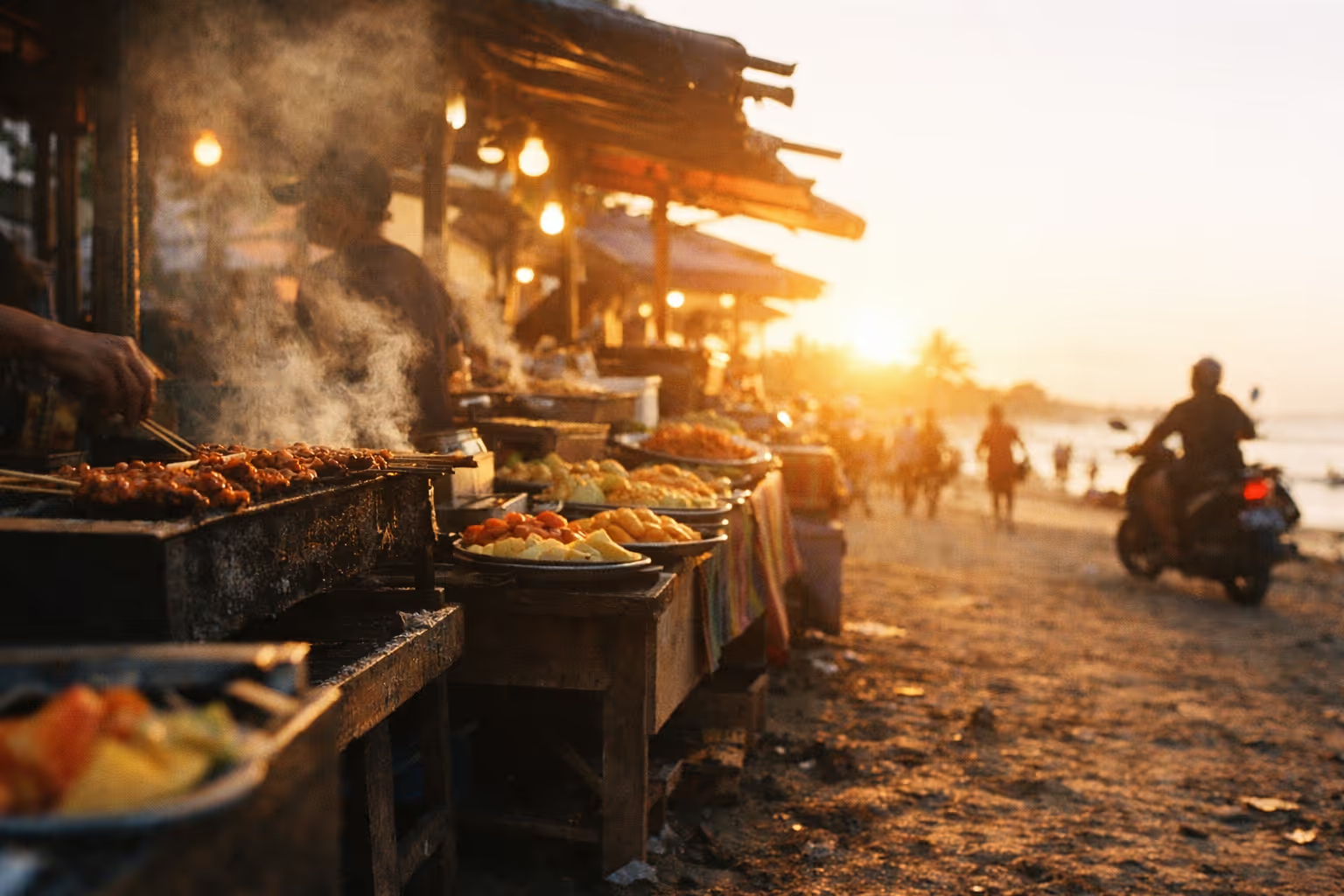
- Be cautious with ice. Reputable cafes and restaurants in tourist areas use commercially produced ice made from filtered water, which is generally fine. Roadside warungs (small local food stalls) are more of a gamble.
- Don’t assume hotel sink water is potable unless the property explicitly states it has a filtration system installed (3)(9).
Other health basics
- Use mosquito repellent and sleep under nets where provided - dengue is present in Indonesia.
- Choose eateries that are busy and visibly clean. High customer turnover usually means fresher ingredients.
- Pack a basic kit: rehydration salts, anti-diarrheal medication, and any prescriptions you need, since pharmacy stock varies.
- Confirm your travel insurance covers medical care and evacuation before you arrive (7).
What about animals?
The wildlife encounters most likely to cause trouble are smaller than you’d think.
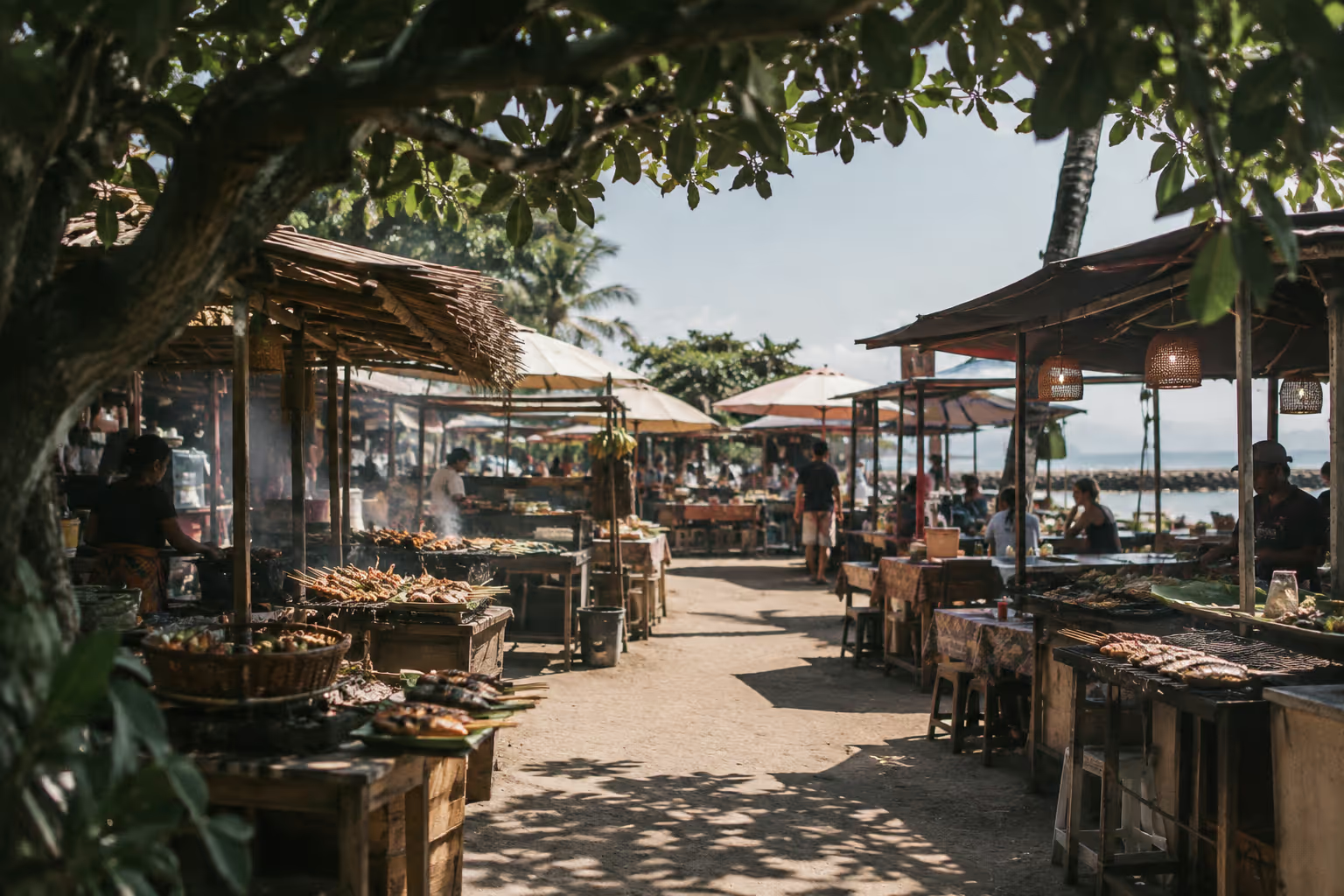
Monkeys. The macaques at Ubud’s Sacred Monkey Forest and Uluwatu Temple are bold and fast. They’ll snatch sunglasses, phones, water bottles, and anything shiny. Don’t make eye contact, don’t carry visible food, and don’t try to take a selfie with one perched on your shoulder - I’ve seen that go wrong in about four seconds. Monkey bites and scratches carry rabies risk, so if you’re bitten, wash the wound immediately and get to a clinic for a rabies assessment.
Dogs. Stray and free-roaming dogs are common, especially in villages and on beaches at dawn. Rabies is present in Bali, so avoid petting strays and give them space.
Sea life. Watch for jellyfish during certain seasons and shuffle your feet in shallow water to avoid stepping on sea urchins or stonefish near reefs. Strong currents and rip tides at surf beaches like Uluwatu and Echo Beach are a bigger threat than anything with teeth - respect lifeguard flags. For more on staying safe in Bali’s waters, including rip current awareness and surf beach hazards, it’s worth a read before you head to the coast.
Solo travel and after-dark safety
Is Bali safe to travel alone? For most travelers, yes. The island works well for solo trips, and you’ll meet other independent travelers easily in Ubud, Canggu, and the southern beach towns. The practical safety picture depends far more on your transport, accommodation, and nightlife choices than on any island-wide threat (2).
Is Bali safe for solo female travellers? Broadly, yes, with standard urban travel precautions. The women I’ve spoken with who traveled Bali alone describe an environment of warmth and respect (2). What makes the difference is planning, not luck:
- Avoid secluded areas after dark and don’t over-trust people you’ve just met.
- Dress modestly at temples and ceremonies - shoulders and knees covered, and a sarong (provided or rented at most temple entrances) over your legs.
- Choose central, well-lit accommodation with 24-hour reception, in-room safes, and strong verified reviews. These features cost more than the cheapest guesthouse but cut theft and late-night access risk.
- Use ride-hailing or a private driver at night instead of walking unfamiliar streets or riding a scooter.
Is Bali safe at night?
Is Bali safe at night? Yes, in the practical sense - the biggest nighttime issues are road visibility, drink-driving culture, and opportunistic theft in nightlife districts, not widespread violent crime. Stick to busy, lit areas, keep your bag cross-body and zipped, and book a Grab or Gojek for the ride home. Skip the after-dark scooter trip. Watch your drink in Kuta and Seminyak bars, as you would in any busy nightlife scene anywhere.
Whether you’re navigating the streets of Ubud or finding a quiet corner of the coast, solo Bali rewards travelers who plan their logistics and stay aware.
Bali hotels: choosing for safety
Where you stay shapes your trip’s safety more than almost anything else. The principle is simple: book near the things you’ll do most, so you cut down on nighttime travel.
Look for these features, which usually cost a bit more but pay off:
- 24-hour reception - someone present if you arrive late or have a problem.
- In-room safe for your passport and a backup card.
- Strong, recent verified reviews mentioning security and location.
- A central, well-lit location within walking distance of restaurants and transport.
In practice, that means leaning toward midrange properties in Seminyak, central Ubud, or the more established parts of Canggu rather than the cheapest guesthouse down an unlit lane. The price difference between a poorly reviewed budget room and a solid midrange hotel is often the difference between a smooth trip and a stressful one. If you’re weighing up the best time to visit Bali alongside your accommodation choices, seasonal crowd levels can also affect how central you’ll want to be.
More Bali travel tips
A few habits that keep small problems from becoming big ones:
- Carry a cross-body bag and keep it zipped and in front of you in crowds (5).
- Use hotel safes for passports and backup cards - petty theft is far easier to prevent than to recover from.
- Carry small-denomination cash so you’re not flashing large bills or cards in busy areas (2).
- Get a SIM or eSIM on arrival so you always have maps and ride-hailing access.
- Favor daytime activities - beach clubs, temples, cafe neighborhoods - over scooter-heavy remote routes after dark.
- Learn a couple of words of Indonesian. “Terima kasih” (thank you) goes a long way, and a friendly tone defuses most minor scam attempts.
One etiquette note worth taking seriously: at temples, dress modestly and wear the provided sarong, don’t point your feet at shrines or people, and never climb on temple structures for photos. Step aside for ceremonial processions on the road - they have right of way, and locals notice when visitors don’t.
Frequently Asked Questions
- Is Bali safe for US citizens?
- Yes. There's no nationality-based targeting of Americans in Bali. The U.S. Embassy in Indonesia advises checking the State Department's country advisory before travel. The main risks are scams, traffic, theft, and health issues. Travel insurance with overseas medical and evacuation coverage is essential.
- What are the biggest risks in Bali?
- The top risks are scooter and road accidents, petty theft in tourist areas, food and water-borne illness (Bali belly), scams around nightlife and rentals, and natural hazards like rip currents, earthquakes, and volcanic activity. Violent crime is rare.
- Is $1000 enough for a week in Bali?
- It can be, especially with budget accommodation, local food, and ride-hailing. However, cutting corners on safety like unvetted scooters or poorly reviewed lodging increases risk. A daily safety budget for transport, water, and incidentals is roughly $20-$60 before accommodation.
- Can I kiss my girlfriend in Bali?
- Public displays of affection like holding hands or a kiss are generally tolerated in tourist areas. However, Bali is culturally conservative outside beach towns, and PDA is inappropriate at temples, ceremonies, and local villages. Modest behavior in religious spaces is advised.
- What should solo female travelers keep in mind for safety?
- Plan carefully: avoid secluded areas after dark, dress modestly at temples, choose well-reviewed central accommodation with 24-hour reception and in-room safes, and use ride-hailing or private drivers at night instead of walking or riding scooters.
- Are monkeys dangerous in Bali?
- Monkeys in places like Ubud's Sacred Monkey Forest are bold and will grab belongings. Avoid eye contact, don't carry visible food, and don't try selfies with them. Monkey bites carry rabies risk; seek medical care immediately if bitten.
- Is tap water safe to use in Bali?
- No. Tap water is not safe for drinking or brushing teeth unless explicitly filtered. Use sealed bottled water and be cautious with ice, especially from roadside stalls.
The bottom line
Bali is safe enough for almost any traveler who plans the boring parts well. The reassuring answer to “is Bali safe?” holds up - violent crime is rare and most interactions are genuinely warm - but the comforting headline hides where the real risk sits: scooters, water, and crowds, not crime.
Do these five things and you’ve handled the vast majority of what actually goes wrong: drink only bottled water (and brush your teeth with it), skip the scooter unless you’re experienced, use ride-hailing or a private driver at night, book central well-reviewed accommodation, and carry travel insurance with medical and evacuation cover. Get those right, and Bali delivers exactly what you came for.