Akaka Falls hours trip up more visitors than the trail ever does. The gate locks at 5:00 p.m. sharp, and I have watched people roll in at 4:45 sure they had time for the 0.4-mile loop, only to get turned around at the booth. Between the pay-online quirk, the mossy pavement that eats flip-flops, and the strict no-swimming rule, this is a short stop that rewards a little planning. Here is everything I check before driving up, hours first.
Akaka Falls Hours and Whether You Can Go After Hours
Understanding Akaka Falls hours is essential for planning your visit, as the state’s official listing for the park is 8:30 a.m. to 5:00 p.m., with gates locked outside that window (1). A few commercial travel guides list the parking area as open until 6:00 p.m. with pedestrian walk-in access from “sunrise to sunset.” That discrepancy trips people up regularly. The practical read: default to the shorter 8:30-5:00 official window. If you show up before 8:30 or after 5:00, expect a locked gate and no vehicle access.

Can you go after hours? Not by car. The gate at the end of Highway 220 is physically closed and locked outside operating hours. Some photographers try to park legally outside the gate area or in Honomu and walk in, banking on the “sunrise to sunset” language - but this isn’t reliably permitted, and you’ll have no vehicle access to the parking lot until 8:30 a.m. Don’t build a sunrise plan around after-hours access unless you’ve confirmed current rules within a day or two of your visit.
Arrive between 8:30 a.m. and 4:00 p.m. to avoid a wasted drive. That leaves you at least an hour before closing for the walk, photos, and a portable-toilet stop. Cutting it to 4:30 or later risks a rushed loop or a turnaround if there’s a line for parking.
Where Is Akaka Falls State Park and How to Get There
The park is 11 miles north of Hilo, at the end of ‘Akaka Falls Road (Highway 220), roughly 3.3 miles uphill from the town of Honomu.

From Hilo, head north on Highway 19 (the Hawaii Belt Road) for about 11 miles, then turn left onto Highway 220 and follow the ‘Akaka Falls Scenic Drive to the end. The drive runs roughly 25-35 minutes one way under normal traffic - not the hour and a half some older guides quote. A dedicated parking lot sits at road’s end.
Two trailheads leave from the parking area: the ‘Akaka Falls loop, and access toward longer routes. The main loop passes both the Kahuna Falls and ‘Akaka Falls lookouts.
A few logistics worth knowing before you go:
- Cell reception is spotty. Several guides now recommend buying entry and parking online before arrival because data service is unreliable at the park. Download or screenshot any confirmation before you leave your hotel.
- Parking fills mid-morning. Arriving before 10:00 a.m. reduces your wait, especially on weekends.
- Facilities are limited. The water and comfort station are closed, with only portable toilets in the parking area. Bring 16-32 oz of water per person.
Akaka Falls State Park Trails
The main attraction is a paved loop of about 0.4 miles (some hiking sites list it at 0.55 miles including all the viewpoint spurs) (3). It’s rated easy and family-friendly, though “easy” here comes with a caveat: multiple stair sections and moderate elevation change, usually in the 100-150 ft range across the loop. For context, that’s roughly half the elevation gain of the Manoa Falls Trail in Honolulu - shorter and less strenuous, but not flat.
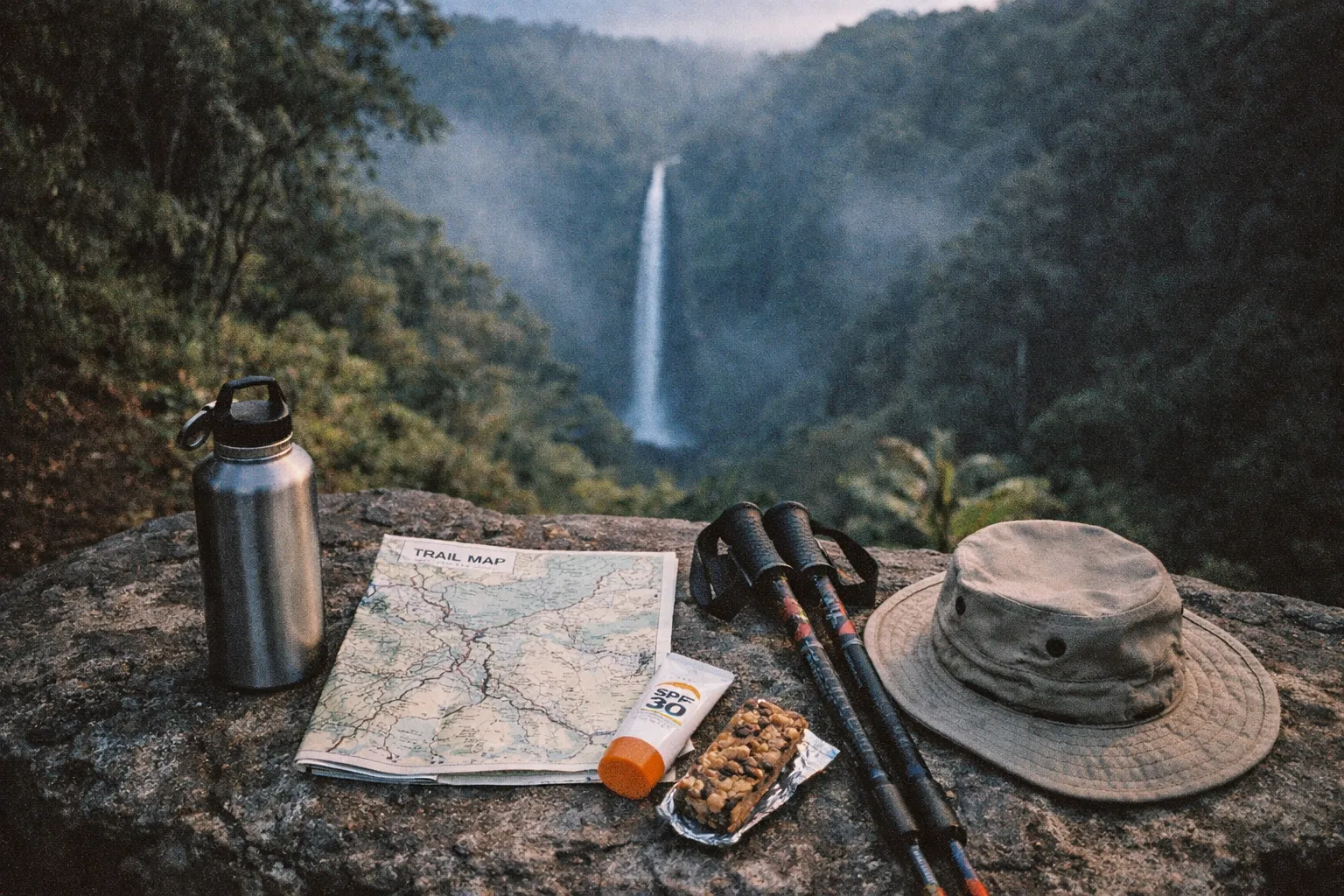
Here’s how the trail breaks down, ranked by what’s worth your time:
- ‘Akaka Falls lookout - the payoff. The 442-foot fall plunges into a gorge below the platform. This is where you’ll spend most of your time, and it earns it.
- Kahuna Falls viewpoint - the first major stop, looking across the gorge at the about 300-foot drop. Worth the pause, but ‘Akaka is the headliner. Don’t skip it, but don’t linger too long either.
- Return leg - the loop takes a different route back, so you’re not retracing steps.
How long of a hike is Akaka Falls? Plan on 20-40 minutes to walk the full loop, longer if you’re stopping for photos. Most visitors spend 30-60 minutes total in the park; slow walkers and photographers can stretch it to 90 minutes.
Wear closed-toe shoes. The pavement gets slick with moss and rain, and the stairs are the most common source of minor falls in visitor reviews. Flip-flops and smooth-soled sandals are a bad call here. I’ve seen people turn back at the first staircase in sandals - don’t be that person. Visitors with knee issues should expect several stair flights; the main ‘Akaka lookout is reachable via paved trail in about 15-20 minutes one way if you skip the steeper sections, but full wheelchair access to the entire loop is limited by the stairs.
Do You Have to Pay to Go to Akaka Falls?
Yes. This is a fee-managed state park. For non-resident visitors:
- $5 per car (vehicle entry fee for non-residents)
- $1 per person (pedestrian entry, charged instead of the vehicle fee when arriving on foot)
A family of four arriving in one car pays $5 total for the vehicle - the per-person pedestrian fee applies to walk-in visitors, not to passengers in a paying car (5). Hawaiʻi residents with valid ID enter free - bring the ID if you qualify. Come with a payment method ready (card or cash depending on the current system), and because reception is unreliable, buying entry and parking online before you arrive means you’re not stuck at the gate with no signal.
Akaka Falls Swimming: Why It’s Not Allowed
Akaka Falls swimming is not permitted, and there’s no legal or safe way to reach the pool at the base. The lookout platforms sit well above the gorge, the terrain is steep and unstable, and the area carries flash-flood risk after heavy rain upstream.
People sometimes arrive expecting a swimming hole and leave disappointed. This isn’t Rainbow Falls or a roadside plunge pool. Leaving the paved trail to approach the water is both dangerous and subject to enforcement. If swimming is the goal, plan a different stop entirely and treat Akaka as a scenery-and-photos visit.
Akaka Falls Zipline: The Nearby Add-On
There’s no zipline inside the state park itself - the park is walk-and-view only. But a private Akaka falls zipline operation near Honomu offers a waterfall zipline tour, typically 7 ziplines over several falls with ocean and rainforest views (4). The branding has shifted over the years from the “Akaka Falls” name toward more general Honomu/waterfall naming, but it’s the same style of experience.
What to expect:
- Duration: about 2.5 hours for the full 7-line tour (4).
- Pricing: recent adult rates run roughly $235-$245 (ages 13+, weight class typically 70-260 lb); child/tandem rates are around $210 for younger riders depending on weight (4).
- Scheduling: departures are commonly listed at 10:00 a.m., 11:00 a.m., 1:30 p.m., and 2:30 p.m. Check in 30 minutes before your slot at the Honomu base.
- Weight and age limits apply. Solo riders usually need to be 13+; younger kids ride tandem within weight rules.
If you want to combine the zipline with the state park, book a 10:00 or 11:00 a.m. zipline slot (1-2 weeks ahead in peak season), then fit Akaka Falls in either 8:30-9:30 a.m. before your tour or around 2:30-4:00 p.m. after. Budget the extra self-drive time between Honomu and the park entrance. For a non-resident couple doing both, expect roughly $480-$500 before tax - that’s parking, pedestrian fees, and two adult zipline tickets.
One thing worth noting: zipline tours get canceled or rescheduled for high wind, lightning, or extreme rain. The state park stays open and looks great in the same conditions. If the weather turns, the falls don’t care.
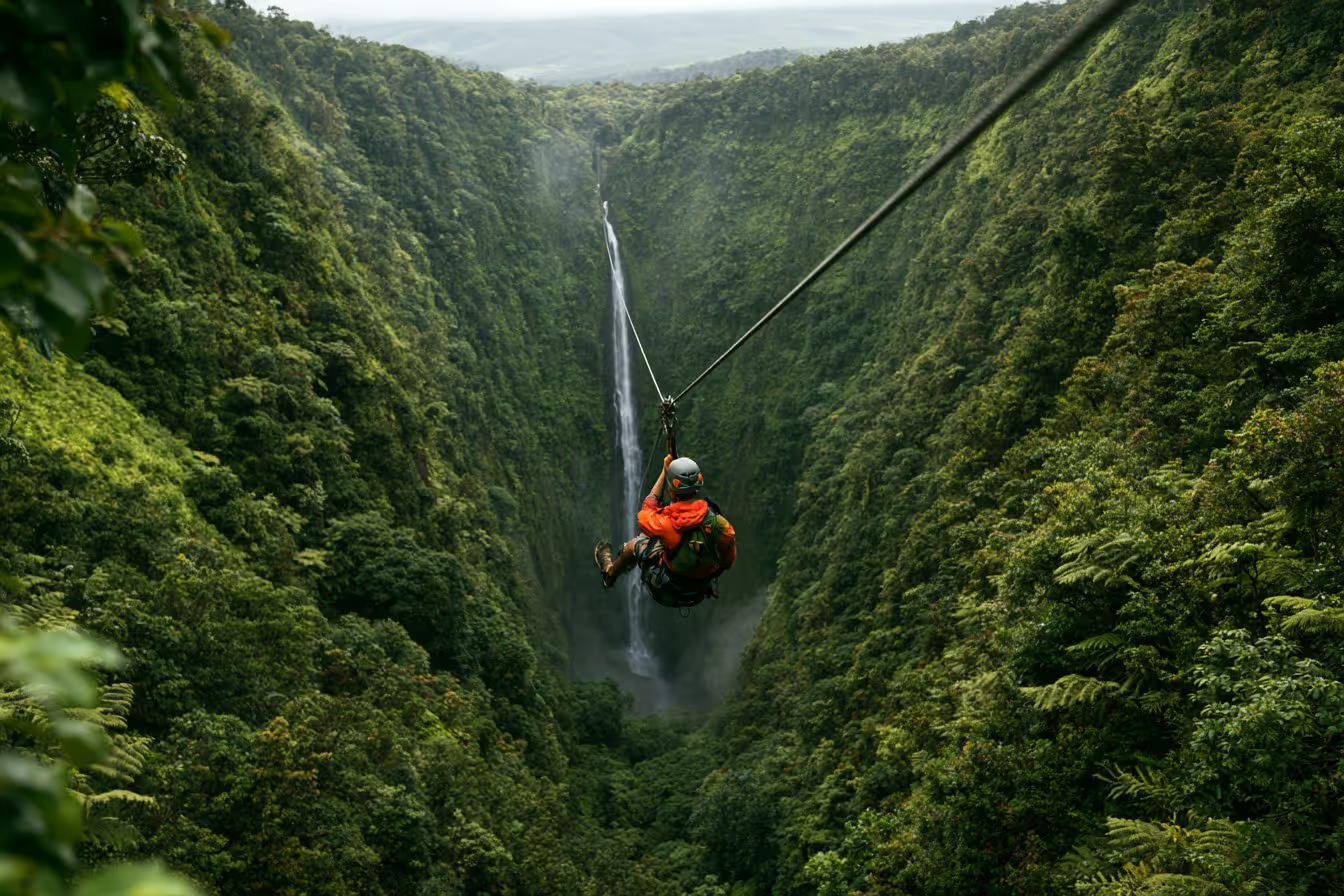
Big Island: Hilo Zipline Tour
The Honomu operation runs as a 2.5-hour, 7-line tour at around $245, the same figures listed above. Booking it a week or two out is what secures the 10:00 or 11:00 a.m. slot that leaves the rest of your morning for the park.
Check availabilityAkaka Falls Weather and Best Time to Visit
The park runs warm and wet year-round. Summer (June-August) temperatures sit in the mid-70s to low-80s °F, with humidity often above 70%. Showers are frequent in shoulder and winter months, and mist is common any time of year.
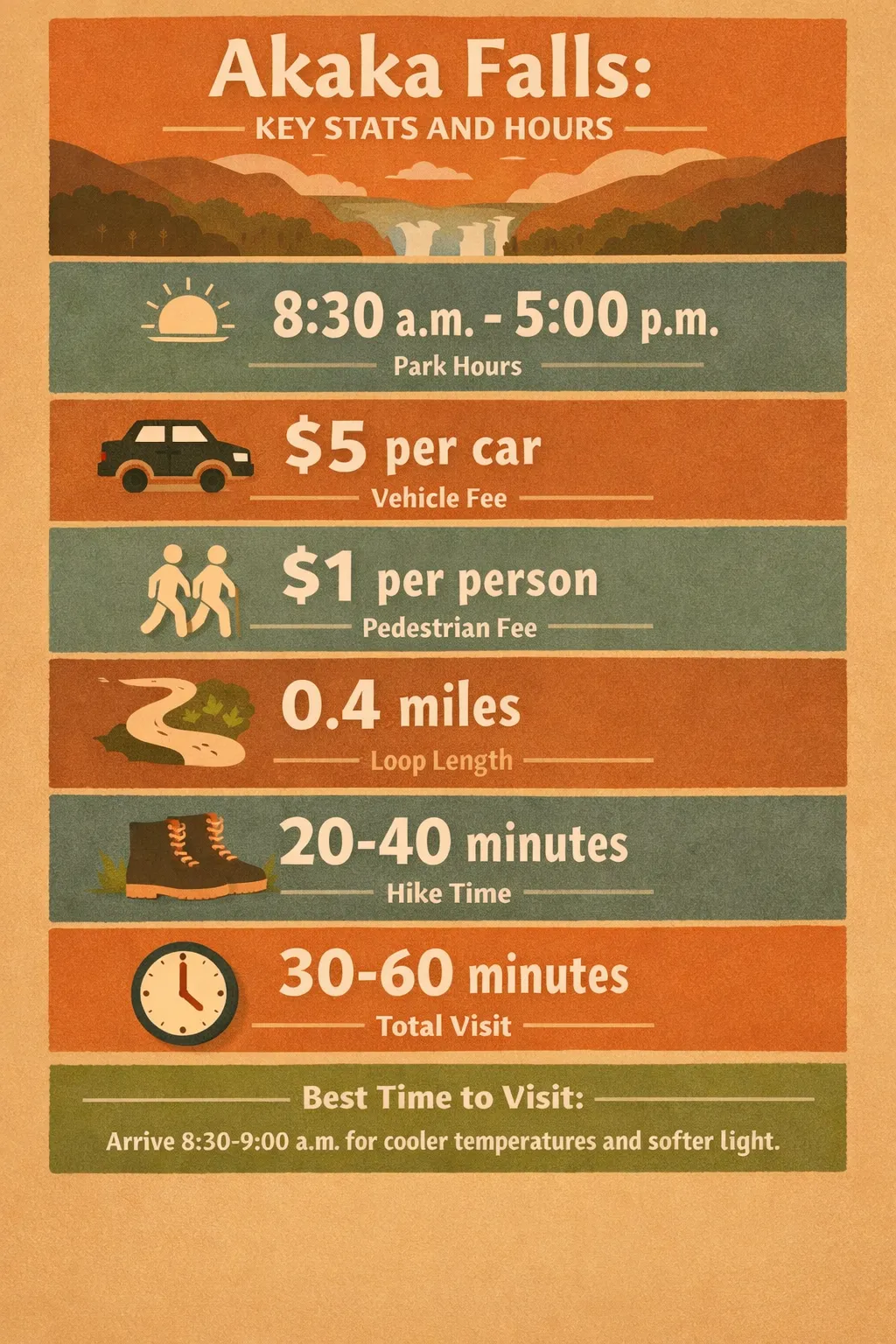 Official hours 8:30 a.m. to 5:00 p.m.; non-resident fees $5 per car and $1 per person; 0.4 miles loop in 20–40 minutes; best to arrive 8:30–9:00 a.m.
That mist isn’t a dealbreaker. It can actually improve waterfall photos, and the rainforest holds up well in the rain. This makes Akaka a solid rainy-day activity: bring a light rain jacket or poncho and waterproof footwear, and wet weather won’t ruin the visit the way it would a beach day. If you’re still sorting out what to pack before your trip, a carry-on-only approach works well for Big Island itineraries that mix hiking and beach days.
Best month: aim for the drier stretch of late spring or early summer - roughly May through July - if you want the highest odds of clear skies. The Hilo side of the Big Island averages over 130 inches of rain per year, so “drier” is relative, but May and June see measurably fewer rainy days than November through January. What matters more than the month is the time of day - arrive close to 8:30-9:00 a.m. for cooler temperatures (around 72-75 °F), easier parking, and softer light on the falls before the mid-day crowds and tour buses roll in.
The one thing most guides get wrong: they treat rain as a reason to skip Akaka. It isn’t. Rain feeds the falls and thins the crowds. Bring a poncho and grippy shoes, and you’re set.
What Akaka Falls State Park Reviews Say
The park holds an aggregate rating of about 4.6/5 across roughly 22,000+ reviews on Google - that puts it in the same satisfaction tier as Waimea Canyon State Park and consistently above most paid-admission attractions on the Big Island for a stop that costs under $10 and takes under an hour.
Recurring themes in Akaka falls state park reviews:
- The falls deliver. Visitors consistently call the ‘Akaka viewpoint worth the short walk, even for people who’ve seen a lot of waterfalls.
- It’s genuinely accessible. The paved loop makes this workable for families and casual walkers, which most reviews appreciate.
- Crowds and parking are the main complaints. Mid-morning weekend visits (10 a.m.-1 p.m.) draw buses and full lots; some reviewers struggle to find quiet photo spots.
- Wet stairs catch people off guard. Minor slips on the mossy pavement are a repeated negative, almost always tied to poor footwear.
To visit at its best: go Tuesday through Thursday if you can, arrive early, and wear real shoes. That combination solves most of the complaints in the review pool.
Frequently Asked Questions
- How late is Akaka Falls open?
- The official state parks gate hours are 8:30 a.m. to 5:00 p.m. daily, with gates locked after closing. Arrive by 4:00 p.m. to complete the loop.
- Do you have to pay to go to Akaka Falls?
- Non-residents pay $5 per car (vehicle fee) or $1 per person if arriving on foot - these are separate categories, not both charged to the same party. Hawaiʻi residents with valid ID enter free. Buying online ahead is recommended due to spotty cell reception.
- Can you go to Akaka Falls after hours?
- No vehicle access is allowed after hours; the gate locks at 5:00 p.m. Pedestrian access outside official hours is not reliably permitted.
- How long of a hike is Akaka Falls?
- The paved loop is about 0.4 miles and takes 20-40 minutes to walk. It includes stair sections and is rated easy.
- Can you swim at Akaka Falls?
- Swimming is not permitted due to steep terrain and flash-flood risk. The park is view-only with no safe access to the pool.
- When is the best time of day to visit Akaka Falls?
- Arrive close to 8:30-9:00 a.m. for cooler temperatures, easier parking, and softer light on the falls before crowds arrive.
- Are there facilities at Akaka Falls State Park?
- Facilities are limited to portable toilets; the water and comfort station is currently closed. Bring your own water.
- Can you combine Akaka Falls with a zipline tour?
- Yes, book a mid-morning zipline slot near Honomu and visit the park before or after. Expect about $480-$500 for two adults including fees.