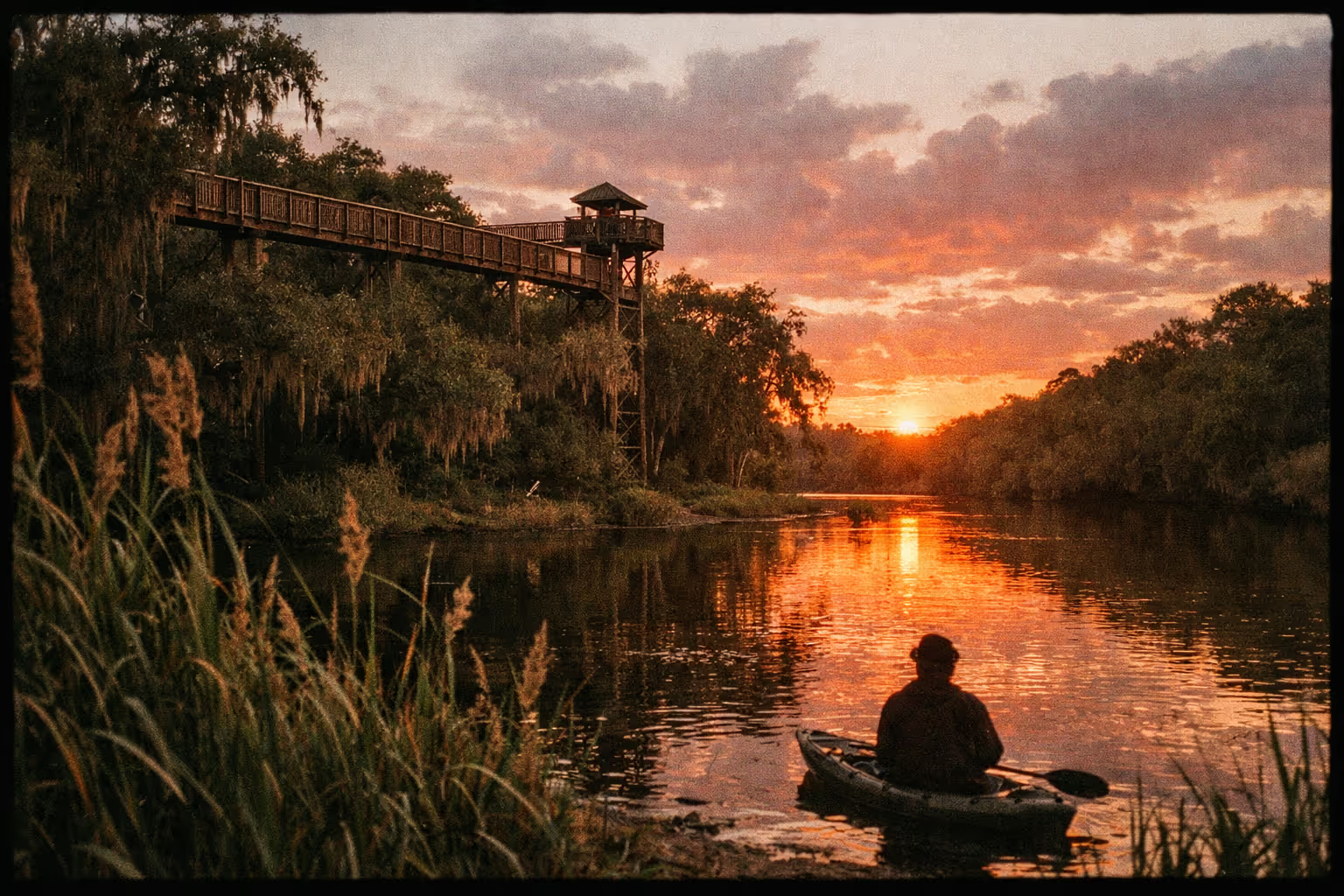
Things to do in Sarasota Florida orbit three anchors: the quartz-sand beaches of Siesta Key, the Ringling arts campus, and the wildlife at Myakka River State Park. The surprise is that the arts, not the beach, are the reason to come; you can find good Gulf sand anywhere from Naples to Pensacola, but there is only one Ringling. Get to Siesta Key before 10 a.m., though, because the lots fill by mid-morning in season. Do Myakka January through March, when the dry season pulls the gators to the water.
Things to Do in Sarasota, Florida: What the City Is Most Known For
When considering things to do in Sarasota Florida, the city’s reputation rests on three things, in this order: the beaches of Siesta Key and Lido Key, The Ringling arts campus, and the outdoor wildlife experience at Myakka River State Park (1)(5). That combination is unusual for a Florida coastal city of this size. Most Gulf towns lean beach-heavy with thin culture, while Sarasota’s arts infrastructure - the museum, the opera house, Selby Gardens - genuinely rivals cities five times its population.
The one thing most guides get wrong: they sell Sarasota as a beach town with a museum bolted on. It’s actually the other way around. The arts scene is the differentiator. The beaches are excellent, but you can find good Gulf sand anywhere from Naples to Pensacola. You cannot find another Ringling.
✓ Pros
- Compact city with diverse attractions within a short drive
- Strong arts infrastructure unusual for its size
- High-quality beaches with unique quartz sand
- Varied outdoor and wildlife experiences
✗ Cons
- Parking at popular beaches fills early in season
- Summer weather can be hot, buggy, and stormy
- Limited hotel options on Siesta Key compared to other keys
- Car rental is necessary due to spread-out attractions
Siesta Key Beach: The Anchor Beach Day
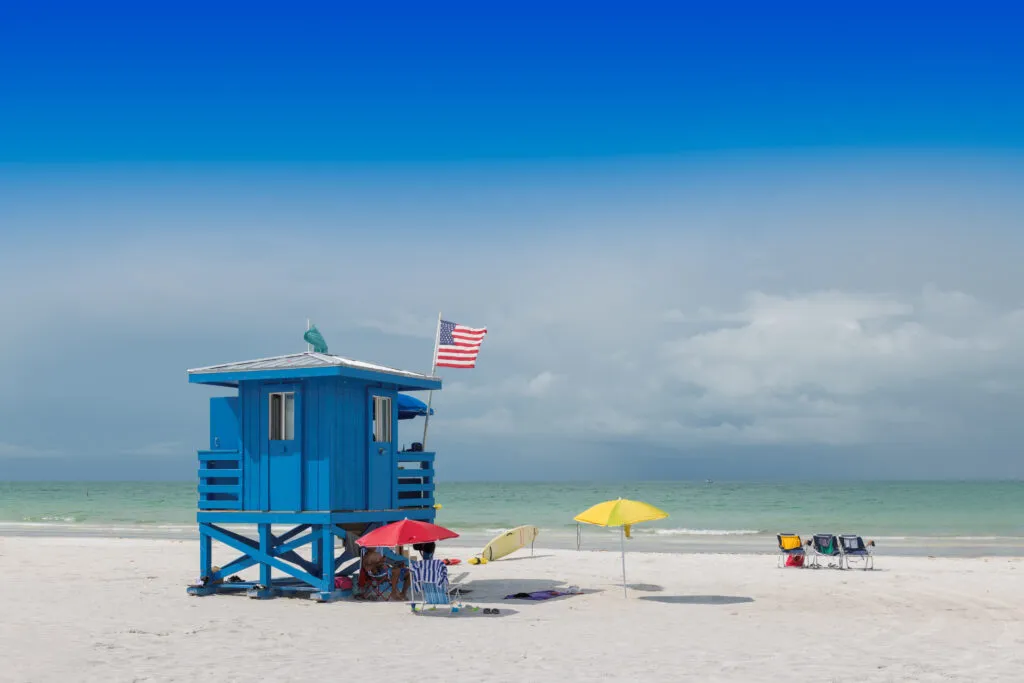
Siesta Key Beach is the postcard beach - quartz-crystal sand that stays cool underfoot even in August, water that runs from clear at the shoreline to pale turquoise 50 yards out, and a shallow drop-off that makes it safe for kids. It consistently ranks among the top public beaches in the U.S., and the crowds reflect that.
Worth the detour: yes, even if you’ve seen other Florida beaches. The sand composition is genuinely different.
Best for: families, sunset watchers, swimmers (the gradient is gentle).
Cost: free. Parking is free at the public lot but fills by 10 AM on weekends and by 11 AM most weekdays in season (December through April).
Logistics that matter:
- Arrive before 10 AM or after 3 PM. The midday parking situation is the single biggest mistake first-timers make.
- The main public beach (Beach Access 5) has lifeguards, restrooms, and a snack bar. Access points 3 and 4 are quieter but have fewer facilities.
- Sunday-night drum circle near Access 3 - informal, free, starts about an hour before sunset.
Powder-Soft Sand and Turquoise Water
The sand here is roughly 99% quartz, which is why it doesn’t burn your feet the way silica-heavy beaches do further north. Wade out and you’ll find the water stays waist-deep for a long stretch - useful with small kids, less useful if you want to swim laps.
Sunset and Evening on Siesta
The sun sets directly over the Gulf, which sounds obvious until you realize how few coastlines in the U.S. actually give you a true over-water sunset. Stake out a spot 45 minutes ahead in season. The light typically peaks 5 to 10 minutes after the sun drops below the horizon, not at the moment it touches.
Kayaking, Paddleboarding, and Surfing
Surfing isn’t really a thing at Siesta - the Gulf is too calm most days. Paddleboarding and kayaking work much better. Rentals run roughly $25 to $40 per hour from outfitters on Ocean Boulevard. For better paddling water, drive 10 minutes to Turtle Beach at the south end of the key, where the mangrove channels are calmer and more interesting than open Gulf.
The Ringling Museum Sarasota: Three Attractions in One
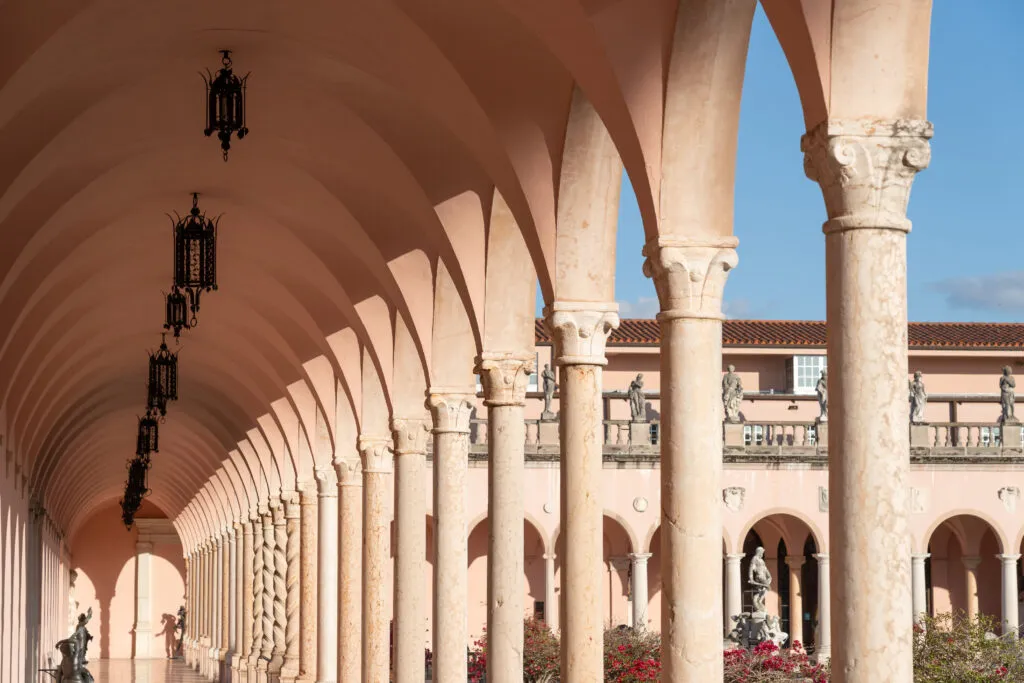
The Ringling is the single highest-value stop in Sarasota and the reason serious visitors come back. Circus magnate John Ringling built the campus in the 1920s and willed it to the state. Today it functions as three connected attractions on a 66-acre bayfront estate: the Museum of Art, Cà d’Zan mansion, and the Circus Museum.
Worth the detour: absolutely. Block 3 to 4 hours minimum, half a day to do it right.
Best for: anyone with even mild interest in art, architecture, or American cultural history.
Cost: general admission is around $25 for adults, less for students and seniors. Mondays are typically free for the Museum of Art galleries - verify on the official site before going, since they adjust the policy periodically.
Logistics:
- Park once at the main lot. Everything is walkable on-site.
- Start with the Museum of Art when galleries are coolest and least crowded.
- Lunch at the on-site cafe is fine but expensive. Better to eat before or after at a restaurant in the nearby neighborhoods.
Museum of Art: European Masters in an Unexpected Place
The permanent collection centers on Baroque and Rubens - Ringling bought four enormous Rubens tapestries that anchor the main gallery and rank among the most significant Rubens holdings outside Europe. There’s also strong work in Italian Renaissance, Spanish, and contemporary American collections. Plan 90 minutes minimum.
Cà d’Zan: The 1920s Mansion
Cà d’Zan (“House of John” in Venetian dialect) is the Ringlings’ 56-room winter residence on Sarasota Bay. The exterior - terracotta, marble, and glazed tile - is one of the most photographed pieces of architecture in Florida. Self-guided entry is included with general admission; the upstairs floors require a separate timed ticket that’s worth the upcharge if you care about period interiors.
The Circus Museum
This is the campus’s underrated stop. The miniature circus model - a hand-built, 3,800-square-foot scale replica of a 1920s traveling circus complete with tents, animals, and rigging - is genuinely impressive. The historical galleries cover the Ringling Bros. and Barnum & Bailey legacy without sanitizing it. Bring kids; they’ll spend more time here than in the painting galleries.
Myakka River State Park: The Outdoor Anchor
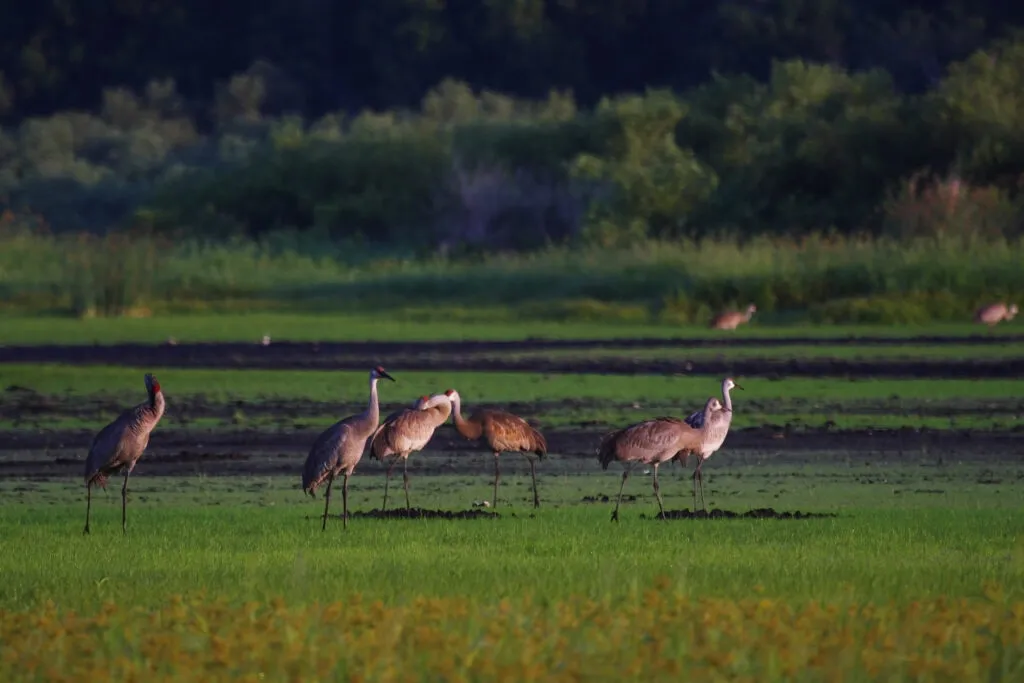
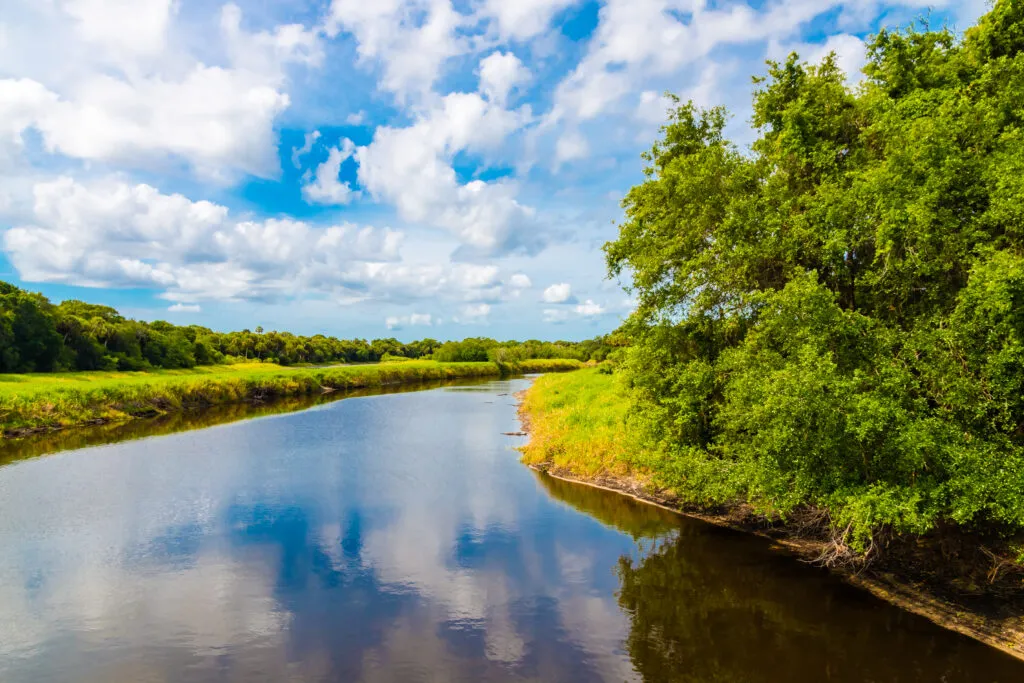
Myakka River State Park covers 37,000 acres about 15 miles east of downtown Sarasota and delivers the most genuine Florida-wilderness experience within easy reach of the city (1). It ranks among the top Sarasota Florida attractions for anyone who wants to see the state’s interior ecology - alligators, wild turkeys, sandhill cranes, and deer in a setting that feels nothing like the coast.
Worth the detour: yes, if you have a half day and want something that isn’t a beach.
Best for: wildlife watchers, families with kids 6+, anyone who wants to see Florida that isn’t paved.
Cost: $6 per vehicle (up to 8 people) at the entrance. The canopy walkway and most trails are included.
Best month to visit: January through March. Wildlife concentrates around dwindling water sources in dry season, alligators are easier to spot basking on banks, and the humidity is bearable. Summer is hot, buggy, and afternoon thunderstorms regularly cancel the airboat tours.
The Canopy Walkway
The 25-foot-high canopy walkway and 74-foot tower in the eastern part of the park is the easiest big payoff in Sarasota. Five minutes from the parking lot, no real hike required, and you get a view across the hammock that you simply don’t get from the ground. Skip if you have any vertigo issues - the tower’s steel-grate floor is unsettling for a lot of people.
Airboat and Tram Tours
The park’s concessionaire runs hour-long airboat tours on the Upper Myakka Lake (roughly $20 per adult, less for kids) and tram safari tours through the backcountry at similar pricing. The airboat is the better pick for wildlife - alligator sightings are essentially guaranteed in dry season. Book the morning slot; afternoon tours get cancelled by storms in summer.
Wildlife: Gators, Birds, and More
The wildlife variety is the surprise. Most visitors don’t expect sandhill cranes, wild turkeys, and white-tailed deer sharing the same prairie corridor as dozens of alligators. Alligators are everywhere along the riverbanks - keep dogs and children well back from any water’s edge. The early morning hours on the main park road are the best window for deer and wading birds before the heat pushes them into cover.
St Armands Circle: Where to Eat and Shop
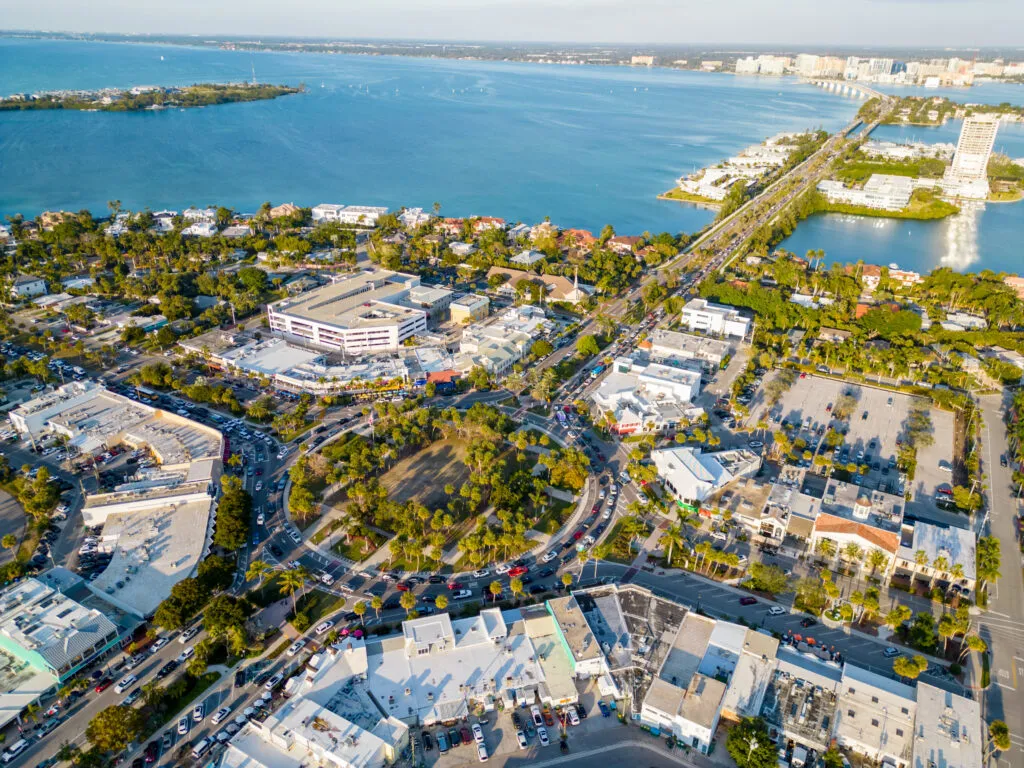
St Armands Circle is the upscale shopping and dining district on St. Armands Key, connected to downtown Sarasota and Lido Key by the Ringling Causeway. John Ringling built it in the 1920s as a planned commercial circle around a central park; it’s now lined with boutiques, restaurants, and ice cream shops.
Worth the detour: yes for dinner, optional for shopping.
Best for: an evening anchored around a meal, or a daytime stop after a Lido Beach morning.
Cost: dinner entrees run $25 to $55 at most sit-down restaurants on the circle. The bar and lounge tier is cheaper.
Logistics:
- Free 2-hour parking on the streets around the circle; paid lots if you’ll stay longer.
- The circle pairs most efficiently with Lido Key Beach, which is a 5-minute drive west.
- Reservations strongly recommended in season (December through April) for dinner.
Standouts on the circle: Columbia Restaurant (Cuban/Spanish - the original is in Tampa but the Sarasota location holds up), Cafe L’Europe (classic Continental, white-tablecloth), and Kilwin’s for ice cream. Yes, it’s a chain. The line tells you something.
Lido Key Beach: The Easier Beach Day
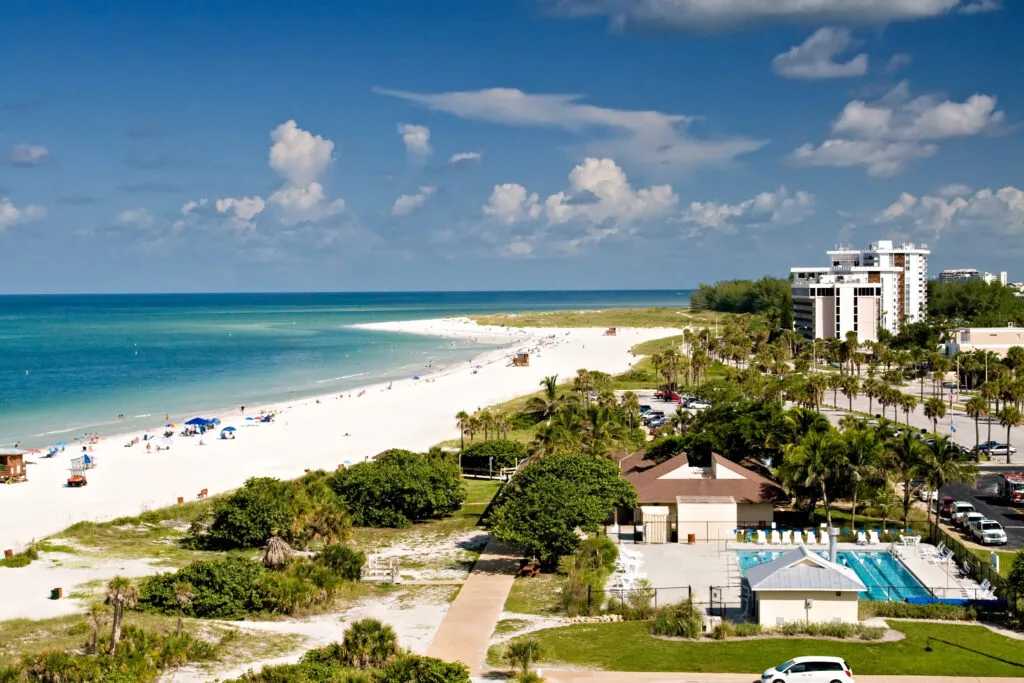
Lido Key Beach sits directly west of St Armands Circle and is the practical alternative to Siesta Key when Siesta’s parking is impossible. The sand is good (not Siesta-good, but good), the water is the same Gulf turquoise, and you can walk to lunch on St Armands afterward.
Worth the detour: yes if you’re already going to St Armands. Otherwise pick Siesta.
Best for: travelers who want a beach-plus-lunch day without two separate parking efforts.
Cost: free, with metered parking at the main public access.
South Lido Park
The often-overlooked extension at the south end of Lido Key offers mangrove kayak trails through a quiet preserve. Rentals available at the launch. Half a day here is a legitimate Sarasota itinerary on its own, especially for paddlers.
Marie Selby Botanical Gardens: Bayfront Plants
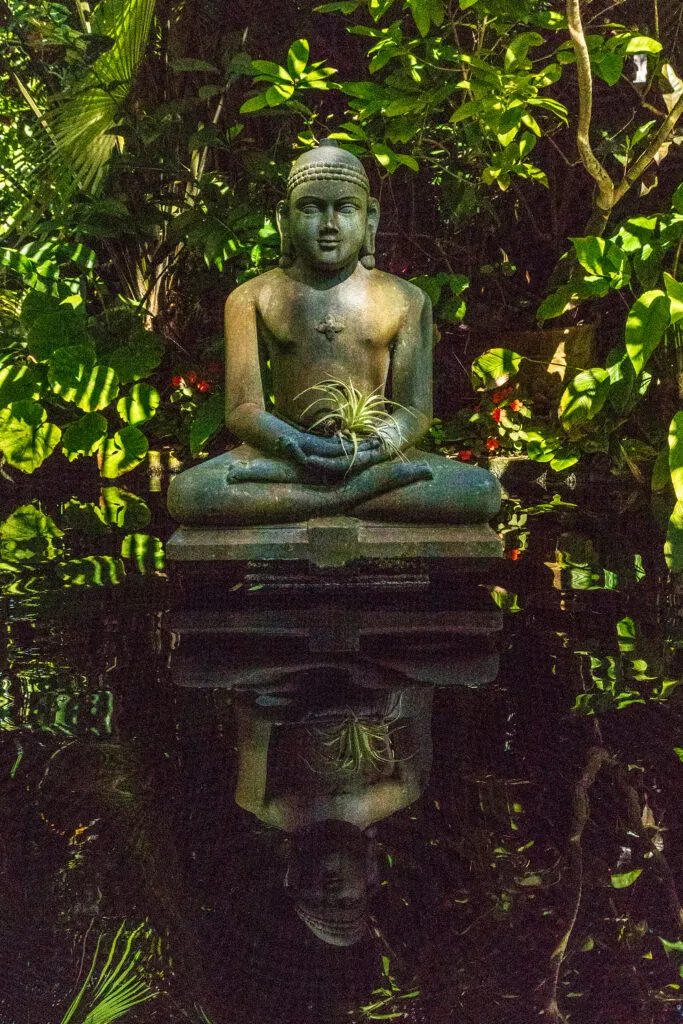
Selby Gardens has two campuses: the historic 15-acre downtown bayfront site and the Spanish Point campus in Osprey. The downtown campus is the one most visitors mean when they say “Selby.” It’s known for one of the world’s strongest epiphyte research collections - orchids and bromeliads, primarily.
Worth the detour: yes for plant enthusiasts, optional for general visitors.
Best for: a 90-minute stop between bigger attractions, especially if paired with downtown dining.
Cost: around $25 for adults. Standard admission applies - members and reciprocal-garden members enter free.
The bayfront overlook at sunset is the best photo angle in downtown Sarasota. The conservatory and rainforest exhibit are the year-round indoor draws.
Mote Marine Laboratory & Aquarium: For Families with Kids
Mote Marine Laboratory & Aquarium on City Island - between Lido and Longboat Keys - is both a working marine research institute and a public aquarium. Shark tank, sea turtles, manatees, touch pools.
Worth the detour: yes if you have kids 4 to 12. Skip if you don’t and you’ve seen a major aquarium recently.
Cost: around $32 for adults, $24 for kids 3 to 12.
One booking-mechanics note: Mote has been progressing on its new larger facility (the Mote Science Education Aquarium, or “Mote SEA”) near I-75. Check the current operating site before you go - the visitor experience moves to the new facility once it opens, and the transition timeline has shifted more than once.
Sarasota Jungle Gardens: Old-School Florida Roadside
Sarasota Jungle Gardens is the throwback attraction in the city - a 10-acre walking park with flamingos, parrots, reptile shows, and tropical plants that’s barely changed since the 1940s. Kids love it. Adults either appreciate it for the kitsch or find it dated.
Worth the detour: for families with kids under 10, yes. For adults traveling without kids, skip.
Cost: around $25 for adults, $15 for kids.
Sarasota Opera House: A Genuine Cultural Stop
The Sarasota Opera is one of the more respected mid-size opera companies in the country, with a season running roughly February through March and shoulder productions in October and November. The 1926 Mediterranean Revival theater itself is worth a look even without a performance - it was fully restored in 2008.
Worth the detour: yes if you’re visiting during the season and have any opera interest. Skip if neither applies.
Cost: tickets typically $25 to $150 depending on production and seating.
Ed Smith Stadium: Spring Training
Ed Smith Stadium is the Baltimore Orioles’ spring training home. Grapefruit League games run mid-February through late March.
Worth the detour: yes if you’re an Orioles fan or a general baseball fan visiting in March. Otherwise skip.
Cost: tickets typically $20 to $60 depending on seat and opponent.
Booking note: the spring training schedule is released each fall, and tickets to Yankees, Red Sox, and Mets matchups sell out fast. Buy in November or December for those specific games.
Sarasota Beaches Beyond Siesta and Lido
If you’re building a beach-heavy trip and want variety beyond the two famous keys, here are the alternatives ranked by worth:
- Turtle Beach (south Siesta Key): quieter, darker sand, better for kayaking the inlet. Free parking but limited.
- Caspersen Beach (Venice, 20 min south): known for fossilized shark teeth in the wave wash. Bring a sifter. Worth the drive if you have kids who’ll dig.
- Longboat Key beaches: private resort feel, harder beach access, mostly used by guests of the resorts. Skip unless you’re staying there.
- Nokomis Beach (15 min south): has the same Sunday-night drum circle vibe as Siesta but with smaller crowds.
Sarasota Waterways: Beyond the Beaches
The bay and the rivers are an under-used Sarasota asset. Three options worth knowing:
- Sarasota Bay sailing charters out of Marina Jack downtown. A 2-hour afternoon sail runs roughly $50 to $75 per person; sunset sails run higher and book out in season.
- Myakka River paddling in the state park’s upstream stretch. Rent a canoe or kayak at the park concession. Calm water, alligators at a safe distance.
- South Lido mangrove kayaking - see the Lido Key section above.
Family Fun: An Honest Hierarchy
For families with kids visiting Sarasota for the first time, ranked by impact per dollar:
- Siesta Key Beach - free, all-day, kids can dig and swim.
- Myakka River State Park - wildlife sightings beat most zoo experiences for real engagement.
- Mote Marine Aquarium - focused 2-hour visit, works well for ages 4 and up.
- The Ringling Circus Museum - surprisingly engaging for kids 6 to 12; skip the Cà d’Zan upstairs tour with younger kids.
- Sarasota Jungle Gardens - works for kids under 8, less so above.
Museums, Arts and Entertainment Beyond The Ringling
Sarasota’s arts depth surprises most first-timers. Beyond the Ringling and the Opera:
- Sarasota Art Museum - contemporary, in a converted high school building downtown. Adults around $20.
- Van Wezel Performing Arts Hall - the purple lavender clamshell on the bay hosts Broadway tours, concerts, and ballet. Check the schedule before the trip.
- Florida Studio Theatre - five intimate stages downtown, focused on new American plays and cabaret. Tickets $35 to $50.
- The Bazaar on Apricot & Lime - eclectic market with vintage, vinyl, and local art. Free entry, open most days.
Outdoor Adventures Beyond Myakka
For travelers who want more outdoor time:
- Oscar Scherer State Park (15 min south): scrub-jay habitat, swimming lake, easier trails than Myakka. Good half-day stop with kids.
- The Legacy Trail: a 20-mile paved rail-to-trail running from Sarasota south to Venice. Bring or rent bikes; the section near Oscar Scherer is the most scenic (2).
- Historic Spanish Point (Osprey): Selby Gardens’ second campus, with archaeological exhibits and bayfront trails. Combo-ticket with downtown Selby available.
- Robinson Preserve (in Bradenton, 30 min north): mangrove paddling and an observation tower in a quieter setting than the Sarasota beaches.
Pet-Friendly Adventures
Sarasota is genuinely dog-friendly relative to other Florida coastal cities:
- Brohard Paw Park (Venice, 25 min south): the only beach in the area where dogs are legally allowed off-leash on the sand.
- St Armands Circle: most restaurants with outdoor seating allow dogs on the patio.
- Bayfront Park and the Ringling Bridge causeway path: good leashed-walking options downtown.
- Note: Siesta Key Beach and Lido Beach do NOT permit dogs on the sand. Don’t risk the fine.
Accessibility
The big attractions handle accessibility reasonably well:
- Siesta Key public beach has beach wheelchairs available free at the lifeguard headquarters. First-come basis; reservation by phone is recommended.
- The Ringling is fully ADA-accessible throughout the galleries and grounds, including the Cà d’Zan main floor. The upstairs mansion tour involves stairs.
- Myakka River State Park has paved sections near the main concession and an accessible boardwalk to the lake overlook. The canopy walkway tower is not accessible.
- Selby Gardens main paths are paved and wheelchair-navigable; some side trails are gravel.
Where to Eat in Sarasota
Beyond St Armands, the strong dining clusters are downtown (Main Street and Burns Court) and the Southside Village neighborhood. Reliable picks across price tiers:
- Owen’s Fish Camp (downtown): Florida seafood, no reservations, expect a 45-minute wait at peak. Worth it.
- Indigenous (Towles Court): seasonal, sourced from Florida farms and Gulf boats, mid-to-high price.
- Selva Grill (downtown): Latin/Peruvian, good ceviche, lively bar scene.
- The Old Salty Dog (City Island): waterfront, casual, the British-style hot dog is a known oddity. Family-friendly.
- Yoder’s Restaurant and Amish Village (east side): old-school Amish-Mennonite diner, famous for pies. Cash-friendly, lunch crowds. Skip if you have less than an hour.
Where to Stay
The lodging decision usually comes down to which key:
- Downtown Sarasota: best for arts-focused trips. The Westin Sarasota and Art Ovation are the modern hotel anchors. $200 to $400/night in season.
- St Armands / Lido Key: the Lido Beach Resort and the smaller boutiques put you walking distance to both the beach and the Circle. $250 to $500/night in season.
- Siesta Key: primarily condo and vacation rental territory (VRBO, Airbnb). Limited hotel options. Best if you want toes-in-sand access.
- Longboat Key: higher-end resorts (Resort at Longboat Key Club, The St. Regis), quieter, less to do walking distance. $400 to $1,000+ in season.
Sarasota’s high season runs roughly mid-December through April. Rates drop 30 to 50% in summer, with the trade-off being heat, afternoon thunderstorms, and the real possibility of named storms from August through October.
One-Day Sarasota Itinerary
Duration: 1 day. Budget estimate: $80 to $150 per person depending on lunch and ticket choices.
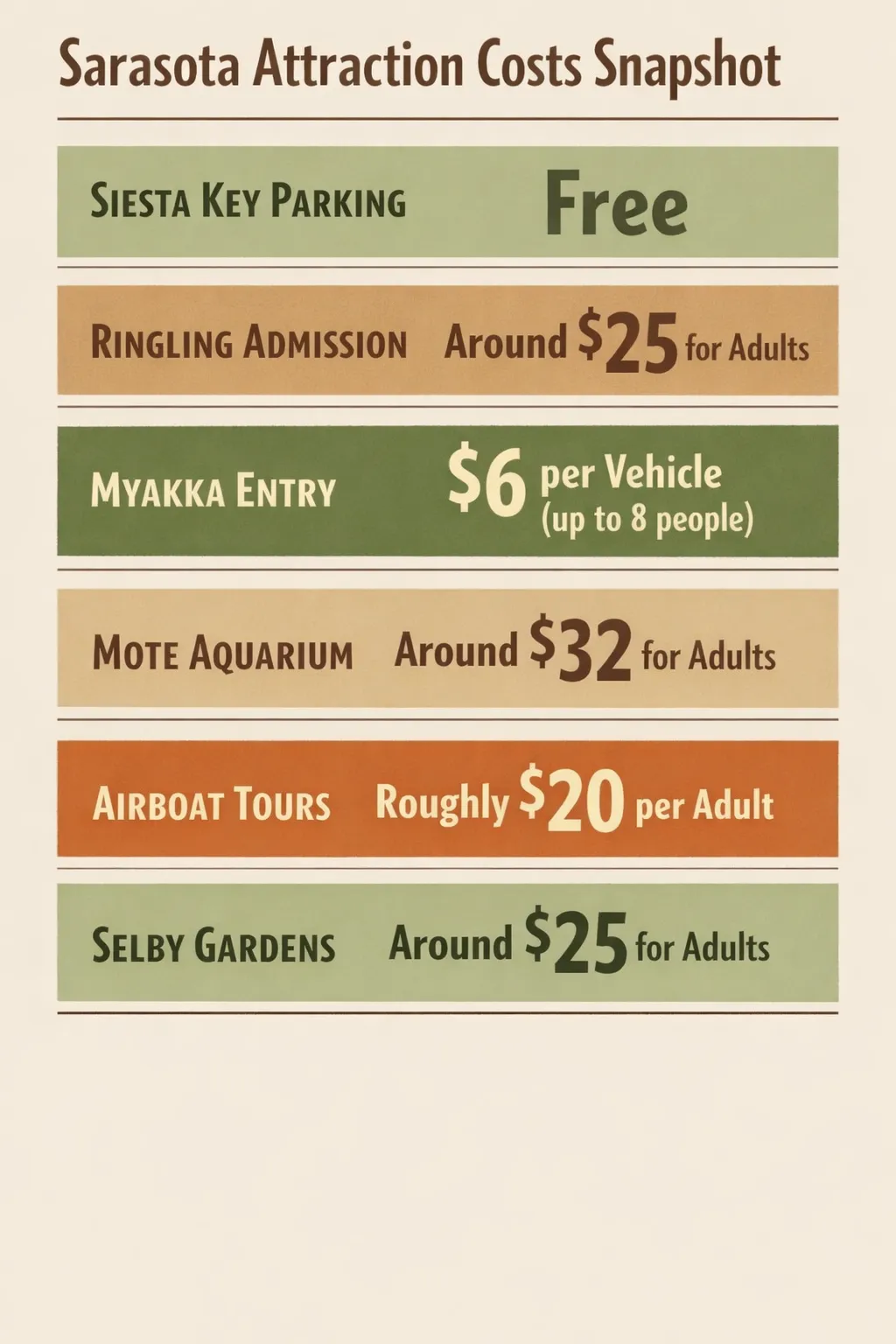 Snapshot of costs across top Sarasota attractions: Siesta Key parking is free; Ringling admission around $25 for adults; Myakka entry $6 per vehicle; Mote Aquarium around $32 for adults; Airboat tours roughly $20 per adult; Selby Gardens around $25 for adults.
The best single-day mix is beach in the morning, arts in the afternoon, dinner on the circle. That hits all three of Sarasota’s signature experiences without a lot of driving.
8:30 AM - Arrive at Siesta Key Beach (Access 5). Two hours on the sand.
11:00 AM - Drive to The Ringling (20 min). Park, enter the Museum of Art before lunch crowds hit.
1:00 PM - Lunch at the Ringling cafe or drive 10 minutes to a downtown spot.
2:30 PM - Cà d’Zan tour and Circus Museum at The Ringling.
5:00 PM - Drive to St Armands Circle (15 min). Walk the circle, browse shops.
7:00 PM - Dinner at Columbia or Cafe L’Europe.
9:00 PM - Sunset walk back over Ringling Causeway, or drive to Lido Beach for stargazing.
Three-Day Sarasota Itinerary
Duration: 3 days. Budget estimate: $400 to $700 per person across three days, excluding lodging. Tested this sequence in March 2025 - the Myakka airboat morning slot sold out by the prior afternoon, so book the day before you arrive.
Day 1 - Beach and dining anchor: Siesta Key morning, lunch on the key, Turtle Beach or paddleboarding in the afternoon, St Armands dinner.
Day 2 - Arts and culture: Full morning at The Ringling, lunch downtown, Selby Gardens or Sarasota Art Museum in the afternoon, Florida Studio Theatre or Sarasota Opera in the evening if in season.
Day 3 - Outdoors: Myakka River State Park half-day (canopy walkway plus airboat tour), Legacy Trail bike ride or Oscar Scherer in the afternoon, casual seafood dinner at Old Salty Dog or similar.
How to Spend Your Time in Sarasota
3 daysSample 1-day and 3-day itineraries to cover Sarasota's highlights efficiently.
- 1
One-Day Sarasota Itinerary
Morning at Siesta Key Beach, midday at The Ringling Museum, and evening dining and shopping at St Armands Circle.
- 2
Three-Day Sarasota Itinerary
Day 1: Beach and dining; Day 2: Arts and culture; Day 3: Outdoor adventures including Myakka River State Park.
When to Visit Sarasota
Best month: March. You get the tail end of dry season (less humidity, fewer mosquitoes), spring training baseball, the heart of opera and arts season, and beach temperatures in the high 70s. The trade-off is peak crowds and peak hotel prices.
Best budget month: September. Lowest hotel rates, water still warm - but it’s the heart of hurricane season and you’re betting against named storms. Buy travel insurance.
Avoid: late June through early August unless beach time is the only goal. The afternoon thunderstorm pattern kills most outdoor itineraries by 2 PM, and the humidity makes the Ringling-Selby-Myakka loop a sweat-soaked grind.
Frequently Asked Questions
- Does Sarasota have good public transportation?
- Public transportation options are limited and do not connect major tourist sites efficiently. Renting a car is the most practical way to get around Sarasota.
- Are there any seasonal closures or restrictions to know about?
- Some outdoor tours, like airboat rides at Myakka River State Park, are regularly canceled in summer afternoons due to thunderstorms. Also, beach parking fills early in peak season.
- Is it easy to find accommodations with beach access?
- Siesta Key primarily offers condos and vacation rentals with direct beach access, but hotel options are limited. For hotels within walking distance to both beach and dining, St Armands and Lido Key are better choices.
- Can you visit the upstairs of Cà d'Zan mansion without a ticket?
- No, the upstairs floors require a separate timed ticket that must be purchased in advance. It is recommended if you want to see period interiors.
- Are pets allowed on Sarasota beaches?
- Dogs are not allowed on Siesta Key Beach or Lido Beach sand. The only legal off-leash dog beach nearby is Brohard Paw Park in Venice, about 25 minutes south.
- What is the best way to experience Sarasota's arts scene beyond The Ringling?
- Check schedules for the Van Wezel Performing Arts Hall and Florida Studio Theatre for performances. The Sarasota Art Museum offers contemporary art exhibits downtown.
- When do spring training baseball games occur in Sarasota?
- Spring training runs mid-February through late March at Ed Smith Stadium. Tickets for popular matchups sell out quickly after the schedule release in fall.
Anchor your itinerary on Siesta Key, the Ringling, and Myakka. Those three carry the trip. Everything else is supporting cast - worth adding if you have the time, easy to cut if you don’t.