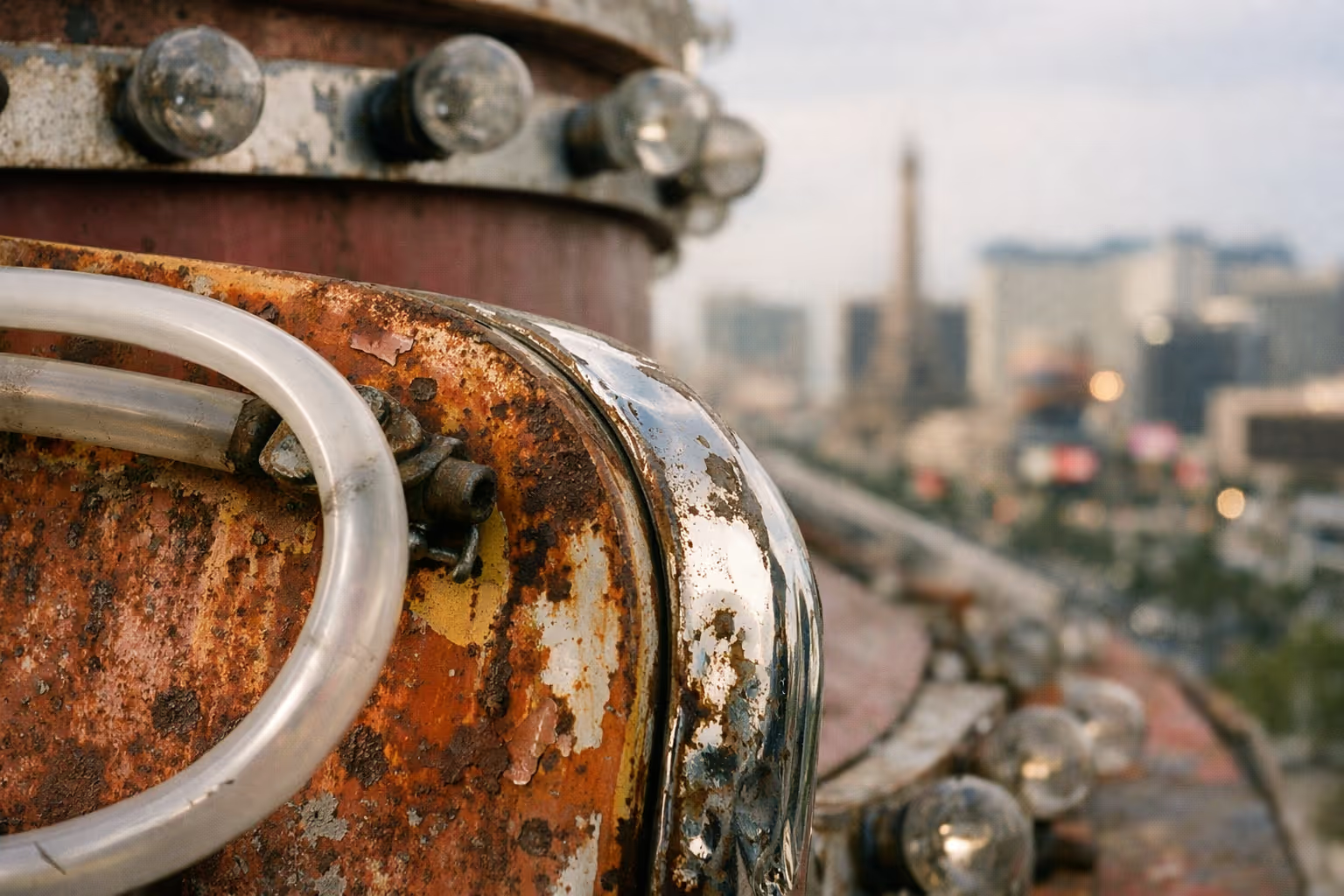
Las Vegas is one of the few cities where you can walk past a half-scale Eiffel Tower, watch a dam hold back a desert reservoir, and stand under a neon canopy - all within the same 24-hour window. The problem is that the fastest way to waste a trip here is trying to do exactly that. The best things to do in Las Vegas fall into three distinct zones: the Strip (a resort corridor that works day and night), Fremont Street (a compact downtown zone that only comes alive after dark), and Hoover Dam (a half-day desert excursion best done before the tour buses arrive). Las Vegas drew 38.5 million visitors in 2025 (8), so the crowds are real and timing matters more than most guides admit. The best months to visit are March and April, when temperatures are moderate and crowds are lighter than summer or holidays. This guide sorts the three zones by pace, cost, and traveler type so you can pick the version of Vegas that actually fits your schedule.
Here’s the honest breakdown before you plan anything.
What works about Las Vegas:
- Three distinct zones let you self-select by energy level and budget - you’re not locked into one experience
- A high concentration of free or low-cost sightseeing: Strip walking, Fremont Street atmosphere, the Hoover Dam crest walk
- Hoover Dam is a genuine engineering landmark, not a roadside photo stop
- The walkable zones cut down on constant transit planning
What to watch for:
- Distances between Strip resorts are deceptive - “nearby” can mean 20-plus minutes on foot
- Peak-hour crowds at Hoover Dam and marquee Strip spots erode the experience
- Vegas pricing has crept up; budget assumptions from a few years ago don’t hold
- Fremont Street is a genuinely a nighttime product - daytime visits fall flat
✓ Pros
- Three distinct zones let you self-select by energy level and budget
- High concentration of free or low-cost sightseeing options
- Hoover Dam is a genuine engineering landmark, not just a photo stop
- Walkable zones reduce the need for constant transit planning
✗ Cons
- Distances between Strip resorts are deceptive; walking can take 20+ minutes
- Peak-hour crowds at Hoover Dam and Strip spots can degrade experience
- Las Vegas pricing has increased; older budget assumptions are outdated
- Fremont Street is best after dark; daytime visits feel flat
Things to Do in Las Vegas: The Strip, Fremont Street, and Hoover Dam Zones Compared
The Strip, Fremont Street, and Hoover Dam are three different products with three different optimal timings. Treating them as interchangeable is the most common first-timer mistake. The Strip is a roughly 4.2-mile resort corridor. Fremont Street is a compact 5-block pedestrian zone downtown. Hoover Dam sits about 30 miles southeast of the city (4). Each rewards a different approach.
The core tension: Vegas punishes people who try to cram. Hit all three zones in a single marathon day and you get a mediocre version of each - a rushed dam visit, a footsore Strip walk, and a Fremont Street stop where you’re too tired to enjoy the canopy show. Spread across two or three days, each zone gets the attention it deserves.
Crowd planning still matters even when visitor numbers soften. The Las Vegas Convention and Visitors Authority recorded 38.5 million visitors in 2025, a 7.5% decline from 2024 (8). Fewer visitors doesn’t mean empty attractions - the Bellagio fountains, Hoover Dam tour lines, and Fremont Street after dark still congest at peak hours.
Who gets the most from each zone: the Strip suits first-timers, couples, and anyone who wants the widest mix of free and paid attractions. Fremont Street rewards budget-focused night owls and groups. Hoover Dam fits families, history and engineering buffs, and photographers willing to arrive early or stay late.
Exploring the Best Activities on the Las Vegas Strip
The Strip’s real value is density. You can combine the Bellagio fountains, the LINQ High Roller, the Caesars Palace interior, and the Welcome to Las Vegas sign without buying a single ticket. That’s the case for treating the Strip as your default zone - it delivers the widest range of experiences with the least planning, and a surprising amount of it is free.
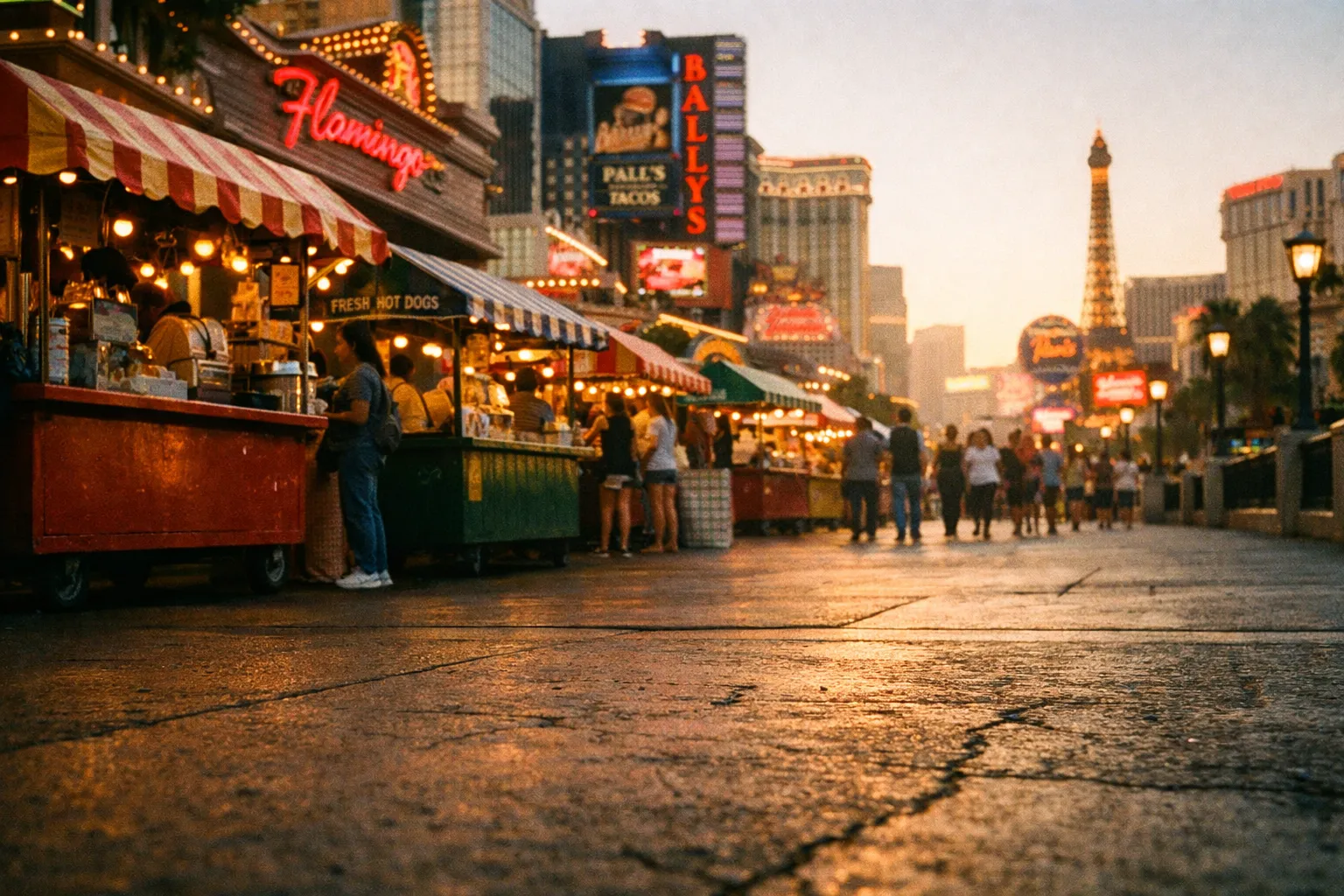
The catch is distance. Walking between non-adjacent resorts can eat 30 to 45 minutes even when the buildings look close on a map. The Strip rewards clustering your stops by zone rather than zigzagging the full 4.2-mile corridor on foot.
Free Things to See on the Strip (No Ticket Required)
The Bellagio fountain show is the clearest no-cost anchor on the Strip, running every 15 to 30 minutes in the evening. That schedule makes it easy to build a blue-hour or after-dark walk around it. Stake out a spot along the railing directly in front of the lake, or watch from the Bellagio’s own terraces for a slightly elevated angle. I’ve done both - the railing puts you closer to the water; the terrace gives you a better sense of the full choreography.
Other free stops worth folding into a mid-Strip cluster:
- The Venetian and Palazzo interiors - the Grand Canal shops and painted ceilings are open to walk through without a ticket, making them a low-friction stop between fountain views.
- Paris Las Vegas - the half-scale Eiffel Tower and street-level frontage give you a photogenic anchor even without paying to go up.
- The Welcome to Las Vegas sign - it sits south of Mandalay Bay, far enough down that it works better as a rideshare add-on than part of a northbound walk.
- Casino architecture - the Caesars Palace and Bellagio lobbies are worth a slow walk-through on their own.
A Strip stroll pays off most at blue hour or after dark, when the fountains, signage, and resort lighting hit their peak. For couples, timing an evening walk to catch a fountain show at dusk is a reliable no-cost date that holds up even on a repeat visit.
Strip Experiences Worth Paying For
If you’re spending money, a few Strip attractions stand out. The High Roller at the LINQ is the tallest observation wheel in the United States, which is why it remains the benchmark paid viewpoint on the Strip. The STRAT SkyPod is the Strip’s highest observation deck - the obvious pick if your goal is elevation rather than resort ambience, with thrill rides available for anyone who wants them.
Then there are the shows and residencies - Cirque du Soleil, comedy, major music residencies. These typically sell best on weekends, so book ahead if you want a specific date or seat type.
One honest note: current Strip attraction prices weren’t consistently available in the sources reviewed, so check the venue sites directly for same-day pricing rather than trusting a figure that may be stale.
How to Walk the Strip Without Destroying Your Feet
Group your stops by south Strip, mid-Strip, and north Strip rather than crossing the corridor repeatedly. Use rideshare or the Las Vegas Monorail for the longer jumps between clusters. “I’ll just walk it” is realistic for a section - not for the whole thing.
Time of day changes the calculus considerably. Early morning is best for photos with fewer people in frame; late afternoon buys you shade; after dark delivers the full neon payoff. In summer, shoes, water, and time buffers aren’t optional - the desert heat is real and the pavement radiates it right back at you. I walked a mid-Strip stretch in July without enough water and it was a genuinely unpleasant 40 minutes. Don’t do that.
Why Fremont Street After Dark Is the Time to Visit Downtown Vegas
Fremont Street Experience is a 5-block pedestrian zone in downtown Las Vegas, and that structure - a street, not a resort corridor or a casino floor - is exactly why it feels different from the Strip. This is a street-level entertainment zone, older and grittier, built around an overhead light canopy.
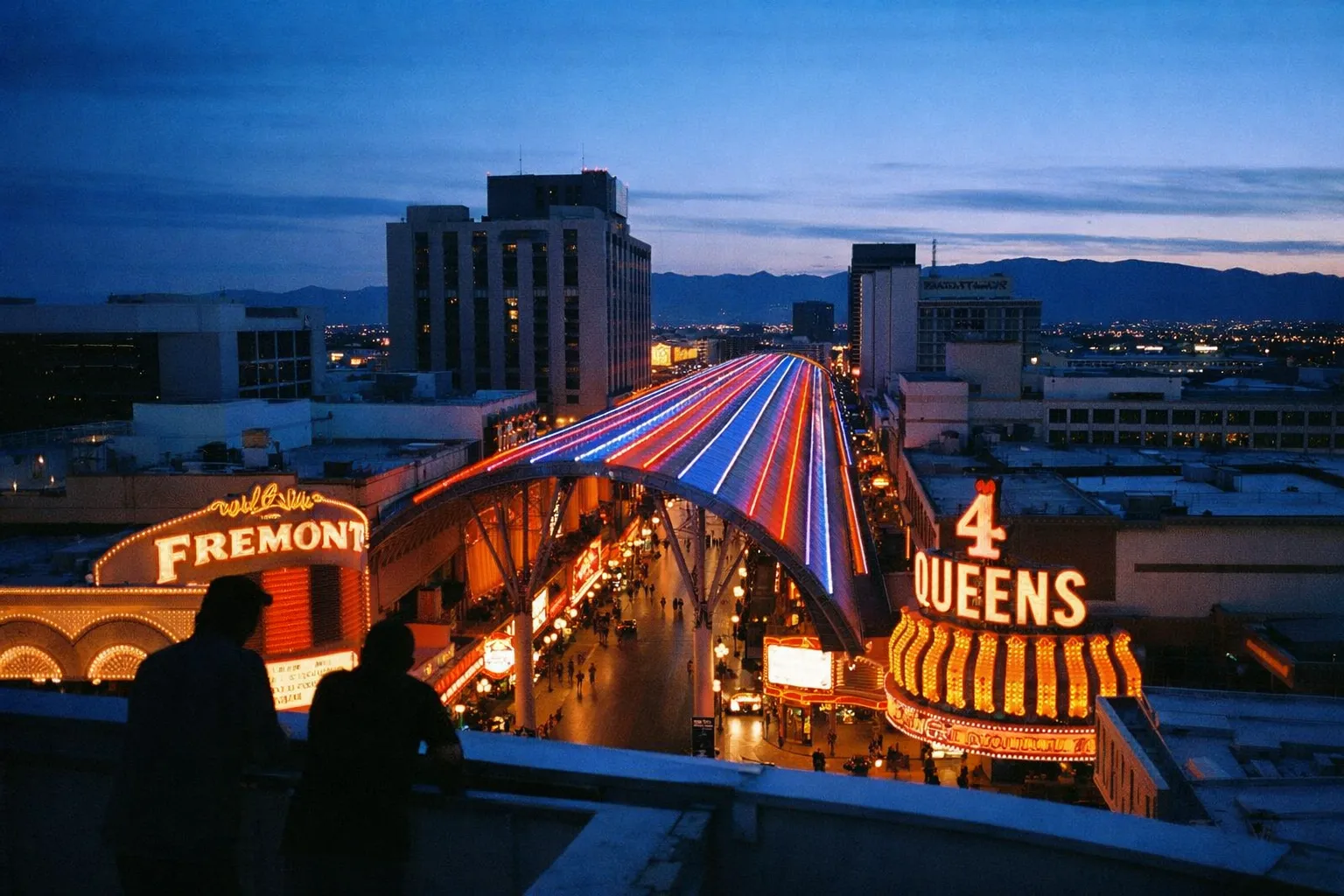
The canopy light show is the main draw after dark, and it’s the reason daytime visits feel flat. The entire visual payoff depends on the overhead lighting system. Show up in daylight and you’re looking at a plain pedestrian street with older casino facades. Show up after dark and the canopy, the stage acts, and the crowd energy all switch on at once.
From the Strip, Fremont Street is typically a 15-to-20-minute rideshare. That’s why it works as a separate evening outing rather than a walking extension of a Strip day.
What’s Actually Free on Fremont Street
The pedestrian zone itself is free to enter and walk, which makes Fremont one of the city’s best no-cost evening options. The free tier includes:
- The canopy light show overhead, no ticket required - the core reason to come after dark
- Street performers and live music stages scattered along the zone
- The older casino facades - the Golden Nugget, Binion’s, and the Fremont Hotel are worth a slow pass
It’s walkable end to end in under 10 minutes, so plan to loop it a few times rather than rushing through once.
Paid Fremont Street Activities Worth Considering
SlotZilla is the headline paid activity under the canopy, running in two levels - a lower Zipline and an upper Zoomline. It’s a crowd-pleaser for groups and couples and the clearest “big” experience in the downtown zone.
Two more worth pairing with a Fremont evening, ideally earlier before the lights come on:
- The Mob Museum - a short walk from the canopy, with museum-quality exhibits on organized crime history. It works well as a daytime add-on.
- Downtown Container Park - an open-air shopping and entertainment complex next to Fremont East; budget about 30 to 45 minutes if you only want the essentials.
What to Expect, Costs, and Best Timing for Hoover Dam Visits
Hoover Dam is about 30 miles southeast of Las Vegas (4), which makes it a realistic half-day excursion that slots in before or after a Strip day rather than consuming a full day. The single most important thing to understand before you go is that the dam has two different access types with two different sets of hours.
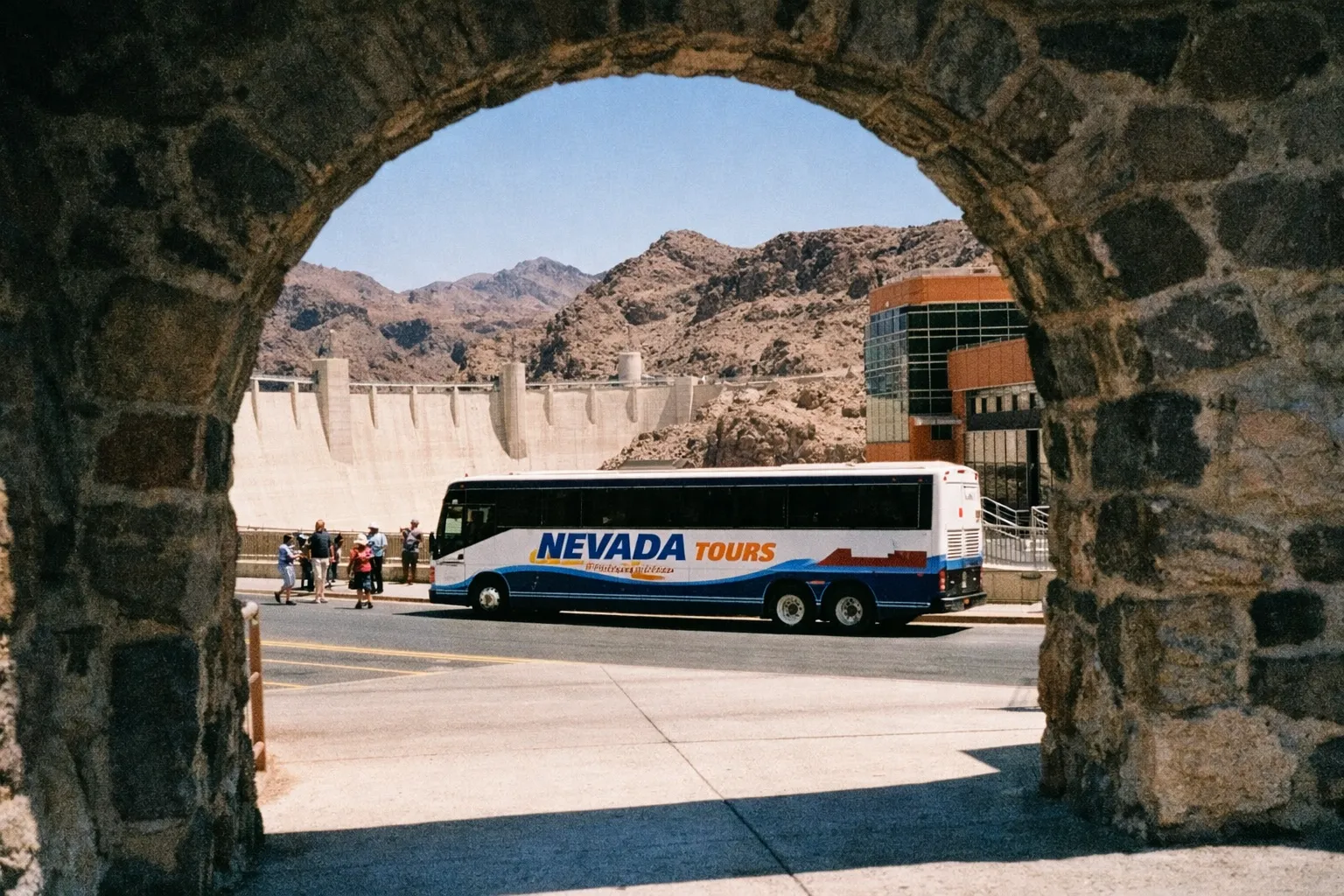
According to Travel Nevada, the dam crest and exterior are open daily from 5:00 a.m. to 9:00 p.m., while the Hoover Dam Visitor Center is open 9:00 a.m. to 5:00 p.m. and closed on Thanksgiving and Christmas (5). Doors close at 4:15 p.m. and the last tour departs around 4:10 p.m. Miss that window and you’ve driven 30 miles for a parking lot and a crest walk.
Parking is $10 per vehicle on the Nevada side, paid at the garage, with a vehicle inspection at the security checkpoint (6). Once you’ve paid parking, the dam crest walk is free - the highest-value low-cost activity at the dam.
Hoover Dam Tour Options and Pricing Compared
Hoover Dam Tour Options and Pricing
| Self-guided Visitor Center Tour | Guided Power Plant Tour | Guided Dam Tour | |
|---|---|---|---|
| Price | $15/person | $25 adult / $15 child (4-16) | $40/person |
| Description | History museum and observation deck; good for first-timers on a tighter schedule | Adds power plant interior access; good for families and engineering enthusiasts | Deepest access with tunnels and galleries; best for serious history or engineering interest |
| Best For | First-timers, tight schedules | Families, engineering buffs | Serious history or engineering interest |
Travel Nevada notes the Guided Dam Tour is sold on-site, so same-day availability can matter if you’re visiting during a peak window (2). Buy early in the day rather than gambling on an afternoon slot.
At a glance: the $15 Visitor Center Tour gets you museum and viewpoint context; the $25/$15 Power Plant Tour adds the plant interior; the $40 Dam Tour is the deepest-access option for anyone who wants tunnels and galleries.
The Best Time to Visit Hoover Dam (Crowd and Light Strategy)
Arrive before 10:00 a.m. if you want to dodge the heaviest tour-bus overlap (4). The quietest practical windows tend to be early morning and late afternoon, when the Visitor Center is still open but the crowds thin out relative to mid-morning (4).
For photographers, the long exterior hours are a genuine advantage. Since the crest stays open until 9:00 p.m., a late-afternoon or sunset visit gives you better light and lower heat than a midday stop (5). And because the crest is accessible from 5:00 a.m., there’s a near-empty sunrise option for early risers (5).
How to Plan a Hoover Dam Visit
Up to 4 hoursStep-by-step logistics to maximize your visit
- 1
Check Visitor Center hours
Open 9:00 a.m. to 5:00 p.m. daily; closed Thanksgiving and Christmas.
- 2
Choose your tour tier
Decide between Visitor Center only ($15), Power Plant ($25/$15), or full Dam Tour ($40).
- 3
Arrive early
Get there before 10:00 a.m. to avoid long queues and secure guided tours.
- 4
Budget for parking
Pay $10 per vehicle on the Nevada side; have payment ready at the garage.
- 5
Allocate enough time
Allow 1.5-2 hours for exterior plus Visitor Center; 2.5-4 hours if adding a guided tour.
- 6
Consider photography timing
Late afternoon visits offer better light; dam crest open until 9:00 p.m.
Comparing the Strip, Fremont Street, and Hoover Dam for Your Vegas Trip
Before you lock in a plan, here’s how the three zones compare on the factors that actually drive a decision.
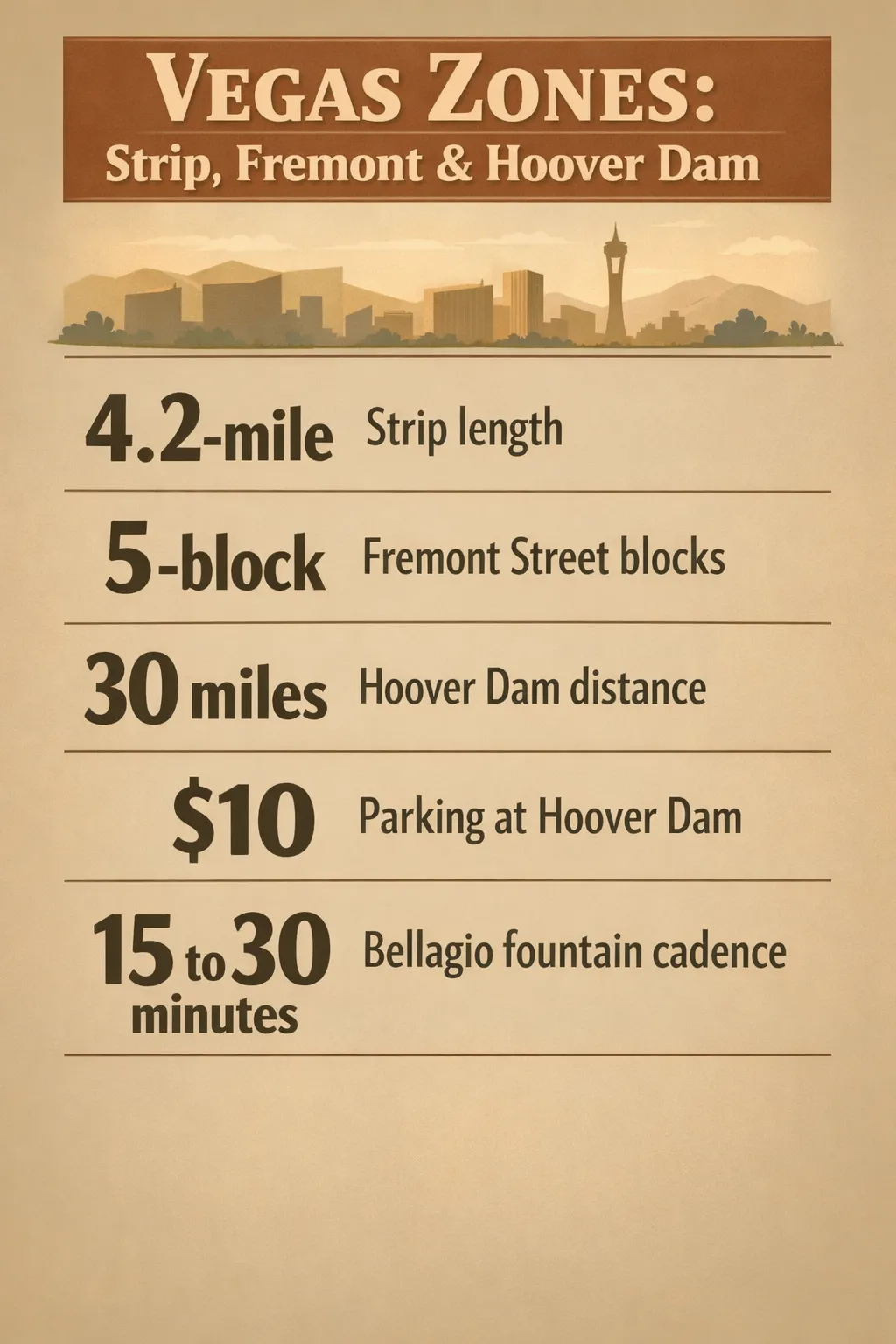 Comparative snapshot: Strip length 4.2-mile, Fremont Street 5-block, Hoover Dam 30 miles away, $10 per vehicle parking, and Bellagio fountain cadence every 15 to 30 minutes.
The Strip is best day and night, costs anywhere from free to very expensive, needs a half-day to a full day, and suits everyone - especially couples and first-timers. It’s moderately walkable but long between clusters, with free highlights like the fountains, casino interiors, and architecture. You’re likely already there.
Fremont Street is best after dark, runs mostly free with optional paid add-ons, needs 2 to 3 hours, and suits groups, nightlife seekers, and budget travelers. It’s the most walkable of the three - a 5-block pedestrian zone - with the canopy light show and live music as its free draws. From the Strip, it’s a 15-to-20-minute rideshare.
Hoover Dam is best before 10 a.m. or in late afternoon, costs $10 parking plus $0 to $40 per person depending on your tour choice, needs 1.5 to 4 hours, and suits families, engineering and history buffs, and photographers. It’s a drive-to destination about 30 miles from the city, with the free dam crest walk as its standout no-cost experience.
How to Combine the Strip, Fremont Street, and Hoover Dam in One Trip Without Burning Out
The cleanest approach is a three-part sampler: one Strip day, one Fremont Street evening, and one Hoover Dam half-day, spread across two or three days rather than compressed into one. The routing logic matters as much as the timing.
Hoover Dam works best as a morning excursion - leave by 8:00 to 8:30 a.m., arrive before 10:00 a.m., and you’re back by early afternoon. Pair that with a Strip afternoon and evening rather than a Fremont Street night, because by the time the canopy lights up you’ll be running on fumes. Fremont Street, in turn, works best paired with a low-key Strip afternoon, not tacked onto the end of a full dam day.
One practical default: rideshare between the Strip and downtown. Driving and parking downtown adds friction that a $10 garage parking fee plus a moderate rideshare fare avoids while keeping your schedule flexible.
Two-Day Las Vegas Itinerary
Day 1 - The Strip. Morning walk through a mid-Strip cluster, a midday break at your resort pool to sit out the heat, then an evening fountain show and dinner.
Day 2 - Hoover Dam, then Fremont Street. Depart by 8:30 a.m., tour the dam, and you’re back by 1:00 to 2:00 p.m. Rest, then head downtown for Fremont Street after dark.
Three-Day Las Vegas Itinerary
Day 1 - South to mid-Strip. Welcome to Las Vegas sign, Bellagio fountains, Caesars Palace interior, and the High Roller.
Day 2 - Hoover Dam morning, north Strip evening. Do the dam before the buses, then spend the afternoon and evening on the north Strip, including the STRAT.
Day 3 - Fremont Street. Hit the Mob Museum or Container Park in the daytime, then the canopy zone after dark.
Free and Budget-Friendly Options for Exploring Las Vegas
You can build a full day out of free sightseeing in Vegas if you know the tiers. The best free things to do in Las Vegas cluster by zone.
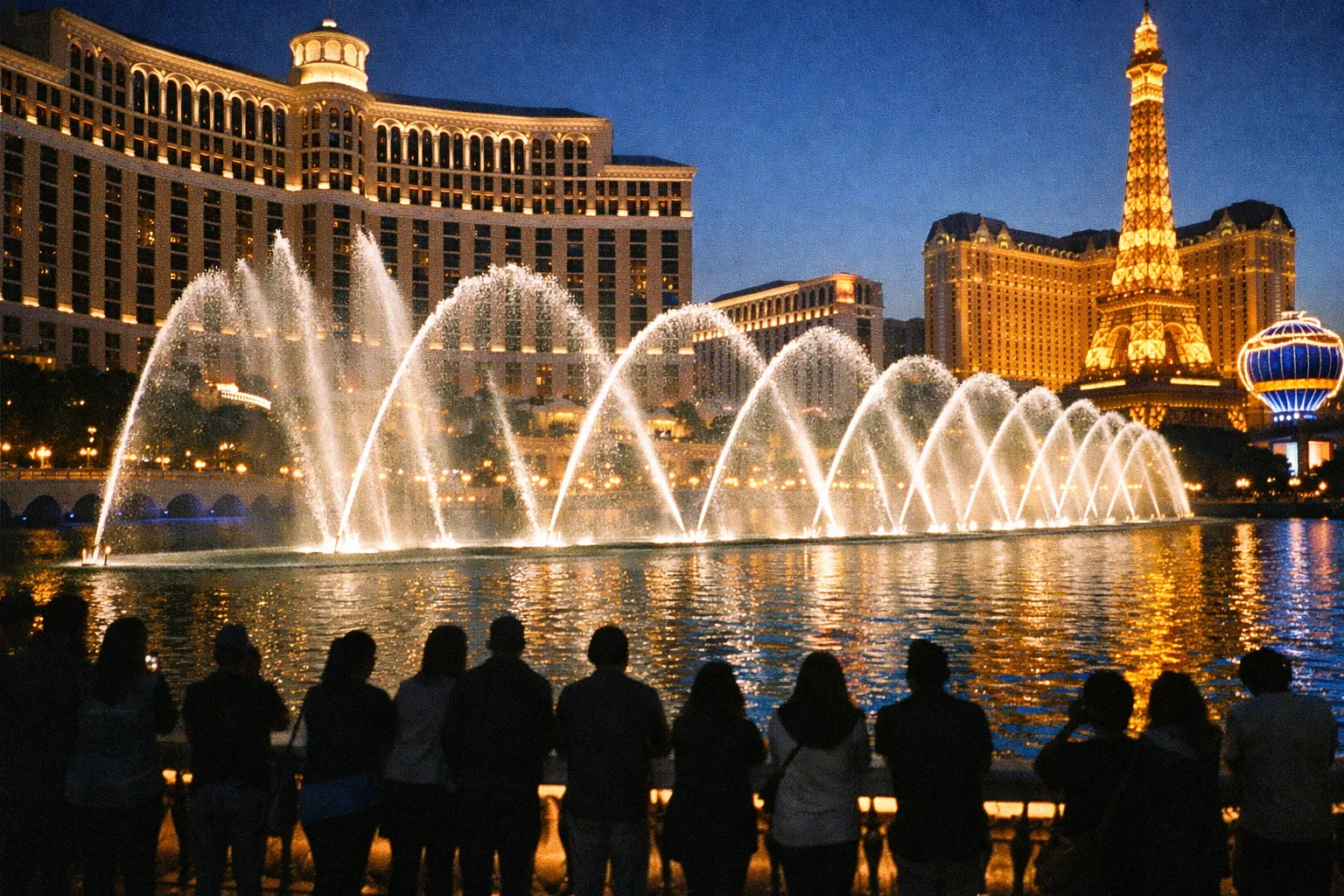
On the Strip: the Bellagio fountains, casino interior walks, the Venetian’s Grand Canal, the Welcome to Las Vegas sign, and people-watching from the pedestrian bridges. On Fremont Street: the canopy light show, street performers, and the pedestrian zone itself. At Hoover Dam: the crest walk, free once you’ve paid the $10 parking fee - the most substantial low-cost engineering stop within 30 miles of the city (6).
That covers the cheap things to do in Las Vegas. Now the budget math.
Is $100 a day enough for Las Vegas? Workable, but tight. Lean on the free sightseeing tier, keep meals modest by eating at casino food courts or off-Strip, and you can cover a day: figure moderate spending on food, rideshare, and parking. One paid show or a guided dam tour pushes you over. Gambling is the variable that makes any daily budget irrelevant.
Is $1,000 enough for 3 days? Yes, for a non-gambling trip with mid-range lodging. Budget roughly $150 to 200 a night for a decent Strip-adjacent hotel, $30 to 50 a day for food, $20 to 30 for rideshare, and one paid experience per day - a show, the High Roller, or a Hoover Dam guided tour. That lands somewhere around $700 to 850 for three days with a buffer, based on typical rates. Bottle service, a luxury hotel, or the casino floor changes that fast.
The $20 rule: it’s a check-in tactic, not a guarantee. Some travelers fold a small bill between their credit card and ID at the front desk and quietly ask about complimentary upgrades. Results vary widely by property and occupancy - more likely at a mid-tier hotel on a low-occupancy weeknight, rarely at a luxury resort. Worth trying, not worth building your trip around. Admission fees and upgrade policies vary; check with your hotel for current practices.
Practical Tips Before You Go
A handful of logistics that don’t fit neatly into one zone but will save you friction:

- Don’t conflate the Strip and Fremont Street. They’re 15 to 20 minutes apart by rideshare and serve different moods. Plan them as separate outings.
- Respect the Hoover Dam hours trap. The exterior is open until 9:00 p.m., but the Visitor Center closes at 5:00 p.m. and the last tour departs around 4:10 p.m. Rolling up at 4:00 p.m. expecting a tour is a classic mistake.
- Don’t underestimate Strip walking distances. The stretch from Mandalay Bay to the STRAT is about 4.2 miles, and resort spacing can turn a short-looking hop into 30 to 45 minutes on foot.
- Shoes and water are non-negotiable in summer. The desert heat is real and the pavement holds it.
- Skip Fremont Street in daylight unless you’re specifically doing the Mob Museum or Container Park - the canopy show and street energy are an after-dark product.
- Time your photography. Strip at blue hour, Hoover Dam early morning or late afternoon, Fremont Street after 9:00 p.m.
- Timing still matters in 2026. Visitor volume has softened, but peak-hour congestion at the Bellagio, Hoover Dam, and Fremont Street is still real (9).
Frequently Asked Questions
- What not to miss on the Vegas Strip?
- Bellagio fountain show, Venetian interiors, and Welcome sign are top free stops. Paying for High Roller or a residency show offers a unique Vegas experience.
- What is the $20 rule in Vegas?
- Fold a $20 bill between your credit card and ID at check-in and ask for upgrades. It works inconsistently, mostly at mid-tier hotels during low occupancy.
- Is $100 a day enough for Las Vegas?
- With discipline, $100 covers free sightseeing, modest meals, rideshare, and parking. Paid shows or tours push the budget higher; gambling varies widely.
- Is $1,000 enough for 3 days in Las Vegas?
- Yes, for non-gamblers with mid-range lodging, meals, rideshare, and one paid experience daily. Luxury or gambling expenses increase costs significantly.
- What's the difference between the Strip and Fremont Street?
- The Strip is a 4.2-mile resort corridor with diverse attractions; Fremont Street is a 5-block pedestrian zone with a canopy light show, best after dark.
- Do you need to book Hoover Dam tours in advance?
- Tours sell on-site but afternoon slots risk unavailability. The $40 Guided Dam Tour may be limited in peak season; check official sites before visiting.
Bottom Line
The three zones reward different things, and that’s the whole planning problem in one sentence. The Strip rewards patience and selective attention - cluster your stops and don’t try to walk it all. Fremont Street rewards showing up after dark, when the canopy and stage acts switch on. Hoover Dam rewards arriving early, before the tour buses and the heat.
One day in Vegas? The Strip covers the most ground with the least planning. Two days? Add Hoover Dam in the morning before the buses arrive. Fremont Street fits in as an evening almost anywhere - just don’t tack it onto the end of a full day elsewhere, or you’ll be too worn out to appreciate the one thing it does better than everywhere else.