Live music starts on Lower Broadway at 10 a.m. and typically runs until 3 a.m. most days of the year. Among the many things to do in Nashville, no other American city runs a strip like it. That block-by-block wall of sound is the anchor everything else orbits - but it’s not the whole story. The heritage venues, the museums, and the neighborhoods a short walk off the strip fill out a city that’s more layered than the honky-tonk crawl suggests. This guide cuts through the noise - too many bars, too many floors, too many celebrity names on the signs - and tells you what’s worth your time, when to go, and what to book before you arrive.
Nashville works as a destination for a few concrete reasons. The live music is genuinely free at the core honky-tonks, no cover charges. The downtown district is walkable: Broadway, the Ryman, and the riverfront all sit within about half a mile of each other. It flexes for couples, groups, families with a bit of planning, and heritage seekers, and the daytime options are as strong as the nightlife. New celebrity-branded venues and rooftop bars keep the strip evolving.
The trade-offs are just as concrete. Friday and Saturday nights on Broadway are shoulder-to-shoulder crowded. The honky-tonk sound skews toward modern country and pop covers, not strictly traditional. Grand Ole Opry and Ryman shows sell out, so spontaneous visits often don’t work. Tips for musicians are expected at no-cover venues, so budget for them. And parking downtown is expensive - plan for rideshare or a walkable hotel.
✓ Pros
- Live music is genuinely free and constant - no cover charges on Broadway
- The core district is walkable; Ryman, Broadway, and the riverfront are all within half a mile
- Works for multiple trip types: couples, groups, families (with planning), heritage seekers
- Daytime options are as strong as the nightlife
- New celebrity-branded venues and rooftop bars keep the strip evolving
✗ Cons
- Friday-Saturday nights on Broadway are genuinely crowded - expect shoulder-to-shoulder sidewalks
- The honky-tonk sound skews toward modern country and pop covers, not strictly traditional
- Grand Ole Opry and Ryman shows sell out; spontaneous visits often don't work
- Tips for musicians are expected at no-cover venues - budget accordingly
- Parking downtown is expensive; plan for rideshare or a walkable hotel
The Number One Thing to Do in Nashville: and Why It’s Lower Broadway
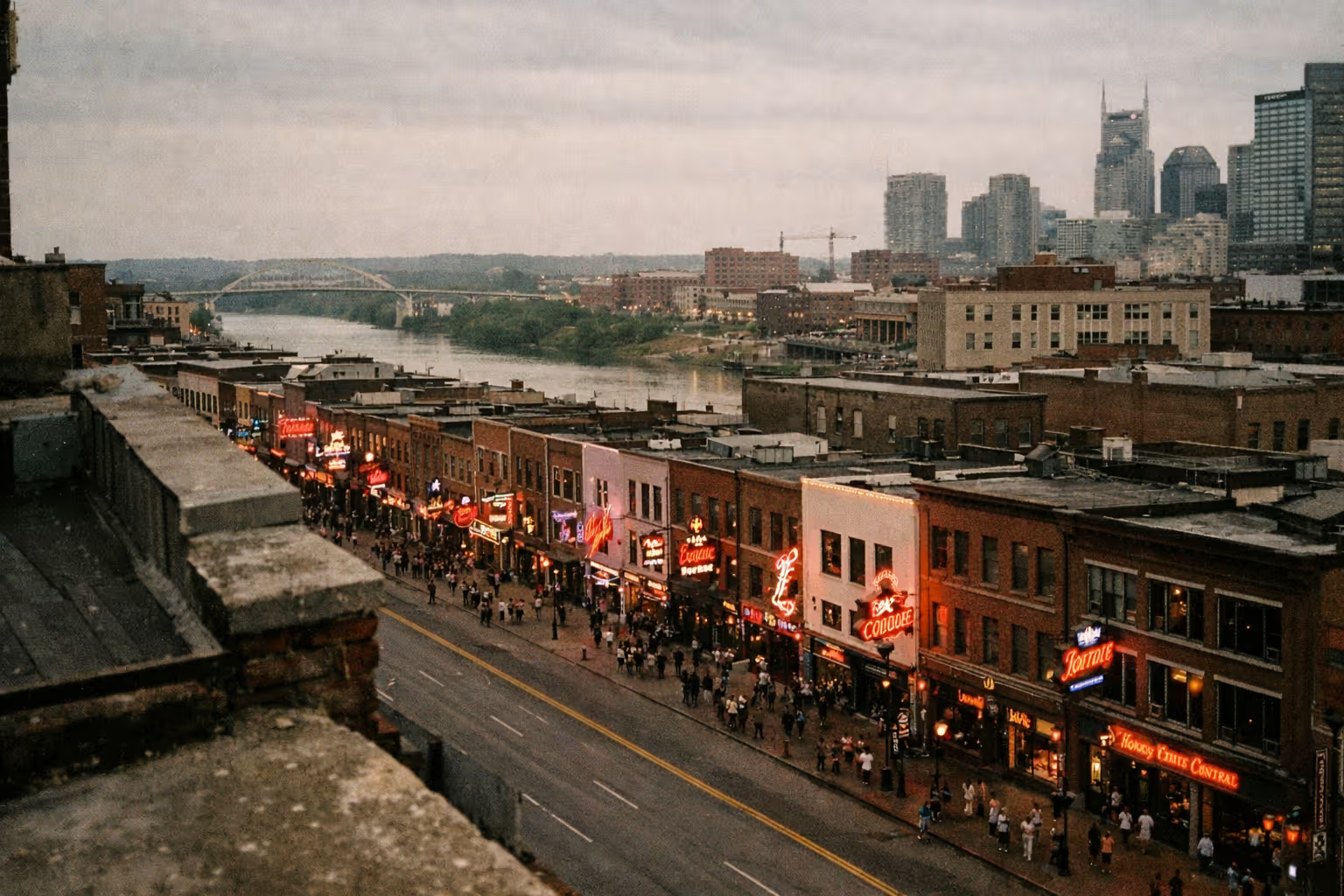
The number one thing to do in Nashville is walk Lower Broadway, the honky-tonk corridor known as Honky Tonk Highway, where live music typically runs from 10 a.m. to 3 a.m. most days - hours vary by bar and day, but the strip is rarely quiet. That’s roughly 17 hours of daily performance stacked across a few dense blocks - the densest live-music strip in the country, and the reason “Music City” isn’t just a nickname.
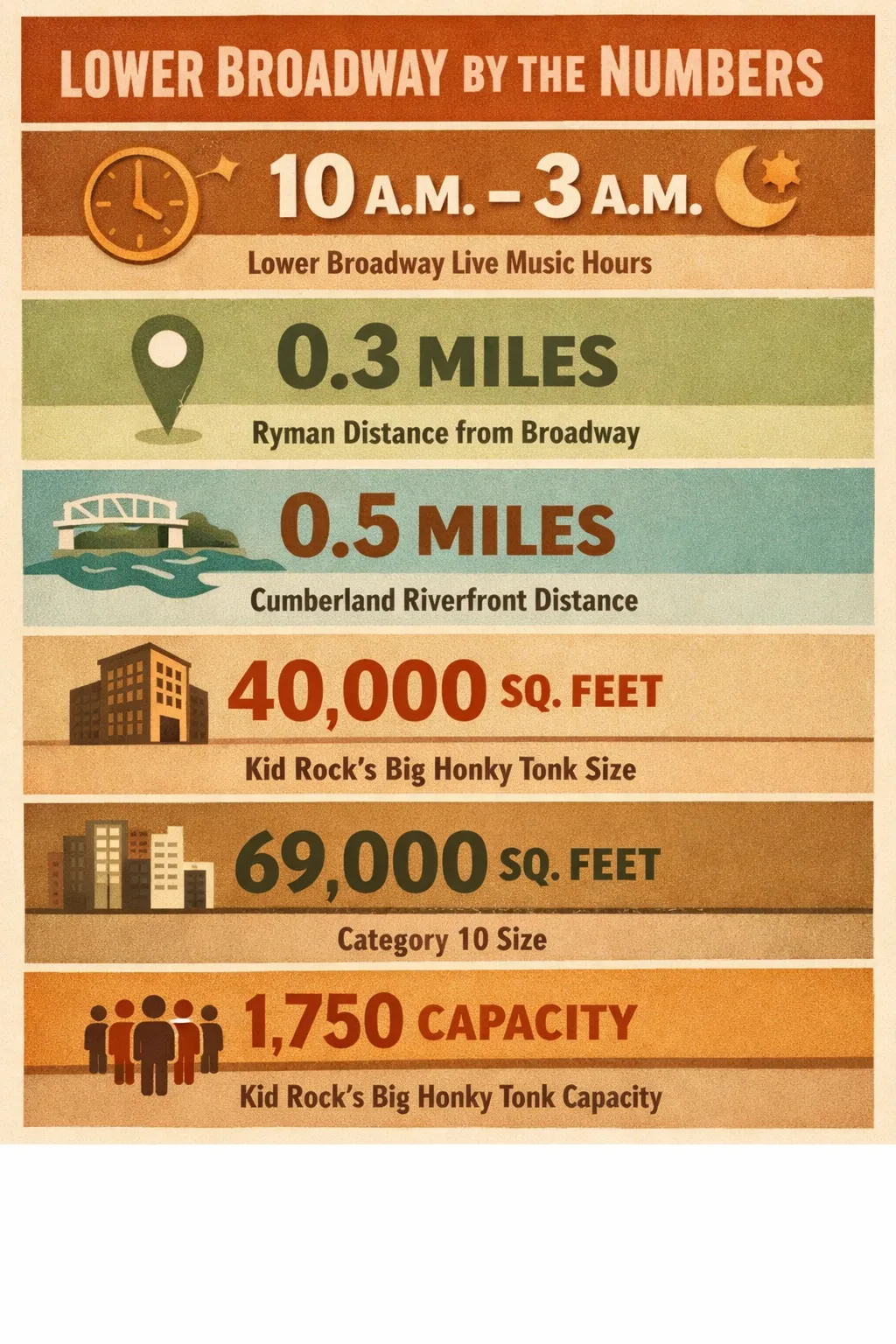 Lower Broadway by the numbers: hours, distances, and venue sizes.
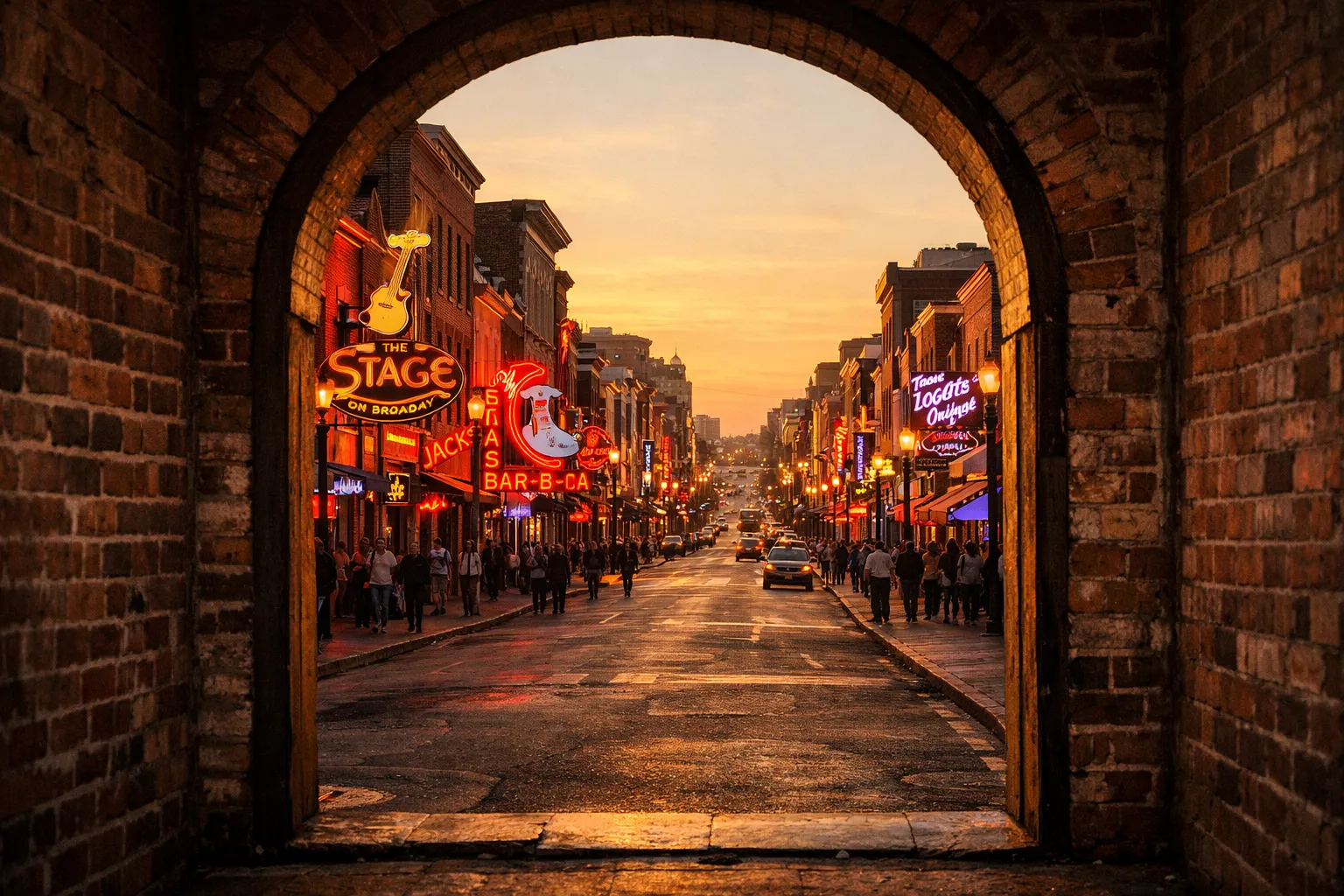
Most venues on the strip charge no cover. The catch: the musicians playing those stages earn almost entirely from tip jars, so carry small bills and drop something at each bar you stop in. It’s not optional in practice - it’s how the whole system works.
The district is tightly packed and walkable. Robert’s Western World sits at 416B Broadway and Tootsie’s Orchid Lounge at 422 Broadway, a few doors apart, with the Ryman and the Cumberland riverfront within about 0.3 to 0.5 miles. Your first walk down the strip will hit you as noise and neon: multiple floors of live music visible from the sidewalk, cover bands bleeding into each other, crowds thickening as the day goes on. Come in the afternoon for your first pass and you’ll actually be able to hear individual bands.
Classic Honky-Tonks Worth Your Time on the Strip
The classic honky-tonks are the ones with memorabilia on the walls and bands playing real country - and a handful stand well above the rest. Start with Robert’s Western World at 416B Broadway. It began as a boot shop, and the no-frills interior still shows it. This is the gold standard for traditional country on the strip: serious musicians, a crowd that’s actually there for the music, and none of the spectacle that defines the newer mega-venues.
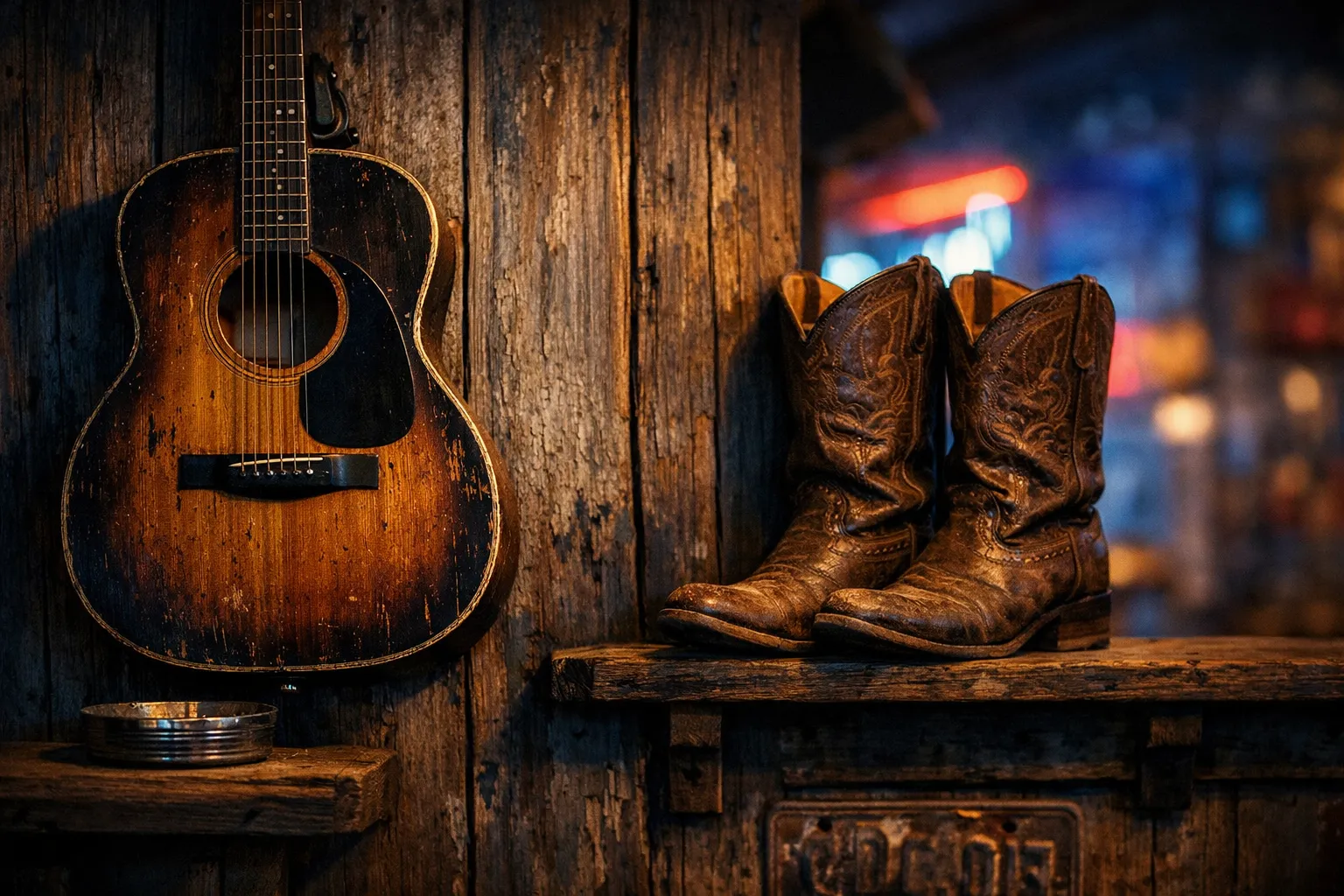
Tootsie’s Orchid Lounge at 422 Broadway is the most photographed bar on the strip, its purple exterior sitting immediately behind the Ryman. Third-party coverage puts it at three stages across multiple floors, still running the tips-based live-music model. Its history is bound up with the Ryman next door - Opry performers used to slip across the alley between sets. It’s louder and more crowded than Robert’s, but the atmosphere earns the visit.
Legends Corner leans hard into memorabilia and classic country, and it’s a strong early-evening stop before the crowds build. For genre purists, Second Fiddle and Layla’s are smaller, with a local-player feel - less spectacle, more focus on the band. AJ’s Good Time Bar, owned by Alan Jackson, keeps a classic-country lean and adds a rooftop.
These venues fill up fast after 7 p.m. on weekends. Arrive before 6 p.m. for breathing room and better sightlines.
Best Time to Visit Classic Honky-Tonks Without the Crush
The best time to visit the classic honky-tonks is before 6 p.m. or on a weekday afternoon, when bands are already playing but the crowds haven’t landed. A Tuesday at 2 p.m. gets you the same live sets as a Saturday night at a fraction of the density - that’s the insider move most first-timers miss. Before you go, check each venue’s posted performer schedule online; several bars publish their lineups, so you can target a specific band or genre instead of wandering in blind.
Big Venues, Rooftops, and the Celebrity Bar Scene
The mega-venues and celebrity-branded bars are a different animal from the classic honky-tonks - bigger, louder, more party than music appreciation. Honky Tonk Central is among the largest on the strip, with multiple floors each carrying its own bar and stage, and rooftop views over the Cumberland River.
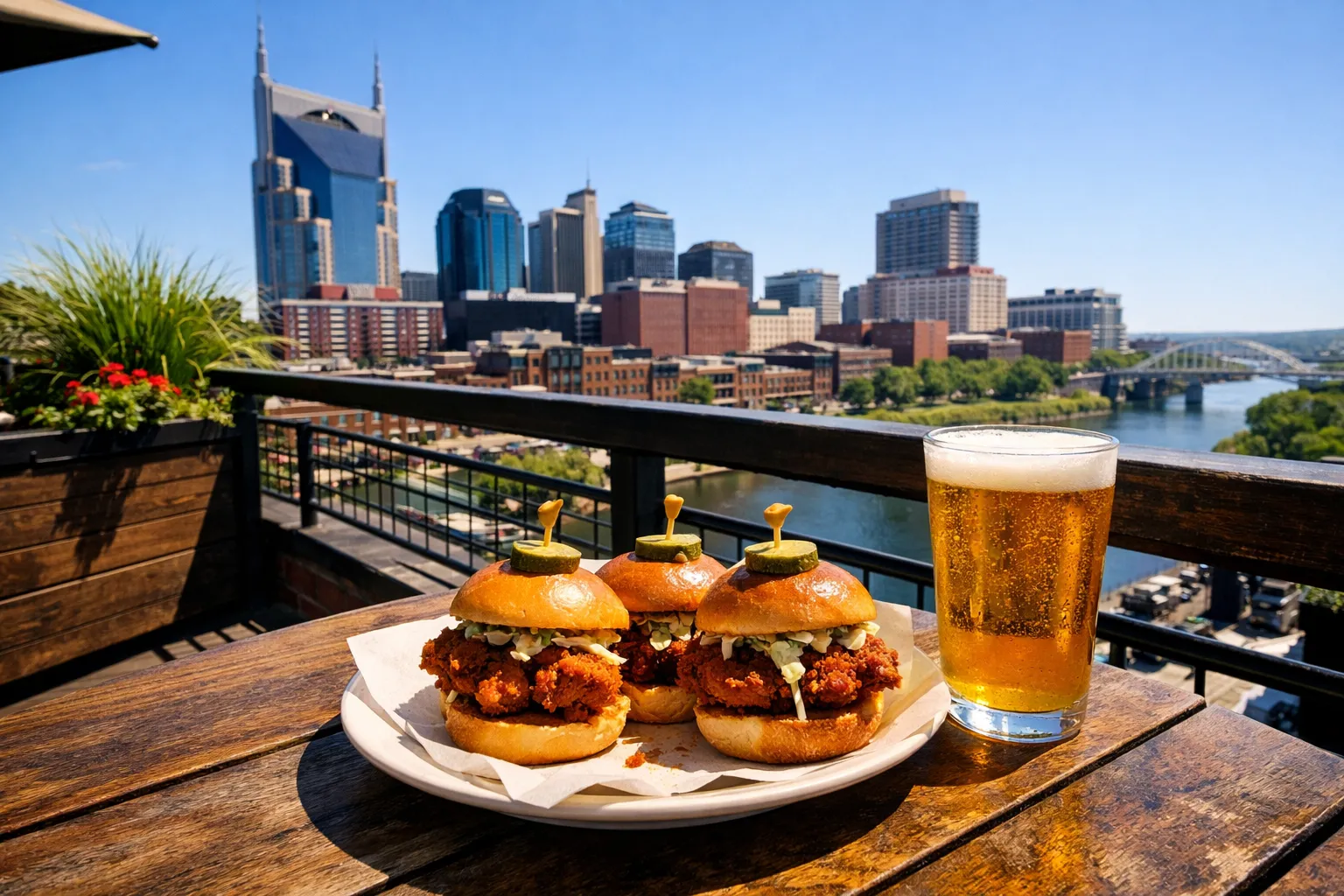
Kid Rock’s Big Honky Tonk & Steakhouse at 221 Broadway runs roughly 40,000 square feet across multiple floors, with a reception capacity of 1,750. Expect a mechanical bull, arcade games, and a rock-leaning crowd. Luke Combs’ Category 10 opened in November 2024 at approximately 67,000 square feet over three stories, including a 9,000-square-foot rooftop (per reporting at the time of opening). Garth Brooks’ Friends in Low Places, Jelly Roll’s Goodnight Nashville, and Lainey Wilson’s Bell Bottoms Up round out the newer wave of themed, artist-branded venues.
Here’s the honest note: these places are loud, crowded, and expensive at night, and the experience is more about the party than the music. If the celebrity angle is the draw, visit in the afternoon - you’ll actually be able to see the memorabilia and design details, and you won’t be fighting a line to get in.
Rooftop Bars and Cumberland River Views
The best rooftop on the strip for river views is Acme Feed & Seed, which looks out over both the honky-tonk corridor and the Cumberland River. The end-of-Broadway rooftops function as a crowd escape valve - when the sidewalks below hit capacity, going up a few floors buys you air and a sightline worth having. Aim for golden hour, before the evening rush arrives, if you want a table and a view worth photographing.
Lower Broadway Honky-Tonks at a Glance
| Robert's Western World | Tootsie's Orchid Lounge | Legends Corner | Honky Tonk Central | Kid Rock's Big Ass Honky Tonk | Nashville Underground | Acme Feed & Seed | |
|---|---|---|---|---|---|---|---|
| Music Style | Traditional country | Classic/modern country | Classic country | Modern country/rock | Rock/country mix | Modern country/pop | Varied |
| Floors/Stages | 1 floor, 1 stage | Multi-floor, 4 stages, 3 bars | 1-2 floors | Multi-floor, large footprint | 4 floors, 40,000 sq ft | Multi-floor | Multi-floor |
| Family-Friendly (Daytime) | ✓ | ✓ | ✓ | Limited | ✗ | ✓ | ✓ |
| Best For | Genre purists, classic country fans | History, atmosphere, iconic exterior | Memorabilia, early evening visits | Big-venue energy, rooftop views | Party atmosphere, novelty | Families, groups, mixed ages | Rooftop views, Cumberland River |
The Ryman Auditorium: Nashville’s Most Important Room
The Ryman Auditorium is the single most important room in Nashville - the “Mother Church of Country Music” and home of the Grand Ole Opry from 1943 to 1974 (per the Ryman). It’s a destination in its own right, not a footnote to the Opry, and there are three ways to experience it.
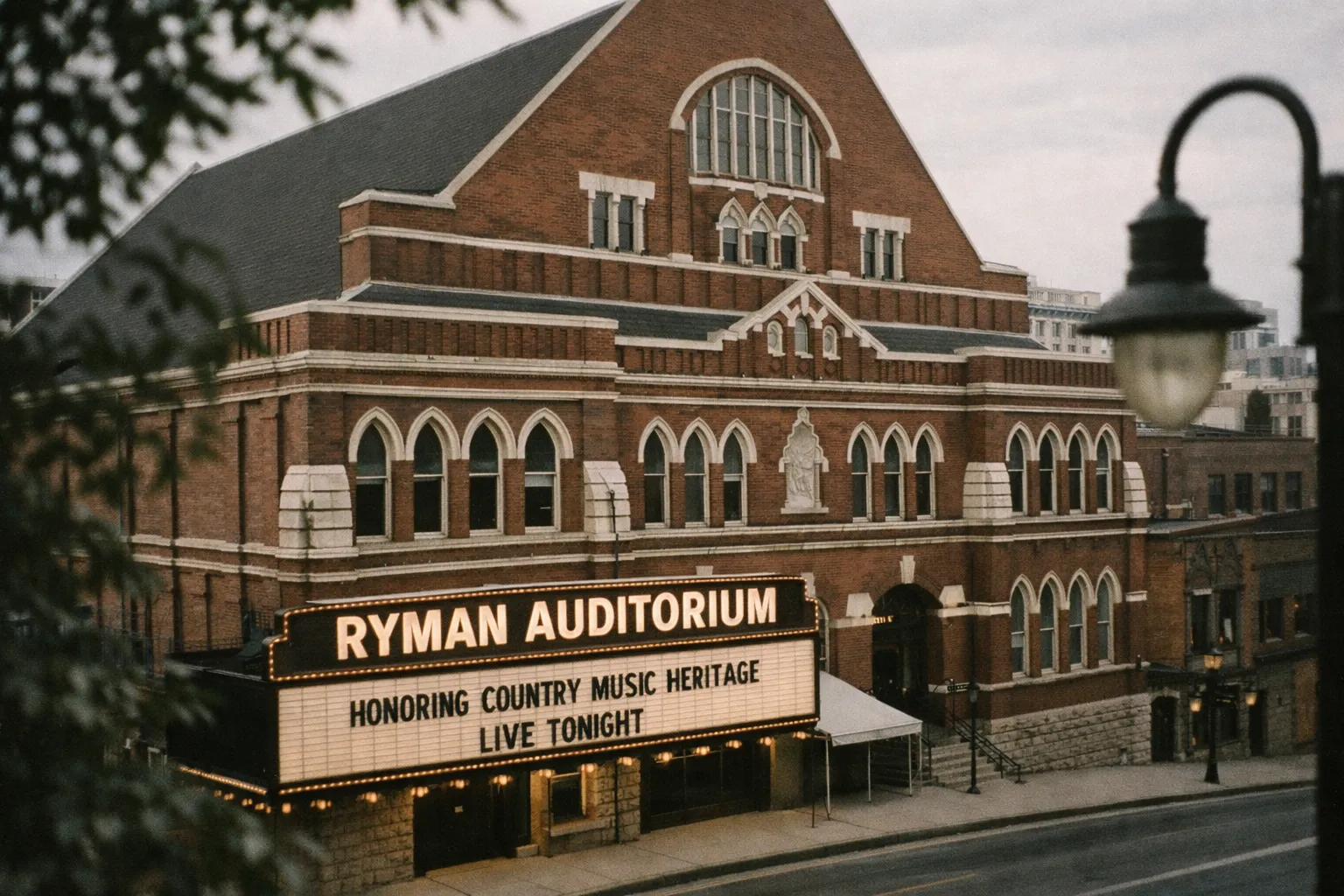
The first is the self-guided tour, which covers the stage, the original church pews, and the backstage history - admission fees apply for both the self-guided tour and the guided backstage tour - check the Ryman’s official site for current pricing before you book. The second is a concert - the calendar spans country, Americana, rock, and comedy, so it’s not exclusively a country venue. The third is a specialty experience like the Vinyl Suite listening lounge, whose “Needle on the Record” session must be reserved in advance (per the Ryman).
Booking note: tours and shows sell out during CMA Fest and peak summer weekends, so book ahead. The Ryman sits a short walk from Lower Broadway - about three minutes on foot - which makes it easy to fold into the same day as a honky-tonk crawl (per Downtown Nashville). If you only have time for one heritage venue, this is the one to prioritize. You can reach it without leaving downtown, and the concert calendar alone justifies the visit even if country music isn’t your primary interest.
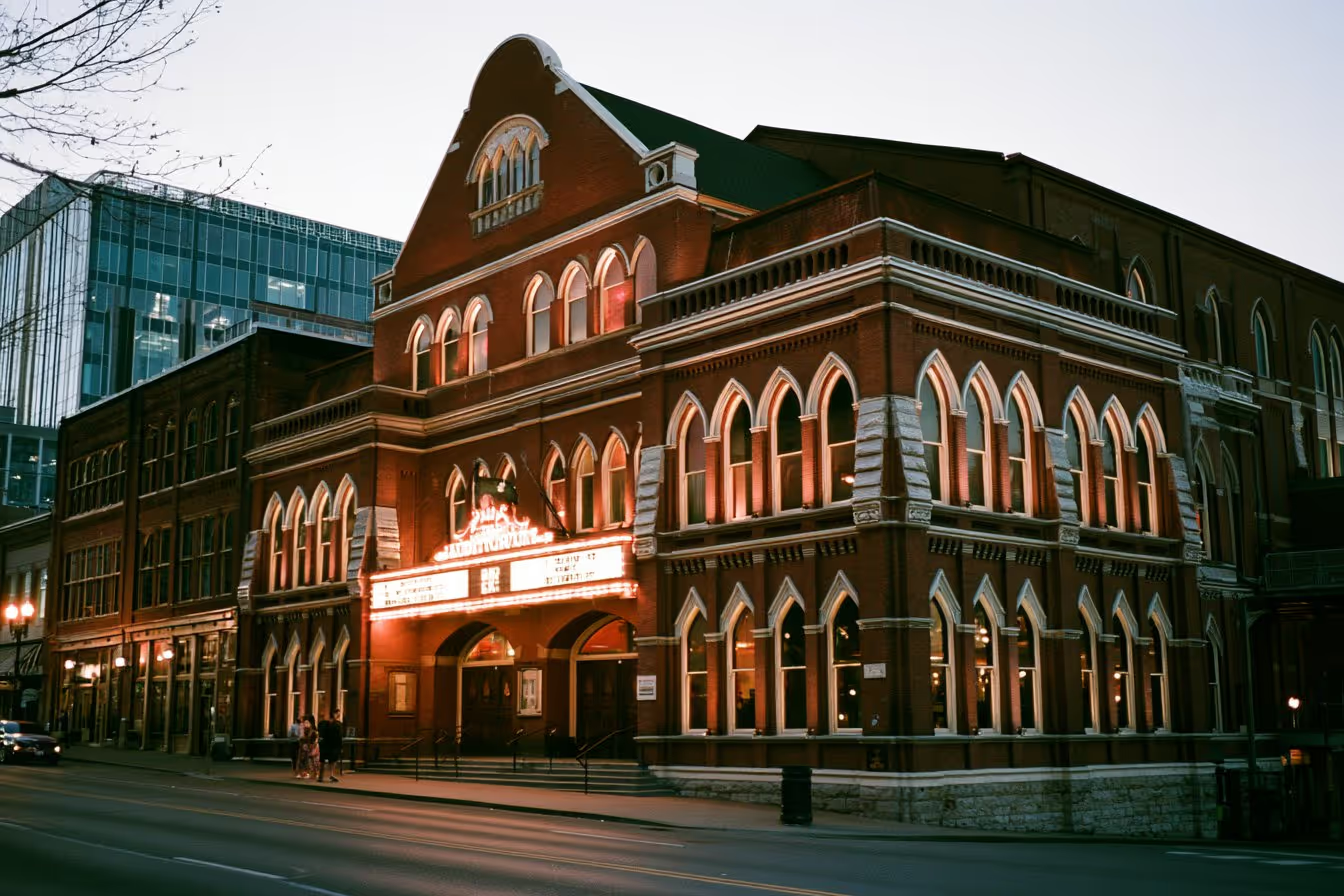
Nashville: Ryman Auditorium Self-Guided Tour
The self-guided tour is the version described above, and the booking note matters: CMA Fest and peak summer weekends sell out, so the ticket is worth holding before you arrive.
Check availabilityThe Grand Ole Opry: What It Is and How to Do It Right
The Grand Ole Opry is a live radio broadcast that’s been running weekly for nearly a century, built around a rotating lineup of performers doing short sets under an emcee structure (per the Opry). If you’re expecting a standard headliner concert, recalibrate. A single Opry show moves through multiple artists, mixing established stars with emerging acts, and the format is the point - not a bug.
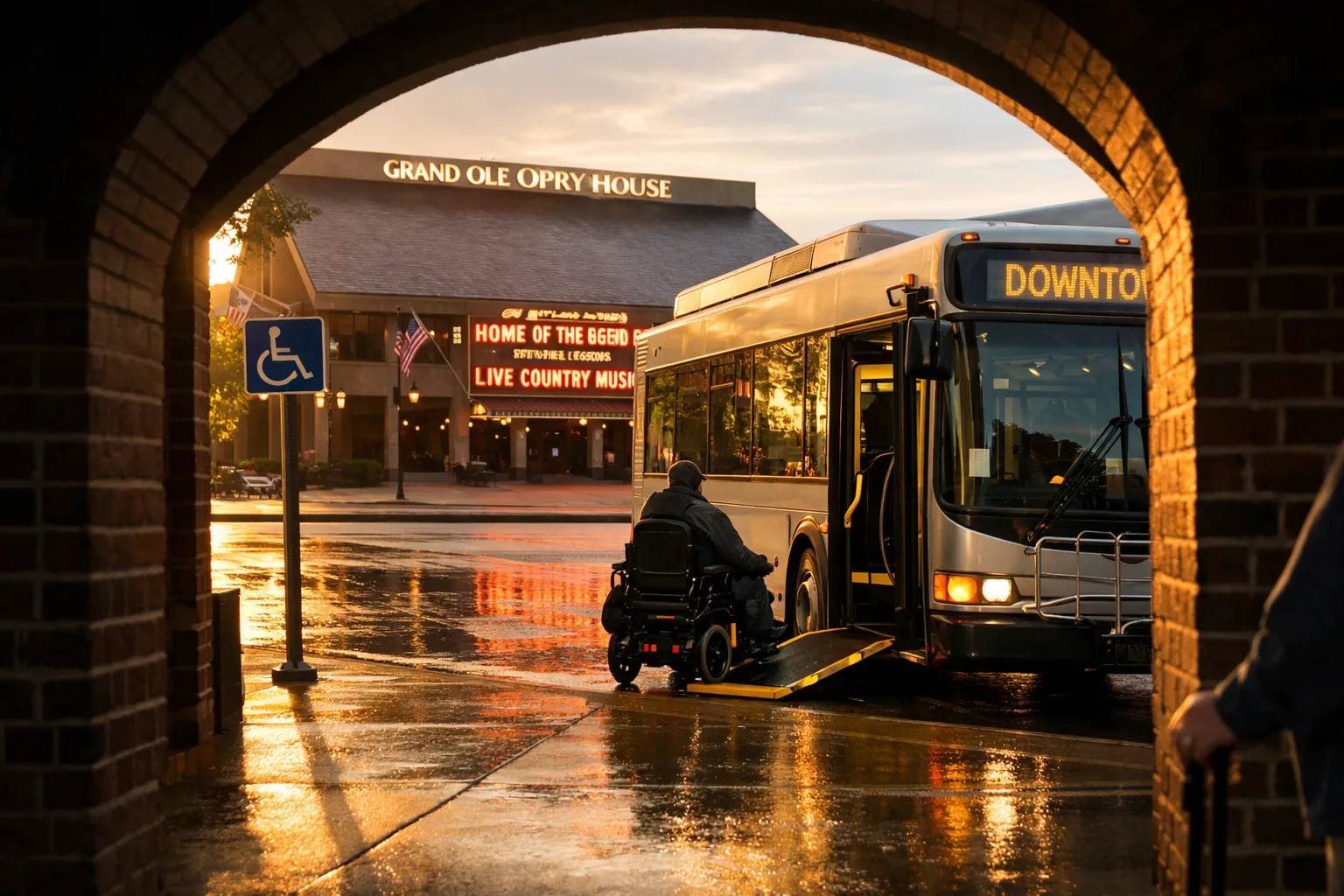
There are two ways in. The evening show is the main event. The daytime backstage tour runs separately - the standard guided tour is $46.65 per adult and the VIP daytime option runs $88.34 per adult, per the Grand Ole Opry. Location matters here - the Opry House sits in the Opryland area across the river, and it is not walkable from downtown Broadway (per the Opry). Factor in a rideshare and travel time either way.
Advance booking is non-negotiable during CMA Fest, summer weekends, and holiday periods, when availability tightens fast (per the Opry). What sets the Opry apart from a normal concert is the broadcast tradition, the artist mix, and the circle of wood cut from the old Ryman stage and set into the Opry House floor - a literal piece of the Mother Church that performers still stand on. Pair a Ryman tour earlier in the day with an Opry show at night and you’ve done the full country-music heritage circuit in one day.
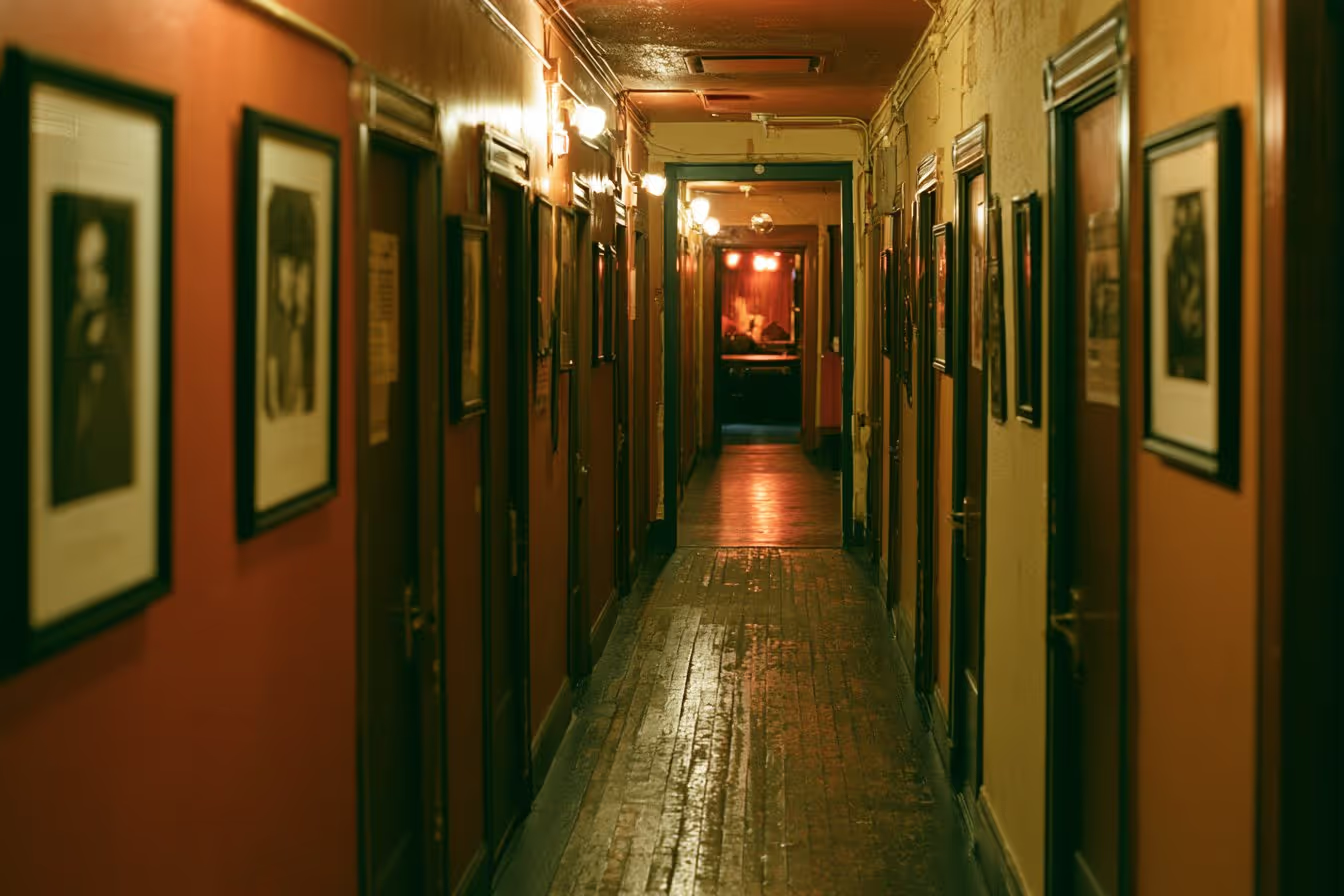
Nashville: Grand Ole Opry Backstage Tour
This is the daytime backstage tour at the $46.65 adult rate quoted above, the part that runs separately from the evening show, and the one where advance booking is not optional.
Check availabilityBeyond Broadway: Printers Alley, Museums, and the Rest of Music City
Nashville past the honky-tonk strip is where the city gets deeper, and most guides skip it entirely.
Printers Alley, a short walk from Broadway, was Nashville’s nightlife district before Broadway took over (per Visit Music City). Today it’s speakeasies, karaoke, and a neighborhood-bar feel - a useful change of pace when the strip’s volume wears thin.
For museums, the Country Music Hall of Fame and Museum is the most comprehensive in the city, with adult admission at $35.80 per adult, per the venue’s current pricing, and it pairs naturally with a Ryman visit (per the Country Music Hall of Fame). The Johnny Cash Museum is compact, well-curated, and walkable from Broadway, with a combo ticket alongside the Patsy Cline Museum at $29.95 plus tax, per the Johnny Cash Museum. The National Museum of African American Music covers the full breadth of Black musical influence across genres - it’s a major stop that honky-tonk-focused guides routinely overlook (per NMAAM). I’d put it higher on the list than most Nashville itineraries do.
Free options anchor a whole day if you want them. The “What Lifts You” wings mural is the most photographed in the city; Centennial Park holds a full-scale replica of the Parthenon; and the riverfront along the Cumberland is an easy walk. And if you want the full western-wear experience, combine honky-tonk hopping with boot shopping at Big Time Boots, Boot Barn, and Boot Country along Broadway.
Free Things to Do in Nashville
The best free things to do in Nashville start with Lower Broadway itself - no cover charges, live music from mid-morning, and no ticket required to walk the strip. Beyond that:
- Street mural tour (self-guided): the “What Lifts You” wings are the headliner; go on a weekday or holiday when the photo lines are shorter.
- Centennial Park and the Parthenon: a full-scale replica in a public park, free to walk the grounds.
- Riverfront walking along the Cumberland: a quiet counterweight to the strip, and the easiest way to reset between bars.
Nashville With Kids, Groups, and Non-Country Fans
Nashville works for families and mixed groups if you time it right and pick the right venues. Nashville Underground is one of the few Broadway bars that explicitly allows kids during the day, with multiple floors, food, and a less aggressive crowd (per Nash Underground). Margaritaville offers semi-secluded seating, group reservations, and multiple floors of live music, which makes it a workable base for a mixed-age group.
The timing rule is simple: plan Broadway for late morning to early evening. Category 10, for example, welcomes guests before 8 p.m. and shifts to 21+ after that (per Category 10), and most venues tighten to adult-only enforcement somewhere around 9 to 10 p.m. Build your family window before that line.
For teens and non-country fans, the alternatives are strong. The Johnny Cash Museum and the National Museum of African American Music both hold attention without requiring a country-music baseline, and the Ryman’s concert calendar includes rock, Americana, and comedy (per the Ryman). For a structured group activity, several Broadway venues run line-dancing classes on set days - commonly Monday, Thursday, Friday, and Saturday at some bars - which works well as an icebreaker for first-timers. Liquor Lab cocktail-making classes are another daytime option that breaks up the bar routine before an evening crawl.
When to Go and How to Handle the Crowds
The single busiest period in Nashville is CMA Fest in June, when Broadway and the Opry hit maximum capacity and downtown crowding peaks (per Visit Music City). Book everything months ahead for that window, or avoid it entirely if dense crowds aren’t your thing. Titans NFL and Predators NHL game days also add measurable foot traffic downtown, so check the event calendar before you lock in dates and lodging (per Visit Music City).
The weekday-versus-weekend split is the most useful lever you have. Weekday afternoons are the best time to walk Broadway if you want live music without the crush - same bands, fraction of the crowd, music schedule fully active. Friday and Saturday nights bring near-capacity sidewalks, long entrance lines at the popular venues, and real difficulty moving between bars. Build in extra time and don’t over-plan those nights.
One thing you’ll see on signage near the strip: the 3-foot rule. It’s a Broadway ordinance requiring street performers and entertainers to stay at least three feet from the curb or street edge (per Downtown Nashville). It’s a crowd-management and safety measure, not a general social rule, and it won’t affect how you move through the bars.
Weather-wise, summer (June through August) is hot and humid. Spring and fall are the most comfortable months for walking the strip for hours at a stretch - that’s when I’d go if the calendar allows it.
How to Spend 2-3 Days in Nashville
Two days is enough to cover Nashville’s essentials - Broadway, one heritage venue, and a museum - but you’ll feel rushed. Three days is the comfortable minimum. If you only have two, prioritize the Ryman over the Opry, because it’s walkable from Broadway and the Opry eats an evening in cross-river transit.
Here’s the scope by day. Day 1: arrive and walk Broadway in the afternoon, before 6 p.m. for manageable crowds, hitting three or four honky-tonks, then catch sunset from a rooftop like Acme. Day 2: Ryman tour in the morning, Country Music Hall of Fame or Johnny Cash Museum in the afternoon, pre-booked Grand Ole Opry show in the evening. Day 3: Printers Alley for a different nightlife feel, boot shopping, a line-dancing class, or a day trip out the Natchez Trace Parkway for scenery.
The Opry isn’t walkable from Broadway, so factor a rideshare into Day 2’s evening. On budget: Broadway itself is largely free, no covers, but the Opry, Ryman, and museums add up - plan roughly $80 to $120 per person for ticketed experiences across two or three days (per the Ryman).
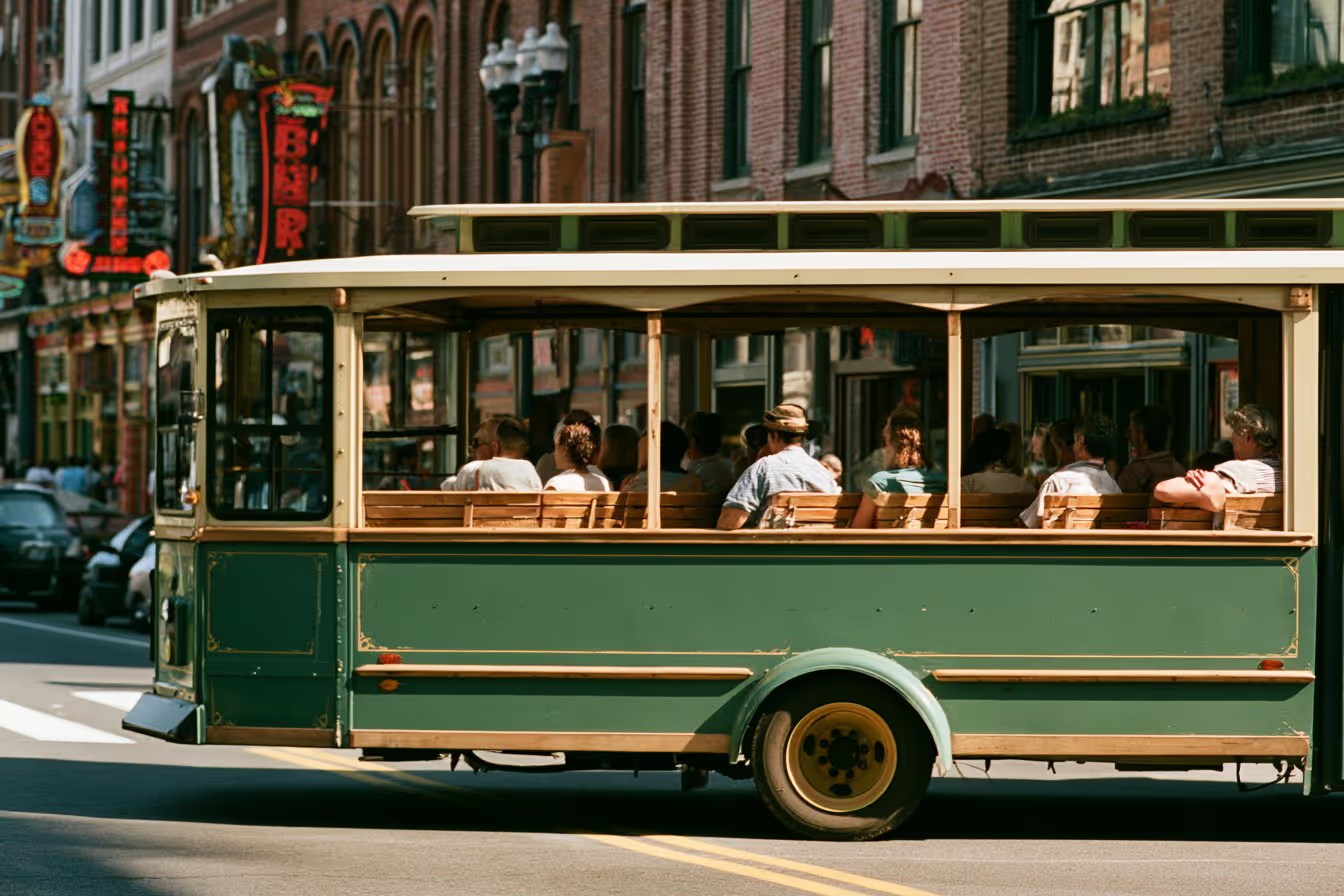
Nashville: Hop-on Hop-off Trolley Tour
A hop-on hop-off pass covers the downtown stops across a day or two without paying a garage twice, relevant given the $30 per 24 hours quoted below. Check the route map for the sites you actually want; the Opry sits well outside downtown.
Check availabilityA Practical 2-Day Nashville Itinerary
A Practical 2-Day Nashville Itinerary
2 daysStep-by-step guide to cover the essentials in two days
- 1
Day 1 afternoon
Arrive and walk Lower Broadway from late morning to 6 p.m., while crowds are still manageable and bands are already playing.
- 2
Day 1 evening
Pick two or three honky-tonks, catch sunset from a rooftop, and tip the bands at each stop.
- 3
Day 2 morning
Take the Ryman Auditorium tour - book it in advance, especially in summer.
- 4
Day 2 afternoon
Choose the Country Music Hall of Fame or the Johnny Cash Museum, both walkable from Broadway.
- 5
Day 2 evening
Head to a pre-booked Grand Ole Opry show, allowing rideshare time from downtown.
Practical Things to Know Before You Go
A few logistics keep the trip from going sideways.
On ID and age rules: you need a valid ID to drink, and while most venues allow under-21 guests during the day, they enforce 21+ at night - the exact cutoff varies by bar, so check ahead (per Category 10).
On tipping musicians: no cover charge does not mean free entertainment. Tip jars are how the bands earn, and tipping at each stop is standard practice - carry small bills and drop something at every bar you spend time in. Skipping the jar at a no-cover bar is considered poor form - and it is.
On parking: downtown garages can run up to $30 per 24 hours in central blocks, per parking guides covering the area. Rideshare is usually cheaper and removes the stress of finding a spot on a busy night. On scheduling: don’t over-plan Broadway. Bands, crowds, and vibes shift fast, and a rigid itinerary will frustrate you the moment a capacity limit or a long queue interferes.
On genre expectations: many venues play modern country, southern rock, ’90s hits, and pop covers rather than strictly traditional country, so research a bar’s music profile if genre matters to you. And on advance booking: the Grand Ole Opry and Ryman shows and tours sell out - book before you arrive, especially for summer and CMA Fest weekends (per the Opry).
Frequently Asked Questions
- What is the number one thing to do in Nashville?
- Walking Lower Broadway - Honky Tonk Highway - is the defining Nashville experience. Live music runs from 10:00 a.m. to 3:00 a.m. every day of the year, most venues charge no cover, and the strip is walkable from nearly every downtown hotel. Pair it with a Ryman Auditorium tour or a Grand Ole Opry show for the full picture.
- What is the 3-foot rule in Nashville?
- It's a city ordinance that requires street performers and entertainers on Lower Broadway to stay at least 3 feet from the curb or street edge. It's a crowd-management and safety measure, not a general social rule. You'll see it referenced on signage near the strip. It doesn't affect how you move through the bars or the honky-tonk crawl.
- What to do for 3 days in Nashville?
- Day 1: Broadway honky-tonk crawl in the afternoon and evening. Day 2: Ryman Auditorium tour in the morning, Country Music Hall of Fame or Johnny Cash Museum in the afternoon, Grand Ole Opry show at night (pre-book). Day 3: Printers Alley, boot shopping, a line-dancing class, or a day trip on the Natchez Trace Parkway. Three days covers the essentials without feeling rushed.
- Is 2 days in Nashville enough?
- Two days gets you through the core - Broadway, one heritage venue, and a museum - but you'll feel the squeeze. The Opry is across the river from downtown, which eats time. If you only have two days, prioritize the Ryman over the Opry (it's walkable from Broadway) and spend your second evening back on the strip rather than rushing across town.
- Do you need to pay a cover charge at Broadway honky-tonks?
- Most Broadway venues have no cover charge. That said, the musicians playing those stages rely almost entirely on tips - there's no ticket revenue to fall back on. Carry small bills and tip at each bar you stop in. A few dollars per song or $5-$10 per venue is the standard. Skipping the tip jar at a no-cover bar is considered poor form.
- Are Nashville honky-tonks family-friendly?
- Some are, during the day. Nashville Underground explicitly allows kids during daytime hours. Margaritaville has semi-secluded seating and works for mixed-age groups. Most venues shift to 21+ enforcement after 9:00-10:00 p.m. Plan Broadway visits for late morning to early evening if you're traveling with kids, and check each venue's policy before you go - rules vary.
- What kind of music plays on Lower Broadway?
- It's a mix. Traditional country is still the backbone at places like Robert's Western World and Legends Corner, but many venues lean toward modern country, southern rock, '90s covers, and pop. If you're a genre purist, research individual bar music profiles before you go - the vibe at Tootsie's is very different from the vibe at Kid Rock's.
The Bottom Line on Planning Your Trip
The one thing that will derail an otherwise flexible Nashville trip is failing to book the Ryman or the Opry in advance - those are the fixed points, and they sell out (per the Opry). Book them first, then build the rest of the itinerary around them.
Everything else is timing. Broadway works best before 6 p.m. if you want music without the crowd, and after 10 p.m. if you want the full neon-and-noise version - decide which you’re after and plan the day accordingly. Two days is workable, three is better. Decide whether you’re here for the classic country heritage, the party strip, or both, lock in your Ryman or Opry tickets, and let the honky-tonks fill in the rest.