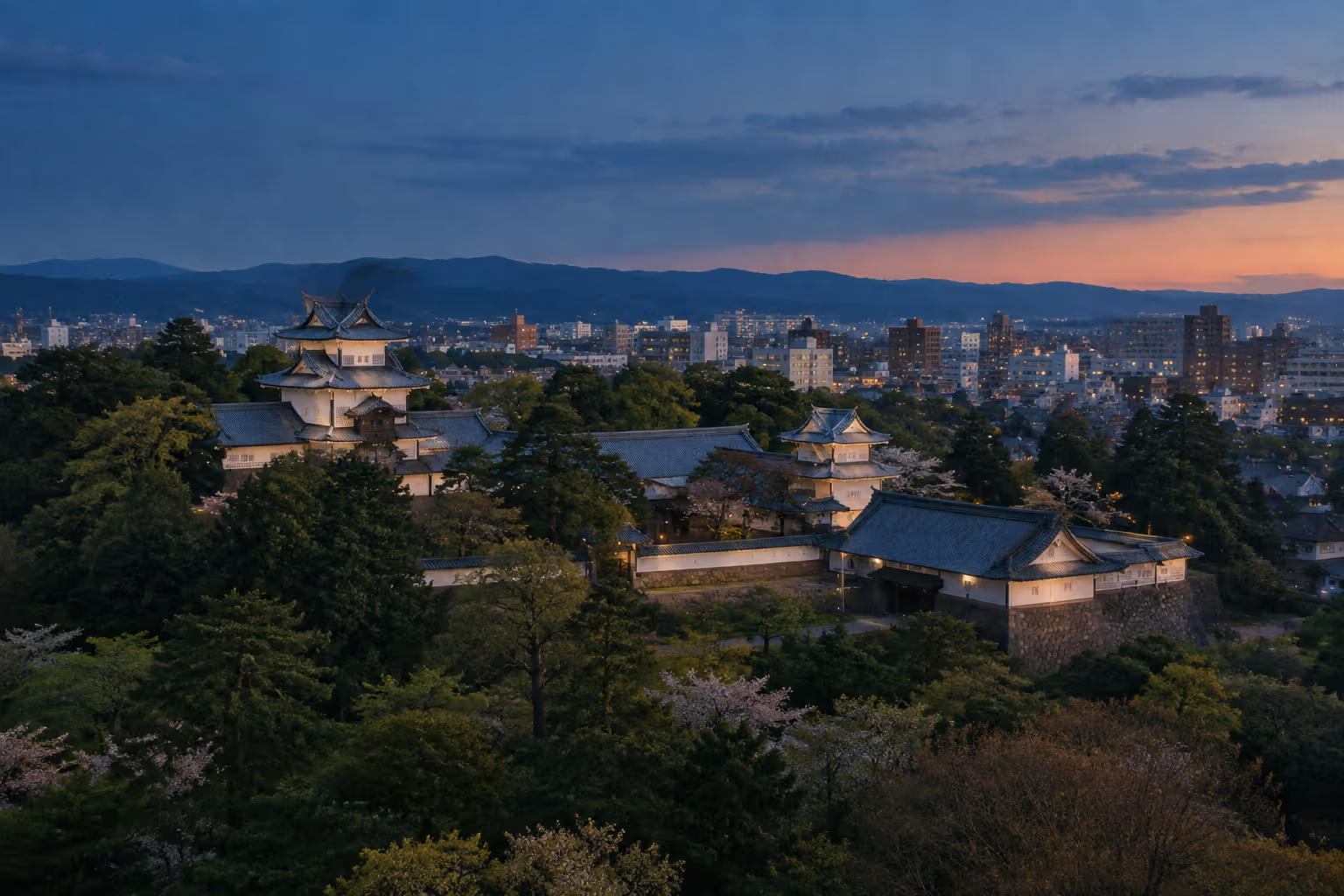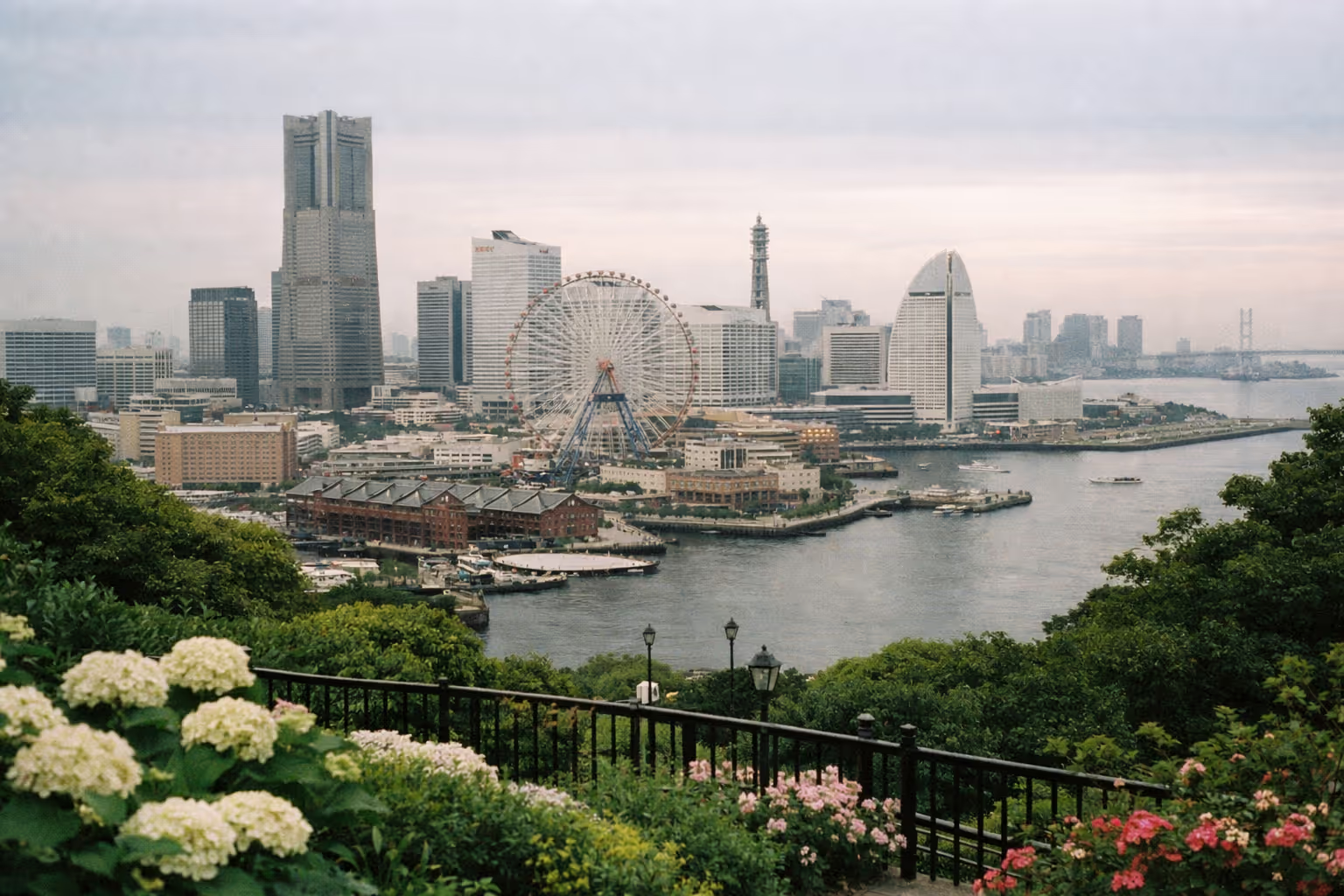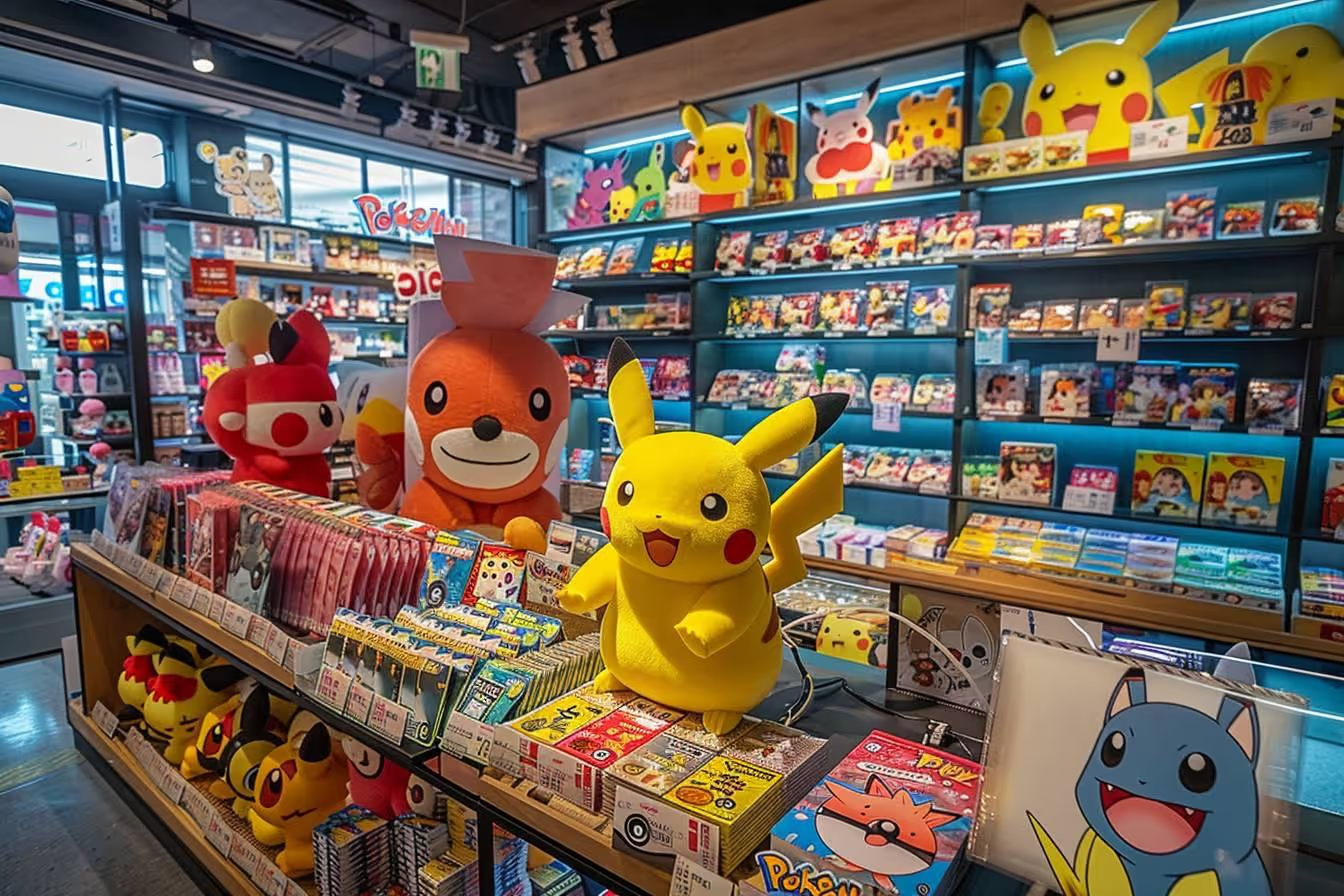
Not every Pokemon Center Japan is worth a detour, so aim for the flagships. A 2024 ranking of the eight Tokyo-area stores put TOKYO DX in Nihombashi first at 67 of 70, for its exclusives and attached Pokemon Cafe. For sheer size go to MEGA TOKYO in Ikebukuro, and Kansai visitors have OSAKA DX. The clever bit is the city-only exclusives, Red Gyarados goods in Hiroshima, gold-leaf designs in Kanazawa. Arrive at the 10 a.m. opening on a weekday; weekend checkout lines run half an hour or more.
A brief history of the Pokémon Center in Japan
The first Pokémon Center Japan location opened in Tokyo in 1998, two years after the original Red and Green Game Boy releases. It started as a small promotional outpost and grew into a national retail chain as the franchise exploded. By the late 2000s, Centers had spread to Osaka, Nagoya, Fukuoka, and Sapporo, each tied to a major department store or shopping complex (1).
The “MEGA” and “DX” (Deluxe) branding came later. MEGA TOKYO opened in Sunshine City, Ikebukuro in 2014 as a clear flagship statement, and TOKYO DX followed in Nihombashi in 2018, paired with the first Pokémon Café. Today, “Pokémon Center” refers to full-scale stores (typically 300-800+ m²), while “Pokémon Store” is the satellite format you’ll find in airports and outlet malls.
Outside Japan, physical Centers exist only in Singapore and Taiwan, plus a Nintendo store in New York that sells some Pokémon goods. Everything labeled “Pokémon Center” in the US, Canada, or UK is online-only (5).
All current locations across Japan
The official English shop list (2) is the most reliable source for hours and addresses, but here’s a working map of where the Centers and Stores actually are, organized by region:
Hokkaido & Tohoku
- Pokémon Center SAPPORO - Daimaru Sapporo 8F
- Pokémon Center TOHOKU - Sendai PARCO 2 6F
Greater Tokyo (10 locations)
- Pokémon Center MEGA TOKYO - Sunshine City Alpa 2F, Ikebukuro
- Pokémon Center TOKYO DX - Nihombashi Takashimaya S.C. East Bldg, 5F
- Pokémon Center SHIBUYA - Shibuya PARCO 6F
- Pokémon Center TOKYO STATION - Tokyo Character Street, B1F
- Pokémon Center SKYTREE TOWN - Tokyo Skytree Town Solamachi 4F
- Pokémon Center YOKOHAMA - Yokohama Sky Building 8F
- Plus Pokémon Store locations at Narita Airport T1, Tokyo Station, Kisarazu Outlet, and Gotemba
Central Japan
- Pokémon Center NAGOYA - Nagoya PARCO East Bldg 2F
- Pokémon Center KANAZAWA - Kanazawa FORUS 5F (newer opening)
- Pokémon Center KYOTO - SUINA-MUROMACHI 2F
Kansai & western Japan
- Pokémon Center OSAKA DX - Daimaru Umeda 13F (paired with Pokémon Café)
- Pokémon Center OSAKA - ~830 m², one of the largest by floor area (1)
- Pokémon Center HIROSHIMA - ekie 2F
- Pokémon Center KAGAWA - Marugamemachi Green East 1F (newer opening for Shikoku)
- Pokémon Center FUKUOKA - Hakata Marui 2F
- Pokémon Center OKINAWA - San-A Naha Main Place
The recent additions in Kanazawa and Kagawa matter if you’re routing through Hokuriku or Shikoku - until a few years ago, fans in those regions had to detour hundreds of kilometers to the nearest store.
✓ Pros
- Unique merchandise not available outside Japan
- Varied store experiences with flagship and satellite formats
- Exclusive city-specific items and themed collections
- Convenient locations in major shopping districts and airports
✗ Cons
- Queues can be long during new product launches or weekends
- Tax-free shopping requires navigating department store counters
- Online Japanese store requires a local address for shipping
- Smaller satellite stores have limited selections
Which store is worth your time?
This is the most-asked question, and the honest answer is: it depends on what you want.
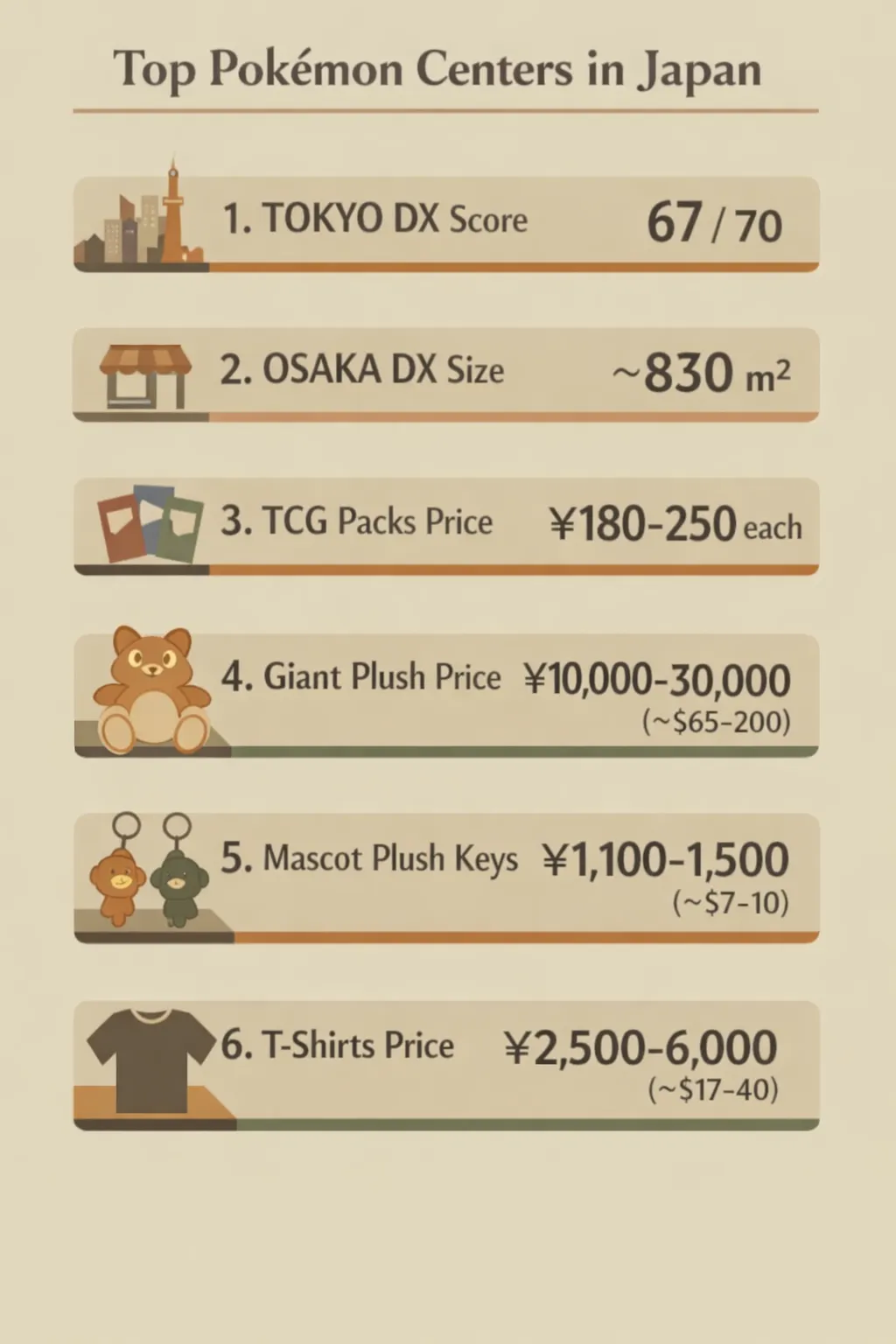 TOKYO DX leads with 67 out of 70; MEGA TOKYO is the largest by space; OSAKA DX is ~830 m²; mid-2025 price ranges for plush and TCG shown.
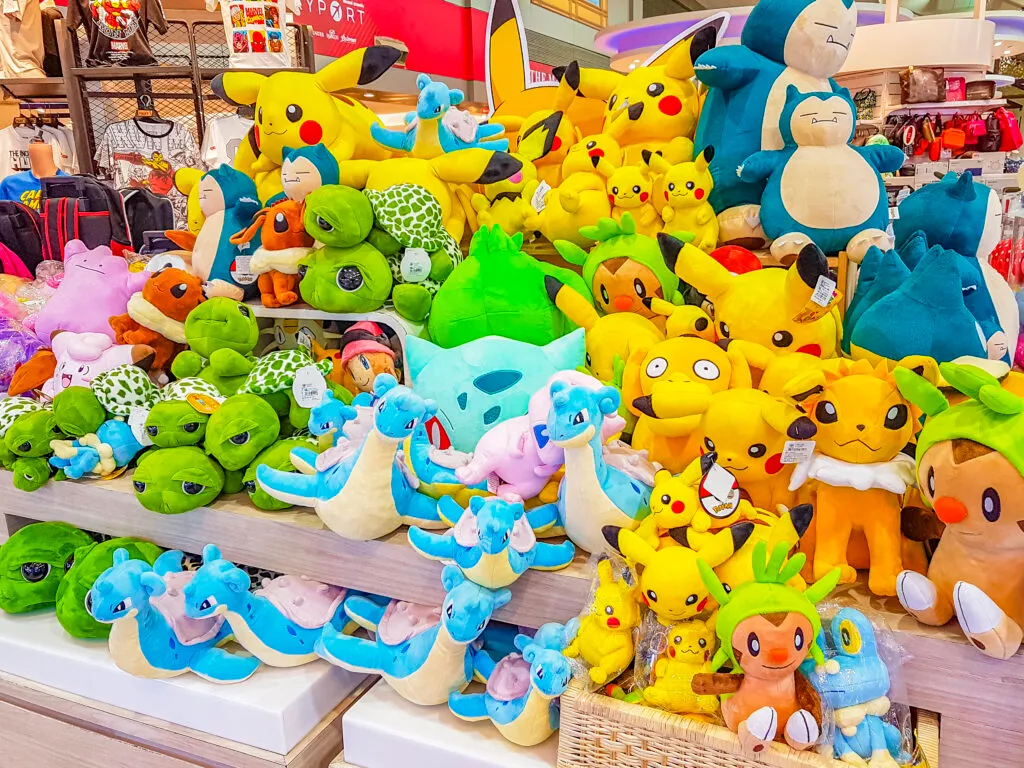
For sheer scale and the “wow” entrance: Pokémon Center MEGA TOKYO in Ikebukuro is widely cited as the largest by English-language travel guides (7). It has the most floor space dedicated to plush walls, statues, and photo spots.
For the museum-like experience and curated displays: Pokémon Center TOKYO DX in Nihombashi is the consensus winner. A 2024 head-to-head YouTube comparison scored eight Tokyo-area locations and ranked TOKYO DX first with 67 out of 70 possible points, citing its exclusive sections, photo zones, and the attached Pokémon Café (3). Yokohama scored a mid-pack 51, and the Narita Airport Store ranked last among the eight.
For convenience between sightseeing stops: SHIBUYA (inside Shibuya PARCO, 5-7 minutes from the Hachiko exit) and TOKYO STATION (inside Tokyo Character Street) are smaller but easy to slot into a day without losing two hours to a detour.
For airport last-minute souvenirs: The Pokémon Store at Narita Airport Terminal 1 South Wing 4F is fine for a final plush or T-shirt, but the selection is maybe 20% of what MEGA TOKYO carries.
If you only have time for one, the practical answer is TOKYO DX - it pairs the strongest curation with Café access and a central location. If you want pure square meterage, MEGA TOKYO. If you’re in Kansai instead of Kanto, OSAKA DX in Umeda is the equivalent flagship pairing.
Which is the largest one?
Pokémon Center OSAKA is documented at ~830 m² (1), making it one of the verifiably largest by recorded floor space. MEGA TOKYO is generally described as the largest overall in travel coverage (7), but precise current square meterage isn’t published. For practical purposes, MEGA TOKYO, TOKYO DX, OSAKA DX, and OSAKA are the four tier-one flagships - any of them will have the deepest inventory, the most exclusives, and the longest queues.
Is the Tokyo visit worth it?
Yes, with caveats. TOKYO DX holds a ~4.5/5.0 rating on TripAdvisor across hundreds of reviews (4), and the consistent praise points to the same things: museum-style game history displays, exclusive items you won’t find online, and the adjacent Pokémon Café for those who book ahead.
I’d say it’s worth the trip if:
- You’re a fan of the games, anime, or TCG - the exclusives genuinely justify the detour
- You arrive at opening (10:00 a.m.) on a weekday to avoid 30-60 minute checkout queues
- You budget at least 90 minutes inside
It’s less worth it if:
- You’re not actually into Pokémon and just want a generic Japan souvenir (any character shop will do)
- You arrive on a weekend afternoon during a new product launch - the line to enter can hit 90 minutes
- You’ve already been to multiple Centers on the same trip and have hit shopping fatigue
Is there a Japanese online store?
Yes - Pokémon Center Online at pokemoncenter-online.com is the official Japanese e-commerce site (6). It carries the same merchandise ranges as the physical stores plus some online-only exclusives, but with two important constraints: the interface is Japanese only, and account registration typically requires a Japanese address and phone number for shipping.
If you’re staying in Japan for more than a few days, the workaround is to ship to your hotel. Most accept parcels held for guests - confirm before ordering. For everyone else, the US/Canada/UK Pokémon Center sites exist but carry different product lineups and won’t ship internationally to Japan-bought addresses (5).
The online site is structured around four navigation modes that are genuinely useful to understand before you visit physical stores:
- 新商品 (new products) - the new arrivals page, updated weekly. Check this 1-2 weeks before your trip to see what’s launching.
- おすすめ特集 (featured collections) - themed drops tied to game releases, anniversaries, or seasons. Cherry Blossom Pikachu, Paldea starter collections, and New Year’s Fukubukuro lucky bags all live here.
- ポケモンから探す (search by Pokémon) - filter by specific species. Useful if you only collect, say, Eevee or Gengar merchandise.
- カテゴリから探す (search by category) - plush, TCG, apparel, stationery, kitchenware, tech accessories.
- 総合ランキング (overall rankings) - national best-sellers. High-ranked items often sell out fastest in physical stores too, so this is a leading indicator of what to grab early.
The 重要なお知らせ (important notices) and お知らせ (news) sections are also worth scanning - they post temporary closures, lottery announcements for high-demand TCG sets, and timed-entry rules in Japanese only.
What you’ll actually pay (mid-2025 prices)
A reference month matters because prices shift with exchange rates and product cycles. These are mid-2025 in-store prices in Japan (¥150 ≈ USD $1.00):
- Mascot plush keychains: ¥1,100-1,500 (≈ $7-10)
- Standard sitting plush: ¥2,000-3,000 (≈ $13-20)
- Giant specialty plush (1 m+): ¥10,000-30,000 (≈ $65-200)
- Japanese TCG booster packs: ¥180-250 each (≈ $1.20-1.70)
- Japanese TCG booster boxes (30 packs): ¥5,400-7,200 (≈ $36-48)
- T-shirts and hoodies: ¥2,500-6,000 (≈ $17-40)
- Gacha capsule machines (when present): ¥300-500 per turn (≈ $2-3.50)
- Tech accessories (phone cases, cables, pouches): ¥1,500-4,000 (≈ $10-27)
For tax-free shopping, you’ll need to spend over the department store’s threshold (typically ¥5,000-10,000 pre-tax) and show your passport at checkout. Pokémon Centers themselves don’t process tax-free - it’s handled by the host department store’s dedicated counter, often on a different floor. Bring your passport. This is where people get caught out, especially at the Daimaru and Takashimaya locations where the tax-free desk can be several floors away.
What’s actually exclusive and what to buy
Each store has store-exclusive items - that’s the genuine reason to visit more than one. Examples I’ve seen across recent trips:
- HIROSHIMA: Red Gyarados merchandise tied to the local Carp baseball red color
- YOKOHAMA: Marine and water-type themes (Lapras, Vaporeon, Milotic)
- KYOTO: Items featuring traditional Japanese patterns and seasonal Kyoto motifs
- OKINAWA: Tropical and beach-themed exclusives (Alolan forms feature heavily)
- KANAZAWA: Gold-leaf inspired designs nodding to local craft heritage
City-specific Pikachu designs are the most common exclusive - usually a postcard, pin, or small plush wearing local clothing or holding a regional food. If you’re hitting multiple cities, these are the easiest collection thread to follow.
The TCG section deserves a separate note. Japanese booster packs are dramatically cheaper than the English equivalents, and Japanese-only promo cards distributed at Centers - sometimes free with a qualifying purchase - hold real collector value. Check the お知らせ section for current “buy ¥X of TCG, get promo card Y” campaigns before you go.
Etiquette and practical tips for a visit
A few things that genuinely affect the experience:
- Photos are usually allowed, including of statues and displays, but check signage near specific exclusive product zones - some lottery-only items have no-photo rules.
- Don’t open packaged items to inspect them. Staff will help if you want to see something.
- Queue properly - Japanese checkout lines are orderly and silent. Don’t cut, don’t crowd the register.
- Bring a tote bag - Center bags are charged separately (¥10-50) under Japan’s plastic bag law, and the bag designs change seasonally so they can be collectible in themselves.
- Cash and card both work at flagship stores hosted in Daimaru, PARCO, or Takashimaya. Smaller satellite stores occasionally lean cash-only; carry ¥5,000-10,000 (≈ $35-70) as backup.
- Translation app camera mode (Google Translate works fine) helps decode product tags, especially the difference between regular stock and 新商品 (new) or 限定 (limited) items.
For the Pokémon Café paired with TOKYO DX and OSAKA DX, reservations open exactly 31 days in advance at a fixed time and book out within minutes. If you want the Café experience, set a calendar alarm.
A private guide won’t get you a table: on this tour the Café is an optional stop without dining, and you still book the table yourself. What the guide handles is the routing between MEGA TOKYO and Shibuya - split across a group, it lands near the price of a single plush:
Tokyo: Private Pokémon Tour with Optional Pokémon Café Visit
Six hours across MEGA TOKYO and Shibuya with a local guide, optional Café stop (table not included). Private, up to six people, hotel pickup included.
Check availabilityRouting multiple Centers in one day (Tokyo)
If you’re a completionist, a Tokyo multi-store day is doable. A practical route:
- 9:50 a.m. - TOKYO STATION (B1F Tokyo Character Street). Open at 10:00, in and out in 30-45 minutes.
- 11:00 a.m. - TOKYO DX in Nihombashi, 10-minute walk. Spend 90 minutes including any Café reservation.
- 1:30 p.m. - Lunch break, then JR Yamanote Line to Shibuya.
- 2:30 p.m. - SHIBUYA inside Shibuya PARCO. 45-60 minutes.
- 4:00 p.m. - JR Yamanote to Ikebukuro for MEGA TOKYO. Spend 90+ minutes; this is the biggest haul.
- Optional 7:00 p.m. - Tokyo Skytree Town’s SKYTREE Center if you have energy left.
A JR pass or a Tokyo Metro day ticket (~¥600-900) covers the transit. Eat a real lunch - your blood sugar will thank you around store four.
I did a version of this route on a Tuesday in November 2024 and it held up well. MEGA TOKYO at 4 p.m. on a weekday was busy but not brutal. The same route on a Saturday would add 30-45 minutes of queue time at each major stop.
How to Visit Multiple Pokémon Centers in Tokyo in One Day
10 hoursA practical itinerary for visiting several Pokémon Centers efficiently.
- 1
Start at Tokyo Station
Arrive by 9:50 a.m. and visit the Pokémon Center Tokyo Station on B1F Tokyo Character Street. Allocate 30-45 minutes.
- 2
Walk to Tokyo DX in Nihombashi
At 11:00 a.m., walk 10 minutes to Pokémon Center Tokyo DX. Spend about 90 minutes here including any Pokémon Café reservation.
- 3
Lunch and Transit to Shibuya
Take a lunch break around 1:30 p.m., then use the JR Yamanote Line to reach Shibuya.
- 4
Visit Pokémon Center Shibuya
Explore the Shibuya location inside Shibuya PARCO from 2:30 p.m. for 45-60 minutes.
- 5
Head to MEGA TOKYO in Ikebukuro
At 4:00 p.m., take the JR Yamanote Line to Ikebukuro and spend 90+ minutes at MEGA TOKYO, the largest store.
- 6
Optional Visit to Skytree Town
If you have energy, visit the Pokémon Center SKYTREE TOWN around 7:00 p.m.
Shipping purchases home
If you go heavy on plush, your suitcase will lose. Two options:
- Domestic takkyubin (door-to-door delivery service) (~¥1,000-2,000, ≈ $7-14) to ship from one Center to your final-night hotel. Most Centers don’t handle this directly - use a Yamato Transport (Kuroneko) or Sagawa counter at a nearby konbini (convenience store).
- International shipping from Japan Post (EMS or surface mail) - feasible for medium boxes but expect ¥5,000-15,000 for a 5-10 kg parcel to North America or Europe. The trade-off vs. an extra checked bag ($60-100 airline fee) is usually a wash.
Buying on the final day or two of your trip is the simpler answer for most travelers.
Planning your Pokémon Center Japan visits
The Pokémon Center experience in Japan rewards a small amount of planning - and for fans who grew up wanting to gotta catch them all, the sheer range of exclusives across locations makes that impulse feel justified. Know which two or three stores you’ll actually visit, check 新商品 and おすすめ特集 a couple of weeks ahead, arrive at opening time on a weekday if possible, and budget for at least one impulse plush you didn’t expect to buy.
The exclusives are real, the scale at MEGA TOKYO and TOKYO DX is genuinely impressive, and the city-specific items make Centers in places like Hiroshima, Okinawa, and Kanazawa worth detours if your route already passes through. Skip the airport store unless you forgot a souvenir for someone - the flagships are where the trip pays off.
Frequently Asked Questions
- Can I use credit cards at all Pokémon Center locations?
- Most flagship Pokémon Centers in major department stores accept both cash and cards, but smaller satellite stores may be cash-only. It's wise to carry some cash (¥5,000-10,000) as backup.
- Are there any restrictions on photography inside the Pokémon Centers?
- Photos are generally allowed, including statues and displays, but some exclusive or lottery-only product zones may have no-photo rules indicated by signage.
- How can I get Pokémon Center merchandise if I'm not in Japan?
- The official Japanese online store requires a Japanese address for shipping, but US, Canada, and UK Pokémon Center sites exist with different product lineups. International shipping from Japan is limited and often costly.
- What's the best way to avoid long queues at popular Pokémon Centers?
- Arriving right at opening time on a weekday is best to avoid long checkout lines, especially during new product launches or weekends when queues can reach 60-90 minutes.
- Are there any special items only available at certain Pokémon Centers?
- Yes, many Centers have city-specific exclusives like Pikachu designs with local motifs or merchandise themed around regional culture, such as Red Gyarados in Hiroshima or tropical themes in Okinawa.
- Can I ship my purchases directly from the Pokémon Centers?
- Most Centers don't handle shipping directly. You can use domestic takkyubin services from nearby convenience stores or Japan Post for international shipping, but expect additional costs.