Most things to do in St. Augustine, Florida sit inside a few walkable blocks. The St. Augustine Historic District alone holds more than 20 sites individually listed on the National Register of Historic Places (14). The top sights run on different clocks, though. The Castillo de San Marcos makes everyone exit by 5:15 p.m. (2), while the St. Augustine Lighthouse sells its last ticket at 5:30 or 6 p.m. depending on the season (1). The order you visit them in decides how much you see.
Getting there. St. Augustine is an I-95 town. Jacksonville International is the closest major airport, and most visitors arrive by car. If you fly in, Jacksonville itself can fill a day before or after. Downtown is walkable. The St. Augustine Lighthouse, Anastasia State Park and most of the St. Augustine beaches are a different story: they sit across the water on Anastasia Island, so you’ll need a car, the trolley, or a long walk over the Bridge of Lions.
Best time to go. Late October to mid-November is the sweet spot. The National Park Service says Castillo visitation is lowest from mid-September through mid-November (2). Fall temperatures regularly sit around 70 to 80°F (21 to 26°C) (2). Hurricane season runs June through November, so check the tropics before you book (2). Two of the 2026 NPS free-entry dates also fall in that window: October 27 and November 11 (18).
The trade-offs. The case for St. Augustine is compact history you can cover on foot, plus free street and beach time that fills gaps between paid tickets. The case against is summer heat and humidity, weekend crowds, and downtown parking. The paid attractions also enforce strict ticket cutoffs, and those cutoffs punish a lazy afternoon.
✓ Pros
- The historic core rewards a flexible walking day; you can fill gaps without adding another ticket.
- The attractions suit different kinds of trips, from architecture and archaeology to beaches and wildlife.
✗ Cons
- Island stops and downtown sights pull the day in different directions, so transport adds planning overhead.
- A packed itinerary leaves little room to linger when a site, tour or weather change shifts the schedule.
Castillo de San Marcos: Hours, Admission and What to See
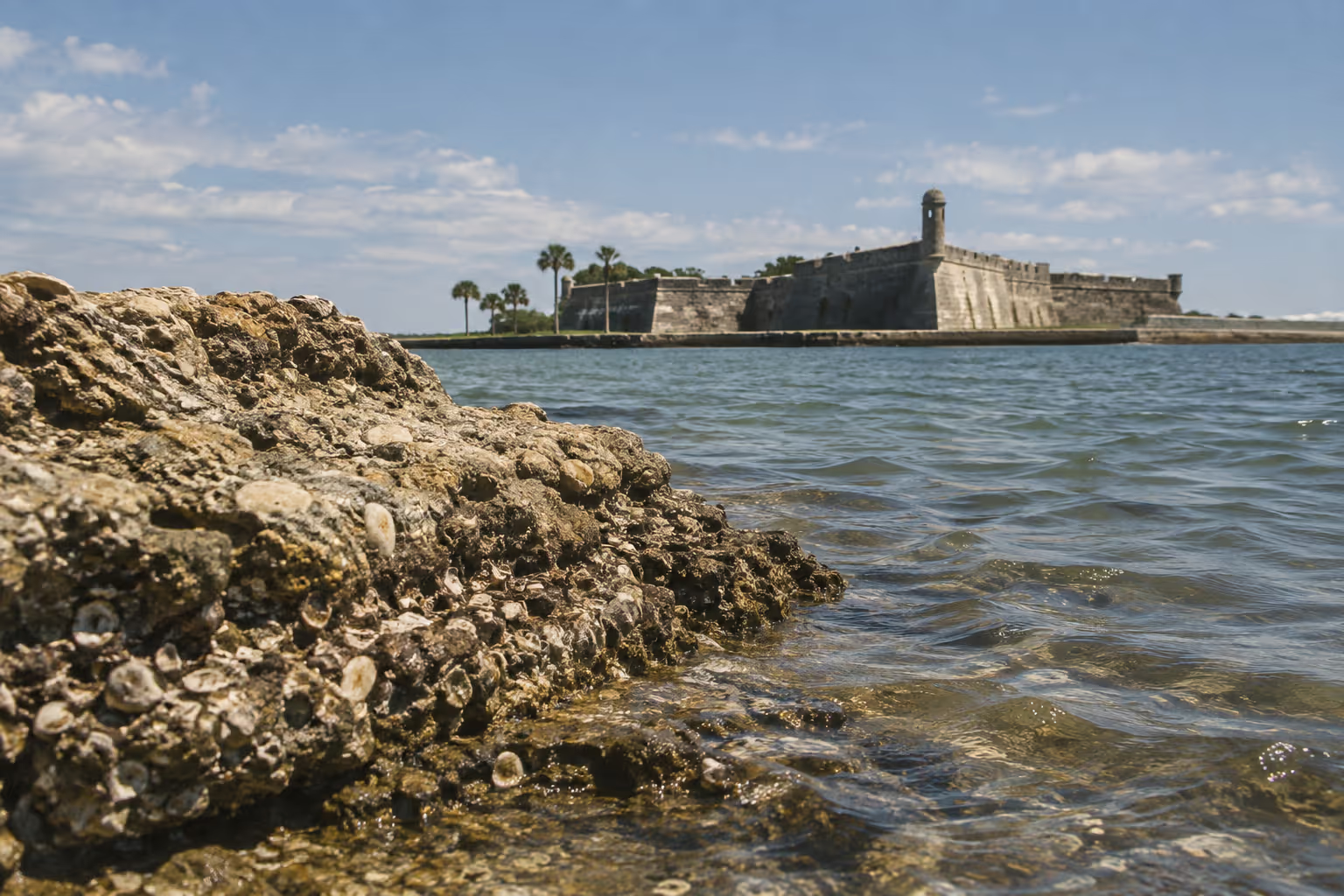
Castillo de San Marcos is the oldest masonry fort in the continental United States (19). Adult admission is $15 as of October 2026 (18), with daily entry from 9 a.m. to 5 p.m. (2). The Spanish built it from coquina, a compressed shell stone. That stone came from a quarry on Anastasia Island, on land that is now Anastasia State Park (3). The star-shaped layout, with a bastion at each corner, is what you see from the lawn before you even buy a ticket.
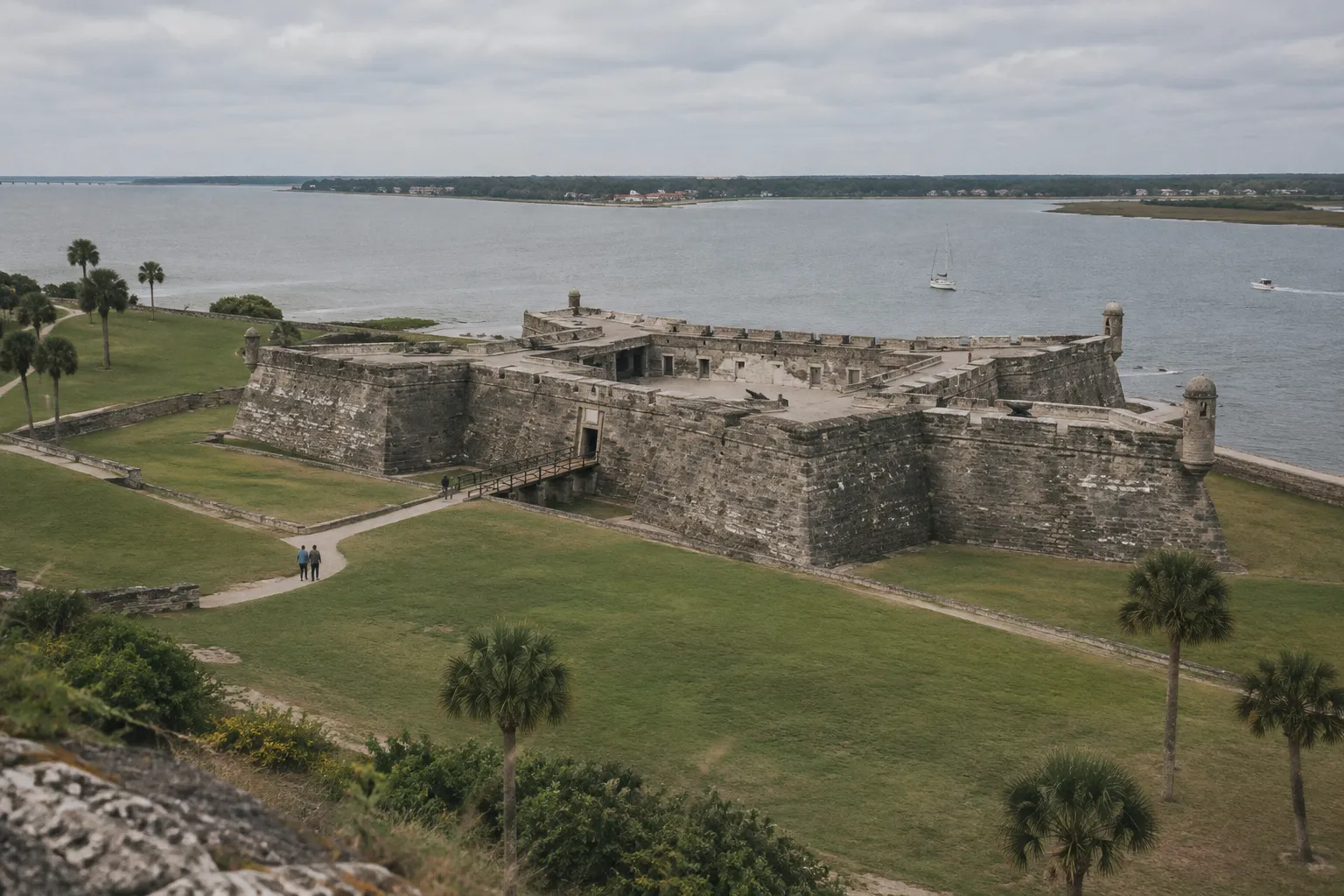
Most of a visit is the casemate exhibits and the gun deck. A ranger program, if one runs that day, is the main reason to stay longer.
Admission Price, Hours and the 7-Day Pass
The fee structure is simple once you know three rules:
- Adults (16 and over): $15, valid for 7 consecutive days (18)
- Children 15 and under: free, but they must be accompanied by an adult (18)
- Card only. The park does not accept cash. Payment is by credit or debit card (18)
The Castillo is a “walk-in” park, so the fee applies to each person. Tickets aren’t transferable to other guests (18). An America the Beautiful pass covers entry if you already carry one (18).
Treat the $15 ticket as a multi-day pass, not a one-shot visit. Because it stays valid for 7 consecutive days (18), you can do the fort at 9 a.m. on day one, when the gun deck is cooler and emptier. If an afternoon storm cuts a visit short, you can come back later in the week without paying again.
The hours are where people get caught out:
- First admission: 9 a.m. (2)
- Last admission: 5 p.m. (2)
- Everyone out by: 5:15 p.m. (2)
- Closed: Thanksgiving Day and Christmas Day (2)
The fort and its grounds keep separate hours. The grounds around the Castillo close only from midnight to 6 a.m. (2), so an evening walk along the lawn and seawall still works after the fort itself has shut. Don’t read “open until midnight” on a map and assume you can get inside at 7 p.m.
Parking in the City of St. Augustine lot in front of the Castillo runs $2.50 per hour as of October 2026, and the city’s parking garage a block away is the shaded alternative (18). Arrive before 10 a.m. on weekends. The NPS says a busy Saturday averages 3,500 visitors (2). School groups peak in October to November and February to May (2), so weekday mornings in those months can be louder than you’d expect.
What’s Inside the Fort
The layout is a central courtyard ringed by vaulted casemates. These are thick-walled rooms that once served as storerooms, guard rooms and quarters, and they now hold exhibits on the fort’s Spanish, British and American periods. Ramps and stairs lead up to the gun deck. Cannons there face the Matanzas River and the inlet the fort was built to defend.
The gun deck is the highlight, and the most fragile part of your plan. The NPS closes it during thunderstorms because of lightning risk (2). Summers bring frequent afternoon thundershowers (2), so do the upper level first and the indoor casemates second. Pack sun protection and water too. The deck has almost no shade, and the NPS recommends sunscreen, a hat and UV-protective sunglasses in summer (2). Water is the only drink allowed inside the fort (6).
For families, the Castillo is the easier history stop. The Lighthouse tower turns away children under 44 inches (112 cm) (1); the fort lists no height rule, and children 15 and under get in free (18). Younger kids get the whole experience here, cannons and all. Ranger talks and weapons demonstrations run on some days. Check the day’s program board at the entrance rather than planning your morning around one.
St. Augustine Historic District and St. George Street
The St. Augustine Historic District is listed on the National Register of Historic Places. More than 20 sites inside it carry their own listing, from the Alcazar Hotel to the Ximenez-Fatio House (14). The tourism office calls the area Historic Downtown. Many buildings date to the 1700s, and some streets are older than that (14). The whole district is walkable: the Castillo, St. George Street, the Plaza, Flagler College and the Lightner Museum all sit within a short walk of each other.
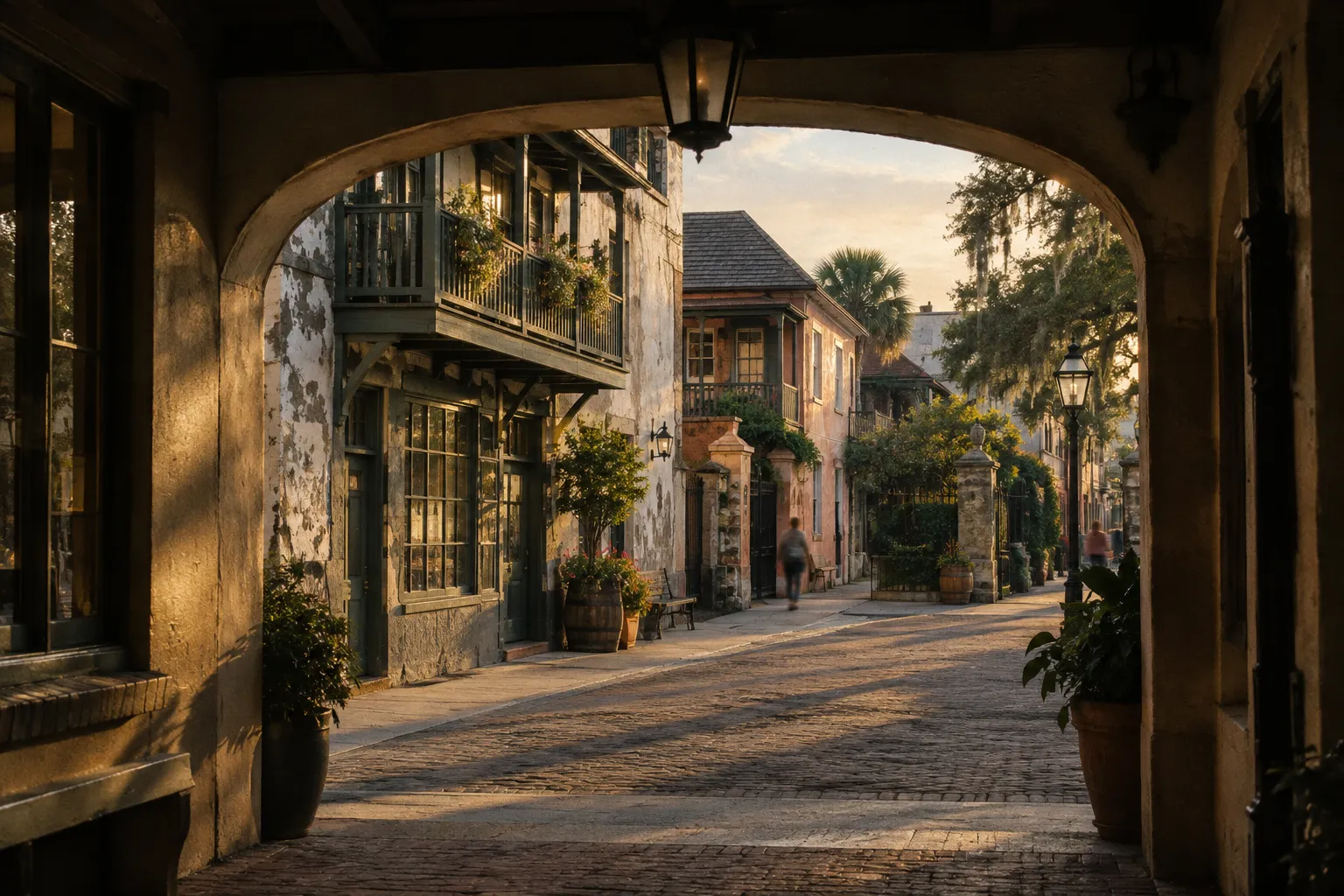
What isn’t walkable is anything on Anastasia Island. That rules out the Lighthouse, the Alligator Farm, the state park and the boat tours out of Conch House Marina. The Fountain of Youth sits north of the fort, a manageable walk in cool weather and a short drive in July. If you’d rather not re-park at every stop, the Old Town Trolley runs a narrated route with 22 stops through the historic district (19).
Walking St. George Street: Shops, Eats and Museums
St. George Street is a pedestrian-only route through the St. Augustine Historic District. Colonial-era buildings, courtyards, museums, restaurants and shops line both sides (13). It follows a colonial roadbed first laid out in the 1700s. Many of its buildings are original structures or faithful reconstructions on historic foundations (13). Landmarks along the way include the City Gates at the north end, the Colonial Quarter and the Oldest Wooden School House (13).
The shopping is a mix. The street’s listing covers handmade leather goods, regional art, books and gifts. There are also candy kitchens, gelato spots and old-fashioned soda counters (13). Expect plenty of fudge and T-shirts too. The better finds are in the side courtyards, which also offer shaded seating out of the foot traffic (13).
Timing matters more than route:
- Before 10 a.m.: shops are opening, the street is empty, and the storefronts photograph well
- Late morning to late afternoon: shoulder-to-shoulder on weekends and school breaks
- Evening: cooler. The district is promoted for its live music and dining (14), and courtyard restaurants fill up after 6 p.m.
If you’re in town on the first Friday of the month, the First Friday Art Walk runs from 5 to 9 p.m. through the city’s galleries (14).
Other Notable Buildings in the Historic District
The district runs deeper than St. George Street. These are the stops that justify leaving the main drag:
- Aviles Street, billed as the oldest street in the nation’s oldest city (20). It’s narrower and calmer than St. George, with galleries and cafés.
- Ximenez-Fatio House, one of the district’s individually listed sites (14), and a quieter look at colonial-era domestic architecture.
- The Plaza and King Street, where the district opens up. Flagler College and the Lightner Museum face each other across King Street (17). Both get their own section below.
- The City Gates, which mark the north end of St. George Street (13). They’re a five-minute stop, best paired with the Castillo next door.
Skip it if short on time: a full loop of every side street. Walk St. George end to end, detour onto Aviles, and finish on King Street. You’ll have covered the core.
St. Augustine Lighthouse: The Climb and the Museum
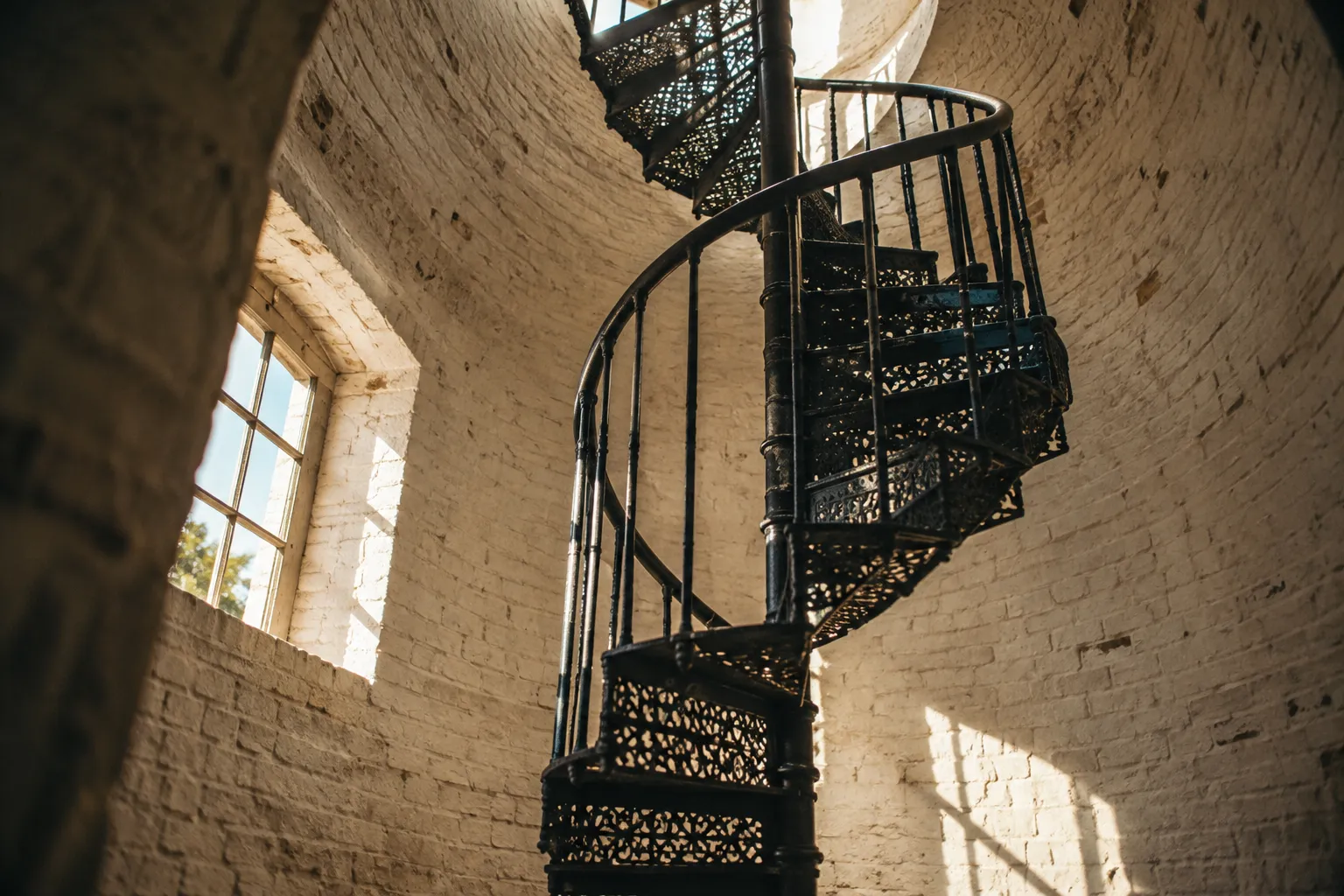
The St. Augustine Lighthouse is an 1874 tower. Its self-guided climb has 219 steps and is open only to visitors at least 44 inches (112 cm) tall (1). It anchors a larger site, the St. Augustine Lighthouse & Maritime Museum. The museum is a Smithsonian Affiliate, and its exhibits run from Ponce de Leon’s 1513 sighting of Florida to the shrimping industry that began in northeast Florida in the early 20th century (5).
Here’s the thing most guides get wrong. They list the Lighthouse alongside St. George Street as if you can stroll between them. You can’t, not comfortably. The Lighthouse is on Anastasia Island, across the water from the St. Augustine Historic District. Treat it as a drive and pair it with the beach or the Alligator Farm, not with downtown.
Admission covers more than the tower (1):
- The 1874 Lighthouse Tower, plus the exhibit Reflections: A Celebration of 150 Years of Service
- The 1876 Keepers’ House, with the Victorian-era exhibit At Home with the Harns
- Wrecked!, an exhibit of shipwreck discoveries
The Keepers’ House exhibit follows the family of William Harn, the first long-term keeper at the current light station, from 1875 to 1889 (5). World War II-era structures on the grounds also hold exhibits (5). As of October 2026, the Lighthouse’s own page offers 15% off general admission bought online in advance with code LH15 (1).
Climbing the 219 Steps
The climb is a spiral staircase with eight landings. Several of them hold exhibits and stories about the light station (5). The landings break it up into manageable stages, and you can stop at each one. At the top, the 140-foot (43 m) view takes in St. Augustine in every direction (1)(5). At the base, the Keepers’ Office shows the tools of the job, including how keepers hauled oil up those 219 steps (5).
The ticket window is the booking constraint to plan around (1):
- October through February: last ticket at 5:30 p.m., site closes at 6 p.m.
- March through September: last ticket at 6 p.m., site closes at 6:30 p.m.
- Event dates: on some evenings the last climb comes earlier, 4:15 to 5:15 p.m. on the dates listed for October to February, so check the museum’s calendar for your date
A 5:25 p.m. ticket in January leaves you 35 minutes before the 6 p.m. close. The Keepers’ House and exhibits won’t fit. Arrive well before the last ticket so the climb and the museum both fit. Check the weather before you go, since the tower may close for weather and events (1). The tower is also a steady stair workout. In summer humidity, carry water up.
Height Restrictions and What Younger Kids Can Still Do
The tower rule is strict. Children under 44 inches (112 cm) can’t go up. Children over 44 inches must climb under their own power. Carrying a child in the tower is prohibited (1). Animals are welcome on the historic grounds but not in the tower (1).
If you’re traveling with kids under 44 inches, plan on the museum and grounds and skip the tower. There’s enough to fill a visit (1):
- Tablets in the Wrecked! exhibit with a game about finding a shipwreck and its artifacts underwater
- Nation’s Oldest Port® demos, which are interactive demonstrations
- Maritime hammock nature trails and a scavenger hunt
- The Maritime Education Center, with hands-on exhibits
For the fort-versus-lighthouse question with small kids, the Castillo is the better bet for a full experience. There’s no height rule there, and children 15 and under enter free with an adult (18). Save the Lighthouse climb for a trip when everyone clears 44 inches.
St. Augustine Beaches and Anastasia State Park
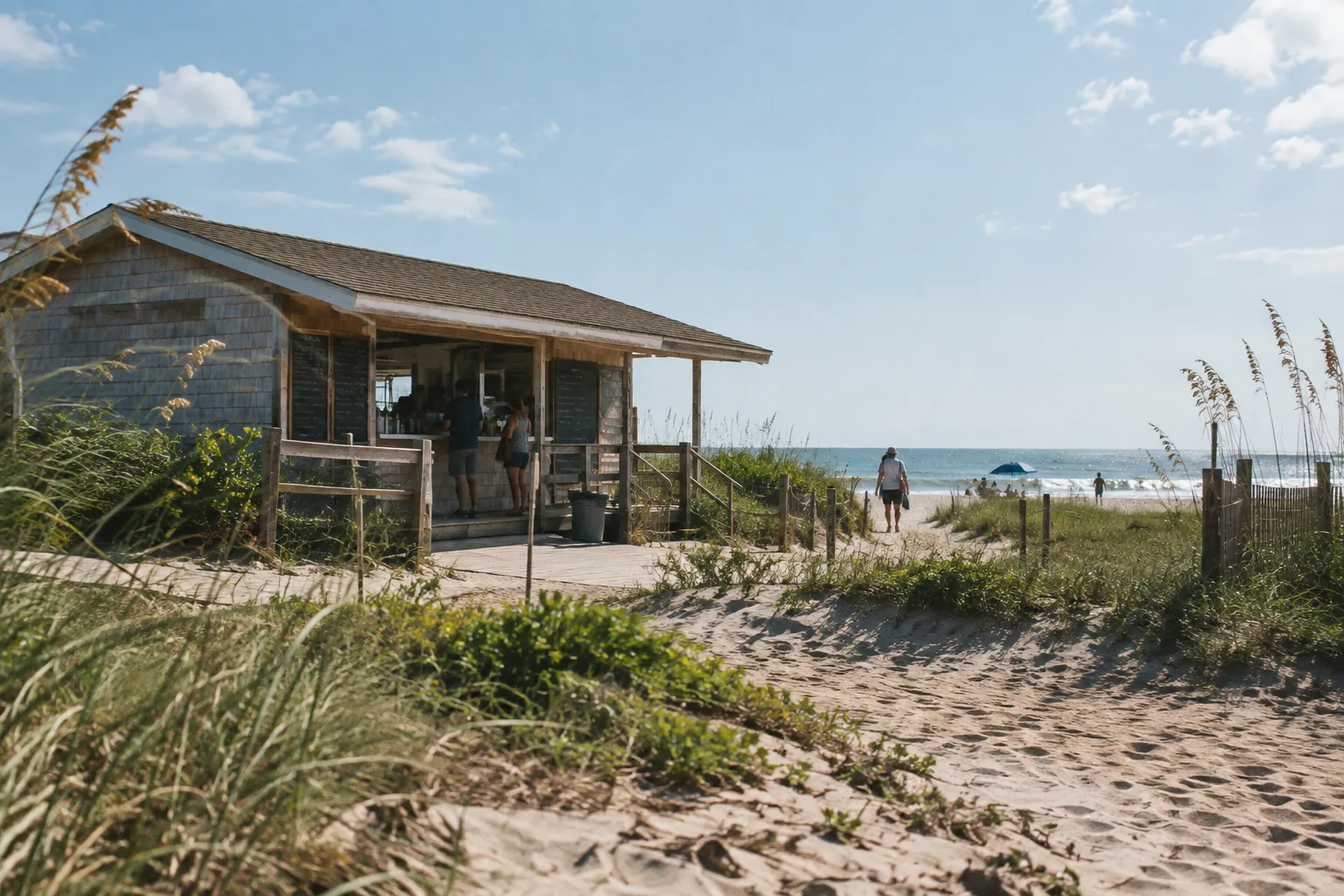
Anastasia State Park is the most complete of the St. Augustine beaches for a full outdoor day. It covers 1,600 acres (648 ha), including more than 4 miles (6.4 km) of white-sand beach (3). Listed activities are swimming, surfing, paddling, hiking and wildlife watching across tidal marshes and coastal habitat (3). The park also carries a history link to downtown: it’s the site of the old coquina quarry that supplied the stone for the Castillo de San Marcos (3).
Getting there from I-95 is straightforward. Take exit 311 east on State Road 207, turn right onto State Road 312 east, then left (north) onto A1A. The main entrance is about 1.5 miles (2.4 km) up the road (4). From downtown, it’s a short drive across the Bridge of Lions.
An entrance fee is required (8). As of October 2026 it’s $8 per vehicle with 2 to 8 people, and $2 for pedestrians and cyclists (4). If you’re staying on the island and can bike in, that’s the lower-cost way through the gate.
Anastasia State Park: Hours, Rentals and Activities
The park is open 8 a.m. until sunset, 365 days a year (3)(8). Sunset isn’t a fixed clock time. In December the gate closes far earlier than in June, so check the day’s sunset before planning a late-afternoon walk.
The rental cutoffs catch more visitors off guard than the gate does. Kayaks, paddleboards, sailboats and bicycles are all available (3), but two operators keep two schedules (4):
- Island Beach Shop: open 9 a.m. to 5 p.m. Rentals go out until 3:30 p.m. and must be back by 4:30 p.m.
- Anastasia Watersports: open 9 a.m. to 4 p.m. Rentals must be returned by 5 p.m., weather permitting.
The gate opens at 8 a.m., but the beach shop’s last rental leaves at 3:30 p.m. Arrive after lunch and the paddling window is already short. If gear is the point of your visit, get there in the morning and paddle before the wind and the afternoon storms build. The park’s operators also offer e-bike rentals, beach chair setups, glamping bungalows and a guided lighthouse paddle tour (3).
Rules worth knowing before you load the car:
- Fishing, boating, swimming and fires are allowed only in designated areas. A Florida fishing license may be required (8).
- Pets are prohibited on beaches, in buildings and on boardwalks. Elsewhere they need a handheld leash no longer than 6 feet (1.8 m) (8).
- Children under 6 must wear a life jacket at all times by law when on the water. Vests can be rented at Anastasia Watersports (4).
- Tobacco is prohibited on beaches, in buildings and on boardwalks. Fireworks and hunting are banned (8).
Other Beach Access Points Near Downtown
Anastasia State Park isn’t the only sand within reach. The area’s beaches run from Vilano Beach north of the city to Crescent Beach in the south, with dozens of public access points (21). South of the park, St. Augustine Beach has public access points along A1A, and it’s the easier option if you want restaurants within walking distance of your towel. Farther south, Crescent Beach is quieter and more residential. North of downtown, Vilano Beach sits across the river from the Fountain of Youth side of town.
These town beaches don’t have the state park’s rental shops, trails or gate fee. Parking rules and beach driving rules vary by stretch, so check St. Johns County’s current beach information before you go. For a full day with gear, the state park is the better choice. For a free hour of sand after the Lighthouse, a town access point is enough.
Flagler College and Lightner Museum: Gilded Age Landmarks
Flagler College and the Lightner Museum face each other across King Street. Both occupy grand hotels Henry Flagler built in the 1880s (10)(17). Flagler partnered with John D. Rockefeller to start Standard Oil, then extended the railroad from Jacksonville to St. Augustine and began building luxury hotels (10). Seeing both in one morning covers St. Augustine’s Gilded Age in a single stop. Flagler College’s tours start at 74 King Street (16), and the Lightner Museum is at 75 King Street (17).
Flagler College’s Former Hotel Ponce de Leon
Construction on the Hotel Ponce de Leon started in 1885 and finished in 18 months. The hotel officially opened on January 12, 1888 (10). It was seasonal, open only from January to Easter, with about 450 rooms (10). In 1968, the former hotel reopened as the centerpiece of Flagler College (10). Because it’s a working campus, most of the building is off-limits unless you’re on a tour. Without one, you can still view the courtyard and step into the lobby and rotunda when the property is open to the public (16).
The guided tour is the only way to see the best interiors:
- Departures: 10 a.m. and 2 p.m., from the main lobby rotunda at 74 King Street (16)
- Length: 45 to 60 minutes (16)
- Price: $21 per person as of October 2026 (31)
- Highlight: the dining hall, lit by Louis Comfort Tiffany stained glass windows (10). The tourism office’s listing calls the building’s set the largest collection of Tiffany windows (16).
The building also had modern conveniences for its day, including electricity, running water and a Thomas Edison clock, one of the first used in a public space (16).
In September 2025, Flagler College added interactive exhibits in the Rotunda and Courtyard (15). Student guides now use lantern-inspired projectors to light up historic photographs. Beneath the grand staircase, discovery drawers hold artifacts and ephemera for self-guided browsing. There are also digital touchscreen portraits played by local actors, a stained glass design kiosk, and a recreated guestroom based on President Harding’s family’s 1921 stay (15). A bronze statue of Henry Flagler now stands in the Courtyard (15).
With only two tour slots a day (16), build your morning around one of them. Take the 10 a.m. tour, then spend some time with the new Rotunda exhibits (15). You’ll see the guided history and the self-paced additions in one stop. Check availability first, especially on weekends and school breaks.
Lightner Museum’s Decorative Arts Collection
The Lightner Museum occupies the former Hotel Alcazar, Flagler’s second grand hotel in St. Augustine, built in 1888 (17). Carrère and Hastings designed it in Spanish Renaissance Revival style. The Alcazar once held the world’s largest swimming pool, plus Turkish and Russian steam baths, tennis courts and a gymnasium (17). Chicago publisher Otto Lightner founded the museum in 1948 (17). The museum has since enhanced its displays in the old Turkish and Russian baths, adding archival photos of the spa (17).
The collection includes fine and decorative art, Tiffany lamps, stained glass, geological specimens and Victorian mechanical musical instruments (17). As of October 2026, exhibitions on view include The Gilded Age: Treasures from the Lightner Museum, Riding High: Vintage Bicycles from the Keith Pariani Collection, Florida Before Flagler: Photographs by Hugo Meyer, Ceramics: Selections from the Otto C. Lightner Collection and Ansley Randall: Home for Now (9).
Mind the hours:
- Open daily 9 a.m. to 5 p.m. (7)
- Last admission 4 p.m. on the museum’s own page (7). The tourism listing gives 3:30 p.m. (17), so arrive before 3:30 to be safe.
- Upper floors close at 4:30 p.m. (7)
- Closed Easter Sunday, Thanksgiving, Christmas and New Year’s Day (7)
As of October 2026, adult admission is $20, with $17 for seniors, students and military, $13 for youth 12 to 17, and $12 for St. Johns County residents. Children 11 and under enter free (7).
Fountain of Youth Archaeological Park
Fountain of Youth Archaeological Park is a 15-acre (6 ha) waterfront site. It’s open daily from 9 a.m. to 6 p.m., with the last ticket sold at 5 p.m. (11). The park marks the area Juan Ponce de Leon explored in 1513 and where Pedro Menendez de Aviles founded the settlement in 1565 (11). That makes it the origin point of the city, which predates Jamestown and Plymouth (11).
Here’s the honest take. The fountain itself, where visitors take a sip (20), is the least interesting part. It’s a novelty stop. The reason to pay admission is the archaeology and the waterfront grounds, which tell the story of the Indigenous Timucua and the first Spanish settlement on the same ground. If your only interest is the sip, skip it. If you want the story of where St. Augustine started, don’t rush it.
Location matters for sequencing. The park sits north of the Castillo, outside the tightest part of the walkable core. It’s a longer walk in summer heat and a short drive otherwise. Its 5 p.m. last ticket (11) matches the Castillo’s 5 p.m. last admission (2). You can’t hold both for the end of the day, so put one in the morning.
Cannon Demonstrations, Planetarium and Timucua Village
The park packs several distinct experiences into its grounds (29):
- Cannon firing. It’s the loudest and most kid-pleasing part of the visit, so check the day’s times at the gate and plan your loop around one.
- Navigators Planetarium. An indoor stop, and a good midday retreat from the heat.
- Timucuan village. It pairs well with the excavations and the 1565 Menendez settlement exhibits.
- The waterfront. The grounds overlook the Matanzas River, and dozens of peacocks roam them (21).
Worth the detour: the cannon demonstration and the Timucua village. Skip if short on time: lingering at the fountain.
More Attractions: Alligator Farm, Colonial Quarter, Distillery Tours and Boat Rides
Beyond the Castillo, the Lighthouse and the Flagler buildings, St. Augustine’s best fill-in attractions are the Alligator Farm, the Colonial Quarter, the St. Augustine Distillery and a one-hour boat tour. None of them is essential on a one-day trip. On a long weekend, each earns its slot for a different kind of traveler.
Alligator Farm Zoological Park
The Alligator Farm is open daily from 9 a.m. to 5 p.m., with hours extended to 6 p.m. in the summer months (28). It sits on Anastasia Island, 1.5 miles from the Bridge of Lions (28), so pair it with the Lighthouse on the same afternoon. The park houses more than 125 species, with alligator feedings at noon and 3 p.m. (28).
The zipline is a separate ticket that doesn’t include park entry (28), and it has its own age and height rules. A child who clears the Lighthouse’s 44 inches (112 cm) (1) is not automatically cleared for the zipline, so check the park’s current rules before you promise anything in the car.
Colonial Quarter and the Oldest Wooden Schoolhouse
The Colonial Quarter is a living-history site at 14 S. Castillo Drive, focused on how settlers lived in St. Augustine during colonial times (19). It’s one of the named landmarks on St. George Street (13). It sits steps from the City Gates and the Castillo, so it fits easily into a morning built around the fort.
The Oldest Wooden School House is also on St. George Street (13). It’s a small stop. Check both sites’ own pages for current admission before you go. For most first-time visitors, one of these two is enough.
Worth the detour: the Colonial Quarter, if you have kids who respond to demonstrations more than placards. Skip if short on time: the schoolhouse, which you can see from the street.
St. Augustine Distillery Tours
The St. Augustine Distillery operates in the city’s former ice plant at 112 Riberia Street (26). The distillery bills it as Florida’s oldest ice plant (24). It makes whiskey, rum, gin and vodka. In 2025, USA Today readers voted it the best craft distillery tour in the country (26).
Tour options and prices as of October 2026, from the tourism office’s listing (26):
- Self-Guided Tour, free. Covers exhibits on the building’s history and distilling, and includes a tasting. Available seven days a week. The distillery bills its tours and tastings as free (24); the tourism office’s listing puts the self-guided tour at $5 per person (26), so confirm at the door.
- Guided Flight Tour, $20 per person. Four signature bourbons with a bourbon steward, Sundays through Thursdays.
- Spirit of Florida Bourbon Experience, $35 per person. A one-hour guided tour with a bourbon steward covering production and history. Fridays and Saturdays only. You keep the tasting glass.
- Beyond the Barrel, from $55 per person. A 75-minute tour that adds a taste from the barrel. Fridays and Saturdays only.
All ages are welcome on the self-guided tour, but guests must be 21 or older for any guided experience (30).
Self-guided tours run from 10:30 a.m. to 5:30 p.m. and need no reservation (24). Retail hours are 10 a.m. to 6 p.m. (26). Anyone can take the tour, but tastings require a current, undamaged, physical ID. The distillery accepts a U.S. driver’s license, U.S. ID card, U.S. military ID, or an international passport or passport card (24).
For a quick stop, the self-guided tour covers the basics and fits a gap between bigger sights. For a guided format, the day decides: the $20 Guided Flight Tour runs Sundays through Thursdays, while the $35 Bourbon Experience and Beyond the Barrel run Fridays and Saturdays (26).
Boat Tours from Conch House Marina
St. Augustine Boat Tours departs from Conch House Marina at 57 Comares Ave. on Anastasia Island, in the Salt Run inlet (27). The marina has free parking and is a few minutes’ drive from the historic district (27). Its smaller boats can get into narrow inlets and saltwater rivers. Trips head deeper into Salt Run first, where you may see birds and dolphins (27). Tour types include history-and-landmarks trips, ecotours, sunset cruises and private charters (27). As of October 2026, the one-hour Dolphin, Wildlife, and History Tour costs $27 per adult and $15 for kids 2 to 12 (27).
The booking note: the listed one-hour tour departs daily at 10 a.m. and noon, and sunset trips run seasonally from March through November (27). From December through February, the 10 a.m. and noon departures are your only options.
Paid Attractions at a Glance
Here’s how the paid stops compare on cost, cutoffs, time needed and audience:
- Castillo de San Marcos: $15 per adult as of October 2026, valid for 7 consecutive days (18). Last admission at 5 p.m., exit by 5:15 p.m. (2). Best for history and families with young kids.
- St. Augustine Lighthouse: check the museum’s site for admission. Last ticket at 5:30 p.m. (October to February) or 6 p.m. (March to September) (1). Best for families with kids 44 inches and taller.
- Fountain of Youth: last ticket at 5 p.m. (11). Best for history and families.
- Alligator Farm: open 9 a.m. to 5 p.m., to 6 p.m. in summer (28). Best for families.
- Flagler College tour: $21 per person as of October 2026 (31), departs at 10 a.m. and 2 p.m., lasts 45 to 60 minutes (16). Best for architecture fans and couples.
- St. Augustine Distillery: self-guided tour free (24), guided tours $20 to $55 per person as of October 2026 (26). Self-guided tours run 10:30 a.m. to 5:30 p.m. (24). Best for couples and groups of adults.
Free Things to Do in St. Augustine
The best free things to do in St. Augustine are walking St. George Street and the St. Augustine Historic District, viewing the Flagler hotel architecture from outside, and spending time on a public beach. A no-ticket day here is more complete than in most Florida tourist towns, because the architecture is the attraction.
Free options, ranked:
- Walk St. George Street early. The pedestrian-only street and its courtyards cost nothing (13). Go before 10 a.m. for empty storefronts, or after dinner for live music drifting out of courtyards (14).
- Loop the historic district’s side streets. Aviles Street (20), the City Gates (13) and the exteriors of the district’s more than 20 individually listed sites (14) make a solid walk.
- Stand on King Street. The facades of the former Hotel Ponce de Leon and the Hotel Alcazar face each other there (16)(17). You won’t see the Tiffany dining hall without a tour, but when the property is open you can step into the Ponce’s lobby and rotunda and view the courtyard for free (16).
- Walk the Castillo grounds. The grounds around the fort stay open well past the fort’s 5:15 p.m. exit (2). Sunset over the water from the lawn costs nothing.
- Hit a public beach access. The coast has dozens of public access points (21), and town beaches along A1A don’t charge a gate fee. Anastasia State Park does charge admission (8), so it doesn’t count as free.
- First Friday Art Walk. Galleries open from 5 to 9 p.m. on the first Friday of each month (14).
A few paid sites have built-in free entry. Children 15 and under always enter the Castillo free with an adult (18). The Lightner Museum admits children 11 and under free (7). It also participates in Museums for All, which offers free entry with an EBT card and photo ID, and it hosts several free Community Open House evenings each year (7).
For adults, the Castillo’s 2026 NPS free-entry dates include October 27 and November 11 (18). Eligibility is limited to U.S. citizens and residents, and other fees may still apply (18). Expect bigger crowds on those days, and arrive at 9 a.m.
Best Things to Do in St. Augustine, Florida: Sample Itineraries for One Day and Three Days
One day in St. Augustine covers the Castillo de San Marcos, St. George Street, Flagler College and the St. Augustine Lighthouse, as long as you start at 9 a.m. and do the fort first. The planning trap is the afternoon. If you save the Castillo for late in the day, you must leave by 5:15 p.m. (2). The Lighthouse sells its last ticket at 5:30 p.m. in the off-season or 6 p.m. from March through September (1). That leaves 15 to 45 minutes to cross the water, park and buy a ticket. That window is too tight to count on, so put the fort in the morning.
What not to miss on a first visit: the Castillo gun deck, St. George Street before the crowds, the Flagler College tour, and the Lighthouse climb if everyone clears 44 inches (112 cm) (1).
One Day in St. Augustine
Duration and scope: one full day, four headline stops, one short drive to Anastasia Island.
- 9:00 a.m. Castillo de San Marcos. Be at the gate for first admission (2). Do the gun deck first: the NPS closes it during thunderstorms (2), and the heat builds through the day. Bring a card, since cash isn’t accepted (18).
- 10:30 a.m. City Gates and St. George Street. Walk south from the fort through the gates (13) before the midday crowds build. Detour onto Aviles Street (20).
- 12:30 p.m. Lunch in a St. George Street courtyard or off the Plaza.
- 2:00 p.m. Flagler College tour. The afternoon departure runs 45 to 60 minutes (16). Afterward, look over the new Rotunda exhibits (15).
- 3:15 p.m. Drive to Anastasia Island. Cross the Bridge of Lions and arrive at the Lighthouse well before the ticket cutoff (1).
- 3:45 p.m. St. Augustine Lighthouse. Climb first, then do the Keepers’ House and Wrecked! before closing (1).
- Evening: back downtown for dinner. Walk the Castillo grounds at dusk; they stay open until midnight (2).
If you’re traveling with kids under 44 inches, swap the Lighthouse for the Alligator Farm on the same island, which closes at 5 p.m. outside summer (28).
Three Days in St. Augustine
Duration and scope: three days, split into downtown, the island, and the extras. Your Castillo ticket stays valid for 7 consecutive days (18), so you can return for free.
Day 1: the St. Augustine Historic District
- 9:00 a.m. Castillo de San Marcos (2)
- 10:00 a.m. Flagler College tour (16), then the Rotunda and Courtyard exhibits (15)
- 11:30 a.m. Lightner Museum, well ahead of its afternoon last admission (7)(17)
- Afternoon: St. George Street, the Colonial Quarter (13)(19) and Aviles Street (20)
- Evening: courtyard dinner and live music downtown (14)
Day 2: Anastasia Island
- 8:00 a.m. Anastasia State Park at opening (3). Rent a kayak or paddleboard in the morning, well before the 3:30 p.m. cutoff (4).
- Lunch at the park grill or in St. Augustine Beach
- 2:30 p.m. Alligator Farm, or a free town beach if you’ve had enough of animals
- 4:00 p.m. St. Augustine Lighthouse, timed against the seasonal last ticket (1)
Day 3: origins, water and bourbon
- 10:00 a.m. one-hour boat tour from Conch House Marina (27)
- 1:00 p.m. Fountain of Youth Archaeological Park, before the 5 p.m. last ticket (11)
- 4:00 p.m. St. Augustine Distillery self-guided tour, before its 5:30 p.m. end (24). If it’s a Friday or Saturday and everyone is 21 or older (30), book the Bourbon Experience instead (26).
- From March through November, swap the morning boat trip for a sunset departure (27).
Frequently Asked Questions
- Should I reserve St. Augustine tours before arriving?
- Reserve the Flagler College tour ahead if its 10 a.m. or 2 p.m. departure matters to your schedule; check availability before building the day around it.
- What should I do if a storm closes the Castillo gun deck?
- Visit the casemates and exhibits while the gun deck is closed, then ask staff whether conditions may allow it to reopen during your visit.
- Can a child who is too short for the Lighthouse tower still visit the site?
- Yes. Children below the tower's height limit can explore the museum, grounds, maritime trails and interactive exhibits without climbing.
- Is there a winery tasting option near downtown St. Augustine?
- San Sebastian Winery near downtown offers tastings; check its official site for current hours and tour details before you go.
- What is the easiest way to keep an island visit from disrupting a downtown day?
- Group Anastasia Island stops together and cross the Bridge of Lions once, rather than switching between the island and downtown attractions.
- Can I count on seeing dolphins during a St. Augustine boat tour?
- No. Dolphins may be seen on Salt Run trips, but wildlife sightings are not guaranteed.
Planning Your Visit
The Castillo de San Marcos, the St. Augustine Lighthouse, the St. Augustine Historic District and the St. Augustine beaches cover the essentials. The main planning trap is the timing conflict between their closing hours, not choosing what to see. Put the fort at 9 a.m., hold the Lighthouse for the afternoon, and get rentals at Anastasia State Park before the 3:30 p.m. cutoff (4).
Before you go, bring a card for the Castillo (18). Check the Lighthouse’s seasonal last-ticket time for your travel month (1). Confirm Flagler College tour availability for the 10 a.m. or 2 p.m. slot (16). Hours and programs change with season and weather, so check each site’s official page on the morning of your visit, then use the itinerary above to sequence the day.