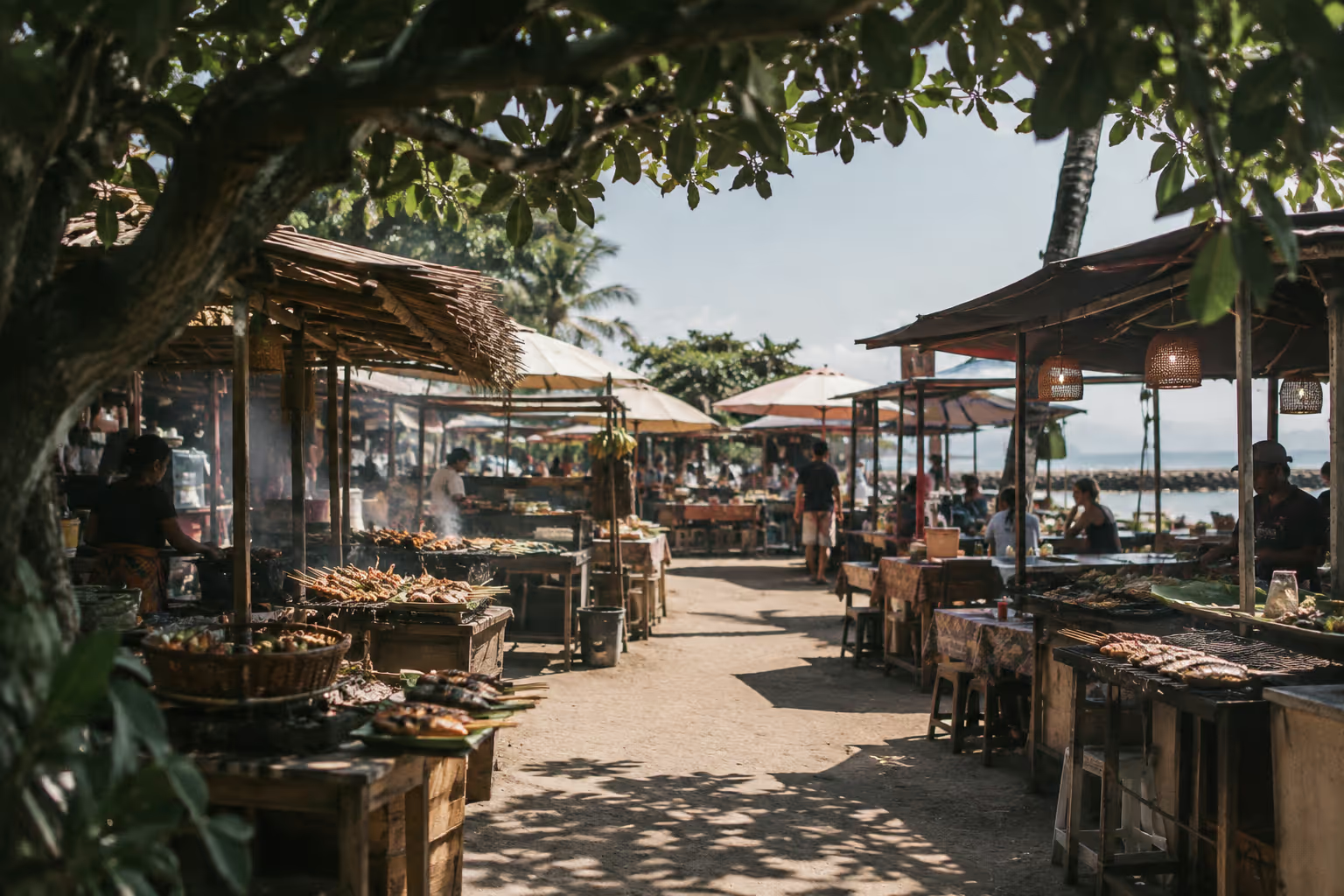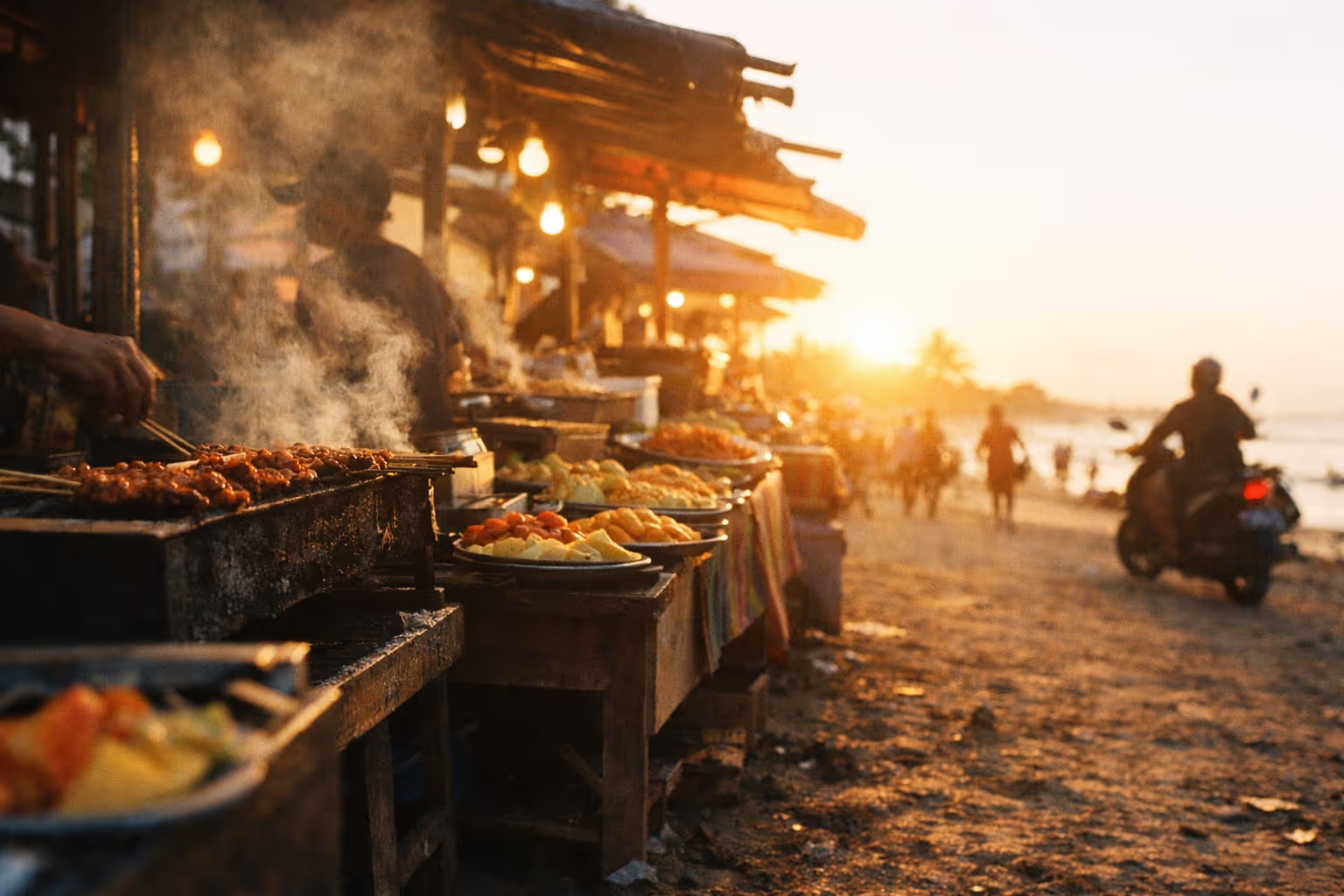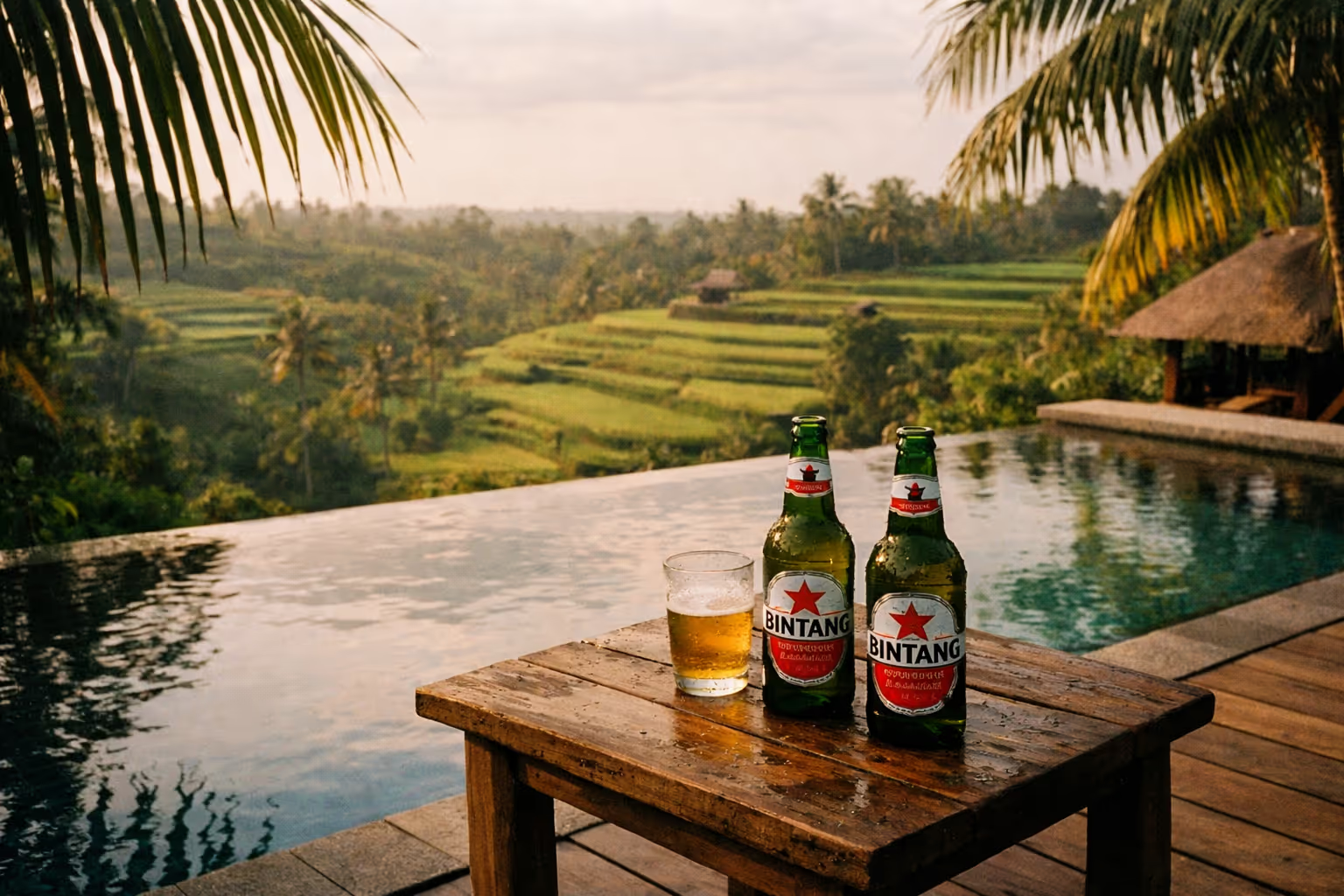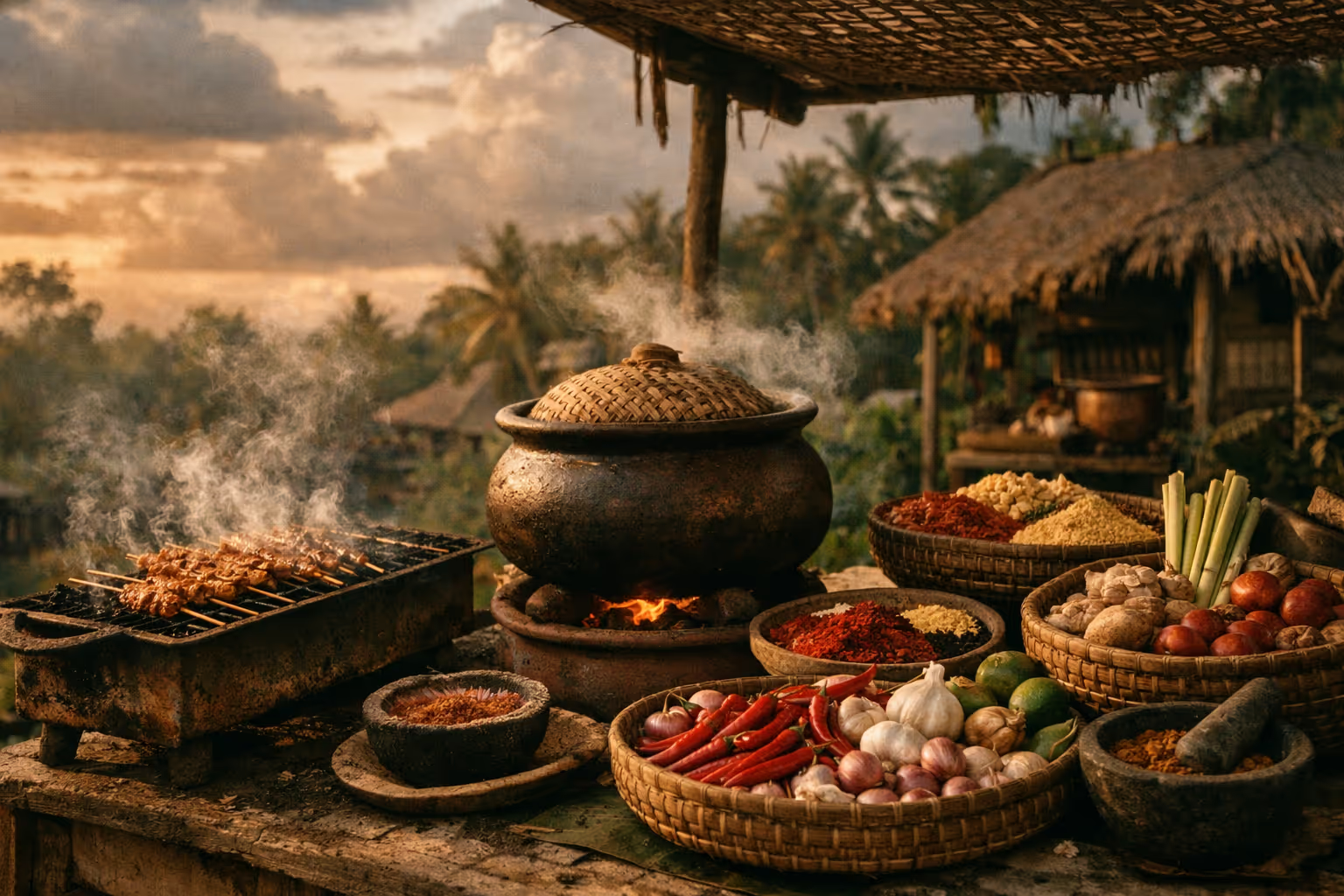
Food in Bali is cheaper than the guidebooks claim: a full warung plate runs $2 to $3, so the $100-a-day budget you keep reading overshoots. Chase five dishes at those local warungs, babi guling, ayam betutu, nasi campur, sate lilit, and lawar. Yes, much of it is spicy, but the sambal comes on the side, so ask for tidak pedas if you want it mild. The catch with the famous babi guling is timing: the best warungs cook one batch and sell out before midday.
A Closer Look at Babi Guling
Few dishes in Balinese cuisine command as much anticipation as Babi Guling. Unlike elsewhere in Indonesia, where the majority Muslim population avoids pork, Bali’s Hindu culture embraces it, making babi guling one of the island’s most distinctly local dishes (1).
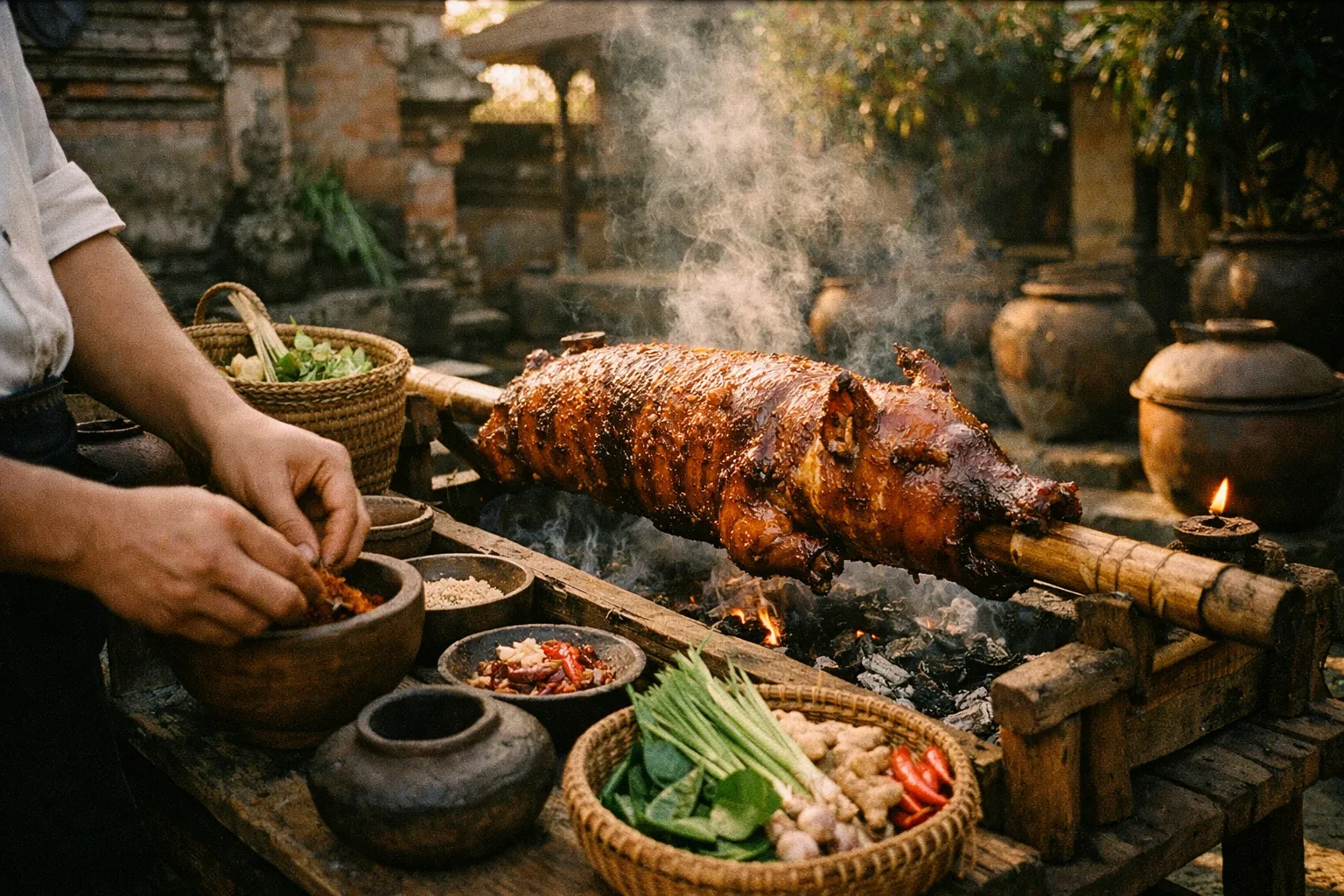
Traditionally reserved for ceremonies, it’s now available daily at dedicated warungs - but the ceremonial roots still shape how it’s made. The pig is marinated in turmeric, garlic, and galangal, then slow-roasted on a spit over an open flame until the skin crisps and the meat turns smoky and tender (1).
I caught a glimpse of the real thing during a walk through the Ubud countryside, where a village ceremony had babi guling at its center. The dish wasn’t being served to tourists - it was just part of the day. That context matters when you’re eating it later at a warung.
One practical note: the best babi guling warungs cook a limited batch and often sell out before midday, especially on ceremonial days. Ask your accommodation which spots are serving that morning and go early (1).
The Flavorful Ensemble of Nasi Campur
You can’t talk about traditional Balinese food without landing on Nasi Campur. It’s a mixed rice plate, but the sides are where it gets interesting - grilled meat, spiced vegetables, peanuts, and sambal (chili paste), each warung doing it slightly differently.
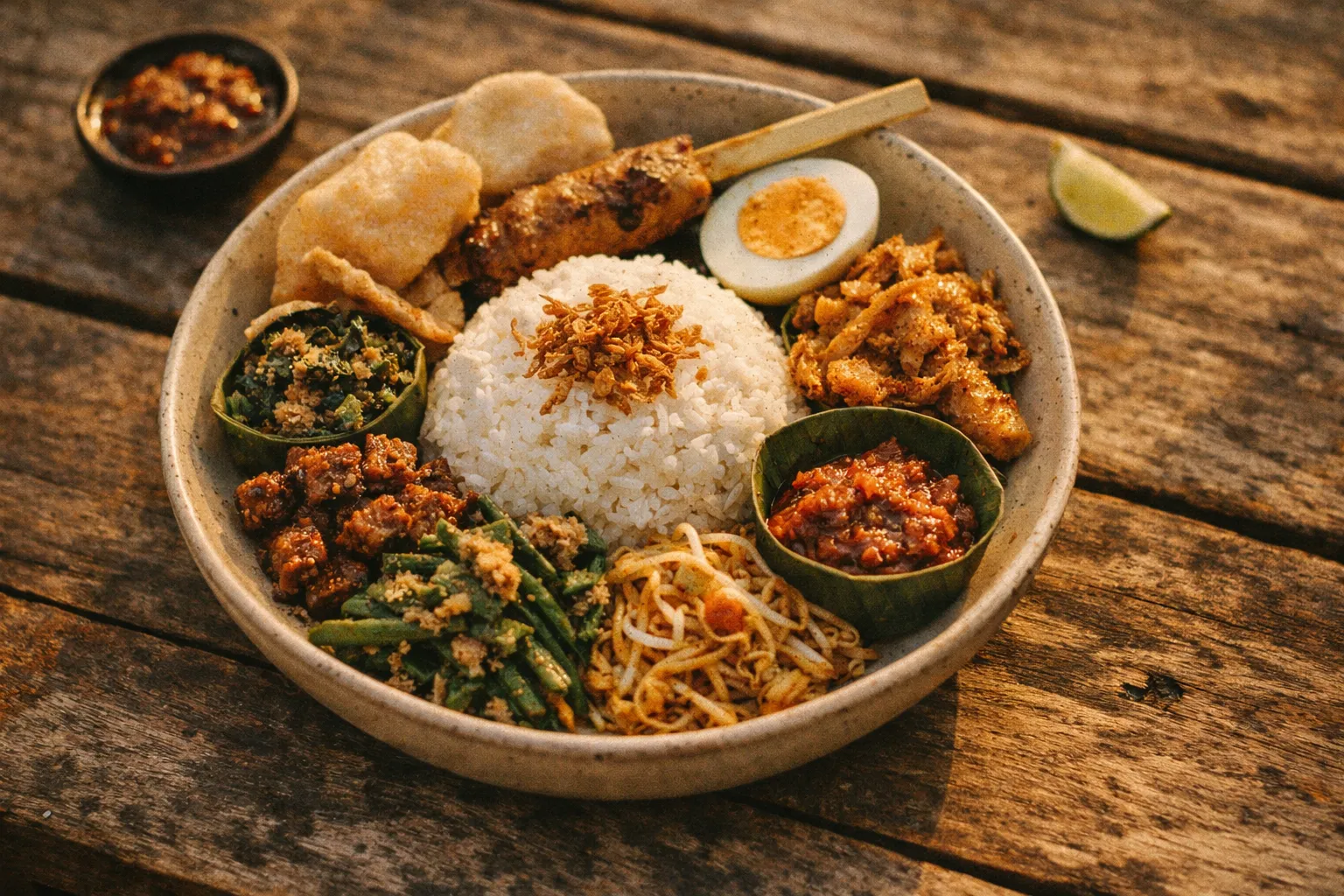
No two plates are the same. That’s the point. The cook’s version of the spice paste, the choice of protein, whether the sambal is raw or cooked - all of it shifts from one kitchen to the next. I’ve ordered nasi campur at a dozen different warungs across the island and been surprised every time.
It also works for vegetarians. Swap the meat for tempeh and tofu and the plate holds up. A standard warung serving runs IDR 25,000-50,000 (about $1.60-$3.20 USD) (8) - one of the better-value meals you’ll find anywhere in Asia.
Unwrapping the Delights of Sate Lilit
Sate Lilit is Bali’s answer to satay, and it’s genuinely different from the skewered versions you’ll find across the rest of Southeast Asia. Instead of chunks of meat on a stick, minced fish is mixed with grated coconut, lemongrass, lime leaves, and spices, then wrapped around bamboo or lemongrass stalks and grilled (10).
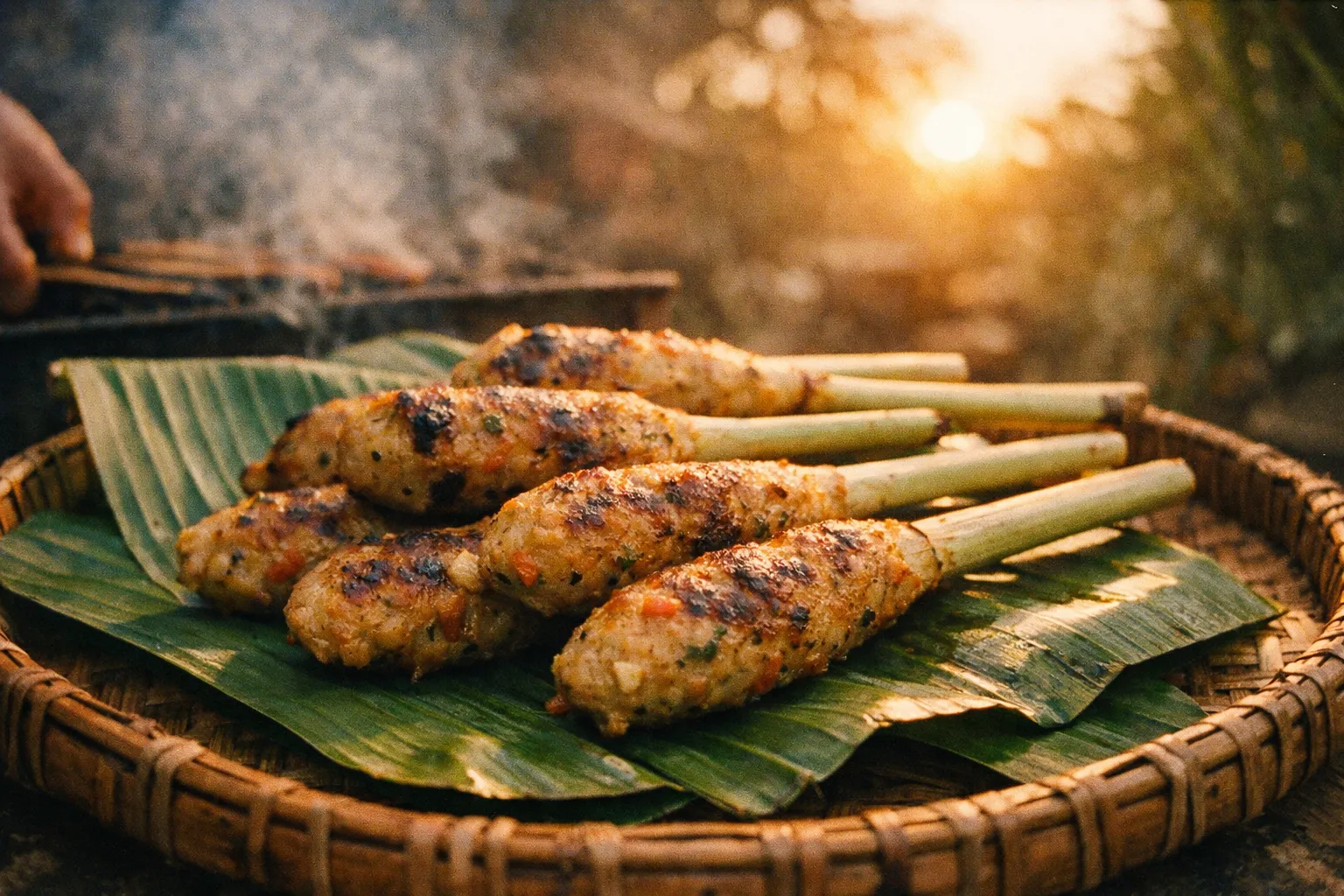
I first had it at a street cart near Batu Bolong in Canggu on a breezy evening - the kind of situation where the smell reaches you before the cart does. Watching the vendor press the mixture onto the sticks and set them over the coals, it was clear this takes more patience than standard satay.
The flavors are layered but not heavy. Coconut, lime, and chili do most of the work. It’s a good early dish to try because it shows you how Balinese cooks build complexity without relying on thick sauces.
The Best Balinese Foods to Try
Beyond those three, a handful of dishes show up in every serious conversation about famous Balinese food. Here’s what’s worth chasing, roughly ordered by how distinctly Balinese it is:
- Ayam betutu / bebek betutu - chicken or duck rubbed with base genep spice paste, wrapped in banana leaves, and slow-cooked for hours. Alongside babi guling, it’s the dish most tied to ceremonial feasts (1)(5).
- Lawar - minced meat (often pork or chicken) mixed with vegetables, grated coconut, and spices. Strongly linked to temple events. Note that some traditional versions include raw blood (lawar merah); the cooked versions are easier on a traveler’s stomach (1).
- Sambal matah - a raw chili relish of shallots, lemongrass, lime, and chili. Bright, sharp, and hot. It comes on the side, so you control the dose.
- Nasi goreng - Indonesian fried rice with egg and sambal. Not uniquely Balinese, but a reliable, cheap fallback found everywhere (10).
- Mie goreng - the fried noodle equivalent, equally ubiquitous.
- Pisang goreng - fried banana, the default sweet street snack.
If you want a quick shortlist of famous Balinese food: babi guling, ayam betutu, nasi campur, sate lilit, and lawar. Order those five over a few days and you’ve covered the island’s signature traditional Balinese food.
Is Balinese Food Spicy?
Often, yes. The question “is Balinese food spicy?” comes up constantly, and the honest answer is that many traditional dishes - lawar, sambal matah, betutu, and most warung sambals - carry real heat (5). The base genep spice paste underpinning Balinese cooking isn’t fiery on its own, but the sambals served alongside almost everything are.
The good news: heat is almost always adjustable. Most kitchens can dial it down, and a lot of the chili comes from condiments you add yourself. Two phrases worth memorizing:
- “Tidak pedas” - not spicy
- “Sedikit pedas” - a little spicy
Say either when you order and you’ll get a milder plate. If you love heat, the sambal will be waiting on the side regardless (5).
Balinese Vegetarian Food
Vegetarians and vegans eat well here, particularly in Ubud and Canggu where plant-based menus have expanded sharply over the past couple of years (4). Balinese vegetarian food leans on tempeh and tofu as core proteins, and several traditional dishes are naturally meat-free or easily adapted:
- Gado-gado - blanched vegetables, tofu, and egg in peanut sauce.
- Cap cay - stir-fried mixed vegetables.
- Tempe satay - skewered, marinated tempeh.
- Vegetable nasi campur or mie goreng - with tempeh and tofu standing in for meat.
- Vegetarian betutu - less common, but available at dedicated plant-based spots.
One catch worth flagging: a dish that looks vegetarian may still be cooked with shrimp paste (terasi), fish sauce, or meat stock. If you’re strict, ask directly whether any of those are in the sauce (4). Tempeh, a fermented soybean cake, is the workhorse plant protein across Indonesian and Balinese kitchens and shows up in many everyday meals.
Etiquette note: When eating at a warung, it’s considered polite to wait until your food is served before starting, even if you’re in a group. Tipping isn’t expected at small family-run warungs, but rounding up or leaving IDR 5,000-10,000 (about $0.30-$0.65 USD) is appreciated and common among regular visitors.
Food Prices in Bali: Is $100 a Day Enough?
Short answer: $100 a day is far more than you need for food. Food prices in Bali remain some of the lowest in Asia despite global inflation. Here’s the breakdown:
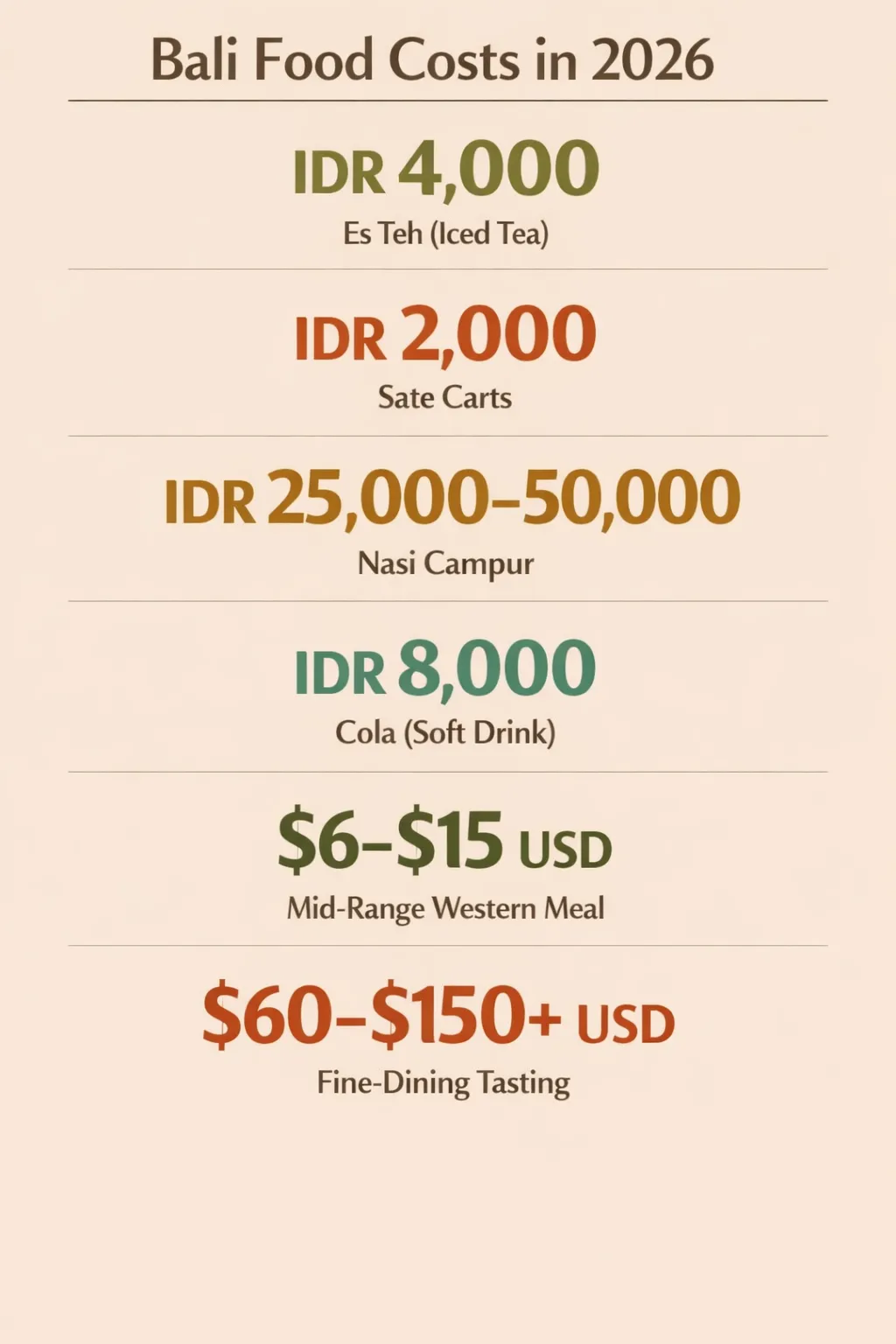 Bali food costs in early 2026: es teh IDR 4,000; sate carts IDR 2,000; nasi campur IDR 25,000-50,000; cola IDR 8,000; mid-range meals $6-$15; fine-dining $60-$150+ per person (data via Outbound Lynx).
- Street-side iced tea (es teh) or orange drink (es jeruk): around IDR 4,000 (about $0.25 USD) (2)
- Canned cola from a supermarket: about IDR 8,000 (about $0.50 USD), more in sit-down restaurants (2)
- Street sate skewers: as low as IDR 2,000 each (about $0.13 USD) - ten skewers for roughly $1.30
- Warung meal (nasi campur, nasi goreng): IDR 25,000-50,000 (about $1.60-$3.20 USD) (8)
- Mid-range Western restaurant meal in Canggu or Seminyak: $6-$15 USD (3)
- Fine-dining tasting menu: $60-$150+ USD per person
Mid-range travelers in 2026 spend roughly $25-$40 per day on food and drinks (8). So a $100 daily food budget easily covers three meals, coffees, a couple of cocktails, and the occasional splurge dinner. Eat mostly at warungs and you’ll struggle to spend even $15 a day.
A realistic budget mix: a $2 warung lunch, an $8-$12 dinner at a popular restaurant, plus drinks and snacks lands you comfortably in mid-range territory. Stack one $60+ tasting menu onto an otherwise warung-heavy day and you’re still under $100 (3)(8).
Balinese Street Food Worth Seeking Out
Balinese street food is where the value and the flavor concentrate. Roadside carts and night markets cook to order, which is both cheaper and - handled right - safer than reheated buffet food. Target these:
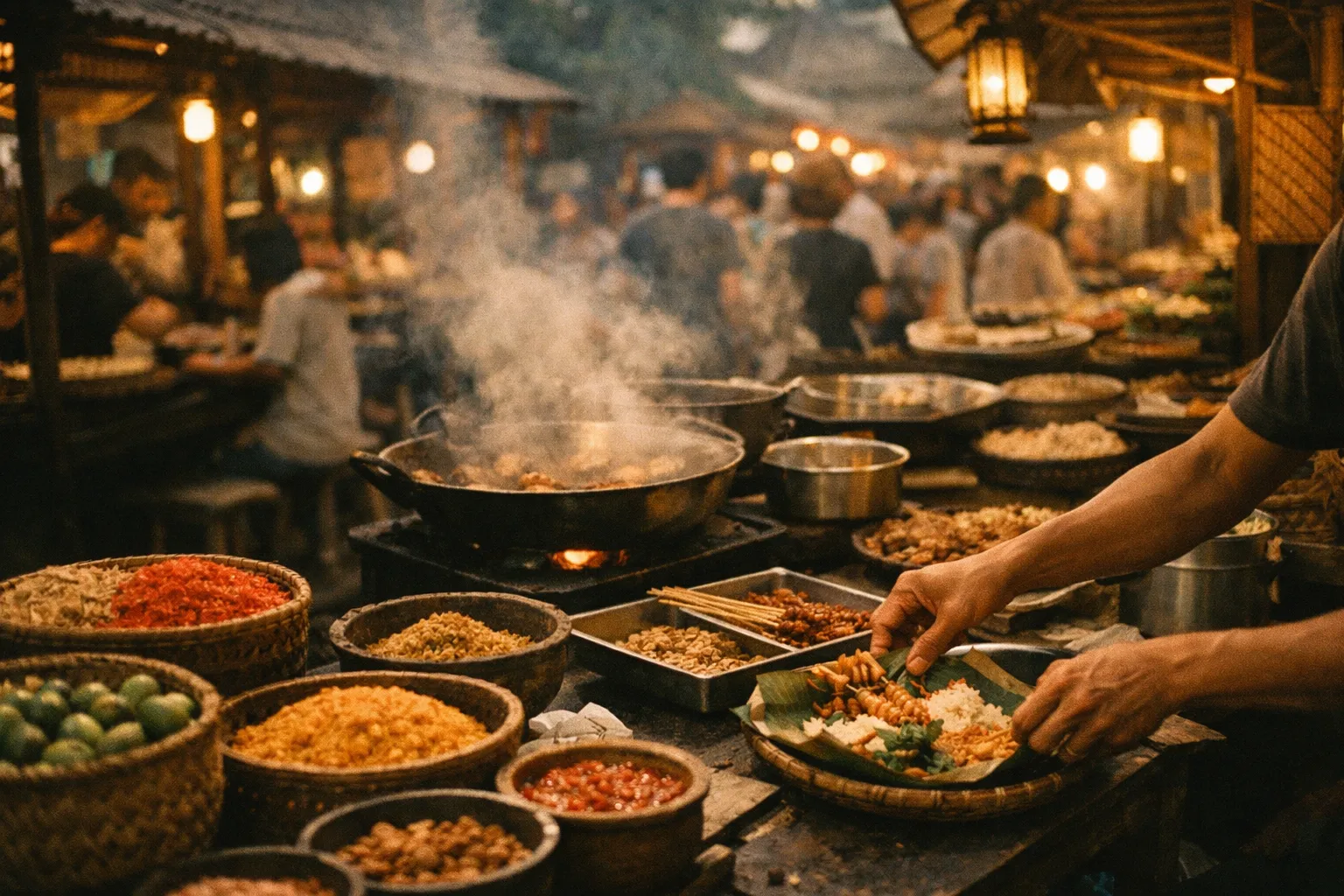
- Sate carts - IDR 2,000 skewers in residential neighborhoods and near markets; a full portion of 10-15 runs $1.30-$2 USD.
- Pisang goreng - hot fried banana, sold from simple stalls.
- Martabak - a stuffed pancake, savory or sweet, popular as an evening snack.
- Es jeruk and es teh - fresh-pressed orange and iced tea for pocket change (2).
A full evening of grazing across carts can cost $4-$8 USD total. If you’re nervous about navigating it solo, a guided tasting tour is a low-risk way to learn what’s good before going off on your own.
Where to Eat: Canggu, Seminyak, and Ubud
Bali’s food scene clusters in three areas, each with a different character.
Canggu
Surf-and-laptop territory. The streets around Batu Bolong are dense with cafés and Western-friendly restaurants, but the cheap sate carts (IDR 2,000 a skewer) are right there too. Expect plenty of vegetarian and vegan twists on Balinese classics - tempeh bowls, plant-based nasi goreng - alongside mid-range Western plates at $6-$12 USD (3).
Seminyak
The most polished of the three, with Asian fusion, Italian, Greek, and Indonesian spots sitting side by side. You can do a multi-restaurant evening here, with individual meals from $4-$15 USD plus drinks (3). Step behind the main tourist strips and you’ll find warungs serving nasi campur and sate at a fraction of the price.
Ubud
Inland and green, Ubud has the strongest plant-based scene and some of the island’s best fine dining. Traditional warungs serve betutu, babi guling, lawar, and nasi campur, while standout tasting-menu restaurants like Locavore and Syrco BASÈ sit at the top end - both usually require advance booking, especially in peak season (4)(7)(10). Across the island, the 2026 fine-dining lists also feature Koral Restaurant in Nusa Dua, known for its aquarium-style dining room.
Comparison of Bali's Main Food Neighborhoods
| Canggu | Seminyak | Ubud | |
|---|---|---|---|
| Price Range (USD) | $2-$12 | $4-$15 | $3-$150+ |
| Food Style | Warungs, street food, Western-friendly | Asian fusion, Italian, Indonesian | Traditional warungs, fine dining |
| Vegetarian Options | ✓ | ✓ | ✓ |
| Atmosphere | Casual, surf town vibe | Polished, touristy | Green, artsy, relaxed |
Guided Culinary Tours
If you want a fast education in food in Bali, a guided food tour is the efficient move. Structured tours typically run 3-4 hours, include hotel pickup, and walk you through markets and warungs you wouldn’t necessarily find on your own. The Bali Bites Food Tour advertises 15-plus tastings, opening with roselle tea and working through fried banana and local street snacks (6).
Ubud is the most popular base for these - compact enough that a walking route hits multiple stops without much transit. Doing a tour early in your trip pays off twice: you learn what you like, and you get a vetted introduction to street food before eating solo. Build it into the start of your itinerary when you plan your days. It also puts money directly into small vendors’ hands.
What Not to Eat to Avoid Bali Belly
“Bali belly” - traveler’s diarrhea - is the most common thing that derails a trip here, and it’s largely avoidable. The pattern is almost always food or water that’s been sitting out or prepared without clean water (9). To reduce your risk:
- Eat freshly cooked, hot food. Order to-order from carts and warungs rather than picking at buffet trays left at room temperature (9).
- Skip raw and undercooked meat, eggs, and seafood - including raw lawar with blood at budget spots (9).
- Avoid salads and raw vegetables washed in tap water at cheaper establishments.
- Be wary of ice from unknown sources and unpasteurized fresh juices.
- Drink bottled or filtered water and use it for brushing your teeth.
None of this means avoiding street food. The high-turnover sate cart cooking over an open flame is often safer than a half-empty hotel buffet. The rule is heat and freshness, not price.
Frequently Asked Questions
- What are the best times to try babi guling to avoid missing out?
- Babi guling warungs often sell out before midday, especially on ceremonial days. It's best to ask your accommodation which spots are serving that morning and arrive early to secure a portion.
- Are there vegetarian versions of traditional Balinese dishes?
- Yes, many traditional dishes like nasi campur and betutu have vegetarian adaptations using tempeh and tofu. However, strict vegetarians should confirm that no shrimp paste, fish sauce, or meat stock is used in sauces.
- How can I adjust the spice level of Balinese food?
- Most kitchens can dial down the heat if you say "Tidak pedas" (not spicy) or "Sedikit pedas" (a little spicy) when ordering. Sambals are usually served on the side, so you can control your spice intake.
- Is street food in Bali safe to eat?
- Street food with high turnover, like sate carts cooking over open flames, is generally safe if you choose freshly cooked items. Avoid buffet-style food left at room temperature and be cautious with raw or undercooked dishes.
- What is a reasonable daily food budget for Bali?
- Mid-range travelers typically spend $25-$40 per day on food and drinks. A $100 daily budget allows for three meals, drinks, and occasional fine-dining splurges.
- Which neighborhoods in Bali offer the best vegetarian food options?
- Ubud and Canggu have the strongest plant-based scenes, with many restaurants and warungs offering vegetarian and vegan versions of Balinese dishes.
- How can I avoid Bali belly while enjoying local food?
- Stick to freshly cooked, hot meals ordered to order, avoid raw or undercooked meats and seafood, skip salads washed in tap water, and drink bottled or filtered water.
Final Thoughts on Eating Well in Bali
The smartest way to eat in Bali is to ignore the budget anxiety and follow the heat and freshness rules instead. Your money goes absurdly far - a $3 warung plate of nasi campur will out-flavor most $15 cafés - so spend the savings on one or two genuinely special meals and a food tour to map out the rest. Order the five famous dishes, ask for “sedikit pedas” until you know your tolerance, and let the sate carts do the heavy lifting on the cheap nights. Do that and a $100 daily food budget will feel like an overestimate.